Emergent Learning For Wisdom Marilyn M Taylor Auth
Emergent Learning For Wisdom Marilyn M Taylor Auth
Emergent Learning For Wisdom Marilyn M Taylor Auth
Emergent Learning For Wisdom Marilyn M Taylor Auth
Emergent Learning For Wisdom Marilyn M Taylor Auth
1.
Emergent Learning ForWisdom Marilyn M Taylor
Auth download
https://ebookbell.com/product/emergent-learning-for-wisdom-
marilyn-m-taylor-auth-5360532
Explore and download more ebooks at ebookbell.com
2.
Here are somerecommended products that we believe you will be
interested in. You can click the link to download.
Emergent Learning For Wisdom Marilyn M Taylor
https://ebookbell.com/product/emergent-learning-for-wisdom-marilyn-m-
taylor-2425888
Monitoring And Assessment In Online Collaborative Environments
Emergent Computational Technologies For Elearning Support 1st Edition
Angel A Juan
https://ebookbell.com/product/monitoring-and-assessment-in-online-
collaborative-environments-emergent-computational-technologies-for-
elearning-support-1st-edition-angel-a-juan-2142212
Embedded Machine Learning For Cyberphysical Iot And Edge Computing Use
Cases And Emerging Challenges Sudeep Pasricha
https://ebookbell.com/product/embedded-machine-learning-for-
cyberphysical-iot-and-edge-computing-use-cases-and-emerging-
challenges-sudeep-pasricha-52792354
Artificial Intelligence And Machine Learning For Healthcare Vol 2
Emerging Methodologies And Trends Chee Peng Lim
https://ebookbell.com/product/artificial-intelligence-and-machine-
learning-for-healthcare-vol-2-emerging-methodologies-and-trends-chee-
peng-lim-46389612
3.
Ecologies For LearningAnd Practice Emerging Ideas Sightings And
Possibilities Ronald Barnett
https://ebookbell.com/product/ecologies-for-learning-and-practice-
emerging-ideas-sightings-and-possibilities-ronald-barnett-33903606
Networked Professional Learning Emerging And Equitable Discourses For
Professional Development 1st Ed Allison Littlejohn
https://ebookbell.com/product/networked-professional-learning-
emerging-and-equitable-discourses-for-professional-development-1st-ed-
allison-littlejohn-10487720
Supply Chain Design And Management For Emerging Markets Learning From
Countries And Regions 1st Edition Wojciech Piotrowicz
https://ebookbell.com/product/supply-chain-design-and-management-for-
emerging-markets-learning-from-countries-and-regions-1st-edition-
wojciech-piotrowicz-5053524
The Future Of Ubiquitous Learning Learning Designs For Emerging
Pedagogies 1st Edition Begoa Gros
https://ebookbell.com/product/the-future-of-ubiquitous-learning-
learning-designs-for-emerging-pedagogies-1st-edition-begoa-
gros-5237790
Emerging Technologies For The Classroom A Learning Sciences
Perspective 1st Edition Chrystalla Mouza
https://ebookbell.com/product/emerging-technologies-for-the-classroom-
a-learning-sciences-perspective-1st-edition-chrystalla-mouza-4241546
For my brotherNorman and all those who leave the world bet-
ter than they found it, whatever the challenges.
10.
Contents
List of Figuresand Tables ix
Acknowledgments xi
Introduction 1
1 A Twenty-First-Century Learning Agenda: Challenges
and Possibilities 9
2 Learning in the Twenty-First Century: Embedded,
Emergent, and Embodied 31
3 Emergent Learning from an Inside-Out Perspective 55
4 Converging Perspectives on Emergent Learning 87
5 Leading Ourselves: Cultivating Personal Practices for
Emergent Learning 121
6 Global Imperatives, Emergent Learning, and Leadership 177
Notes 203
References 209
Index 225
11.
List of Figuresand Tables
Figures
3.1 Emergent learning process overview 60
3.2 Summary of emergent learning process features 81
4.1 David Kolb’s Experiential Learning Cycle 94
4.2 David Kolb’s Configuration of Human Development 96
4.3 Otto Scharmer’s U-Space 106
4.4 C. S. Holling and Lance Gunderson’s Panarchy
Model of Change and Adaptation 113
4.5 C. S. Holling and Lance Gunderson’s Cross-Scale
Panarchy Processes 117
Table
6.1 Richard Barrett’s Leading Others and Organizations 187
12.
Acknowledgments
This book hasbeen in progress for many years and has been generously
supported by many people. I am fortunate to have worked and studied
in imaginative university organizations that have inspired innovation in
learning and leadership. I am grateful for mentoring in social science
that makes a difference from people like Richard McDonald, Hedley
Dimock, Roby Kidd, Matt Miles, Diana Ironside, Virginia Griffin,
Edmund O’Sullivan, David Hunt, Edith Whitfield Seashore, Charles
Seashore, and Bill Bergquist. Over the years, I have enjoyed learning
with colleagues who have enriched my practice and my thinking, among
them, Gord Hodge, dian marino, Don de Guerre, Margaret Douek,
Marilyn Laiken, Raye Kass, Jim Gavin, David Kelleher, Bev Patwell, and
a number of those named below. Most recently, I have been sustained
by the continuous encouragement and tangible contributions from my
family, especially Mary (Louie)Walton-Ball and Isabelle and Donald
Popple, as well as friends and colleagues Jan Jeffers, Heather Maclean,
Susan Joiner, Deborah Sheppard, Richard Barrett, Marge Denis, Mary
Stacey, Dorothy MacKeracher, Maggi Feehan, Karen Engle, Marilyn
Hamilton, Cathy Fulton, Mark Fulton, Mal Jeffers, and Gabrielle
Lacelle. I am especially appreciative of the support of the Royal Roads
University, particularly the Office of Research, the Todd Thomas Insti-
tute for Values-Based Leadership, Library Services, and in particular,
Mary Bernard, Bev Hall, Isabel Cordua-Von Specht, Pedro Márquez,
Diane Carpenter, and Carolin Rekar-Munro. A special note of gratitude
is extended to Dawn Martin for her careful and comprehensive work as
my own editor for this volume.
13.
4
Introduction
What was scatteredgathers.
What was gathered blows apart.
Heraclitus, in Haxton (2001, p. 27)
Heraclitus, you’re okay!
dian marino1
We find ourselves poised at the outer edge of the modern age,
glimpsing its limits and sensing the unknown beyond it. Life in our
times is often puzzling, sometimes astonishing, and frequently over-
whelming. We experience a dizzying pace daily. What we do to save
time seems, paradoxically, to create even more accelerating demands
on us. Electronic communication enables us to get our messages to
others instantly, but it also rapidly loads our “inboxes” with demands
for our attention. Communication technologies combine with rapid
global transit to expose us to diverging worldviews of people around
the globe—whether we leave home or not. The same sciences that have
amplified our ability to describe and measure the vast expanses of space
and the infinitesimal elements of the material world have vanquished
our expectations of predictability. Control eludes us like never before.
The more social and medical knowledge we generate, the more poverty
and illness abound.2
Not only are our ways of doing things coming up
short, but the rate at which we face paradoxes and conundrums sug-
gests that our current perspective is inadequate to describe our world.
Nearly 15 years ago, Imparato and Harari (1994) observed that we are
in “a moment of epochal transformation,” like the Enlightenment and
14.
2 E mergentLear ning for Wisdom
the fall of the Roman Empire, in which change “goes to the core of
what our lives and institutions are about” requiring us “to rethink . . .
core assumptions” (p. 4). More than a decade later, Thomas Homer-
Dixon (2006) provided a compelling comparison between the end of
Rome and signs of the end of our current era.
The purpose of this book is to illuminate the experience of emer-
gent learning and its practical significance in our current environ-
ment of exponential change. Emergent learning is a process through
which we create a shift of mind, a fundamentally new perspective and
approach to acting in the world; it begins when we are confronted with
something that we did not know we did not know. This experience is
increasingly common as spiralling sociocultural, political, economic,
and environmental change impacts on our daily experience with the
unexpected. Much of what we consider commonplace today—how
we travel, communicate, live, and work—was unimaginable several
decades ago. We have both rapidly expanding opportunities and
enormous challenges, some of which threaten life on this planet as we
now know it. The critical challenge of our times is to become experts
at fostering emergent learning in ourselves and others. Without it we
will not develop the resilience and wisdom needed to lead ourselves
through these perilous times to a sustainable future.
My work on emergent learning began just over 30 years ago.
Momentous worldwide change in the interim has repositioned emer-
gent learning from an interesting concept to a vital project. One of
the most frequent quotes heard in the past few decades has been that
of Albert Einstein’s—“No problem can be solved from the same level
of consciousness that created it.” There is growing recognition that
a shift of mind is essential for our survival in a twenty-first-century
world.
Robert Kegan and Lisa Lahey (2009) offered three orders of
“mental complexity” in response to what Kegan (1994) earlier called
the “hidden curriculum” of culture and its mental demands. “When
we are experiencing the world as ‘too complex’ we are not just expe-
riencing the complexity of the world. We are experiencing a mismatch
between the world’s complexity and our own at this moment” (Kegan
and Lahey, 2009, p. 12). They observed three distinctive “plateaus
in adult mental complexity.” “The socialized mind” (p. 17) is about
being “shaped by the definitions and expectations of our personal
environment,” and our sense of self comes from “alignment with, and
loyalty to” (p. 17) external points of identification. We work on the
agenda of others. We might expect that if we remain at this plateau,
our rapidly changing world will be increasingly overwhelming and
15.
I ntroduction 3
frightening.“The self-authoring mind” is evident by being able “to
step back enough from the social environment to generate an inter-
nal ‘seat of judgment’ or personal authority that evaluates and makes
decisions about external expectations” (p. 17). We recognize that
competing positions, and the extraordinary amount of energy that
is consumed in maintaining them, have little practical benefit. “The
self-transforming mind” is evident in being able to “step back from
and reflect on the limits of our own ideology or personal authority,”
being able to notice that we are “incomplete,” in being comfortable
with “contraction and opposites,” and in being capable of “hold[ing]
on to multiple systems” (p. 17).
The central theme of this book is that the critical challenges we
are experiencing in this millennium require self-transforming minds.
We have to be able to let go of “theories” that are not bringing the
results that we are seeking. We have to acknowledge that we are
“works in progress.” We have to be able to transcend opposites and
differences rather than collapse or ignore them. Since Kegan and
Lahey observe that less that 8 percent of the American population
is close to this level of mental complexity, this sounds like a very tall
order. I suggest that this is a difficult challenge, but that it is not
exotic—something that requires specialists and consultants, accessible
only to a few. The opportunities for learning our way to a new plateau
of mental complexity are within our daily experience. This book is an
invitation to use experiences of disruption and distress in a positive
way to learn our way through to a demanding future. It makes the
following audacious propositions: it is precisely our experiences that
begin in profound confusion that enable us to transcend our limits of
understanding; it is experiences that begin in loss that bring us previ-
ously unseen advantages; it is experiences that begin in fear that yield
a new confidence; and it is experiences that begin with a sense that
our world is crumbling that generate new possibilities.
Emergent learning arises from our direct experience of the practical
world; it is triggered by an unpredicted event. The process that follows
has the possibility to create not only knowledge but also the wisdom
we need to engage productively and effectively in a world of uncer-
tainty. Learning that leads to wisdom involves the whole person and
new dimensions that have been banished from public life in the mod-
ern era. It requires attention to our right-brain processes—sensing,
feeling, imagination, metaphor, and context—as well as left-brain
processes—analysis, logic, strategy, and application. Gisela Labouvie-
Vief (1990) noted: “One mode provides experiential richness and
fluidity, the other logical cohesion and stability” and “smooth and
16.
4 E mergentLear ning for Wisdom
relatively balanced dialogue between the two modes . . . I define as
wisdom” (p. 53). The process also requires us to attend to uncon-
scious and preconscious processes, as well as conscious processes.
Finally, the pattern that can serve as a map through unpredictability
is only fully evident from “the inside-out,” a vantage point not often
taken in traditional social science. “We are only beginning to realize
the adaptive significance and heuristic importance of . . . the inward
turn” (Labouvie-Vief, 1990, p. 72).
Order is inherent in our own experience. It can serve as a map with
which to navigate unpredictability, exercising influence without need-
ing or expecting to control. It means a shift in value priorities from
product to process, from knowledge and performance to learning,
from theoretical to practical.
The Plan of the Book
The significance of emergent learning derives from our context. We
begin in Chapter 1 by examining briefly the current context high-
lighting its critical challenges. We conclude the chapter considering
the kind of learning implied by those challenges that would enable us
to engage the challenges constructively.
In Chapter 2, we consider how the meaning of “learning” has
evolved over the past four decades. The refined thinking of some
scholars and scholar-practitioners beginning with Gregory Bateson
(1972) and William Torbert (1972), followed by Chris Argyris and
Donald Schön (1974), Paulo Freire (1973), and Robert Kegan
(1994), has provided critical conceptual “tools” to distinguish orders
of learning and to illuminate shifts of mind or consciousness. We
then look closely at consciousness as value-perspectives through
which we become aware, choose, and act. Finally, we look briefly at
the direction of changing orders of mind or consciousness (Wilber,
2000a) and locate the emergent learning process described in this
book in the developmental schemata of Robert Kegan (1982), Jane
Loevinger (Loevinger and Blasi, 1976), Beck and Cowan (1996),
William Torbert (2004), Abraham Maslow (1943), and Richard
Barrett (1998).
The emergent learning process pattern offered in Chapter 3 is a
detailed description developed through careful documentation of
learners’ experiences over the duration of a graduate course (Taylor,
1979). The setting turned out to be a laboratory setting that replicated
our current wider cultural experience of being in the face of uncer-
tainty. The common emergent learning process pattern is constructed
17.
I ntroduction 5
froma comparative inductive study of “inside-out” commentaries
gathered at frequent and regular intervals.
Chapter 4 is a celebration of all the work done over the past four
decades to illuminate emergent learning processes in a wide variety
of settings, accomplished by Kurt Lewin and Edgar Schein (1995a),
Charles Hampden-Turner (1971), David Kolb (1984), Jack Mezirow
and his colleagues (1978), William Bridges (2004), Donald Beck and
Chris Cowan (1996), and Otto Scharmer (2007). This work exists as
a rich resource for us to use in our own map-making. It also provides
an opportunity to look for common patterns across settings. While
the emergent learning process pattern has been recognized widely
by men and women as reflective of their experience in a variety of
life settings, juxtaposing the sequence in Chapter 3 with other pro-
cess formulations highlights an underlying common structure. We
conclude the chapter with a similar change process model observed
in the natural world—Lance Gunderson and C. S. Holling’s (2002)
Panarchy Model—that suggests that understanding and relating to
our own process of emergent learning may enable us to identify and
learn from the equivalent patterns in our environment.
Chapter 5 is an invitation and a resource to “lead ourselves” by
developing composite strengths in emergent learning. We briefly
explore 12 practices that enable us to enhance our abilities as emergent
learners, including mindfulness, complementarity, self-esteem and self-
compassion, emotional intelligence, social choreography, right-brain
thinking, collaborative inquiry, reflection, presence, vision and flow,
wisdom, and values fluency. Each practice is introduced, offering a
brief description and pointing to resources for further exploration.
The final chapter highlights the relevance of emergent learning to
specific items on our twenty-first-century learning agenda set out in
Chapter 1, and a consideration of the relationship between emergent
learning and the new leadership that is being identified with our
postindustrial era.
A Word about Words: Learning, Change,
Emergent, Transformation, Transition,
Development
As in any recent domain of discourse, words are used differently,
sometimes interchangeably, by different writers and practitioners.
One of the key words in this book is “learning,” a word for which
there are several cognate terms—change, transformation, and transi-
tion. “Change” is used as “individual change” (e.g., Mahoney, 1991),
18.
6 E mergentLear ning for Wisdom
“organizational change” (e.g., Burke, 2008), or “social change”
(e.g., Rosenberg, 2005) to mean growth, evolution, maturation, and
development. However, it is in the broadest of terms defined as “sub-
stitution of one thing for another; succession of one thing in place
of another” (Oxford English Dictionary), without necessarily being
a change for the better. Similarly, “transformation,” defined as “the
action of changing in form, shape, or appearance; metamorphosis”
(Oxford English Dictionary), does not necessarily mean improvement.
“Transition,” defined as “a passing or passage from one condition,
action, or (rarely) place, to another; change” (Oxford English Diction-
ary), is another term often used to describe the human experience we
are examining. However, “transition” is understood by some to be
a contrast to “transformation” (de Guerre, 2001); transition is the
pursuit of a known desired state, while transformation is a process
through which the end state emerges. Finally, “development” has
wide currency as a term applied to individuals, groups, organizations,
communities, and regions to signify positive change. While helpful,
this term does focus our attention exclusively on the growth side of
the process. On a wider social scale, development is also a controver-
sial term, often associated with the predominance of one group over
another and exploitation of resources by powerful interests (e.g.,
Krueger and Gibbs, 2007).
The choice here is to use the term “learning.” There is the risk that
some of us may interpret this narrowly as synonymous with “teach-
ing” and “school,” but it is part of the whole term, “emergent learn-
ing,” and the distinction will, hopefully, be obvious. There are several
compelling reasons for selecting “learning” as the primary term. First,
while a restrictive term in the traditional sense, there has been a 40-
year history of enhancing its relevance and meaning, starting with
Gregory Bateson (see Chapter 2). Second, it is a term that implies
responsible agency in a change process in which we exercise choice.
Third, “learning” is a term that, in the past several decades, has been
applied to human systems—teams and organizations—in a systems
perspective (e.g., Senge, 2006), linking individual learning to effec-
tive adaptation on a larger scale. The “reach” of learning has been
expanded in this discourse. Fourth, learning is a concept associated
with enabling us to accomplish more in the future than we can now;
this positive association is critical. Fifth, as it is redefined to include
second- and third-order learning, it can be reframed to include all
phases and features of emergent learning including, paradoxically, the
accomplishment of “unknowing” that we need in order to transcend
a more limited way of interpreting the world.
19.
I ntroduction 7
Finally,I propose that we call the process “emergent learning.”
Many (e.g., Mezirow, 2000; O’Sullivan, 1999) have called it “trans-
formation” or “transformative learning,” which it is certainly in its
outcome. But if we focus on the process, it is more than that. I sug-
gest that “transformation” is the third and final phase in which we
understand our world from a new perspective that Mezirow called
“perspective transformation.” It is the moment in which we con-
sciously realize the “big picture” that redefines our world and our
place in it. It is understandable that our attention is drawn to that
moment, both because it is dramatic and also because in this culture
we give most importance to conscious aspects of learning and the
world of defining ideas. In practical terms, however, we first engage
a new perspective as an experience and give it significance long before
we conceptualize it. In our twenty-first-century context, unless we can
step out of our cultural “comfort zone” and recognize what emerges
as learning, beginning with the surprising experience of not knowing
out of which knowing emerges, we will be unable to use our talents
to their best effect in meeting the challenges of the current era.
I have used the first person plural, “we,” to emphasize a sense of
collective responsibility in which I include myself. I do not presume
all of the statements here apply necessarily in the same way to every-
one, but I invite us all to think of ourselves on similar journeys.
20.
4
C h ap t e r 1
A Twenty-First-Century
Learning Agenda: Challenges
and Possibilities
One of humanity’s constant nightmares has been that technological
growth . . . has always run ahead of . . . growth of wisdom, care and
compassionate use of that technology.
Ken Wilber (2000b, p. 103)
We need the sagacity, as well as immense energy, to find our way
into a new cultural synthesis of planetary proportions. People say we
cannot do it, and the answer is that we must do it.
Edmund O’Sullivan (1999, p. 39)
Our Global Context of Exponential Change
We now recognize not only that we are in an age of continuous
change, but also that change, itself, is continually accelerating. Fred
Emery and Eric Trist (1965) were among the first to recognize this
as the defining quality of a fundamentally new age. They observed
more than 40 years ago that we were moving out of an age in which,
as organizational and community leaders, we could predict successful
results from wise strategies and the power to compete effectively, and
we were entering an age that is inherently unpredictable. Emery and
Trist called this a “turbulent field” created by a growing multiplicity
of competitors for resources, buyers, and the like; their simultaneous
and intensifying interactions were generating a qualitatively different
21.
10 E mergentLear ning for Wisdom
environment. Few would have regarded these observations as critical
then, but most of us now would recognize this theme as a defining
feature of nearly every aspect of our human experience today. In
fact, many of us would recognize features of what Emery and Trist
speculated as a subsequent type of environment, a vortical environ-
ment, which would rise in the absence of effective adaptations to
turbulence. Without a thoughtfully formulated desirable direction
for change, guided by explicit values and engaging those who have a
stake in the outcome, turbulent environments turn to a vortical pat-
tern that draws more into it as it accelerates.
Forty years later, Thomas Friedman (2005) published his ency-
clopedic examination of how the Emery and Trist commentary has
become manifest in our twenty-first-century world. Like Emery and
Trist, he highlighted the impact of technological innovation not only
on how we do things but also on its implications for how we orga-
nize ourselves to do things—transformations of the social, organiza-
tional, and cultural order. Friedman spoke of a “flattening process”
globally—the creation of a more level playing field. “Because it is a
flattening and shrinking of the world, [the new] globalization . . . is
going to be more and more driven not only by individuals but also by
a much more diverse—non-Western, nonwhite—group of individuals.
Individuals from every corner of the flat world are being empowered”
(p. 11). At home, we are experiencing a flattening of our own social
and organizational structures, and the diminishing effectiveness of
centralized authority keeping pace with new opportunities and chal-
lenges. These reconfigurations of global and local social realities con-
front each one of us, as participants in the twenty-first century, and
require us to reframe our perspectives, assumptions, and expectations
about our world, our nation, our organizations and communities, our
knowledge and learning, leadership and authority, and ourselves.
Global Connectivity
A series of electronic innovations have transformed our workplaces
and, more generally, our world, by enabling us to communicate and,
indeed, collaborate with almost anyone in the world. We are now
living in the “global village” that Marshall McLuhan (1962) named
nearly 50 years ago.
My initial work on emergent learning was written on a typewriter
at a time when the most rapid transfer of written work across dis-
tance was by courier. IBM’s original personal computer was released
by 1981. At that time, Bill Gates of Microsoft believed that his
22.
A Twenty- First- Century Lear ning Agenda 11
64-kilobyte floppy disks provided more memory than anyone would
need (Harris, 1998). I am currently writing on a computer with 400
gigabytes of memory, over 6 million times that of the floppy disk,
and I back it up on a terabyte external hard disk. In 1981, the first
public access Internet system became available. While email predates
the Internet, its use as the primary medium for correspondence has
become a reality through this electronic network of networks. By
2008 there were 1.3 billion email users (Royal Pingdom, 2010). The
World Wide Web, the system of electronic documents and related
search engines, emerged in the early 1990s, less than 20 years ago.
There are now over 1.8 billion Internet users worldwide, with the
highest proportion by region being North America (76.2 percent),
Oceania/Australia (60.8 percent), and Europe (53 percent). The
highest rates of growth in 2000–2009 were in the Middle East,
Africa, and Latin America/Caribbean (Internet World Stats, 2009).
Amplifying the connectivity of the Internet, satellite-based telephone
communication makes it possible for us to be in daily, virtually instan-
taneous, contact with people around the world at minimal cost. Satel-
lite-enabled wireless technology means that we can speak to anyone
virtually anywhere from nearly anywhere. Use of mobile telephones
worldwide increased over eightfold from 2000 to 2009 as reported
by the International Telecommunications Union.1
Satellite communication technology permits the instantaneous
transmission of images from any part of the world to any other. The
turn of the millennium was viewed in real time as one global event—a
“first” in history—through the televising of culturally distinct celebra-
tions in each country as the first day of the twenty-first century dawned
around the Earth. Images of natural disasters, wars, terrorist attacks,
rescues, and airplane crashes can be witnessed in our homes within
minutes of their occurrence. World championships are watched live by
each country’s cheering fans from virtual bleachers around the world.
From the “platform” of space, too, within the past 40 years, we
have had our first images of our planet as a whole, which some have
suggested compels us to see ourselves differently. American space
tourist Anousheh Ansari commented: “The sheer beauty of it just
brought tears to my eyes. . . . If people can see Earth from up here,
see it without those borders, see it without any differences in race or
religion, they would have a completely different perspective. Because
when you see it from that angle, you cannot think of your home or
your country. All you can see is one Earth” (Keim, 2007).
The virtual workplace, too, has arrived. This book was written
primarily in Victoria, British Columbia, but it was also written in
23.
12 E mergentLear ning for Wisdom
Toronto, Vancouver, Calgary, and Stockholm. I was unable to lift
all the components of my first-generation IBM computer together
at one time; I now work on a laptop that goes everywhere with me
and can store this book and its related literature on a memory stick
that is not much larger than my little finger. I not only accessed vast
databases of articles through my library at Royal Roads University,
but also delved into “the ebrary,” electronic books at my fingertips
available to me from anywhere that I access the Internet. This book
was submitted as a manuscript to my publisher, Palgrave Macmillan
in New York, a global academic publisher that is part of the Macmil-
lan Group, which is connected throughout Europe, North America,
Australia, the Far East, Japan, the Middle East, India, Africa, and the
Caribbean. The approved manuscript was sent to Bangalore in India,
where it was packaged. Then again from New York, the book was dis-
tributed through a worldwide network of book sellers and academic
conferences. This is one small example of what Friedman (2005)
called the “web-enabled platform.”
This platform enables individuals, groups, companies, and universities
anywhere in the world to collaborate—for the purposes of innova-
tion, production, education, research, entertainment, and, alas, war-
making—like no creative platform ever before. This platform now
operates without regard to geography, distance, time, and, in the near
future, even language. Going forward this platform is going to be at
the center of everything. (p. 205)
With the remarkable advantages of digital and electronic commu-
nication have come unexpected demands and challenges. Thirty years
ago, communication by mail, even courier, meant that I could forget
about the subject of the correspondence for at least another week
and turn my attention to other things. Today, I can send an email to
the other side of the world and can receive a response within a few
minutes. It is not uncommon for people to spend hours just manag-
ing email—responding and filing—let alone managing the rapidly
accumulating tasks generated by them. Email, text messaging, and
other forms of instant communication seem to be compelling and
seductive to the extent that they are seizing our attention and taking
over our agendas.
Kevin Kelly (2008), founding editor of Wired Magazine,
observed:
Everything that we have—satellite images of the earth, your family
tree, all patents, anything to do with anyone’s phone number, anything
24.
A Twenty- First- Century Lear ning Agenda 13
for sale, government forms, weather everywhere, all your friends, real
time stock quotes, newspapers, sports scores, real estate prices, library
books, street maps, all movies, all regulations . . . has happened in 5000
days. . . . It does about 100 billion clicks per day. It contains about 55
trillion links between all the web pages in the world. There is about a
billion PC chips. It does 2 million emails and 8 terabytes of traffic in a
second. . . . It uses 5% of the world’s electricity to keep it going. . . .
The order of magnitude of this machine is very equivalent to the size
and scale of the human brain.
Kelly pointed out that the Web works in an associative manner simi-
lar to our brain, but the difference is that our brain will not double
in capacity every two years, as will the Web. He expects that in 30
years the Web will have outgrown the capacity of the whole human
race put together. He predicted that by about 2012 we will see Web
3.0, the Semantic Web, which will link data, ideas with “a much finer
resolution.” “We’re going to live inside the Web because everything
will be connected to it.”
Poscente (2008) observed, “With the boom in technology enabling
us to achieve speed in almost every imaginable way, speed is no longer
a luxury—it’s an expectation. And the more we get, the more we
want. Email, PDAs, self-checkout, downloadable music, real-time
news, ATMs, digital cameras: technology has driven speed into every
aspect of our daily lives” (p. 13). Paradoxically, while technology can
amplify options, it can also impact employees and the workplace in
unintended negative ways. An expert on stress in the workplace, Marc
Chenais, suggested, “increasing reliance on technology is one of the
biggest causes of work-related depression” (Hollinger, 2008). While
some have observed that, on one hand, electronic communication
in the workplace can diminish employees’ sense of autonomy, others
have noted that curiosity-based, rather than task-related, use of the
Internet is compromising productivity. “A kind of communications
anarchy is breaking out in offices all over the world and managers are
feeling powerless to intervene” (Donkin, 2008). One great danger
is that individuals and organizations lose focus and their purpose,
simply reacting and running to catch up with the pace of change.
The access to instantaneous information also affects our lives in
communities. On one hand, citizens have been enormously empow-
ered through immediate access to public policy and governance deci-
sions, research and public records, best practices, and documentation
of social issues around the world. We are able to access health and
medical knowledge when concerned about our physical well-being,
product information and sources when interested in purchasing
25.
14 E mergentLear ning for Wisdom
goods and services, and detailed information about recreational
opportunities around the world when making decisions about our
leisure pursuits. On the other hand, the same connectivity has ampli-
fied the dissemination of child pornography, the perpetration of
scams, breaches of privacy, and facilitation of serious, often deadly,
threats to safety and security. Child pornography has been prevalent
on the Internet; distributors were early adopters of Internet benefits.
Recently, Wortley and Smallbone (2006) noted, “At any one time
there are estimated to be more than one million pornographic images
of children on the Internet, with 200 new images posted daily”
(p. 12). Finally, in December 2010, the WikiLeaks Web site posed
the most dramatic and far-reaching instance of what many consider to
be misuse of the Internet by exposing 250,000 diplomatic cables to
leading newspapers. As authorities moved against the Web site’s
founder, Julian Assange, his supporters targeted other Web sites seen
to be opposed to him; they managed to render some inaccessible
and others less operable. The WikiLeaks events highlight new ways
in which the Internet can be used aggressively; they raise spiraling
concern about cyber security and control.
Thomas Homer-Dixon (2006) sees global connectivity as a “mul-
tiplier,” a kind of accelerant for what he calls “tectonic stresses” fac-
ing us in the twenty-first century, some of which are explored in the
following pages.
Global connectivity has triggered change in every imaginable
corner of our world, and our lives and these effects are expected to
accelerate. However, our greatest learning challenges are not techno-
logical in nature. Rather, they are the radical shifts in reinventing how
we relate to each other in organizations and communities locally and
globally, and how we relate to our environment, the natural world.
Implicit in the reconfiguration of these fundamental relationships is
learning our way into a new understanding of ourselves. We turn to
these now.
Exponential Economic Uncertainty
No evidence of international interdependence and unpredictable
turbulence has been more palpable and dramatic than the global eco-
nomic collapse of 2008. Relaxed credit conditions and low interest
rates introduced by the U.S. Federal Reserve after the stock market
crises of the “dot-com” bubble and the 9/11 terrorist attacks enabled
American consumers to extend their borrowing power beyond their
means in normal credit conditions. In addition to accelerated home
26.
A Twenty- First- Century Lear ning Agenda 15
purchases, billions of dollars were withdrawn from home equity
through refinancing. The American economy became driven by,
and dependent on, the U.S. consumer. When subprime mortgages
came to term, more than a million U.S. homes were in foreclosure
in June 2008 (CNNMoney.com),2
and by September of that year,
huge financial institutions were being taken over (Fannie Mae and
Freddie Mac with $5 trillion debt) (New York Times),3
or receiving
government bailouts (AIG for $85 billion) (Wall Street Journal),4
or
going bankrupt (Lehman Brothers, one of the largest bankruptcies
in American history) (New York Times).5
September 29, 2008, saw
the largest single-day drop on the DOW in its history (778 points),
wiping out $1.2 trillion of market value at the thought that massive
government bailouts would not be forthcoming (CNNMoney.com);6
the DOW continued to fluctuate and ultimately decline to its lowest
level—6469.95—on March 6, 2009 (CNNMoney.com).7
Millions of
Americans suddenly lost their homes and many more lost their jobs. In
spite of the largest government bailouts in U.S. history, from the start
of the recession in December 2007 to June 2009, the unemployment
rate more than doubled (7.2 million to 14.7 million—4.6 to 9.5 per-
cent) with large declines in manufacturing, professional and business
services, and construction (U.S. Bureau of Labor Statistics, 2009).
The collapse of the U.S. housing bubble was predicted by many,
but its far-reaching effect around the world was expected by few. The
extent to which the world economy is hinged on the U.S. economy
and, indeed, the American consumer, was revealed through the
2008–2009 global market collapse, seen as the worst since the Great
Depression. The effects from the burst of the subprime mortgage
bubble in the United States rippled around the world, exploding
similarly vulnerable banking practices especially and generally devas-
tating world markets with sharply dropping stock market indices. By
October, Iceland was on the verge of bankruptcy. Bankruptcy was pre-
vented only by a $10 billion bailout from the International Monetary
Fund. By the end of 2008 and closing in their worst years ever, Japan’s
Nikkei lost 42 percent of its value; Chinese stock exchanges dropped
20 trillion yuan or US$3 trillion; and the UK’s FTSE 100 declined 31
percent, wiping out £500 billion. The Canadian TSX dropped from a
high of 14,714.73 in April 2008 to a low of 7591.47 by March 2009,
a decline of 51.6 percent of its value, and along with it a significant
proportion of my retirement investments. I, along with millions of
individuals and their families, was surprised by the extent of this
downturn and its devastating results in lost homes, jobs, and retire-
ment savings. Over time, economists, financial analysts, and business
27.
16 E mergentLear ning for Wisdom
leaders confessed that this global event was new territory for them
also. American mortgage debt had been distributed through financial
institutions around the world, and as a result, the United States had
a disproportional influence on the international banking system that
had been propping up the U.S. banking system (Soros, 2008).
While the economic collapse well beyond a relatively predictable
expected market correction came as a surprise to most of us, Soros
(2008) dates the pervasive “dot-com” downturn in 2000—the advent
of hedge funds, and the radical reduction in interest rates to soften
the effects of the 9/11 terrorist attack. He describes this collapse as
a “super-bubble,” which he says “marks the end of an era of credit
expansion based on the dollar as the international reserve currency”
(p. vii). The 2008 economic collapse has been followed by a rather
rapid recovery of stock markets, but a high level of uncertainty con-
tinues as the other aspects of national economies, such as the resulting
rates of unemployment and of national debt, remain perilously high.
In late 2009, debt levels and fragile economies in Greece, Portugal,
and Ireland along with mega-bankruptcies in Dubai, precipitated
debt restructuring and bailouts—all with consequences in a highly
interdependent and increasingly unpredictable global economy.
Reconfiguring Social Relations
Redefining Leadership, Authority, and Organization
In the current context of an astonishing rate of change, an explosion
of knowledge in every sector and an increasingly informed global
citizenry, the intelligence to effectively decide and provide direction
in organizational life can no longer originate with only the few “at
the top.” Friedman (2005) sees organizations and institutions having
to flatten along with the twenty-first-century world:
As the world starts to move from a primarily vertical—command and
control—value creation model, and as we blow away more walls, ceil-
ings, and floors at the same time, societies are going to find themselves
facing a lot of very profound changes all at once. But these changes
won’t just affect how business gets done. They will affect how indi-
viduals, communities, and companies organize themselves, where
companies and communities stop and start, how individuals balance
their different identities as consumers, employees, shareholders, and
citizens, tell people to find themselves politically, and what the role
of government plays in managing all of this flux. This won’t happen
overnight, but over time many roles, habits, political identities, and
28.
A Twenty- First- Century Lear ning Agenda 17
management practices that we had grown used to in the world are
going to have to be profoundly adjusted for the age of flatness. To put
it simply, following a great triple convergence that started right around
the year 2000, we’re going to experience what I would call “the great
sorting out.” (p. 234)
In the workplace, the attention to developing relevant adaptations to
twenty-first-century realities has been largely on redesigning organiza-
tions and on creating work teams to respond effectively to the rapidly
and continuously changing demands for services and products. Nearly
20 years ago, Beckhard and Pritchard (1992) noted: “This ‘white
water’ turbulence is forcing most leaders to examine the very essence
of their organizations—their basic purposes, their identities, and their
relationships with customers, competitors, and suppliers” (p. 1).
Simple rearrangements according to traditional organizational prin-
ciples have frequently proven ineffectual, as evidenced by recurrent,
unsatisfactory restructuring. We have reached the limits of our tradi-
tional bureaucracy generated by a nineteenth-century imagination—
silos with vertical top-to-bottom, one-way communication. Simply
downsizing current organizational structures or shifting traditional
responsibilities around has resulted in unrealistic expectations of
fewer people producing more and doing so more quickly. Recent
National Values Assessments8
highlight bureaucracy and long hours
as the most common issues in workplaces in the United States, UK,
Canada, Sweden, Denmark, and Iceland. Employees become over-
whelmed, feeling hopeless and cynical about the recurrent change
efforts that are seen as minimally successful, at best.
It is not clear what new forms of organization will prevail and
endure, but there are some definite trends. Organizations that thrive
in the future are likely to reflect
1. significant decentralization of responsibility and decision-making
in order to be flexible and responsive to changing demands;
2. workplace engagement of employees in the creation and intel-
ligent use of knowledge in planning and decision-making; and
3. continuous adaptation and reshaping of themselves as their chal-
lenges emerge and change.
A critical challenge is to manage organizational change so as to unleash
confidence, enthusiasm, and satisfaction of employees in the process
of effectively engaging with the new opportunities. Movement to
distributed leadership and decision-making requires organizational
29.
18 E mergentLear ning for Wisdom
change processes that model that new configuration; in that vein,
there have been fundamental changes to organizational change, itself.
Peggy Holman and Tom Devane (1999) have drawn together four
methods for planning, four for organizational restructuring, and ten
adaptable to a range of organizational change objectives, all of which
enact two radically different sets of assumptions, beliefs, and values.
The first is “intelligently involving people in changing their work-
places and communities” and the second is “a systemic approach to
change” (p. 6). These new approaches imply shifts in a worldview that
are radical in nature, that is, change at the root of our culture.
Intriguingly, social values seem to be shifting in most of the more
developed world in synch with demands for organizational “flatten-
ing.” Adams (2007b) reported significant social values shifts among
Canadians from “deference to authority” to “autonomy,” from
“patriarchy” to “equality,” from “hierarchy” to “heterarchy,” from
“rigidity” to “flexibility,” and from “follow the rules” to “think for
yourself.” He described a strong shift away from patriarchal values
in Canada and many other Western nations (including France, Italy,
Britain, Spain, Germany, and Sweden), the exception being in the
United States, where support for patriarchal authority has been
increasing (Adams, 2003, 2006).9
However, House and his col-
leagues (2004) found that the practice of distributed leadership is
more often valued than actually practiced. In their prodigious global
study of culture and leadership, based on interviews with 17,300
managers in 951 organizations in 62 countries around the world,
they found that with respect to power distance, “the degree to which
members of an organization or society expect that power should be
distributed equally” (p. 30), the value was the most discrepant from
the perceived practice compared to the other eight value clusters.
“The GLOBE sample of societies shows that Power Distance is the
most strongly practiced, yet the most strongly despised dimension of
societal cultures” (p. 559). This contradiction represents one of the
most critical ongoing struggles in organizational life.
So whether driven by global flux or by social values trends or by
both, there is pressure to reimagine leadership and, in particular, to
redistribute authority, responsibility, and accountability. For those
holding positions of authority, perhaps even more than for their
employees, this is an enormously difficult change—perhaps because it
begins with themselves.
In order to make change happen, executives have to break a longstand-
ing behavior pattern of their own: providing leadership in the form of
30.
A Twenty- First- Century Lear ning Agenda 19
solutions. This tendency is quite natural because many executives reach
their positions of authority by virtue of their competence in taking
responsibility and solving problems. But the locus of responsibility for
problem solving when a company faces adaptive challenge must shift to
its people. Solutions to adaptive challenges reside not in the executive
suite but in the collective intelligence of employees at all levels, who
need to use one another as resources, often across boundaries, and
learn their way to those solutions” (Heifetz and Laurie, 2001, p. 132)
Rooke and Torbert (2005) suggest that only 5 percent of leaders
currently operate as dynamic change leaders, transformational leaders
at the organizational level and beyond. George and McLean (2007)
found that the shift of mind they identified as “‘I’ to ‘we,’” leaving
the heroic, egocentric orientation to leadership behind and moving
to a focus on engendering leadership in others, is not easily accom-
plished but is the outcome of a very demanding journey with painful
moments and many ups and downs.
The Intersection/Clash of Cultures
The virtual workplace is made possible through global connectivity.
Combined with increasing ease of travel and increases in migration
around the world, it has amplified our contact with cultural differ-
ences and ways of life.
International travel across all continents is skyrocketing, most
of it over and above business-related travel, reflecting growing
international interest and intercultural contact. The World Tourism
Organization (UNWTO) reports that, when considering all coun-
tries, international tourist arrivals nearly doubled between 1990 and
2006, and it projects that the rate will almost double again between
2006 and 2020. The greatest annual increases in 2006 were to Africa,
Asia, and the Pacific. In 2006, 51 percent of the 846 million arriv-
als were identified as leisure, recreation, and holidays, and a further
27 percent related to visiting friends and family; business travel
accounted for 16 percent.
According to the Global Commission on International Migration
(GCIM), migration doubled from 99.3 million to 190.6 million
in the period between 1980 and 2005, though accounting still for
only 3 percent (1 in 35) of the world’s population (GCIM, 2005).10
The Commission noted that migration has been facilitated by more
developed global communication, increasing ease of global transpor-
tation, and growing social networks worldwide. The government of
Switzerland’s Federal Office of Migration reported that the current
31.
20 E mergentLear ning for Wisdom
unprecedented levels of migration are driven largely by economic
necessity. “The growing gap between rich and poor is the most
significant driving force for global migration. In 1960, the income
of the richest fifth of the world’s population was, on average, 30
times higher than the poorest fifth. By the year 1990, it was already
60 times higher” (Schweizerische Eidgenossenschaft, n.d.). Signifi-
cantly decreased birth rates in more developed countries have led to
immigration policies in these regions, which are intended to attract
foreign-born workers to compensate for their drop in population. So
it is not surprising that the GCIM (2005) reports that 60 percent of
immigration is in the developed world, with a 20-year trend indicating
that there is increasing flow (2.3 percent increase) toward the more
developed regions of the world, compared to migration toward the
developing world (1.2 percent increase).11
In launching the Organi-
zation of Economic Cooperation and Development’s (OECD) 2008
International Migration Outlook, Secretary-General Angel Gurría
confirmed this trend continuing with a 5 percent increase in immigra-
tion to OECD countries over the previous year, only to be inter-
rupted the next year due to the economic crisis (OECD, 2009).
While human migration strengthens our societies and economies,
it also amplifies confrontation with the unfamiliar, in this case, cultural
values, beliefs, and practices. The GCIM (2005) developed a series
of “principles for action to maximize the benefits of and minimize
the negative consequences of migration; these included the need for
a mutual process of adaptation and integration that accommodates
cultural diversity and fosters social cohesion” (p. 4). Both immigrants
and the host country’s citizens are faced with a complex process of
engaging with the culturally unfamiliar. As an example, in my coun-
try, the 5.4 percent population increase between 2001 and 2006 was
due in large measure (69.3 percent) to immigration (Statistics Can-
ada, 2007a). Further, these new neighbors most likely came from Asia
(58.3 percent), while in 1971 they were more likely to come from
Europe (61.6 percent) (Statistics Canada, 2007b). An overwhelming
majority of Canadians (79 percent) feel that “cultural diversity gives
Canada a distinct advantage, especially with respect to innovation”
and “flexibility and adaptability to a changing marketplace.” Specific
advantages were seen to “encourage a more balanced view of prob-
lems . . . strengthen the overall corporate culture, enhance corporate
reputations, enhance service levels, reduce turnover, lower absentee-
ism rates and improve a company’s global management capacity”
(Bowes, 2007/2008, p. 14, 15). Sixteen years ago, Matt Barrett
(1994), then president of Bank of Montreal (BMO), placed Canada’s
32.
A Twenty- First- Century Lear ning Agenda 21
diversity as an asset in the global economy; it meant BMO employees
could represent the bank in almost every country in the world in their
own mother tongue.
Michael Adams (2007a) of Environics Research and Communica-
tions observed that attitudes toward immigration vary among host
countries. Quoting an IPSOS MORI study in 200612
in which the
question “Overall, would you say immigrants are having a good or
bad influence on the way things are going in [country]” was posed
to 1000 respondents in eight more developed countries, he noted
that 75 percent of Canadians say their contributions are positive com-
pared with 54 percent of Australians, 52 percent of Americans, 47
percent of Germans, 45 percent of Spaniards, 45 percent of French,
44 percent of Italians, and 43 percent of Britons. Perhaps more sig-
nificantly, 40 percent or more of the respondents from the United
States, Britain, and countries in Europe viewed immigrants’ influence
as negative. Countries with under 40 percent of respondents viewing
immigrants’ contributions as negative were Australia at 39 percent
and Canada at 20 percent. Nevertheless, even in a considerably
immigrant friendly country like Canada, a mutual adaptation process
demands intercultural understanding and accommodations. Adams
cites specific examples of Canadian experiences—how to fit a turban
into a military or a police uniform, how to enable girls to play soccer
safely while wearing a hijab, and how to enable women to vote with
their faces concealed by a niqab. These are examples of daily differ-
ences that confront us, and demand that we find common ground.
These new conditions of life in workplaces and communities demand
collaboration and dialogue among people who see and approach
things differently and the negotiation of changes in taken-for-granted
social and organizational practices.
The more subtle and profound demand on us is to fully embrace
multiple cultural perspectives and life in pluralistic nations. Those of
us who have lived and worked in culturally homogeneous communi-
ties and organizations are like the fish that does not know what water
is; we are typically unaware of our perspective, assumptions, and val-
ues that give meaning to our way of life, until we encounter different
people with very different viewpoints, values, and expectations. It
becomes clear that there are many interpretations and ways of doing
things. We are provoked to examine why we see things the way we
do. Ultimately, we have to recognize that the infusion of different
cultural perspectives will change our organizations and communities
and also that mutual adaptation means change, for both those who
are immigrants and those who are current citizens.
33.
22 E mergentLear ning for Wisdom
Human Rights and Equality within and across Nations of the
World
In the context of the United Nations’ Universal Declaration of
Human Rights in 1948, in the past 50 years a series of international
conventions have defined a human rights agenda worldwide. They
include the International Convention on the Elimination of All
Forms of Racial Discrimination (ICERD) (adopted in 1965 and
enforced in 1969), Convention on the Elimination of All Forms of
Discrimination against Women (CEDAW) (adopted in 1979 and
enforced in 1981), and the Declaration on the Rights of Indigenous
Peoples (adopted by the UN in 2007). The past 30 years have been
characterized by a continuing struggle to establish human rights
and equality among people everywhere in nations around the world.
Attention to human rights in recent decades is reflected throughout
the Western world in new and updated legislation and enforcement
infrastructure with respect to fair employment practices, antidiscrimi-
nation, and harassment prevention across sectors, jurisdictions, and
institutions.
Taking employment equity as an example, the International
Labour Organization (ILO) reported that the percentage of women
participating in the labor force continues to climb in all regions of
the world, and their percentage of total employees increased slightly
between 1995 and 2004 in every region of the world except in sub-
Saharan Africa and in the non-EU states and Central Asia. Women’s
participation in high-status positions (legislative, senior official, and
managerial jobs) has increased in all regions of the world, but still
remains at 28 percent, with the greatest increases being in South
Asia and East Asia/Pacific regions (ILO, 2007). Overall, gender pay
inequity is a most intractable challenge. “Even though the gender
pay gap narrowed in some places and stagnated in others, women
continue to work, on average, for lower earnings than men. This
trend continues despite striking advances of women in educational
attainments relative to men” (ILO, 2007, p. 20). Racial and ethnic
discrimination also continues to persist in the workplace worldwide.
Highlighting the cases of people of African descent, ethnic minorities,
and indigenous peoples, the ILO report (2007) noted, “Centuries
of unequal treatment in all spheres of life, combined with persistent
and deep ethnic socio-economic inequalities, explain their low edu-
cational and occupational attainments” (p. 24). The report pointed
out that ethnic and racial discrimination are closely linked to poverty
and chronic poverty in particular. Progress on the United Nations
34.
A Twenty- First- Century Lear ning Agenda 23
Millennium Development Goals established in 2000 to be achieved
in 2015 has been mixed, according to the Secretary-General’s 2010
report to the General Assembly (United Nations, 2010). While pov-
erty is decreasing by some measures, the improvements are unevenly
distributed worldwide—mostly in China. Gradually, the number of
hungry people had been increasing in the period between 1990–1992
and 2004–2006 (3.7 percent) but sharply in the three years end-
ing in 2009 (16.8 percent) due to rising food prices and the global
economic crisis.
Commentaries on the enormously beneficial possibilities of
globalization are accompanied with concerns about its dangers to
the well-being of populations and the environment (Homer-Dixon,
2006). It is too soon to know which will outweigh the other, but it
is vital to track its effects. There are those who are optimistic that
globalization will foster the advancement of democracy and human
rights worldwide through innovation and open trade (e.g., Cuervo-
Cazurra and Dau, 2009; d’Aquino, 1996), though concerns are
simultaneously expressed about social disruptions, the potential for
exploitation, and impacts on the environment. While global connec-
tivity has created access to information and tools for collaboration for
hugely expanded circles of people, the conditions for empowerment
and enhancing life are complex combinations of government, culture,
education, and capital (Friedman, 2005). Arjun Appadurai (2006)
has articulated a deeper analysis of the challenges of the global era as
he searches for an understanding of cultural violence on a large-scale
manifest in the 1990s.
Where the lines between us and them may have always, in human his-
tory, been blurred at the boundaries and unclear across large spaces
and big numbers, globalization exacerbates these uncertainties and
produces new incentives for cultural purification as more nations
lose the illusion of national economic sovereignty or well being. This
observation also reminds us that large-scale violence is not simply the
product of antagonistic identities but that violence itself is one of the
ways in which the illusion of fixed and charged identities is produced,
partly to allay the uncertainties about identity that global flows invari-
ably produce. (p. 7)
Appadurai’s observations go to the heart of human response to change,
which, as an individual expression, is the theme of this book. How-
ever, his is a consideration of its destructive potential on a grand scale.
While pursuing the benefits of globalization and global connectivity,
35.
24 E mergentLear ning for Wisdom
it is clearly urgent that we accelerate our understanding and capacity
to wisely engage this world of change and its uncertainties.
Failure to Redefine Our Relationship to
Nature
Perhaps the most demanding and far-reaching changes required, and
the far too gradual recognition of the need for them, are those that
relate to our planet being endangered by our own way of life. While
environmentalism is almost as old as industrialism, the environmental
movement over the past 30 to 40 years has become a growing feature
of our public attention, as the magnitude of the current environ-
mental crisis becomes more apparent to more and more people. The
movement has evolved to generate political parties, environmental
policies and legislation, interdisciplinary domains of education and
research, and an advocacy agenda that is front and center in our
media.
The past 30 years have been punctuated by marker events that
have characterized this period as one of mounting environmental
threat. They include the Three Mile Island’s near meltdown (1979);
the Chernobyl nuclear plant disaster (1986); a continuing series of
oil spills such as that of the Exxon Valdez (1989)—all of which are
dwarfed by the largest oil spill in U.S. history, with an estimated
60,000 barrels pouring into the Gulf of Mexico from a BP deep
water oil well that exploded on April 19, 2010; the effects of climate
change, including observable reductions in the north and south polar
ice caps that threaten highly populated land masses with rising ocean
levels; regular smog alerts in our cities, due to increasing levels of air
pollution; and increasing frequency of destructive changes in global
weather patterns. For the first time in human history, we are con-
fronted with the news that our expectation that our natural world
will always be there for us is an assumption not supported by the
evidence. The air we breathe; the food we eat; the water we drink;
the forests, lakes, and streams we enjoy; and the wildlife we marvel at
are all compromised by our industrial and postindustrial production
and transportation activity.
Yet, to date, our individual daily lives have been changed only in
very small ways as the scale of environmental damage unfolds. We are
more likely to recycle to reduce the accumulating waste we generate.
We may use energy-conserving products such as light bulbs and better
home insulation, and look for other ways to reduce our consumption
36.
A Twenty- First- Century Lear ning Agenda 25
of energy. These initiatives, while helpful, fall short of addressing, and
even perhaps mask, the enormity of the challenge.
Recognizing that a global problem requires a global response, we
look to international organizations and national governments whose
mandates are to act on behalf of the well-being of their citizens and
communities. Here we find the collective response through legisla-
tive change typically paralyzed in a maze of competing economic and
political interests.
Taking climate change as one of the most critical cases in point,
the United Nations Earth Summit held in Rio de Janeiro in 1992
generated the United Nations Framework Convention on Climate
Change (UNFCCC) (United Nations, 1992), the name of both
a treaty and a UN secretariat, intended to “achieve . . . stabiliza-
tion of greenhouse gas concentrations in the atmosphere at a level
that would prevent dangerous anthropogenic interference in the
climate system” (United Nations, 1992, p. 4). Signatories agreed,
among other things, to provide national data for periodic updates
in greenhouse gas emissions, to promote and provide updates on
preventive measures to reduce emissions, and to promote educa-
tion and public awareness. The UNFCCC, though a legally non-
binding treaty, did generate a greenhouse gas inventory and the
Kyoto Protocol that did set mandatory greenhouse gas emission
levels (agreed in 1997 to come into effect in 2005). By 2007, sev-
eral signatory nations had not ratified the agreement, one of them
being the United States. It took until 2007 to even get unanimous
agreement of member nations of the Intergovernmental Panel on
Climate Change (IPCC) that stated: “Warming of the climate system
is unequivocal, as it is now evident from observations of increases in
global average air and ocean temperatures, widespread melting snow
and ice and rising global sea level” (IPCC, 2007, p. 2). And the IPCC
further agrees that “. . . many natural systems are being affected by
regional climate changes, particularly temperature increases” (p. 2).
The urgency of dealing with the climate change problem is, per-
haps, symbolized in the awarding of the Nobel Peace Prize to Al
Gore, author of An Inconvenient Truth (2006), for his research and
global initiative to educate people about the dangers of global warm-
ing. Yet the Copenhagen Conference on Climate Change in 2009,
while it drew unprecedented participation, including visits by 115
heads of state, and raised for the first time some of the most difficult
issues, failed to establish the kind of binding agreements that would
launch a turnaround in global warming. A subsequent conference of
37.
26 E mergentLear ning for Wisdom
190 nations in Cancun in December, 2010, achieved modest gains
in the form of all, for the first time ever, agreeing to reduce pollu-
tion as well as working out ways to create a $100 billion fund that
will enable poorer nations to comply. However, as Rob Edwards,
environmental editor of the Herald-Scotland noted, “The world, in
other words, may not be dying, but it is still on life support” (The
Herald, 2010).
Diminishing Capacity for Resilience
We have been reviewing the trends of challenge—the “what”—that
we faced in the first decades of the twenty-first century. There is also
a second “layer” of threat that cuts across the foregoing domains of
challenge.
Comparing the current state of Western civilization to the last days
of Rome, Thomas Homer-Dixon (2006) argued that we lack the
flexibility it takes to successfully address the “stresses” we are facing.
We lack resilience, or the capacity to rebound or spring back (Oxford
English Dictionary) from events that challenge us. Resilience is a
central theme of this book, both as a quality, and in and of itself, and
as an outcome of individual emergent learning.
Homer-Dixon drew our attention to the question of resilience
of the economic, social, and political dimensions of our civilization.
He examined the energy that it takes to run current “developed”
and “developing” societies—their “thermodynamics”—and “the link
between energy and complexity” (p. 37). Living systems create order
and complexity within them to accomplish efficiencies: “Cities build
elaborate transportation, water, and energy infrastructures; ecosys-
tems become more biologically diverse as new species evolve; and
human embryos develop into people with all their complex organs
and structures” (p. 41). These complex systems “must have a con-
stant input of high-quality13
energy to maintain their complexity and
order . . . in the face of nature’s relentless tendency toward degrada-
tion and disorder” (p. 41). Homer-Dixon cited energy “experts” term
“energy return on investment (EROI)” (p. 51) as a critical measure
for societies; anything less than a one-to-one ratio of energy created
to energy consumed means that a society is unsustainable over time.
He and his researchers painstakingly conducted a study to estimate
the amount of energy that the Romans required in the late phase of
their civilization; they concluded, “the Roman Empire was eventually
unable to generate enough high-quality energy to support its techni-
cal and social complexity. This shortfall . . . was the fundamental cause
38.
A Twenty- First- Century Lear ning Agenda 27
of Rome’s fall” (p. 42). He offered two lessons from the fall of the
Roman Empire.
Without constant inputs of high-quality energy, complex societies aren’t
resilient to external shock. In fact, they almost certainly can’t endure.
These ever present dangers . . . drive societies to relentlessly search for
energy sources with the highest possible return on investment (EROI).
They also drive societies to aggressively control and organize the ter-
ritories that supply energy and to extend their interests, engagements,
and often their political economic domination far beyond their current
borders . . . The second lesson is [that] . . . without dramatic new tech-
nologies for finding and using energy, a society’s return on investment
to produce energy . . . starts to decline. . . . [Currently, like Rome] . . .
we’re finding that we are steadily spending increasing amounts of
energy to get energy. (pp. 54–55)
Homer-Dixon’s analysis focused on the enormity of our challenge
and risks by elaborating the energy issue to the structure of our eco-
nomic system and central tenets of our worldview. The lack of resil-
ience in the economic system becomes matched by our lack of culture
resilience through increasingly strenuous denial of the signs of decline
and vulnerability. One of a series of origins of denial he noted is our
tendency “to ignore things that scare us or that threaten assumptions
that give our lives meaning and security” (p. 214).
The development of expertise in emergent learning is significant
at this point in our history precisely because it generates individual
resilience that impacts social processes of adaptation. Homer-Dixon
refers to C. S. Holling’s work on environmental and institutional
adaptation processes, which we examine in Chapter 4, as analogous
to individual emergent learning.
A Learning Agenda for the Twenty-First
Century
While the challenges of our age, as illustrated so far, imply a “growth
agenda” for us, the pivotal, and perhaps the defining, challenge of
our new millennium seems to be for us to accept constant change
and uncertainty, to engage constructively with the unfamiliar, and
to adapt and learn in a continuously emergent context. Appadurai
(2006) has reminded us of the alternative, namely, spiraling fear
of uncertainty, which generates desperate attempts to control and
eliminate the unfamiliar. The stakes are high. An inability to meet this
fundamental challenge as persons, as organizations, and as nations
39.
28 E mergentLear ning for Wisdom
will bring further social, environmental, and economic deterioration
in the forms of weakening cultures and social infrastructures, small-
and large-scale violence, loss of critical gifts of the biosphere, and the
shrinking possibilities for prosperity that can be sustained over time.
Some of the interrelated themes in our twenty-first-century learning
agenda include:
The capacity to surmount fear to engage change and challenges with
confidence, while in the midst of uncertainty and ambiguity
We have to make friends with change, since it will be a constant
feature of our experience; it will be our way of life. We will need
to become comfortable with not knowing and accept that we will
often not even know what we do not know.
Values-based leadership with “global intelligence”14
Sustainability on the planet will require the influence of those who
are guided by values that endure in a time of flux and that serve the
interests of the whole; twenty-first-century leadership will need to
transcend self-interest, self-doubt, and immediate narrowly focused
concerns to serve the common good.
Widely practiced informed and responsible participation in commu-
nities and organizations
Active engagement based on a sense of personal agency, creative
thinking informed by diverse perspectives, and commitment
accomplished through participation in decision-making are needed
throughout organizations and communities in a rapidly changing
and challenging environment.
Respect for cultural, gender, and generational difference and equi-
table world citizenship with differences appreciated as a potential
source of innovation
The courage to engage differences across cultures, welcome gener-
ational perspectives, and integrate feminine and masculine strengths
is required for building a constructive global future.
The natural world cared for and recognized as our home
The serious environmental challenges demand a fundamental repo-
sitioning of ourselves within the natural world from our illusory
stance as external observers and benign beneficiaries of its riches.
The foregoing themes are about adapting to the social and cul-
tural consequences of accelerating technological change, a shrinking
global context, and our capacity to impact the natural environment.
To survive and thrive in this fundamentally different world, we have
●
●
●
●
●
40.
A Twenty- First- Century Lear ning Agenda 29
to reframe our expectations and perspectives and, indeed, understand
ourselves differently. Perhaps Albert Einstein (n.d.) captured the task
when he said:
A human being is part of a whole called by us “Universe,” a part lim-
ited in space and time. He experiences himself, his thoughts and feel-
ings, as something separate from the rest—a kind of optical delusion
of his consciousness. This delusion is a kind of prison to us, restricting
us to our personal desires and to affection for a few persons nearest
to us. Our task must be to free ourselves from the prison by widening
our circle of compassion to embrace all living creatures and the whole
of nature in its beauty. We shall require a substantially new manner of
thinking if mankind is to survive.
The remainder of this book is an exploration of the kind of
learning that is likely to assist in addressing these enormous twenty-
first-century challenges and to lead to the kind of perspective and
practices that appear essential in meeting them.
41.
4
C h ap t e r 2
Learning in the Twenty-
First Century: Embedded,
Emergent, and Embodied
Real learning gets to the heart of what it is to be human. Through
learning we re-create ourselves. Through learning we become able
to do something we never were able to do. Through learning we
re-perceive our world and our relationship to it. Through learning
we extend our capacity to create, to be part of the generative process
of life.
Peter Senge (2006, pp. 13, 14)
“Learning” has gained significance over the past four decades
and it is all about living in a world of swirling novelty and surprise.
Our unpredictable global environment is forcing us to reposition
learning to the center of daily life—to shift the balance from being
knowledge focused to being learning focused. The world demands
thoughtful action globally and locally, based on current knowledge of
ever-changing conditions. Shifting gears to generate knowledge with
a radically decreased “time to use” requirement means reconceiving
learning itself from something we do once and for all at one time in
our lives to something that is continuous. The phrase “lifelong learn-
ing” may have appeared first in the lexicon of adult educator Eduard
Lindeman (1926) in the 1920s, but in the past 30 years it has become
a part of our everyday discourse.
Emergent learning means more than acquiring knowledge over a
lifetime; it means that we create new knowledge continuously as we
42.
32 E mergentLear ning for Wisdom
encounter new conditions and challenges. This implies two other
qualities of the new learning. Learning emerges in relation to a
specific context; it arises from a particular setting. So what we come
to know is embedded, and its meaning and value are linked to a par-
ticular time and place. In their groundbreaking book published over
40 years ago, Peter Berger and Thomas Luckmann (1966) proposed
that our reality is a social construction and, therefore, contextually
contingent—“specific agglomerations of ‘reality’ and ‘knowledge’
pertain to specific contexts” (p. 3). One of the painful tasks we face
in a global village is to let go of the belief that reality is “a given” and
knowledge of it is immutable. We have begun this journey, but we
are still often surprised when we find that what we take for granted
as true may well not be true for others. Yet this fundamental recogni-
tion is critical to peaceful and mutually respectful coexistence on the
planet. Finally, symbolized by physicist Werner Heisenberg’s (Lindley,
2007) groundbreaking discovery that, at a subatomic level, we can-
not observe matter without changing what we are observing, we have
come to realize that we shape reality by our very presence. We are
embodied as an integral part of what we seek to understand.
This chapter begins with a consideration of the predominant
twentieth-century Industrial Age perspective on learning and an over-
view of the new perspectives generated over the past 40 years that are rel-
evant to the twenty-first-century learning agenda set out in Chapter 1.
The New Meaning of “Learning”
Learning in the Modern Industrial Imagination
Most us who have been adults in the Western world for a few decades
are likely to associate the word “learning” with “school,” “college,”
“university,” and, possibly, workplace-related training. Learning in
this sense is about ideas and information that are transferred by teach-
ers to students, or trainers to participants. What was learned is what
is taught. We had become so immersed in the “schooling” interpreta-
tion of “learning” that a little over 30 years ago, Allen Tough (1971)
astonished even many adult educators by highlighting the indepen-
dent learning projects that adults undertook without teachers and
outside of formal educational settings.
Traditional assumptions about knowledge and skill learning as
commodities that can be passed on from one person to another
are reflected in our language—“I’m going to take science or com-
munications.” The assumption here is that knowledge comes from
outside ourselves. Knowledge is also likely to be identified primarily
43.
L ea rning in the Twenty- Fir st Century 33
as the written or spoken word stored in books and memories and
made available in libraries and classrooms. It is something organized
as subject matters within distinct disciplines. Knowledge or skill sets
are packages that are selected for transfer as part of a curriculum—as
teachers, we “cover a topic.”
In this perspective, our focus has been primarily on the “what,” a
commodity that was learned. We test to see how much knowledge has
been acquired from that which the instructor has covered. Learning,
to be real, has to be reliably measureable. Paulo Freire (2000) called
this the “banking” notion of education.
Exemplifying the tradition of thought that shaped twentieth-
century education, Ernest Hilgard, who, in 1975, published the
fourth edition of his classic work Theories of Learning, presented
“modern learning theories” (p. 13) as deriving from either the
empiricist or the rationalist schools of thought—variations of either
behavioral or information processing or both. His definition ruled
out developmental learning.
Learning refers to the change in a subject’s behaviour to a given situa-
tion brought about by repeated experiences in that situation, provided
that the behaviour change cannot be explained on the basis of native
response tendencies, maturation, or temporary states of the subject
(e.g., fatigue, drugs, etc.). (p. 17)
More complex and engaging theories of learning were mentioned
in this classic text, but were presented as being only peripherally
relevant. Pioneering Swiss psychologist Jean Piaget’s (1951) devel-
opmental theory and Gestalt theory were mentioned only for their
significance for assessing the capacity for mental functions, such as
memory and recall. Philosopher John Dewey’s (1967) discovery
learning was also mentioned but was seen as having limited value
since “one of the roles of education is the transmission of culture”
[italics added] and was “inefficient if it had to carry the burden” of
the curriculum (p. 345). Freud’s (Brill, 1995) psychodynamic per-
spective was regarded as a less central concern because “the problems
he worked on were not those with which learning theorists have been
chiefly concerned” (p. 347). Hilgard’s text is illustrative of the mar-
ginalization of holistic and practice-based approaches in conventional
education; they did not fit. Schools, colleges, and universities are
seen as preparation for later use in the world; theory and knowledge
are accumulated in one setting for application to practice in another
(Raelin, 2007). While postsecondary education, especially profes-
sional education, incorporates field practice and projects, as well as
44.
34 E mergentLear ning for Wisdom
internships, they are often added at the end of the programs, with the
integration of theory and practice left to the student.
In this perspective, common unspoken assumptions about learning
and knowledge include:
a. what is to be learned is “outside” us;
b. knowledge is best generated in controlled settings independent of
practice;
c. it has to be codified before it can be disseminated;
d. knowledge and skill are discrete entities that can be transferred
from one person to another;
e. learning occurs through sensory observation and/or assimilation
of information;
f. learning is largely headwork;
g. subject matter can be transferred in the same way to all learners in
all settings;
h. knowledge and skill are “added to the learner from outside” with-
out changing anything else about the learner; and
i. institutional authorities are those that are best qualified to deter-
mine what should be learned.
At the heart of every civilization is a set of assumptions about how
we know and learn; we have an implicit theory of knowledge. Assump-
tions about learning and knowledge are consistent with the cultural
assumptions about what is real. Our cultural assumptions become
apparent to us when they become problematic. The epochal change we
have been experiencing in our civilization for the past 30 to 40 years
is of such enormous proportions that we are being challenged to radi-
cally revise how we see the world and our place in it; we are gradually
realizing that our traditional cultural assumptions have become prob-
lematic. The predominant twentieth-century perspective on learning
in Western society is a cultural expression of the Enlightenment that
began over 300 years ago and that generated the Industrial Age, the
modern era. All were rooted in what many have identified as a mecha-
nistic metaphor (Pepper, 1961; Wheatley, 1999), which suggests that,
in order to understand something, it is possible and necessary to reduce
it to its component parts. In that perspective, knowledge is generated
through detached, disinterested observation, and controlled experi-
mentation according to the canons of scientific method (positivism);
results are codified and disseminated. Underpinning these practices is
the metaphysical assumption that reality is a configuration of primarily
solid objects, stable states, and their discrete movements, which can
45.
L ea rning in the Twenty- Fir st Century 35
be measured. A second assumption is the mind-body dualism that
leads to the view that the knower and her thoughts are separate from
the observed objects—the known. And, finally, there is the presumed
preference that thoughts scientifically formulated into theories exist
independently of the concrete world of particulars; they take on “a life
of their own.” Indeed, the whole Enlightenment enterprise has been
dedicated to transcending the confusion of the practical world with
disciplinary orthodoxies that establish intellectual order.
Twentieth-Century Roots of the Epochal Shift
Our enormously accelerated and globally connected world has shat-
tered any dreams we might have had of imposing order through our
minds. It provokes us to turn most of our Enlightenment/Industrial
Age assumptions upside down and to pursue the practical and edu-
cational significance of new perspectives that have begun to emerge
in the twentieth century about our world and our place in it, and its
implications for how we learn and know.
In his lucid examination of the evolution of Western thought,
Richard Tarnas (1991) locates the beginnings of a shift out of the
modern synthesis, primarily in the first half of the twentieth century,
with the emergence of diverse intellectual streams—the pragmatism
of Pierce and Dewey, the existentialism of Sartre and Camus, Marx-
ism, the psychoanalytic thought of Freud and Jung, and the “new
sciences” of Einstein, Bohr, and Heisenberg, to name a few. He sum-
marizes the key convergent themes in what has now become known
as the postmodern era. Contrary to a focus on stable forms, the search
for the truth through rational empiricism, the preeminence of codi-
fied (written or spoken) knowledge, and the expectation of clarity and
enduring conclusions, Tarnas stated:
There is an appreciation for the plasticity in constant change of reality
and knowledge, stress on the priority of concrete experience over fixed
abstract principles, and a conviction that no single a priori thought sys-
tem should govern belief or investigation. It is recognized that human
knowledge is subjectively determined by a multitude of factors; and
that objective essences, or things-in-themselves, are neither accessible
nor plausible; and that the value of all truths and assumptions must be
continually subjected to direct testing. The critical search for truth is
constrained to be tolerant of ambiguity and pluralism, and its outcome
will necessarily be knowledge that is relative and fallible rather than
absolute and certain. Hence the quest for knowledge must be endlessly
self-revising. (p. 395)
46.
36 E mergentLear ning for Wisdom
Discounting the neutral, detached researcher or learner, Tarnas
wrote:
One cannot regard reality as a removed spectator against a fixed object;
rather, one is always and necessarily engaged in reality, thereby at once
transforming it while being transformed oneself. Although intransigent
or provoking in many respects, reality must in some sense be hewed
out of by means of the human mind and will, which themselves are
already enmeshed in that which they seek to understand and effect.
The human subject is an embodied agent, acting and judging in a
context that can never be wholly objectified, with its orientations and
motivations that can never be fully grasped or controlled. The knowing
subject is never disengaged from the body or from the world, which
form the background and condition of every cognitive act. (p. 396)
Ironically, it was from the scientific world, seen at one time to epito-
mize positivism, from physicists like David Bohm (1996) that the
groundbreaking corollary about knowledge and inquiry emerged:
Relativity and quantum theory agree, in that they both imply the need
to look on the world as an undivided whole, in which all parts of the
universe, including the observer and his instruments, merge and unite
in one totality. In this totality, the atomistic form of insight is a simpli-
fication and an abstraction, valid only in some limited context. (Bohm,
1996, p. 11)
Joseph Raelin (2000), whose work is contributing to the intellec-
tual foundation that restores the inherent connection between theory
and practice, has described some of the features of professional educa-
tion practice that support seamless theory-practice integration.
The classroom will no longer need to be the sanctuary for learn-
ing. Indeed, the workplace can be viewed as the prime location for
learning. . . . In the new learning . . . teachers are just as likely to be
mentors, group project leaders, learning team facilitators, and design-
ers of learning experiences. With the new learning comes the realiza-
tion that learning involves active engagement in the action at hand.
(2000, p. 14)
Continuous Flow as Root Metaphor for New Age
We have been working out the implications of this perspective
shift in every domain of human endeavor through the last half of
the twentieth century and into the first decade of this one. Pepper
47.
L ea rning in the Twenty- Fir st Century 37
(1961), whose first edition of World Hypotheses: A Study in Evidence
appeared in 1942, offers a thorough discussion of root metaphors, “a
traditional analogical method of generating world theories” in which
one “desiring to understand the world looks about for a clue to its
comprehension.” Pepper’s “historic event” seems most descriptive of
the new age into which we are moving. This analogy is distinct from
the notion of an event in past history. Rather, as he explains:
The real historic event, the event in its actuality, is when it is going
on now, the dynamic dramatic active event. We may call it an “act,” if
we like, and if we take care of our use of the term. But it is not an act
conceived as alone or cut off that we mean; it is an act in and with its
setting, an act in its context. (p. 232)
Pepper identifies this root metaphor with the foundational perspec-
tive of “contextualism” that pulls us powerfully into the dynamic,
continuously changing present, the world of concrete particulars,
a focus on relationships among particulars yielding the distinctive
character of the whole. Contextualism implies a “horizontal cosmol-
ogy” with “no top or bottom” with significance defined by purpose.
In this understanding of ourselves and our world, we are embedded
in a context as fully embodied learners; as such, change and learning
emerge out of that experience of the present.
A related metaphor with properties also relevant to our times was
elaborated from the work of biologist Stuart Kauffman (1991) and
educator William Bergquist (1993) in illuminating the contrasts among
premodern, modern, and postmodern organizations. These authors
from very different disciplines explored states of water as a means to
understand and represent the complexities of this new age. Kauff-
man, building on the earlier work of computer scientist Christopher
Langton, was concerned about the simultaneous states of order and
disorder and how they may be related. He compared highly ordered or
solid states to the frozen state of water and the disorder as its gaseous
state, and observed that, usually but not always, water as a fluid is an
intermediary state between the two others. Bergquist highlights the
fluid form of water as an analogous physical form that might inform
how we can think about organization and learning in a new age:
The third state (most interesting) is one of transition between order
and chaos, which Kauffman identifies with the liquid state of water
(though he notes that true liquids are not transitory in nature but
are instead a distinct form of matter). . . . We must look not only at
48.
38 E mergentLear ning for Wisdom
ordered networks (the so-called solid state) and at chaotic networks
(the so-called gaseous state) but also at liquid networks that hover on
the brink of chaos if we are to understand and influence our unique
postmodern institutions. The third state holds particularly great
potential when we examine and seek to understand confusing and
often illusive organizational phenomena such as mission, leadership,
and communication. Turbulent rivers, avalanches, shifting weather
patterns and other conditions that move between order and chaos to
the liquid state and liquid systems contain chaotic elements as well as
elements of stability. . . . The liquid state is characterized by edges and
shifting boundaries. The liquid, edgy state is filled with the potential
for learning. (p. 9)
The quality of continuous flow is common to both water and the
historic event, the story, both unfolding as we go. The historic event
clearly implies our full engagement in the shaping of the future,
and water, as Bergquist observes, points to our “edgy state” on the
boundary between order and chaos, “filled with the potential for
learning.” The rest of this chapter highlights some of the key contri-
butions emerging in the last half of the past century that point us to
an understanding of “learning” that potentially better prepares us for
our twenty-first-century challenges.
Perspectives on “Learning” for an Age of
Complexity
Bateson’s Ecology of Mind
Gregory Bateson, in Steps to an Ecology of the Mind (1972), was one
of the first to pose a radical reframing of learning and the learner
relevant to our dynamic times. He introduced the notion of differ-
ent levels of learning based on his studies of mind in wide-ranging
phenomena, such as laboratory experiments, cultures, and illnesses
(such as alcoholism and schizophrenia). He was an anthropologist
and a communications theorist whose breakthrough thinking became
influential with people from an equally wide range of disciplines and
domains of practice who were trying to make sense of increasingly
frequent encounters with a more profound experience of learning
than traditional schooling theories could have explained.
Bateson introduced the concept of “system” to the discussion of
learning and defined learning as a process. It is in attending to qualita-
tive differences in learning processes that we are able to distinguish sig-
nificantly different levels of learning. It was, perhaps, because we had
49.
L ea rning in the Twenty- Fir st Century 39
been focused primarily on content (the “what”) of learning—subject
matters—that we did not have a conceptual perspective on learning that
could have revealed differences in orders of learning and their relation-
ship to one another. Bateson saw shifts in levels of learning as emerging
from “contraries” that arise in the previous level of learning. As such,
learning is not controlled or predictable but arises from a problematic
circumstance that we encounter. The second key element of Bateson’s
perspective was that of “context” for learning. He linked learning to
systems thinking, coining the term “an ecology of mind”; our learning
is co-constituted in our relationship with an environment. Learning is
embedded; it emerges through relationship within a context.
Bateson highlighted the difference between learning and per-
formance, a distinction later amplified by writers like Robert Fritz
(1991). If we are able to reliably repeat behavior in the same context,
we are not learning, we are performing. Bateson called activity in
which error is unlikely “zero learning.” In conversing with a person
with whom I have worked successfully for years in the same organi-
zation fostering effective teamwork, we are unlikely to mistake each
other’s messages. Without changing the conversational theme, the
speaker, the language, and/or the workplace context, we are not
learning anything new from each other.
The first order of learning, “Learning I” for Bateson, is a “class of
phenomena that are changes in zero learning” (p. 287). Examples of
Learning I include rote learning and forms of conditioning, such as
becoming habituated to something new or learning not to respond to
an event one has come to know is of no consequence. The emphasis
here is on being able to assume an unchanging context. He intro-
duced us to the notion of a “context marker” (e.g., sirens announcing
danger, social etiquette), which enables the learner to identify similar-
ity of context. Bateson directed our attention to successive layers of
context (the context of the context), which generate different levels of
learning. Continuing with our example, “Learning I” would be exem-
plified by us having the same conversation about teamwork in the
same workplace sector, with the same colleague who shares the same
cultural and professional experience but, this time, as Anglophones,
we and our colleague are both trying to conduct the conversation
in Spanish. This requires us to memorize clearly defined Spanish
language conventions and vocabulary in order to translate correctly
the same topic into Spanish. We have identified something we do not
know and have set out to learn it. The learning challenge is clear.
“Learning II” that Bateson called “deutero-learning” (second
order) is about learning to learn. While “Learning I” is “change in
50.
40 E mergentLear ning for Wisdom
specificity of response,” “Learning II” is “change in the process of
“Learning I” (p. 293), which is required by a change in the context.
Here, the context becomes ambiguous and cannot be assumed, so
becomes, itself, a focus for learning. If, instead of a known colleague,
our Spanish conversation is taking place with a person from Mexico,
for example, the communication challenge shifts from simply Spanish
syntax and vocabulary to one that requires us to learn different cultural
meanings of language about work and collaboration. The context for
our Spanish-speaking colleague, which now becomes ours to engage
in, is the Mexican culture from which our colleague interprets her
experience. We come to realize that we cannot assume that teamwork
would be acceptable in the same way under the same circumstances
as in our familiar workplace; we now have to learn a different context
and how to introduce teamwork, and adjust our expectations about
how teams will function. It may be that learning about cultural dif-
ferences in the application of teamwork in the workplaces opens out
for us a wider engagement with Mexican culture as a whole. Let us
assume that we become associated with an international agency that
is interested in promoting a teamwork approach in workplaces around
the world. We are invited to bring our expertise to a similar task in
Zimbabwe. Here again, we have to learn how to foster teamwork in
another new culture and we have to learn that culture. What is differ-
ent this time is, while we do not know the culture, we have learned
what it is to learn a new culture and to deal with these kinds of con-
textual ambiguities and unknowns.
Bateson saw “Learning III,” what we are calling third-order learn-
ing here, as having to do with profound changes in one’s character
and personal identity. In our example, as we have developed an
international practice of fostering workplace teamwork, we may have
come to shift our sense of self in the world from solely a specific
cultural identity with the country of our birth to wider identifica-
tion with humanity. We may have come to appreciate the vast dif-
ferences across cultures and, at the same time, the core common
qualities of the human experience and our interdependence. Our
travels around the globe may have also given us an appreciation of
our planet and its inhabitants, its wonders, and its frailties. Bateson
describes this as “personal identity, which merges in to all the pro-
cesses of relationship in some vast ecology or aesthetics of cosmic
interaction. . . . Every detail of the universe is seen as proposing a view
of the whole” (p. 306). We get the “big picture,” a new perspective
of our world, and we come to understand our own life as meaningful
in a different way.
51.
L ea rning in the Twenty- Fir st Century 41
Torbert’s Experiential Learning and Consciousness
The same year that Bateson published Steps to an Ecology of Mind,
William Torbert (1972) published Learning from Experience toward
Consciousness, in which he described a similar triple-layered per-
spective of “attention, feedback and consciousness” that parallels
Bateson’s orders of learning. The first, like Bateson’s, is the specific
level of behavior and perception, the world of empirical fact. Learning
occurs through single-loop feedback—“change of specific behaviour
or operation” (Torbert and Fisher, 1992). In our illustration of trans-
lating a conversation about teamwork into Spanish, one maintains a
“focal awareness” on specific speech behavior, the operational task
of implementing the conventions of language and by using Spanish
vocabulary instead of English. The second level, attention and learn-
ing, learning through “double-loop feedback,” is structural, that is, a
“subsidiary awareness” of thoughts and implicit meanings generated
through cross-cultural communication, including one’s emotional
responses, and possibly physical sensations arising in the experience.
In this case, one experiences the differences in the Mexican cultural
perspective and practices regarding teamwork, encountering the more
complex challenge of how to communicate effectively while taking
into account different cultural meanings underlying the spoken word.
In speaking, one holds a “subsidiary presence” (Torbert, 1972, p. 22),
an awareness of how one affects and is affected by the other person
and his or her understanding of teamwork. “Double-loop learning”
(Torbert, 1972, p. 194) through feedback reveals what one did not
know—the norms and values associated with teamwork. This second-
level preoccupation is adapting one’s strategy toward the accomplish-
ment of a goal. Typically, this experience generates not only thoughts
regarding strategy and approach, but also emotions and sensations
arising from confronting an ambiguous and important challenge.
Finally, the third level of experience and learning Torbert (1972)
describes is that of shifting one’s “consciousness,” developing of an
awareness of the “thread of intentional meaning” in one’s actions as
connected to one’s underlying “life-aim” (p. 22), learning through
“triple-loop feedback.” In our example, one’s engagement with
teamwork in the context of a different culture may generate a trans-
formation in one’s overall sense of self and life purpose. Continuous
engagement in cross-cultural workplaces and communities may lead
one to understand one’s life as contributing to a broader international
purpose. “Triple-loop learning” is associated with an “autobiographi-
cal awareness” through which one examines one’s “taken for granted
52.
42 E mergentLear ning for Wisdom
purposes, principles or paradigm” (Torbert and Fisher, 1992, p. 195).
While framed very differently from Bateson’s broader systemic aware-
ness, we can recognize a similar depth of contemplation and under-
standing in both third level experiences. For Torbert, these levels of
experience, attention, and learning are “distinct but interpenetrating
levels of organization in human beings” (1972, p. 34); that is, they
are potentially simultaneously occurring—one can, for example, be
working on getting spoken Spanish right in working with Mexican
colleagues to foster great teamwork in a community, and be, at the
same time, developing an awareness of one’s life purpose in fostering
a worldwide sense of community and collaboration.
The significance of Bateson’s and Torbert’s work on learning is
that both highlight the more complex levels of learning that are
our challenges as we think about our twenty-first-century learning
agenda. They frame the confrontation with ambiguity and complexity
as opportunities to learn. They invite us to think about ourselves as
learners in these experiences in which learning arises in our relation-
ship with a context and its constituents (we are embedded) in relation
to a real-world challenge in which we must act (we are embodied).
These conceptualizations recognize the common twenty-first-century
experience that we do not know enough about our learning challenge
yet to be able to plan detailed learning activities, or even set specific
objectives to be accomplished through our actions. Instead, learning
about the challenge emerges as we move through the experience.
Robert Quinn (2004) aptly named this demanding new approach to
moving forward through an uncertain world “building the bridge as
you walk on it.”
Bateson and Torbert described forms of learning as they observed
them occurring in various contexts. Several others who shared this
layered perspective on learning, Chris Argyris and Donald Schön at
Harvard and MIT, and Paulo Freire in Brazil, were at the same time
exploring the application of this perspective in professional education
and literacy education, respectively.
Argyris and Schön: Single- and Double-Loop Learning
During the same period, Chris Argyris and Donald Schön (1974)
developed a research-based discussion about the first two layers of
learning—single- and double-loop learning. They developed highly
specific language for elements of the task of double-loop learning that
they hoped professionals would be able to use if they looked carefully
at the difference between what they believe and what they actually do.
53.
L ea rning in the Twenty- Fir st Century 43
That is, these educators attempted to maximize professional learning
through an invitation to proactively power themselves into situations
and open themselves to information from their environments that
they might not anticipate. In order to foster professional effective-
ness, Argyris and Schön believed multiple orders of learning were
necessary.
In single-loop learning, we learn to maintain the field of constancy by
learning to design actions that satisfy existing governing variables. In
the double-loop learning, we learned to change the field of constancy
itself. . . . Double-loop learning changes the governing variables [the
“settings”] of one’s programs and causes ripples of change to fan out
over one’s whole system of theories-in-use. (p. 19)
They highlighted especially the struggle that people in formal edu-
cational settings and work organizations experience in the latter
process, that of acknowledging that their assumptions, beliefs, goals,
and/or action strategies no longer lead to expected and desirable
consequences. Their work drew a great deal of attention; it signaled
the growing recognition in the Western workplace that in a context
of accelerating change, not only is learning beyond the technical a
clear and present requirement, but also that most of us are unpre-
pared for it.
Freire: Conscientização (Critical Consciousness)
Brazilian adult educator and writer Paulo Freire had been discover-
ing, articulating, and developing groundbreaking educational strate-
gies to foster similar breakthrough learning among disenfranchised
and illiterate adults in South America. Freire (1973) amplified the
debilitating and disempowering effects for learners of the traditional
“banking concept” approach to education.
Magic consciousness . . . simply apprehends the facts and attributes
them to a superior power by which it is controlled and to which it
must therefore submit. Magic consciousness is characterised by fatal-
ism, which leads men to fold their arms, resigned to the impossibility
of resisting the power of facts. (Freire, 1973, p. 44)
He developed an educational approach, which he called “problem
posing” in the practice of literacy education, expressly to foster for-
mation of “critical consciousness”—“development of the awakening
of critical awareness” (p. 19). Freire elaborated critical consciousness
54.
44 E mergentLear ning for Wisdom
in a way that seems consonant with a person able to engage in what
others earlier in this text called “double-loop learning”:
The critically transitive consciousness is characterized by depth in the
interpretation of problems; by the substitution of causal principles for
magical explanations; by the testing of one’s “findings” and by open-
ness to revision; by the attempt to avoid distortion when perceiving
problems and to avoid preconceived notions when analyzing them;
by refusing to transfer responsibility; by rejecting passive positions; by
soundness of argumentation; by the practice of dialogue rather than
polemics; by receptivity to the new for reasons beyond mere novelty
and by the good sense not to reject the old just because it is old—by
accepting what is valid in both old and new. (p. 18)
The “problem posing” approach reconfigured the teacher-learner
relationship in the process of literacy learning so as to empower
learners, that is, experience themselves as naming their world, rather
than receiving and committing to memory the language conventions
from an authority. The form of communication in “problem posing”
education is that of dialogue.
The educator’s role is fundamentally to enter into dialogue with the
illiterate about concrete situations and simply to offer him the instru-
ments with which he can teach himself to read and write. This teaching
cannot be done from the top down, but only from the inside out, by the
illiterate himself [sic], with the collaboration of the educator. (p. 48)
It was this reconfiguration of power relationships that generated a shift
in consciousness for the learner; the educational setting became a micro-
cosm for the democratic society that Freire saw as an essential counter-
part to critically conscious citizens. He stated: “Responsibility cannot be
acquired intellectually, but only through experience” (p. 16).
Freire’s focus on the sociopolitical context as part of his educa-
tional practice featured the third-order learning that Bateson and
Torbert articulated. Freire, who struggled with authoritarian political
regimes, saw his work as oriented toward third-order learning, in the
sense that his intent was to enable learners to be critically aware of
their wider context away from compliance and toward understanding
themselves as responsible actors in their communities and as cocre-
ators of history.
Schön: Professionals as Reflective Practitioners
Argyris and Schön (1974) did not directly address the broader cul-
tural and biographical contexts of their research participants, which
law in creatingthe Project Gutenberg™ collection. Despite these
efforts, Project Gutenberg™ electronic works, and the medium
on which they may be stored, may contain “Defects,” such as,
but not limited to, incomplete, inaccurate or corrupt data,
transcription errors, a copyright or other intellectual property
infringement, a defective or damaged disk or other medium, a
computer virus, or computer codes that damage or cannot be
read by your equipment.
1.F.2. LIMITED WARRANTY, DISCLAIMER OF DAMAGES - Except
for the “Right of Replacement or Refund” described in
paragraph 1.F.3, the Project Gutenberg Literary Archive
Foundation, the owner of the Project Gutenberg™ trademark,
and any other party distributing a Project Gutenberg™ electronic
work under this agreement, disclaim all liability to you for
damages, costs and expenses, including legal fees. YOU AGREE
THAT YOU HAVE NO REMEDIES FOR NEGLIGENCE, STRICT
LIABILITY, BREACH OF WARRANTY OR BREACH OF CONTRACT
EXCEPT THOSE PROVIDED IN PARAGRAPH 1.F.3. YOU AGREE
THAT THE FOUNDATION, THE TRADEMARK OWNER, AND ANY
DISTRIBUTOR UNDER THIS AGREEMENT WILL NOT BE LIABLE
TO YOU FOR ACTUAL, DIRECT, INDIRECT, CONSEQUENTIAL,
PUNITIVE OR INCIDENTAL DAMAGES EVEN IF YOU GIVE
NOTICE OF THE POSSIBILITY OF SUCH DAMAGE.
1.F.3. LIMITED RIGHT OF REPLACEMENT OR REFUND - If you
discover a defect in this electronic work within 90 days of
receiving it, you can receive a refund of the money (if any) you
paid for it by sending a written explanation to the person you
received the work from. If you received the work on a physical
medium, you must return the medium with your written
explanation. The person or entity that provided you with the
defective work may elect to provide a replacement copy in lieu
of a refund. If you received the work electronically, the person
or entity providing it to you may choose to give you a second
opportunity to receive the work electronically in lieu of a refund.
57.
If the secondcopy is also defective, you may demand a refund
in writing without further opportunities to fix the problem.
1.F.4. Except for the limited right of replacement or refund set
forth in paragraph 1.F.3, this work is provided to you ‘AS-IS’,
WITH NO OTHER WARRANTIES OF ANY KIND, EXPRESS OR
IMPLIED, INCLUDING BUT NOT LIMITED TO WARRANTIES OF
MERCHANTABILITY OR FITNESS FOR ANY PURPOSE.
1.F.5. Some states do not allow disclaimers of certain implied
warranties or the exclusion or limitation of certain types of
damages. If any disclaimer or limitation set forth in this
agreement violates the law of the state applicable to this
agreement, the agreement shall be interpreted to make the
maximum disclaimer or limitation permitted by the applicable
state law. The invalidity or unenforceability of any provision of
this agreement shall not void the remaining provisions.
1.F.6. INDEMNITY - You agree to indemnify and hold the
Foundation, the trademark owner, any agent or employee of the
Foundation, anyone providing copies of Project Gutenberg™
electronic works in accordance with this agreement, and any
volunteers associated with the production, promotion and
distribution of Project Gutenberg™ electronic works, harmless
from all liability, costs and expenses, including legal fees, that
arise directly or indirectly from any of the following which you
do or cause to occur: (a) distribution of this or any Project
Gutenberg™ work, (b) alteration, modification, or additions or
deletions to any Project Gutenberg™ work, and (c) any Defect
you cause.
Section 2. Information about the Mission
of Project Gutenberg™
58.
Project Gutenberg™ issynonymous with the free distribution of
electronic works in formats readable by the widest variety of
computers including obsolete, old, middle-aged and new
computers. It exists because of the efforts of hundreds of
volunteers and donations from people in all walks of life.
Volunteers and financial support to provide volunteers with the
assistance they need are critical to reaching Project
Gutenberg™’s goals and ensuring that the Project Gutenberg™
collection will remain freely available for generations to come. In
2001, the Project Gutenberg Literary Archive Foundation was
created to provide a secure and permanent future for Project
Gutenberg™ and future generations. To learn more about the
Project Gutenberg Literary Archive Foundation and how your
efforts and donations can help, see Sections 3 and 4 and the
Foundation information page at www.gutenberg.org.
Section 3. Information about the Project
Gutenberg Literary Archive Foundation
The Project Gutenberg Literary Archive Foundation is a non-
profit 501(c)(3) educational corporation organized under the
laws of the state of Mississippi and granted tax exempt status
by the Internal Revenue Service. The Foundation’s EIN or
federal tax identification number is 64-6221541. Contributions
to the Project Gutenberg Literary Archive Foundation are tax
deductible to the full extent permitted by U.S. federal laws and
your state’s laws.
The Foundation’s business office is located at 809 North 1500
West, Salt Lake City, UT 84116, (801) 596-1887. Email contact
links and up to date contact information can be found at the
Foundation’s website and official page at
www.gutenberg.org/contact
59.
Section 4. Informationabout Donations to
the Project Gutenberg Literary Archive
Foundation
Project Gutenberg™ depends upon and cannot survive without
widespread public support and donations to carry out its mission
of increasing the number of public domain and licensed works
that can be freely distributed in machine-readable form
accessible by the widest array of equipment including outdated
equipment. Many small donations ($1 to $5,000) are particularly
important to maintaining tax exempt status with the IRS.
The Foundation is committed to complying with the laws
regulating charities and charitable donations in all 50 states of
the United States. Compliance requirements are not uniform
and it takes a considerable effort, much paperwork and many
fees to meet and keep up with these requirements. We do not
solicit donations in locations where we have not received written
confirmation of compliance. To SEND DONATIONS or determine
the status of compliance for any particular state visit
www.gutenberg.org/donate.
While we cannot and do not solicit contributions from states
where we have not met the solicitation requirements, we know
of no prohibition against accepting unsolicited donations from
donors in such states who approach us with offers to donate.
International donations are gratefully accepted, but we cannot
make any statements concerning tax treatment of donations
received from outside the United States. U.S. laws alone swamp
our small staff.
Please check the Project Gutenberg web pages for current
donation methods and addresses. Donations are accepted in a
number of other ways including checks, online payments and
60.
credit card donations.To donate, please visit:
www.gutenberg.org/donate.
Section 5. General Information About
Project Gutenberg™ electronic works
Professor Michael S. Hart was the originator of the Project
Gutenberg™ concept of a library of electronic works that could
be freely shared with anyone. For forty years, he produced and
distributed Project Gutenberg™ eBooks with only a loose
network of volunteer support.
Project Gutenberg™ eBooks are often created from several
printed editions, all of which are confirmed as not protected by
copyright in the U.S. unless a copyright notice is included. Thus,
we do not necessarily keep eBooks in compliance with any
particular paper edition.
Most people start at our website which has the main PG search
facility: www.gutenberg.org.
This website includes information about Project Gutenberg™,
including how to make donations to the Project Gutenberg
Literary Archive Foundation, how to help produce our new
eBooks, and how to subscribe to our email newsletter to hear
about new eBooks.
61.
Welcome to ourwebsite – the perfect destination for book lovers and
knowledge seekers. We believe that every book holds a new world,
offering opportunities for learning, discovery, and personal growth.
That’s why we are dedicated to bringing you a diverse collection of
books, ranging from classic literature and specialized publications to
self-development guides and children's books.
More than just a book-buying platform, we strive to be a bridge
connecting you with timeless cultural and intellectual values. With an
elegant, user-friendly interface and a smart search system, you can
quickly find the books that best suit your interests. Additionally,
our special promotions and home delivery services help you save time
and fully enjoy the joy of reading.
Join us on a journey of knowledge exploration, passion nurturing, and
personal growth every day!
ebookbell.com

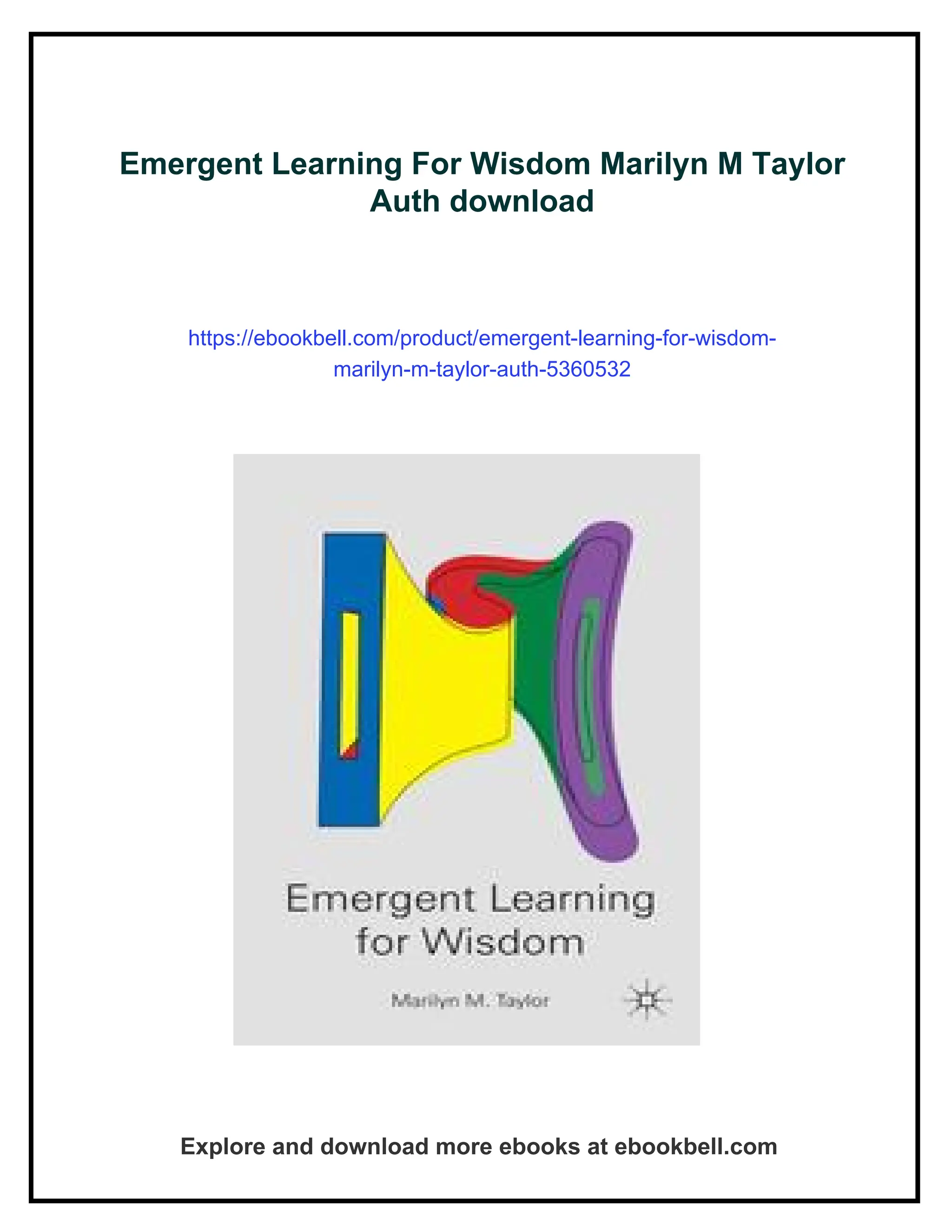


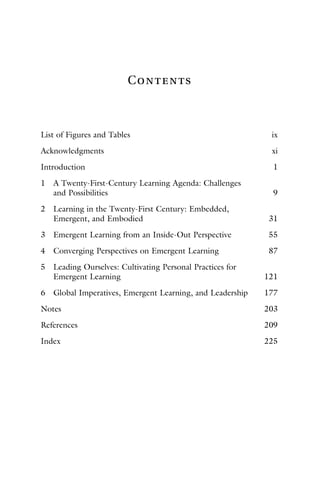
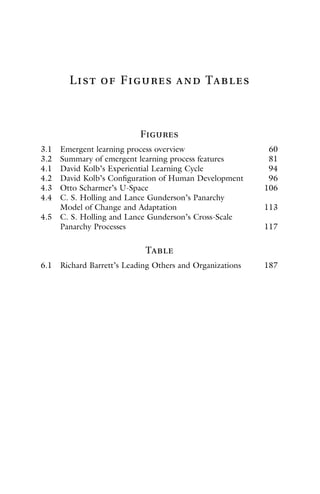
![I ntroduction 3
frightening. “The self-authoring mind” is evident by being able “to
step back enough from the social environment to generate an inter-
nal ‘seat of judgment’ or personal authority that evaluates and makes
decisions about external expectations” (p. 17). We recognize that
competing positions, and the extraordinary amount of energy that
is consumed in maintaining them, have little practical benefit. “The
self-transforming mind” is evident in being able to “step back from
and reflect on the limits of our own ideology or personal authority,”
being able to notice that we are “incomplete,” in being comfortable
with “contraction and opposites,” and in being capable of “hold[ing]
on to multiple systems” (p. 17).
The central theme of this book is that the critical challenges we
are experiencing in this millennium require self-transforming minds.
We have to be able to let go of “theories” that are not bringing the
results that we are seeking. We have to acknowledge that we are
“works in progress.” We have to be able to transcend opposites and
differences rather than collapse or ignore them. Since Kegan and
Lahey observe that less that 8 percent of the American population
is close to this level of mental complexity, this sounds like a very tall
order. I suggest that this is a difficult challenge, but that it is not
exotic—something that requires specialists and consultants, accessible
only to a few. The opportunities for learning our way to a new plateau
of mental complexity are within our daily experience. This book is an
invitation to use experiences of disruption and distress in a positive
way to learn our way through to a demanding future. It makes the
following audacious propositions: it is precisely our experiences that
begin in profound confusion that enable us to transcend our limits of
understanding; it is experiences that begin in loss that bring us previ-
ously unseen advantages; it is experiences that begin in fear that yield
a new confidence; and it is experiences that begin with a sense that
our world is crumbling that generate new possibilities.
Emergent learning arises from our direct experience of the practical
world; it is triggered by an unpredicted event. The process that follows
has the possibility to create not only knowledge but also the wisdom
we need to engage productively and effectively in a world of uncer-
tainty. Learning that leads to wisdom involves the whole person and
new dimensions that have been banished from public life in the mod-
ern era. It requires attention to our right-brain processes—sensing,
feeling, imagination, metaphor, and context—as well as left-brain
processes—analysis, logic, strategy, and application. Gisela Labouvie-
Vief (1990) noted: “One mode provides experiential richness and
fluidity, the other logical cohesion and stability” and “smooth and](https://image.slidesharecdn.com/2680266-250601135508-e73f58eb/85/Emergent-Learning-For-Wisdom-Marilyn-M-Taylor-Auth-15-320.jpg)
![10 E mergent Lear ning for Wisdom
environment. Few would have regarded these observations as critical
then, but most of us now would recognize this theme as a defining
feature of nearly every aspect of our human experience today. In
fact, many of us would recognize features of what Emery and Trist
speculated as a subsequent type of environment, a vortical environ-
ment, which would rise in the absence of effective adaptations to
turbulence. Without a thoughtfully formulated desirable direction
for change, guided by explicit values and engaging those who have a
stake in the outcome, turbulent environments turn to a vortical pat-
tern that draws more into it as it accelerates.
Forty years later, Thomas Friedman (2005) published his ency-
clopedic examination of how the Emery and Trist commentary has
become manifest in our twenty-first-century world. Like Emery and
Trist, he highlighted the impact of technological innovation not only
on how we do things but also on its implications for how we orga-
nize ourselves to do things—transformations of the social, organiza-
tional, and cultural order. Friedman spoke of a “flattening process”
globally—the creation of a more level playing field. “Because it is a
flattening and shrinking of the world, [the new] globalization . . . is
going to be more and more driven not only by individuals but also by
a much more diverse—non-Western, nonwhite—group of individuals.
Individuals from every corner of the flat world are being empowered”
(p. 11). At home, we are experiencing a flattening of our own social
and organizational structures, and the diminishing effectiveness of
centralized authority keeping pace with new opportunities and chal-
lenges. These reconfigurations of global and local social realities con-
front each one of us, as participants in the twenty-first century, and
require us to reframe our perspectives, assumptions, and expectations
about our world, our nation, our organizations and communities, our
knowledge and learning, leadership and authority, and ourselves.
Global Connectivity
A series of electronic innovations have transformed our workplaces
and, more generally, our world, by enabling us to communicate and,
indeed, collaborate with almost anyone in the world. We are now
living in the “global village” that Marshall McLuhan (1962) named
nearly 50 years ago.
My initial work on emergent learning was written on a typewriter
at a time when the most rapid transfer of written work across dis-
tance was by courier. IBM’s original personal computer was released
by 1981. At that time, Bill Gates of Microsoft believed that his](https://image.slidesharecdn.com/2680266-250601135508-e73f58eb/85/Emergent-Learning-For-Wisdom-Marilyn-M-Taylor-Auth-21-320.jpg)
![A Twenty- Fir st- Century Lear ning Agenda 21
diversity as an asset in the global economy; it meant BMO employees
could represent the bank in almost every country in the world in their
own mother tongue.
Michael Adams (2007a) of Environics Research and Communica-
tions observed that attitudes toward immigration vary among host
countries. Quoting an IPSOS MORI study in 200612
in which the
question “Overall, would you say immigrants are having a good or
bad influence on the way things are going in [country]” was posed
to 1000 respondents in eight more developed countries, he noted
that 75 percent of Canadians say their contributions are positive com-
pared with 54 percent of Australians, 52 percent of Americans, 47
percent of Germans, 45 percent of Spaniards, 45 percent of French,
44 percent of Italians, and 43 percent of Britons. Perhaps more sig-
nificantly, 40 percent or more of the respondents from the United
States, Britain, and countries in Europe viewed immigrants’ influence
as negative. Countries with under 40 percent of respondents viewing
immigrants’ contributions as negative were Australia at 39 percent
and Canada at 20 percent. Nevertheless, even in a considerably
immigrant friendly country like Canada, a mutual adaptation process
demands intercultural understanding and accommodations. Adams
cites specific examples of Canadian experiences—how to fit a turban
into a military or a police uniform, how to enable girls to play soccer
safely while wearing a hijab, and how to enable women to vote with
their faces concealed by a niqab. These are examples of daily differ-
ences that confront us, and demand that we find common ground.
These new conditions of life in workplaces and communities demand
collaboration and dialogue among people who see and approach
things differently and the negotiation of changes in taken-for-granted
social and organizational practices.
The more subtle and profound demand on us is to fully embrace
multiple cultural perspectives and life in pluralistic nations. Those of
us who have lived and worked in culturally homogeneous communi-
ties and organizations are like the fish that does not know what water
is; we are typically unaware of our perspective, assumptions, and val-
ues that give meaning to our way of life, until we encounter different
people with very different viewpoints, values, and expectations. It
becomes clear that there are many interpretations and ways of doing
things. We are provoked to examine why we see things the way we
do. Ultimately, we have to recognize that the infusion of different
cultural perspectives will change our organizations and communities
and also that mutual adaptation means change, for both those who
are immigrants and those who are current citizens.](https://image.slidesharecdn.com/2680266-250601135508-e73f58eb/85/Emergent-Learning-For-Wisdom-Marilyn-M-Taylor-Auth-32-320.jpg)
![A Twenty- Fir st- Century Lear ning Agenda 27
of Rome’s fall” (p. 42). He offered two lessons from the fall of the
Roman Empire.
Without constant inputs of high-quality energy, complex societies aren’t
resilient to external shock. In fact, they almost certainly can’t endure.
These ever present dangers . . . drive societies to relentlessly search for
energy sources with the highest possible return on investment (EROI).
They also drive societies to aggressively control and organize the ter-
ritories that supply energy and to extend their interests, engagements,
and often their political economic domination far beyond their current
borders . . . The second lesson is [that] . . . without dramatic new tech-
nologies for finding and using energy, a society’s return on investment
to produce energy . . . starts to decline. . . . [Currently, like Rome] . . .
we’re finding that we are steadily spending increasing amounts of
energy to get energy. (pp. 54–55)
Homer-Dixon’s analysis focused on the enormity of our challenge
and risks by elaborating the energy issue to the structure of our eco-
nomic system and central tenets of our worldview. The lack of resil-
ience in the economic system becomes matched by our lack of culture
resilience through increasingly strenuous denial of the signs of decline
and vulnerability. One of a series of origins of denial he noted is our
tendency “to ignore things that scare us or that threaten assumptions
that give our lives meaning and security” (p. 214).
The development of expertise in emergent learning is significant
at this point in our history precisely because it generates individual
resilience that impacts social processes of adaptation. Homer-Dixon
refers to C. S. Holling’s work on environmental and institutional
adaptation processes, which we examine in Chapter 4, as analogous
to individual emergent learning.
A Learning Agenda for the Twenty-First
Century
While the challenges of our age, as illustrated so far, imply a “growth
agenda” for us, the pivotal, and perhaps the defining, challenge of
our new millennium seems to be for us to accept constant change
and uncertainty, to engage constructively with the unfamiliar, and
to adapt and learn in a continuously emergent context. Appadurai
(2006) has reminded us of the alternative, namely, spiraling fear
of uncertainty, which generates desperate attempts to control and
eliminate the unfamiliar. The stakes are high. An inability to meet this
fundamental challenge as persons, as organizations, and as nations](https://image.slidesharecdn.com/2680266-250601135508-e73f58eb/85/Emergent-Learning-For-Wisdom-Marilyn-M-Taylor-Auth-38-320.jpg)
![L ea r ning in the Twenty- Fir st Century 33
as the written or spoken word stored in books and memories and
made available in libraries and classrooms. It is something organized
as subject matters within distinct disciplines. Knowledge or skill sets
are packages that are selected for transfer as part of a curriculum—as
teachers, we “cover a topic.”
In this perspective, our focus has been primarily on the “what,” a
commodity that was learned. We test to see how much knowledge has
been acquired from that which the instructor has covered. Learning,
to be real, has to be reliably measureable. Paulo Freire (2000) called
this the “banking” notion of education.
Exemplifying the tradition of thought that shaped twentieth-
century education, Ernest Hilgard, who, in 1975, published the
fourth edition of his classic work Theories of Learning, presented
“modern learning theories” (p. 13) as deriving from either the
empiricist or the rationalist schools of thought—variations of either
behavioral or information processing or both. His definition ruled
out developmental learning.
Learning refers to the change in a subject’s behaviour to a given situa-
tion brought about by repeated experiences in that situation, provided
that the behaviour change cannot be explained on the basis of native
response tendencies, maturation, or temporary states of the subject
(e.g., fatigue, drugs, etc.). (p. 17)
More complex and engaging theories of learning were mentioned
in this classic text, but were presented as being only peripherally
relevant. Pioneering Swiss psychologist Jean Piaget’s (1951) devel-
opmental theory and Gestalt theory were mentioned only for their
significance for assessing the capacity for mental functions, such as
memory and recall. Philosopher John Dewey’s (1967) discovery
learning was also mentioned but was seen as having limited value
since “one of the roles of education is the transmission of culture”
[italics added] and was “inefficient if it had to carry the burden” of
the curriculum (p. 345). Freud’s (Brill, 1995) psychodynamic per-
spective was regarded as a less central concern because “the problems
he worked on were not those with which learning theorists have been
chiefly concerned” (p. 347). Hilgard’s text is illustrative of the mar-
ginalization of holistic and practice-based approaches in conventional
education; they did not fit. Schools, colleges, and universities are
seen as preparation for later use in the world; theory and knowledge
are accumulated in one setting for application to practice in another
(Raelin, 2007). While postsecondary education, especially profes-
sional education, incorporates field practice and projects, as well as](https://image.slidesharecdn.com/2680266-250601135508-e73f58eb/85/Emergent-Learning-For-Wisdom-Marilyn-M-Taylor-Auth-43-320.jpg)
![L ea r ning in the Twenty- Fir st Century 43
That is, these educators attempted to maximize professional learning
through an invitation to proactively power themselves into situations
and open themselves to information from their environments that
they might not anticipate. In order to foster professional effective-
ness, Argyris and Schön believed multiple orders of learning were
necessary.
In single-loop learning, we learn to maintain the field of constancy by
learning to design actions that satisfy existing governing variables. In
the double-loop learning, we learned to change the field of constancy
itself. . . . Double-loop learning changes the governing variables [the
“settings”] of one’s programs and causes ripples of change to fan out
over one’s whole system of theories-in-use. (p. 19)
They highlighted especially the struggle that people in formal edu-
cational settings and work organizations experience in the latter
process, that of acknowledging that their assumptions, beliefs, goals,
and/or action strategies no longer lead to expected and desirable
consequences. Their work drew a great deal of attention; it signaled
the growing recognition in the Western workplace that in a context
of accelerating change, not only is learning beyond the technical a
clear and present requirement, but also that most of us are unpre-
pared for it.
Freire: Conscientização (Critical Consciousness)
Brazilian adult educator and writer Paulo Freire had been discover-
ing, articulating, and developing groundbreaking educational strate-
gies to foster similar breakthrough learning among disenfranchised
and illiterate adults in South America. Freire (1973) amplified the
debilitating and disempowering effects for learners of the traditional
“banking concept” approach to education.
Magic consciousness . . . simply apprehends the facts and attributes
them to a superior power by which it is controlled and to which it
must therefore submit. Magic consciousness is characterised by fatal-
ism, which leads men to fold their arms, resigned to the impossibility
of resisting the power of facts. (Freire, 1973, p. 44)
He developed an educational approach, which he called “problem
posing” in the practice of literacy education, expressly to foster for-
mation of “critical consciousness”—“development of the awakening
of critical awareness” (p. 19). Freire elaborated critical consciousness](https://image.slidesharecdn.com/2680266-250601135508-e73f58eb/85/Emergent-Learning-For-Wisdom-Marilyn-M-Taylor-Auth-53-320.jpg)
![44 E mergent Lear ning for Wisdom
in a way that seems consonant with a person able to engage in what
others earlier in this text called “double-loop learning”:
The critically transitive consciousness is characterized by depth in the
interpretation of problems; by the substitution of causal principles for
magical explanations; by the testing of one’s “findings” and by open-
ness to revision; by the attempt to avoid distortion when perceiving
problems and to avoid preconceived notions when analyzing them;
by refusing to transfer responsibility; by rejecting passive positions; by
soundness of argumentation; by the practice of dialogue rather than
polemics; by receptivity to the new for reasons beyond mere novelty
and by the good sense not to reject the old just because it is old—by
accepting what is valid in both old and new. (p. 18)
The “problem posing” approach reconfigured the teacher-learner
relationship in the process of literacy learning so as to empower
learners, that is, experience themselves as naming their world, rather
than receiving and committing to memory the language conventions
from an authority. The form of communication in “problem posing”
education is that of dialogue.
The educator’s role is fundamentally to enter into dialogue with the
illiterate about concrete situations and simply to offer him the instru-
ments with which he can teach himself to read and write. This teaching
cannot be done from the top down, but only from the inside out, by the
illiterate himself [sic], with the collaboration of the educator. (p. 48)
It was this reconfiguration of power relationships that generated a shift
in consciousness for the learner; the educational setting became a micro-
cosm for the democratic society that Freire saw as an essential counter-
part to critically conscious citizens. He stated: “Responsibility cannot be
acquired intellectually, but only through experience” (p. 16).
Freire’s focus on the sociopolitical context as part of his educa-
tional practice featured the third-order learning that Bateson and
Torbert articulated. Freire, who struggled with authoritarian political
regimes, saw his work as oriented toward third-order learning, in the
sense that his intent was to enable learners to be critically aware of
their wider context away from compliance and toward understanding
themselves as responsible actors in their communities and as cocre-
ators of history.
Schön: Professionals as Reflective Practitioners
Argyris and Schön (1974) did not directly address the broader cul-
tural and biographical contexts of their research participants, which](https://image.slidesharecdn.com/2680266-250601135508-e73f58eb/85/Emergent-Learning-For-Wisdom-Marilyn-M-Taylor-Auth-54-320.jpg)