EMERGENCY RESPONSE
Rev.1
1
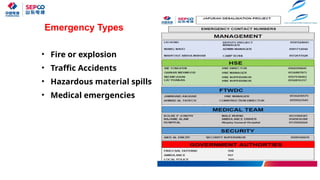
• Fire or explosion
• Traffic Accidents
• Hazardous material spills
• Medical emergencies
Emergency Types
EMERGENCY
RESPONSE
 SEPCO Numbers
 059-7938463
 When transmitting a message by telephone, radio or messenger, ensure the following
information is provided:
A. Exact location (e.g., building, house number).
B. Nature of the emergency (e.g., fire, explosion or gas release).
C. Type of service required.
D. Number of injured personnel.
E. Telephone number you are calling from, if available.
F. Caller’s name and badge number.
Note: Stay on the telephone or radio until told to hang up. Repeat the message if asked to do
so. If possible, post a lookout to direct the ambulance, fire truck or other response vehicle to
the right location.
• When you hear the sound of fire
alarm in camp or site,
immediately report to nearest
Assembly point.
Rev.1
All personnel entering the worksite must be trained and
well versed in the Emergency Response Plan. The
following are things that must be considered and
followed.
 When you hear the fire alarm – EVACUATE the area
immediately.
 Follow the main evacuation route and signs.
 If you must evacuate through smoke …get down and
crawl. Cover your nose with a wet cloth.
 If you must open doors while evacuating, test the
doors before opening by using the back of your hand
to touch the door, the door knob and the door frame.
 Once cleared from the fire area, move to your
designated Assembly Point away from the fire.
Emergency Response
Evacuation
• Evacuation direction always from the top to the
ground = It is forbidden to go up.
• Never come back to your work place during an
evacuation.
• Steer for muster point(s).
• Wait for emergency instructions.
All personnel must understand the provided flow charts in order to
follow the chain of command and report an emergency situation the
correct way as to avoid delays and confusion.
Safety & Loss Prevention
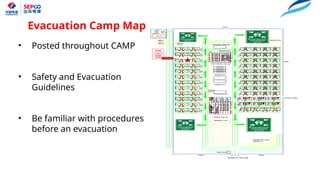
Evacuation Camp Map
• Posted throughout CAMP
• Safety and Evacuation
Guidelines
• Be familiar with procedures
before an evacuation
Immediately report any work
related injury or illness to your
supervisor
Immediately report unsafe
condition, practice or near
miss to your supervisor

Emergency Response Team & fire fighting.pptx

  • 1.
  • 2.
    • Fire orexplosion • Traffic Accidents • Hazardous material spills • Medical emergencies Emergency Types
  • 3.
    EMERGENCY RESPONSE  SEPCO Numbers 059-7938463  When transmitting a message by telephone, radio or messenger, ensure the following information is provided: A. Exact location (e.g., building, house number). B. Nature of the emergency (e.g., fire, explosion or gas release). C. Type of service required. D. Number of injured personnel. E. Telephone number you are calling from, if available. F. Caller’s name and badge number. Note: Stay on the telephone or radio until told to hang up. Repeat the message if asked to do so. If possible, post a lookout to direct the ambulance, fire truck or other response vehicle to the right location.
  • 4.
    • When youhear the sound of fire alarm in camp or site, immediately report to nearest Assembly point. Rev.1
  • 5.
    All personnel enteringthe worksite must be trained and well versed in the Emergency Response Plan. The following are things that must be considered and followed.  When you hear the fire alarm – EVACUATE the area immediately.  Follow the main evacuation route and signs.  If you must evacuate through smoke …get down and crawl. Cover your nose with a wet cloth.  If you must open doors while evacuating, test the doors before opening by using the back of your hand to touch the door, the door knob and the door frame.  Once cleared from the fire area, move to your designated Assembly Point away from the fire. Emergency Response
  • 6.
    Evacuation • Evacuation directionalways from the top to the ground = It is forbidden to go up. • Never come back to your work place during an evacuation. • Steer for muster point(s). • Wait for emergency instructions. All personnel must understand the provided flow charts in order to follow the chain of command and report an emergency situation the correct way as to avoid delays and confusion.
  • 7.
    Safety & LossPrevention Evacuation Camp Map • Posted throughout CAMP • Safety and Evacuation Guidelines • Be familiar with procedures before an evacuation
  • 8.
    Immediately report anywork related injury or illness to your supervisor Immediately report unsafe condition, practice or near miss to your supervisor