Elements of
Narrative Text
by: Getmy Maliana, S.S
• Theme
• Setting
• Characters
• Point of view
• Characterization
• Plot
- exposition statement
- rising action
- conflict
- climax
- falling action
- resolution
THEME
• The main idea of a literary work, usually expressed
as a generalization.
SETTING
•The time and place in which a work of
literature happens.
CHARACTERS
• The people (or actors), anybody or anything in the
story.
– Protagonist: the main character or the hero in a story,
and the person that the story is usually written about.
– Antagonist: this is a person that opposes or fights
against another character (usually the protagonist).
Flat and Round character
• A flat character is a character that
isn’t complicated and have a personality
that has one dimension.
• A static character is one who remain
consist throughout the story
• Around character is deep and complex
character in the story
• A dynamic character is one that
develops through time as a result of the
story’s conflict and plot.
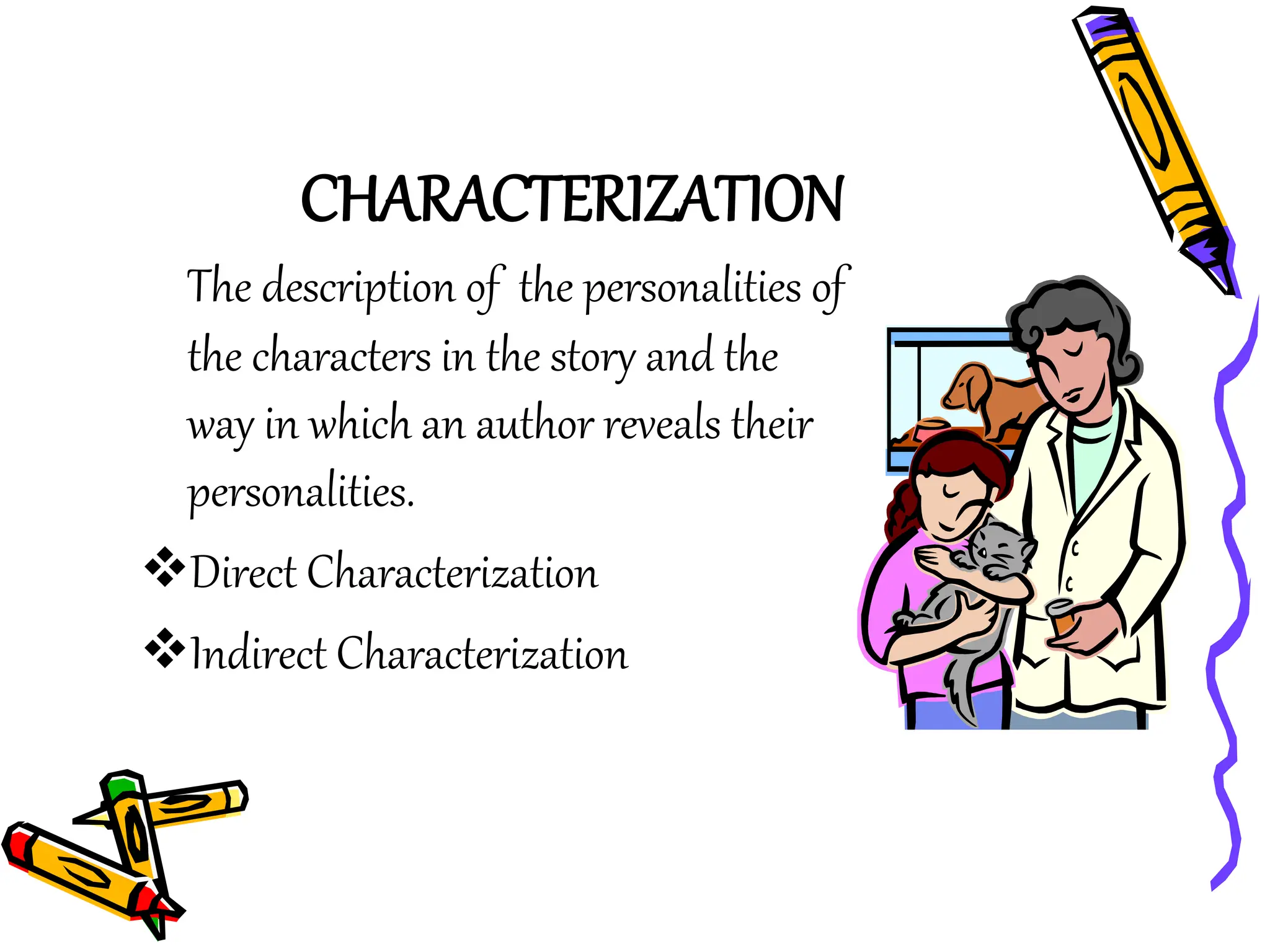
CHARACTERIZATION
The description of the personalities of
the characters in the story and the
way in which an author reveals their
personalities.
Direct Characterization
Indirect Characterization
PLOT
• The sequence or order of events in a story. Or known
as storyline. The element of plot includes:
- Exposition Statement : The part of the plot that
tells how the story begins.
- Rising Action :The action in the story leading up
to the climax.
- Conflict : Struggles or problems between
opposing forces.
- Climax :The point of crisis in the plot. It may be
the reader’s point of highest interest.
- Falling action :The action in the story after the
climax is revealed.
- Resolution :The part of the plot that reveals the
final outcome.
Kind of Plots are:
Progressive Plot: A plot tells a series of
event chronology
Regressive Plot: A plot in which the
process of running the story randomly or
not sequentially.
Flashback Plot: A plot which is continued
back to the beginning of the story.
Missed Plot: It is a combination of
forward and backward grooves.
POINT OF VIEW
•What the character or narrator telling the story can
see (his or her perspective).
The author chooses “who” is to tell the story by
determining the point of view.
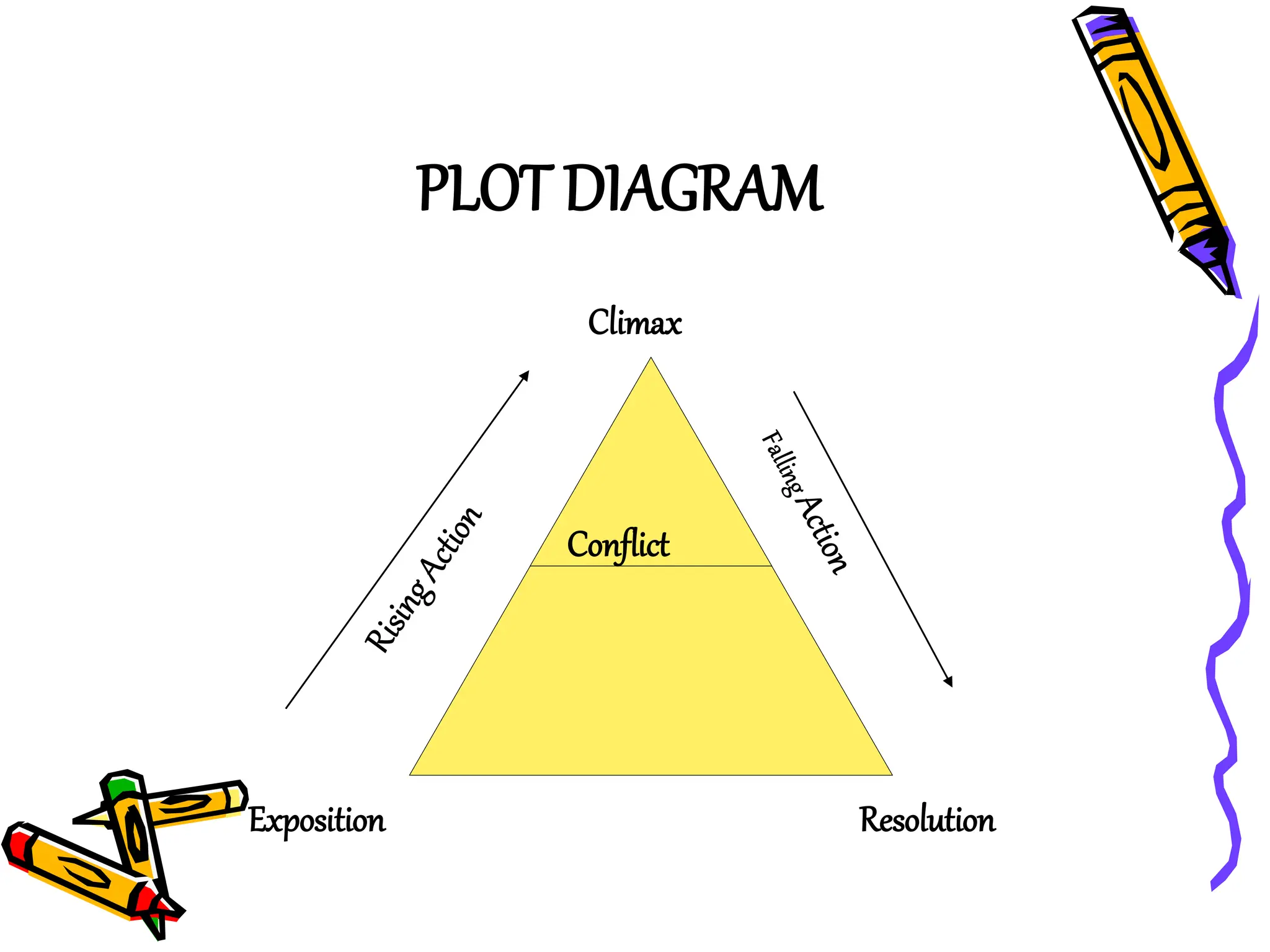
PLOT DIAGRAM
Resolution
Climax
Exposition
Conflict
THANK YOU

Element of Narrative.ppt

  • 1.
  • 2.
    • Theme • Setting •Characters • Point of view • Characterization • Plot - exposition statement - rising action - conflict - climax - falling action - resolution
  • 3.
    THEME • The mainidea of a literary work, usually expressed as a generalization. SETTING •The time and place in which a work of literature happens.
  • 4.
    CHARACTERS • The people(or actors), anybody or anything in the story. – Protagonist: the main character or the hero in a story, and the person that the story is usually written about. – Antagonist: this is a person that opposes or fights against another character (usually the protagonist).
  • 5.
    Flat and Roundcharacter • A flat character is a character that isn’t complicated and have a personality that has one dimension. • A static character is one who remain consist throughout the story • Around character is deep and complex character in the story • A dynamic character is one that develops through time as a result of the story’s conflict and plot.
  • 6.
    CHARACTERIZATION The description ofthe personalities of the characters in the story and the way in which an author reveals their personalities. Direct Characterization Indirect Characterization
  • 7.
    PLOT • The sequenceor order of events in a story. Or known as storyline. The element of plot includes: - Exposition Statement : The part of the plot that tells how the story begins. - Rising Action :The action in the story leading up to the climax. - Conflict : Struggles or problems between opposing forces.
  • 8.
    - Climax :Thepoint of crisis in the plot. It may be the reader’s point of highest interest. - Falling action :The action in the story after the climax is revealed. - Resolution :The part of the plot that reveals the final outcome.
  • 9.
    Kind of Plotsare: Progressive Plot: A plot tells a series of event chronology Regressive Plot: A plot in which the process of running the story randomly or not sequentially. Flashback Plot: A plot which is continued back to the beginning of the story. Missed Plot: It is a combination of forward and backward grooves.
  • 10.
    POINT OF VIEW •Whatthe character or narrator telling the story can see (his or her perspective). The author chooses “who” is to tell the story by determining the point of view.
  • 11.
  • 12.