ELECTIONS IN THE
COMMONWEALTH CARIBBEAN
OVERVIEW
Electoral Processes
How Political Parties Prepare for Elections
Factors that Influence Election Outcomes
Factors that Influence Voter Participation in
Elections
Analyzing Election Data
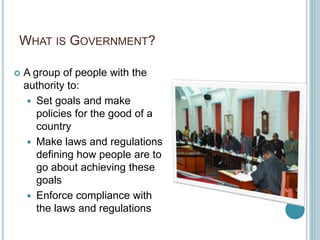
WHAT IS GOVERNMENT?
 A group of people with the
authority to:
 Set goals and make
policies for the good of a
country
 Make laws and regulations
defining how people are to
go about achieving these
goals
 Enforce compliance with
the laws and regulations
Countries in the Commonwealth
Caribbean are democracies,
where the government is
chosen by the citizens in a
general election that should be
free and fair.
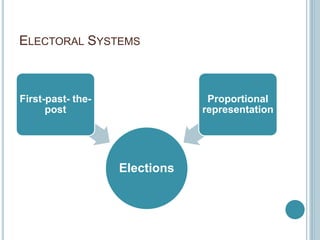
ELECTORAL SYSTEMS
Elections
First-past- the-
post
Proportional
representation
FIRST-PAST-THE-POST
 A country is divided up into constituencies
 A candidate is nominated for election in each
constituency
 The candidate gaining the most votes wins the
election and gets a seat in parliament
 The party that wins the most seats wins the general
election and forms the government
 The opposition comes from the party with the
second highest number of seats
 If no party wins an outright majority there is a hung
parliament
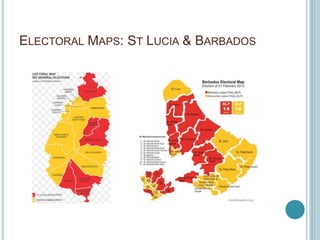
ELECTORAL MAPS: ST LUCIA & BARBADOS
ADVANTAGES OF FIRST-PAST-THE- POST
 Enables direct interaction with
representatives and the people
 Representatives can deal specifically with
the needs of their constituencies
 Allows voters to choose individuals based
on competence rather than just for a party
 Allows for an independent candidate to be
elected in a constituency
 It is simple to use and understand
DISADVANTAGES OF FIRST-PAST-THE-POST
 The party that wins the election may have the
most seats but not the majority of the overall vote
 A candidate may win a seat without getting the
majority of the votes in his/her constituency
 MPs may focus on the interests of their
constituencies rather than on the national interest
 A party may get a substantial number of the
overall vote but have few representatives in
parliament
 It leads to wasted votes
 It can lead to gerrymandering
PROPORTIONAL REPRESENTATION
 The whole country is treated as a single
constituency
 A list of candidates is prepared by the political
parties based on the number of seats in
Parliament
 People vote for a party rather than a candidate
 Seats in Parliament are awarded to a party
based on the proportion votes the party
receives
 The candidates on the party list will be given
seats in order of preference
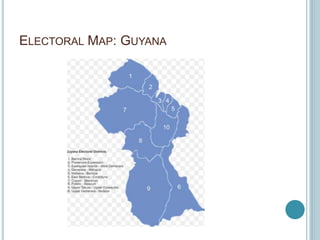
ELECTORAL MAP: GUYANA
ADVANTAGES PROPORTIONAL
REPRESENTATION
 MPs are more likely to focus on national
interests rather than narrow constituency
interests
 Representation in parliament is a true reflection
of the strength of the party
 There are no controversies with
gerrymandering as there are no constituencies
DISADVANTAGES OF PROPORTIONAL
REPRESENTATION
 Facilitates voting along racial or sectarian lines
 Can lead to hung parliaments
 Can lead to the presence of a number of small
parties in parliament, making it difficult to form a
coherent opposition
 There tends to be a preponderance of coalition
governments that can be complex and lead to
tensions
 It is possible that a small party without much
support may hold the balance of power
MANAGING AN ELECTION
MANAGING AN ELECTIONS
A country’s election system is managed
by a government department known as
the electoral office or the electoral and
boundaries commission.
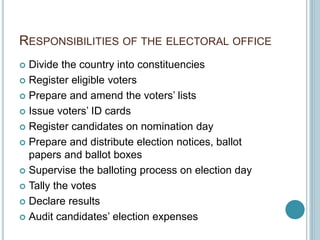
RESPONSIBILITIES OF THE ELECTORAL OFFICE
 Divide the country into constituencies
 Register eligible voters
 Prepare and amend the voters’ lists
 Issue voters’ ID cards
 Register candidates on nomination day
 Prepare and distribute election notices, ballot
papers and ballot boxes
 Supervise the balloting process on election day
 Tally the votes
 Declare results
 Audit candidates’ election expenses
PREPARING FOR ELECTIONS
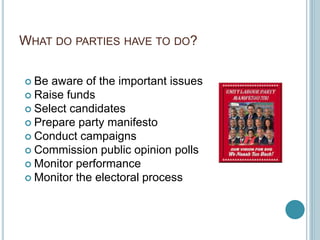
WHAT DO PARTIES HAVE TO DO?
 Be aware of the important issues
 Raise funds
 Select candidates
 Prepare party manifesto
 Conduct campaigns
 Commission public opinion polls
 Monitor performance
 Monitor the electoral process
FACTORS INFLUENCING THE OUTCOME
OF ELECTIONS
FACTORS INFLUENCING THE OUTCOMES OF
ELECTIONS
 Campaign strategy
 Campaign spending
 Media coverage
 Campaign advertising
 Public opinion polls
 Voter turnout
 Campaign issues
 Voter attitudes to government
FACTORS INFLUENCING VOTER
PARTICIPATION
WHAT MAKES A PERSON DECIDE WHETHER OR
NOT TO VOTE?
 Campaign issues
 Candidates
 Voter attitude towards government
 Voter loyalty to political parties
 Voter apathy
 Education
 Religious beliefs
 Age
 Level of income

Elections in the Commonwealth Caribbean

  • 1.
  • 2.
    OVERVIEW Electoral Processes How PoliticalParties Prepare for Elections Factors that Influence Election Outcomes Factors that Influence Voter Participation in Elections Analyzing Election Data
  • 3.
    WHAT IS GOVERNMENT? A group of people with the authority to:  Set goals and make policies for the good of a country  Make laws and regulations defining how people are to go about achieving these goals  Enforce compliance with the laws and regulations
  • 4.
    Countries in theCommonwealth Caribbean are democracies, where the government is chosen by the citizens in a general election that should be free and fair.
  • 5.
  • 6.
    FIRST-PAST-THE-POST  A countryis divided up into constituencies  A candidate is nominated for election in each constituency  The candidate gaining the most votes wins the election and gets a seat in parliament  The party that wins the most seats wins the general election and forms the government  The opposition comes from the party with the second highest number of seats  If no party wins an outright majority there is a hung parliament
  • 7.
    ELECTORAL MAPS: STLUCIA & BARBADOS
  • 8.
    ADVANTAGES OF FIRST-PAST-THE-POST  Enables direct interaction with representatives and the people  Representatives can deal specifically with the needs of their constituencies  Allows voters to choose individuals based on competence rather than just for a party  Allows for an independent candidate to be elected in a constituency  It is simple to use and understand
  • 9.
    DISADVANTAGES OF FIRST-PAST-THE-POST The party that wins the election may have the most seats but not the majority of the overall vote  A candidate may win a seat without getting the majority of the votes in his/her constituency  MPs may focus on the interests of their constituencies rather than on the national interest  A party may get a substantial number of the overall vote but have few representatives in parliament  It leads to wasted votes  It can lead to gerrymandering
  • 10.
    PROPORTIONAL REPRESENTATION  Thewhole country is treated as a single constituency  A list of candidates is prepared by the political parties based on the number of seats in Parliament  People vote for a party rather than a candidate  Seats in Parliament are awarded to a party based on the proportion votes the party receives  The candidates on the party list will be given seats in order of preference
  • 11.
  • 12.
    ADVANTAGES PROPORTIONAL REPRESENTATION  MPsare more likely to focus on national interests rather than narrow constituency interests  Representation in parliament is a true reflection of the strength of the party  There are no controversies with gerrymandering as there are no constituencies
  • 13.
    DISADVANTAGES OF PROPORTIONAL REPRESENTATION Facilitates voting along racial or sectarian lines  Can lead to hung parliaments  Can lead to the presence of a number of small parties in parliament, making it difficult to form a coherent opposition  There tends to be a preponderance of coalition governments that can be complex and lead to tensions  It is possible that a small party without much support may hold the balance of power
  • 14.
  • 15.
    MANAGING AN ELECTIONS Acountry’s election system is managed by a government department known as the electoral office or the electoral and boundaries commission.
  • 16.
    RESPONSIBILITIES OF THEELECTORAL OFFICE  Divide the country into constituencies  Register eligible voters  Prepare and amend the voters’ lists  Issue voters’ ID cards  Register candidates on nomination day  Prepare and distribute election notices, ballot papers and ballot boxes  Supervise the balloting process on election day  Tally the votes  Declare results  Audit candidates’ election expenses
  • 17.
  • 18.
    WHAT DO PARTIESHAVE TO DO?  Be aware of the important issues  Raise funds  Select candidates  Prepare party manifesto  Conduct campaigns  Commission public opinion polls  Monitor performance  Monitor the electoral process
  • 19.
    FACTORS INFLUENCING THEOUTCOME OF ELECTIONS
  • 20.
    FACTORS INFLUENCING THEOUTCOMES OF ELECTIONS  Campaign strategy  Campaign spending  Media coverage  Campaign advertising  Public opinion polls  Voter turnout  Campaign issues  Voter attitudes to government
  • 21.
  • 22.
    WHAT MAKES APERSON DECIDE WHETHER OR NOT TO VOTE?  Campaign issues  Candidates  Voter attitude towards government  Voter loyalty to political parties  Voter apathy  Education  Religious beliefs  Age  Level of income