eHealth
eHealth
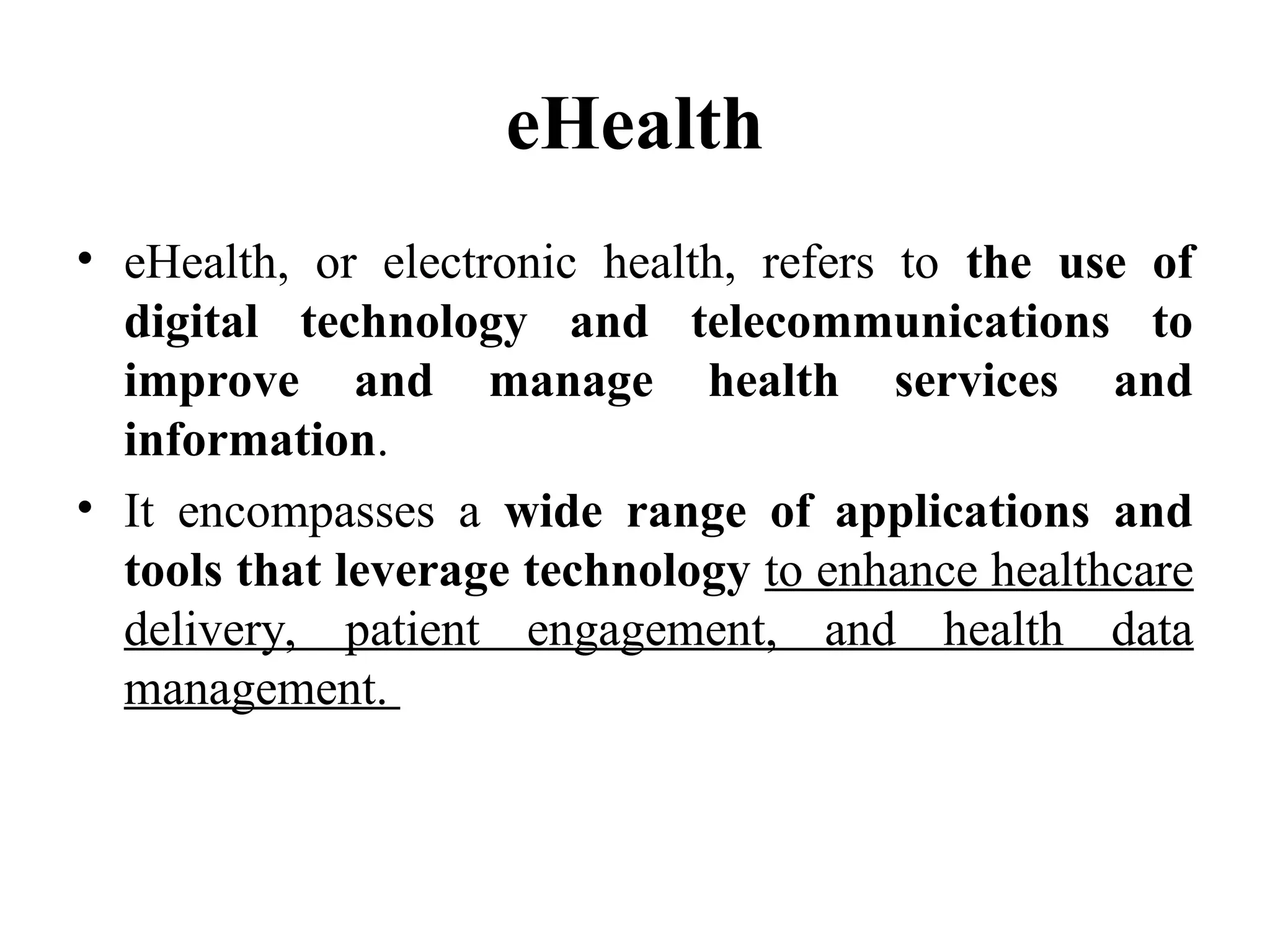
• eHealth, or electronic health, refers to the use of
digital technology and telecommunications to
improve and manage health services and
information.
• It encompasses a wide range of applications and
tools that leverage technology to enhance healthcare
delivery, patient engagement, and health data
management.
Key Aspects of eHealth
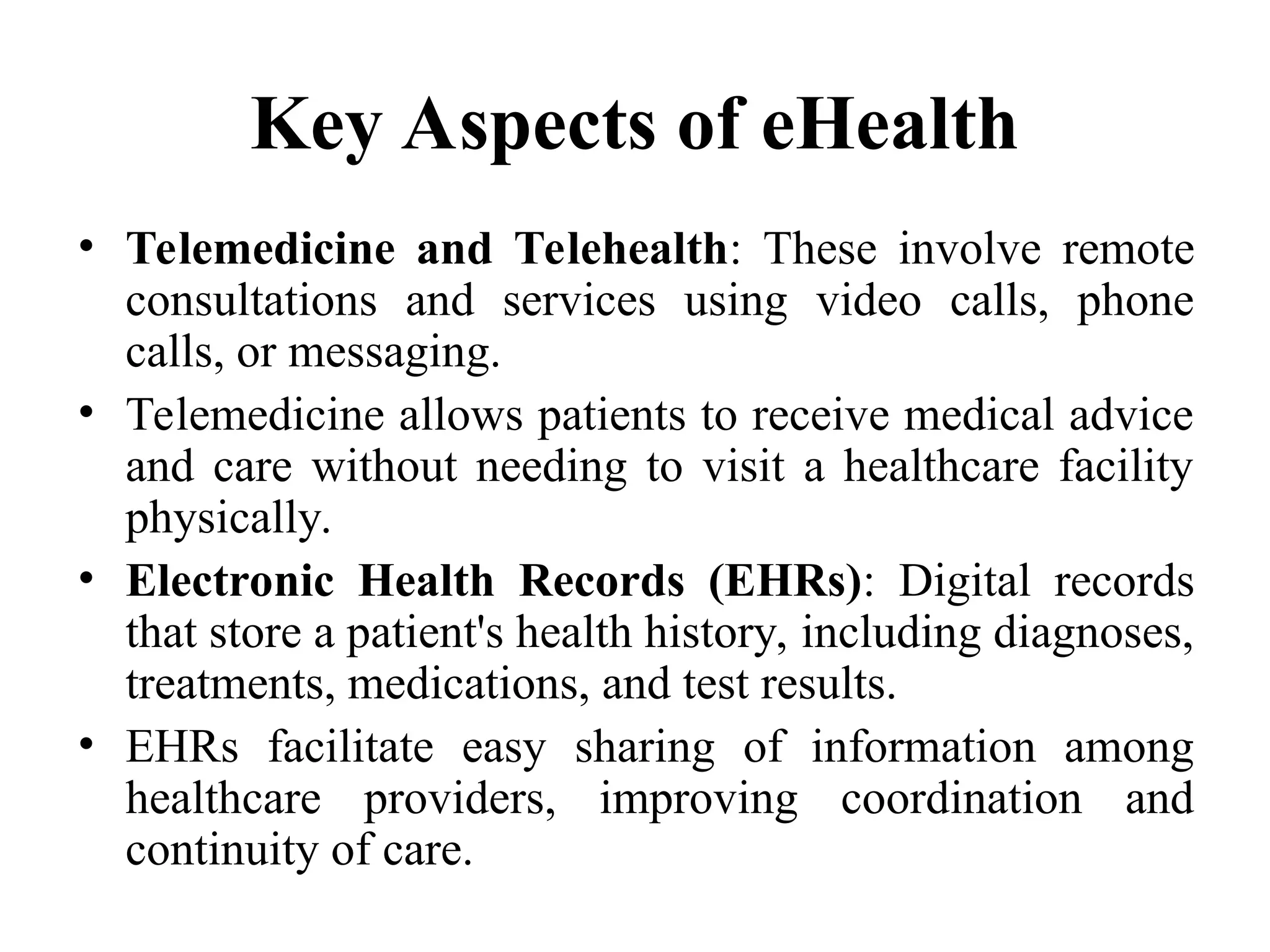
• Telemedicine and Telehealth: These involve remote
consultations and services using video calls, phone
calls, or messaging.
• Telemedicine allows patients to receive medical advice
and care without needing to visit a healthcare facility
physically.
• Electronic Health Records (EHRs): Digital records
that store a patient's health history, including diagnoses,
treatments, medications, and test results.
• EHRs facilitate easy sharing of information among
healthcare providers, improving coordination and
continuity of care.
Key Aspects of eHealth
• Health Information Systems: Systems that manage and
analyze health data, including patient management systems,
laboratory information systems, and pharmacy information
systems.
• Mobile Health (mHealth): Health-related services and
information delivered through mobile devices such as smart
phones and tablets. This includes health apps for monitoring
health metrics, managing chronic conditions, and accessing
health information.
• Wearable Health Technology: Devices like smart watches
or fitness trackers that monitor various health metrics (e.g.,
heart rate, physical activity) and provide real-time feedback
to users and healthcare providers.
Key Aspects of eHealth
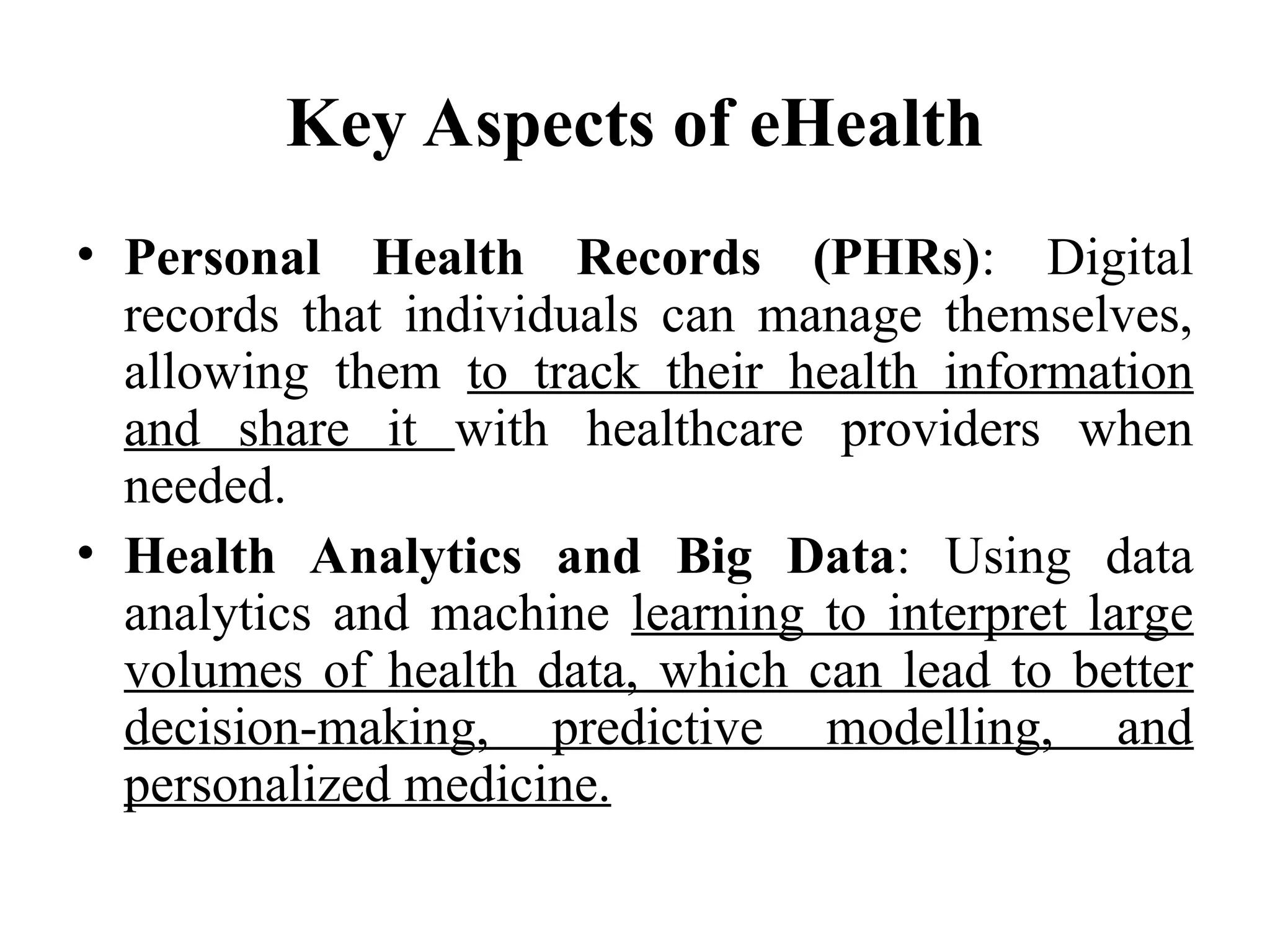
• Personal Health Records (PHRs): Digital
records that individuals can manage themselves,
allowing them to track their health information
and share it with healthcare providers when
needed.
• Health Analytics and Big Data: Using data
analytics and machine learning to interpret large
volumes of health data, which can lead to better
decision-making, predictive modelling, and
personalized medicine.
Key Aspects of eHealth
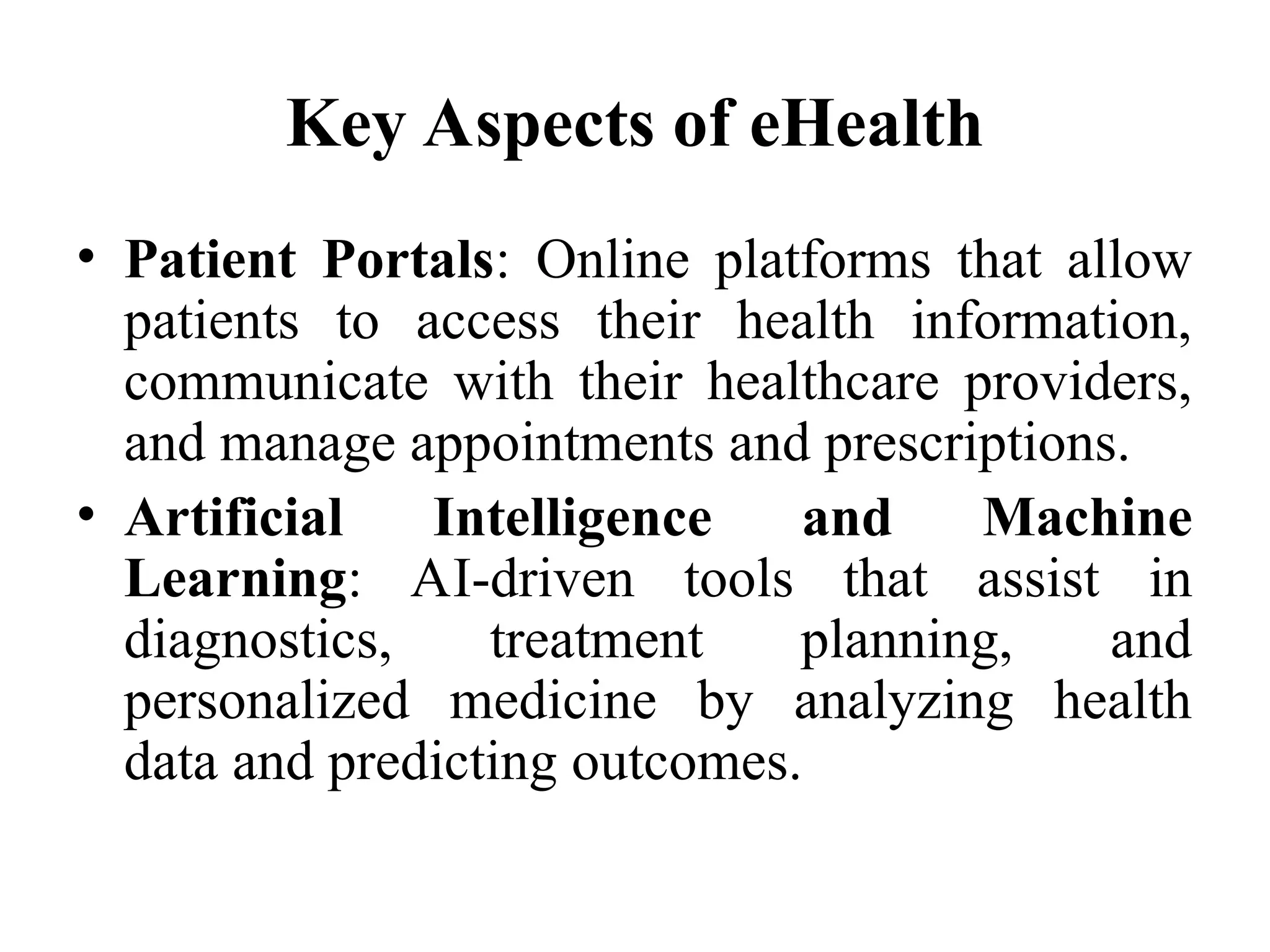
• Patient Portals: Online platforms that allow
patients to access their health information,
communicate with their healthcare providers,
and manage appointments and prescriptions.
• Artificial Intelligence and Machine
Learning: AI-driven tools that assist in
diagnostics, treatment planning, and
personalized medicine by analyzing health
data and predicting outcomes.
Benefits of eHealth
• Improved Access to Care: eHealth technologies can extend
healthcare services to remote or underserved areas, making
it easier for patients to access care.
• Enhanced Patient Engagement: Tools like mobile apps
and patient portals empower patients to take an active role
in their health management and stay informed about their
conditions.
• Increased Efficiency: Digital records and health
information systems streamline administrative processes,
reduce paperwork, and improve the efficiency of healthcare
delivery.
• Better Coordination of Care: EHRs and other digital tools
facilitate better communication among healthcare providers,
leading to more coordinated and integrated care.
Benefits of eHealth
• Cost Savings: By reducing the need for physical
appointments, minimizing duplication of tests, and
streamlining administrative processes, eHealth can help
lower healthcare costs.
• Data-Driven Insights: Health analytics can uncover
trends, identify potential health risks, and guide public
health interventions and policy-making.
• Real-Time Monitoring: Wearable devices and remote
monitoring tools enable continuous tracking of health
metrics, which can be crucial for managing chronic
conditions and detecting issues early.
• Personalized Medicine: Access to comprehensive data
allows for more tailored and individualized treatment
plans based on a patient’s unique health profile.
Challenges of eHealth
• Data Security and Privacy: Protecting sensitive health information
from breaches and unauthorized access is a significant concern.
• Integration and Interoperability: Ensuring that different eHealth
systems and devices can communicate and work together effectively.
• Digital Divide: Addressing disparities in access to technology and
digital literacy, especially in low-income or rural areas.
• Regulatory Compliance: Navigating complex regulations and
standards related to health data and telemedicine practices.
• Overall, eHealth represents a transformative shift in how healthcare
is delivered and managed, with the potential to improve outcomes
and enhance the overall patient experience.

eHealth - Telemedicine concept and its benefits

  • 1.
  • 2.
    eHealth • eHealth, orelectronic health, refers to the use of digital technology and telecommunications to improve and manage health services and information. • It encompasses a wide range of applications and tools that leverage technology to enhance healthcare delivery, patient engagement, and health data management.
  • 3.
    Key Aspects ofeHealth • Telemedicine and Telehealth: These involve remote consultations and services using video calls, phone calls, or messaging. • Telemedicine allows patients to receive medical advice and care without needing to visit a healthcare facility physically. • Electronic Health Records (EHRs): Digital records that store a patient's health history, including diagnoses, treatments, medications, and test results. • EHRs facilitate easy sharing of information among healthcare providers, improving coordination and continuity of care.
  • 4.
    Key Aspects ofeHealth • Health Information Systems: Systems that manage and analyze health data, including patient management systems, laboratory information systems, and pharmacy information systems. • Mobile Health (mHealth): Health-related services and information delivered through mobile devices such as smart phones and tablets. This includes health apps for monitoring health metrics, managing chronic conditions, and accessing health information. • Wearable Health Technology: Devices like smart watches or fitness trackers that monitor various health metrics (e.g., heart rate, physical activity) and provide real-time feedback to users and healthcare providers.
  • 5.
    Key Aspects ofeHealth • Personal Health Records (PHRs): Digital records that individuals can manage themselves, allowing them to track their health information and share it with healthcare providers when needed. • Health Analytics and Big Data: Using data analytics and machine learning to interpret large volumes of health data, which can lead to better decision-making, predictive modelling, and personalized medicine.
  • 6.
    Key Aspects ofeHealth • Patient Portals: Online platforms that allow patients to access their health information, communicate with their healthcare providers, and manage appointments and prescriptions. • Artificial Intelligence and Machine Learning: AI-driven tools that assist in diagnostics, treatment planning, and personalized medicine by analyzing health data and predicting outcomes.
  • 7.
    Benefits of eHealth •Improved Access to Care: eHealth technologies can extend healthcare services to remote or underserved areas, making it easier for patients to access care. • Enhanced Patient Engagement: Tools like mobile apps and patient portals empower patients to take an active role in their health management and stay informed about their conditions. • Increased Efficiency: Digital records and health information systems streamline administrative processes, reduce paperwork, and improve the efficiency of healthcare delivery. • Better Coordination of Care: EHRs and other digital tools facilitate better communication among healthcare providers, leading to more coordinated and integrated care.
  • 8.
    Benefits of eHealth •Cost Savings: By reducing the need for physical appointments, minimizing duplication of tests, and streamlining administrative processes, eHealth can help lower healthcare costs. • Data-Driven Insights: Health analytics can uncover trends, identify potential health risks, and guide public health interventions and policy-making. • Real-Time Monitoring: Wearable devices and remote monitoring tools enable continuous tracking of health metrics, which can be crucial for managing chronic conditions and detecting issues early. • Personalized Medicine: Access to comprehensive data allows for more tailored and individualized treatment plans based on a patient’s unique health profile.
  • 9.
    Challenges of eHealth •Data Security and Privacy: Protecting sensitive health information from breaches and unauthorized access is a significant concern. • Integration and Interoperability: Ensuring that different eHealth systems and devices can communicate and work together effectively. • Digital Divide: Addressing disparities in access to technology and digital literacy, especially in low-income or rural areas. • Regulatory Compliance: Navigating complex regulations and standards related to health data and telemedicine practices. • Overall, eHealth represents a transformative shift in how healthcare is delivered and managed, with the potential to improve outcomes and enhance the overall patient experience.