 Becoming more aware of the larger
community.
 More opportunities to participate in
school and church activities.
 Sitting for long period of times can be
frustrating and very tiring.
 Needs doses of reassurance and
encouragement.
 Prone to worry.
 Want to be involved in the activities, not
just “told” about things.
 Can be boisterous, noisy and highly
competitive.
 Increasing reasoning powers.
 Memorizing skills are at their peak.
 Respond to caring teachers who
understand them.
 Relevance is important.
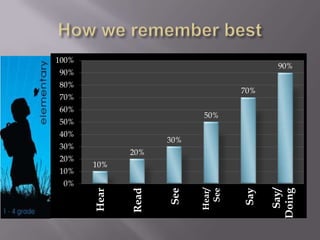
10%
20%
30%
50%
70%
90%
0%
10%
20%
30%
40%
50%
60%
70%
80%
90%
100%
Hear
Read
See
Hear/
See
Say
Say/
Doing

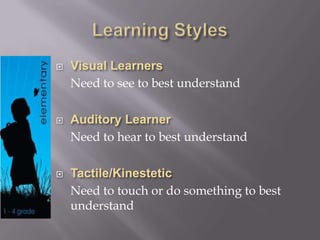
Need to see to best understand

Need to hear to best understand

Need to touch or do something to best
understand
 Find out what students already.
 What you teach is only as
as you make it.
 Tie-in personal and help
kids relate this new knowledge to
something they already know.
 Spend less time lecturing, more time
the topic to what the kids know.
 When you pray, direct the prayer and be
.
 Lead a Flock.
 Feed the Flock.
 Care for the Flock
 If you capture the attention of
your student’s quickly, you can
teach effectively.
 If you miss your
opportunity, you may do a lot
of taking, but many will not pay
attention.
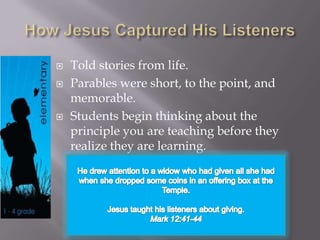
 Told stories from life.
 Parables were short, to the point, and
memorable.
 Students begin thinking about the
principle you are teaching before they
realize they are learning.
41 Jesus sat down opposite the place where the
offerings were put and watched the crowd
putting their money into the temple
treasury. Many rich people threw in large
amounts. 42 But a poor widow came and put
in two very small copper coins, worth only a
few cents. 43 Calling his disciples to
him, Jesus said, “Truly I tell you, this poor
widow has put more into the treasury than
all the others. 44 They all gave out of their
wealth; but she, out of her poverty, put in
everything—all she had to live on.”
 Relate each Bible passage to the whole Scripture.
 Relate each lesson to the whole of student’s life.
 Use real illustrations from modern life.
 Use positive role models from Scripture.
 Solve problems.
 Point out relationships in the lesson.
 Point out the principles.
 Motivate students to establish and live by
biblical principals.
 Relate new principles to those already known.
Here are some general means of getting your
students’ attention:
 an illustration from your own life, from the
news, etc.
 a question purposefully chosen for them to
share about some aspect of their week that ties
into the theme of the lesson
 a story (could be from a book or a video clipping
or recorded TV show ... Just enough to get their
attention, perhaps taking them to the climax of
the story)
 a puppet presentation
 a short skit/drama
 a game from which a point can be made
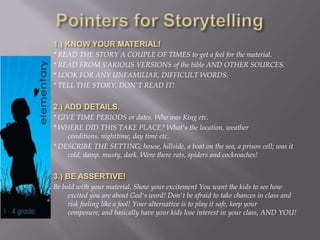
* READ THE STORY A COUPLE OF TIMES to get a feel for the material.
* READ FROM VARIOUS VERSIONS of the bible AND OTHER SOURCES.
* LOOK FOR ANY UNFAMILIAR, DIFFICULT WORDS.
* TELL THE STORY, DON'T READ IT!
* GIVE TIME PERIODS or dates. Who was King etc.
* WHERE DID THIS TAKE PLACE? What's the location, weather
conditions, nighttime, day time etc.
* DESCRIBE THE SETTING; house, hillside, a boat on the sea, a prison cell; was it
cold, damp, musty, dark. Were there rats, spiders and cockroaches!
Be bold with your material. Show your excitement You want the kids to see how
excited you are about God's word! Don't be afraid to take chances in class and
risk feeling like a fool! Your alternative is to play it safe, keep your
composure, and basically have your kids lose interest in your class, AND YOU!
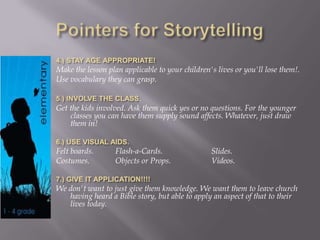
Make the lesson plan applicable to your children's lives or you'll lose them!.
Use vocabulary they can grasp.
.
Get the kids involved. Ask them quick yes or no questions. For the younger
classes you can have them supply sound affects. Whatever, just draw
them in!
Felt boards. Flash-a-Cards. Slides.
Costumes. Objects or Props. Videos.
We don't want to just give them knowledge. We want them to leave church
having heard a Bible story, but able to apply an aspect of that to their
lives today.
At the end of your class, ask yourself:
1. How well did I organize to teach this
class session?
2. How well did things go?
3. What happened for the students?
4. How could I make next time better?

Effectiveteachingtechniques ppfromtraining11-29-10-101203132523-phpapp02

  • 2.
     Becoming moreaware of the larger community.  More opportunities to participate in school and church activities.  Sitting for long period of times can be frustrating and very tiring.  Needs doses of reassurance and encouragement.  Prone to worry.
  • 3.
     Want tobe involved in the activities, not just “told” about things.  Can be boisterous, noisy and highly competitive.  Increasing reasoning powers.  Memorizing skills are at their peak.  Respond to caring teachers who understand them.  Relevance is important.
  • 4.
  • 5.
     Need to seeto best understand  Need to hear to best understand  Need to touch or do something to best understand
  • 6.
     Find outwhat students already.  What you teach is only as as you make it.  Tie-in personal and help kids relate this new knowledge to something they already know.  Spend less time lecturing, more time the topic to what the kids know.  When you pray, direct the prayer and be .
  • 7.
     Lead aFlock.  Feed the Flock.  Care for the Flock
  • 8.
     If youcapture the attention of your student’s quickly, you can teach effectively.  If you miss your opportunity, you may do a lot of taking, but many will not pay attention.
  • 9.
     Told storiesfrom life.  Parables were short, to the point, and memorable.  Students begin thinking about the principle you are teaching before they realize they are learning.
  • 10.
    41 Jesus satdown opposite the place where the offerings were put and watched the crowd putting their money into the temple treasury. Many rich people threw in large amounts. 42 But a poor widow came and put in two very small copper coins, worth only a few cents. 43 Calling his disciples to him, Jesus said, “Truly I tell you, this poor widow has put more into the treasury than all the others. 44 They all gave out of their wealth; but she, out of her poverty, put in everything—all she had to live on.”
  • 11.
     Relate eachBible passage to the whole Scripture.  Relate each lesson to the whole of student’s life.  Use real illustrations from modern life.  Use positive role models from Scripture.  Solve problems.  Point out relationships in the lesson.  Point out the principles.  Motivate students to establish and live by biblical principals.  Relate new principles to those already known.
  • 12.
    Here are somegeneral means of getting your students’ attention:  an illustration from your own life, from the news, etc.  a question purposefully chosen for them to share about some aspect of their week that ties into the theme of the lesson  a story (could be from a book or a video clipping or recorded TV show ... Just enough to get their attention, perhaps taking them to the climax of the story)  a puppet presentation  a short skit/drama  a game from which a point can be made
  • 13.
    * READ THESTORY A COUPLE OF TIMES to get a feel for the material. * READ FROM VARIOUS VERSIONS of the bible AND OTHER SOURCES. * LOOK FOR ANY UNFAMILIAR, DIFFICULT WORDS. * TELL THE STORY, DON'T READ IT! * GIVE TIME PERIODS or dates. Who was King etc. * WHERE DID THIS TAKE PLACE? What's the location, weather conditions, nighttime, day time etc. * DESCRIBE THE SETTING; house, hillside, a boat on the sea, a prison cell; was it cold, damp, musty, dark. Were there rats, spiders and cockroaches! Be bold with your material. Show your excitement You want the kids to see how excited you are about God's word! Don't be afraid to take chances in class and risk feeling like a fool! Your alternative is to play it safe, keep your composure, and basically have your kids lose interest in your class, AND YOU!
  • 14.
    Make the lessonplan applicable to your children's lives or you'll lose them!. Use vocabulary they can grasp. . Get the kids involved. Ask them quick yes or no questions. For the younger classes you can have them supply sound affects. Whatever, just draw them in! Felt boards. Flash-a-Cards. Slides. Costumes. Objects or Props. Videos. We don't want to just give them knowledge. We want them to leave church having heard a Bible story, but able to apply an aspect of that to their lives today.
  • 16.
    At the endof your class, ask yourself: 1. How well did I organize to teach this class session? 2. How well did things go? 3. What happened for the students? 4. How could I make next time better?