WELCOME
Presented By
MD. Shaiffuddin Manik
Reg No:17-07878
Roll No:852
MS in Horticulture
Sher-e-Bangla Agricultural University
What is meant by Effective Microorganism
 Microorganisms are tiny units of life that are too small to be seen with the naked eye but
visible under a microscope and they exist everywhere in nature.
 Microorganisms are crucial for maintaining the
ecological balance.
 Effective Microorganisms (EM) are mixed cultures of beneficial naturally-occurring
organisms that can be applied as inoculants to increase the microbial diversity of soil
ecosystem.
 EM stands for Effective Microorganisms. EM comes in a liquid form and consists
of naturally microorganisms. occurring beneficial.
 The microbes in EM are non-harmful, non- pathogenic, not-genetically-engineered or
modified (non-GMO), and not-chemically- synthesized, and EM is not a medicine either.
 The basic groups of microorganisms in EM are lactic acid bacteria (commonly found in
yogurt, cheeses), yeast (bread), and phototrophic bacteria.
What is meant by Effective Microorganism
Effective Microorganism Origin
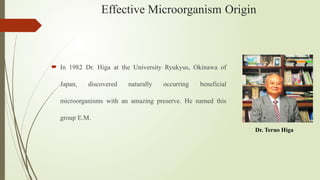
 In 1982 Dr. Higa at the University Ryukyus, Okinawa of
Japan, discovered naturally occurring beneficial
microorganisms with an amazing preserve. He named this
group E.M.
Dr. Teruo Higa
Effective Microorganism The Natural Product
 EM is the trade mark used to identify this particular mixture of beneficial organisms
 E.M. is a combined culture of aerobic microorganisms (requiring oxygen to survive) and
anaerobic (requires no oxygen to survive) that co-exist together to the mutual advantage of
both (symbiosis).
 E.M combines with the existing microorganisms within the soil. They work together to build
a healthy living soil.
 E.M is not toxic or pathogenic and is safe for humans, animals and the environment
Effective Microorganism in Action
 Current research indicates that EM cultures can suppress soil-borne pathogens, accelerate
the decomposition of organic wastes, increase the availability of mineral nutrients and useful
organic compounds to plants, enhance the activities of beneficial micro-organisms, e.g.,
mycorrhizae, nitrogen fixing bacteria, and reduce the need for chemical fertilizers and
pesticides. EM helps to increase beneficial soil micro-organisms and suppression of harmful
ones.
Organic Farming
 It is that method of agricultural production which avoids the use of synthetic fertilizers, pesticides,
growth regulators etc.
Successful organic farming depends on-
 Crop rotation,
 Use of manures (both of animal & vegetable origin), mineral rocks like bauxite, pumice, hematite
etc &
 All biological pest control methods to mentain the agricultural output, soil productivity & also to
provide plant nutrients
 Organic matter & water holding capacity of soil
plays very important role for the desired growth
of medicinal plants.
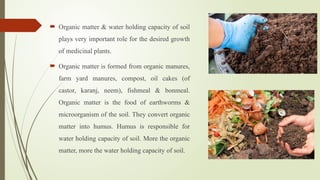
 Organic matter is formed from organic manures,
farm yard manures, compost, oil cakes (of
castor, karanj, neem), fishmeal & bonmeal.
Organic matter is the food of earthworms &
microorganism of the soil. They convert organic
matter into humus. Humus is responsible for
water holding capacity of soil. More the organic
matter, more the water holding capacity of soil.
Effective Microorganism maintaining ecological balance

Effective Microorganism maintaining ecological balance

  • 1.
    WELCOME Presented By MD. ShaiffuddinManik Reg No:17-07878 Roll No:852 MS in Horticulture Sher-e-Bangla Agricultural University
  • 2.
    What is meantby Effective Microorganism  Microorganisms are tiny units of life that are too small to be seen with the naked eye but visible under a microscope and they exist everywhere in nature.  Microorganisms are crucial for maintaining the ecological balance.  Effective Microorganisms (EM) are mixed cultures of beneficial naturally-occurring organisms that can be applied as inoculants to increase the microbial diversity of soil ecosystem.
  • 3.
     EM standsfor Effective Microorganisms. EM comes in a liquid form and consists of naturally microorganisms. occurring beneficial.  The microbes in EM are non-harmful, non- pathogenic, not-genetically-engineered or modified (non-GMO), and not-chemically- synthesized, and EM is not a medicine either.  The basic groups of microorganisms in EM are lactic acid bacteria (commonly found in yogurt, cheeses), yeast (bread), and phototrophic bacteria. What is meant by Effective Microorganism
  • 4.
    Effective Microorganism Origin In 1982 Dr. Higa at the University Ryukyus, Okinawa of Japan, discovered naturally occurring beneficial microorganisms with an amazing preserve. He named this group E.M. Dr. Teruo Higa
  • 5.
    Effective Microorganism TheNatural Product  EM is the trade mark used to identify this particular mixture of beneficial organisms  E.M. is a combined culture of aerobic microorganisms (requiring oxygen to survive) and anaerobic (requires no oxygen to survive) that co-exist together to the mutual advantage of both (symbiosis).  E.M combines with the existing microorganisms within the soil. They work together to build a healthy living soil.  E.M is not toxic or pathogenic and is safe for humans, animals and the environment
  • 6.
    Effective Microorganism inAction  Current research indicates that EM cultures can suppress soil-borne pathogens, accelerate the decomposition of organic wastes, increase the availability of mineral nutrients and useful organic compounds to plants, enhance the activities of beneficial micro-organisms, e.g., mycorrhizae, nitrogen fixing bacteria, and reduce the need for chemical fertilizers and pesticides. EM helps to increase beneficial soil micro-organisms and suppression of harmful ones.
  • 7.
    Organic Farming  Itis that method of agricultural production which avoids the use of synthetic fertilizers, pesticides, growth regulators etc. Successful organic farming depends on-  Crop rotation,  Use of manures (both of animal & vegetable origin), mineral rocks like bauxite, pumice, hematite etc &  All biological pest control methods to mentain the agricultural output, soil productivity & also to provide plant nutrients
  • 8.
     Organic matter& water holding capacity of soil plays very important role for the desired growth of medicinal plants.  Organic matter is formed from organic manures, farm yard manures, compost, oil cakes (of castor, karanj, neem), fishmeal & bonmeal. Organic matter is the food of earthworms & microorganism of the soil. They convert organic matter into humus. Humus is responsible for water holding capacity of soil. More the organic matter, more the water holding capacity of soil.