Biology I: Energy Flow Through an Ecosystem (part 2) Food Chains, Food Webs, Energy Pyramids
Agenda – Tues. Oct. 4, 2011 Warm-Up Lesson Wrap-Up  (Identifying food chains) Wrap-Up   (Identifying producers, consumers, decomposers) Homework Worksheet
Today’s Objectives I will explore energy flow within an ecosystem. I will define: ecosystem, herbivores, omnivores, carnivores, food chain, food web, energy pyramid. I will trace food chains within a food web. I will classify organisms as: producers, consumers, or decomposers.
Warm-Up What do decomposers do? If you ate chicken that previously ate grass, what type of consumer would you be? Where does energy flow ultimately begin?
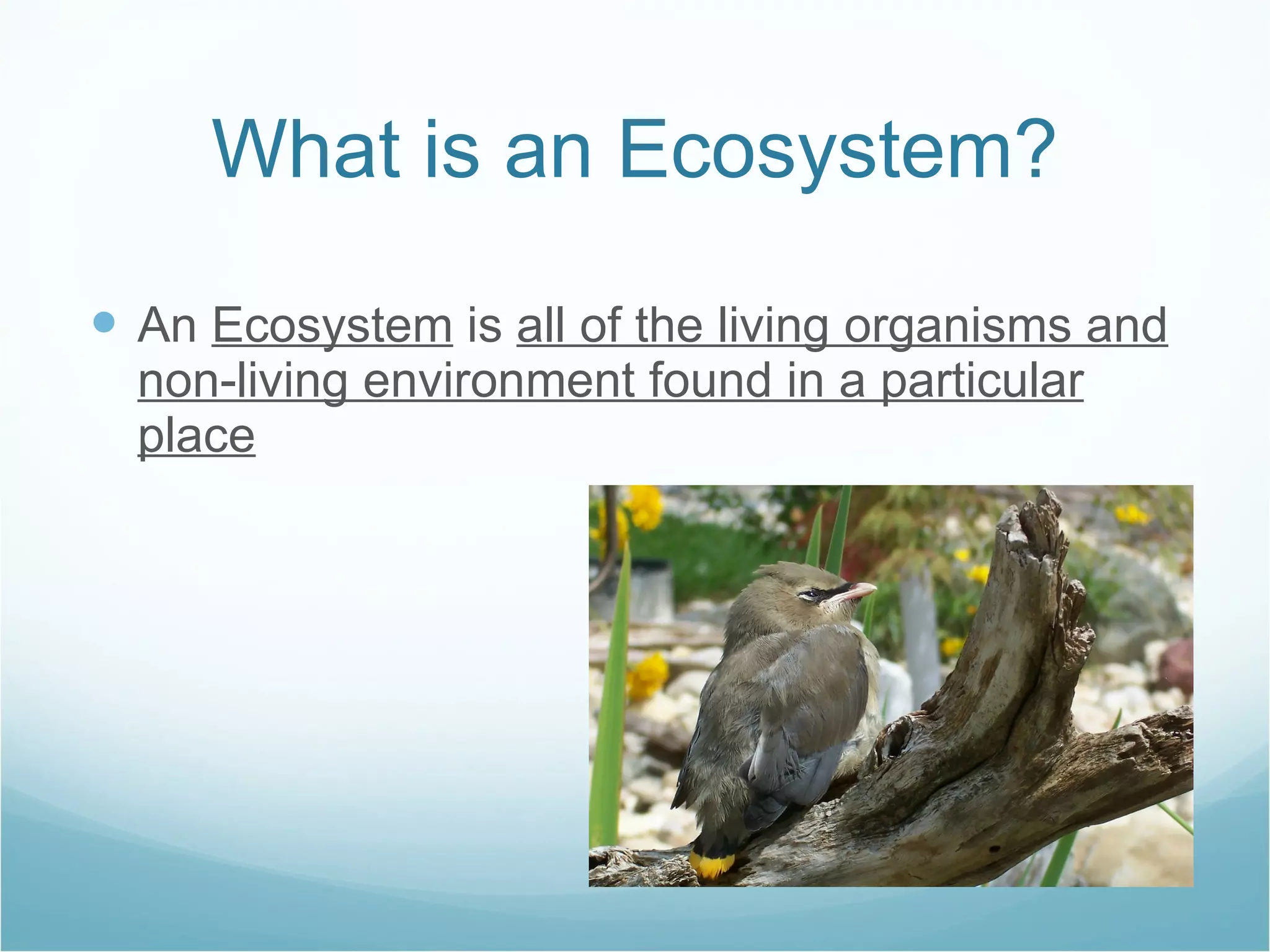
What is an Ecosystem? An  Ecosystem  is  all of the living organisms and non-living environment found in a particular place
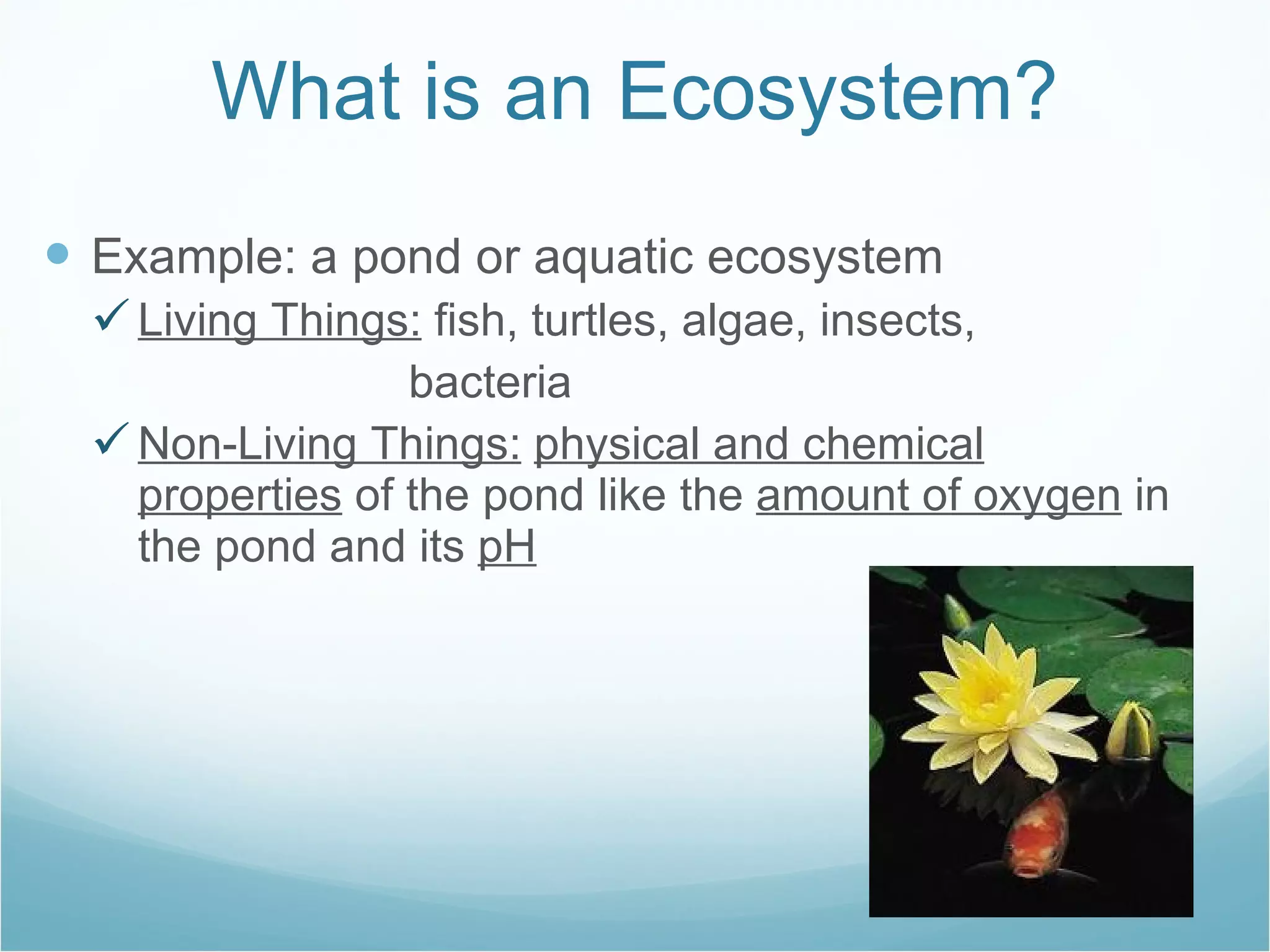
What is an Ecosystem? Example: a pond or aquatic ecosystem Living Things:  fish, turtles, algae, insects,  bacteria Non-Living Things:   physical and chemical properties  of the pond like the  amount of oxygen  in the pond and its  pH
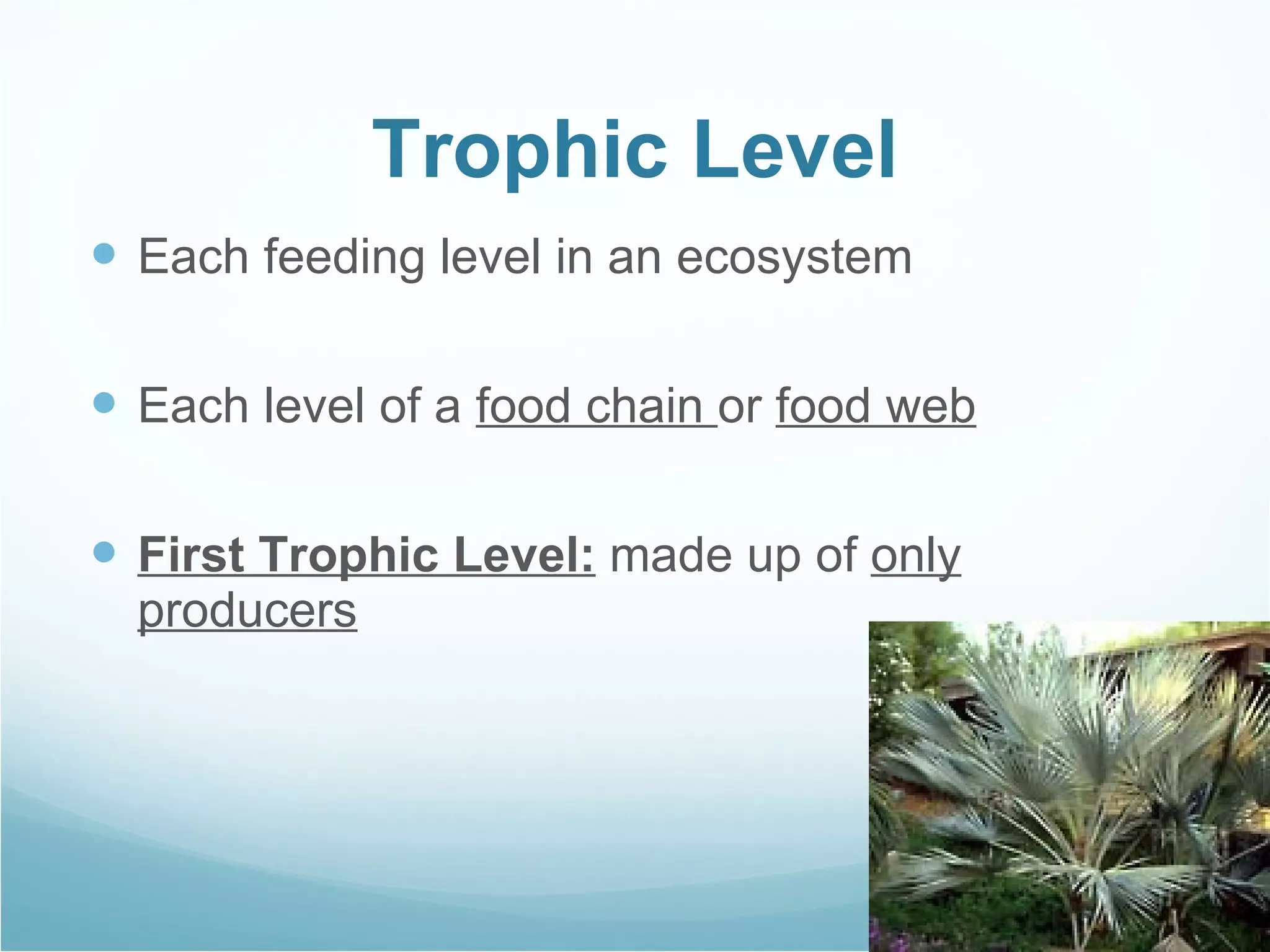
Trophic Level Each feeding level in an ecosystem Each level of a  food chain  or  food web First Trophic Level:   made up of  only producers
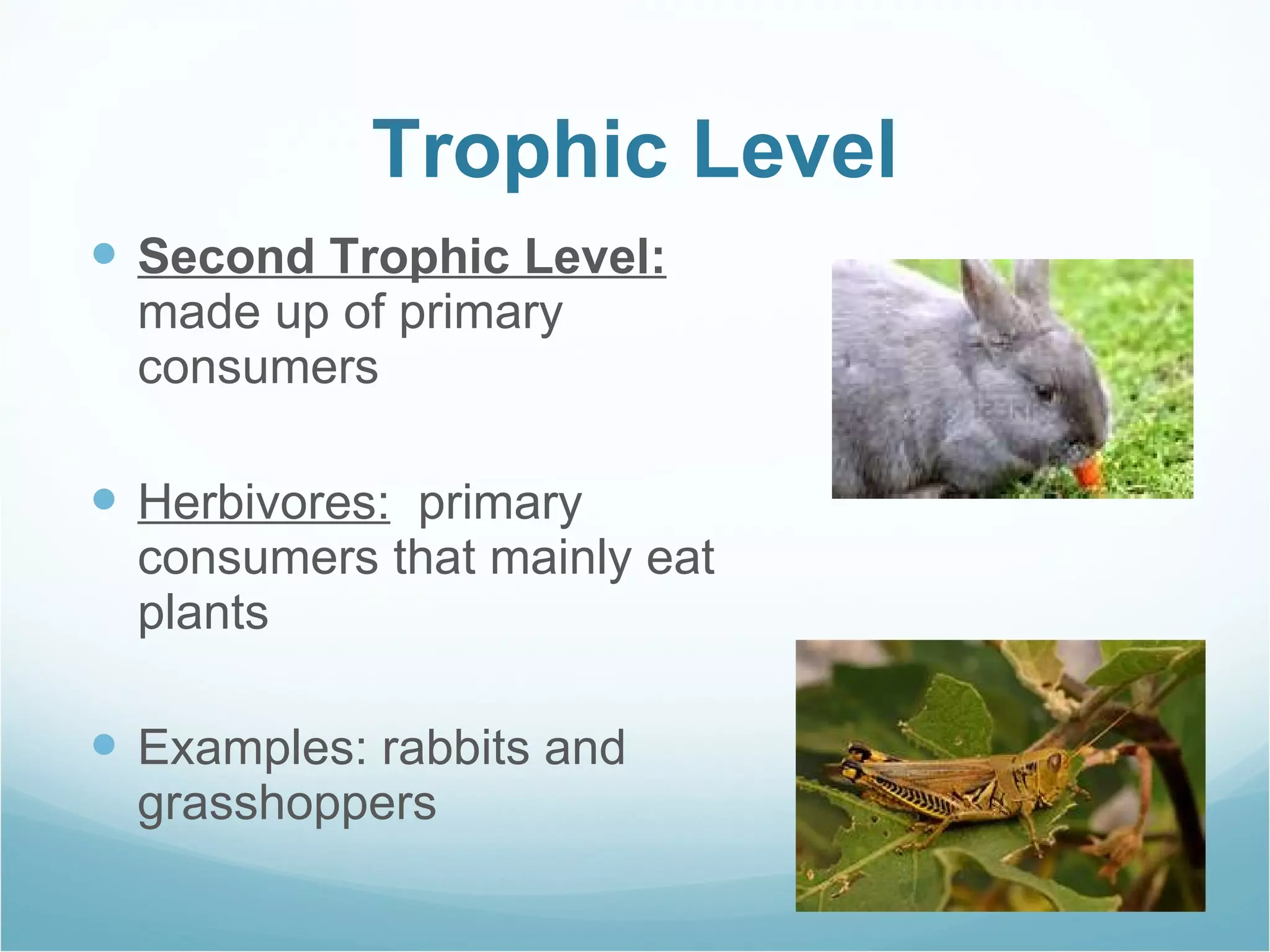
Trophic Level Second Trophic Level:   made up of primary consumers Herbivores:   primary consumers that mainly eat plants Examples: rabbits and  grasshoppers
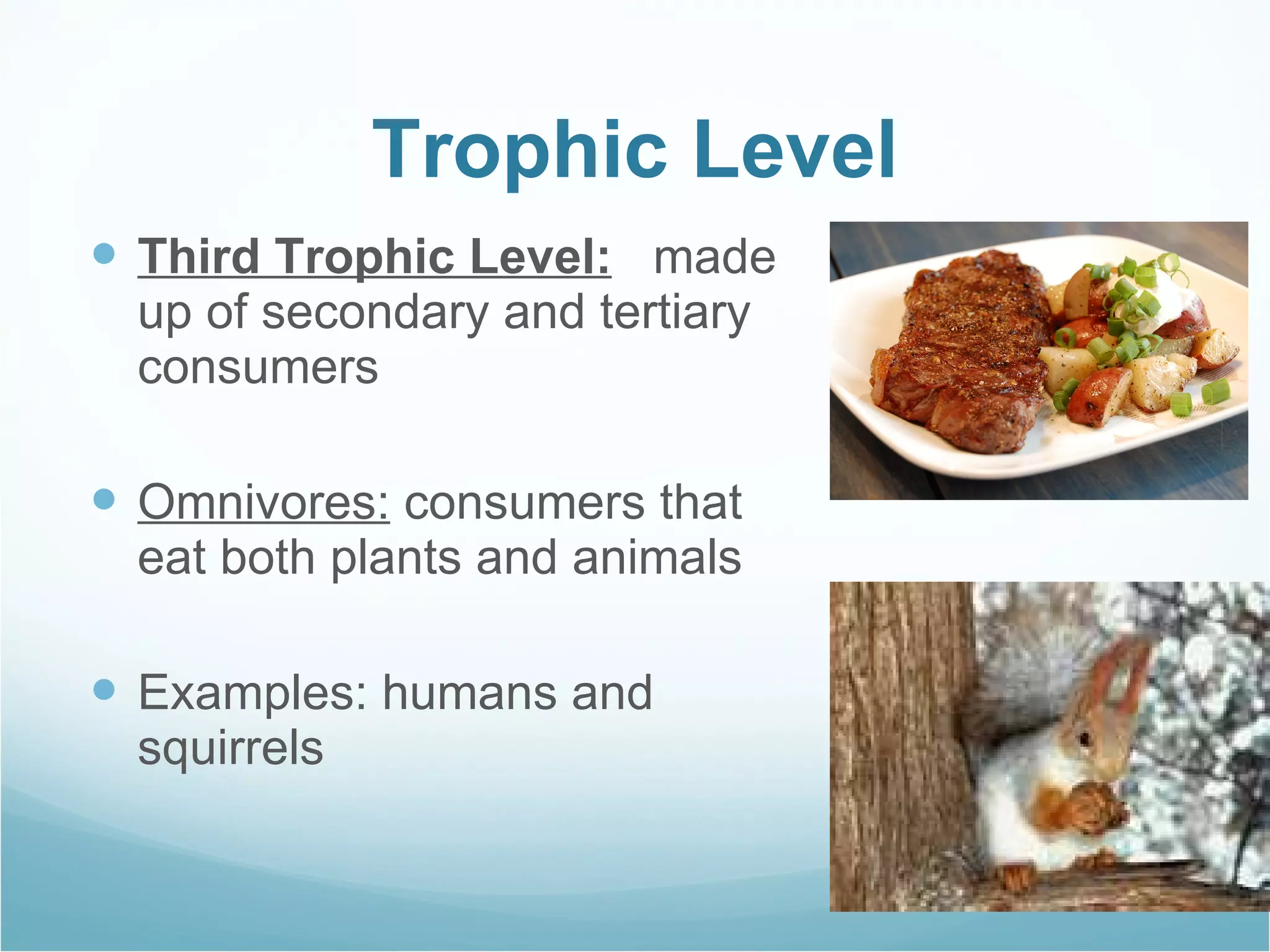
Trophic Level Third Trophic Level:   made up of secondary and tertiary consumers Omnivores:  consumers that eat both plants and animals Examples: humans and squirrels
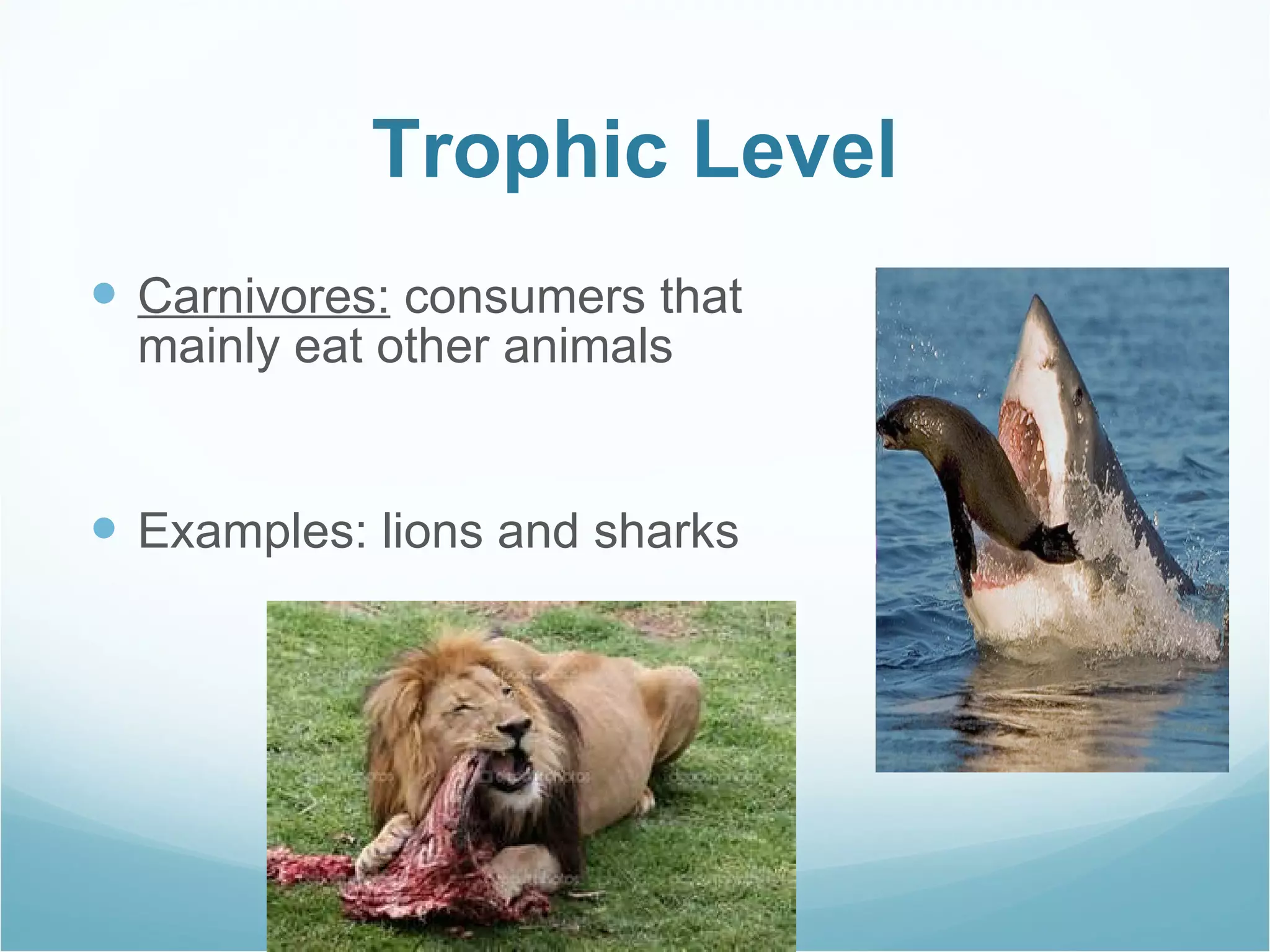
Trophic Level Carnivores:  consumers that mainly eat other animals Examples: lions and sharks
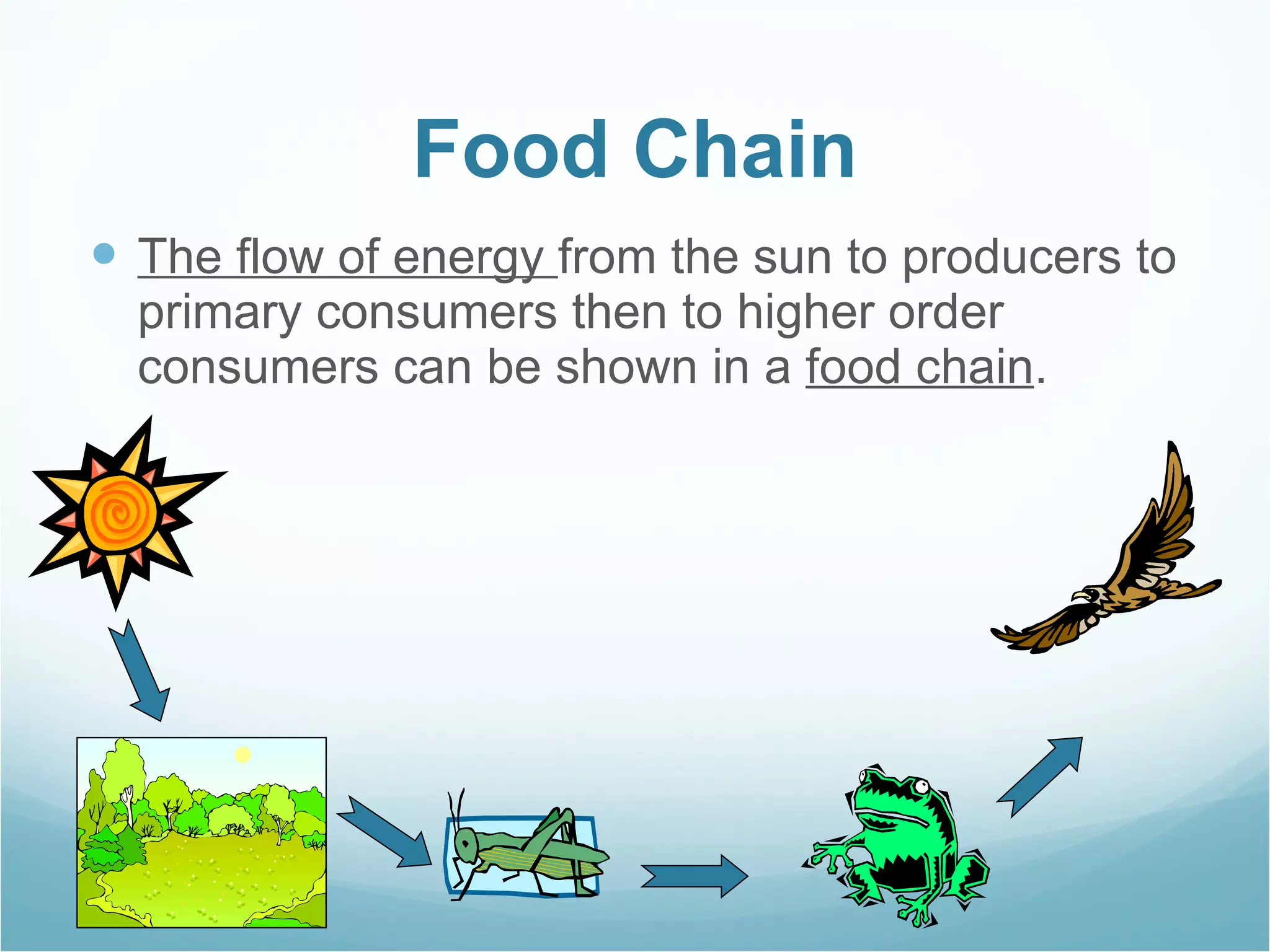
Food Chain The flow of energy  from the sun to producers to primary consumers then to higher order consumers can be shown in a  food chain .
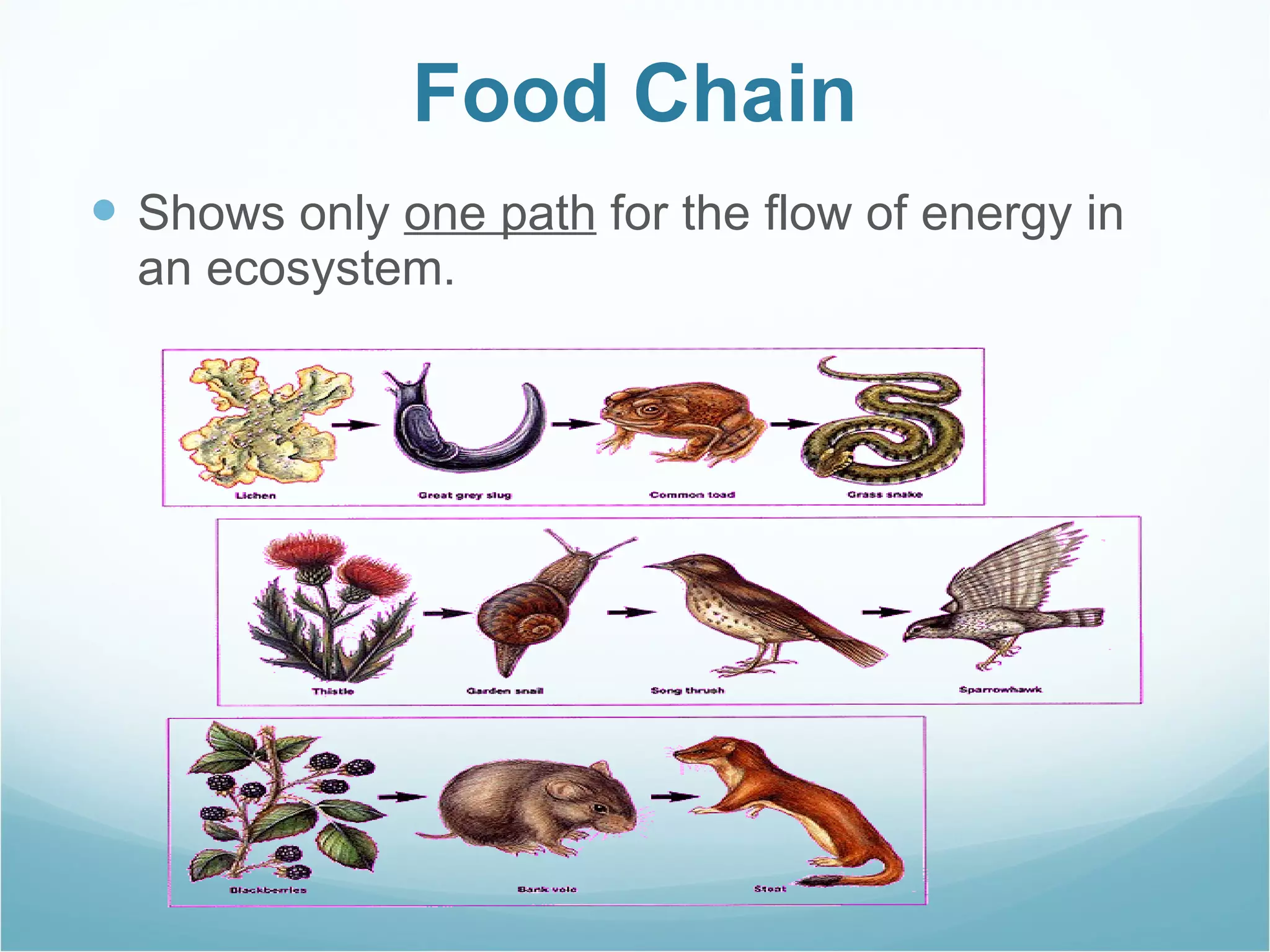
Food Chain Shows only  one path  for the flow of energy in an ecosystem.
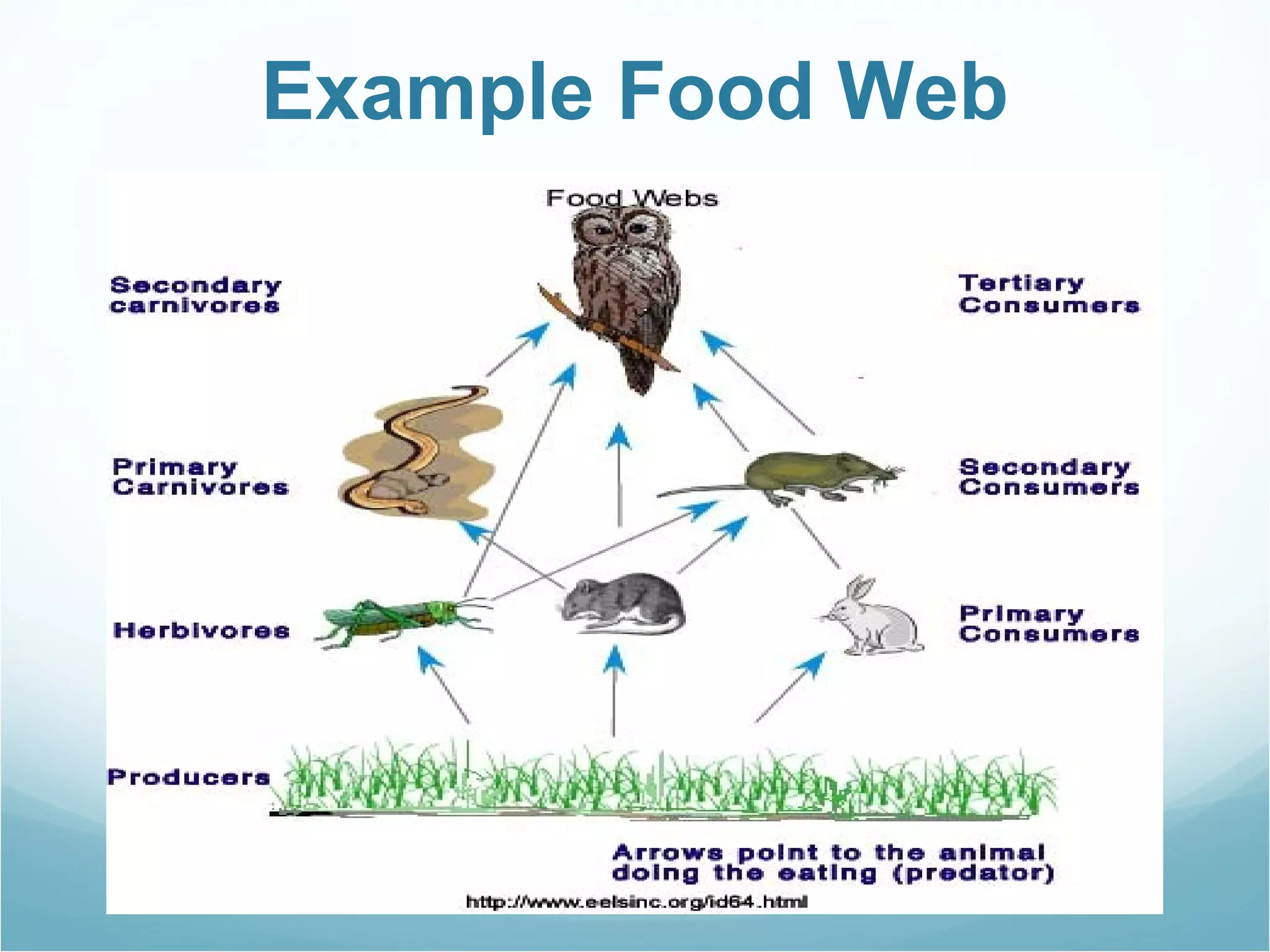
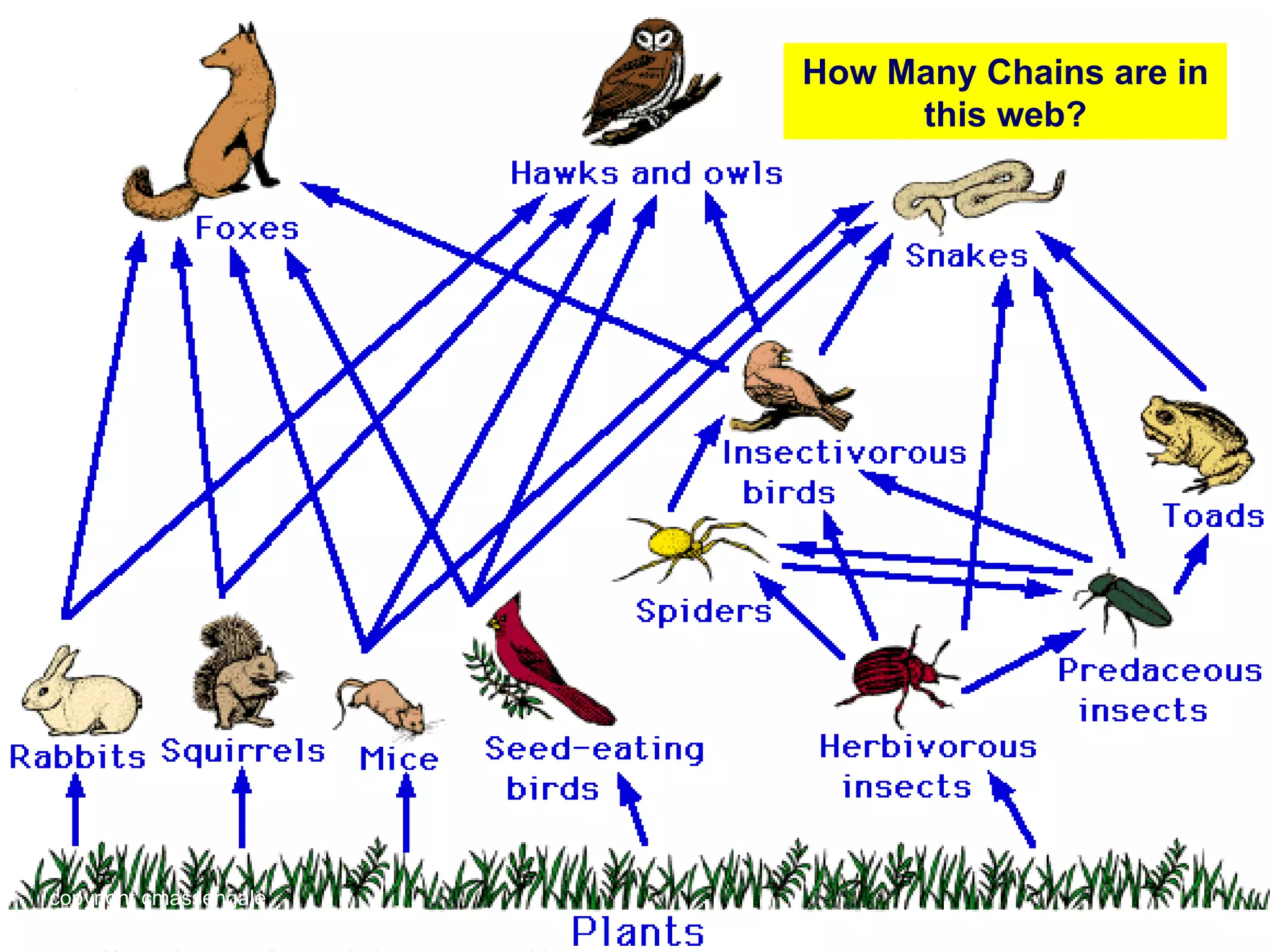
Food Web Ecosystems have many different types of food chains.  A  food web  shows how many different types of food chains are connected. Food webs show the feeding relationships in an ecosystem.
Example Food Web
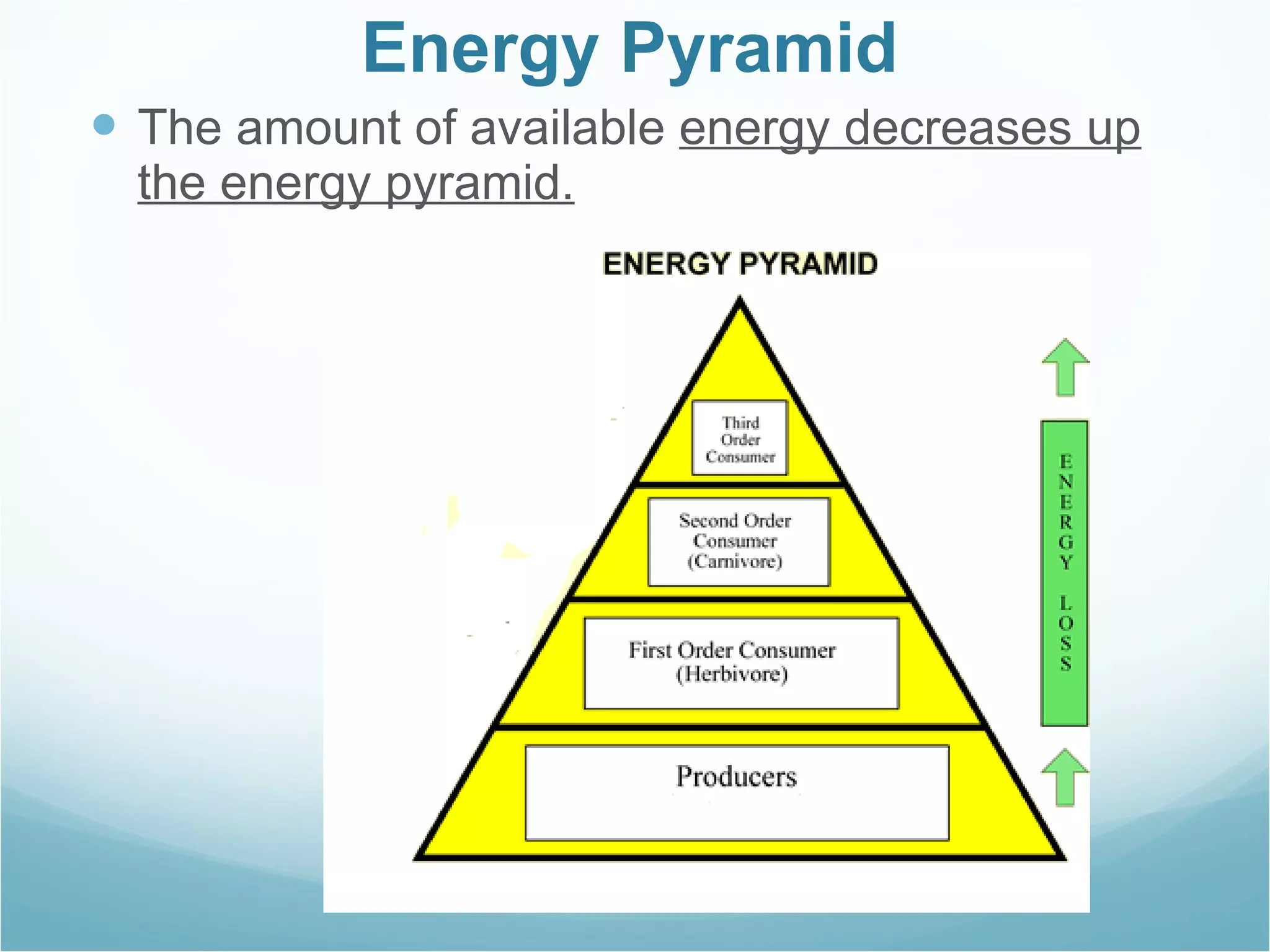
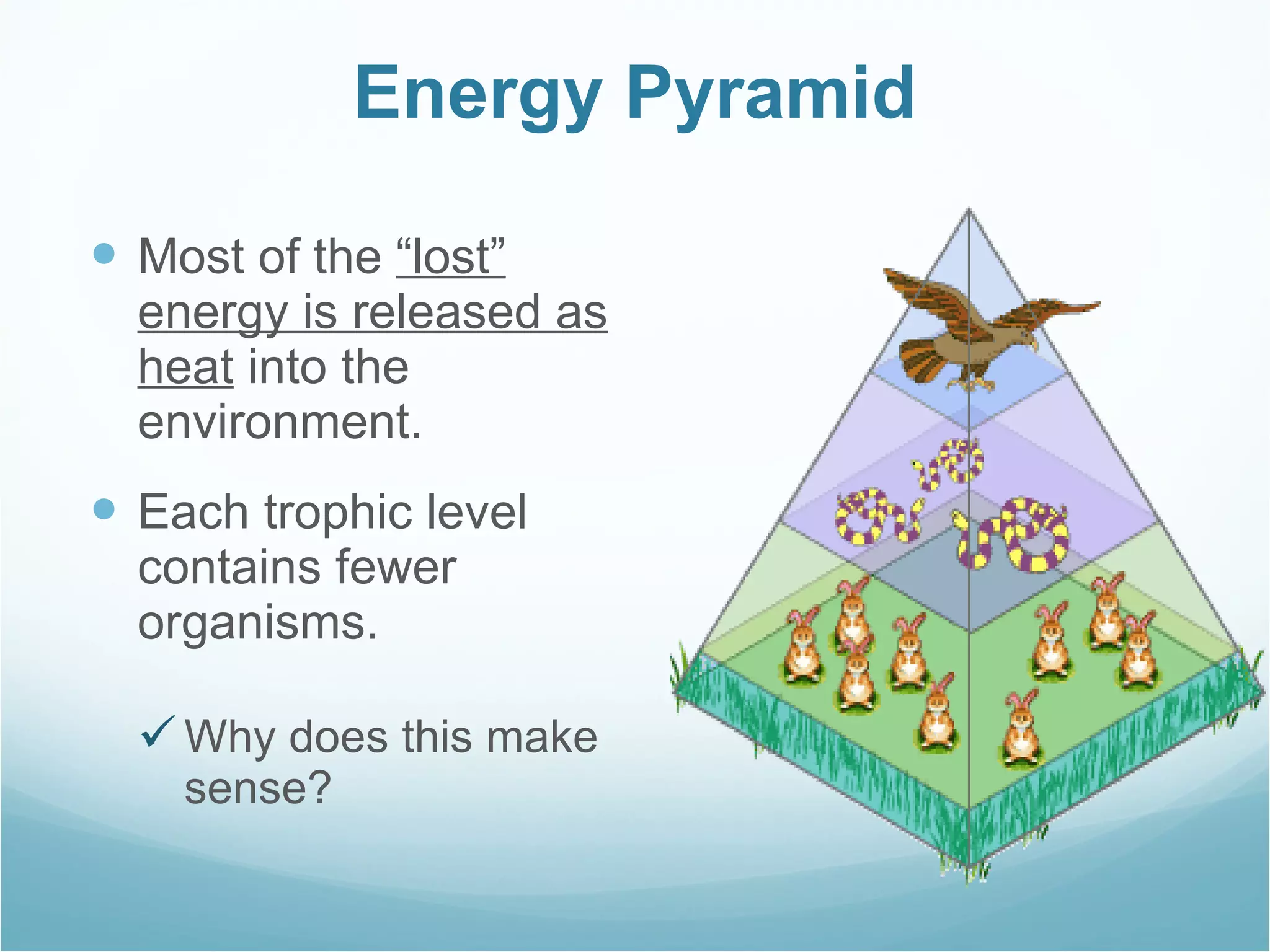
Energy Pyramid Energy Pyramids  show the  energy loss between trophic levels  in an ecosystem. The flow of energy: radiant energy  (sunlight) chemical energy  (stored in plants) kinetic energy and heat loss  (created as consumers feed on each other)
Energy Pyramid The amount of available  energy decreases up the energy pyramid.
Energy Pyramid Most of the  “lost” energy is released as heat  into the environment. Each trophic level contains fewer organisms.  Why does this make sense?
How Many Chains are in this web? copyright cmassengale
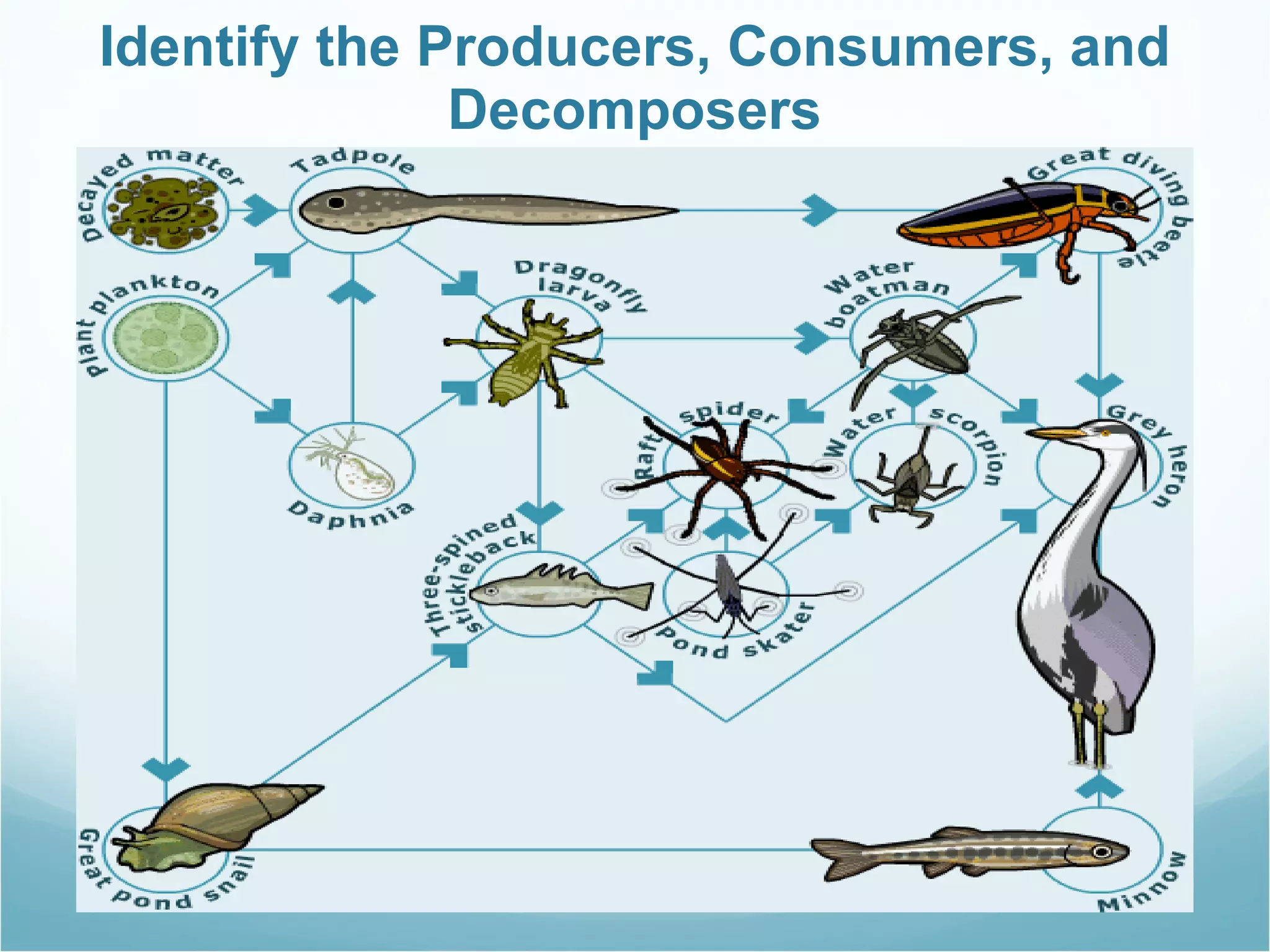
Identify the Producers, Consumers, and Decomposers

Ecosystem energy flow (part 2)

  • 1.
    Biology I: EnergyFlow Through an Ecosystem (part 2) Food Chains, Food Webs, Energy Pyramids
  • 2.
    Agenda – Tues.Oct. 4, 2011 Warm-Up Lesson Wrap-Up (Identifying food chains) Wrap-Up (Identifying producers, consumers, decomposers) Homework Worksheet
  • 3.
    Today’s Objectives Iwill explore energy flow within an ecosystem. I will define: ecosystem, herbivores, omnivores, carnivores, food chain, food web, energy pyramid. I will trace food chains within a food web. I will classify organisms as: producers, consumers, or decomposers.
  • 4.
    Warm-Up What dodecomposers do? If you ate chicken that previously ate grass, what type of consumer would you be? Where does energy flow ultimately begin?
  • 5.
    What is anEcosystem? An Ecosystem is all of the living organisms and non-living environment found in a particular place
  • 6.
    What is anEcosystem? Example: a pond or aquatic ecosystem Living Things: fish, turtles, algae, insects, bacteria Non-Living Things: physical and chemical properties of the pond like the amount of oxygen in the pond and its pH
  • 7.
    Trophic Level Eachfeeding level in an ecosystem Each level of a food chain or food web First Trophic Level: made up of only producers
  • 8.
    Trophic Level SecondTrophic Level: made up of primary consumers Herbivores: primary consumers that mainly eat plants Examples: rabbits and grasshoppers
  • 9.
    Trophic Level ThirdTrophic Level: made up of secondary and tertiary consumers Omnivores: consumers that eat both plants and animals Examples: humans and squirrels
  • 10.
    Trophic Level Carnivores: consumers that mainly eat other animals Examples: lions and sharks
  • 11.
    Food Chain Theflow of energy from the sun to producers to primary consumers then to higher order consumers can be shown in a food chain .
  • 12.
    Food Chain Showsonly one path for the flow of energy in an ecosystem.
  • 13.
    Food Web Ecosystemshave many different types of food chains. A food web shows how many different types of food chains are connected. Food webs show the feeding relationships in an ecosystem.
  • 14.
  • 15.
    Energy Pyramid EnergyPyramids show the energy loss between trophic levels in an ecosystem. The flow of energy: radiant energy (sunlight) chemical energy (stored in plants) kinetic energy and heat loss (created as consumers feed on each other)
  • 16.
    Energy Pyramid Theamount of available energy decreases up the energy pyramid.
  • 17.
    Energy Pyramid Mostof the “lost” energy is released as heat into the environment. Each trophic level contains fewer organisms. Why does this make sense?
  • 18.
    How Many Chainsare in this web? copyright cmassengale
  • 19.
    Identify the Producers,Consumers, and Decomposers