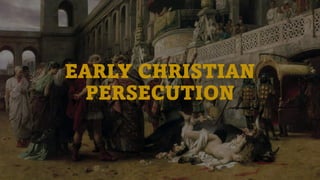
EARLY CHRISTIAN
PERSECUTION
Story Overview:
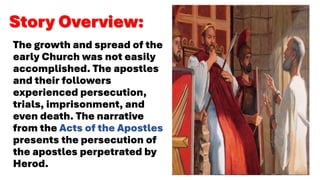
The growth and spread of the
early Church was not easily
accomplished. The apostles
and their followers
experienced persecution,
trials, imprisonment, and
even death. The narrative
from the Acts of the Apostles
presents the persecution of
the apostles perpetrated by
Herod.
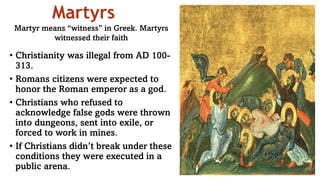
Martyrs
• Christianity was illegal from AD 100-
313.
• Romans citizens were expected to
honor the Roman emperor as a god.
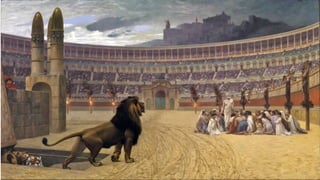
• Christians who refused to
acknowledge false gods were thrown
into dungeons, sent into exile, or
forced to work in mines.
• If Christians didn’t break under these
conditions they were executed in a
public arena.
Martyr means “witness” in Greek. Martyrs
witnessed their faith
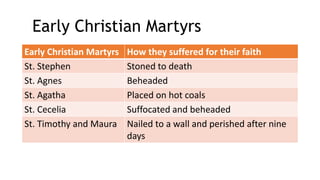
Early Christian Martyrs
Early Christian Martyrs How they suffered for their faith
St. Stephen Stoned to death
St. Agnes Beheaded
St. Agatha Placed on hot coals
St. Cecelia Suffocated and beheaded
St. Timothy and Maura Nailed to a wall and perished after nine
days
Early Christian Martyrs
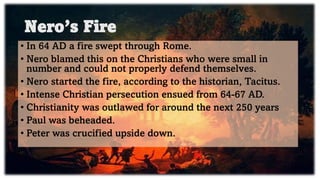
Nero’s Fire
• In 64 AD a fire swept through Rome.
• Nero blamed this on the Christians who were small in
number and could not properly defend themselves.
• Nero started the fire, according to the historian, Tacitus.
• Intense Christian persecution ensued from 64-67 AD.
• Christianity was outlawed for around the next 250 years
• Paul was beheaded.
• Peter was crucified upside down.
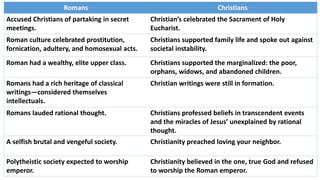
Romans Christians
Accused Christians of partaking in secret
meetings.
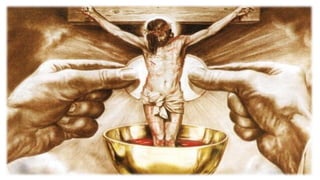
Christian’s celebrated the Sacrament of Holy
Eucharist.
Roman culture celebrated prostitution,
fornication, adultery, and homosexual acts.
Christians supported family life and spoke out against
societal instability.
Roman had a wealthy, elite upper class. Christians supported the marginalized: the poor,
orphans, widows, and abandoned children.
Romans had a rich heritage of classical
writings—considered themselves
intellectuals.
Christian writings were still in formation.
Romans lauded rational thought. Christians professed beliefs in transcendent events
and the miracles of Jesus’ unexplained by rational
thought.
A selfish brutal and vengeful society. Christianity preached loving your neighbor.
Polytheistic society expected to worship
emperor.
Christianity believed in the one, true God and refused
to worship the Roman emperor.
First was the problem of identity.
Christianity was identified at first
with Judaism, but people quickly
came to see it as a different religion.
Jews were left alone for the most
part; it seemed best to Rome to just
confine them and leave them alone.
Christianity, however, was a strange,
new cult, and it began to spread
across people groups and
geographical boundaries. People felt
threatened by this oddball new
religion.
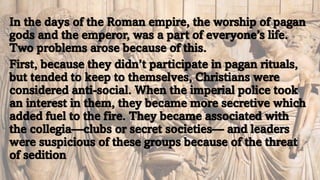
In the days of the Roman empire, the worship of pagan
gods and the emperor, was a part of everyone’s life.
Two problems arose because of this.
First, because they didn’t participate in pagan rituals,
but tended to keep to themselves, Christians were
considered anti-social. When the imperial police took
an interest in them, they became more secretive which
added fuel to the fire. They became associated with
the collegia—clubs or secret societies— and leaders
were suspicious of these groups because of the threat
of sedition
Second : The Christians are to blame for every
public disaster and every misfortune that befalls
the people.
Since Christians wouldn’t join in with the religious
activities which were believed to placate the gods, they
became a threat to the very well-being of the community.
Writing in about A.D. 196, Tertullian said, “The Christians
are to blame for every public disaster and every
misfortune that befalls the people. If the Tiber rises to the
walls, if the Nile fails to rise and flood the fields, if the sky
withholds its rain, if there is earthquake or famine or
plague, straightway the cry arises: ‘The Christians to the
lions!’”
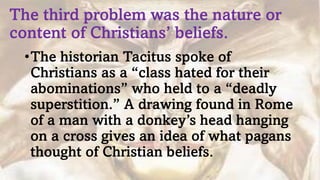
The third problem was the nature or
content of Christians’ beliefs.
•The historian Tacitus spoke of
Christians as a “class hated for their
abominations” who held to a “deadly
superstition.” A drawing found in Rome
of a man with a donkey’s head hanging
on a cross gives an idea of what pagans
thought of Christian beliefs.
Finally, Christians’ reluctance to offer worship to the
emperor and the gods was considered madness,
considering what would happen to them if they didn’t.
Why not just offer a pinch of incense to the image of
the emperor? In a pluralistic society, the narrowness of
Christian beliefs seemed absurd, especially considering
what would happen to Christians who wouldn’t go
along. In the opinion of the general populace, says F. F.
Bruce, “Such a crowd of wretches were plainly worthy
of extermination, and any repressive measures that
were taken against them by authority could be sure of
popular approval.”
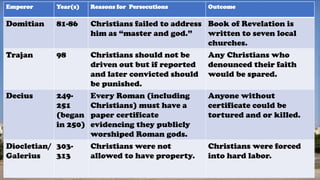
Emperor Year(s) Reasons for Persecutions Outcome
Domitian 81-86 Christians failed to address
him as “master and god.”
Book of Revelation is
written to seven local
churches.
Trajan 98 Christians should not be
driven out but if reported
and later convicted should
be punished.
Any Christians who
denounced their faith
would be spared.
Decius 249-
251
(began
in 250)
Every Roman (including
Christians) must have a
paper certificate
evidencing they publicly
worshiped Roman gods.
Anyone without
certificate could be
tortured and or killed.
Diocletian/
Galerius
303-
313
Christians were not
allowed to have property.
Christians were forced
into hard labor.
How Christianity Survived While It Was
Illegal
• Christianity offered hope to those who had lost faith
in material things.
• Christianity promised eternal life.
• Christianity emphasized human dignity.
• Christianity offered the witness of those willing to die
for their faith.
• Christianity prospered in outlying areas of the Roman
Empire that did not experience the same level of
persecution or harassment as areas closer to the
capital city of Rome.
EARLY CHRISTIAN PERSECUTION.pdf

EARLY CHRISTIAN PERSECUTION.pdf

  • 1.
  • 2.
    Story Overview: The growthand spread of the early Church was not easily accomplished. The apostles and their followers experienced persecution, trials, imprisonment, and even death. The narrative from the Acts of the Apostles presents the persecution of the apostles perpetrated by Herod.
  • 3.
    Martyrs • Christianity wasillegal from AD 100- 313. • Romans citizens were expected to honor the Roman emperor as a god. • Christians who refused to acknowledge false gods were thrown into dungeons, sent into exile, or forced to work in mines. • If Christians didn’t break under these conditions they were executed in a public arena. Martyr means “witness” in Greek. Martyrs witnessed their faith
  • 4.
    Early Christian Martyrs EarlyChristian Martyrs How they suffered for their faith St. Stephen Stoned to death St. Agnes Beheaded St. Agatha Placed on hot coals St. Cecelia Suffocated and beheaded St. Timothy and Maura Nailed to a wall and perished after nine days Early Christian Martyrs
  • 5.
    Nero’s Fire • In64 AD a fire swept through Rome. • Nero blamed this on the Christians who were small in number and could not properly defend themselves. • Nero started the fire, according to the historian, Tacitus. • Intense Christian persecution ensued from 64-67 AD. • Christianity was outlawed for around the next 250 years • Paul was beheaded. • Peter was crucified upside down.
  • 6.
    Romans Christians Accused Christiansof partaking in secret meetings. Christian’s celebrated the Sacrament of Holy Eucharist. Roman culture celebrated prostitution, fornication, adultery, and homosexual acts. Christians supported family life and spoke out against societal instability. Roman had a wealthy, elite upper class. Christians supported the marginalized: the poor, orphans, widows, and abandoned children. Romans had a rich heritage of classical writings—considered themselves intellectuals. Christian writings were still in formation. Romans lauded rational thought. Christians professed beliefs in transcendent events and the miracles of Jesus’ unexplained by rational thought. A selfish brutal and vengeful society. Christianity preached loving your neighbor. Polytheistic society expected to worship emperor. Christianity believed in the one, true God and refused to worship the Roman emperor.
  • 7.
    First was theproblem of identity. Christianity was identified at first with Judaism, but people quickly came to see it as a different religion. Jews were left alone for the most part; it seemed best to Rome to just confine them and leave them alone. Christianity, however, was a strange, new cult, and it began to spread across people groups and geographical boundaries. People felt threatened by this oddball new religion.
  • 8.
    In the daysof the Roman empire, the worship of pagan gods and the emperor, was a part of everyone’s life. Two problems arose because of this. First, because they didn’t participate in pagan rituals, but tended to keep to themselves, Christians were considered anti-social. When the imperial police took an interest in them, they became more secretive which added fuel to the fire. They became associated with the collegia—clubs or secret societies— and leaders were suspicious of these groups because of the threat of sedition
  • 9.
    Second : TheChristians are to blame for every public disaster and every misfortune that befalls the people. Since Christians wouldn’t join in with the religious activities which were believed to placate the gods, they became a threat to the very well-being of the community. Writing in about A.D. 196, Tertullian said, “The Christians are to blame for every public disaster and every misfortune that befalls the people. If the Tiber rises to the walls, if the Nile fails to rise and flood the fields, if the sky withholds its rain, if there is earthquake or famine or plague, straightway the cry arises: ‘The Christians to the lions!’”
  • 11.
    The third problemwas the nature or content of Christians’ beliefs. •The historian Tacitus spoke of Christians as a “class hated for their abominations” who held to a “deadly superstition.” A drawing found in Rome of a man with a donkey’s head hanging on a cross gives an idea of what pagans thought of Christian beliefs.
  • 12.
    Finally, Christians’ reluctanceto offer worship to the emperor and the gods was considered madness, considering what would happen to them if they didn’t. Why not just offer a pinch of incense to the image of the emperor? In a pluralistic society, the narrowness of Christian beliefs seemed absurd, especially considering what would happen to Christians who wouldn’t go along. In the opinion of the general populace, says F. F. Bruce, “Such a crowd of wretches were plainly worthy of extermination, and any repressive measures that were taken against them by authority could be sure of popular approval.”
  • 14.
    Emperor Year(s) Reasonsfor Persecutions Outcome Domitian 81-86 Christians failed to address him as “master and god.” Book of Revelation is written to seven local churches. Trajan 98 Christians should not be driven out but if reported and later convicted should be punished. Any Christians who denounced their faith would be spared. Decius 249- 251 (began in 250) Every Roman (including Christians) must have a paper certificate evidencing they publicly worshiped Roman gods. Anyone without certificate could be tortured and or killed. Diocletian/ Galerius 303- 313 Christians were not allowed to have property. Christians were forced into hard labor.
  • 15.
    How Christianity SurvivedWhile It Was Illegal • Christianity offered hope to those who had lost faith in material things. • Christianity promised eternal life. • Christianity emphasized human dignity. • Christianity offered the witness of those willing to die for their faith. • Christianity prospered in outlying areas of the Roman Empire that did not experience the same level of persecution or harassment as areas closer to the capital city of Rome.