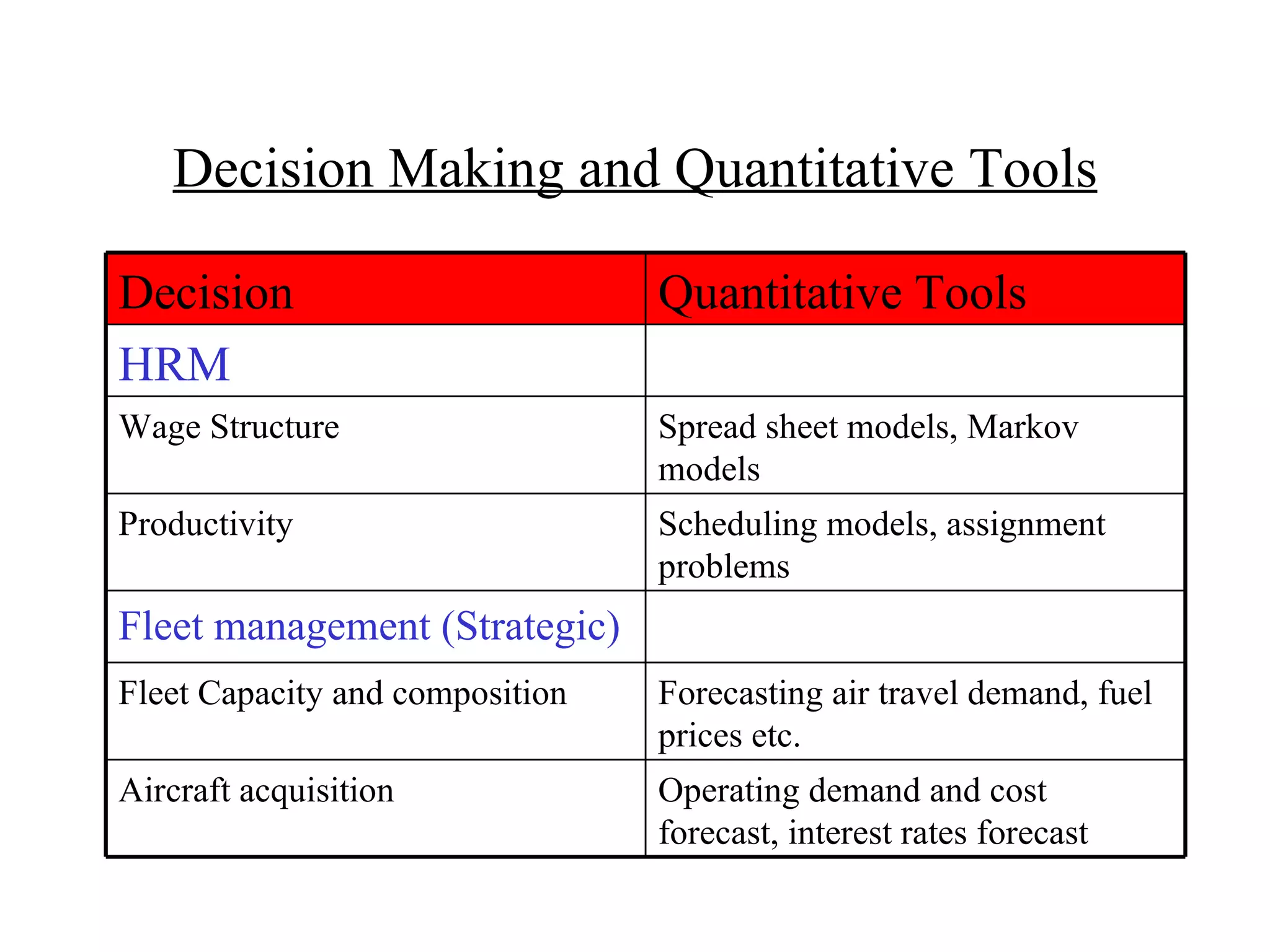
Decision Making and Quantitative Tools Operating demand and cost forecast, interest rates forecast Aircraft acquisition Forecasting air travel demand, fuel prices etc. Fleet Capacity and composition Fleet management (Strategic) Scheduling models, assignment problems Productivity Spread sheet models, Markov models Wage Structure HRM Quantitative Tools Decision
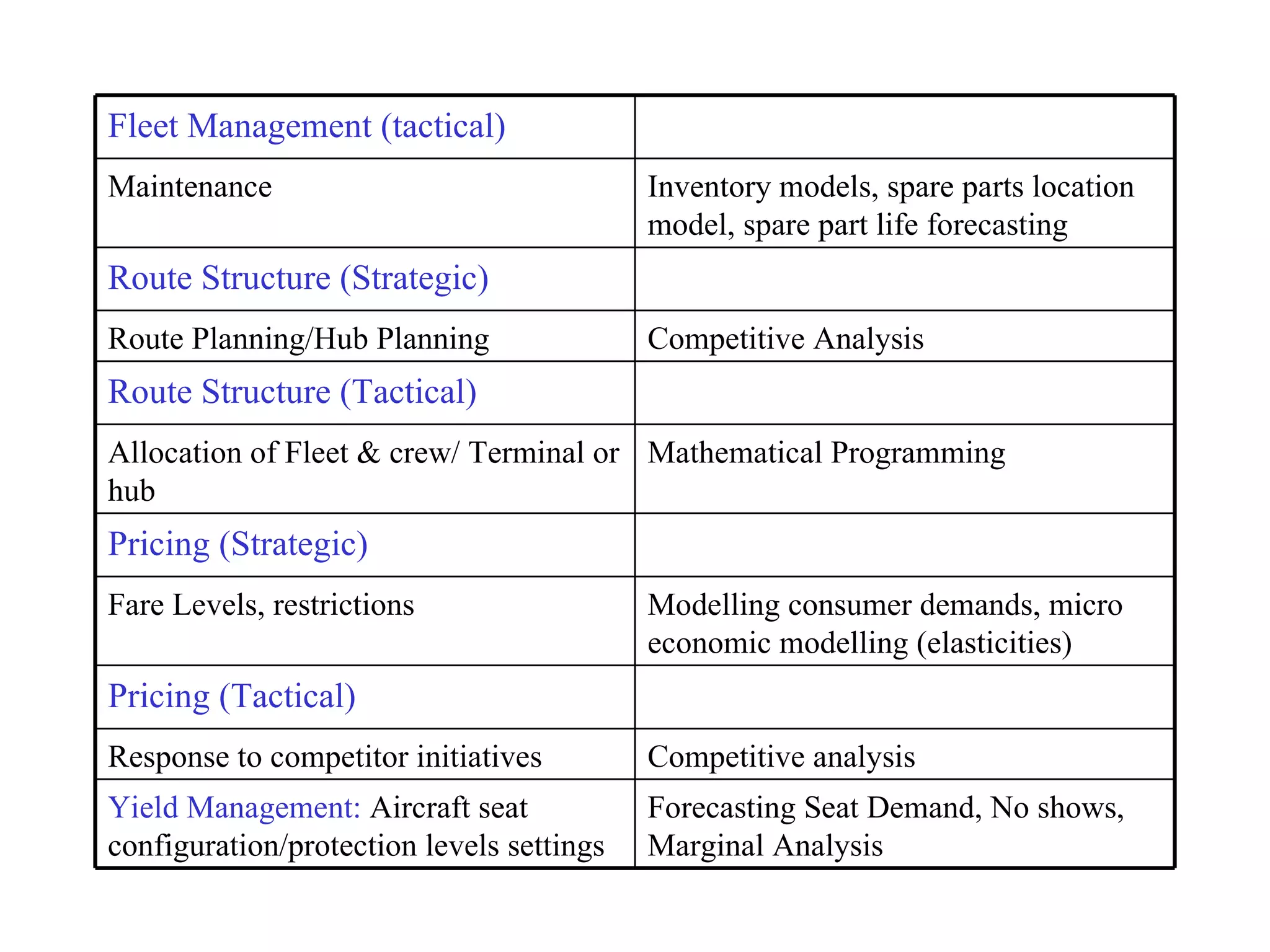
Forecasting Seat Demand, No shows, Marginal Analysis Yield Management:  Aircraft seat configuration/protection levels settings Competitive analysis Response to competitor initiatives Pricing (Tactical) Modelling consumer demands, micro economic modelling (elasticities) Fare Levels, restrictions Pricing (Strategic)   Mathematical Programming Allocation of Fleet & crew/ Terminal or hub Route Structure (Tactical) Competitive Analysis Route Planning/Hub Planning Route Structure (Strategic) Inventory models, spare parts location model, spare part life forecasting Maintenance Fleet Management (tactical)
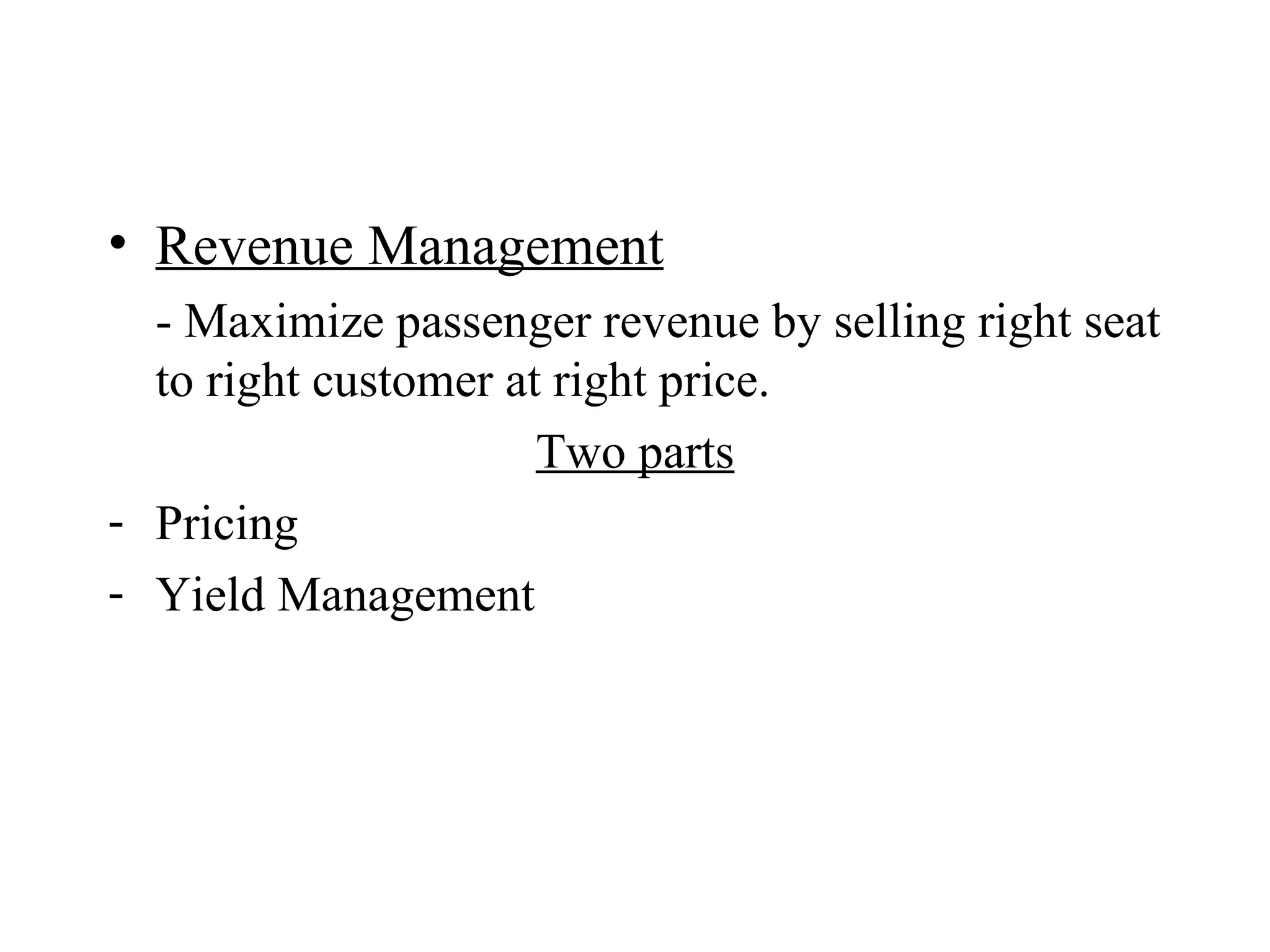
Revenue Management - Maximize passenger revenue by selling right seat to right customer at right price. Two parts Pricing Yield Management
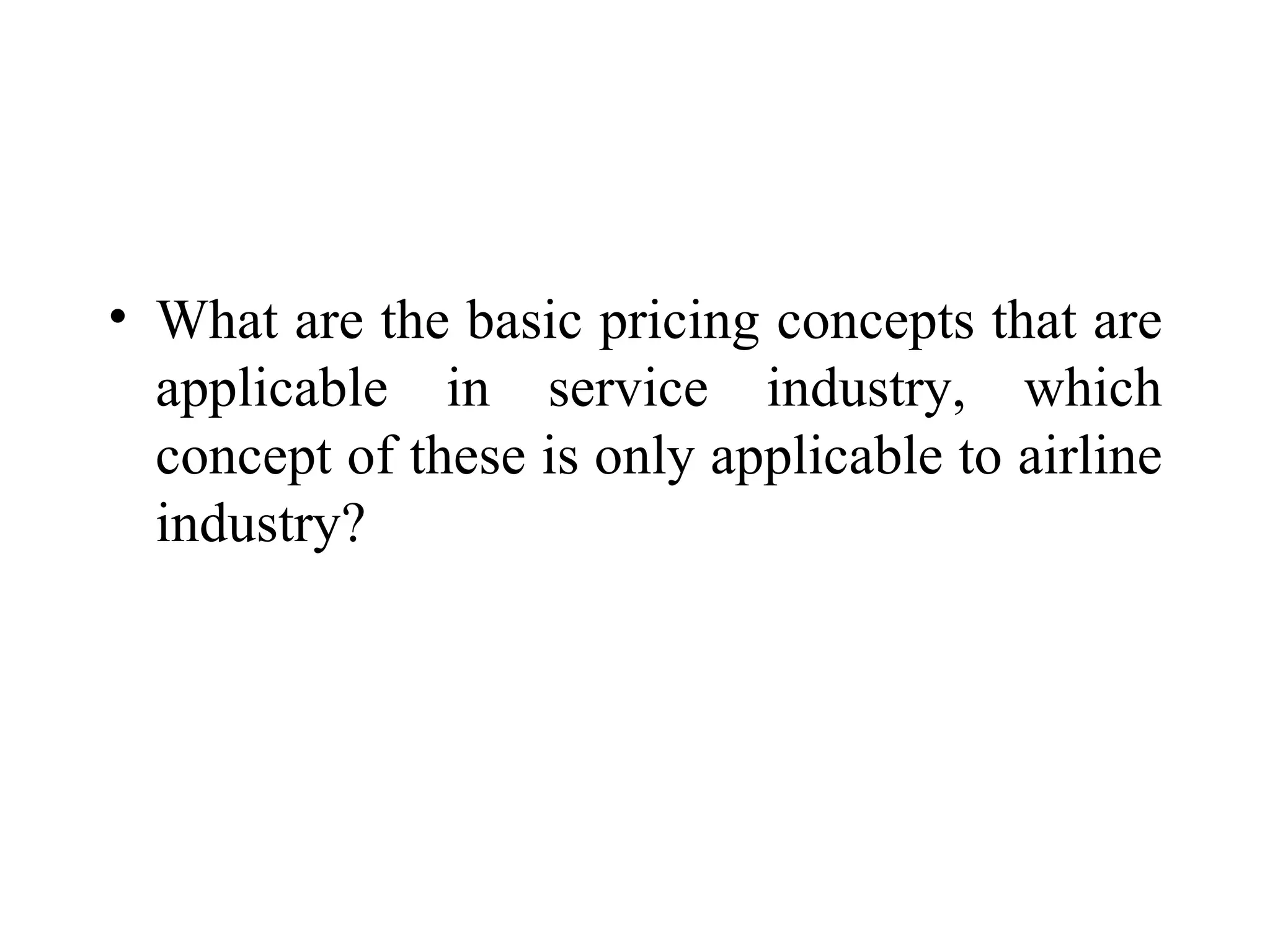
What are the basic pricing concepts that are applicable in service industry, which concept of these is only applicable to airline industry?
Pricing Fundamental Dilution: giving discount fares to those who are relatively price insensitive, Advance purchase, cancellation penalties, capacity control, minimum stay requirement etc. Displacement: Discount fare passenger on total flight length displacing one leg full fare passenger (can be beneficial)  Share shift: consequences on market share of an airline change in fare relative to competitors Stimulation: Beneficial effect that lower prices would have on the demand passenger segment that would not have flown otherwise.
Q. Which of the Four is more relevant for this analysis?
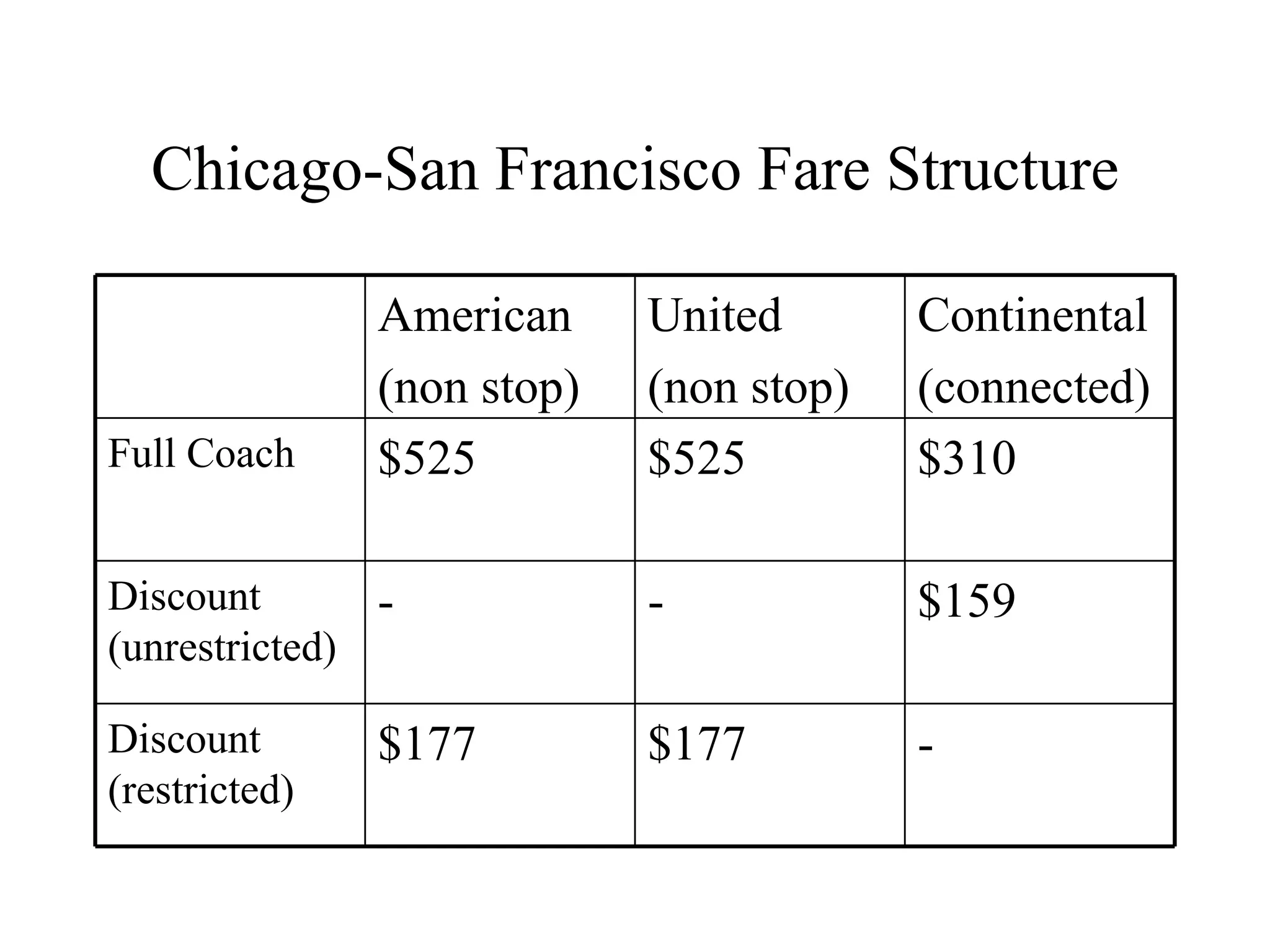
Chicago-San Francisco Fare Structure - $177 $177 Discount (restricted) $159 - - Discount (unrestricted) $310 $525 $525 Full Coach Continental (connected) United (non stop) American (non stop)
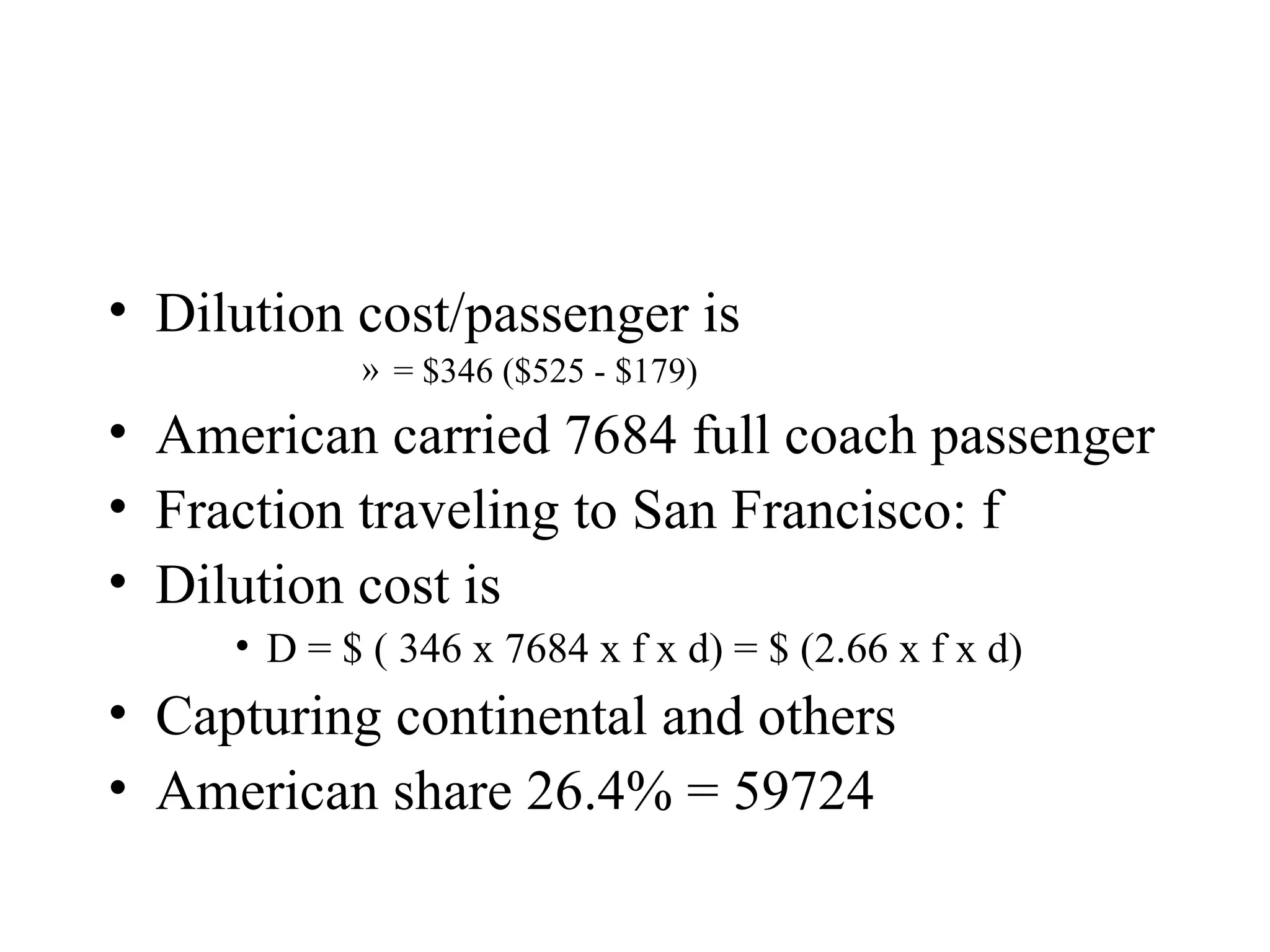
Dilution cost/passenger is = $346 ($525 - $179) American carried 7684 full coach passenger Fraction traveling to San Francisco: f  Dilution cost is D = $ ( 346 x 7684 x f x d) = $ (2.66 x f x d)  Capturing continental and others American share 26.4% = 59724
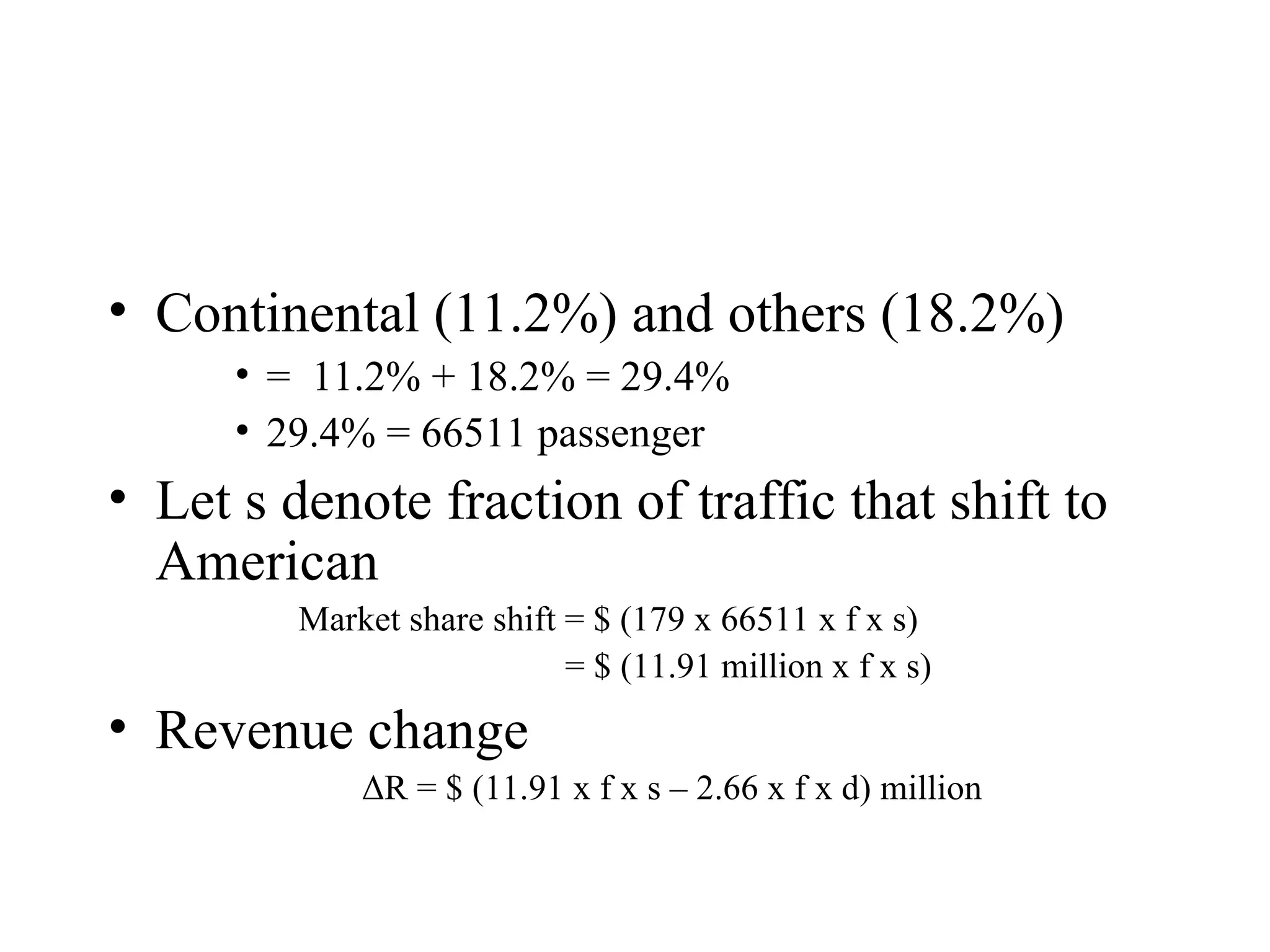
Continental (11.2%) and others (18.2%) =  11.2% + 18.2% = 29.4% 29.4% = 66511 passenger Let s denote fraction of traffic that shift to American Market share shift = $ (179 x 66511 x f x s)  = $ (11.91 million x f x s) Revenue change Δ R = $ (11.91 x f x s – 2.66 x f x d) million
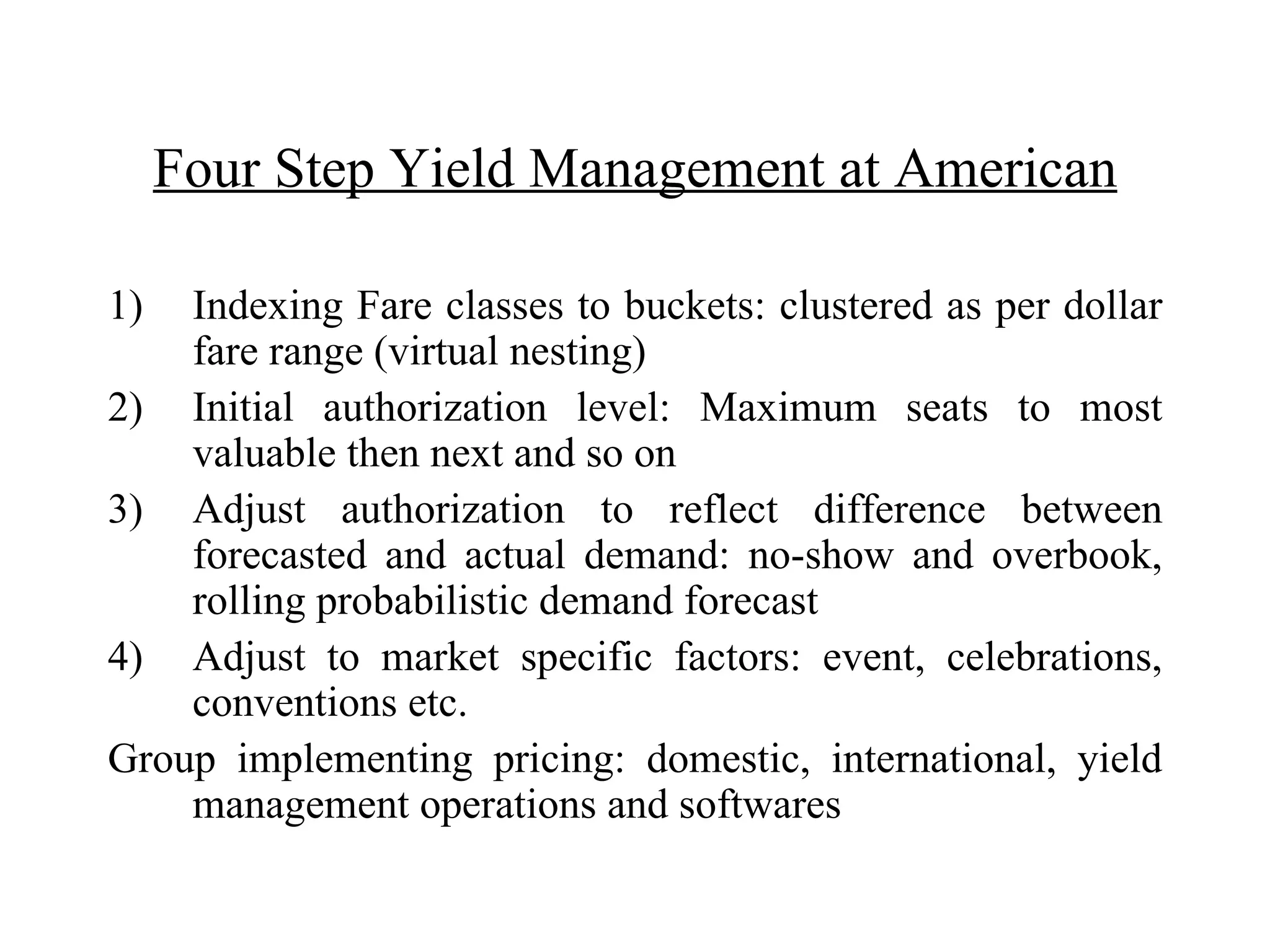
Four Step Yield Management at American Indexing Fare classes to buckets: clustered as per dollar fare range (virtual nesting) Initial authorization level: Maximum seats to most valuable then next and so on Adjust authorization to reflect difference between forecasted and actual demand: no-show and overbook, rolling probabilistic demand forecast  Adjust to market specific factors: event, celebrations, conventions etc. Group implementing pricing: domestic, international, yield management operations and softwares
Learning's Revenue management structure in Airline (service industry) Dynamic pricing Factors important in yield management  calculation

Dynamic Pricing

  • 1.
    Decision Making andQuantitative Tools Operating demand and cost forecast, interest rates forecast Aircraft acquisition Forecasting air travel demand, fuel prices etc. Fleet Capacity and composition Fleet management (Strategic) Scheduling models, assignment problems Productivity Spread sheet models, Markov models Wage Structure HRM Quantitative Tools Decision
  • 2.
    Forecasting Seat Demand,No shows, Marginal Analysis Yield Management: Aircraft seat configuration/protection levels settings Competitive analysis Response to competitor initiatives Pricing (Tactical) Modelling consumer demands, micro economic modelling (elasticities) Fare Levels, restrictions Pricing (Strategic) Mathematical Programming Allocation of Fleet & crew/ Terminal or hub Route Structure (Tactical) Competitive Analysis Route Planning/Hub Planning Route Structure (Strategic) Inventory models, spare parts location model, spare part life forecasting Maintenance Fleet Management (tactical)
  • 3.
    Revenue Management -Maximize passenger revenue by selling right seat to right customer at right price. Two parts Pricing Yield Management
  • 4.
    What are thebasic pricing concepts that are applicable in service industry, which concept of these is only applicable to airline industry?
  • 5.
    Pricing Fundamental Dilution:giving discount fares to those who are relatively price insensitive, Advance purchase, cancellation penalties, capacity control, minimum stay requirement etc. Displacement: Discount fare passenger on total flight length displacing one leg full fare passenger (can be beneficial) Share shift: consequences on market share of an airline change in fare relative to competitors Stimulation: Beneficial effect that lower prices would have on the demand passenger segment that would not have flown otherwise.
  • 6.
    Q. Which ofthe Four is more relevant for this analysis?
  • 7.
    Chicago-San Francisco FareStructure - $177 $177 Discount (restricted) $159 - - Discount (unrestricted) $310 $525 $525 Full Coach Continental (connected) United (non stop) American (non stop)
  • 8.
    Dilution cost/passenger is= $346 ($525 - $179) American carried 7684 full coach passenger Fraction traveling to San Francisco: f Dilution cost is D = $ ( 346 x 7684 x f x d) = $ (2.66 x f x d) Capturing continental and others American share 26.4% = 59724
  • 9.
    Continental (11.2%) andothers (18.2%) = 11.2% + 18.2% = 29.4% 29.4% = 66511 passenger Let s denote fraction of traffic that shift to American Market share shift = $ (179 x 66511 x f x s) = $ (11.91 million x f x s) Revenue change Δ R = $ (11.91 x f x s – 2.66 x f x d) million
  • 10.
    Four Step YieldManagement at American Indexing Fare classes to buckets: clustered as per dollar fare range (virtual nesting) Initial authorization level: Maximum seats to most valuable then next and so on Adjust authorization to reflect difference between forecasted and actual demand: no-show and overbook, rolling probabilistic demand forecast Adjust to market specific factors: event, celebrations, conventions etc. Group implementing pricing: domestic, international, yield management operations and softwares
  • 11.
    Learning's Revenue managementstructure in Airline (service industry) Dynamic pricing Factors important in yield management calculation