Drug Delivery Systems
Dr. Irfan Ahmad Khan
Senior Resident
Introduction
• Method or process of administering an active
pharmaceutical ingredient (API) to achieve
therapeutic effect in humans or animals.
• Modify drug release profile and pharmacokinetic
parameters for the benefit of improving product
efficacy as well as patient convenience and
compliance.
• Aims to deliver the drug at a rate directed by
the needs of the body during the period of
treatment, and target the active entity to the
site of action
Disadvantages in current therapy
• Inactivation by gastric juice
• Metabolism before reaching target cell – First pass
metabolism in lung / liver / Intestine
• Too many adverse reactions
How to overcome this???
• By improving rate of drug delivery
• Decreasing biodegradation
• Time release medications
• Site-specific targeting
• Administer injectable only medications in oral
form
• Costly, multiple-dose, long-term therapies →
Inexpensive, potent, time-releasing or self-
triggering formulations.
• Ideal – steadily deliver measurable and reproducible
amount of drug to the target site over a prolonged
period.
1. Oral Controlled Release Systems
• Mostly solids
• Based on dissolution, diffusion or a combination of both
mechanisms in the control of release rate of drug.
A. Continuous release systems
B. Delayed transit and Continuous release systems
C. Delayed release systems
Oral Drug Delivery Systems
A. Continuous release systems
• Release drug for prolonged period of time along
entire length of GIT with normal transit of the
dosage form.
a) Dissolution Controlled Release Systems
• Obtained by slowing dissolution rate of drug in GI
medium by incorporating drug in an insoluble
polymer and coating drug particles or granules with
polymeric materials of varying thickness.
• Matrix Dissolution Systems- waxes
• Reservoir Dissolution Systems- cellulose and PEG
• Griseofulvin and digoxin
b) Diffusion Controlled Release Systems
• Diffusion of drug molecule occurs through a
polymeric membrane
• Manufactured either by encapsulating drug particle
in a polymeric membrane or dispersing in a polymeric
matrix.
• Metoclopramide, ibuprofen
c) Dissolution and Diffusion Controlled Release Systems
• Drug core is encased in a partially soluble membrane
• Pores are created due to dissolution of parts of the
membrane  entry of aqueous medium into core
diffusion of dissolved drug out of the system
d) Ion exchange resin-drug complexes
• Encouraged because of their physio-chemical
stability, inert nature, uniform size, spherical shape
• Amphetamine, codeine
e) Osmotic Pressure Controlled Systems
• Principle of osmosis movement of solvent from
lower concentration of solute towards higher
concentration of solute across a semi-permeable
membrane
• Drug release independent of pH
• Indomethacin, levodopa, zafirlukast, nifedipine
B. Delayed transit and Continuous release systems
• Designed to prolong their residence in the GIT along
with their release and known as gastroretentive
delivery system
a) High density (sinking) system or non-floating drug
delivery system
• Dosage form density is higher than normal stomach
content
• Prepared by coating drug on heavy core or mixed
with inert materials
b) Floating drug delivery system
• Stomach or upper small intestine
• Low density  entrapment of air or by incorporating
low density materials such as oil/ foam powder
• Non-effervescent systems- prepared from gel-forming
or highly swellable cellulose type hydrocolloids,
polysaccharides or matrix forming polymers like
polyacrylate, polycarbonate.
– Air trapped by swollen polymers confers buoyancy.
• Effervescent (gas generating) systems-
– Swellable polymers like polysaccharides and
effervescent component eg NaHCO3, citric acid
• Acetylsalicylic acid, atenolol, ampicillin
c) Bioadhesive or mucoadhesive drug delivery system
• Enhance absorption in site specific manner
• Bioadhesive polymer adhere to epithelial surface in
stomach
• Polyacrylic acid, chitosan, PEG
• Eg. Metoprolol, captopril
d) Expandable, Unfoldable and Swellable Systems
• Rigid to withstand peristalsis and mechanical
contractility of stomach
• Swell osmotic absorption of water
• Eg. Acyclovir, metformin
e) Superporous hydrogel systems
• Swell to large size (100 times or more) due to rapid
water uptake by capillary wetting through numerous
interconnected open pores withstand sufficient
mechanical pressure
• Eg. Octreotide, desmopressin
C. Delayed release systems
• Designed to release drug only at specific site in the
GIT
• Colon specific drug delivery systems
– Local treatment of variety of bowel diseases such
as ulcerative colitis, Crohn’s disease, amoebiasis,
colonic cancer
– Eg. Hydrocortisone, budesonide, olsalazine,
mesalazine
2. Chewable Dosage forms
• Gum base contains an active substance either in its
core or coating
• Eg. Nicotine, caffeine
3. Genetically Modified Microorganisms/ Biodrug
• Recombinant microorganisms used orally to prevent
or treat diseases.
• Aim is to increase body’s protection against
environmental xenobiotics by ingesting
microorganisms expressing phase I (CYP450) or phase
II (glutathione S- transferase) xenobiotic metabolizing
enzymes.
• Enzyme deficiency (eg lipase)
• Organ failure (eg by removing urea in kidney failure)
1. Aqueous gel (hydrogels)
• Consist of high molecular weight, hydrophilic, cross-
linked polymers forming a three dimensional
network in water.
• Longer residence time
• Eg. Timolol, pilocarpine
Ophthalmic Drug Delivery Systems
2. Solid matrices and devices
• Solid polymeric inserts allow
accurate dosing, reduced systemic
absorption and better patient
compliance.
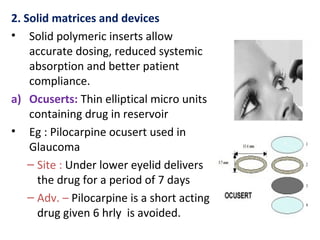
a) Ocuserts: Thin elliptical micro units
containing drug in reservoir
• Eg : Pilocarpine ocusert used in
Glaucoma
– Site : Under lower eyelid delivers
the drug for a period of 7 days
– Adv. – Pilocarpine is a short acting
drug given 6 hrly is avoided.
b) Bioadhesive ophthalmic drug inserts
• Adhesive rods based on mixtures of hydroxypropyl
cellulose, ethyl cellulose, polyacrylic acid cellulose
c) Lacrisert
• Rod shaped device made of hydroxypropyl cellulose
• Dry eye syndrome
3. Cyclodextrin
• Cylindrical oligosaccharides with a lipophilic central cavity
and hydrophilic outer surface
• Act as carrier by keeping hydrophobic drug molecules in
solution and delivering them to the surface of biological
membrane.
• Eg. Steroids, pilocarpine
4. Soft contact lenses
• Poly-2-hydroxyethylmethacrylate
• Correct eyesight and hold and deliver drugs
(biodegradable covalent linkages)
• Eg. Gentamicin, ciprofolxacin
5. Liposomes
• Eg. Acetazolamide, tropicamide
6. Niosomes
• Microscopic lammelar structures of size between 10 to
1000 nm
• Constituted from non-ionic surfactant and cholesterol.
• Ampiphillic in nature
– Hydrophilic drugs entrapped in core cavity
– Hydrophobic drugs entrapped in non-polar region
present within the bilayer.
• Eg. Dorzolamide, timolol
7. Pharmacosomes
• Pure drug vesicle formed by ampiphillic drugs
• Greater shelf stability, facilitated transport across the
cornea and controlled release profile
8. Collagen shield
• Cross linked collagen, fabricated with foetal calf skin
tissue and developed as a corneal bandage to promote
wound healing.
• Corneal ulcers
• Passive and Active transdermal delivery system
• Passive- gradient diffusion
• Active- penetration enhanced electric current,
Iontophoresis, electrophoration, microporation,
laser ablation, mechanical arrays, heat and
ultrasound
• Classified : single layer, multilayer, matrix,
reservoir, vapour patch
• Eg. Nitroglycerine, estradiol, testosterone,nicotine,
clonidine, fentanyl, PTH
Transdermal Drug Delivery Systems
1. Single layer drug in adhesive
• Adhesive layer contains the drug
2. Multi-layer drug in adhesive
• Contains an immediate drug release layer
• Other layer will be controlled release along with
adhesive layer.
3. Vapour Patch
• Adhesive layer releases vapour
• Eg. Releasing essential oils in decongestion
4. Reservoir system
• Drug reservoir is embedded between an impervious
backing layer and a rate controlling membrane.
5. Matrix system
A. Drug in adhesive system
• Drug reservoir is formed by dispersing drug in an
adhesive polymer and then spreading this polymer by
solvent melting on an impervious backing layer
B. Matrix-dispersion system
• Drug is dispersed homogenously in a hydrophilic or
lipophilic polymer matrix
6. Microreservoir system
• Combination of reservoir and matrix-dispersion system
• Drug reservoir is formed by first suspending the drug in
an aqueous solution of water soluble polymer and then
solution is dispersed homogenously in a lipophilic
polymer matrix forming spheres of drug reservoirs
• Nebulizer : medication in the form of mist inhaled into
the lungs
• Dry powder inhalers : delivers medication to the lungs
in dry powder form
• Metered dose inhalers: delivers a specific amount of
medication to the lungs, in the form of a short burst of
aerosolized medicine.
– E.g. salbutamol
– Desmopressin in Diabetes insipidus
– Insulin can be given as inhalers instead of SC inj.
which have better patient compliance (approved in
June 2014 by FDA)
Nasal Drug Delivery Systems
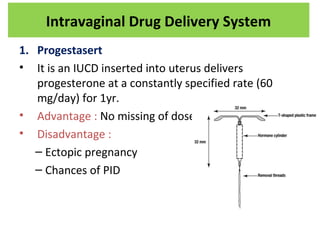
1. Progestasert
• It is an IUCD inserted into uterus delivers
progesterone at a constantly specified rate (60
mg/day) for 1yr.
• Advantage : No missing of dose
• Disadvantage :
– Ectopic pregnancy
– Chances of PID
Intravaginal Drug Delivery System
2. Dinoprost vaginal insert
• Polymeric slab contains dinoprostone
• Encased in a pouch of a knitted polyster delivery and
retrieval systems
3. Mucoadhesive vaginal drug delivery system
• Drugs are formulated as vaginal suppository,
bioadhesive tablets, cream, gel incorporated into a
vaginal device with a carrier
• Miconazole, clotrimazole, fluconazole
• Direct administration of drug into urinary bladder
through a catheter
• Eg.
• Intravesical treatment for bladder cancer by
immunomodulators like BCG and INF-α and agents
such as doxorubicin, gemcitabine, mitomycin and
thiotepa
Intravesical Drug Delivery Systems
• Self-microemulsifying drug delivery system
• Liquid intraurethral PGE1  erectile dysfunction
Urethral Administration
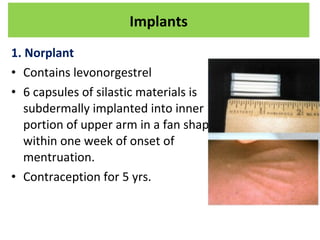
1. Norplant
• Contains levonorgestrel
• 6 capsules of silastic materials is
subdermally implanted into inner
portion of upper arm in a fan shape
within one week of onset of
mentruation.
• Contraception for 5 yrs.
Implants
2. Gliadel wafer implant
• Contains carmustine
• Delivered directly into surgical cavity created when a
brain tumor is resected
3. Zoladex implant
• Goserelin acetate
• 28 days
• Used: Prostate cancer, endometriosis and breast cancer.
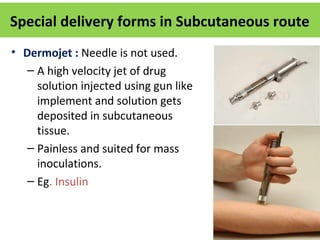
• Dermojet : Needle is not used.
– A high velocity jet of drug
solution injected using gun like
implement and solution gets
deposited in subcutaneous
tissue.
– Painless and suited for mass
inoculations.
– Eg. Insulin
Special delivery forms in Subcutaneous route
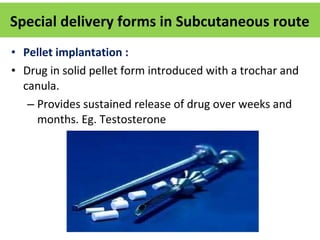
• Pellet implantation :
• Drug in solid pellet form introduced with a trochar and
canula.
– Provides sustained release of drug over weeks and
months. Eg. Testosterone
Special delivery forms in Subcutaneous route
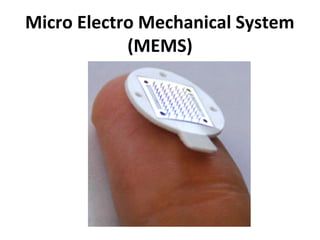
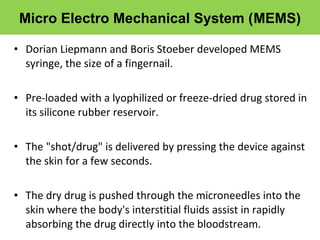
• Dorian Liepmann and Boris Stoeber developed MEMS
syringe, the size of a fingernail.
• Pre-loaded with a lyophilized or freeze-dried drug stored in
its silicone rubber reservoir.
• The "shot/drug" is delivered by pressing the device against
the skin for a few seconds.
• The dry drug is pushed through the microneedles into the
skin where the body's interstitial fluids assist in rapidly
absorbing the drug directly into the bloodstream.
Micro Electro Mechanical System (MEMS)
Micro Electro Mechanical System
(MEMS)
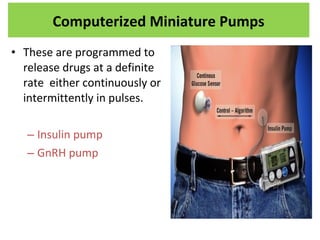
• These are programmed to
release drugs at a definite
rate either continuously or
intermittently in pulses.
– Insulin pump
– GnRH pump
Computerized Miniature Pumps
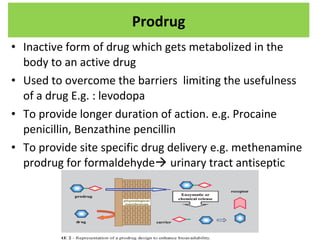
• Inactive form of drug which gets metabolized in the
body to an active drug
• Used to overcome the barriers limiting the usefulness
of a drug E.g. : levodopa
• To provide longer duration of action. e.g. Procaine
penicillin, Benzathine pencillin
• To provide site specific drug delivery e.g. methenamine
prodrug for formaldehyde urinary tract antiseptic
Prodrug
• Delivers medication in a manner that increases the
concentration of the medication in some parts of the
body relative to others.
• Advantage: increased efficacy, reduction in dose and
side effect of drug.
• Target: specific organ or group of cells
• Carrier : transport drug to target
Targeted Drug Delivery System
A. Particulate carrier system
1. Nanoparticles
• Solid particles of size 10 to 1000 nm
• Nanocapsules : These are vesicular systems in which
the drug is confined to a cavity surrounded by polymer
membrane
• Nanospheres : These are matrix systems in which the
drug is uniformly dispersed.
Carrier Systems
• Nanotubes
• Hollow cylinders made of carbon filled with drug
• Eg cellular scale needle for attaching drug molecule to
cancer cells
• Hydrogel nanoparticle
• Hydrogels are hydrophilic, polymeric networks capable
of imbibing large amounts of water or biological fluids.
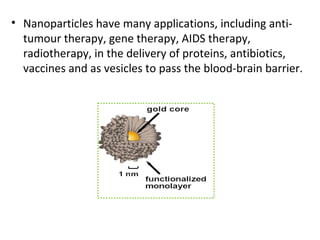
• Nanoparticles have many applications, including anti-
tumour therapy, gene therapy, AIDS therapy,
radiotherapy, in the delivery of proteins, antibiotics,
vaccines and as vesicles to pass the blood-brain barrier.
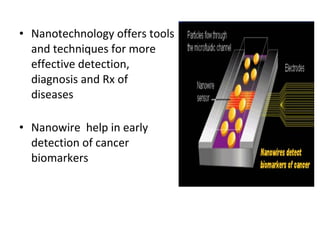
• Nanotechnology offers tools
and techniques for more
effective detection,
diagnosis and Rx of
diseases
• Nanowire help in early
detection of cancer
biomarkers
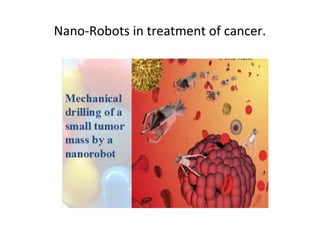
Nano-Robots in treatment of cancer.
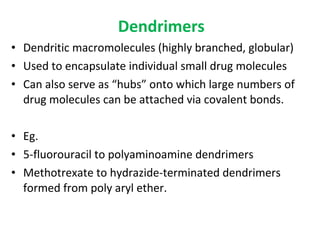
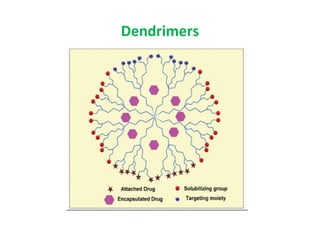
Dendrimers
• Dendritic macromolecules (highly branched, globular)
• Used to encapsulate individual small drug molecules
• Can also serve as “hubs” onto which large numbers of
drug molecules can be attached via covalent bonds.
• Eg.
• 5-fluorouracil to polyaminoamine dendrimers
• Methotrexate to hydrazide-terminated dendrimers
formed from poly aryl ether.
Dendrimers
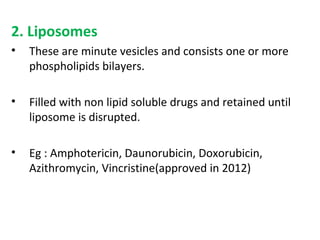
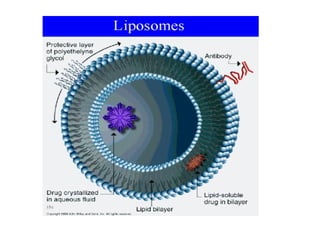
2. Liposomes
• These are minute vesicles and consists one or more
phospholipids bilayers.
• Filled with non lipid soluble drugs and retained until
liposome is disrupted.
• Eg : Amphotericin, Daunorubicin, Doxorubicin,
Azithromycin, Vincristine(approved in 2012)
Advantages of liposomes
• Increased stability and decreased toxicity of
encapsulated drug.
• Better pharmacokinetic, good therapeutic index.
• Both hydrophilic and hydrophobic drugs can be
carried.
• Biologically inert, biodegradable, non-toxic, non-
antigenic, non- pyrogenic.
• Disadvantage: Highly expensive
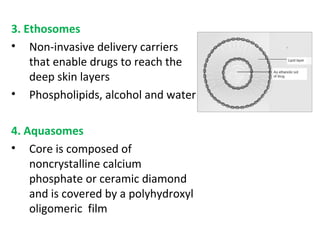
3. Ethosomes
• Non-invasive delivery carriers
that enable drugs to reach the
deep skin layers
• Phospholipids, alcohol and water
4. Aquasomes
• Core is composed of
noncrystalline calcium
phosphate or ceramic diamond
and is covered by a polyhydroxyl
oligomeric film
1. Neutrophils
• Transport agents to areas of acute inflammation
2. Lymphocytes
• Transfer macromolecules like DNA
B. Natural Carrier Systems
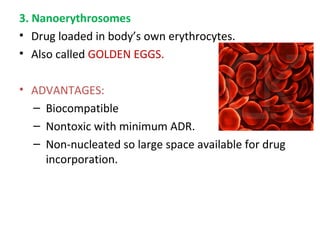
3. Nanoerythrosomes
• Drug loaded in body’s own erythrocytes.
• Also called GOLDEN EGGS.
• ADVANTAGES:
– Biocompatible
– Nontoxic with minimum ADR.
– Non-nucleated so large space available for drug
incorporation.
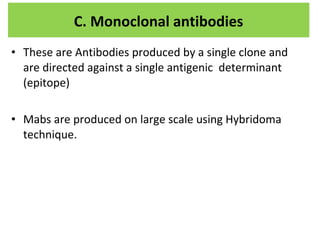
• These are Antibodies produced by a single clone and
are directed against a single antigenic determinant
(epitope)
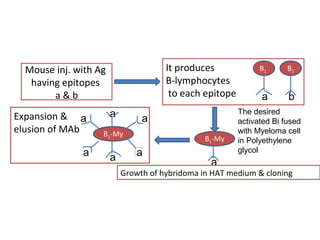
• Mabs are produced on large scale using Hybridoma
technique.
C. Monoclonal antibodies
Mouse inj. with Ag
having epitopes
a & b
Expansion &
elusion of MAb
It produces
B-lymphocytes
to each epitope
B1 B2
a b
B1-My
a
B1-My
a
a a a
a a
The desired
activated Bi fused
with Myeloma cell
in Polyethylene
glycol
Growth of hybridoma in HAT medium & cloning
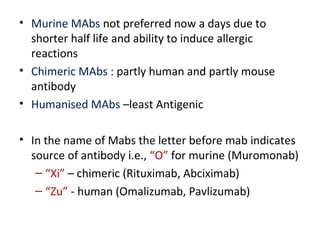
• Murine MAbs not preferred now a days due to
shorter half life and ability to induce allergic
reactions
• Chimeric MAbs : partly human and partly mouse
antibody
• Humanised MAbs –least Antigenic
• In the name of Mabs the letter before mab indicates
source of antibody i.e., “O” for murine (Muromonab)
– “Xi” – chimeric (Rituximab, Abciximab)
– “Zu” - human (Omalizumab, Pavlizumab)
Thank you
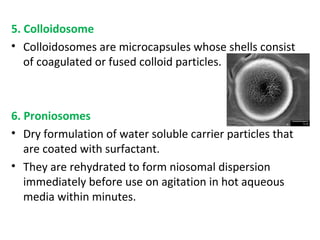
5. Colloidosome
• Colloidosomes are microcapsules whose shells consist
of coagulated or fused colloid particles.
6. Proniosomes
• Dry formulation of water soluble carrier particles that
are coated with surfactant.
• They are rehydrated to form niosomal dispersion
immediately before use on agitation in hot aqueous
media within minutes.

drug-delivery-systems.pdf

  • 1.
    Drug Delivery Systems Dr.Irfan Ahmad Khan Senior Resident
  • 2.
    Introduction • Method orprocess of administering an active pharmaceutical ingredient (API) to achieve therapeutic effect in humans or animals. • Modify drug release profile and pharmacokinetic parameters for the benefit of improving product efficacy as well as patient convenience and compliance.
  • 3.
    • Aims todeliver the drug at a rate directed by the needs of the body during the period of treatment, and target the active entity to the site of action
  • 4.
    Disadvantages in currenttherapy • Inactivation by gastric juice • Metabolism before reaching target cell – First pass metabolism in lung / liver / Intestine • Too many adverse reactions
  • 5.
    How to overcomethis??? • By improving rate of drug delivery • Decreasing biodegradation • Time release medications • Site-specific targeting • Administer injectable only medications in oral form • Costly, multiple-dose, long-term therapies → Inexpensive, potent, time-releasing or self- triggering formulations.
  • 6.
    • Ideal –steadily deliver measurable and reproducible amount of drug to the target site over a prolonged period. 1. Oral Controlled Release Systems • Mostly solids • Based on dissolution, diffusion or a combination of both mechanisms in the control of release rate of drug. A. Continuous release systems B. Delayed transit and Continuous release systems C. Delayed release systems Oral Drug Delivery Systems
  • 7.
    A. Continuous releasesystems • Release drug for prolonged period of time along entire length of GIT with normal transit of the dosage form. a) Dissolution Controlled Release Systems • Obtained by slowing dissolution rate of drug in GI medium by incorporating drug in an insoluble polymer and coating drug particles or granules with polymeric materials of varying thickness. • Matrix Dissolution Systems- waxes • Reservoir Dissolution Systems- cellulose and PEG • Griseofulvin and digoxin
  • 8.
    b) Diffusion ControlledRelease Systems • Diffusion of drug molecule occurs through a polymeric membrane • Manufactured either by encapsulating drug particle in a polymeric membrane or dispersing in a polymeric matrix. • Metoclopramide, ibuprofen c) Dissolution and Diffusion Controlled Release Systems • Drug core is encased in a partially soluble membrane • Pores are created due to dissolution of parts of the membrane  entry of aqueous medium into core diffusion of dissolved drug out of the system
  • 9.
    d) Ion exchangeresin-drug complexes • Encouraged because of their physio-chemical stability, inert nature, uniform size, spherical shape • Amphetamine, codeine e) Osmotic Pressure Controlled Systems • Principle of osmosis movement of solvent from lower concentration of solute towards higher concentration of solute across a semi-permeable membrane • Drug release independent of pH • Indomethacin, levodopa, zafirlukast, nifedipine
  • 10.
    B. Delayed transitand Continuous release systems • Designed to prolong their residence in the GIT along with their release and known as gastroretentive delivery system a) High density (sinking) system or non-floating drug delivery system • Dosage form density is higher than normal stomach content • Prepared by coating drug on heavy core or mixed with inert materials
  • 11.
    b) Floating drugdelivery system • Stomach or upper small intestine • Low density  entrapment of air or by incorporating low density materials such as oil/ foam powder • Non-effervescent systems- prepared from gel-forming or highly swellable cellulose type hydrocolloids, polysaccharides or matrix forming polymers like polyacrylate, polycarbonate. – Air trapped by swollen polymers confers buoyancy. • Effervescent (gas generating) systems- – Swellable polymers like polysaccharides and effervescent component eg NaHCO3, citric acid • Acetylsalicylic acid, atenolol, ampicillin
  • 12.
    c) Bioadhesive ormucoadhesive drug delivery system • Enhance absorption in site specific manner • Bioadhesive polymer adhere to epithelial surface in stomach • Polyacrylic acid, chitosan, PEG • Eg. Metoprolol, captopril d) Expandable, Unfoldable and Swellable Systems • Rigid to withstand peristalsis and mechanical contractility of stomach • Swell osmotic absorption of water • Eg. Acyclovir, metformin
  • 13.
    e) Superporous hydrogelsystems • Swell to large size (100 times or more) due to rapid water uptake by capillary wetting through numerous interconnected open pores withstand sufficient mechanical pressure • Eg. Octreotide, desmopressin
  • 14.
    C. Delayed releasesystems • Designed to release drug only at specific site in the GIT • Colon specific drug delivery systems – Local treatment of variety of bowel diseases such as ulcerative colitis, Crohn’s disease, amoebiasis, colonic cancer – Eg. Hydrocortisone, budesonide, olsalazine, mesalazine
  • 15.
    2. Chewable Dosageforms • Gum base contains an active substance either in its core or coating • Eg. Nicotine, caffeine
  • 16.
    3. Genetically ModifiedMicroorganisms/ Biodrug • Recombinant microorganisms used orally to prevent or treat diseases. • Aim is to increase body’s protection against environmental xenobiotics by ingesting microorganisms expressing phase I (CYP450) or phase II (glutathione S- transferase) xenobiotic metabolizing enzymes. • Enzyme deficiency (eg lipase) • Organ failure (eg by removing urea in kidney failure)
  • 17.
    1. Aqueous gel(hydrogels) • Consist of high molecular weight, hydrophilic, cross- linked polymers forming a three dimensional network in water. • Longer residence time • Eg. Timolol, pilocarpine Ophthalmic Drug Delivery Systems
  • 18.
    2. Solid matricesand devices • Solid polymeric inserts allow accurate dosing, reduced systemic absorption and better patient compliance. a) Ocuserts: Thin elliptical micro units containing drug in reservoir • Eg : Pilocarpine ocusert used in Glaucoma – Site : Under lower eyelid delivers the drug for a period of 7 days – Adv. – Pilocarpine is a short acting drug given 6 hrly is avoided.
  • 19.
    b) Bioadhesive ophthalmicdrug inserts • Adhesive rods based on mixtures of hydroxypropyl cellulose, ethyl cellulose, polyacrylic acid cellulose c) Lacrisert • Rod shaped device made of hydroxypropyl cellulose • Dry eye syndrome
  • 20.
    3. Cyclodextrin • Cylindricaloligosaccharides with a lipophilic central cavity and hydrophilic outer surface • Act as carrier by keeping hydrophobic drug molecules in solution and delivering them to the surface of biological membrane. • Eg. Steroids, pilocarpine 4. Soft contact lenses • Poly-2-hydroxyethylmethacrylate • Correct eyesight and hold and deliver drugs (biodegradable covalent linkages) • Eg. Gentamicin, ciprofolxacin
  • 21.
    5. Liposomes • Eg.Acetazolamide, tropicamide 6. Niosomes • Microscopic lammelar structures of size between 10 to 1000 nm • Constituted from non-ionic surfactant and cholesterol. • Ampiphillic in nature – Hydrophilic drugs entrapped in core cavity – Hydrophobic drugs entrapped in non-polar region present within the bilayer. • Eg. Dorzolamide, timolol
  • 22.
    7. Pharmacosomes • Puredrug vesicle formed by ampiphillic drugs • Greater shelf stability, facilitated transport across the cornea and controlled release profile 8. Collagen shield • Cross linked collagen, fabricated with foetal calf skin tissue and developed as a corneal bandage to promote wound healing. • Corneal ulcers
  • 23.
    • Passive andActive transdermal delivery system • Passive- gradient diffusion • Active- penetration enhanced electric current, Iontophoresis, electrophoration, microporation, laser ablation, mechanical arrays, heat and ultrasound • Classified : single layer, multilayer, matrix, reservoir, vapour patch • Eg. Nitroglycerine, estradiol, testosterone,nicotine, clonidine, fentanyl, PTH Transdermal Drug Delivery Systems
  • 24.
    1. Single layerdrug in adhesive • Adhesive layer contains the drug 2. Multi-layer drug in adhesive • Contains an immediate drug release layer • Other layer will be controlled release along with adhesive layer. 3. Vapour Patch • Adhesive layer releases vapour • Eg. Releasing essential oils in decongestion 4. Reservoir system • Drug reservoir is embedded between an impervious backing layer and a rate controlling membrane.
  • 25.
    5. Matrix system A.Drug in adhesive system • Drug reservoir is formed by dispersing drug in an adhesive polymer and then spreading this polymer by solvent melting on an impervious backing layer B. Matrix-dispersion system • Drug is dispersed homogenously in a hydrophilic or lipophilic polymer matrix 6. Microreservoir system • Combination of reservoir and matrix-dispersion system • Drug reservoir is formed by first suspending the drug in an aqueous solution of water soluble polymer and then solution is dispersed homogenously in a lipophilic polymer matrix forming spheres of drug reservoirs
  • 26.
    • Nebulizer :medication in the form of mist inhaled into the lungs • Dry powder inhalers : delivers medication to the lungs in dry powder form • Metered dose inhalers: delivers a specific amount of medication to the lungs, in the form of a short burst of aerosolized medicine. – E.g. salbutamol – Desmopressin in Diabetes insipidus – Insulin can be given as inhalers instead of SC inj. which have better patient compliance (approved in June 2014 by FDA) Nasal Drug Delivery Systems
  • 27.
    1. Progestasert • Itis an IUCD inserted into uterus delivers progesterone at a constantly specified rate (60 mg/day) for 1yr. • Advantage : No missing of dose • Disadvantage : – Ectopic pregnancy – Chances of PID Intravaginal Drug Delivery System
  • 28.
    2. Dinoprost vaginalinsert • Polymeric slab contains dinoprostone • Encased in a pouch of a knitted polyster delivery and retrieval systems 3. Mucoadhesive vaginal drug delivery system • Drugs are formulated as vaginal suppository, bioadhesive tablets, cream, gel incorporated into a vaginal device with a carrier • Miconazole, clotrimazole, fluconazole
  • 29.
    • Direct administrationof drug into urinary bladder through a catheter • Eg. • Intravesical treatment for bladder cancer by immunomodulators like BCG and INF-α and agents such as doxorubicin, gemcitabine, mitomycin and thiotepa Intravesical Drug Delivery Systems
  • 30.
    • Self-microemulsifying drugdelivery system • Liquid intraurethral PGE1  erectile dysfunction Urethral Administration
  • 31.
    1. Norplant • Containslevonorgestrel • 6 capsules of silastic materials is subdermally implanted into inner portion of upper arm in a fan shape within one week of onset of mentruation. • Contraception for 5 yrs. Implants
  • 32.
    2. Gliadel waferimplant • Contains carmustine • Delivered directly into surgical cavity created when a brain tumor is resected 3. Zoladex implant • Goserelin acetate • 28 days • Used: Prostate cancer, endometriosis and breast cancer.
  • 33.
    • Dermojet :Needle is not used. – A high velocity jet of drug solution injected using gun like implement and solution gets deposited in subcutaneous tissue. – Painless and suited for mass inoculations. – Eg. Insulin Special delivery forms in Subcutaneous route
  • 34.
    • Pellet implantation: • Drug in solid pellet form introduced with a trochar and canula. – Provides sustained release of drug over weeks and months. Eg. Testosterone Special delivery forms in Subcutaneous route
  • 35.
    • Dorian Liepmannand Boris Stoeber developed MEMS syringe, the size of a fingernail. • Pre-loaded with a lyophilized or freeze-dried drug stored in its silicone rubber reservoir. • The "shot/drug" is delivered by pressing the device against the skin for a few seconds. • The dry drug is pushed through the microneedles into the skin where the body's interstitial fluids assist in rapidly absorbing the drug directly into the bloodstream. Micro Electro Mechanical System (MEMS)
  • 36.
  • 37.
    • These areprogrammed to release drugs at a definite rate either continuously or intermittently in pulses. – Insulin pump – GnRH pump Computerized Miniature Pumps
  • 38.
    • Inactive formof drug which gets metabolized in the body to an active drug • Used to overcome the barriers limiting the usefulness of a drug E.g. : levodopa • To provide longer duration of action. e.g. Procaine penicillin, Benzathine pencillin • To provide site specific drug delivery e.g. methenamine prodrug for formaldehyde urinary tract antiseptic Prodrug
  • 39.
    • Delivers medicationin a manner that increases the concentration of the medication in some parts of the body relative to others. • Advantage: increased efficacy, reduction in dose and side effect of drug. • Target: specific organ or group of cells • Carrier : transport drug to target Targeted Drug Delivery System
  • 40.
    A. Particulate carriersystem 1. Nanoparticles • Solid particles of size 10 to 1000 nm • Nanocapsules : These are vesicular systems in which the drug is confined to a cavity surrounded by polymer membrane • Nanospheres : These are matrix systems in which the drug is uniformly dispersed. Carrier Systems
  • 41.
    • Nanotubes • Hollowcylinders made of carbon filled with drug • Eg cellular scale needle for attaching drug molecule to cancer cells • Hydrogel nanoparticle • Hydrogels are hydrophilic, polymeric networks capable of imbibing large amounts of water or biological fluids.
  • 42.
    • Nanoparticles havemany applications, including anti- tumour therapy, gene therapy, AIDS therapy, radiotherapy, in the delivery of proteins, antibiotics, vaccines and as vesicles to pass the blood-brain barrier.
  • 43.
    • Nanotechnology offerstools and techniques for more effective detection, diagnosis and Rx of diseases • Nanowire help in early detection of cancer biomarkers
  • 44.
  • 45.
    Dendrimers • Dendritic macromolecules(highly branched, globular) • Used to encapsulate individual small drug molecules • Can also serve as “hubs” onto which large numbers of drug molecules can be attached via covalent bonds. • Eg. • 5-fluorouracil to polyaminoamine dendrimers • Methotrexate to hydrazide-terminated dendrimers formed from poly aryl ether.
  • 46.
  • 47.
    2. Liposomes • Theseare minute vesicles and consists one or more phospholipids bilayers. • Filled with non lipid soluble drugs and retained until liposome is disrupted. • Eg : Amphotericin, Daunorubicin, Doxorubicin, Azithromycin, Vincristine(approved in 2012)
  • 49.
    Advantages of liposomes •Increased stability and decreased toxicity of encapsulated drug. • Better pharmacokinetic, good therapeutic index. • Both hydrophilic and hydrophobic drugs can be carried. • Biologically inert, biodegradable, non-toxic, non- antigenic, non- pyrogenic. • Disadvantage: Highly expensive
  • 50.
    3. Ethosomes • Non-invasivedelivery carriers that enable drugs to reach the deep skin layers • Phospholipids, alcohol and water 4. Aquasomes • Core is composed of noncrystalline calcium phosphate or ceramic diamond and is covered by a polyhydroxyl oligomeric film
  • 51.
    1. Neutrophils • Transportagents to areas of acute inflammation 2. Lymphocytes • Transfer macromolecules like DNA B. Natural Carrier Systems
  • 52.
    3. Nanoerythrosomes • Drugloaded in body’s own erythrocytes. • Also called GOLDEN EGGS. • ADVANTAGES: – Biocompatible – Nontoxic with minimum ADR. – Non-nucleated so large space available for drug incorporation.
  • 53.
    • These areAntibodies produced by a single clone and are directed against a single antigenic determinant (epitope) • Mabs are produced on large scale using Hybridoma technique. C. Monoclonal antibodies
  • 54.
    Mouse inj. withAg having epitopes a & b Expansion & elusion of MAb It produces B-lymphocytes to each epitope B1 B2 a b B1-My a B1-My a a a a a a The desired activated Bi fused with Myeloma cell in Polyethylene glycol Growth of hybridoma in HAT medium & cloning
  • 55.
    • Murine MAbsnot preferred now a days due to shorter half life and ability to induce allergic reactions • Chimeric MAbs : partly human and partly mouse antibody • Humanised MAbs –least Antigenic • In the name of Mabs the letter before mab indicates source of antibody i.e., “O” for murine (Muromonab) – “Xi” – chimeric (Rituximab, Abciximab) – “Zu” - human (Omalizumab, Pavlizumab)
  • 56.
  • 57.
    5. Colloidosome • Colloidosomesare microcapsules whose shells consist of coagulated or fused colloid particles. 6. Proniosomes • Dry formulation of water soluble carrier particles that are coated with surfactant. • They are rehydrated to form niosomal dispersion immediately before use on agitation in hot aqueous media within minutes.