Driving Success through Strategic ITSM Implementation
ITSM Implementation refers to the strategic process of integrating and optimizing IT service
management concepts, processes, and technologies within a company. Its goal is to
integrate IT services with business objectives, simplify processes, and provide a framework
for continuous improvement. ITSM implementation introduces, integrates, and optimizes
ITSM frameworks, processes, and technologies within an organization. It strives to integrate
IT services with business objectives, simplify processes, and create a framework for
continuous improvement.
Core Goals of ITSM Implementation
The key goals of ITSM implementation are to increase operational efficiency, and service
quality, and build a culture of continuous improvement within the IT service environment. It
aims to streamline IT processes, integrate IT activities with business goals, and enable
organizations to traverse the difficulties of the digital age with agility and creativity.
Key Strategies for ITSM Implementation
1. Strategic Planning and Assessment
Before implementing ITSM, firms should perform a thorough review of their current IT
processes, infrastructure, and resources. This includes recognizing strengths, shortcomings,
and opportunities for development, and outlining specific objectives and scope for
execution.
2. Clear communication and stakeholder engagement
Effective communication and stakeholder participation are critical for a successful ITSM
implementation. Organizations must explain the implementation's advantages, goals, and
expectations to all stakeholders, including IT staff, end users, and leadership.
3. Customization and configuration
Successful deployment requires tailoring ITSM frameworks and tools to the organization's
specific needs. This includes tailoring workflows, forms, and interfaces to meet unique
procedures and needs. Configuration should be strategic, with an emphasis on improving
usability, efficiency, and alignment with corporate goals.
4. Comprehensive Training and Change Management
Investing in thorough training programs for IT personnel and end users is critical to the
effective acceptance and implementation of ITSM solutions. Change management measures
should be applied to provide a seamless transition and reduce resistance to change.
Providing continuing assistance and tools is critical for establishing a culture of continuous
learning and progress.
5. Iterative Implementation & Continuous Improvement
ITSM implementation should be viewed as an iterative process that includes regular
feedback loops and chances for improvement. Organizations should focus on fast wins and
incremental gains, progressively broadening the scope and capabilities of ITSM solutions
over time.
6. Strategic alignment with business goals
Aligning ITSM implementation with overarching business goals is crucial for increasing
organizational value. ITSM activities should be closely related to strategic targets, with clear
metrics and KPIs in place to track progress and quantify performance. Regular
communication and cooperation between IT and business stakeholders ensures that ITSM
efforts are focused on achieving meaningful business results.
Summary
In conclusion, effective ITSM implementation necessitates a strategic approach that includes
evaluation, planning, execution, and continuous improvement. Organizations may negotiate
the complexity of ITSM adoption and achieve success in modern times by adopting key
strategies and best practices. Organizations can unleash the full potential of ITSM and
achieve their business objectives more efficiently and effectively by establishing clear
objectives, strong governance, and a culture of cooperation and continuous improvement.

Driving Success through Strategic ITSM Implementation

  • 1.
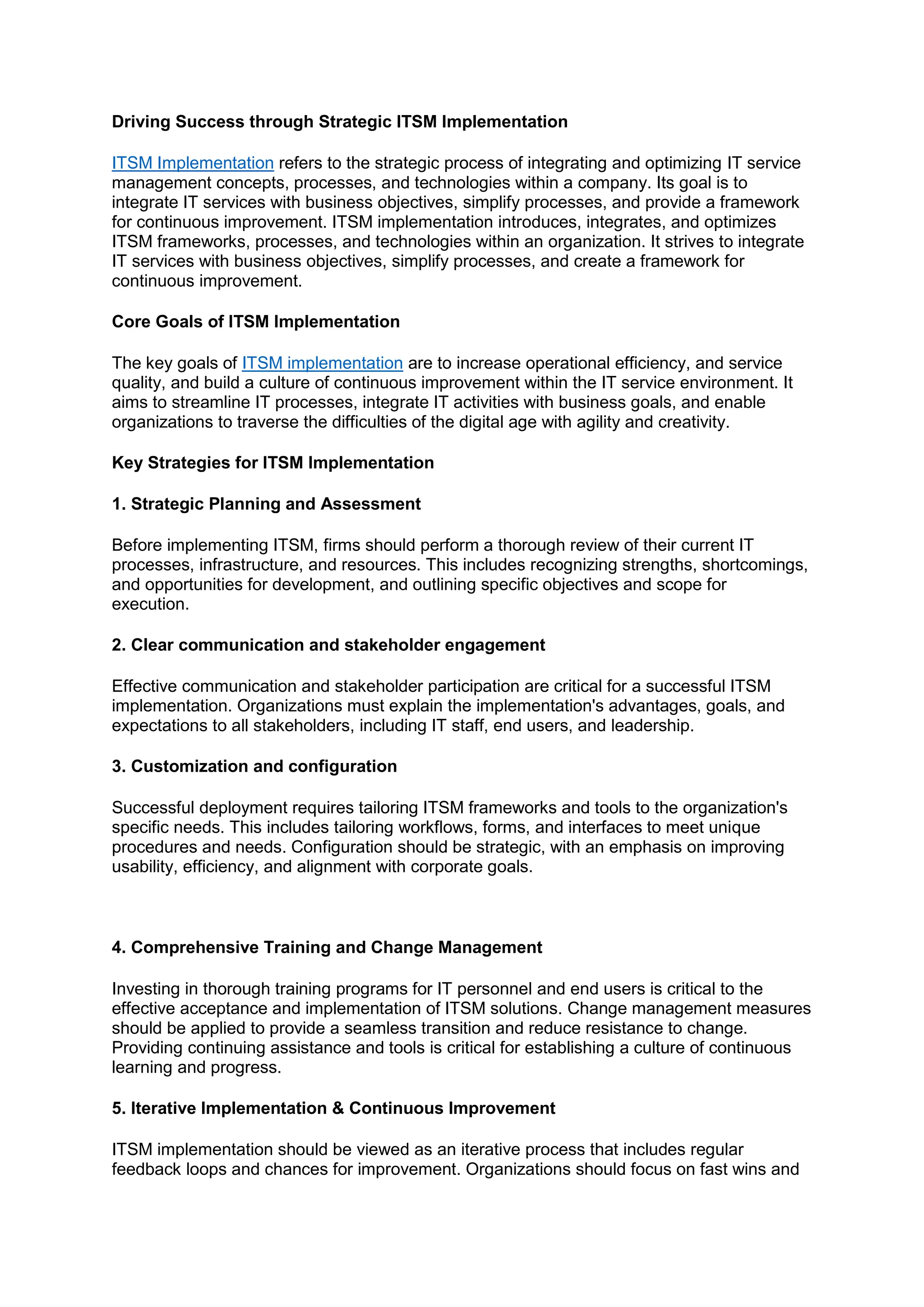
    Driving Success throughStrategic ITSM Implementation ITSM Implementation refers to the strategic process of integrating and optimizing IT service management concepts, processes, and technologies within a company. Its goal is to integrate IT services with business objectives, simplify processes, and provide a framework for continuous improvement. ITSM implementation introduces, integrates, and optimizes ITSM frameworks, processes, and technologies within an organization. It strives to integrate IT services with business objectives, simplify processes, and create a framework for continuous improvement. Core Goals of ITSM Implementation The key goals of ITSM implementation are to increase operational efficiency, and service quality, and build a culture of continuous improvement within the IT service environment. It aims to streamline IT processes, integrate IT activities with business goals, and enable organizations to traverse the difficulties of the digital age with agility and creativity. Key Strategies for ITSM Implementation 1. Strategic Planning and Assessment Before implementing ITSM, firms should perform a thorough review of their current IT processes, infrastructure, and resources. This includes recognizing strengths, shortcomings, and opportunities for development, and outlining specific objectives and scope for execution. 2. Clear communication and stakeholder engagement Effective communication and stakeholder participation are critical for a successful ITSM implementation. Organizations must explain the implementation's advantages, goals, and expectations to all stakeholders, including IT staff, end users, and leadership. 3. Customization and configuration Successful deployment requires tailoring ITSM frameworks and tools to the organization's specific needs. This includes tailoring workflows, forms, and interfaces to meet unique procedures and needs. Configuration should be strategic, with an emphasis on improving usability, efficiency, and alignment with corporate goals. 4. Comprehensive Training and Change Management Investing in thorough training programs for IT personnel and end users is critical to the effective acceptance and implementation of ITSM solutions. Change management measures should be applied to provide a seamless transition and reduce resistance to change. Providing continuing assistance and tools is critical for establishing a culture of continuous learning and progress. 5. Iterative Implementation & Continuous Improvement ITSM implementation should be viewed as an iterative process that includes regular feedback loops and chances for improvement. Organizations should focus on fast wins and
  • 2.
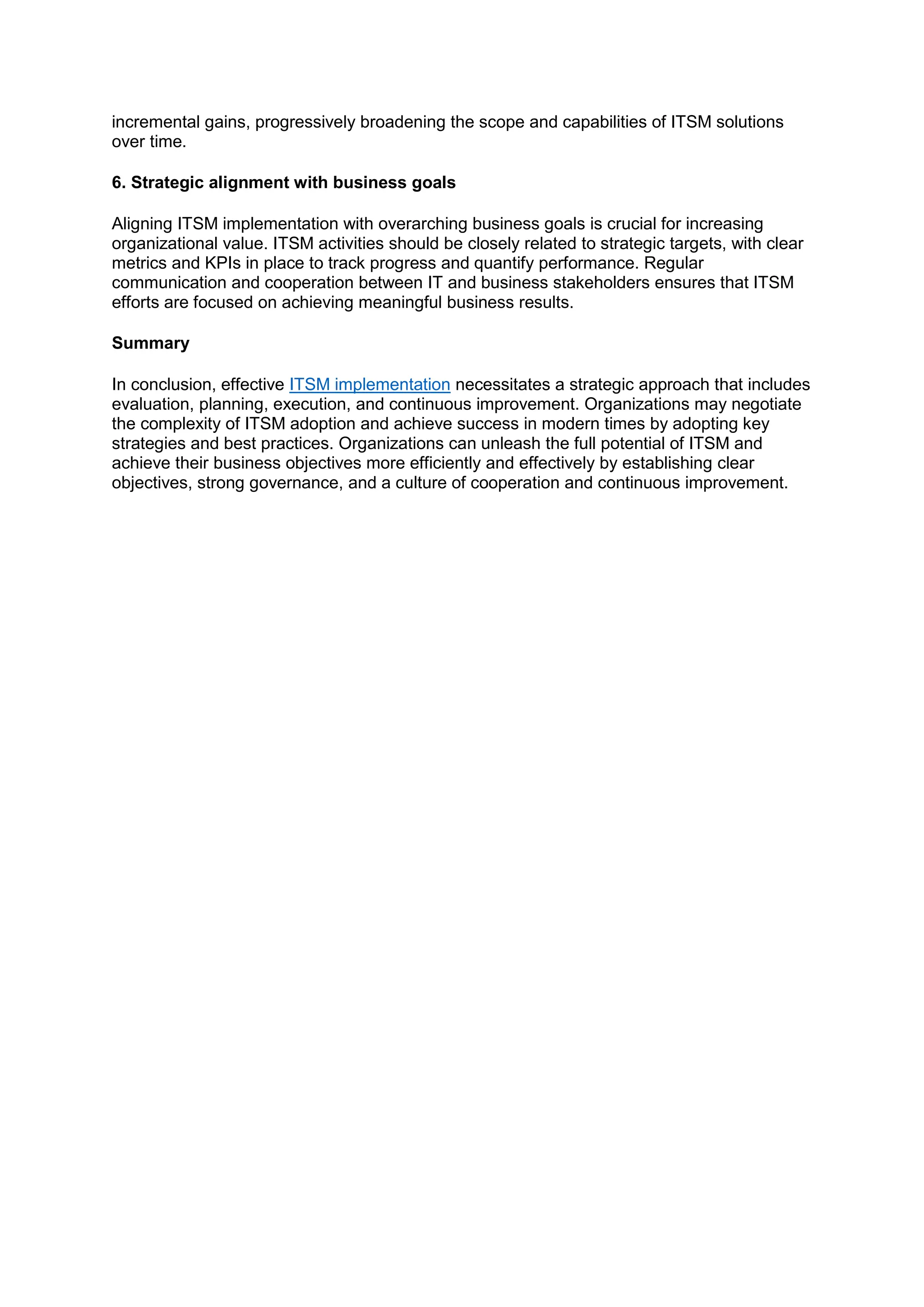
    incremental gains, progressivelybroadening the scope and capabilities of ITSM solutions over time. 6. Strategic alignment with business goals Aligning ITSM implementation with overarching business goals is crucial for increasing organizational value. ITSM activities should be closely related to strategic targets, with clear metrics and KPIs in place to track progress and quantify performance. Regular communication and cooperation between IT and business stakeholders ensures that ITSM efforts are focused on achieving meaningful business results. Summary In conclusion, effective ITSM implementation necessitates a strategic approach that includes evaluation, planning, execution, and continuous improvement. Organizations may negotiate the complexity of ITSM adoption and achieve success in modern times by adopting key strategies and best practices. Organizations can unleash the full potential of ITSM and achieve their business objectives more efficiently and effectively by establishing clear objectives, strong governance, and a culture of cooperation and continuous improvement.