Unit # 8
• The previous owner of a used vehicle
  would be most likely to give you reliable
  information about it’s condition.
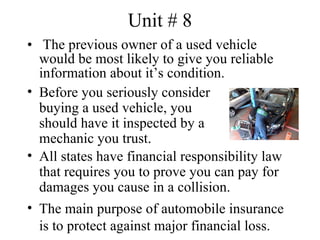
• Before you seriously consider
  buying a used vehicle, you
  should have it inspected by a
  mechanic you trust.
• All states have financial responsibility law
  that requires you to prove you can pay for
  damages you cause in a collision.
• The main purpose of automobile insurance
  is to protect against major financial loss.
• Types of insurance:
 • Comprehensive insurance would cover the damage
   to your vehicle such as if a tree falls on it.
 • Uninsured/under-insured motorist
   insurance would protect you if
   you are injured by a hit and run
   driver.
 • Liability insurance pays for the damage you
   cause to the other person’s vehicle (you caused
   the wreck).
 • Collision insurance pays for the damage to your
   vehicle when you are at fault for the wreck.
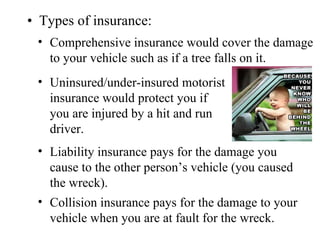
• A vehicle’s odometer shows how
  many miles the vehicle has been
  driven.
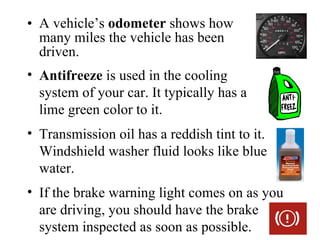
• Antifreeze is used in the cooling
  system of your car. It typically has a
  lime green color to it.
• Transmission oil has a reddish tint to it.
  Windshield washer fluid looks like blue
  water.
• If the brake warning light comes on as you
  are driving, you should have the brake
  system inspected as soon as possible.
• If the oil-pressure warning light comes on
  while you’re driving, it means that oil-
  pressure is not adequate.

• If your oil pressure light or gauge indicates
  low oil pressure while you’re driving, you
  should pull over to the side of the road and
  shut off the engine.

• Engine oil reduces friction between moving
  parts of the engine.
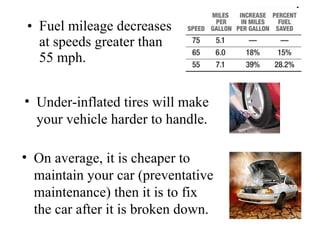
• Fuel mileage decreases
  at speeds greater than
  55 mph.


• Under-inflated tires will make
  your vehicle harder to handle.

• On average, it is cheaper to
  maintain your car (preventative
  maintenance) then it is to fix
  the car after it is broken down.
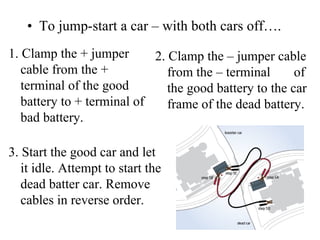
• To jump-start a car – with both cars off….
1. Clamp the + jumper       2. Clamp the – jumper cable
   cable from the +            from the – terminal      of
   terminal of the good        the good battery to the car
   battery to + terminal of    frame of the dead battery.
   bad battery.

3. Start the good car and let
   it idle. Attempt to start the
   dead batter car. Remove
   cables in reverse order.
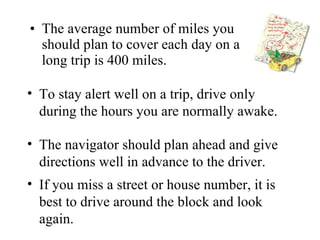
• The average number of miles you
  should plan to cover each day on a
  long trip is 400 miles.

• To stay alert well on a trip, drive only
  during the hours you are normally awake.

• The navigator should plan ahead and give
  directions well in advance to the driver.
• If you miss a street or house number, it is
  best to drive around the block and look
  again.
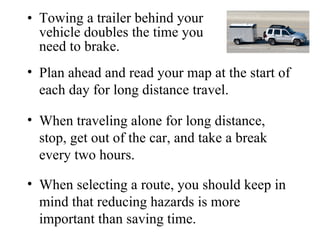
• Towing a trailer behind your
  vehicle doubles the time you
  need to brake.
• Plan ahead and read your map at the start of
  each day for long distance travel.

• When traveling alone for long distance,
  stop, get out of the car, and take a break
  every two hours.

• When selecting a route, you should keep in
  mind that reducing hazards is more
  important than saving time.

Drivers Ed Unit 8

  • 1.
    Unit # 8 •The previous owner of a used vehicle would be most likely to give you reliable information about it’s condition. • Before you seriously consider buying a used vehicle, you should have it inspected by a mechanic you trust. • All states have financial responsibility law that requires you to prove you can pay for damages you cause in a collision. • The main purpose of automobile insurance is to protect against major financial loss.
  • 2.
    • Types ofinsurance: • Comprehensive insurance would cover the damage to your vehicle such as if a tree falls on it. • Uninsured/under-insured motorist insurance would protect you if you are injured by a hit and run driver. • Liability insurance pays for the damage you cause to the other person’s vehicle (you caused the wreck). • Collision insurance pays for the damage to your vehicle when you are at fault for the wreck.
  • 3.
    • A vehicle’sodometer shows how many miles the vehicle has been driven. • Antifreeze is used in the cooling system of your car. It typically has a lime green color to it. • Transmission oil has a reddish tint to it. Windshield washer fluid looks like blue water. • If the brake warning light comes on as you are driving, you should have the brake system inspected as soon as possible.
  • 4.
    • If theoil-pressure warning light comes on while you’re driving, it means that oil- pressure is not adequate. • If your oil pressure light or gauge indicates low oil pressure while you’re driving, you should pull over to the side of the road and shut off the engine. • Engine oil reduces friction between moving parts of the engine.
  • 5.
    • Fuel mileagedecreases at speeds greater than 55 mph. • Under-inflated tires will make your vehicle harder to handle. • On average, it is cheaper to maintain your car (preventative maintenance) then it is to fix the car after it is broken down.
  • 6.
    • To jump-starta car – with both cars off…. 1. Clamp the + jumper 2. Clamp the – jumper cable cable from the + from the – terminal of terminal of the good the good battery to the car battery to + terminal of frame of the dead battery. bad battery. 3. Start the good car and let it idle. Attempt to start the dead batter car. Remove cables in reverse order.
  • 7.
    • The averagenumber of miles you should plan to cover each day on a long trip is 400 miles. • To stay alert well on a trip, drive only during the hours you are normally awake. • The navigator should plan ahead and give directions well in advance to the driver. • If you miss a street or house number, it is best to drive around the block and look again.
  • 8.
    • Towing atrailer behind your vehicle doubles the time you need to brake. • Plan ahead and read your map at the start of each day for long distance travel. • When traveling alone for long distance, stop, get out of the car, and take a break every two hours. • When selecting a route, you should keep in mind that reducing hazards is more important than saving time.