Down syndrome
By:
Fadel Adnan
Supervisor:
Dr. Ahmed Bashir
Down syndrome ?
• Neurodevelopmental
syndrome named for John
Langdon Haydon Down who
first described the physical
and behavioral characteristics
in 1862
• 1958 Jerome Lejeune and his team identified
trisomy 21 (47 chromosomes-one extra
chromosome 21 in cells) as cause of Down
Syndrome
• Only 2 years after it was discovered that the
typical number of human chromosomes was
46
Down syndrome
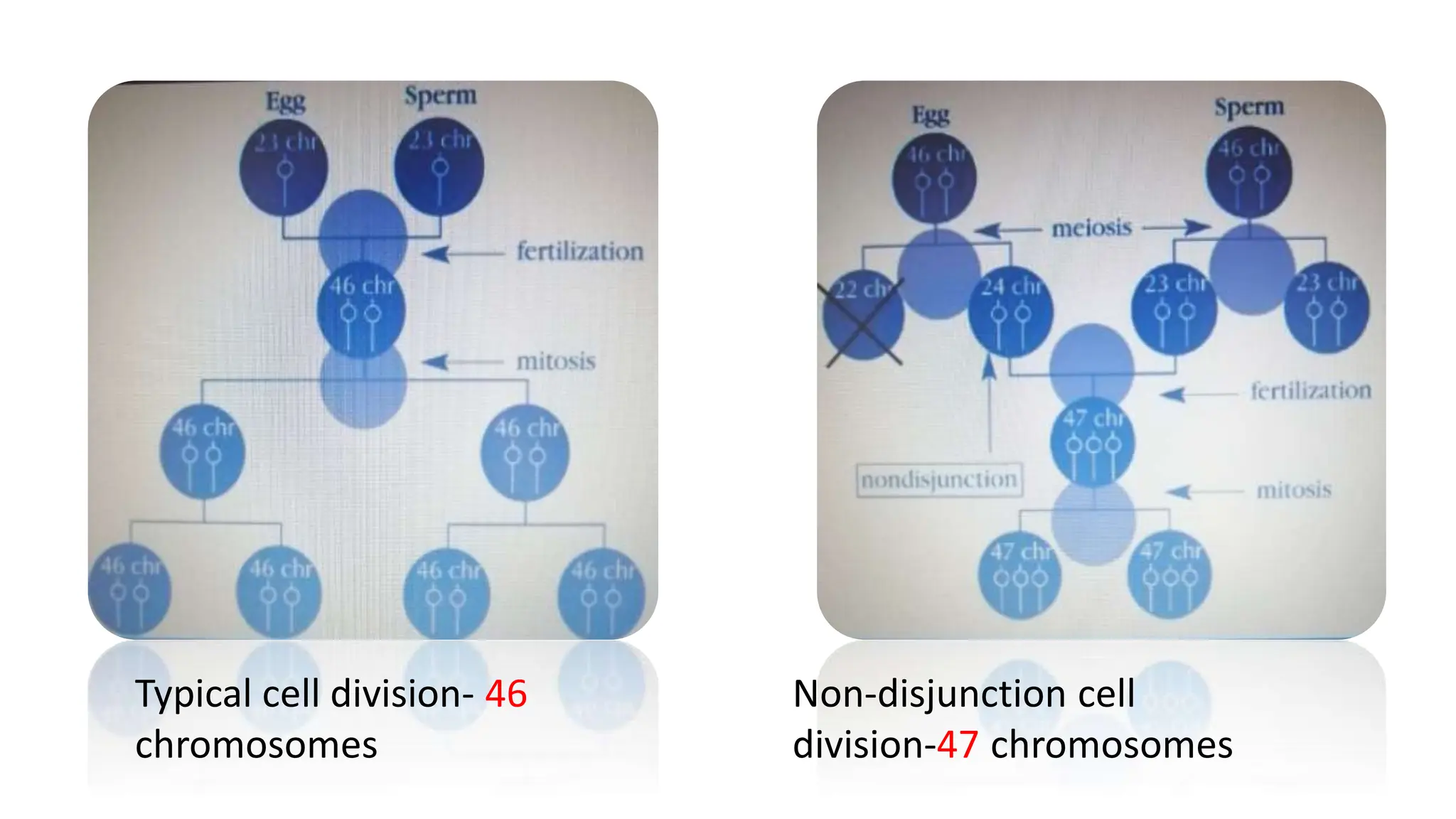
Non-disjunction cell
division-47 chromosomes
Typical cell division- 46
chromosomes
90-95% full trisomy from nondisjunction of
maternal origin during meiosis
2-4% translocation
(usually 13-15 or 21-22)
2-4% mosaicism
nondisjunction occurs after fertilization
resulting in two different cell lines
Type of Down syndrome
A group of people with
Down syndrome
 A short neck
 Small ears
 A tongue that tends to stick out of the mouth
 Tiny white spots on the iris (colored part) of the eye
 Small hands and feet
 A single line across the palm of the hand (palmar crease)
 Poor muscle tone or loose joints
 Shorter in height as children and adults
common physical features of Down syndrome
Normal
Health in Down Syndrome
• Eyes: cataracts and glaucoma
5% Cataracts
1% Glaucoma
Near-sightedness
• Ears: hearing loss
_ 30-75% by preschool
Health in Down Syndrome
• Thyroid: low thyroid
_30% by 25 years
• Gut: celiac disease (wheat allergy)
_4-7%
• Immune dysfunction:
autoimmune/leukemia
Down Syndrome
• Brain:
_Seizures 8%-50% by 50 years
_Sleep apnea
_Developmental
delays/learning differences
DOWN SYNDROME.pptx.............................

DOWN SYNDROME.pptx.............................

  • 1.
  • 2.
    Down syndrome ? •Neurodevelopmental syndrome named for John Langdon Haydon Down who first described the physical and behavioral characteristics in 1862
  • 3.
    • 1958 JeromeLejeune and his team identified trisomy 21 (47 chromosomes-one extra chromosome 21 in cells) as cause of Down Syndrome • Only 2 years after it was discovered that the typical number of human chromosomes was 46 Down syndrome
  • 5.
  • 7.
    90-95% full trisomyfrom nondisjunction of maternal origin during meiosis 2-4% translocation (usually 13-15 or 21-22) 2-4% mosaicism nondisjunction occurs after fertilization resulting in two different cell lines Type of Down syndrome
  • 8.
    A group ofpeople with Down syndrome
  • 9.
     A shortneck  Small ears  A tongue that tends to stick out of the mouth  Tiny white spots on the iris (colored part) of the eye  Small hands and feet  A single line across the palm of the hand (palmar crease)  Poor muscle tone or loose joints  Shorter in height as children and adults common physical features of Down syndrome
  • 10.
  • 11.
    Health in DownSyndrome • Eyes: cataracts and glaucoma 5% Cataracts 1% Glaucoma Near-sightedness • Ears: hearing loss _ 30-75% by preschool
  • 12.
    Health in DownSyndrome • Thyroid: low thyroid _30% by 25 years • Gut: celiac disease (wheat allergy) _4-7% • Immune dysfunction: autoimmune/leukemia
  • 13.
    Down Syndrome • Brain: _Seizures8%-50% by 50 years _Sleep apnea _Developmental delays/learning differences