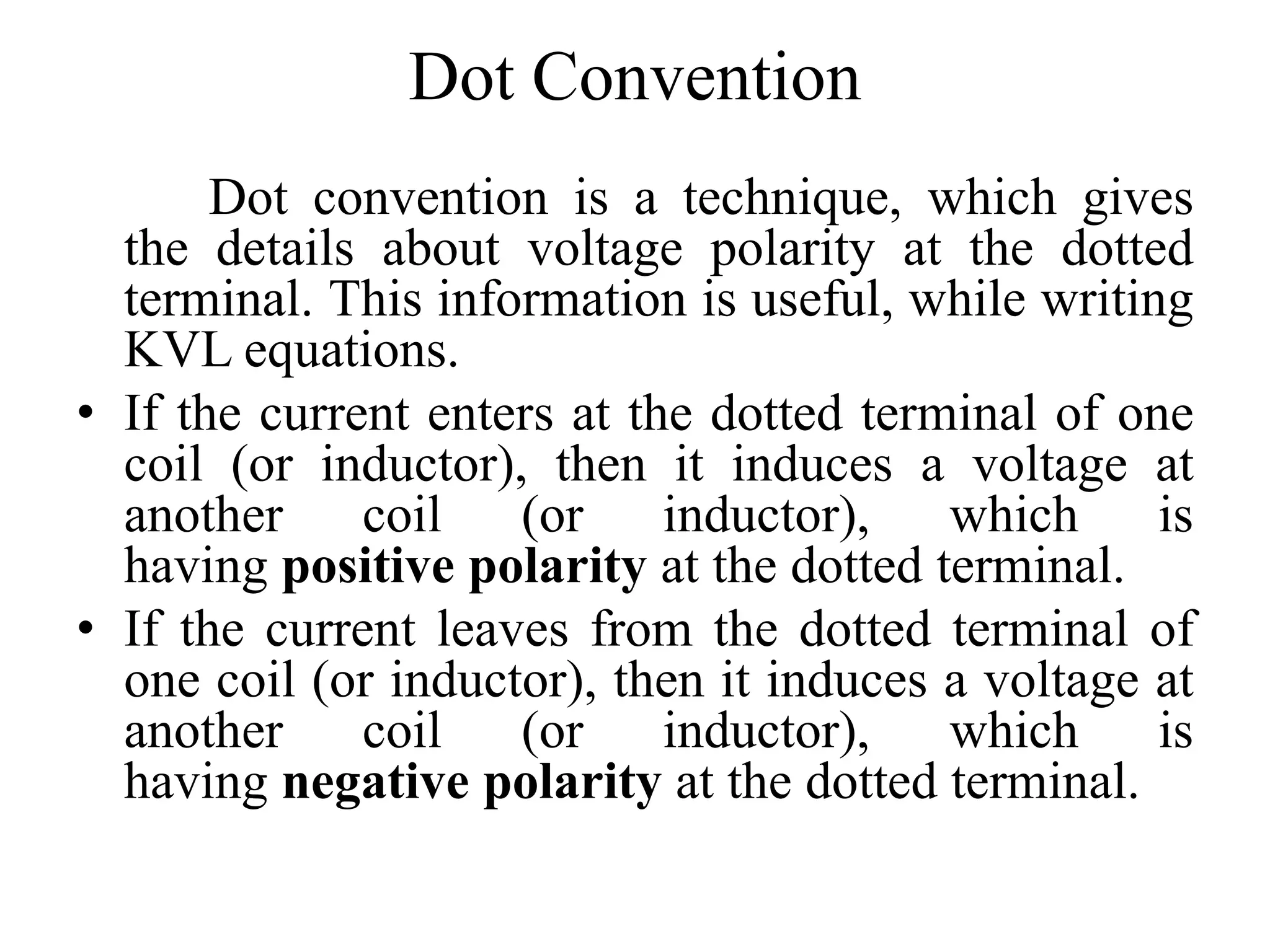
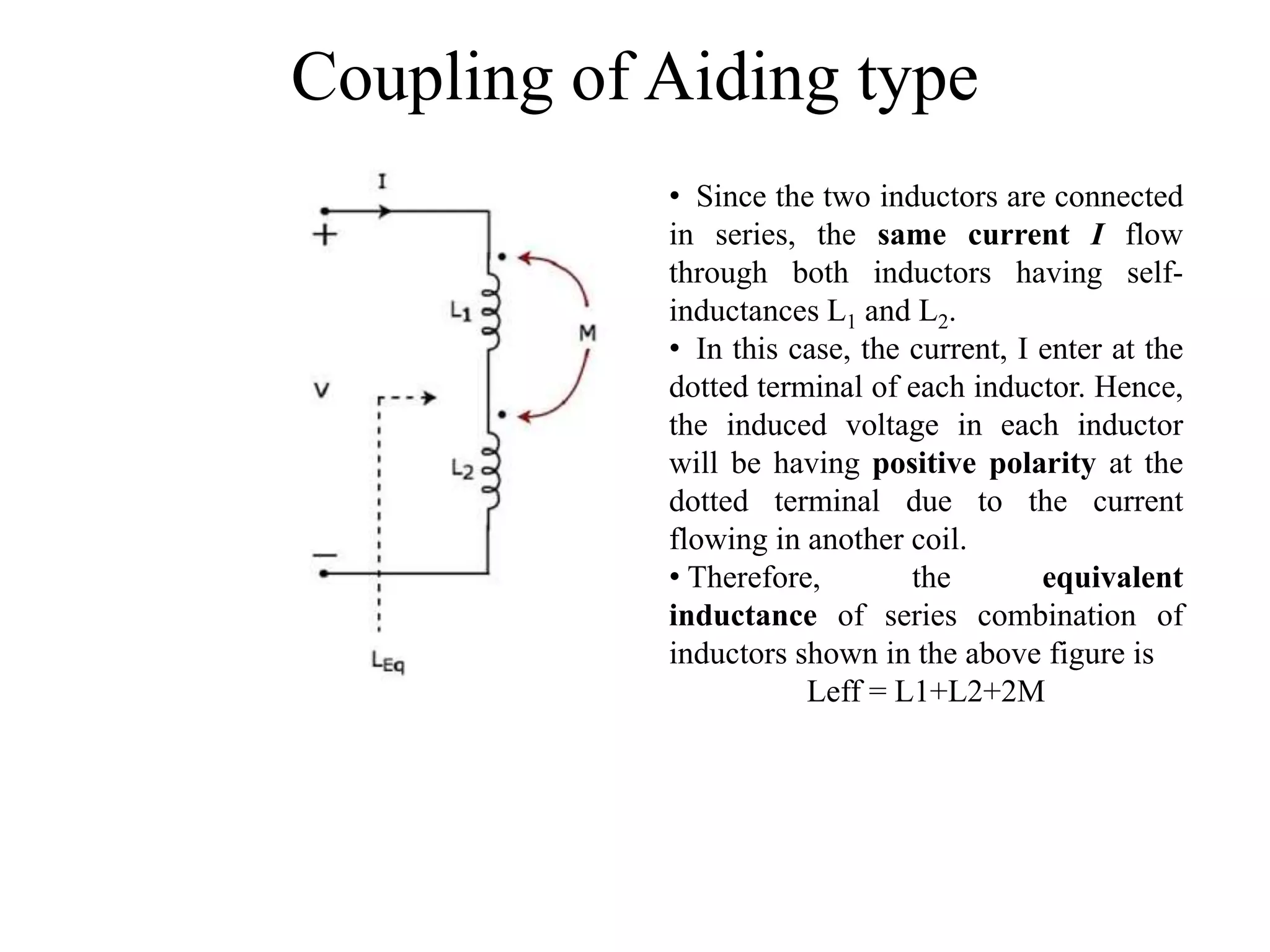
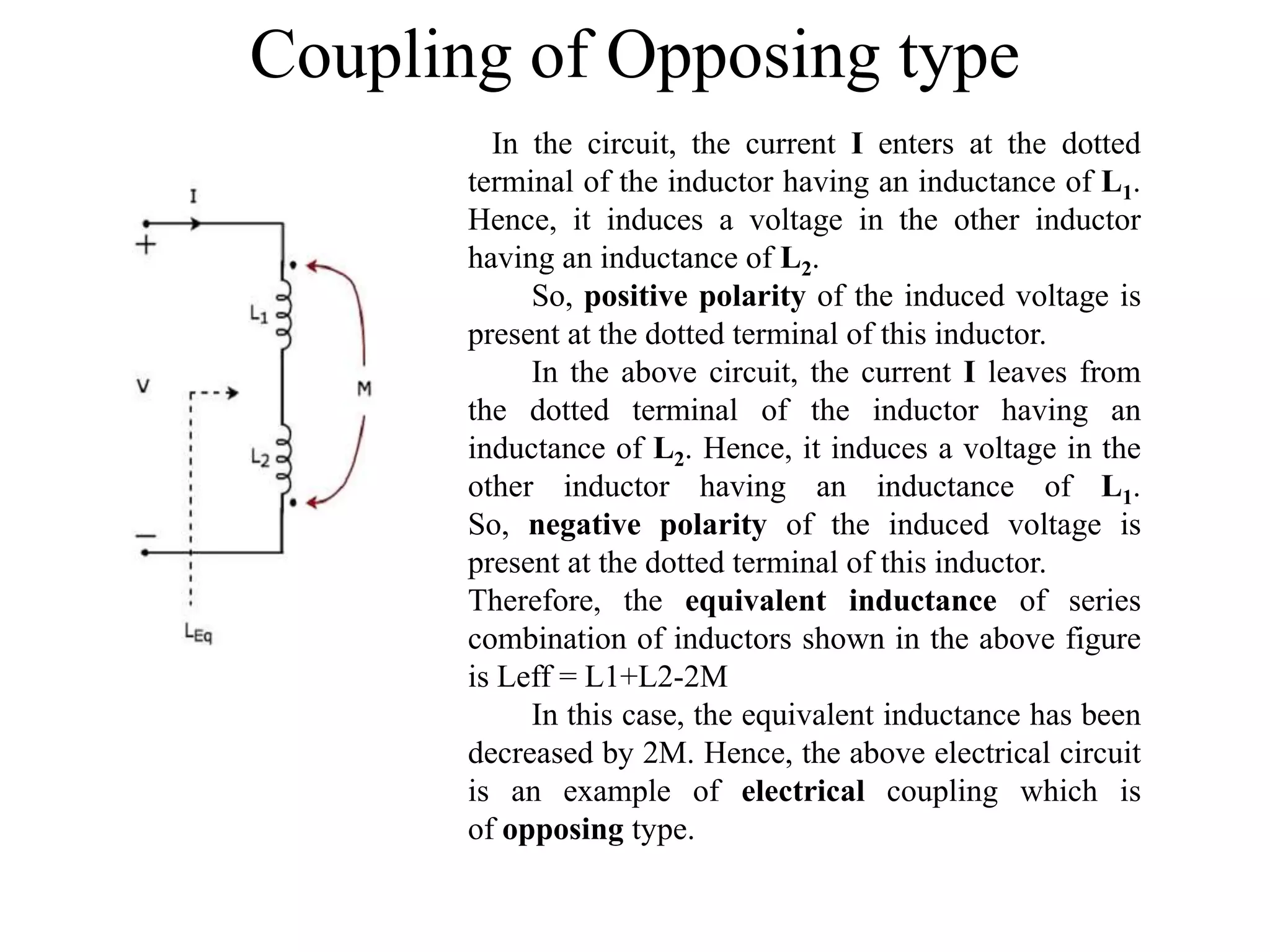
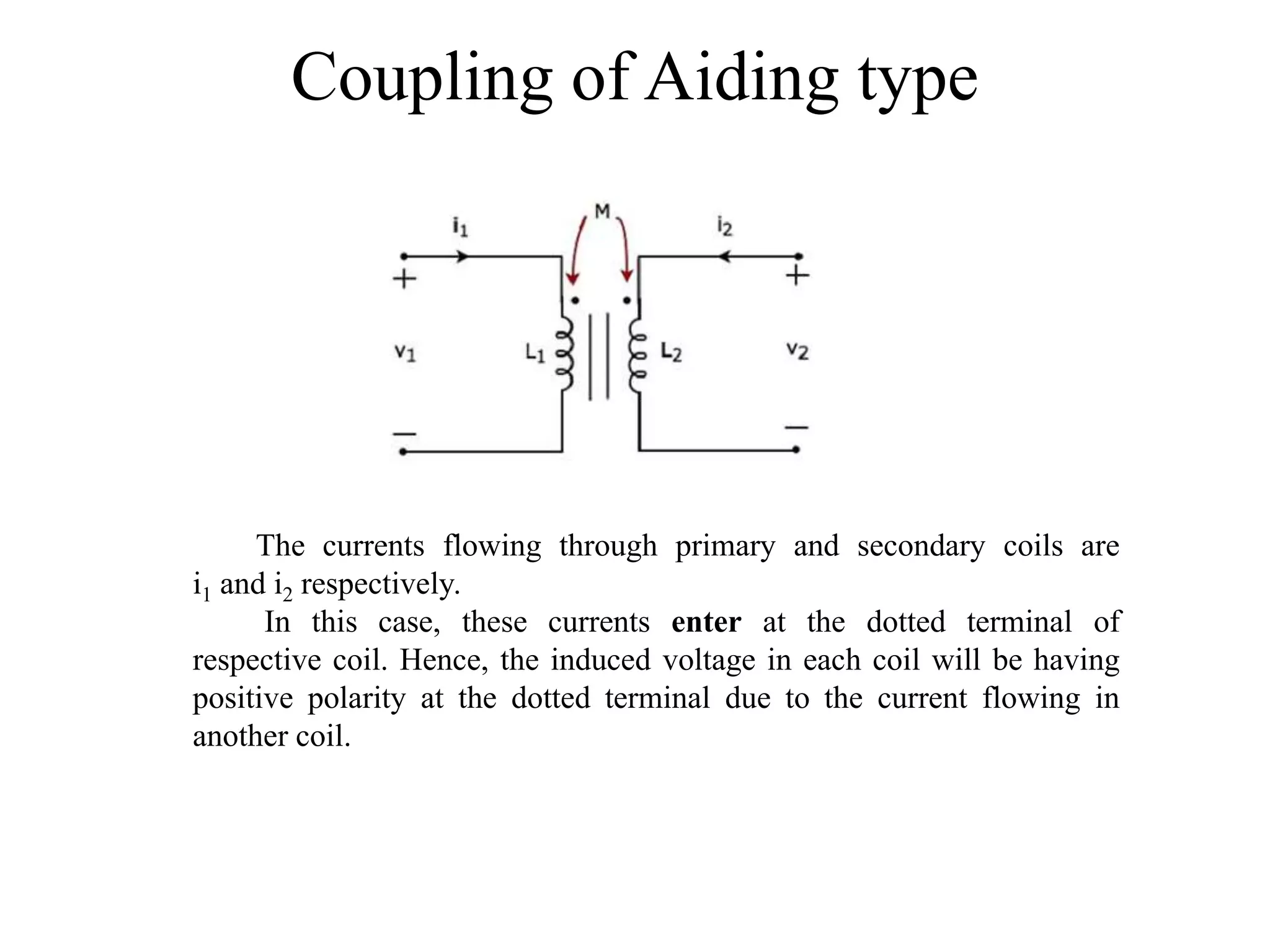
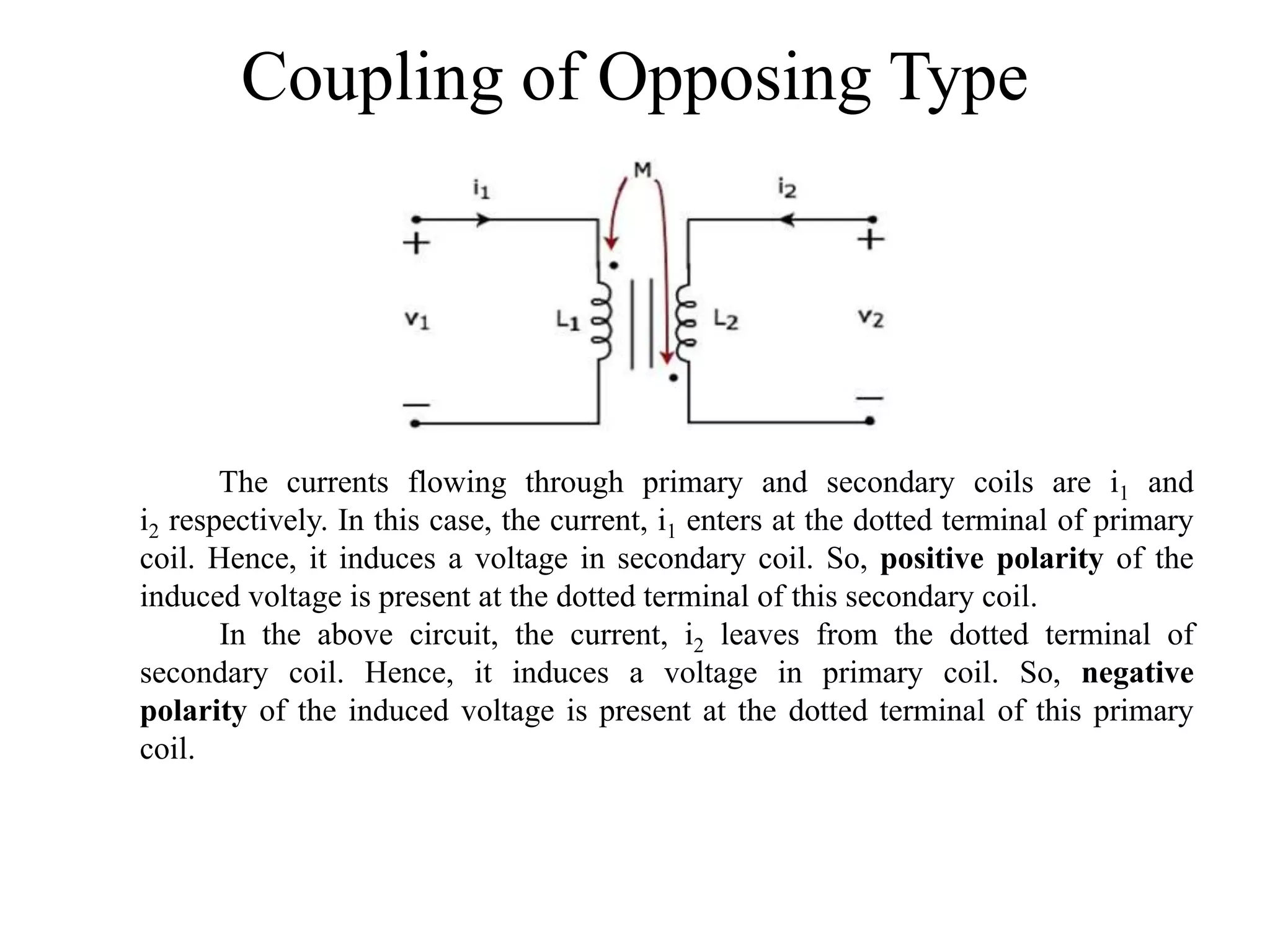
The document discusses dot convention in coupled circuits. It explains that dot convention specifies the voltage polarity at the dotted terminal of a coil. If current enters the dotted terminal, it induces a positive voltage in another coupled coil's dotted terminal; if it exits the dotted terminal, it induces a negative voltage. Coupling can be electrical, through a physical connection, or magnetic, without connection. Electrical coupling is classified as aiding if currents enter dotted terminals, or opposing if one exits and one enters. Magnetic coupling also has aiding and opposing types based on dotted terminal current direction.