Juan C. Aceros ○ Universitat Autònoma de Barcerlona
Jeannette Pols ○ Academic Medical Centre – UvA
Miquel Domènech ○ Universitat Autònoma de Barcerlona

                             STS and the socio-material constitution of later life
                                4S/EASST Conference ○ Copenhagen, Denmark ○ 2012
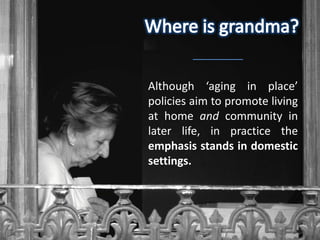
Although ‘aging in place’
policies aim to promote living
at home and community in
later life, in practice the
emphasis stands in domestic
settings.
Because I do not want to be
[at home] (...) I do everything
I can to go outdoors. Then, a
couple of months ago I left. I
knew that nobody would
come [home] for dinner,
lunch or snack that day. (...)
Then I thought, ‘You will go
to see your girlfriend who
was operated a long time
ago.’
I went to see my girlfriend,
but I did not tell anyone. My
God! When I got back home,
they were all [in the
household]! I mean the
whole family! (...) The
granddaughter was crying,
‘Where's Grandma? I don’t
find her!’
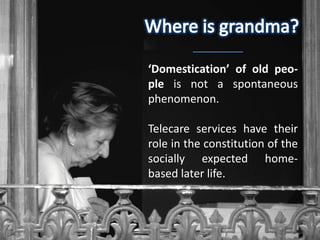
‘Domestication’ of old peo-
ple is not a spontaneous
phenomenon.

Telecare services have their
role in the constitution of the
socially expected home-
based later life.
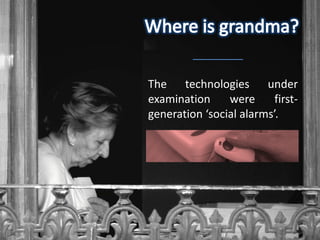
The technologies under
examination     were      first-
generation ‘social alarms’.
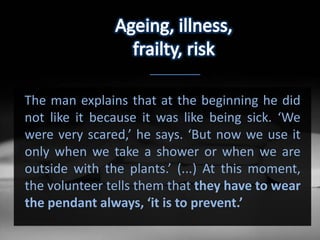
The man explains that at the beginning he did
not like it because it was like being sick. ‘We
were very scared,’ he says. ‘But now we use it
only when we take a shower or when we are
outside with the plants.’ (...) At this moment,
the volunteer tells them that they have to wear
the pendant always, ‘it is to prevent.’
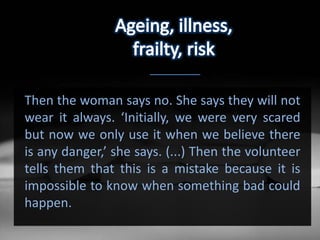
Then the woman says no. She says they will not
wear it always. ‘Initially, we were very scared
but now we only use it when we believe there
is any danger,’ she says. (...) Then the volunteer
tells them that this is a mistake because it is
impossible to know when something bad could
happen.
Although the telecare service examined don´t
use to refer to their clients as ‘patients’, it is
prescribing a persistent concern on health to
their ‘users’. Recommending them ‘always’
wear the pendant, the service is asking the
older people to enact an uncertain and
threatening body (see also, López and
Domènech, 2009).
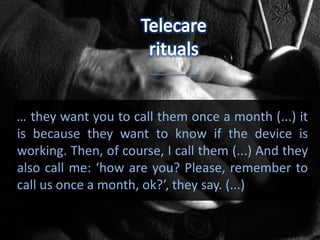
… they want you to call them once a month (...) it
is because they want to know if the device is
working. Then, of course, I call them (...) And they
also call me: ‘how are you? Please, remember to
call us once a month, ok?’, they say. (...)
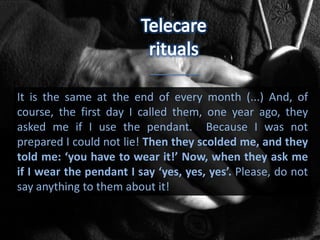
It is the same at the end of every month (...) And, of
course, the first day I called them, one year ago, they
asked me if I use the pendant. Because I was not
prepared I could not lie! Then they scolded me, and they
told me: ‘you have to wear it!’ Now, when they ask me
if I wear the pendant I say ‘yes, yes, yes’. Please, do not
say anything to them about it!
The only way to press the bottom twice a day is
being at home! So, people have to inform the
telecare provider if they will be outdoors for a
period longer than 12 hours. That way the
‘extended service’ is making relevant the link
between the client and the household: Using it
remaining at home (or not) become an issue for
telecare users.
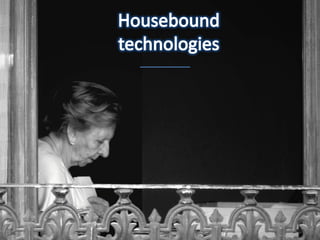
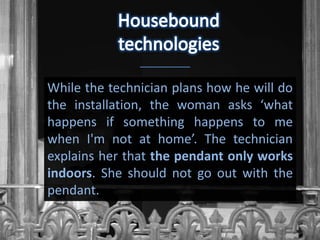
While the technician plans how he will do
the installation, the woman asks ‘what
happens if something happens to me
when I'm not at home’. The technician
explains her that the pendant only works
indoors. She should not go out with the
pendant.
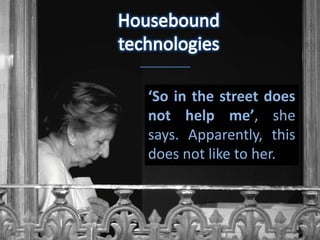
‘So in the street does
not help me’, she
says. Apparently, this
does not like to her.
The technician continues filling the forms
(...) When Montse returns to the room,
she looks restless (...). She doesn’t want
to sit down (...) Then, she leaves the room
again. ‘Where are you going?’ the
technician asks. ‘I’m going to the other
room’, she replies. ‘Stay here!’ he says
while she leaves.
The woman is going to change her clothes
because she plannes to go outdoors. She
says that the doctor advised her to walk
because     she     has     cardiovascular
problems. (…) It seems that she enters a
small room in the corridor.
In a political context where active
participation in community life is
promoted, ‘social alarms’ require old
people to be at home if they want to age
safely.
Telecare professionals and volunteers constantly work in
the constitution of a home-based later life. They do it in
different ways, for instance,

(1) pushing an ‘acceptance’ of the necessity of constant
    care at home,
(2) introducing and ensuring new home-based tele-care
    routines, and
(3) implementing housebound technologies.
Telecare clients can reject the place the service
assign to them:

(1) using telecare devices only in specific
   situations,
(2) lying about their actual use of the equipment,
(3) refusing their role as telecare users because it
   does not fit their ‘active’ way of life.
The constitution of a ‘domesticated’ later
life become a challenging and, sometimes,
     never-ending negotiation process.
Juan C. Aceros ○ juancarlos.aceros@uab.es
    Jeannette Pols ○ a.j.pols@amc.uva.nl
Miquel Domènech ○ miquel.domenech@uab.es
                                                                                      Funded by:
                                             European Commission ○ Seventh Framework Programme
                 Ministerio de Ciencia e Innovación ○ Programa Nacional de Proyectos de Investigación
      European Social Fund and Comissionat per a Universitats i Recerca (CUR), Generalitat de Catalunya
                                                                                           Images:
                                                             Nuria García ○ nuriagarciaarias@yahoo.es
                                                                   Bambo ○ bamboridades@gmail.com
                                                 Stoke-on-Trent City Council ○ http://www.stoke.gov.uk
                                                     Lola ○ http://www.flickr.com/people/lolita8fotos/

Domesticating telecare users

  • 1.
    Juan C. Aceros○ Universitat Autònoma de Barcerlona Jeannette Pols ○ Academic Medical Centre – UvA Miquel Domènech ○ Universitat Autònoma de Barcerlona STS and the socio-material constitution of later life 4S/EASST Conference ○ Copenhagen, Denmark ○ 2012
  • 2.
    Although ‘aging inplace’ policies aim to promote living at home and community in later life, in practice the emphasis stands in domestic settings.
  • 3.
    Because I donot want to be [at home] (...) I do everything I can to go outdoors. Then, a couple of months ago I left. I knew that nobody would come [home] for dinner, lunch or snack that day. (...) Then I thought, ‘You will go to see your girlfriend who was operated a long time ago.’
  • 4.
    I went tosee my girlfriend, but I did not tell anyone. My God! When I got back home, they were all [in the household]! I mean the whole family! (...) The granddaughter was crying, ‘Where's Grandma? I don’t find her!’
  • 5.
    ‘Domestication’ of oldpeo- ple is not a spontaneous phenomenon. Telecare services have their role in the constitution of the socially expected home- based later life.
  • 6.
    The technologies under examination were first- generation ‘social alarms’.
  • 8.
    The man explainsthat at the beginning he did not like it because it was like being sick. ‘We were very scared,’ he says. ‘But now we use it only when we take a shower or when we are outside with the plants.’ (...) At this moment, the volunteer tells them that they have to wear the pendant always, ‘it is to prevent.’
  • 9.
    Then the womansays no. She says they will not wear it always. ‘Initially, we were very scared but now we only use it when we believe there is any danger,’ she says. (...) Then the volunteer tells them that this is a mistake because it is impossible to know when something bad could happen.
  • 10.
    Although the telecareservice examined don´t use to refer to their clients as ‘patients’, it is prescribing a persistent concern on health to their ‘users’. Recommending them ‘always’ wear the pendant, the service is asking the older people to enact an uncertain and threatening body (see also, López and Domènech, 2009).
  • 12.
    … they wantyou to call them once a month (...) it is because they want to know if the device is working. Then, of course, I call them (...) And they also call me: ‘how are you? Please, remember to call us once a month, ok?’, they say. (...)
  • 13.
    It is thesame at the end of every month (...) And, of course, the first day I called them, one year ago, they asked me if I use the pendant. Because I was not prepared I could not lie! Then they scolded me, and they told me: ‘you have to wear it!’ Now, when they ask me if I wear the pendant I say ‘yes, yes, yes’. Please, do not say anything to them about it!
  • 14.
    The only wayto press the bottom twice a day is being at home! So, people have to inform the telecare provider if they will be outdoors for a period longer than 12 hours. That way the ‘extended service’ is making relevant the link between the client and the household: Using it remaining at home (or not) become an issue for telecare users.
  • 16.
    While the technicianplans how he will do the installation, the woman asks ‘what happens if something happens to me when I'm not at home’. The technician explains her that the pendant only works indoors. She should not go out with the pendant.
  • 17.
    ‘So in thestreet does not help me’, she says. Apparently, this does not like to her.
  • 18.
    The technician continuesfilling the forms (...) When Montse returns to the room, she looks restless (...). She doesn’t want to sit down (...) Then, she leaves the room again. ‘Where are you going?’ the technician asks. ‘I’m going to the other room’, she replies. ‘Stay here!’ he says while she leaves.
  • 19.
    The woman isgoing to change her clothes because she plannes to go outdoors. She says that the doctor advised her to walk because she has cardiovascular problems. (…) It seems that she enters a small room in the corridor.
  • 20.
    In a politicalcontext where active participation in community life is promoted, ‘social alarms’ require old people to be at home if they want to age safely.
  • 21.
    Telecare professionals andvolunteers constantly work in the constitution of a home-based later life. They do it in different ways, for instance, (1) pushing an ‘acceptance’ of the necessity of constant care at home, (2) introducing and ensuring new home-based tele-care routines, and (3) implementing housebound technologies.
  • 22.
    Telecare clients canreject the place the service assign to them: (1) using telecare devices only in specific situations, (2) lying about their actual use of the equipment, (3) refusing their role as telecare users because it does not fit their ‘active’ way of life.
  • 23.
    The constitution ofa ‘domesticated’ later life become a challenging and, sometimes, never-ending negotiation process.
  • 24.
    Juan C. Aceros○ juancarlos.aceros@uab.es Jeannette Pols ○ a.j.pols@amc.uva.nl Miquel Domènech ○ miquel.domenech@uab.es Funded by: European Commission ○ Seventh Framework Programme Ministerio de Ciencia e Innovación ○ Programa Nacional de Proyectos de Investigación European Social Fund and Comissionat per a Universitats i Recerca (CUR), Generalitat de Catalunya Images: Nuria García ○ nuriagarciaarias@yahoo.es Bambo ○ bamboridades@gmail.com Stoke-on-Trent City Council ○ http://www.stoke.gov.uk Lola ○ http://www.flickr.com/people/lolita8fotos/