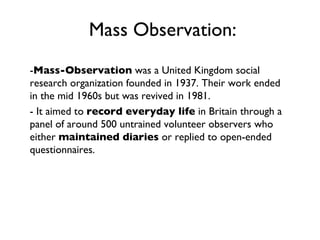
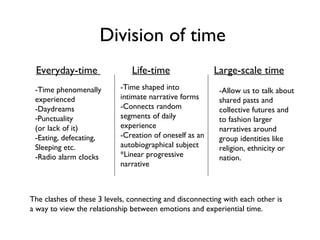
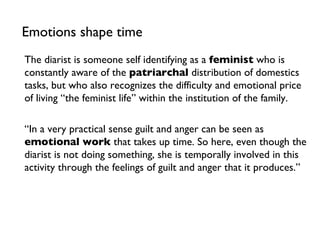
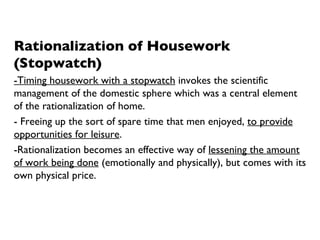
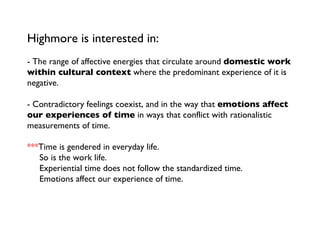
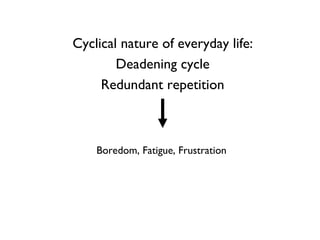
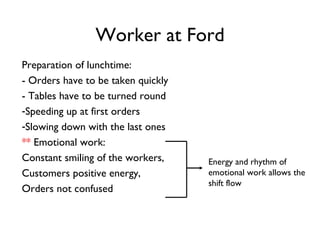
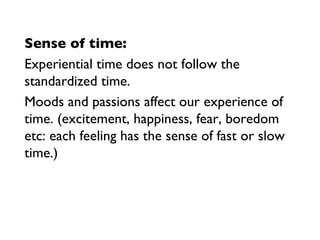
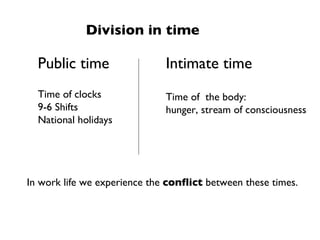
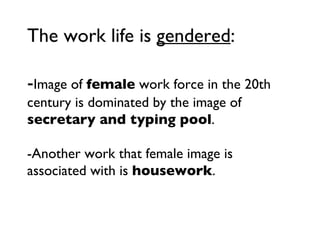
The document discusses different experiences of time in everyday life and work. It explores how time is gendered and affected by emotions. Timekeeping in domestic and wage work aims to rationalize and standardize time but often conflicts with experiential time shaped by moods, feelings, and the rhythms of the body. The rationalization of tasks like housework can both ease the physical burden and introduce new pressures. Emotions themselves constitute a kind of "emotional work" that shapes one's experience of time.
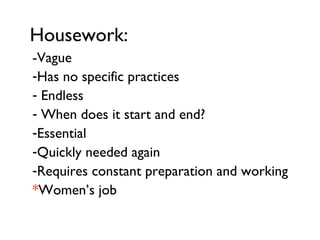
![Housework “The battle against dust and dirt is never won. All this halting of decay is also the denial of life: for time simultaneously creates and destroys, and only its negative aspect concerns the housekeeper.” (de Beauvoir 1997 [1949]: 470](https://image.slidesharecdn.com/doingtime-benhighmore-110507061512-phpapp02/85/Doing-time-ben-highmore-10-320.jpg)