Documentary analysis:
Kidnapped and Drugged for family
            honour.


        By Melissa Edwards
The programme ‘kidnapped and drugged for family honour’ is
shown on BBC three, Monday 2nd July at 9.00pm. This could be
because of the story line as it needs to be shown after the
watershed as there is inappropriate language and images used
throughout.


This documentary is mixed as there is use of interviews,
observation, narration and found footage. This is to give the
audience a variety of things to look at and listen to so they are
always alert.
Themes used in this documentary are murder, religion and
family.
Narrative Structure
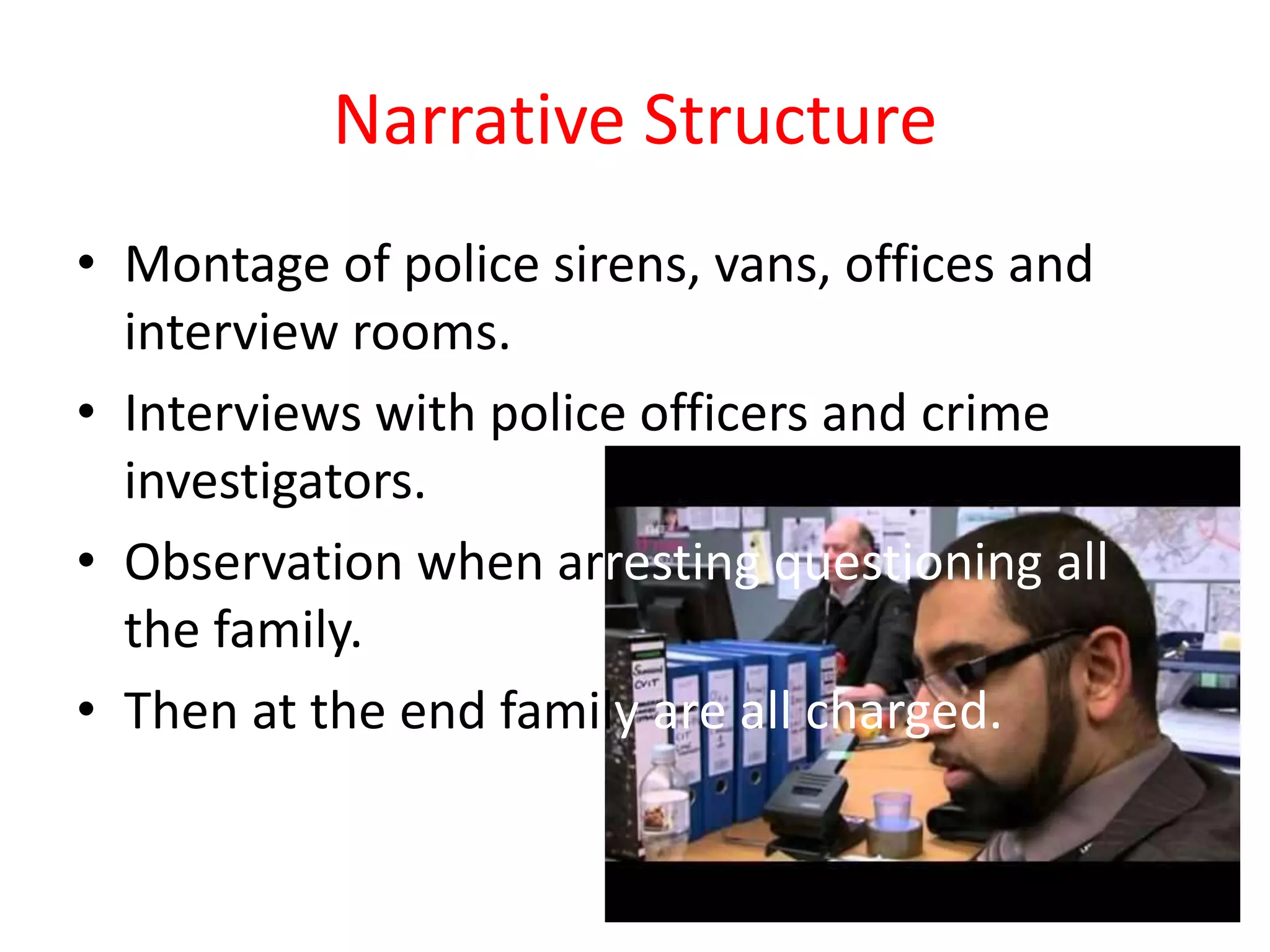
• Montage of police sirens, vans, offices and
  interview rooms.
• Interviews with police officers and crime
  investigators.
• Observation when arresting questioning all
  the family.
• Then at the end family are all charged.
Camera Work
• Handheld camera work at the start to get the audiences
attention as it makes you feel like your there.
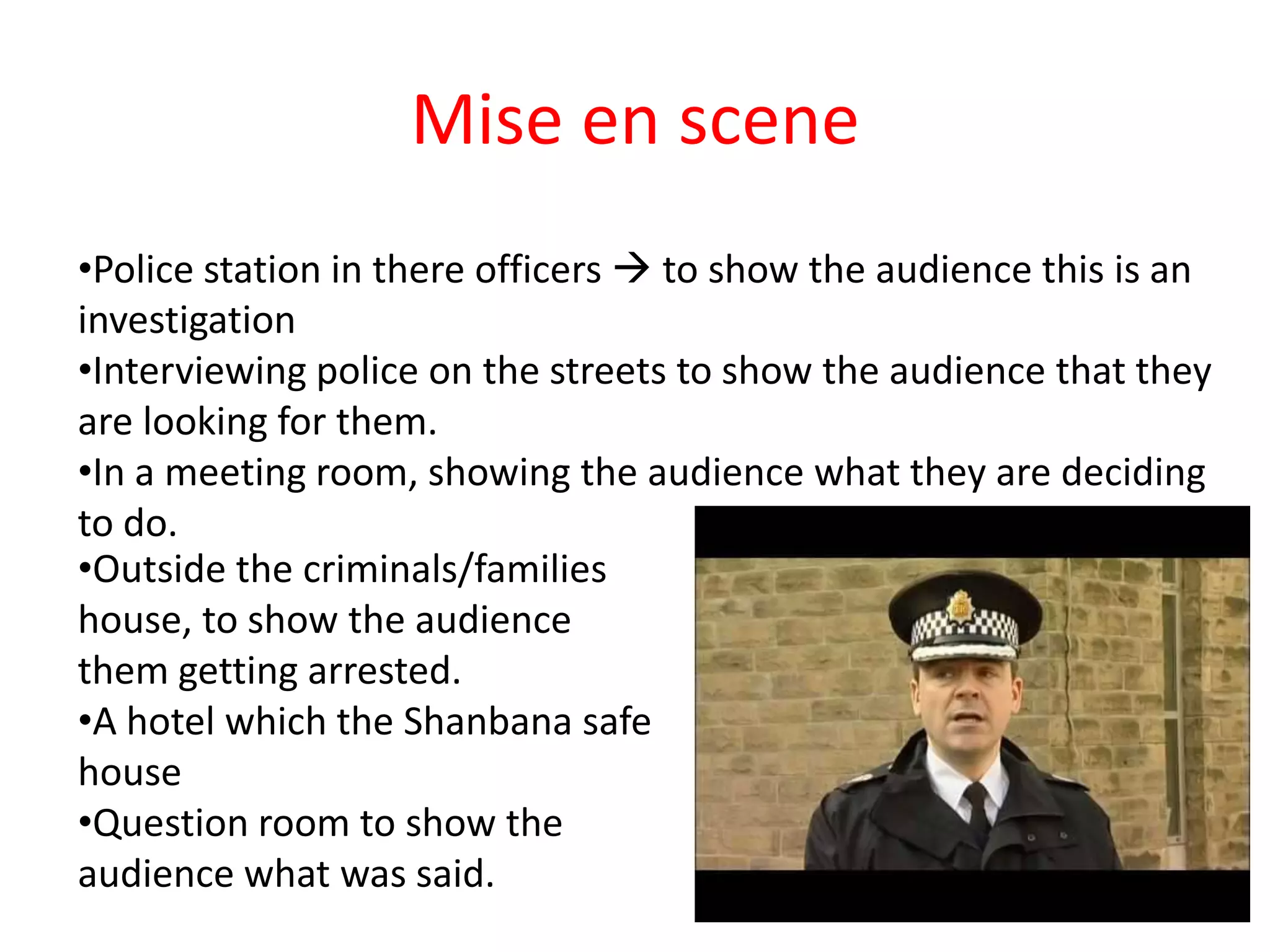
• Close up of the director of crime, which suggests his
important’s of his role.
• Extreme close up of Shanbana of her eyes and changes
to her lips, at this point she is also bleary so it gives the
audience something to focus on while she is talking.
• There is also handheld camera work when Shanbana is
getting interviewed by a police officer and it is an over the
shoulder shot, so you can only see the police officer.
•Medium close-up of interviewing a police officer in a car,
this could suggest to the audience that something
dramatic is about to happen.
Mise en scene
•Police station in there officers  to show the audience this is an
investigation
•Interviewing police on the streets to show the audience that they
are looking for them.
•In a meeting room, showing the audience what they are deciding
to do.
•Outside the criminals/families
house, to show the audience
them getting arrested.
•A hotel which the Shanbana safe
house
•Question room to show the
audience what was said.
Sound
• There was a narration “voice of god” this was a
  woman’s voiceover.
• Non-diegetic sound is eerie and scary which tells
  the audience that this is not a joke.
• When the meeting is over the non-diegetic sound
  builds up and creates more tension as they have
  solved the problem and about to arrest the
  criminals.
• Typing sounds when Shanbana is speaking to
  show that they are listening to every word to so if
  they is an evidence.
Editing
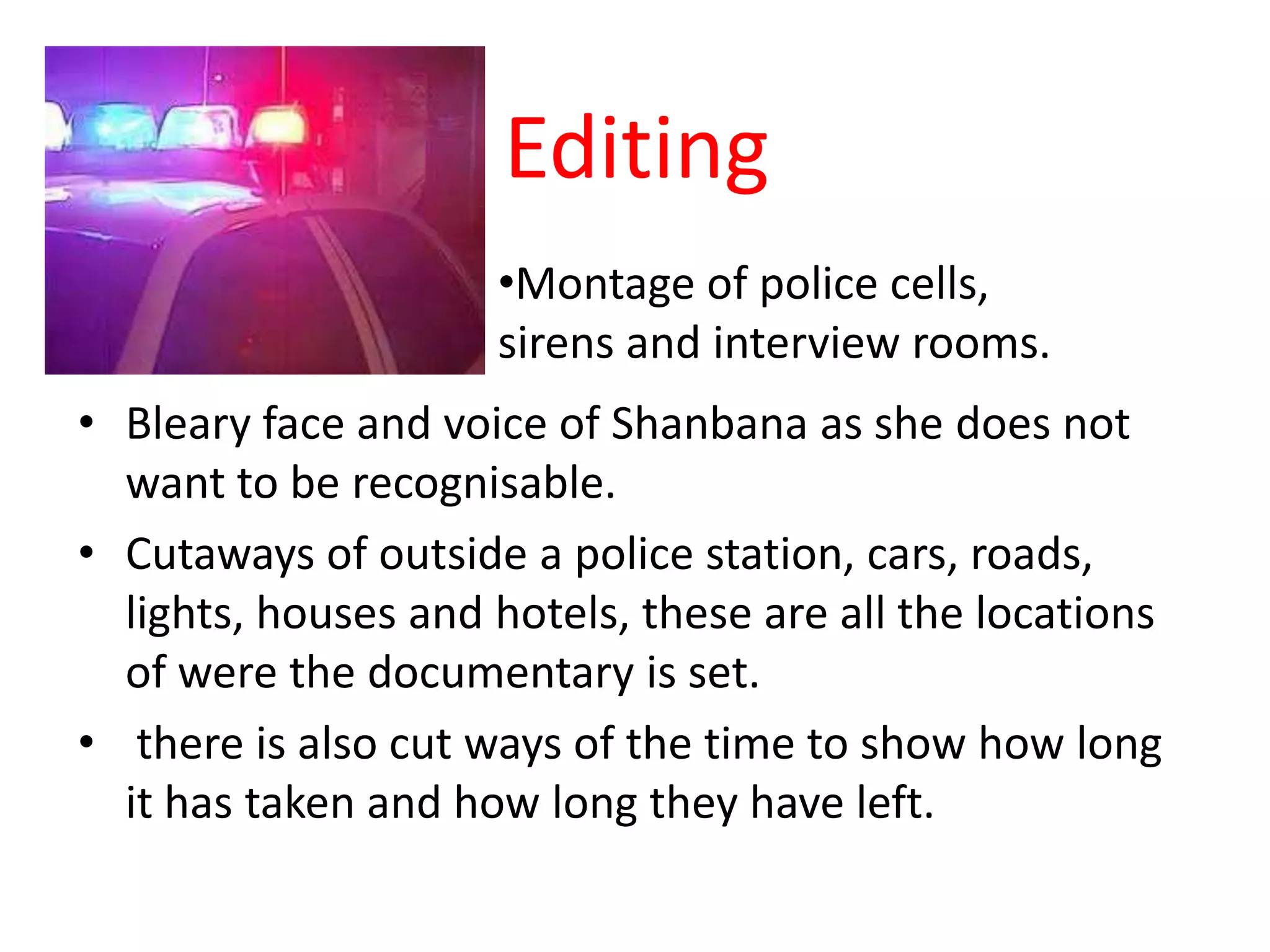
                     •Montage of police cells,
                     sirens and interview rooms.
• Bleary face and voice of Shanbana as she does not
  want to be recognisable.
• Cutaways of outside a police station, cars, roads,
  lights, houses and hotels, these are all the locations
  of were the documentary is set.
• there is also cut ways of the time to show how long
  it has taken and how long they have left.
Archive Material
• Bleary person in a police cell
• Arresting the family
• In the safe house

                   Graphics
•Names of the police officers
Subtitles of the interview with the brother, so
it was clear to the audience

Documentary analysis

  • 1.
    Documentary analysis: Kidnapped andDrugged for family honour. By Melissa Edwards
  • 2.
    The programme ‘kidnappedand drugged for family honour’ is shown on BBC three, Monday 2nd July at 9.00pm. This could be because of the story line as it needs to be shown after the watershed as there is inappropriate language and images used throughout. This documentary is mixed as there is use of interviews, observation, narration and found footage. This is to give the audience a variety of things to look at and listen to so they are always alert. Themes used in this documentary are murder, religion and family.
  • 3.
    Narrative Structure • Montageof police sirens, vans, offices and interview rooms. • Interviews with police officers and crime investigators. • Observation when arresting questioning all the family. • Then at the end family are all charged.
  • 4.
    Camera Work • Handheldcamera work at the start to get the audiences attention as it makes you feel like your there. • Close up of the director of crime, which suggests his important’s of his role. • Extreme close up of Shanbana of her eyes and changes to her lips, at this point she is also bleary so it gives the audience something to focus on while she is talking. • There is also handheld camera work when Shanbana is getting interviewed by a police officer and it is an over the shoulder shot, so you can only see the police officer. •Medium close-up of interviewing a police officer in a car, this could suggest to the audience that something dramatic is about to happen.
  • 5.
    Mise en scene •Policestation in there officers  to show the audience this is an investigation •Interviewing police on the streets to show the audience that they are looking for them. •In a meeting room, showing the audience what they are deciding to do. •Outside the criminals/families house, to show the audience them getting arrested. •A hotel which the Shanbana safe house •Question room to show the audience what was said.
  • 6.
    Sound • There wasa narration “voice of god” this was a woman’s voiceover. • Non-diegetic sound is eerie and scary which tells the audience that this is not a joke. • When the meeting is over the non-diegetic sound builds up and creates more tension as they have solved the problem and about to arrest the criminals. • Typing sounds when Shanbana is speaking to show that they are listening to every word to so if they is an evidence.
  • 7.
    Editing •Montage of police cells, sirens and interview rooms. • Bleary face and voice of Shanbana as she does not want to be recognisable. • Cutaways of outside a police station, cars, roads, lights, houses and hotels, these are all the locations of were the documentary is set. • there is also cut ways of the time to show how long it has taken and how long they have left.
  • 8.
    Archive Material • Blearyperson in a police cell • Arresting the family • In the safe house Graphics •Names of the police officers Subtitles of the interview with the brother, so it was clear to the audience