Basic and Clinical
Pharmacokinetics
Temesgen.L
1
DRUG DISTRIBUTION
Session Objectives
What is VD?
List factors affecting drug distribution.
Identify physiology barriers of drug distribution
Drug Distribution
Involves the transport of drug molecules within
the body
Drug distribution means the reversible transfer of
drug from one location to another within the
body.
Following absorption or systemic administration
into the bloodstream, a drug distributes into
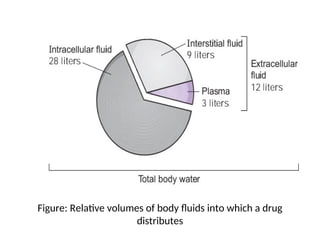
interstitial and intracellular fluids.
Figure: Relative volumes of body fluids into which a drug
distributes
Mechanisms of drug distribution
Passive diffusion Drug molecules move from an area
of high concentration to an area of low concentration
Most drugs
 Hydrostatic pressure -The pressure gradient between
the arterial end of the capillaries entering the tissue
and the venous capillaries leaving the tissue
Hydrostatic pressure is responsible for penetration
of water-soluble drugs into spaces between
endothelial cells and possibly into lymph
Rapid and efficient for Water soluble drugs
Volume of Distribution
Volume of body fluid into which a drug dose is
dissolved
VD = total amt. of drug/plasma conc.
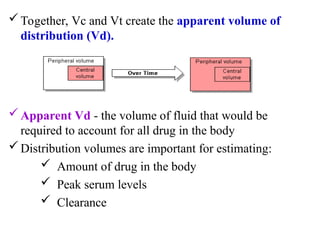
The body is divided into two spaces, a central and a tissue
compartment.
Central volume (Vc) - a hypothetical volume into which a
drug initially distributes upon administration
- blood in vessels and highly perfused tissues
Peripheral volume (Vt) - the sum of all tissue spaces
outside the central compartment
Together, Vc and Vt create the apparent volume of
distribution (Vd).
Apparent Vd - the volume of fluid that would be
required to account for all drug in the body
Distribution volumes are important for estimating:
 Amount of drug in the body
 Peak serum levels
 Clearance
Factors Affecting Drug Distribution
Rate of distribution
Membrane permeability
Blood perfusion
Extent of Distribution
Lipid Solubility
Plasma protein binding
Tissue protein binding
Lipid Solubility
Lipid solubility will affect the ability of the drug
to bind to plasma proteins and to cross lipid
membrane barriers.
Large depots of drug in fat may necessitate a
longer period of time for drug to be removed
from the body.
The distribution of lipophilic drugs will be
different in thin versus obese patients.
Membrane permeability
Lipid soluble drugs pass through very rapidly.
Water soluble compounds penetrate more
slowly at a rate more dependent on their size.
Low molecular weight drugs pass through by
simple diffusion.
Permeability is greatly increased in the renal and
hepatic capillaries
Brain capillaries seem to have impermeable walls
restricting the transfer of molecules from blood to
brain tissue.
Lipid soluble compounds can be readily transferred but
the transfer of polar substances is severely restricted.
This is the basis of the "blood-brain" barrier.
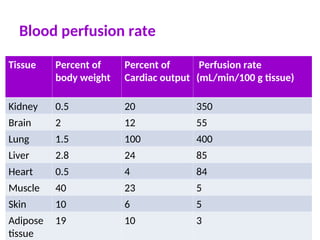
Blood perfusion rate
Tissue Percent of
body weight
Percent of
Cardiac output
Perfusion rate
(mL/min/100 g tissue)
Kidney 0.5 20 350
Brain 2 12 55
Lung 1.5 100 400
Liver 2.8 24 85
Heart 0.5 4 84
Muscle 40 23 5
Skin 10 6 5
Adipose
tissue
19 10 3
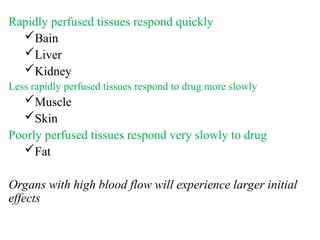
Rapidly perfused tissues respond quickly
Bain
Liver
Kidney
Less rapidly perfused tissues respond to drug more slowly
Muscle
Skin
Poorly perfused tissues respond very slowly to drug
Fat
Organs with high blood flow will experience larger initial
effects
Plasma protein binding
Extensive plasma protein binding will cause more
drug to stay in the central blood compartment.
Therefore drugs which bind strongly to plasma
protein tend to have lower volumes of distribution
The extent of this binding will influence the drug’s
distribution and rate of elimination
only the unbound drug can diffuse through the wall,
produce its systemic effects, be metabolized, and be
excreted.
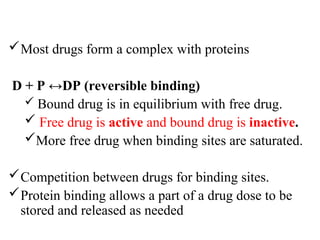
Most drugs form a complex with proteins
D + P ↔DP (reversible binding)
 Bound drug is in equilibrium with free drug.
 Free drug is active and bound drug is inactive.
More free drug when binding sites are saturated.
Competition between drugs for binding sites.
Protein binding allows a part of a drug dose to be
stored and released as needed
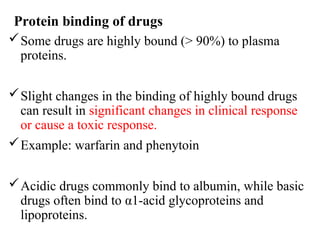
Protein binding of drugs
Some drugs are highly bound (> 90%) to plasma
proteins.
Slight changes in the binding of highly bound drugs
can result in significant changes in clinical response
or cause a toxic response.
Example: warfarin and phenytoin
Acidic drugs commonly bind to albumin, while basic
drugs often bind to α1-acid glycoproteins and
lipoproteins.
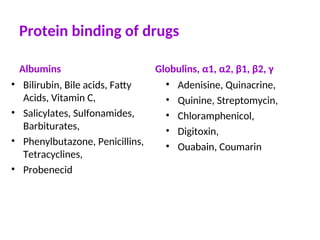
Protein binding of drugs
Albumins
• Bilirubin, Bile acids, Fatty
Acids, Vitamin C,
• Salicylates, Sulfonamides,
Barbiturates,
• Phenylbutazone, Penicillins,
Tetracyclines,
• Probenecid
Globulins, α1, α2, β1, β2, γ
• Adenisine, Quinacrine,
• Quinine, Streptomycin,
• Chloramphenicol,
• Digitoxin,
• Ouabain, Coumarin
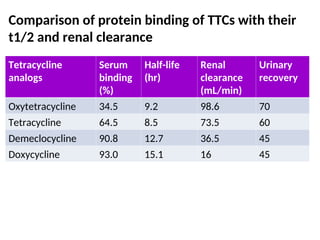
Comparison of protein binding of TTCs with their
t1/2 and renal clearance
Tetracycline
analogs
Serum
binding
(%)
Half-life
(hr)
Renal
clearance
(mL/min)
Urinary
recovery
Oxytetracycline 34.5 9.2 98.6 70
Tetracycline 64.5 8.5 73.5 60
Demeclocycline 90.8 12.7 36.5 45
Doxycycline 93.0 15.1 16 45
Determinants of protein binding
 The drug
Physicochemical property of the drug
Total concentration of the drug in the body
 The protein
Quantity of the protein available for drug protein
interaction
Quality or physicochemical nature of the protein
synthesized
 Affinity b/n drug and protein
 Drug interaction
Competition for the drug by other substances at a protein-
binding site
Alteration of a protein by a substance that modifies the
affinity of the drug for the protein
aspirin acetylates lysine residue of albumin
 5. The pathophysiologic condition of the patient
Example: uremic and hepatic patients
Protein Binding Interaction
One drug may displace another from the same
binding site
 Free drug concentration is usually the important
factor
Increase activity
 increase elimination
Eg. Phenylbutazone displaces tolbutamide
Disease state decrease plasma protein
concentration
Liver disease-decrease protein synthesis
Trauma, surgery- increase protein catabolism
Burns- increase distribution of albumin into
extracellular space
Renal disease- increase excessive elimination of
protein
24
Tissue localization of drugs
Drugs will not always be uniformly distributed to
and retained by body tissues.
The concentrations of some drugs will be either
higher or lower in particular tissues than could be
predicted on the basis of simple distribution
assumptions.
Kidney:
The kidney contains a protein, metallothionein, that has a
high affinity for metals.
This protein is responsible for the renal accumulation of
cadmium, lead, and mercury
Eye.
Several drugs have an affinity for the retinal pigment
melanin and thus may accumulate in the eye.
Example: Chlorpromazine, Chloroquine .
Lung.
The lung receives the entire cardiac out-put
Most compounds that accumulate in the lung are basic
amines
Examples: antihistamines, imipramine, amphetamine,
methadone, and chlorpromazine
Fat
Drugs with extremely high lipid–water partition
coefficients have a tendency to accumulate in body fat
like DDT
But into body fat occurs slowly
Drug accumulation in body fat may result either in
decreased therapeutic activity owing to the drug’s
removal from the circulation or
 in prolonged activity when only low levels of the
drug are needed to produce therapeutic effects
Bone:
Although bone is a relatively inert tissue, it can accumulate
such substances as tetracyclines, lead, strontium, and the
antitumor agent cisplatin.
Physiologic barriers of distribution
Most capillaries have pores between the endothelial cells
lining the capillaries
In some capillary beds, however, the endothelial cells are
closely connected by “tight junctions”, and such
capillaries do not have pores between the endothelial
Only lipophilic drugs rapidly diffuse across capillary
beds with tight junctions, whereas hydrophilic drugs are
mostly excluded.
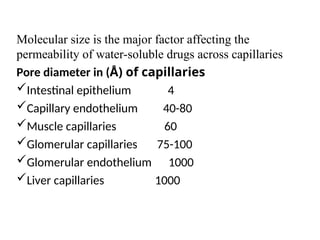
Molecular size is the major factor affecting the
permeability of water-soluble drugs across capillaries
Pore diameter in (Å) of capillaries
Intestinal epithelium 4
Capillary endothelium 40-80
Muscle capillaries 60
Glomerular capillaries 75-100
Glomerular endothelium 1000
Liver capillaries 1000
The “blood-brain barrier (BBB)”
Capillaries in brain have:
tight junctions per capillary gelial cells
p-glycoprotein: back to the systemic
circulation
 All contribute to BBB
The BBB restricts the movement of hydrophilic drugs
into brain; however, the BBB is “broken” by ischemia
and inflammation
Passage of drugs across the placenta
Capillary walls separating fetal blood from maternal
blood are continuous
The placenta is not an effective barrier to most drugs
Many drugs can be found in fetus shortly after the
administration to mother
fetus can be pharmaceutically treated through mother’s
body
risk of the undesirable effects is high
In general, substances that are lipid soluble
cross the placenta with relative ease in
accordance with their:
lipid–water partition coefficient and
degree of ionization.
Highly polar or ionized drugs do not cross the
placenta readily.
However, most drugs used in labor and
delivery are not highly ionized and will cross.
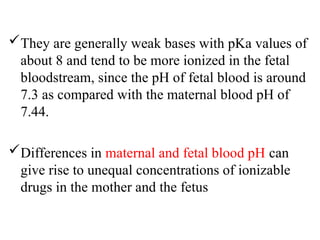
They are generally weak bases with pKa values of
about 8 and tend to be more ionized in the fetal
bloodstream, since the pH of fetal blood is around
7.3 as compared with the maternal blood pH of
7.44.
Differences in maternal and fetal blood pH can
give rise to unequal concentrations of ionizable
drugs in the mother and the fetus
Cont’d
Cont’d
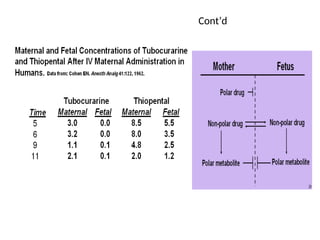
Risks associated with drug distribution through pacenta
1.Abortion and abnormal development: cocaine,
tamoxifine
2.Malformation: thalidomide, methotrexate, organic
solvents
3.Alter behavior and intelligence: alcohol, cocaine,
amphetamines
4.Cancer later in life: diethylstibesterol
5.Dependence/ withdrawal: heroin, morphine and cocaine
6.Intrautrine growth retardation, prematurity, SIDS:
smoking
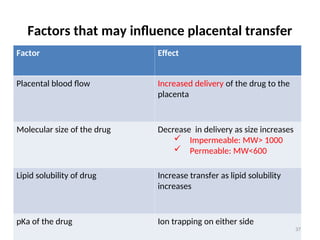
Factor Effect
Factors that may influence placental transfer
Factor Effect
Placental blood flow Increased delivery of the drug to the
placenta
Molecular size of the drug Decrease in delivery as size increases
 Impermeable: MW> 1000
 Permeable: MW<600
Lipid solubility of drug Increase transfer as lipid solubility
increases
pKa of the drug Ion trapping on either side
37
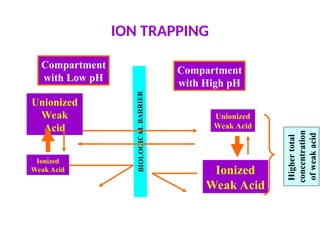
ION TRAPPING
BIOLO
GICAL
BARR
IER
Compartment
with High pH
Compartment
with Low pH
Unionized
Weak
Acid
Ionized
Weak Acid
Unionized
Weak Acid
Ionized
Weak Acid
Higher
total
concentration
of
weak
acid
Cont’d
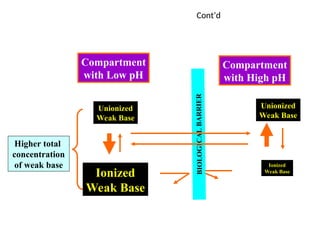
BIOLOG
ICAL
BARRIE
R
Compartment
with High pH
Compartment
with Low pH
Unionized
Weak Base
Ionized
Weak Base
Unionized
Weak Base
Ionized
Weak Base
Higher total
concentration
of weak base
cont’d
 Ion trapping can be used to distribute drugs into the urinary
compartment to increase the urinary excretion of poisons.
-Alkalinization of the urine with systemic administration of
sodium bicarbonate is useful for the treatment of overdoses of
aspirin and phenobarbital.
-Acidification of the urine with systemic administration of
ammonium chloride is useful for the treatment of amphetamine
overdoses.
Metabolism and
Excretion ( elimination) of Drugs
41
DRUG ELIMINATION
Drug elimination
 refers to the irreversible removal of drug from the
body by all routes of elimination.
Drugs are removed from the body by various
elimination processes.
Both metabolism and excretion can be viewed as
processes responsible for elimination of drug
(parent and metabolite) from the body.
42
Kinetics of elimination
F
First-order
irst-order elimination or kinetics
elimination or kinetics
 For most drugs, the rate of elimination from the body is
proportional to the amount of drug present in the body
(AB).
 This type of elimination kinetics is called first-order
elimination or kinetics.
 The elimination rate constant (kel) is used to denote how
quickly drug serum concentrations decline in a patient.
43
 With first-order elimination, the amount of drug eliminated
over a certain time period increases as the amount of drug
in the body increases; likewise,
 the amount of drug eliminated per unit of time decreases as
the amount of drug in the body decreases.
 If the amount of drug in the body is known, the elimination
rate for the drug can be computed by taking the product of
the elimination rate constant and the amount of drug in the
body (AB).
44
The rate of elimination of the drug that follows first
order elimination can be described as:
 Elimination rate = dA/dt = - k A ,
 where k is the first-order rate constant.
With first order elimination,
 Elimination rate is dependent on the concentration
of A present in the body.
45
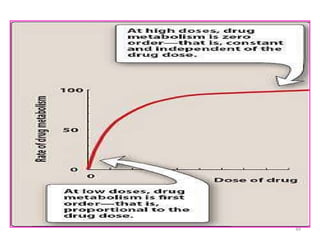
Zero-order elimination
 If large amount of drug is administered, then order of
elimination process of the drugs will change from a first-order
process to a zero-order process.

 With zero-order elimination,
 The amount of drug eliminated does not change with AB
 The fraction removed varies
 The rate of elimination of the drug that follows zero order
elimination can be described as:
elimination rate = dA/dt = - k*, where k* is the zero-order
rate constant
46
Zero-order elimination occurs when the body's
ability to eliminate a drug has reached its
maximum capability (i.e., all transporters are being
used).
 As the dose and drug concentration increase, the
amount of drug eliminated per hour does not
increase, and the fraction of drug removed
declines.
A few substances are eliminated by zero-order
elimination kinetics, because their elimination
process is saturated.
47
Because in a saturated process the elimination rate
is no longer proportional to the drug concentration
 zero-order kinetics are also called “non-linear
kinetics in clinical pharmacology.
48
49
Metabolism
Drug metabolism changes the chemical structure of a
drug to produce a drug metabolite, which is frequently
but not universally less pharmacologically active.
Metabolism also renders the drug compound more
water soluble and therefore more easily excreted.
The liver
liver is the major site for drug metabolism, but
specific drugs may undergo biotransformation in other
tissues, such as the kidney and the intestines
kidney and the intestines.
50
Drug metabolism reactions are carried out by enzyme
systems which are important to protect the body from
exogenous chemicals.
The enzyme systems for this purpose for the most part
can be grouped into two categories:
Phase I oxidative or reductive enzymes
Phase II conjugative enzymes.
51
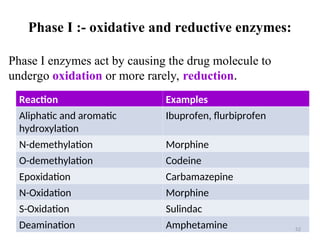
Phase I :- oxidative and reductive enzymes:
Phase I enzymes act by causing the drug molecule to
undergo oxidation or more rarely, reduction.
Reaction Examples
Aliphatic and aromatic
hydroxylation
Ibuprofen, flurbiprofen
N-demethylation Morphine
O-demethylation Codeine
Epoxidation Carbamazepine
N-Oxidation Morphine
S-Oxidation Sulindac
Deamination Amphetamine 52
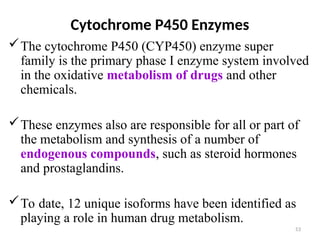
Cytochrome P450 Enzymes
The cytochrome P450 (CYP450) enzyme super
family is the primary phase I enzyme system involved
in the oxidative metabolism of drugs and other
chemicals.
These enzymes also are responsible for all or part of
the metabolism and synthesis of a number of
endogenous compounds, such as steroid hormones
and prostaglandins.
To date, 12 unique isoforms have been identified as
playing a role in human drug metabolism.
53
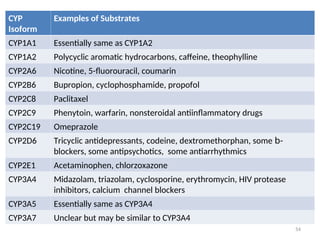
CYP
Isoform
Examples of Substrates
CYP1A1 Essentially same as CYP1A2
CYP1A2 Polycyclic aromatic hydrocarbons, caffeine, theophylline
CYP2A6 Nicotine, 5-fluorouracil, coumarin
CYP2B6 Bupropion, cyclophosphamide, propofol
CYP2C8 Paclitaxel
CYP2C9 Phenytoin, warfarin, nonsteroidal antiinflammatory drugs
CYP2C19 Omeprazole
CYP2D6 Tricyclic antidepressants, codeine, dextromethorphan, some b-
blockers, some antipsychotics, some antiarrhythmics
CYP2E1 Acetaminophen, chlorzoxazone
CYP3A4 Midazolam, triazolam, cyclosporine, erythromycin, HIV protease
inhibitors, calcium channel blockers
CYP3A5 Essentially same as CYP3A4
CYP3A7 Unclear but may be similar to CYP3A4
54
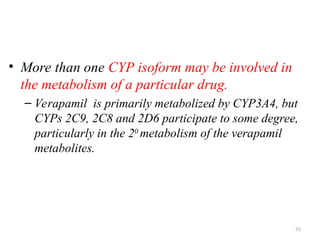
• More than one CYP isoform may be involved in
the metabolism of a particular drug.
– Verapamil is primarily metabolized by CYP3A4, but
CYPs 2C9, 2C8 and 2D6 participate to some degree,
particularly in the 20
metabolism of the verapamil
metabolites.
55
Substrate Specificity of the CYP Enzymes
CYP3A4
the most predominant CYP isoform, both in terms of
the amount of enzyme in the liver and the variety of
drugs
Account for more than 50% of all CYP-mediated drug
oxidation reactions,
involved in the greatest number of drug–drug
interactions.
The active site of CYP3A4 is thought to be large
relative to other isoforms, as evidenced by its ability to
accept substrates up to a molecular weight of 1200
(e.g., cyclosporine).
56
CYP3A5:
Amino acid sequence is similar to that of CYP3A4
Same substrate specificity characteristics as CYP3A4.
Not present in all individuals.
CYP3A7:
Appears to be expressed only in the fetus and rapidly
disappears following birth, to be replaced by CYP3A4
and CYP3A5.
CYP2D6:
The second most common CYP isoform
Accounts for 30% of the CYP-mediated oxidation
reactions
57
CYP2C9
About 10% of the CYP-mediated drug
oxidation
Metabolizes several clinically important
drugs with narrow therapeutic indices.
-Warfarin, phenytoin
58
Enzyme Inhibition
Enzyme inhibition is the most frequently observed
result of CYP modulation and is the primary
mechanism for drug–drug pharmacokinetic
interactions.
Two types:
Simple competitive inhibition
Mechanism-based inactivation (or suicide inactivation)
59
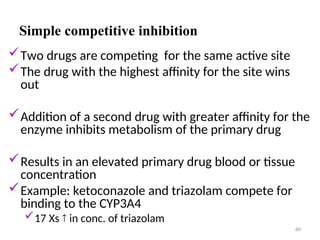
Simple competitive inhibition
Two drugs are competing for the same active site
The drug with the highest affinity for the site wins
out
Addition of a second drug with greater affinity for the
enzyme inhibits metabolism of the primary drug
Results in an elevated primary drug blood or tissue
concentration
Example: ketoconazole and triazolam compete for
binding to the CYP3A4
17 Xs  in conc. of triazolam
60
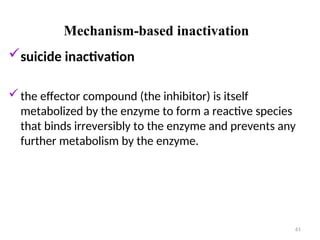
Mechanism-based inactivation
suicide inactivation
the effector compound (the inhibitor) is itself
metabolized by the enzyme to form a reactive species
that binds irreversibly to the enzyme and prevents any
further metabolism by the enzyme.
61
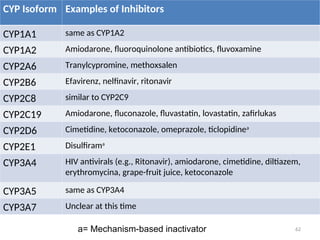
CYP Isoform Examples of Inhibitors
CYP1A1 same as CYP1A2
CYP1A2 Amiodarone, fluoroquinolone antibiotics, fluvoxamine
CYP2A6 Tranylcypromine, methoxsalen
CYP2B6 Efavirenz, nelfinavir, ritonavir
CYP2C8 similar to CYP2C9
CYP2C19 Amiodarone, fluconazole, fluvastatin, lovastatin, zafirlukas
CYP2D6 Cimetidine, ketoconazole, omeprazole, ticlopidinea
CYP2E1 Disulfirama
CYP3A4 HIV antivirals (e.g., Ritonavir), amiodarone, cimetidine, diltiazem,
erythromycina, grape-fruit juice, ketoconazole
CYP3A5 same as CYP3A4
CYP3A7 Unclear at this time
62
a= Mechanism-based inactivator
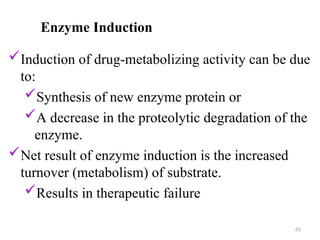
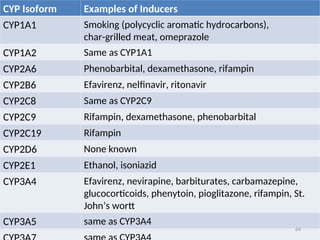
Enzyme Induction
Induction of drug-metabolizing activity can be due
to:
Synthesis of new enzyme protein or
A decrease in the proteolytic degradation of the
enzyme.
Net result of enzyme induction is the increased
turnover (metabolism) of substrate.
Results in therapeutic failure
63
CYP Isoform Examples of Inducers
CYP1A1 Smoking (polycyclic aromatic hydrocarbons),
char-grilled meat, omeprazole
CYP1A2 Same as CYP1A1
CYP2A6 Phenobarbital, dexamethasone, rifampin
CYP2B6 Efavirenz, nelfinavir, ritonavir
CYP2C8 Same as CYP2C9
CYP2C9 Rifampin, dexamethasone, phenobarbital
CYP2C19 Rifampin
CYP2D6 None known
CYP2E1 Ethanol, isoniazid
CYP3A4 Efavirenz, nevirapine, barbiturates, carbamazepine,
glucocorticoids, phenytoin, pioglitazone, rifampin, St.
John’s wortt
CYP3A5 same as CYP3A4
64
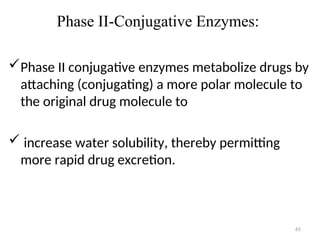
Phase II-Conjugative Enzymes:
Phase II conjugative enzymes metabolize drugs by
attaching (conjugating) a more polar molecule to
the original drug molecule to
 increase water solubility, thereby permitting
more rapid drug excretion.
65
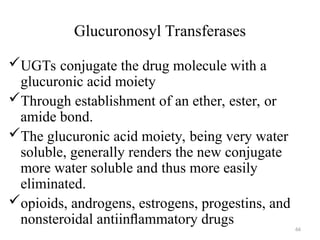
Glucuronosyl Transferases
UGTs conjugate the drug molecule with a
glucuronic acid moiety
Through establishment of an ether, ester, or
amide bond.
The glucuronic acid moiety, being very water
soluble, generally renders the new conjugate
more water soluble and thus more easily
eliminated.
opioids, androgens, estrogens, progestins, and
nonsteroidal antiinflammatory drugs
66
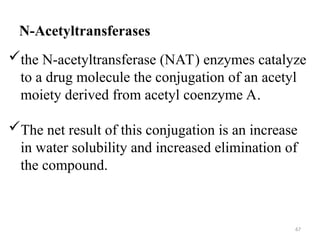
N-Acetyltransferases
the N-acetyltransferase (NAT) enzymes catalyze
to a drug molecule the conjugation of an acetyl
moiety derived from acetyl coenzyme A.
The net result of this conjugation is an increase
in water solubility and increased elimination of
the compound.
67
Sulfotransferases and Methyltransferases
Sulfotransferases (SULTs): metabolism of a number of
drugs, neurotransmitters, and hormones, especially the
steroid hormones.
The co-substrate for these reactions is 3’-
phosphoadenosine 5’-phosphosulfate (PAPS)
Methyltransferases (MTs): methylation of drugs,
hormones, neurotransmitters, proteins, RNA, and DNA.
MTs use S-adenosyl-L-methionine (SAM) as the methyl
donor
68
Pharmacogenetics of Drug Metabolizing Enzymes
Genetic polymorphism of drug-metabolizing enzymes
Acetylation: rapid acetylators and slow acetylators.
Slow acetylators (about 50% of the caucasian population)
are more prone to adverse effects
69
EXCRETION OF DRUGS
Excretion, along with metabolism and tissue
redistribution, is important in determining both the
duration of drug action and the rate of drug
elimination.
Excretion is a process whereby drugs are transferred
from the internal to the external environment,
The principal organs involved in this activity are the
kidneys, lungs, biliary system, and intestines.
70
RENAL EXCRETION
The kidney is the primary organ of removal for
most drug, especially for those that are water
soluble and not volatile.
The three principal processes that determine the
urinary excretion of a drug are
glomerular filtration,
tubular secretion, and
tubular reabsorption (mostly passive back-diffusion)
71
Glomerular Filtration
The ultrastructure of the glomerular capillary wall
is such that it permits a high degree of fluid
filtration while restricting the passage of
compounds having relatively large molecular
weights.
This selective filtration is important in that it
prevents the filtration of plasma proteins (e.g.,
albumin) that are important for maintaining an
osmotic gradient in the vasculature and thus
plasma volume.
72
Factors influencing the GFR are:
Molecular size, charge, and shape
Protein bound
Inflammation of the glomerular capillaries
73
Reabsorption
Substances diffuse back across the tubular
membranes and reenter the circulation.
Reabsorption of water that occurs throughout most
portions of the nephron  increased concentration
of drug in the luminal fluid  the movement of
drugs from the tubular lumen to blood.
Acidification:
reabsorption (or elimination) of weak acids,
such as salicylates
reabsorption (or elimination) of weak bases,
such as amphetamines 74
Active Tubular Secretion
A number of drugs can serve as substrates for the two
active secretory systems in the proximal tubule cells.
One secretes organic anions , and the other secretes
organic cations.
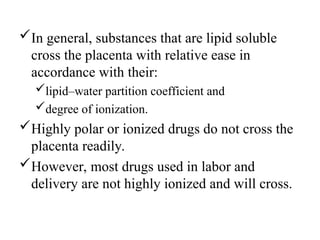
One drug substrate can compete for transport with a
simultaneously administered or endogenous similarly
charged compound
Saturation at higher concentration
75
DRUG CLEARANCE
Drug clearance is a pharmacokinetic term for describing
drug elimination from the body without identifying the
mechanism of the process.
 Drug clearance (body clearance, total body clearance , or
Cl T ) considers the entire body as a single drug-
eliminating system from which many unidentified
elimination processes may occur.
Instead of describing the drug elimination rate in terms of
amount of drug removed per time unit (eg, mg/min), drug
clearance is described in terms of volume of fluid clear of
drug per time unit (eg, mL/min).
76
• Mathematically, clearance is the division of the rate of
elimination and plasma concentration (Cp).
77
)
L
mg
(
C
)
h
mg
(
n
eliminatio
of
Rate
CL
p
 B
el A
.
k
elimin
of
Rate 
d
p
V
C
A
. el
el k
k
CL 

Drugs can be cleared from the body by many different
mechanisms, pathways, or organs, including hepatic
biotransformation and renal and biliary excretion.
Renal clearance = rate of elimination by kidney
C
Hepatic clearance = rate of elimination by liver
C
Other organ clearance = rate of elimination by organ
C
CL total = CL renal + CL hepatic + CL pulmonary +CL others
78

ditribution metabolism biopharmaceuticis

  • 1.
  • 2.
  • 3.
    Session Objectives What isVD? List factors affecting drug distribution. Identify physiology barriers of drug distribution
  • 4.
    Drug Distribution Involves thetransport of drug molecules within the body Drug distribution means the reversible transfer of drug from one location to another within the body. Following absorption or systemic administration into the bloodstream, a drug distributes into interstitial and intracellular fluids.
  • 5.
    Figure: Relative volumesof body fluids into which a drug distributes
  • 6.
    Mechanisms of drugdistribution Passive diffusion Drug molecules move from an area of high concentration to an area of low concentration Most drugs  Hydrostatic pressure -The pressure gradient between the arterial end of the capillaries entering the tissue and the venous capillaries leaving the tissue Hydrostatic pressure is responsible for penetration of water-soluble drugs into spaces between endothelial cells and possibly into lymph Rapid and efficient for Water soluble drugs
  • 7.
    Volume of Distribution Volumeof body fluid into which a drug dose is dissolved VD = total amt. of drug/plasma conc.
  • 8.
    The body isdivided into two spaces, a central and a tissue compartment. Central volume (Vc) - a hypothetical volume into which a drug initially distributes upon administration - blood in vessels and highly perfused tissues Peripheral volume (Vt) - the sum of all tissue spaces outside the central compartment
  • 9.
    Together, Vc andVt create the apparent volume of distribution (Vd). Apparent Vd - the volume of fluid that would be required to account for all drug in the body Distribution volumes are important for estimating:  Amount of drug in the body  Peak serum levels  Clearance
  • 10.
    Factors Affecting DrugDistribution Rate of distribution Membrane permeability Blood perfusion Extent of Distribution Lipid Solubility Plasma protein binding Tissue protein binding
  • 11.
    Lipid Solubility Lipid solubilitywill affect the ability of the drug to bind to plasma proteins and to cross lipid membrane barriers. Large depots of drug in fat may necessitate a longer period of time for drug to be removed from the body. The distribution of lipophilic drugs will be different in thin versus obese patients.
  • 12.
    Membrane permeability Lipid solubledrugs pass through very rapidly. Water soluble compounds penetrate more slowly at a rate more dependent on their size. Low molecular weight drugs pass through by simple diffusion.
  • 13.
    Permeability is greatlyincreased in the renal and hepatic capillaries Brain capillaries seem to have impermeable walls restricting the transfer of molecules from blood to brain tissue. Lipid soluble compounds can be readily transferred but the transfer of polar substances is severely restricted. This is the basis of the "blood-brain" barrier.
  • 14.
    Blood perfusion rate TissuePercent of body weight Percent of Cardiac output Perfusion rate (mL/min/100 g tissue) Kidney 0.5 20 350 Brain 2 12 55 Lung 1.5 100 400 Liver 2.8 24 85 Heart 0.5 4 84 Muscle 40 23 5 Skin 10 6 5 Adipose tissue 19 10 3
  • 15.
    Rapidly perfused tissuesrespond quickly Bain Liver Kidney Less rapidly perfused tissues respond to drug more slowly Muscle Skin Poorly perfused tissues respond very slowly to drug Fat Organs with high blood flow will experience larger initial effects
  • 16.
    Plasma protein binding Extensiveplasma protein binding will cause more drug to stay in the central blood compartment. Therefore drugs which bind strongly to plasma protein tend to have lower volumes of distribution The extent of this binding will influence the drug’s distribution and rate of elimination only the unbound drug can diffuse through the wall, produce its systemic effects, be metabolized, and be excreted.
  • 17.
    Most drugs forma complex with proteins D + P ↔DP (reversible binding)  Bound drug is in equilibrium with free drug.  Free drug is active and bound drug is inactive. More free drug when binding sites are saturated. Competition between drugs for binding sites. Protein binding allows a part of a drug dose to be stored and released as needed
  • 18.
    Protein binding ofdrugs Some drugs are highly bound (> 90%) to plasma proteins. Slight changes in the binding of highly bound drugs can result in significant changes in clinical response or cause a toxic response. Example: warfarin and phenytoin Acidic drugs commonly bind to albumin, while basic drugs often bind to α1-acid glycoproteins and lipoproteins.
  • 19.
    Protein binding ofdrugs Albumins • Bilirubin, Bile acids, Fatty Acids, Vitamin C, • Salicylates, Sulfonamides, Barbiturates, • Phenylbutazone, Penicillins, Tetracyclines, • Probenecid Globulins, α1, α2, β1, β2, γ • Adenisine, Quinacrine, • Quinine, Streptomycin, • Chloramphenicol, • Digitoxin, • Ouabain, Coumarin
  • 20.
    Comparison of proteinbinding of TTCs with their t1/2 and renal clearance Tetracycline analogs Serum binding (%) Half-life (hr) Renal clearance (mL/min) Urinary recovery Oxytetracycline 34.5 9.2 98.6 70 Tetracycline 64.5 8.5 73.5 60 Demeclocycline 90.8 12.7 36.5 45 Doxycycline 93.0 15.1 16 45
  • 21.
    Determinants of proteinbinding  The drug Physicochemical property of the drug Total concentration of the drug in the body  The protein Quantity of the protein available for drug protein interaction Quality or physicochemical nature of the protein synthesized  Affinity b/n drug and protein
  • 22.
     Drug interaction Competitionfor the drug by other substances at a protein- binding site Alteration of a protein by a substance that modifies the affinity of the drug for the protein aspirin acetylates lysine residue of albumin  5. The pathophysiologic condition of the patient Example: uremic and hepatic patients
  • 23.
    Protein Binding Interaction Onedrug may displace another from the same binding site  Free drug concentration is usually the important factor Increase activity  increase elimination Eg. Phenylbutazone displaces tolbutamide
  • 24.
    Disease state decreaseplasma protein concentration Liver disease-decrease protein synthesis Trauma, surgery- increase protein catabolism Burns- increase distribution of albumin into extracellular space Renal disease- increase excessive elimination of protein 24
  • 25.
    Tissue localization ofdrugs Drugs will not always be uniformly distributed to and retained by body tissues. The concentrations of some drugs will be either higher or lower in particular tissues than could be predicted on the basis of simple distribution assumptions.
  • 26.
    Kidney: The kidney containsa protein, metallothionein, that has a high affinity for metals. This protein is responsible for the renal accumulation of cadmium, lead, and mercury Eye. Several drugs have an affinity for the retinal pigment melanin and thus may accumulate in the eye. Example: Chlorpromazine, Chloroquine . Lung. The lung receives the entire cardiac out-put Most compounds that accumulate in the lung are basic amines Examples: antihistamines, imipramine, amphetamine, methadone, and chlorpromazine
  • 27.
    Fat Drugs with extremelyhigh lipid–water partition coefficients have a tendency to accumulate in body fat like DDT But into body fat occurs slowly Drug accumulation in body fat may result either in decreased therapeutic activity owing to the drug’s removal from the circulation or  in prolonged activity when only low levels of the drug are needed to produce therapeutic effects Bone: Although bone is a relatively inert tissue, it can accumulate such substances as tetracyclines, lead, strontium, and the antitumor agent cisplatin.
  • 28.
    Physiologic barriers ofdistribution Most capillaries have pores between the endothelial cells lining the capillaries In some capillary beds, however, the endothelial cells are closely connected by “tight junctions”, and such capillaries do not have pores between the endothelial Only lipophilic drugs rapidly diffuse across capillary beds with tight junctions, whereas hydrophilic drugs are mostly excluded.
  • 29.
    Molecular size isthe major factor affecting the permeability of water-soluble drugs across capillaries Pore diameter in (Å) of capillaries Intestinal epithelium 4 Capillary endothelium 40-80 Muscle capillaries 60 Glomerular capillaries 75-100 Glomerular endothelium 1000 Liver capillaries 1000
  • 30.
    The “blood-brain barrier(BBB)” Capillaries in brain have: tight junctions per capillary gelial cells p-glycoprotein: back to the systemic circulation  All contribute to BBB The BBB restricts the movement of hydrophilic drugs into brain; however, the BBB is “broken” by ischemia and inflammation
  • 31.
    Passage of drugsacross the placenta Capillary walls separating fetal blood from maternal blood are continuous The placenta is not an effective barrier to most drugs Many drugs can be found in fetus shortly after the administration to mother fetus can be pharmaceutically treated through mother’s body risk of the undesirable effects is high
  • 32.
    In general, substancesthat are lipid soluble cross the placenta with relative ease in accordance with their: lipid–water partition coefficient and degree of ionization. Highly polar or ionized drugs do not cross the placenta readily. However, most drugs used in labor and delivery are not highly ionized and will cross.
  • 33.
    They are generallyweak bases with pKa values of about 8 and tend to be more ionized in the fetal bloodstream, since the pH of fetal blood is around 7.3 as compared with the maternal blood pH of 7.44. Differences in maternal and fetal blood pH can give rise to unequal concentrations of ionizable drugs in the mother and the fetus
  • 34.
  • 35.
    Cont’d Risks associated withdrug distribution through pacenta 1.Abortion and abnormal development: cocaine, tamoxifine 2.Malformation: thalidomide, methotrexate, organic solvents 3.Alter behavior and intelligence: alcohol, cocaine, amphetamines 4.Cancer later in life: diethylstibesterol 5.Dependence/ withdrawal: heroin, morphine and cocaine 6.Intrautrine growth retardation, prematurity, SIDS: smoking
  • 36.
  • 37.
    Factors that mayinfluence placental transfer Factor Effect Placental blood flow Increased delivery of the drug to the placenta Molecular size of the drug Decrease in delivery as size increases  Impermeable: MW> 1000  Permeable: MW<600 Lipid solubility of drug Increase transfer as lipid solubility increases pKa of the drug Ion trapping on either side 37
  • 38.
    ION TRAPPING BIOLO GICAL BARR IER Compartment with HighpH Compartment with Low pH Unionized Weak Acid Ionized Weak Acid Unionized Weak Acid Ionized Weak Acid Higher total concentration of weak acid
  • 39.
    Cont’d BIOLOG ICAL BARRIE R Compartment with High pH Compartment withLow pH Unionized Weak Base Ionized Weak Base Unionized Weak Base Ionized Weak Base Higher total concentration of weak base
  • 40.
    cont’d  Ion trappingcan be used to distribute drugs into the urinary compartment to increase the urinary excretion of poisons. -Alkalinization of the urine with systemic administration of sodium bicarbonate is useful for the treatment of overdoses of aspirin and phenobarbital. -Acidification of the urine with systemic administration of ammonium chloride is useful for the treatment of amphetamine overdoses.
  • 41.
    Metabolism and Excretion (elimination) of Drugs 41
  • 42.
    DRUG ELIMINATION Drug elimination refers to the irreversible removal of drug from the body by all routes of elimination. Drugs are removed from the body by various elimination processes. Both metabolism and excretion can be viewed as processes responsible for elimination of drug (parent and metabolite) from the body. 42
  • 43.
    Kinetics of elimination Kineticsof elimination F First-order irst-order elimination or kinetics elimination or kinetics  For most drugs, the rate of elimination from the body is proportional to the amount of drug present in the body (AB).  This type of elimination kinetics is called first-order elimination or kinetics.  The elimination rate constant (kel) is used to denote how quickly drug serum concentrations decline in a patient. 43
  • 44.
     With first-orderelimination, the amount of drug eliminated over a certain time period increases as the amount of drug in the body increases; likewise,  the amount of drug eliminated per unit of time decreases as the amount of drug in the body decreases.  If the amount of drug in the body is known, the elimination rate for the drug can be computed by taking the product of the elimination rate constant and the amount of drug in the body (AB). 44
  • 45.
    The rate ofelimination of the drug that follows first order elimination can be described as:  Elimination rate = dA/dt = - k A ,  where k is the first-order rate constant. With first order elimination,  Elimination rate is dependent on the concentration of A present in the body. 45
  • 46.
    Zero-order elimination Zero-order elimination If large amount of drug is administered, then order of elimination process of the drugs will change from a first-order process to a zero-order process.   With zero-order elimination,  The amount of drug eliminated does not change with AB  The fraction removed varies  The rate of elimination of the drug that follows zero order elimination can be described as: elimination rate = dA/dt = - k*, where k* is the zero-order rate constant 46
  • 47.
    Zero-order elimination occurswhen the body's ability to eliminate a drug has reached its maximum capability (i.e., all transporters are being used).  As the dose and drug concentration increase, the amount of drug eliminated per hour does not increase, and the fraction of drug removed declines. A few substances are eliminated by zero-order elimination kinetics, because their elimination process is saturated. 47
  • 48.
    Because in asaturated process the elimination rate is no longer proportional to the drug concentration  zero-order kinetics are also called “non-linear kinetics in clinical pharmacology. 48
  • 49.
  • 50.
    Metabolism Drug metabolism changesthe chemical structure of a drug to produce a drug metabolite, which is frequently but not universally less pharmacologically active. Metabolism also renders the drug compound more water soluble and therefore more easily excreted. The liver liver is the major site for drug metabolism, but specific drugs may undergo biotransformation in other tissues, such as the kidney and the intestines kidney and the intestines. 50
  • 51.
    Drug metabolism reactionsare carried out by enzyme systems which are important to protect the body from exogenous chemicals. The enzyme systems for this purpose for the most part can be grouped into two categories: Phase I oxidative or reductive enzymes Phase II conjugative enzymes. 51
  • 52.
    Phase I :-oxidative and reductive enzymes: Phase I enzymes act by causing the drug molecule to undergo oxidation or more rarely, reduction. Reaction Examples Aliphatic and aromatic hydroxylation Ibuprofen, flurbiprofen N-demethylation Morphine O-demethylation Codeine Epoxidation Carbamazepine N-Oxidation Morphine S-Oxidation Sulindac Deamination Amphetamine 52
  • 53.
    Cytochrome P450 Enzymes Thecytochrome P450 (CYP450) enzyme super family is the primary phase I enzyme system involved in the oxidative metabolism of drugs and other chemicals. These enzymes also are responsible for all or part of the metabolism and synthesis of a number of endogenous compounds, such as steroid hormones and prostaglandins. To date, 12 unique isoforms have been identified as playing a role in human drug metabolism. 53
  • 54.
    CYP Isoform Examples of Substrates CYP1A1Essentially same as CYP1A2 CYP1A2 Polycyclic aromatic hydrocarbons, caffeine, theophylline CYP2A6 Nicotine, 5-fluorouracil, coumarin CYP2B6 Bupropion, cyclophosphamide, propofol CYP2C8 Paclitaxel CYP2C9 Phenytoin, warfarin, nonsteroidal antiinflammatory drugs CYP2C19 Omeprazole CYP2D6 Tricyclic antidepressants, codeine, dextromethorphan, some b- blockers, some antipsychotics, some antiarrhythmics CYP2E1 Acetaminophen, chlorzoxazone CYP3A4 Midazolam, triazolam, cyclosporine, erythromycin, HIV protease inhibitors, calcium channel blockers CYP3A5 Essentially same as CYP3A4 CYP3A7 Unclear but may be similar to CYP3A4 54
  • 55.
    • More thanone CYP isoform may be involved in the metabolism of a particular drug. – Verapamil is primarily metabolized by CYP3A4, but CYPs 2C9, 2C8 and 2D6 participate to some degree, particularly in the 20 metabolism of the verapamil metabolites. 55
  • 56.
    Substrate Specificity ofthe CYP Enzymes CYP3A4 the most predominant CYP isoform, both in terms of the amount of enzyme in the liver and the variety of drugs Account for more than 50% of all CYP-mediated drug oxidation reactions, involved in the greatest number of drug–drug interactions. The active site of CYP3A4 is thought to be large relative to other isoforms, as evidenced by its ability to accept substrates up to a molecular weight of 1200 (e.g., cyclosporine). 56
  • 57.
    CYP3A5: Amino acid sequenceis similar to that of CYP3A4 Same substrate specificity characteristics as CYP3A4. Not present in all individuals. CYP3A7: Appears to be expressed only in the fetus and rapidly disappears following birth, to be replaced by CYP3A4 and CYP3A5. CYP2D6: The second most common CYP isoform Accounts for 30% of the CYP-mediated oxidation reactions 57
  • 58.
    CYP2C9 About 10% ofthe CYP-mediated drug oxidation Metabolizes several clinically important drugs with narrow therapeutic indices. -Warfarin, phenytoin 58
  • 59.
    Enzyme Inhibition Enzyme inhibitionis the most frequently observed result of CYP modulation and is the primary mechanism for drug–drug pharmacokinetic interactions. Two types: Simple competitive inhibition Mechanism-based inactivation (or suicide inactivation) 59
  • 60.
    Simple competitive inhibition Twodrugs are competing for the same active site The drug with the highest affinity for the site wins out Addition of a second drug with greater affinity for the enzyme inhibits metabolism of the primary drug Results in an elevated primary drug blood or tissue concentration Example: ketoconazole and triazolam compete for binding to the CYP3A4 17 Xs  in conc. of triazolam 60
  • 61.
    Mechanism-based inactivation suicide inactivation theeffector compound (the inhibitor) is itself metabolized by the enzyme to form a reactive species that binds irreversibly to the enzyme and prevents any further metabolism by the enzyme. 61
  • 62.
    CYP Isoform Examplesof Inhibitors CYP1A1 same as CYP1A2 CYP1A2 Amiodarone, fluoroquinolone antibiotics, fluvoxamine CYP2A6 Tranylcypromine, methoxsalen CYP2B6 Efavirenz, nelfinavir, ritonavir CYP2C8 similar to CYP2C9 CYP2C19 Amiodarone, fluconazole, fluvastatin, lovastatin, zafirlukas CYP2D6 Cimetidine, ketoconazole, omeprazole, ticlopidinea CYP2E1 Disulfirama CYP3A4 HIV antivirals (e.g., Ritonavir), amiodarone, cimetidine, diltiazem, erythromycina, grape-fruit juice, ketoconazole CYP3A5 same as CYP3A4 CYP3A7 Unclear at this time 62 a= Mechanism-based inactivator
  • 63.
    Enzyme Induction Induction ofdrug-metabolizing activity can be due to: Synthesis of new enzyme protein or A decrease in the proteolytic degradation of the enzyme. Net result of enzyme induction is the increased turnover (metabolism) of substrate. Results in therapeutic failure 63
  • 64.
    CYP Isoform Examplesof Inducers CYP1A1 Smoking (polycyclic aromatic hydrocarbons), char-grilled meat, omeprazole CYP1A2 Same as CYP1A1 CYP2A6 Phenobarbital, dexamethasone, rifampin CYP2B6 Efavirenz, nelfinavir, ritonavir CYP2C8 Same as CYP2C9 CYP2C9 Rifampin, dexamethasone, phenobarbital CYP2C19 Rifampin CYP2D6 None known CYP2E1 Ethanol, isoniazid CYP3A4 Efavirenz, nevirapine, barbiturates, carbamazepine, glucocorticoids, phenytoin, pioglitazone, rifampin, St. John’s wortt CYP3A5 same as CYP3A4 64
  • 65.
    Phase II-Conjugative Enzymes: PhaseII conjugative enzymes metabolize drugs by attaching (conjugating) a more polar molecule to the original drug molecule to  increase water solubility, thereby permitting more rapid drug excretion. 65
  • 66.
    Glucuronosyl Transferases UGTs conjugatethe drug molecule with a glucuronic acid moiety Through establishment of an ether, ester, or amide bond. The glucuronic acid moiety, being very water soluble, generally renders the new conjugate more water soluble and thus more easily eliminated. opioids, androgens, estrogens, progestins, and nonsteroidal antiinflammatory drugs 66
  • 67.
    N-Acetyltransferases the N-acetyltransferase (NAT)enzymes catalyze to a drug molecule the conjugation of an acetyl moiety derived from acetyl coenzyme A. The net result of this conjugation is an increase in water solubility and increased elimination of the compound. 67
  • 68.
    Sulfotransferases and Methyltransferases Sulfotransferases(SULTs): metabolism of a number of drugs, neurotransmitters, and hormones, especially the steroid hormones. The co-substrate for these reactions is 3’- phosphoadenosine 5’-phosphosulfate (PAPS) Methyltransferases (MTs): methylation of drugs, hormones, neurotransmitters, proteins, RNA, and DNA. MTs use S-adenosyl-L-methionine (SAM) as the methyl donor 68
  • 69.
    Pharmacogenetics of DrugMetabolizing Enzymes Genetic polymorphism of drug-metabolizing enzymes Acetylation: rapid acetylators and slow acetylators. Slow acetylators (about 50% of the caucasian population) are more prone to adverse effects 69
  • 70.
    EXCRETION OF DRUGS Excretion,along with metabolism and tissue redistribution, is important in determining both the duration of drug action and the rate of drug elimination. Excretion is a process whereby drugs are transferred from the internal to the external environment, The principal organs involved in this activity are the kidneys, lungs, biliary system, and intestines. 70
  • 71.
    RENAL EXCRETION The kidneyis the primary organ of removal for most drug, especially for those that are water soluble and not volatile. The three principal processes that determine the urinary excretion of a drug are glomerular filtration, tubular secretion, and tubular reabsorption (mostly passive back-diffusion) 71
  • 72.
    Glomerular Filtration The ultrastructureof the glomerular capillary wall is such that it permits a high degree of fluid filtration while restricting the passage of compounds having relatively large molecular weights. This selective filtration is important in that it prevents the filtration of plasma proteins (e.g., albumin) that are important for maintaining an osmotic gradient in the vasculature and thus plasma volume. 72
  • 73.
    Factors influencing theGFR are: Molecular size, charge, and shape Protein bound Inflammation of the glomerular capillaries 73
  • 74.
    Reabsorption Substances diffuse backacross the tubular membranes and reenter the circulation. Reabsorption of water that occurs throughout most portions of the nephron  increased concentration of drug in the luminal fluid  the movement of drugs from the tubular lumen to blood. Acidification: reabsorption (or elimination) of weak acids, such as salicylates reabsorption (or elimination) of weak bases, such as amphetamines 74
  • 75.
    Active Tubular Secretion Anumber of drugs can serve as substrates for the two active secretory systems in the proximal tubule cells. One secretes organic anions , and the other secretes organic cations. One drug substrate can compete for transport with a simultaneously administered or endogenous similarly charged compound Saturation at higher concentration 75
  • 76.
    DRUG CLEARANCE Drug clearanceis a pharmacokinetic term for describing drug elimination from the body without identifying the mechanism of the process.  Drug clearance (body clearance, total body clearance , or Cl T ) considers the entire body as a single drug- eliminating system from which many unidentified elimination processes may occur. Instead of describing the drug elimination rate in terms of amount of drug removed per time unit (eg, mg/min), drug clearance is described in terms of volume of fluid clear of drug per time unit (eg, mL/min). 76
  • 77.
    • Mathematically, clearanceis the division of the rate of elimination and plasma concentration (Cp). 77 ) L mg ( C ) h mg ( n eliminatio of Rate CL p  B el A . k elimin of Rate  d p V C A . el el k k CL  
  • 78.
    Drugs can becleared from the body by many different mechanisms, pathways, or organs, including hepatic biotransformation and renal and biliary excretion. Renal clearance = rate of elimination by kidney C Hepatic clearance = rate of elimination by liver C Other organ clearance = rate of elimination by organ C CL total = CL renal + CL hepatic + CL pulmonary +CL others 78

Editor's Notes

  • #13 i) Permeability is greatly increased in the renal capillaries by pores in the membrane of the endothelial cells, and in specialized hepatic capillaries, known as sinusoids which may lack a complete lining. This results in more extension distribution of many drugs out of the capillary bed. ii) On the other hand brain capillaries seem to have impermeable walls restricting the transfer of molecules from blood to brain tissue.
  • #27 Drugs with extremely high lipid–water partition coefficients have a tendency to accumulate in body fat. However, since blood flow to adipose tissue is low (about 3 mL/100 g/minute), distribution into body fat occurs slowly. Drug accumulation in body fat may result either in decreased therapeutic activity owing to the drug’s removal from the circulation or in prolonged activity when only low levels of the drug are needed to produce therapeutic effects. In the latter instance, fat depots provide a slow, sustained release of the active drug. Should body fat be seriously reduced, as during starvation, stored compound Lung. The lung receives the entire cardiac out-put; therefore, drug distribution into it is very rapid. Most compounds that accumulate in the lung are basic amines (e.g., antihistamines, imipramine, amphetamine, methadone, phentermine, chlorphentermine, and chlorpromazine) with large lipophilic groups and pK values greater than 8.However, some nonbasic amines, such as the herbicide paraquat, also can accumulate in the lung.
  • #60 Vie: vying: contend: to strive for superiority or compete with somebody or something
  • #73 inflammation of the glomerular capillaries may increase GFR
  • #75 The secretory capacity of both the organic anion and organic cation secretory systems can be saturated at high drug concentrations.