Cryptocurrency
and Banking
Exploring the Relationship Between Digital Currency and Financial Systems
Cryptocurrency and
Banking
Introduction
This presentation explores cryptocurrency's impact on banking, covering
its definition, types, historical evolution, and repercussions on traditional
financial systems.
Overview
01
Definition of
Cryptocurrency
Cryptocurrency is a digital or virtual form of currency that uses cryptography for
security. It operates on blockchain technology, which allows for decentralized
transactions, eliminating the need for intermediaries like banks.
History of Cryptocurrency
Cryptocurrency began with Bitcoin's introduction in 2009 by an anonymous person or
group known as Satoshi Nakamoto. Over the years, thousands of alternative
cryptocurrencies have emerged, each with unique features and purposes.
Importance in
Modern Banking
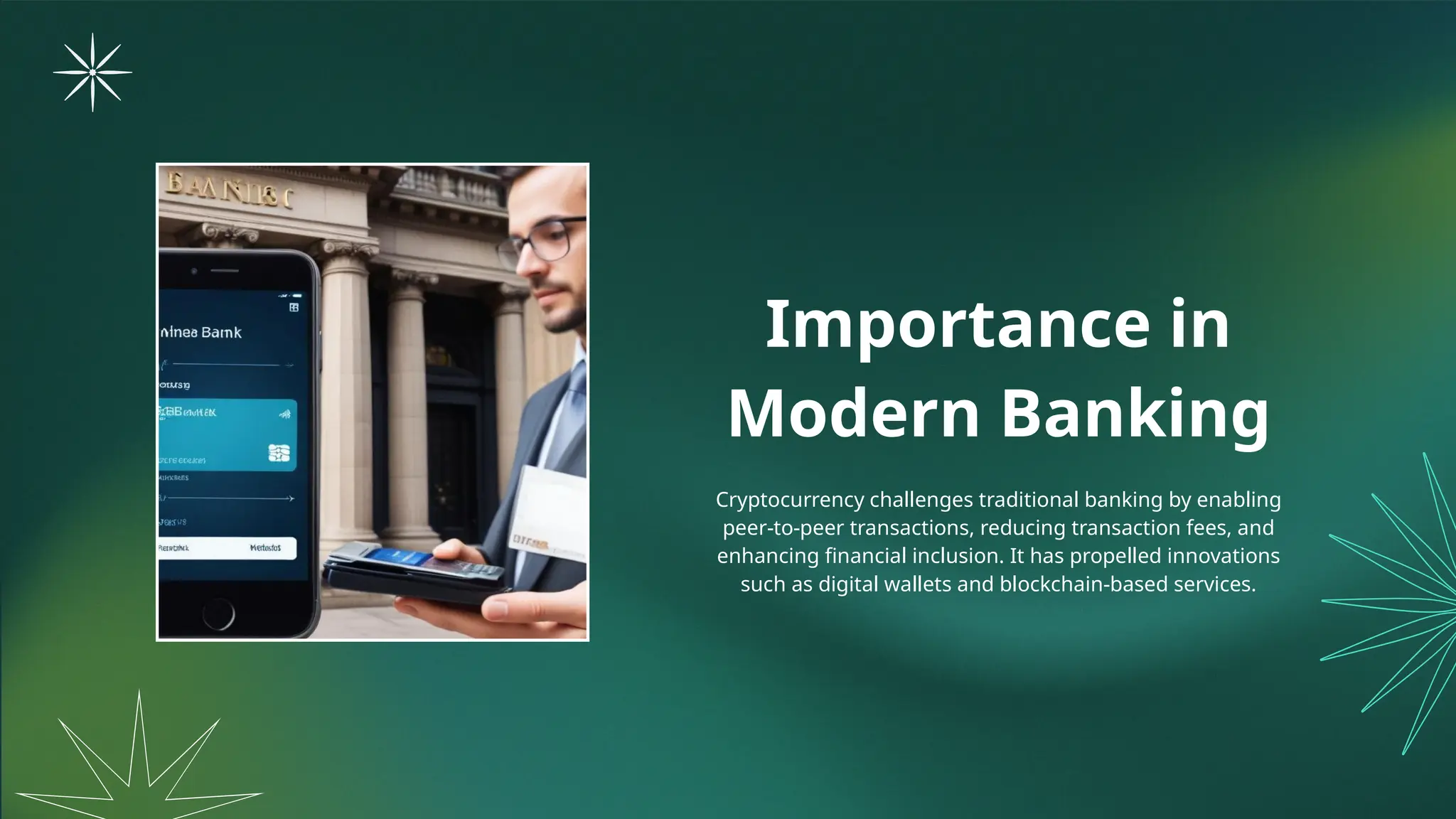
Cryptocurrency challenges traditional banking by enabling
peer-to-peer transactions, reducing transaction fees, and
enhancing financial inclusion. It has propelled innovations
such as digital wallets and blockchain-based services.
Types
02
Bitcoin and
Altcoins
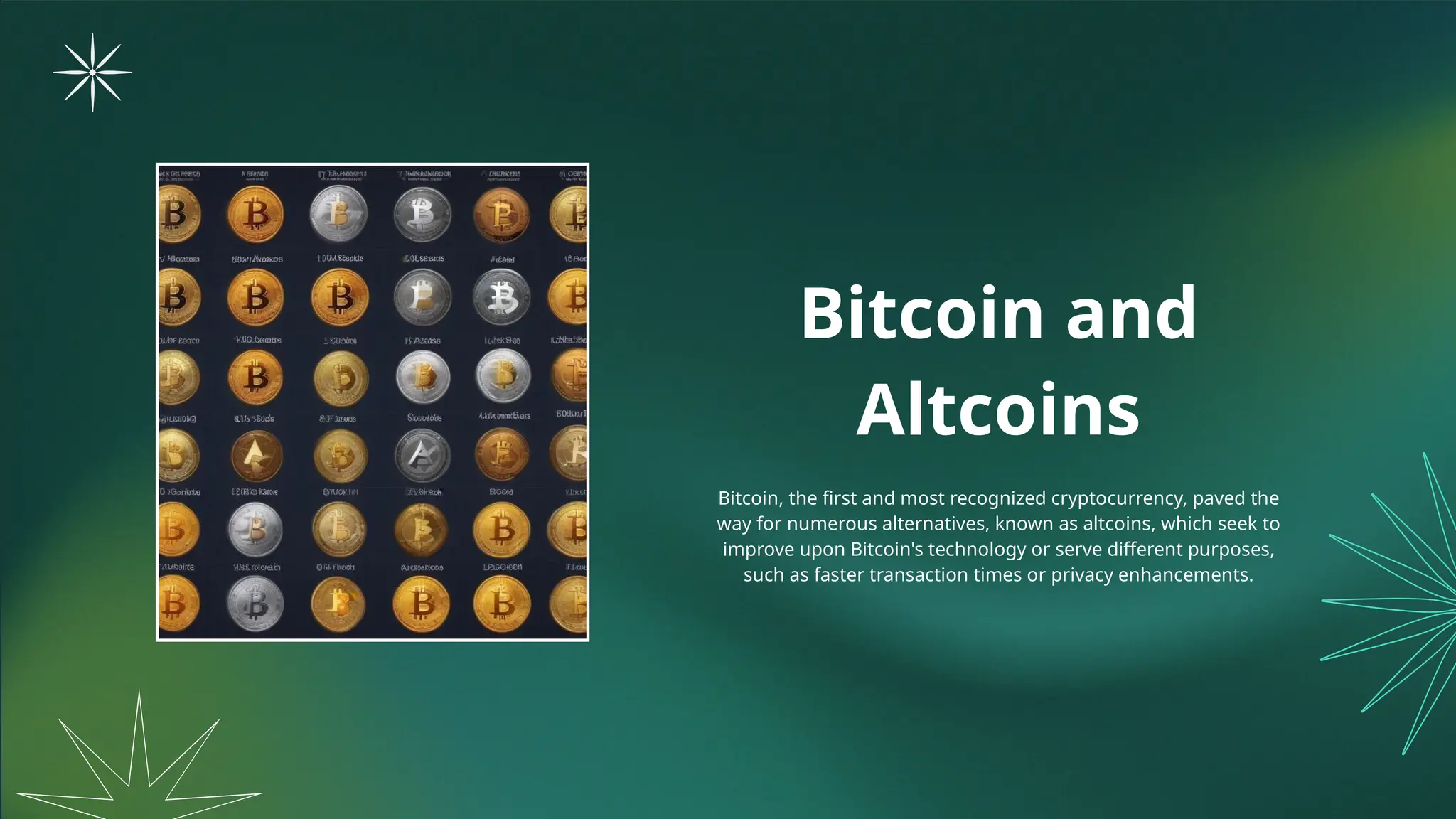
Bitcoin, the first and most recognized cryptocurrency, paved the
way for numerous alternatives, known as altcoins, which seek to
improve upon Bitcoin's technology or serve different purposes,
such as faster transaction times or privacy enhancements.
Stablecoins
Stablecoins are cryptocurrencies designed to maintain a stable value by being pegged to
a reserve of assets, like fiat currencies or commodities. They provide the benefits of digital
currency while reducing volatility, making them attractive for transactions and savings.
Decentralized Finance
(DeFi)
DeFi refers to financial services that utilize smart contracts on blockchains to provide
traditional financial products, such as trading, loans, and insurance, while eliminating
intermediaries. This revolutionizes access to finance and fosters innovation.
Impacts
03
On Traditional Banking
Cryptocurrency introduces challenges such as reduced reliance on banks for transactions, which may
threaten the business model of traditional financial institutions. Banks are adapting by integrating crypto
services and blockchain technology to retain customers and enhance transaction efficiency.
Regulatory Challenges
Governments worldwide are struggling to regulate cryptocurrencies effectively. Issues include
defining legal status, addressing money laundering and consumer protection, and ensuring
compliance without stifling innovation. Striking a balance is crucial for the future of crypto.
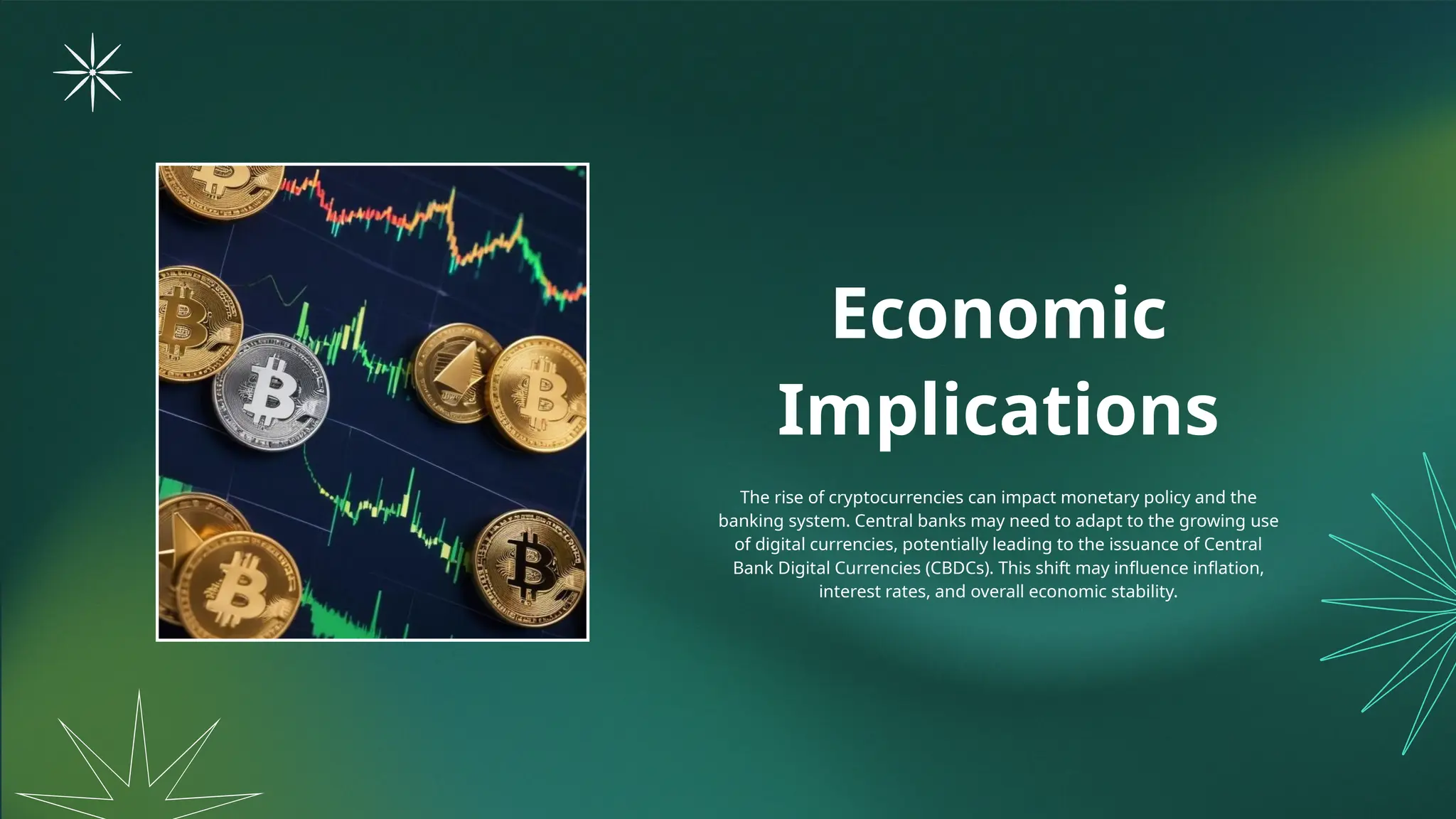
Economic
Implications
The rise of cryptocurrencies can impact monetary policy and the
banking system. Central banks may need to adapt to the growing use
of digital currencies, potentially leading to the issuance of Central
Bank Digital Currencies (CBDCs). This shift may influence inflation,
interest rates, and overall economic stability.
Technology
04
Blockchain Basics
Blockchain is a decentralized ledger technology that records transactions across multiple
computers securely. It ensures transparency and tamper-proof record-keeping, allowing all
participants in the network to view and verify transactions, promoting trust in the system.
Smart Contracts
Smart contracts are self-executing contracts with the terms of the agreement directly written into code.
They automatically execute and enforce contractual agreements when specified conditions are met,
reducing the need for intermediaries and enhancing transaction efficiency in various applications.
Security and
Privacy
Cryptocurrency transactions offer a certain level of anonymity and
privacy, but also raise concerns about security risks such as
hacking and fraud. Users must take precautions, such as utilizing
secure wallets and following best practices to protect their assets.
Future
05
Predictions for
Adoption
The adoption of cryptocurrency is expected to grow as infrastructure
improves, regulatory clarity emerges, and more businesses accept
crypto as a payment method. This trend may lead to broader
integration of crypto into everyday financial systems and increased
usage among consumers.
Potential Regulations
Future regulations could focus on enhancing consumer protection, taxation of cryptocurrencies,
and combating illicit activities. Central banks may experiment with their digital currencies, shaping
the landscape of finance as regulations evolve in response to the dynamic crypto market.
Impact on Financial
Systems
The proliferation of cryptocurrencies may reform traditional financial systems by promoting
greater competition, financial inclusion, and efficiency. It challenges existing paradigms and could
lead to transformative innovations in how individuals and institutions transact and manage money.
Conclusions
Cryptocurrency and blockchain technology are reshaping the banking and financial landscape.
As adoption increases and regulations evolve, the impact of these digital currencies will
continue to grow, influencing the future of money and economic structures globally.
CREDITS: This presentation template was created by Slidesgo,
and includes icons by Flaticon, and infographics & images by
Freepik
Thank you!
Do you have any questions?

Disk Drill Enterprise Crack for MacOS Free Download

  • 1.
    Cryptocurrency and Banking Exploring theRelationship Between Digital Currency and Financial Systems Cryptocurrency and Banking
  • 2.
    Introduction This presentation explorescryptocurrency's impact on banking, covering its definition, types, historical evolution, and repercussions on traditional financial systems.
  • 3.
  • 4.
    Definition of Cryptocurrency Cryptocurrency isa digital or virtual form of currency that uses cryptography for security. It operates on blockchain technology, which allows for decentralized transactions, eliminating the need for intermediaries like banks.
  • 5.
    History of Cryptocurrency Cryptocurrencybegan with Bitcoin's introduction in 2009 by an anonymous person or group known as Satoshi Nakamoto. Over the years, thousands of alternative cryptocurrencies have emerged, each with unique features and purposes.
  • 6.
    Importance in Modern Banking Cryptocurrencychallenges traditional banking by enabling peer-to-peer transactions, reducing transaction fees, and enhancing financial inclusion. It has propelled innovations such as digital wallets and blockchain-based services.
  • 7.
  • 8.
    Bitcoin and Altcoins Bitcoin, thefirst and most recognized cryptocurrency, paved the way for numerous alternatives, known as altcoins, which seek to improve upon Bitcoin's technology or serve different purposes, such as faster transaction times or privacy enhancements.
  • 9.
    Stablecoins Stablecoins are cryptocurrenciesdesigned to maintain a stable value by being pegged to a reserve of assets, like fiat currencies or commodities. They provide the benefits of digital currency while reducing volatility, making them attractive for transactions and savings.
  • 10.
    Decentralized Finance (DeFi) DeFi refersto financial services that utilize smart contracts on blockchains to provide traditional financial products, such as trading, loans, and insurance, while eliminating intermediaries. This revolutionizes access to finance and fosters innovation.
  • 11.
  • 12.
    On Traditional Banking Cryptocurrencyintroduces challenges such as reduced reliance on banks for transactions, which may threaten the business model of traditional financial institutions. Banks are adapting by integrating crypto services and blockchain technology to retain customers and enhance transaction efficiency.
  • 13.
    Regulatory Challenges Governments worldwideare struggling to regulate cryptocurrencies effectively. Issues include defining legal status, addressing money laundering and consumer protection, and ensuring compliance without stifling innovation. Striking a balance is crucial for the future of crypto.
  • 14.
    Economic Implications The rise ofcryptocurrencies can impact monetary policy and the banking system. Central banks may need to adapt to the growing use of digital currencies, potentially leading to the issuance of Central Bank Digital Currencies (CBDCs). This shift may influence inflation, interest rates, and overall economic stability.
  • 15.
  • 16.
    Blockchain Basics Blockchain isa decentralized ledger technology that records transactions across multiple computers securely. It ensures transparency and tamper-proof record-keeping, allowing all participants in the network to view and verify transactions, promoting trust in the system.
  • 17.
    Smart Contracts Smart contractsare self-executing contracts with the terms of the agreement directly written into code. They automatically execute and enforce contractual agreements when specified conditions are met, reducing the need for intermediaries and enhancing transaction efficiency in various applications.
  • 18.
    Security and Privacy Cryptocurrency transactionsoffer a certain level of anonymity and privacy, but also raise concerns about security risks such as hacking and fraud. Users must take precautions, such as utilizing secure wallets and following best practices to protect their assets.
  • 19.
  • 20.
    Predictions for Adoption The adoptionof cryptocurrency is expected to grow as infrastructure improves, regulatory clarity emerges, and more businesses accept crypto as a payment method. This trend may lead to broader integration of crypto into everyday financial systems and increased usage among consumers.
  • 21.
    Potential Regulations Future regulationscould focus on enhancing consumer protection, taxation of cryptocurrencies, and combating illicit activities. Central banks may experiment with their digital currencies, shaping the landscape of finance as regulations evolve in response to the dynamic crypto market.
  • 22.
    Impact on Financial Systems Theproliferation of cryptocurrencies may reform traditional financial systems by promoting greater competition, financial inclusion, and efficiency. It challenges existing paradigms and could lead to transformative innovations in how individuals and institutions transact and manage money.
  • 23.
    Conclusions Cryptocurrency and blockchaintechnology are reshaping the banking and financial landscape. As adoption increases and regulations evolve, the impact of these digital currencies will continue to grow, influencing the future of money and economic structures globally.
  • 24.
    CREDITS: This presentationtemplate was created by Slidesgo, and includes icons by Flaticon, and infographics & images by Freepik Thank you! Do you have any questions?