Representation of Disability
http://www.youtube.com/watch?v=a

By Zara, James and Holly

uSAGvpM7W8
The scene starts with a
shot of a woman with
her back to the camera
opening a door. This
already creates a sense
of mystery in the scene.

The camera pans down
to show a medium shot
of a disabled boy. The
camera angle is at his
eye level (Rule of
thirds) to show that he
is the main focus in the
scene. This is because as
an audience we see him
as ‘different’

The audience hears the
woman say ‘Hi, you must
be Blake’ even before
her face is reviled. This
brings attention to
what she is saying and
as an audience we can
hear emotion and
nervousness in her voice
Her facial expression
shows an audience that
she is wearing a ‘fake
smile’ to hide her
nerves and
uncomfortableness.

The establishing shot of
the flat reveals that
the walls are red. This
gives the connotation of
love and romance.

When the disabled boy
and his dad enter the
flat there is complete
silence. This emphasizes
the tension and
awkwardness between
them all. It is obvious
that there would not be
as much awkwardness if
The boy hints at his dad to
help him onto the bed. This
helps to create the typical
stereotype that disabled
people are not
independent.

The shot cuts to the woman
about to walk into the
room but she then stops
and becomes hesitant. This
is showing that people feel
uncomfortable around
disabled people and are
not sure how to act.
The boy does not want to
be seen as dependent by
the woman. When the dad
asks weather he needs
help undressing the boy
refuses help.

The dad kisses his son on
the forehead. This shows
that he is over protective
of his son and sees him as
vulnerable because he is
disabled.
Once the dad has left
the flat the camera
cuts to the woman
locking the door then
realising that she
shouldn’t. This is most
likely because the boy
is disabled and she
feels that something
injury related could
happen

From this point the
conversation between
the boy and the call
woman has a lot of
pauses and unfinished
sentences for example
‘just in case you…’ This
awkwardness affects
the audience and

The woman then offers
the boy a drink.

A lot of sympathy is
then generated because
there is a close up of
the woman helping the
boy to drink. This
shows the boy’s
incapability to do a
task that to an able
person may seem
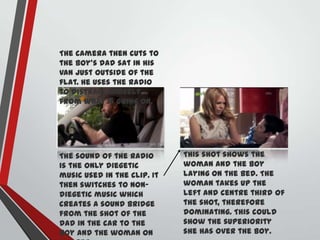
The camera then cuts to
the boy’s dad sat in his
van just outside of the
flat. He uses the radio
to distract himself
from what is going on.

The sound of the radio
is the only diegetic
music used in the clip. It
then switches to nondiegetic music which
creates a sound bridge
from the shot of the
dad in the car to the
boy and the woman on

This shot shows the
woman and the boy
laying on the bed. The
woman takes up the
left and centre third of
the shot, therefore
dominating. This could
show the superiority
she has over the boy.
When the woman Is
helping the boy take his
top off there is a lack
of dialog in the scene.
This could emphasise
the woman’s care when
helping the boy as she
doesn’t want to cause
him any pain.

The boy also doesn’t
say anything when this
is happening. This could
highlight that he feels
embarrassed because
he is always dependant
on the woman to help
him.

Disability

  • 1.
  • 2.
    The scene startswith a shot of a woman with her back to the camera opening a door. This already creates a sense of mystery in the scene. The camera pans down to show a medium shot of a disabled boy. The camera angle is at his eye level (Rule of thirds) to show that he is the main focus in the scene. This is because as an audience we see him as ‘different’ The audience hears the woman say ‘Hi, you must be Blake’ even before her face is reviled. This brings attention to what she is saying and as an audience we can hear emotion and nervousness in her voice
  • 3.
    Her facial expression showsan audience that she is wearing a ‘fake smile’ to hide her nerves and uncomfortableness. The establishing shot of the flat reveals that the walls are red. This gives the connotation of love and romance. When the disabled boy and his dad enter the flat there is complete silence. This emphasizes the tension and awkwardness between them all. It is obvious that there would not be as much awkwardness if
  • 4.
    The boy hintsat his dad to help him onto the bed. This helps to create the typical stereotype that disabled people are not independent. The shot cuts to the woman about to walk into the room but she then stops and becomes hesitant. This is showing that people feel uncomfortable around disabled people and are not sure how to act.
  • 5.
    The boy doesnot want to be seen as dependent by the woman. When the dad asks weather he needs help undressing the boy refuses help. The dad kisses his son on the forehead. This shows that he is over protective of his son and sees him as vulnerable because he is disabled.
  • 6.
    Once the dadhas left the flat the camera cuts to the woman locking the door then realising that she shouldn’t. This is most likely because the boy is disabled and she feels that something injury related could happen From this point the conversation between the boy and the call woman has a lot of pauses and unfinished sentences for example ‘just in case you…’ This awkwardness affects the audience and The woman then offers the boy a drink. A lot of sympathy is then generated because there is a close up of the woman helping the boy to drink. This shows the boy’s incapability to do a task that to an able person may seem
  • 7.
    The camera thencuts to the boy’s dad sat in his van just outside of the flat. He uses the radio to distract himself from what is going on. The sound of the radio is the only diegetic music used in the clip. It then switches to nondiegetic music which creates a sound bridge from the shot of the dad in the car to the boy and the woman on This shot shows the woman and the boy laying on the bed. The woman takes up the left and centre third of the shot, therefore dominating. This could show the superiority she has over the boy.
  • 8.
    When the womanIs helping the boy take his top off there is a lack of dialog in the scene. This could emphasise the woman’s care when helping the boy as she doesn’t want to cause him any pain. The boy also doesn’t say anything when this is happening. This could highlight that he feels embarrassed because he is always dependant on the woman to help him.