DIGITAL PRACTICES
IN THE WORKPLACE
BY GIDEON BINGYAM
STUDENT NO: 0097
WPU
Future job market
• Divergent is a career advising
nightmare.
• Jobs without people, people without
jobs
• Labour force deficit
• Business citing labour shortages
• Low paying tax on goods and
services
• Promising science of new
professions and industries
Personal and
professional identity
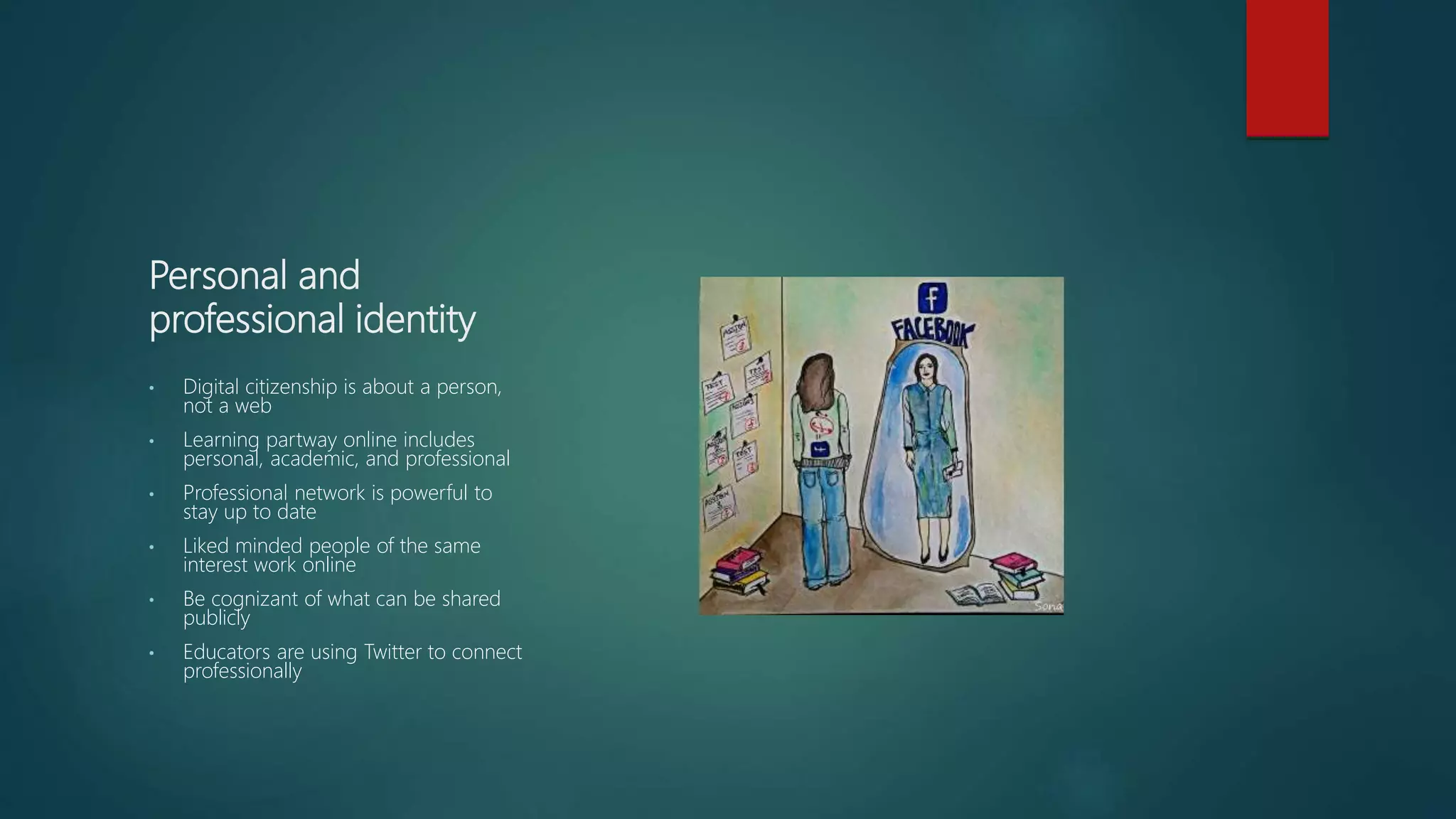
• Digital citizenship is about a person,
not a web
• Learning partway online includes
personal, academic, and professional
• Professional network is powerful to
stay up to date
• Liked minded people of the same
interest work online
• Be cognizant of what can be shared
publicly
• Educators are using Twitter to connect
professionally
Technology and
change
• There is a technology that changes
society
• Newspapers and music in a digital age
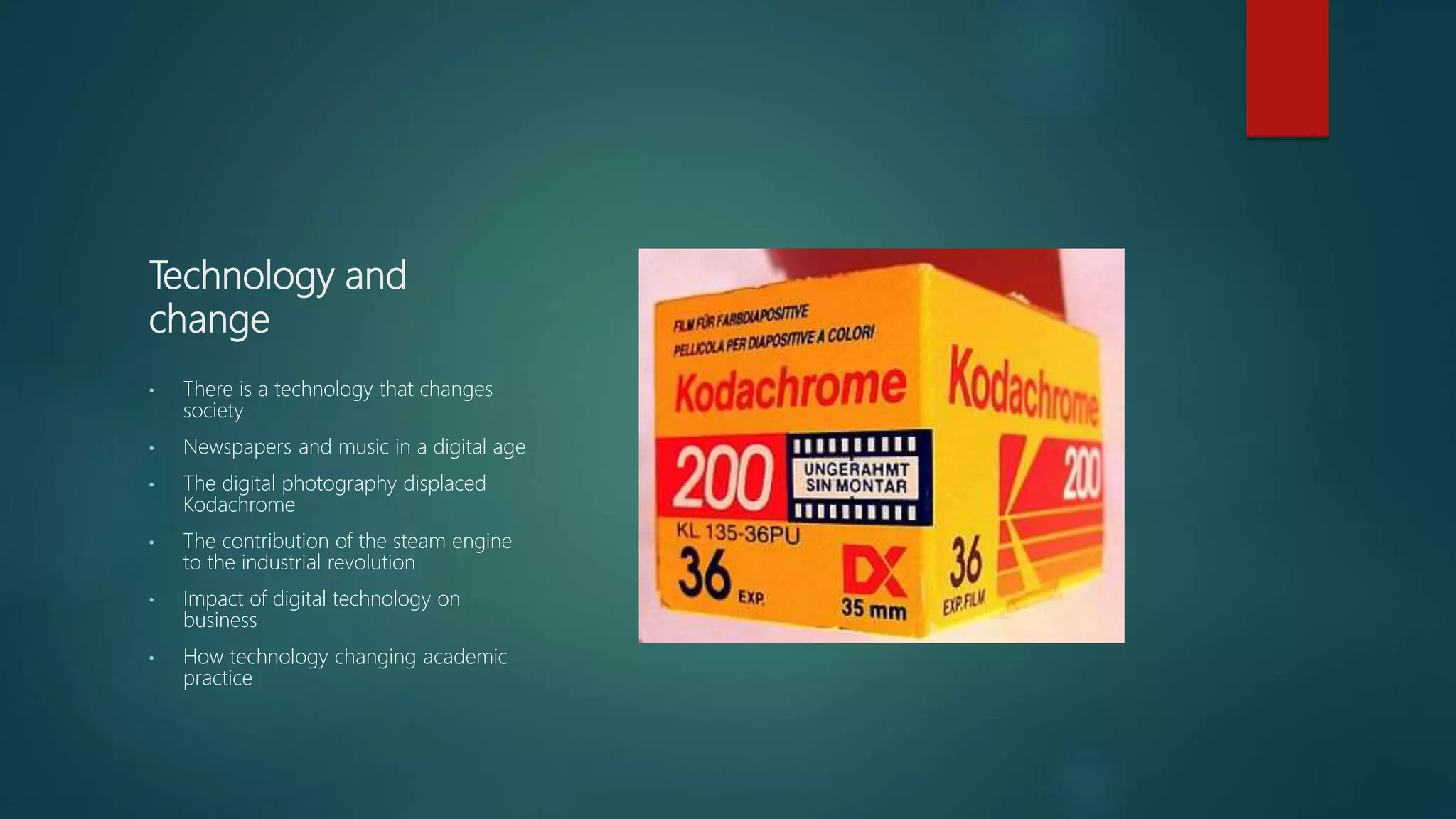
• The digital photography displaced
Kodachrome
• The contribution of the steam engine
to the industrial revolution
• Impact of digital technology on
business
• How technology changing academic
practice
Artificial intelligence
• The significant impact on society and
business
• The computer chess games available
for commercial desktop machines
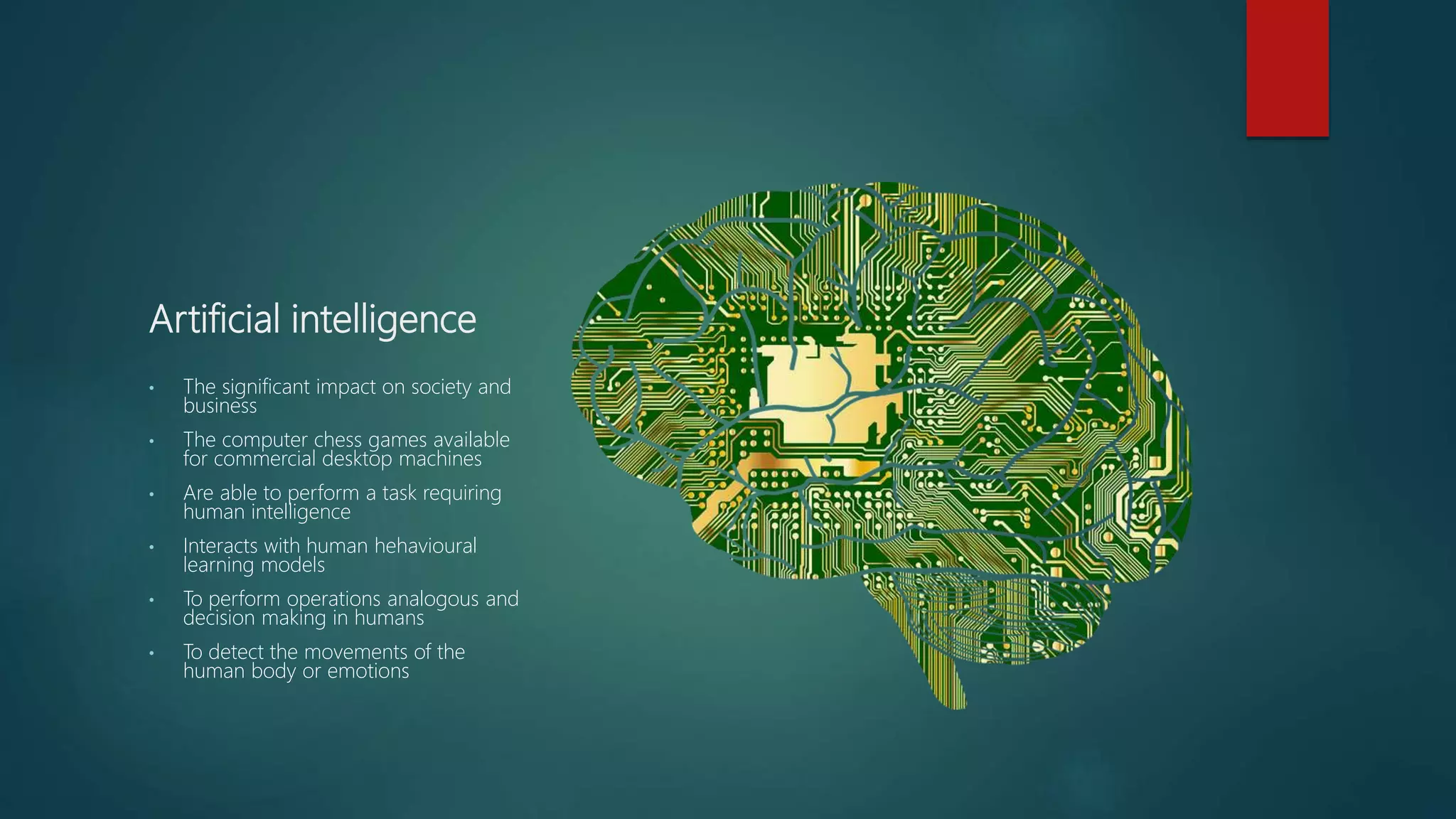
• Are able to perform a task requiring
human intelligence
• Interacts with human hehavioural
learning models
• To perform operations analogous and
decision making in humans
• To detect the movements of the
human body or emotions
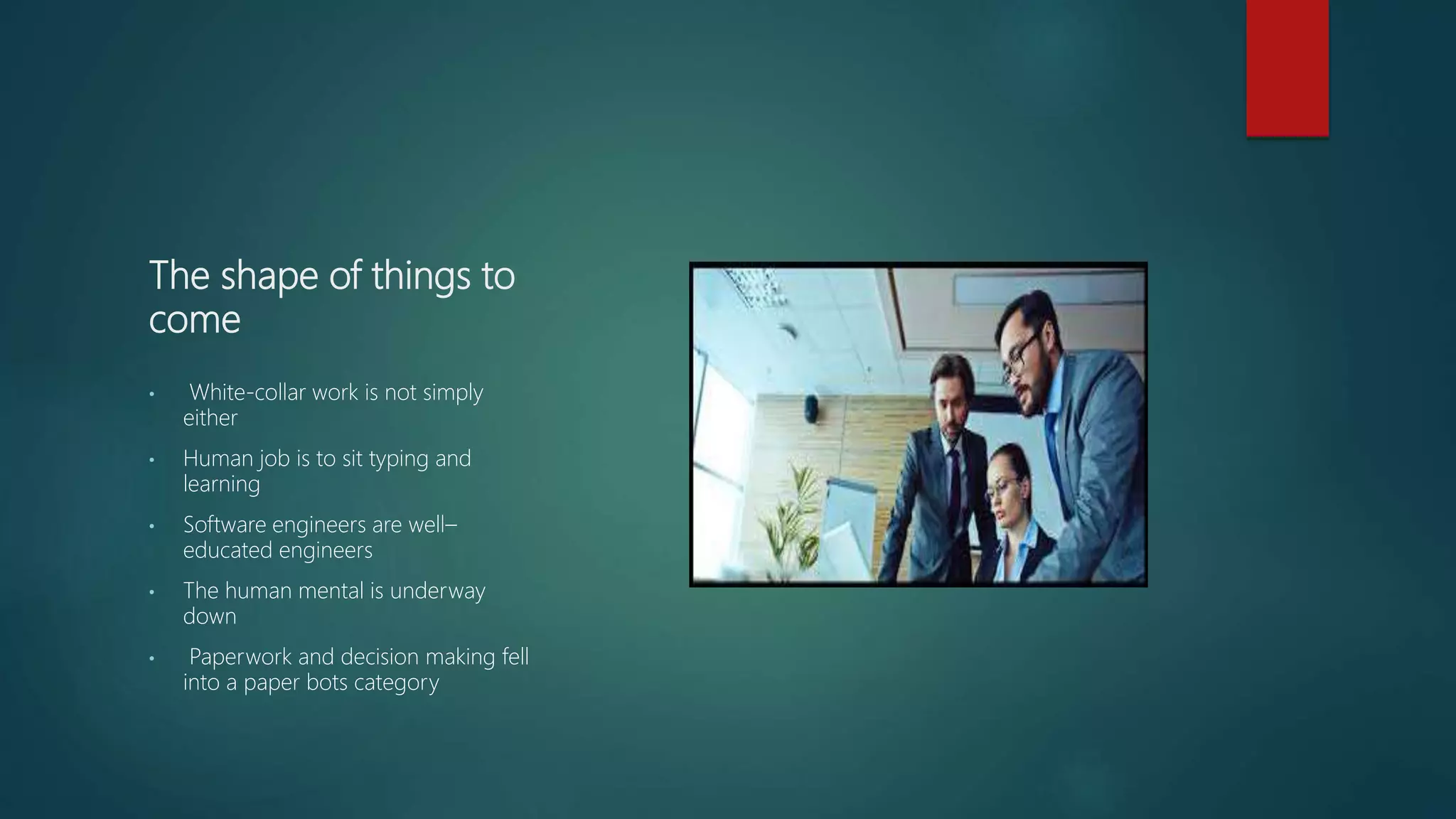
The shape of things to
come
• White-collar work is not simply
either
• Human job is to sit typing and
learning
• Software engineers are well–
educated engineers
• The human mental is underway
down
• Paperwork and decision making fell
into a paper bots category
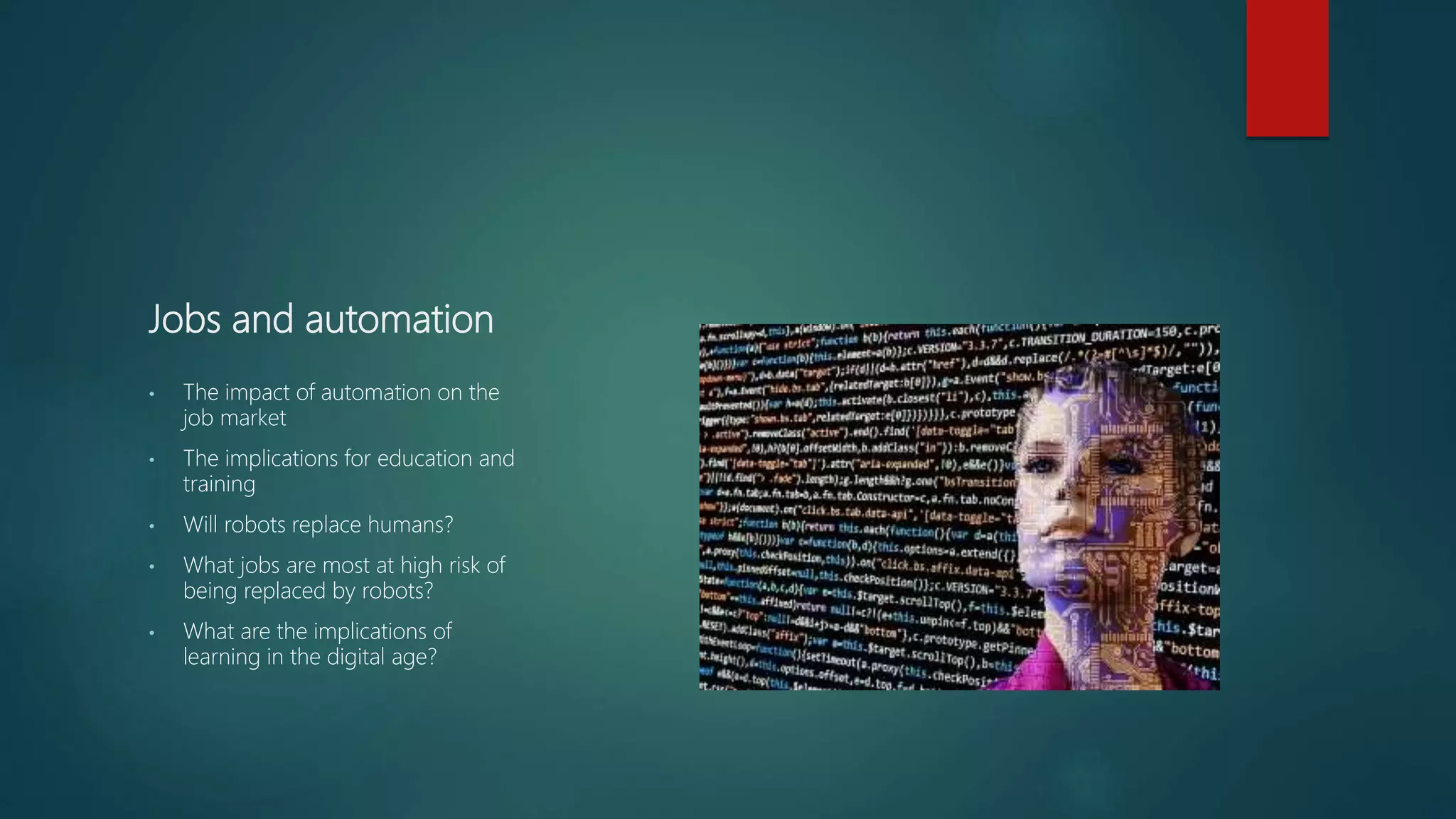
Jobs and automation
• The impact of automation on the
job market
• The implications for education and
training
• Will robots replace humans?
• What jobs are most at high risk of
being replaced by robots?
• What are the implications of
learning in the digital age?
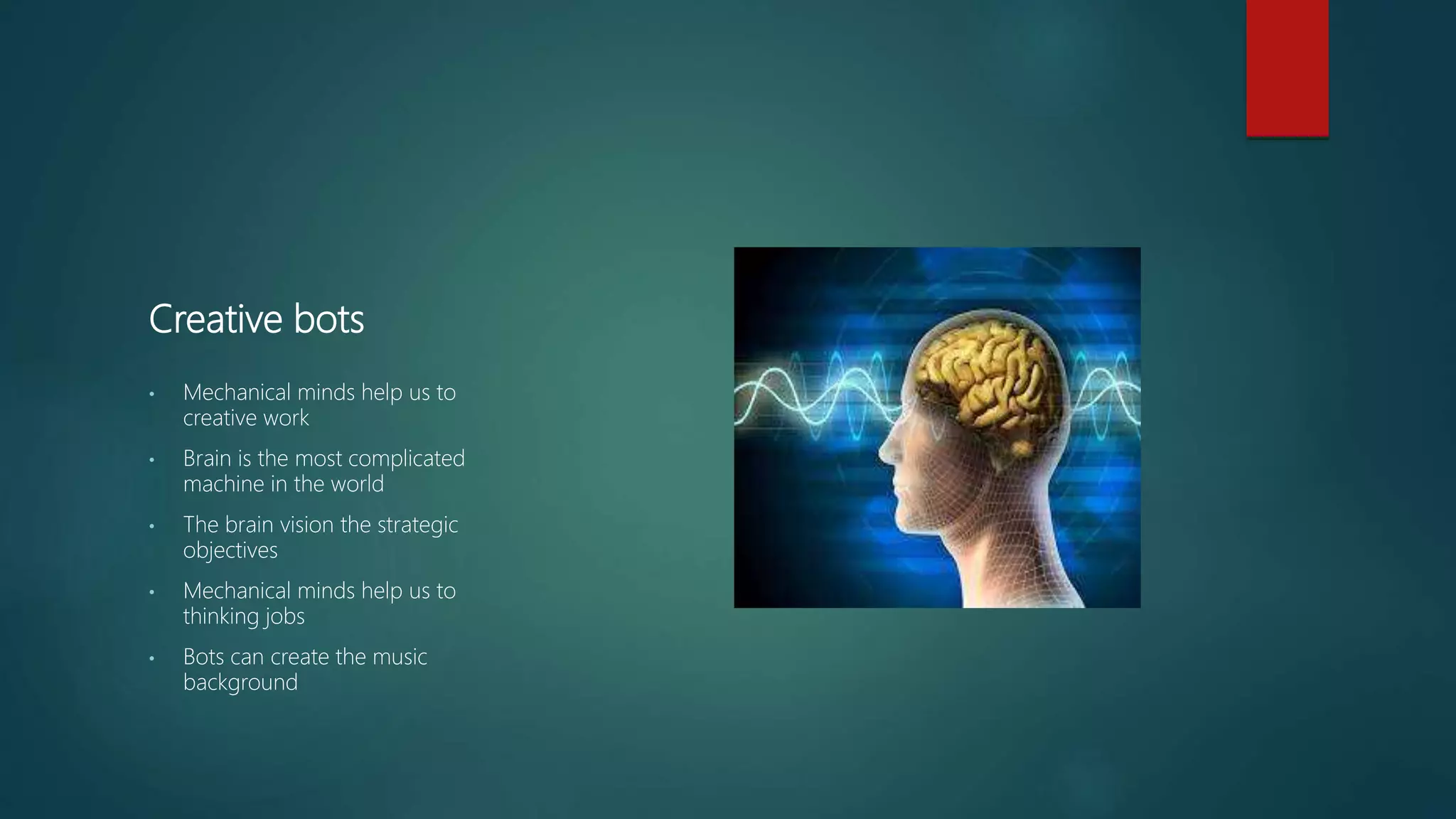
Creative bots
• Mechanical minds help us to
creative work
• Brain is the most complicated
machine in the world
• The brain vision the strategic
objectives
• Mechanical minds help us to
thinking jobs
• Bots can create the music
background
Papua New Guinea context and example of the digital
practices in the workplace
 Here is one of my context example of the capital city of Papua New Guinea. As
the capital, Port Moresby, eagerly awaits the new internet Coral Sea Cable
System and as the country becomes a cradle for digital experiments with frontier
technologies such
as blockchain, there is an opportunity to harness the entrepreneurial energy PNG
has to offer. A new generation of talented entrepreneurs is emerging and further
support needs to be provided to educate and train leaders and create start-up
success stories.
For many industries and businesses in the region, paper is still king, and efforts
are needed to support “analog complements” to enable the full transition to
digital and prevent a digital divide as well. These complements include policies
and regulatory
frameworks, accessible and affordable technology, and digital education and
training.
Conclusion
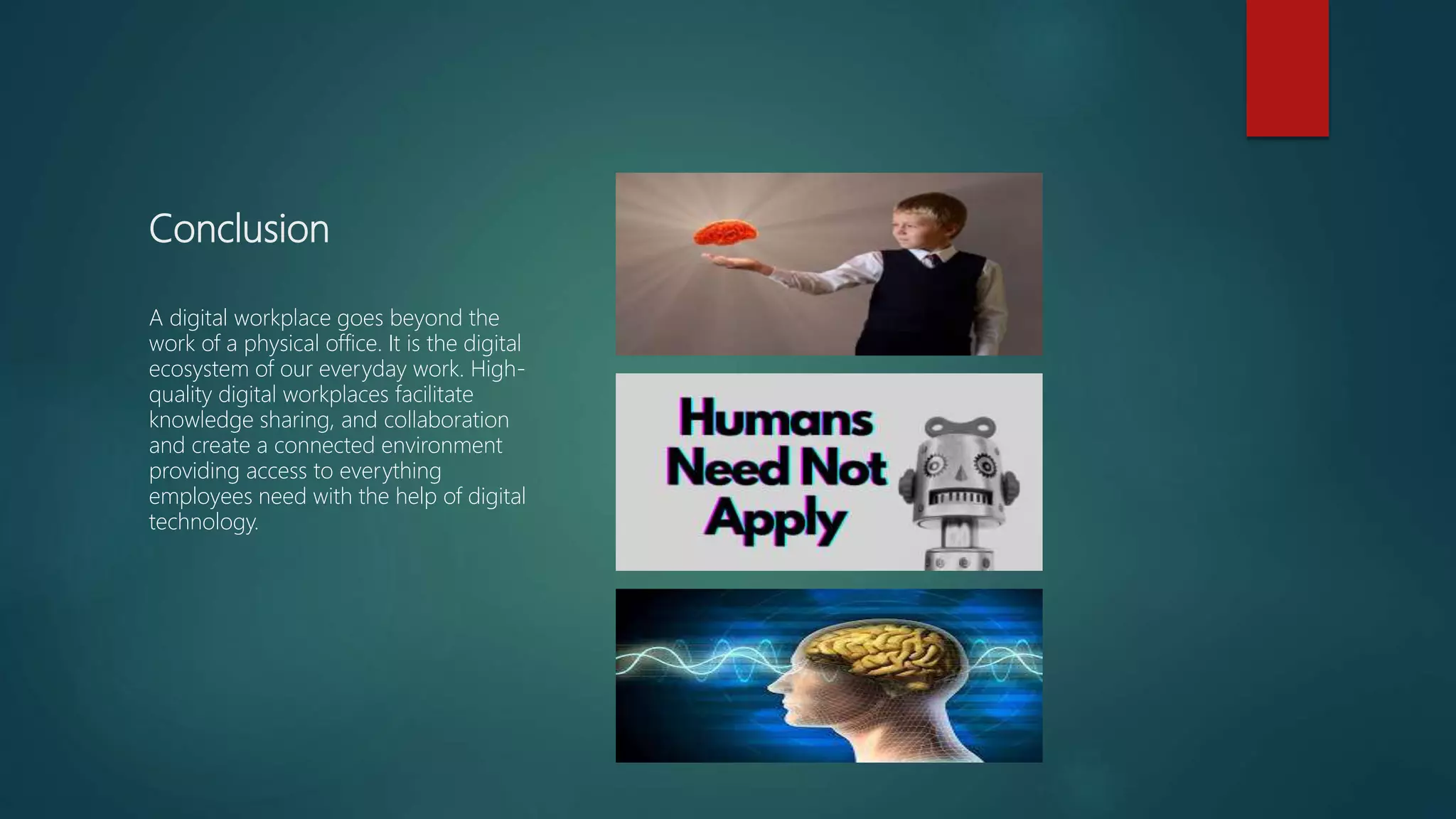
A digital workplace goes beyond the
work of a physical office. It is the digital
ecosystem of our everyday work. High-
quality digital workplaces facilitate
knowledge sharing, and collaboration
and create a connected environment
providing access to everything
employees need with the help of digital
technology.

Digital practices in the wowk place summary.pptx

  • 1.
    DIGITAL PRACTICES IN THEWORKPLACE BY GIDEON BINGYAM STUDENT NO: 0097 WPU
  • 2.
    Future job market •Divergent is a career advising nightmare. • Jobs without people, people without jobs • Labour force deficit • Business citing labour shortages • Low paying tax on goods and services • Promising science of new professions and industries
  • 3.
    Personal and professional identity •Digital citizenship is about a person, not a web • Learning partway online includes personal, academic, and professional • Professional network is powerful to stay up to date • Liked minded people of the same interest work online • Be cognizant of what can be shared publicly • Educators are using Twitter to connect professionally
  • 4.
    Technology and change • Thereis a technology that changes society • Newspapers and music in a digital age • The digital photography displaced Kodachrome • The contribution of the steam engine to the industrial revolution • Impact of digital technology on business • How technology changing academic practice
  • 5.
    Artificial intelligence • Thesignificant impact on society and business • The computer chess games available for commercial desktop machines • Are able to perform a task requiring human intelligence • Interacts with human hehavioural learning models • To perform operations analogous and decision making in humans • To detect the movements of the human body or emotions
  • 6.
    The shape ofthings to come • White-collar work is not simply either • Human job is to sit typing and learning • Software engineers are well– educated engineers • The human mental is underway down • Paperwork and decision making fell into a paper bots category
  • 7.
    Jobs and automation •The impact of automation on the job market • The implications for education and training • Will robots replace humans? • What jobs are most at high risk of being replaced by robots? • What are the implications of learning in the digital age?
  • 8.
    Creative bots • Mechanicalminds help us to creative work • Brain is the most complicated machine in the world • The brain vision the strategic objectives • Mechanical minds help us to thinking jobs • Bots can create the music background
  • 9.
    Papua New Guineacontext and example of the digital practices in the workplace  Here is one of my context example of the capital city of Papua New Guinea. As the capital, Port Moresby, eagerly awaits the new internet Coral Sea Cable System and as the country becomes a cradle for digital experiments with frontier technologies such as blockchain, there is an opportunity to harness the entrepreneurial energy PNG has to offer. A new generation of talented entrepreneurs is emerging and further support needs to be provided to educate and train leaders and create start-up success stories. For many industries and businesses in the region, paper is still king, and efforts are needed to support “analog complements” to enable the full transition to digital and prevent a digital divide as well. These complements include policies and regulatory frameworks, accessible and affordable technology, and digital education and training.
  • 10.
    Conclusion A digital workplacegoes beyond the work of a physical office. It is the digital ecosystem of our everyday work. High- quality digital workplaces facilitate knowledge sharing, and collaboration and create a connected environment providing access to everything employees need with the help of digital technology.