NATIONAL INSTITUTE OF DIGITAL
MARKETING
Mastering Social Media
Marketing: A Complete Guide
1 www.nidmindia.com
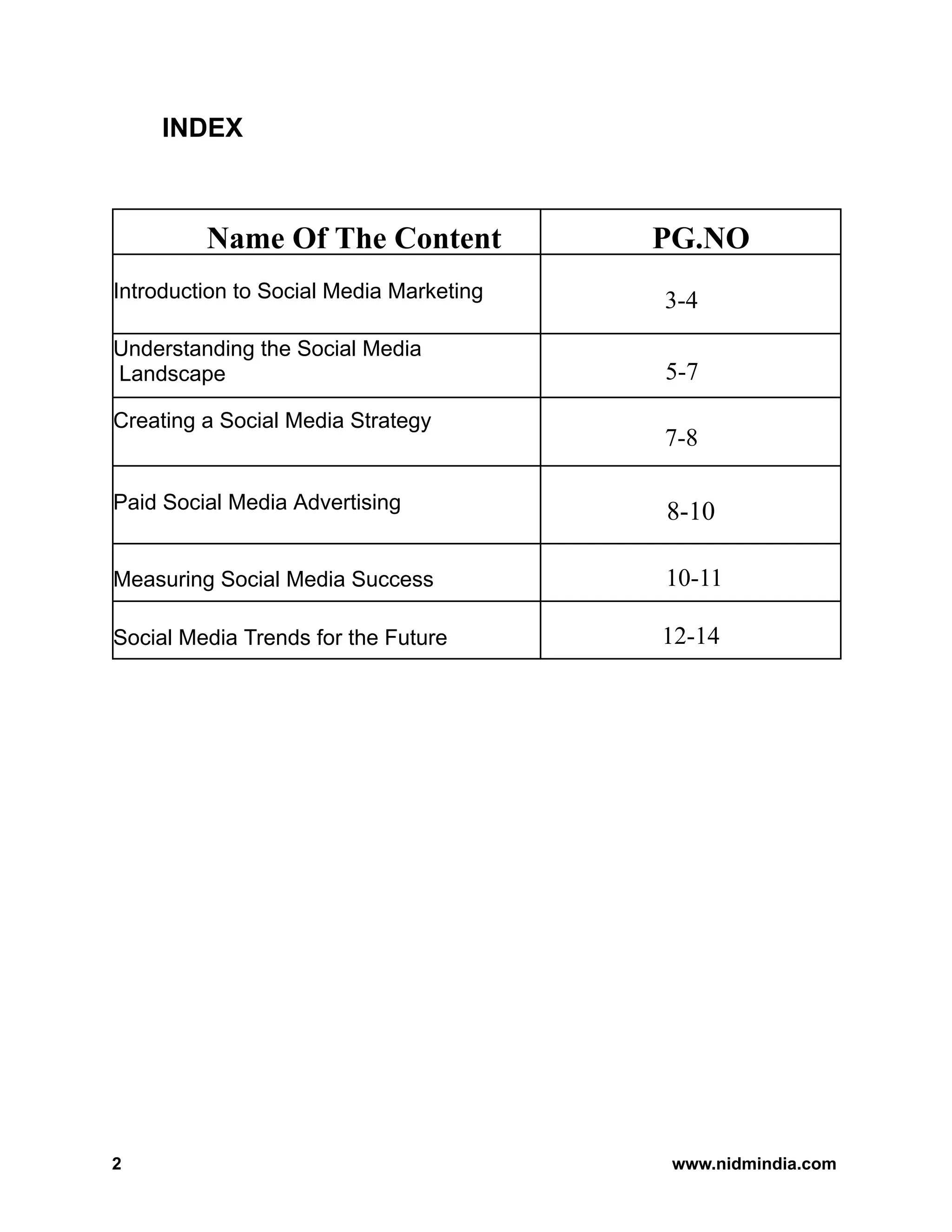
INDEX
Name Of The Content PG.NO
Introduction to Social Media Marketing 3-4
Understanding the Social Media
Landscape 5-7
Creating a Social Media Strategy
7-8
Paid Social Media Advertising 8-10
Measuring Social Media Success 10-11
Social Media Trends for the Future 12-14
2 www.nidmindia.com
Introduction to Social Media Marketing
Definition of Social Media Marketing (SMM)
Social Media Marketing (SMM) is a digital marketing strategy that utilizes social media platforms
to connect with audiences, promote products or services, build brand awareness, and drive
website traffic. It encompasses creating and sharing content on various social media channels,
engaging with users through posts, comments, and messages, and running paid advertising
campaigns to reach a broader audience. The primary goal of SMM is to foster engagement,
establish a community around a brand, and ultimately convert followers into customers.
SMM involves not only the creation of content—be it images, videos, blog posts, or
advertisements—but also the strategic analysis of user behavior and engagement metrics to
refine and optimize marketing efforts. By leveraging the unique features of different social media
platforms, brands can craft tailored messages that resonate with specific audience segments.
As social media has evolved, it has become an essential part of the marketing mix, with a focus
on relationship-building and customer interaction rather than just traditional promotional tactics.
Importance in Today’s Business Landscape
The significance of social media marketing in today’s business environment cannot be
overstated. As consumer behavior shifts towards digital interaction, social media has emerged
as a powerful tool for brands seeking to connect with their target audiences. Some key reasons
for the importance of SMM include:
1. Widespread Usage: Social media platforms boast billions of active users worldwide,
making them a rich source of potential customers. Brands can tap into diverse
demographics and reach users where they spend a significant portion of their online
time.
2. Cost-Effectiveness: Compared to traditional advertising methods, social media
marketing often requires a smaller budget, allowing businesses of all sizes to promote
their products and services effectively. With the option to run organic posts and targeted
paid ads, companies can achieve significant reach without incurring prohibitive costs.
3. Enhanced Brand Awareness: Consistent and engaging social media presence helps
brands build recognition and trust among consumers. Regularly sharing valuable
content, interacting with followers, and responding to inquiries can foster loyalty and
drive repeat business.
4. Real-Time Engagement: Social media facilitates immediate interaction between brands
and consumers, allowing businesses to respond to questions, resolve issues, and gather
feedback in real-time. This responsiveness can enhance customer satisfaction and
strengthen relationships.
5. Data-Driven Insights: Social media platforms provide a wealth of analytics and insights
into user behavior, engagement rates, and campaign performance. Brands can use this
3 www.nidmindia.com
data to refine their strategies, tailor content, and optimize their marketing efforts to align
with audience preferences.
6. Community Building: Social media enables brands to cultivate a sense of community
among their followers. By encouraging user-generated content, hosting discussions, and
creating interactive experiences, companies can create a loyal customer base that
advocates for their brand.
7. SEO Benefits: Active social media presence can indirectly improve search engine
optimization (SEO) efforts. When users engage with a brand’s content, it can lead to
increased traffic to the website, enhancing its authority and ranking in search engine
results.
Overview of Major Platforms
Understanding the unique characteristics and demographics of different social media platforms
is crucial for developing an effective SMM strategy. Here’s a brief overview of some major
platforms:
1. Facebook: With over 2.8 billion active users, Facebook is the largest social media
platform globally. It offers various content formats, including text, images, videos, and
live broadcasts. Businesses can leverage Facebook to create dedicated pages, engage
with followers, and run targeted advertising campaigns to reach specific demographics.
2. Instagram: Known for its visually-driven content, Instagram has become a preferred
platform for brands in industries like fashion, beauty, and lifestyle. With over 1 billion
active users, it offers features like Stories, Reels, and IGTV to share engaging content
and connect with audiences. Instagram’s focus on aesthetics makes it an ideal platform
for showcasing products and building brand identity.
3. Twitter: Twitter operates as a real-time microblogging platform, allowing users to share
short messages (tweets) limited to 280 characters. It’s particularly effective for news,
trends, and customer engagement. Brands use Twitter to connect with audiences
through conversations, respond to inquiries, and participate in trending topics.
4. LinkedIn: As the largest professional networking platform, LinkedIn is primarily used for
B2B marketing. With over 700 million members, it offers businesses an opportunity to
connect with industry professionals, share thought leadership content, and generate
leads. LinkedIn ads can be particularly effective for targeting specific job titles and
industries.
5. TikTok: TikTok has rapidly gained popularity, especially among younger audiences. This
short-form video platform encourages creativity and spontaneity, making it an excellent
channel for brands to engage with Gen Z and millennials. Brands can use TikTok to
create viral challenges, collaborate with influencers, and showcase their products in a
fun, engaging manner.
4 www.nidmindia.com
Understanding the Social Media Landscape
Social media has fundamentally transformed the way people communicate, share information,
and engage with brands. In this dynamic landscape, understanding the nuances of various
platforms and their audiences is essential for businesses looking to leverage social media for
marketing success.
1. Trends in Social Media Usage
Social media usage has grown exponentially over the past decade, evolving from a niche
communication tool to a primary platform for networking, marketing, and information sharing.
Key trends include:
● Rise of Video Content: Video continues to dominate social media, with platforms like
TikTok, Instagram Reels, and YouTube emphasizing short-form and engaging video
content. Brands are leveraging this trend by creating visually compelling stories that
resonate with audiences.
● Increased Use of Stories: The “Stories” format, popularized by Instagram and
Snapchat, has gained traction across various platforms. This ephemeral content allows
brands to share real-time updates, promotions, and behind-the-scenes glimpses,
fostering a more authentic connection with their audience.
● Social Commerce: The integration of e-commerce with social media has created a
seamless shopping experience. Features like Instagram Shopping and Facebook Shops
allow users to discover and purchase products directly within the platform, blurring the
lines between social media and online shopping.
● Focus on Authenticity and Transparency: Consumers are increasingly seeking
genuine connections with brands. They favor influencers and brands that are transparent
and authentic in their messaging. This trend emphasizes the importance of real-time
engagement and storytelling.
● Personalization and Targeting: Social media algorithms have become increasingly
sophisticated, enabling brands to deliver personalized content to specific audience
segments. This level of targeting enhances user experience and drives higher
engagement rates.
2. How Different Platforms Cater to Varied Audiences
Each social media platform has its unique characteristics, audience demographics, and content
formats. Understanding these differences is crucial for crafting effective marketing strategies.
Here’s a breakdown of major platforms and their audiences:
5 www.nidmindia.com
● Facebook: With over 2.8 billion monthly active users, Facebook remains a dominant
platform, catering to a wide demographic. It is popular among individuals aged 25-34,
but it also has significant usage among older adults. Brands leverage Facebook for
community building, event promotion, and targeted advertising.
● Instagram: Primarily a visual platform, Instagram boasts over 1 billion users, with a
strong presence among younger demographics (ages 18-29). Brands use Instagram to
showcase products through high-quality images, engaging Stories, and influencer
partnerships. The platform is particularly effective for lifestyle, fashion, and beauty
brands.
● Twitter: Known for its real-time communication, Twitter has around 330 million monthly
active users, with a user base that skews slightly younger. It’s a platform for news,
updates, and quick engagement, making it ideal for brands looking to engage in trending
topics and conversations.
● LinkedIn: With over 900 million members, LinkedIn is the go-to platform for
professionals and B2B marketing. It caters to an audience interested in networking, job
opportunities, and industry insights. Brands can leverage LinkedIn for thought leadership
content, industry news, and professional engagement.
● TikTok: This rapidly growing platform focuses on short-form video content, appealing
primarily to Gen Z and younger millennials. With over 1 billion users, TikTok’s algorithm
promotes creativity and engagement, making it an ideal platform for brands targeting
younger audiences with entertaining and authentic content.
3. Key Statistics on User Demographics and Engagement
Understanding user demographics and engagement statistics is vital for tailoring marketing
strategies. Here are some key statistics:
● User Demographics:
○ Facebook: Approximately 44% of users are aged 25-34, with a growing number
of users aged 65 and older.
○ Instagram: Around 33% of users are aged 18-24, and 29% are aged 25-34,
making it popular among young adults.
○ Twitter: About 38% of users are aged 18-29, with usage decreasing among older
demographics.
○ LinkedIn: Approximately 60% of users are aged 25-34, with a professional focus
on B2B marketing.
○ TikTok: About 60% of TikTok users are aged 16-24, highlighting its appeal to
younger audiences.
● Engagement Statistics:
○ Instagram: Instagram has an engagement rate of about 1.22%, higher than
Facebook's 0.08%, indicating that users are more actively engaging with content
on this platform.
6 www.nidmindia.com
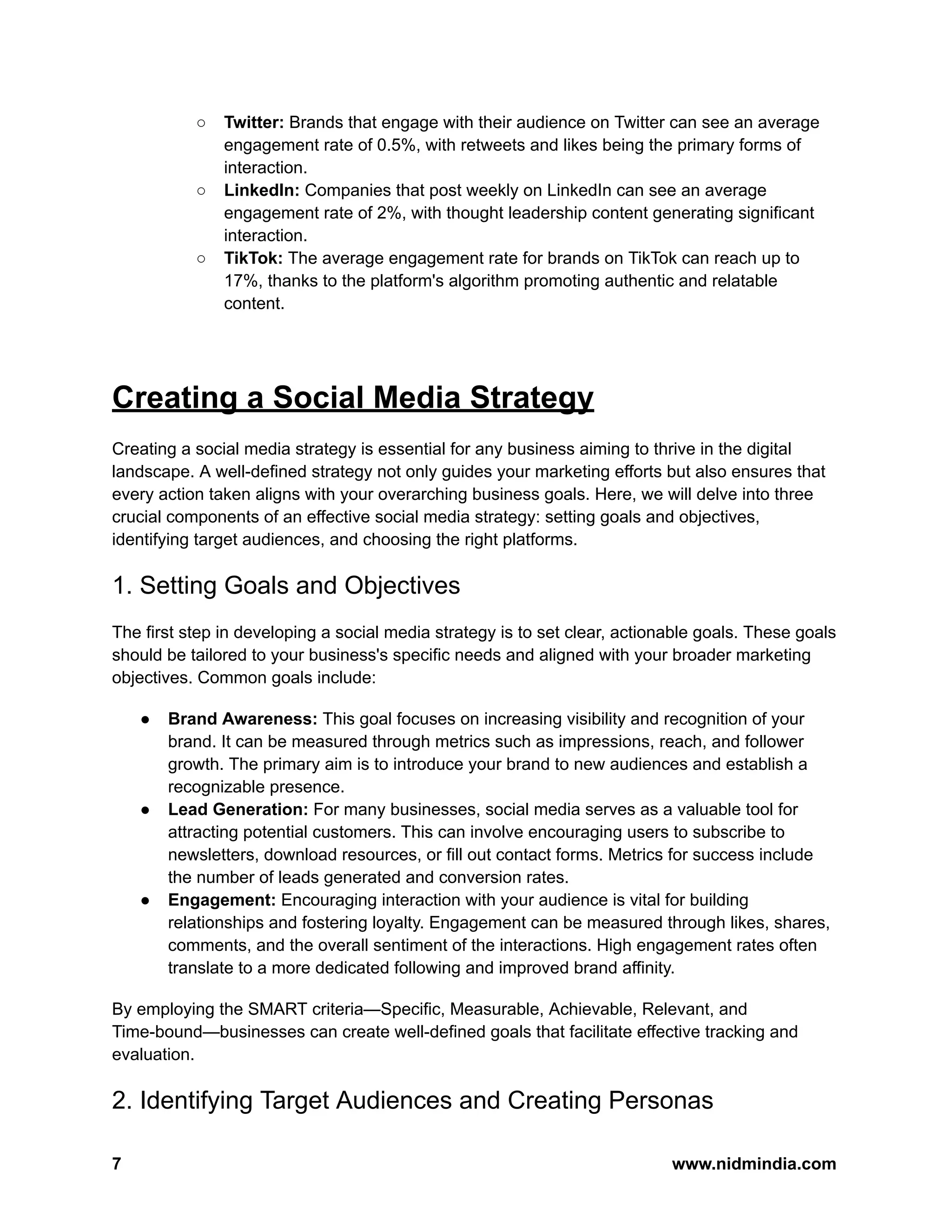
○ Twitter: Brands that engage with their audience on Twitter can see an average
engagement rate of 0.5%, with retweets and likes being the primary forms of
interaction.
○ LinkedIn: Companies that post weekly on LinkedIn can see an average
engagement rate of 2%, with thought leadership content generating significant
interaction.
○ TikTok: The average engagement rate for brands on TikTok can reach up to
17%, thanks to the platform's algorithm promoting authentic and relatable
content.
Creating a Social Media Strategy
Creating a social media strategy is essential for any business aiming to thrive in the digital
landscape. A well-defined strategy not only guides your marketing efforts but also ensures that
every action taken aligns with your overarching business goals. Here, we will delve into three
crucial components of an effective social media strategy: setting goals and objectives,
identifying target audiences, and choosing the right platforms.
1. Setting Goals and Objectives
The first step in developing a social media strategy is to set clear, actionable goals. These goals
should be tailored to your business's specific needs and aligned with your broader marketing
objectives. Common goals include:
● Brand Awareness: This goal focuses on increasing visibility and recognition of your
brand. It can be measured through metrics such as impressions, reach, and follower
growth. The primary aim is to introduce your brand to new audiences and establish a
recognizable presence.
● Lead Generation: For many businesses, social media serves as a valuable tool for
attracting potential customers. This can involve encouraging users to subscribe to
newsletters, download resources, or fill out contact forms. Metrics for success include
the number of leads generated and conversion rates.
● Engagement: Encouraging interaction with your audience is vital for building
relationships and fostering loyalty. Engagement can be measured through likes, shares,
comments, and the overall sentiment of the interactions. High engagement rates often
translate to a more dedicated following and improved brand affinity.
By employing the SMART criteria—Specific, Measurable, Achievable, Relevant, and
Time-bound—businesses can create well-defined goals that facilitate effective tracking and
evaluation.
2. Identifying Target Audiences and Creating Personas
7 www.nidmindia.com
Understanding your audience is key to successful social media marketing. Start by conducting
thorough research to identify the core demographics of your ideal customers, including age,
gender, location, interests, and behaviors.
Once you have this information, develop detailed buyer personas—fictional representations of
your ideal customers. For instance, a persona for a fitness brand might be “Active Amy,” a
30-year-old woman who prioritizes healthy living and frequently engages with wellness
influencers on Instagram.
These personas serve as a guiding framework for your content and messaging, ensuring that
your social media efforts resonate with your target audience. Tailoring your content to meet the
preferences and needs of these personas can lead to higher engagement rates and improved
campaign effectiveness.
3. Choosing the Right Platforms
Not all social media platforms are suitable for every business. Selecting the right platforms is
essential to reaching your target audience effectively. Consider the demographics and unique
features of each platform:
● Facebook is ideal for community building and advertising, suitable for both B2C and
B2B businesses due to its broad demographic reach.
● Instagram focuses on visual content, making it perfect for lifestyle brands, fashion, and
food industries, particularly targeting younger audiences.
● LinkedIn is tailored for B2B marketing, networking, and professional content, attracting
users interested in industry insights and professional development.
● TikTok has rapidly gained popularity among Gen Z and younger millennials,
emphasizing short-form video content, making it ideal for brands looking to engage a
younger audience.
Paid Social Media Advertising
Paid social media advertising is a powerful strategy for brands looking to expand their reach,
drive engagement, and achieve specific marketing objectives. By leveraging the advertising
capabilities of popular social media platforms, businesses can target their audience more
effectively than traditional advertising methods.
Overview of Social Media Ad Platforms
1. Facebook Ads:
8 www.nidmindia.com
○ Targeting Options: Facebook provides extensive targeting capabilities, allowing
advertisers to reach specific demographics, interests, behaviors, and even
custom audiences based on existing customer data.
○ Ad Formats: Options include image ads, video ads, carousel ads (multiple
images), slideshow ads, and more. These formats cater to various marketing
objectives, from brand awareness to conversions.
○ Analytics: Facebook Ads Manager offers detailed insights into ad performance,
engagement metrics, and audience interactions.
2. Instagram Ads:
○ Integration with Facebook: As a Facebook-owned platform, Instagram ads
utilize the same targeting options and ad formats, including stories, photo, video,
and shopping ads.
○ Visual Focus: Instagram is highly visual, making it ideal for brands with striking
imagery or videos. Engaging content can significantly enhance audience
interaction.
○ Shoppable Posts: Businesses can tag products in their posts, allowing users to
shop directly through the app, enhancing the purchasing experience.
3. LinkedIn Ads:
○ Professional Targeting: LinkedIn specializes in B2B advertising, allowing
companies to target professionals based on job title, industry, company size, and
other professional criteria.
○ Ad Formats: Options include sponsored content, text ads, InMail ads (direct
messages), and dynamic ads tailored to individual users.
○ Lead Generation Forms: LinkedIn ads can include built-in lead gen forms,
making it easier to capture leads directly from ads without requiring users to
leave the platform.
Creating Effective Ad Campaigns
1. Targeting:
○ Define Your Audience: Start by identifying your ideal customer personas. Utilize
platform-specific tools to narrow down audiences based on demographics,
interests, behaviors, and location.
○ Custom and Lookalike Audiences: Use existing customer data to create
custom audiences and lookalike audiences, which help reach new users similar
to your best customers.
2. Copywriting:
○ Compelling Headlines: Craft attention-grabbing headlines that resonate with
your audience's needs and pain points.
○ Clear Call to Action (CTA): Encourage users to take action with clear, concise
CTAs (e.g., “Shop Now,” “Sign Up,” “Learn More”).
○ Value Proposition: Highlight the benefits and unique features of your product or
service. Address how it solves problems or meets the needs of your target
audience.
9 www.nidmindia.com
3. Visuals:
○ High-Quality Imagery: Use eye-catching, high-resolution images or videos that
align with your brand identity and messaging.
○ Consistency: Ensure that the visuals are consistent with your overall branding
and are appropriate for the platform you’re advertising on.
○ A/B Testing: Experiment with different visuals and copy variations to determine
what resonates best with your audience.
Budget Allocation and ROI Measurement
1. Budget Allocation:
○ Setting a Budget: Determine a clear budget based on your overall marketing
strategy, business goals, and the specific objectives of your ad campaigns. You
can choose between daily budgets (spending a specific amount per day) or
lifetime budgets (spending a total amount over the campaign’s duration).
○ Bidding Strategy: Decide on a bidding strategy—manual or automatic—based
on your budget and the competitiveness of your target keywords and audience.
2. ROI Measurement:
○ Tracking Conversions: Use tracking tools like Facebook Pixel or LinkedIn
Insight Tag to measure conversions directly linked to your ad campaigns.
○ Key Performance Indicators (KPIs): Monitor KPIs such as click-through rates
(CTR), conversion rates, engagement rates, and return on ad spend (ROAS).
These metrics help assess the effectiveness of your campaigns and guide future
optimization efforts.
○ Data Analysis: Regularly analyze performance data to identify trends, optimize
campaigns, and adjust strategies based on what’s working best.
Measuring Social Media Success
In the dynamic landscape of social media marketing, measuring success is crucial for
understanding the effectiveness of your strategies and guiding future efforts. By focusing on key
performance indicators (KPIs), leveraging analytics tools, and continuously tracking the impact
of your social media activities, businesses can optimize their presence and engagement.
Key Performance Indicators (KPIs)
KPIs are quantifiable metrics that help assess the effectiveness of social media campaigns. The
most relevant KPIs include:
10 www.nidmindia.com
● Reach: This metric indicates the total number of unique users who have seen your
content. Understanding reach helps gauge the size of your audience and the potential
for your messages to spread.
● Impressions: Impressions measure how many times your content has been displayed,
regardless of whether it was clicked. This metric provides insight into the visibility of your
posts and how often they appear in users' feeds.
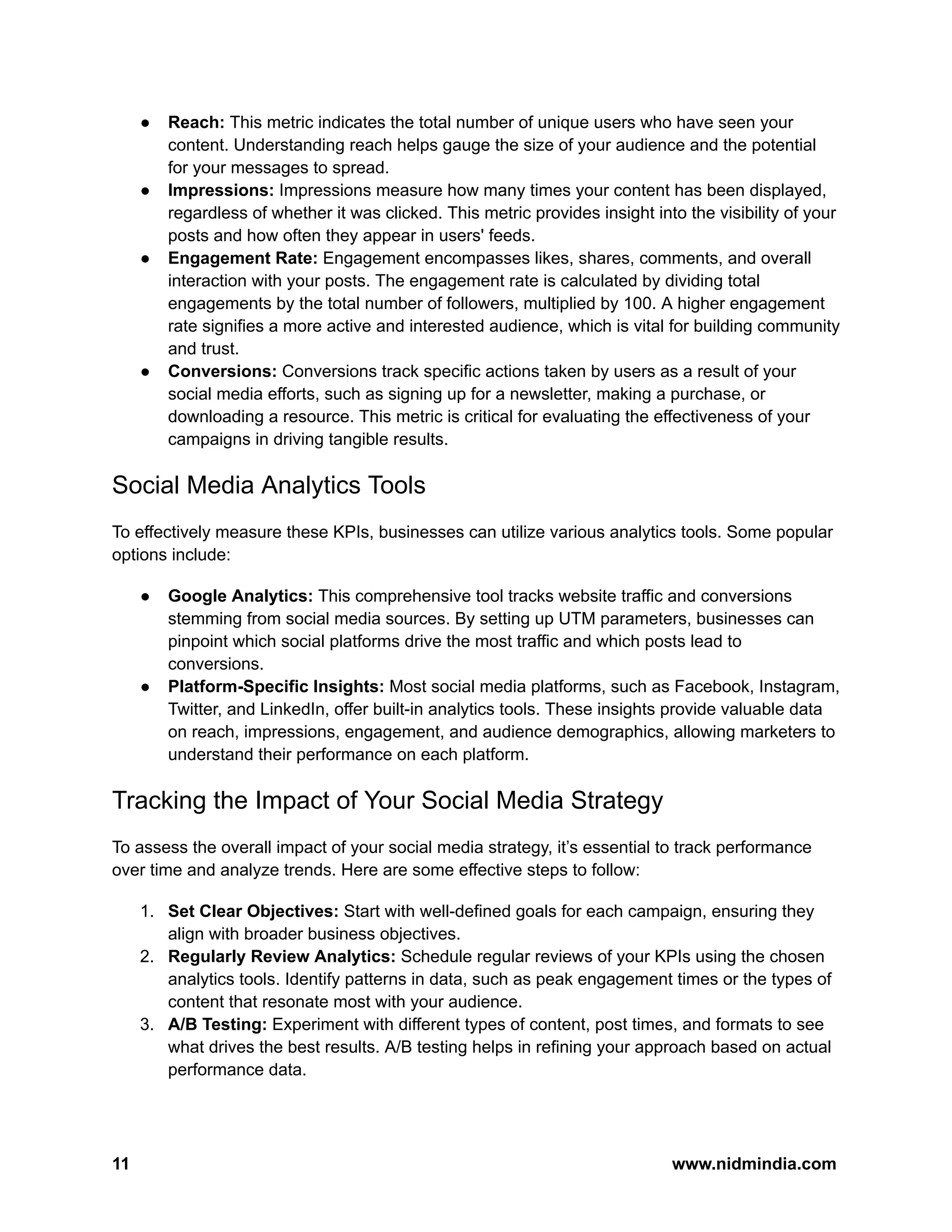
● Engagement Rate: Engagement encompasses likes, shares, comments, and overall
interaction with your posts. The engagement rate is calculated by dividing total
engagements by the total number of followers, multiplied by 100. A higher engagement
rate signifies a more active and interested audience, which is vital for building community
and trust.
● Conversions: Conversions track specific actions taken by users as a result of your
social media efforts, such as signing up for a newsletter, making a purchase, or
downloading a resource. This metric is critical for evaluating the effectiveness of your
campaigns in driving tangible results.
Social Media Analytics Tools
To effectively measure these KPIs, businesses can utilize various analytics tools. Some popular
options include:
● Google Analytics: This comprehensive tool tracks website traffic and conversions
stemming from social media sources. By setting up UTM parameters, businesses can
pinpoint which social platforms drive the most traffic and which posts lead to
conversions.
● Platform-Specific Insights: Most social media platforms, such as Facebook, Instagram,
Twitter, and LinkedIn, offer built-in analytics tools. These insights provide valuable data
on reach, impressions, engagement, and audience demographics, allowing marketers to
understand their performance on each platform.
Tracking the Impact of Your Social Media Strategy
To assess the overall impact of your social media strategy, it’s essential to track performance
over time and analyze trends. Here are some effective steps to follow:
1. Set Clear Objectives: Start with well-defined goals for each campaign, ensuring they
align with broader business objectives.
2. Regularly Review Analytics: Schedule regular reviews of your KPIs using the chosen
analytics tools. Identify patterns in data, such as peak engagement times or the types of
content that resonate most with your audience.
3. A/B Testing: Experiment with different types of content, post times, and formats to see
what drives the best results. A/B testing helps in refining your approach based on actual
performance data.
11 www.nidmindia.com
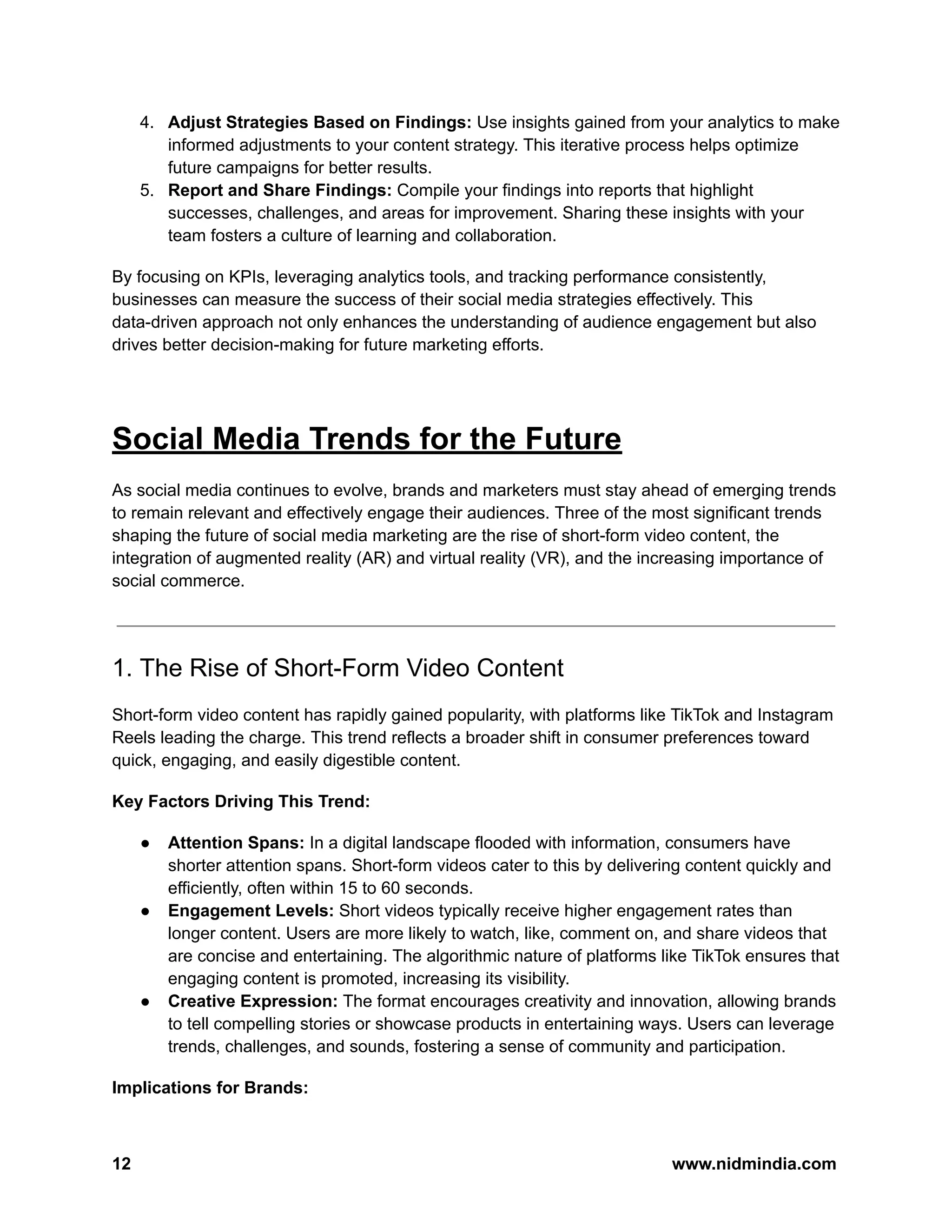
4. Adjust Strategies Based on Findings: Use insights gained from your analytics to make
informed adjustments to your content strategy. This iterative process helps optimize
future campaigns for better results.
5. Report and Share Findings: Compile your findings into reports that highlight
successes, challenges, and areas for improvement. Sharing these insights with your
team fosters a culture of learning and collaboration.
By focusing on KPIs, leveraging analytics tools, and tracking performance consistently,
businesses can measure the success of their social media strategies effectively. This
data-driven approach not only enhances the understanding of audience engagement but also
drives better decision-making for future marketing efforts.
Social Media Trends for the Future
As social media continues to evolve, brands and marketers must stay ahead of emerging trends
to remain relevant and effectively engage their audiences. Three of the most significant trends
shaping the future of social media marketing are the rise of short-form video content, the
integration of augmented reality (AR) and virtual reality (VR), and the increasing importance of
social commerce.
1. The Rise of Short-Form Video Content
Short-form video content has rapidly gained popularity, with platforms like TikTok and Instagram
Reels leading the charge. This trend reflects a broader shift in consumer preferences toward
quick, engaging, and easily digestible content.
Key Factors Driving This Trend:
● Attention Spans: In a digital landscape flooded with information, consumers have
shorter attention spans. Short-form videos cater to this by delivering content quickly and
efficiently, often within 15 to 60 seconds.
● Engagement Levels: Short videos typically receive higher engagement rates than
longer content. Users are more likely to watch, like, comment on, and share videos that
are concise and entertaining. The algorithmic nature of platforms like TikTok ensures that
engaging content is promoted, increasing its visibility.
● Creative Expression: The format encourages creativity and innovation, allowing brands
to tell compelling stories or showcase products in entertaining ways. Users can leverage
trends, challenges, and sounds, fostering a sense of community and participation.
Implications for Brands:
12 www.nidmindia.com
Brands must embrace short-form video as a core component of their social media strategy. This
includes producing authentic, relatable content that resonates with their target audience.
Collaborating with influencers, utilizing popular trends, and experimenting with various creative
formats can help brands stand out in the crowded social media landscape. As platforms
continue to evolve, the importance of short-form video will only increase, requiring brands to
remain agile and adaptable in their content creation efforts.
2. Augmented Reality (AR) and Virtual Reality (VR) in Social
Media
Augmented Reality (AR) and Virtual Reality (VR) are revolutionizing the way consumers interact
with brands on social media. These technologies enhance user experiences by blending the
digital and physical worlds, creating immersive environments for engagement.
Key Developments:
● AR Filters and Effects: Platforms like Instagram and Snapchat have successfully
integrated AR through filters and effects that allow users to interact with content in fun
and innovative ways. Brands can create branded AR experiences that encourage
user-generated content, driving engagement and brand loyalty.
● Virtual Showrooms: With VR, brands can create virtual showrooms or environments
where consumers can explore products in a 3D space. This is particularly beneficial for
industries like fashion and real estate, where visual presentation plays a crucial role in
the consumer decision-making process.
● Enhanced Shopping Experiences: AR technology allows consumers to visualize
products in their own environments. For example, furniture brands use AR apps to
enable customers to see how a piece of furniture would look in their home before making
a purchase.
Implications for Brands:
The integration of AR and VR offers brands unique opportunities to engage consumers in ways
that traditional media cannot. By leveraging these technologies, brands can enhance
storytelling, create memorable experiences, and foster deeper connections with their audience.
As AR and VR become more accessible, investing in these technologies will be crucial for
brands aiming to stay ahead in a competitive marketplace.
3. The Growing Importance of Social Commerce
13 www.nidmindia.com
Social commerce is the intersection of social media and e-commerce, enabling consumers to
discover and purchase products directly through social platforms. As shopping behaviors shift
towards digital experiences, social commerce is rapidly gaining traction.
Key Trends in Social Commerce:
● Shoppable Posts and Ads: Platforms like Instagram and Facebook have introduced
features that allow brands to tag products in their posts, enabling seamless shopping
experiences. Users can click on these tags to view product details and make purchases
without leaving the app.
● Influencer Partnerships: Influencer marketing plays a significant role in social
commerce. Influencers often share their favorite products, driving their followers to make
purchases. By leveraging influencer authenticity and trust, brands can effectively boost
sales through social platforms.
● Live Shopping Events: Live streaming has emerged as a powerful tool for brands to
showcase products in real time. During live shopping events, viewers can interact with
hosts, ask questions, and make purchases instantly, creating a sense of urgency and
excitement.
Implications for Brands:
Social commerce represents a shift in consumer purchasing behaviors, where social media
plays a central role in the buying journey. Brands need to develop a robust social commerce
strategy, ensuring their product offerings are easily discoverable and that purchasing processes
are streamlined. This includes optimizing shoppable posts, engaging with influencers, and
leveraging live shopping events to create engaging experiences that drive sales.
Conclusion
The future of social media marketing is being shaped by dynamic trends that require brands to
adapt and innovate continuously. The rise of short-form video content, the integration of AR and
VR, and the growing importance of social commerce are all crucial developments that present
unique opportunities for engagement and growth. By embracing these trends, brands can create
more meaningful connections with their audiences, enhance their marketing efforts, and thrive in
an ever-evolving digital landscape.
READ MORE
14 www.nidmindia.com

Digital marketing institute in BTM layout

  • 1.
    NATIONAL INSTITUTE OFDIGITAL MARKETING Mastering Social Media Marketing: A Complete Guide 1 www.nidmindia.com
  • 2.
    INDEX Name Of TheContent PG.NO Introduction to Social Media Marketing 3-4 Understanding the Social Media Landscape 5-7 Creating a Social Media Strategy 7-8 Paid Social Media Advertising 8-10 Measuring Social Media Success 10-11 Social Media Trends for the Future 12-14 2 www.nidmindia.com
  • 3.
    Introduction to SocialMedia Marketing Definition of Social Media Marketing (SMM) Social Media Marketing (SMM) is a digital marketing strategy that utilizes social media platforms to connect with audiences, promote products or services, build brand awareness, and drive website traffic. It encompasses creating and sharing content on various social media channels, engaging with users through posts, comments, and messages, and running paid advertising campaigns to reach a broader audience. The primary goal of SMM is to foster engagement, establish a community around a brand, and ultimately convert followers into customers. SMM involves not only the creation of content—be it images, videos, blog posts, or advertisements—but also the strategic analysis of user behavior and engagement metrics to refine and optimize marketing efforts. By leveraging the unique features of different social media platforms, brands can craft tailored messages that resonate with specific audience segments. As social media has evolved, it has become an essential part of the marketing mix, with a focus on relationship-building and customer interaction rather than just traditional promotional tactics. Importance in Today’s Business Landscape The significance of social media marketing in today’s business environment cannot be overstated. As consumer behavior shifts towards digital interaction, social media has emerged as a powerful tool for brands seeking to connect with their target audiences. Some key reasons for the importance of SMM include: 1. Widespread Usage: Social media platforms boast billions of active users worldwide, making them a rich source of potential customers. Brands can tap into diverse demographics and reach users where they spend a significant portion of their online time. 2. Cost-Effectiveness: Compared to traditional advertising methods, social media marketing often requires a smaller budget, allowing businesses of all sizes to promote their products and services effectively. With the option to run organic posts and targeted paid ads, companies can achieve significant reach without incurring prohibitive costs. 3. Enhanced Brand Awareness: Consistent and engaging social media presence helps brands build recognition and trust among consumers. Regularly sharing valuable content, interacting with followers, and responding to inquiries can foster loyalty and drive repeat business. 4. Real-Time Engagement: Social media facilitates immediate interaction between brands and consumers, allowing businesses to respond to questions, resolve issues, and gather feedback in real-time. This responsiveness can enhance customer satisfaction and strengthen relationships. 5. Data-Driven Insights: Social media platforms provide a wealth of analytics and insights into user behavior, engagement rates, and campaign performance. Brands can use this 3 www.nidmindia.com
  • 4.
    data to refinetheir strategies, tailor content, and optimize their marketing efforts to align with audience preferences. 6. Community Building: Social media enables brands to cultivate a sense of community among their followers. By encouraging user-generated content, hosting discussions, and creating interactive experiences, companies can create a loyal customer base that advocates for their brand. 7. SEO Benefits: Active social media presence can indirectly improve search engine optimization (SEO) efforts. When users engage with a brand’s content, it can lead to increased traffic to the website, enhancing its authority and ranking in search engine results. Overview of Major Platforms Understanding the unique characteristics and demographics of different social media platforms is crucial for developing an effective SMM strategy. Here’s a brief overview of some major platforms: 1. Facebook: With over 2.8 billion active users, Facebook is the largest social media platform globally. It offers various content formats, including text, images, videos, and live broadcasts. Businesses can leverage Facebook to create dedicated pages, engage with followers, and run targeted advertising campaigns to reach specific demographics. 2. Instagram: Known for its visually-driven content, Instagram has become a preferred platform for brands in industries like fashion, beauty, and lifestyle. With over 1 billion active users, it offers features like Stories, Reels, and IGTV to share engaging content and connect with audiences. Instagram’s focus on aesthetics makes it an ideal platform for showcasing products and building brand identity. 3. Twitter: Twitter operates as a real-time microblogging platform, allowing users to share short messages (tweets) limited to 280 characters. It’s particularly effective for news, trends, and customer engagement. Brands use Twitter to connect with audiences through conversations, respond to inquiries, and participate in trending topics. 4. LinkedIn: As the largest professional networking platform, LinkedIn is primarily used for B2B marketing. With over 700 million members, it offers businesses an opportunity to connect with industry professionals, share thought leadership content, and generate leads. LinkedIn ads can be particularly effective for targeting specific job titles and industries. 5. TikTok: TikTok has rapidly gained popularity, especially among younger audiences. This short-form video platform encourages creativity and spontaneity, making it an excellent channel for brands to engage with Gen Z and millennials. Brands can use TikTok to create viral challenges, collaborate with influencers, and showcase their products in a fun, engaging manner. 4 www.nidmindia.com
  • 5.
    Understanding the SocialMedia Landscape Social media has fundamentally transformed the way people communicate, share information, and engage with brands. In this dynamic landscape, understanding the nuances of various platforms and their audiences is essential for businesses looking to leverage social media for marketing success. 1. Trends in Social Media Usage Social media usage has grown exponentially over the past decade, evolving from a niche communication tool to a primary platform for networking, marketing, and information sharing. Key trends include: ● Rise of Video Content: Video continues to dominate social media, with platforms like TikTok, Instagram Reels, and YouTube emphasizing short-form and engaging video content. Brands are leveraging this trend by creating visually compelling stories that resonate with audiences. ● Increased Use of Stories: The “Stories” format, popularized by Instagram and Snapchat, has gained traction across various platforms. This ephemeral content allows brands to share real-time updates, promotions, and behind-the-scenes glimpses, fostering a more authentic connection with their audience. ● Social Commerce: The integration of e-commerce with social media has created a seamless shopping experience. Features like Instagram Shopping and Facebook Shops allow users to discover and purchase products directly within the platform, blurring the lines between social media and online shopping. ● Focus on Authenticity and Transparency: Consumers are increasingly seeking genuine connections with brands. They favor influencers and brands that are transparent and authentic in their messaging. This trend emphasizes the importance of real-time engagement and storytelling. ● Personalization and Targeting: Social media algorithms have become increasingly sophisticated, enabling brands to deliver personalized content to specific audience segments. This level of targeting enhances user experience and drives higher engagement rates. 2. How Different Platforms Cater to Varied Audiences Each social media platform has its unique characteristics, audience demographics, and content formats. Understanding these differences is crucial for crafting effective marketing strategies. Here’s a breakdown of major platforms and their audiences: 5 www.nidmindia.com
  • 6.
    ● Facebook: Withover 2.8 billion monthly active users, Facebook remains a dominant platform, catering to a wide demographic. It is popular among individuals aged 25-34, but it also has significant usage among older adults. Brands leverage Facebook for community building, event promotion, and targeted advertising. ● Instagram: Primarily a visual platform, Instagram boasts over 1 billion users, with a strong presence among younger demographics (ages 18-29). Brands use Instagram to showcase products through high-quality images, engaging Stories, and influencer partnerships. The platform is particularly effective for lifestyle, fashion, and beauty brands. ● Twitter: Known for its real-time communication, Twitter has around 330 million monthly active users, with a user base that skews slightly younger. It’s a platform for news, updates, and quick engagement, making it ideal for brands looking to engage in trending topics and conversations. ● LinkedIn: With over 900 million members, LinkedIn is the go-to platform for professionals and B2B marketing. It caters to an audience interested in networking, job opportunities, and industry insights. Brands can leverage LinkedIn for thought leadership content, industry news, and professional engagement. ● TikTok: This rapidly growing platform focuses on short-form video content, appealing primarily to Gen Z and younger millennials. With over 1 billion users, TikTok’s algorithm promotes creativity and engagement, making it an ideal platform for brands targeting younger audiences with entertaining and authentic content. 3. Key Statistics on User Demographics and Engagement Understanding user demographics and engagement statistics is vital for tailoring marketing strategies. Here are some key statistics: ● User Demographics: ○ Facebook: Approximately 44% of users are aged 25-34, with a growing number of users aged 65 and older. ○ Instagram: Around 33% of users are aged 18-24, and 29% are aged 25-34, making it popular among young adults. ○ Twitter: About 38% of users are aged 18-29, with usage decreasing among older demographics. ○ LinkedIn: Approximately 60% of users are aged 25-34, with a professional focus on B2B marketing. ○ TikTok: About 60% of TikTok users are aged 16-24, highlighting its appeal to younger audiences. ● Engagement Statistics: ○ Instagram: Instagram has an engagement rate of about 1.22%, higher than Facebook's 0.08%, indicating that users are more actively engaging with content on this platform. 6 www.nidmindia.com
  • 7.
    ○ Twitter: Brandsthat engage with their audience on Twitter can see an average engagement rate of 0.5%, with retweets and likes being the primary forms of interaction. ○ LinkedIn: Companies that post weekly on LinkedIn can see an average engagement rate of 2%, with thought leadership content generating significant interaction. ○ TikTok: The average engagement rate for brands on TikTok can reach up to 17%, thanks to the platform's algorithm promoting authentic and relatable content. Creating a Social Media Strategy Creating a social media strategy is essential for any business aiming to thrive in the digital landscape. A well-defined strategy not only guides your marketing efforts but also ensures that every action taken aligns with your overarching business goals. Here, we will delve into three crucial components of an effective social media strategy: setting goals and objectives, identifying target audiences, and choosing the right platforms. 1. Setting Goals and Objectives The first step in developing a social media strategy is to set clear, actionable goals. These goals should be tailored to your business's specific needs and aligned with your broader marketing objectives. Common goals include: ● Brand Awareness: This goal focuses on increasing visibility and recognition of your brand. It can be measured through metrics such as impressions, reach, and follower growth. The primary aim is to introduce your brand to new audiences and establish a recognizable presence. ● Lead Generation: For many businesses, social media serves as a valuable tool for attracting potential customers. This can involve encouraging users to subscribe to newsletters, download resources, or fill out contact forms. Metrics for success include the number of leads generated and conversion rates. ● Engagement: Encouraging interaction with your audience is vital for building relationships and fostering loyalty. Engagement can be measured through likes, shares, comments, and the overall sentiment of the interactions. High engagement rates often translate to a more dedicated following and improved brand affinity. By employing the SMART criteria—Specific, Measurable, Achievable, Relevant, and Time-bound—businesses can create well-defined goals that facilitate effective tracking and evaluation. 2. Identifying Target Audiences and Creating Personas 7 www.nidmindia.com
  • 8.
    Understanding your audienceis key to successful social media marketing. Start by conducting thorough research to identify the core demographics of your ideal customers, including age, gender, location, interests, and behaviors. Once you have this information, develop detailed buyer personas—fictional representations of your ideal customers. For instance, a persona for a fitness brand might be “Active Amy,” a 30-year-old woman who prioritizes healthy living and frequently engages with wellness influencers on Instagram. These personas serve as a guiding framework for your content and messaging, ensuring that your social media efforts resonate with your target audience. Tailoring your content to meet the preferences and needs of these personas can lead to higher engagement rates and improved campaign effectiveness. 3. Choosing the Right Platforms Not all social media platforms are suitable for every business. Selecting the right platforms is essential to reaching your target audience effectively. Consider the demographics and unique features of each platform: ● Facebook is ideal for community building and advertising, suitable for both B2C and B2B businesses due to its broad demographic reach. ● Instagram focuses on visual content, making it perfect for lifestyle brands, fashion, and food industries, particularly targeting younger audiences. ● LinkedIn is tailored for B2B marketing, networking, and professional content, attracting users interested in industry insights and professional development. ● TikTok has rapidly gained popularity among Gen Z and younger millennials, emphasizing short-form video content, making it ideal for brands looking to engage a younger audience. Paid Social Media Advertising Paid social media advertising is a powerful strategy for brands looking to expand their reach, drive engagement, and achieve specific marketing objectives. By leveraging the advertising capabilities of popular social media platforms, businesses can target their audience more effectively than traditional advertising methods. Overview of Social Media Ad Platforms 1. Facebook Ads: 8 www.nidmindia.com
  • 9.
    ○ Targeting Options:Facebook provides extensive targeting capabilities, allowing advertisers to reach specific demographics, interests, behaviors, and even custom audiences based on existing customer data. ○ Ad Formats: Options include image ads, video ads, carousel ads (multiple images), slideshow ads, and more. These formats cater to various marketing objectives, from brand awareness to conversions. ○ Analytics: Facebook Ads Manager offers detailed insights into ad performance, engagement metrics, and audience interactions. 2. Instagram Ads: ○ Integration with Facebook: As a Facebook-owned platform, Instagram ads utilize the same targeting options and ad formats, including stories, photo, video, and shopping ads. ○ Visual Focus: Instagram is highly visual, making it ideal for brands with striking imagery or videos. Engaging content can significantly enhance audience interaction. ○ Shoppable Posts: Businesses can tag products in their posts, allowing users to shop directly through the app, enhancing the purchasing experience. 3. LinkedIn Ads: ○ Professional Targeting: LinkedIn specializes in B2B advertising, allowing companies to target professionals based on job title, industry, company size, and other professional criteria. ○ Ad Formats: Options include sponsored content, text ads, InMail ads (direct messages), and dynamic ads tailored to individual users. ○ Lead Generation Forms: LinkedIn ads can include built-in lead gen forms, making it easier to capture leads directly from ads without requiring users to leave the platform. Creating Effective Ad Campaigns 1. Targeting: ○ Define Your Audience: Start by identifying your ideal customer personas. Utilize platform-specific tools to narrow down audiences based on demographics, interests, behaviors, and location. ○ Custom and Lookalike Audiences: Use existing customer data to create custom audiences and lookalike audiences, which help reach new users similar to your best customers. 2. Copywriting: ○ Compelling Headlines: Craft attention-grabbing headlines that resonate with your audience's needs and pain points. ○ Clear Call to Action (CTA): Encourage users to take action with clear, concise CTAs (e.g., “Shop Now,” “Sign Up,” “Learn More”). ○ Value Proposition: Highlight the benefits and unique features of your product or service. Address how it solves problems or meets the needs of your target audience. 9 www.nidmindia.com
  • 10.
    3. Visuals: ○ High-QualityImagery: Use eye-catching, high-resolution images or videos that align with your brand identity and messaging. ○ Consistency: Ensure that the visuals are consistent with your overall branding and are appropriate for the platform you’re advertising on. ○ A/B Testing: Experiment with different visuals and copy variations to determine what resonates best with your audience. Budget Allocation and ROI Measurement 1. Budget Allocation: ○ Setting a Budget: Determine a clear budget based on your overall marketing strategy, business goals, and the specific objectives of your ad campaigns. You can choose between daily budgets (spending a specific amount per day) or lifetime budgets (spending a total amount over the campaign’s duration). ○ Bidding Strategy: Decide on a bidding strategy—manual or automatic—based on your budget and the competitiveness of your target keywords and audience. 2. ROI Measurement: ○ Tracking Conversions: Use tracking tools like Facebook Pixel or LinkedIn Insight Tag to measure conversions directly linked to your ad campaigns. ○ Key Performance Indicators (KPIs): Monitor KPIs such as click-through rates (CTR), conversion rates, engagement rates, and return on ad spend (ROAS). These metrics help assess the effectiveness of your campaigns and guide future optimization efforts. ○ Data Analysis: Regularly analyze performance data to identify trends, optimize campaigns, and adjust strategies based on what’s working best. Measuring Social Media Success In the dynamic landscape of social media marketing, measuring success is crucial for understanding the effectiveness of your strategies and guiding future efforts. By focusing on key performance indicators (KPIs), leveraging analytics tools, and continuously tracking the impact of your social media activities, businesses can optimize their presence and engagement. Key Performance Indicators (KPIs) KPIs are quantifiable metrics that help assess the effectiveness of social media campaigns. The most relevant KPIs include: 10 www.nidmindia.com
  • 11.
    ● Reach: Thismetric indicates the total number of unique users who have seen your content. Understanding reach helps gauge the size of your audience and the potential for your messages to spread. ● Impressions: Impressions measure how many times your content has been displayed, regardless of whether it was clicked. This metric provides insight into the visibility of your posts and how often they appear in users' feeds. ● Engagement Rate: Engagement encompasses likes, shares, comments, and overall interaction with your posts. The engagement rate is calculated by dividing total engagements by the total number of followers, multiplied by 100. A higher engagement rate signifies a more active and interested audience, which is vital for building community and trust. ● Conversions: Conversions track specific actions taken by users as a result of your social media efforts, such as signing up for a newsletter, making a purchase, or downloading a resource. This metric is critical for evaluating the effectiveness of your campaigns in driving tangible results. Social Media Analytics Tools To effectively measure these KPIs, businesses can utilize various analytics tools. Some popular options include: ● Google Analytics: This comprehensive tool tracks website traffic and conversions stemming from social media sources. By setting up UTM parameters, businesses can pinpoint which social platforms drive the most traffic and which posts lead to conversions. ● Platform-Specific Insights: Most social media platforms, such as Facebook, Instagram, Twitter, and LinkedIn, offer built-in analytics tools. These insights provide valuable data on reach, impressions, engagement, and audience demographics, allowing marketers to understand their performance on each platform. Tracking the Impact of Your Social Media Strategy To assess the overall impact of your social media strategy, it’s essential to track performance over time and analyze trends. Here are some effective steps to follow: 1. Set Clear Objectives: Start with well-defined goals for each campaign, ensuring they align with broader business objectives. 2. Regularly Review Analytics: Schedule regular reviews of your KPIs using the chosen analytics tools. Identify patterns in data, such as peak engagement times or the types of content that resonate most with your audience. 3. A/B Testing: Experiment with different types of content, post times, and formats to see what drives the best results. A/B testing helps in refining your approach based on actual performance data. 11 www.nidmindia.com
  • 12.
    4. Adjust StrategiesBased on Findings: Use insights gained from your analytics to make informed adjustments to your content strategy. This iterative process helps optimize future campaigns for better results. 5. Report and Share Findings: Compile your findings into reports that highlight successes, challenges, and areas for improvement. Sharing these insights with your team fosters a culture of learning and collaboration. By focusing on KPIs, leveraging analytics tools, and tracking performance consistently, businesses can measure the success of their social media strategies effectively. This data-driven approach not only enhances the understanding of audience engagement but also drives better decision-making for future marketing efforts. Social Media Trends for the Future As social media continues to evolve, brands and marketers must stay ahead of emerging trends to remain relevant and effectively engage their audiences. Three of the most significant trends shaping the future of social media marketing are the rise of short-form video content, the integration of augmented reality (AR) and virtual reality (VR), and the increasing importance of social commerce. 1. The Rise of Short-Form Video Content Short-form video content has rapidly gained popularity, with platforms like TikTok and Instagram Reels leading the charge. This trend reflects a broader shift in consumer preferences toward quick, engaging, and easily digestible content. Key Factors Driving This Trend: ● Attention Spans: In a digital landscape flooded with information, consumers have shorter attention spans. Short-form videos cater to this by delivering content quickly and efficiently, often within 15 to 60 seconds. ● Engagement Levels: Short videos typically receive higher engagement rates than longer content. Users are more likely to watch, like, comment on, and share videos that are concise and entertaining. The algorithmic nature of platforms like TikTok ensures that engaging content is promoted, increasing its visibility. ● Creative Expression: The format encourages creativity and innovation, allowing brands to tell compelling stories or showcase products in entertaining ways. Users can leverage trends, challenges, and sounds, fostering a sense of community and participation. Implications for Brands: 12 www.nidmindia.com
  • 13.
    Brands must embraceshort-form video as a core component of their social media strategy. This includes producing authentic, relatable content that resonates with their target audience. Collaborating with influencers, utilizing popular trends, and experimenting with various creative formats can help brands stand out in the crowded social media landscape. As platforms continue to evolve, the importance of short-form video will only increase, requiring brands to remain agile and adaptable in their content creation efforts. 2. Augmented Reality (AR) and Virtual Reality (VR) in Social Media Augmented Reality (AR) and Virtual Reality (VR) are revolutionizing the way consumers interact with brands on social media. These technologies enhance user experiences by blending the digital and physical worlds, creating immersive environments for engagement. Key Developments: ● AR Filters and Effects: Platforms like Instagram and Snapchat have successfully integrated AR through filters and effects that allow users to interact with content in fun and innovative ways. Brands can create branded AR experiences that encourage user-generated content, driving engagement and brand loyalty. ● Virtual Showrooms: With VR, brands can create virtual showrooms or environments where consumers can explore products in a 3D space. This is particularly beneficial for industries like fashion and real estate, where visual presentation plays a crucial role in the consumer decision-making process. ● Enhanced Shopping Experiences: AR technology allows consumers to visualize products in their own environments. For example, furniture brands use AR apps to enable customers to see how a piece of furniture would look in their home before making a purchase. Implications for Brands: The integration of AR and VR offers brands unique opportunities to engage consumers in ways that traditional media cannot. By leveraging these technologies, brands can enhance storytelling, create memorable experiences, and foster deeper connections with their audience. As AR and VR become more accessible, investing in these technologies will be crucial for brands aiming to stay ahead in a competitive marketplace. 3. The Growing Importance of Social Commerce 13 www.nidmindia.com
  • 14.
    Social commerce isthe intersection of social media and e-commerce, enabling consumers to discover and purchase products directly through social platforms. As shopping behaviors shift towards digital experiences, social commerce is rapidly gaining traction. Key Trends in Social Commerce: ● Shoppable Posts and Ads: Platforms like Instagram and Facebook have introduced features that allow brands to tag products in their posts, enabling seamless shopping experiences. Users can click on these tags to view product details and make purchases without leaving the app. ● Influencer Partnerships: Influencer marketing plays a significant role in social commerce. Influencers often share their favorite products, driving their followers to make purchases. By leveraging influencer authenticity and trust, brands can effectively boost sales through social platforms. ● Live Shopping Events: Live streaming has emerged as a powerful tool for brands to showcase products in real time. During live shopping events, viewers can interact with hosts, ask questions, and make purchases instantly, creating a sense of urgency and excitement. Implications for Brands: Social commerce represents a shift in consumer purchasing behaviors, where social media plays a central role in the buying journey. Brands need to develop a robust social commerce strategy, ensuring their product offerings are easily discoverable and that purchasing processes are streamlined. This includes optimizing shoppable posts, engaging with influencers, and leveraging live shopping events to create engaging experiences that drive sales. Conclusion The future of social media marketing is being shaped by dynamic trends that require brands to adapt and innovate continuously. The rise of short-form video content, the integration of AR and VR, and the growing importance of social commerce are all crucial developments that present unique opportunities for engagement and growth. By embracing these trends, brands can create more meaningful connections with their audiences, enhance their marketing efforts, and thrive in an ever-evolving digital landscape. READ MORE 14 www.nidmindia.com