Cat family Introduction
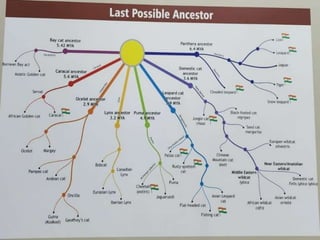
Evolution of Cats
• Evolved from sub order Felidae around 30
million years ago
• They are ambush predators
• Hunt their prey by stealthily stalking them and
then attacking from a close distance
• Cats have retractable claws, Cushioned paws
and digitigrades style of walking (walking on
the toes)
Big cats
• Falls in subfamily “Pantherinae”
• Difference b/w big cats and small cats are their
size,prey base and home range
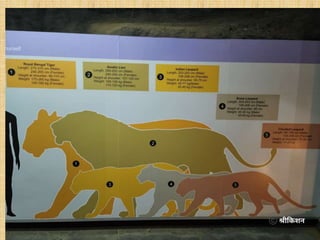
• There are 5 big cats in world ,4 are found in India
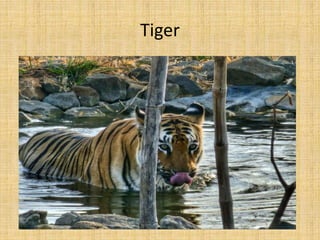
• Tiger –Panthera tigris
• Lion- Panthera leo
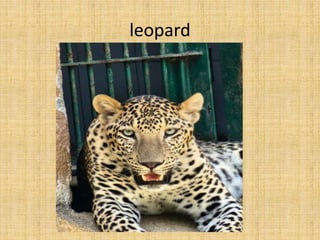
• Leopard- Panthera pardus
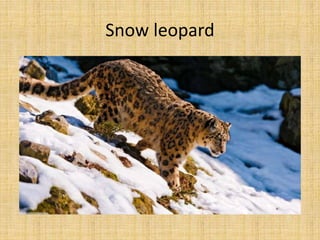
• Snow leopard- Panthera uncia
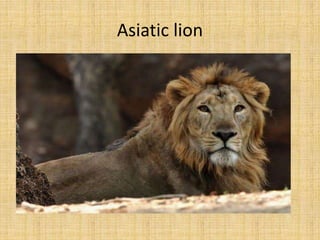
Asiatic lion
Tiger
leopard
Snow leopard
Small wild Cats
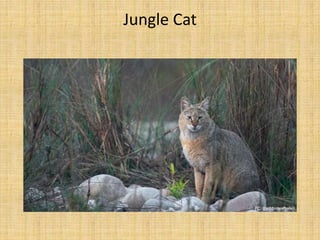
• Jungle Cat
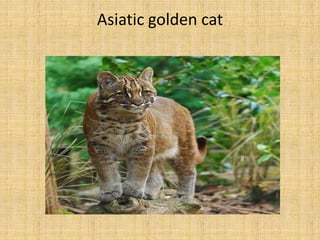
• Asiatic golden cat
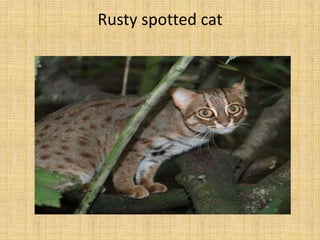
• Rusty spotted cat
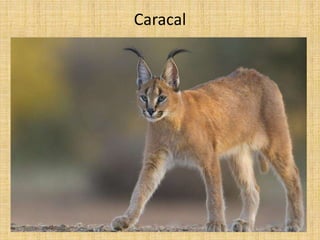
• Caracal
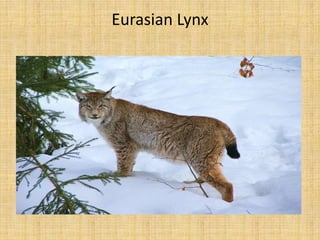
• Eurasian Lynx
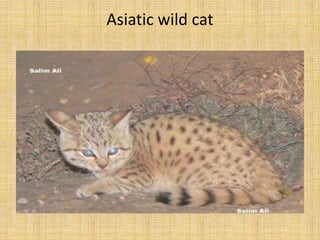
• Asiatic wild cat
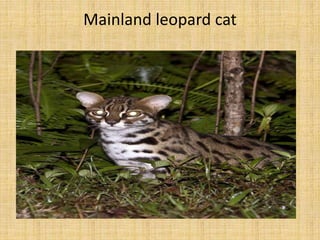
• Mainland leopard cat
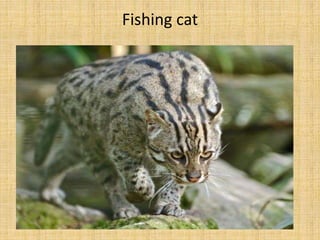
• Fishing cat
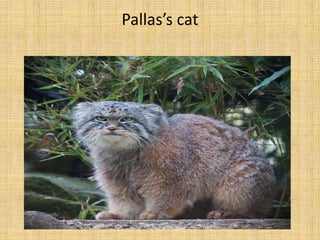
• Pallas’s cat
Jungle Cat
Asiatic golden cat
Rusty spotted cat
Caracal
Eurasian Lynx
Asiatic wild cat
Mainland leopard cat
Fishing cat
Pallas’s cat
Cat Habitat
• Tiger prefers to dwell in dense forest in
tropical and subtropical regions-Safety,Cover
and Camouflage to stalk its prey
• The lions prefer open habitats of arid and
semi arid open forest and grasslands-Hunt less
secretively than tigers, live in pride and spend
most of the time exposed to sun
• Leopard can survive- rocky scrub and tree less
terrain as well as evergreen forests, adapted
to living proximity to Human habitations,
easily available prey deer to fish
• Snow leopard – grayish white fur of the snow
leopard imprinted with large and light rosette
patterns helps camouflage the animal in rocky
mountains. Prey – Mostly Mountain goat
Dietary Preference
• Depends on their own size, strength and kind of
habitat they live in.
• Largest of cats Tigers and lions hunt large
herbivores –wild bovids ,antelope, large deer,
calves of rhino or elephant
• Leopards go for medium sized herbivores-small
deer species,antelopes,wild sheep,goat or the
wild boar
• Small cats feed on small mammals –Mice, hare,
rats and birds.
Learning to survive
• Cubs – 6 months old are completely weaned and
can roam around freely
• Cubs – 10 months old can start hunting along
with their mother
• Cubs - 2 yrs old become independent enough to
go their own way
• When male cubs reach maturity, each male
moves away to form its own pride while female
remains in the same pride alongside their
mothers.
• Cats are skillful hunters with excellent
eyesight, hearing ability and a strong sense of
smell.
• About 10-15 days prior to delivery ,cat mother
starts searching appropriate place to make a
den.
• The cubs are born blind and open their eyes
between 3rd to 14th day after birth.
• Lions are the only cats known to live in pride.
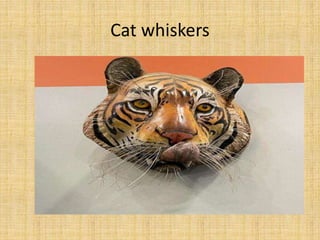
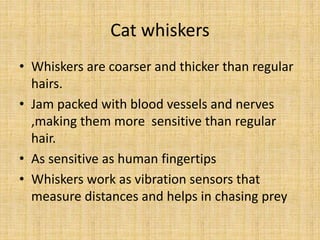
Cat whiskers
Cat whiskers
• Whiskers are coarser and thicker than regular
hairs.
• Jam packed with blood vessels and nerves
,making them more sensitive than regular
hair.
• As sensitive as human fingertips
• Whiskers work as vibration sensors that
measure distances and helps in chasing prey
What makes the cat a cat
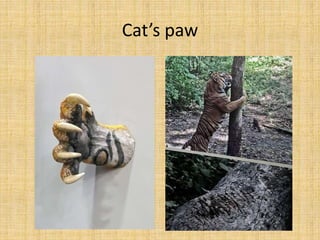
• Cat’s paws are very different from human
nails.
• They are sharp, pointed and curved at the
tips.
• Tool to catch and hold prey and tear meat
from bones
Cat’s paw
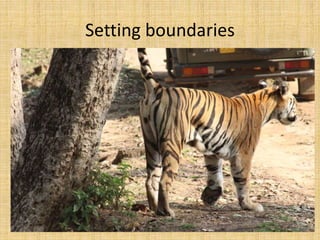
Setting boundaries
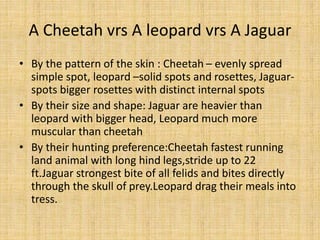
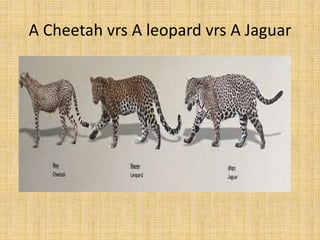
A Cheetah vrs A leopard vrs A Jaguar
• By the pattern of the skin : Cheetah – evenly spread
simple spot, leopard –solid spots and rosettes, Jaguar-
spots bigger rosettes with distinct internal spots
• By their size and shape: Jaguar are heavier than
leopard with bigger head, Leopard much more
muscular than cheetah
• By their hunting preference:Cheetah fastest running
land animal with long hind legs,stride up to 22
ft.Jaguar strongest bite of all felids and bites directly
through the skull of prey.Leopard drag their meals into
tress.
A Cheetah vrs A leopard vrs A Jaguar
Threats to the survival of cats
• Tigers –Poached for skin,claws,bones,chinese
medicines
• Leopard- human wildlife conflicts
• Lion-found wild only in Gir, Habitat loss and prey
• Snow leopard-climate change leading to habitat
loss, decline in prey base
• Smaller cats-Habitat destruction and
fragmentation ,Fishing cat threatened species
with wetland vanishing
Thank you

Different Cats in India.pptx

  • 1.
  • 2.
    Evolution of Cats •Evolved from sub order Felidae around 30 million years ago • They are ambush predators • Hunt their prey by stealthily stalking them and then attacking from a close distance • Cats have retractable claws, Cushioned paws and digitigrades style of walking (walking on the toes)
  • 4.
    Big cats • Fallsin subfamily “Pantherinae” • Difference b/w big cats and small cats are their size,prey base and home range • There are 5 big cats in world ,4 are found in India • Tiger –Panthera tigris • Lion- Panthera leo • Leopard- Panthera pardus • Snow leopard- Panthera uncia
  • 5.
  • 6.
  • 7.
  • 8.
  • 9.
    Small wild Cats •Jungle Cat • Asiatic golden cat • Rusty spotted cat • Caracal • Eurasian Lynx • Asiatic wild cat • Mainland leopard cat • Fishing cat • Pallas’s cat
  • 10.
  • 11.
  • 12.
  • 13.
  • 14.
  • 15.
  • 16.
  • 17.
  • 18.
  • 20.
    Cat Habitat • Tigerprefers to dwell in dense forest in tropical and subtropical regions-Safety,Cover and Camouflage to stalk its prey • The lions prefer open habitats of arid and semi arid open forest and grasslands-Hunt less secretively than tigers, live in pride and spend most of the time exposed to sun
  • 21.
    • Leopard cansurvive- rocky scrub and tree less terrain as well as evergreen forests, adapted to living proximity to Human habitations, easily available prey deer to fish • Snow leopard – grayish white fur of the snow leopard imprinted with large and light rosette patterns helps camouflage the animal in rocky mountains. Prey – Mostly Mountain goat
  • 22.
    Dietary Preference • Dependson their own size, strength and kind of habitat they live in. • Largest of cats Tigers and lions hunt large herbivores –wild bovids ,antelope, large deer, calves of rhino or elephant • Leopards go for medium sized herbivores-small deer species,antelopes,wild sheep,goat or the wild boar • Small cats feed on small mammals –Mice, hare, rats and birds.
  • 23.
    Learning to survive •Cubs – 6 months old are completely weaned and can roam around freely • Cubs – 10 months old can start hunting along with their mother • Cubs - 2 yrs old become independent enough to go their own way • When male cubs reach maturity, each male moves away to form its own pride while female remains in the same pride alongside their mothers.
  • 24.
    • Cats areskillful hunters with excellent eyesight, hearing ability and a strong sense of smell. • About 10-15 days prior to delivery ,cat mother starts searching appropriate place to make a den. • The cubs are born blind and open their eyes between 3rd to 14th day after birth. • Lions are the only cats known to live in pride.
  • 25.
  • 26.
    Cat whiskers • Whiskersare coarser and thicker than regular hairs. • Jam packed with blood vessels and nerves ,making them more sensitive than regular hair. • As sensitive as human fingertips • Whiskers work as vibration sensors that measure distances and helps in chasing prey
  • 27.
    What makes thecat a cat • Cat’s paws are very different from human nails. • They are sharp, pointed and curved at the tips. • Tool to catch and hold prey and tear meat from bones
  • 28.
  • 29.
  • 30.
    A Cheetah vrsA leopard vrs A Jaguar • By the pattern of the skin : Cheetah – evenly spread simple spot, leopard –solid spots and rosettes, Jaguar- spots bigger rosettes with distinct internal spots • By their size and shape: Jaguar are heavier than leopard with bigger head, Leopard much more muscular than cheetah • By their hunting preference:Cheetah fastest running land animal with long hind legs,stride up to 22 ft.Jaguar strongest bite of all felids and bites directly through the skull of prey.Leopard drag their meals into tress.
  • 31.
    A Cheetah vrsA leopard vrs A Jaguar
  • 32.
    Threats to thesurvival of cats • Tigers –Poached for skin,claws,bones,chinese medicines • Leopard- human wildlife conflicts • Lion-found wild only in Gir, Habitat loss and prey • Snow leopard-climate change leading to habitat loss, decline in prey base • Smaller cats-Habitat destruction and fragmentation ,Fishing cat threatened species with wetland vanishing
  • 33.