Download to read offline


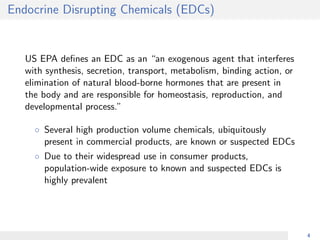

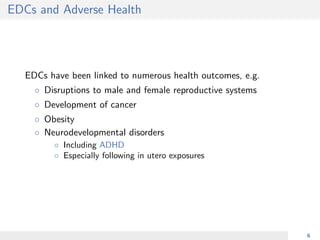
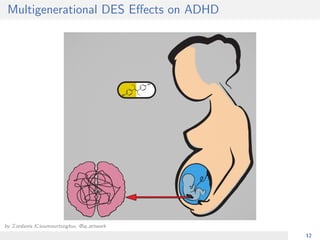
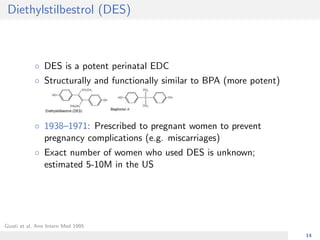
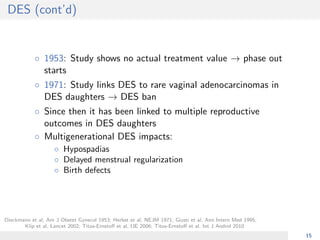

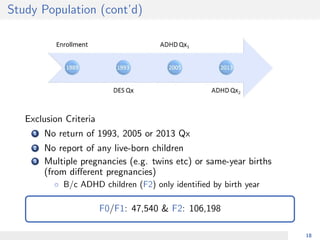
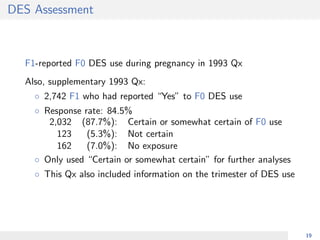
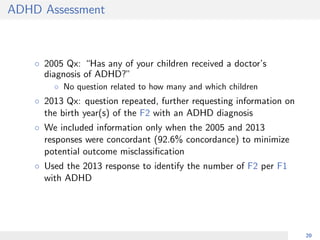
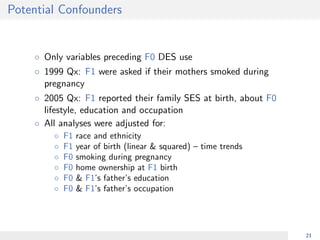
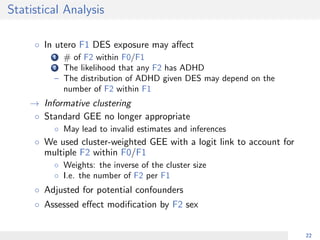
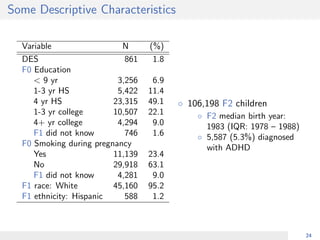
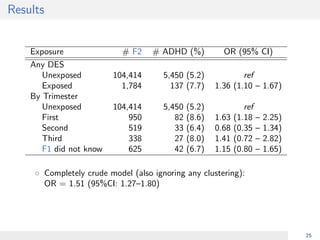
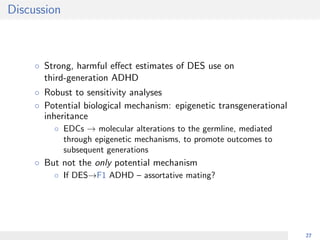
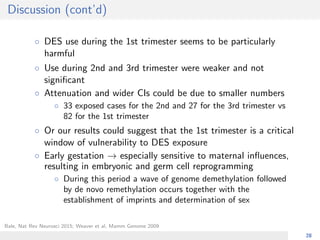
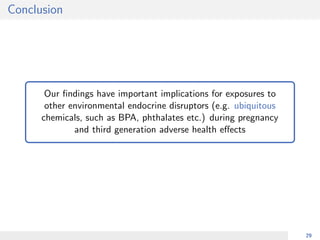


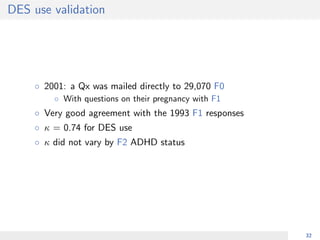
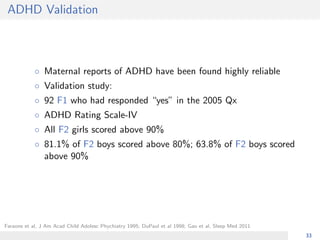
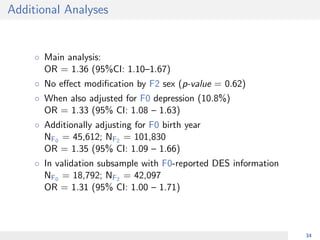

The document discusses the impact of diethylstilbestrol (DES), an endocrine disrupting chemical, on neurodevelopmental outcomes, specifically ADHD, across multiple generations. Exposure to DES during pregnancy has shown strong associations with increased ADHD rates in the third generation, particularly when the exposure occurred in the first trimester. The study calls attention to the implications of such findings regarding other ubiquitous environmental endocrine disruptors on future generations.


