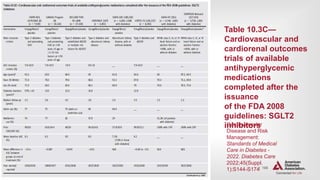
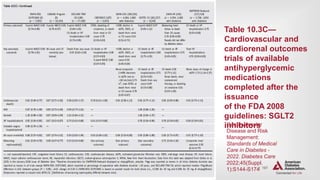
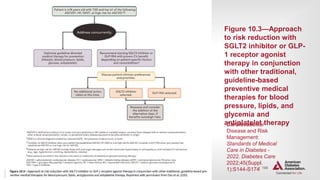
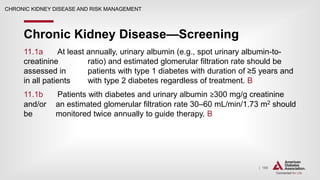
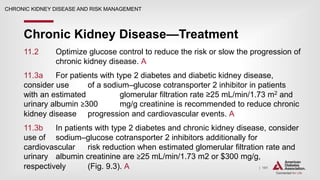
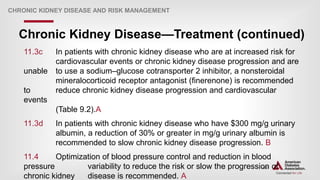
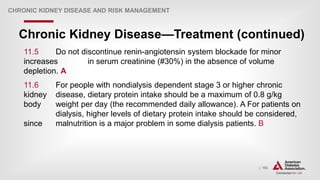
This slide deck contains content created, reviewed, and
approved by the American Diabetes Association. You are free
to use the slides in presentations without further permission as
long as the slide content is not altered in any way and
appropriate attribution is made to the American Diabetes
Association (the Association name and logo on the slides
constitutes appropriate attribution). Permission is required
from the Association for any commercial use or for
reproduction in any print materials (contact
permissions@diabetes.org)
Standards of
Medical Care in
Diabetes—2022
The Standards.
Intended to provide clinicians, patients,
researchers, payers, and other
interested individuals with the
components of diabetes care, general
treatment goals, and tools to evaluate
the quality of care.
| 4
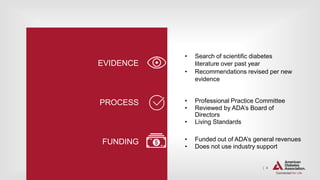
• Search of scientific diabetes
literature over past year
• Recommendations revised per new
evidence
• Professional Practice Committee
• Reviewed by ADA’s Board of
Directors
• Living Standards
• Funded out of ADA’s general revenues
• Does not use industry support
EVIDENCE
PROCESS
FUNDING
| 5
ADA Standards of Care – A Living Document.
• Beginning with the 2018 ADA Standards of Medical Care in
Diabetes, the Standards document became a “living”
document where notable updates are incorporated into the
Standards
• Living Standards Updates Available at:
http://care.diabetesjournals.org/living-standards
| 6
ADA Standards of Care – A Living Document.
• Updates will be made in response to important events
inclusive of, but not limited to:
• Approval of new treatments (medications or devices) with the
potential to impact patient care;
• Publication of new findings that support a change to a
recommendation and/or evidence level of a
recommendation; or
• Publication of a consensus document endorsed by ADA that
necessitates an update of the Standards to align content of
the documents
| 7
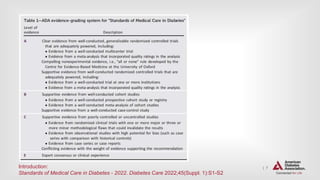
Introduction:
Standards of Medical Care in Diabetes - 2022. Diabetes Care 2022;45(Suppl. 1):S1-S2
| 8
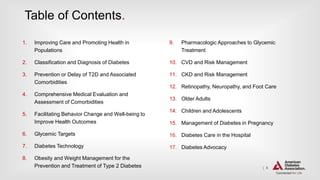
Table of Contents.
1. Improving Care and Promoting Health in
Populations
2. Classification and Diagnosis of Diabetes
3. Prevention or Delay of T2D and Associated
Comorbidities
4. Comprehensive Medical Evaluation and
Assessment of Comorbidities
5. Facilitating Behavior Change and Well-being to
Improve Health Outcomes
6. Glycemic Targets
7. Diabetes Technology
8. Obesity and Weight Management for the
Prevention and Treatment of Type 2 Diabetes
9. Pharmacologic Approaches to Glycemic
Treatment
10. CVD and Risk Management
11. CKD and Risk Management
12. Retinopathy, Neuropathy, and Foot Care
13. Older Adults
14. Children and Adolescents
15. Management of Diabetes in Pregnancy
16. Diabetes Care in the Hospital
17. Diabetes Advocacy
Section 1.
Improving Care
and Promoting
Health in
Populations
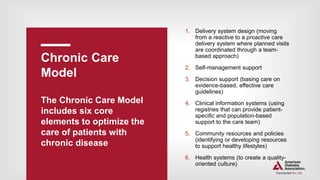
Chronic Care
Model.
The Chronic Care Model
includes six core
elements to optimize the
care of patients with
chronic disease
1. Delivery system design (moving
from a reactive to a proactive care
delivery system where planned visits
are coordinated through a team-
based approach)
2. Self-management support
3. Decision support (basing care on
evidence-based, effective care
guidelines)
4. Clinical information systems (using
registries that can provide patient-
specific and population-based
support to the care team)
5. Community resources and policies
(identifying or developing resources
to support healthy lifestyles)
6. Health systems (to create a quality-
oriented culture)
| 11
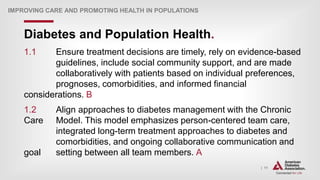
Diabetes and Population Health.
IMPROVING CARE AND PROMOTING HEALTH IN POPULATIONS
1.1 Ensure treatment decisions are timely, rely on evidence-based
guidelines, include social community support, and are made
collaboratively with patients based on individual preferences,
prognoses, comorbidities, and informed financial
considerations. B
1.2 Align approaches to diabetes management with the Chronic
Care Model. This model emphasizes person-centered team care,
integrated long-term treatment approaches to diabetes and
comorbidities, and ongoing collaborative communication and
goal setting between all team members. A
| 12
Diabetes and Population Health (continued).
IMPROVING CARE AND PROMOTING HEALTH IN POPULATIONS
1.3 Care systems should facilitate team-based care, including
those knowledgeable and experienced in diabetes management as
part of the team, and utilization of patient registries, decision support
tools, and community involvement to meet patient needs. B
1.4 Assess diabetes health care maintenance (see Table 4.1)
using reliable and relevant data metrics to improve processes of
care and health outcomes, with attention to care costs. B
| 13
Tailoring Treatment for Social Context
IMPROVING CARE AND PROMOTING HEALTH IN POPULATIONS
1.5 Assess food insecurity, housing insecurity/homelessness,
financial barriers, and social capital/social community support
to inform treatment decisions, with referral to appropriate local
community resources. A
1.6 Provide patients with self-management support from lay
health coaches, navigators, or community health workers when
available.A
Section 2.
Classification and
Diagnosis of
Diabetes
| 15
Classification
CLASSIFICATION AND DIAGNOSIS OF DIABETES
Diabetes can be classified into the following general categories:
1. Type 1 diabetes (due to autoimmune ß-cell destruction, usually leading to absolute
insulin deficiency, including latent autoimmune diabetes of adulthood)
2. Type 2 diabetes (due to a progressive loss of ß-cell insulin secretion frequently on
the background of insulin resistance)
3. Specific types of diabetes due to other causes, e.g., monogenic diabetes
syndromes (such as neonatal diabetes and maturity-onset diabetes of the young),
diseases of the exocrine pancreas (such as cystic fibrosis and pancreatitis), and
drug- or chemical-induced diabetes (such as with glucocorticoid use, in the
treatment of HIV/AIDS, or after organ transplantation)
4. Gestational diabetes mellitus (diabetes diagnosed in the second or third trimester
of pregnancy that was not clearly overt diabetes prior to gestation)
| 16
CLASSIFICATION AND DIAGNOSIS OF DIABETES
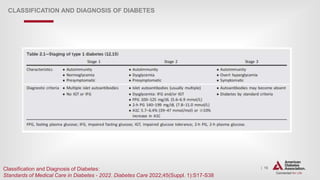
Hold for table 2.1
Classification and Diagnosis of Diabetes:
Standards of Medical Care in Diabetes - 2022. Diabetes Care 2022;45(Suppl. 1):S17-S38
| 17
A1C
CLASSIFICATION AND DIAGNOSIS OF DIABETES
2.1 To avoid misdiagnosis or missed diagnosis, the A1C test
should be performed using a method that is certified by the
NGSP and standardized to the Diabetes Control and
Complications Trial (DCCT) assay. B
2.2 Marked discordance between measured A1C and plasma
glucose levels should raise the possibility of A1C assay
interference and consideration of using an assay without
interference or plasma blood glucose criteria to diagnose diabetes. B
| 18
A1C (continued)
CLASSIFICATION AND DIAGNOSIS OF DIABETES
2.3 In conditions associated with an altered relationship between
A1C and glycemia, such as hemoglobinopathies including sickle
cell disease, pregnancy (second and third trimesters and the
postpartum period), glucose-6-phosphate dehydrogenase
deficiency, HIV, hemodialysis, recent blood loss or transfusion,
or erythropoietin therapy, only plasma blood glucose criteria
should be used to diagnose diabetes. B
2.4 Adequate carbohydrate intake (at least 150 g/day) should be
assured for 3 days prior to oral glucose tolerance testing as a
screen for diabetes. A
| 19
CLASSIFICATION AND DIAGNOSIS OF DIABETES
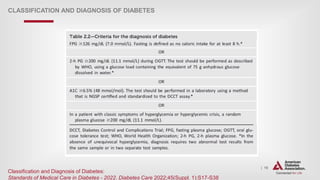
Table 2.2
Classification and Diagnosis of Diabetes:
Standards of Medical Care in Diabetes - 2022. Diabetes Care 2022;45(Suppl. 1):S17-S38
| 20
Type 1 Diabetes
CLASSIFICATION AND DIAGNOSIS OF DIABETES
2.5 Screening for presymptomatic type 1 diabetes using screening
tests that detect autoantibodies to insulin, glutamic acid
decarboxylase (GAD), islet antigen 2, or zinc transporter 8 is
currently recommended in the setting of a research study or
can be considered an option for first-degree family members
of a proband with type 1 diabetes. B
2.6 Development of and persistence of multiple islet
autoantibodies is a risk factor for clinical diabetes and may
serve as an indication for intervention in the setting of a
clinical trial or screening for stage 2 type 1 diabetes. B
| 21
Prediabetes and Type 2 Diabetes
CLASSIFICATION AND DIAGNOSIS OF DIABETES
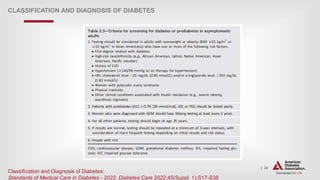
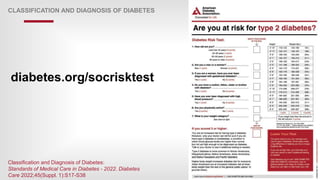
2.7 Screening for prediabetes and type 2 diabetes with an
informal assessment of risk factors or validated risk calculator
should be done in asymptomatic adults. B
2.8 Testing for prediabetes and/ or type 2 diabetes in
asymptomatic people should be considered in adults of any age with
overweight or obesity (BMI $25 kg/m2 or $23 kg/m2 in Asian
Americans) who have one or more risk factors (Table 2.3).B
2.9 For all people, screening should begin at age 35 years. B
| 22
Prediabetes and Type 2 Diabetes (continued)
CLASSIFICATION AND DIAGNOSIS OF DIABETES
2.10 If tests are normal, repeat screening recommended at a
minimum of 3-year intervals is reasonable, sooner with
symptoms or change in risk (i.e., weight gain). C
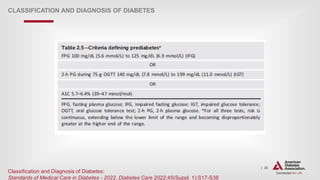
2.11 To screen for prediabetes and type 2 diabetes, fasting plasma
glucose, 2-h plasma glucose during 75-g oral glucose
tolerance test, and A1C are each appropriate (Table 2.2 and Table
2.5). B
2.12 When using oral glucose tolerance testing as a screen for
diabetes, adequate carbohydrate intake (at least 150 g/ day)
should be assured for 3 days prior to testing. A
2.13 In people with prediabetes and type 2 diabetes, identify and
| 23
Prediabetes and Type 2 Diabetes (continued)
CLASSIFICATION AND DIAGNOSIS OF DIABETES
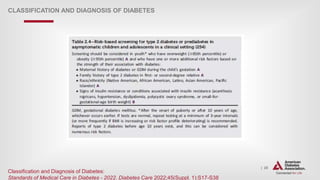
2.14 Risk-based screening for prediabetes and/or type 2 diabetes should
be considered after the onset of puberty or after 10 years of age,
whichever occurs earlier, in children and adolescents with overweight
(BMI $85th percentile) or obesity (BMI $95th percentile) and who have
one or more risk factor for diabetes. (See Table 2.4 for evidence grading
of risk factors.) B
2.15 People with HIV should be screened for diabetes and prediabetes
with a fasting glucose test before starting antiretroviral therapy, at the time
of switching antiretroviral therapy, and 36 months after starting or
switching antiretroviral therapy. If initial screening results are normal,
fasting glucose should be checked annually. E
| 24
CLASSIFICATION AND DIAGNOSIS OF DIABETES
Classification and Diagnosis of Diabetes:
Standards of Medical Care in Diabetes - 2022. Diabetes Care 2022;45(Suppl. 1):S17-S38
| 25
CLASSIFICATION AND DIAGNOSIS OF DIABETES
Classification and Diagnosis of Diabetes:
Standards of Medical Care in Diabetes - 2022. Diabetes Care 2022;45(Suppl. 1):S17-S38
| 26
CLASSIFICATION AND DIAGNOSIS OF DIABETES
Classification and Diagnosis of Diabetes:
Standards of Medical Care in Diabetes - 2022. Diabetes Care 2022;45(Suppl. 1):S17-S38
| 27
CLASSIFICATION AND DIAGNOSIS OF DIABETES
diabetes.org/socrisktest
Classification and Diagnosis of Diabetes:
Standards of Medical Care in Diabetes - 2022. Diabetes
Care 2022;45(Suppl. 1):S17-S38
| 28
Cystic Fibrosis-Related Diabetes
CLASSIFICATION AND DIAGNOSIS OF DIABETES
2.16 Annual screening for cystic fibrosis–related diabetes (CFRD)
with an oral glucose tolerance test should begin by age 10 years in all
patients with cystic fibrosis not previously diagnosed with
CFRD. B
2.17 A1C is not recommended as a screening test for cystic
fibrosis– related diabetes.. B
2.18 People with cystic fibrosis–related diabetes should be treated
with insulin to attain individualized glycemic goals.. A
2.19 Beginning 5 years after the diagnosis of cystic fibrosis–related
diabetes, annual monitoring for complications of diabetes is
recommended. E
| 29
Posttransplantation Diabetes Mellitus
CLASSIFICATION AND DIAGNOSIS OF DIABETES
2.20 After organ transplantation, screening for hyperglycemia
should be done. A formal diagnosis of posttransplantation
diabetes mellitus is best made once the individual is stable on an
immunosuppressive regimen and in the absence of an acute
infection. B
2.21 The oral glucose tolerance test is the preferred test to make a
diagnosis of posttransplantation diabetes mellitus. B
2.22 Immunosuppressive regimens shown to provide the best
outcomes for patient and graft survival should be used,
irrespective of posttransplantation diabetes mellitus risk. E
| 30
Monogenic Diabetes Syndromes
CLASSIFICATION AND DIAGNOSIS OF DIABETES
2.23 Regardless of current age, all people diagnosed with diabetes
in the first 6 months of life should have immediate genetic testing for
neonatal diabetes. A
2.24 Children and young adults who do not have typical
characteristics of type 1 or type 2 diabetes and who often have a
family history of diabetes in successive generations
(suggestive of an autosomal dominant pattern of inheritance)
should have genetic testing for maturity-onset diabetes of the young.
A
2.25 In both instances, consultation with a center specializing in
diabetes genetics is recommended to understand the
| 31
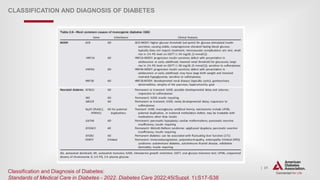
CLASSIFICATION AND DIAGNOSIS OF DIABETES
Classification and Diagnosis of Diabetes:
Standards of Medical Care in Diabetes - 2022. Diabetes Care 2022;45(Suppl. 1):S17-S38
| 32
CLASSIFICATION AND DIAGNOSIS OF DIABETES
The diagnosis of monogenic diabetes should be considered in children
and adults diagnosed with diabetes in early adulthood with the
following findings:
• Diabetes diagnosed within the first 6 months of life (with occasional
cases presenting later, mostly INS and ABCC8 mutations)
• Diabetes without typical features of type 1 or type 2 diabetes
(negative diabetes-associated autoantibodies, no obesity, lacking
other metabolic features, especially with strong family history of
diabetes)
• Stable, mild fasting hyperglycemia (100–150 mg/dL [5.5–8.5
mmol/L]), stable A1C between 5.6% and 7.6% (between 38 and 60
mmol/mol), especially if no obesity
| 33
Gestational Diabetes Mellitus
CLASSIFICATION AND DIAGNOSIS OF DIABETES
2.26a In women who are planning pregnancy, screen those with risk
factors B and consider testing all women for undiagnosed
diabetes. E
2.26b Before 15 weeks of gestation, test women with risk factors B
and consider testing all women E for undiagnosed diabetes at the
first prenatal visit using standard diagnostic criteria, if not screened
preconception.
2.26c Women identified as having diabetes should be treated as
such. A
| 34
Gestational Diabetes Mellitus (continued)
CLASSIFICATION AND DIAGNOSIS OF DIABETES
2.26d Before 15 weeks of gestation, screen for abnormal glucose
metabolism to identify women who are at higher risk of
adverse pregnancy and neonatal outcomes, are more likely to
need insulin, and are at high risk of a later gestational diabetes
mellitus diagnosis. B Treatment may provide some benefit. E
2.26e Screen for early abnormal glucose metabolism using fasting
glucose of 110–125 mg/dL (6.1 mmol/L) or A1C 5.9–6.4% (41–
47 mmol/mol). B
2.27 Screen for gestational diabetes mellitus at 24–28 weeks of
gestation in pregnant women not previously found to have
diabetes or high- risk abnormal glucose metabolism detected
| 35
Gestational Diabetes Mellitus (continued)
CLASSIFICATION AND DIAGNOSIS OF DIABETES
2.28 Screen women with gestational diabetes mellitus for
prediabetes or diabetes at 4–12 weeks postpartum, using the 75-g
oral glucose tolerance test and clinically appropriate nonpregnancy
diagnostic criteria. B
2.29 Women with a history of gestational diabetes mellitus should
have lifelong screening for the development of diabetes or
prediabetes at least every 3 years. B
2.30 Women with a history of gestational diabetes mellitus found to
have prediabetes should receive intensive lifestyle
interventions and/or metformin to prevent diabetes. A
| 36
CLASSIFICATION AND DIAGNOSIS OF DIABETES
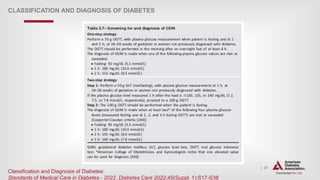
GDM diagnosis (Table 2.7) can be accomplished with either of two
strategies:
1. The “one-step” 75-g OGTT derived from the IADPSG criteria,
or
2. The older “two-step” approach with a 50-g (nonfasting) screen
followed by a 100-g OGTT for those who screen positive,
based on the work of Carpenter and Coustan’s interpretation of
the older criteria.
| 37
CLASSIFICATION AND DIAGNOSIS OF DIABETES
Classification and Diagnosis of Diabetes:
Standards of Medical Care in Diabetes - 2022. Diabetes Care 2022;45(Suppl. 1):S17-S38
Section 3.
Prevention or
Delay of Type 2
Diabetes and
Associated
Comorbidities
| 39
Overall Recommendation
PREVENTION OR DELAY OF TYPE 2 DIABETES
3.1 Monitor for the development of type 2 diabetes in those with
prediabetes at least annually, modified based on individual
risk/benefit assessment. E
| 40
Lifestyle Behavior Change for Diabetes Prevention
PREVENTION OR DELAY OF TYPE 2 DIABETES
3.2 Refer adults with overweight/ obesity at high risk of type 2
diabetes, as typified by the Diabetes Prevention Program
(DPP), to an intensive lifestyle behavior change program
consistent with the DPP to achieve and maintain 7% loss of initial
body weight, and increase moderate-intensity physical activity
(such as brisk walking) to at least 150 min/week. A
3.3 A variety of eating patterns can be considered to prevent
diabetes in individuals with prediabetes. B
| 41
Lifestyle Behavior Change for Diabetes
Prevention (continued)
PREVENTION OR DELAY OF TYPE 2 DIABETES
3.4 Given the cost-effectiveness of lifestyle behavior modification
programs for diabetes prevention, such diabetes prevention
programs should be offered to patients. A Diabetes prevention
programs should be covered by third-party payers and
inconsistencies in access should be addressed.
3.5 Based on patient preference, certified technology-assisted
diabetes prevention programs may be effective in preventing
type 2 diabetes and should be considered.. B
| 42
Pharmacologic Interventions
PREVENTION OR DELAY OF TYPE 2 DIABETES
3.6 Metformin therapy for prevention of type 2 diabetes should be
considered in adults with prediabetes, as typified by the
Diabetes Prevention Program, especially those aged 25–59
years with BMI $35 kg/m2, higher fasting plasma glucose (e.g., $110
mg/dL), and higher A1C (e.g., $6.0%), and in women with prior
gestational diabetes mellitus. A
3.7 Long-term use of metformin may be associated with
biochemical vitamin B12 deficiency; consider periodic
measurement of vitamin B12 levels in metformin-treated
patients, especially in those with anemia or peripheral
neuropathy. B
| 43
Prevention of Vascular Disease and Mortality
PREVENTION OR DELAY OF TYPE 2 DIABETES
3.8 Prediabetes is associated with heightened cardiovascular risk;
therefore, screening for and treatment of modifiable risk
factors for cardiovascular disease are suggested. B
| 44
Patient-Centered Care Goals
PREVENTION OR DELAY OF TYPE 2 DIABETES
3.9 In adults with overweight/obesity at high risk of type 2
diabetes, care goals should include weight loss or prevention of
weight gain, minimizing progression of hyperglycemia, and
attention to cardiovascular risk and associated comorbidities. B
Section 4.
Comprehensive
Medical
Evaluation and
Assessment of
Comorbidities
| 46
Patient-centered Collaborative Care
COMPREHENSIVE MEDICAL EVALUATION AND ASSESSMENT OF COMORBIDITIES
4.1 A patient-centered communication style that uses person-
centered and strength-based language and active listening;
elicits patient preferences and beliefs; and assesses literacy,
numeracy, and potential barriers to care should be used to optimize
patient health outcomes and health-related quality of life. B
4.2 People with diabetes can benefit from a coordinated
multidisciplinary team that may include and is not limited to
diabetes care and education specialists, primary care and
subspecialty clinicians, nurses, dietitians, exercise specialists,
pharmacists, dentists, podiatrists, and mental health
professionals. E
| 47
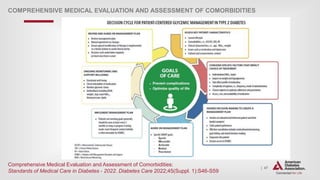
COMPREHENSIVE MEDICAL EVALUATION AND ASSESSMENT OF COMORBIDITIES
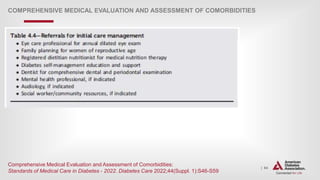
Comprehensive Medical Evaluation and Assessment of Comorbidities:
Standards of Medical Care in Diabetes - 2022. Diabetes Care 2022;45(Suppl. 1):S46-S59
| 48
Use of Empowering Language
COMPREHENSIVE MEDICAL EVALUATION AND ASSESSMENT OF COMORBIDITIES
Five key consensus recommendations for language use:
1. Use language that is neutral, nonjudgmental, and based on facts,
actions, or physiology/biology;
2. Use language that is free from stigma;
3. Use language that is strength based, respectful, and inclusive and that
imparts hope;
4. Use language that fosters collaboration between patients and
providers;
5. Use language that is person centered (e.g., “person with diabetes” is
preferred over “diabetic”).
| 49
Comprehensive Medical Evaluation
COMPREHENSIVE MEDICAL EVALUATION AND ASSESSMENT OF COMORBIDITIES
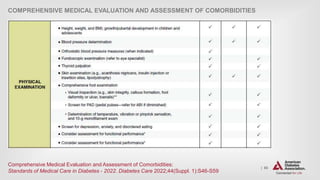
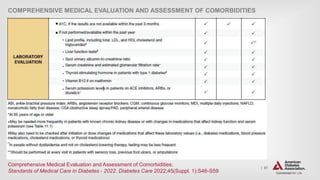
4.3 A complete medical evaluation should be performed at the initial visit
to:
• Confirm the diagnosis and classify diabetes. A
• Evaluate for diabetes complications and potential comorbid
conditions. A
• Review previous treatment and risk factor control in patients with
established diabetes. A
• Begin patient engagement in the formulation of a care management
plan. A
• Develop a plan for continuing care. A
| 50
Comprehensive Medical Evaluation
(continued)
COMPREHENSIVE MEDICAL EVALUATION AND ASSESSMENT OF COMORBIDITIES
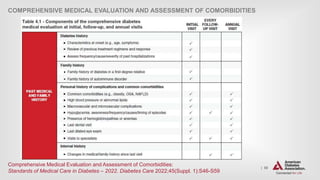
4.4 A follow-up visit should include most components of the initial
comprehensive medical evaluation (see Table 4.1). A
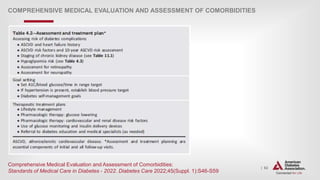
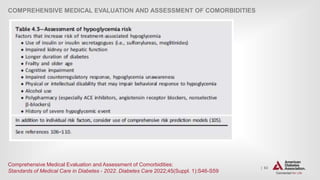
4.5 Ongoing management should be guided by the assessment of
overall health status, diabetes complications, cardiovascular risk,
hypoglycemia risk, and shared decision-making to set therapeutic goals. B
| 51
Immunizations
COMPREHENSIVE MEDICAL EVALUATION AND ASSESSMENT OF COMORBIDITIES
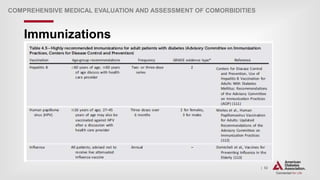
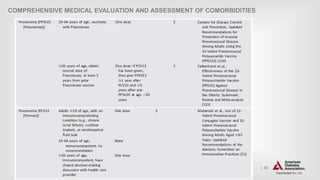
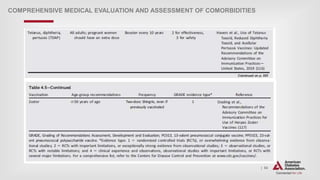
4.6 Provide routinely recommended vaccinations for children and adults
with diabetes as indicated by age (see Table 4.5 for highly
recommended vaccinations for adults with diabetes). A
| 52
Immunizations
COMPREHENSIVE MEDICAL EVALUATION AND ASSESSMENT OF COMORBIDITIES
| 53
Immunizations
COMPREHENSIVE MEDICAL EVALUATION AND ASSESSMENT OF COMORBIDITIES
| 54
Immunizations
COMPREHENSIVE MEDICAL EVALUATION AND ASSESSMENT OF COMORBIDITIES
| 55
Autoimmune Diseases
COMPREHENSIVE MEDICAL EVALUATION AND ASSESSMENT OF COMORBIDITIES
4.7 Patients with type 1 diabetes should be screened for
autoimmune thyroid disease soon after diagnosis and periodically
thereafter. B
4.8 Adult patients with type 1 diabetes should be screened for
celiac disease in the presence of gastrointestinal symptoms, signs,
or laboratory manifestations suggestive of celiac disease. B
| 56
Cognitive Impairment/Dementia
COMPREHENSIVE MEDICAL EVALUATION AND ASSESSMENT OF COMORBIDITIES
4.9 In the presence of cognitive impairment, diabetes treatment
regimens should be simplified as much as possible and
tailored to minimize the risk of hypoglycemia. B
| 57
Nonalcoholic Fatty Liver Disease
COMPREHENSIVE MEDICAL EVALUATION AND ASSESSMENT OF COMORBIDITIES
4.10 Patients with type 2 diabetes or prediabetes and elevated liver
enzymes (ALT) or fatty liver on ultrasound should be
evaluated for presence of nonalcoholic steatohepatitis and liver
fibrosis. C
| 58
COMPREHENSIVE MEDICAL EVALUATION AND ASSESSMENT OF COMORBIDITIES
Comprehensive Medical Evaluation and Assessment of Comorbidities:
Standards of Medical Care in Diabetes – 2022. Diabetes Care 2022;45(Suppl. 1):S46-S59
| 59
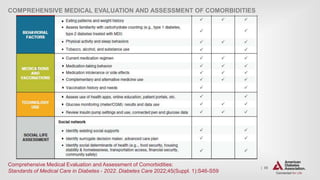
COMPREHENSIVE MEDICAL EVALUATION AND ASSESSMENT OF COMORBIDITIES
Comprehensive Medical Evaluation and Assessment of Comorbidities:
Standards of Medical Care in Diabetes - 2022. Diabetes Care 2022;45(Suppl. 1):S46-S59
| 60
COMPREHENSIVE MEDICAL EVALUATION AND ASSESSMENT OF COMORBIDITIES
Comprehensive Medical Evaluation and Assessment of Comorbidities:
Standards of Medical Care in Diabetes - 2022. Diabetes Care 2022;44(Suppl. 1):S46-S59
| 61
COMPREHENSIVE MEDICAL EVALUATION AND ASSESSMENT OF COMORBIDITIES
Comprehensive Medical Evaluation and Assessment of Comorbidities:
Standards of Medical Care in Diabetes - 2022. Diabetes Care 2022;45(Suppl. 1):S46-S59
| 62
COMPREHENSIVE MEDICAL EVALUATION AND ASSESSMENT OF COMORBIDITIES
Comprehensive Medical Evaluation and Assessment of Comorbidities:
Standards of Medical Care in Diabetes - 2022. Diabetes Care 2022;45(Suppl. 1):S46-S59
| 63
COMPREHENSIVE MEDICAL EVALUATION AND ASSESSMENT OF COMORBIDITIES
Comprehensive Medical Evaluation and Assessment of Comorbidities:
Standards of Medical Care in Diabetes - 2022. Diabetes Care 2022;45(Suppl. 1):S46-S59
| 64
COMPREHENSIVE MEDICAL EVALUATION AND ASSESSMENT OF COMORBIDITIES
Comprehensive Medical Evaluation and Assessment of Comorbidities:
Standards of Medical Care in Diabetes - 2022. Diabetes Care 2022;44(Suppl. 1):S46-S59
| 65
Low Testosterone in Men
COMPREHENSIVE MEDICAL EVALUATION AND ASSESSMENT OF COMORBIDITIES
4.11 In men with diabetes who have symptoms or signs of
hypogonadism, such as decreased sexual desire (libido) or
activity, or erectile dysfunction, consider screening with a morning
serum testosterone level. B
Section 5.
Facilitating
Behavior Change
and Well-being to
Improve Health
Outcomes
| 67
Diabetes Self-management Education and
Support
FACILITATING BEHAVIOR CHANGE AND WELL-BEING TO IMPROVE HEALTH OUTCOMES
5.1 In accordance with the national standards for diabetes self-
management education and support, all people with diabetes should
participate in diabetes self-management education and receive the
support needed to facilitate the knowledge, decision-making, and skills
mastery for diabetes self-care. A
5.2 There are four critical times to evaluate the need for diabetes self-
management education to promote skills acquisition in support of
regimen implementation, medical nutrition therapy, and well-being: at
diagnosis, annually and/or when not meeting treatment targets, when
complicating factors develop (medical, physical, psychosocial), and when
transitions in life and care occur. E
| 68
Diabetes Self-management Education and
Support (continued)
FACILITATING BEHAVIOR CHANGE AND WELL-BEING TO IMPROVE HEALTH OUTCOMES
5.3 Clinical outcomes, health status, and well-being are key goals of
diabetes self-management education and support that should be
measured as part of routine care. C
5.4 Diabetes self-management education and support should be patient
centered, may be offered in group or individual settings, and should
be communicated with the entire diabetes care team. A
5.5 Digital coaching and digital self-management interventions can be
effective methods to deliver diabetes self-management education
and support. B
| 69
Diabetes Self-management Education and
Support (continued)
FACILITATING BEHAVIOR CHANGE AND WELL-BEING TO IMPROVE HEALTH OUTCOMES
5.6 Because diabetes self-management education and support can
improve outcomes and reduce costs B, reimbursement by third-party payers
is recommended. C
5.7 Barriers to diabetes self-management education and support exist at
the health system, payer, provider, and patient levels. A Efforts to identify
and address barriers to diabetes self-management education and support
should be prioritized. E
5.8 Some barriers to diabetes self management education and support
access may be mitigated through telemedicine approaches. B
| 70
Diabetes Self-management Education and
Support
FACILITATING BEHAVIOR CHANGE AND WELL-BEING TO IMPROVE HEALTH OUTCOMES
Four critical time points have been defined when the need for DSMES is to be
evaluated by the medical care provider and/or multidisciplinary team, with
referrals made as needed:
1. At diagnosis
2. Annually and/or when not meeting treatment targets
3. When complicating factors (health conditions, physical limitations,
emotional factors, or basic living needs) develop that influence self-
management
4. When transitions in life and care occur
| 71
Goals of Nutrition Therapy for Adults With Diabetes
FACILITATING BEHAVIOR CHANGE AND WELL-BEING TO IMPROVE HEALTH OUTCOMES
1. To promote and support healthful eating patterns, emphasizing a
variety of nutrient-dense foods in appropriate portion sizes, to improve
overall health and:
• achieve and maintain body weight goals
• attain individualized glycemic, blood pressure, and lipid goals
• delay or prevent the complications of diabetes
2. To address individual nutrition needs based on personal and cultural
preferences, health literacy and numeracy, access to healthful foods,
willingness and ability to make behavioral changes, and existing
barriers to change
| 72
Goals of Nutrition Therapy for Adults With
Diabetes (continued)
FACILITATING BEHAVIOR CHANGE AND WELL-BEING TO IMPROVE HEALTH OUTCOMES
3. To maintain the pleasure of eating by providing nonjudgmental
messages about food choices while limiting food choices only when
indicated by scientific evidence
4. To provide an individual with diabetes the practical tools for
developing healthy eating patterns rather than focusing on individual
macronutrients, micronutrients, or single foods
| 73
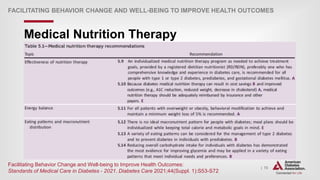
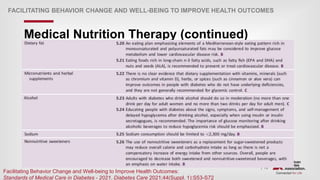
FACILITATING BEHAVIOR CHANGE AND WELL-BEING TO IMPROVE HEALTH OUTCOMES
Medical Nutrition Therapy
Facilitating Behavior Change and Well-being to Improve Health Outcomes:
Standards of Medical Care in Diabetes - 2021. Diabetes Care 2021;44(Suppl. 1):S53-S72
| 74
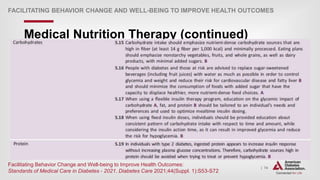
FACILITATING BEHAVIOR CHANGE AND WELL-BEING TO IMPROVE HEALTH OUTCOMES
Medical Nutrition Therapy (continued)
Facilitating Behavior Change and Well-being to Improve Health Outcomes:
Standards of Medical Care in Diabetes - 2021. Diabetes Care 2021;44(Suppl. 1):S53-S72
| 75
FACILITATING BEHAVIOR CHANGE AND WELL-BEING TO IMPROVE HEALTH OUTCOMES
Medical Nutrition Therapy (continued)
Facilitating Behavior Change and Well-being to Improve Health Outcomes:
Standards of Medical Care in Diabetes - 2021. Diabetes Care 2021;44(Suppl. 1):S53-S72
| 76
Physical Activity
FACILITATING BEHAVIOR CHANGE AND WELL-BEING TO IMPROVE HEALTH OUTCOMES
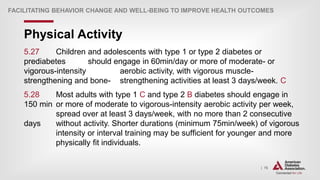
5.27 Children and adolescents with type 1 or type 2 diabetes or
prediabetes should engage in 60min/day or more of moderate- or
vigorous-intensity aerobic activity, with vigorous muscle-
strengthening and bone- strengthening activities at least 3 days/week. C
5.28 Most adults with type 1 C and type 2 B diabetes should engage in
150 min or more of moderate to vigorous-intensity aerobic activity per week,
spread over at least 3 days/week, with no more than 2 consecutive
days without activity. Shorter durations (minimum 75min/week) of vigorous
intensity or interval training may be sufficient for younger and more
physically fit individuals.
| 77
Physical Activity (continued)
FACILITATING BEHAVIOR CHANGE AND WELL-BEING TO IMPROVE HEALTH OUTCOMES
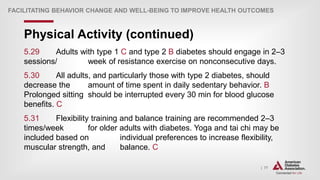
5.29 Adults with type 1 C and type 2 B diabetes should engage in 2–3
sessions/ week of resistance exercise on nonconsecutive days.
5.30 All adults, and particularly those with type 2 diabetes, should
decrease the amount of time spent in daily sedentary behavior. B
Prolonged sitting should be interrupted every 30 min for blood glucose
benefits. C
5.31 Flexibility training and balance training are recommended 2–3
times/week for older adults with diabetes. Yoga and tai chi may be
included based on individual preferences to increase flexibility,
muscular strength, and balance. C
| 78
Physical Activity (continued)
Facilitating Behavior Change and Well-being to Improve Health Outcomes
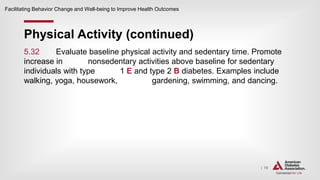
5.32 Evaluate baseline physical activity and sedentary time. Promote
increase in nonsedentary activities above baseline for sedentary
individuals with type 1 E and type 2 B diabetes. Examples include
walking, yoga, housework, gardening, swimming, and dancing.
| 79
Smoking Cessation: Tobacco & E-cigarettes
FACILITATING BEHAVIOR CHANGE AND WELL-BEING TO IMPROVE HEALTH OUTCOMES
5.33 Advise all patients not to use cigarettes and other tobacco products
or e- cigarettes. A
5.34 After identification of tobacco or e-cigarette use, include smoking
cessation counseling and other forms of treatment as a routine
component of diabetes care. A
5.35 Address smoking cessation as part of diabetes education programs
for those in need. B
| 80
Psychosocial Issues
FACILITATING BEHAVIOR CHANGE AND WELL-BEING TO IMPROVE HEALTH OUTCOMES
5.36 Psychosocial care should be integrated with a collaborative, patient-
centered approach and provided to all people with diabetes, with the
goals of optimizing health outcomes and health-related quality of life. A
5.37 Psychosocial screening and follow up may include, but are not
limited to, attitudes about diabetes, expectations for medical
management and outcomes, affect or mood, general and diabetes-
related quality of life, available resources (financial, social, and
emotional), and psychiatric history. E
| 81
Psychosocial Issues (continued)
FACILITATING BEHAVIOR CHANGE AND WELL-BEING TO IMPROVE HEALTH OUTCOMES
5.38 Providers should consider assessment for symptoms of diabetes
distress, depression, anxiety, disordered eating, and cognitive
capacities using appropriate standardized and validated tools at the initial
visit, at periodic intervals, and when there is a change in disease, treatment,
or life circumstance. Including caregivers and family members in this
assessment is recommended. B
5.39 Consider screening older adults (aged ≥65 years) with diabetes for
cognitive impairment and depression. B Monitoring of cognitive
capacity, i.e., the ability to actively engage in decision-making
regarding regimen behaviors, is advised. B
| 82
Diabetes Distress
FACILITATING BEHAVIOR CHANGE AND WELL-BEING TO IMPROVE HEALTH OUTCOMES
5.40 Routinely monitor people with diabetes for diabetes distress,
particularly when treatment targets are not met and/or at the onset of
diabetes complications. B
| 83
Anxiety Disorders
FACILITATING BEHAVIOR CHANGE AND WELL-BEING TO IMPROVE HEALTH OUTCOMES
5.41 Consider screening for anxiety in people exhibiting anxiety or worries
regarding diabetes complications, insulin administration, and taking
of medications, as well as fear of hypoglycemia and/or hypoglycemia
unawareness that interferes with self-management behaviors, and in
those who express fear, dread, or irrational thoughts and/or show anxiety
symptoms such as avoidance behaviors, excessive repetitive
behaviors, or social withdrawal. Refer for treatment if anxiety is present. B
5.42 People with hypoglycemia unawareness, which can co-occur with
fear of hypoglycemia, should be treated using blood glucose awareness
training (or other evidence-based intervention) to help re-establish
awareness of symptoms of hypoglycemia and reduce fear of
hypoglycemia. A
| 84
Depression
FACILITATING BEHAVIOR CHANGE AND WELL-BEING TO IMPROVE HEALTH OUTCOMES
5.43 Providers should consider annual screening of all patients with
diabetes, especially those with a self-reported history of depression,
for depressive symptoms with age-appropriate depression screening
measures, recognizing that further evaluation will be necessary for
individuals who have a positive screen. B
5.44 Beginning at diagnosis of complications or when there are significant
changes in medical status, consider assessment for depression. B
5.45 Referrals for treatment of depression should be made to mental
health providers with experience using cognitive behavioral therapy,
interpersonal therapy, or other evidence-based treatment approaches in
conjunction with collaborative care with the patient’s diabetes treatment
team. A
| 85
Disordered Eating Behavior
FACILITATING BEHAVIOR CHANGE AND WELL-BEING TO IMPROVE HEALTH OUTCOMES
5.46 Providers should consider reevaluating the treatment regimen of
people with diabetes who present with symptoms of disordered
eating behavior, an eating disorder, or disrupted patterns of eating. B
5.47 Consider screening for disordered or disrupted eating using validated
screening measures when hyperglycemia and weight loss are
unexplained based on self-reported behaviors related to medication
dosing, meal plan, and physical activity. In addition, a review of the
medical regimen is recommended to identify potential treatment-
related effects on hunger/caloric intake. B
| 86
Serious Mental Illness
FACILITATING BEHAVIOR CHANGE AND WELL-BEING TO IMPROVE HEALTH OUTCOMES
5.48 Incorporate active monitoring of diabetes self-care activities into
treatment goals for people with diabetes and serious mental illness. B
5.49 In people who are prescribed atypical antipsychotic medications,
screen for prediabetes and diabetes 4 months after medication
initiation and at least annually thereafter. B
5.50 If a second-generation antipsychotic medication is prescribed for
adolescents or adults with diabetes, changes in weight, glycemic
control, and cholesterol levels should be carefully monitored and the
treatment regimen should be reassessed. C
| 87
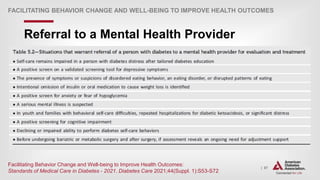
Referral to a Mental Health Provider
FACILITATING BEHAVIOR CHANGE AND WELL-BEING TO IMPROVE HEALTH OUTCOMES
Facilitating Behavior Change and Well-being to Improve Health Outcomes:
Standards of Medical Care in Diabetes - 2021. Diabetes Care 2021;44(Suppl. 1):S53-S72
| 88
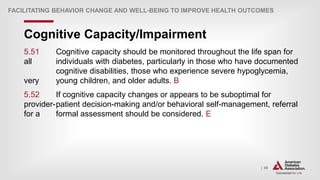
Cognitive Capacity/Impairment
FACILITATING BEHAVIOR CHANGE AND WELL-BEING TO IMPROVE HEALTH OUTCOMES
5.51 Cognitive capacity should be monitored throughout the life span for
all individuals with diabetes, particularly in those who have documented
cognitive disabilities, those who experience severe hypoglycemia,
very young children, and older adults. B
5.52 If cognitive capacity changes or appears to be suboptimal for
provider-patient decision-making and/or behavioral self-management, referral
for a formal assessment should be considered. E
Section 6.
Glycemic Targets
| 90
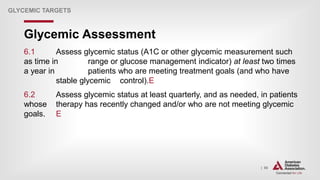
Glycemic Assessment
GLYCEMIC TARGETS
6.1 Assess glycemic status (A1C or other glycemic measurement such
as time in range or glucose management indicator) at least two times
a year in patients who are meeting treatment goals (and who have
stable glycemic control).E
6.2 Assess glycemic status at least quarterly, and as needed, in patients
whose therapy has recently changed and/or who are not meeting glycemic
goals. E
| 91
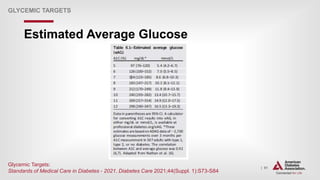
Estimated Average Glucose
GLYCEMIC TARGETS
Glycemic Targets:
Standards of Medical Care in Diabetes - 2021. Diabetes Care 2021;44(Suppl. 1):S73-S84
| 92
Glucose Assessment by Continuous Glucose Monitoring
GLYCEMIC TARGETS
6.3 Standardized, single-page glucose reports from continuous glucose
monitoring (CGM) devices with visual cues, such as the ambulatory
glucose profile (AGP), should be considered as a standard printout for all
CGM devices. E
6.4 Time in range (TIR) is associated with the risk of microvascular
complications and can be used for assessment of glycemic control.
Additionally, time below target and time above target are useful
parameters for the evaluation of the treatment regimen (Table 6.2). C
| 93
Glycemic Goals
GLYCEMIC TARGETS
6.5a An A1C goal for many nonpregnant adults of <7%(53 mmol/mol)
without significant hypoglycemia is appropriate. A
6.5b If using ambulatory glucose profile/glucose management indicator to
assess glycemia, a parallel goal for many nonpregnant adults is a
time in range of >70% with time below range <4% and time <54 mg/dL <1%
(Fig. 6.1). B
6.6 On the basis of provider judgment and patient preference,
achievement of lower A1C levels than the goal of 7% may be acceptable
and even beneficial if it can be achieved safely without significant
hypoglycemia or other adverse effects of treatment. B
| 94
Glycemic Goals (continued)
GLYCEMIC TARGETS
6.7 Less stringent A1C goals (such as <8% [64 mmol/mol]) may be
appropriate for patients with limited life expectancy, or where the harms
of treatment are greater than the benefits. B
6.8 Reassess glycemic targets based on the individualized criteria in Fig.
6.2. E
| 95
GLYCEMIC TARGETS
Glycemic Targets:
Standards of Medical Care in Diabetes - 2022. Diabetes Care 2022;45(Suppl. 1)
| 96
GLYCEMIC TARGETS
Glycemic Targets:
Standards of Medical Care in Diabetes - 2022. Diabetes Care 2022;45(Suppl. 1)
| 97
Glycemic targets
Glycemic Targets:
Standards of Medical Care in Diabetes - 2022. Diabetes Care 2022;45(Suppl. 1)
| 98
Hypoglycemia
Glycemic targets
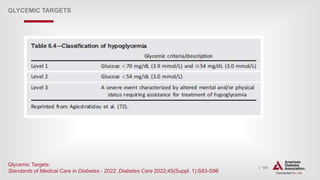
6.9 Occurrence and risk for hypoglycemia should be reviewed at every
encounter and investigated as indicated. C
6.10 Glucose (approximately 15–20 g) is the preferred treatment for the
conscious individual with blood glucose <70 mg/dL (3.9 mmol/L),
although any form of carbohydrate that contains glucose may be
used. Fifteen minutes after treatment, if blood glucose monitoring (BGM)
shows continued hypoglycemia, the treatment should be repeated. Once the
BGM or glucose pattern is trending up, the individual should consume a
meal or snack to prevent recurrence of hypoglycemia. B
| 99
Hypoglycemia (continued)
GLYCEMIC TARGETS
6.11 Glucagon should be prescribed for all individuals at increased risk of
level 2 or 3 hypoglycemia, so that it is available should it be needed.
Caregivers, school personnel, or family members providing support to
these individuals should know where it is and when and how to administer it.
Glucagon administration is not limited to health care professionals. E
6.12 Hypoglycemia unawareness or one or more episodes of level 3
hypoglycemia should trigger hypoglycemia avoidance education and
reevaluation and adjustment of the treatment regimen to decrease
hypoglycemia. E
| 100
Hypoglycemia (continued)
GLYCEMIC TARGETS
6.13 Insulin-treated patients with hypoglycemia unawareness, one level 3
hypoglycemic event, or a pattern of unexplained level 2
hypoglycemia should be advised to raise their glycemic targets to strictly
avoid hypoglycemia for at least several weeks in order to partially reverse
hypoglycemia unawareness and reduce risk of future episodes. A
6.14 Ongoing assessment of cognitive function is suggested with
increased vigilance for hypoglycemia by the clinician, patient, and
caregivers if impaired or declining cognition is found. B
| 101
GLYCEMIC TARGETS
Glycemic Targets:
Standards of Medical Care in Diabetes - 2022. Diabetes Care 2022;45(Suppl. 1):S83-S96
Section 7.
Diabetes
Technology
| 103
General Device Principles
DIABETES TECHNOLOGY
7.1 The type(s) and selection of devices should be individualized based
on a person’s specific needs, desires, skill level, and availability of
devices. In the setting of an individual whose diabetes is partially or wholly
managed by someone else (e.g., a young child or a person with cognitive
impairment), the caregiver’s skills and desires are integral to the
decision-making process. E
7.2 When prescribing a device, ensure that people with
diabetes/caregivers receive initial and ongoing education and training,
either in-person or remotely, and regular evaluation of technique,
results, and their ability to use data, including uploading/ sharing data (if
applicable), to adjust therapy. C
| 104
General Device Principles
DIABETES TECHNOLOGY
7.3 People who have been using continuous glucose monitoring,
continuous subcutaneous insulin infusion, and/or automated insulin
delivery for diabetes management should have continued access
across third party payers. E
7.4 Students must be supported at school in the use of diabetes
technology including continuous subcutaneous insulin infusion,
connected insulin pens, and automated insulin delivery systems as
prescribed by their diabetes care team. E
7.5 Initiation of continuous glucose monitoring, continuous subcutaneous
insulin infusion, and/or automated insulin delivery early in the
treatment of diabetes can be beneficial depending on a
person’s/caregiver’s needs and preferences. C
| 105
Blood Glucose Monitoring
DIABETES TECHNOLOGY
7.6 People with diabetes should be provided with blood glucose
monitoring devices as indicated by their circumstances, preferences,
and treatment. People using continuous glucose monitoring devices must
have access to blood glucose monitoring at all times. A
7.7 People who are on insulin using blood glucose monitoring should be
encouraged to check when appropriate based on their insulin
regimen. This may include checking when fasting, prior to meals and
snacks, at bedtime, prior to exercise, when low blood glucose is
suspected, after treating low blood glucose levels until they are
normoglycemic, and prior to and while performing critical tasks such as
driving. B
| 106
Blood Glucose Monitoring
DIABETES TECHNOLOGY
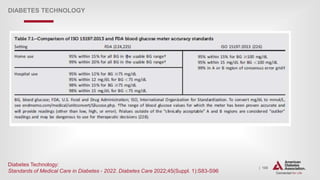
7.8 Providers should be aware of the differences in accuracy among
blood glucose meters only U.S. Food and Drug Administration–approved
meters with proven accuracy should be used, with unexpired strips
purchased from a pharmacy or licensed distributor. E
7.9 Although blood glucose monitoring in individuals on noninsulin
therapies has not consistently shown clinically significant reductions in
A1C, it may be helpful when altering diet, physical activity, and/or
medications (particularly medications that can cause hypoglycemia) in
conjunction with a treatment adjustment program. E
| 107
Blood Glucose Monitoring
DIABETES TECHNOLOGY
7.10 Health care providers should be aware of medications and other
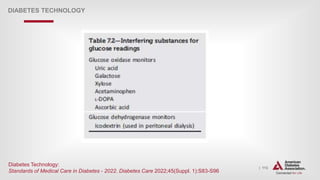
factors, such as high-dose vitamin C and hypoxemia, that can interfere with
glucose meter accuracy and provide clinical management as indicated. E
| 108
DIABETES TECHNOLOGY
Diabetes Technology:
Standards of Medical Care in Diabetes - 2022. Diabetes Care 2022;45(Suppl. 1):S83-S96
| 109
Continuous Glucose Monitoring Devices
DIABETES TECHNOLOGY
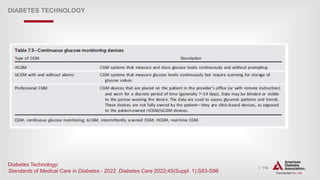
7.11 Real-time continuous glucose monitoring A or intermittently scanned
continuous glucose monitoring B should be offered for diabetes
management in adults with diabetes on multiple daily injections or
continuous subcutaneous insulin infusion who are capable of using
devices safely (either by themselves or with a caregiver). The choice of
device should be made based on patient circumstances, desires, and
needs.
7.12 Real-time continuous glucose monitoring A or intermittently scanned
continuous glucose monitoring C can be used for diabetes
management in adults with diabetes on basal insulin who are capable of
using devices safely (either by themselves or with a caregiver). The choice
of device should be made based on patient circumstances, desires,
and needs.
| 110
Continuous Glucose Monitoring Devices
(continued)
Diabetes Technology
7.13 Real-time continuous glucose monitoring B or intermittently scanned
continuous glucose monitoring E should be offered for diabetes management
in youth with type 1 diabetes on multiple daily injections or continuous
subcutaneous insulin infusion who are capable of using the device safely (either
by themselves or with a caregiver). The choice of device should be made based on
patient circumstances, desires, and needs.
7.14 Real-time continuous glucose monitoring or intermittently scanned
continuous glucose monitoring should be offered for diabetes management in
youth with type 2 diabetes on multiple daily injections or continuous
subcutaneous insulin infusion who are capable of using devices safely (either by
themselves or with a caregiver). The choice of device should be made based on
patient circumstances, desires, and needs. E
| 111
Continuous Glucose Monitoring Devices
(continued)
DIABETES TECHNOLOGY
7.15 In patients on multiple daily injections and continuous subcutaneous
insulin infusion, real-time continuous glucose monitoring devices
should be used as close to daily as possible for maximal benefit. A
Intermittently scanned continuous glucose monitoring devices should be
scanned frequently, at a minimum once every 8 h. A
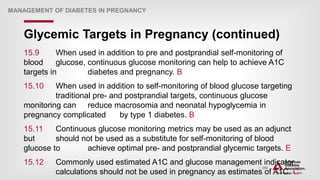
7.16 When used as an adjunct to pre- and postprandial blood glucose
monitoring, continuous glucose monitoring can help to achieve A1C
targets in diabetes and pregnancy. B
| 112
Continuous Glucose Monitoring Devices
(continued)
DIABETES TECHNOLOGY
7.17 Periodic use of real-time or intermittently scanned continuous
glucose monitoring or use of professional continuous glucose monitoring can
be helpful for diabetes management in circumstances where continuous
use of continuous glucose monitoring is not appropriate, desired, or
available.C
7.18 Skin reactions, either due to irritation or allergy, should be assessed
and addressed to aid in successful use of devices. E
| 113
DIABETES TECHNOLOGY
Diabetes Technology:
Standards of Medical Care in Diabetes - 2022. Diabetes Care 2022;45(Suppl. 1):S83-S96
| 114
DIABETES TECHNOLOGY
Diabetes Technology:
Standards of Medical Care in Diabetes - 2022. Diabetes Care 2022;45(Suppl. 1):S83-S96
| 115
Insulin Syringes and Pens
DIABETES TECHNOLOGY
7.19 For people with diabetes who require insulin, insulin pens are
preferred in most cases, but insulin syringes may be used for insulin
delivery with consideration of patient/caregiver preference, insulin type
and dosing regimen, cost, and self-management capabilities. C
7.20 Insulin pens or insulin injection aids should be considered for people
with dexterity issues or vision impairment to facilitate the administration of
accurate insulin doses. C
7.21 Connected insulin pens can be helpful for diabetes management and
may be used in patients using injectable therapy. E
| 116
Insulin Syringes and Pens (continued)
DIABETES TECHNOLOGY
7.22 U.S. Food and Drug Administration–approved insulin dose
calculators/decision support systems may be helpful for titrating
insulin doses. E
| 117
Insulin Pumps and Automated Insulin
Delivery Systems
DIABETES TECHNOLOGY
7.23 Automated insulin delivery systems should be offered or diabetes
management to youth and adults with type 1 diabetes A and other
types of insulin-deficient diabetes E who are capable of using the device
safely (either by themselves or with a caregiver). The choice of device
should be made based on patient circumstances, desires, and needs.
A
7.24 Insulin pump therapy alone with or without sensor-augmented low
glucose suspend should be offered for diabetes management to youth and
adults on multiple daily injections with type 1 diabetes A or other types of
insulin- deficient diabetes E who are capable of using the device safely
(either by themselves or with a caregiver) and are not able to
use/interested in an automated insulin delivery system. The choice of
| 118
Insulin Pumps and Automated Insulin
Delivery Systems (continued)
DIABETES TECHNOLOGY
7.25 Insulin pump therapy can be offered for diabetes management to
youth and adults on multiple daily injections with type 2 diabetes who are
capable of using the device safely (either by themselves or with a
caregiver). The choice of device should be made based on patient
circumstances, desires, and needs. A
7.26 Individuals with diabetes who have been successfully using
continuous subcutaneous insulin infusion should have continued
access across third- party payers. E
| 119
Do-It-Yourself Closed-Loop Systems
DIABETES TECHNOLOGY
7.27 Individual patients may be using systems not approved by the U.S.
Food and Drug Administration, such as do-it-yourself closed-loop systems
and others; providers cannot prescribe these systems but should assist in
diabetes management to ensure patient safety. E
| 120
Digital Health Technology
Diabetes Technology
7.28 Systems that combine technology and online coaching can be
beneficial in treating prediabetes and diabetes for some individuals. B
| 121
Inpatient Care
Diabetes Technology
7.29 Patients who are in a position to safely use diabetes devices should
be allowed to continue using them in an inpatient setting or during
outpatient procedures when proper supervision is available. B
Section 8.
Obesity and Weight
Management for the
Treatment of Type 2
Diabetes
| 123
Assessment
OBESITY MANAGEMENT FOR THE TREATMENT OF TYPE 2 DIABETES
8.1 Use patient-centered, nonjudgmental language that fosters
collaboration between patients and providers, including people-first
language (e.g., “person with obesity” rather than “obese person”). E
8.2 Measure height and weight and calculate BMI at annual visits or
more frequently. Assess weight trajectory to inform treatment
considerations. Assess weight trajectory to inform treatment considerations.
E
| 124
Assessment (continued)
OBESITY MANAGEMENT FOR THE TREATMENT OF TYPE 2 DIABETES
8.3 Based on clinical considerations, such as the presence of comorbid
heart failure or significant unexplained weight gain or loss, weight may
need to be monitored and evaluated more frequently. B If deterioration of
medical status is associated with significant weight gain or loss, inpatient
evaluation should be considered, especially focused on associations
between medication use, food intake, and glycemic status. E
8.4 Accommodations should be made to provide privacy during
weighing. E
| 125
Diet, Physical Activity, & Behavioral Therapy
OBESITY MANAGEMENT FOR THE TREATMENT OF TYPE 2 DIABETES
8.5 Diet, physical activity, and behavioral therapy to achieve and
maintain $5% weight loss is recommended for most people with type 2
diabetes and overweight or obesity. Additional weight loss usually results
in further improvements in control of diabetes and cardiovascular risk.
B
8.6 Such interventions should include a high frequency of counseling
(≥16 sessions in 6 months) and focus on dietary changes, physical
activity, and behavioral strategies to achieve a 500–750 kcal/day energy
deficit. A
| 126
Diet, Physical Activity, & Behavioral Therapy
(continued)
OBESITY MANAGEMENT FOR THE TREATMENT OF TYPE 2 DIABETES
8.7 An individual’s preferences, motivation, and life circumstances
should be considered, along with medical status, when weight loss
interventions are recommended. C
8.8 Behavioral changes that create an energy deficit, regardless of
macronutrient composition, will result in weight loss. Dietary
recommendations should be individualized to the patient’s
preferences and nutritional needs. A
| 127
Diet, Physical Activity, & Behavioral Therapy
(continued)
OBESITY MANAGEMENT FOR THE TREATMENT OF TYPE 2 DIABETES
8.9 Evaluate systemic, structural, and socioeconomic factors that may
impact dietary patterns and food choices, such as food insecurity and
hunger, access to healthful food options, cultural circumstances, and social
determinants of health. C
8.10 For those who achieve weight loss goals, long-term ($1 year) weight
maintenance programs are recommended when available. Such
programs should, at minimum, provide monthly contact and support,
recommend ongoing monitoring of body weight (weekly or more
frequently) and other self-monitoring strategies, and encourage regular
physical activity (200– 300 min/week).A
| 128
Diet, Physical Activity, & Behavioral Therapy
(continued)
OBESITY MANAGEMENT FOR THE TREATMENT OF TYPE 2 DIABETES
8.11 Short-term dietary intervention using structured, very-low-calorie
diets (800–1,000 kcal/day) may be prescribed for carefully selected
individuals by trained practitioners in medical settings with close
monitoring. Long- term, comprehensive weight maintenance strategies and
counseling should be integrated to maintain weight loss. B
8.12 There is no clear evidence that dietary supplements are effective for
weight loss. B
| 129
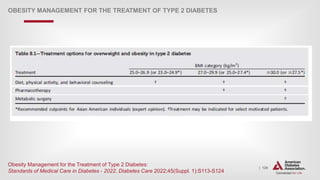
OBESITY MANAGEMENT FOR THE TREATMENT OF TYPE 2 DIABETES
Obesity Management for the Treatment of Type 2 Diabetes:
Standards of Medical Care in Diabetes - 2022. Diabetes Care 2022;45(Suppl. 1):S113-S124
| 130
Pharmacotherapy
OBESITY MANAGEMENT FOR THE TREATMENT OF TYPE 2 DIABETES
8.13 When choosing glucose-lowering medications for patients with type 2
diabetes and overweight or obesity, consider a medication’s effect on
weight. B
8.14 Whenever possible, minimize medications for comorbid conditions
that are associated with weight gain. E
8.15 Weight-loss medications are effective as adjuncts to diet, physical
activity, and behavioral counseling for selected people with type 2 diabetes
and BMI ≥27 kg/m2. Potential benefits and risks must be considered. A
| 131
Pharmacotherapy (continued)
OBESITY MANAGEMENT FOR THE TREATMENT OF TYPE 2 DIABETES
8.16 If a patient’s response to weight loss medication is effective (typically
defined as >5%weight loss after 3 months’ use), further weight loss is
likely with continued use. When early response is insufficient (typically
<5% weight loss after 3 months’ use), or if there are significant safety or
tolerability issues, consider discontinuation of the medication and
evaluate alternative medications or treatment approaches. A
| 132
OBESITY MANAGEMENT FOR THE TREATMENT OF TYPE 2 DIABETES
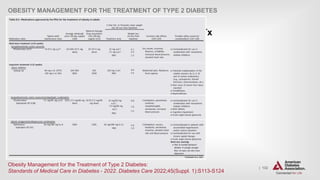
Medications Approved by the FDA for Obesity Tx
Obesity Management for the Treatment of Type 2 Diabetes:
Standards of Medical Care in Diabetes - 2022. Diabetes Care 2022;45(Suppl. 1):S113-S124
| 133
OBESITY MANAGEMENT FOR THE TREATMENT OF TYPE 2 DIABETES
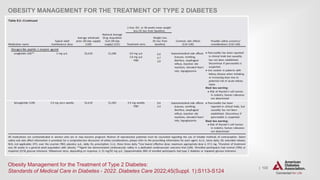
Medications Approved by the FDA for Obesity Tx
Obesity Management for the Treatment of Type 2 Diabetes:
Standards of Medical Care in Diabetes - 2022. Diabetes Care 2022;45(Suppl. 1):S113-S124
| 134
Metabolic Surgery
OBESITY MANAGEMENT FOR THE TREATMENT OF TYPE 2 DIABETES
8.17 Metabolic surgery should be a recommended option to treat type 2
diabetes in screened surgical candidates with BMI $40 kg/m2 (BMI
$37.5 kg/m2 in Asian Americans) and in adults with BMI 35.0–39.9 kg/m2
(32.5– 37.4 kg/m2 in Asian Americans) who do not achieve durable weight
loss and improvement in comorbidities (including hyperglycemia) with
nonsurgical methods.. A
8.18 Metabolic surgery may be considered as an option to treat type 2
diabetes in adults with BMI 30.0–34.9 kg/m2 (27.5–32.4 kg/m2 in
Asian Americans) who do not achieve durable weight loss and
improvement in comorbidities (including hyperglycemia) with
nonsurgical methods. A
| 135
Metabolic Surgery (continued)
OBESITY MANAGEMENT FOR THE TREATMENT OF TYPE 2 DIABETES
8.19 Metabolic surgery should be performed in high-volume centers with
multidisciplinary teams knowledgeable about and experienced in the
management of diabetes and gastrointestinal surgery. E
8.20 People being considered for metabolic surgery should be evaluated
for comorbid psychological conditions and social and situational
circumstances that have the potential to interfere with surgery outcomes. C
| 136
Metabolic Surgery (continued)
OBESITY MANAGEMENT FOR THE TREATMENT OF TYPE 2 DIABETES
8.21 People who undergo metabolic surgery should receive longterm
medical and behavioral support and routine monitoring of micronutrient,
nutritional, and metabolic status. B
8.22 If postbariatric hypoglycemia is suspected, clinical evaluation should
exclude other potential disorders contributing to hypoglycemia, and
management includes education, medical nutrition therapy with a
dietitian experienced in postbariatric hypoglycemia, and medication
treatment, as needed. A Continuous glucose monitoring should be
considered as an important adjunct to improve safety by alerting patients to
hypoglycemia, especially for those with severe hypoglycemia or
hypoglycemia unawareness. E
| 137
Metabolic Surgery (continued)
OBESITY MANAGEMENT FOR THE TREATMENT OF TYPE 2 DIABETES
8.23 People who undergo metabolic surgery should routinely be evaluated
to assess the need for ongoing mental health services to help with the
adjustment to medical and psychosocial changes after surgery. C
Section 9.
Pharmacologic
Approaches to
Glycemic
Treatment
| 139
Pharmacologic Therapy for Type 1 Diabetes
PHARMACOLOGIC APPROACHES TO GLYCEMIC TREATMENT
9.1 Most individuals with type 1 diabetes should be treated with multiple
daily injections of prandial and basal insulin, or continuous subcutaneous
insulin infusion. A
9.2 Most individuals with type 1 diabetes should use rapid-acting insulin
analogs to reduce hypoglycemia risk. A
9.3 Individuals with type 1 diabetes should receive education on how to
match mealtime insulin doses to carbohydrate intake, fat and protein
content, and anticipated physical activity. C
| 140
Pharmacologic Therapy for Type 2 Diabetes
PHARMACOLOGIC APPROACHES TO GLYCEMIC TREATMENT
9.4a First-line therapy depends on comorbidities, patient-centered
treatment factors, and management needs and generally includes
metformin and comprehensive lifestyle modification. A
9.4b Other medications (glucagonlike peptide 1 receptor agonists,
sodium– glucose cotransporter 2 inhibitors), with or without metformin based
on glycemic needs, are appropriate initial therapy for individuals with
type 2 diabetes with or at high risk for atherosclerotic cardiovascular
disease, heart failure, and/or chronic kidney disease (Fig. 9.3). A
9.5 Metformin should be continued upon initiation of insulin therapy
(unless contraindicated or not tolerated) for ongoing glycemic and metabolic
benefits. A
| 141
Pharmacologic Therapy for Type 2 Diabetes
(continued)
PHARMACOLOGIC APPROACHES TO GLYCEMIC TREATMENT
9.6 Early combination therapy can be considered in some patients at
treatment initiation to extend the time to treatment failure. E
9.7 The early introduction of insulin should be considered if there is
evidence of ongoing catabolism (weight loss), if symptoms of
hyperglycemia are present, or when A1C levels (>10% [86 mmol/mol])
or blood glucose levels ($300 mg/dL [16.7 mmol/L]) are very high. A
| 142
Pharmacologic Therapy for Type 2 Diabetes
(continued)
PHARMACOLOGIC APPROACHES TO GLYCEMIC TREATMENT
9.8 A patient-centered approach should guide the choice of pharmacologic
agents. Consider the effects on cardiovascular and renal comorbidities, efficacy,
hypoglycemia risk, impact on weight, cost and access, risk for side effects,
and patient preferences (Table 9.2 and Fig. 9.3. E
9.9 Among individuals with type 2 diabetes who have established atherosclerotic
cardiovascular disease or indicators of high cardiovascular risk, established
kidney disease, or heart failure, a sodium–glucose cotransporter 2 inhibitor
and/or glucagon-like peptide 1 receptor agonist with demonstrated cardiovascular
disease benefit (Fig. 9.3, Table 9.2, Table 10.3B, and Table 10.3C) is
recommended as part of the glucose-lowering regimen and comprehensive
cardiovascular risk reduction, independent of A1C and in consideration of patient-
specific factors (Fig. 9.3) (see Section 10, “Cardiovascular Disease and Risk
Management,” https://doi.org/ 10.2337/dc22-S010, for details on cardiovascular risk
reduction recommendations). A
| 143
Pharmacologic Therapy for Type 2 Diabetes
(continued)
PHARMACOLOGIC APPROACHES TO GLYCEMIC TREATMENT
9.10 In patients with type 2 diabetes, a glucagon-like peptide 1 receptor
agonist is preferred to insulin when possible. A
9.11 If insulin is used, combination therapy with a glucagon-like peptide 1
receptor agonist is recommended for greater efficacy and durability
of treatment effect. A
9.12 Recommendation for treatment intensification for patients not
meeting treatment goals should not be delayed. A
| 144
Pharmacologic Therapy for Type 2 Diabetes
(continued)
PHARMACOLOGIC APPROACHES TO GLYCEMIC TREATMENT
9.13 Medication regimen and medication- taking behavior should be
reevaluated at regular intervals (every 3–6 months) and adjusted as
needed to incorporate specific factors that impact choice of treatment
(Fig. 4.1 and Table 9.2). E
9.14 Clinicians should be aware of the potential for overbasalization with
insulin therapy. Clinical signals that may prompt evaluation of
overbasalization include basal dose more than 0.5 IU/kg/day, high bedtime-
morning or postpreprandial glucose differential, hypoglycemia (aware or
unaware), and high glycemic variability. Indication of overbasalization
should prompt reevaluation to further individualize therapy. E
| 145
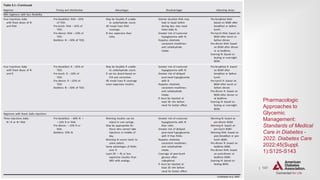
PHARMACOLOGIC APPROACHES TO GLYCEMIC TREATMENT
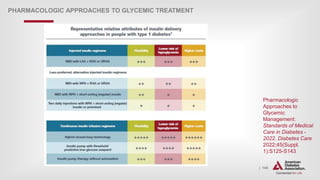
Pharmacologic
Approaches to
Glycemic
Management:
Standards of Medical
Care in Diabetes -
2022. Diabetes Care
2022;45(Suppl.
1):S125-S143
| 146
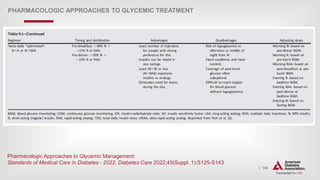
PHARMACOLOGIC APPROACHES TO GLYCEMIC TREATMENT
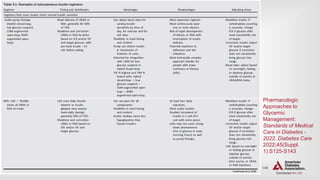
Pharmacologic
Approaches to
Glycemic
Management:
Standards of Medical
Care in Diabetes -
2022. Diabetes Care
2022;45(Suppl.
1):S125-S143
| 147
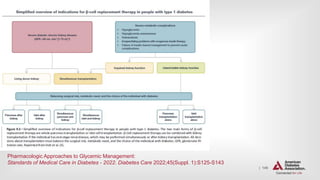
PHARMACOLOGIC APPROACHES TO GLYCEMIC TREATMENT
Pharmacologic
Approaches to
Glycemic
Management:
Standards of Medical
Care in Diabetes -
2022. Diabetes Care
2022;45(Suppl.
1):S125-S143
| 148
PHARMACOLOGIC APPROACHES TO GLYCEMIC TREATMENT
Pharmacologic Approaches to Glycemic Management:
Standards of Medical Care in Diabetes - 2022. Diabetes Care 2022;45(Suppl. 1):S125-S143
| 149
PHARMACOLOGIC APPROACHES TO GLYCEMIC TREATMENT
Pharmacologic Approaches to Glycemic Management:
Standards of Medical Care in Diabetes - 2022. Diabetes Care 2022;45(Suppl. 1):S125-S143
| 150
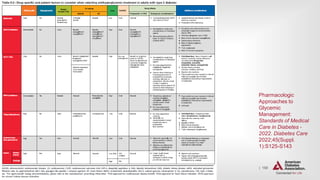
PHARMACOLOGIC APPROACHES TO GLYCEMIC TREATMENT
Pharmacologic
Approaches to
Glycemic
Management:
Standards of Medical
Care in Diabetes -
2022. Diabetes Care
2022;45(Suppl.
1):S125-S143
| 151
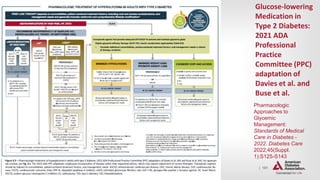
PHARMACOLOGIC APPROACHES TO GLYCEMIC TREATMENT
Glucose-lowering
Medication in
Type 2 Diabetes:
2021 ADA
Professional
Practice
Committee (PPC)
adaptation of
Davies et al. and
Buse et al.
Pharmacologic
Approaches to
Glycemic
Management:
Standards of Medical
Care in Diabetes -
2022. Diabetes Care
2022;45(Suppl.
1):S125-S143
| 152
PHARMACOLOGIC APPROACHES TO GLYCEMIC TREATMENT
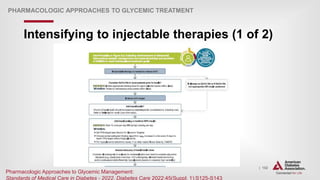
Intensifying to injectable therapies (1 of 2)
Pharmacologic Approaches to Glycemic Management:
Standards of Medical Care in Diabetes - 2022. Diabetes Care 2022;45(Suppl. 1):S125-S143
| 153
PHARMACOLOGIC APPROACHES TO GLYCEMIC TREATMENT
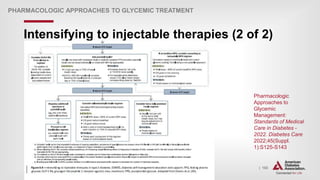
Intensifying to injectable therapies (2 of 2)
Pharmacologic
Approaches to
Glycemic
Management:
Standards of Medical
Care in Diabetes -
2022. Diabetes Care
2022;45(Suppl.
1):S125-S143
| 154
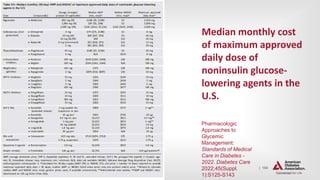
Median monthly cost
of maximum approved
daily dose of
noninsulin glucose-
lowering agents in the
U.S.
Pharmacologic
Approaches to
Glycemic
Management:
Standards of Medical
Care in Diabetes -
2022. Diabetes Care
2022;45(Suppl.
1):S125-S143
| 155
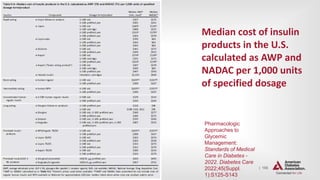
Median cost of insulin
products in the U.S.
calculated as AWP and
NADAC per 1,000 units
of specified dosage
Pharmacologic
Approaches to
Glycemic
Management:
Standards of Medical
Care in Diabetes -
2022. Diabetes Care
2022;45(Suppl.
1):S125-S143
Section 10.
Cardiovascular
Disease and Risk
Management
| 157
Screening and Diagnosis
CARDIOVASCULAR DISEASE AND RISK MANAGEMENT
10.1 Blood pressure should be measured at every routine clinical visit.
When possible, patients found to have elevated blood pressure ($140/90
mmHg) should have blood pressure confirmed using multiple readings,

including measurements on a separate day, to diagnose
hypertension. A Patients with blood pressure $180/110 mmHg and
cardiovascular disease could be diagnosed with hypertension at a single
visit. E
10.2 All hypertensive patients with diabetes should monitor their blood
pressure at home. A
| 158
CARDIOVASCULAR DISEASE AND RISK MANAGEMENT
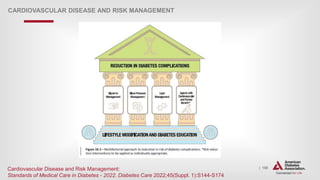
Cardiovascular Disease and Risk Management:
Standards of Medical Care in Diabetes - 2022. Diabetes Care 2022;45(Suppl. 1):S144-S174
| 159
Treatment Goals
CARDIOVASCULAR DISEASE AND RISK MANAGEMENT
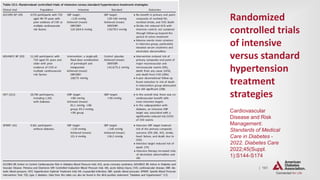
10.3 For patients with diabetes and hypertension, blood pressure targets
should be individualized through a shared decision-making process that
addresses cardiovascular risk, potential adverse effects of
antihypertensive medications, and patient preferences. B
10.4 For individuals with diabetes and hypertension at higher
cardiovascular risk (existing atherosclerotic cardiovascular disease
[ASCVD] or 10-year ASCVD risk $15%), a blood pressure target of
<130/80 mmHg may be appropriate, if it can be safely attained. B
10.5 For individuals with diabetes and hypertension at lower risk for
cardiovascular disease (10- year atherosclerotic cardiovascular
disease risk <15%), treat to a blood pressure target of <140/90 mmHg. A
| 160
Treatment Goals (continued)
CARDIOVASCULAR DISEASE AND RISK MANAGEMENT
10.6 In pregnant patients with diabetes and preexisting hypertension, a
blood pressure target of 110–135/85 mmHg is suggested in the interest of
reducing the risk for accelerated maternal hypertension A and
minimizing impaired fetal growth. E
| 161
CARDIOVASCULAR DISEASE AND RISK MANAGEMENT
Randomized
controlled trials
of intensive
versus standard
hypertension
treatment
strategies
Cardiovascular
Disease and Risk
Management:
Standards of Medical
Care in Diabetes -
2022. Diabetes Care
2022;45(Suppl.
1):S144-S174
| 162
Treatment Strategies—Lifestyle Intervention
CARDIOVASCULAR DISEASE AND RISK MANAGEMENT
10.7 For patients with blood pressure >120/80 mmHg, lifestyle
intervention consists of weight loss when indicated, a Dietary
Approaches to Stop Hypertension (DASH)-style eating pattern including
reducing sodium and increasing potassium intake, moderation of alcohol
intake, and increased physical activity. A
| 163
Treatment Strategies—Pharmacologic Interventions
CARDIOVASCULAR DISEASE AND RISK MANAGEMENT
10.8 Patients with confirmed office-based blood pressure $140/90 mmHg
should, in addition to lifestyle therapy, have prompt initiation and
timely titration of pharmacologic therapy to achieve blood pressure goals. A
10.9 Patients with confirmed office-based blood pressure $160/100 mmHg
should, in addition to lifestyle therapy, have prompt initiation and
timely titration of two drugs or a single-pill combination of drugs
demonstrated to reduce cardiovascular events in patients with diabetes. A
10.10 Treatment for hypertension should include drug classes
demonstrated to reduce cardiovascular events in patients with diabetes. A
ACE inhibitors or angiotensin receptor blockers are recommended first-line
therapy for hypertension in people with diabetes and coronary artery
disease. A
| 164
Treatment Strategies—Pharmacologic
Interventions (continued)
CARDIOVASCULAR DISEASE AND RISK MANAGEMENT
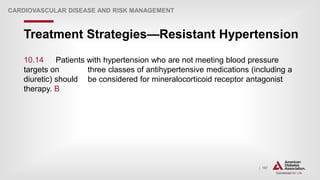
10.11 Multiple-drug therapy is generally required to achieve blood pressure
targets. However, combinations of ACE inhibitors and angiotensin
receptor blockers and combinations of ACE inhibitors or angiotensin receptor
blockers with direct renin inhibitors should not be used. A
10.12 An ACE inhibitor or angiotensin receptor blocker, at the maximum
tolerated dose indicated for blood pressure treatment, is the
recommended first-line treatment for hypertension in patients with diabetes
and urinary albumin- to-creatinine ratio $300 mg/g creatinine A or 30–
299 mg/g creatinine. B If one class is not tolerated, the other should be
substituted. B
10.13 For patients treated with an ACE inhibitor, angiotensin receptor
blocker, or diuretic, serum creatinine/estimated glomerular filtration rate
| 165
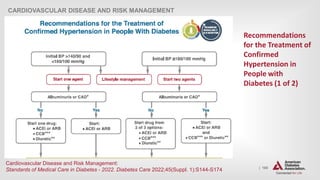
CARDIOVASCULAR DISEASE AND RISK MANAGEMENT
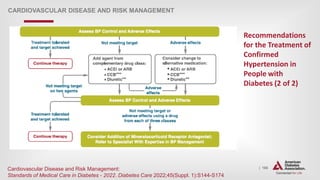
Recommendations
for the Treatment of
Confirmed
Hypertension in
People with
Diabetes (1 of 2)
Cardiovascular Disease and Risk Management:
Standards of Medical Care in Diabetes - 2022. Diabetes Care 2022;45(Suppl. 1):S144-S174
| 166
CARDIOVASCULAR DISEASE AND RISK MANAGEMENT
Recommendations
for the Treatment of
Confirmed
Hypertension in
People with
Diabetes (2 of 2)
Cardiovascular Disease and Risk Management:
Standards of Medical Care in Diabetes - 2022. Diabetes Care 2022;45(Suppl. 1):S144-S174
| 167
Treatment Strategies—Resistant Hypertension
CARDIOVASCULAR DISEASE AND RISK MANAGEMENT
10.14 Patients with hypertension who are not meeting blood pressure
targets on three classes of antihypertensive medications (including a
diuretic) should be considered for mineralocorticoid receptor antagonist
therapy. B
| 168
Lipid Management—Lifestyle Intervention
CARDIOVASCULAR DISEASE AND RISK MANAGEMENT
10.15 Lifestyle modification focusing on weight loss (if indicated);
application of a Mediterranean style or Dietary Approaches to Stop
Hypertension (DASH) eating pattern; reduction of saturated fat and trans
fat; increase of dietary n-3 fatty acids, viscous fiber, and plant
stanols/sterols intake; and increased physical activity should be
recommended to improve the lipid profile and reduce the risk of
developing atherosclerotic cardiovascular disease in patients with diabetes.
A
10.16 Intensify lifestyle therapy and optimize glycemic control for patients
with elevated triglyceride levels ($150 mg/dL [1.7 mmol/L]) and/or low
HDL cholesterol (<40 mg/dL [1.0 mmol/L] for men, <50 mg/dL [1.3 mmol/L]
for women).C
| 169
Lipid Management—Ongoing Therapy and
Monitoring with Lipid Panel
CARDIOVASCULAR DISEASE AND RISK MANAGEMENT
10.17 In adults not taking statins or other lipid-lowering therapy, it is
reasonable to obtain a lipid profile at the time of diabetes diagnosis, at
an initial medical evaluation, and every 5 years thereafter if under the age of
40 years, or more frequently if indicated. E
10.18 Obtain a lipid profile at initiation of statins or other lipid-lowering
therapy, 4–12 weeks after initiation or a change in dose, and annually
thereafter as it may help to monitor the response to therapy and inform
medication adherence. E
| 170
Statin Treatment—Primary Prevention
CARDIOVASCULAR DISEASE AND RISK MANAGEMENT
10.19 For patients with diabetes aged 40–75 years without atherosclerotic
cardiovascular disease, use moderate-intensity statin therapy in
addition to lifestyle therapy. A
10.20 For patients with diabetes aged 20–39 years with additional
atherosclerotic cardiovascular disease risk factors, it maybe reasonable to
initiate statin therapy in addition to lifestyle therapy. C
10.21 In patients with diabetes at higher risk, especially those with multiple
atherosclerotic cardiovascular disease risk factors or aged 50–70
years, it is reasonable to use high-intensity statin therapy. B
10.22 In adults with diabetes and 10-year ASCVD risk of 20% or higher, it
may be reasonable to add ezetimibe to maximally tolerated statin therapy to
reduce LDL cholesterol levels by 50% or more. C
| 171
Statin Treatment—Secondary Prevention
CARDIOVASCULAR DISEASE AND RISK MANAGEMENT
10.23 For patients of all ages with diabetes and atherosclerotic
cardiovascular disease, high intensity statin therapy should be added to
lifestyle therapy. A
10.24 For patients with diabetes and atherosclerotic cardiovascular disease
considered very high risk using specific criteria, if LDL cholesterol is
≥70 mg/dL on maximally tolerated statin dose, consider adding additional
LDL- lowering therapy (such as ezetimibe or PCSK9 inhibitor). A
10.25 For patients who do not tolerate the intended intensity, the maximally
tolerated statin dose should be used. E
| 172
Statin Treatment—Secondary Prevention
(continued)
CARDIOVASCULAR DISEASE AND RISK MANAGEMENT
10.26 In adults with diabetes aged >75 years already on statin therapy, it is
reasonable to continue statin treatment. B
10.27 In adults with diabetes aged >75 years, it may be reasonable to
initiate statin therapy after discussion of potential benefits and risks. C
10.28 Statin therapy is contraindicated in pregnancy. B
| 173
CARDIOVASCULAR DISEASE AND RISK MANAGEMENT
Cardiovascular Disease and Risk Management:
Standards of Medical Care in Diabetes - 2022. Diabetes Care 2022;45(Suppl. 1):S144-S174
| 174
Treatment of Other Lipoprotein Fractions or Targets
CARDIOVASCULAR DISEASE AND RISK MANAGEMENT
10.29 For patients with fasting triglyceride levels ≥500 mg/dL, evaluate for
secondary causes of hypertriglyceridemia and consider medical
therapy to reduce the risk of pancreatitis. C
10.30 In adults with moderate hypertriglyceridemia (fasting or nonfasting
triglycerides 175–499 mg/dL),clinicians should address and treat
lifestyle factors (obesity and metabolic syndrome), secondary factors
(diabetes, chronic liver or kidney disease and/or nephrotic syndrome,
hypothyroidism), and medications that raise triglycerides. C
10.31 In patients with atherosclerotic cardiovascular disease or other
cardiovascular risk factors on a statin with controlled LDL cholesterol
but elevated triglycerides (135–499 mg/dL), the addition of icosapent ethyl
can be considered to reduce cardiovascular risk . A
| 175
Other Combination Therapy
CARDIOVASCULAR DISEASE AND RISK MANAGEMENT
10.32 Statin plus fibrate combination therapy has not been shown to
improve atherosclerotic cardiovascular disease outcomes and is generally not
recommended. A
10.33 Statin plus niacin combination therapy has not been shown to
provide additional cardiovascular benefit above statin therapy alone, may
increase the risk of stroke with additional side effects, and is
generally not recommended. A
| 176
Antiplatelet Agents
CARDIOVASCULAR DISEASE AND RISK MANAGEMENT
10.34 Use aspirin therapy (75–162 mg/day) as a secondary prevention
strategy in those with diabetes and a history of atherosclerotic
cardiovascular disease. A
10.35 For patients with atherosclerotic cardiovascular disease and
documented aspirin allergy, clopidogrel (75 mg/day) should be used. B
10.36 Dual antiplatelet therapy (with low-dose aspirin and a P2Y12 inhibitor)
is reasonable for a year after an acute coronary syndrome and may have
benefits beyond this period. A
10.37 Long-term treatment with dual antiplatelet therapy should be
considered for patients with prior coronary intervention, high ischemic risk,
and low bleeding risk to prevent major adverse cardiovascular events. A
| 177
Antiplatelet Agents (continued)
CARDIOVASCULAR DISEASE AND RISK MANAGEMENT
10.38 Combination therapy with aspirin plus low-dose rivaroxaban should be
considered for patients with stable coronary and/or peripheral artery
disease and low bleeding risk to prevent major adverse limb and
cardiovascular events. A
10.39 Aspirin therapy (75–162 mg/day) may be considered as a primary
prevention strategy in those with diabetes who are at increased
cardiovascular risk, after a comprehensive discussion with the patient on the
benefits versus the comparable increased risk of bleeding. A
| 178
Cardiovascular Disease—Screening
CARDIOVASCULAR DISEASE AND RISK MANAGEMENT
10.40 In asymptomatic patients, routine screening for coronary artery
disease is not recommended as it does not improve outcomes as long
as atherosclerotic cardiovascular disease risk factors are treated. A
10.41 Consider investigations for coronary artery disease in the presence
of any of the following: atypical cardiac symptoms (e.g., unexplained
dyspnea, chest discomfort); signs or symptoms of associated vascular
disease including carotid bruits, transient ischemic attack, stroke,
claudication, or peripheral arterial disease; or electrocardiogram
abnormalities (e.g., Q waves).E
| 179
Cardiovascular Disease—Treatment
CARDIOVASCULAR DISEASE AND RISK MANAGEMENT
10.42 Among patients with type 2 diabetes who have established
atherosclerotic cardiovascular disease or established kidney disease, a
sodium–glucose cotransporter 2 inhibitor or glucagon- like peptide 1 receptor
agonist with demonstrated cardiovascular disease benefit (Table 10.3B
and Table 10.3C) is recommended as part of the comprehensive
cardiovascular risk reduction and/or glucose-lowering regimens. A
10.42a In patients with type 2 diabetes and established atherosclerotic
cardiovascular disease, multiple atherosclerotic cardiovascular
disease risk factors, or diabetic kidney disease, a sodium– glucose
cotransporter 2 inhibitor with demonstrated cardiovascular benefit is
recommended to reduce the risk of major adverse cardiovascular events
and/or heart failure hospitalization. A
| 180
Cardiovascular Disease—Treatment (continued)
CARDIOVASCULAR DISEASE AND RISK MANAGEMENT
10.42b In patients with type 2 diabetes and established atherosclerotic
cardiovascular disease or multiple risk factors for atherosclerotic
cardiovascular disease, a glucagon-like peptide 1 receptor agonist
with demonstrated cardiovascular benefit is recommended to reduce the
risk of major adverse cardiovascular events. A
10.42c In patients with type 2 diabetes and established atherosclerotic
cardiovascular disease or multiple risk factors for atherosclerotic
cardiovascular disease, combined therapy with a sodium–glucose
cotransporter 2 inhibitor with demonstrated cardiovascular benefit
and a glucagon-like peptide 1 receptor agonist with demonstrated
cardiovascular benefit may be considered for additive reduction in the risk
of adverse cardiovascular and kidney events. A
| 181
Cardiovascular Disease—Treatment (continued)
CARDIOVASCULAR DISEASE AND RISK MANAGEMENT
10.43 In patients with type 2 diabetes and established heart failure with
reduced ejection fraction, a sodium–glucose cotransporter 2 inhibitor with
proven benefit in this patient population is recommended to reduce risk of
worsening heart failure and cardiovascular death. A
10.44 In patients with known atherosclerotic cardiovascular disease,
particularly coronary artery disease, ACE inhibitor or angiotensin
receptor blocker therapy is recommended to reduce the risk of
cardiovascular events. A
| 182
Cardiovascular Disease—Treatment (continued)
CARDIOVASCULAR DISEASE AND RISK MANAGEMENT
10.45 In patients with prior myocardial infarction, b-blockers should be
continued for 3 years after the event. B
10.46 Treatment of patients with heart failure with reduced ejection fraction
should include a b-blocker with proven cardiovascular outcomes
benefit, unless otherwise contraindicated. A
10.47 In patients with type 2 diabetes with stable heart failure, metformin
may be continued for glucose lowering if estimated glomerular filtration
rate remains >30 mL/min/1.73 m2 but should be avoided in unstable or
hospitalized patients with heart failure. B
| 183
CARDIOVASCULAR DISEASE AND RISK MANAGEMENT
Table 10.3A—Cardiovascular
and cardiorenal outcomes
trials of available
antihyperglycemic
medications completed after
the issuance of the FDA 2008
guidelines: DPP-4 inhibitors
Cardiovascular
Disease and Risk
Management:
Standards of Medical
Care in Diabetes -
2022. Diabetes Care
2022;45(Suppl.
1):S144-S174
| 184
CARDIOVASCULAR DISEASE AND RISK MANAGEMENT
Table 10.3B—
Cardiovascular and
cardiorenal outcomes
trials of available
antihyperglycemic
medications
completed after the
issuance
of the FDA 2008
guidelines: GLP-1
receptor agonists (1
of 2)
Cardiovascular
Disease and Risk
Management:
Standards of Medical
Care in Diabetes -
2022. Diabetes Care
2022;45(Suppl.
1):S144-S174
| 185
CARDIOVASCULAR DISEASE AND RISK MANAGEMENT
Table 10.3B—
Cardiovascular and
cardiorenal outcomes
trials of available
antihyperglycemic
medications
completed after the
issuance
of the FDA 2008
guidelines: GLP-1
receptor agonists (2 of
2)
Cardiovascular
Disease and Risk
Management:
Standards of Medical
Care in Diabetes -
2022. Diabetes Care
2022;44(Suppl.
1):S144-S174
| 186
CARDIOVASCULAR DISEASE AND RISK MANAGEMENT
Table 10.3C—
Cardiovascular and
cardiorenal outcomes
trials of available
antihyperglycemic
medications
completed after the
issuance
of the FDA 2008
guidelines: SGLT2
inhibitors
Cardiovascular
Disease and Risk
Management:
Standards of Medical
Care in Diabetes -
2022. Diabetes Care
2022;45(Suppl.
1):S144-S174
| 187
CARDIOVASCULAR DISEASE AND RISK MANAGEMENT
Table 10.3C—
Cardiovascular and
cardiorenal outcomes
trials of available
antihyperglycemic
medications
completed after the
issuance
of the FDA 2008
guidelines: SGLT2
inhibitors
Cardiovascular
Disease and Risk
Management:
Standards of Medical
Care in Diabetes -
2022. Diabetes Care
2022;45(Suppl.
1):S144-S174
| 188
CARDIOVASCULAR DISEASE AND RISK MANAGEMENT
Figure 10.3—Approach
to risk reduction with
SGLT2 inhibitor or GLP-
1 receptor agonist
therapy in conjunction
with other traditional,
guideline-based
preventive medical
therapies for blood
pressure, lipids, and
glycemia and
antiplatelet therapy
Cardiovascular
Disease and Risk
Management:
Standards of Medical
Care in Diabetes -
2022. Diabetes Care
2022;45(Suppl.
1):S144-S174
Section 11.
Chronic Kidney
Disease and Risk
Management
| 190
Chronic Kidney Disease—Screening
CHRONIC KIDNEY DISEASE AND RISK MANAGEMENT
11.1a At least annually, urinary albumin (e.g., spot urinary albumin-to-
creatinine ratio) and estimated glomerular filtration rate should be
assessed in patients with type 1 diabetes with duration of ≥5 years and
in all patients with type 2 diabetes regardless of treatment. B
11.1b Patients with diabetes and urinary albumin ≥300 mg/g creatinine
and/or an estimated glomerular filtration rate 30–60 mL/min/1.73 m2 should
be monitored twice annually to guide therapy. B
| 191
Chronic Kidney Disease—Treatment
CHRONIC KIDNEY DISEASE AND RISK MANAGEMENT
11.2 Optimize glucose control to reduce the risk or slow the progression of
chronic kidney disease. A
11.3a For patients with type 2 diabetes and diabetic kidney disease,
consider use of a sodium–glucose cotransporter 2 inhibitor in patients
with an estimated glomerular filtration rate ≥25 mL/min/1.73 m2 and
urinary albumin ≥300 mg/g creatinine is recommended to reduce chronic
kidney disease progression and cardiovascular events. A
11.3b In patients with type 2 diabetes and chronic kidney disease, consider
use of sodium–glucose cotransporter 2 inhibitors additionally for
cardiovascular risk reduction when estimated glomerular filtration rate and
urinary albumin creatinine are ≥25 mL/min/1.73 m2 or $300 mg/g,
respectively (Fig. 9.3). A
| 192
Chronic Kidney Disease—Treatment (continued)
CHRONIC KIDNEY DISEASE AND RISK MANAGEMENT
11.3c In patients with chronic kidney disease who are at increased risk for
cardiovascular events or chronic kidney disease progression and are
unable to use a sodium–glucose cotransporter 2 inhibitor, a nonsteroidal
mineralocorticoid receptor antagonist (finerenone) is recommended
to reduce chronic kidney disease progression and cardiovascular
events
(Table 9.2).A
11.3d In patients with chronic kidney disease who have $300 mg/g urinary
albumin, a reduction of 30% or greater in mg/g urinary albumin is
recommended to slow chronic kidney disease progression. B
11.4 Optimization of blood pressure control and reduction in blood
pressure variability to reduce the risk or slow the progression of
chronic kidney disease is recommended. A
| 193
Chronic Kidney Disease—Treatment (continued)
CHRONIC KIDNEY DISEASE AND RISK MANAGEMENT
11.5 Do not discontinue renin-angiotensin system blockade for minor
increases in serum creatinine (#30%) in the absence of volume
depletion. A
11.6 For people with nondialysis dependent stage 3 or higher chronic
kidney disease, dietary protein intake should be a maximum of 0.8 g/kg
body weight per day (the recommended daily allowance). A For patients on
dialysis, higher levels of dietary protein intake should be considered,
since malnutrition is a major problem in some dialysis patients. B
| 194
Chronic Kidney Disease—Treatment (continued)
CHRONIC KIDNEY DISEASE AND RISK MANAGEMENT
11.7 In nonpregnant patients with diabetes and hypertension, either an
ACE inhibitor or an angiotensin receptor blocker is recommended for
those with modestly elevated urinary albumin-to-creatinine ratio (30–
299 mg/g creatinine) B and is strongly recommended for those with
urinary albumin- to creatinine ratio ≥300 mg/g creatinine and/or estimated
glomerular filtration rate <60 mL/min/1.73 m2. A
11.8 Periodically monitor serum creatinine and potassium levels for the
development of increased creatinine or changes in potassium when
ACE inhibitors, angiotensin receptor blockers, or diuretics are used. B
| 195
Chronic Kidney Disease—Treatment (continued)
CHRONIC KIDNEY DISEASE AND RISK MANAGEMENT
11.9 An ACE inhibitor or an angiotensin receptor blocker is not
recommended for the primary prevention of chronic kidney disease in
patients with diabetes who have normal blood pressure, normal urinary
albumin-to- creatinine ratio (<30 mg/g creatinine), and normal estimated
glomerular filtration rat. A
11.10 Patients should be referred for evaluation by a nephrologist if they
have an estimated glomerular filtration rate <30 mL/min/1.73 m2. A
11.11 Promptly refer to a nephrologist for uncertainty about the etiology of
kidney disease, difficult management issues, and rapidly progressing
kidney disease. A
| 196
MICROVASCULAR COMPLICATIONS AND FOOT CARE
Figure 11.1—Risk
of chronic kidney
disease (CKD)
progression,
frequency of visits,
and referral to
nephrology
according to
glomerular
filtration rate
(GFR) and
albuminuria.
Microvascular Complications and Foot Care:
Standards of Medical Care in Diabetes - 2022. Diabetes Care 2022;44(Suppl. 1):S175-S184
| 197
CHRONIC KIDNEY DISEASE AND RISK MANAGEMENT
Microvascular Complications and Foot Care:
Standards of Medical Care in Diabetes - 2022. Diabetes Care 2022;45(Suppl. 1):S175-S184
Section 12.
Retinopathy,
Neuropathy, and
Foot Care
| 199
Diabetic Retinopathy
RETINOPATHY, NEUROPATHY, AND FOOT CARE
12.1 Optimize glycemic control to reduce the risk or slow the progression
of diabetic retinopathy. A
12.2 Optimize blood pressure and serum lipid control to reduce the risk or
slow the progression of diabetic retinopathy. A
| 200
Screening
RETINOPATHY, NEUROPATHY, AND FOOT CARE
12.3 Adults with type 1 diabetes should have an initial dilated and
comprehensive eye examination by an ophthalmologist or optometrist
within 5 years after the onset of diabetes. B
12.4 Patients with type 2 diabetes should have an initial dilated and
comprehensive eye examination by an ophthalmologist or optometrist at
the time of the diabetes diagnosis. B
12.5 If there is no evidence of retinopathy for one or more annual eye exams
and glycemia is well controlled, then screening every 1–2 years
may be considered. If any level of diabetic retinopathy is present,
subsequent dilated retinal examinations should be repeated at least annually by
an ophthalmologist or optometrist. If retinopathy is progressing or sight-
threatening, then examinations will be required more frequently. B
| 201
Screening (continued)
RETINOPATHY, NEUROPATHY, AND FOOT CARE
12.6 Programs that use retinal photography (with remote reading or use of
a validated assessment tool) to improve access to diabetic retinopathy
screening can be appropriate screening strategies for diabetic
retinopathy. Such programs need to provide pathways for timely referral
for a comprehensive eye examination when indicated . B
12.7 Women with preexisting type 1 or type 2 diabetes who are planning
pregnancy or who are pregnant should be counseled on the risk of
development and/or progression of diabetic retinopathy. B
12.8 Eye examinations should occur before pregnancy or in the first
trimester in patients with preexisting type 1 or type 2 diabetes, and then
patients should be monitored every trimester and for 1 year postpartum as
indicated by the degree of retinopathy. B
| 202
Diabetic Retinopathy—Treatment
RETINOPATHY, NEUROPATHY, AND FOOT CARE
12.9 Promptly refer patients with any level of macular edema, moderate
or worse nonproliferative diabetic retinopathy (a precursor of
proliferative diabetic retinopathy), or any proliferative diabetic
retinopathy to an ophthalmologist who is knowledgeable and experienced in
the management of diabetic retinopathy. A
12.10 Panretinal laser photocoagulation therapy is indicated to reduce the
risk of vision loss in patients with high-risk proliferative diabetic retinopathy
and, in some cases, severe nonproliferative diabetic retinopathy. A
| 203
Diabetic Retinopathy—Treatment (continued)
RETINOPATHY, NEUROPATHY, AND FOOT CARE
12.11 Intravitreous injections of anti–vascular endothelial growth factor
are a reasonable alternative to traditional panretinal laser
photocoagulation for some patients with proliferative diabetic retinopathy
and also reduce the risk of vision loss in these patients. A
12.12 Intravitreous injections of anti–vascular endothelial growth factor
are indicated as first-line treatment for most eyes with diabetic macular
edema that involves the foveal center and impairs vision acuity. A
12.13 The presence of retinopathy is not a contraindication to aspirin
therapy for cardioprotection, as aspirin does not increase the risk of retinal
hemorrhage. A
| 204
Diabetic Retinopathy—Treatment (continued)
RETINOPATHY, NEUROPATHY, AND FOOT CARE
12.13 Macular focal/grid photocoagulation and intravitreal injections of
corticosteroid are reasonable treatments in eyes with persistent
diabetic macular edema despite previous anti–vascular endothelial growth
factor therapy or eyes that are not candidates for this first-line approach.
A
12.14 The presence of retinopathy is not a contraindication to aspirin
therapy for cardioprotection, as aspirin does not increase the risk of retinal
hemorrhage. A
| 205
Neuropathy—Screening
RETINOPATHY, NEUROPATHY, AND FOOT CARE
12.15 All patients should be assessed for diabetic peripheral neuropathy
starting at diagnosis of type 2 diabetes and 5 years after the diagnosis of
type 1 diabetes and at least annually thereafter. B
12.16 Assessment for distal symmetric polyneuropathy should include a
careful history and assessment of either temperature or pinprick sensation
(small fiber function) and vibration sensation using a 128-Hz tuning fork (for
large fiber function). All patients should have annual 10-g monofilament
testing to identify feet at risk for ulceration and amputation. B
12.17 Symptoms and signs of autonomic neuropathy should be assessed
in patients with microvascular complications. E
| 206
Neuropathy—Treatment
RETINOPATHY, NEUROPATHY, AND FOOT CARE
12.18 Optimize glucose control to prevent or delay the development of
neuropathy in patients with type 1 diabetes A and to slow the
progression of neuropathy in patients with type 2 diabetes. B
12.19 Assess and treat patients to reduce pain related to diabetic
peripheral neuropathy B and symptoms of autonomic neuropathy and
to improve quality of life. E
12.20 Pregabalin, duloxetine, or gabapentin are recommended as initial
pharmacologic treatments for neuropathic pain in diabetes. A
| 207
Foot Care
RETINOPATHY, NEUROPATHY, AND FOOT CARE
12.21 Perform a comprehensive foot evaluation at least annually to identify
risk factors for ulcers and amputations. B
12.22 Patients with evidence of sensory loss or prior ulceration or
amputation should have their feet inspected at every visit. B
12.23 Obtain a prior history of ulceration, amputation, Charcot foot,
angioplasty or vascular surgery, cigarette smoking, retinopathy, and
renal disease and assess current symptoms of neuropathy (pain,
burning, numbness) and vascular disease (leg fatigue,
claudication). B
| 208
Foot Care (continued)
RETINOPATHY, NEUROPATHY, AND FOOT CARE
12.24 The examination should include inspection of the skin, assessment of
foot deformities, neurological assessment (10-g monofilament testing with
at least one other assessment: pinprick, temperature, vibration), and
vascular assessment including pulses in the legs and feet. B
12.25 Patients with symptoms of claudication or decreased or absent pedal
pulses should be referred for ankle-brachial index and for further
vascular assessment as appropriate. C
12.26 A multidisciplinary approach is recommended for individuals with foot
ulcers and high-risk feet (e.g., dialysis patients and those with
Charcot foot or prior ulcers or amputation). B
| 209
Foot Care (continued)
RETINOPATHY, NEUROPATHY, AND FOOT CARE
12.27 Refer patients who smoke or who have histories of prior lower
extremity complications, loss of protective sensation, structural
abnormalities, or peripheral arterial disease to foot care specialists for
ongoing preventive care and lifelong surveillance. C
12.28 Provide general preventive foot self-care education to all patients
with diabetes. B
12.29 The use of specialized therapeutic footwear is recommended for
high-risk patients with diabetes including those with severe
neuropathy, foot deformities, ulcers, callous formation, poor peripheral
circulation, or history of amputation. B
| 210
RETINOPATHY, NEUROPATHY, AND FOOT CARE
The risk of ulcers or amputations is increased in people who have the
following risk factors:
• Poor glycemic control
• Peripheral neuropathy with LOPS
• Cigarette smoking
• Foot deformities
• Pre-ulcerative callus or corn
• PAD
• History of foot ulcer
• Amputation
• Visual impairment
• CKD (especially patients on dialysis)
Section 13.
Older Adults
| 212
Overall
OLDER ADULTS
13.1 Consider the assessment of medical, psychological, functional (self
management abilities), and social domains in older adults to provide
a framework to determine targets and therapeutic approaches for
diabetes management. B
12.2 Screen for geriatric syndromes (i.e., polypharmacy, cognitive
impairment, depression, urinary incontinence, falls, persistent pain, and
frailty) in older adults as they may affect diabetes self-management and
diminish quality of life. B
| 213
Neurocognitive Function
OLDER ADULTS
13.3 Screening for early detection of mild cognitive impairment or
dementia should be performed for adults 65 years of age or older at
the initial visit, annually, and as appropriate. B
| 214
Hypoglycemia
OLDER ADULTS
13.4 Because older adults with diabetes have a greater risk of
hypoglycemia than younger adults, episodes of hypoglycemia should be
ascertained and addressed at routine visits. B
13.5 For older adults with type 1 diabetes, continuous glucose monitoring
should be considered to reduce hypoglycemia. A
| 215
Treatment Goals
OLDER ADULTS
13.6 Older adults who are otherwise healthy with few coexisting chronic
illnesses and intact cognitive function and functional status should
have lower glycemic goals (such as A1C less than 7.0–7.5% [53–58
mmol/mol]), while those with multiple coexisting chronic illnesses,
cognitive impairment, or functional dependence should have less
stringent glycemic goals (such as A1C less than 8.0% [64 mmol/mol]).
C
13.7 Glycemic goals for some older adults might reasonably be relaxed as
part of individualized care, but hyperglycemia leading to symptoms or risk of
acute hyperglycemia complications should be avoided in all patients. C
| 216
Treatment Goals (continued)
OLDER ADULTS
13.8 Screening for diabetes complications should be individualized in
older adults. Particular attention should be paid to complications that would
lead to functional impairment. C
13.9 Treatment of hypertension to individualized target levels is indicated
in most older adults. C
13.10 Treatment of other cardiovascular risk factors should be
individualized in older adults considering the time frame of benefit. Lipid-
lowering therapy and aspirin therapy may benefit those with life expectancies
at least equal to the time frame of primary prevention or secondary
intervention trials. E
| 217
OLDER ADULTS
Table 13.1—
Framework for
considering treatment
goals for glycemia,
blood pressure, and
dyslipidemia in older
adults with
diabetes
Older Adults:
Standards of
Medical Care in
Diabetes - 2022.
Diabetes Care
2022;45(Suppl. 1)
| 218
Lifestyle Management
OLDER ADULTS
13.11 Optimal nutrition and protein intake is recommended for older adults;
regular exercise, including aerobic activity, weightbearing exercise,
and/or resistance training, should be encouraged in all older adults who can
safely engage in such activities. B
13.12 For older adults with type 2 diabetes, overweight/obesity, and
capacity to safely exercise, an intensive lifestyle intervention focused
on dietary changes, physical activity, and modest weight loss (e.g., 5–
7%) should be considered for its benefits on quality of life, mobility and
physical functioning, and cardiometabolic risk factor control. A
| 219
Pharmacologic Therapy
OLDER ADULTS
13.13 In older adults with type 2 diabetes at increased risk of
hypoglycemia, medication classes with low risk of hypoglycemia are
preferred. B
13.14 Overtreatment of diabetes is common in older adults and should be
avoided. B
13.15 Deintensification (or simplification) of complex regimens is
recommended to reduce the risk of hypoglycemia and polypharmacy, if it
can be achieved within the individualized A1C target. B
13.16 Consider costs of care and insurance coverage rules when
developing treatment plans in order to reduce risk of cost related
nonadherence. B
| 220
OLDER ADULTS
Figure 13.1—
Algorithm to simplify
insulin regimen for
older patients with
type 2 diabetes.
Older Adults:
Standards of
Medical Care in
Diabetes - 2022.
Diabetes Care
2022;42(Suppl. 1)
| 221
OLDER ADULTS
Table 13.2—
Considerations for
treatment
regimen
simplification and
deintensification/
deprescribing in
older adults with
diabetes.
(1 of 2)
Older Adults:
Standards of Medical Care
in Diabetes - 2022. Diabetes
Care 2022;45(Suppl. 1)
| 222
OLDER ADULTS
Table 13.2—
Considerations
for treatment
regimen
simplification and
deintensification/
deprescribing in
older adults with
diabetes.
(2 of 2)
Older Adults:
Standards of Medical
Care in Diabetes - 2022.
Diabetes Care
2022;45(Suppl. 1)
| 223
Treatment in Skilled Nursing Facilities and
Nursing Homes
OLDER ADULTS
13.17 Consider diabetes education for the staff of long-term care and
rehabilitation facilities to improve the management of older adults
with diabetes. E
13.18 Patients with diabetes residing in long-term care facilities need
careful assessment to establish individualized glycemic goals and to make
appropriate choices of glucose-lowering agents based on their
clinical and functional status. E
| 224
OLDER ADULTS
The following alert strategy could be considered:
1. Call provider immediately in cases of low blood glucose levels (<70 mg/dL
[3.9 mmol/L]).
2. Call as soon as possible when
a) glucose values are 70–100 mg/dL (3.9 and 5.6 mmol/L) (regimen
may need to be adjusted),
b) glucose values are consistently >250 mg/dL (13.9mmol/L) within a
24-h period,
c) glucose values are consistently >300 mg/dL (16.7 mmol/L) over 2
consecutive days,
d) any reading is too high for the glucose monitoring device, or
e) the patient is sick, with vomiting, symptomatic hyperglycemia,
or poor oral intake.
| 225
End-of-Life Care
OLDER ADULTS
13.19 When palliative care is needed in older adults with diabetes,
providers should initiate conversations regarding the goals and
intensity of care. Strict glucose and blood pressure control may not be
necessary E, and simplification of regimens can be considered.
Similarly, the intensity of lipid management can be relaxed, and
withdrawal of lipid-lowering therapy may be appropriate. A
13.20 Overall comfort, prevention of distressing symptoms, and
preservation of quality of life and dignity are primary goals for diabetes
management at the end of life. C
| 226
OLDER ADULTS
Different patient categories have been proposed for diabetes management in
those with advanced disease:
1. A stable patient: Continue with the patient’s previous regimen, with
a focus on 1) the prevention of hypoglycemia and 2) the management
of hyperglycemia using blood glucose testing, keeping levels below the
renal threshold of glucose, and hyperglycemia-mediated dehydration.
There is very little role for A1C monitoring.
2. A patient with organ failure: Preventing hypoglycemia is of greater
significance. Dehydration must be prevented and treated. In people
with type 1 diabetes, insulin administration may be reduced as the oral
intake of food decreases but should not be stopped. For those with
type 2 diabetes, agents that may cause hypoglycemia should be reduced in
dose. The main goal is to avoid hypoglycemia, allowing for glucose values in
the upper level of the desired target range.
| 227
OLDER ADULTS
Different patient categories have been proposed for diabetes management in
those with advanced disease (continued):
3. A dying patient: For patients with type 2 diabetes, the
discontinuation of all medications may be a reasonable approach, as
patients are unlikely to have any oral intake. In patients with type 1
diabetes, there is no consensus, but a small amount of basal insulin
may maintain glucose levels and prevent acute hyperglycemic
complications.
Section 14.
Children and
Adolescents
| 229
Children & Adolescents: Standards of Medical Care in Diabetes - 2022. Diabetes Care
2022;45(Suppl. 1)
| 230
Children & Adolescents: Standards of Medical Care in Diabetes - 2022. Diabetes Care
2022;45(Suppl. 1)
| 231
Diabetes Self-management Education &
Support (Type 1)
CHILDREN AND ADOLESCENTS
14.1 Youth with type 1 diabetes and parents/caregivers (for patients aged
<18 years) should receive culturally sensitive and developmentally
appropriate individualized diabetes self-management education and
support according to national standards at diagnosis and routinely
thereafter. B
| 232
Nutrition Therapy (Type 1)
CHILDREN AND ADOLESCENTS
14.2 Individualized medical nutrition therapy is recommended for children
and adolescents with type 1 diabetes as an essential component of the
overall treatment plan. A
14.3 Monitoring carbohydrate intake, whether by carbohydrate counting or
experience-based estimation, is key to achieving optimizing glycemic
management. B
14.4 Comprehensive nutrition education at diagnosis, with annual updates,
by an experienced registered dietitian nutritionist is recommended to assess
caloric and nutrition intake in relation to weight status and
cardiovascular disease risk factors and to inform macronutrient choices. E
| 233
Physical Activity and Exercise (Type 1)
CHILDREN AND ADOLESCENTS
14.5 Physical activity is recommended for all youth with type 1 diabetes
with the goal of 60 min of moderate-to- vigorous intensity aerobic activity daily,
with vigorous muscle-strengthening and bone-strengthening
activities at least 3 days per week. C
14.6 Frequent glucose monitoring before, during, and after exercise, via
blood glucose meter or continuous glucose monitoring, is important to
prevent, detect, and treat hypoglycemia & hyperglycemia associated with
exercise. C
| 234
Physical Activity & Exercise (Type 1)(con’t)
CHILDREN AND ADOLESCENTS
14.7 Youth and their parents/caregivers should receive education on
targets and management of glycemia before, during, and after physical
activity, individualized according to the type and intensity of the planned
physical activity. E
14.8 Youth and their parents/caregivers should be educated on strategies
to prevent hypoglycemia during, after, and overnight following physical
activity and exercise, which may include reducing prandial insulin dosing for
the meal/snack preceding (and, if needed, following) exercise, reducing
basal insulin doses, increasing carbohydrate intake, eating bedtime snacks,
and/or using continuous glucose monitoring. Treatment for hypoglycemia
should be accessible before, during, and after engaging in activity. C
| 235
Psychosocial Issues (Type 1)
CHILDREN AND ADOLESCENTS
14.9 At diagnosis and during routine follow-up care, assess psychosocial
issues and family stresses that could impact diabetes management and
provide appropriate referrals to trained mental health professionals, preferably
experienced in childhood diabetes. E
14.10 Mental health professionals should be considered integral members
of the pediatric diabetes multidisciplinary team. E
14.11 Encourage developmentally appropriate family involvement in
diabetes management tasks for children and adolescents, recognizing
that premature transfer of diabetes care to the child can result in diabetes
burnout nonadherence and deterioration in glycemic control. A
| 236
Psychosocial Issues (Type 1) (continued)
CHILDREN AND ADOLESCENTS
14.12 Providers should assess food security, housing
stability/homelessness, health literacy, financial barriers, and
social/community support and apply that information to treatment
decisions. E
14.13 Providers should consider asking youth and their parents about social
adjustment (peer relationships) and school performance to determine
whether further intervention is needed. B
14.14 Assess youth with diabetes for psychosocial and diabetes related
distress, generally starting at 7–8 years of age. B
| 237
Psychosocial Issues (Type 1) (continued)
CHILDREN AND ADOLESCENTS
14.15 Offer adolescents time by themselves with their care provider(s)
starting at age 12 years, or when developmentally appropriate. E
14.16 Starting at puberty, preconception counseling should be incorporated
into routine diabetes care for all girls of childbearing potential. A
14.17 Begin screening youth with type 1 diabetes for eating disorders
between 10 and 12 years of age. The Diabetes Eating Problems Survey-
Revised (DEPS-R) is a reliable, valid, and brief screening tool for
identifying disturbed eating behavior. B
| 238
Glycemic Monitoring, Insulin Delivery &
Targets (Type 1)
CHILDREN AND ADOLESCENTS
14.18 All children and adolescents with type 1 diabetes should monitor
glucose levels multiple times daily (up to 6–10 times/day by glucose
meter or continuous glucose monitoring), including prior to meals and
snacks, at bedtime, and as needed for safety in specific situations such
as exercise, driving, or the presence of symptoms of hypoglycemia. B
14.19 Real-time continuous glucose monitoring B or intermittently scanned
continuous glucose monitoring E should be offered for diabetes
management in youth with diabetes on multiple daily injections
or insulin pump therapy who are capable of using the device safely
(either by themselves or with caregivers). The choice of device should
be made based on patient circumstances, desires, and needs.
| 239
Glycemic Monitoring, Insulin Delivery &
Targets (Type 1)
CHILDREN AND ADOLESCENTS
14.20 Automated insulin delivery systems should be offered for diabetes
management to youth with type 1 diabetes who are capable of using
the device safely (either by themselves or with caregivers). The choice of
device should be made based on patient circumstances, desires, &
needs.A 14.21 Insulin pump therapy alone should be offered for diabetes
management to youth on multiple daily injections with type 1 diabetes who
are capable of using the device safely (either by themselves or with
caregivers). The choice of device should be made based on patient
circumstances, desires, and needs. A
13.23 A1C goals must be individualized and reassessed over time. An A1C
of <7% (53 mmol/mol) is appropriate for many children. B
| 240
Glycemic Monitoring, Insulin Delivery &
Targets (Type 1)
CHILDREN AND ADOLESCENTS
14.22 Students must be supported at school in the use of diabetes
technology, including continuous glucose monitors, insulin pumps,
connected insulin pens, and automated insulin delivery systems as
prescribed by their diabetes care team. E
14.23 A1C goals must be individualized and reassessed over time. An A1C
of <7% (53 mmol/mol) is appropriate for many children. B
| 241
Glycemic Control (Type 1) (continued)
CHILDREN AND ADOLESCENTS
14.24 Less stringent A1C goals (such as <7.5% [58 mmol/mol]) may be
appropriate for patients who cannot articulate symptoms of
hypoglycemia; have hypoglycemia unawareness; lack access to analog
insulins, advanced insulin delivery technology, and/or continuous glucose
monitoring; cannot check blood glucose regularly; or have nonglycemic
factors that increase A1C (e.g., high glycators). B
14.25 Even less stringent A1C goals (such as <8% [64 mmol/mol]) may be
appropriate for patients with a history of severe hypoglycemia, limited
life expectancy, or where the harms of treatment are greater than the
benefits. B
| 242
Glycemic Control (Type 1) (continued)
CHILDREN AND ADOLESCENTS
14.26 Providers may reasonably suggest more stringent A1C goals (such as
<6.5% [48 mmol/mol]) for selected individual patients if they can be achieved
without significant hypoglycemia, negative impacts on well-being, or
undue burden of care, or in those who have nonglycemic factors that
decrease A1C (e.g., lower erythrocyte life span). Lower targets may also be
appropriate during the honeymoon phase. B
14.27 Continuous glucose monitoring metrics derived from continuous
glucose monitor use over the most recent 14 days (or longer for patients with
more glycemic variability), including time in range (70-180 mg/dL),
time below target (<70 and <54 mg/dL), and time above target (>180
mg/dL), are recommended to be used in conjunction with A1C whenever
possible. E
| 243
Autoimmune Conditions
CHILDREN AND ADOLESCENTS
14.28 Assess for additional autoimmune conditions soon after the diagnosis
of type 1 diabetes and if symptoms develop. B
| 244
Thyroid Disease (Type 1)
CHILDREN AND ADOLESCENTS
14.29 Consider testing children with type 1 diabetes for antithyroid
peroxidase and antithyroglobulin antibodies soon after diagnosis. B
14.30 Measure thyroid-stimulating hormone concentrations at diagnosis
when clinically stable or soon after optimizing glycemia. If normal, suggest
rechecking every 1–2 years or sooner if the youth has positive thyroid
antibodies or develops symptoms or signs suggestive of thyroid
dysfunction, thyromegaly, an abnormal growth rate, or unexplained
glycemic variability. B
| 245
Celiac Disease (Type 1)
CHILDREN AND ADOLESCENTS
14.31 Screen youth with type 1 diabetes for celiac disease by measuring
IgA tissue transglutaminase (tTG) antibodies, with documentation of
normal total serum IgA levels, soon after the diagnosis of diabetes, or IgG
tTG and deamidated gliadin antibodies if IgA deficient. B
14.32 Repeat screening within 2 years of diabetes diagnosis and then again
after 5 years and consider more frequent screening in children who have
symptoms or a first-degree relative with celiac disease. B
14.33 Individuals with confirmed celiac disease should be placed on a
gluten-free diet for treatment and to avoid complications; they should
also have a consultation with a dietitian experienced in managing both
diabetes and celiac disease. B
| 246
Management of Cardiovascular Risk
Factors—Hypertension Screening (Type 1)
CHILDREN AND ADOLESCENTS
14.34 Blood pressure should be measured at every routine visit. In youth
with high blood pressure (blood pressure ≥90th percentile for age, sex,
and height or, in adolescents ≥13 years, blood pressure
≥120/80mmHg) on three separate measurements, ambulatory blood
pressure monitoring should be strongly considered. B
| 247
Management of Cardiovascular Risk Factors
—Hypertension Treatment (Type 1)
CHILDREN AND ADOLESCENTS
14.35 Treatment of elevated blood pressure (defined as 90th to <95th
percentile for age, sex, and height or in adolescents ≥13 years, 120-
129/<80 mmHg) is lifestyle modification focused on healthy nutrition, physical
activity, sleep, and, if appropriate, weight management. C
14.36 In addition to lifestyle modification, ACE inhibitors or angiotensin
receptor blockers should be started for treatment of confirmed hypertension
(defined as blood pressure consistently ≥95th percentile for age, sex,
and height or, in adolescents aged ≥13 years, ≥130/80 mmHg). Due to the
potential teratogenic effects, females should receive reproductive
counseling and ACE inhibitors and angiotensin receptor blockers
should be avoided in females of childbearing age who are not using
reliable contraception. B
| 248
Management of Cardiovascular Risk
Factors—Hypertension Treatment (Type 1)
(continued)
CHILDREN AND ADOLESCENTS
14.37 The goal of treatment is blood pressure consistently ˂90th percentile
for age, sex, and height or , in adolescents aged ≥13 years, ˂130/˂80
mmHg. C
14.38 Initial lipid testing should be performed soon after diagnosis,
preferably after glycemia has improved and age is ≥2 years. If initial
LDL cholesterol is ≤100 mg/dL(2.6 mmol/L), subsequent testing
should be performed at 9-11 years of age. B Initial testing may be done
with a nonfasting non-HDL cholesterol level with confirmatory testing
with a fasting lipid panel.
| 249
Management of Cardiovascular Risk
Factors—Dyslipidemia Testing (Type 1)
CHILDREN AND ADOLESCENTS
14.39 If LDL cholesterol values are within the accepted risk level
(˂100 mg/dL [2.6 mmol/L]), a lipid profile repeated every 3 years is
reasonable. E
14.40 If lipids are abnormal, initial therapy should consist of optimizing
glycemia and medical nutrition therapy to limit the amount of calories
from fat to 25–30%, saturated fat to <7%, cholesterol <200 mg/day,
avoidance of trans fats, and aim for ~10% calories from monounsaturated
fats. A
| 250
Management of Cardiovascular Risk
Factors—Dyslipidemia Treatment (Type 1)
CHILDREN AND ADOLESCENTS
14.41 After the age of 10 years, addition of a statin may be considered in
patients who, despite medical nutrition therapy and lifestyle changes, continue
to have LDL cholesterol >160 mg/dL (4.1 mmol/L) or LDL cholesterol
>130 mg/dL (3.4 mmol/L) and one or more cardiovascular disease risk
factors. E Due to the potential teratogenic effects, females should
receive reproductive counseling and statins should be avoided in females of
childbearing age who are not using reliable contraception. E
14.42 The goal of therapy is an LDL cholesterol value <100 mg/dL
(2.6 mmol/L). E
| 251
Management of Cardiovascular Risk
Factors—Smoking (Type 1)
CHILDREN AND ADOLESCENTS
14.43 Elicit a smoking history at initial and follow-up diabetes visits;
discourage smoking in youth who do not smoke and encourage smoking
cessation in those who do smoke. A
14.44 Electronic cigarette use should be discouraged. A
| 252
Microvascular Complications—Nephropathy
Screening (Type 1)
CHILDREN AND ADOLESCENTS
14.45 Annual screening for albuminuria with a random (morning sample
preferred to avoid effects of exercise) spot urine sample for albumin-
to-creatinine ratio should be considered at puberty or at age >10 years,
whichever is earlier, once the child has had diabetes for 5 years. B
| 253
Microvascular Complications—Nephropathy
Treatment (Type 1)
CHILDREN AND ADOLESCENTS
14.46 An ACE inhibitor or an angiotensin receptor blocker, titrated to
normalization of albumin excretion, maybe considered when elevated
urinary albumin-to-creatinine ratio (>30 mg/g) is documented (two of
three urine samples obtained over a 6- month interval following efforts to
improve glycemic control and normalize blood pressure). E Due to the
potential teratogenic effects, females should receive reproductive
counseling and ACE inhibitors and angiotensin receptor blockers
should be avoided in females of childbearing age who are not using
reliable contraception. B
| 254
Retinopathy
CHILDREN AND ADOLESCENTS
14.47 An initial dilated and comprehensive eye examination is
recommended once youth have had type 1 diabetes for 3–5 years, provided
they are aged ≥11 years or puberty has started, whichever is earlier. B
14.48 After the initial examination, repeat dilated and comprehensive eye
examination every 2 years. Less frequent examinations, every 4
years, may be acceptable on the advice of an eyecare professional and
based on risk factor assessment, including a history of A1C <8%. B
| 255
Retinopathy
CHILDREN AND ADOLESCENTS
14.49 Programs that use retinal photography (with remote reading or use of
a validated assessment tool) to improve access to diabetic retinopathy
screening can be appropriate screening strategies for diabetic
retinopathy. Such programs need to provide pathways for timely referral
for a comprehensive eye examination when indicated. E
| 256
Microvascular Complications—Neuropathy
(Type 1)
CHILDREN AND ADOLESCENTS
14.50 Consider an annual comprehensive foot exam at the start of puberty
or at age ≥10 years, whichever is earlier, once the youth has had type 1
diabetes for 5 years. B
| 257
Screening and Diagnosis (Type 2)
CHILDREN AND ADOLESCENTS
14.51 Risk-based screening for prediabetes and/or type 2 diabetes should
be considered in children and adolescents after the onset of puberty or
≥10 years of age, whichever occurs earlier, with overweight (BMI ≥85th
percentile) or obesity (BMI ≥95thpercentile) and who have one or
more additional risk factors for diabetes (see Table 2.4 for evidence grading
of other risk factors).
14.52 If screening is normal, repeat screening at a minimum of 3-year
intervals E, or more frequently if BMI is increasing. C
| 258
Screening and Diagnosis (Type 2) (continued)
CHILDREN AND ADOLESCENTS
14.53 Fasting plasma glucose, 2-h plasma glucose during a 75-g oral
glucose tolerance test, and A1C can be used to test for prediabetes or
diabetes in children and adolescents. B
14.54 Children and adolescents with overweight or obesity in whom the
diagnosis if type 2 diabetes is being considered should have a panel of
pancreatic autoantibodies tested to exclude the possibility of
autoimmune type 1 diabetes. B
| 259
Management—Lifestyle Management (Type 2)
CHILDREN AND ADOLESCENTS
14.55 All youth with type 2 diabetes and their families should receive
comprehensive diabetes self management education and support that
is specific to youth with type 2 diabetes and is culturally appropriate. B
14.56 Youth with overweight/obesity and type 2 diabetes and their families
should be provided with developmentally and culturally appropriate
comprehensive lifestyle programs that are integrated with diabetes
management to achieve 7–10% decrease in excess weight. C
14.57 Given the necessity of long-term weight management for children and
adolescents with type 2 diabetes, lifestyle intervention should be
based on a chronic care model and offered in the context of diabetes
care. E
| 260
Management—Lifestyle Management (Type 2)
(continued)
CHILDREN AND ADOLESCENTS
14.58 Youth with prediabetes and type 2 diabetes, like all children and
adolescents, should be encouraged to participate in at least 60 min of
moderate to vigorous physical activity daily (with muscle and bone
strength training at least 3 days/week) B and to decrease sedentary behavior.
C
14.59 Nutrition for youth with prediabetes and type 2 diabetes, like for all
children, should focus on healthy eating patterns that emphasize
consumption of nutrient-dense, high-quality foods and decreased
consumption of calorie-dense, nutrient-poor foods, particularly sugar-
added beverages. B
| 261
Management—Glycemic Targets (Type 2)
CHILDREN AND ADOLESCENTS
14.60 Blood glucose monitoring should be individualized, taking into
consideration the pharmacologic treatment of the patient. E
14.61 Real-time continuous glucose monitoring or intermittently scanned
continuous glucose monitoring should be offered for diabetes
management in youth with type 2 diabetes on multiple daily injections or
continuous subcutaneous insulin infusion who are capable of using the
device safely (either by themselves or with a caregiver). The choice of
device should be made based on patient circumstances, desires, and needs.
E
14.62 Glycemic status should be assessed every 3 months. E
| 262
Management—Glycemic Targets (Type 2)
(continued)
CHILDREN AND ADOLESCENTS
14.63 A reasonable A1C target for most children and adolescents with type
2 diabetes treated with oral agents alone is <7% (53mmol/mol). More
stringent A1C targets (such as <6.5% [48 mmol/mol]) may be
appropriate for selected individual patients if they can be achieved
without significant hypoglycemia or other adverse effects of treatment.
Appropriate patients might include those with short duration of diabetes
and lesser degrees of b- cell dysfunction and patients treated with lifestyle or
metformin only who achieve significant weight improvement. E
14.64 Less stringent A1C goals (such as 7.5% [58 mmol/mol]) may be
appropriate if there is increased risk of hypoglycemia. E
| 263
Management—Glycemic Targets (Type 2)
(continued)
CHILDREN AND ADOLESCENTS
14.65 A1C targets for patients on insulin should be individualized, taking
into account the relatively low rates of hypoglycemia in youth-onset type 2
diabetes. E
| 264
Pharmacologic Management (Type 2)
CHILDREN AND ADOLESCENTS
14.66 Initiate pharmacologic therapy, in addition to behavioral counseling for
healthful nutrition and physical activity changes, at diagnosis of type 2
diabetes. A
14.67 In incidentally diagnosed or metabolically stable patients (A1C <8.5%
[69 mmol/mol] and asymptomatic), metformin is the initial pharmacologic
treatment of choice if renal function is normal. A
14.68 Youth with marked hyperglycemia (blood glucose ≥250 mg/dL [13.9
mmol/L], A1C ≥8.5% [69 mmol/mol]) without acidosis at diagnosis
who are symptomatic with polyuria, polydipsia, nocturia, and/or weight loss
should be treated initially with basal insulin while metformin is initiated and
titrated. B
| 265
Pharmacologic Management (Type 2) (continued)
CHILDREN AND ADOLESCENTS
14.69 In patients with ketosis/ketoacidosis, treatment with subcutaneous or
intravenous insulin should be initiated to rapidly correct the
hyperglycemia and the metabolic derangement. Once acidosis is resolved,
metformin should be initiated while subcutaneous insulin therapy is
continued. A
14.70 In individuals presenting with severe hyperglycemia (blood glucose
≥600 mg/dL [33.3 mmol/L]), consider assessment for hyperglycemic
hyperosmolar nonketotic syndrome. A
14.71 If glycemic targets are no longer met with metformin (with or without
basal insulin), liraglutide (a glucagon-like peptide 1 receptor agonist)
therapy should be considered in children 10 years of age or older if they have
no past medical history or family history of medullary thyroid carcinoma
or multiple endocrine neoplasia type 2. A
| 266
Pharmacologic Management (Type 2) (continued)
CHILDREN AND ADOLESCENTS
14.72 Patients treated with metformin, a glucagon-like peptide 1 receptor
agonist, and basal insulin who do not meet glycemic targets should be moved
to multiple daily injections with basal and premeal bolus insulins or
insulin pump therapy. E
14.73 In patients initially treated with insulin and metformin who are meeting
glucose targets based on home blood glucose monitoring, insulin can
be tapered over 2–6 weeks by decreasing the insulin dose 10–30%
every few days. B
14.74 Use of medications not approved by the U.S. Food and Drug
Administration for youth with type 2 diabetes is not recommended outside of
research trials. B
| 267
OLDER ADULTS
Figure 14.1—
Management of new-
onset diabetes in
youth with
overweight or
obesity.
Children &
Adolescents:
Standards of
Medical Care in
Diabetes - 2022.
Diabetes Care
2022;45(Suppl. 1)
| 268
Management—Metabolic Surgery (Type 2)
CHILDREN AND ADOLESCENTS
14.75 Metabolic surgery may be considered for the treatment of
adolescents with type 2 diabetes who have severe obesity (BMI >35 kg/m2)
and who have uncontrolled glycemia and/or serious comorbidities despite
lifestyle and pharmacologic intervention. A
14.76 Metabolic surgery should be performed only by an experienced
surgeon working as part of a well-organized and engaged multidisciplinary
team including a surgeon, endocrinologist, dietitian nutritionist, behavioral
health specialist, and nurse. A
| 269
Prevention & Management of Complications—
Hypertension (Type 2)
CHILDREN AND ADOLESCENTS
14.77 Blood pressure should be measured at every visit. In youth with high
blood pressure (blood pressure ≥90th percentile for age, sex, and height or,
in adolescents aged ≥13 years, ≥120/80 mmHg) on three separate
measurements, ambulatory blood pressure monitoring should be
strongly considered. B
14.78 Treatment of elevated blood pressure (defined as 90th to <95th
percentile for age, sex, and height or, in adolescents aged ≥13 years,
120–129/<80 mmHg) is lifestyle modification focused on healthy nutrition,
physical activity, sleep, and, if appropriate, weight management. C
| 270
Prevention & Management of Complications—
Hypertention (Type 2) (continued)
CHILDREN AND ADOLESCENTS
14.79 In addition to lifestyle modification, ACE inhibitors or angiotensin
receptor blockers should be started for treatment of confirmed hypertension
(defined as blood pressure consistently ≥95th percentile for age, sex,
and height or, in adolescents aged ≥13 years, ≥130/80 mmHg). Due to the
potential teratogenic effects, females should receive reproductive
counseling and ACE inhibitors and angiotensin receptor blockers
should be avoided in females of childbearing age who are not using
reliable contraception. B
14.80 The goal of treatment is blood pressure <90th percentile for age, sex,
and height or, in adolescents aged ≥13 years, <130/80 mmHg. C
| 271
Prevention & Management of Complications—
Nephropathy (Type 2) (continued)
CHILDREN AND ADOLESCENTS
14.81 Protein intake should be at the recommended daily allowance of 0.8
g/kg/day. E
14.82 Urine albumin-to-creatinine ratio should be obtained at the time of
diagnosis and annually thereafter. An elevated urine albumin-to-
creatinine ratio (>30 mg/g creatinine) should be confirmed on two of
three samples. B
14.83 Estimated glomerular filtration rate should be determined at the time
of diagnosis and annually thereafter. E
| 272
Prevention & Management of Complications—
Nephropathy (Type 2) (continued)
CHILDREN AND ADOLESCENTS
14.84 In patients with diabetes and hypertension, either an ACE inhibitor or
an angiotensin receptor blocker is recommended for those with modestly
elevated urinary albumin-to-creatinine ratio (30–299 mg/g creatinine)
and is strongly recommended for those with urinary albumin-to-creatinine
ratio >300 mg/g creatinine and/or estimated glomerular filtration rate <60
mL/min/1.73 m2. E Due to the potential teratogenic effects, females
should receive reproductive counseling and ACE inhibitors and angiotensin
receptor blockers should be avoided in females of childbearing age
who are not using reliable contraception. B
| 273
Prevention & Management of Complications—
Nephropathy (Type 2) (continued)
CHILDREN AND ADOLESCENTS
14.85 For those with nephropathy, continued monitoring (yearly urinary
albumin- to-creatinine ratio, estimated glomerular filtration rate, and serum
potassium) may aid in assessing adherence and detecting
progression of disease. E
14.86 Referral to nephrology is recommended in case of uncertainty of
etiology, worsening urinary albumin-to-creatinine ratio, or decrease in
estimated glomerular filtration rate. E
| 274
Prevention & Management of Complications—
Neuropathy (Type 2)
CHILDREN AND ADOLESCENTS
14.87 Youth with type 2 diabetes should be screened for the presence of
neuropathy by foot examination at diagnosis and annually. The
examination should include inspection, assessment of foot pulses,
pinprick and 10-g monofilament sensation tests, testing of vibration sensation
using a 128-Hz tuning fork, and ankle reflex tests. C
14.88 Prevention should focus on achieving glycemic targets. C
| 275
Prevention & Management of Complications—
Retinopathy (Type 2)
CHILDREN AND ADOLESCENTS
14.89 Screening for retinopathy should be performed by dilated fundoscopy
at or soon after diagnosis and annually thereafter. C
14.90 Optimizing glycemia is recommended to decrease the risk or slow the
progression of retinopathy. B
14.91 Less frequent examination (every 2 years) may be considered if
achieving glycemic targets and a normal eye exam. C
| 276
Prevention & Management of Complications—
Retinopathy (Type 2)
CHILDREN AND ADOLESCENTS
14.92 Programs that use retinal photography (with remote reading or use of
a validated assessment tool) to improve access to diabetic retinopathy
screening can be appropriate screening strategies for diabetic
retinopathy. Such programs need to provide pathways for timely referral
for a comprehensive eye examination when indicated. E
| 277
Prevention & Management of Complications—
Nonalcoholic Fatty Liver Disease (Type 2)
CHILDREN AND ADOLESCENTS
14.93 Evaluation for nonalcoholic fatty liver disease (by measuring AST and
ALT) should be done at diagnosis and annually thereafter. B
14.94 Referral to gastroenterology should be considered for persistently
elevated or worsening transaminases. B
| 278
Prevention & Management of Complications—
Obstructive Sleep Apnea (Type 2)
CHILDREN AND ADOLESCENTS
14.95 Screening for symptoms of sleep apnea should be done at each visit,
and referral to a pediatric sleep specialist for evaluation and a
polysomnogram, if indicated, is recommended. Obstructive sleep apnea
should be treated when documented. B
| 279
Prevention & Management of Complications—
Polycystic Ovary Syndrome (Type 2)
CHILDREN AND ADOLESCENTS
14.96 Evaluate for polycystic ovary syndrome in female adolescents with
type 2 diabetes, including laboratory studies when indicated. B
14.97 Oral contraceptive pills for treatment of polycystic ovary syndrome are
not contraindicated for girls with type 2 diabetes. C
14.98 Metformin in addition to lifestyle modification is likely to improve the
menstrual cyclicity and hyperandrogenism in girls with type 2
diabetes. E
| 280
Prevention & Management of Complications—
Cardiovascular Disease (Type 2)
CHILDREN AND ADOLESCENTS
14.99 Intensive lifestyle interventions focusing on weight loss, dyslipidemia,
hypertension, and dysglycemia are important to prevent overt
macrovascular disease in early adulthood. E
| 281
Prevention & Management of Complications—
Dyslipidemia (Type 2)
CHILDREN AND ADOLESCENTS
14.100 Lipid screening should be performed initially after optimizing glycemia
and annually thereafter. B
14.101 Optimal goals are LDL cholesterol <100mg/dL (2.6 mmol/L), HDL
cholesterol >35 mg/dL (0.91 mmol/L), and triglycerides <150 mg/dL
(1.7mmol/L). E
14.102 If lipids are abnormal, initial therapy should consist of optimizing
glucose control and medical nutritional therapy to limit the amount of calories
from fat to 25–30% and saturated fat to <7%, limit cholesterol <200
mg/day, avoid trans fats, and aim for ~10% calories from monounsaturated
fats for elevated LDL. For elevated triglycerides, medical nutrition therapy
should also focus on decreasing simple sugar intake and increasing dietary
| 282
Prevention & Management of Complications—
Dyslipidemia (Type 2) (continued)
CHILDREN AND ADOLESCENTS
14.103 If LDL cholesterol remains >130 mg/dL after 6 months of dietary
intervention, initiate therapy with statin, with a goal of LDL <100
mg/dL, following reproductive counseling for females because of the potential
teratogenic effects of statins. B
14.104 If triglycerides are >400 mg/dL (4.7 mmol/L) fasting or >1,000 mg/dL
(11.6 mmol/L) nonfasting, optimize glycemia and begin fibrate, with a goal
of <400 mg/dL (4.7 mmol/L) fasting (to reduce risk for pancreatitis). C
| 283
Prevention & Management of Complications—
Cardiac Function Testing (Type 2)
CHILDREN AND ADOLESCENTS
14.105 Routine screening for heart disease with electrocardiogram,
echocardiogram, or stress testing is not recommended in
asymptomatic youth with type 2 diabetes. B
| 284
Psychosocial Factors (Type 2)
CHILDREN AND ADOLESCENTS
14.106 Providers should assess food security, housing stability/
homelessness, health literacy, financial barriers, and social/community
support and apply that information to treatment decisions. E
14.107 Use patient-appropriate standardized and validated tools to assess
for diabetes distress and mental/behavioral health in youth with type 2
diabetes, with attention to symptoms of depression and eating
disorders, and refer to specialty care when indicated. B
14.108 When choosing glucose-lowering or other medications for youth with
overweight or obesity and type 2 diabetes, consider medication-taking
behavior and their effect on weight. E
| 285
Psychosocial Factors (Type 2) (continued)
CHILDREN AND ADOLESCENTS
14.109 Starting at puberty, preconception counseling should be incorporated
into routine diabetes clinic visits for all females of childbearing potential
because of the adverse pregnancy outcomes in this population. A
14.110 Patients should be screened for tobacco, electronic cigarettes, and
alcohol use at diagnosis and regularly thereafter. C
| 286
Transition from Pediatric to Adults Care
CHILDREN AND ADOLESCENTS
14.111 Pediatric diabetes providers should begin to prepare youth for
transition to adult health care in early adolescence and, at the latest, at
least 1 year before the transition. E
14.112 Both pediatric and adult diabetes care providers should provide
support and resources for transitioning young adults. E
14.113 Youth with type 2 diabetes should be transferred to an adult-oriented
diabetes specialist when deemed appropriate by the patient and
provider. E
Section 15.
Management of
Diabetes in
Pregnancy
| 288
Preconception Counseling
MANAGEMENT OF DIABETES IN PREGNANCY
15.1 Starting at puberty and continuing in all women with diabetes and
reproductive potential, preconception counseling should be
incorporated into routine diabetes care. A
15.2 Family planning should be discussed, and effective contraception
(with consideration of long-acting, reversible contraception) should be
prescribed and used until a woman’s treatment regimen and A1C are
optimized for pregnancy. A
15.3 Preconception counseling should address the importance of
achieving glucose levels as close to normal as is safely possible,
ideally A1C <6.5% (48 mmol/mol), to reduce the risk of congenital
anomalies, preeclampsia, macrosomia, and other complications. A
| 289
Preconception Care
MANAGEMENT OF DIABETES IN PREGNANCY
15.4 Women with preexisting diabetes who are planning a pregnancy
should ideally be managed beginning in preconception in a multidisciplinary
clinic including an endocrinologist, maternal-fetal medicine specialist,
registered dietitian nutritionist, and diabetes care and education
specialist, when available. B
15.5 In addition to focused attention on achieving glycemic targets A,
standard preconception care should be augmented with extra focus
on nutrition, diabetes education, and screening for diabetes comorbidities
and complications. E
| 290
Preconception Care (continued)
MANAGEMENT OF DIABETES IN PREGNANCY
15.6 Women with preexisting type 1 or type 2 diabetes who are planning
pregnancy or who have become pregnant should be counseled on the
risk of development and/or progression of diabetic retinopathy. Dilated eye
examinations should occur ideally before pregnancy or in the first
trimester, and then patients should be monitored every trimester and
for 1 year postpartum as indicated by the degree of retinopathy and as
recommended by the eye care provider. B
| 291
MANAGEMENT OF DIABETES IN PREGNANCY
Management of Diabetes in Pregnancy:
Standards of Medical Care in Diabetes - 2022. Diabetes Care 2022;45(Suppl. 1)
| 292
MANAGEMENT OF DIABETES IN PREGNANCY
Management of Diabetes in Pregnancy:
Standards of Medical Care in Diabetes - 2022. Diabetes Care 2022;45(Suppl. 1)
| 293
Glycemic Targets in Pregnancy
MANAGEMENT OF DIABETES IN PREGNANCY
15.7 Fasting and postprandial self-monitoring of blood glucose are
recommended in both gestational diabetes mellitus and preexisting
diabetes in pregnancy to achieve optimal glucose levels. Glucose
targets are fasting plasma glucose <95 mg/dL (5.3 mmol/L) and either 1-
h postprandial glucose <140 mg/dL (7.8mmol/L) or 2-hpostprandial glucose
<120 mg/dL (6.7 mmol/L). Some women with preexisting diabetes should
also test blood glucose preprandially. B
15.8 Due to increased red blood cell turnover, A1C is slightly lower in
normal pregnancy than in normal nonpregnant women. Ideally, the A1C target
in pregnancy is <6% (42 mmol/mol) if this can be achieved without
significant hypoglycemia, but the target may be relaxed to <7%
(53mmol/mol) if necessary to prevent hypoglycemia. B
| 294
Glycemic Targets in Pregnancy (continued)
MANAGEMENT OF DIABETES IN PREGNANCY
15.9 When used in addition to pre and postprandial self-monitoring of
blood glucose, continuous glucose monitoring can help to achieve A1C
targets in diabetes and pregnancy. B
15.10 When used in addition to self-monitoring of blood glucose targeting
traditional pre- and postprandial targets, continuous glucose
monitoring can reduce macrosomia and neonatal hypoglycemia in
pregnancy complicated by type 1 diabetes. B
15.11 Continuous glucose monitoring metrics may be used as an adjunct
but should not be used as a substitute for self-monitoring of blood
glucose to achieve optimal pre- and postprandial glycemic targets. E
15.12 Commonly used estimated A1C and glucose management indicator
calculations should not be used in pregnancy as estimates of A1C. C
| 295
MANAGEMENT OF DIABETES IN PREGNANCY
Similar to the targets recommended by ACOG (the same as for GDM), the
ADA-recommended targets for women with type 1 or type 2 diabetes are as
follows:
• Fasting glucose 70–95 mg/dL (3.9–5.3mmol/L) and either
• One-hour postprandial glucose 110–140 mg/dL (6.1–7.8 mmol/L) or
• Two-hour postprandial glucose 100–120 mg/dL (5.6–6.7 mmol/L)
| 296
Management of Gestational Diabetes Mellitus
MANAGEMENT OF DIABETES IN PREGNANCY
15.13 Lifestyle behavior change is an essential component of management
of gestational diabetes mellitus and may suffice for the treatment of
many women. Insulin should be added if needed to achieve glycemic
targets. A
15.14 Insulin is the preferred medication for treating hyperglycemia in
gestational diabetes mellitus. Metformin and glyburide should not be
used as first-line agents, as both cross the placenta to the fetus. A Other oral
and noninsulin injectable glucose-lowering medications lack long-term
safety data.
15.15 Metformin, when used to treat polycystic ovary syndrome and induce
ovulation, should be discontinued by the end of the first trimester. A
15.16 Telehealth visits for pregnant women with GDM improve outcomes
| 297
MANAGEMENT OF DIABETES IN PREGNANCY
After diagnosis, treatment starts with medical nutrition therapy, physical activity,
and weight management depending on pregestational weight, as outlined in
the section below on preexisting type 2 diabetes, as well as glucose monitoring
aiming for the targets recommended by the Fifth International Workshop-
Conference on Gestational Diabetes Mellitus:
• Fasting glucose <95 mg/dL (5.3 mmol/L) and either
• One-hour postprandial glucose <140 mg/dL (7.8 mmol/L) or
• Two-hour postprandial glucose <120 mg/dL (6.7 mmol/L)
| 298
Management of Preexisting Type 1 Diabetes and
Type 2 Diabetes in Pregnancy
Management of Diabetes in Pregnancy
15.17 Insulin should be used for management of type 1 diabetes in
pregnancy. A Insulin is the preferred agent for the management of type 2
diabetes in pregnancy. B
15.18 Either multiple daily injections or insulin pump technology can be
used in pregnancy complicated by type 1 diabetes. C
| 299
Preeclampsia and Aspirin
MANAGEMENT OF DIABETES IN PREGNANCY
15.19 Women with type 1 or type 2 diabetes should be prescribed low-dose
aspirin 100–150 mg/ day starting at 12 to 16 weeks of gestation to
lower the risk of preeclampsia. E A dosage of 162mg/day may be
acceptable; currently in the U.S., low-dose aspirin is available in 81-mg
tablets. A
| 300
Pregnancy and Drug Considerations
MANAGEMENT OF DIABETES IN PREGNANCY
15.20 In pregnant patients with diabetes and chronic hypertension, a blood
pressure target of 110–135/85 mmHg is suggested in the interest of
reducing the risk for accelerated maternal hypertension A and
minimizing impaired fetal growth. E
15.21 Potentially harmful medications in pregnancy (i.e., ACE inhibitors,
angiotensin receptor blockers, statins) should be stopped at
conception and avoided in sexually active women of childbearing age who
are not using reliable contraception. B
| 301
Postpartum Care
MANAGEMENT OF DIABETES IN PREGNANCY
15.22 Insulin resistance decreases dramatically immediately postpartum,
and insulin requirements need to be evaluated and adjusted as they are
often roughly half the prepregnancy requirements for the initial few days
postpartum. C
15.23 A contraceptive plan should be discussed and implemented with all
women with diabetes of reproductive potential. A
15.24 Screen women with a recent history of gestational diabetes mellitus at
4–12 weeks postpartum, using the 75-g oral glucose tolerance test and
clinically appropriate nonpregnancy diagnostic criteria. B
| 302
Postpartum Care (continued)
MANAGEMENT OF DIABETES IN PREGNANCY
15.25 Women with a history of gestational diabetes mellitus found to have
prediabetes should receive intensive lifestyle interventions and/or
metformin to prevent diabetes. A
15.26 Women with a history of gestational diabetes mellitus should have
lifelong screening for the development of type 2 diabetes or prediabetes at
least every 1-3 years. B
15.27 Women with a history of gestational diabetes mellitus should seek
preconception screening for diabetes and preconception care to
identify and treat hyperglycemia and prevent congenital malformations. E
15.28 Postpartum care should include psychosocial assessment and
support for self-care. E
Section 16.
Diabetes Care in
the Hospital
| 304
Hospital Care Delivery Standards
DIABETES CARE IN THE HOSPITAL
16.1 Perform an A1C test on all patients with diabetes or hyperglycemia
(blood glucose >140 mg/dL [7.8 mmol/L]) admitted to the hospital if not
performed in the prior 3 months. B
16.2 Insulin should be administered using validated written or
computerized protocols that allow for predefined adjustments in the insulin
dosage based on glycemic fluctuations. C
| 305
Diabetes Care Providers in the Hospital
DIABETES CARE IN THE HOSPITAL
16.3 When caring for hospitalized patients with diabetes, consult with a
specialized diabetes or glucose management team when possible. C
| 306
Glycemic Targets in Hospitalized Patients
DIABETES CARE IN THE HOSPITAL
16.4 Insulin therapy should be initiated for treatment of persistent
hyperglycemia starting at a threshold ≥180 mg/dL (10.0 mmol/L)
(checked on two occasions). Once insulin therapy is started, a target
glucose range of 140–180 mg/dL (7.8–10.0 mmol/L) is recommended for the
majority of critically ill patients and noncritically ill patients. A
16.5 More stringent goals, such as 110–140 mg/dL (6.1–7.8 mmol/L), may
be appropriate for selected patients if they can be achieved without
significant hypoglycemia. C
| 307
Glucose-lowering Treatment in Hospitalized
Patients
DIABETES CARE IN THE HOSPITAL
16.6 Basal insulin or a basal plus bolus correction insulin regimen is the
preferred treatment for noncritically ill hospitalized patients with poor
oral intake or those who are taking nothing by mouth. A
16.7 An insulin regimen with basal, prandial, and correction components is
the preferred treatment for noncritically ill hospitalized patients with good
nutritional intake. A
16.8 Use of only a sliding scale insulin regimen in the inpatient hospital
setting is strongly discouraged. A
| 308
Hypoglycemia
DIABETES CARE IN THE HOSPITAL
16.9 A hypoglycemia management protocol should be adopted and
implemented by each hospital or hospital system. A plan for preventing
and treating hypoglycemia should be established for each patient.
Episodes of hypoglycemia in the hospital should be documented
in the medical record and tracked for quality improvement/quality
assessment. E
16.10 For individual patients, the treatment regimens should be reviewed
and changed as necessary to prevent further hypoglycemia when a blood
glucose value of <70 mg/dL (3.9 mmol/L) is documented. C
| 309
DIABETES CARE IN THE HOSPITAL
The Agency for Healthcare Research and Quality (AHRQ) recommends that, at
a minimum, discharge plans include the following:
Medication Reconciliation
• The patient’s medications must be cross-checked to ensure that no chronic
medications were stopped and to ensure the safety of new prescriptions.
• Prescriptions for new or changed medication should be filled and reviewed
with the patient and family at or before discharge.
| 310
DIABETES CARE IN THE HOSPITAL
The Agency for Healthcare Research and Quality (AHRQ) recommends that, at
a minimum, discharge plans include the following (continued):
Structured Discharge Communication
• Information on medication changes, pending tests and studies, and
follow up needs must be accurately and promptly communicated to
outpatient physicians.
• Discharge summaries should be transmitted to the primary care
provider as soon as possible after discharge.
• Scheduling follow-up appointments prior to discharge increases the
likelihood that patients will attend.
| 311
DIABETES CARE IN THE HOSPITAL
It is recommended that the following areas of knowledge be reviewed and addressed
prior to hospital discharge:
• Identification of the health care provider who will provide diabetes care after
discharge.
• Level of understanding related to the diabetes diagnosis, self-monitoring of blood
glucose, home blood glucose goals, and when to call the provider.
• Definition, recognition, treatment, and prevention of hyperglycemia and
hypoglycemia.
• Information on making healthy food choices at home and referral to an outpatient
RD/RDN to guide individualization of meal plan, if needed.
• If relevant, when and how to take blood glucose–lowering medications, including
insulin administration.
• Sick-day management.
• Proper use and disposal of needles and syringes.
Section 17.
Diabetes
Advocacy
| 313
Select Diabetes Advocacy Statement
DIABETES ADVOCACY
• Insulin Access and Affordability Working Group: Conclusions and
Recommendations
• Diabetes care in the School Setting
• Care of Young Children with Diabetes in the Child Care Setting
• Diabetes and Driving
• Diabetes and Employment
• Diabetes Care in Correctional Institutions
• Full version available
• Abridged version for PCPs
• Free app, with interactive tools
• Pocket cards with key figures
• Free webcast for continuing
education credit
Professional.Diabetes.org/SOC
Diabetes slides.pptx

Diabetes slides.pptx

  • 1.
    This slide deckcontains content created, reviewed, and approved by the American Diabetes Association. You are free to use the slides in presentations without further permission as long as the slide content is not altered in any way and appropriate attribution is made to the American Diabetes Association (the Association name and logo on the slides constitutes appropriate attribution). Permission is required from the Association for any commercial use or for reproduction in any print materials (contact permissions@diabetes.org)
  • 2.
    Standards of Medical Carein Diabetes—2022
  • 3.
    The Standards. Intended toprovide clinicians, patients, researchers, payers, and other interested individuals with the components of diabetes care, general treatment goals, and tools to evaluate the quality of care.
  • 4.
    | 4 • Searchof scientific diabetes literature over past year • Recommendations revised per new evidence • Professional Practice Committee • Reviewed by ADA’s Board of Directors • Living Standards • Funded out of ADA’s general revenues • Does not use industry support EVIDENCE PROCESS FUNDING
  • 5.
    | 5 ADA Standardsof Care – A Living Document. • Beginning with the 2018 ADA Standards of Medical Care in Diabetes, the Standards document became a “living” document where notable updates are incorporated into the Standards • Living Standards Updates Available at: http://care.diabetesjournals.org/living-standards
  • 6.
    | 6 ADA Standardsof Care – A Living Document. • Updates will be made in response to important events inclusive of, but not limited to: • Approval of new treatments (medications or devices) with the potential to impact patient care; • Publication of new findings that support a change to a recommendation and/or evidence level of a recommendation; or • Publication of a consensus document endorsed by ADA that necessitates an update of the Standards to align content of the documents
  • 7.
    | 7 Introduction: Standards ofMedical Care in Diabetes - 2022. Diabetes Care 2022;45(Suppl. 1):S1-S2
  • 8.
    | 8 Table ofContents. 1. Improving Care and Promoting Health in Populations 2. Classification and Diagnosis of Diabetes 3. Prevention or Delay of T2D and Associated Comorbidities 4. Comprehensive Medical Evaluation and Assessment of Comorbidities 5. Facilitating Behavior Change and Well-being to Improve Health Outcomes 6. Glycemic Targets 7. Diabetes Technology 8. Obesity and Weight Management for the Prevention and Treatment of Type 2 Diabetes 9. Pharmacologic Approaches to Glycemic Treatment 10. CVD and Risk Management 11. CKD and Risk Management 12. Retinopathy, Neuropathy, and Foot Care 13. Older Adults 14. Children and Adolescents 15. Management of Diabetes in Pregnancy 16. Diabetes Care in the Hospital 17. Diabetes Advocacy
  • 9.
    Section 1. Improving Care andPromoting Health in Populations
  • 10.
    Chronic Care Model. The ChronicCare Model includes six core elements to optimize the care of patients with chronic disease 1. Delivery system design (moving from a reactive to a proactive care delivery system where planned visits are coordinated through a team- based approach) 2. Self-management support 3. Decision support (basing care on evidence-based, effective care guidelines) 4. Clinical information systems (using registries that can provide patient- specific and population-based support to the care team) 5. Community resources and policies (identifying or developing resources to support healthy lifestyles) 6. Health systems (to create a quality- oriented culture)
  • 11.
    | 11 Diabetes andPopulation Health. IMPROVING CARE AND PROMOTING HEALTH IN POPULATIONS 1.1 Ensure treatment decisions are timely, rely on evidence-based guidelines, include social community support, and are made collaboratively with patients based on individual preferences, prognoses, comorbidities, and informed financial considerations. B 1.2 Align approaches to diabetes management with the Chronic Care Model. This model emphasizes person-centered team care, integrated long-term treatment approaches to diabetes and comorbidities, and ongoing collaborative communication and goal setting between all team members. A
  • 12.
    | 12 Diabetes andPopulation Health (continued). IMPROVING CARE AND PROMOTING HEALTH IN POPULATIONS 1.3 Care systems should facilitate team-based care, including those knowledgeable and experienced in diabetes management as part of the team, and utilization of patient registries, decision support tools, and community involvement to meet patient needs. B 1.4 Assess diabetes health care maintenance (see Table 4.1) using reliable and relevant data metrics to improve processes of care and health outcomes, with attention to care costs. B
  • 13.
    | 13 Tailoring Treatmentfor Social Context IMPROVING CARE AND PROMOTING HEALTH IN POPULATIONS 1.5 Assess food insecurity, housing insecurity/homelessness, financial barriers, and social capital/social community support to inform treatment decisions, with referral to appropriate local community resources. A 1.6 Provide patients with self-management support from lay health coaches, navigators, or community health workers when available.A
  • 14.
  • 15.
    | 15 Classification CLASSIFICATION ANDDIAGNOSIS OF DIABETES Diabetes can be classified into the following general categories: 1. Type 1 diabetes (due to autoimmune ß-cell destruction, usually leading to absolute insulin deficiency, including latent autoimmune diabetes of adulthood) 2. Type 2 diabetes (due to a progressive loss of ß-cell insulin secretion frequently on the background of insulin resistance) 3. Specific types of diabetes due to other causes, e.g., monogenic diabetes syndromes (such as neonatal diabetes and maturity-onset diabetes of the young), diseases of the exocrine pancreas (such as cystic fibrosis and pancreatitis), and drug- or chemical-induced diabetes (such as with glucocorticoid use, in the treatment of HIV/AIDS, or after organ transplantation) 4. Gestational diabetes mellitus (diabetes diagnosed in the second or third trimester of pregnancy that was not clearly overt diabetes prior to gestation)
  • 16.
    | 16 CLASSIFICATION ANDDIAGNOSIS OF DIABETES Hold for table 2.1 Classification and Diagnosis of Diabetes: Standards of Medical Care in Diabetes - 2022. Diabetes Care 2022;45(Suppl. 1):S17-S38
  • 17.
    | 17 A1C CLASSIFICATION ANDDIAGNOSIS OF DIABETES 2.1 To avoid misdiagnosis or missed diagnosis, the A1C test should be performed using a method that is certified by the NGSP and standardized to the Diabetes Control and Complications Trial (DCCT) assay. B 2.2 Marked discordance between measured A1C and plasma glucose levels should raise the possibility of A1C assay interference and consideration of using an assay without interference or plasma blood glucose criteria to diagnose diabetes. B
  • 18.
    | 18 A1C (continued) CLASSIFICATIONAND DIAGNOSIS OF DIABETES 2.3 In conditions associated with an altered relationship between A1C and glycemia, such as hemoglobinopathies including sickle cell disease, pregnancy (second and third trimesters and the postpartum period), glucose-6-phosphate dehydrogenase deficiency, HIV, hemodialysis, recent blood loss or transfusion, or erythropoietin therapy, only plasma blood glucose criteria should be used to diagnose diabetes. B 2.4 Adequate carbohydrate intake (at least 150 g/day) should be assured for 3 days prior to oral glucose tolerance testing as a screen for diabetes. A
  • 19.
    | 19 CLASSIFICATION ANDDIAGNOSIS OF DIABETES Table 2.2 Classification and Diagnosis of Diabetes: Standards of Medical Care in Diabetes - 2022. Diabetes Care 2022;45(Suppl. 1):S17-S38
  • 20.
    | 20 Type 1Diabetes CLASSIFICATION AND DIAGNOSIS OF DIABETES 2.5 Screening for presymptomatic type 1 diabetes using screening tests that detect autoantibodies to insulin, glutamic acid decarboxylase (GAD), islet antigen 2, or zinc transporter 8 is currently recommended in the setting of a research study or can be considered an option for first-degree family members of a proband with type 1 diabetes. B 2.6 Development of and persistence of multiple islet autoantibodies is a risk factor for clinical diabetes and may serve as an indication for intervention in the setting of a clinical trial or screening for stage 2 type 1 diabetes. B
  • 21.
    | 21 Prediabetes andType 2 Diabetes CLASSIFICATION AND DIAGNOSIS OF DIABETES 2.7 Screening for prediabetes and type 2 diabetes with an informal assessment of risk factors or validated risk calculator should be done in asymptomatic adults. B 2.8 Testing for prediabetes and/ or type 2 diabetes in asymptomatic people should be considered in adults of any age with overweight or obesity (BMI $25 kg/m2 or $23 kg/m2 in Asian Americans) who have one or more risk factors (Table 2.3).B 2.9 For all people, screening should begin at age 35 years. B
  • 22.
    | 22 Prediabetes andType 2 Diabetes (continued) CLASSIFICATION AND DIAGNOSIS OF DIABETES 2.10 If tests are normal, repeat screening recommended at a minimum of 3-year intervals is reasonable, sooner with symptoms or change in risk (i.e., weight gain). C 2.11 To screen for prediabetes and type 2 diabetes, fasting plasma glucose, 2-h plasma glucose during 75-g oral glucose tolerance test, and A1C are each appropriate (Table 2.2 and Table 2.5). B 2.12 When using oral glucose tolerance testing as a screen for diabetes, adequate carbohydrate intake (at least 150 g/ day) should be assured for 3 days prior to testing. A 2.13 In people with prediabetes and type 2 diabetes, identify and
  • 23.
    | 23 Prediabetes andType 2 Diabetes (continued) CLASSIFICATION AND DIAGNOSIS OF DIABETES 2.14 Risk-based screening for prediabetes and/or type 2 diabetes should be considered after the onset of puberty or after 10 years of age, whichever occurs earlier, in children and adolescents with overweight (BMI $85th percentile) or obesity (BMI $95th percentile) and who have one or more risk factor for diabetes. (See Table 2.4 for evidence grading of risk factors.) B 2.15 People with HIV should be screened for diabetes and prediabetes with a fasting glucose test before starting antiretroviral therapy, at the time of switching antiretroviral therapy, and 36 months after starting or switching antiretroviral therapy. If initial screening results are normal, fasting glucose should be checked annually. E
  • 24.
    | 24 CLASSIFICATION ANDDIAGNOSIS OF DIABETES Classification and Diagnosis of Diabetes: Standards of Medical Care in Diabetes - 2022. Diabetes Care 2022;45(Suppl. 1):S17-S38
  • 25.
    | 25 CLASSIFICATION ANDDIAGNOSIS OF DIABETES Classification and Diagnosis of Diabetes: Standards of Medical Care in Diabetes - 2022. Diabetes Care 2022;45(Suppl. 1):S17-S38
  • 26.
    | 26 CLASSIFICATION ANDDIAGNOSIS OF DIABETES Classification and Diagnosis of Diabetes: Standards of Medical Care in Diabetes - 2022. Diabetes Care 2022;45(Suppl. 1):S17-S38
  • 27.
    | 27 CLASSIFICATION ANDDIAGNOSIS OF DIABETES diabetes.org/socrisktest Classification and Diagnosis of Diabetes: Standards of Medical Care in Diabetes - 2022. Diabetes Care 2022;45(Suppl. 1):S17-S38
  • 28.
    | 28 Cystic Fibrosis-RelatedDiabetes CLASSIFICATION AND DIAGNOSIS OF DIABETES 2.16 Annual screening for cystic fibrosis–related diabetes (CFRD) with an oral glucose tolerance test should begin by age 10 years in all patients with cystic fibrosis not previously diagnosed with CFRD. B 2.17 A1C is not recommended as a screening test for cystic fibrosis– related diabetes.. B 2.18 People with cystic fibrosis–related diabetes should be treated with insulin to attain individualized glycemic goals.. A 2.19 Beginning 5 years after the diagnosis of cystic fibrosis–related diabetes, annual monitoring for complications of diabetes is recommended. E
  • 29.
    | 29 Posttransplantation DiabetesMellitus CLASSIFICATION AND DIAGNOSIS OF DIABETES 2.20 After organ transplantation, screening for hyperglycemia should be done. A formal diagnosis of posttransplantation diabetes mellitus is best made once the individual is stable on an immunosuppressive regimen and in the absence of an acute infection. B 2.21 The oral glucose tolerance test is the preferred test to make a diagnosis of posttransplantation diabetes mellitus. B 2.22 Immunosuppressive regimens shown to provide the best outcomes for patient and graft survival should be used, irrespective of posttransplantation diabetes mellitus risk. E
  • 30.
    | 30 Monogenic DiabetesSyndromes CLASSIFICATION AND DIAGNOSIS OF DIABETES 2.23 Regardless of current age, all people diagnosed with diabetes in the first 6 months of life should have immediate genetic testing for neonatal diabetes. A 2.24 Children and young adults who do not have typical characteristics of type 1 or type 2 diabetes and who often have a family history of diabetes in successive generations (suggestive of an autosomal dominant pattern of inheritance) should have genetic testing for maturity-onset diabetes of the young. A 2.25 In both instances, consultation with a center specializing in diabetes genetics is recommended to understand the
  • 31.
    | 31 CLASSIFICATION ANDDIAGNOSIS OF DIABETES Classification and Diagnosis of Diabetes: Standards of Medical Care in Diabetes - 2022. Diabetes Care 2022;45(Suppl. 1):S17-S38
  • 32.
    | 32 CLASSIFICATION ANDDIAGNOSIS OF DIABETES The diagnosis of monogenic diabetes should be considered in children and adults diagnosed with diabetes in early adulthood with the following findings: • Diabetes diagnosed within the first 6 months of life (with occasional cases presenting later, mostly INS and ABCC8 mutations) • Diabetes without typical features of type 1 or type 2 diabetes (negative diabetes-associated autoantibodies, no obesity, lacking other metabolic features, especially with strong family history of diabetes) • Stable, mild fasting hyperglycemia (100–150 mg/dL [5.5–8.5 mmol/L]), stable A1C between 5.6% and 7.6% (between 38 and 60 mmol/mol), especially if no obesity
  • 33.
    | 33 Gestational DiabetesMellitus CLASSIFICATION AND DIAGNOSIS OF DIABETES 2.26a In women who are planning pregnancy, screen those with risk factors B and consider testing all women for undiagnosed diabetes. E 2.26b Before 15 weeks of gestation, test women with risk factors B and consider testing all women E for undiagnosed diabetes at the first prenatal visit using standard diagnostic criteria, if not screened preconception. 2.26c Women identified as having diabetes should be treated as such. A
  • 34.
    | 34 Gestational DiabetesMellitus (continued) CLASSIFICATION AND DIAGNOSIS OF DIABETES 2.26d Before 15 weeks of gestation, screen for abnormal glucose metabolism to identify women who are at higher risk of adverse pregnancy and neonatal outcomes, are more likely to need insulin, and are at high risk of a later gestational diabetes mellitus diagnosis. B Treatment may provide some benefit. E 2.26e Screen for early abnormal glucose metabolism using fasting glucose of 110–125 mg/dL (6.1 mmol/L) or A1C 5.9–6.4% (41– 47 mmol/mol). B 2.27 Screen for gestational diabetes mellitus at 24–28 weeks of gestation in pregnant women not previously found to have diabetes or high- risk abnormal glucose metabolism detected
  • 35.
    | 35 Gestational DiabetesMellitus (continued) CLASSIFICATION AND DIAGNOSIS OF DIABETES 2.28 Screen women with gestational diabetes mellitus for prediabetes or diabetes at 4–12 weeks postpartum, using the 75-g oral glucose tolerance test and clinically appropriate nonpregnancy diagnostic criteria. B 2.29 Women with a history of gestational diabetes mellitus should have lifelong screening for the development of diabetes or prediabetes at least every 3 years. B 2.30 Women with a history of gestational diabetes mellitus found to have prediabetes should receive intensive lifestyle interventions and/or metformin to prevent diabetes. A
  • 36.
    | 36 CLASSIFICATION ANDDIAGNOSIS OF DIABETES GDM diagnosis (Table 2.7) can be accomplished with either of two strategies: 1. The “one-step” 75-g OGTT derived from the IADPSG criteria, or 2. The older “two-step” approach with a 50-g (nonfasting) screen followed by a 100-g OGTT for those who screen positive, based on the work of Carpenter and Coustan’s interpretation of the older criteria.
  • 37.
    | 37 CLASSIFICATION ANDDIAGNOSIS OF DIABETES Classification and Diagnosis of Diabetes: Standards of Medical Care in Diabetes - 2022. Diabetes Care 2022;45(Suppl. 1):S17-S38
  • 38.
    Section 3. Prevention or Delayof Type 2 Diabetes and Associated Comorbidities
  • 39.
    | 39 Overall Recommendation PREVENTIONOR DELAY OF TYPE 2 DIABETES 3.1 Monitor for the development of type 2 diabetes in those with prediabetes at least annually, modified based on individual risk/benefit assessment. E
  • 40.
    | 40 Lifestyle BehaviorChange for Diabetes Prevention PREVENTION OR DELAY OF TYPE 2 DIABETES 3.2 Refer adults with overweight/ obesity at high risk of type 2 diabetes, as typified by the Diabetes Prevention Program (DPP), to an intensive lifestyle behavior change program consistent with the DPP to achieve and maintain 7% loss of initial body weight, and increase moderate-intensity physical activity (such as brisk walking) to at least 150 min/week. A 3.3 A variety of eating patterns can be considered to prevent diabetes in individuals with prediabetes. B
  • 41.
    | 41 Lifestyle BehaviorChange for Diabetes Prevention (continued) PREVENTION OR DELAY OF TYPE 2 DIABETES 3.4 Given the cost-effectiveness of lifestyle behavior modification programs for diabetes prevention, such diabetes prevention programs should be offered to patients. A Diabetes prevention programs should be covered by third-party payers and inconsistencies in access should be addressed. 3.5 Based on patient preference, certified technology-assisted diabetes prevention programs may be effective in preventing type 2 diabetes and should be considered.. B
  • 42.
    | 42 Pharmacologic Interventions PREVENTIONOR DELAY OF TYPE 2 DIABETES 3.6 Metformin therapy for prevention of type 2 diabetes should be considered in adults with prediabetes, as typified by the Diabetes Prevention Program, especially those aged 25–59 years with BMI $35 kg/m2, higher fasting plasma glucose (e.g., $110 mg/dL), and higher A1C (e.g., $6.0%), and in women with prior gestational diabetes mellitus. A 3.7 Long-term use of metformin may be associated with biochemical vitamin B12 deficiency; consider periodic measurement of vitamin B12 levels in metformin-treated patients, especially in those with anemia or peripheral neuropathy. B
  • 43.
    | 43 Prevention ofVascular Disease and Mortality PREVENTION OR DELAY OF TYPE 2 DIABETES 3.8 Prediabetes is associated with heightened cardiovascular risk; therefore, screening for and treatment of modifiable risk factors for cardiovascular disease are suggested. B
  • 44.
    | 44 Patient-Centered CareGoals PREVENTION OR DELAY OF TYPE 2 DIABETES 3.9 In adults with overweight/obesity at high risk of type 2 diabetes, care goals should include weight loss or prevention of weight gain, minimizing progression of hyperglycemia, and attention to cardiovascular risk and associated comorbidities. B
  • 45.
  • 46.
    | 46 Patient-centered CollaborativeCare COMPREHENSIVE MEDICAL EVALUATION AND ASSESSMENT OF COMORBIDITIES 4.1 A patient-centered communication style that uses person- centered and strength-based language and active listening; elicits patient preferences and beliefs; and assesses literacy, numeracy, and potential barriers to care should be used to optimize patient health outcomes and health-related quality of life. B 4.2 People with diabetes can benefit from a coordinated multidisciplinary team that may include and is not limited to diabetes care and education specialists, primary care and subspecialty clinicians, nurses, dietitians, exercise specialists, pharmacists, dentists, podiatrists, and mental health professionals. E
  • 47.
    | 47 COMPREHENSIVE MEDICALEVALUATION AND ASSESSMENT OF COMORBIDITIES Comprehensive Medical Evaluation and Assessment of Comorbidities: Standards of Medical Care in Diabetes - 2022. Diabetes Care 2022;45(Suppl. 1):S46-S59
  • 48.
    | 48 Use ofEmpowering Language COMPREHENSIVE MEDICAL EVALUATION AND ASSESSMENT OF COMORBIDITIES Five key consensus recommendations for language use: 1. Use language that is neutral, nonjudgmental, and based on facts, actions, or physiology/biology; 2. Use language that is free from stigma; 3. Use language that is strength based, respectful, and inclusive and that imparts hope; 4. Use language that fosters collaboration between patients and providers; 5. Use language that is person centered (e.g., “person with diabetes” is preferred over “diabetic”).
  • 49.
    | 49 Comprehensive MedicalEvaluation COMPREHENSIVE MEDICAL EVALUATION AND ASSESSMENT OF COMORBIDITIES 4.3 A complete medical evaluation should be performed at the initial visit to: • Confirm the diagnosis and classify diabetes. A • Evaluate for diabetes complications and potential comorbid conditions. A • Review previous treatment and risk factor control in patients with established diabetes. A • Begin patient engagement in the formulation of a care management plan. A • Develop a plan for continuing care. A
  • 50.
    | 50 Comprehensive MedicalEvaluation (continued) COMPREHENSIVE MEDICAL EVALUATION AND ASSESSMENT OF COMORBIDITIES 4.4 A follow-up visit should include most components of the initial comprehensive medical evaluation (see Table 4.1). A 4.5 Ongoing management should be guided by the assessment of overall health status, diabetes complications, cardiovascular risk, hypoglycemia risk, and shared decision-making to set therapeutic goals. B
  • 51.
    | 51 Immunizations COMPREHENSIVE MEDICALEVALUATION AND ASSESSMENT OF COMORBIDITIES 4.6 Provide routinely recommended vaccinations for children and adults with diabetes as indicated by age (see Table 4.5 for highly recommended vaccinations for adults with diabetes). A
  • 52.
    | 52 Immunizations COMPREHENSIVE MEDICALEVALUATION AND ASSESSMENT OF COMORBIDITIES
  • 53.
    | 53 Immunizations COMPREHENSIVE MEDICALEVALUATION AND ASSESSMENT OF COMORBIDITIES
  • 54.
    | 54 Immunizations COMPREHENSIVE MEDICALEVALUATION AND ASSESSMENT OF COMORBIDITIES
  • 55.
    | 55 Autoimmune Diseases COMPREHENSIVEMEDICAL EVALUATION AND ASSESSMENT OF COMORBIDITIES 4.7 Patients with type 1 diabetes should be screened for autoimmune thyroid disease soon after diagnosis and periodically thereafter. B 4.8 Adult patients with type 1 diabetes should be screened for celiac disease in the presence of gastrointestinal symptoms, signs, or laboratory manifestations suggestive of celiac disease. B
  • 56.
    | 56 Cognitive Impairment/Dementia COMPREHENSIVEMEDICAL EVALUATION AND ASSESSMENT OF COMORBIDITIES 4.9 In the presence of cognitive impairment, diabetes treatment regimens should be simplified as much as possible and tailored to minimize the risk of hypoglycemia. B
  • 57.
    | 57 Nonalcoholic FattyLiver Disease COMPREHENSIVE MEDICAL EVALUATION AND ASSESSMENT OF COMORBIDITIES 4.10 Patients with type 2 diabetes or prediabetes and elevated liver enzymes (ALT) or fatty liver on ultrasound should be evaluated for presence of nonalcoholic steatohepatitis and liver fibrosis. C
  • 58.
    | 58 COMPREHENSIVE MEDICALEVALUATION AND ASSESSMENT OF COMORBIDITIES Comprehensive Medical Evaluation and Assessment of Comorbidities: Standards of Medical Care in Diabetes – 2022. Diabetes Care 2022;45(Suppl. 1):S46-S59
  • 59.
    | 59 COMPREHENSIVE MEDICALEVALUATION AND ASSESSMENT OF COMORBIDITIES Comprehensive Medical Evaluation and Assessment of Comorbidities: Standards of Medical Care in Diabetes - 2022. Diabetes Care 2022;45(Suppl. 1):S46-S59
  • 60.
    | 60 COMPREHENSIVE MEDICALEVALUATION AND ASSESSMENT OF COMORBIDITIES Comprehensive Medical Evaluation and Assessment of Comorbidities: Standards of Medical Care in Diabetes - 2022. Diabetes Care 2022;44(Suppl. 1):S46-S59
  • 61.
    | 61 COMPREHENSIVE MEDICALEVALUATION AND ASSESSMENT OF COMORBIDITIES Comprehensive Medical Evaluation and Assessment of Comorbidities: Standards of Medical Care in Diabetes - 2022. Diabetes Care 2022;45(Suppl. 1):S46-S59
  • 62.
    | 62 COMPREHENSIVE MEDICALEVALUATION AND ASSESSMENT OF COMORBIDITIES Comprehensive Medical Evaluation and Assessment of Comorbidities: Standards of Medical Care in Diabetes - 2022. Diabetes Care 2022;45(Suppl. 1):S46-S59
  • 63.
    | 63 COMPREHENSIVE MEDICALEVALUATION AND ASSESSMENT OF COMORBIDITIES Comprehensive Medical Evaluation and Assessment of Comorbidities: Standards of Medical Care in Diabetes - 2022. Diabetes Care 2022;45(Suppl. 1):S46-S59
  • 64.
    | 64 COMPREHENSIVE MEDICALEVALUATION AND ASSESSMENT OF COMORBIDITIES Comprehensive Medical Evaluation and Assessment of Comorbidities: Standards of Medical Care in Diabetes - 2022. Diabetes Care 2022;44(Suppl. 1):S46-S59
  • 65.
    | 65 Low Testosteronein Men COMPREHENSIVE MEDICAL EVALUATION AND ASSESSMENT OF COMORBIDITIES 4.11 In men with diabetes who have symptoms or signs of hypogonadism, such as decreased sexual desire (libido) or activity, or erectile dysfunction, consider screening with a morning serum testosterone level. B
  • 66.
    Section 5. Facilitating Behavior Change andWell-being to Improve Health Outcomes
  • 67.
    | 67 Diabetes Self-managementEducation and Support FACILITATING BEHAVIOR CHANGE AND WELL-BEING TO IMPROVE HEALTH OUTCOMES 5.1 In accordance with the national standards for diabetes self- management education and support, all people with diabetes should participate in diabetes self-management education and receive the support needed to facilitate the knowledge, decision-making, and skills mastery for diabetes self-care. A 5.2 There are four critical times to evaluate the need for diabetes self- management education to promote skills acquisition in support of regimen implementation, medical nutrition therapy, and well-being: at diagnosis, annually and/or when not meeting treatment targets, when complicating factors develop (medical, physical, psychosocial), and when transitions in life and care occur. E
  • 68.
    | 68 Diabetes Self-managementEducation and Support (continued) FACILITATING BEHAVIOR CHANGE AND WELL-BEING TO IMPROVE HEALTH OUTCOMES 5.3 Clinical outcomes, health status, and well-being are key goals of diabetes self-management education and support that should be measured as part of routine care. C 5.4 Diabetes self-management education and support should be patient centered, may be offered in group or individual settings, and should be communicated with the entire diabetes care team. A 5.5 Digital coaching and digital self-management interventions can be effective methods to deliver diabetes self-management education and support. B
  • 69.
    | 69 Diabetes Self-managementEducation and Support (continued) FACILITATING BEHAVIOR CHANGE AND WELL-BEING TO IMPROVE HEALTH OUTCOMES 5.6 Because diabetes self-management education and support can improve outcomes and reduce costs B, reimbursement by third-party payers is recommended. C 5.7 Barriers to diabetes self-management education and support exist at the health system, payer, provider, and patient levels. A Efforts to identify and address barriers to diabetes self-management education and support should be prioritized. E 5.8 Some barriers to diabetes self management education and support access may be mitigated through telemedicine approaches. B
  • 70.
    | 70 Diabetes Self-managementEducation and Support FACILITATING BEHAVIOR CHANGE AND WELL-BEING TO IMPROVE HEALTH OUTCOMES Four critical time points have been defined when the need for DSMES is to be evaluated by the medical care provider and/or multidisciplinary team, with referrals made as needed: 1. At diagnosis 2. Annually and/or when not meeting treatment targets 3. When complicating factors (health conditions, physical limitations, emotional factors, or basic living needs) develop that influence self- management 4. When transitions in life and care occur
  • 71.
    | 71 Goals ofNutrition Therapy for Adults With Diabetes FACILITATING BEHAVIOR CHANGE AND WELL-BEING TO IMPROVE HEALTH OUTCOMES 1. To promote and support healthful eating patterns, emphasizing a variety of nutrient-dense foods in appropriate portion sizes, to improve overall health and: • achieve and maintain body weight goals • attain individualized glycemic, blood pressure, and lipid goals • delay or prevent the complications of diabetes 2. To address individual nutrition needs based on personal and cultural preferences, health literacy and numeracy, access to healthful foods, willingness and ability to make behavioral changes, and existing barriers to change
  • 72.
    | 72 Goals ofNutrition Therapy for Adults With Diabetes (continued) FACILITATING BEHAVIOR CHANGE AND WELL-BEING TO IMPROVE HEALTH OUTCOMES 3. To maintain the pleasure of eating by providing nonjudgmental messages about food choices while limiting food choices only when indicated by scientific evidence 4. To provide an individual with diabetes the practical tools for developing healthy eating patterns rather than focusing on individual macronutrients, micronutrients, or single foods
  • 73.
    | 73 FACILITATING BEHAVIORCHANGE AND WELL-BEING TO IMPROVE HEALTH OUTCOMES Medical Nutrition Therapy Facilitating Behavior Change and Well-being to Improve Health Outcomes: Standards of Medical Care in Diabetes - 2021. Diabetes Care 2021;44(Suppl. 1):S53-S72
  • 74.
    | 74 FACILITATING BEHAVIORCHANGE AND WELL-BEING TO IMPROVE HEALTH OUTCOMES Medical Nutrition Therapy (continued) Facilitating Behavior Change and Well-being to Improve Health Outcomes: Standards of Medical Care in Diabetes - 2021. Diabetes Care 2021;44(Suppl. 1):S53-S72
  • 75.
    | 75 FACILITATING BEHAVIORCHANGE AND WELL-BEING TO IMPROVE HEALTH OUTCOMES Medical Nutrition Therapy (continued) Facilitating Behavior Change and Well-being to Improve Health Outcomes: Standards of Medical Care in Diabetes - 2021. Diabetes Care 2021;44(Suppl. 1):S53-S72
  • 76.
    | 76 Physical Activity FACILITATINGBEHAVIOR CHANGE AND WELL-BEING TO IMPROVE HEALTH OUTCOMES 5.27 Children and adolescents with type 1 or type 2 diabetes or prediabetes should engage in 60min/day or more of moderate- or vigorous-intensity aerobic activity, with vigorous muscle- strengthening and bone- strengthening activities at least 3 days/week. C 5.28 Most adults with type 1 C and type 2 B diabetes should engage in 150 min or more of moderate to vigorous-intensity aerobic activity per week, spread over at least 3 days/week, with no more than 2 consecutive days without activity. Shorter durations (minimum 75min/week) of vigorous intensity or interval training may be sufficient for younger and more physically fit individuals.
  • 77.
    | 77 Physical Activity(continued) FACILITATING BEHAVIOR CHANGE AND WELL-BEING TO IMPROVE HEALTH OUTCOMES 5.29 Adults with type 1 C and type 2 B diabetes should engage in 2–3 sessions/ week of resistance exercise on nonconsecutive days. 5.30 All adults, and particularly those with type 2 diabetes, should decrease the amount of time spent in daily sedentary behavior. B Prolonged sitting should be interrupted every 30 min for blood glucose benefits. C 5.31 Flexibility training and balance training are recommended 2–3 times/week for older adults with diabetes. Yoga and tai chi may be included based on individual preferences to increase flexibility, muscular strength, and balance. C
  • 78.
    | 78 Physical Activity(continued) Facilitating Behavior Change and Well-being to Improve Health Outcomes 5.32 Evaluate baseline physical activity and sedentary time. Promote increase in nonsedentary activities above baseline for sedentary individuals with type 1 E and type 2 B diabetes. Examples include walking, yoga, housework, gardening, swimming, and dancing.
  • 79.
    | 79 Smoking Cessation:Tobacco & E-cigarettes FACILITATING BEHAVIOR CHANGE AND WELL-BEING TO IMPROVE HEALTH OUTCOMES 5.33 Advise all patients not to use cigarettes and other tobacco products or e- cigarettes. A 5.34 After identification of tobacco or e-cigarette use, include smoking cessation counseling and other forms of treatment as a routine component of diabetes care. A 5.35 Address smoking cessation as part of diabetes education programs for those in need. B
  • 80.
    | 80 Psychosocial Issues FACILITATINGBEHAVIOR CHANGE AND WELL-BEING TO IMPROVE HEALTH OUTCOMES 5.36 Psychosocial care should be integrated with a collaborative, patient- centered approach and provided to all people with diabetes, with the goals of optimizing health outcomes and health-related quality of life. A 5.37 Psychosocial screening and follow up may include, but are not limited to, attitudes about diabetes, expectations for medical management and outcomes, affect or mood, general and diabetes- related quality of life, available resources (financial, social, and emotional), and psychiatric history. E
  • 81.
    | 81 Psychosocial Issues(continued) FACILITATING BEHAVIOR CHANGE AND WELL-BEING TO IMPROVE HEALTH OUTCOMES 5.38 Providers should consider assessment for symptoms of diabetes distress, depression, anxiety, disordered eating, and cognitive capacities using appropriate standardized and validated tools at the initial visit, at periodic intervals, and when there is a change in disease, treatment, or life circumstance. Including caregivers and family members in this assessment is recommended. B 5.39 Consider screening older adults (aged ≥65 years) with diabetes for cognitive impairment and depression. B Monitoring of cognitive capacity, i.e., the ability to actively engage in decision-making regarding regimen behaviors, is advised. B
  • 82.
    | 82 Diabetes Distress FACILITATINGBEHAVIOR CHANGE AND WELL-BEING TO IMPROVE HEALTH OUTCOMES 5.40 Routinely monitor people with diabetes for diabetes distress, particularly when treatment targets are not met and/or at the onset of diabetes complications. B
  • 83.
    | 83 Anxiety Disorders FACILITATINGBEHAVIOR CHANGE AND WELL-BEING TO IMPROVE HEALTH OUTCOMES 5.41 Consider screening for anxiety in people exhibiting anxiety or worries regarding diabetes complications, insulin administration, and taking of medications, as well as fear of hypoglycemia and/or hypoglycemia unawareness that interferes with self-management behaviors, and in those who express fear, dread, or irrational thoughts and/or show anxiety symptoms such as avoidance behaviors, excessive repetitive behaviors, or social withdrawal. Refer for treatment if anxiety is present. B 5.42 People with hypoglycemia unawareness, which can co-occur with fear of hypoglycemia, should be treated using blood glucose awareness training (or other evidence-based intervention) to help re-establish awareness of symptoms of hypoglycemia and reduce fear of hypoglycemia. A
  • 84.
    | 84 Depression FACILITATING BEHAVIORCHANGE AND WELL-BEING TO IMPROVE HEALTH OUTCOMES 5.43 Providers should consider annual screening of all patients with diabetes, especially those with a self-reported history of depression, for depressive symptoms with age-appropriate depression screening measures, recognizing that further evaluation will be necessary for individuals who have a positive screen. B 5.44 Beginning at diagnosis of complications or when there are significant changes in medical status, consider assessment for depression. B 5.45 Referrals for treatment of depression should be made to mental health providers with experience using cognitive behavioral therapy, interpersonal therapy, or other evidence-based treatment approaches in conjunction with collaborative care with the patient’s diabetes treatment team. A
  • 85.
    | 85 Disordered EatingBehavior FACILITATING BEHAVIOR CHANGE AND WELL-BEING TO IMPROVE HEALTH OUTCOMES 5.46 Providers should consider reevaluating the treatment regimen of people with diabetes who present with symptoms of disordered eating behavior, an eating disorder, or disrupted patterns of eating. B 5.47 Consider screening for disordered or disrupted eating using validated screening measures when hyperglycemia and weight loss are unexplained based on self-reported behaviors related to medication dosing, meal plan, and physical activity. In addition, a review of the medical regimen is recommended to identify potential treatment- related effects on hunger/caloric intake. B
  • 86.
    | 86 Serious MentalIllness FACILITATING BEHAVIOR CHANGE AND WELL-BEING TO IMPROVE HEALTH OUTCOMES 5.48 Incorporate active monitoring of diabetes self-care activities into treatment goals for people with diabetes and serious mental illness. B 5.49 In people who are prescribed atypical antipsychotic medications, screen for prediabetes and diabetes 4 months after medication initiation and at least annually thereafter. B 5.50 If a second-generation antipsychotic medication is prescribed for adolescents or adults with diabetes, changes in weight, glycemic control, and cholesterol levels should be carefully monitored and the treatment regimen should be reassessed. C
  • 87.
    | 87 Referral toa Mental Health Provider FACILITATING BEHAVIOR CHANGE AND WELL-BEING TO IMPROVE HEALTH OUTCOMES Facilitating Behavior Change and Well-being to Improve Health Outcomes: Standards of Medical Care in Diabetes - 2021. Diabetes Care 2021;44(Suppl. 1):S53-S72
  • 88.
    | 88 Cognitive Capacity/Impairment FACILITATINGBEHAVIOR CHANGE AND WELL-BEING TO IMPROVE HEALTH OUTCOMES 5.51 Cognitive capacity should be monitored throughout the life span for all individuals with diabetes, particularly in those who have documented cognitive disabilities, those who experience severe hypoglycemia, very young children, and older adults. B 5.52 If cognitive capacity changes or appears to be suboptimal for provider-patient decision-making and/or behavioral self-management, referral for a formal assessment should be considered. E
  • 89.
  • 90.
    | 90 Glycemic Assessment GLYCEMICTARGETS 6.1 Assess glycemic status (A1C or other glycemic measurement such as time in range or glucose management indicator) at least two times a year in patients who are meeting treatment goals (and who have stable glycemic control).E 6.2 Assess glycemic status at least quarterly, and as needed, in patients whose therapy has recently changed and/or who are not meeting glycemic goals. E
  • 91.
    | 91 Estimated AverageGlucose GLYCEMIC TARGETS Glycemic Targets: Standards of Medical Care in Diabetes - 2021. Diabetes Care 2021;44(Suppl. 1):S73-S84
  • 92.
    | 92 Glucose Assessmentby Continuous Glucose Monitoring GLYCEMIC TARGETS 6.3 Standardized, single-page glucose reports from continuous glucose monitoring (CGM) devices with visual cues, such as the ambulatory glucose profile (AGP), should be considered as a standard printout for all CGM devices. E 6.4 Time in range (TIR) is associated with the risk of microvascular complications and can be used for assessment of glycemic control. Additionally, time below target and time above target are useful parameters for the evaluation of the treatment regimen (Table 6.2). C
  • 93.
    | 93 Glycemic Goals GLYCEMICTARGETS 6.5a An A1C goal for many nonpregnant adults of <7%(53 mmol/mol) without significant hypoglycemia is appropriate. A 6.5b If using ambulatory glucose profile/glucose management indicator to assess glycemia, a parallel goal for many nonpregnant adults is a time in range of >70% with time below range <4% and time <54 mg/dL <1% (Fig. 6.1). B 6.6 On the basis of provider judgment and patient preference, achievement of lower A1C levels than the goal of 7% may be acceptable and even beneficial if it can be achieved safely without significant hypoglycemia or other adverse effects of treatment. B
  • 94.
    | 94 Glycemic Goals(continued) GLYCEMIC TARGETS 6.7 Less stringent A1C goals (such as <8% [64 mmol/mol]) may be appropriate for patients with limited life expectancy, or where the harms of treatment are greater than the benefits. B 6.8 Reassess glycemic targets based on the individualized criteria in Fig. 6.2. E
  • 95.
    | 95 GLYCEMIC TARGETS GlycemicTargets: Standards of Medical Care in Diabetes - 2022. Diabetes Care 2022;45(Suppl. 1)
  • 96.
    | 96 GLYCEMIC TARGETS GlycemicTargets: Standards of Medical Care in Diabetes - 2022. Diabetes Care 2022;45(Suppl. 1)
  • 97.
    | 97 Glycemic targets GlycemicTargets: Standards of Medical Care in Diabetes - 2022. Diabetes Care 2022;45(Suppl. 1)
  • 98.
    | 98 Hypoglycemia Glycemic targets 6.9Occurrence and risk for hypoglycemia should be reviewed at every encounter and investigated as indicated. C 6.10 Glucose (approximately 15–20 g) is the preferred treatment for the conscious individual with blood glucose <70 mg/dL (3.9 mmol/L), although any form of carbohydrate that contains glucose may be used. Fifteen minutes after treatment, if blood glucose monitoring (BGM) shows continued hypoglycemia, the treatment should be repeated. Once the BGM or glucose pattern is trending up, the individual should consume a meal or snack to prevent recurrence of hypoglycemia. B
  • 99.
    | 99 Hypoglycemia (continued) GLYCEMICTARGETS 6.11 Glucagon should be prescribed for all individuals at increased risk of level 2 or 3 hypoglycemia, so that it is available should it be needed. Caregivers, school personnel, or family members providing support to these individuals should know where it is and when and how to administer it. Glucagon administration is not limited to health care professionals. E 6.12 Hypoglycemia unawareness or one or more episodes of level 3 hypoglycemia should trigger hypoglycemia avoidance education and reevaluation and adjustment of the treatment regimen to decrease hypoglycemia. E
  • 100.
    | 100 Hypoglycemia (continued) GLYCEMICTARGETS 6.13 Insulin-treated patients with hypoglycemia unawareness, one level 3 hypoglycemic event, or a pattern of unexplained level 2 hypoglycemia should be advised to raise their glycemic targets to strictly avoid hypoglycemia for at least several weeks in order to partially reverse hypoglycemia unawareness and reduce risk of future episodes. A 6.14 Ongoing assessment of cognitive function is suggested with increased vigilance for hypoglycemia by the clinician, patient, and caregivers if impaired or declining cognition is found. B
  • 101.
    | 101 GLYCEMIC TARGETS GlycemicTargets: Standards of Medical Care in Diabetes - 2022. Diabetes Care 2022;45(Suppl. 1):S83-S96
  • 102.
  • 103.
    | 103 General DevicePrinciples DIABETES TECHNOLOGY 7.1 The type(s) and selection of devices should be individualized based on a person’s specific needs, desires, skill level, and availability of devices. In the setting of an individual whose diabetes is partially or wholly managed by someone else (e.g., a young child or a person with cognitive impairment), the caregiver’s skills and desires are integral to the decision-making process. E 7.2 When prescribing a device, ensure that people with diabetes/caregivers receive initial and ongoing education and training, either in-person or remotely, and regular evaluation of technique, results, and their ability to use data, including uploading/ sharing data (if applicable), to adjust therapy. C
  • 104.
    | 104 General DevicePrinciples DIABETES TECHNOLOGY 7.3 People who have been using continuous glucose monitoring, continuous subcutaneous insulin infusion, and/or automated insulin delivery for diabetes management should have continued access across third party payers. E 7.4 Students must be supported at school in the use of diabetes technology including continuous subcutaneous insulin infusion, connected insulin pens, and automated insulin delivery systems as prescribed by their diabetes care team. E 7.5 Initiation of continuous glucose monitoring, continuous subcutaneous insulin infusion, and/or automated insulin delivery early in the treatment of diabetes can be beneficial depending on a person’s/caregiver’s needs and preferences. C
  • 105.
    | 105 Blood GlucoseMonitoring DIABETES TECHNOLOGY 7.6 People with diabetes should be provided with blood glucose monitoring devices as indicated by their circumstances, preferences, and treatment. People using continuous glucose monitoring devices must have access to blood glucose monitoring at all times. A 7.7 People who are on insulin using blood glucose monitoring should be encouraged to check when appropriate based on their insulin regimen. This may include checking when fasting, prior to meals and snacks, at bedtime, prior to exercise, when low blood glucose is suspected, after treating low blood glucose levels until they are normoglycemic, and prior to and while performing critical tasks such as driving. B
  • 106.
    | 106 Blood GlucoseMonitoring DIABETES TECHNOLOGY 7.8 Providers should be aware of the differences in accuracy among blood glucose meters only U.S. Food and Drug Administration–approved meters with proven accuracy should be used, with unexpired strips purchased from a pharmacy or licensed distributor. E 7.9 Although blood glucose monitoring in individuals on noninsulin therapies has not consistently shown clinically significant reductions in A1C, it may be helpful when altering diet, physical activity, and/or medications (particularly medications that can cause hypoglycemia) in conjunction with a treatment adjustment program. E
  • 107.
    | 107 Blood GlucoseMonitoring DIABETES TECHNOLOGY 7.10 Health care providers should be aware of medications and other factors, such as high-dose vitamin C and hypoxemia, that can interfere with glucose meter accuracy and provide clinical management as indicated. E
  • 108.
    | 108 DIABETES TECHNOLOGY DiabetesTechnology: Standards of Medical Care in Diabetes - 2022. Diabetes Care 2022;45(Suppl. 1):S83-S96
  • 109.
    | 109 Continuous GlucoseMonitoring Devices DIABETES TECHNOLOGY 7.11 Real-time continuous glucose monitoring A or intermittently scanned continuous glucose monitoring B should be offered for diabetes management in adults with diabetes on multiple daily injections or continuous subcutaneous insulin infusion who are capable of using devices safely (either by themselves or with a caregiver). The choice of device should be made based on patient circumstances, desires, and needs. 7.12 Real-time continuous glucose monitoring A or intermittently scanned continuous glucose monitoring C can be used for diabetes management in adults with diabetes on basal insulin who are capable of using devices safely (either by themselves or with a caregiver). The choice of device should be made based on patient circumstances, desires, and needs.
  • 110.
    | 110 Continuous GlucoseMonitoring Devices (continued) Diabetes Technology 7.13 Real-time continuous glucose monitoring B or intermittently scanned continuous glucose monitoring E should be offered for diabetes management in youth with type 1 diabetes on multiple daily injections or continuous subcutaneous insulin infusion who are capable of using the device safely (either by themselves or with a caregiver). The choice of device should be made based on patient circumstances, desires, and needs. 7.14 Real-time continuous glucose monitoring or intermittently scanned continuous glucose monitoring should be offered for diabetes management in youth with type 2 diabetes on multiple daily injections or continuous subcutaneous insulin infusion who are capable of using devices safely (either by themselves or with a caregiver). The choice of device should be made based on patient circumstances, desires, and needs. E
  • 111.
    | 111 Continuous GlucoseMonitoring Devices (continued) DIABETES TECHNOLOGY 7.15 In patients on multiple daily injections and continuous subcutaneous insulin infusion, real-time continuous glucose monitoring devices should be used as close to daily as possible for maximal benefit. A Intermittently scanned continuous glucose monitoring devices should be scanned frequently, at a minimum once every 8 h. A 7.16 When used as an adjunct to pre- and postprandial blood glucose monitoring, continuous glucose monitoring can help to achieve A1C targets in diabetes and pregnancy. B
  • 112.
    | 112 Continuous GlucoseMonitoring Devices (continued) DIABETES TECHNOLOGY 7.17 Periodic use of real-time or intermittently scanned continuous glucose monitoring or use of professional continuous glucose monitoring can be helpful for diabetes management in circumstances where continuous use of continuous glucose monitoring is not appropriate, desired, or available.C 7.18 Skin reactions, either due to irritation or allergy, should be assessed and addressed to aid in successful use of devices. E
  • 113.
    | 113 DIABETES TECHNOLOGY DiabetesTechnology: Standards of Medical Care in Diabetes - 2022. Diabetes Care 2022;45(Suppl. 1):S83-S96
  • 114.
    | 114 DIABETES TECHNOLOGY DiabetesTechnology: Standards of Medical Care in Diabetes - 2022. Diabetes Care 2022;45(Suppl. 1):S83-S96
  • 115.
    | 115 Insulin Syringesand Pens DIABETES TECHNOLOGY 7.19 For people with diabetes who require insulin, insulin pens are preferred in most cases, but insulin syringes may be used for insulin delivery with consideration of patient/caregiver preference, insulin type and dosing regimen, cost, and self-management capabilities. C 7.20 Insulin pens or insulin injection aids should be considered for people with dexterity issues or vision impairment to facilitate the administration of accurate insulin doses. C 7.21 Connected insulin pens can be helpful for diabetes management and may be used in patients using injectable therapy. E
  • 116.
    | 116 Insulin Syringesand Pens (continued) DIABETES TECHNOLOGY 7.22 U.S. Food and Drug Administration–approved insulin dose calculators/decision support systems may be helpful for titrating insulin doses. E
  • 117.
    | 117 Insulin Pumpsand Automated Insulin Delivery Systems DIABETES TECHNOLOGY 7.23 Automated insulin delivery systems should be offered or diabetes management to youth and adults with type 1 diabetes A and other types of insulin-deficient diabetes E who are capable of using the device safely (either by themselves or with a caregiver). The choice of device should be made based on patient circumstances, desires, and needs. A 7.24 Insulin pump therapy alone with or without sensor-augmented low glucose suspend should be offered for diabetes management to youth and adults on multiple daily injections with type 1 diabetes A or other types of insulin- deficient diabetes E who are capable of using the device safely (either by themselves or with a caregiver) and are not able to use/interested in an automated insulin delivery system. The choice of
  • 118.
    | 118 Insulin Pumpsand Automated Insulin Delivery Systems (continued) DIABETES TECHNOLOGY 7.25 Insulin pump therapy can be offered for diabetes management to youth and adults on multiple daily injections with type 2 diabetes who are capable of using the device safely (either by themselves or with a caregiver). The choice of device should be made based on patient circumstances, desires, and needs. A 7.26 Individuals with diabetes who have been successfully using continuous subcutaneous insulin infusion should have continued access across third- party payers. E
  • 119.
    | 119 Do-It-Yourself Closed-LoopSystems DIABETES TECHNOLOGY 7.27 Individual patients may be using systems not approved by the U.S. Food and Drug Administration, such as do-it-yourself closed-loop systems and others; providers cannot prescribe these systems but should assist in diabetes management to ensure patient safety. E
  • 120.
    | 120 Digital HealthTechnology Diabetes Technology 7.28 Systems that combine technology and online coaching can be beneficial in treating prediabetes and diabetes for some individuals. B
  • 121.
    | 121 Inpatient Care DiabetesTechnology 7.29 Patients who are in a position to safely use diabetes devices should be allowed to continue using them in an inpatient setting or during outpatient procedures when proper supervision is available. B
  • 122.
    Section 8. Obesity andWeight Management for the Treatment of Type 2 Diabetes
  • 123.
    | 123 Assessment OBESITY MANAGEMENTFOR THE TREATMENT OF TYPE 2 DIABETES 8.1 Use patient-centered, nonjudgmental language that fosters collaboration between patients and providers, including people-first language (e.g., “person with obesity” rather than “obese person”). E 8.2 Measure height and weight and calculate BMI at annual visits or more frequently. Assess weight trajectory to inform treatment considerations. Assess weight trajectory to inform treatment considerations. E
  • 124.
    | 124 Assessment (continued) OBESITYMANAGEMENT FOR THE TREATMENT OF TYPE 2 DIABETES 8.3 Based on clinical considerations, such as the presence of comorbid heart failure or significant unexplained weight gain or loss, weight may need to be monitored and evaluated more frequently. B If deterioration of medical status is associated with significant weight gain or loss, inpatient evaluation should be considered, especially focused on associations between medication use, food intake, and glycemic status. E 8.4 Accommodations should be made to provide privacy during weighing. E
  • 125.
    | 125 Diet, PhysicalActivity, & Behavioral Therapy OBESITY MANAGEMENT FOR THE TREATMENT OF TYPE 2 DIABETES 8.5 Diet, physical activity, and behavioral therapy to achieve and maintain $5% weight loss is recommended for most people with type 2 diabetes and overweight or obesity. Additional weight loss usually results in further improvements in control of diabetes and cardiovascular risk. B 8.6 Such interventions should include a high frequency of counseling (≥16 sessions in 6 months) and focus on dietary changes, physical activity, and behavioral strategies to achieve a 500–750 kcal/day energy deficit. A
  • 126.
    | 126 Diet, PhysicalActivity, & Behavioral Therapy (continued) OBESITY MANAGEMENT FOR THE TREATMENT OF TYPE 2 DIABETES 8.7 An individual’s preferences, motivation, and life circumstances should be considered, along with medical status, when weight loss interventions are recommended. C 8.8 Behavioral changes that create an energy deficit, regardless of macronutrient composition, will result in weight loss. Dietary recommendations should be individualized to the patient’s preferences and nutritional needs. A
  • 127.
    | 127 Diet, PhysicalActivity, & Behavioral Therapy (continued) OBESITY MANAGEMENT FOR THE TREATMENT OF TYPE 2 DIABETES 8.9 Evaluate systemic, structural, and socioeconomic factors that may impact dietary patterns and food choices, such as food insecurity and hunger, access to healthful food options, cultural circumstances, and social determinants of health. C 8.10 For those who achieve weight loss goals, long-term ($1 year) weight maintenance programs are recommended when available. Such programs should, at minimum, provide monthly contact and support, recommend ongoing monitoring of body weight (weekly or more frequently) and other self-monitoring strategies, and encourage regular physical activity (200– 300 min/week).A
  • 128.
    | 128 Diet, PhysicalActivity, & Behavioral Therapy (continued) OBESITY MANAGEMENT FOR THE TREATMENT OF TYPE 2 DIABETES 8.11 Short-term dietary intervention using structured, very-low-calorie diets (800–1,000 kcal/day) may be prescribed for carefully selected individuals by trained practitioners in medical settings with close monitoring. Long- term, comprehensive weight maintenance strategies and counseling should be integrated to maintain weight loss. B 8.12 There is no clear evidence that dietary supplements are effective for weight loss. B
  • 129.
    | 129 OBESITY MANAGEMENTFOR THE TREATMENT OF TYPE 2 DIABETES Obesity Management for the Treatment of Type 2 Diabetes: Standards of Medical Care in Diabetes - 2022. Diabetes Care 2022;45(Suppl. 1):S113-S124
  • 130.
    | 130 Pharmacotherapy OBESITY MANAGEMENTFOR THE TREATMENT OF TYPE 2 DIABETES 8.13 When choosing glucose-lowering medications for patients with type 2 diabetes and overweight or obesity, consider a medication’s effect on weight. B 8.14 Whenever possible, minimize medications for comorbid conditions that are associated with weight gain. E 8.15 Weight-loss medications are effective as adjuncts to diet, physical activity, and behavioral counseling for selected people with type 2 diabetes and BMI ≥27 kg/m2. Potential benefits and risks must be considered. A
  • 131.
    | 131 Pharmacotherapy (continued) OBESITYMANAGEMENT FOR THE TREATMENT OF TYPE 2 DIABETES 8.16 If a patient’s response to weight loss medication is effective (typically defined as >5%weight loss after 3 months’ use), further weight loss is likely with continued use. When early response is insufficient (typically <5% weight loss after 3 months’ use), or if there are significant safety or tolerability issues, consider discontinuation of the medication and evaluate alternative medications or treatment approaches. A
  • 132.
    | 132 OBESITY MANAGEMENTFOR THE TREATMENT OF TYPE 2 DIABETES Medications Approved by the FDA for Obesity Tx Obesity Management for the Treatment of Type 2 Diabetes: Standards of Medical Care in Diabetes - 2022. Diabetes Care 2022;45(Suppl. 1):S113-S124
  • 133.
    | 133 OBESITY MANAGEMENTFOR THE TREATMENT OF TYPE 2 DIABETES Medications Approved by the FDA for Obesity Tx Obesity Management for the Treatment of Type 2 Diabetes: Standards of Medical Care in Diabetes - 2022. Diabetes Care 2022;45(Suppl. 1):S113-S124
  • 134.
    | 134 Metabolic Surgery OBESITYMANAGEMENT FOR THE TREATMENT OF TYPE 2 DIABETES 8.17 Metabolic surgery should be a recommended option to treat type 2 diabetes in screened surgical candidates with BMI $40 kg/m2 (BMI $37.5 kg/m2 in Asian Americans) and in adults with BMI 35.0–39.9 kg/m2 (32.5– 37.4 kg/m2 in Asian Americans) who do not achieve durable weight loss and improvement in comorbidities (including hyperglycemia) with nonsurgical methods.. A 8.18 Metabolic surgery may be considered as an option to treat type 2 diabetes in adults with BMI 30.0–34.9 kg/m2 (27.5–32.4 kg/m2 in Asian Americans) who do not achieve durable weight loss and improvement in comorbidities (including hyperglycemia) with nonsurgical methods. A
  • 135.
    | 135 Metabolic Surgery(continued) OBESITY MANAGEMENT FOR THE TREATMENT OF TYPE 2 DIABETES 8.19 Metabolic surgery should be performed in high-volume centers with multidisciplinary teams knowledgeable about and experienced in the management of diabetes and gastrointestinal surgery. E 8.20 People being considered for metabolic surgery should be evaluated for comorbid psychological conditions and social and situational circumstances that have the potential to interfere with surgery outcomes. C
  • 136.
    | 136 Metabolic Surgery(continued) OBESITY MANAGEMENT FOR THE TREATMENT OF TYPE 2 DIABETES 8.21 People who undergo metabolic surgery should receive longterm medical and behavioral support and routine monitoring of micronutrient, nutritional, and metabolic status. B 8.22 If postbariatric hypoglycemia is suspected, clinical evaluation should exclude other potential disorders contributing to hypoglycemia, and management includes education, medical nutrition therapy with a dietitian experienced in postbariatric hypoglycemia, and medication treatment, as needed. A Continuous glucose monitoring should be considered as an important adjunct to improve safety by alerting patients to hypoglycemia, especially for those with severe hypoglycemia or hypoglycemia unawareness. E
  • 137.
    | 137 Metabolic Surgery(continued) OBESITY MANAGEMENT FOR THE TREATMENT OF TYPE 2 DIABETES 8.23 People who undergo metabolic surgery should routinely be evaluated to assess the need for ongoing mental health services to help with the adjustment to medical and psychosocial changes after surgery. C
  • 138.
  • 139.
    | 139 Pharmacologic Therapyfor Type 1 Diabetes PHARMACOLOGIC APPROACHES TO GLYCEMIC TREATMENT 9.1 Most individuals with type 1 diabetes should be treated with multiple daily injections of prandial and basal insulin, or continuous subcutaneous insulin infusion. A 9.2 Most individuals with type 1 diabetes should use rapid-acting insulin analogs to reduce hypoglycemia risk. A 9.3 Individuals with type 1 diabetes should receive education on how to match mealtime insulin doses to carbohydrate intake, fat and protein content, and anticipated physical activity. C
  • 140.
    | 140 Pharmacologic Therapyfor Type 2 Diabetes PHARMACOLOGIC APPROACHES TO GLYCEMIC TREATMENT 9.4a First-line therapy depends on comorbidities, patient-centered treatment factors, and management needs and generally includes metformin and comprehensive lifestyle modification. A 9.4b Other medications (glucagonlike peptide 1 receptor agonists, sodium– glucose cotransporter 2 inhibitors), with or without metformin based on glycemic needs, are appropriate initial therapy for individuals with type 2 diabetes with or at high risk for atherosclerotic cardiovascular disease, heart failure, and/or chronic kidney disease (Fig. 9.3). A 9.5 Metformin should be continued upon initiation of insulin therapy (unless contraindicated or not tolerated) for ongoing glycemic and metabolic benefits. A
  • 141.
    | 141 Pharmacologic Therapyfor Type 2 Diabetes (continued) PHARMACOLOGIC APPROACHES TO GLYCEMIC TREATMENT 9.6 Early combination therapy can be considered in some patients at treatment initiation to extend the time to treatment failure. E 9.7 The early introduction of insulin should be considered if there is evidence of ongoing catabolism (weight loss), if symptoms of hyperglycemia are present, or when A1C levels (>10% [86 mmol/mol]) or blood glucose levels ($300 mg/dL [16.7 mmol/L]) are very high. A
  • 142.
    | 142 Pharmacologic Therapyfor Type 2 Diabetes (continued) PHARMACOLOGIC APPROACHES TO GLYCEMIC TREATMENT 9.8 A patient-centered approach should guide the choice of pharmacologic agents. Consider the effects on cardiovascular and renal comorbidities, efficacy, hypoglycemia risk, impact on weight, cost and access, risk for side effects, and patient preferences (Table 9.2 and Fig. 9.3. E 9.9 Among individuals with type 2 diabetes who have established atherosclerotic cardiovascular disease or indicators of high cardiovascular risk, established kidney disease, or heart failure, a sodium–glucose cotransporter 2 inhibitor and/or glucagon-like peptide 1 receptor agonist with demonstrated cardiovascular disease benefit (Fig. 9.3, Table 9.2, Table 10.3B, and Table 10.3C) is recommended as part of the glucose-lowering regimen and comprehensive cardiovascular risk reduction, independent of A1C and in consideration of patient- specific factors (Fig. 9.3) (see Section 10, “Cardiovascular Disease and Risk Management,” https://doi.org/ 10.2337/dc22-S010, for details on cardiovascular risk reduction recommendations). A
  • 143.
    | 143 Pharmacologic Therapyfor Type 2 Diabetes (continued) PHARMACOLOGIC APPROACHES TO GLYCEMIC TREATMENT 9.10 In patients with type 2 diabetes, a glucagon-like peptide 1 receptor agonist is preferred to insulin when possible. A 9.11 If insulin is used, combination therapy with a glucagon-like peptide 1 receptor agonist is recommended for greater efficacy and durability of treatment effect. A 9.12 Recommendation for treatment intensification for patients not meeting treatment goals should not be delayed. A
  • 144.
    | 144 Pharmacologic Therapyfor Type 2 Diabetes (continued) PHARMACOLOGIC APPROACHES TO GLYCEMIC TREATMENT 9.13 Medication regimen and medication- taking behavior should be reevaluated at regular intervals (every 3–6 months) and adjusted as needed to incorporate specific factors that impact choice of treatment (Fig. 4.1 and Table 9.2). E 9.14 Clinicians should be aware of the potential for overbasalization with insulin therapy. Clinical signals that may prompt evaluation of overbasalization include basal dose more than 0.5 IU/kg/day, high bedtime- morning or postpreprandial glucose differential, hypoglycemia (aware or unaware), and high glycemic variability. Indication of overbasalization should prompt reevaluation to further individualize therapy. E
  • 145.
    | 145 PHARMACOLOGIC APPROACHESTO GLYCEMIC TREATMENT Pharmacologic Approaches to Glycemic Management: Standards of Medical Care in Diabetes - 2022. Diabetes Care 2022;45(Suppl. 1):S125-S143
  • 146.
    | 146 PHARMACOLOGIC APPROACHESTO GLYCEMIC TREATMENT Pharmacologic Approaches to Glycemic Management: Standards of Medical Care in Diabetes - 2022. Diabetes Care 2022;45(Suppl. 1):S125-S143
  • 147.
    | 147 PHARMACOLOGIC APPROACHESTO GLYCEMIC TREATMENT Pharmacologic Approaches to Glycemic Management: Standards of Medical Care in Diabetes - 2022. Diabetes Care 2022;45(Suppl. 1):S125-S143
  • 148.
    | 148 PHARMACOLOGIC APPROACHESTO GLYCEMIC TREATMENT Pharmacologic Approaches to Glycemic Management: Standards of Medical Care in Diabetes - 2022. Diabetes Care 2022;45(Suppl. 1):S125-S143
  • 149.
    | 149 PHARMACOLOGIC APPROACHESTO GLYCEMIC TREATMENT Pharmacologic Approaches to Glycemic Management: Standards of Medical Care in Diabetes - 2022. Diabetes Care 2022;45(Suppl. 1):S125-S143
  • 150.
    | 150 PHARMACOLOGIC APPROACHESTO GLYCEMIC TREATMENT Pharmacologic Approaches to Glycemic Management: Standards of Medical Care in Diabetes - 2022. Diabetes Care 2022;45(Suppl. 1):S125-S143
  • 151.
    | 151 PHARMACOLOGIC APPROACHESTO GLYCEMIC TREATMENT Glucose-lowering Medication in Type 2 Diabetes: 2021 ADA Professional Practice Committee (PPC) adaptation of Davies et al. and Buse et al. Pharmacologic Approaches to Glycemic Management: Standards of Medical Care in Diabetes - 2022. Diabetes Care 2022;45(Suppl. 1):S125-S143
  • 152.
    | 152 PHARMACOLOGIC APPROACHESTO GLYCEMIC TREATMENT Intensifying to injectable therapies (1 of 2) Pharmacologic Approaches to Glycemic Management: Standards of Medical Care in Diabetes - 2022. Diabetes Care 2022;45(Suppl. 1):S125-S143
  • 153.
    | 153 PHARMACOLOGIC APPROACHESTO GLYCEMIC TREATMENT Intensifying to injectable therapies (2 of 2) Pharmacologic Approaches to Glycemic Management: Standards of Medical Care in Diabetes - 2022. Diabetes Care 2022;45(Suppl. 1):S125-S143
  • 154.
    | 154 Median monthlycost of maximum approved daily dose of noninsulin glucose- lowering agents in the U.S. Pharmacologic Approaches to Glycemic Management: Standards of Medical Care in Diabetes - 2022. Diabetes Care 2022;45(Suppl. 1):S125-S143
  • 155.
    | 155 Median costof insulin products in the U.S. calculated as AWP and NADAC per 1,000 units of specified dosage Pharmacologic Approaches to Glycemic Management: Standards of Medical Care in Diabetes - 2022. Diabetes Care 2022;45(Suppl. 1):S125-S143
  • 156.
  • 157.
    | 157 Screening andDiagnosis CARDIOVASCULAR DISEASE AND RISK MANAGEMENT 10.1 Blood pressure should be measured at every routine clinical visit. When possible, patients found to have elevated blood pressure ($140/90 mmHg) should have blood pressure confirmed using multiple readings, including measurements on a separate day, to diagnose hypertension. A Patients with blood pressure $180/110 mmHg and cardiovascular disease could be diagnosed with hypertension at a single visit. E 10.2 All hypertensive patients with diabetes should monitor their blood pressure at home. A
  • 158.
    | 158 CARDIOVASCULAR DISEASEAND RISK MANAGEMENT Cardiovascular Disease and Risk Management: Standards of Medical Care in Diabetes - 2022. Diabetes Care 2022;45(Suppl. 1):S144-S174
  • 159.
    | 159 Treatment Goals CARDIOVASCULARDISEASE AND RISK MANAGEMENT 10.3 For patients with diabetes and hypertension, blood pressure targets should be individualized through a shared decision-making process that addresses cardiovascular risk, potential adverse effects of antihypertensive medications, and patient preferences. B 10.4 For individuals with diabetes and hypertension at higher cardiovascular risk (existing atherosclerotic cardiovascular disease [ASCVD] or 10-year ASCVD risk $15%), a blood pressure target of <130/80 mmHg may be appropriate, if it can be safely attained. B 10.5 For individuals with diabetes and hypertension at lower risk for cardiovascular disease (10- year atherosclerotic cardiovascular disease risk <15%), treat to a blood pressure target of <140/90 mmHg. A
  • 160.
    | 160 Treatment Goals(continued) CARDIOVASCULAR DISEASE AND RISK MANAGEMENT 10.6 In pregnant patients with diabetes and preexisting hypertension, a blood pressure target of 110–135/85 mmHg is suggested in the interest of reducing the risk for accelerated maternal hypertension A and minimizing impaired fetal growth. E
  • 161.
    | 161 CARDIOVASCULAR DISEASEAND RISK MANAGEMENT Randomized controlled trials of intensive versus standard hypertension treatment strategies Cardiovascular Disease and Risk Management: Standards of Medical Care in Diabetes - 2022. Diabetes Care 2022;45(Suppl. 1):S144-S174
  • 162.
    | 162 Treatment Strategies—LifestyleIntervention CARDIOVASCULAR DISEASE AND RISK MANAGEMENT 10.7 For patients with blood pressure >120/80 mmHg, lifestyle intervention consists of weight loss when indicated, a Dietary Approaches to Stop Hypertension (DASH)-style eating pattern including reducing sodium and increasing potassium intake, moderation of alcohol intake, and increased physical activity. A
  • 163.
    | 163 Treatment Strategies—PharmacologicInterventions CARDIOVASCULAR DISEASE AND RISK MANAGEMENT 10.8 Patients with confirmed office-based blood pressure $140/90 mmHg should, in addition to lifestyle therapy, have prompt initiation and timely titration of pharmacologic therapy to achieve blood pressure goals. A 10.9 Patients with confirmed office-based blood pressure $160/100 mmHg should, in addition to lifestyle therapy, have prompt initiation and timely titration of two drugs or a single-pill combination of drugs demonstrated to reduce cardiovascular events in patients with diabetes. A 10.10 Treatment for hypertension should include drug classes demonstrated to reduce cardiovascular events in patients with diabetes. A ACE inhibitors or angiotensin receptor blockers are recommended first-line therapy for hypertension in people with diabetes and coronary artery disease. A
  • 164.
    | 164 Treatment Strategies—Pharmacologic Interventions(continued) CARDIOVASCULAR DISEASE AND RISK MANAGEMENT 10.11 Multiple-drug therapy is generally required to achieve blood pressure targets. However, combinations of ACE inhibitors and angiotensin receptor blockers and combinations of ACE inhibitors or angiotensin receptor blockers with direct renin inhibitors should not be used. A 10.12 An ACE inhibitor or angiotensin receptor blocker, at the maximum tolerated dose indicated for blood pressure treatment, is the recommended first-line treatment for hypertension in patients with diabetes and urinary albumin- to-creatinine ratio $300 mg/g creatinine A or 30– 299 mg/g creatinine. B If one class is not tolerated, the other should be substituted. B 10.13 For patients treated with an ACE inhibitor, angiotensin receptor blocker, or diuretic, serum creatinine/estimated glomerular filtration rate
  • 165.
    | 165 CARDIOVASCULAR DISEASEAND RISK MANAGEMENT Recommendations for the Treatment of Confirmed Hypertension in People with Diabetes (1 of 2) Cardiovascular Disease and Risk Management: Standards of Medical Care in Diabetes - 2022. Diabetes Care 2022;45(Suppl. 1):S144-S174
  • 166.
    | 166 CARDIOVASCULAR DISEASEAND RISK MANAGEMENT Recommendations for the Treatment of Confirmed Hypertension in People with Diabetes (2 of 2) Cardiovascular Disease and Risk Management: Standards of Medical Care in Diabetes - 2022. Diabetes Care 2022;45(Suppl. 1):S144-S174
  • 167.
    | 167 Treatment Strategies—ResistantHypertension CARDIOVASCULAR DISEASE AND RISK MANAGEMENT 10.14 Patients with hypertension who are not meeting blood pressure targets on three classes of antihypertensive medications (including a diuretic) should be considered for mineralocorticoid receptor antagonist therapy. B
  • 168.
    | 168 Lipid Management—LifestyleIntervention CARDIOVASCULAR DISEASE AND RISK MANAGEMENT 10.15 Lifestyle modification focusing on weight loss (if indicated); application of a Mediterranean style or Dietary Approaches to Stop Hypertension (DASH) eating pattern; reduction of saturated fat and trans fat; increase of dietary n-3 fatty acids, viscous fiber, and plant stanols/sterols intake; and increased physical activity should be recommended to improve the lipid profile and reduce the risk of developing atherosclerotic cardiovascular disease in patients with diabetes. A 10.16 Intensify lifestyle therapy and optimize glycemic control for patients with elevated triglyceride levels ($150 mg/dL [1.7 mmol/L]) and/or low HDL cholesterol (<40 mg/dL [1.0 mmol/L] for men, <50 mg/dL [1.3 mmol/L] for women).C
  • 169.
    | 169 Lipid Management—OngoingTherapy and Monitoring with Lipid Panel CARDIOVASCULAR DISEASE AND RISK MANAGEMENT 10.17 In adults not taking statins or other lipid-lowering therapy, it is reasonable to obtain a lipid profile at the time of diabetes diagnosis, at an initial medical evaluation, and every 5 years thereafter if under the age of 40 years, or more frequently if indicated. E 10.18 Obtain a lipid profile at initiation of statins or other lipid-lowering therapy, 4–12 weeks after initiation or a change in dose, and annually thereafter as it may help to monitor the response to therapy and inform medication adherence. E
  • 170.
    | 170 Statin Treatment—PrimaryPrevention CARDIOVASCULAR DISEASE AND RISK MANAGEMENT 10.19 For patients with diabetes aged 40–75 years without atherosclerotic cardiovascular disease, use moderate-intensity statin therapy in addition to lifestyle therapy. A 10.20 For patients with diabetes aged 20–39 years with additional atherosclerotic cardiovascular disease risk factors, it maybe reasonable to initiate statin therapy in addition to lifestyle therapy. C 10.21 In patients with diabetes at higher risk, especially those with multiple atherosclerotic cardiovascular disease risk factors or aged 50–70 years, it is reasonable to use high-intensity statin therapy. B 10.22 In adults with diabetes and 10-year ASCVD risk of 20% or higher, it may be reasonable to add ezetimibe to maximally tolerated statin therapy to reduce LDL cholesterol levels by 50% or more. C
  • 171.
    | 171 Statin Treatment—SecondaryPrevention CARDIOVASCULAR DISEASE AND RISK MANAGEMENT 10.23 For patients of all ages with diabetes and atherosclerotic cardiovascular disease, high intensity statin therapy should be added to lifestyle therapy. A 10.24 For patients with diabetes and atherosclerotic cardiovascular disease considered very high risk using specific criteria, if LDL cholesterol is ≥70 mg/dL on maximally tolerated statin dose, consider adding additional LDL- lowering therapy (such as ezetimibe or PCSK9 inhibitor). A 10.25 For patients who do not tolerate the intended intensity, the maximally tolerated statin dose should be used. E
  • 172.
    | 172 Statin Treatment—SecondaryPrevention (continued) CARDIOVASCULAR DISEASE AND RISK MANAGEMENT 10.26 In adults with diabetes aged >75 years already on statin therapy, it is reasonable to continue statin treatment. B 10.27 In adults with diabetes aged >75 years, it may be reasonable to initiate statin therapy after discussion of potential benefits and risks. C 10.28 Statin therapy is contraindicated in pregnancy. B
  • 173.
    | 173 CARDIOVASCULAR DISEASEAND RISK MANAGEMENT Cardiovascular Disease and Risk Management: Standards of Medical Care in Diabetes - 2022. Diabetes Care 2022;45(Suppl. 1):S144-S174
  • 174.
    | 174 Treatment ofOther Lipoprotein Fractions or Targets CARDIOVASCULAR DISEASE AND RISK MANAGEMENT 10.29 For patients with fasting triglyceride levels ≥500 mg/dL, evaluate for secondary causes of hypertriglyceridemia and consider medical therapy to reduce the risk of pancreatitis. C 10.30 In adults with moderate hypertriglyceridemia (fasting or nonfasting triglycerides 175–499 mg/dL),clinicians should address and treat lifestyle factors (obesity and metabolic syndrome), secondary factors (diabetes, chronic liver or kidney disease and/or nephrotic syndrome, hypothyroidism), and medications that raise triglycerides. C 10.31 In patients with atherosclerotic cardiovascular disease or other cardiovascular risk factors on a statin with controlled LDL cholesterol but elevated triglycerides (135–499 mg/dL), the addition of icosapent ethyl can be considered to reduce cardiovascular risk . A
  • 175.
    | 175 Other CombinationTherapy CARDIOVASCULAR DISEASE AND RISK MANAGEMENT 10.32 Statin plus fibrate combination therapy has not been shown to improve atherosclerotic cardiovascular disease outcomes and is generally not recommended. A 10.33 Statin plus niacin combination therapy has not been shown to provide additional cardiovascular benefit above statin therapy alone, may increase the risk of stroke with additional side effects, and is generally not recommended. A
  • 176.
    | 176 Antiplatelet Agents CARDIOVASCULARDISEASE AND RISK MANAGEMENT 10.34 Use aspirin therapy (75–162 mg/day) as a secondary prevention strategy in those with diabetes and a history of atherosclerotic cardiovascular disease. A 10.35 For patients with atherosclerotic cardiovascular disease and documented aspirin allergy, clopidogrel (75 mg/day) should be used. B 10.36 Dual antiplatelet therapy (with low-dose aspirin and a P2Y12 inhibitor) is reasonable for a year after an acute coronary syndrome and may have benefits beyond this period. A 10.37 Long-term treatment with dual antiplatelet therapy should be considered for patients with prior coronary intervention, high ischemic risk, and low bleeding risk to prevent major adverse cardiovascular events. A
  • 177.
    | 177 Antiplatelet Agents(continued) CARDIOVASCULAR DISEASE AND RISK MANAGEMENT 10.38 Combination therapy with aspirin plus low-dose rivaroxaban should be considered for patients with stable coronary and/or peripheral artery disease and low bleeding risk to prevent major adverse limb and cardiovascular events. A 10.39 Aspirin therapy (75–162 mg/day) may be considered as a primary prevention strategy in those with diabetes who are at increased cardiovascular risk, after a comprehensive discussion with the patient on the benefits versus the comparable increased risk of bleeding. A
  • 178.
    | 178 Cardiovascular Disease—Screening CARDIOVASCULARDISEASE AND RISK MANAGEMENT 10.40 In asymptomatic patients, routine screening for coronary artery disease is not recommended as it does not improve outcomes as long as atherosclerotic cardiovascular disease risk factors are treated. A 10.41 Consider investigations for coronary artery disease in the presence of any of the following: atypical cardiac symptoms (e.g., unexplained dyspnea, chest discomfort); signs or symptoms of associated vascular disease including carotid bruits, transient ischemic attack, stroke, claudication, or peripheral arterial disease; or electrocardiogram abnormalities (e.g., Q waves).E
  • 179.
    | 179 Cardiovascular Disease—Treatment CARDIOVASCULARDISEASE AND RISK MANAGEMENT 10.42 Among patients with type 2 diabetes who have established atherosclerotic cardiovascular disease or established kidney disease, a sodium–glucose cotransporter 2 inhibitor or glucagon- like peptide 1 receptor agonist with demonstrated cardiovascular disease benefit (Table 10.3B and Table 10.3C) is recommended as part of the comprehensive cardiovascular risk reduction and/or glucose-lowering regimens. A 10.42a In patients with type 2 diabetes and established atherosclerotic cardiovascular disease, multiple atherosclerotic cardiovascular disease risk factors, or diabetic kidney disease, a sodium– glucose cotransporter 2 inhibitor with demonstrated cardiovascular benefit is recommended to reduce the risk of major adverse cardiovascular events and/or heart failure hospitalization. A
  • 180.
    | 180 Cardiovascular Disease—Treatment(continued) CARDIOVASCULAR DISEASE AND RISK MANAGEMENT 10.42b In patients with type 2 diabetes and established atherosclerotic cardiovascular disease or multiple risk factors for atherosclerotic cardiovascular disease, a glucagon-like peptide 1 receptor agonist with demonstrated cardiovascular benefit is recommended to reduce the risk of major adverse cardiovascular events. A 10.42c In patients with type 2 diabetes and established atherosclerotic cardiovascular disease or multiple risk factors for atherosclerotic cardiovascular disease, combined therapy with a sodium–glucose cotransporter 2 inhibitor with demonstrated cardiovascular benefit and a glucagon-like peptide 1 receptor agonist with demonstrated cardiovascular benefit may be considered for additive reduction in the risk of adverse cardiovascular and kidney events. A
  • 181.
    | 181 Cardiovascular Disease—Treatment(continued) CARDIOVASCULAR DISEASE AND RISK MANAGEMENT 10.43 In patients with type 2 diabetes and established heart failure with reduced ejection fraction, a sodium–glucose cotransporter 2 inhibitor with proven benefit in this patient population is recommended to reduce risk of worsening heart failure and cardiovascular death. A 10.44 In patients with known atherosclerotic cardiovascular disease, particularly coronary artery disease, ACE inhibitor or angiotensin receptor blocker therapy is recommended to reduce the risk of cardiovascular events. A
  • 182.
    | 182 Cardiovascular Disease—Treatment(continued) CARDIOVASCULAR DISEASE AND RISK MANAGEMENT 10.45 In patients with prior myocardial infarction, b-blockers should be continued for 3 years after the event. B 10.46 Treatment of patients with heart failure with reduced ejection fraction should include a b-blocker with proven cardiovascular outcomes benefit, unless otherwise contraindicated. A 10.47 In patients with type 2 diabetes with stable heart failure, metformin may be continued for glucose lowering if estimated glomerular filtration rate remains >30 mL/min/1.73 m2 but should be avoided in unstable or hospitalized patients with heart failure. B
  • 183.
    | 183 CARDIOVASCULAR DISEASEAND RISK MANAGEMENT Table 10.3A—Cardiovascular and cardiorenal outcomes trials of available antihyperglycemic medications completed after the issuance of the FDA 2008 guidelines: DPP-4 inhibitors Cardiovascular Disease and Risk Management: Standards of Medical Care in Diabetes - 2022. Diabetes Care 2022;45(Suppl. 1):S144-S174
  • 184.
    | 184 CARDIOVASCULAR DISEASEAND RISK MANAGEMENT Table 10.3B— Cardiovascular and cardiorenal outcomes trials of available antihyperglycemic medications completed after the issuance of the FDA 2008 guidelines: GLP-1 receptor agonists (1 of 2) Cardiovascular Disease and Risk Management: Standards of Medical Care in Diabetes - 2022. Diabetes Care 2022;45(Suppl. 1):S144-S174
  • 185.
    | 185 CARDIOVASCULAR DISEASEAND RISK MANAGEMENT Table 10.3B— Cardiovascular and cardiorenal outcomes trials of available antihyperglycemic medications completed after the issuance of the FDA 2008 guidelines: GLP-1 receptor agonists (2 of 2) Cardiovascular Disease and Risk Management: Standards of Medical Care in Diabetes - 2022. Diabetes Care 2022;44(Suppl. 1):S144-S174
  • 186.
    | 186 CARDIOVASCULAR DISEASEAND RISK MANAGEMENT Table 10.3C— Cardiovascular and cardiorenal outcomes trials of available antihyperglycemic medications completed after the issuance of the FDA 2008 guidelines: SGLT2 inhibitors Cardiovascular Disease and Risk Management: Standards of Medical Care in Diabetes - 2022. Diabetes Care 2022;45(Suppl. 1):S144-S174
  • 187.
    | 187 CARDIOVASCULAR DISEASEAND RISK MANAGEMENT Table 10.3C— Cardiovascular and cardiorenal outcomes trials of available antihyperglycemic medications completed after the issuance of the FDA 2008 guidelines: SGLT2 inhibitors Cardiovascular Disease and Risk Management: Standards of Medical Care in Diabetes - 2022. Diabetes Care 2022;45(Suppl. 1):S144-S174
  • 188.
    | 188 CARDIOVASCULAR DISEASEAND RISK MANAGEMENT Figure 10.3—Approach to risk reduction with SGLT2 inhibitor or GLP- 1 receptor agonist therapy in conjunction with other traditional, guideline-based preventive medical therapies for blood pressure, lipids, and glycemia and antiplatelet therapy Cardiovascular Disease and Risk Management: Standards of Medical Care in Diabetes - 2022. Diabetes Care 2022;45(Suppl. 1):S144-S174
  • 189.
  • 190.
    | 190 Chronic KidneyDisease—Screening CHRONIC KIDNEY DISEASE AND RISK MANAGEMENT 11.1a At least annually, urinary albumin (e.g., spot urinary albumin-to- creatinine ratio) and estimated glomerular filtration rate should be assessed in patients with type 1 diabetes with duration of ≥5 years and in all patients with type 2 diabetes regardless of treatment. B 11.1b Patients with diabetes and urinary albumin ≥300 mg/g creatinine and/or an estimated glomerular filtration rate 30–60 mL/min/1.73 m2 should be monitored twice annually to guide therapy. B
  • 191.
    | 191 Chronic KidneyDisease—Treatment CHRONIC KIDNEY DISEASE AND RISK MANAGEMENT 11.2 Optimize glucose control to reduce the risk or slow the progression of chronic kidney disease. A 11.3a For patients with type 2 diabetes and diabetic kidney disease, consider use of a sodium–glucose cotransporter 2 inhibitor in patients with an estimated glomerular filtration rate ≥25 mL/min/1.73 m2 and urinary albumin ≥300 mg/g creatinine is recommended to reduce chronic kidney disease progression and cardiovascular events. A 11.3b In patients with type 2 diabetes and chronic kidney disease, consider use of sodium–glucose cotransporter 2 inhibitors additionally for cardiovascular risk reduction when estimated glomerular filtration rate and urinary albumin creatinine are ≥25 mL/min/1.73 m2 or $300 mg/g, respectively (Fig. 9.3). A
  • 192.
    | 192 Chronic KidneyDisease—Treatment (continued) CHRONIC KIDNEY DISEASE AND RISK MANAGEMENT 11.3c In patients with chronic kidney disease who are at increased risk for cardiovascular events or chronic kidney disease progression and are unable to use a sodium–glucose cotransporter 2 inhibitor, a nonsteroidal mineralocorticoid receptor antagonist (finerenone) is recommended to reduce chronic kidney disease progression and cardiovascular events (Table 9.2).A 11.3d In patients with chronic kidney disease who have $300 mg/g urinary albumin, a reduction of 30% or greater in mg/g urinary albumin is recommended to slow chronic kidney disease progression. B 11.4 Optimization of blood pressure control and reduction in blood pressure variability to reduce the risk or slow the progression of chronic kidney disease is recommended. A
  • 193.
    | 193 Chronic KidneyDisease—Treatment (continued) CHRONIC KIDNEY DISEASE AND RISK MANAGEMENT 11.5 Do not discontinue renin-angiotensin system blockade for minor increases in serum creatinine (#30%) in the absence of volume depletion. A 11.6 For people with nondialysis dependent stage 3 or higher chronic kidney disease, dietary protein intake should be a maximum of 0.8 g/kg body weight per day (the recommended daily allowance). A For patients on dialysis, higher levels of dietary protein intake should be considered, since malnutrition is a major problem in some dialysis patients. B
  • 194.
    | 194 Chronic KidneyDisease—Treatment (continued) CHRONIC KIDNEY DISEASE AND RISK MANAGEMENT 11.7 In nonpregnant patients with diabetes and hypertension, either an ACE inhibitor or an angiotensin receptor blocker is recommended for those with modestly elevated urinary albumin-to-creatinine ratio (30– 299 mg/g creatinine) B and is strongly recommended for those with urinary albumin- to creatinine ratio ≥300 mg/g creatinine and/or estimated glomerular filtration rate <60 mL/min/1.73 m2. A 11.8 Periodically monitor serum creatinine and potassium levels for the development of increased creatinine or changes in potassium when ACE inhibitors, angiotensin receptor blockers, or diuretics are used. B
  • 195.
    | 195 Chronic KidneyDisease—Treatment (continued) CHRONIC KIDNEY DISEASE AND RISK MANAGEMENT 11.9 An ACE inhibitor or an angiotensin receptor blocker is not recommended for the primary prevention of chronic kidney disease in patients with diabetes who have normal blood pressure, normal urinary albumin-to- creatinine ratio (<30 mg/g creatinine), and normal estimated glomerular filtration rat. A 11.10 Patients should be referred for evaluation by a nephrologist if they have an estimated glomerular filtration rate <30 mL/min/1.73 m2. A 11.11 Promptly refer to a nephrologist for uncertainty about the etiology of kidney disease, difficult management issues, and rapidly progressing kidney disease. A
  • 196.
    | 196 MICROVASCULAR COMPLICATIONSAND FOOT CARE Figure 11.1—Risk of chronic kidney disease (CKD) progression, frequency of visits, and referral to nephrology according to glomerular filtration rate (GFR) and albuminuria. Microvascular Complications and Foot Care: Standards of Medical Care in Diabetes - 2022. Diabetes Care 2022;44(Suppl. 1):S175-S184
  • 197.
    | 197 CHRONIC KIDNEYDISEASE AND RISK MANAGEMENT Microvascular Complications and Foot Care: Standards of Medical Care in Diabetes - 2022. Diabetes Care 2022;45(Suppl. 1):S175-S184
  • 198.
  • 199.
    | 199 Diabetic Retinopathy RETINOPATHY,NEUROPATHY, AND FOOT CARE 12.1 Optimize glycemic control to reduce the risk or slow the progression of diabetic retinopathy. A 12.2 Optimize blood pressure and serum lipid control to reduce the risk or slow the progression of diabetic retinopathy. A
  • 200.
    | 200 Screening RETINOPATHY, NEUROPATHY,AND FOOT CARE 12.3 Adults with type 1 diabetes should have an initial dilated and comprehensive eye examination by an ophthalmologist or optometrist within 5 years after the onset of diabetes. B 12.4 Patients with type 2 diabetes should have an initial dilated and comprehensive eye examination by an ophthalmologist or optometrist at the time of the diabetes diagnosis. B 12.5 If there is no evidence of retinopathy for one or more annual eye exams and glycemia is well controlled, then screening every 1–2 years may be considered. If any level of diabetic retinopathy is present, subsequent dilated retinal examinations should be repeated at least annually by an ophthalmologist or optometrist. If retinopathy is progressing or sight- threatening, then examinations will be required more frequently. B
  • 201.
    | 201 Screening (continued) RETINOPATHY,NEUROPATHY, AND FOOT CARE 12.6 Programs that use retinal photography (with remote reading or use of a validated assessment tool) to improve access to diabetic retinopathy screening can be appropriate screening strategies for diabetic retinopathy. Such programs need to provide pathways for timely referral for a comprehensive eye examination when indicated . B 12.7 Women with preexisting type 1 or type 2 diabetes who are planning pregnancy or who are pregnant should be counseled on the risk of development and/or progression of diabetic retinopathy. B 12.8 Eye examinations should occur before pregnancy or in the first trimester in patients with preexisting type 1 or type 2 diabetes, and then patients should be monitored every trimester and for 1 year postpartum as indicated by the degree of retinopathy. B
  • 202.
    | 202 Diabetic Retinopathy—Treatment RETINOPATHY,NEUROPATHY, AND FOOT CARE 12.9 Promptly refer patients with any level of macular edema, moderate or worse nonproliferative diabetic retinopathy (a precursor of proliferative diabetic retinopathy), or any proliferative diabetic retinopathy to an ophthalmologist who is knowledgeable and experienced in the management of diabetic retinopathy. A 12.10 Panretinal laser photocoagulation therapy is indicated to reduce the risk of vision loss in patients with high-risk proliferative diabetic retinopathy and, in some cases, severe nonproliferative diabetic retinopathy. A
  • 203.
    | 203 Diabetic Retinopathy—Treatment(continued) RETINOPATHY, NEUROPATHY, AND FOOT CARE 12.11 Intravitreous injections of anti–vascular endothelial growth factor are a reasonable alternative to traditional panretinal laser photocoagulation for some patients with proliferative diabetic retinopathy and also reduce the risk of vision loss in these patients. A 12.12 Intravitreous injections of anti–vascular endothelial growth factor are indicated as first-line treatment for most eyes with diabetic macular edema that involves the foveal center and impairs vision acuity. A 12.13 The presence of retinopathy is not a contraindication to aspirin therapy for cardioprotection, as aspirin does not increase the risk of retinal hemorrhage. A
  • 204.
    | 204 Diabetic Retinopathy—Treatment(continued) RETINOPATHY, NEUROPATHY, AND FOOT CARE 12.13 Macular focal/grid photocoagulation and intravitreal injections of corticosteroid are reasonable treatments in eyes with persistent diabetic macular edema despite previous anti–vascular endothelial growth factor therapy or eyes that are not candidates for this first-line approach. A 12.14 The presence of retinopathy is not a contraindication to aspirin therapy for cardioprotection, as aspirin does not increase the risk of retinal hemorrhage. A
  • 205.
    | 205 Neuropathy—Screening RETINOPATHY, NEUROPATHY,AND FOOT CARE 12.15 All patients should be assessed for diabetic peripheral neuropathy starting at diagnosis of type 2 diabetes and 5 years after the diagnosis of type 1 diabetes and at least annually thereafter. B 12.16 Assessment for distal symmetric polyneuropathy should include a careful history and assessment of either temperature or pinprick sensation (small fiber function) and vibration sensation using a 128-Hz tuning fork (for large fiber function). All patients should have annual 10-g monofilament testing to identify feet at risk for ulceration and amputation. B 12.17 Symptoms and signs of autonomic neuropathy should be assessed in patients with microvascular complications. E
  • 206.
    | 206 Neuropathy—Treatment RETINOPATHY, NEUROPATHY,AND FOOT CARE 12.18 Optimize glucose control to prevent or delay the development of neuropathy in patients with type 1 diabetes A and to slow the progression of neuropathy in patients with type 2 diabetes. B 12.19 Assess and treat patients to reduce pain related to diabetic peripheral neuropathy B and symptoms of autonomic neuropathy and to improve quality of life. E 12.20 Pregabalin, duloxetine, or gabapentin are recommended as initial pharmacologic treatments for neuropathic pain in diabetes. A
  • 207.
    | 207 Foot Care RETINOPATHY,NEUROPATHY, AND FOOT CARE 12.21 Perform a comprehensive foot evaluation at least annually to identify risk factors for ulcers and amputations. B 12.22 Patients with evidence of sensory loss or prior ulceration or amputation should have their feet inspected at every visit. B 12.23 Obtain a prior history of ulceration, amputation, Charcot foot, angioplasty or vascular surgery, cigarette smoking, retinopathy, and renal disease and assess current symptoms of neuropathy (pain, burning, numbness) and vascular disease (leg fatigue, claudication). B
  • 208.
    | 208 Foot Care(continued) RETINOPATHY, NEUROPATHY, AND FOOT CARE 12.24 The examination should include inspection of the skin, assessment of foot deformities, neurological assessment (10-g monofilament testing with at least one other assessment: pinprick, temperature, vibration), and vascular assessment including pulses in the legs and feet. B 12.25 Patients with symptoms of claudication or decreased or absent pedal pulses should be referred for ankle-brachial index and for further vascular assessment as appropriate. C 12.26 A multidisciplinary approach is recommended for individuals with foot ulcers and high-risk feet (e.g., dialysis patients and those with Charcot foot or prior ulcers or amputation). B
  • 209.
    | 209 Foot Care(continued) RETINOPATHY, NEUROPATHY, AND FOOT CARE 12.27 Refer patients who smoke or who have histories of prior lower extremity complications, loss of protective sensation, structural abnormalities, or peripheral arterial disease to foot care specialists for ongoing preventive care and lifelong surveillance. C 12.28 Provide general preventive foot self-care education to all patients with diabetes. B 12.29 The use of specialized therapeutic footwear is recommended for high-risk patients with diabetes including those with severe neuropathy, foot deformities, ulcers, callous formation, poor peripheral circulation, or history of amputation. B
  • 210.
    | 210 RETINOPATHY, NEUROPATHY,AND FOOT CARE The risk of ulcers or amputations is increased in people who have the following risk factors: • Poor glycemic control • Peripheral neuropathy with LOPS • Cigarette smoking • Foot deformities • Pre-ulcerative callus or corn • PAD • History of foot ulcer • Amputation • Visual impairment • CKD (especially patients on dialysis)
  • 211.
  • 212.
    | 212 Overall OLDER ADULTS 13.1Consider the assessment of medical, psychological, functional (self management abilities), and social domains in older adults to provide a framework to determine targets and therapeutic approaches for diabetes management. B 12.2 Screen for geriatric syndromes (i.e., polypharmacy, cognitive impairment, depression, urinary incontinence, falls, persistent pain, and frailty) in older adults as they may affect diabetes self-management and diminish quality of life. B
  • 213.
    | 213 Neurocognitive Function OLDERADULTS 13.3 Screening for early detection of mild cognitive impairment or dementia should be performed for adults 65 years of age or older at the initial visit, annually, and as appropriate. B
  • 214.
    | 214 Hypoglycemia OLDER ADULTS 13.4Because older adults with diabetes have a greater risk of hypoglycemia than younger adults, episodes of hypoglycemia should be ascertained and addressed at routine visits. B 13.5 For older adults with type 1 diabetes, continuous glucose monitoring should be considered to reduce hypoglycemia. A
  • 215.
    | 215 Treatment Goals OLDERADULTS 13.6 Older adults who are otherwise healthy with few coexisting chronic illnesses and intact cognitive function and functional status should have lower glycemic goals (such as A1C less than 7.0–7.5% [53–58 mmol/mol]), while those with multiple coexisting chronic illnesses, cognitive impairment, or functional dependence should have less stringent glycemic goals (such as A1C less than 8.0% [64 mmol/mol]). C 13.7 Glycemic goals for some older adults might reasonably be relaxed as part of individualized care, but hyperglycemia leading to symptoms or risk of acute hyperglycemia complications should be avoided in all patients. C
  • 216.
    | 216 Treatment Goals(continued) OLDER ADULTS 13.8 Screening for diabetes complications should be individualized in older adults. Particular attention should be paid to complications that would lead to functional impairment. C 13.9 Treatment of hypertension to individualized target levels is indicated in most older adults. C 13.10 Treatment of other cardiovascular risk factors should be individualized in older adults considering the time frame of benefit. Lipid- lowering therapy and aspirin therapy may benefit those with life expectancies at least equal to the time frame of primary prevention or secondary intervention trials. E
  • 217.
    | 217 OLDER ADULTS Table13.1— Framework for considering treatment goals for glycemia, blood pressure, and dyslipidemia in older adults with diabetes Older Adults: Standards of Medical Care in Diabetes - 2022. Diabetes Care 2022;45(Suppl. 1)
  • 218.
    | 218 Lifestyle Management OLDERADULTS 13.11 Optimal nutrition and protein intake is recommended for older adults; regular exercise, including aerobic activity, weightbearing exercise, and/or resistance training, should be encouraged in all older adults who can safely engage in such activities. B 13.12 For older adults with type 2 diabetes, overweight/obesity, and capacity to safely exercise, an intensive lifestyle intervention focused on dietary changes, physical activity, and modest weight loss (e.g., 5– 7%) should be considered for its benefits on quality of life, mobility and physical functioning, and cardiometabolic risk factor control. A
  • 219.
    | 219 Pharmacologic Therapy OLDERADULTS 13.13 In older adults with type 2 diabetes at increased risk of hypoglycemia, medication classes with low risk of hypoglycemia are preferred. B 13.14 Overtreatment of diabetes is common in older adults and should be avoided. B 13.15 Deintensification (or simplification) of complex regimens is recommended to reduce the risk of hypoglycemia and polypharmacy, if it can be achieved within the individualized A1C target. B 13.16 Consider costs of care and insurance coverage rules when developing treatment plans in order to reduce risk of cost related nonadherence. B
  • 220.
    | 220 OLDER ADULTS Figure13.1— Algorithm to simplify insulin regimen for older patients with type 2 diabetes. Older Adults: Standards of Medical Care in Diabetes - 2022. Diabetes Care 2022;42(Suppl. 1)
  • 221.
    | 221 OLDER ADULTS Table13.2— Considerations for treatment regimen simplification and deintensification/ deprescribing in older adults with diabetes. (1 of 2) Older Adults: Standards of Medical Care in Diabetes - 2022. Diabetes Care 2022;45(Suppl. 1)
  • 222.
    | 222 OLDER ADULTS Table13.2— Considerations for treatment regimen simplification and deintensification/ deprescribing in older adults with diabetes. (2 of 2) Older Adults: Standards of Medical Care in Diabetes - 2022. Diabetes Care 2022;45(Suppl. 1)
  • 223.
    | 223 Treatment inSkilled Nursing Facilities and Nursing Homes OLDER ADULTS 13.17 Consider diabetes education for the staff of long-term care and rehabilitation facilities to improve the management of older adults with diabetes. E 13.18 Patients with diabetes residing in long-term care facilities need careful assessment to establish individualized glycemic goals and to make appropriate choices of glucose-lowering agents based on their clinical and functional status. E
  • 224.
    | 224 OLDER ADULTS Thefollowing alert strategy could be considered: 1. Call provider immediately in cases of low blood glucose levels (<70 mg/dL [3.9 mmol/L]). 2. Call as soon as possible when a) glucose values are 70–100 mg/dL (3.9 and 5.6 mmol/L) (regimen may need to be adjusted), b) glucose values are consistently >250 mg/dL (13.9mmol/L) within a 24-h period, c) glucose values are consistently >300 mg/dL (16.7 mmol/L) over 2 consecutive days, d) any reading is too high for the glucose monitoring device, or e) the patient is sick, with vomiting, symptomatic hyperglycemia, or poor oral intake.
  • 225.
    | 225 End-of-Life Care OLDERADULTS 13.19 When palliative care is needed in older adults with diabetes, providers should initiate conversations regarding the goals and intensity of care. Strict glucose and blood pressure control may not be necessary E, and simplification of regimens can be considered. Similarly, the intensity of lipid management can be relaxed, and withdrawal of lipid-lowering therapy may be appropriate. A 13.20 Overall comfort, prevention of distressing symptoms, and preservation of quality of life and dignity are primary goals for diabetes management at the end of life. C
  • 226.
    | 226 OLDER ADULTS Differentpatient categories have been proposed for diabetes management in those with advanced disease: 1. A stable patient: Continue with the patient’s previous regimen, with a focus on 1) the prevention of hypoglycemia and 2) the management of hyperglycemia using blood glucose testing, keeping levels below the renal threshold of glucose, and hyperglycemia-mediated dehydration. There is very little role for A1C monitoring. 2. A patient with organ failure: Preventing hypoglycemia is of greater significance. Dehydration must be prevented and treated. In people with type 1 diabetes, insulin administration may be reduced as the oral intake of food decreases but should not be stopped. For those with type 2 diabetes, agents that may cause hypoglycemia should be reduced in dose. The main goal is to avoid hypoglycemia, allowing for glucose values in the upper level of the desired target range.
  • 227.
    | 227 OLDER ADULTS Differentpatient categories have been proposed for diabetes management in those with advanced disease (continued): 3. A dying patient: For patients with type 2 diabetes, the discontinuation of all medications may be a reasonable approach, as patients are unlikely to have any oral intake. In patients with type 1 diabetes, there is no consensus, but a small amount of basal insulin may maintain glucose levels and prevent acute hyperglycemic complications.
  • 228.
  • 229.
    | 229 Children &Adolescents: Standards of Medical Care in Diabetes - 2022. Diabetes Care 2022;45(Suppl. 1)
  • 230.
    | 230 Children &Adolescents: Standards of Medical Care in Diabetes - 2022. Diabetes Care 2022;45(Suppl. 1)
  • 231.
    | 231 Diabetes Self-managementEducation & Support (Type 1) CHILDREN AND ADOLESCENTS 14.1 Youth with type 1 diabetes and parents/caregivers (for patients aged <18 years) should receive culturally sensitive and developmentally appropriate individualized diabetes self-management education and support according to national standards at diagnosis and routinely thereafter. B
  • 232.
    | 232 Nutrition Therapy(Type 1) CHILDREN AND ADOLESCENTS 14.2 Individualized medical nutrition therapy is recommended for children and adolescents with type 1 diabetes as an essential component of the overall treatment plan. A 14.3 Monitoring carbohydrate intake, whether by carbohydrate counting or experience-based estimation, is key to achieving optimizing glycemic management. B 14.4 Comprehensive nutrition education at diagnosis, with annual updates, by an experienced registered dietitian nutritionist is recommended to assess caloric and nutrition intake in relation to weight status and cardiovascular disease risk factors and to inform macronutrient choices. E
  • 233.
    | 233 Physical Activityand Exercise (Type 1) CHILDREN AND ADOLESCENTS 14.5 Physical activity is recommended for all youth with type 1 diabetes with the goal of 60 min of moderate-to- vigorous intensity aerobic activity daily, with vigorous muscle-strengthening and bone-strengthening activities at least 3 days per week. C 14.6 Frequent glucose monitoring before, during, and after exercise, via blood glucose meter or continuous glucose monitoring, is important to prevent, detect, and treat hypoglycemia & hyperglycemia associated with exercise. C
  • 234.
    | 234 Physical Activity& Exercise (Type 1)(con’t) CHILDREN AND ADOLESCENTS 14.7 Youth and their parents/caregivers should receive education on targets and management of glycemia before, during, and after physical activity, individualized according to the type and intensity of the planned physical activity. E 14.8 Youth and their parents/caregivers should be educated on strategies to prevent hypoglycemia during, after, and overnight following physical activity and exercise, which may include reducing prandial insulin dosing for the meal/snack preceding (and, if needed, following) exercise, reducing basal insulin doses, increasing carbohydrate intake, eating bedtime snacks, and/or using continuous glucose monitoring. Treatment for hypoglycemia should be accessible before, during, and after engaging in activity. C
  • 235.
    | 235 Psychosocial Issues(Type 1) CHILDREN AND ADOLESCENTS 14.9 At diagnosis and during routine follow-up care, assess psychosocial issues and family stresses that could impact diabetes management and provide appropriate referrals to trained mental health professionals, preferably experienced in childhood diabetes. E 14.10 Mental health professionals should be considered integral members of the pediatric diabetes multidisciplinary team. E 14.11 Encourage developmentally appropriate family involvement in diabetes management tasks for children and adolescents, recognizing that premature transfer of diabetes care to the child can result in diabetes burnout nonadherence and deterioration in glycemic control. A
  • 236.
    | 236 Psychosocial Issues(Type 1) (continued) CHILDREN AND ADOLESCENTS 14.12 Providers should assess food security, housing stability/homelessness, health literacy, financial barriers, and social/community support and apply that information to treatment decisions. E 14.13 Providers should consider asking youth and their parents about social adjustment (peer relationships) and school performance to determine whether further intervention is needed. B 14.14 Assess youth with diabetes for psychosocial and diabetes related distress, generally starting at 7–8 years of age. B
  • 237.
    | 237 Psychosocial Issues(Type 1) (continued) CHILDREN AND ADOLESCENTS 14.15 Offer adolescents time by themselves with their care provider(s) starting at age 12 years, or when developmentally appropriate. E 14.16 Starting at puberty, preconception counseling should be incorporated into routine diabetes care for all girls of childbearing potential. A 14.17 Begin screening youth with type 1 diabetes for eating disorders between 10 and 12 years of age. The Diabetes Eating Problems Survey- Revised (DEPS-R) is a reliable, valid, and brief screening tool for identifying disturbed eating behavior. B
  • 238.
    | 238 Glycemic Monitoring,Insulin Delivery & Targets (Type 1) CHILDREN AND ADOLESCENTS 14.18 All children and adolescents with type 1 diabetes should monitor glucose levels multiple times daily (up to 6–10 times/day by glucose meter or continuous glucose monitoring), including prior to meals and snacks, at bedtime, and as needed for safety in specific situations such as exercise, driving, or the presence of symptoms of hypoglycemia. B 14.19 Real-time continuous glucose monitoring B or intermittently scanned continuous glucose monitoring E should be offered for diabetes management in youth with diabetes on multiple daily injections or insulin pump therapy who are capable of using the device safely (either by themselves or with caregivers). The choice of device should be made based on patient circumstances, desires, and needs.
  • 239.
    | 239 Glycemic Monitoring,Insulin Delivery & Targets (Type 1) CHILDREN AND ADOLESCENTS 14.20 Automated insulin delivery systems should be offered for diabetes management to youth with type 1 diabetes who are capable of using the device safely (either by themselves or with caregivers). The choice of device should be made based on patient circumstances, desires, & needs.A 14.21 Insulin pump therapy alone should be offered for diabetes management to youth on multiple daily injections with type 1 diabetes who are capable of using the device safely (either by themselves or with caregivers). The choice of device should be made based on patient circumstances, desires, and needs. A 13.23 A1C goals must be individualized and reassessed over time. An A1C of <7% (53 mmol/mol) is appropriate for many children. B
  • 240.
    | 240 Glycemic Monitoring,Insulin Delivery & Targets (Type 1) CHILDREN AND ADOLESCENTS 14.22 Students must be supported at school in the use of diabetes technology, including continuous glucose monitors, insulin pumps, connected insulin pens, and automated insulin delivery systems as prescribed by their diabetes care team. E 14.23 A1C goals must be individualized and reassessed over time. An A1C of <7% (53 mmol/mol) is appropriate for many children. B
  • 241.
    | 241 Glycemic Control(Type 1) (continued) CHILDREN AND ADOLESCENTS 14.24 Less stringent A1C goals (such as <7.5% [58 mmol/mol]) may be appropriate for patients who cannot articulate symptoms of hypoglycemia; have hypoglycemia unawareness; lack access to analog insulins, advanced insulin delivery technology, and/or continuous glucose monitoring; cannot check blood glucose regularly; or have nonglycemic factors that increase A1C (e.g., high glycators). B 14.25 Even less stringent A1C goals (such as <8% [64 mmol/mol]) may be appropriate for patients with a history of severe hypoglycemia, limited life expectancy, or where the harms of treatment are greater than the benefits. B
  • 242.
    | 242 Glycemic Control(Type 1) (continued) CHILDREN AND ADOLESCENTS 14.26 Providers may reasonably suggest more stringent A1C goals (such as <6.5% [48 mmol/mol]) for selected individual patients if they can be achieved without significant hypoglycemia, negative impacts on well-being, or undue burden of care, or in those who have nonglycemic factors that decrease A1C (e.g., lower erythrocyte life span). Lower targets may also be appropriate during the honeymoon phase. B 14.27 Continuous glucose monitoring metrics derived from continuous glucose monitor use over the most recent 14 days (or longer for patients with more glycemic variability), including time in range (70-180 mg/dL), time below target (<70 and <54 mg/dL), and time above target (>180 mg/dL), are recommended to be used in conjunction with A1C whenever possible. E
  • 243.
    | 243 Autoimmune Conditions CHILDRENAND ADOLESCENTS 14.28 Assess for additional autoimmune conditions soon after the diagnosis of type 1 diabetes and if symptoms develop. B
  • 244.
    | 244 Thyroid Disease(Type 1) CHILDREN AND ADOLESCENTS 14.29 Consider testing children with type 1 diabetes for antithyroid peroxidase and antithyroglobulin antibodies soon after diagnosis. B 14.30 Measure thyroid-stimulating hormone concentrations at diagnosis when clinically stable or soon after optimizing glycemia. If normal, suggest rechecking every 1–2 years or sooner if the youth has positive thyroid antibodies or develops symptoms or signs suggestive of thyroid dysfunction, thyromegaly, an abnormal growth rate, or unexplained glycemic variability. B
  • 245.
    | 245 Celiac Disease(Type 1) CHILDREN AND ADOLESCENTS 14.31 Screen youth with type 1 diabetes for celiac disease by measuring IgA tissue transglutaminase (tTG) antibodies, with documentation of normal total serum IgA levels, soon after the diagnosis of diabetes, or IgG tTG and deamidated gliadin antibodies if IgA deficient. B 14.32 Repeat screening within 2 years of diabetes diagnosis and then again after 5 years and consider more frequent screening in children who have symptoms or a first-degree relative with celiac disease. B 14.33 Individuals with confirmed celiac disease should be placed on a gluten-free diet for treatment and to avoid complications; they should also have a consultation with a dietitian experienced in managing both diabetes and celiac disease. B
  • 246.
    | 246 Management ofCardiovascular Risk Factors—Hypertension Screening (Type 1) CHILDREN AND ADOLESCENTS 14.34 Blood pressure should be measured at every routine visit. In youth with high blood pressure (blood pressure ≥90th percentile for age, sex, and height or, in adolescents ≥13 years, blood pressure ≥120/80mmHg) on three separate measurements, ambulatory blood pressure monitoring should be strongly considered. B
  • 247.
    | 247 Management ofCardiovascular Risk Factors —Hypertension Treatment (Type 1) CHILDREN AND ADOLESCENTS 14.35 Treatment of elevated blood pressure (defined as 90th to <95th percentile for age, sex, and height or in adolescents ≥13 years, 120- 129/<80 mmHg) is lifestyle modification focused on healthy nutrition, physical activity, sleep, and, if appropriate, weight management. C 14.36 In addition to lifestyle modification, ACE inhibitors or angiotensin receptor blockers should be started for treatment of confirmed hypertension (defined as blood pressure consistently ≥95th percentile for age, sex, and height or, in adolescents aged ≥13 years, ≥130/80 mmHg). Due to the potential teratogenic effects, females should receive reproductive counseling and ACE inhibitors and angiotensin receptor blockers should be avoided in females of childbearing age who are not using reliable contraception. B
  • 248.
    | 248 Management ofCardiovascular Risk Factors—Hypertension Treatment (Type 1) (continued) CHILDREN AND ADOLESCENTS 14.37 The goal of treatment is blood pressure consistently ˂90th percentile for age, sex, and height or , in adolescents aged ≥13 years, ˂130/˂80 mmHg. C 14.38 Initial lipid testing should be performed soon after diagnosis, preferably after glycemia has improved and age is ≥2 years. If initial LDL cholesterol is ≤100 mg/dL(2.6 mmol/L), subsequent testing should be performed at 9-11 years of age. B Initial testing may be done with a nonfasting non-HDL cholesterol level with confirmatory testing with a fasting lipid panel.
  • 249.
    | 249 Management ofCardiovascular Risk Factors—Dyslipidemia Testing (Type 1) CHILDREN AND ADOLESCENTS 14.39 If LDL cholesterol values are within the accepted risk level (˂100 mg/dL [2.6 mmol/L]), a lipid profile repeated every 3 years is reasonable. E 14.40 If lipids are abnormal, initial therapy should consist of optimizing glycemia and medical nutrition therapy to limit the amount of calories from fat to 25–30%, saturated fat to <7%, cholesterol <200 mg/day, avoidance of trans fats, and aim for ~10% calories from monounsaturated fats. A
  • 250.
    | 250 Management ofCardiovascular Risk Factors—Dyslipidemia Treatment (Type 1) CHILDREN AND ADOLESCENTS 14.41 After the age of 10 years, addition of a statin may be considered in patients who, despite medical nutrition therapy and lifestyle changes, continue to have LDL cholesterol >160 mg/dL (4.1 mmol/L) or LDL cholesterol >130 mg/dL (3.4 mmol/L) and one or more cardiovascular disease risk factors. E Due to the potential teratogenic effects, females should receive reproductive counseling and statins should be avoided in females of childbearing age who are not using reliable contraception. E 14.42 The goal of therapy is an LDL cholesterol value <100 mg/dL (2.6 mmol/L). E
  • 251.
    | 251 Management ofCardiovascular Risk Factors—Smoking (Type 1) CHILDREN AND ADOLESCENTS 14.43 Elicit a smoking history at initial and follow-up diabetes visits; discourage smoking in youth who do not smoke and encourage smoking cessation in those who do smoke. A 14.44 Electronic cigarette use should be discouraged. A
  • 252.
    | 252 Microvascular Complications—Nephropathy Screening(Type 1) CHILDREN AND ADOLESCENTS 14.45 Annual screening for albuminuria with a random (morning sample preferred to avoid effects of exercise) spot urine sample for albumin- to-creatinine ratio should be considered at puberty or at age >10 years, whichever is earlier, once the child has had diabetes for 5 years. B
  • 253.
    | 253 Microvascular Complications—Nephropathy Treatment(Type 1) CHILDREN AND ADOLESCENTS 14.46 An ACE inhibitor or an angiotensin receptor blocker, titrated to normalization of albumin excretion, maybe considered when elevated urinary albumin-to-creatinine ratio (>30 mg/g) is documented (two of three urine samples obtained over a 6- month interval following efforts to improve glycemic control and normalize blood pressure). E Due to the potential teratogenic effects, females should receive reproductive counseling and ACE inhibitors and angiotensin receptor blockers should be avoided in females of childbearing age who are not using reliable contraception. B
  • 254.
    | 254 Retinopathy CHILDREN ANDADOLESCENTS 14.47 An initial dilated and comprehensive eye examination is recommended once youth have had type 1 diabetes for 3–5 years, provided they are aged ≥11 years or puberty has started, whichever is earlier. B 14.48 After the initial examination, repeat dilated and comprehensive eye examination every 2 years. Less frequent examinations, every 4 years, may be acceptable on the advice of an eyecare professional and based on risk factor assessment, including a history of A1C <8%. B
  • 255.
    | 255 Retinopathy CHILDREN ANDADOLESCENTS 14.49 Programs that use retinal photography (with remote reading or use of a validated assessment tool) to improve access to diabetic retinopathy screening can be appropriate screening strategies for diabetic retinopathy. Such programs need to provide pathways for timely referral for a comprehensive eye examination when indicated. E
  • 256.
    | 256 Microvascular Complications—Neuropathy (Type1) CHILDREN AND ADOLESCENTS 14.50 Consider an annual comprehensive foot exam at the start of puberty or at age ≥10 years, whichever is earlier, once the youth has had type 1 diabetes for 5 years. B
  • 257.
    | 257 Screening andDiagnosis (Type 2) CHILDREN AND ADOLESCENTS 14.51 Risk-based screening for prediabetes and/or type 2 diabetes should be considered in children and adolescents after the onset of puberty or ≥10 years of age, whichever occurs earlier, with overweight (BMI ≥85th percentile) or obesity (BMI ≥95thpercentile) and who have one or more additional risk factors for diabetes (see Table 2.4 for evidence grading of other risk factors). 14.52 If screening is normal, repeat screening at a minimum of 3-year intervals E, or more frequently if BMI is increasing. C
  • 258.
    | 258 Screening andDiagnosis (Type 2) (continued) CHILDREN AND ADOLESCENTS 14.53 Fasting plasma glucose, 2-h plasma glucose during a 75-g oral glucose tolerance test, and A1C can be used to test for prediabetes or diabetes in children and adolescents. B 14.54 Children and adolescents with overweight or obesity in whom the diagnosis if type 2 diabetes is being considered should have a panel of pancreatic autoantibodies tested to exclude the possibility of autoimmune type 1 diabetes. B
  • 259.
    | 259 Management—Lifestyle Management(Type 2) CHILDREN AND ADOLESCENTS 14.55 All youth with type 2 diabetes and their families should receive comprehensive diabetes self management education and support that is specific to youth with type 2 diabetes and is culturally appropriate. B 14.56 Youth with overweight/obesity and type 2 diabetes and their families should be provided with developmentally and culturally appropriate comprehensive lifestyle programs that are integrated with diabetes management to achieve 7–10% decrease in excess weight. C 14.57 Given the necessity of long-term weight management for children and adolescents with type 2 diabetes, lifestyle intervention should be based on a chronic care model and offered in the context of diabetes care. E
  • 260.
    | 260 Management—Lifestyle Management(Type 2) (continued) CHILDREN AND ADOLESCENTS 14.58 Youth with prediabetes and type 2 diabetes, like all children and adolescents, should be encouraged to participate in at least 60 min of moderate to vigorous physical activity daily (with muscle and bone strength training at least 3 days/week) B and to decrease sedentary behavior. C 14.59 Nutrition for youth with prediabetes and type 2 diabetes, like for all children, should focus on healthy eating patterns that emphasize consumption of nutrient-dense, high-quality foods and decreased consumption of calorie-dense, nutrient-poor foods, particularly sugar- added beverages. B
  • 261.
    | 261 Management—Glycemic Targets(Type 2) CHILDREN AND ADOLESCENTS 14.60 Blood glucose monitoring should be individualized, taking into consideration the pharmacologic treatment of the patient. E 14.61 Real-time continuous glucose monitoring or intermittently scanned continuous glucose monitoring should be offered for diabetes management in youth with type 2 diabetes on multiple daily injections or continuous subcutaneous insulin infusion who are capable of using the device safely (either by themselves or with a caregiver). The choice of device should be made based on patient circumstances, desires, and needs. E 14.62 Glycemic status should be assessed every 3 months. E
  • 262.
    | 262 Management—Glycemic Targets(Type 2) (continued) CHILDREN AND ADOLESCENTS 14.63 A reasonable A1C target for most children and adolescents with type 2 diabetes treated with oral agents alone is <7% (53mmol/mol). More stringent A1C targets (such as <6.5% [48 mmol/mol]) may be appropriate for selected individual patients if they can be achieved without significant hypoglycemia or other adverse effects of treatment. Appropriate patients might include those with short duration of diabetes and lesser degrees of b- cell dysfunction and patients treated with lifestyle or metformin only who achieve significant weight improvement. E 14.64 Less stringent A1C goals (such as 7.5% [58 mmol/mol]) may be appropriate if there is increased risk of hypoglycemia. E
  • 263.
    | 263 Management—Glycemic Targets(Type 2) (continued) CHILDREN AND ADOLESCENTS 14.65 A1C targets for patients on insulin should be individualized, taking into account the relatively low rates of hypoglycemia in youth-onset type 2 diabetes. E
  • 264.
    | 264 Pharmacologic Management(Type 2) CHILDREN AND ADOLESCENTS 14.66 Initiate pharmacologic therapy, in addition to behavioral counseling for healthful nutrition and physical activity changes, at diagnosis of type 2 diabetes. A 14.67 In incidentally diagnosed or metabolically stable patients (A1C <8.5% [69 mmol/mol] and asymptomatic), metformin is the initial pharmacologic treatment of choice if renal function is normal. A 14.68 Youth with marked hyperglycemia (blood glucose ≥250 mg/dL [13.9 mmol/L], A1C ≥8.5% [69 mmol/mol]) without acidosis at diagnosis who are symptomatic with polyuria, polydipsia, nocturia, and/or weight loss should be treated initially with basal insulin while metformin is initiated and titrated. B
  • 265.
    | 265 Pharmacologic Management(Type 2) (continued) CHILDREN AND ADOLESCENTS 14.69 In patients with ketosis/ketoacidosis, treatment with subcutaneous or intravenous insulin should be initiated to rapidly correct the hyperglycemia and the metabolic derangement. Once acidosis is resolved, metformin should be initiated while subcutaneous insulin therapy is continued. A 14.70 In individuals presenting with severe hyperglycemia (blood glucose ≥600 mg/dL [33.3 mmol/L]), consider assessment for hyperglycemic hyperosmolar nonketotic syndrome. A 14.71 If glycemic targets are no longer met with metformin (with or without basal insulin), liraglutide (a glucagon-like peptide 1 receptor agonist) therapy should be considered in children 10 years of age or older if they have no past medical history or family history of medullary thyroid carcinoma or multiple endocrine neoplasia type 2. A
  • 266.
    | 266 Pharmacologic Management(Type 2) (continued) CHILDREN AND ADOLESCENTS 14.72 Patients treated with metformin, a glucagon-like peptide 1 receptor agonist, and basal insulin who do not meet glycemic targets should be moved to multiple daily injections with basal and premeal bolus insulins or insulin pump therapy. E 14.73 In patients initially treated with insulin and metformin who are meeting glucose targets based on home blood glucose monitoring, insulin can be tapered over 2–6 weeks by decreasing the insulin dose 10–30% every few days. B 14.74 Use of medications not approved by the U.S. Food and Drug Administration for youth with type 2 diabetes is not recommended outside of research trials. B
  • 267.
    | 267 OLDER ADULTS Figure14.1— Management of new- onset diabetes in youth with overweight or obesity. Children & Adolescents: Standards of Medical Care in Diabetes - 2022. Diabetes Care 2022;45(Suppl. 1)
  • 268.
    | 268 Management—Metabolic Surgery(Type 2) CHILDREN AND ADOLESCENTS 14.75 Metabolic surgery may be considered for the treatment of adolescents with type 2 diabetes who have severe obesity (BMI >35 kg/m2) and who have uncontrolled glycemia and/or serious comorbidities despite lifestyle and pharmacologic intervention. A 14.76 Metabolic surgery should be performed only by an experienced surgeon working as part of a well-organized and engaged multidisciplinary team including a surgeon, endocrinologist, dietitian nutritionist, behavioral health specialist, and nurse. A
  • 269.
    | 269 Prevention &Management of Complications— Hypertension (Type 2) CHILDREN AND ADOLESCENTS 14.77 Blood pressure should be measured at every visit. In youth with high blood pressure (blood pressure ≥90th percentile for age, sex, and height or, in adolescents aged ≥13 years, ≥120/80 mmHg) on three separate measurements, ambulatory blood pressure monitoring should be strongly considered. B 14.78 Treatment of elevated blood pressure (defined as 90th to <95th percentile for age, sex, and height or, in adolescents aged ≥13 years, 120–129/<80 mmHg) is lifestyle modification focused on healthy nutrition, physical activity, sleep, and, if appropriate, weight management. C
  • 270.
    | 270 Prevention &Management of Complications— Hypertention (Type 2) (continued) CHILDREN AND ADOLESCENTS 14.79 In addition to lifestyle modification, ACE inhibitors or angiotensin receptor blockers should be started for treatment of confirmed hypertension (defined as blood pressure consistently ≥95th percentile for age, sex, and height or, in adolescents aged ≥13 years, ≥130/80 mmHg). Due to the potential teratogenic effects, females should receive reproductive counseling and ACE inhibitors and angiotensin receptor blockers should be avoided in females of childbearing age who are not using reliable contraception. B 14.80 The goal of treatment is blood pressure <90th percentile for age, sex, and height or, in adolescents aged ≥13 years, <130/80 mmHg. C
  • 271.
    | 271 Prevention &Management of Complications— Nephropathy (Type 2) (continued) CHILDREN AND ADOLESCENTS 14.81 Protein intake should be at the recommended daily allowance of 0.8 g/kg/day. E 14.82 Urine albumin-to-creatinine ratio should be obtained at the time of diagnosis and annually thereafter. An elevated urine albumin-to- creatinine ratio (>30 mg/g creatinine) should be confirmed on two of three samples. B 14.83 Estimated glomerular filtration rate should be determined at the time of diagnosis and annually thereafter. E
  • 272.
    | 272 Prevention &Management of Complications— Nephropathy (Type 2) (continued) CHILDREN AND ADOLESCENTS 14.84 In patients with diabetes and hypertension, either an ACE inhibitor or an angiotensin receptor blocker is recommended for those with modestly elevated urinary albumin-to-creatinine ratio (30–299 mg/g creatinine) and is strongly recommended for those with urinary albumin-to-creatinine ratio >300 mg/g creatinine and/or estimated glomerular filtration rate <60 mL/min/1.73 m2. E Due to the potential teratogenic effects, females should receive reproductive counseling and ACE inhibitors and angiotensin receptor blockers should be avoided in females of childbearing age who are not using reliable contraception. B
  • 273.
    | 273 Prevention &Management of Complications— Nephropathy (Type 2) (continued) CHILDREN AND ADOLESCENTS 14.85 For those with nephropathy, continued monitoring (yearly urinary albumin- to-creatinine ratio, estimated glomerular filtration rate, and serum potassium) may aid in assessing adherence and detecting progression of disease. E 14.86 Referral to nephrology is recommended in case of uncertainty of etiology, worsening urinary albumin-to-creatinine ratio, or decrease in estimated glomerular filtration rate. E
  • 274.
    | 274 Prevention &Management of Complications— Neuropathy (Type 2) CHILDREN AND ADOLESCENTS 14.87 Youth with type 2 diabetes should be screened for the presence of neuropathy by foot examination at diagnosis and annually. The examination should include inspection, assessment of foot pulses, pinprick and 10-g monofilament sensation tests, testing of vibration sensation using a 128-Hz tuning fork, and ankle reflex tests. C 14.88 Prevention should focus on achieving glycemic targets. C
  • 275.
    | 275 Prevention &Management of Complications— Retinopathy (Type 2) CHILDREN AND ADOLESCENTS 14.89 Screening for retinopathy should be performed by dilated fundoscopy at or soon after diagnosis and annually thereafter. C 14.90 Optimizing glycemia is recommended to decrease the risk or slow the progression of retinopathy. B 14.91 Less frequent examination (every 2 years) may be considered if achieving glycemic targets and a normal eye exam. C
  • 276.
    | 276 Prevention &Management of Complications— Retinopathy (Type 2) CHILDREN AND ADOLESCENTS 14.92 Programs that use retinal photography (with remote reading or use of a validated assessment tool) to improve access to diabetic retinopathy screening can be appropriate screening strategies for diabetic retinopathy. Such programs need to provide pathways for timely referral for a comprehensive eye examination when indicated. E
  • 277.
    | 277 Prevention &Management of Complications— Nonalcoholic Fatty Liver Disease (Type 2) CHILDREN AND ADOLESCENTS 14.93 Evaluation for nonalcoholic fatty liver disease (by measuring AST and ALT) should be done at diagnosis and annually thereafter. B 14.94 Referral to gastroenterology should be considered for persistently elevated or worsening transaminases. B
  • 278.
    | 278 Prevention &Management of Complications— Obstructive Sleep Apnea (Type 2) CHILDREN AND ADOLESCENTS 14.95 Screening for symptoms of sleep apnea should be done at each visit, and referral to a pediatric sleep specialist for evaluation and a polysomnogram, if indicated, is recommended. Obstructive sleep apnea should be treated when documented. B
  • 279.
    | 279 Prevention &Management of Complications— Polycystic Ovary Syndrome (Type 2) CHILDREN AND ADOLESCENTS 14.96 Evaluate for polycystic ovary syndrome in female adolescents with type 2 diabetes, including laboratory studies when indicated. B 14.97 Oral contraceptive pills for treatment of polycystic ovary syndrome are not contraindicated for girls with type 2 diabetes. C 14.98 Metformin in addition to lifestyle modification is likely to improve the menstrual cyclicity and hyperandrogenism in girls with type 2 diabetes. E
  • 280.
    | 280 Prevention &Management of Complications— Cardiovascular Disease (Type 2) CHILDREN AND ADOLESCENTS 14.99 Intensive lifestyle interventions focusing on weight loss, dyslipidemia, hypertension, and dysglycemia are important to prevent overt macrovascular disease in early adulthood. E
  • 281.
    | 281 Prevention &Management of Complications— Dyslipidemia (Type 2) CHILDREN AND ADOLESCENTS 14.100 Lipid screening should be performed initially after optimizing glycemia and annually thereafter. B 14.101 Optimal goals are LDL cholesterol <100mg/dL (2.6 mmol/L), HDL cholesterol >35 mg/dL (0.91 mmol/L), and triglycerides <150 mg/dL (1.7mmol/L). E 14.102 If lipids are abnormal, initial therapy should consist of optimizing glucose control and medical nutritional therapy to limit the amount of calories from fat to 25–30% and saturated fat to <7%, limit cholesterol <200 mg/day, avoid trans fats, and aim for ~10% calories from monounsaturated fats for elevated LDL. For elevated triglycerides, medical nutrition therapy should also focus on decreasing simple sugar intake and increasing dietary
  • 282.
    | 282 Prevention &Management of Complications— Dyslipidemia (Type 2) (continued) CHILDREN AND ADOLESCENTS 14.103 If LDL cholesterol remains >130 mg/dL after 6 months of dietary intervention, initiate therapy with statin, with a goal of LDL <100 mg/dL, following reproductive counseling for females because of the potential teratogenic effects of statins. B 14.104 If triglycerides are >400 mg/dL (4.7 mmol/L) fasting or >1,000 mg/dL (11.6 mmol/L) nonfasting, optimize glycemia and begin fibrate, with a goal of <400 mg/dL (4.7 mmol/L) fasting (to reduce risk for pancreatitis). C
  • 283.
    | 283 Prevention &Management of Complications— Cardiac Function Testing (Type 2) CHILDREN AND ADOLESCENTS 14.105 Routine screening for heart disease with electrocardiogram, echocardiogram, or stress testing is not recommended in asymptomatic youth with type 2 diabetes. B
  • 284.
    | 284 Psychosocial Factors(Type 2) CHILDREN AND ADOLESCENTS 14.106 Providers should assess food security, housing stability/ homelessness, health literacy, financial barriers, and social/community support and apply that information to treatment decisions. E 14.107 Use patient-appropriate standardized and validated tools to assess for diabetes distress and mental/behavioral health in youth with type 2 diabetes, with attention to symptoms of depression and eating disorders, and refer to specialty care when indicated. B 14.108 When choosing glucose-lowering or other medications for youth with overweight or obesity and type 2 diabetes, consider medication-taking behavior and their effect on weight. E
  • 285.
    | 285 Psychosocial Factors(Type 2) (continued) CHILDREN AND ADOLESCENTS 14.109 Starting at puberty, preconception counseling should be incorporated into routine diabetes clinic visits for all females of childbearing potential because of the adverse pregnancy outcomes in this population. A 14.110 Patients should be screened for tobacco, electronic cigarettes, and alcohol use at diagnosis and regularly thereafter. C
  • 286.
    | 286 Transition fromPediatric to Adults Care CHILDREN AND ADOLESCENTS 14.111 Pediatric diabetes providers should begin to prepare youth for transition to adult health care in early adolescence and, at the latest, at least 1 year before the transition. E 14.112 Both pediatric and adult diabetes care providers should provide support and resources for transitioning young adults. E 14.113 Youth with type 2 diabetes should be transferred to an adult-oriented diabetes specialist when deemed appropriate by the patient and provider. E
  • 287.
  • 288.
    | 288 Preconception Counseling MANAGEMENTOF DIABETES IN PREGNANCY 15.1 Starting at puberty and continuing in all women with diabetes and reproductive potential, preconception counseling should be incorporated into routine diabetes care. A 15.2 Family planning should be discussed, and effective contraception (with consideration of long-acting, reversible contraception) should be prescribed and used until a woman’s treatment regimen and A1C are optimized for pregnancy. A 15.3 Preconception counseling should address the importance of achieving glucose levels as close to normal as is safely possible, ideally A1C <6.5% (48 mmol/mol), to reduce the risk of congenital anomalies, preeclampsia, macrosomia, and other complications. A
  • 289.
    | 289 Preconception Care MANAGEMENTOF DIABETES IN PREGNANCY 15.4 Women with preexisting diabetes who are planning a pregnancy should ideally be managed beginning in preconception in a multidisciplinary clinic including an endocrinologist, maternal-fetal medicine specialist, registered dietitian nutritionist, and diabetes care and education specialist, when available. B 15.5 In addition to focused attention on achieving glycemic targets A, standard preconception care should be augmented with extra focus on nutrition, diabetes education, and screening for diabetes comorbidities and complications. E
  • 290.
    | 290 Preconception Care(continued) MANAGEMENT OF DIABETES IN PREGNANCY 15.6 Women with preexisting type 1 or type 2 diabetes who are planning pregnancy or who have become pregnant should be counseled on the risk of development and/or progression of diabetic retinopathy. Dilated eye examinations should occur ideally before pregnancy or in the first trimester, and then patients should be monitored every trimester and for 1 year postpartum as indicated by the degree of retinopathy and as recommended by the eye care provider. B
  • 291.
    | 291 MANAGEMENT OFDIABETES IN PREGNANCY Management of Diabetes in Pregnancy: Standards of Medical Care in Diabetes - 2022. Diabetes Care 2022;45(Suppl. 1)
  • 292.
    | 292 MANAGEMENT OFDIABETES IN PREGNANCY Management of Diabetes in Pregnancy: Standards of Medical Care in Diabetes - 2022. Diabetes Care 2022;45(Suppl. 1)
  • 293.
    | 293 Glycemic Targetsin Pregnancy MANAGEMENT OF DIABETES IN PREGNANCY 15.7 Fasting and postprandial self-monitoring of blood glucose are recommended in both gestational diabetes mellitus and preexisting diabetes in pregnancy to achieve optimal glucose levels. Glucose targets are fasting plasma glucose <95 mg/dL (5.3 mmol/L) and either 1- h postprandial glucose <140 mg/dL (7.8mmol/L) or 2-hpostprandial glucose <120 mg/dL (6.7 mmol/L). Some women with preexisting diabetes should also test blood glucose preprandially. B 15.8 Due to increased red blood cell turnover, A1C is slightly lower in normal pregnancy than in normal nonpregnant women. Ideally, the A1C target in pregnancy is <6% (42 mmol/mol) if this can be achieved without significant hypoglycemia, but the target may be relaxed to <7% (53mmol/mol) if necessary to prevent hypoglycemia. B
  • 294.
    | 294 Glycemic Targetsin Pregnancy (continued) MANAGEMENT OF DIABETES IN PREGNANCY 15.9 When used in addition to pre and postprandial self-monitoring of blood glucose, continuous glucose monitoring can help to achieve A1C targets in diabetes and pregnancy. B 15.10 When used in addition to self-monitoring of blood glucose targeting traditional pre- and postprandial targets, continuous glucose monitoring can reduce macrosomia and neonatal hypoglycemia in pregnancy complicated by type 1 diabetes. B 15.11 Continuous glucose monitoring metrics may be used as an adjunct but should not be used as a substitute for self-monitoring of blood glucose to achieve optimal pre- and postprandial glycemic targets. E 15.12 Commonly used estimated A1C and glucose management indicator calculations should not be used in pregnancy as estimates of A1C. C
  • 295.
    | 295 MANAGEMENT OFDIABETES IN PREGNANCY Similar to the targets recommended by ACOG (the same as for GDM), the ADA-recommended targets for women with type 1 or type 2 diabetes are as follows: • Fasting glucose 70–95 mg/dL (3.9–5.3mmol/L) and either • One-hour postprandial glucose 110–140 mg/dL (6.1–7.8 mmol/L) or • Two-hour postprandial glucose 100–120 mg/dL (5.6–6.7 mmol/L)
  • 296.
    | 296 Management ofGestational Diabetes Mellitus MANAGEMENT OF DIABETES IN PREGNANCY 15.13 Lifestyle behavior change is an essential component of management of gestational diabetes mellitus and may suffice for the treatment of many women. Insulin should be added if needed to achieve glycemic targets. A 15.14 Insulin is the preferred medication for treating hyperglycemia in gestational diabetes mellitus. Metformin and glyburide should not be used as first-line agents, as both cross the placenta to the fetus. A Other oral and noninsulin injectable glucose-lowering medications lack long-term safety data. 15.15 Metformin, when used to treat polycystic ovary syndrome and induce ovulation, should be discontinued by the end of the first trimester. A 15.16 Telehealth visits for pregnant women with GDM improve outcomes
  • 297.
    | 297 MANAGEMENT OFDIABETES IN PREGNANCY After diagnosis, treatment starts with medical nutrition therapy, physical activity, and weight management depending on pregestational weight, as outlined in the section below on preexisting type 2 diabetes, as well as glucose monitoring aiming for the targets recommended by the Fifth International Workshop- Conference on Gestational Diabetes Mellitus: • Fasting glucose <95 mg/dL (5.3 mmol/L) and either • One-hour postprandial glucose <140 mg/dL (7.8 mmol/L) or • Two-hour postprandial glucose <120 mg/dL (6.7 mmol/L)
  • 298.
    | 298 Management ofPreexisting Type 1 Diabetes and Type 2 Diabetes in Pregnancy Management of Diabetes in Pregnancy 15.17 Insulin should be used for management of type 1 diabetes in pregnancy. A Insulin is the preferred agent for the management of type 2 diabetes in pregnancy. B 15.18 Either multiple daily injections or insulin pump technology can be used in pregnancy complicated by type 1 diabetes. C
  • 299.
    | 299 Preeclampsia andAspirin MANAGEMENT OF DIABETES IN PREGNANCY 15.19 Women with type 1 or type 2 diabetes should be prescribed low-dose aspirin 100–150 mg/ day starting at 12 to 16 weeks of gestation to lower the risk of preeclampsia. E A dosage of 162mg/day may be acceptable; currently in the U.S., low-dose aspirin is available in 81-mg tablets. A
  • 300.
    | 300 Pregnancy andDrug Considerations MANAGEMENT OF DIABETES IN PREGNANCY 15.20 In pregnant patients with diabetes and chronic hypertension, a blood pressure target of 110–135/85 mmHg is suggested in the interest of reducing the risk for accelerated maternal hypertension A and minimizing impaired fetal growth. E 15.21 Potentially harmful medications in pregnancy (i.e., ACE inhibitors, angiotensin receptor blockers, statins) should be stopped at conception and avoided in sexually active women of childbearing age who are not using reliable contraception. B
  • 301.
    | 301 Postpartum Care MANAGEMENTOF DIABETES IN PREGNANCY 15.22 Insulin resistance decreases dramatically immediately postpartum, and insulin requirements need to be evaluated and adjusted as they are often roughly half the prepregnancy requirements for the initial few days postpartum. C 15.23 A contraceptive plan should be discussed and implemented with all women with diabetes of reproductive potential. A 15.24 Screen women with a recent history of gestational diabetes mellitus at 4–12 weeks postpartum, using the 75-g oral glucose tolerance test and clinically appropriate nonpregnancy diagnostic criteria. B
  • 302.
    | 302 Postpartum Care(continued) MANAGEMENT OF DIABETES IN PREGNANCY 15.25 Women with a history of gestational diabetes mellitus found to have prediabetes should receive intensive lifestyle interventions and/or metformin to prevent diabetes. A 15.26 Women with a history of gestational diabetes mellitus should have lifelong screening for the development of type 2 diabetes or prediabetes at least every 1-3 years. B 15.27 Women with a history of gestational diabetes mellitus should seek preconception screening for diabetes and preconception care to identify and treat hyperglycemia and prevent congenital malformations. E 15.28 Postpartum care should include psychosocial assessment and support for self-care. E
  • 303.
  • 304.
    | 304 Hospital CareDelivery Standards DIABETES CARE IN THE HOSPITAL 16.1 Perform an A1C test on all patients with diabetes or hyperglycemia (blood glucose >140 mg/dL [7.8 mmol/L]) admitted to the hospital if not performed in the prior 3 months. B 16.2 Insulin should be administered using validated written or computerized protocols that allow for predefined adjustments in the insulin dosage based on glycemic fluctuations. C
  • 305.
    | 305 Diabetes CareProviders in the Hospital DIABETES CARE IN THE HOSPITAL 16.3 When caring for hospitalized patients with diabetes, consult with a specialized diabetes or glucose management team when possible. C
  • 306.
    | 306 Glycemic Targetsin Hospitalized Patients DIABETES CARE IN THE HOSPITAL 16.4 Insulin therapy should be initiated for treatment of persistent hyperglycemia starting at a threshold ≥180 mg/dL (10.0 mmol/L) (checked on two occasions). Once insulin therapy is started, a target glucose range of 140–180 mg/dL (7.8–10.0 mmol/L) is recommended for the majority of critically ill patients and noncritically ill patients. A 16.5 More stringent goals, such as 110–140 mg/dL (6.1–7.8 mmol/L), may be appropriate for selected patients if they can be achieved without significant hypoglycemia. C
  • 307.
    | 307 Glucose-lowering Treatmentin Hospitalized Patients DIABETES CARE IN THE HOSPITAL 16.6 Basal insulin or a basal plus bolus correction insulin regimen is the preferred treatment for noncritically ill hospitalized patients with poor oral intake or those who are taking nothing by mouth. A 16.7 An insulin regimen with basal, prandial, and correction components is the preferred treatment for noncritically ill hospitalized patients with good nutritional intake. A 16.8 Use of only a sliding scale insulin regimen in the inpatient hospital setting is strongly discouraged. A
  • 308.
    | 308 Hypoglycemia DIABETES CAREIN THE HOSPITAL 16.9 A hypoglycemia management protocol should be adopted and implemented by each hospital or hospital system. A plan for preventing and treating hypoglycemia should be established for each patient. Episodes of hypoglycemia in the hospital should be documented in the medical record and tracked for quality improvement/quality assessment. E 16.10 For individual patients, the treatment regimens should be reviewed and changed as necessary to prevent further hypoglycemia when a blood glucose value of <70 mg/dL (3.9 mmol/L) is documented. C
  • 309.
    | 309 DIABETES CAREIN THE HOSPITAL The Agency for Healthcare Research and Quality (AHRQ) recommends that, at a minimum, discharge plans include the following: Medication Reconciliation • The patient’s medications must be cross-checked to ensure that no chronic medications were stopped and to ensure the safety of new prescriptions. • Prescriptions for new or changed medication should be filled and reviewed with the patient and family at or before discharge.
  • 310.
    | 310 DIABETES CAREIN THE HOSPITAL The Agency for Healthcare Research and Quality (AHRQ) recommends that, at a minimum, discharge plans include the following (continued): Structured Discharge Communication • Information on medication changes, pending tests and studies, and follow up needs must be accurately and promptly communicated to outpatient physicians. • Discharge summaries should be transmitted to the primary care provider as soon as possible after discharge. • Scheduling follow-up appointments prior to discharge increases the likelihood that patients will attend.
  • 311.
    | 311 DIABETES CAREIN THE HOSPITAL It is recommended that the following areas of knowledge be reviewed and addressed prior to hospital discharge: • Identification of the health care provider who will provide diabetes care after discharge. • Level of understanding related to the diabetes diagnosis, self-monitoring of blood glucose, home blood glucose goals, and when to call the provider. • Definition, recognition, treatment, and prevention of hyperglycemia and hypoglycemia. • Information on making healthy food choices at home and referral to an outpatient RD/RDN to guide individualization of meal plan, if needed. • If relevant, when and how to take blood glucose–lowering medications, including insulin administration. • Sick-day management. • Proper use and disposal of needles and syringes.
  • 312.
  • 313.
    | 313 Select DiabetesAdvocacy Statement DIABETES ADVOCACY • Insulin Access and Affordability Working Group: Conclusions and Recommendations • Diabetes care in the School Setting • Care of Young Children with Diabetes in the Child Care Setting • Diabetes and Driving • Diabetes and Employment • Diabetes Care in Correctional Institutions
  • 314.
    • Full versionavailable • Abridged version for PCPs • Free app, with interactive tools • Pocket cards with key figures • Free webcast for continuing education credit Professional.Diabetes.org/SOC

Editor's Notes

  • #5 A grading system developed by the ADA and modeled after existing methods was used to clarify and codify the evidence that forms the basis for the recommendations The PPC is a multidisciplinary expert committee comprised of physicians, diabetes educators, and others who have expertise in a range of areas, including, but not limited to, adult and pediatric endocrinology, epidemiology, public health, cardiovascular risk management, microvascular complications, preconception and pregnancy care, weight management and diabetes prevention, and use of technology in diabetes management. Appointment to the PPC is based on excellence in clinical practice and research. For the current revision, PPC members systematically searched MEDLINE for human studies related to each section. The PPC updates the Standards of Care annually. However, the Standards of Care is a “living” document, where important updates are published online should the PPC determine that new evidence or regulatory changes (e.g., drug approvals, label changes) merit immediate inclusion. More information on the “living Standards” can be found on the ADA’s professional website DiabetesPro.