Introduction to
DevSecOps
DevSecOps is a software development approach that integrates
security into every stage of the development lifecycle. It aims to
build secure applications more efficiently and effectively.
www.aerinit.com
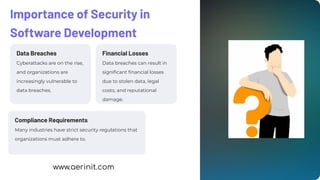
Importance of Security in
Software Development
Data Breaches
Cyberattacks are on the rise,
and organizations are
increasingly vulnerable to
data breaches.
Financial Losses
Data breaches can result in
significant financial losses
due to stolen data, legal
costs, and reputational
damage.
Compliance Requirements
Many industries have strict security regulations that
organizations must adhere to.
www.aerinit.com
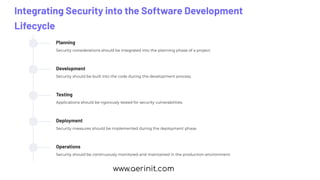
Integrating Security into the Software Development
Lifecycle
Planning
Security considerations should be integrated into the planning phase of a project.
Development
Security should be built into the code during the development process.
Testing
Applications should be rigorously tested for security vulnerabilities.
Deployment
Security measures should be implemented during the deployment phase.
Operations
Security should be continuously monitored and maintained in the production environment.
www.aerinit.com
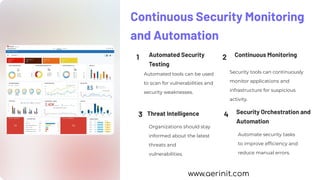
Continuous Security Monitoring
and Automation
1 Automated Security
Testing
Automated tools can be used
to scan for vulnerabilities and
security weaknesses.
2 Continuous Monitoring
Security tools can continuously
monitor applications and
infrastructure for suspicious
activity.
3 Threat Intelligence
Organizations should stay
informed about the latest
threats and
vulnerabilities.
4 Security Orchestration and
Automation
Automate security tasks
to improve efficiency and
reduce manual errors.
www.aerinit.com
Collaboration between
Development, Security, and
Operations Teams
Development Security Operations
Develop secure
code
Provide security
expertise
Ensure secure
infrastructure
Implement
security best
practices
Conduct security
assessments
Monitor security
events
Collaborate with
security team
Work with
developers to
address security
issues
Provide feedback
to developers
and security
team
www.aerinit.com
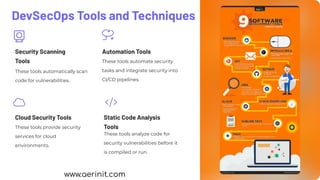
DevSecOps Tools and Techniques
Security Scanning
Tools
These tools automatically scan
code for vulnerabilities.
Automation Tools
These tools automate security
tasks and integrate security into
CI/CD pipelines.
Cloud Security Tools
These tools provide security
services for cloud
environments.
Static Code Analysis
Tools
These tools analyze code for
security vulnerabilities before it
is compiled or run.
www.aerinit.com
Challenges and Considerations in Implementing DevSecOps
Cultural Change
Shifting the mindset of developers and security teams to embrace shared responsibility.
Skill Gaps
Training and development are needed to equip teams with DevSecOps skills.
Tool Integration
Selecting and integrating the right tools for security automation and orchestration.
Continuous Improvement
Constantly evaluating and refining DevSecOps processes to stay ahead of evolving threats.
www.aerinit.com
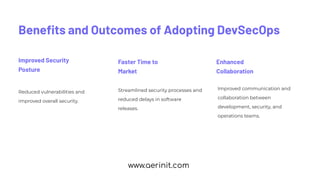
Benefits and Outcomes of Adopting DevSecOps
Improved Security
Posture
Reduced vulnerabilities and
improved overall security.
Faster Time to
Market
Streamlined security processes and
reduced delays in software
releases.
Enhanced
Collaboration
Improved communication and
collaboration between
development, security, and
operations teams.
www.aerinit.com
www.aerinit.com

Devsecops – Aerin IT Services

  • 1.
    Introduction to DevSecOps DevSecOps isa software development approach that integrates security into every stage of the development lifecycle. It aims to build secure applications more efficiently and effectively. www.aerinit.com
  • 2.
    Importance of Securityin Software Development Data Breaches Cyberattacks are on the rise, and organizations are increasingly vulnerable to data breaches. Financial Losses Data breaches can result in significant financial losses due to stolen data, legal costs, and reputational damage. Compliance Requirements Many industries have strict security regulations that organizations must adhere to. www.aerinit.com
  • 3.
    Integrating Security intothe Software Development Lifecycle Planning Security considerations should be integrated into the planning phase of a project. Development Security should be built into the code during the development process. Testing Applications should be rigorously tested for security vulnerabilities. Deployment Security measures should be implemented during the deployment phase. Operations Security should be continuously monitored and maintained in the production environment. www.aerinit.com
  • 4.
    Continuous Security Monitoring andAutomation 1 Automated Security Testing Automated tools can be used to scan for vulnerabilities and security weaknesses. 2 Continuous Monitoring Security tools can continuously monitor applications and infrastructure for suspicious activity. 3 Threat Intelligence Organizations should stay informed about the latest threats and vulnerabilities. 4 Security Orchestration and Automation Automate security tasks to improve efficiency and reduce manual errors. www.aerinit.com
  • 5.
    Collaboration between Development, Security,and Operations Teams Development Security Operations Develop secure code Provide security expertise Ensure secure infrastructure Implement security best practices Conduct security assessments Monitor security events Collaborate with security team Work with developers to address security issues Provide feedback to developers and security team www.aerinit.com
  • 6.
    DevSecOps Tools andTechniques Security Scanning Tools These tools automatically scan code for vulnerabilities. Automation Tools These tools automate security tasks and integrate security into CI/CD pipelines. Cloud Security Tools These tools provide security services for cloud environments. Static Code Analysis Tools These tools analyze code for security vulnerabilities before it is compiled or run. www.aerinit.com
  • 7.
    Challenges and Considerationsin Implementing DevSecOps Cultural Change Shifting the mindset of developers and security teams to embrace shared responsibility. Skill Gaps Training and development are needed to equip teams with DevSecOps skills. Tool Integration Selecting and integrating the right tools for security automation and orchestration. Continuous Improvement Constantly evaluating and refining DevSecOps processes to stay ahead of evolving threats. www.aerinit.com
  • 8.
    Benefits and Outcomesof Adopting DevSecOps Improved Security Posture Reduced vulnerabilities and improved overall security. Faster Time to Market Streamlined security processes and reduced delays in software releases. Enhanced Collaboration Improved communication and collaboration between development, security, and operations teams. www.aerinit.com
  • 9.