Designing DevOps workflows for different deployment options requires careful planning to ensure scalability, flexibility, and efficiency while accommodating the unique requirements of each deployment strategy. Below is a high-level guide for designing DevOps practices tailored to different deployment options:
1. Deployment Options Overview
On-Premises Deployment
Applications are hosted on physical servers or private data centers.
Cloud Deployment
Applications are hosted on public, private, or hybrid cloud platforms (e.g., AWS, Azure, Google Cloud).
Containerized Deployment
Applications are packaged as containers (e.g., Docker) and orchestrated using tools like Kubernetes.
Serverless Deployment
Applications run as functions without managing underlying infrastructure (e.g., AWS Lambda, Azure Functions).
Edge Deployment
Applications are deployed closer to users on edge devices or servers for low-latency processing.
2. DevOps Design Principles
Automation
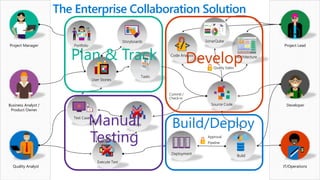
Implement CI/CD pipelines to automate build, test, and deployment processes.
Automate infrastructure provisioning with Infrastructure as Code (IaC) tools (e.g., Terraform, AWS CloudFormation).
Scalability
Design pipelines to handle scaling needs for cloud and container-based deployments.
Use auto-scaling mechanisms for cloud or serverless environments.
Monitoring & Observability
Integrate monitoring tools (e.g., Prometheus, Grafana, ELK stack) to track application performance across deployment environments.
Use log aggregation and distributed tracing tools for debugging.
Security
Automate vulnerability scanning (e.g., with tools like Snyk or Trivy).
Implement secrets management (e.g., HashiCorp Vault, AWS Secrets Manager).
Ensure compliance with security policies regardless of deployment type.
3. DevOps Design for Specific Deployment Options
a. On-Premises Deployment
Configuration Management: Use tools like Ansible, Puppet, or Chef to manage on-premises environments.
CI/CD Pipelines: Design pipelines that deploy artifacts directly to on-premises servers.
Backup and Recovery: Implement robust disaster recovery and backup strategies for physical infrastructure.
Monitoring: Use tools like Nagios or Zabbix for system monitoring.
b. Cloud Deployment
IaC Tools: Use Terraform, AWS CloudFormation, or Azure Resource Manager to provision and manage cloud resources.
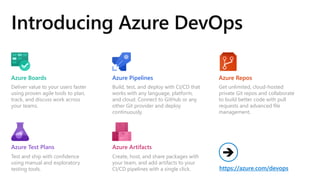
CI/CD Pipelines: Integrate deployment pipelines with cloud platforms using APIs or native tools (e.g., AWS CodePipeline, Azure DevOps).
Cloud-Specific Features: Leverage cloud-native services like load balancers, auto-scaling, and managed databases.
c. Containerized Deployment
Container Image Management: Use Docker and a container registry (e.g., Docker Hub, Amazon ECR) for version control of images.
Orchestration: Integrate Kubernetes or Docker Swarm for container orchestration.
CI/CD Pipelines: Build pipelines to create, test, and deploy container images.
Monitoring: Use tools like Prometheus, Grafana, or Kubernetes-native monitoring


![[JAZUG Tohoku Azure DevOps] Azure DevOps](https://cdn.slidesharecdn.com/ss_thumbnails/20181130jazugsendaiazuredevops-181201031328-thumbnail.jpg?width=640&height=640&fit=bounds)


![How Big Brands are Taking Your Traffic in Alberta [Data Inside].pptx](https://cdn.slidesharecdn.com/ss_thumbnails/howbigbrandsaretakingyourtrafficinalbertadatainside-260123180142-42d276f3-thumbnail.jpg?width=640&height=640&fit=bounds)


