SERVICES & COMPANY
DEVOPS CONSULTING
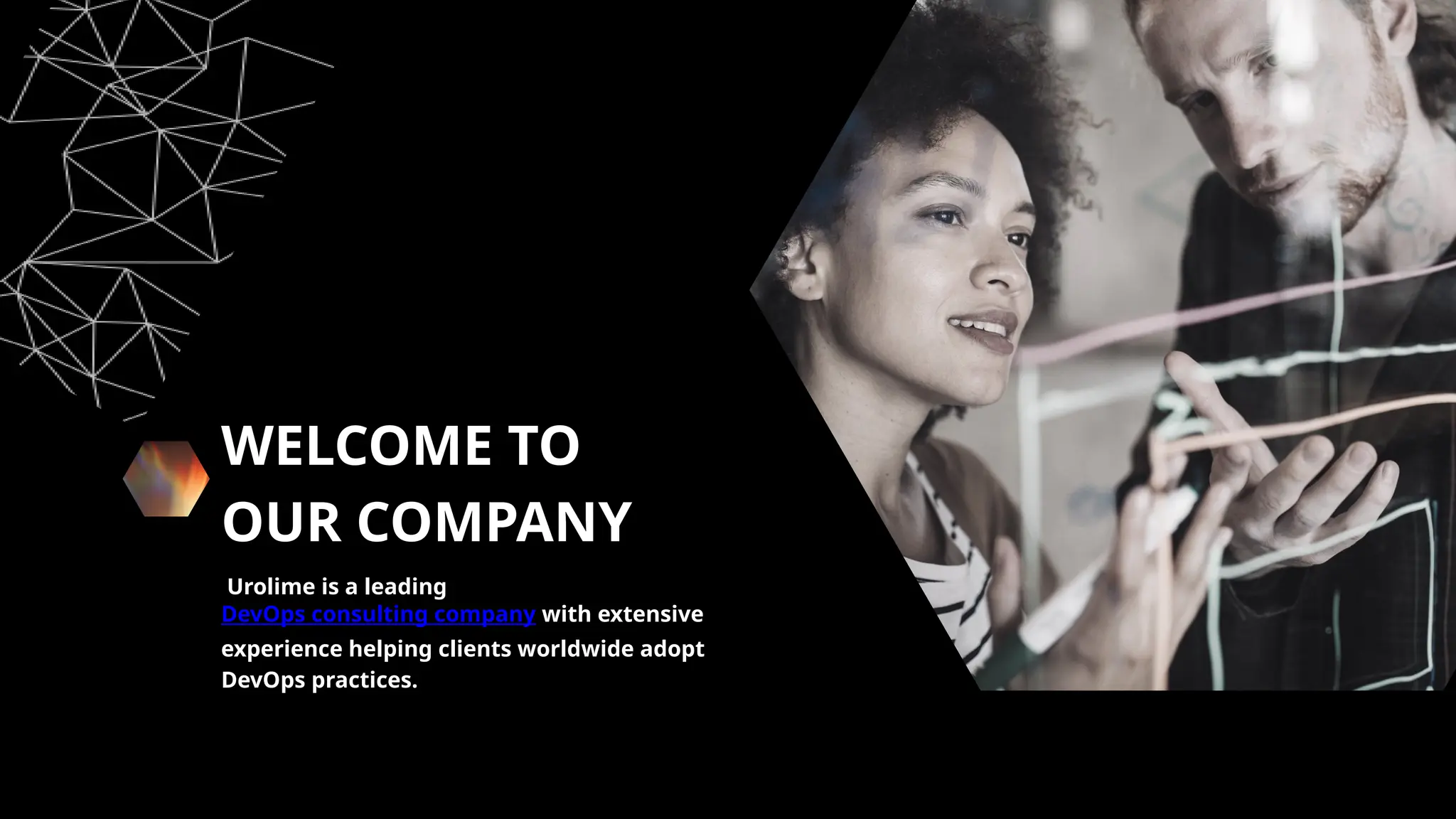
WELCOME TO
OUR COMPANY
Urolime is a leading
DevOps consulting company with extensive
experience helping clients worldwide adopt
DevOps practices.
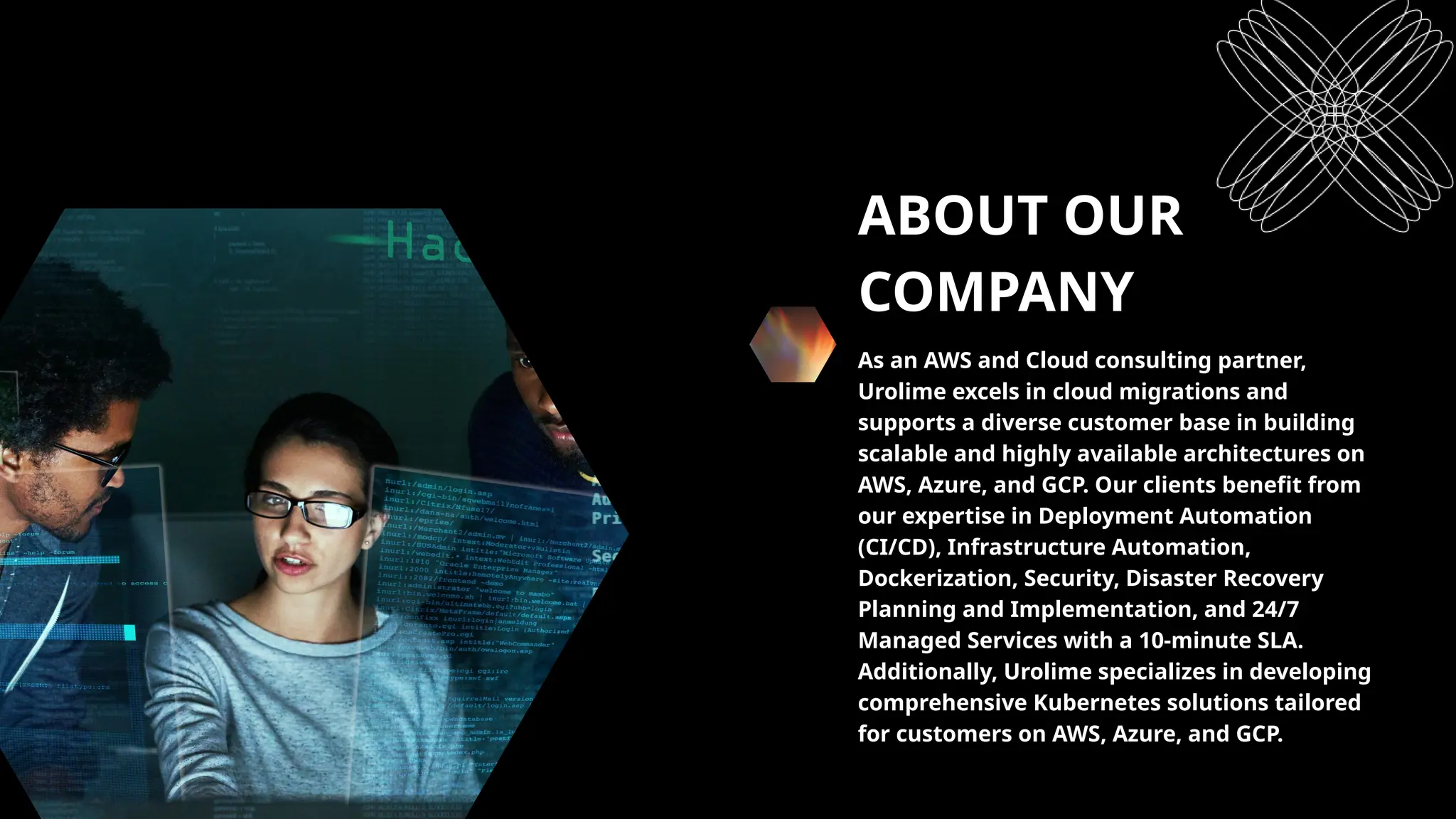
ABOUT OUR
COMPANY
As an AWS and Cloud consulting partner,
Urolime excels in cloud migrations and
supports a diverse customer base in building
scalable and highly available architectures on
AWS, Azure, and GCP. Our clients benefit from
our expertise in Deployment Automation
(CI/CD), Infrastructure Automation,
Dockerization, Security, Disaster Recovery
Planning and Implementation, and 24/7
Managed Services with a 10-minute SLA.
Additionally, Urolime specializes in developing
comprehensive Kubernetes solutions tailored
for customers on AWS, Azure, and GCP.
DevOps is a set of practices that combines software
development (Dev) and IT operations (Ops) to
shDevOps is a set of practices that combines software
development (Dev) and IT operations (Ops) to shorten
the development life cycle and deliver high-quality
software continuously. The main goals of DevOps are
to improve collaboration between development and
operations teams, automate processes, and enhance
the deployment and monitoring of applications.orten
the development life cycle and deliver high-quality
software continuously. The main goals of DevOps are
to improve collaboration between development and
operations teams, automate processes, and enhance
the deployment and monitoring of applications.
WHAT IS DEVOPS?
Definition of DevOps
Understanding DevOps
KEY PRINCIPLES OF DEVOPS INCLUDE:
1.Collaboration: Fostering a culture of teamwork among development, operations, and other
stakeholders to improve communication and efficiency.
2.Automation: Automating repetitive tasks such as testing, deployment, and infrastructure
management to speed up processes and reduce human error.
3.Continuous Integration and Continuous Deployment (CI/CD): Implementing practices that allow
code changes to be automatically tested and deployed to production environments, facilitating rapid
delivery of new features and bug fixes.
4.Monitoring and Feedback: Continuously monitoring applications in production to gather feedback
and make necessary adjustments, which helps in improving future development cycles.
5.Infrastructure as Code (IaC): Managing infrastructure through code and automation, allowing for
more consistent and scalable configurations.
CHALLENGES FACED BY BUSINESSES
Common Business Challenges
• Slow software delivery
• Lack of collaboration between development and operations
• Frequent system downtimes
• Inefficient resource management and scaling
HOW WE HELP
Our DevOps Consulting Services
• DevOps Strategy & Assessment: Analyzing current workflows and proposing a tailored DevOps
roadmap.
• Automation & CI/CD: Setting up pipelines for continuous integration and delivery.
• Cloud and Infrastructure Management: Migrating and managing cloud resources with DevOps
practices.
• DevOps Tools Implementation: Selecting and implementing the right tools (Jenkins,
Kubernetes, Docker, etc.).
THANK YOU

Devops Consulting Services & Company.pptx

  • 1.
  • 2.
    WELCOME TO OUR COMPANY Urolimeis a leading DevOps consulting company with extensive experience helping clients worldwide adopt DevOps practices.
  • 3.
    ABOUT OUR COMPANY As anAWS and Cloud consulting partner, Urolime excels in cloud migrations and supports a diverse customer base in building scalable and highly available architectures on AWS, Azure, and GCP. Our clients benefit from our expertise in Deployment Automation (CI/CD), Infrastructure Automation, Dockerization, Security, Disaster Recovery Planning and Implementation, and 24/7 Managed Services with a 10-minute SLA. Additionally, Urolime specializes in developing comprehensive Kubernetes solutions tailored for customers on AWS, Azure, and GCP.
  • 4.
    DevOps is aset of practices that combines software development (Dev) and IT operations (Ops) to shDevOps is a set of practices that combines software development (Dev) and IT operations (Ops) to shorten the development life cycle and deliver high-quality software continuously. The main goals of DevOps are to improve collaboration between development and operations teams, automate processes, and enhance the deployment and monitoring of applications.orten the development life cycle and deliver high-quality software continuously. The main goals of DevOps are to improve collaboration between development and operations teams, automate processes, and enhance the deployment and monitoring of applications. WHAT IS DEVOPS? Definition of DevOps Understanding DevOps
  • 5.
    KEY PRINCIPLES OFDEVOPS INCLUDE: 1.Collaboration: Fostering a culture of teamwork among development, operations, and other stakeholders to improve communication and efficiency. 2.Automation: Automating repetitive tasks such as testing, deployment, and infrastructure management to speed up processes and reduce human error. 3.Continuous Integration and Continuous Deployment (CI/CD): Implementing practices that allow code changes to be automatically tested and deployed to production environments, facilitating rapid delivery of new features and bug fixes. 4.Monitoring and Feedback: Continuously monitoring applications in production to gather feedback and make necessary adjustments, which helps in improving future development cycles. 5.Infrastructure as Code (IaC): Managing infrastructure through code and automation, allowing for more consistent and scalable configurations.
  • 6.
    CHALLENGES FACED BYBUSINESSES Common Business Challenges • Slow software delivery • Lack of collaboration between development and operations • Frequent system downtimes • Inefficient resource management and scaling
  • 7.
    HOW WE HELP OurDevOps Consulting Services • DevOps Strategy & Assessment: Analyzing current workflows and proposing a tailored DevOps roadmap. • Automation & CI/CD: Setting up pipelines for continuous integration and delivery. • Cloud and Infrastructure Management: Migrating and managing cloud resources with DevOps practices. • DevOps Tools Implementation: Selecting and implementing the right tools (Jenkins, Kubernetes, Docker, etc.).
  • 8.