

COMPREHENSION AIDS
What is Reading Comprehension?
Reading comprehension skills
separate the "passive" unskilled
reader from the "active"
readers.
Skilled readers…
• Predict what will happen next in a story using clues
presented in text
• Create questions about the main idea, message, or
plot of the text
• Monitor understanding of the sequence, context, or
characters
• Clarify parts of the text which have confused them
• Connect the events in the text to prior knowledge
or experience
What is the importance of learning reading
comprehension skills ?
• increase the pleasure and effectiveness of reading
• help in all the other subjects and in the personal
and professional lives
• used as a measure when taking high stake test that
control advancement through elementary, middle,
and high school and that determine entrance to
college
• require a long term strategy in which all the reading
skills areas (phonics, fluency, vocabulary) will
contribute to success
How can reading comprehension be taught?
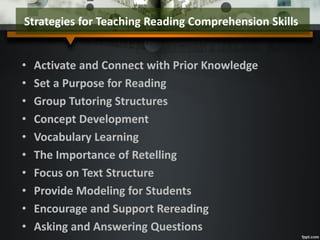
• Activate and Connect with Prior Knowledge
• Set a Purpose for Reading
• Group Tutoring Structures
• Concept Development
• Vocabulary Learning
• The Importance of Retelling
• Focus on Text Structure
• Provide Modeling for Students
• Encourage and Support Rereading
• Asking and Answering Questions
Strategies for Teaching Reading Comprehension Skills
1. Connect with Prior Knowledge
2. Understand Events
3. Focus on Text Structure
4. Use Visual Aids
Developing Narrative Retellings:
1. Focus on developing general as opposed to specific
topic knowledge
2. Teaching students to identify and use general
expectations like these before and during reading will
help them better comprehend and remember text
3. Organize comprehension and retelling according to
the structure of the text
4. Expository structures include: description, sequence,
cause-effect, problem/solution, compare-contrast
5. Visually represent the structure
General Principles for Developing Effective Expository Retellings
1.Brief
2.Accurate
3.Relatively Sequential Structure
4.Coherent
Expository Retelling
• provides a visual aid to facilitate learning
and instruction
• functions as a visual “picture knowledge”
Powerful teaching and learning tools
• used as pre-reading or prewriting strategies
to activate background knowledge or
generate interest
Graphic Organizer
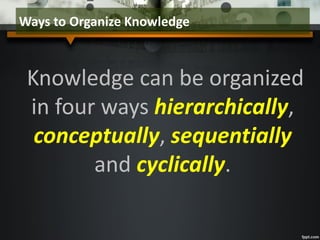
Knowledge can be organized
in four ways hierarchically,
conceptually, sequentially
and cyclically.
Ways to Organize Knowledge
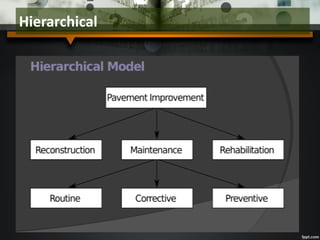
Hierarchical
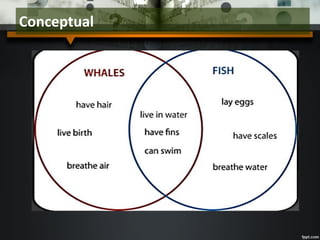
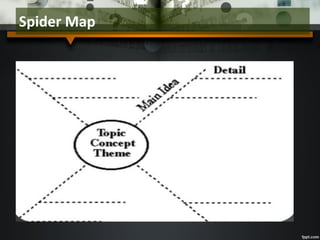
Conceptual
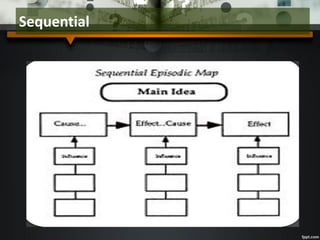
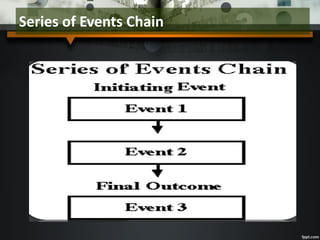
Sequential
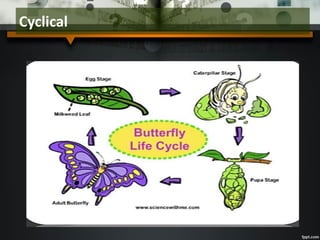
Cyclical
Spider Map
Series of Events Chain
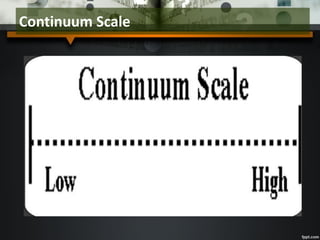
Continuum Scale
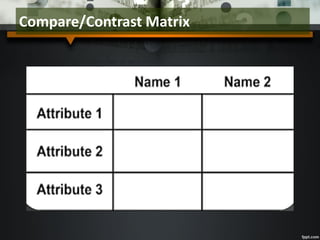
Compare/Contrast Matrix
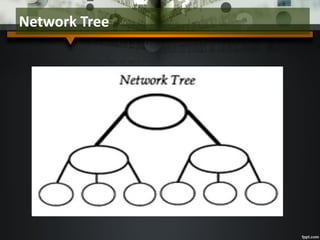
Network Tree
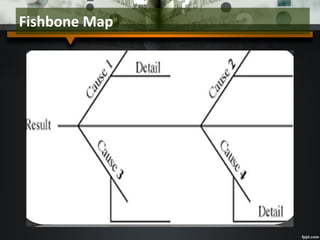
Fishbone Map
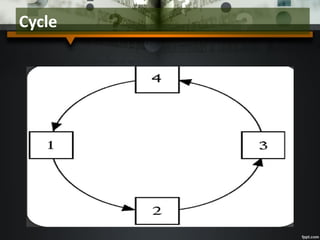
Cycle
Three intellectually refined skills
1. The art of inquiry or of
asking relevant question
2. Processing information
3. Validating answer
Reference Materials
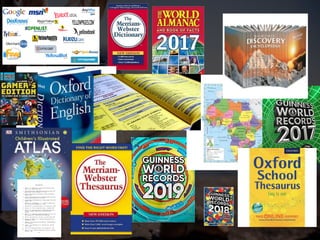
Reference Materials
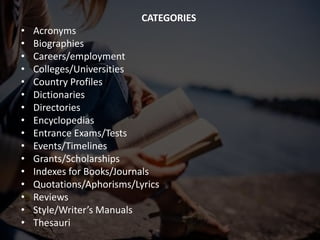
CATEGORIES
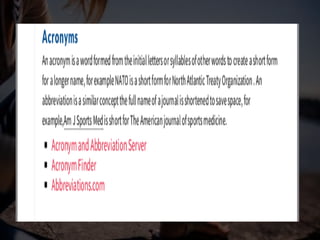
• Acronyms
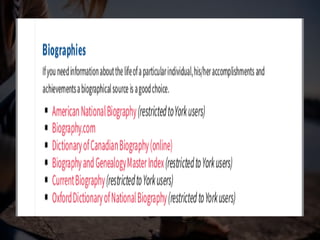
• Biographies
• Careers/employment
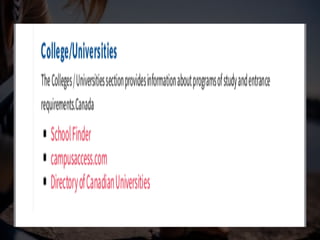
• Colleges/Universities
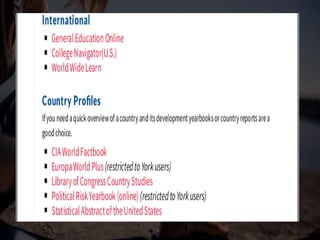
• Country Profiles
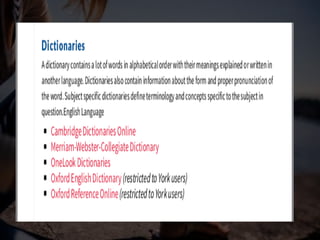
• Dictionaries
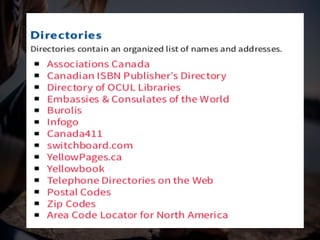
• Directories
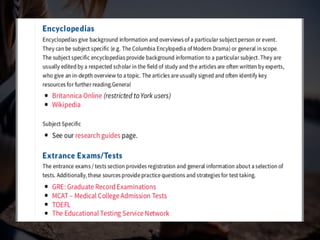
• Encyclopedias
• Entrance Exams/Tests
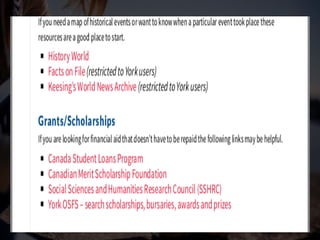
• Events/Timelines
• Grants/Scholarships
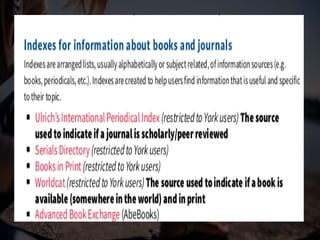
• Indexes for Books/Journals
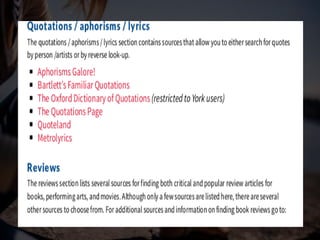
• Quotations/Aphorisms/Lyrics
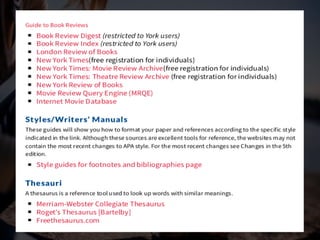
• Reviews
• Style/Writer’s Manuals
• Thesauri
TO GOD BE THE GLORY!

Developmental Reading lesson 3 lecture only

  • 1.
  • 2.
    What is ReadingComprehension?
  • 3.
    Reading comprehension skills separatethe "passive" unskilled reader from the "active" readers.
  • 4.
    Skilled readers… • Predictwhat will happen next in a story using clues presented in text • Create questions about the main idea, message, or plot of the text • Monitor understanding of the sequence, context, or characters • Clarify parts of the text which have confused them • Connect the events in the text to prior knowledge or experience
  • 5.
    What is theimportance of learning reading comprehension skills ?
  • 6.
    • increase thepleasure and effectiveness of reading • help in all the other subjects and in the personal and professional lives • used as a measure when taking high stake test that control advancement through elementary, middle, and high school and that determine entrance to college • require a long term strategy in which all the reading skills areas (phonics, fluency, vocabulary) will contribute to success
  • 7.
    How can readingcomprehension be taught?
  • 8.
    • Activate andConnect with Prior Knowledge • Set a Purpose for Reading • Group Tutoring Structures • Concept Development • Vocabulary Learning • The Importance of Retelling • Focus on Text Structure • Provide Modeling for Students • Encourage and Support Rereading • Asking and Answering Questions Strategies for Teaching Reading Comprehension Skills
  • 9.
    1. Connect withPrior Knowledge 2. Understand Events 3. Focus on Text Structure 4. Use Visual Aids Developing Narrative Retellings:
  • 10.
    1. Focus ondeveloping general as opposed to specific topic knowledge 2. Teaching students to identify and use general expectations like these before and during reading will help them better comprehend and remember text 3. Organize comprehension and retelling according to the structure of the text 4. Expository structures include: description, sequence, cause-effect, problem/solution, compare-contrast 5. Visually represent the structure General Principles for Developing Effective Expository Retellings
  • 11.
  • 12.
    • provides avisual aid to facilitate learning and instruction • functions as a visual “picture knowledge” Powerful teaching and learning tools • used as pre-reading or prewriting strategies to activate background knowledge or generate interest Graphic Organizer
  • 13.
    Knowledge can beorganized in four ways hierarchically, conceptually, sequentially and cyclically. Ways to Organize Knowledge
  • 14.
  • 15.
  • 16.
  • 17.
  • 18.
  • 19.
  • 20.
  • 21.
  • 22.
  • 23.
  • 24.
  • 25.
    Three intellectually refinedskills 1. The art of inquiry or of asking relevant question 2. Processing information 3. Validating answer
  • 26.
  • 28.
  • 29.
    CATEGORIES • Acronyms • Biographies •Careers/employment • Colleges/Universities • Country Profiles • Dictionaries • Directories • Encyclopedias • Entrance Exams/Tests • Events/Timelines • Grants/Scholarships • Indexes for Books/Journals • Quotations/Aphorisms/Lyrics • Reviews • Style/Writer’s Manuals • Thesauri
  • 43.
    TO GOD BETHE GLORY!