Using Models of Instruction Tools for Teachers
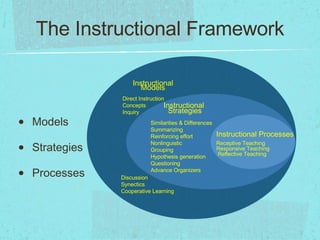
The Instructional Framework Models Strategies Processes Instructional Models Direct Instruction Concepts Inquiry Discussion Synectics Cooperative Learning Instructional  Strategies Similarities & Differences  Summarizing Reinforcing effort Nonlinguistic Grouping  Hypothesis generation Questioning  Advance Organizers Instructional Processes Receptive Teaching  Responsive Teaching  Reflective Teaching
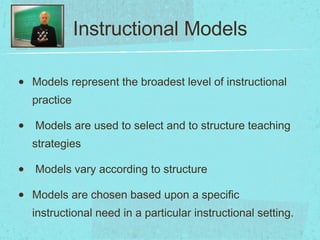
Instructional Models Models represent the broadest level of instructional practice Models are used to select and to structure teaching strategies Models vary according to structure Models are chosen based upon a specific instructional need in a particular instructional setting.
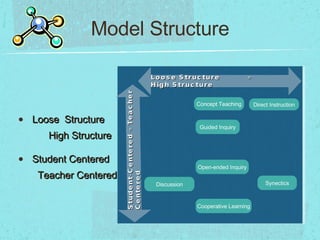
Model Structure Loose  Structure  High Structure Student Centered  Teacher Centered Concept Teaching Guided Inquiry Direct Instruction Open-ended Inquiry Synectics Cooperative Learning Discussion Loose Structure  =  High Structure Student-Centered = Teacher Centered
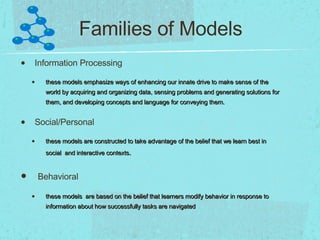
Families of Models Information Processing these models emphasize ways of enhancing our innate drive to make sense of the world by acquiring and organizing data, sensing problems and generating solutions for them, and developing concepts and language for conveying them. Social/Personal these models are constructed to take advantage of the belief that we learn best in social  and interactive contexts . Behavioral these models  are based on the belief that learners modify behavior in response to information about how successfully tasks are navigated
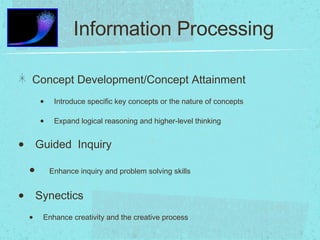
Information Processing Concept Development/Concept Attainment Introduce specific key concepts or the nature of concepts Expand logical reasoning and higher-level thinking Guided  Inquiry Enhance inquiry and problem solving skills Synectics Enhance creativity and the creative process
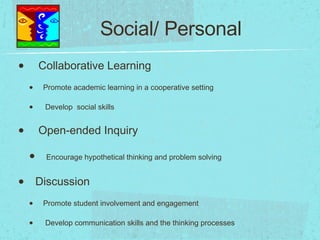
Social/ Personal Collaborative Learning Promote academic learning in a cooperative setting Develop  social skills Open-ended Inquiry Encourage hypothetical thinking and problem solving Discussion Promote student involvement and engagement Develop communication skills and the thinking processes
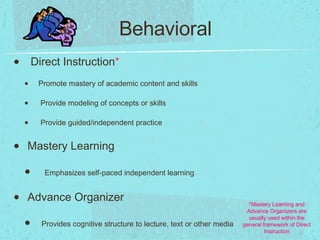
Behavioral Direct Instruction * Promote mastery of academic content and skills Provide modeling of concepts or skills Provide guided/independent practice Mastery Learning Emphasizes self-paced independent learning Advance Organizer Provides cognitive structure to lecture, text or other media *Mastery Learning and Advance Organizers are usually used within the general framework of Direct Instruction

Models

  • 1.
    Using Models ofInstruction Tools for Teachers
  • 2.
    The Instructional FrameworkModels Strategies Processes Instructional Models Direct Instruction Concepts Inquiry Discussion Synectics Cooperative Learning Instructional Strategies Similarities & Differences Summarizing Reinforcing effort Nonlinguistic Grouping Hypothesis generation Questioning Advance Organizers Instructional Processes Receptive Teaching Responsive Teaching Reflective Teaching
  • 3.
    Instructional Models Modelsrepresent the broadest level of instructional practice Models are used to select and to structure teaching strategies Models vary according to structure Models are chosen based upon a specific instructional need in a particular instructional setting.
  • 4.
    Model Structure Loose Structure High Structure Student Centered Teacher Centered Concept Teaching Guided Inquiry Direct Instruction Open-ended Inquiry Synectics Cooperative Learning Discussion Loose Structure = High Structure Student-Centered = Teacher Centered
  • 5.
    Families of ModelsInformation Processing these models emphasize ways of enhancing our innate drive to make sense of the world by acquiring and organizing data, sensing problems and generating solutions for them, and developing concepts and language for conveying them. Social/Personal these models are constructed to take advantage of the belief that we learn best in social and interactive contexts . Behavioral these models are based on the belief that learners modify behavior in response to information about how successfully tasks are navigated
  • 6.
    Information Processing ConceptDevelopment/Concept Attainment Introduce specific key concepts or the nature of concepts Expand logical reasoning and higher-level thinking Guided Inquiry Enhance inquiry and problem solving skills Synectics Enhance creativity and the creative process
  • 7.
    Social/ Personal CollaborativeLearning Promote academic learning in a cooperative setting Develop social skills Open-ended Inquiry Encourage hypothetical thinking and problem solving Discussion Promote student involvement and engagement Develop communication skills and the thinking processes
  • 8.
    Behavioral Direct Instruction* Promote mastery of academic content and skills Provide modeling of concepts or skills Provide guided/independent practice Mastery Learning Emphasizes self-paced independent learning Advance Organizer Provides cognitive structure to lecture, text or other media *Mastery Learning and Advance Organizers are usually used within the general framework of Direct Instruction