Development Notes

              Alex King
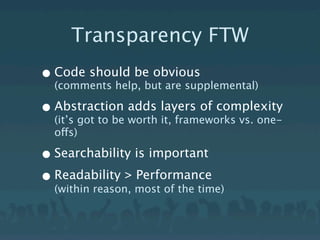
Transparency FTW
• Code should be obvious
  (comments help, but are supplemental)

• Abstraction worth layers of complexity
  (it’s got to be
                  adds
                       it, frameworks vs. one-
  offs)

• Searchability is important
• Readability > most of the time)
  (within reason,
                  Performance
Example
      class Example {
          static $meta_prefix = ‘_foo_’;

NO!       [...]

          function bar() {
              update_post_meta($post_id, self::$meta_prefix.‘my_key’, 1);
          }
      }


      class Example {


YES       [...]

          function bar() {
              update_post_meta($post_id, ‘_foo_my_key’, 1);
          }
      }
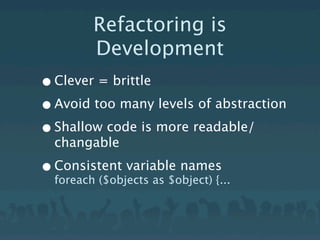
Refactoring is
          Development
• Clever = brittle
• Avoid too many levels of abstraction
• Shallow code is more readable/
  changable

• Consistent variable names
  foreach ($objects as $object) {...
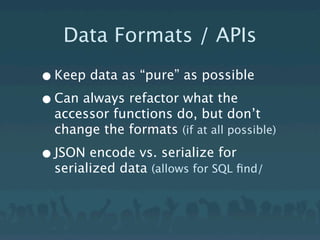
Data Formats / APIs

• Keep data as “pure” as possible
• Can always refactor what the
  accessor functions do, but don’t
  change the formats (if at all possible)

• JSON encode vs. serialize for
  serialized data (allows for SQL find/
Example
// hard-coded                   // database backed
function foo() {                function foo() {
    return array(                   global $wpdb;
         ‘bar’,
         ‘baz’,                     // some stuff happens here
    );
}                                   return $wpdb->get_col(“
                                        SELECT [...]
                                    ”);
// filtered                     }
function foo() {
    return apply_filters(
         ‘foo_data’,
         array(
             ‘bar’,
             ‘baz’,
         )
    );
}
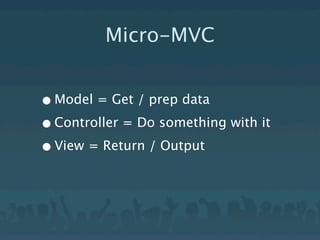
Micro-MVC


• Model = Get / prep data
• Controller = Do something with it
• View = Return / Output
Example
// munged controller / view         // controller
foreach ($items as $item) {         $_items = array();
    $item->prop = utility($item);   foreach ($items as $item) {
    echo [$item...];                    $item->prop = utility($item);
}                                       $_items[‘id_’.$item->id] = $item;
                                    }
                                    $items = $_items;

                                    // we can insert another step here
                                    // easily when refactoring

                                    // view
                                    foreach ($items as $item) {
                                        echo [$item...];
                                    }
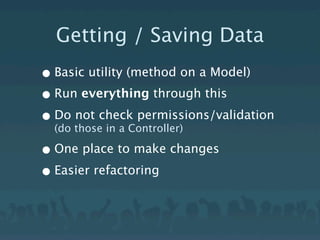
Getting / Saving Data
• Basic utility (method on a Model)
• Run everything through this
• Do thosecheck permissions/validation
  (do
      not
           in a Controller)

• One place to make changes
• Easier refactoring
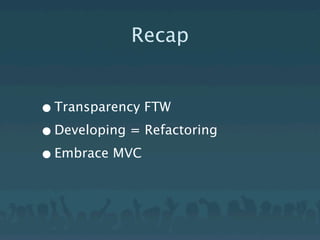
Recap


• Transparency FTW
• Developing = Refactoring
• Embrace MVC
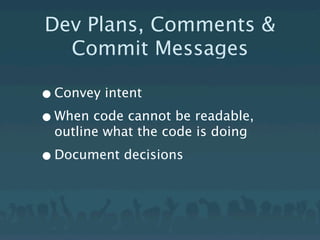
Dev Plans, Comments &
  Commit Messages

• Convey intent
• When code cannot be readable,
  outline what the code is doing

• Document decisions

Development Approach

  • 1.
  • 2.
    Transparency FTW • Codeshould be obvious (comments help, but are supplemental) • Abstraction worth layers of complexity (it’s got to be adds it, frameworks vs. one- offs) • Searchability is important • Readability > most of the time) (within reason, Performance
  • 3.
    Example class Example { static $meta_prefix = ‘_foo_’; NO! [...] function bar() { update_post_meta($post_id, self::$meta_prefix.‘my_key’, 1); } } class Example { YES [...] function bar() { update_post_meta($post_id, ‘_foo_my_key’, 1); } }
  • 4.
    Refactoring is Development • Clever = brittle • Avoid too many levels of abstraction • Shallow code is more readable/ changable • Consistent variable names foreach ($objects as $object) {...
  • 5.
    Data Formats /APIs • Keep data as “pure” as possible • Can always refactor what the accessor functions do, but don’t change the formats (if at all possible) • JSON encode vs. serialize for serialized data (allows for SQL find/
  • 6.
    Example // hard-coded // database backed function foo() { function foo() { return array( global $wpdb; ‘bar’, ‘baz’, // some stuff happens here ); } return $wpdb->get_col(“ SELECT [...] ”); // filtered } function foo() { return apply_filters( ‘foo_data’, array( ‘bar’, ‘baz’, ) ); }
  • 7.
    Micro-MVC • Model =Get / prep data • Controller = Do something with it • View = Return / Output
  • 8.
    Example // munged controller/ view // controller foreach ($items as $item) { $_items = array(); $item->prop = utility($item); foreach ($items as $item) { echo [$item...]; $item->prop = utility($item); } $_items[‘id_’.$item->id] = $item; } $items = $_items; // we can insert another step here // easily when refactoring // view foreach ($items as $item) { echo [$item...]; }
  • 9.
    Getting / SavingData • Basic utility (method on a Model) • Run everything through this • Do thosecheck permissions/validation (do not in a Controller) • One place to make changes • Easier refactoring
  • 10.
    Recap • Transparency FTW •Developing = Refactoring • Embrace MVC
  • 11.
    Dev Plans, Comments& Commit Messages • Convey intent • When code cannot be readable, outline what the code is doing • Document decisions

Editor's Notes