Marketing communication:
Marketing communications are the means
by which firm attempts to inform, persuade, and
remind consumers directly or indirectly about the
products and brands they sell. In a sense,
marketing communications represent the ‘voice’ of
the company and its brands and are a means by
which it can establish a dialogue and build
relationships with consumers.
1. Role of marketing communication
2. Developing effective communication
3. Deciding on marketing communication mix
4. Managing the integrated marketing
communications process
1.Role of Marketing Communication
 The changing marketing communication Environment
 Marketing Communication, Brand Equity, and Sales
 The communications process models
Marketing communication mix:
 Advertising
 Sales promotion
 Events and experiences
 Public relations and publicity
 Direct marketing
 Interactive marketing
 Word of mouth marketing
 Personal selling
Marketing
communication
program
Sale
promotion
Events and
experiences
Public
relations &
publicity
Direct and
interactive
marketing
Word of mouth
marketing
Personal
selling
Brand
awareness
Brand image
Brand
response
Brand
relationships
Brand equity
advertising
Direct
marketing
Communication process model
 Macro model
message
Noise
Feedback Response
Micro model:
STAGES AIDA
MODEL
HIERARCHY
OF EFFECTS
MODEL
INNOVATIO
N
ADOPTION
COMMUNIC
ATION
MODEL
COGNITIVE
STAGE
Attention Awareness
knowledge
Awareness Exposure
Reception
Cognitive
response
AFFECTIVE
STAGE
Interest
Desire
Liking
Preference
Conviction
Interest
Evaluation
Attitude
Intention
BEHAVIOUR
STAGE
Action
Purchase
Trial
Adoption
Behavior
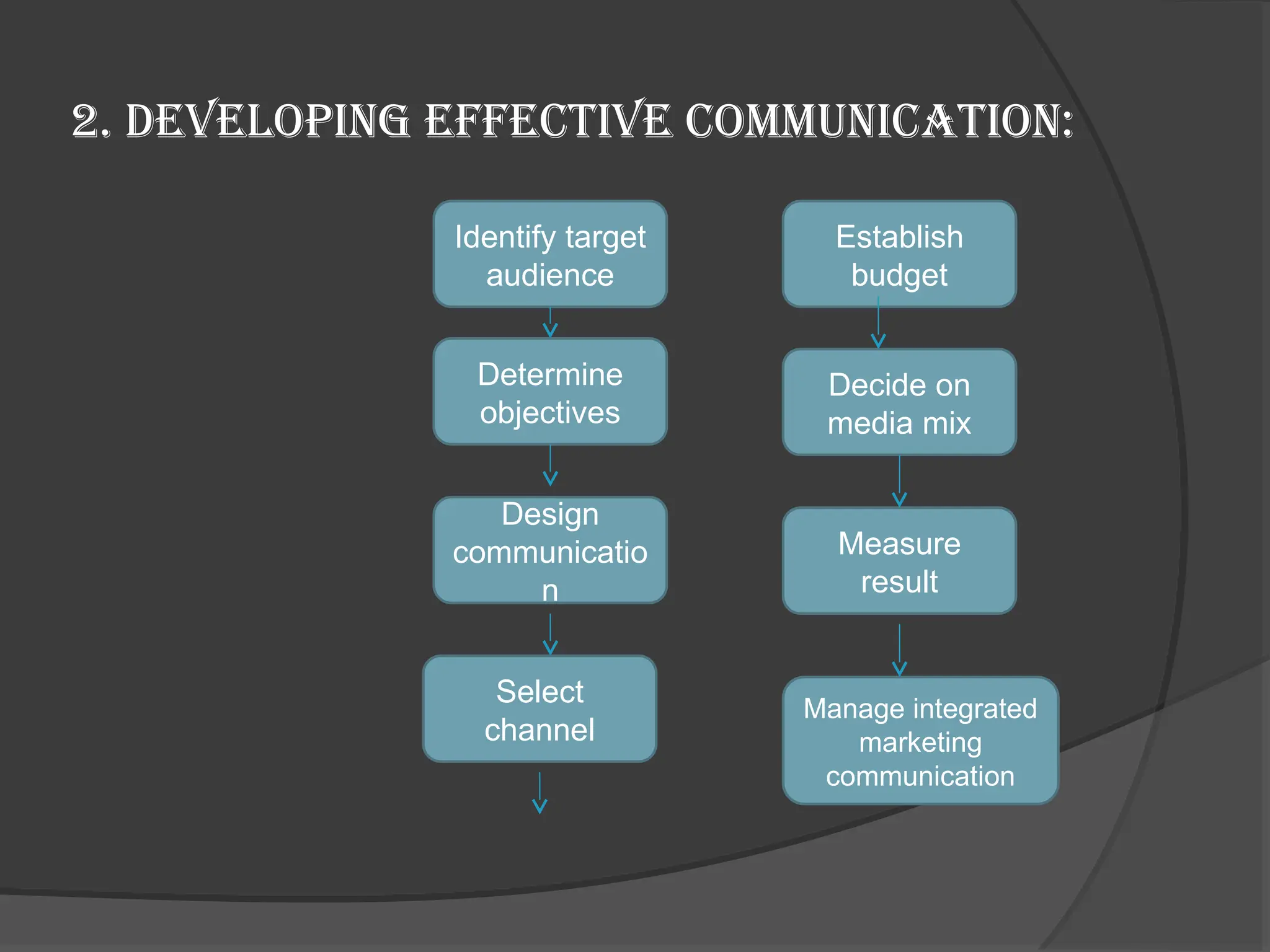
2. Developing effective communication:
Identify target
audience
Determine
objectives
Design
communicatio
n
Select
channel
Manage integrated
marketing
communication
Decide on
media mix
Measure
result
Establish
budget
Identify the target audience
Determine the communication objective
 category needed
 Brand awareness
 Brand attitude
 Brand purchase intention
Design and communications
 Marketing strategy
 Creative strategy
 Message source
 Global adaptation
Select the communication channel :
 Personal
 Non-personal
 Integration of communications channel
Establish the total marketing communications
budget:
 Affordable method
 Percentage-of-sales method
 Competitive parity method
 Objective and task method
3. Deciding on marketing communication
mix:
With in the industry the companies
can differ considerably in their media and
channel choices.
Characteristics:
 Advertising
 Sales promotion
 Public relation and publicity
 Events and experiences
 Direct and interactive marketing
 Word of mouth marketing
 Personal selling
Factors :
 Types of product market
 Buyers readiness stage
 Product life-cycle stage
 Measuring communication results
4. Managing the Integrated Marketing
Communication(IMC) process:
IMC is a concept of marketing communication
planning that recognizes the added value of
comprehensive plan. Such plan evaluates the
strategic roles of a variety of communication
disciplines.
IMC:
New paid ad with
campaign a response direct mail
About a new mechanism
Product
Outbound face- to- face ongoing
Telemarketing sales call
communication
 Coordinating media
 Implementing IMC
Thank you

designing and managing integratedmarketing communication .ppt

  • 2.
    Marketing communication: Marketing communicationsare the means by which firm attempts to inform, persuade, and remind consumers directly or indirectly about the products and brands they sell. In a sense, marketing communications represent the ‘voice’ of the company and its brands and are a means by which it can establish a dialogue and build relationships with consumers.
  • 3.
    1. Role ofmarketing communication 2. Developing effective communication 3. Deciding on marketing communication mix 4. Managing the integrated marketing communications process
  • 4.
    1.Role of MarketingCommunication  The changing marketing communication Environment  Marketing Communication, Brand Equity, and Sales  The communications process models
  • 5.
    Marketing communication mix: Advertising  Sales promotion  Events and experiences  Public relations and publicity  Direct marketing  Interactive marketing  Word of mouth marketing  Personal selling
  • 6.
    Marketing communication program Sale promotion Events and experiences Public relations & publicity Directand interactive marketing Word of mouth marketing Personal selling Brand awareness Brand image Brand response Brand relationships Brand equity advertising Direct marketing
  • 7.
    Communication process model Macro model message Noise Feedback Response
  • 8.
    Micro model: STAGES AIDA MODEL HIERARCHY OFEFFECTS MODEL INNOVATIO N ADOPTION COMMUNIC ATION MODEL COGNITIVE STAGE Attention Awareness knowledge Awareness Exposure Reception Cognitive response AFFECTIVE STAGE Interest Desire Liking Preference Conviction Interest Evaluation Attitude Intention BEHAVIOUR STAGE Action Purchase Trial Adoption Behavior
  • 9.
    2. Developing effectivecommunication: Identify target audience Determine objectives Design communicatio n Select channel Manage integrated marketing communication Decide on media mix Measure result Establish budget
  • 10.
    Identify the targetaudience Determine the communication objective  category needed  Brand awareness  Brand attitude  Brand purchase intention Design and communications  Marketing strategy  Creative strategy  Message source  Global adaptation
  • 11.
    Select the communicationchannel :  Personal  Non-personal  Integration of communications channel Establish the total marketing communications budget:  Affordable method  Percentage-of-sales method  Competitive parity method  Objective and task method
  • 12.
    3. Deciding onmarketing communication mix: With in the industry the companies can differ considerably in their media and channel choices.
  • 13.
    Characteristics:  Advertising  Salespromotion  Public relation and publicity  Events and experiences  Direct and interactive marketing  Word of mouth marketing  Personal selling
  • 14.
    Factors :  Typesof product market  Buyers readiness stage  Product life-cycle stage  Measuring communication results
  • 15.
    4. Managing theIntegrated Marketing Communication(IMC) process: IMC is a concept of marketing communication planning that recognizes the added value of comprehensive plan. Such plan evaluates the strategic roles of a variety of communication disciplines.
  • 16.
    IMC: New paid adwith campaign a response direct mail About a new mechanism Product Outbound face- to- face ongoing Telemarketing sales call communication
  • 17.
  • 18.