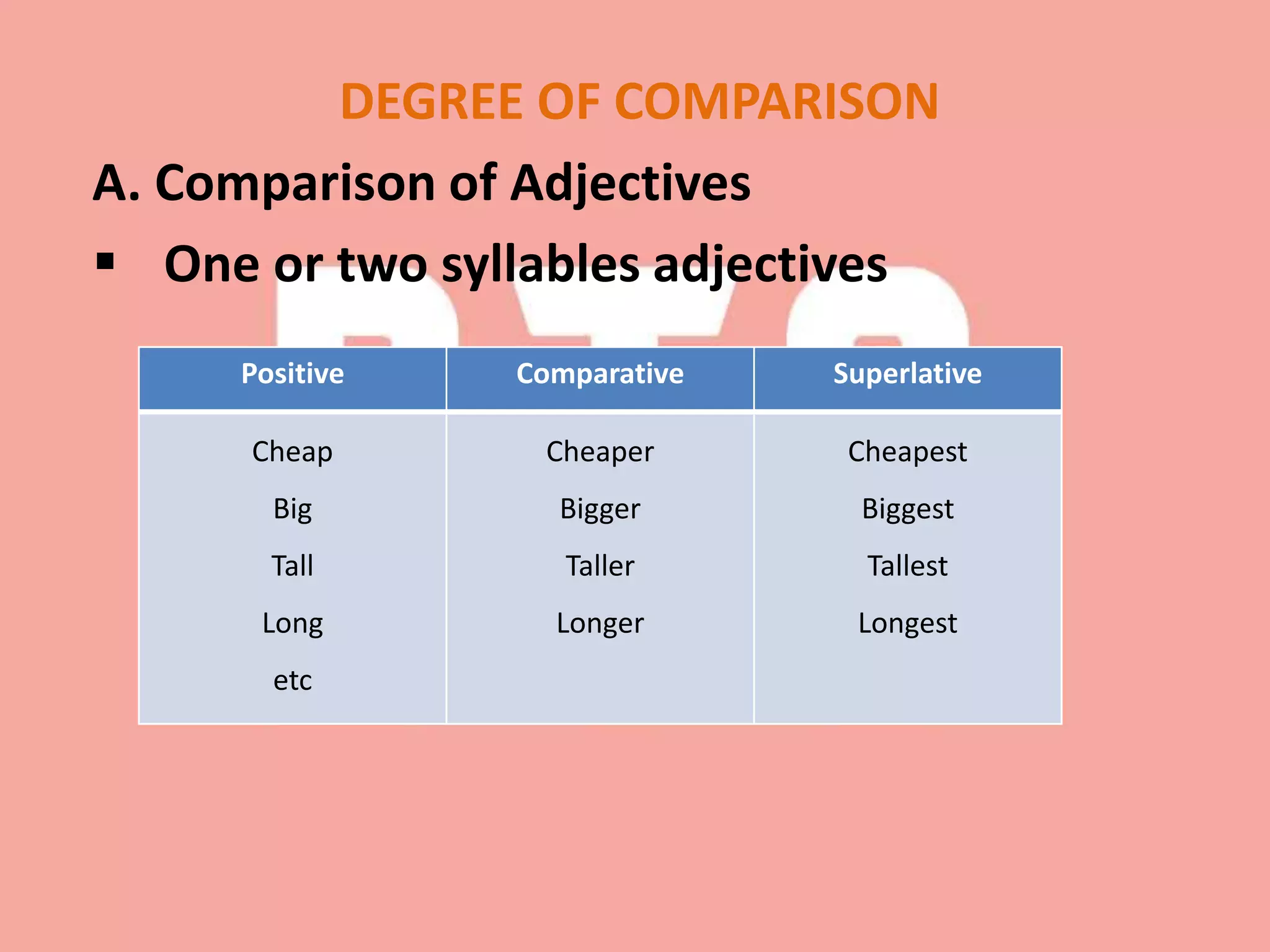
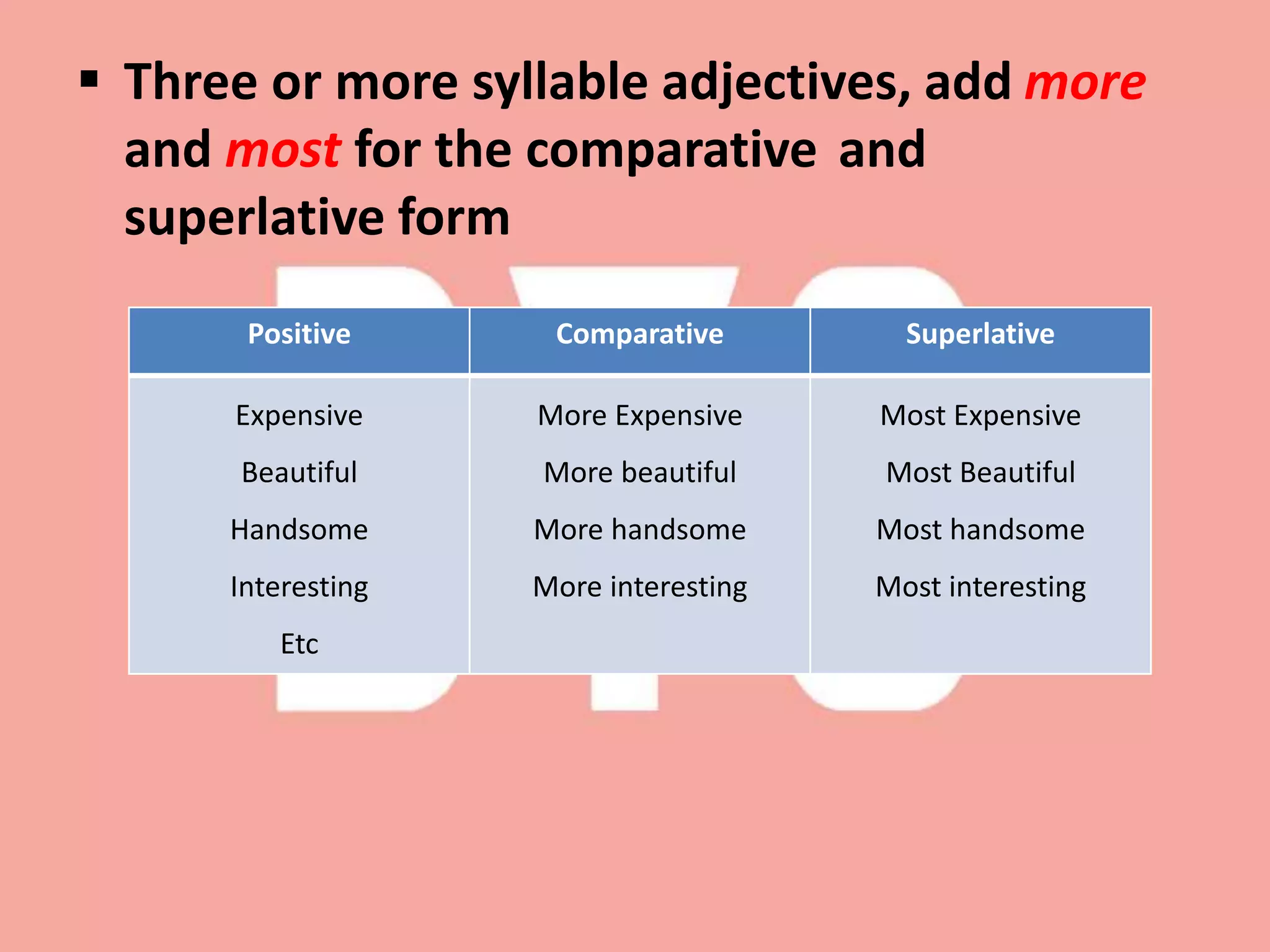
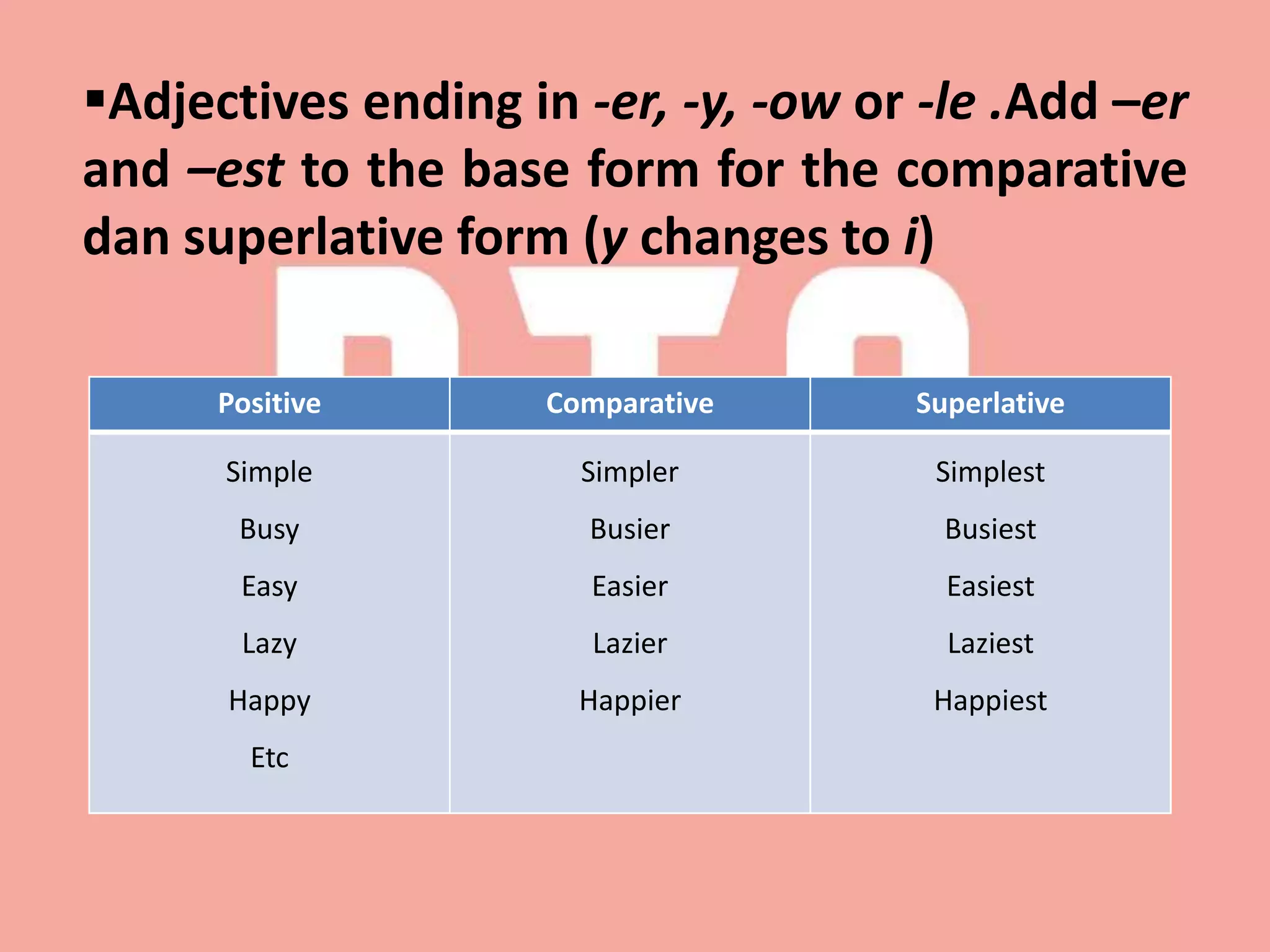
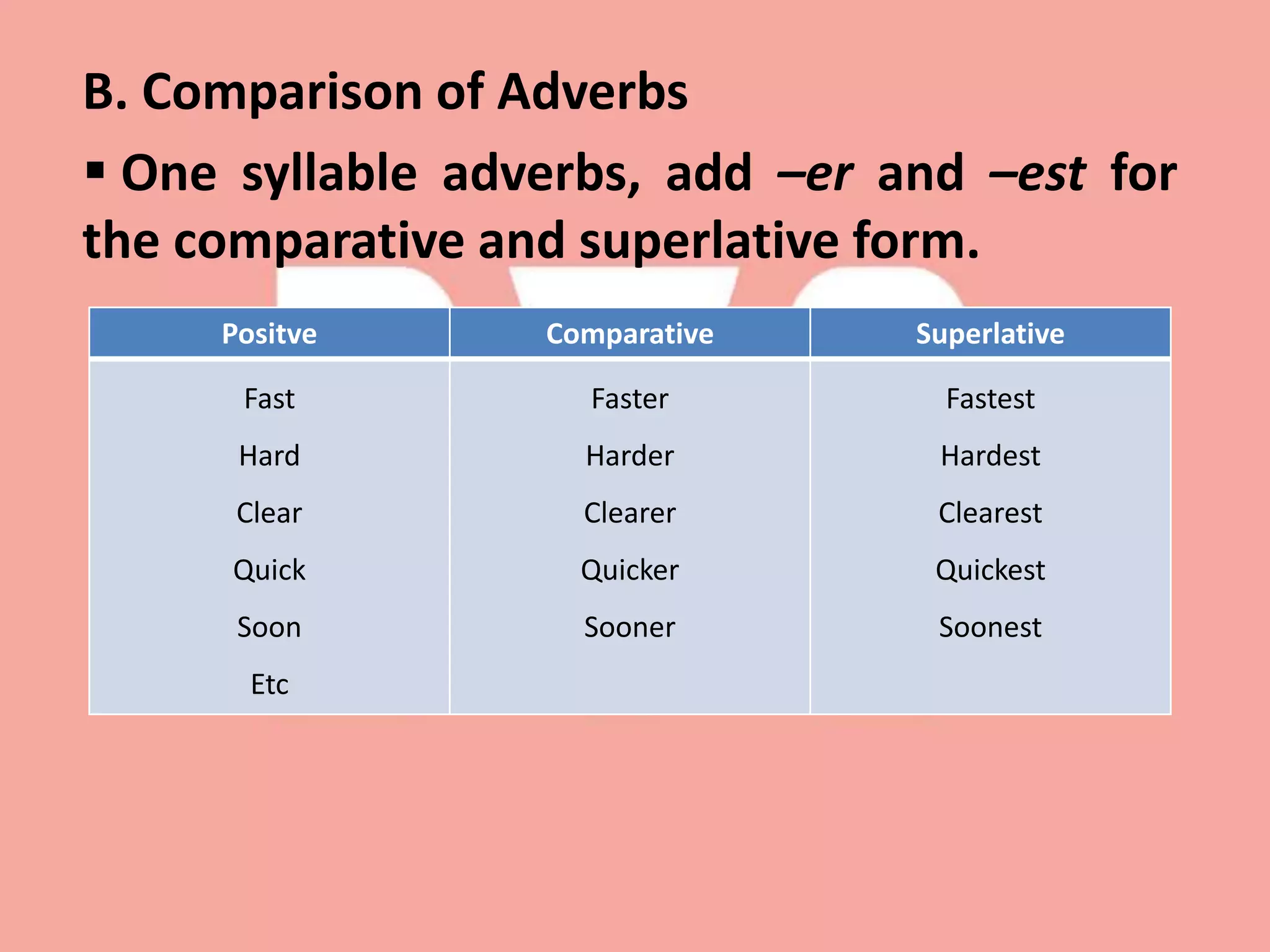
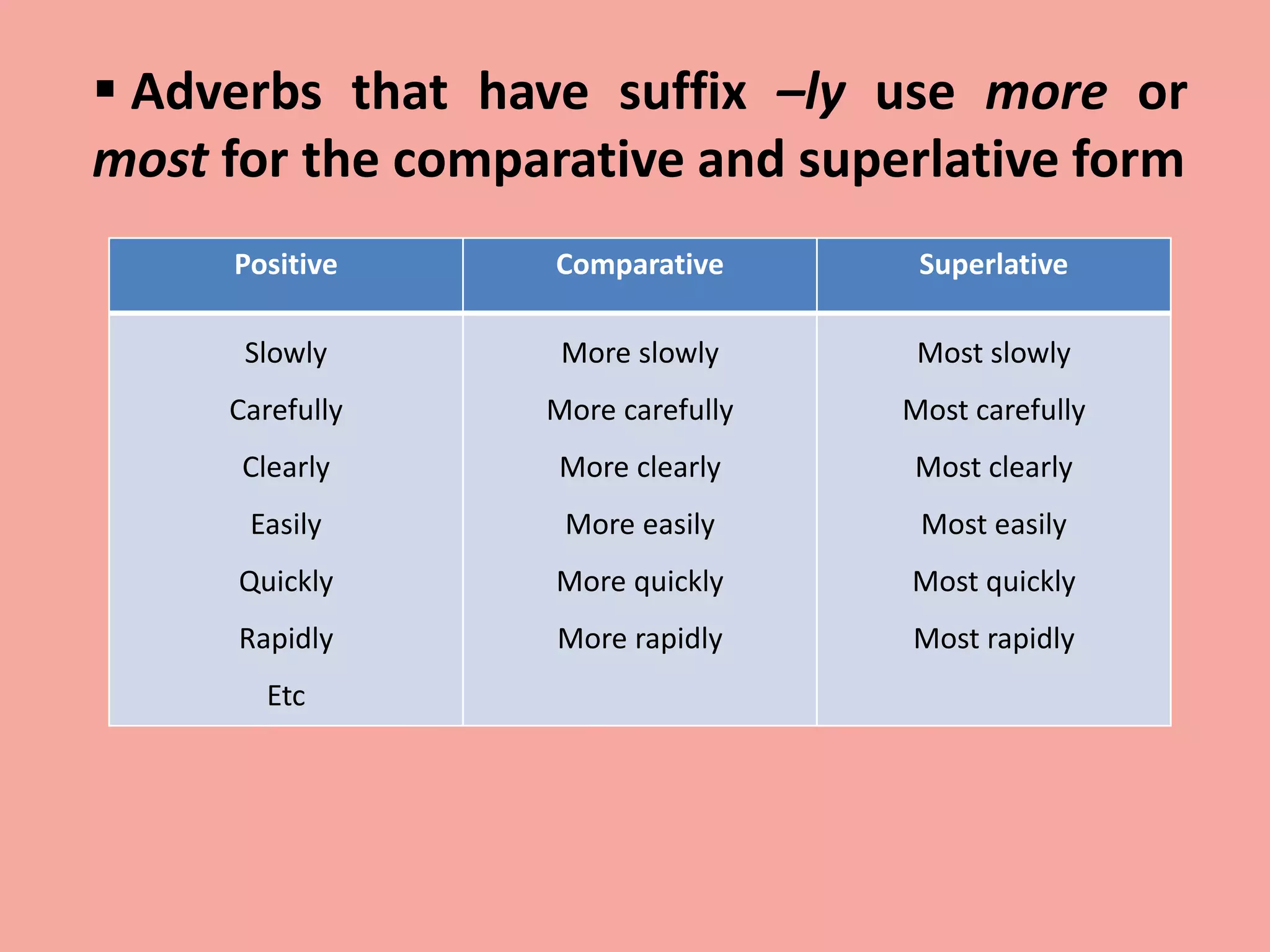
This document outlines the rules for forming the comparative and superlative forms of adjectives and adverbs in English. It explains that one-syllable adjectives and adverbs typically take -er and -est, while words of three or more syllables take more and most. Exceptions are provided for adjectives ending in -y, -ow, and -le. Rules are also given for irregular comparatives like good, well, bad, little, many, much, far, late, and old. Finally, common expressions of comparison and exceptions to the rules are noted.