Genitive Case
Chapter 3
Ἐν ἀρχῇ ἦν
ὁ λόγος
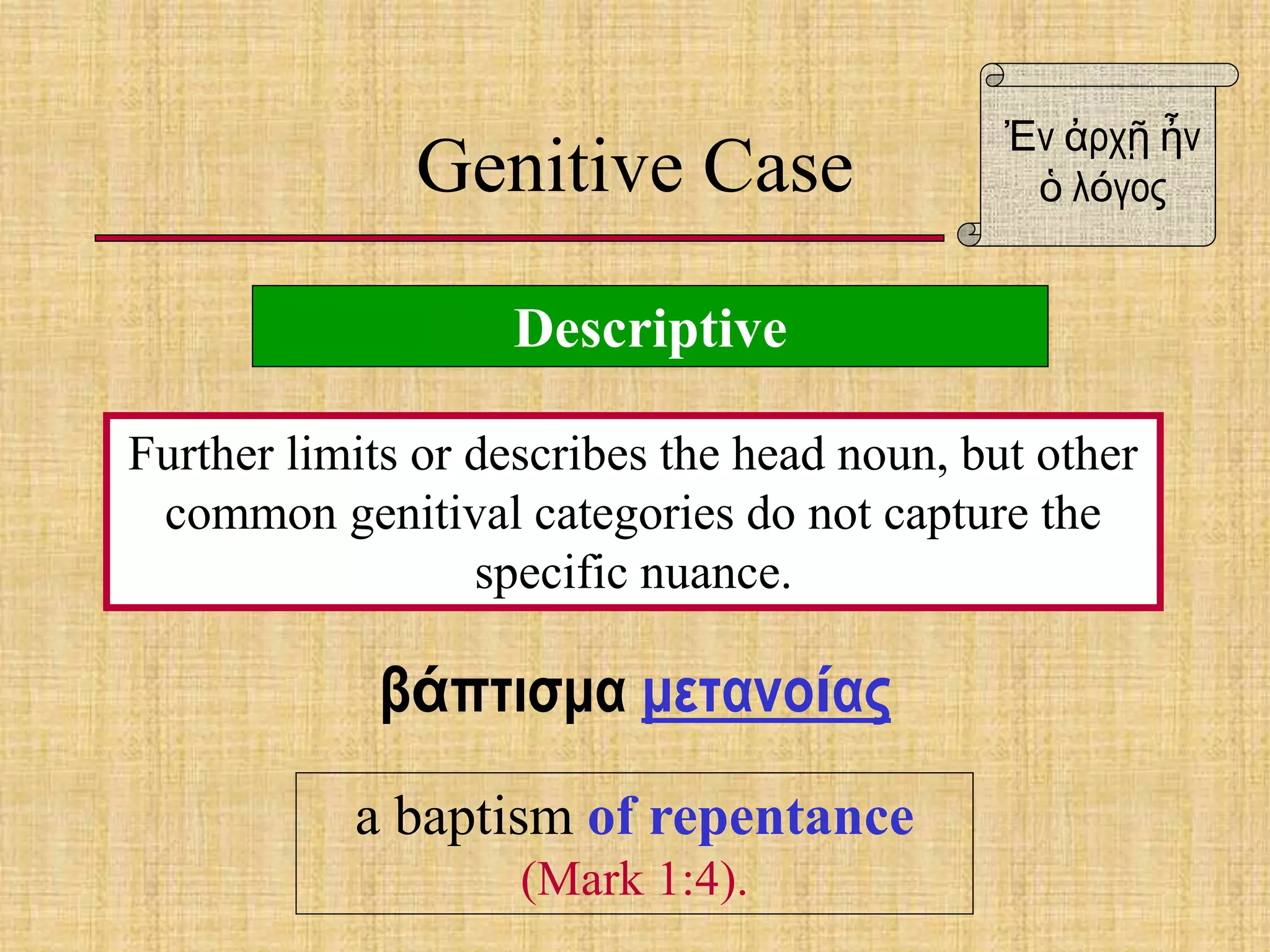
Genitive Case
Further limits or describes the head noun, but other
common genitival categories do not capture the
specific nuance.
Descriptive
βάπτισμα μετανοίας
a baptism of repentance
(Mark 1:4).
Ἐν ἀρχῇ ἦν
ὁ λόγος
Genitive Case
Denotes an attribute or innate quality of the head term,
conveying an emphatic adjectival idea.
Attributive
τῷ ῥήματι τῆς δυνάμεως αὐτοῦ
by His powerful word
(Heb 1:3).
Ἐν ἀρχῇ ἦν
ὁ λόγος
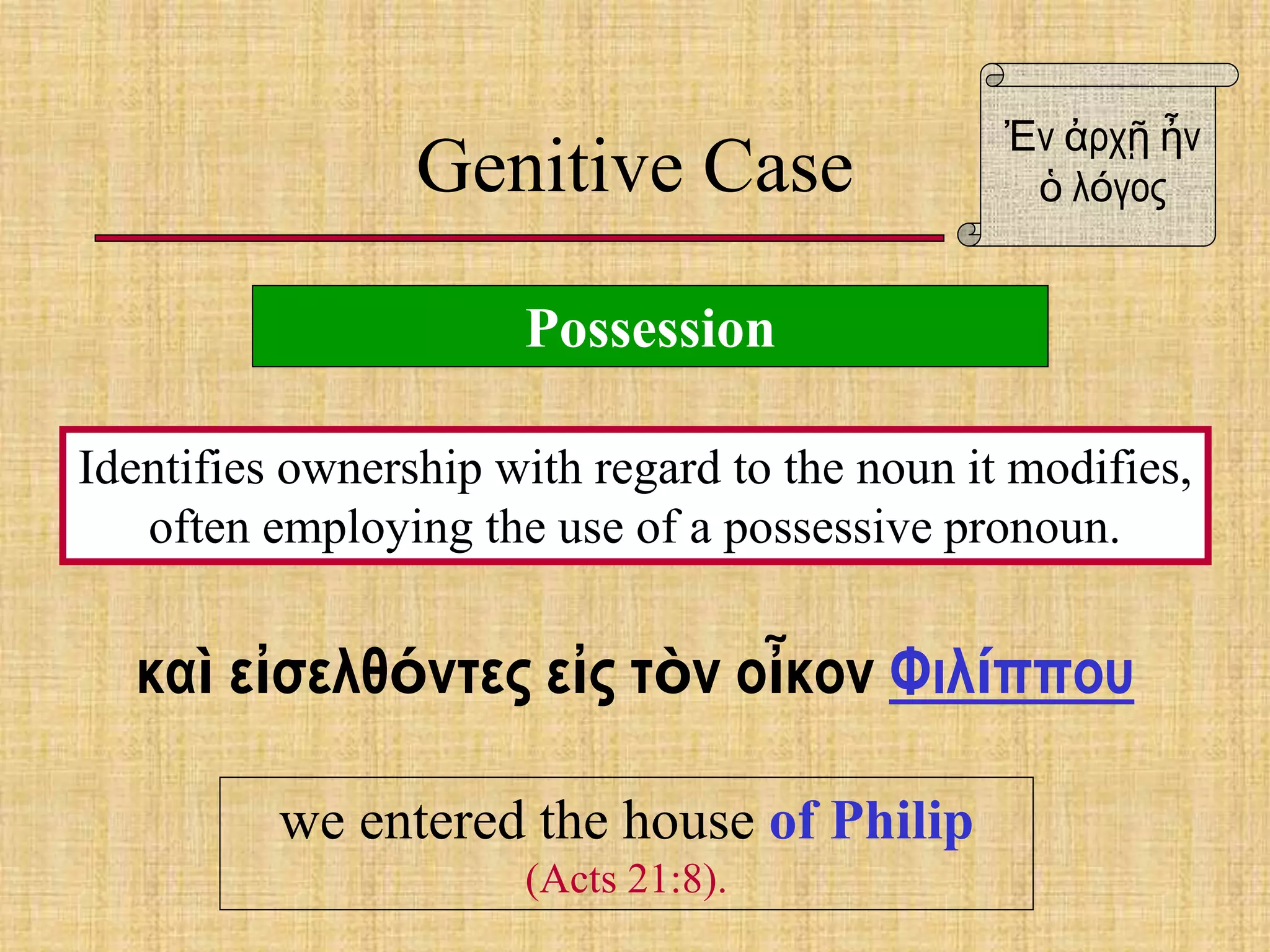
Genitive Case
Identifies ownership with regard to the noun it modifies,
often employing the use of a possessive pronoun.
Possession
καὶ εἰσελθόντες εἰς τὸν οἶκον Φιλίππου
we entered the house of Philip
(Acts 21:8).
Ἐν ἀρχῇ ἦν
ὁ λόγος
Genitive Case
Denotes a family relationship such as a person’s parent
or spouse. The word indicating the relationship is often
omitted and must be inferred.
Relationship
Ἰάκωβον τὸν τοῦ Ζεβεδαίου
James the [son] of Zebedee
(Matt 4:21).
Ἐν ἀρχῇ ἦν
ὁ λόγος
Genitive Case
Indicates the origin of the head noun (“from”).
Source (Origin)
τὴν τοῦ θεοῦ δικαιοσύνην
the righteousness from God
(Rom 10:3).
Ἐν ἀρχῇ ἦν
ὁ λόγος
Genitive Case
Indicates the material of which the head term is made.
Material
γόμον χρυσοῦ καὶ ἀργύρου καὶ λίθου τιμίου
καὶ μαργαριτῶν
merchandise of gold, silver, precious stones, and
pearls (Rev 18:12).
Ἐν ἀρχῇ ἦν
ὁ λόγος
Genitive Case
Specifies the content of an object or abstract noun.
Content
ποτήριον ὕδατος
a cup of water
(Mark 9:41).
Ἐν ἀρχῇ ἦν
ὁ λόγος
Genitive Case
Whether by itself or in conjunction with the preposition
ἀπό or ἐκ, the articular noun in the genitive denotes the
whole of which the head noun is a part.
Partitive
ἓν τῶν πλοίων
one of the boats
(Luke 5:3).
Ἐν ἀρχῇ ἦν
ὁ λόγος
Genitive Case
Functions semantically as the subject of the verbal idea
implied in the head noun, producing the action
(love of God = God loves [someone]).
Subjective
τίς ἡμᾶς χωρίσει ἀπὸ τῆς ἀγάπης τοῦ Χριστοῦ;
Who can separate us from the love of Christ?
(Rom 8:35).
Ἐν ἀρχῇ ἦν
ὁ λόγος
Genitive Case
Functions semantically as the direct object of the verbal
idea implicit in the head noun, receiving the action
(love of God = [someone] loves God).
Objective
ἔχετε πίστιν θεοῦ
Have faith in God
(Mark 11:22).
Ἐν ἀρχῇ ἦν
ὁ λόγος
Genitive Case
Indicates the location in time an action occurs
(answers when?)
Time
λαβόντες δὲ οἱ μαθηταὶ αὐτοῦ νυκτὸς
but his disciples took him by night
(Acts 9:25).
Ἐν ἀρχῇ ἦν
ὁ λόγος
Genitive Case
Indicates the location in space where an action
occurs (answers where?).
Place
μετὰ δὲ τὴν μετοικεσίαν Βαβυλῶνος
Then after the exile to Babylon
(Matt 1:12 NIV).
Ἐν ἀρχῇ ἦν
ὁ λόγος
Genitive Case
Indicates motion away from or distance, whether literally
or figuratively (“from”).
Separation
ἀποστήσονταί τινες τῆς πίστεως
some will depart from the faith
(1 Tim 4:1).
Ἐν ἀρχῇ ἦν
ὁ λόγος
Genitive Case
Conveys the impersonal means by which a given
action is carried out (“by” or “with”).
Means
ὁ γὰρ θεὸς ἀπείραστός ἐστιν κακῶν
For God is not tempted by evil
(James 1:13).
Ἐν ἀρχῇ ἦν
ὁ λόγος
Genitive Case
Conveys the personal agent by which a given action is
carried out (“by”).
Agency
δεῦτε, οἱ εὐλογημένοι τοῦ πατρός μου
Come, you who are blessed by my Father
(Matt. 25:34).
Ἐν ἀρχῇ ἦν
ὁ λόγος
Genitive Case
Used to denote comparison in conjunction with a
comparative adverb (“than”).
Comparison
μείζων ἐστὶν ὁ θεὸς τῆς καρδίας ἡμῶν
God is greater than our heart
(1 John 3:20).
Ἐν ἀρχῇ ἦν
ὁ λόγος
Genitive Case
Indicates the price that is paid or the value that attaches
to a given item.
Price, Value or Quantity
ἠγοράσθητε γὰρ τιμῆς
For you have been bought with a price
(1 Cor 6:20 NASB).
Ἐν ἀρχῇ ἦν
ὁ λόγος
Genitive Case
Simple Apposition: Provides an alternate designation
where the head noun is also in the genitive.
Apposition
διὰ Ἰερεμίου τοῦ προφήτου
through Jeremiah the prophet
(Matt 2:17).
Ἐν ἀρχῇ ἦν
ὁ λόγος
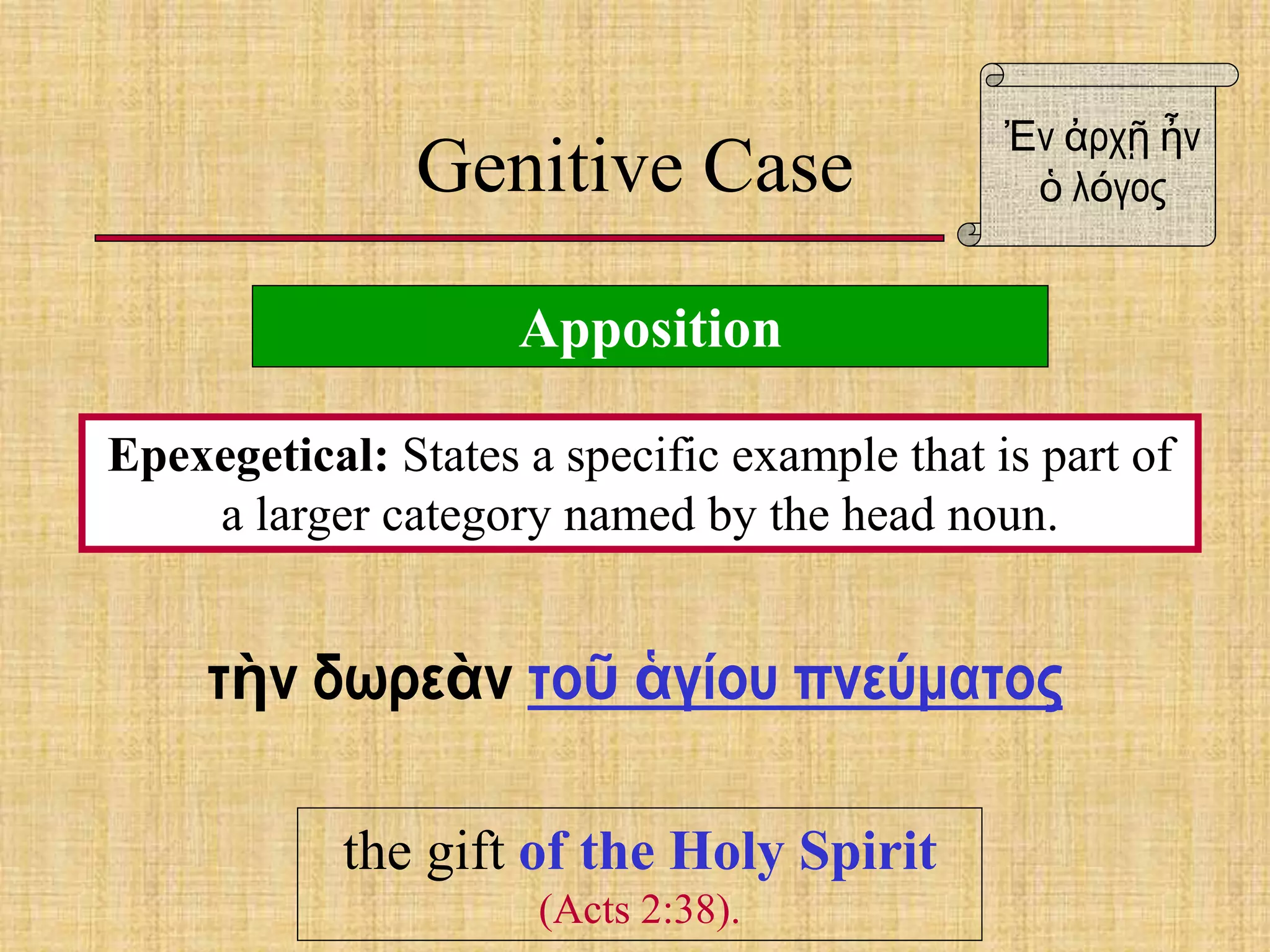
Genitive Case
Epexegetical: States a specific example that is part of
a larger category named by the head noun.
Apposition
τὴν δωρεὰν τοῦ ἁγίου πνεύματος
the gift of the Holy Spirit
(Acts 2:38).
Ἐν ἀρχῇ ἦν
ὁ λόγος
Genitive Case
Verbs of sensation, emotion or volition, sharing, ruling,
or separation, take their direct object in the genitive
case (instead of the accusative case).
Direct Object
οἱ νεκροὶ ἀκούσουσιν τῆς φωνῆς
The dead will hear the voice
(John 5:25).

Deeper Greek (03 - Genitive).pptx

  • 1.
  • 2.
    Ἐν ἀρχῇ ἦν ὁλόγος Genitive Case Further limits or describes the head noun, but other common genitival categories do not capture the specific nuance. Descriptive βάπτισμα μετανοίας a baptism of repentance (Mark 1:4).
  • 3.
    Ἐν ἀρχῇ ἦν ὁλόγος Genitive Case Denotes an attribute or innate quality of the head term, conveying an emphatic adjectival idea. Attributive τῷ ῥήματι τῆς δυνάμεως αὐτοῦ by His powerful word (Heb 1:3).
  • 4.
    Ἐν ἀρχῇ ἦν ὁλόγος Genitive Case Identifies ownership with regard to the noun it modifies, often employing the use of a possessive pronoun. Possession καὶ εἰσελθόντες εἰς τὸν οἶκον Φιλίππου we entered the house of Philip (Acts 21:8).
  • 5.
    Ἐν ἀρχῇ ἦν ὁλόγος Genitive Case Denotes a family relationship such as a person’s parent or spouse. The word indicating the relationship is often omitted and must be inferred. Relationship Ἰάκωβον τὸν τοῦ Ζεβεδαίου James the [son] of Zebedee (Matt 4:21).
  • 6.
    Ἐν ἀρχῇ ἦν ὁλόγος Genitive Case Indicates the origin of the head noun (“from”). Source (Origin) τὴν τοῦ θεοῦ δικαιοσύνην the righteousness from God (Rom 10:3).
  • 7.
    Ἐν ἀρχῇ ἦν ὁλόγος Genitive Case Indicates the material of which the head term is made. Material γόμον χρυσοῦ καὶ ἀργύρου καὶ λίθου τιμίου καὶ μαργαριτῶν merchandise of gold, silver, precious stones, and pearls (Rev 18:12).
  • 8.
    Ἐν ἀρχῇ ἦν ὁλόγος Genitive Case Specifies the content of an object or abstract noun. Content ποτήριον ὕδατος a cup of water (Mark 9:41).
  • 9.
    Ἐν ἀρχῇ ἦν ὁλόγος Genitive Case Whether by itself or in conjunction with the preposition ἀπό or ἐκ, the articular noun in the genitive denotes the whole of which the head noun is a part. Partitive ἓν τῶν πλοίων one of the boats (Luke 5:3).
  • 10.
    Ἐν ἀρχῇ ἦν ὁλόγος Genitive Case Functions semantically as the subject of the verbal idea implied in the head noun, producing the action (love of God = God loves [someone]). Subjective τίς ἡμᾶς χωρίσει ἀπὸ τῆς ἀγάπης τοῦ Χριστοῦ; Who can separate us from the love of Christ? (Rom 8:35).
  • 11.
    Ἐν ἀρχῇ ἦν ὁλόγος Genitive Case Functions semantically as the direct object of the verbal idea implicit in the head noun, receiving the action (love of God = [someone] loves God). Objective ἔχετε πίστιν θεοῦ Have faith in God (Mark 11:22).
  • 12.
    Ἐν ἀρχῇ ἦν ὁλόγος Genitive Case Indicates the location in time an action occurs (answers when?) Time λαβόντες δὲ οἱ μαθηταὶ αὐτοῦ νυκτὸς but his disciples took him by night (Acts 9:25).
  • 13.
    Ἐν ἀρχῇ ἦν ὁλόγος Genitive Case Indicates the location in space where an action occurs (answers where?). Place μετὰ δὲ τὴν μετοικεσίαν Βαβυλῶνος Then after the exile to Babylon (Matt 1:12 NIV).
  • 14.
    Ἐν ἀρχῇ ἦν ὁλόγος Genitive Case Indicates motion away from or distance, whether literally or figuratively (“from”). Separation ἀποστήσονταί τινες τῆς πίστεως some will depart from the faith (1 Tim 4:1).
  • 15.
    Ἐν ἀρχῇ ἦν ὁλόγος Genitive Case Conveys the impersonal means by which a given action is carried out (“by” or “with”). Means ὁ γὰρ θεὸς ἀπείραστός ἐστιν κακῶν For God is not tempted by evil (James 1:13).
  • 16.
    Ἐν ἀρχῇ ἦν ὁλόγος Genitive Case Conveys the personal agent by which a given action is carried out (“by”). Agency δεῦτε, οἱ εὐλογημένοι τοῦ πατρός μου Come, you who are blessed by my Father (Matt. 25:34).
  • 17.
    Ἐν ἀρχῇ ἦν ὁλόγος Genitive Case Used to denote comparison in conjunction with a comparative adverb (“than”). Comparison μείζων ἐστὶν ὁ θεὸς τῆς καρδίας ἡμῶν God is greater than our heart (1 John 3:20).
  • 18.
    Ἐν ἀρχῇ ἦν ὁλόγος Genitive Case Indicates the price that is paid or the value that attaches to a given item. Price, Value or Quantity ἠγοράσθητε γὰρ τιμῆς For you have been bought with a price (1 Cor 6:20 NASB).
  • 19.
    Ἐν ἀρχῇ ἦν ὁλόγος Genitive Case Simple Apposition: Provides an alternate designation where the head noun is also in the genitive. Apposition διὰ Ἰερεμίου τοῦ προφήτου through Jeremiah the prophet (Matt 2:17).
  • 20.
    Ἐν ἀρχῇ ἦν ὁλόγος Genitive Case Epexegetical: States a specific example that is part of a larger category named by the head noun. Apposition τὴν δωρεὰν τοῦ ἁγίου πνεύματος the gift of the Holy Spirit (Acts 2:38).
  • 21.
    Ἐν ἀρχῇ ἦν ὁλόγος Genitive Case Verbs of sensation, emotion or volition, sharing, ruling, or separation, take their direct object in the genitive case (instead of the accusative case). Direct Object οἱ νεκροὶ ἀκούσουσιν τῆς φωνῆς The dead will hear the voice (John 5:25).