Decorator Pattern
Understanding the Structure and Functionality of the Decorator Design Pattern
Introduction
This presentation explores the Decorator design pattern,
covering its purpose, structure, characteristics, and
applications in software design. We will discuss related
patterns and practical examples to illustrate its utility.
Purpose
01
Define the
Decorator Pattern
The Decorator Pattern is a structural design pattern
used to extend the functionalities of classes without
altering their structure. It enables the dynamic addition
of responsibilities in a flexible manner.
Usage scenarios
Commonly used in situations where class behaviors need to be enhanced without
modifying existing code. Examples include UI elements and data streams where
features can be added dynamically.
Benefits of dynamic behavior
This pattern allows for the addition of features dynamically
at runtime, promoting code reusability and separation of
concerns. It also enables the extension of functionalities in a
non-intrusive manner.
Structure
02
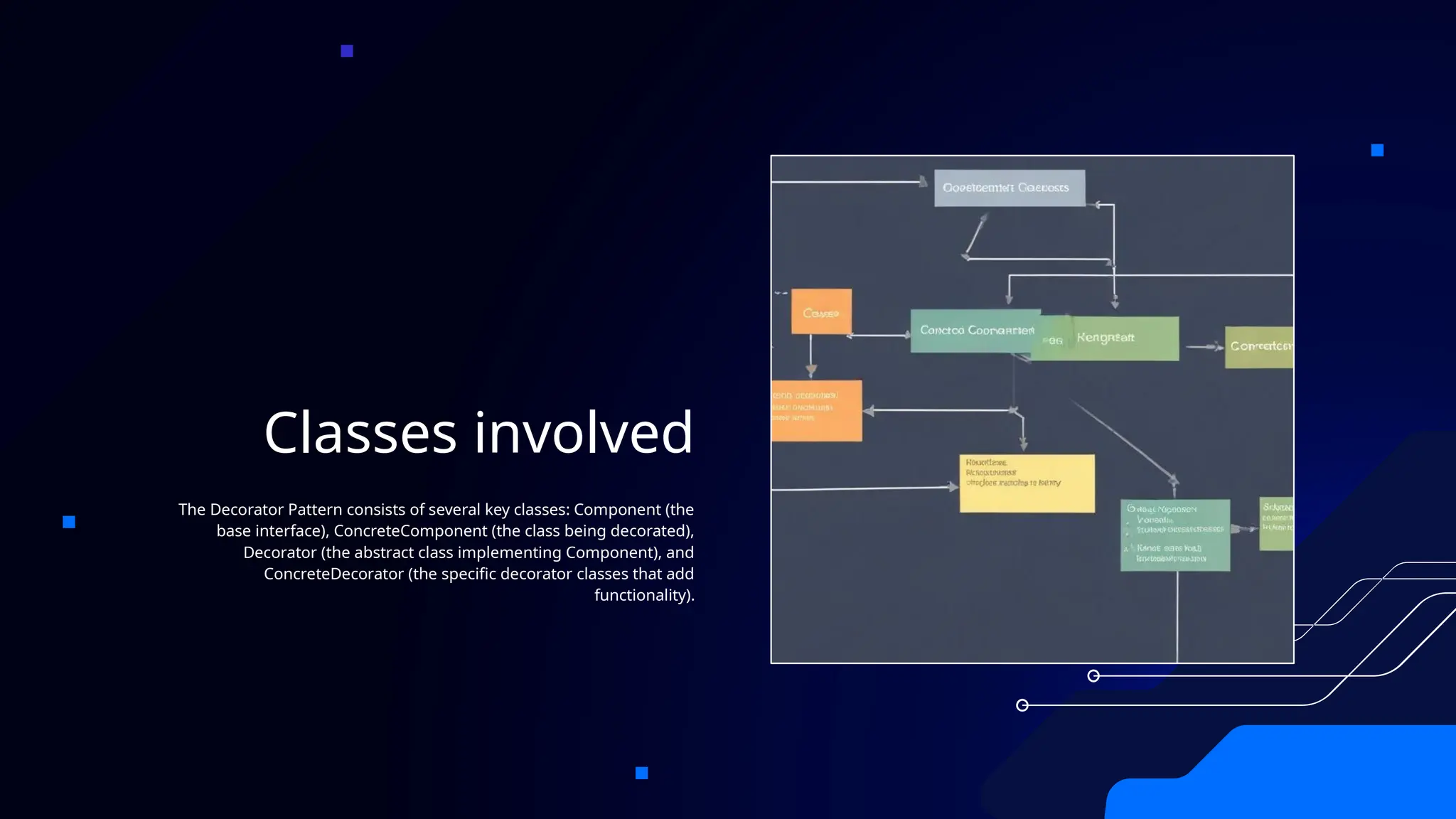
Classes involved
The Decorator Pattern consists of several key classes: Component (the
base interface), ConcreteComponent (the class being decorated),
Decorator (the abstract class implementing Component), and
ConcreteDecorator (the specific decorator classes that add
functionality).
Roles of each class
The Component defines the interface for objects that can have responsibilities added to them.
ConcreteComponent implements this interface and defines the core behavior. Decorator maintains a reference
to a Component object and provides the same interface. ConcreteDecorator extends the Decorator to add new
functionality.
Relationships between classes
The relationship is primarily a composition relationship,
where Decorator holds a reference to a Component. It allows
decorators to enhance or modify the behavior of the base
class without altering its structure.
Properties
03
Key characteristics
Key characteristics include the ability to add
responsibilities at runtime, maintaining flexibility and
interchangeability of components. Decorators can be
combined to create complex behaviors.
Behavioral pattern
traits
The Decorator Pattern exhibits traits typical of behavioral patterns, focusing on how
objects interact and collaborate. They help manage dynamic assignment of
responsibilities and enhance flexibility in code.
Abstract and concrete components
Abstract components represent the base interface, while
concrete components are actual implementations. Decorators
can act as both, adding functionality to existing components
or acting as standalone components themselves.
Applications
04
Common use cases
The Decorator Pattern is frequently used in graphical user
interfaces (GUIs), where UI components can be enhanced with
additional features, such as borders, shadows, or dynamic
behaviors without altering the underlying components.
Real-world
applications
Examples include text formatting libraries where simple text objects can be dynamically styled
with additional features like font changes, colors, or decorations. Other examples appear in
I/O streams, where decorators can add functionalities like buffering or data compression.
Implications of using the pattern
While the Decorator Pattern offers flexibility, it may also lead
to a proliferation of small classes, complicating code
management and readability. It’s essential to balance the
benefits of dynamic behavior against potential complexity.
Pros & Cons
05
Advantages of the
pattern
Key advantages include increased flexibility, the ability to extend existing classes
dynamically, reduction in subclassing, and promoting adherence to the Single
Responsibility Principle by segregating duties into decorators.
Disadvantages and limitations
Disadvantages may include increased complexity from many
small classes, making the system harder to understand.
Additionally, the pattern might lead to performance
overhead due to multiple decorator layers.
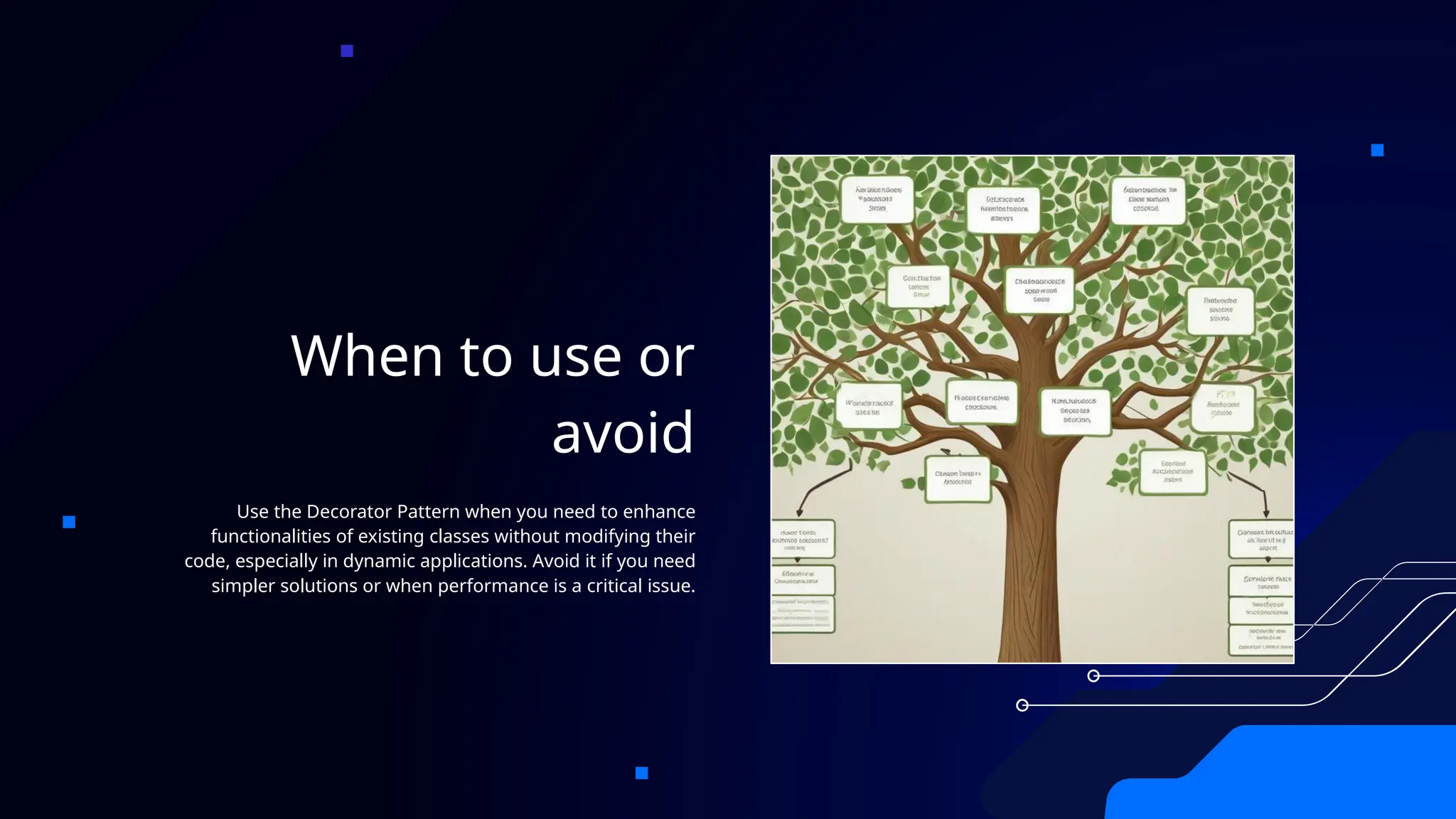
When to use or
avoid
Use the Decorator Pattern when you need to enhance
functionalities of existing classes without modifying their
code, especially in dynamic applications. Avoid it if you need
simpler solutions or when performance is a critical issue.
Related Patterns
06
Adapter Pattern
The Adapter Pattern allows incompatible interfaces to work together. It often
complements the Decorator Pattern, enabling objects to be plugged into existing
systems with added decorator functionalities.
Composite Pattern
The Composite Pattern allows treating individual objects and
compositions of objects uniformly. It can work alongside the
Decorator to add functionalities to complex tree structures
of objects.
Strategy Pattern
The Strategy Pattern defines a family of algorithms,
encapsulating each one and making them
interchangeable. It can be related to the Decorator Pattern
as both promote the use of composition over inheritance.
Examples
07
Practical C#
examples
Using the Decorator pattern, developers can create a text editor application where
various text formatting options (bold, italic, underline) can be applied dynamically to
the text without altering the core text class.
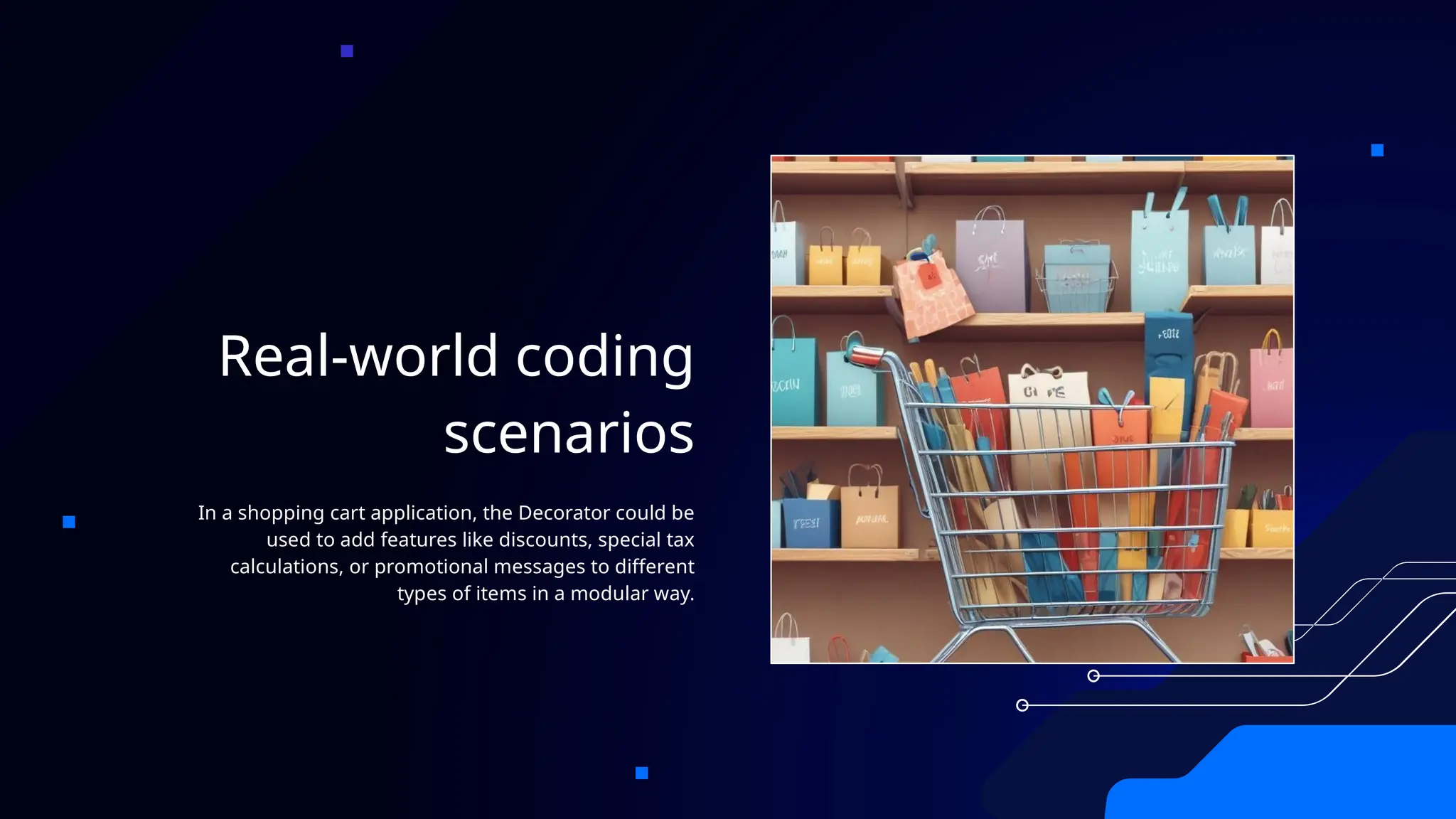
Real-world coding
scenarios
In a shopping cart application, the Decorator could be
used to add features like discounts, special tax
calculations, or promotional messages to different
types of items in a modular way.
Additional illustrative cases
Other illustrative cases include web frameworks using the
Decorator pattern to add middleware functionality, such as
logging or authentication, to web requests in a chain-like
fashion.
Conclusions
The Decorator Pattern is a valuable tool in software design, allowing
for flexibility and dynamic enhancement of class functionalities
while encouraging clean architecture. However, its complexity must
be managed carefully to maintain clarity and performance.
CREDITS: This presentation template was created by Slidesgo,
and includes icons by Flaticon, and infographics & images by
Freepik
Thank you!
Do you have any questions?

Decorator Pattern 2.pptxdsadsadsadsadasdasdsa

  • 1.
    Decorator Pattern Understanding theStructure and Functionality of the Decorator Design Pattern
  • 2.
    Introduction This presentation exploresthe Decorator design pattern, covering its purpose, structure, characteristics, and applications in software design. We will discuss related patterns and practical examples to illustrate its utility.
  • 3.
  • 4.
    Define the Decorator Pattern TheDecorator Pattern is a structural design pattern used to extend the functionalities of classes without altering their structure. It enables the dynamic addition of responsibilities in a flexible manner.
  • 5.
    Usage scenarios Commonly usedin situations where class behaviors need to be enhanced without modifying existing code. Examples include UI elements and data streams where features can be added dynamically.
  • 6.
    Benefits of dynamicbehavior This pattern allows for the addition of features dynamically at runtime, promoting code reusability and separation of concerns. It also enables the extension of functionalities in a non-intrusive manner.
  • 7.
  • 8.
    Classes involved The DecoratorPattern consists of several key classes: Component (the base interface), ConcreteComponent (the class being decorated), Decorator (the abstract class implementing Component), and ConcreteDecorator (the specific decorator classes that add functionality).
  • 9.
    Roles of eachclass The Component defines the interface for objects that can have responsibilities added to them. ConcreteComponent implements this interface and defines the core behavior. Decorator maintains a reference to a Component object and provides the same interface. ConcreteDecorator extends the Decorator to add new functionality.
  • 10.
    Relationships between classes Therelationship is primarily a composition relationship, where Decorator holds a reference to a Component. It allows decorators to enhance or modify the behavior of the base class without altering its structure.
  • 11.
  • 12.
    Key characteristics Key characteristicsinclude the ability to add responsibilities at runtime, maintaining flexibility and interchangeability of components. Decorators can be combined to create complex behaviors.
  • 13.
    Behavioral pattern traits The DecoratorPattern exhibits traits typical of behavioral patterns, focusing on how objects interact and collaborate. They help manage dynamic assignment of responsibilities and enhance flexibility in code.
  • 14.
    Abstract and concretecomponents Abstract components represent the base interface, while concrete components are actual implementations. Decorators can act as both, adding functionality to existing components or acting as standalone components themselves.
  • 15.
  • 16.
    Common use cases TheDecorator Pattern is frequently used in graphical user interfaces (GUIs), where UI components can be enhanced with additional features, such as borders, shadows, or dynamic behaviors without altering the underlying components.
  • 17.
    Real-world applications Examples include textformatting libraries where simple text objects can be dynamically styled with additional features like font changes, colors, or decorations. Other examples appear in I/O streams, where decorators can add functionalities like buffering or data compression.
  • 18.
    Implications of usingthe pattern While the Decorator Pattern offers flexibility, it may also lead to a proliferation of small classes, complicating code management and readability. It’s essential to balance the benefits of dynamic behavior against potential complexity.
  • 19.
  • 20.
    Advantages of the pattern Keyadvantages include increased flexibility, the ability to extend existing classes dynamically, reduction in subclassing, and promoting adherence to the Single Responsibility Principle by segregating duties into decorators.
  • 21.
    Disadvantages and limitations Disadvantagesmay include increased complexity from many small classes, making the system harder to understand. Additionally, the pattern might lead to performance overhead due to multiple decorator layers.
  • 22.
    When to useor avoid Use the Decorator Pattern when you need to enhance functionalities of existing classes without modifying their code, especially in dynamic applications. Avoid it if you need simpler solutions or when performance is a critical issue.
  • 23.
  • 24.
    Adapter Pattern The AdapterPattern allows incompatible interfaces to work together. It often complements the Decorator Pattern, enabling objects to be plugged into existing systems with added decorator functionalities.
  • 25.
    Composite Pattern The CompositePattern allows treating individual objects and compositions of objects uniformly. It can work alongside the Decorator to add functionalities to complex tree structures of objects.
  • 26.
    Strategy Pattern The StrategyPattern defines a family of algorithms, encapsulating each one and making them interchangeable. It can be related to the Decorator Pattern as both promote the use of composition over inheritance.
  • 27.
  • 28.
    Practical C# examples Using theDecorator pattern, developers can create a text editor application where various text formatting options (bold, italic, underline) can be applied dynamically to the text without altering the core text class.
  • 29.
    Real-world coding scenarios In ashopping cart application, the Decorator could be used to add features like discounts, special tax calculations, or promotional messages to different types of items in a modular way.
  • 30.
    Additional illustrative cases Otherillustrative cases include web frameworks using the Decorator pattern to add middleware functionality, such as logging or authentication, to web requests in a chain-like fashion.
  • 31.
    Conclusions The Decorator Patternis a valuable tool in software design, allowing for flexibility and dynamic enhancement of class functionalities while encouraging clean architecture. However, its complexity must be managed carefully to maintain clarity and performance.
  • 32.
    CREDITS: This presentationtemplate was created by Slidesgo, and includes icons by Flaticon, and infographics & images by Freepik Thank you! Do you have any questions?