Decorator
Design
Pattern
Introduction
Example
Class Diagram
Implementation
Table of contents
01
02
03
04
Introductio
n
Definition and Purpose
01
Definition
The Decorator pattern is a structural
design pattern that allows adding
functionalities to objects dynamically
and flexibly. It is achieved through
composition instead of inheritance,
enabling the extension of an object's
capabilities without modifying its base
code. In other words, the Decorator
provides a way to add or remove
responsibilities to existing objects
incrementally and consistently.
Purpose
• Extend object functionalities
dynamically.
• Enable flexible composition of
behaviors.
• Comply with the Open/Closed
Principle (OCP) by facilitating
extension without modifying
existing code.
Example
Real-World Example
02
Real-World Example
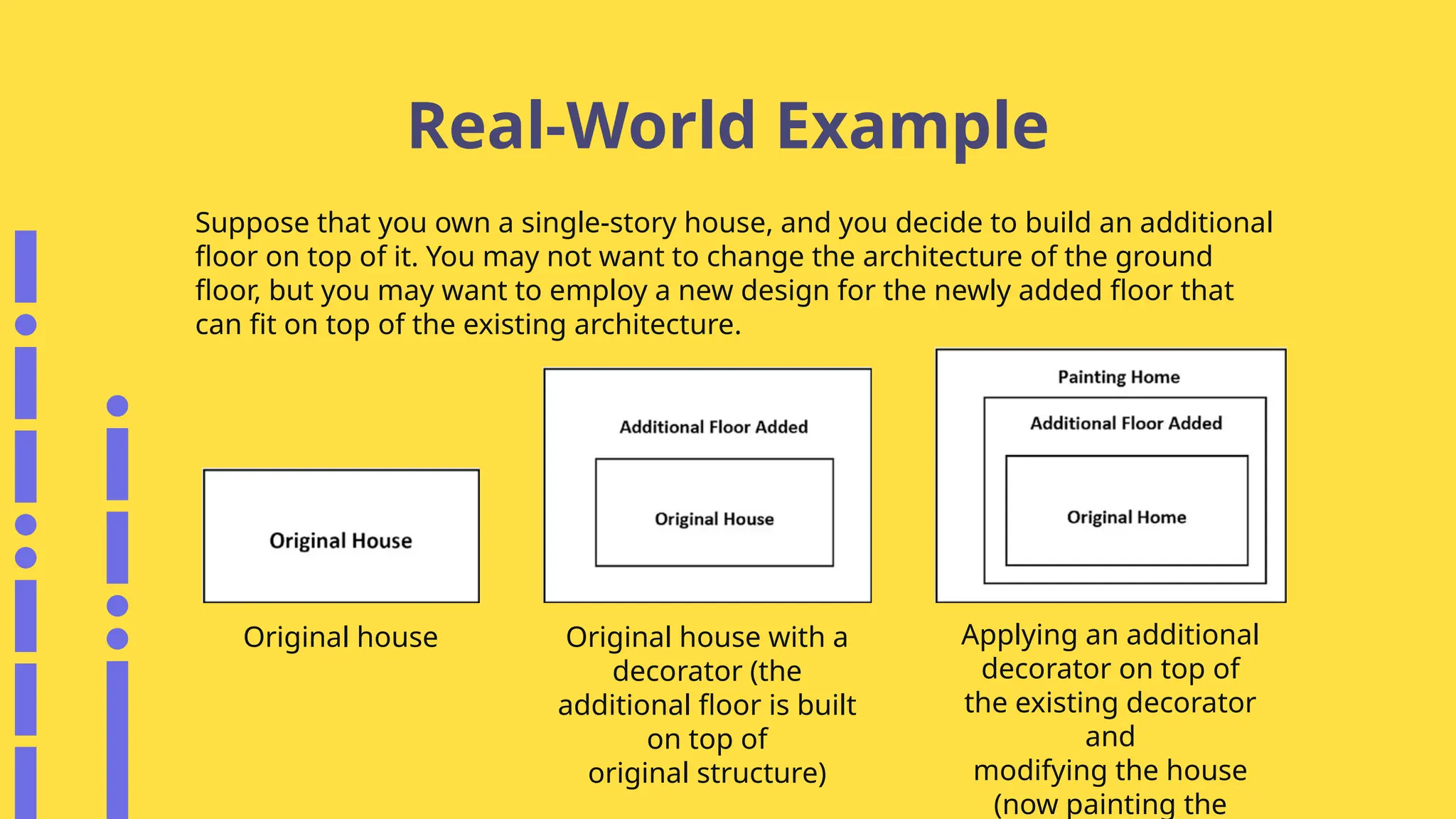
Original house Original house with a
decorator (the
additional floor is built
on top of
original structure)
Applying an additional
decorator on top of
the existing decorator
and
modifying the house
(now painting the
Suppose that you own a single-story house, and you decide to build an additional
floor on top of it. You may not want to change the architecture of the ground
floor, but you may want to employ a new design for the newly added floor that
can fit on top of the existing architecture.
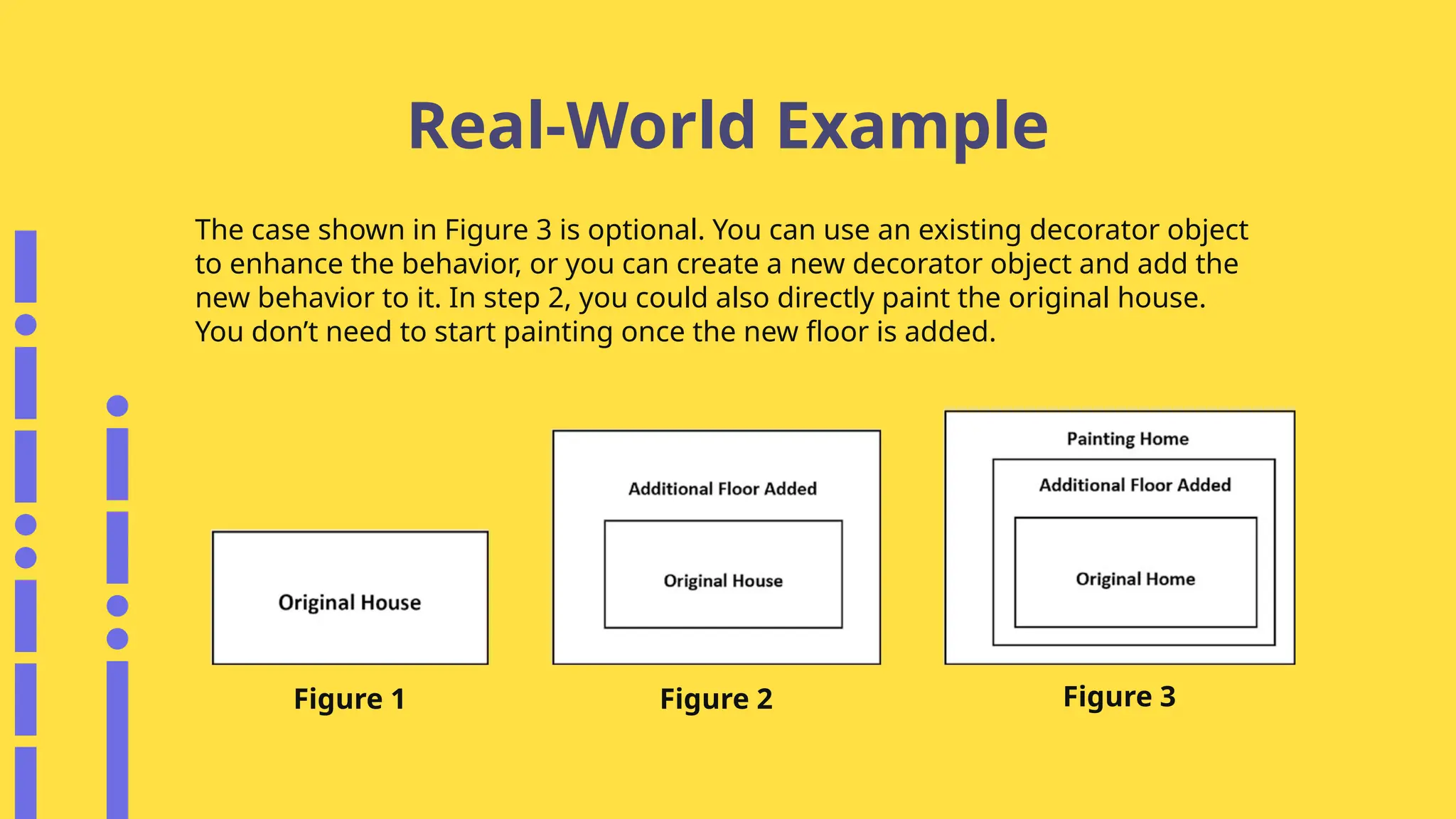
Figure 1 Figure 2 Figure 3
The case shown in Figure 3 is optional. You can use an existing decorator object
to enhance the behavior, or you can create a new decorator object and add the
new behavior to it. In step 2, you could also directly paint the original house.
You don’t need to start painting once the new floor is added.
Real-World Example
Class
Diagram
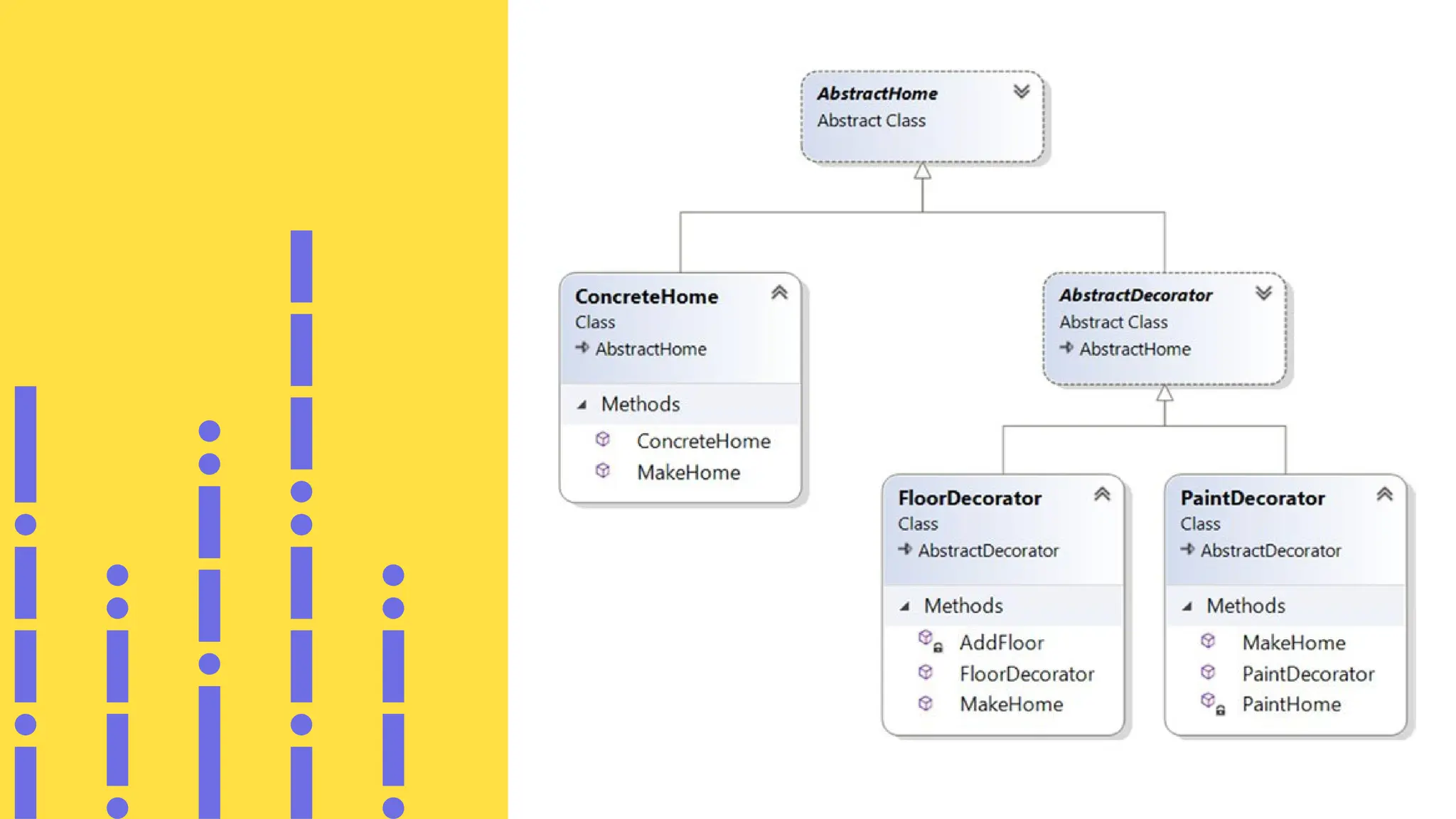
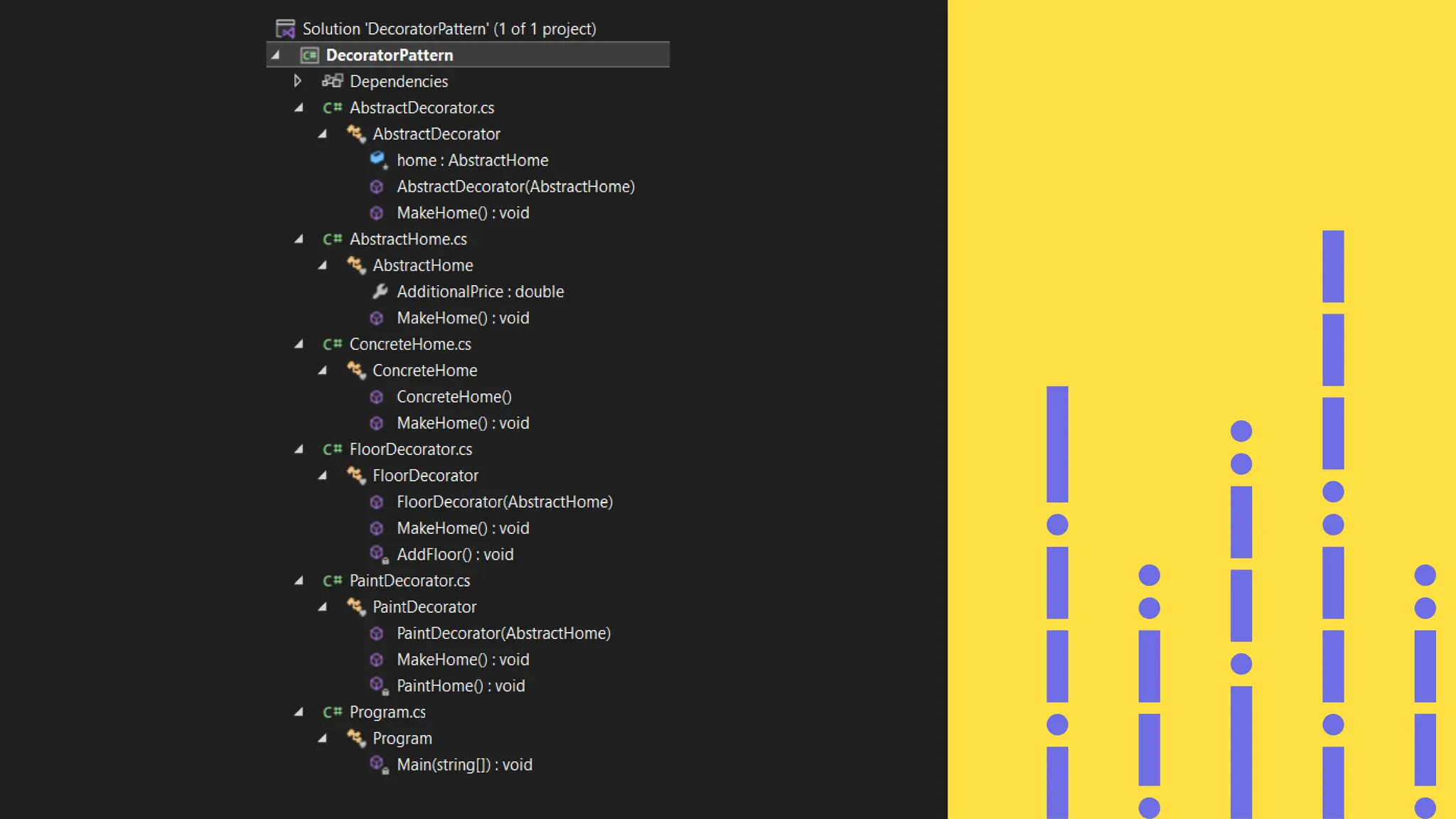
Class Diagram and Solution Explorer
03
Implementati
on
04

Decorator Pattern presentation theory and examples

  • 1.
  • 2.
  • 3.
  • 4.
    Definition The Decorator patternis a structural design pattern that allows adding functionalities to objects dynamically and flexibly. It is achieved through composition instead of inheritance, enabling the extension of an object's capabilities without modifying its base code. In other words, the Decorator provides a way to add or remove responsibilities to existing objects incrementally and consistently.
  • 5.
    Purpose • Extend objectfunctionalities dynamically. • Enable flexible composition of behaviors. • Comply with the Open/Closed Principle (OCP) by facilitating extension without modifying existing code.
  • 6.
  • 7.
    Real-World Example Original houseOriginal house with a decorator (the additional floor is built on top of original structure) Applying an additional decorator on top of the existing decorator and modifying the house (now painting the Suppose that you own a single-story house, and you decide to build an additional floor on top of it. You may not want to change the architecture of the ground floor, but you may want to employ a new design for the newly added floor that can fit on top of the existing architecture.
  • 8.
    Figure 1 Figure2 Figure 3 The case shown in Figure 3 is optional. You can use an existing decorator object to enhance the behavior, or you can create a new decorator object and add the new behavior to it. In step 2, you could also directly paint the original house. You don’t need to start painting once the new floor is added. Real-World Example
  • 9.
    Class Diagram Class Diagram andSolution Explorer 03
  • 12.