Deceptive Advertising
Facebook
A history of deceptive advertising and its impacts on Facebook today.
By:Cassie Jahn
Intro
Deceptive advertising in today’s society is often hard to control. With the
amount of social media and online advertisements, many people view viral ads
they believe to be true but are, in fact, false.
The FTC and social media agencies do their best to control these deceptive
ads.
History
● Commercial speech is regulated at
○ Federal and State levels
● Federal Trade Commission is the primary regulator
○ Established in 1914
○ Main goal is to make sure are true to the product
● The FTC has made an effort to better regulate deceptive advertising on social media
○ 1. Attention on digital intrusions
○ 2. Ensure if something is private, deleted or confidential it stays that way
○ 3. If money is said to be donated to a cause it will actually be donated to that cause
○ 4. Revenge websites are restricted strictly
Beacon Program
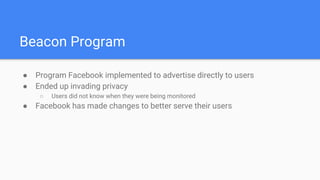
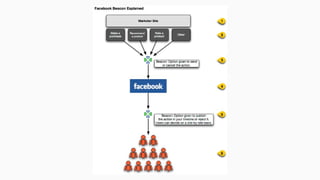
● Program Facebook implemented to advertise directly to users
● Ended up invading privacy
○ Users did not know when they were being monitored
● Facebook has made changes to better serve their users
Statute Law
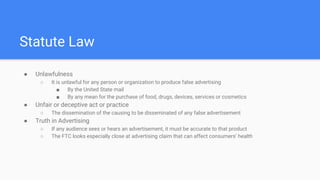
● Unlawfulness
○ It is unlawful for any person or organization to produce false advertising
■ By the United State mail
■ By any mean for the purchase of food, drugs, devices, services or cosmetics
● Unfair or deceptive act or practice
○ The dissemination of the causing to be disseminated of any false advertisement
● Truth in Advertising
○ If any audience sees or hears an advertisement, it must be accurate to that product
○ The FTC looks especially close at advertising claim that can affect consumers’ health
Law Review
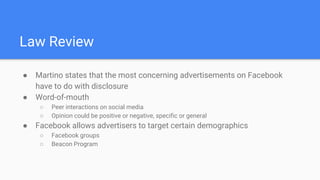
● Martino states that the most concerning advertisements on Facebook
have to do with disclosure
● Word-of-mouth
○ Peer interactions on social media
○ Opinion could be positive or negative, specific or general
● Facebook allows advertisers to target certain demographics
○ Facebook groups
○ Beacon Program
Recent Case
● Lane v. Facebook
○ 2013
● Sean Lane
○ Filed suit against Facebook in 2013
○ The network's new program (Beacon) violated the members’ privacy
rights
● Lane ultimately won
○ Facebook is making changes to improve Beacon
Conclusion
Social media is primarily used for connecting with friends and family. More
recently, FAcebook has been a major hub for advertiser to get their message
out.
Facebook needs to be careful with how they find out information about their
users. If they collect information in a deceiving way and give that information
to advertisers, the company will start losing business.

Deceptive advertising

  • 1.
    Deceptive Advertising Facebook A historyof deceptive advertising and its impacts on Facebook today. By:Cassie Jahn
  • 2.
    Intro Deceptive advertising intoday’s society is often hard to control. With the amount of social media and online advertisements, many people view viral ads they believe to be true but are, in fact, false. The FTC and social media agencies do their best to control these deceptive ads.
  • 3.
    History ● Commercial speechis regulated at ○ Federal and State levels ● Federal Trade Commission is the primary regulator ○ Established in 1914 ○ Main goal is to make sure are true to the product ● The FTC has made an effort to better regulate deceptive advertising on social media ○ 1. Attention on digital intrusions ○ 2. Ensure if something is private, deleted or confidential it stays that way ○ 3. If money is said to be donated to a cause it will actually be donated to that cause ○ 4. Revenge websites are restricted strictly
  • 5.
    Beacon Program ● ProgramFacebook implemented to advertise directly to users ● Ended up invading privacy ○ Users did not know when they were being monitored ● Facebook has made changes to better serve their users
  • 6.
    Statute Law ● Unlawfulness ○It is unlawful for any person or organization to produce false advertising ■ By the United State mail ■ By any mean for the purchase of food, drugs, devices, services or cosmetics ● Unfair or deceptive act or practice ○ The dissemination of the causing to be disseminated of any false advertisement ● Truth in Advertising ○ If any audience sees or hears an advertisement, it must be accurate to that product ○ The FTC looks especially close at advertising claim that can affect consumers’ health
  • 8.
    Law Review ● Martinostates that the most concerning advertisements on Facebook have to do with disclosure ● Word-of-mouth ○ Peer interactions on social media ○ Opinion could be positive or negative, specific or general ● Facebook allows advertisers to target certain demographics ○ Facebook groups ○ Beacon Program
  • 9.
    Recent Case ● Lanev. Facebook ○ 2013 ● Sean Lane ○ Filed suit against Facebook in 2013 ○ The network's new program (Beacon) violated the members’ privacy rights ● Lane ultimately won ○ Facebook is making changes to improve Beacon
  • 10.
    Conclusion Social media isprimarily used for connecting with friends and family. More recently, FAcebook has been a major hub for advertiser to get their message out. Facebook needs to be careful with how they find out information about their users. If they collect information in a deceiving way and give that information to advertisers, the company will start losing business.