DEBATE
Chaired by:
Mr. John Wilkinson
FOR
Dr. Andrew Rut,
Chief Executive Officer, MyMeds&Me
AGAINST
Dr. Rosemary Leonard MBE,
General Practitioner
© MyMeds&Me 2015
MOTION
“With the changes in society and increased
use of electronic media, the role of the health
professional in Yellow Card reporting will be
diminished”
© MyMeds&Me 2015
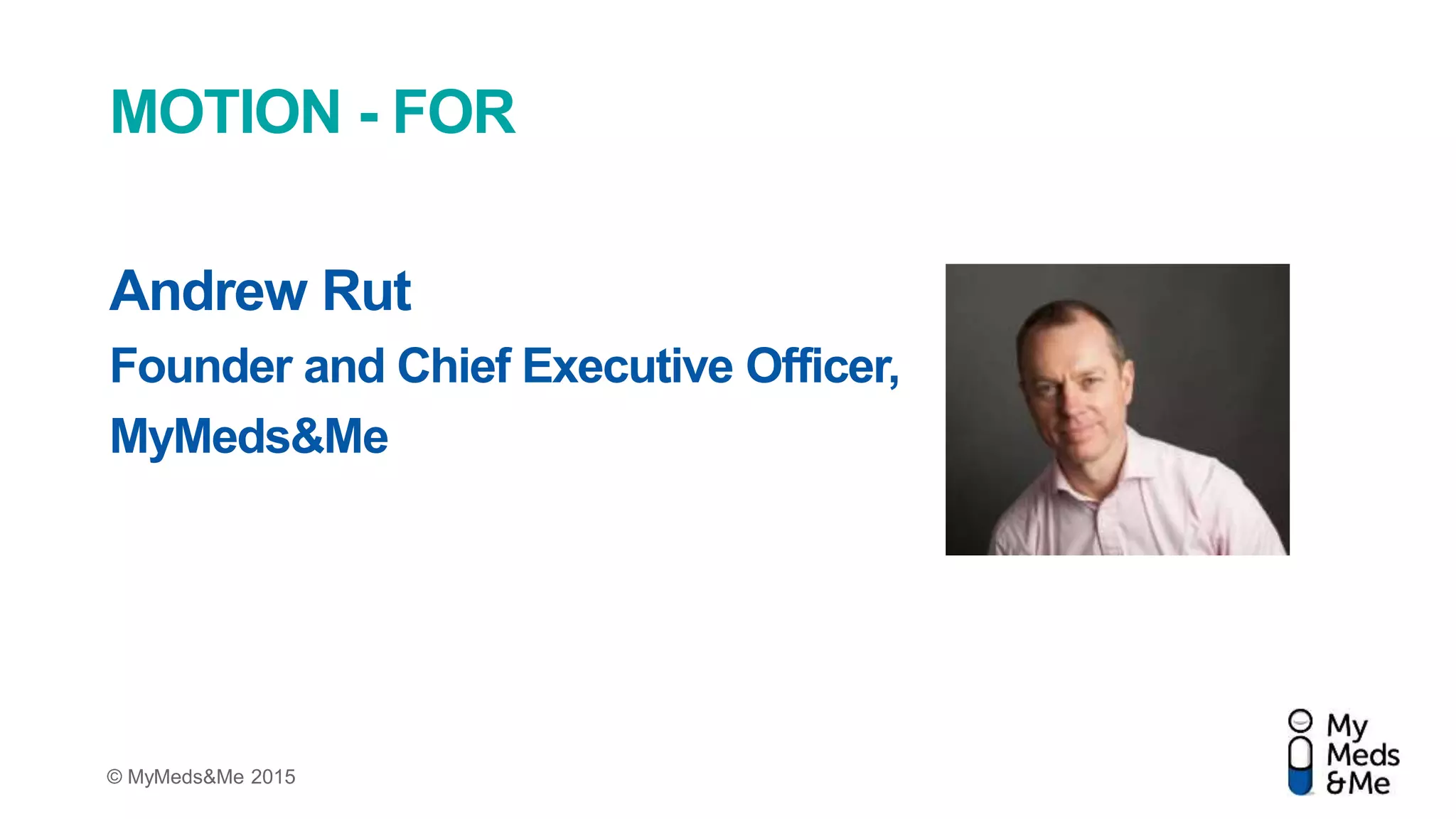
MOTION - FOR
Andrew Rut
Founder and Chief Executive Officer,
MyMeds&Me
© MyMeds&Me 2015
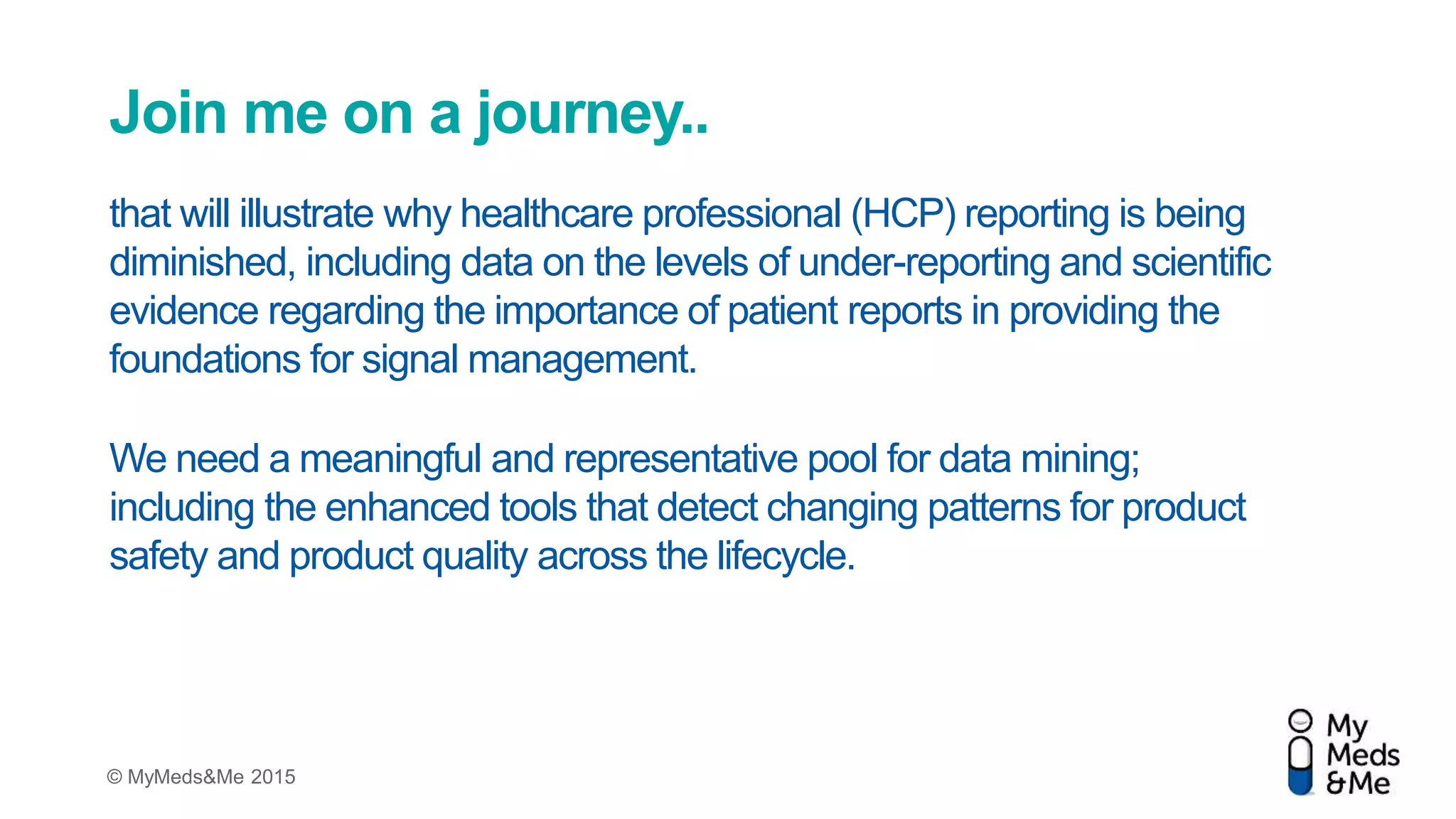
Join me on a journey..
that will illustrate why healthcare professional (HCP) reporting is being
diminished, including data on the levels of under-reporting and scientific
evidence regarding the importance of patient reports in providing the
foundations for signal management.
We need a meaningful and representative pool for data mining;
including the enhanced tools that detect changing patterns for product
safety and product quality across the lifecycle.
© MyMeds&Me 2015
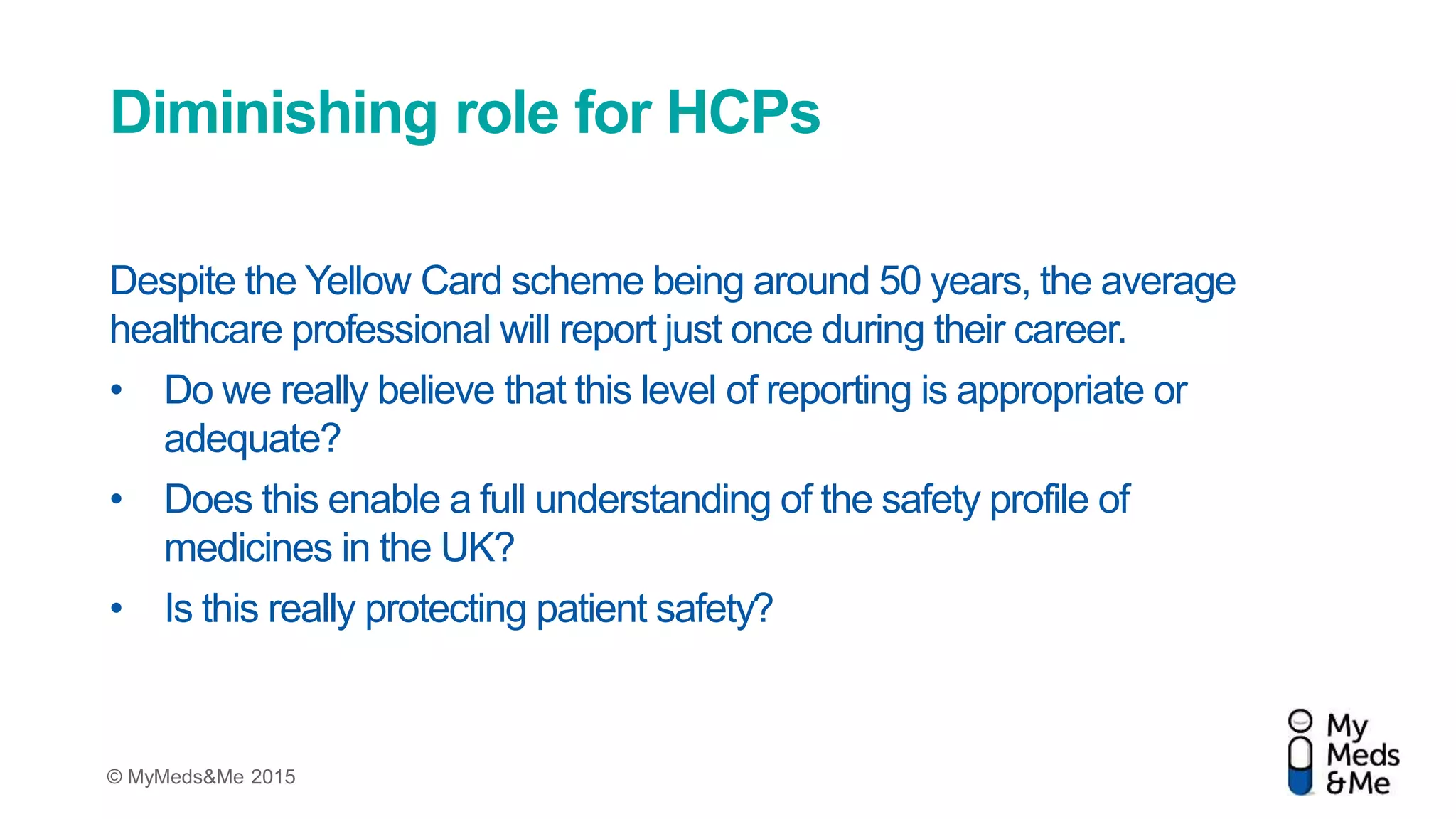
Diminishing role for HCPs
Despite the Yellow Card scheme being around 50 years, the average
healthcare professional will report just once during their career.
• Do we really believe that this level of reporting is appropriate or
adequate?
• Does this enable a full understanding of the safety profile of
medicines in the UK?
• Is this really protecting patient safety?
© MyMeds&Me 2015
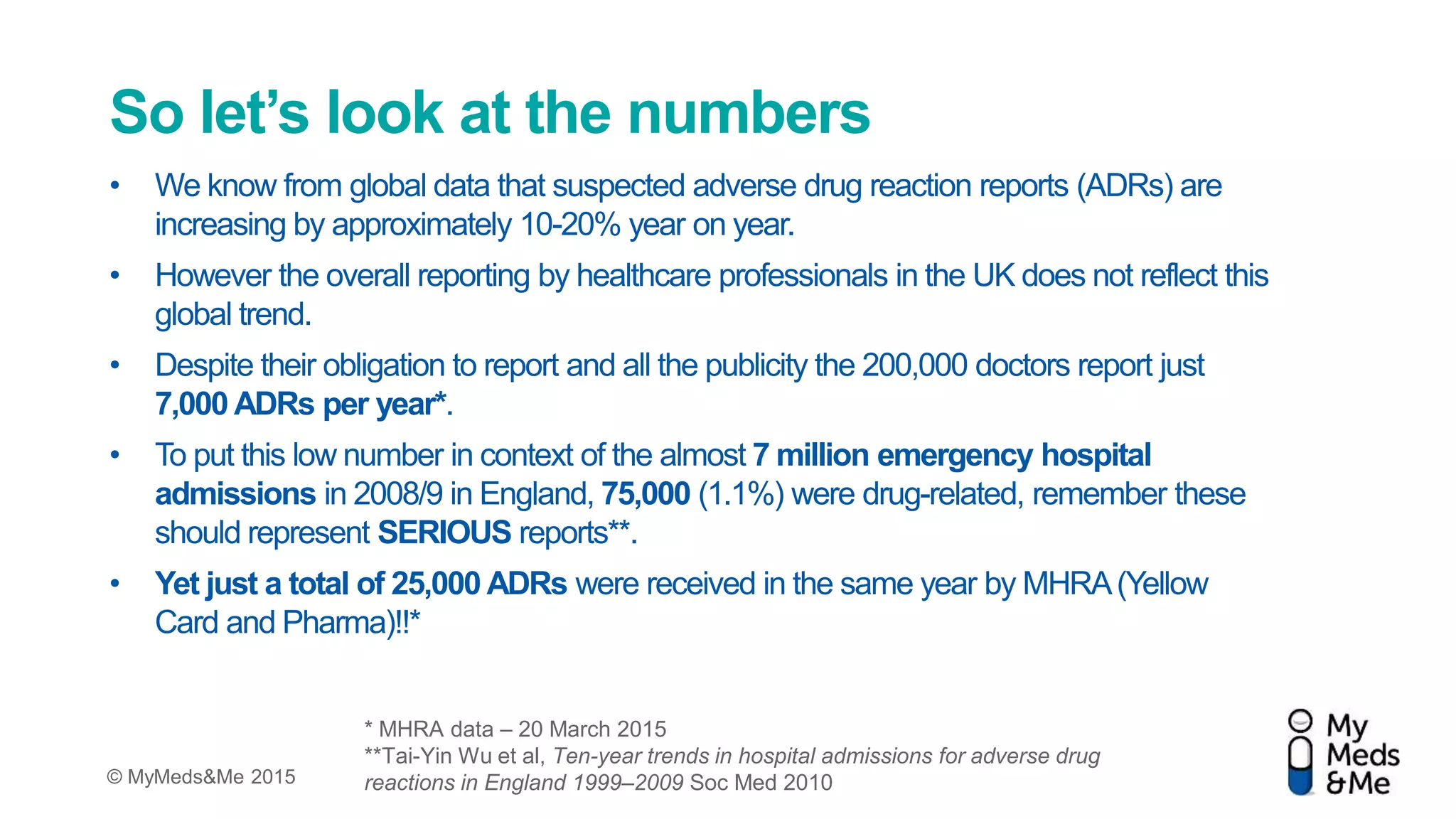
So let’s look at the numbers
• We know from global data that suspected adverse drug reaction reports (ADRs) are
increasing by approximately 10-20% year on year.
• However the overall reporting by healthcare professionals in the UK does not reflect this
global trend.
• Despite their obligation to report and all the publicity the 200,000 doctors report just
7,000 ADRs per year*.
• To put this low number in context of the almost 7 million emergency hospital
admissions in 2008/9 in England, 75,000 (1.1%) were drug-related, remember these
should represent SERIOUS reports**.
• Yet just a total of 25,000 ADRs were received in the same year by MHRA(Yellow
Card and Pharma)!!*
* MHRA data – 20 March 2015
**Tai-Yin Wu et al, Ten-year trends in hospital admissions for adverse drug
reactions in England 1999–2009 Soc Med 2010
© MyMeds&Me 2015
Let’s put this in context
How many prescriptions are issued annually in the UK?
1 Billion*
How many OTC medicine packs are sold per year?
Again, 1 Billion
And finally, what% of people experience an adverse event whentaking a medicine?
On average 10%
So based on these numbers, whatis the level of under-reporting?
Being conservative somewhere around 100 fold!! Being conservative somewhere around 100 fold!! Only
between<1% - 6%** of suspectedADRs experienced by patients are reported.
Think back to the 75,000 hospital admissions due toADRs……. in just one year
* HSCIC, Prescriptions dispensed in the Community, Statistics for England – 2002-2012 [NS], July 30, 2013
** Hazell et al, Under-Reporting of Adverse Drug Reactions,– May 2006, Drug Safety, Vol. 29, Issue 5
** Y. Moride et al, Under-reporting of adverse drug reactions in general practice – Oct 2003
© MyMeds&Me 2015
How can we close this gap, and where will
we get data in the future?
Despite much lower levels of awareness, 4,000 patient reports were received via Yellow
Card last year - doubling in volume over the last 5 years*.
Indeed, traditional adverse event reporting systems have been slow in promoting on-line
reporting by patients. In the meantime, increasing numbers of patients are turning to social
media to share their experiences with medicines.
Impressive work from Epidemico** highlighted that there were nearly three times as many
reports of negative experiences with specific medicines (they term these as proto-AEs)
found in Twitter data than reported for the same drug to the FDA. These were consistent
medically.
* MHRA data – 20 March 2015
** Freifeld Clark C. et al, Digital Drug Safety Surveillance: Monitoring Pharmaceutical
Products in Twitter 2014
© MyMeds&Me 2015
The electronic shift
Just to be clear…
I am in no way recommending that we abandon traditional spontaneous adverse event
reporting systems. These social media activities are likely complementary but need further
assessment.
Instead it seems to me that simplifying reporting processes is vital, enabling people to
do this with ease on-line whether through Yellow Card or directly toPharma is key.
• Electronic reports were just 18% of total 5 years ago and now represent 80%*
• The appetite from patients to provide information is there - they need better awareness
of what is possible and how to execute.
* MHRA data – 20 March 2015
© MyMeds&Me 2015
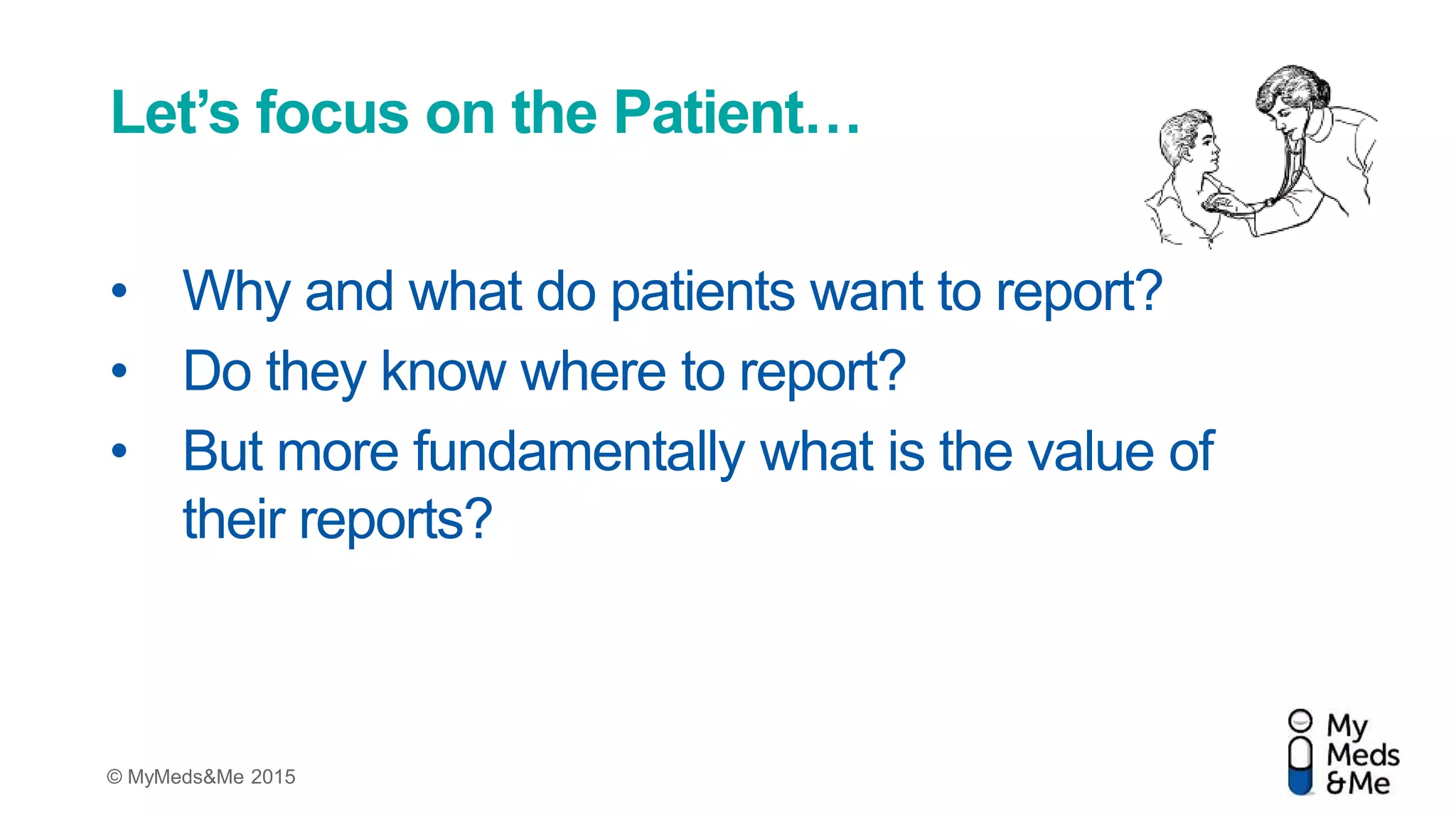
Let’s focus on the Patient…
• Why and what do patients want to report?
• Do they know where to report?
• But more fundamentally what is the value of
their reports?
© MyMeds&Me 2015
Let’s view the scientific evidence
There are three key themes:
• Importance of Yellow Card to data transparency
• Yellow Card as an independent patient voice to Regulators and
manufacturers
• Patients view Yellow Card as a means of circumventing the HCP
intermediary who may be a barrier to reporting
The important body of work from Claire Anderson in 2011 looking at Patient
Perspectives on the Yellow Card scheme provides valuable evidence of these
themes*.
* Claire Anderson et al, The importance of direct patient reporting of suspected
adverse drug reactions: a patient perspective, British Journal of Clinical
Pharmacology 2011
© MyMeds&Me 2015
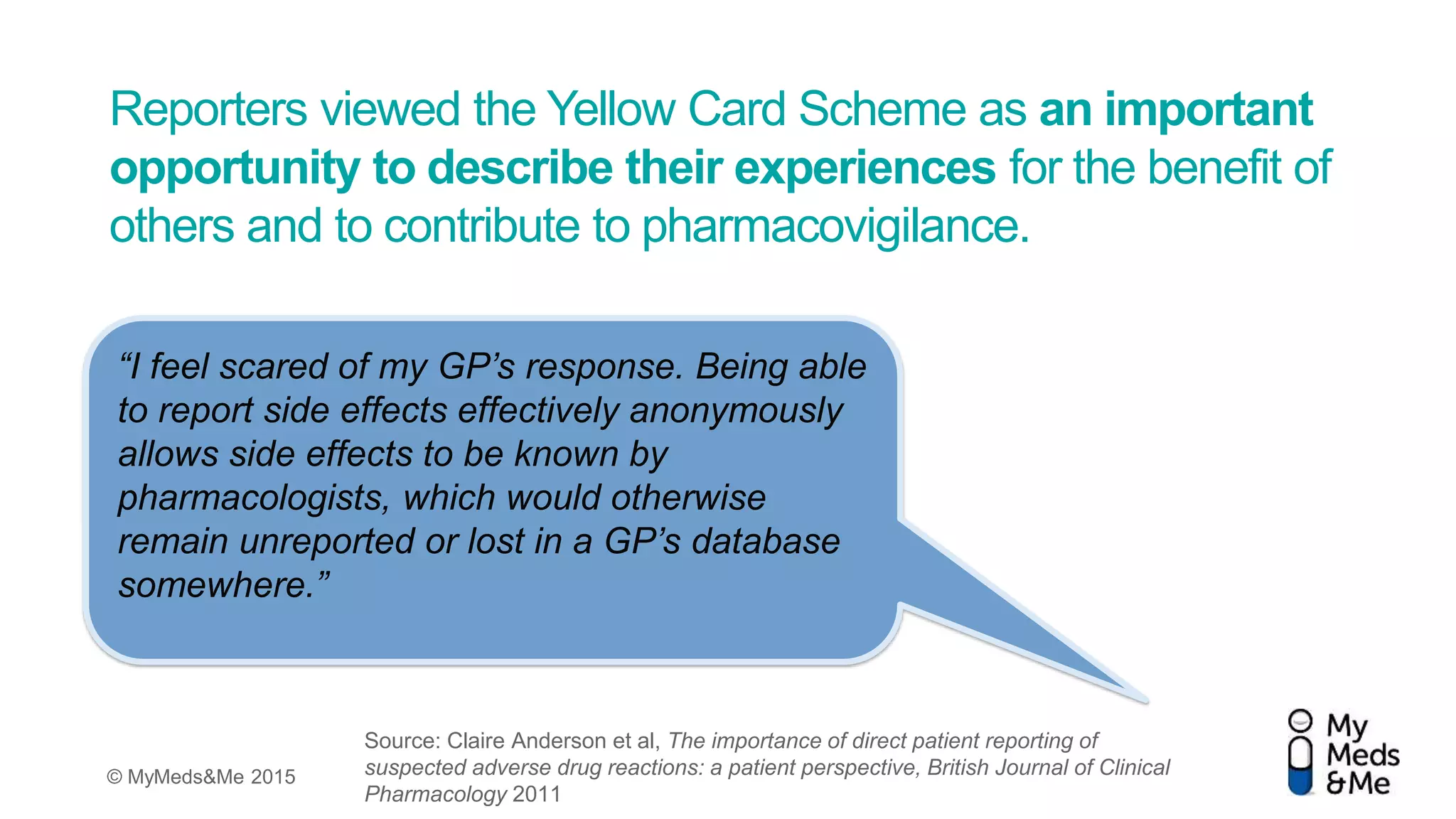
Reporters viewed the Yellow Card Scheme as an important
opportunity to describe their experiences for the benefit of
others and to contribute to pharmacovigilance.
“I feel scared of my GP’s response. Being able
to report side effects effectively anonymously
allows side effects to be known by
pharmacologists, which would otherwise
remain unreported or lost in a GP’s database
somewhere.”
Source: Claire Anderson et al, The importance of direct patient reporting of
suspected adverse drug reactions: a patient perspective, British Journal of Clinical
Pharmacology 2011
© MyMeds&Me 2015
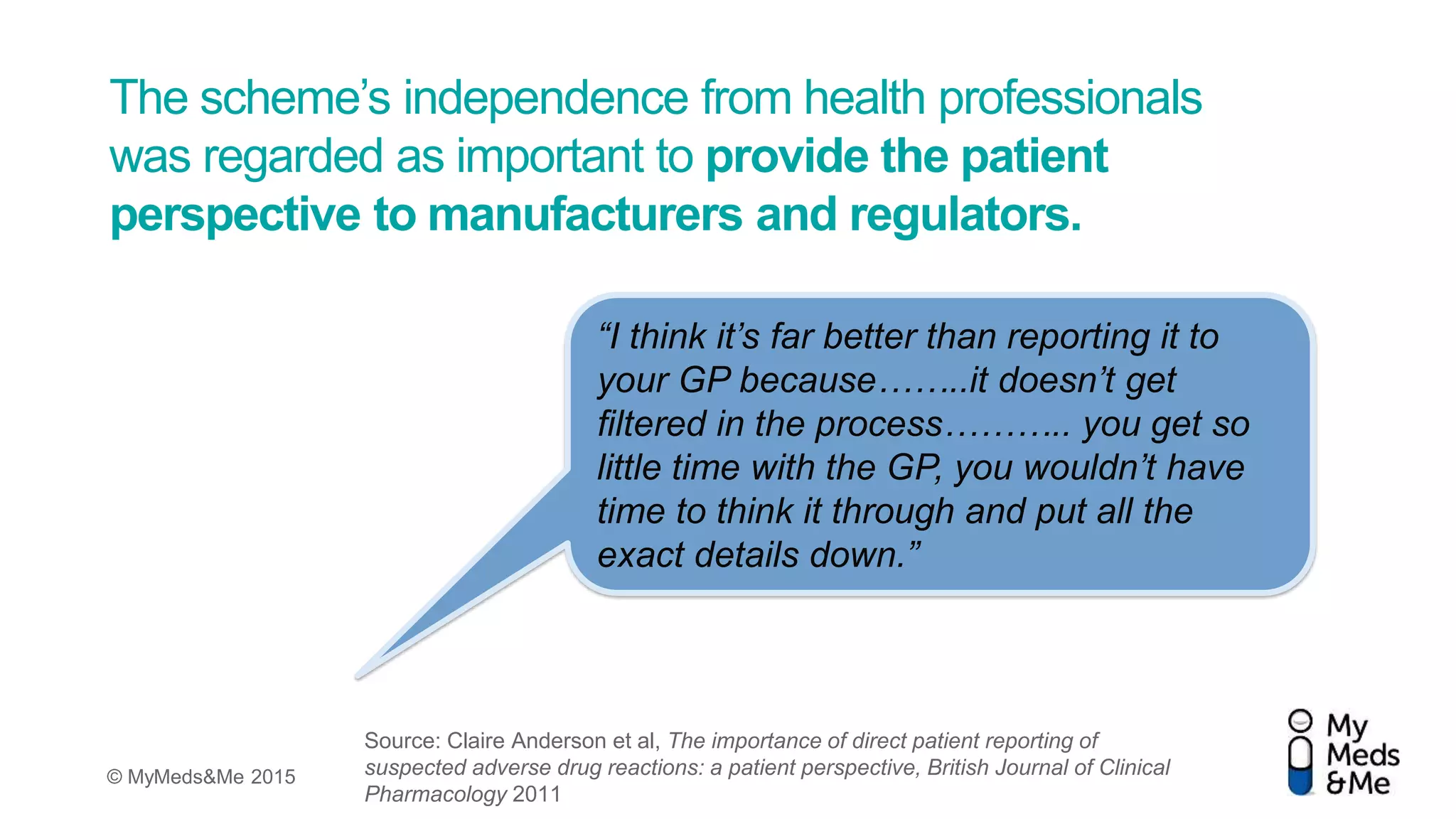
The scheme’s independence from health professionals
was regarded as important to provide the patient
perspective to manufacturers and regulators.
“I think it’s far better than reporting it to
your GP because……..it doesn’t get
filtered in the process……….. you get so
little time with the GP, you wouldn’t have
time to think it through and put all the
exact details down.”
Source: Claire Anderson et al, The importance of direct patient reporting of
suspected adverse drug reactions: a patient perspective, British Journal of Clinical
Pharmacology 2011
© MyMeds&Me 2015
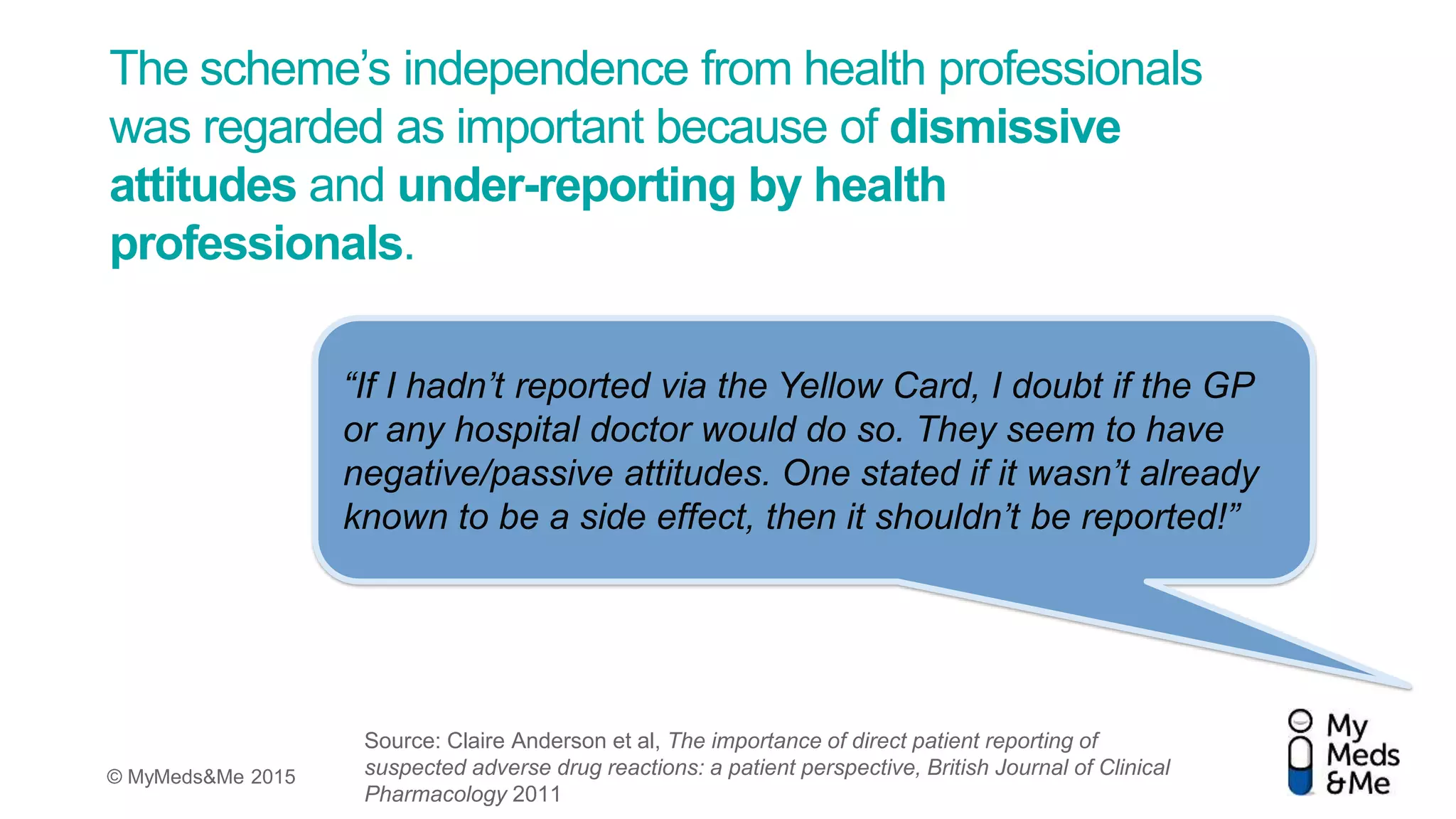
The scheme’s independence from health professionals
was regarded as important because of dismissive
attitudes and under-reporting by health
professionals.
“If I hadn’t reported via the Yellow Card, I doubt if the GP
or any hospital doctor would do so. They seem to have
negative/passive attitudes. One stated if it wasn’t already
known to be a side effect, then it shouldn’t be reported!”
Source: Claire Anderson et al, The importance of direct patient reporting of
suspected adverse drug reactions: a patient perspective, British Journal of Clinical
Pharmacology 2011
© MyMeds&Me 2015
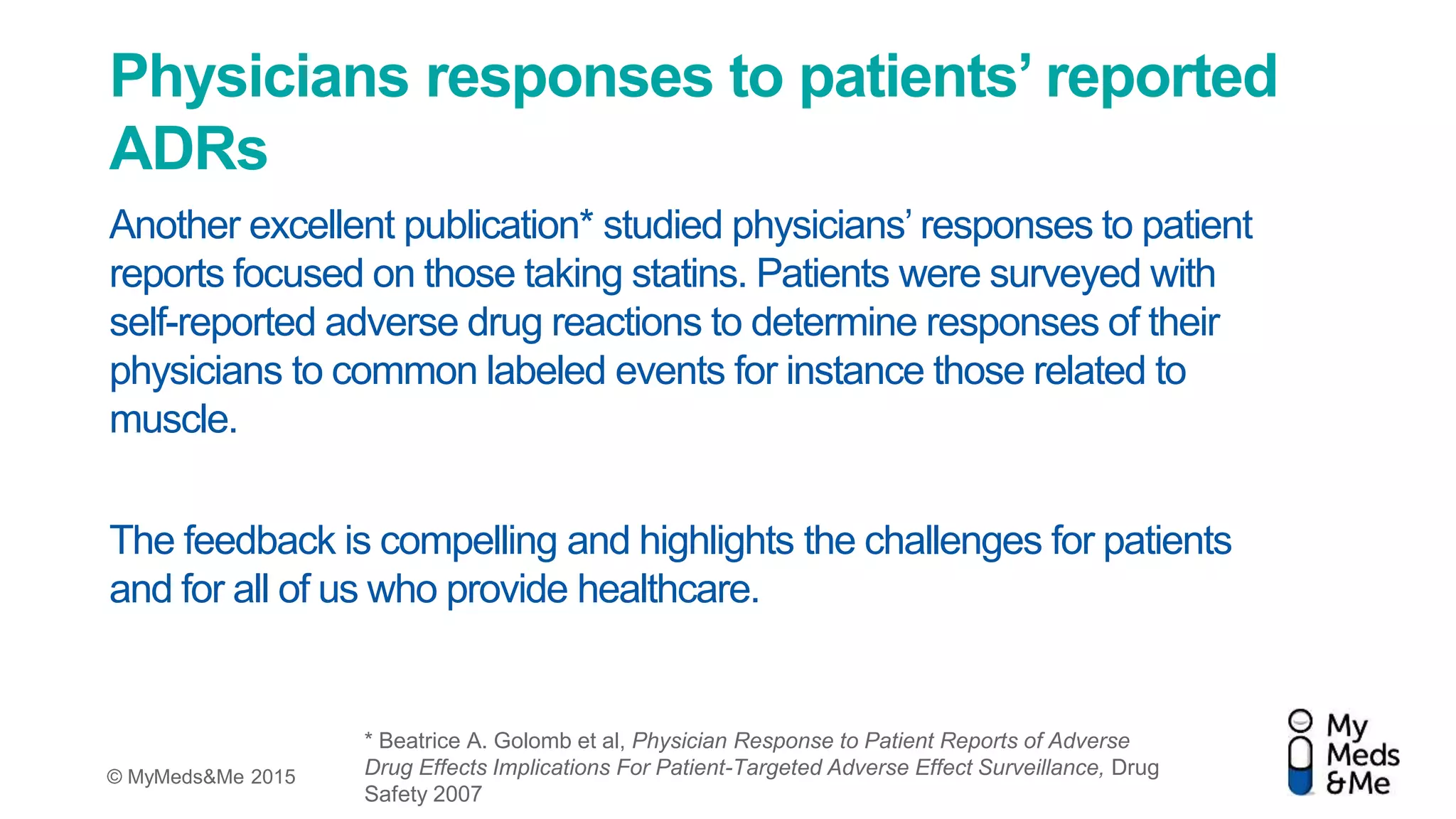
Physicians responses to patients’ reported
ADRs
Another excellent publication* studied physicians’ responses to patient
reports focused on those taking statins. Patients were surveyed with
self-reported adverse drug reactions to determine responses of their
physicians to common labeled events for instance those related to
muscle.
The feedback is compelling and highlights the challenges for patients
and for all of us who provide healthcare.
* Beatrice A. Golomb et al, Physician Response to Patient Reports of Adverse
Drug Effects Implications For Patient-Targeted Adverse Effect Surveillance, Drug
Safety 2007
© MyMeds&Me 2015
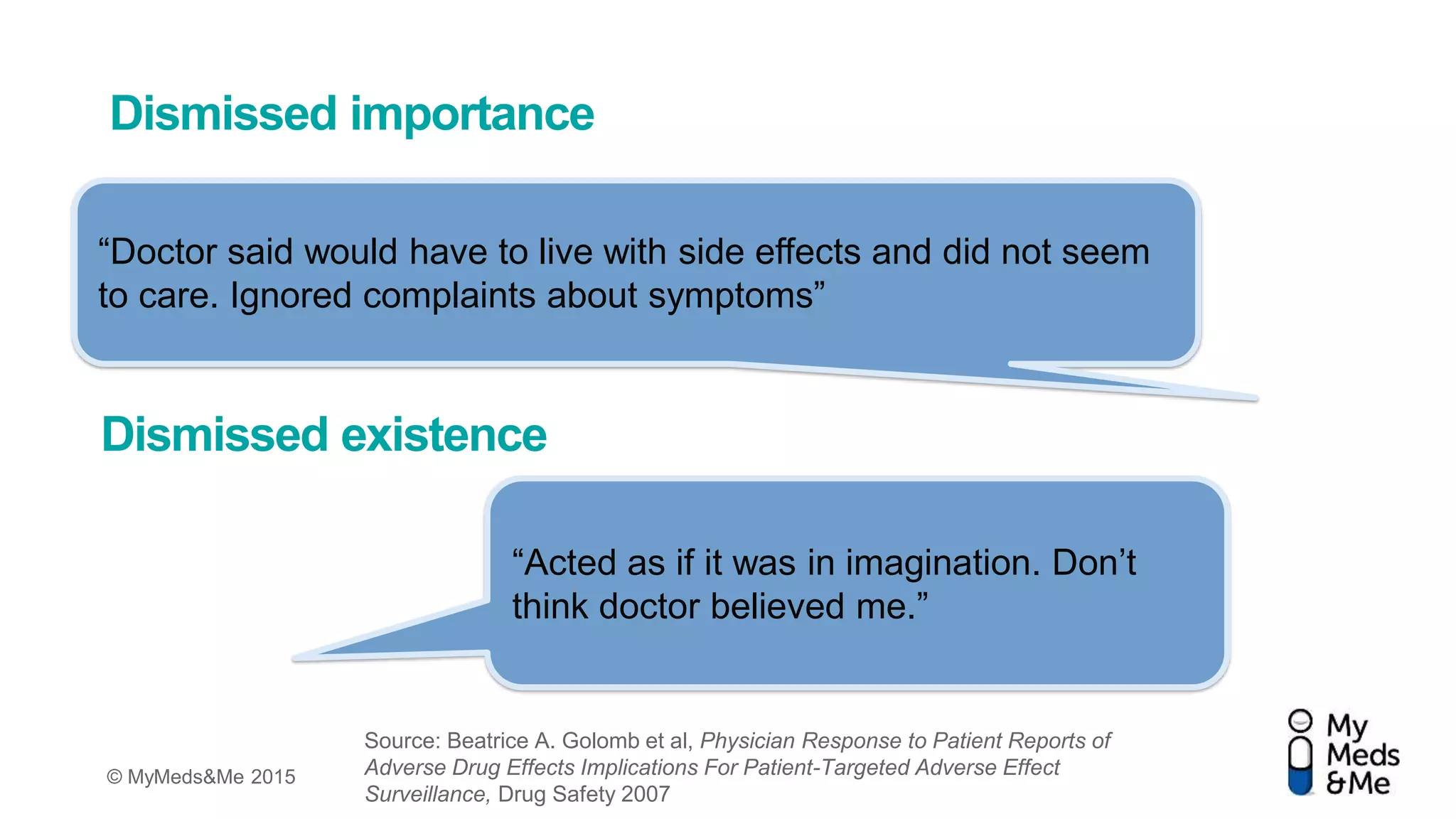
Dismissed importance
“Doctor said would have to live with side effects and did not seem
to care. Ignored complaints about symptoms”
“Acted as if it was in imagination. Don’t
think doctor believed me.”
Dismissed existence
Source: Beatrice A. Golomb et al, Physician Response to Patient Reports of
Adverse Drug Effects Implications For Patient-Targeted Adverse Effect
Surveillance, Drug Safety 2007
© MyMeds&Me 2015
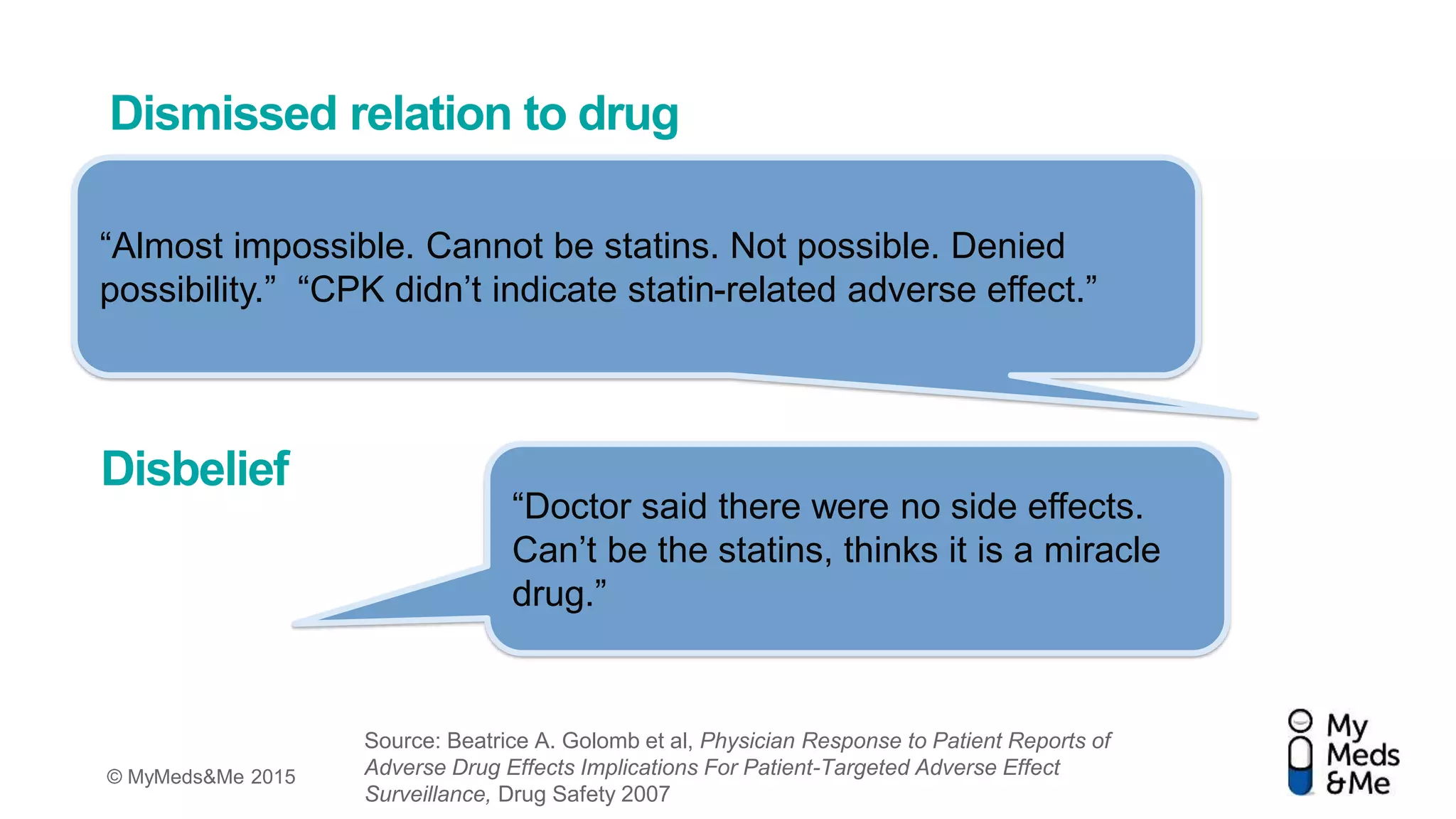
Dismissed relation to drug
“Almost impossible. Cannot be statins. Not possible. Denied
possibility.” “CPK didn’t indicate statin-related adverse effect.”
“Doctor said there were no side effects.
Can’t be the statins, thinks it is a miracle
drug.”
Disbelief
Source: Beatrice A. Golomb et al, Physician Response to Patient Reports of
Adverse Drug Effects Implications For Patient-Targeted Adverse Effect
Surveillance, Drug Safety 2007
© MyMeds&Me 2015
The challenge from physicians may
be…
So you get more reports but do they just
add more noise?
Or…
Do they enrich safety profiles
through enhanced signal detection?
© MyMeds&Me 2015
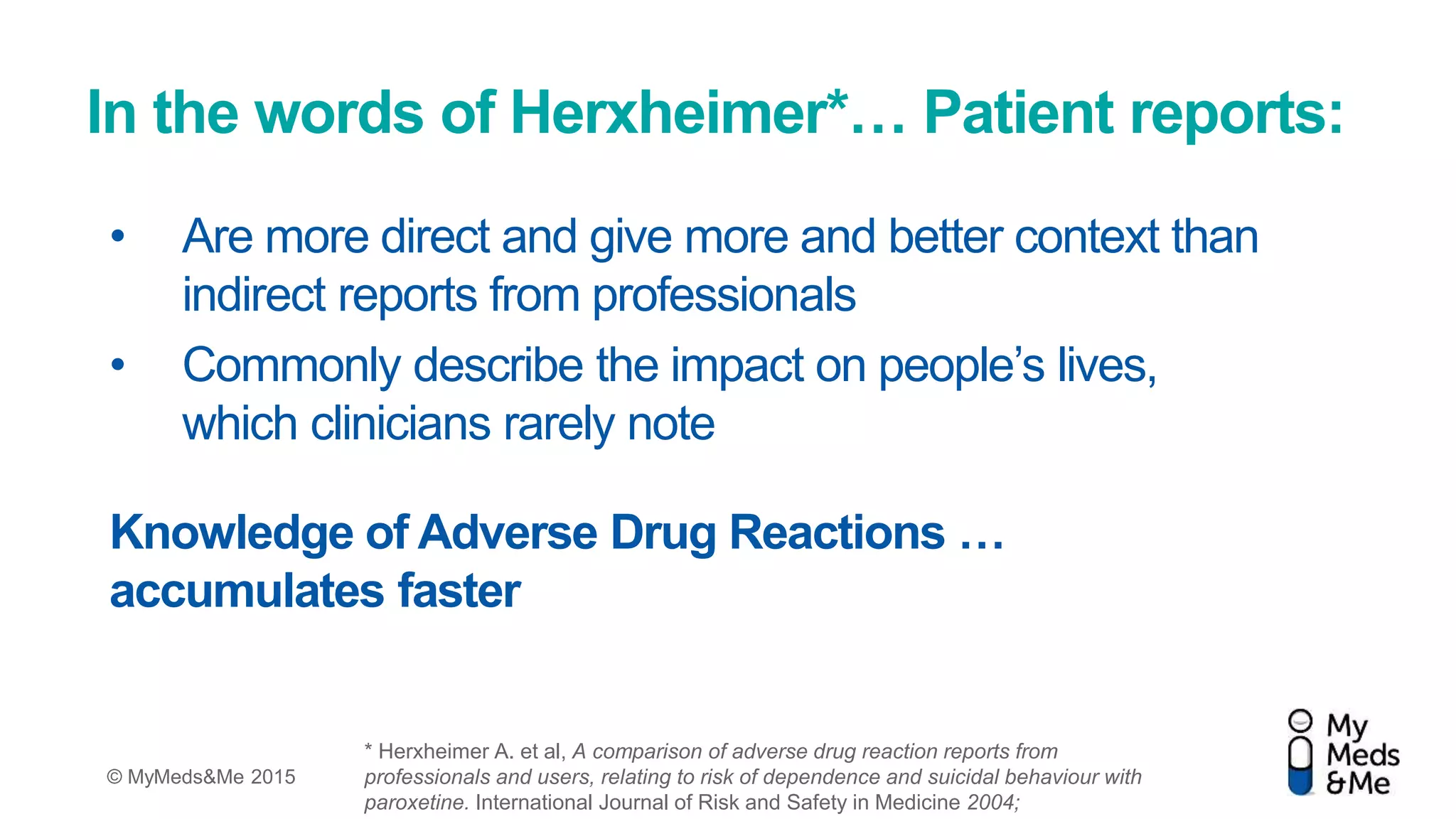
In the words of Herxheimer*… Patient reports:
• Are more direct and give more and better context than
indirect reports from professionals
• Commonly describe the impact on people’s lives,
which clinicians rarely note
Knowledge of Adverse Drug Reactions …
accumulates faster
* Herxheimer A. et al, A comparison of adverse drug reaction reports from
professionals and users, relating to risk of dependence and suicidal behaviour with
paroxetine. International Journal of Risk and Safety in Medicine 2004;
© MyMeds&Me 2015
Patient reports enhance signal detection
It is well recognized that patient reports enhance signal detection and enable
earlier recognition of safety issues*
Clean data direct from source, without alteration, is the life-blood of drug
safety organisations. PV specialists evaluating the safety of medicines rely
upon rapid access to clean, complete, consistent data from source and patients
ultimately are that source. It is essential to capture this data and therefore
build a true picture for future signal detection activities.
* Hammond IW et all, Comparison of the quality of spontaneous adverse drug
reaction reports received from consumers versus healthcare professionals in 2003.
Pharmacoepidem Dru Saf 2006;
© MyMeds&Me 2015
Efficient and effective Pharmacovigilance
PV specialists evaluating the safety of medicines rely upon rapid access to clean, complete,
consistent data from source and patients ultimately are that source.
Prescribing decisions can be made by individual doctors with individual
patients………however Pharmacovigilance decisions about fundamental causal
associations of drugs and events should be made holistically with the totality of pre-clinical,
clinical trial and spontaneous adverse event data.
Importantly, safety decisions and information based on this complete analysis can influence
the breadth of clinical practice and be shared in a consistent way for the benefit of all
patients.
© MyMeds&Me 2015
In conclusion…
We believe that changes in society, the focus on the
Patient and the ubiquitous use of electronic media will
further promote the role of direct patient reporting and
thus the role of the health professional in Yellow Card
reporting will be diminished.
© MyMeds&Me 2015
The importance of the availability and independence of a patient
reporting system is clear:
• Health professionals filter reports and can make erroneous causality
assessments
• They can dismiss patients’ concerns or may not considerAdverse
Drug Reactions during consultations
• Finally we know they do not report where required
Summing up…
© MyMeds&Me 2015
Take home messages
During this presentation we have outlined the clear value of getting
data at source from patients and how this enriches the knowledge
of medicine safety and identifies risks at the earliest opportunity.
We need to drive for a more proactive approach to identifying
suspectedADRs and acknowledgement of the patient experience.
This will bring about benefit for both patient and the reporting health
professionals.
© MyMeds&Me 2015
Supporting evidence
• Significant levels of under-reporting continue across all
Health Care Professionals
• Patients want to share their experiences
• The value of patient reports is clear for understanding
and managing the safety profile of medicines across
the UK.
© MyMeds&Me 2015
Thank you for your attention. If you have
questions or comments, please get in touch…
Learn more at:
www.mymedsandme.com
Follow us on:
@mymedsandme MyMeds&Me
Contact us at:
info@mymedsandme.com
© MyMeds&Me 2015

Debating the Future of Spontaneous Reporting - Dr. Andrew Rut, CEO and Founder, MyMeds&Me presents at MHRA Scientific Conference, 20 March 2015

  • 1.
    DEBATE Chaired by: Mr. JohnWilkinson FOR Dr. Andrew Rut, Chief Executive Officer, MyMeds&Me AGAINST Dr. Rosemary Leonard MBE, General Practitioner
  • 2.
    © MyMeds&Me 2015 MOTION “Withthe changes in society and increased use of electronic media, the role of the health professional in Yellow Card reporting will be diminished”
  • 3.
    © MyMeds&Me 2015 MOTION- FOR Andrew Rut Founder and Chief Executive Officer, MyMeds&Me
  • 4.
    © MyMeds&Me 2015 Joinme on a journey.. that will illustrate why healthcare professional (HCP) reporting is being diminished, including data on the levels of under-reporting and scientific evidence regarding the importance of patient reports in providing the foundations for signal management. We need a meaningful and representative pool for data mining; including the enhanced tools that detect changing patterns for product safety and product quality across the lifecycle.
  • 5.
    © MyMeds&Me 2015 Diminishingrole for HCPs Despite the Yellow Card scheme being around 50 years, the average healthcare professional will report just once during their career. • Do we really believe that this level of reporting is appropriate or adequate? • Does this enable a full understanding of the safety profile of medicines in the UK? • Is this really protecting patient safety?
  • 6.
    © MyMeds&Me 2015 Solet’s look at the numbers • We know from global data that suspected adverse drug reaction reports (ADRs) are increasing by approximately 10-20% year on year. • However the overall reporting by healthcare professionals in the UK does not reflect this global trend. • Despite their obligation to report and all the publicity the 200,000 doctors report just 7,000 ADRs per year*. • To put this low number in context of the almost 7 million emergency hospital admissions in 2008/9 in England, 75,000 (1.1%) were drug-related, remember these should represent SERIOUS reports**. • Yet just a total of 25,000 ADRs were received in the same year by MHRA(Yellow Card and Pharma)!!* * MHRA data – 20 March 2015 **Tai-Yin Wu et al, Ten-year trends in hospital admissions for adverse drug reactions in England 1999–2009 Soc Med 2010
  • 7.
    © MyMeds&Me 2015 Let’sput this in context How many prescriptions are issued annually in the UK? 1 Billion* How many OTC medicine packs are sold per year? Again, 1 Billion And finally, what% of people experience an adverse event whentaking a medicine? On average 10% So based on these numbers, whatis the level of under-reporting? Being conservative somewhere around 100 fold!! Being conservative somewhere around 100 fold!! Only between<1% - 6%** of suspectedADRs experienced by patients are reported. Think back to the 75,000 hospital admissions due toADRs……. in just one year * HSCIC, Prescriptions dispensed in the Community, Statistics for England – 2002-2012 [NS], July 30, 2013 ** Hazell et al, Under-Reporting of Adverse Drug Reactions,– May 2006, Drug Safety, Vol. 29, Issue 5 ** Y. Moride et al, Under-reporting of adverse drug reactions in general practice – Oct 2003
  • 8.
    © MyMeds&Me 2015 Howcan we close this gap, and where will we get data in the future? Despite much lower levels of awareness, 4,000 patient reports were received via Yellow Card last year - doubling in volume over the last 5 years*. Indeed, traditional adverse event reporting systems have been slow in promoting on-line reporting by patients. In the meantime, increasing numbers of patients are turning to social media to share their experiences with medicines. Impressive work from Epidemico** highlighted that there were nearly three times as many reports of negative experiences with specific medicines (they term these as proto-AEs) found in Twitter data than reported for the same drug to the FDA. These were consistent medically. * MHRA data – 20 March 2015 ** Freifeld Clark C. et al, Digital Drug Safety Surveillance: Monitoring Pharmaceutical Products in Twitter 2014
  • 9.
    © MyMeds&Me 2015 Theelectronic shift Just to be clear… I am in no way recommending that we abandon traditional spontaneous adverse event reporting systems. These social media activities are likely complementary but need further assessment. Instead it seems to me that simplifying reporting processes is vital, enabling people to do this with ease on-line whether through Yellow Card or directly toPharma is key. • Electronic reports were just 18% of total 5 years ago and now represent 80%* • The appetite from patients to provide information is there - they need better awareness of what is possible and how to execute. * MHRA data – 20 March 2015
  • 10.
    © MyMeds&Me 2015 Let’sfocus on the Patient… • Why and what do patients want to report? • Do they know where to report? • But more fundamentally what is the value of their reports?
  • 11.
    © MyMeds&Me 2015 Let’sview the scientific evidence There are three key themes: • Importance of Yellow Card to data transparency • Yellow Card as an independent patient voice to Regulators and manufacturers • Patients view Yellow Card as a means of circumventing the HCP intermediary who may be a barrier to reporting The important body of work from Claire Anderson in 2011 looking at Patient Perspectives on the Yellow Card scheme provides valuable evidence of these themes*. * Claire Anderson et al, The importance of direct patient reporting of suspected adverse drug reactions: a patient perspective, British Journal of Clinical Pharmacology 2011
  • 12.
    © MyMeds&Me 2015 Reportersviewed the Yellow Card Scheme as an important opportunity to describe their experiences for the benefit of others and to contribute to pharmacovigilance. “I feel scared of my GP’s response. Being able to report side effects effectively anonymously allows side effects to be known by pharmacologists, which would otherwise remain unreported or lost in a GP’s database somewhere.” Source: Claire Anderson et al, The importance of direct patient reporting of suspected adverse drug reactions: a patient perspective, British Journal of Clinical Pharmacology 2011
  • 13.
    © MyMeds&Me 2015 Thescheme’s independence from health professionals was regarded as important to provide the patient perspective to manufacturers and regulators. “I think it’s far better than reporting it to your GP because……..it doesn’t get filtered in the process……….. you get so little time with the GP, you wouldn’t have time to think it through and put all the exact details down.” Source: Claire Anderson et al, The importance of direct patient reporting of suspected adverse drug reactions: a patient perspective, British Journal of Clinical Pharmacology 2011
  • 14.
    © MyMeds&Me 2015 Thescheme’s independence from health professionals was regarded as important because of dismissive attitudes and under-reporting by health professionals. “If I hadn’t reported via the Yellow Card, I doubt if the GP or any hospital doctor would do so. They seem to have negative/passive attitudes. One stated if it wasn’t already known to be a side effect, then it shouldn’t be reported!” Source: Claire Anderson et al, The importance of direct patient reporting of suspected adverse drug reactions: a patient perspective, British Journal of Clinical Pharmacology 2011
  • 15.
    © MyMeds&Me 2015 Physiciansresponses to patients’ reported ADRs Another excellent publication* studied physicians’ responses to patient reports focused on those taking statins. Patients were surveyed with self-reported adverse drug reactions to determine responses of their physicians to common labeled events for instance those related to muscle. The feedback is compelling and highlights the challenges for patients and for all of us who provide healthcare. * Beatrice A. Golomb et al, Physician Response to Patient Reports of Adverse Drug Effects Implications For Patient-Targeted Adverse Effect Surveillance, Drug Safety 2007
  • 16.
    © MyMeds&Me 2015 Dismissedimportance “Doctor said would have to live with side effects and did not seem to care. Ignored complaints about symptoms” “Acted as if it was in imagination. Don’t think doctor believed me.” Dismissed existence Source: Beatrice A. Golomb et al, Physician Response to Patient Reports of Adverse Drug Effects Implications For Patient-Targeted Adverse Effect Surveillance, Drug Safety 2007
  • 17.
    © MyMeds&Me 2015 Dismissedrelation to drug “Almost impossible. Cannot be statins. Not possible. Denied possibility.” “CPK didn’t indicate statin-related adverse effect.” “Doctor said there were no side effects. Can’t be the statins, thinks it is a miracle drug.” Disbelief Source: Beatrice A. Golomb et al, Physician Response to Patient Reports of Adverse Drug Effects Implications For Patient-Targeted Adverse Effect Surveillance, Drug Safety 2007
  • 18.
    © MyMeds&Me 2015 Thechallenge from physicians may be… So you get more reports but do they just add more noise? Or… Do they enrich safety profiles through enhanced signal detection?
  • 19.
    © MyMeds&Me 2015 Inthe words of Herxheimer*… Patient reports: • Are more direct and give more and better context than indirect reports from professionals • Commonly describe the impact on people’s lives, which clinicians rarely note Knowledge of Adverse Drug Reactions … accumulates faster * Herxheimer A. et al, A comparison of adverse drug reaction reports from professionals and users, relating to risk of dependence and suicidal behaviour with paroxetine. International Journal of Risk and Safety in Medicine 2004;
  • 20.
    © MyMeds&Me 2015 Patientreports enhance signal detection It is well recognized that patient reports enhance signal detection and enable earlier recognition of safety issues* Clean data direct from source, without alteration, is the life-blood of drug safety organisations. PV specialists evaluating the safety of medicines rely upon rapid access to clean, complete, consistent data from source and patients ultimately are that source. It is essential to capture this data and therefore build a true picture for future signal detection activities. * Hammond IW et all, Comparison of the quality of spontaneous adverse drug reaction reports received from consumers versus healthcare professionals in 2003. Pharmacoepidem Dru Saf 2006;
  • 21.
    © MyMeds&Me 2015 Efficientand effective Pharmacovigilance PV specialists evaluating the safety of medicines rely upon rapid access to clean, complete, consistent data from source and patients ultimately are that source. Prescribing decisions can be made by individual doctors with individual patients………however Pharmacovigilance decisions about fundamental causal associations of drugs and events should be made holistically with the totality of pre-clinical, clinical trial and spontaneous adverse event data. Importantly, safety decisions and information based on this complete analysis can influence the breadth of clinical practice and be shared in a consistent way for the benefit of all patients.
  • 22.
    © MyMeds&Me 2015 Inconclusion… We believe that changes in society, the focus on the Patient and the ubiquitous use of electronic media will further promote the role of direct patient reporting and thus the role of the health professional in Yellow Card reporting will be diminished.
  • 23.
    © MyMeds&Me 2015 Theimportance of the availability and independence of a patient reporting system is clear: • Health professionals filter reports and can make erroneous causality assessments • They can dismiss patients’ concerns or may not considerAdverse Drug Reactions during consultations • Finally we know they do not report where required Summing up…
  • 24.
    © MyMeds&Me 2015 Takehome messages During this presentation we have outlined the clear value of getting data at source from patients and how this enriches the knowledge of medicine safety and identifies risks at the earliest opportunity. We need to drive for a more proactive approach to identifying suspectedADRs and acknowledgement of the patient experience. This will bring about benefit for both patient and the reporting health professionals.
  • 25.
    © MyMeds&Me 2015 Supportingevidence • Significant levels of under-reporting continue across all Health Care Professionals • Patients want to share their experiences • The value of patient reports is clear for understanding and managing the safety profile of medicines across the UK.
  • 26.
    © MyMeds&Me 2015 Thankyou for your attention. If you have questions or comments, please get in touch…
  • 27.
    Learn more at: www.mymedsandme.com Followus on: @mymedsandme MyMeds&Me Contact us at: info@mymedsandme.com
  • 28.