Treatment Overview of DDH
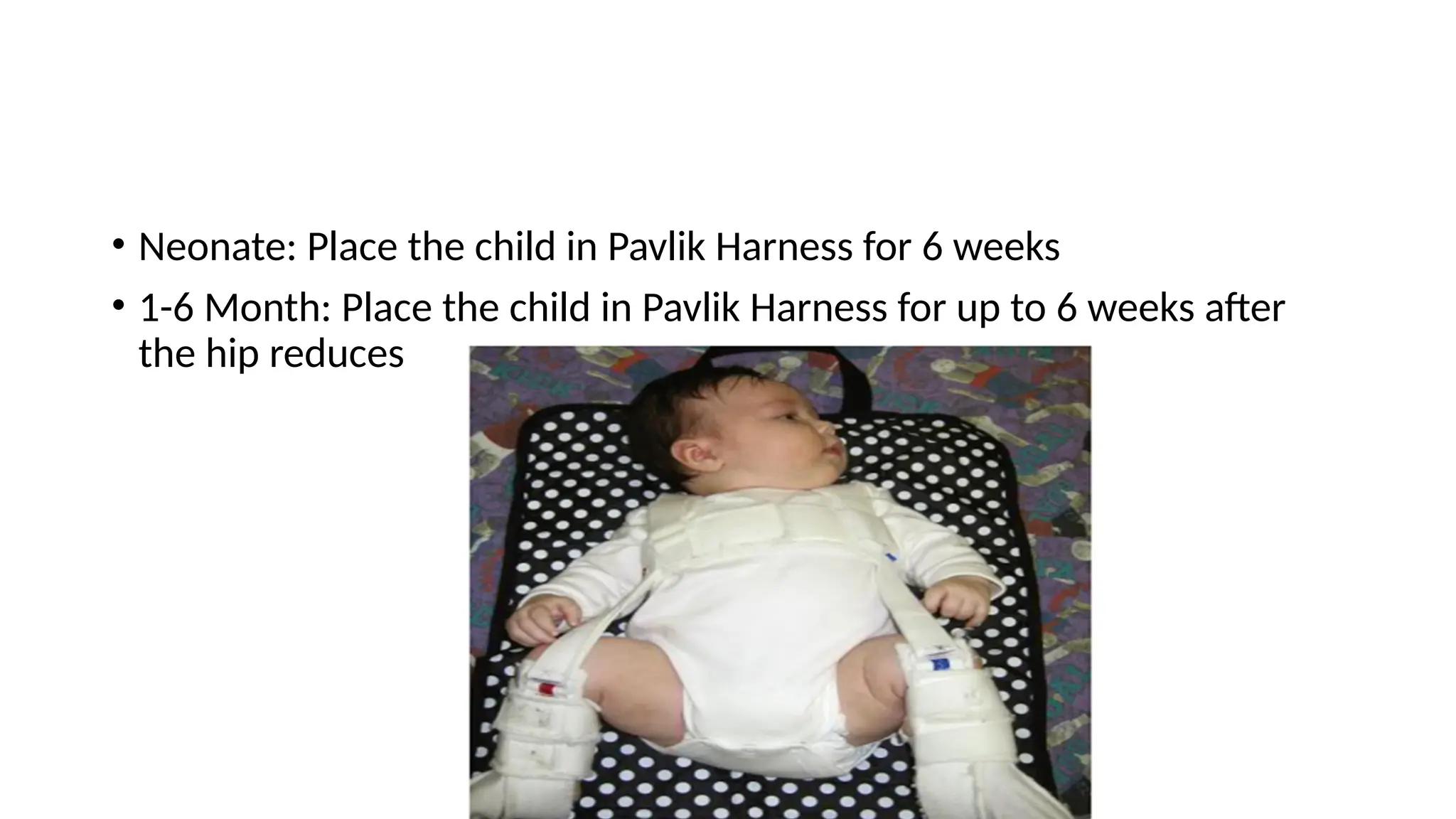
• Neonate: Place the child in Pavlik Harness for 6 weeks
• 1-6 Month: Place the child in Pavlik Harness for up to 6 weeks after
the hip reduces
• Dynamic splint and holds hip in flexion and abduction
• Indication: Dislocated and reducible hip
• Patient followed up every 1-2 weeks and stability is checked in every
follow-up
• Discontinued 6 weeks after clinical stability
• Weaned of up to 2 hours per week till brace is worn only at night
• Transitioning to a night time abduction orthosis for additional weeks
or months
• Four basic patterns of persistent dislocation observed:
Superior, Inferior, Lateral, Posterior
• Superior- Additional Flexion required
• Lateral- Flexion should be reduced
• Inferior- Close observation
• 6-18 Month: Treat the child with traction(?) and closed reduction
• Closed reduction : Successful-place the hip in Hip Spica Cast for 3
months
Hip Spica Application
• Closed reduction : Unsuccessful-open reduction is performed and
placed in hip spica cast immobilisation
• Open reduction : Medial approach in child younger than 12 months
Anterolateral approach in child older than 12 months
• 18-24 Months: Treat the patient with the trial of closed reduction or
primary open reduction via anterolateral approach
• Salter or Pemberton Osteotomy may or may not be part of the
procedure
• 24 Months to 6 Years: Primary Open reduction and femoral
shortening with or without Salter or Pemberton osteotomy
Salter Osteotomy
• Opening the osteotomy anterolaterally
• By hinging and rotating the acetabular segment on the symphysis
pubis
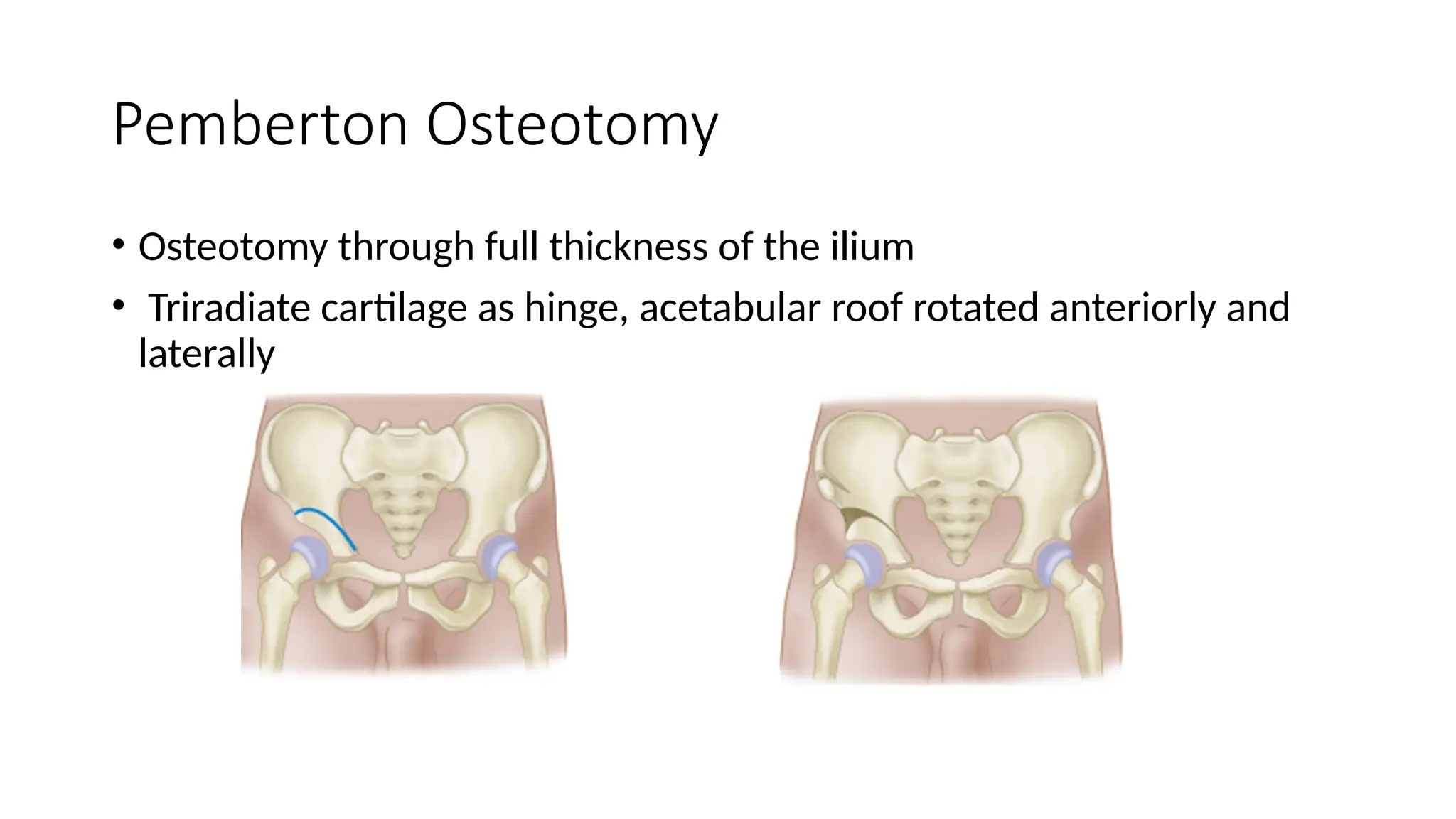
Pemberton Osteotomy
• Osteotomy through full thickness of the ilium
• Triradiate cartilage as hinge, acetabular roof rotated anteriorly and
laterally
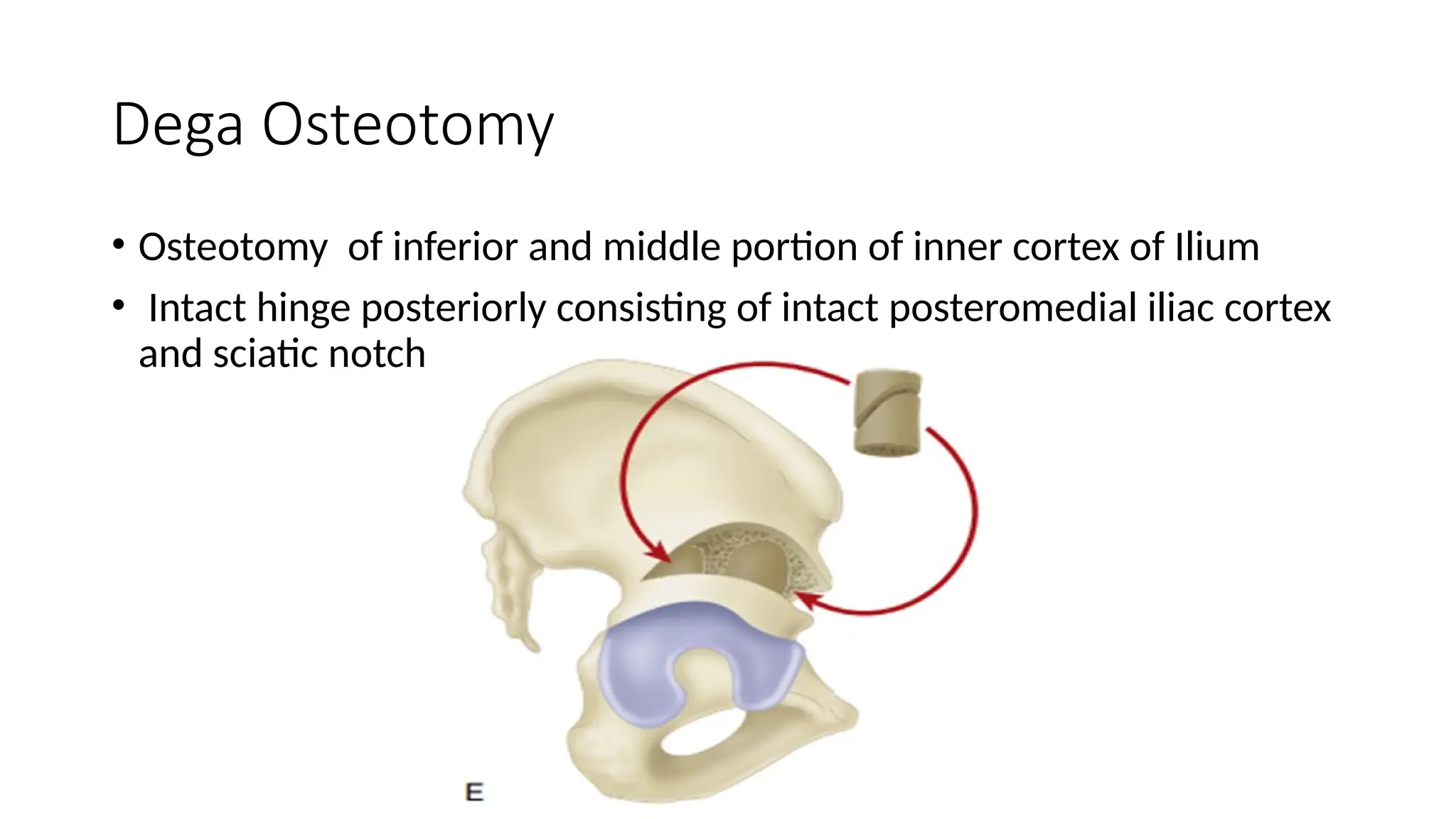
Dega Osteotomy
• Osteotomy of inferior and middle portion of inner cortex of Ilium
• Intact hinge posteriorly consisting of intact posteromedial iliac cortex
and sciatic notch
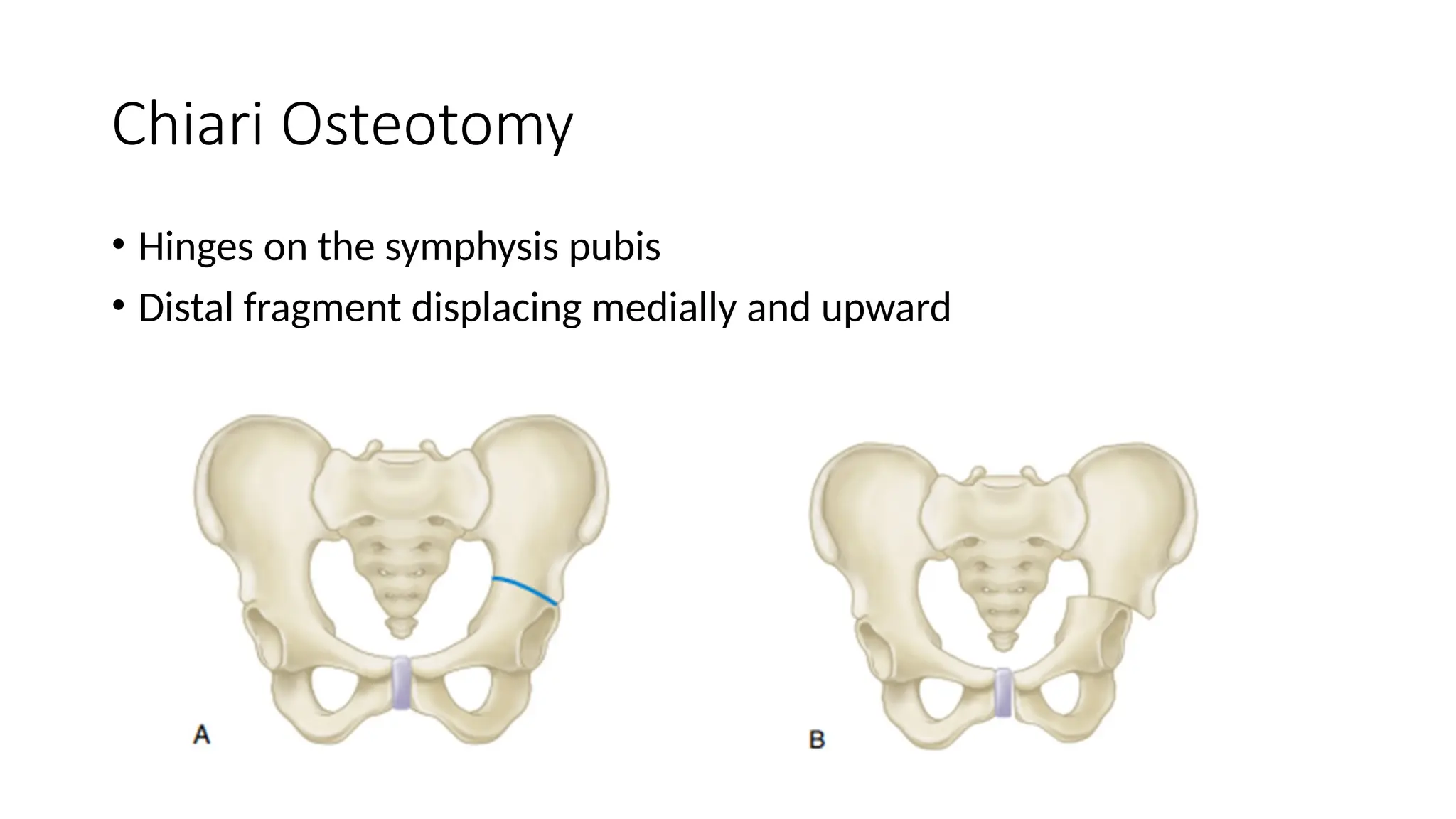
Chiari Osteotomy
• Hinges on the symphysis pubis
• Distal fragment displacing medially and upward

DDH Treatment Overview Paediatrics .pptx

  • 1.
  • 2.
    • Neonate: Placethe child in Pavlik Harness for 6 weeks • 1-6 Month: Place the child in Pavlik Harness for up to 6 weeks after the hip reduces
  • 3.
    • Dynamic splintand holds hip in flexion and abduction • Indication: Dislocated and reducible hip • Patient followed up every 1-2 weeks and stability is checked in every follow-up • Discontinued 6 weeks after clinical stability
  • 4.
    • Weaned ofup to 2 hours per week till brace is worn only at night • Transitioning to a night time abduction orthosis for additional weeks or months • Four basic patterns of persistent dislocation observed: Superior, Inferior, Lateral, Posterior • Superior- Additional Flexion required • Lateral- Flexion should be reduced • Inferior- Close observation
  • 5.
    • 6-18 Month:Treat the child with traction(?) and closed reduction • Closed reduction : Successful-place the hip in Hip Spica Cast for 3 months
  • 6.
  • 7.
    • Closed reduction: Unsuccessful-open reduction is performed and placed in hip spica cast immobilisation • Open reduction : Medial approach in child younger than 12 months Anterolateral approach in child older than 12 months
  • 8.
    • 18-24 Months:Treat the patient with the trial of closed reduction or primary open reduction via anterolateral approach • Salter or Pemberton Osteotomy may or may not be part of the procedure • 24 Months to 6 Years: Primary Open reduction and femoral shortening with or without Salter or Pemberton osteotomy
  • 10.
    Salter Osteotomy • Openingthe osteotomy anterolaterally • By hinging and rotating the acetabular segment on the symphysis pubis
  • 11.
    Pemberton Osteotomy • Osteotomythrough full thickness of the ilium • Triradiate cartilage as hinge, acetabular roof rotated anteriorly and laterally
  • 12.
    Dega Osteotomy • Osteotomyof inferior and middle portion of inner cortex of Ilium • Intact hinge posteriorly consisting of intact posteromedial iliac cortex and sciatic notch
  • 13.
    Chiari Osteotomy • Hingeson the symphysis pubis • Distal fragment displacing medially and upward