LESSON 1: INTRODUCTORY
CONCEPTS
ET 332a
Dc Motors, Generators and Energy Conversion Devices
1
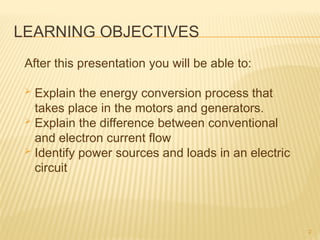
LEARNING OBJECTIVES
After this presentation you will be able to:
 Explain the energy conversion process that
takes place in the motors and generators.
 Explain the difference between conventional
and electron current flow
 Identify power sources and loads in an electric
circuit
2
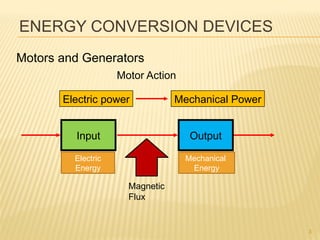
ENERGY CONVERSION DEVICES
Motors and Generators
Motor Action
Electric power Mechanical Power
Input Output
Electric
Energy
Mechanical
Energy
Magnetic
Flux
3
ENERGY CONVERSION DEVICES
4
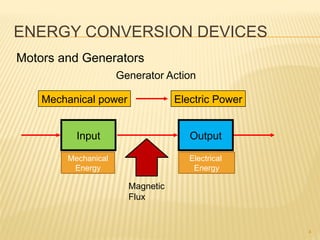
Motors and Generators
Generator Action
Mechanical power Electric Power
Input Output
Mechanical
Energy
Electrical
Energy
Magnetic
Flux
REVIEW OF FUNDAMENTALS
5
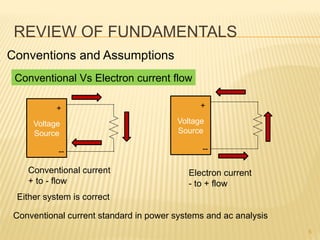
Conventions and Assumptions
Conventional Vs Electron current flow
Voltage
Source
+
--
Conventional current
+ to - flow
Voltage
Source
+
--
Electron current
- to + flow
Either system is correct
Conventional current standard in power systems and ac analysis
REVIEW OF FUNDAMENTALS
6
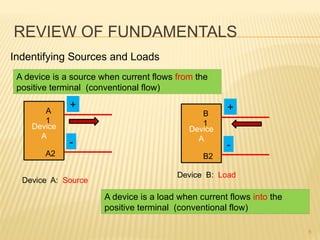
Indentifying Sources and Loads
A device is a source when current flows from the
positive terminal (conventional flow)
Device
A
A
1
A2
+
-
Device A: Source
Device
A
B
1
B2
+
-
A device is a load when current flows into the
positive terminal (conventional flow)
Device B: Load
REVIEW OF FUNDAMENTALS
7
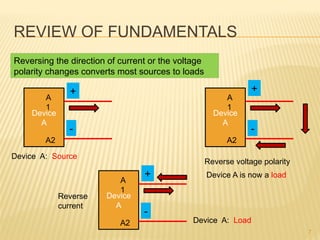
Reversing the direction of current or the voltage
polarity changes converts most sources to loads
Device
A
A
1
A2
-
Device A: Source
Device
A
A
1
A2
-
+ +
Reverse voltage polarity
Device A is now a load
Device
A
A
1
A2
-
Device A: Load
+
Reverse
current
QUANTITY SIGN CONVENTIONS
8
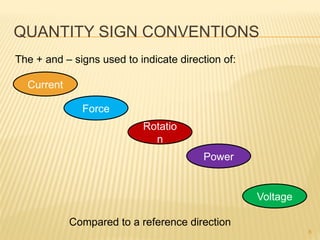
The + and – signs used to indicate direction of:
Current
Force
Rotatio
n
Power
Voltage
Compared to a reference direction
SIGN CONVENTION EXAMPLES
9
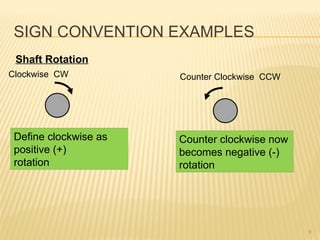
Shaft Rotation
Clockwise CW
Define clockwise as
positive (+)
rotation
Counter Clockwise CCW
Counter clockwise now
becomes negative (-)
rotation
SIGN CONVENTION EXAMPLES
10
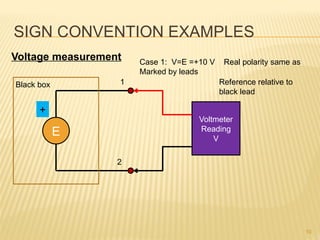
Voltage measurement
Voltmeter
Reading
V
E
1
2
+
Black box
Case 1: V=E =+10 V Real polarity same as
Marked by leads
Reference relative to
black lead
SIGN CONVENTION EXAMPLES
11
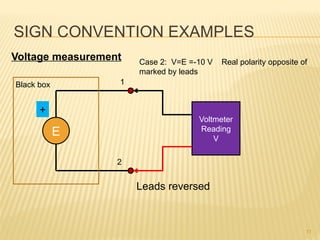
Voltage measurement
E
1
2
+
Black box
Case 2: V=E =-10 V Real polarity opposite of
marked by leads
Voltmeter
Reading
V
Leads reversed
ET 332a
Dc Motors, Generators and Energy Conversion Devices
12
END LESSON 1

DC Motor n Generator (0).pdf

  • 1.
    LESSON 1: INTRODUCTORY CONCEPTS ET332a Dc Motors, Generators and Energy Conversion Devices 1
  • 2.
    LEARNING OBJECTIVES After thispresentation you will be able to:  Explain the energy conversion process that takes place in the motors and generators.  Explain the difference between conventional and electron current flow  Identify power sources and loads in an electric circuit 2
  • 3.
    ENERGY CONVERSION DEVICES Motorsand Generators Motor Action Electric power Mechanical Power Input Output Electric Energy Mechanical Energy Magnetic Flux 3
  • 4.
    ENERGY CONVERSION DEVICES 4 Motorsand Generators Generator Action Mechanical power Electric Power Input Output Mechanical Energy Electrical Energy Magnetic Flux
  • 5.
    REVIEW OF FUNDAMENTALS 5 Conventionsand Assumptions Conventional Vs Electron current flow Voltage Source + -- Conventional current + to - flow Voltage Source + -- Electron current - to + flow Either system is correct Conventional current standard in power systems and ac analysis
  • 6.
    REVIEW OF FUNDAMENTALS 6 IndentifyingSources and Loads A device is a source when current flows from the positive terminal (conventional flow) Device A A 1 A2 + - Device A: Source Device A B 1 B2 + - A device is a load when current flows into the positive terminal (conventional flow) Device B: Load
  • 7.
    REVIEW OF FUNDAMENTALS 7 Reversingthe direction of current or the voltage polarity changes converts most sources to loads Device A A 1 A2 - Device A: Source Device A A 1 A2 - + + Reverse voltage polarity Device A is now a load Device A A 1 A2 - Device A: Load + Reverse current
  • 8.
    QUANTITY SIGN CONVENTIONS 8 The+ and – signs used to indicate direction of: Current Force Rotatio n Power Voltage Compared to a reference direction
  • 9.
    SIGN CONVENTION EXAMPLES 9 ShaftRotation Clockwise CW Define clockwise as positive (+) rotation Counter Clockwise CCW Counter clockwise now becomes negative (-) rotation
  • 10.
    SIGN CONVENTION EXAMPLES 10 Voltagemeasurement Voltmeter Reading V E 1 2 + Black box Case 1: V=E =+10 V Real polarity same as Marked by leads Reference relative to black lead
  • 11.
    SIGN CONVENTION EXAMPLES 11 Voltagemeasurement E 1 2 + Black box Case 2: V=E =-10 V Real polarity opposite of marked by leads Voltmeter Reading V Leads reversed
  • 12.
    ET 332a Dc Motors,Generators and Energy Conversion Devices 12 END LESSON 1