7
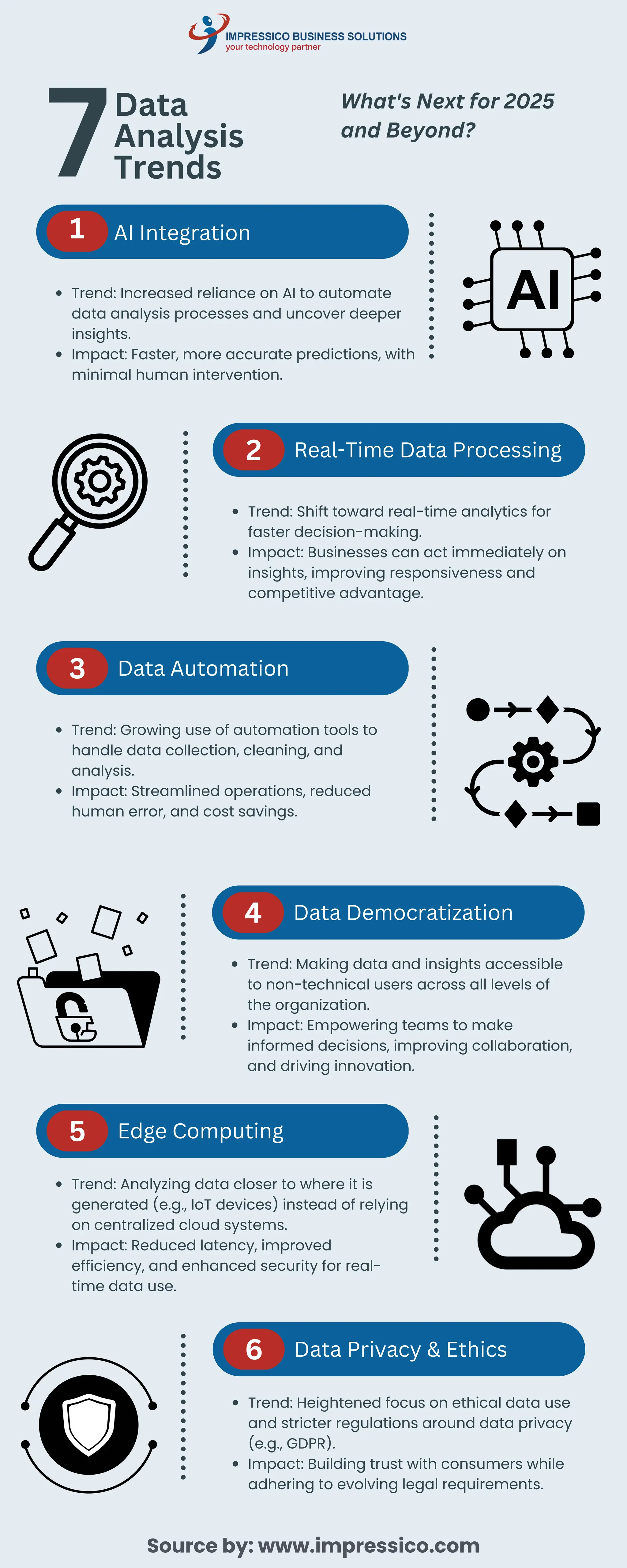
AI Integration
Data
Analysis
Trends
What's Next for 2025
and Beyond?
Real-Time Data Processing
Data Automation
Data Democratization
Edge Computing
Data Privacy & Ethics
Trend: Increased reliance on AI to automate
data analysis processes and uncover deeper
insights.
Impact: Faster, more accurate predictions, with
minimal human intervention.
Trend: Shift toward real-time analytics for
faster decision-making.
Impact: Businesses can act immediately on
insights, improving responsiveness and
competitive advantage.
Trend: Growing use of automation tools to
handle data collection, cleaning, and
analysis.
Impact: Streamlined operations, reduced
human error, and cost savings.
Trend: Making data and insights accessible
to non-technical users across all levels of
the organization.
Impact: Empowering teams to make
informed decisions, improving collaboration,
and driving innovation.
Trend: Analyzing data closer to where it is
generated (e.g., IoT devices) instead of relying
on centralized cloud systems.
Impact: Reduced latency, improved
efficiency, and enhanced security for real-
time data use.
Trend: Heightened focus on ethical data use
and stricter regulations around data privacy
(e.g., GDPR).
Impact: Building trust with consumers while
adhering to evolving legal requirements.
1
2
3
4
5
6
Source by: www.impressico.com

Data Analysis Trends: What's Next for 2025 and Beyond?

  • 1.
    7 AI Integration Data Analysis Trends What's Nextfor 2025 and Beyond? Real-Time Data Processing Data Automation Data Democratization Edge Computing Data Privacy & Ethics Trend: Increased reliance on AI to automate data analysis processes and uncover deeper insights. Impact: Faster, more accurate predictions, with minimal human intervention. Trend: Shift toward real-time analytics for faster decision-making. Impact: Businesses can act immediately on insights, improving responsiveness and competitive advantage. Trend: Growing use of automation tools to handle data collection, cleaning, and analysis. Impact: Streamlined operations, reduced human error, and cost savings. Trend: Making data and insights accessible to non-technical users across all levels of the organization. Impact: Empowering teams to make informed decisions, improving collaboration, and driving innovation. Trend: Analyzing data closer to where it is generated (e.g., IoT devices) instead of relying on centralized cloud systems. Impact: Reduced latency, improved efficiency, and enhanced security for real- time data use. Trend: Heightened focus on ethical data use and stricter regulations around data privacy (e.g., GDPR). Impact: Building trust with consumers while adhering to evolving legal requirements. 1 2 3 4 5 6 Source by: www.impressico.com