Debt Collection Services
Understanding Business and Consumer
Debt Collection Strategies
Introduction
This presentation provides an in-depth look at debt
collection services for businesses and consumers. It
covers the importance of effective debt collection
practices, the various types of debt collection, and
regulatory considerations to ensure compliance and
optimal customer relations.
Debt Collection
Overview
01
Definition and Importance
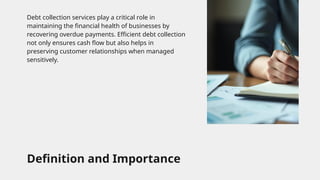
Debt collection services play a critical role in
maintaining the financial health of businesses by
recovering overdue payments. Efficient debt collection
not only ensures cash flow but also helps in
preserving customer relationships when managed
sensitively.
Types of Debt Collections
Debt collection can be classified into various types such as first-
party collections, where businesses manage their own debts, and
third-party collections involving external agencies. Understanding
these types is essential for selecting appropriate strategies for
effective recovery.
Regulatory Framework
The regulatory environment surrounding debt collection is crucial
for ensuring ethical practices. The Fair Debt Collection Practices
Act (FDCPA) in the United States establishes guidelines to protect
consumers from abusive collection tactics. Businesses must
adhere to these regulations to avoid legal repercussions and
maintain trust with their clientele.
Collection Strategies
02
Communication Techniques
Effective communication is key in debt collection strategies.
Utilizing a respectful and empathetic approach can aid in
maintaining a positive relationship with customers even during
financially challenging times. Active listening and clear messaging
help ensure that the collection process is efficient and consumer-
focused.
Technology in Collections
Integrating technology into debt collection processes
enhances efficiency and effectiveness. Automated
systems can streamline communication, track
payments, and manage accounts more proficiently.
Implementing data analytics allows businesses to
identify trends and improve their collection strategies
based on consumer behavior.
Customer Relationship
Management
Maintaining strong customer relationships is essential during debt
collection. Employing a customer relationship management (CRM)
system can assist in tracking client interactions, preferences, and
payment histories, allowing for personalized follow-ups and
enhanced engagement to encourage timely repayments.
Conclusions
In summary, understanding the regulatory framework
and employing effective collection strategies are vital
for successful debt recovery. Utilizing appropriate
communication techniques, modern technology, and
effective customer relationship management not only
promotes efficient collections but also fosters long-
term customer loyalty.
CREDITS: This presentation template was created by
Slidesgo, and includes icons, infographics & images by
Freepik
Thank you!
Do you have any questions?
+00 000 000 000

DAA Effective Debt Collection Practices.pptx

  • 1.
    Debt Collection Services UnderstandingBusiness and Consumer Debt Collection Strategies
  • 2.
    Introduction This presentation providesan in-depth look at debt collection services for businesses and consumers. It covers the importance of effective debt collection practices, the various types of debt collection, and regulatory considerations to ensure compliance and optimal customer relations.
  • 3.
  • 4.
    Definition and Importance Debtcollection services play a critical role in maintaining the financial health of businesses by recovering overdue payments. Efficient debt collection not only ensures cash flow but also helps in preserving customer relationships when managed sensitively.
  • 5.
    Types of DebtCollections Debt collection can be classified into various types such as first- party collections, where businesses manage their own debts, and third-party collections involving external agencies. Understanding these types is essential for selecting appropriate strategies for effective recovery.
  • 6.
    Regulatory Framework The regulatoryenvironment surrounding debt collection is crucial for ensuring ethical practices. The Fair Debt Collection Practices Act (FDCPA) in the United States establishes guidelines to protect consumers from abusive collection tactics. Businesses must adhere to these regulations to avoid legal repercussions and maintain trust with their clientele.
  • 7.
  • 8.
    Communication Techniques Effective communicationis key in debt collection strategies. Utilizing a respectful and empathetic approach can aid in maintaining a positive relationship with customers even during financially challenging times. Active listening and clear messaging help ensure that the collection process is efficient and consumer- focused.
  • 9.
    Technology in Collections Integratingtechnology into debt collection processes enhances efficiency and effectiveness. Automated systems can streamline communication, track payments, and manage accounts more proficiently. Implementing data analytics allows businesses to identify trends and improve their collection strategies based on consumer behavior.
  • 10.
    Customer Relationship Management Maintaining strongcustomer relationships is essential during debt collection. Employing a customer relationship management (CRM) system can assist in tracking client interactions, preferences, and payment histories, allowing for personalized follow-ups and enhanced engagement to encourage timely repayments.
  • 11.
    Conclusions In summary, understandingthe regulatory framework and employing effective collection strategies are vital for successful debt recovery. Utilizing appropriate communication techniques, modern technology, and effective customer relationship management not only promotes efficient collections but also fosters long- term customer loyalty.
  • 12.
    CREDITS: This presentationtemplate was created by Slidesgo, and includes icons, infographics & images by Freepik Thank you! Do you have any questions? +00 000 000 000