CYBER SECURITY
Importance and Need for Cyber Security – Cyber
threats – Cyber challenges
1
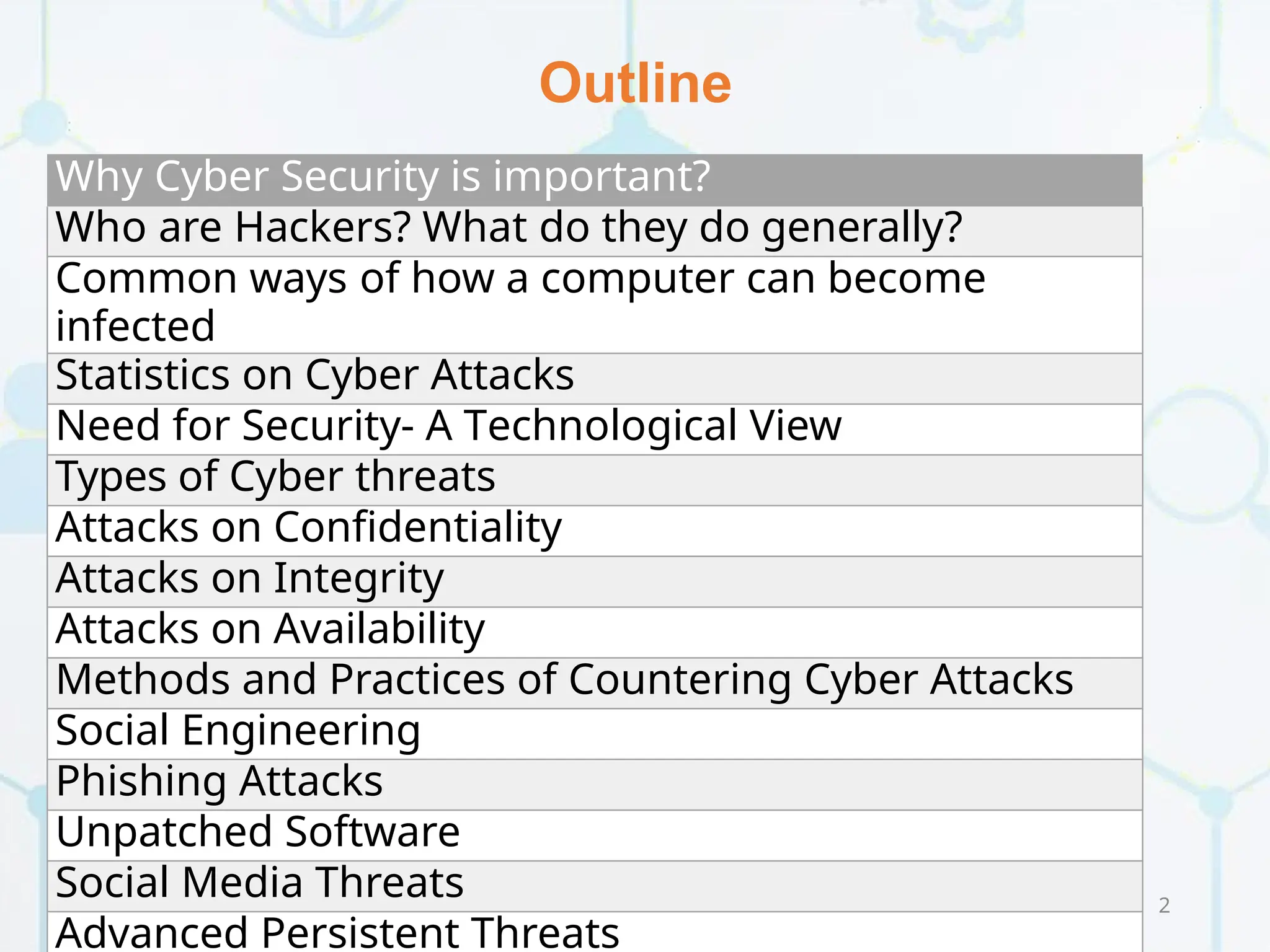
Outline
2
Why Cyber Security is important?
Who are Hackers? What do they do generally?
Common ways of how a computer can become
infected
Statistics on Cyber Attacks
Need for Security- A Technological View
Types of Cyber threats
Attacks on Confidentiality
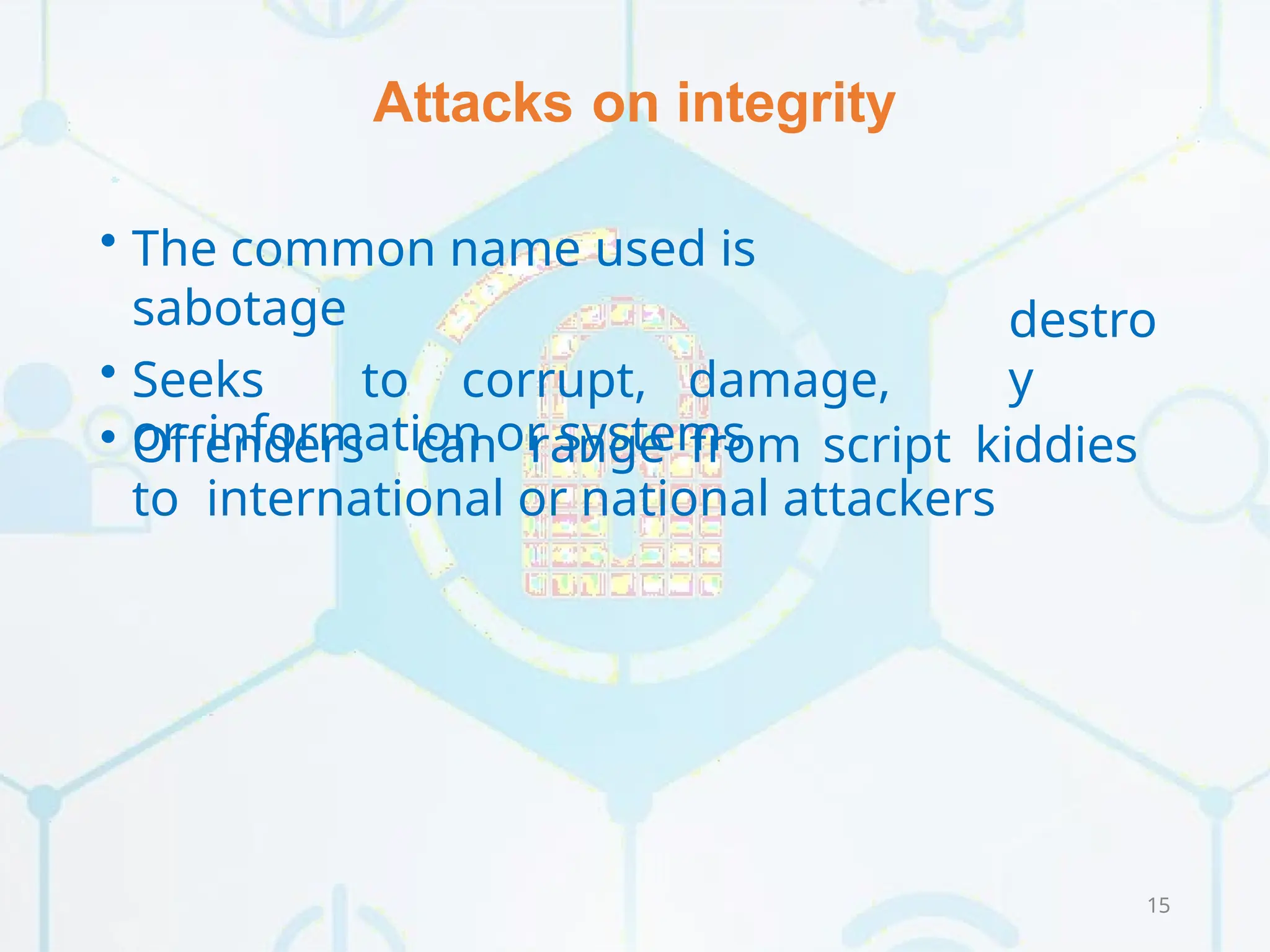
Attacks on Integrity
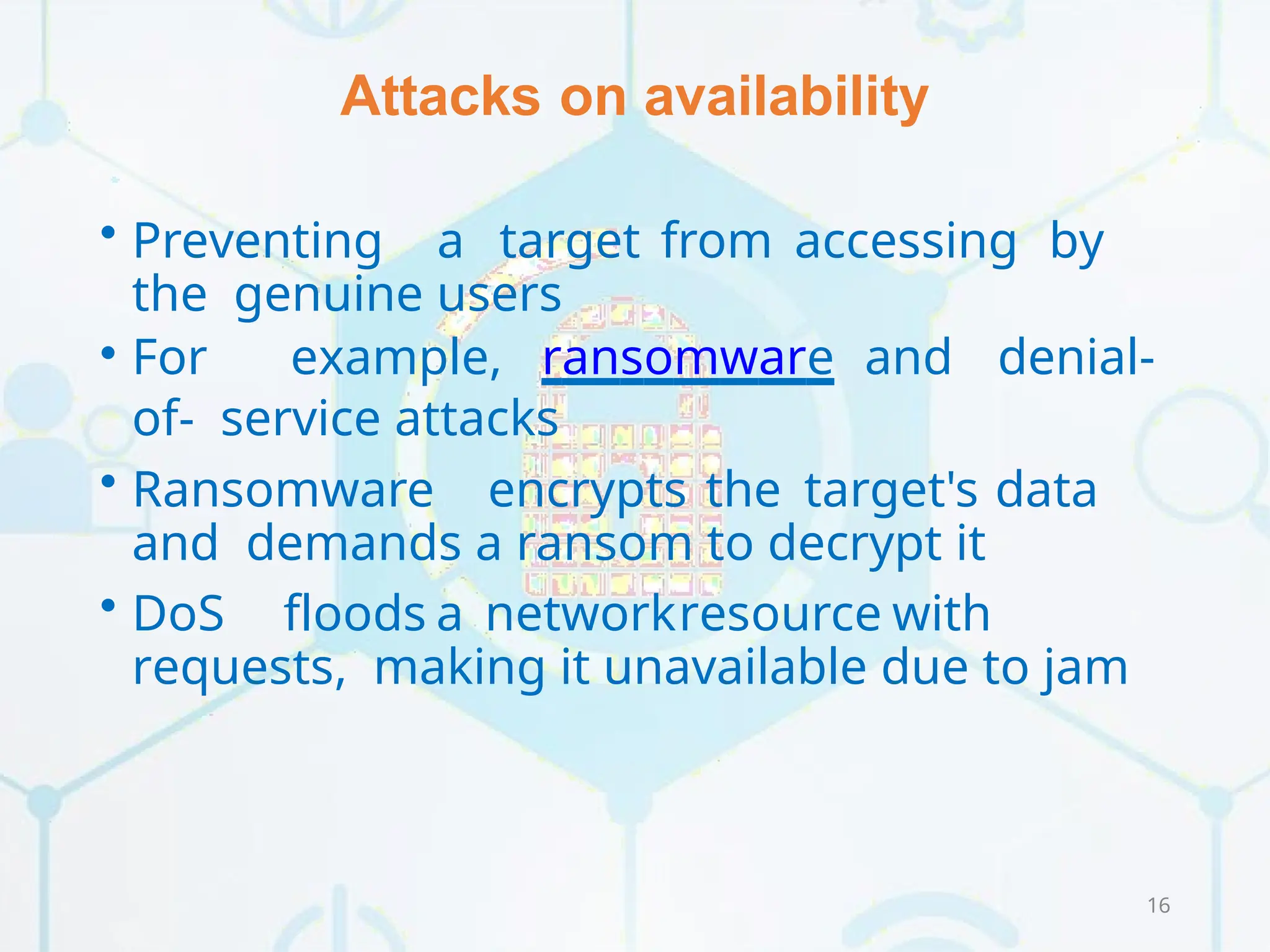
Attacks on Availability
Methods and Practices of Countering Cyber Attacks
Social Engineering
Phishing Attacks
Unpatched Software
Social Media Threats
Advanced Persistent Threats
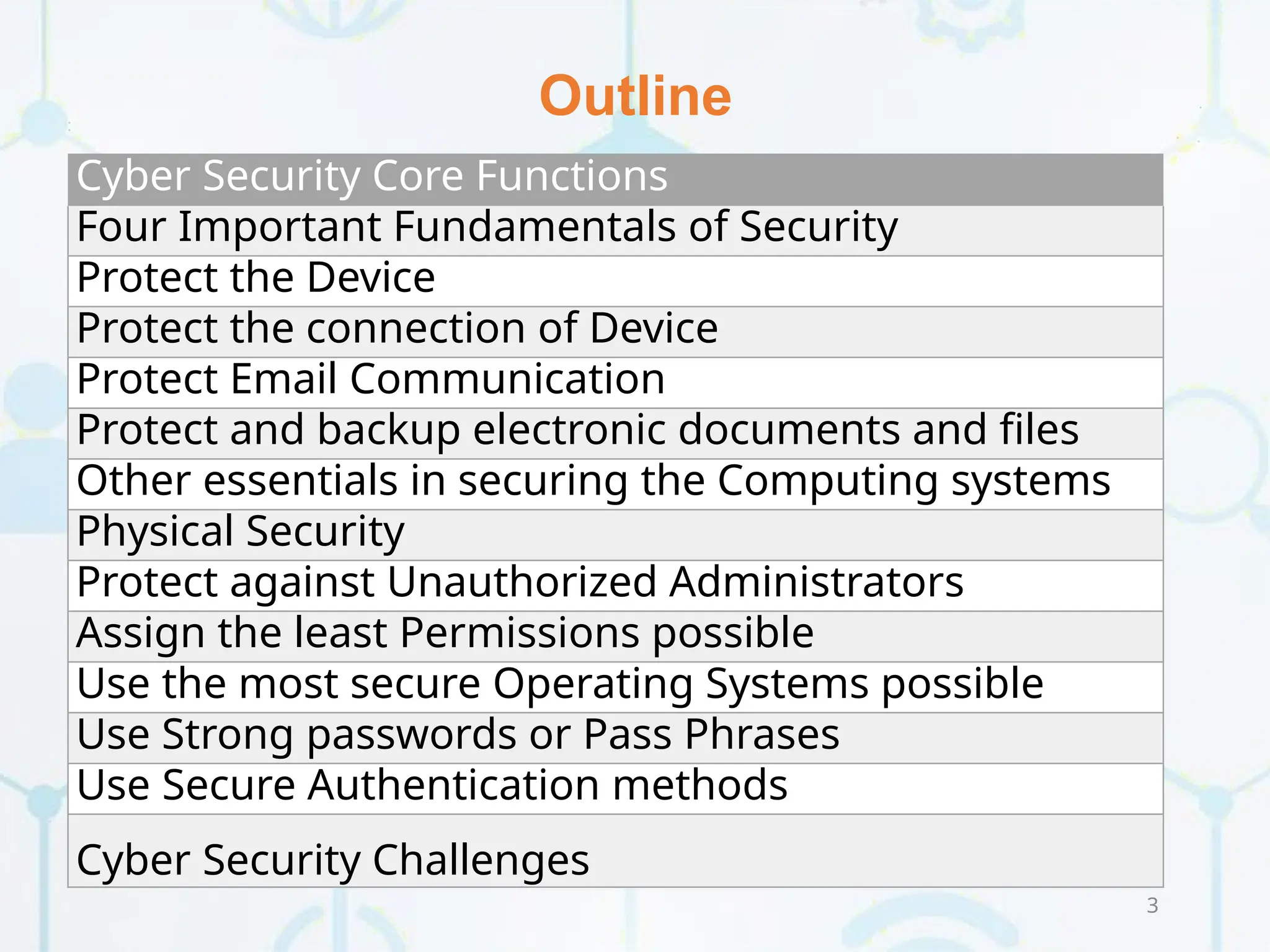
Cyber Security Core Functions
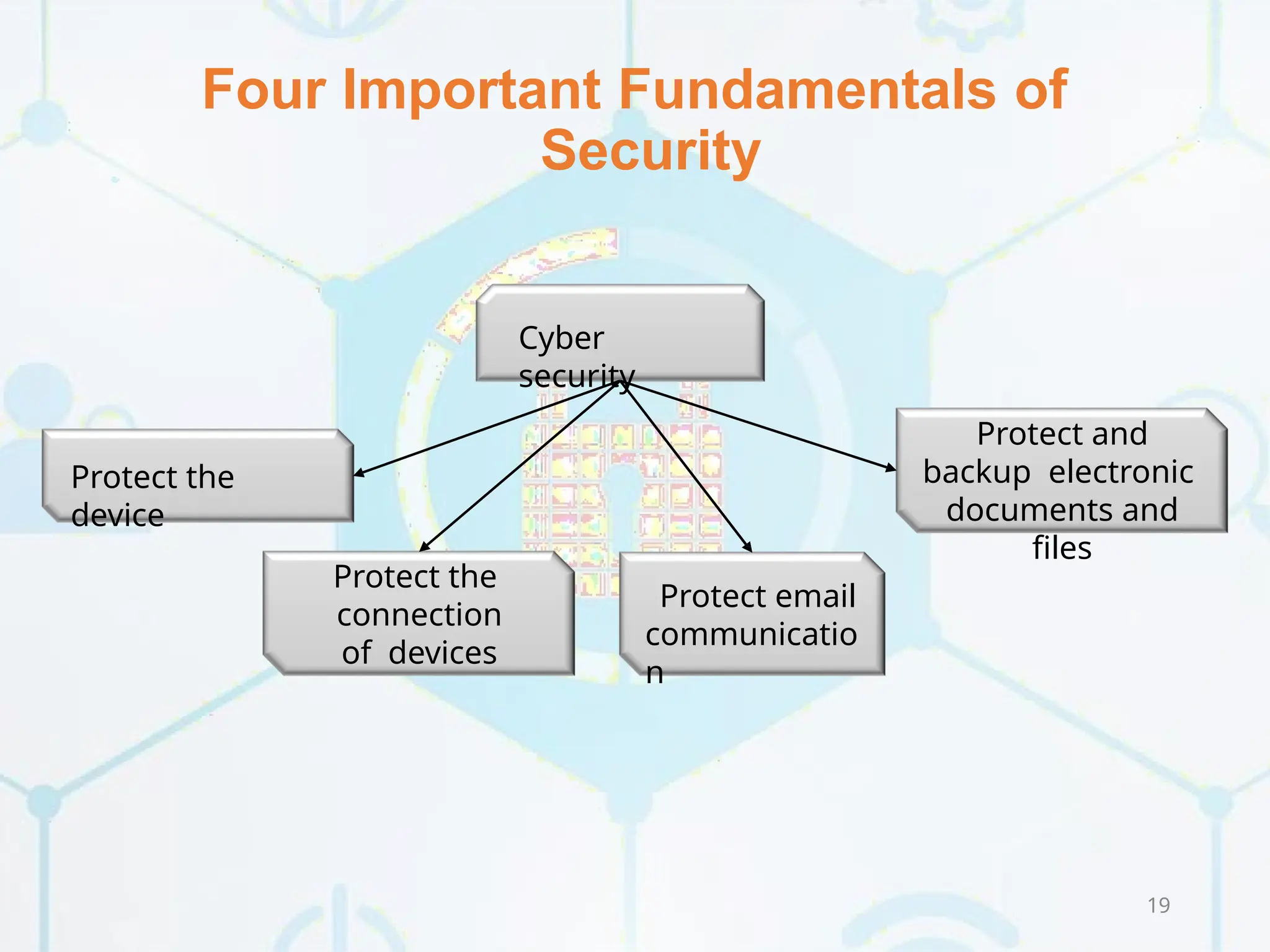
Four Important Fundamentals of Security
Protect the Device
Protect the connection of Device
Protect Email Communication
Protect and backup electronic documents and files
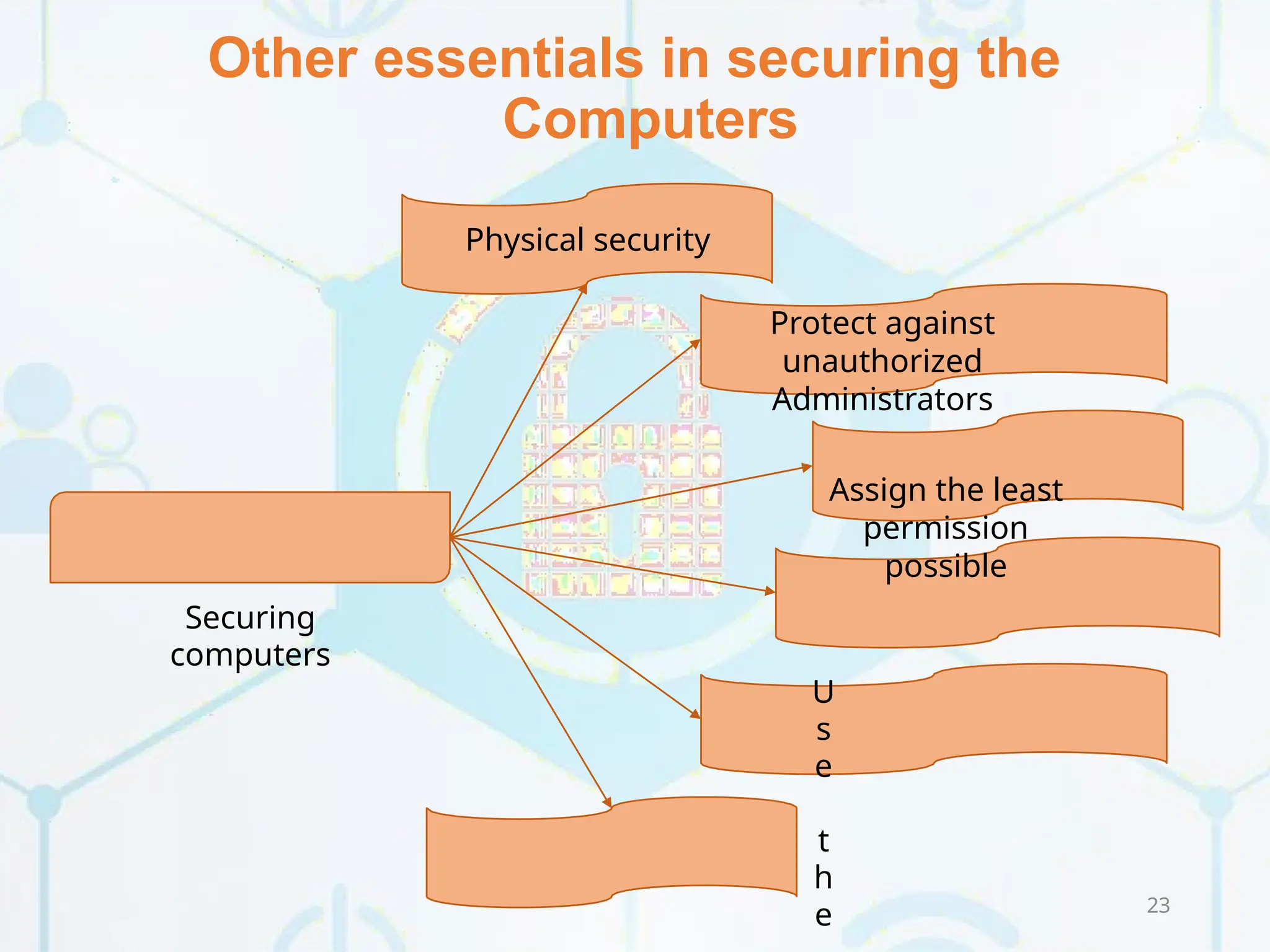
Other essentials in securing the Computing systems
Physical Security
Protect against Unauthorized Administrators
Assign the least Permissions possible
Use the most secure Operating Systems possible
Use Strong passwords or Pass Phrases
Use Secure Authentication methods
Cyber Security Challenges
3
Outline
Why Cyber Security is important?
4
• Cyber Security is not a one-time process
to achieve
• It is an ever growing challenge
encountered from time to time
• When old problems are fixed and rectified,
new targeted attacks challenge the
Cyberspace
• Cyber security is a process by itself and not
the end
Hackers
5
• Hackers are unauthorized users of a system
• They invade a system through
the vulnerabilities or weak points in the
system
• They makes use of large diverse tools to
harm a computer system
• They gain access to computer systems
through malicious logic
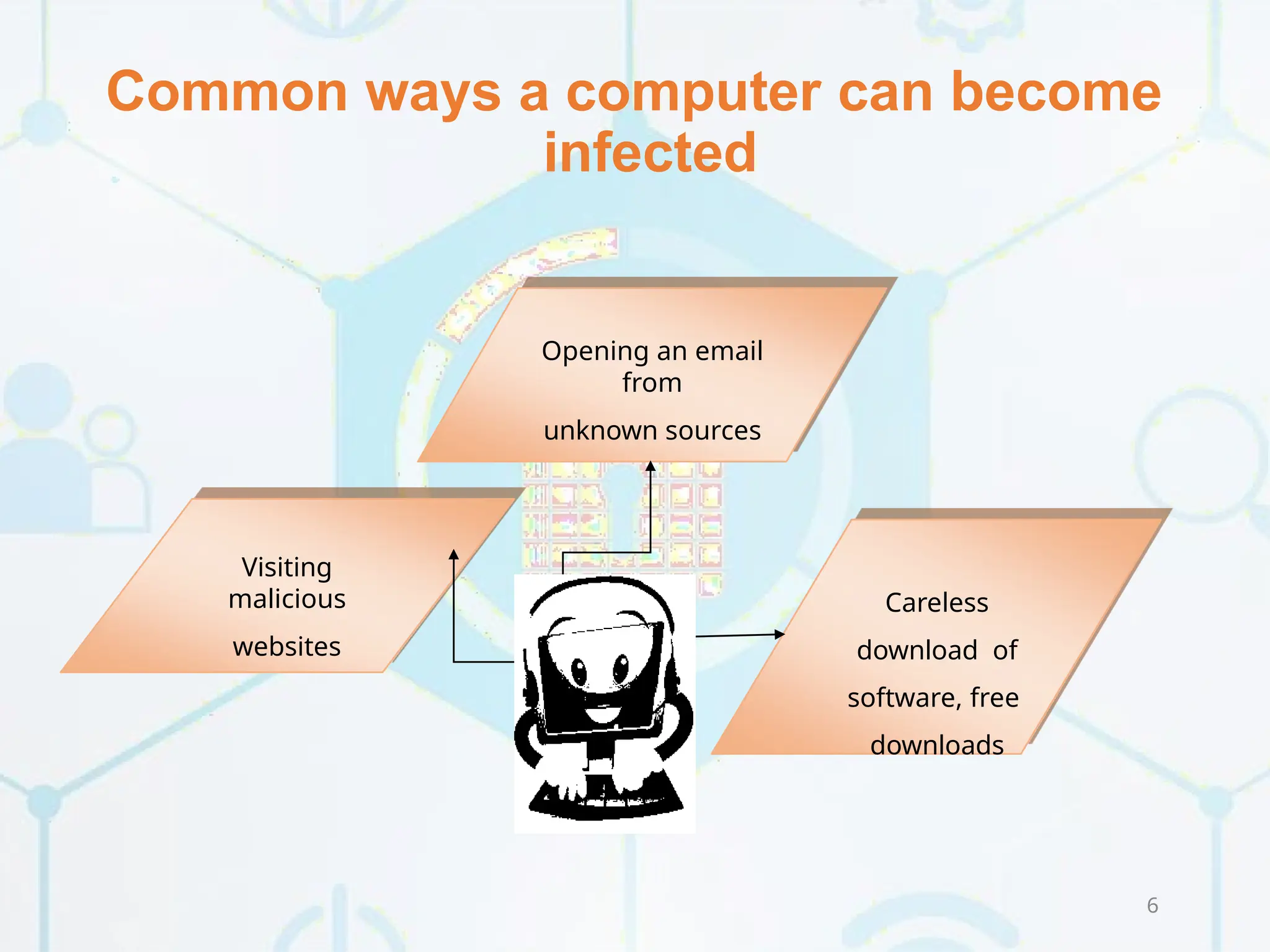
Common ways a computer can become
infected
Visiting
malicious
websites
Opening an email
from
unknown sources
Careless
download of
software, free
downloads
6
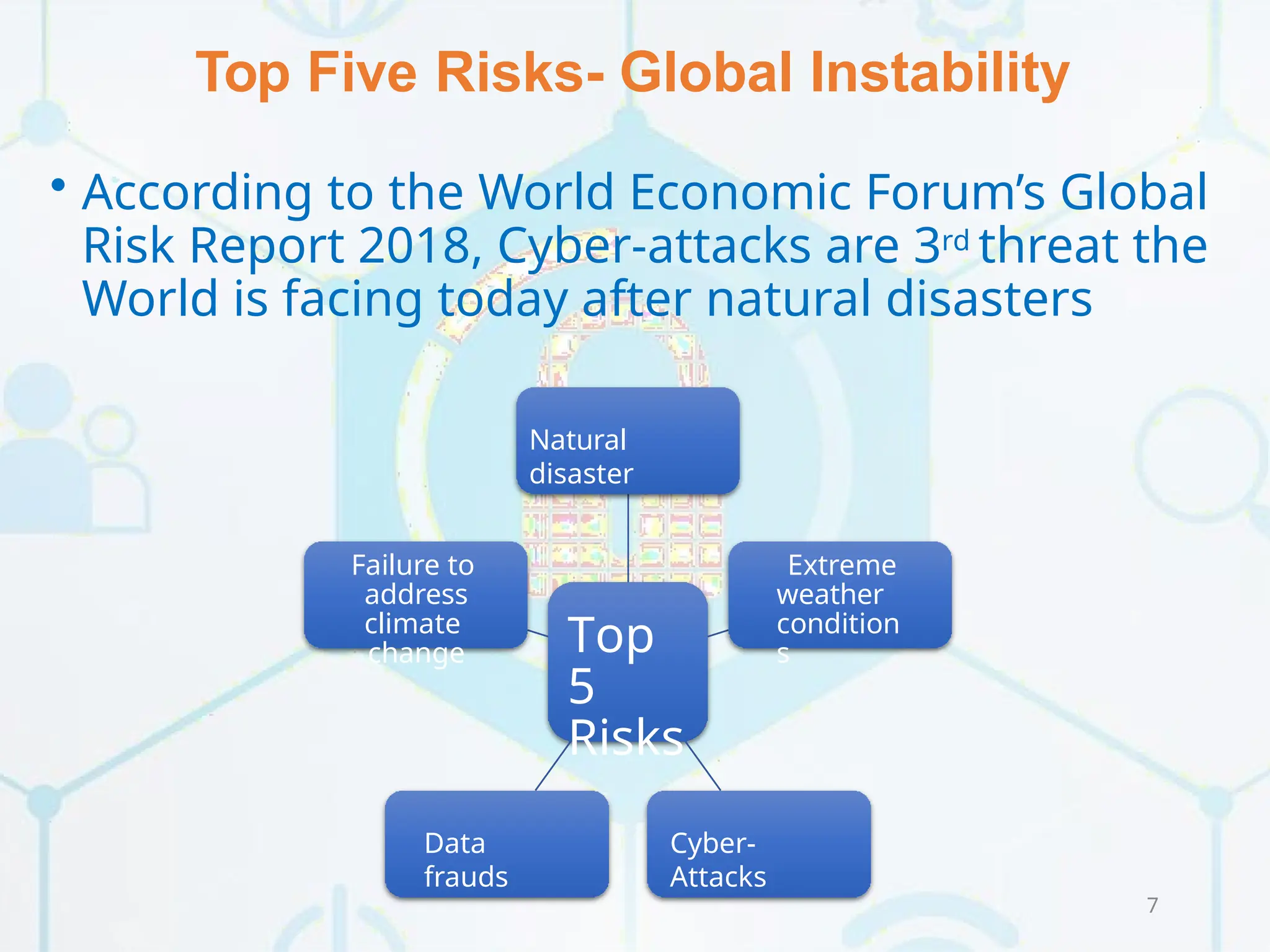
Top Five Risks- Global Instability
• According to the World Economic Forum’s Global
Risk Report 2018, Cyber-attacks are 3rd threat the
World is facing today after natural disasters
Top
5
Risks
Natural
disaster
Extreme
weather
condition
s
Cyber-
Attacks
Data
frauds
Failure to
address
climate
change
7
Cyber Attacks in the Year 2018
8
• WannaCry ransomware,Petya, and
NotPetya led to $300 million loss in
companies spread through
emails for release of
encrypted
• The ransomware
demanded
money data
• Billions of data records are leaked for
Business & Political gains
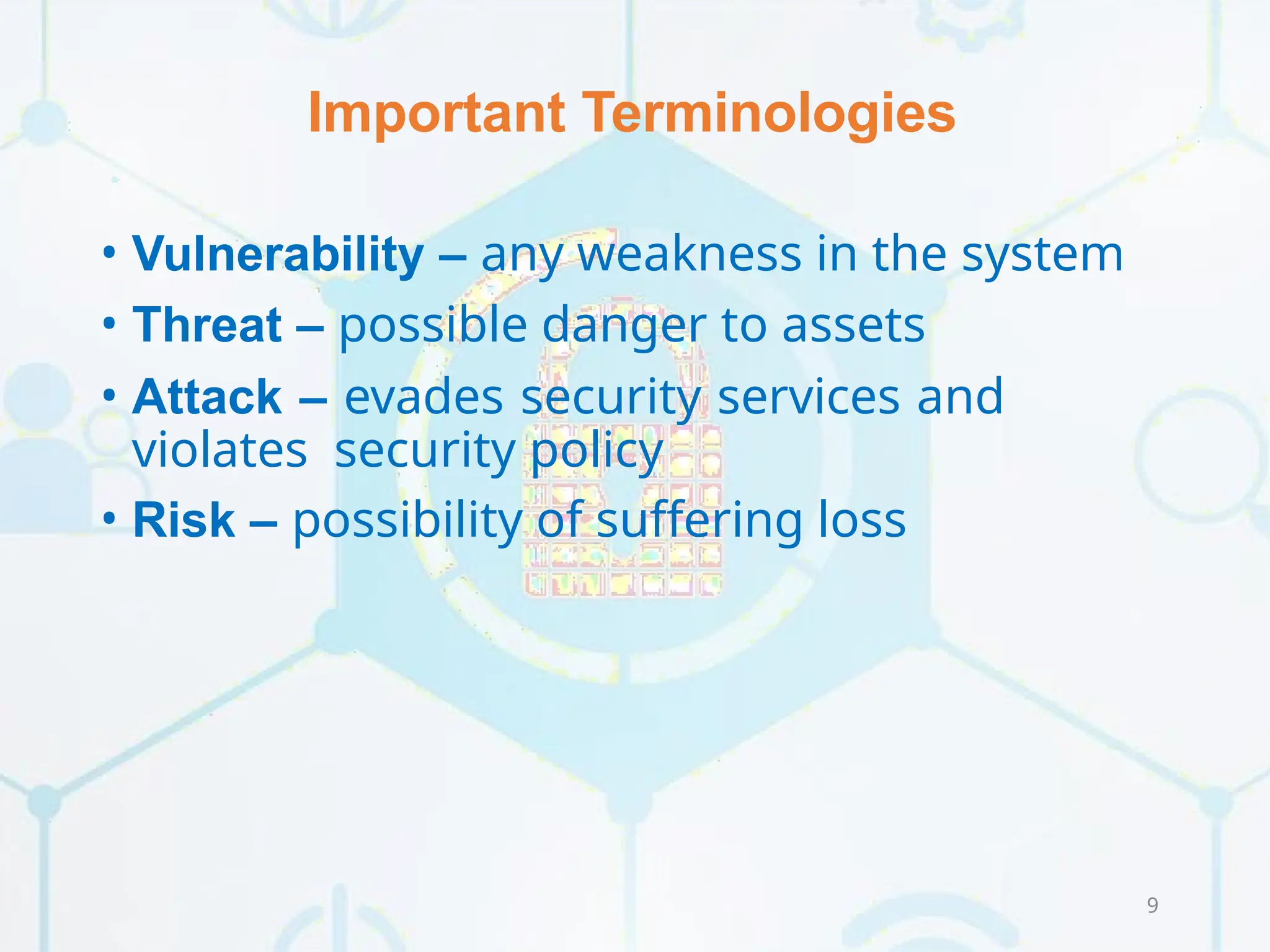
Important Terminologies
9
• Vulnerability – any weakness in the system
• Threat – possible danger to assets
• Attack – evades security services and
violates security policy
• Risk – possibility of suffering loss
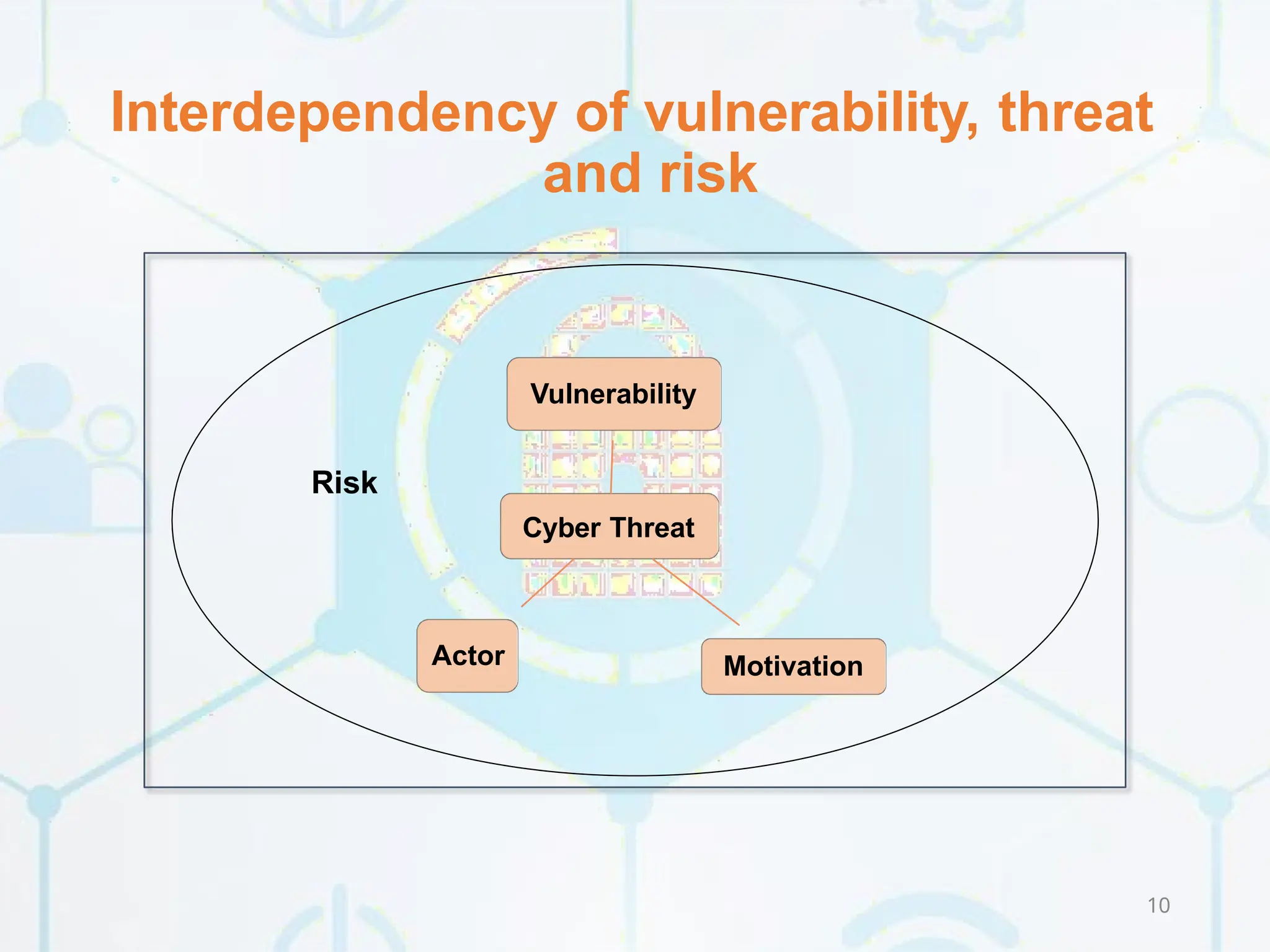
Interdependency of vulnerability, threat
and risk
Motivation
Actor
10
Vulnerability
Risk
Cyber Threat
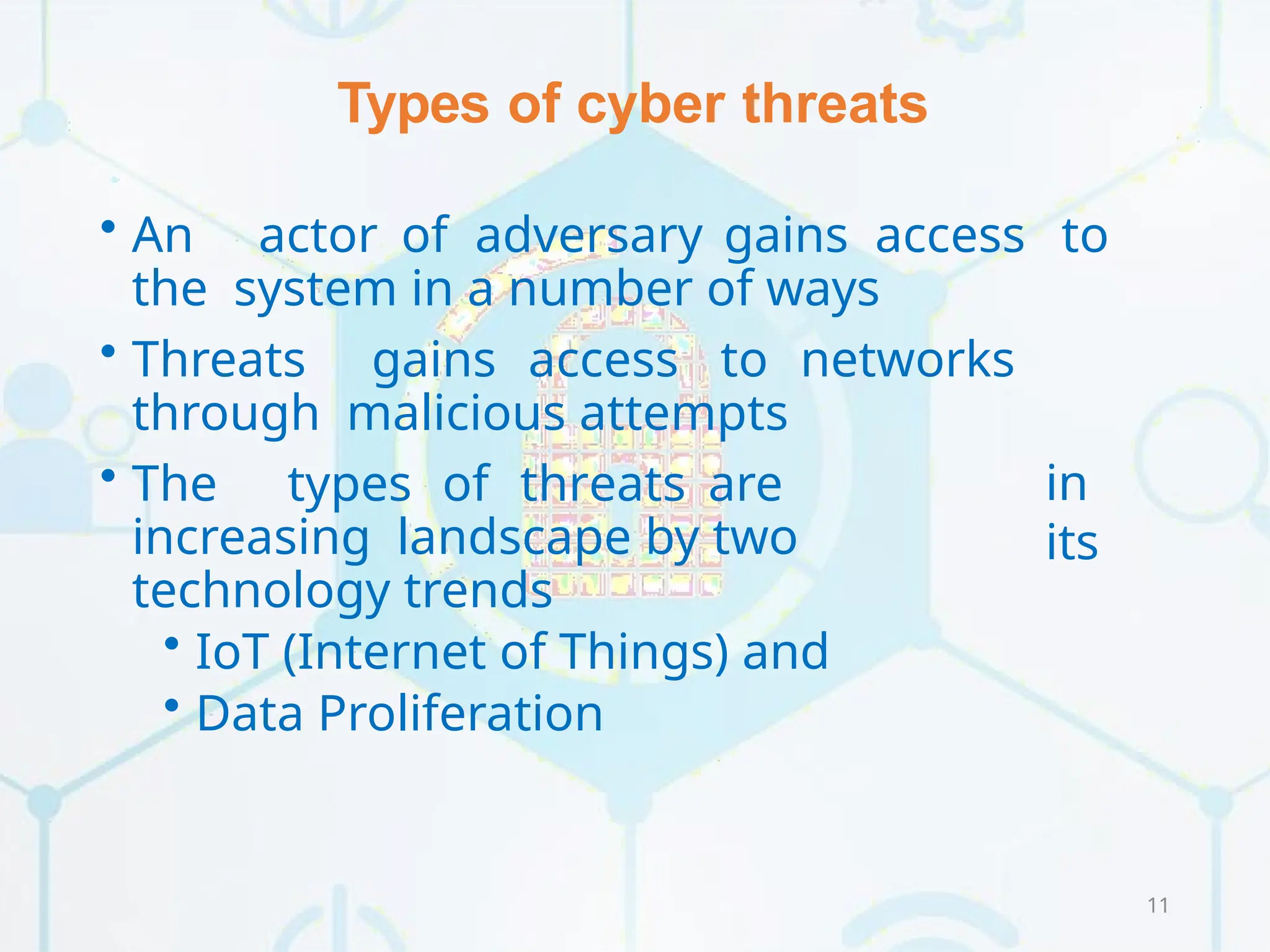
Types of cyber threats
11
• An actor of adversary gains access to
the system in a number of ways
• Threats gains access to networks
through malicious attempts
in
its
• The types of threats are
increasing landscape by two
technology trends
• IoT (Internet of Things) and
• Data Proliferation
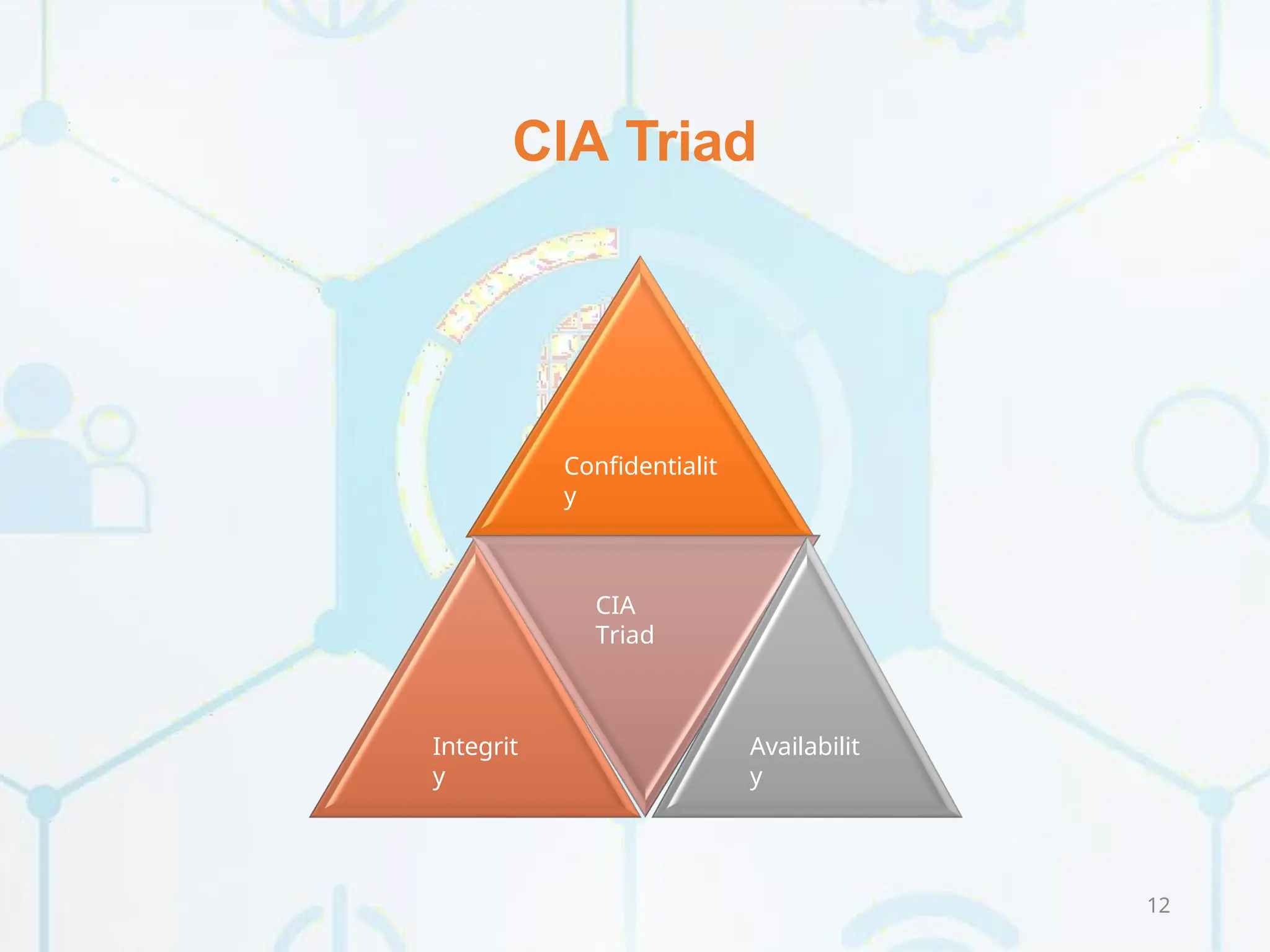
CIA Triad
Confidentialit
y
Integrit
y
CIA
Triad
Availabilit
y
12
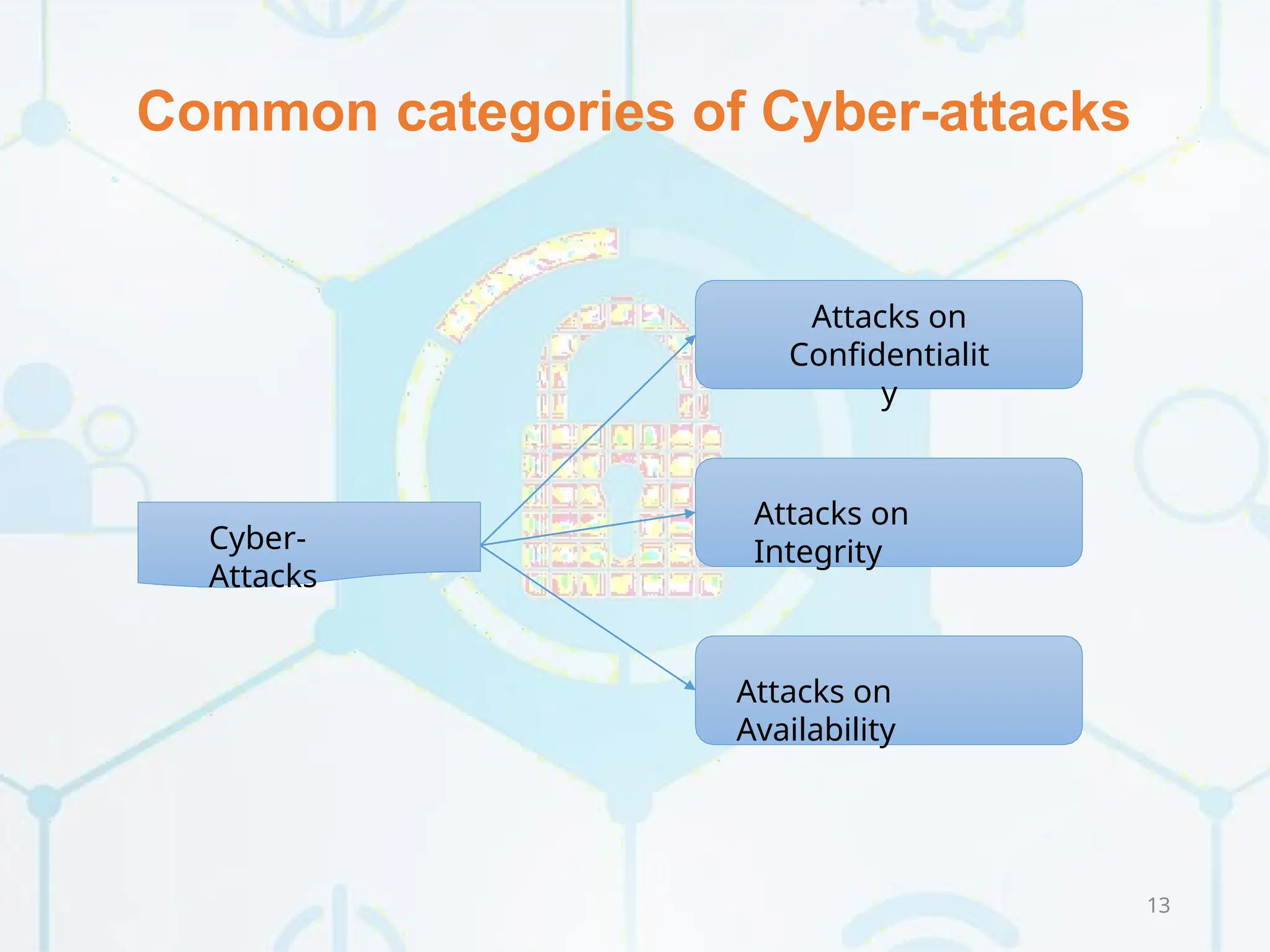
Common categories of Cyber-attacks
Attacks on
Confidentialit
y
Attacks on
Integrity
Attacks on
Availability
Cyber-
Attacks
13
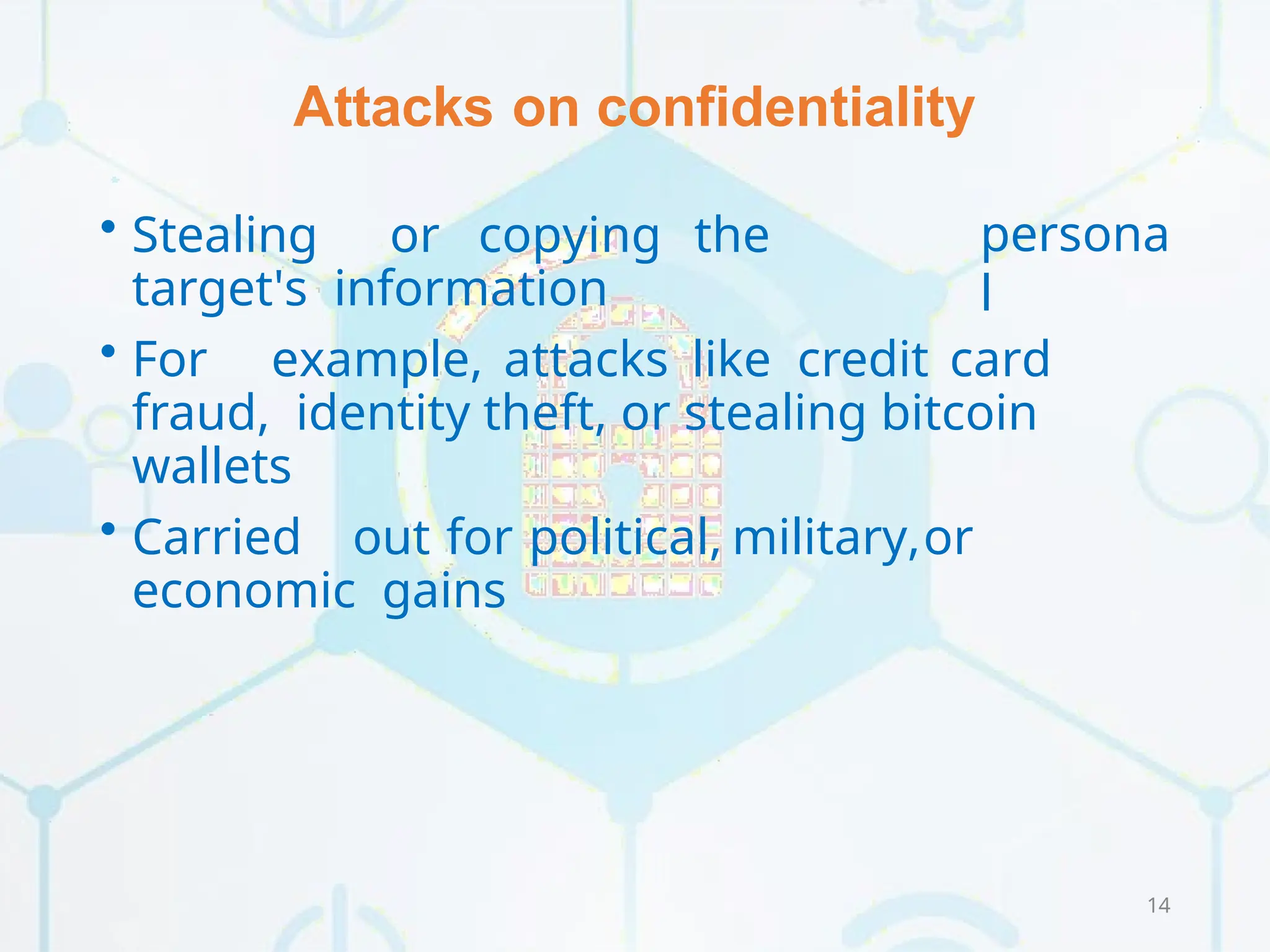
Attacks on confidentiality
14
persona
l
• Stealing or copying the
target's information
• For example, attacks like credit card
fraud, identity theft, or stealing bitcoin
wallets
• Carried out for political, military,or
economic gains
Attacks on integrity
15
destro
y
• The common name used is
sabotage
• Seeks to corrupt, damage,
or information or systems
• Offenders can range from script kiddies
to international or national attackers
Attacks on availability
16
• Preventing a target from accessing by
the genuine users
• For example, ransomware and denial-
of- service attacks
• Ransomware encrypts the target's data
and demands a ransom to decrypt it
• DoS floods a networkresource with
requests, making it unavailable due to jam
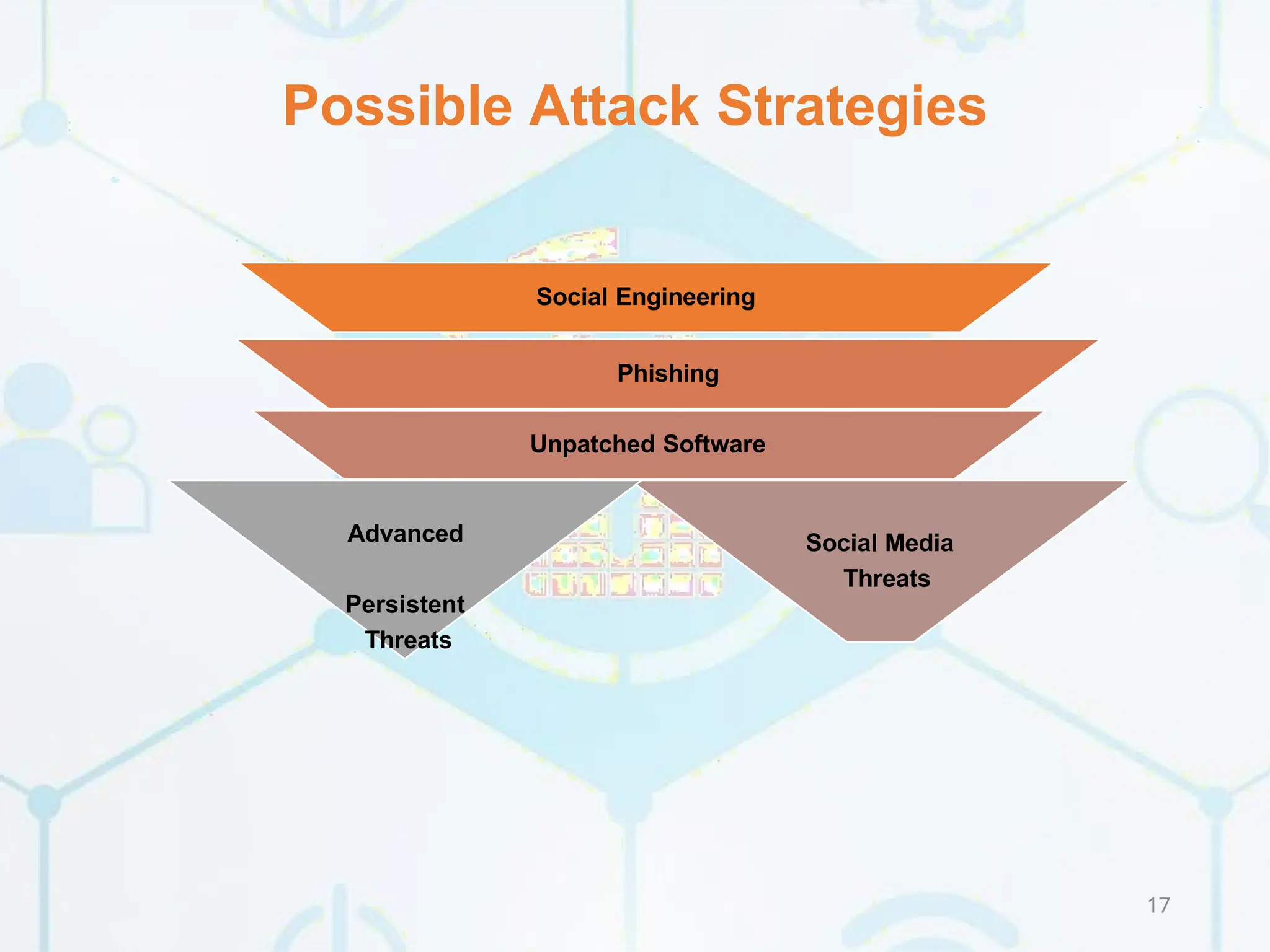
Possible Attack Strategies
Social Engineering
Phishing
Unpatched Software
Social Media
Threats
Advanced
Persistent
Threats
17
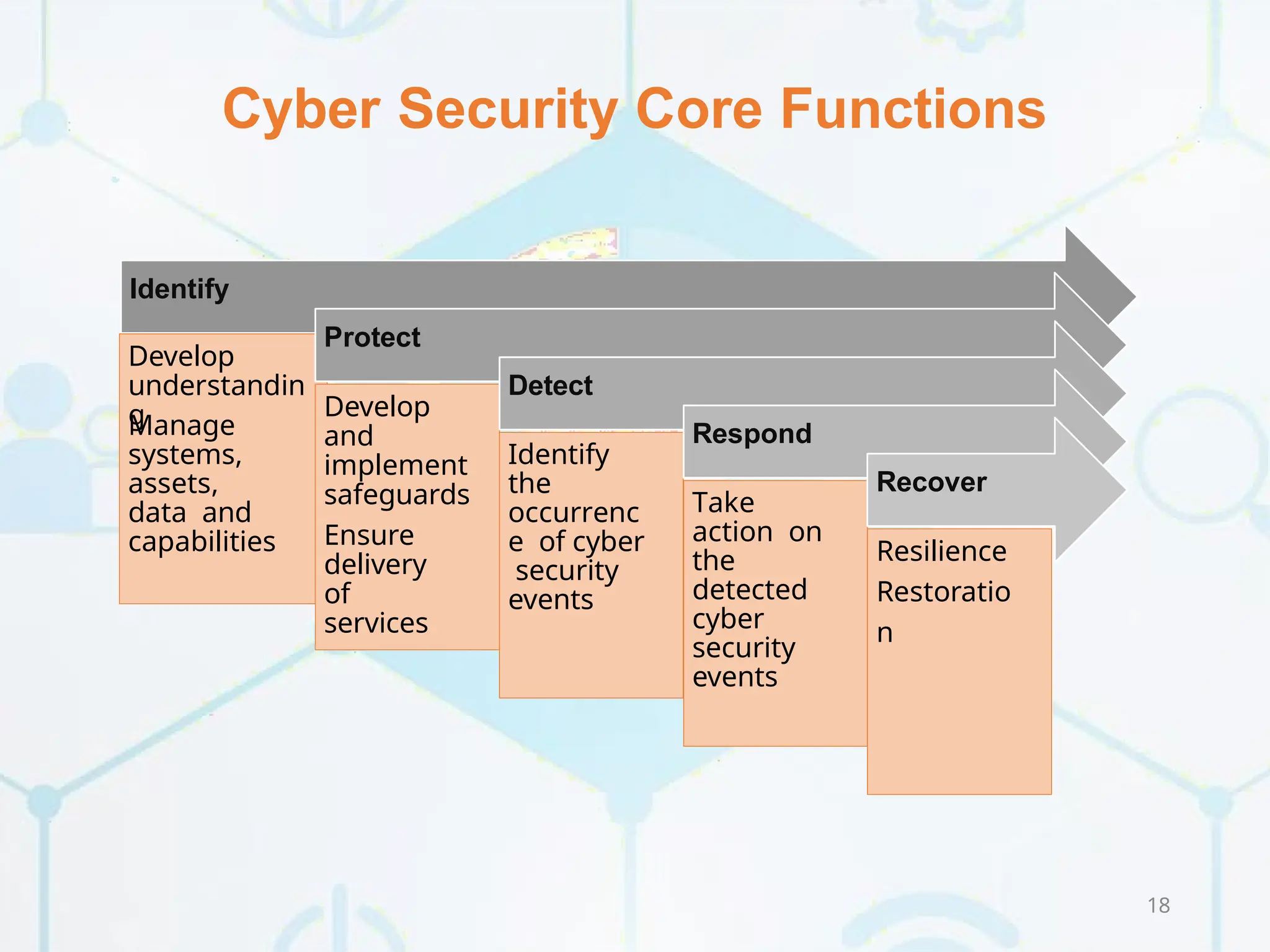
Cyber Security Core Functions
Identify
Develop
understandin
g
Manage
systems,
assets,
data and
capabilities
Protect
Develop
and
implement
safeguards
Ensure
delivery
of
services
Detect
Identify
the
occurrenc
e of cyber
security
events
Respond
Take
action on
the
detected
cyber
security
events
Recover
Resilience
Restoratio
n
18
Four Important Fundamentals of
Security
Cyber
security
Protect the
device
Protect the
connection
of devices
Protect email
communicatio
n
Protect and
backup electronic
documents and
files
19
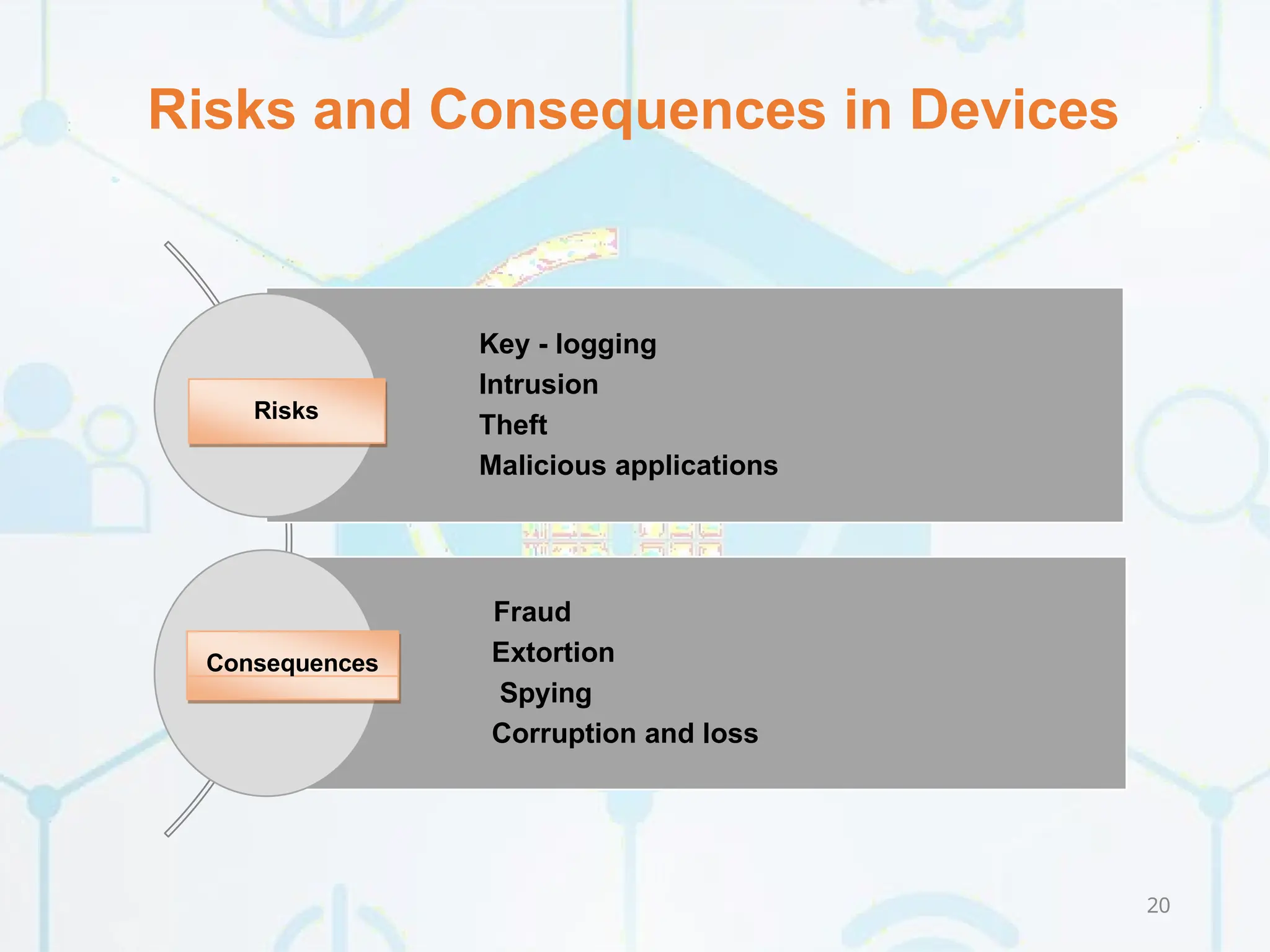
Risks and Consequences in Devices
Key - logging
Intrusion
Theft
Malicious applications
Fraud
Extortion
Spying
Corruption and loss
Risks
Consequences
20
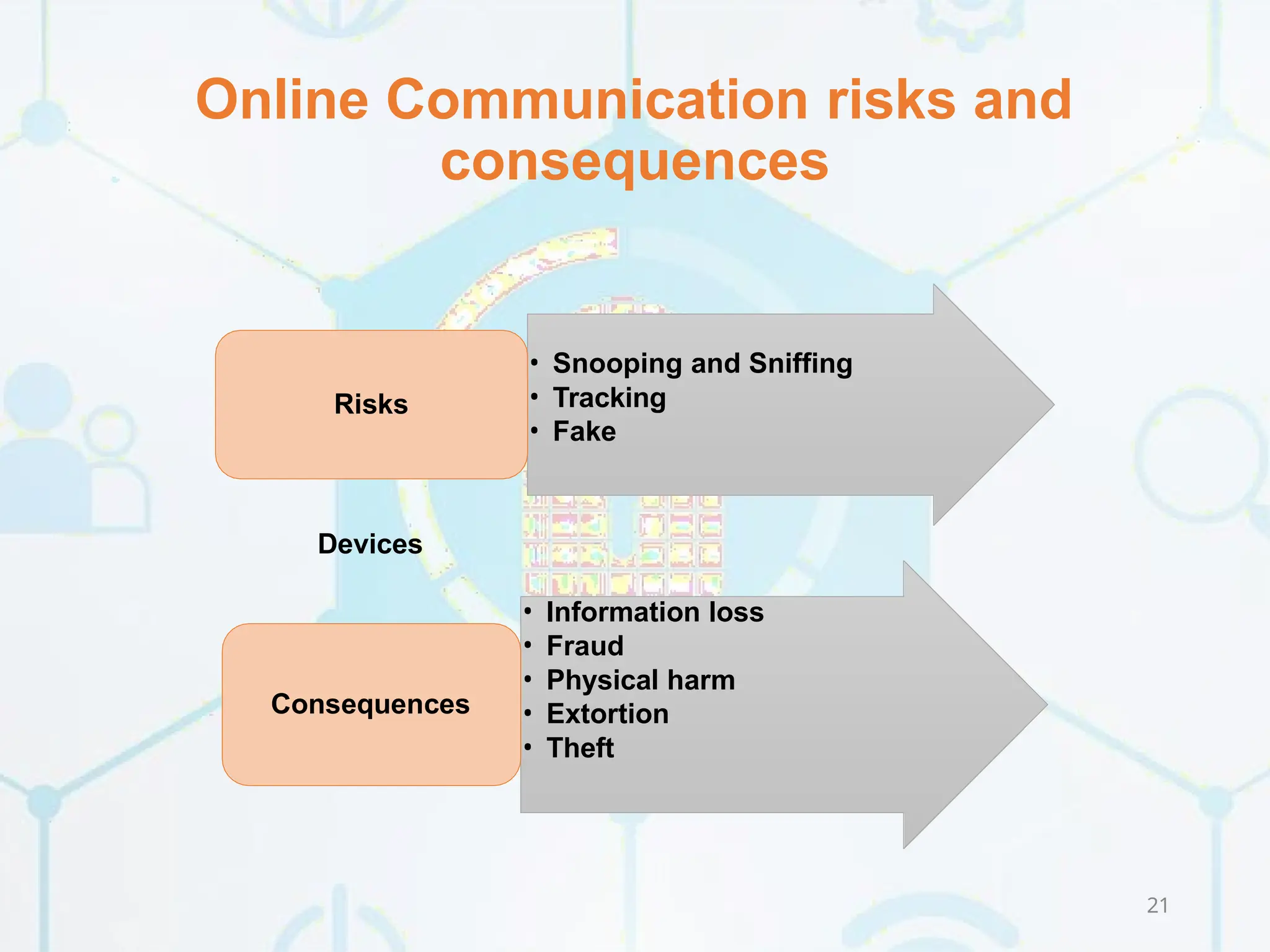
Online Communication risks and
consequences
• Snooping and Sniffing
• Tracking
• Fake
Risks
• Information loss
• Fraud
• Physical harm
• Extortion
• Theft
Consequences
21
Devices
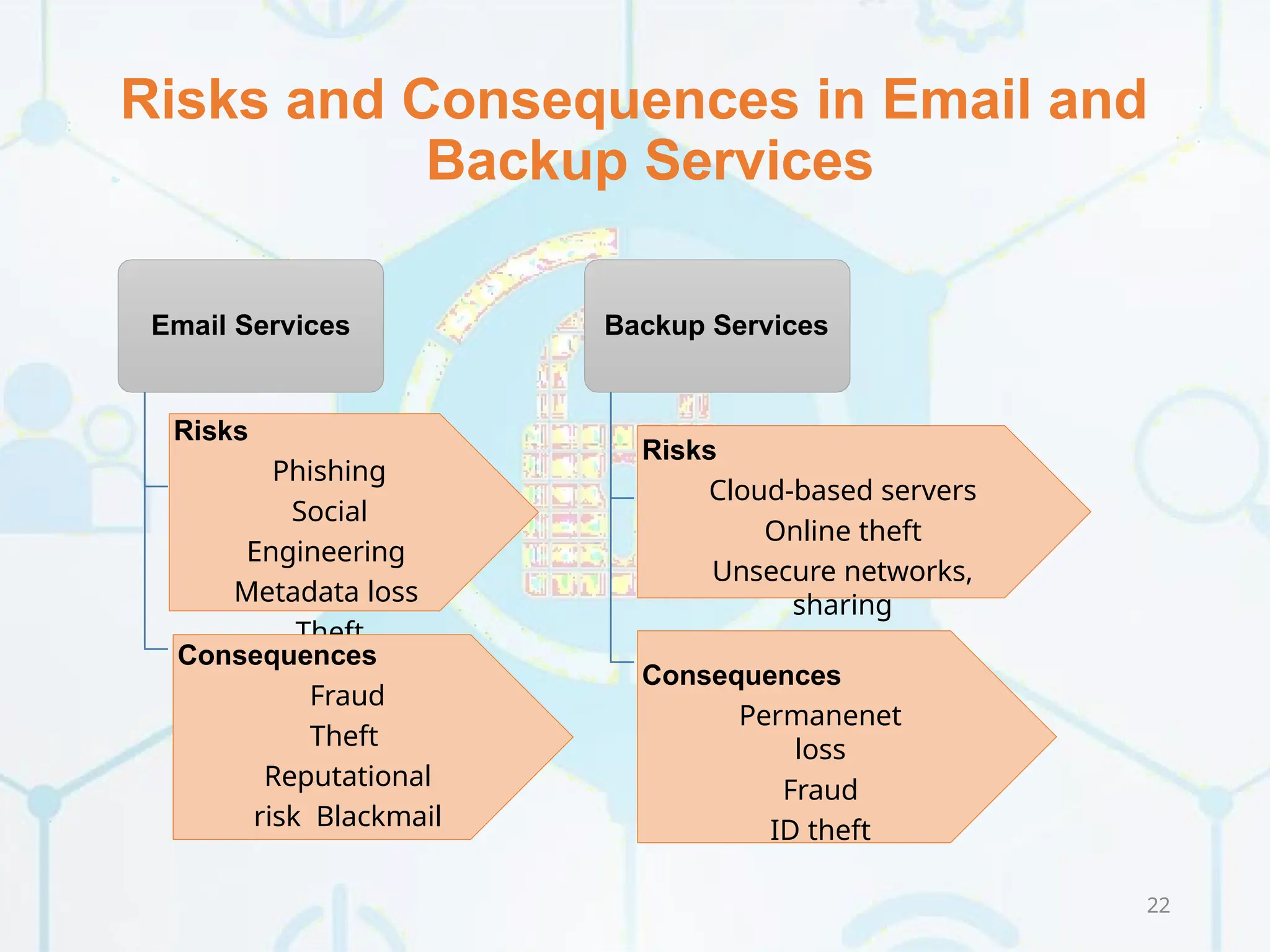
Risks and Consequences in Email and
Backup Services
Email Services
Risks
Phishing
Social
Engineering
Metadata loss
Theft
Consequences
Fraud
Theft
Reputational
risk Blackmail
Backup Services
Risks
Cloud-based servers
Online theft
Unsecure networks,
sharing
Consequences
Permanenet
loss
Fraud
ID theft
22
Other essentials in securing the
Computers
Physical security
Protect against
unauthorized
Administrators
Assign the least
permission
possible
Securing
computers
U
s
e
t
h
e 23
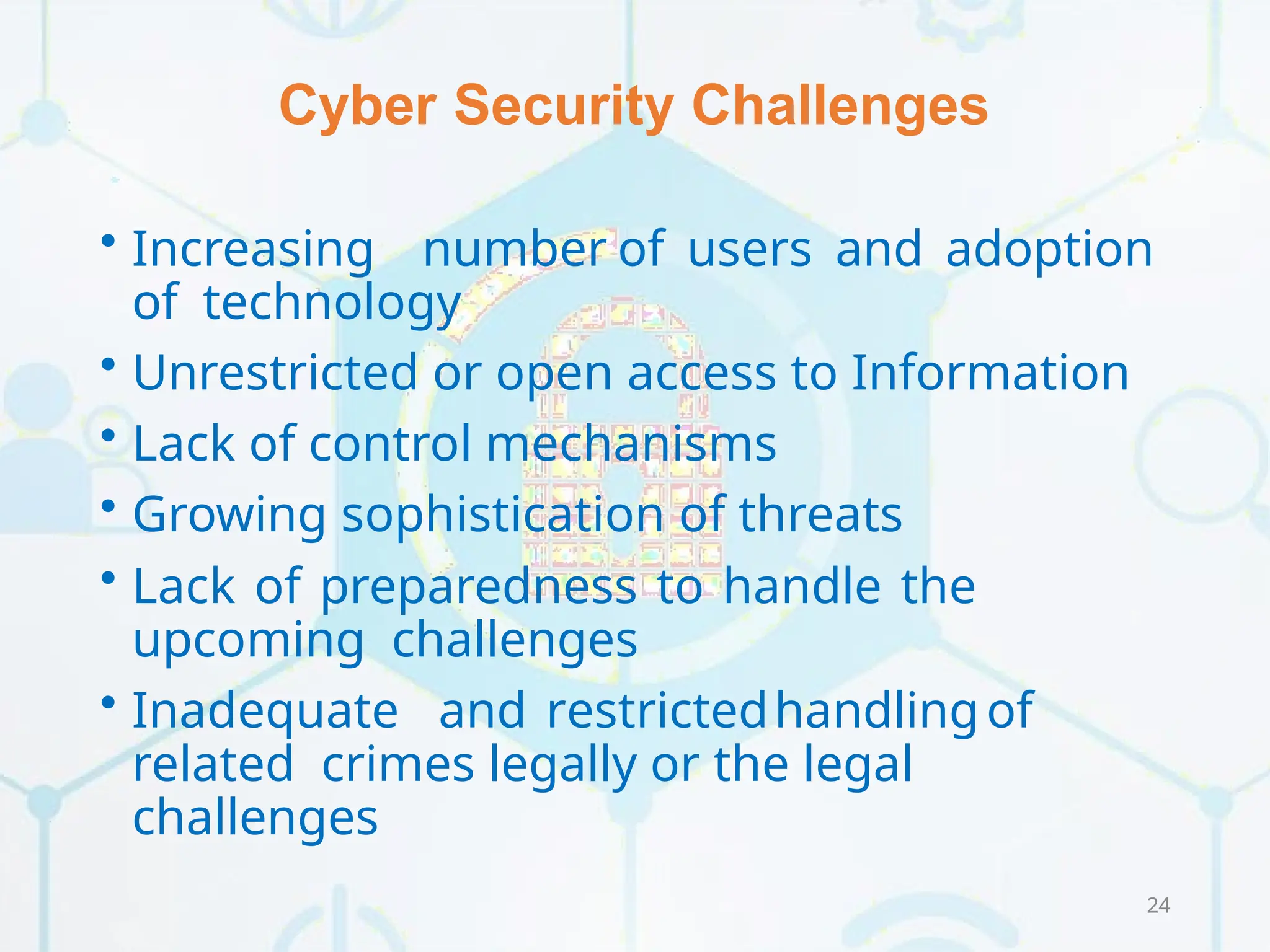
Cyber Security Challenges
24
• Increasing number of users and adoption
of technology
• Unrestricted or open access to Information
• Lack of control mechanisms
• Growing sophistication of threats
• Lack of preparedness to handle the
upcoming challenges
• Inadequate and restrictedhandlingof
related crimes legally or the legal
challenges
Conclusion
25
• Security is a very important concern today
due to digitization and Information
exchange
• The essentials in Cyber Security are
discussed in this section
• One has to understand the challenges and
the best practices to be followed to ensure
security
Thank you
26

cybersecurity-ppt.pptx btech unit unknown aktu

  • 1.
    CYBER SECURITY Importance andNeed for Cyber Security – Cyber threats – Cyber challenges 1
  • 2.
    Outline 2 Why Cyber Securityis important? Who are Hackers? What do they do generally? Common ways of how a computer can become infected Statistics on Cyber Attacks Need for Security- A Technological View Types of Cyber threats Attacks on Confidentiality Attacks on Integrity Attacks on Availability Methods and Practices of Countering Cyber Attacks Social Engineering Phishing Attacks Unpatched Software Social Media Threats Advanced Persistent Threats
  • 3.
    Cyber Security CoreFunctions Four Important Fundamentals of Security Protect the Device Protect the connection of Device Protect Email Communication Protect and backup electronic documents and files Other essentials in securing the Computing systems Physical Security Protect against Unauthorized Administrators Assign the least Permissions possible Use the most secure Operating Systems possible Use Strong passwords or Pass Phrases Use Secure Authentication methods Cyber Security Challenges 3 Outline
  • 4.
    Why Cyber Securityis important? 4 • Cyber Security is not a one-time process to achieve • It is an ever growing challenge encountered from time to time • When old problems are fixed and rectified, new targeted attacks challenge the Cyberspace • Cyber security is a process by itself and not the end
  • 5.
    Hackers 5 • Hackers areunauthorized users of a system • They invade a system through the vulnerabilities or weak points in the system • They makes use of large diverse tools to harm a computer system • They gain access to computer systems through malicious logic
  • 6.
    Common ways acomputer can become infected Visiting malicious websites Opening an email from unknown sources Careless download of software, free downloads 6
  • 7.
    Top Five Risks-Global Instability • According to the World Economic Forum’s Global Risk Report 2018, Cyber-attacks are 3rd threat the World is facing today after natural disasters Top 5 Risks Natural disaster Extreme weather condition s Cyber- Attacks Data frauds Failure to address climate change 7
  • 8.
    Cyber Attacks inthe Year 2018 8 • WannaCry ransomware,Petya, and NotPetya led to $300 million loss in companies spread through emails for release of encrypted • The ransomware demanded money data • Billions of data records are leaked for Business & Political gains
  • 9.
    Important Terminologies 9 • Vulnerability– any weakness in the system • Threat – possible danger to assets • Attack – evades security services and violates security policy • Risk – possibility of suffering loss
  • 10.
    Interdependency of vulnerability,threat and risk Motivation Actor 10 Vulnerability Risk Cyber Threat
  • 11.
    Types of cyberthreats 11 • An actor of adversary gains access to the system in a number of ways • Threats gains access to networks through malicious attempts in its • The types of threats are increasing landscape by two technology trends • IoT (Internet of Things) and • Data Proliferation
  • 12.
  • 13.
    Common categories ofCyber-attacks Attacks on Confidentialit y Attacks on Integrity Attacks on Availability Cyber- Attacks 13
  • 14.
    Attacks on confidentiality 14 persona l •Stealing or copying the target's information • For example, attacks like credit card fraud, identity theft, or stealing bitcoin wallets • Carried out for political, military,or economic gains
  • 15.
    Attacks on integrity 15 destro y •The common name used is sabotage • Seeks to corrupt, damage, or information or systems • Offenders can range from script kiddies to international or national attackers
  • 16.
    Attacks on availability 16 •Preventing a target from accessing by the genuine users • For example, ransomware and denial- of- service attacks • Ransomware encrypts the target's data and demands a ransom to decrypt it • DoS floods a networkresource with requests, making it unavailable due to jam
  • 17.
    Possible Attack Strategies SocialEngineering Phishing Unpatched Software Social Media Threats Advanced Persistent Threats 17
  • 18.
    Cyber Security CoreFunctions Identify Develop understandin g Manage systems, assets, data and capabilities Protect Develop and implement safeguards Ensure delivery of services Detect Identify the occurrenc e of cyber security events Respond Take action on the detected cyber security events Recover Resilience Restoratio n 18
  • 19.
    Four Important Fundamentalsof Security Cyber security Protect the device Protect the connection of devices Protect email communicatio n Protect and backup electronic documents and files 19
  • 20.
    Risks and Consequencesin Devices Key - logging Intrusion Theft Malicious applications Fraud Extortion Spying Corruption and loss Risks Consequences 20
  • 21.
    Online Communication risksand consequences • Snooping and Sniffing • Tracking • Fake Risks • Information loss • Fraud • Physical harm • Extortion • Theft Consequences 21 Devices
  • 22.
    Risks and Consequencesin Email and Backup Services Email Services Risks Phishing Social Engineering Metadata loss Theft Consequences Fraud Theft Reputational risk Blackmail Backup Services Risks Cloud-based servers Online theft Unsecure networks, sharing Consequences Permanenet loss Fraud ID theft 22
  • 23.
    Other essentials insecuring the Computers Physical security Protect against unauthorized Administrators Assign the least permission possible Securing computers U s e t h e 23
  • 24.
    Cyber Security Challenges 24 •Increasing number of users and adoption of technology • Unrestricted or open access to Information • Lack of control mechanisms • Growing sophistication of threats • Lack of preparedness to handle the upcoming challenges • Inadequate and restrictedhandlingof related crimes legally or the legal challenges
  • 25.
    Conclusion 25 • Security isa very important concern today due to digitization and Information exchange • The essentials in Cyber Security are discussed in this section • One has to understand the challenges and the best practices to be followed to ensure security
  • 26.