July 2015 Eric A. Woodcock Page 1 of 8
ERIC ANDREW WOODCOCK
3901 Chrysler Drive, Suite 2A, Office 228, Detroit, MI, 48201
ewoodcoc [at] med.wayne.edu | 313.577.8257
http://ericwoodcock.wix.com/neuro
EDUCATION
2012-2014 Ph.D. Student, Translational Neuroscience Program, Wayne State University
School of Medicine (cumulative GPA: 3.79), Graduation Anticipated: 2017
2004-2007 B.S., Psychology, University of Washington (major: 3.58)
2000-2004 A.A., A.S., Green River Community College (magna cum laude: 3.80)
2000-2004 High School Diploma, White River High School (Valedictorian: 4.00)
2009-2010 GRE: Overall: 1350, Quantitative: 790 [91%], Verbal: 560, Written: 5.5 [94%]
CURRENT POSITION
2012-2014 Ph.D. Candidate, Wayne State University School of Medicine, Detroit, MI
Dissertation Mentor: Mark K. Greenwald, PhD
Prospectus: “Neuropharmacological investigation of frontostriatal network
function and nicotine seeking behavior in current smokers”
o NIDA F31 application [written qualifying exam] (Dec. 2014)
o Percentile: 33rd
, Impact Score: 40
o Defended dissertation prospectus [oral qualifying exam] (Feb. 2015)
Summer 2015 - Clinical Rotation: Usha Kilura, MD, Bella Shanzer, MD, MPH
o Attended group substance abuse treatment sessions, shadowed clinicians and
administrators, and interacted with patients undergoing treatment at the
Detroit Veterans Affairs Medical Center
Spring 2014 - Research Rotation: Jeffrey A. Stanley, PhD
o Analyzed 1
H MRS data for two behavioral pharmacology trials: cocaine
dependent individuals during placebo and N-acetyl-cysteine dosing; and
heroin dependent individuals during low/high methadone dosing
o LC Model used to quantify brain metabolite concentrations
Fall 2013 - Research Rotation: Vaibhav A. Diwadkar, PhD
o Analyzed fMRI data using psychophysiological interaction models in SPM8
o Investigated novel mechanisms of cognitive control in the dACC and dPFC
during memory encoding and retrieval in cognitively-normal individuals
Spring 2013 - Research Rotation: Mark K. Greenwald, PhD
o Investigated genetic polymorphisms and substance use characteristics in
chronic poly-substance using individuals
o Characterized within- and between-substance use progression; gender and
ethnicity telescoping effects in opioid dependent individuals
o Investigated predictors of sublingual buprenorphine dose taper response in
heroin dependent individuals following inpatient behavioral pharmacology
research trials
July 2015 Eric A. Woodcock Page 2 of 8
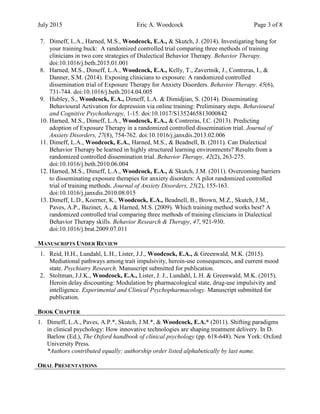
GRANT FUNDING
AWARDS & COMMUNITY SERVICE
 Thomas C. Rumble Fellow, Translational Neuroscience, WSU SOM: 2015-2016
 $16,000 living stipend, full medical benefits and tuition for one year (until August 2016)
 Dean Asselin Award ($2,500), Psychiatry and Behavioral Neurosciences, WSU SOM: 2015
 Award for best first-authored manuscript by a trainee in Psychiatry Department
 Ruth L. Kirschstein F31 Fellowship Supplement ($1,000), Graduate School, WSU: 2015
 2nd
Place, 3-Minute Thesis Competition, Translational Neuroscience, WSU SOM: 2015
 Dr. Robert J. Bernucci Travel Award ($500), Translational Neuroscience, WSU SOM: 2014
 Dean’s Recruiting Award ($2,000), Translational Neuroscience, WSU SOM: 2012
 Graduate Research Assistantship, Translational Neuroscience, WSU SOM: 2012-2015
 Admitted to the University of Washington with Distinction: 2004
 Magna cum laude honors, Green River Community College: 2004
 Valedictorian, White River High School: 2004
 National Dean’s List, 2002-2007
Abbreviations: WSU: Wayne State University; SOM: School of Medicine
PUBLISHED MANUSCRIPTS
1. Greenwald, M.K., Woodcock, E.A., Khatib, D., & Stanley, J.A. (2015). Methadone
maintenance dose modulates anterior cingulate glutamate levels in heroin dependent
individuals: A preliminary in vivo 1
H MRS study. Psychiatry Research: Neuroimaging.
Advance online publication. doi:10.1016/j.pscychresns.2015.07.002
2. Woodcock, E.A., White, R., & Diwadkar, V.A. (2015). The dorsal prefrontal and dorsal
anterior cingulate cortices exert complementary network signatures during encoding and
retrieval in associative memory. Behavioral Brain Research, 290, 152-160.
doi:10.1016/j.bbr.2015.04.050
3. Woodcock, E.A., Lundahl, L.H., Burmeister, M. & Greenwald, M.K. (2015). Functional mu
opioid receptor polymorphism (OPRM1 A118
G) associated with heroin use outcomes in
Caucasian males: A pilot study. The American Journal on Addictions, 24, 329-335.
doi:10.1111/ajad.12187
4. Woodcock, E.A., Lundahl, L.H., Stoltman, J.J.K., & Greenwald, M.K. (2015). Progression
to regular heroin use: Examination of patterns, predictors, and consequences. Addictive
Behaviors. 45, 287-293. doi:10.1016/j.addbeh.2015.02.014
5. Stoltman, J.J.K., Woodcock, E.A., Lister, J.J., Greenwald, M.K., & Lundahl, L.H. (2015).
Exploration of the telescoping effect among not-in-treatment, intensive heroin-using
research volunteers. Drug and Alcohol Dependence.148, 217-220.
doi:10.1016/j.drugalcdep.2015.01.010
6. Woodcock, E.A., Lundahl, L.H., & Greenwald, M.K. (2015). Predictors of buprenorphine
initial outpatient maintenance and dose taper response among non-treatment-seeking heroin
dependent volunteers. Drug and Alcohol Dependence. 146, 89-96.
doi:10.1016/j.drugalcdep.2014.11.016
Source Project Title Investigator Dates Amount
Dept. of
Psychiatry,
WSU SOM
Neuropharmacological investigation of
frontostriatal network function and nicotine
seeking behavior in current smokers
PI: Woodcock
Mentor:
Greenwald
08/2015-
08/2016
$25,000
July 2015 Eric A. Woodcock Page 3 of 8
7. Dimeff, L.A., Harned, M.S., Woodcock, E.A., & Skutch, J. (2014). Investigating bang for
your training buck: A randomized controlled trial comparing three methods of training
clinicians in two core strategies of Dialectical Behavior Therapy. Behavior Therapy.
doi:10.1016/j.beth.2015.01.001
8. Harned, M.S., Dimeff, L.A., Woodcock, E.A., Kelly, T., Zavertnik, J., Contreras, I., &
Danner, S.M. (2014). Exposing clinicians to exposure: A randomized controlled
dissemination trial of Exposure Therapy for Anxiety Disorders. Behavior Therapy. 45(6),
731-744. doi:10.1016/j.beth.2014.04.005
9. Hubley, S., Woodcock, E.A., Dimeff, L.A. & Dimidjian, S. (2014). Disseminating
Behavioural Activation for depression via online training: Preliminary steps. Behavioural
and Cognitive Psychotherapy, 1-15. doi:10.1017/S1352465813000842
10. Harned, M.S., Dimeff, L.A., Woodcock, E.A., & Contreras, I.C. (2013). Predicting
adoption of Exposure Therapy in a randomized controlled dissemination trial. Journal of
Anxiety Disorders, 27(8), 754-762. doi:10.1016/j.janxdis.2013.02.006
11. Dimeff, L.A., Woodcock, E.A., Harned, M.S., & Beadnell, B. (2011). Can Dialectical
Behavior Therapy be learned in highly structured learning environments? Results from a
randomized controlled dissemination trial. Behavior Therapy, 42(2), 263-275.
doi:10.1016/j.beth.2010.06.004
12. Harned, M.S., Dimeff, L.A., Woodcock, E.A., & Skutch, J.M. (2011). Overcoming barriers
to disseminating exposure therapies for anxiety disorders: A pilot randomized controlled
trial of training methods. Journal of Anxiety Disorders, 25(2), 155-163.
doi:10.1016/j.janxdis.2010.08.015
13. Dimeff, L.D., Koerner, K., Woodcock, E.A., Beadnell, B., Brown, M.Z., Skutch, J.M.,
Paves, A.P., Bazinet, A., & Harned, M.S. (2009). Which training method works best? A
randomized controlled trial comparing three methods of training clinicians in Dialectical
Behavior Therapy skills. Behavior Research & Therapy, 47, 921-930.
doi:10.1016/j.brat.2009.07.011
MANUSCRIPTS UNDER REVIEW
1. Reid, H.H., Lundahl, L.H., Lister, J.J., Woodcock, E.A., & Greenwald, M.K. (2015).
Mediational pathways among trait impulsivity, heroin-use consequences, and current mood
state. Psychiatry Research. Manuscript submitted for publication.
2. Stoltman, J.J.K., Woodcock, E.A., Lister, J. J., Lundahl, L.H. & Greenwald, M.K. (2015).
Heroin delay discounting: Modulation by pharmacological state, drug-use impulsivity and
intelligence. Experimental and Clinical Psychopharmacology. Manuscript submitted for
publication.
BOOK CHAPTER
1. Dimeff, L.A., Paves, A.P.*, Skutch, J.M.*, & Woodcock, E.A.* (2011). Shifting paradigms
in clinical psychology: How innovative technologies are shaping treatment delivery. In D.
Barlow (Ed.), The Oxford handbook of clinical psychology (pp. 618-648). New York: Oxford
University Press.
*Authors contributed equally: authorship order listed alphabetically by last name.
ORAL PRESENTATIONS
July 2015 Eric A. Woodcock Page 4 of 8
1. Harned, M.S., Dimeff, L.A., Woodcock, E.A., Kelly, T., Zavertnik, J., Contreras, I., &
Danner, S.M. (2015, November). Exposing clinicians to exposure: A randomized controlled
dissemination trial of exposure therapy for anxiety disorders. In N. Farrell (Chair), Breaking
down barriers: How innovative dissemination strategies can improve the adoption and
delivery of exposure therapy. Symposium presented at the 49th
annual convention for the
Association for Behavioral and Cognitive Therapies, Chicago, IL.
2. Woodcock, E.A. (2015, May). Investigating stress-potentiated substance use in current
smokers. Symposium presented at the Translational Neuroscience PhD Training Program 3-
minute Thesis Competition, Detroit, MI.
3. Woodcock, E.A. (2014, December). Experimental stressors potentiate nicotine seeking and
disrupt neural network function: A research proposal. Symposium presented at the
Translational Neuroscience PhD Training Program Seminar Series, Detroit, MI.
4. Woodcock, E.A., White, R. & Diwadkar, V.A. (2014, June). Mechanisms of control during
memory encoding & retrieval: Complementary roles of the dACC and dPFC. Selected for
oral presentation in N. Ofen (Chair), Learning and memory symposium at the 20th
annual
conference: Organization for Human Brain Mapping, Hamburg, Germany.
5. Stoltman, J.J.K., Woodcock, E.A., Lundahl, L.H., & Greenwald, M.K. (2014, June).
Evidence of gender-specific telescoping effects in chronic, regular heroin users. Selected for
oral presentation in T. Franklin and M.R. Peltier (Chairs), Sex, Drugs and Randomized
Trials Symposium at the 76th
annual conference: The College on Problems of Drug
Dependence, San Juan, Puerto Rico.
6. Woodcock, E.A. (2014, April). Investigating the neural correlates of stressor-induced drug
seeking behavior in nicotine dependent individuals. Symposium presented at the BRAINS
research meeting, Detroit, MI.
7. Woodcock, E.A. (2013, April). The epigenetic landscape of drug dependence. Symposium
presented at the BRAINS research meeting, Detroit, MI.
8. Harned, M.S., Dimeff, L.A., Woodcock, E.A., & Contreras, I. (2013, April). Predicting
adoption of exposure therapy in a randomized controlled dissemination trial. In N. C. Feeny
(Chair), Therapist factors in the treatment of anxiety and trauma-related disorders.
Symposium presented at the 33rd
annual convention of the Anxiety and Depression
Association of America, La Jolla, CA.
9. Dimeff, L.A., Kelly, T., Woodcock, E.A., Barlow, D.H., & Ehrenreich-May, J. (2011,
October). Enhancing dissemination of empirically supported therapies: A novel use of
telephone-based learning communities. In S. Landes (Chair), Creating evidence-based
clinicians. Symposium presented at the Seattle Implementation Research Conference,
Seattle, WA.
10. Dimeff, L.A., Contreras, I., Kelly, T., Welch, M., & Woodcock, E.A. (2011, October).
Innovative technology as a radical game changer in closing the dissemination gap.
Symposium presented at the annual meeting of the Strategic Planning Meeting for BPD
Treatment Research, Seattle, WA.
11. Harned, M.S., Dimeff, L.A., Woodcock, E.A., & Skutch, J.M. (2010, November). Using
Motivational Interviewing to improve clinicians’ attitudes toward learning and using
Exposure Therapy. In L. A. Dimeff (Chair), Improving the impact of training: Strategies for
increasing clinician motivation to learn and use empirically supported treatments.
Symposium presented at the 44th
annual convention for the Association for Behavioral and
Cognitive Therapies, San Francisco, CA.
July 2015 Eric A. Woodcock Page 5 of 8
12. Dimeff, L.A., Murray, H., Woodcock, E.A., Rash, B., & Barlow, D.H. (2010, November).
Using contingency management to improve knowledge of Panic Control Treatment in
treatment providers: Results from a pilot feasibility RCT. In L. A. Dimeff (Chair),
Improving the impact of training: Strategies for increasing clinician motivation to learn and
use empirically supported treatments. Symposium presented at the 44th
annual convention
for the Association for Behavioral and Cognitive Therapies, San Francisco, CA.
13. Dimeff, L.A., Woodcock, E.A., Skutch, J., Rash, B., Kelley, A., Kelly, T., Contreras, I., &
Harned, M. (2009, October). Spreading science like H1N1: Recent innovations and research
outcomes. Symposium presented at the annual meeting of the Strategic Planning Meeting for
BPD Treatment Research, Seattle, WA.
14. Dimeff, L.A., Beadnell, B., Woodcock, E.A., Paves, A.P., Bazinet, A., & Koerner, K.
(2008, November). Which training mode works best? Findings and implications from two
randomized trials. In J. M. Worrall (Chair), Who's online now? New approaches to using the
Internet to help train and retrain therapists in cognitive and behavioral treatments.
Symposium presented at the 42nd
annual convention of the Association for Behavioral and
Cognitive Therapies, Orlando, FL.
15. Dimeff, L.A., Beadnell, B., Woodcock, E.A., Paves, A.P., & Koerner, K. (2007, October).
Breaking down barriers: Dissemination of DBT across training modes. Symposium
presented at the annual meeting of the Strategic Planning Meeting for BPD Treatment
Research, Seattle, WA.
POSTER PRESENTATIONS
1. Reid, H.H., Lundahl, L.H., Lister, J.J., Woodcock, E.A., & Greenwald, M.K. (2015, June).
Mediational pathways among trait impulsivity, heroin-use consequences, and current mood
state. Poster presented at the 77th
annual conference: The College on Problems of Drug
Dependence, Phoenix, Arizona.
2. Stoltman, J.J.K., Woodcock, E.A., Lister, J.J., Lundahl, L.H., & Greenwald, M.K. (2015,
June). Hypothetical pharmacological state-dependent heroin delay discounting. Poster
presented at the 77th
annual conference: The College on Problems of Drug Dependence,
Phoenix, Arizona.
3. Wadehra, S., Woodcock, E.A., Ramaseshan, K., & Diwadkar, V.A. (2015, May).
Exaggerated cognitive control as a compensatory mechanism in schizophrenia: Network
profiles of the dorsal anterior cingulate cortex during impaired learning. Poster presented at
the 70th
annual conference: Society of Biological Psychiatry, Toronto, CA.
4. Stoltman, J.J.K., Woodcock, E.A., Lister, J.J., Lundahl, L.H., & Greenwald, M.K. (2014,
October). Temporally-rapid and pharmacological state-dependent heroin delay discounting.
Poster presented at the 2nd
annual Vermont Center on Behavior and Health Conference,
Burlington, VT.
5. Woodcock, E.A., White, R. & Diwadkar, V.A. (2014, September). Mechanisms of cognitive
control during memory encoding & cued retrieval: Complementary roles of the dACC and
dPFC. Poster presented at the 18th
annual Wayne State University Graduate Student
Research Day, Detroit, MI.
6. Woodcock, E.A., White, R. & Diwadkar, V.A. (2014, June). Mechanisms of control during
memory encoding & retrieval: Complementary roles of the dACC and dPFC. Poster
presented at the 20th
annual conference: Organization for Human Brain Mapping, Hamburg,
Germany.
July 2015 Eric A. Woodcock Page 6 of 8
7. Woodcock, E.A., Greenwald, M.K., & Lundahl, L.H. (2014, June). Predictors of sublingual
buprenorphine induction and detoxification response among heroin-dependent adults.
Poster presented at the 76th
annual conference: The College on Problems of Drug
Dependence, San Juan, Puerto Rico.
8. Stoltman, J.J.K., Woodcock, E.A., Lundahl, L.H., & Greenwald, M.K. (2014, June).
Evidence of gender-specific telescoping effects in chronic, regular heroin users. Poster
presented at the annual conference: International Women's and Children's Health and
Gender Working Group, San Juan, Puerto Rico.
9. Woodcock, E.A., Greenwald, M.K., Lundahl, L.H., & Burmeister, M. (2013, September).
BDNF polymorphism (Val66
Met) is associated with substance use phenotypes among
chronic, regular heroin using European Americans. Poster presented at the 17th
annual
Wayne State University Graduate Student Research Day, Detroit, MI.
10. Woodcock, E.A., Greenwald, M. K., Lundahl, L. H., & Burmeister, M. (2013, May).
Functional mu opioid receptor polymorphism (OPRM1 A118
G) is associated with younger
regular use, increased heroin use consequences and failed quit attempts among heroin
dependent Caucasian males. Poster presented at the 44th
annual meeting of the Michigan
Chapter for Neuroscience, Detroit, MI.
11. Kelly, T., Woodcock, E.A., Dimeff, L.A., & Rash, B. (2011, November). Enhancing
dissemination of empirically supported therapies: A novel use of telephone-based learning
communities. Poster presented at the 45th
annual convention of the Association for
Behavioral and Cognitive Therapies, Toronto, ON.
12. Woodcock, E.A., Beadnell, B., & Dimeff, L.A. (2010, November). Predicting training
success: An exploratory examination of variables moderating outcomes for naïve clinicians
learning core DBT strategies. Poster presented at the 44th
annual convention of the
Association for Behavioral and Cognitive Therapies, San Francisco, CA.
13. Woodcock, E.A., Dimeff, L.A., Skutch, J. & Harned, M.S. (2010, November). Predictors of
training success for naïve clinicians learning DBT skills. Poster presented at the 14th
annual
meeting of the International Society for the Improvement and Teaching of Dialectical
Behavior Therapy, San Francisco, CA.
14. Woodcock, E.A., Dimeff, L.A., & Harned, M.S. (2010, November). Maximizing DBT
training effectiveness: Investigating predictors of successful dissemination from a highly-
controlled efficacy trial. Poster presented at the 14th
annual meeting of the International
Society for the Improvement and Teaching of Dialectical Behavior Therapy, San Francisco,
CA.
15. Harned, M.S., Dimeff, L.A., & Woodcock, E.A. (2010, June). Using Motivational
Interviewing to supplement online training in Exposure Therapies for naïve clinicians.
Poster presented at the 50th
annual convention of the New Clinical Drug Evaluation Unit,
Boca Raton, FL.
16. Dimeff, L.A., Woodcock, E.A., Paves, A.P., Skutch, J., Kelley, A., Kelly, T., & Beadnell,
B. (2009, November). Dissemination of core strategies in Dialectical Behavior Therapy: A
randomized controlled trial comparing three methods of training. Poster presented at the
43rd
annual convention of the Association for Behavioral and Cognitive Therapies, New
York, NY.
17. Dimeff, L.A., Skutch, J., Beadnell, B., & Woodcock, E.A. (2009, November). Comparing
online training to routine training methods in simulated performance role play: Results from
a randomized controlled trial. Poster presented at the 43rd
annual convention of the
July 2015 Eric A. Woodcock Page 7 of 8
Association for Behavioral and Cognitive Therapies, New York, NY.
18. Skutch, J., Harned, M.S., Kelley, A., Woodcock, E.A., Paves, A.P. & Dimeff, L.A. (2009,
November). Qualitative analysis of clinicians’ perceived barriers to the use of Exposure
Therapy for anxiety disorders. Poster presented at the 43rd
annual convention of the
Association for Behavioral and Cognitive Therapies, New York, NY.
19. Dimeff, L.A., Skutch, J.M., Brown, M.Z., Manning, S.Y., & Woodcock, E.A. (2008,
November). Evaluating the efficacy of a DBT online training course using a rigorous
performance based test. Poster presented at the 42nd
annual convention of the Association
for Behavioral and Cognitive Therapies, Orlando, FL.
20. Dimidjian, S., Dimeff, L.A., Hubley, S., Martell, C., Herman-Dunn, R., Woodcock, E.A.,
Paves, A.P., Skutch, J.M., & Mueller, T. (2008, November). Steps toward dissemination of
Behavioral Activation: Development and use of online training. Poster presented at the 42nd
annual convention of the Association for Behavioral and Cognitive Therapies, Orlando, FL.
21. Dimeff, L.A., Woodcock, E.A., Paves, A.P., Monroe-DeVita, M., Bazinet, A., Daliva, M.,
Rash, B., & Beadnell, B. (2007, November). Disseminating DBT skills: A comparison of
three training modes in a naturalistic setting. Poster presented at the 12th
annual meeting of
the International Society for the Improvement and Teaching of Dialectical Behavior
Therapy, Philadelphia, PA.
22. Dimeff, L.A., Paves, A.P., & Woodcock, E.A. (2007, November). Evidence-based practices
in the 21st
century: Revisiting and expanding upon training utilization in clinical settings.
Poster presented at the 12th
annual meeting of the International Society for the Improvement
and Teaching of Dialectical Behavior Therapy, Philadelphia, PA.
MENTORED PEER REVIEW
 Journal of the Experimental Analysis of Behavior (Mentor: Dr. Mark Greenwald)
 Drug and Alcohol Dependence (Mentor: Dr. Mark Greenwald)
 Journal of Forensic Toxicology and Pharmacology (Mentor: Dr. Mark Greenwald)
 British Journal of Pharmacology (Mentor: Dr. Mark Greenwald)
 Behavior Research and Therapy (Mentor: Dr. Linda Dimeff)
 Journal of Consulting and Clinical Psychology (Mentor: Dr. Melanie Harned)
 Suicide and Life-Threatening Behavior (Mentor: Dr. Melanie Harned)
 Psychology of Addictive Behaviors (Mentor: Dr. Linda Dimeff)
WORKGROUP
National Institute of Drug Abuse (NIDA). Developing a new mobile therapy: Twitter for tobacco
‘tweetment.’ Rockville, MD, September 21st
, 2009.
RELEVANT EXPERIENCE
2008-2012 Data Manager, Behavioral Tech Research, Inc., Seattle, WA
Supervisors: Linda Dimeff, PhD; Melanie Harned, PhD; Blair Beadnell, PhD
Managed research implementation and data analysis efforts for hybrid efficacy-
effectiveness randomized controlled trials.
o Assisted PIs with the design, preparation and submission of Phase 1 and Phase
2 SBIR grant applications to NIDA and NIMH (submitted N= 17; funded
N=12; >$6 million grant funding during my tenure)
July 2015 Eric A. Woodcock Page 8 of 8
o Developed and evaluated the reliability and validity (e.g. ICC, factor analysis)
of novel self-report and behavioral measures
o Assisted PIs with RCT design and development, prepared and submitted IRB
applications, and managed research implementation efforts, which included
training and supervising research personnel (completed RCTs N=8; research
subjects N=923)
o Managed all data collection and analysis efforts
o Analyzed RCT data using inferential statistics (using SPSS & SAS),
including: correlations, t-test, chi-square, analysis of variance, linear
regression, and mixed effects models (e.g. HLM)
2007-2012 Project Manager, Behavioral Tech Research, Inc., Seattle, WA
Supervisors: Marsha Linehan, PhD; Linda Dimeff, PhD; Melanie Harned, PhD
Managed product development of custom-built e-Learning courses that trained
clinicians to use evidence-based treatments for mental health disorders.
o Managed budgets, project expenses, personnel (N=22), and timelines for NIH-
funded SBIR grants (N=8; >$3.5 million)
o Authored course content and developed instructional elements
o Conducted target end-user product testing (N=368)
2005-2007 Participant Coordinator, University of Washington, Seattle, WA
Supervisors: Marsha Linehan, PhD; Nicholas Salsman, PhD
Implemented complex research protocol that included; subject scheduling and
transportation, fMRI scan, suicide risk assessment, and urine sample collection in
subjects with comorbid borderline personality disorder and heroin dependence.
Research Assistant, University of Washington, Seattle, WA
Supervisors: Marsha Linehan, PhD; Kathryn Korslund, PhD
Assisted in the development of a behavioral coding instrument, transcribed and
coded therapy and case management sessions, and attended Dialectical Behavior
Therapy training meetings.
SOFTWARE PRODUCTS
1. Woodcock, E.A. (2011). Automated Results Management Tool (ARMT). Seattle:
Behavioral Tech Research, Inc.
2. Stuart, S., Woodcock, E.A., & Dimeff, L. A. (2012). Fundamentals of Interpersonal
Psychotherapy Online Training. Seattle: Behavioral Tech Research, Inc.
http://www.btechresearch.com/
PROFESSIONAL AFFILIATIONS
 The College on Problems of Drug Dependence: 2014-present
 Organization for Human Brain Mapping: 2014-present
 Michigan Society for Neuroscience: 2013-present
 Association for Behavioral and Cognitive Therapies: 2007-2011
 American Psychological Association: 2006-present

CV_Woodcock_July_2015

  • 1.
    July 2015 EricA. Woodcock Page 1 of 8 ERIC ANDREW WOODCOCK 3901 Chrysler Drive, Suite 2A, Office 228, Detroit, MI, 48201 ewoodcoc [at] med.wayne.edu | 313.577.8257 http://ericwoodcock.wix.com/neuro EDUCATION 2012-2014 Ph.D. Student, Translational Neuroscience Program, Wayne State University School of Medicine (cumulative GPA: 3.79), Graduation Anticipated: 2017 2004-2007 B.S., Psychology, University of Washington (major: 3.58) 2000-2004 A.A., A.S., Green River Community College (magna cum laude: 3.80) 2000-2004 High School Diploma, White River High School (Valedictorian: 4.00) 2009-2010 GRE: Overall: 1350, Quantitative: 790 [91%], Verbal: 560, Written: 5.5 [94%] CURRENT POSITION 2012-2014 Ph.D. Candidate, Wayne State University School of Medicine, Detroit, MI Dissertation Mentor: Mark K. Greenwald, PhD Prospectus: “Neuropharmacological investigation of frontostriatal network function and nicotine seeking behavior in current smokers” o NIDA F31 application [written qualifying exam] (Dec. 2014) o Percentile: 33rd , Impact Score: 40 o Defended dissertation prospectus [oral qualifying exam] (Feb. 2015) Summer 2015 - Clinical Rotation: Usha Kilura, MD, Bella Shanzer, MD, MPH o Attended group substance abuse treatment sessions, shadowed clinicians and administrators, and interacted with patients undergoing treatment at the Detroit Veterans Affairs Medical Center Spring 2014 - Research Rotation: Jeffrey A. Stanley, PhD o Analyzed 1 H MRS data for two behavioral pharmacology trials: cocaine dependent individuals during placebo and N-acetyl-cysteine dosing; and heroin dependent individuals during low/high methadone dosing o LC Model used to quantify brain metabolite concentrations Fall 2013 - Research Rotation: Vaibhav A. Diwadkar, PhD o Analyzed fMRI data using psychophysiological interaction models in SPM8 o Investigated novel mechanisms of cognitive control in the dACC and dPFC during memory encoding and retrieval in cognitively-normal individuals Spring 2013 - Research Rotation: Mark K. Greenwald, PhD o Investigated genetic polymorphisms and substance use characteristics in chronic poly-substance using individuals o Characterized within- and between-substance use progression; gender and ethnicity telescoping effects in opioid dependent individuals o Investigated predictors of sublingual buprenorphine dose taper response in heroin dependent individuals following inpatient behavioral pharmacology research trials
  • 2.
    July 2015 EricA. Woodcock Page 2 of 8 GRANT FUNDING AWARDS & COMMUNITY SERVICE  Thomas C. Rumble Fellow, Translational Neuroscience, WSU SOM: 2015-2016  $16,000 living stipend, full medical benefits and tuition for one year (until August 2016)  Dean Asselin Award ($2,500), Psychiatry and Behavioral Neurosciences, WSU SOM: 2015  Award for best first-authored manuscript by a trainee in Psychiatry Department  Ruth L. Kirschstein F31 Fellowship Supplement ($1,000), Graduate School, WSU: 2015  2nd Place, 3-Minute Thesis Competition, Translational Neuroscience, WSU SOM: 2015  Dr. Robert J. Bernucci Travel Award ($500), Translational Neuroscience, WSU SOM: 2014  Dean’s Recruiting Award ($2,000), Translational Neuroscience, WSU SOM: 2012  Graduate Research Assistantship, Translational Neuroscience, WSU SOM: 2012-2015  Admitted to the University of Washington with Distinction: 2004  Magna cum laude honors, Green River Community College: 2004  Valedictorian, White River High School: 2004  National Dean’s List, 2002-2007 Abbreviations: WSU: Wayne State University; SOM: School of Medicine PUBLISHED MANUSCRIPTS 1. Greenwald, M.K., Woodcock, E.A., Khatib, D., & Stanley, J.A. (2015). Methadone maintenance dose modulates anterior cingulate glutamate levels in heroin dependent individuals: A preliminary in vivo 1 H MRS study. Psychiatry Research: Neuroimaging. Advance online publication. doi:10.1016/j.pscychresns.2015.07.002 2. Woodcock, E.A., White, R., & Diwadkar, V.A. (2015). The dorsal prefrontal and dorsal anterior cingulate cortices exert complementary network signatures during encoding and retrieval in associative memory. Behavioral Brain Research, 290, 152-160. doi:10.1016/j.bbr.2015.04.050 3. Woodcock, E.A., Lundahl, L.H., Burmeister, M. & Greenwald, M.K. (2015). Functional mu opioid receptor polymorphism (OPRM1 A118 G) associated with heroin use outcomes in Caucasian males: A pilot study. The American Journal on Addictions, 24, 329-335. doi:10.1111/ajad.12187 4. Woodcock, E.A., Lundahl, L.H., Stoltman, J.J.K., & Greenwald, M.K. (2015). Progression to regular heroin use: Examination of patterns, predictors, and consequences. Addictive Behaviors. 45, 287-293. doi:10.1016/j.addbeh.2015.02.014 5. Stoltman, J.J.K., Woodcock, E.A., Lister, J.J., Greenwald, M.K., & Lundahl, L.H. (2015). Exploration of the telescoping effect among not-in-treatment, intensive heroin-using research volunteers. Drug and Alcohol Dependence.148, 217-220. doi:10.1016/j.drugalcdep.2015.01.010 6. Woodcock, E.A., Lundahl, L.H., & Greenwald, M.K. (2015). Predictors of buprenorphine initial outpatient maintenance and dose taper response among non-treatment-seeking heroin dependent volunteers. Drug and Alcohol Dependence. 146, 89-96. doi:10.1016/j.drugalcdep.2014.11.016 Source Project Title Investigator Dates Amount Dept. of Psychiatry, WSU SOM Neuropharmacological investigation of frontostriatal network function and nicotine seeking behavior in current smokers PI: Woodcock Mentor: Greenwald 08/2015- 08/2016 $25,000
  • 3.
    July 2015 EricA. Woodcock Page 3 of 8 7. Dimeff, L.A., Harned, M.S., Woodcock, E.A., & Skutch, J. (2014). Investigating bang for your training buck: A randomized controlled trial comparing three methods of training clinicians in two core strategies of Dialectical Behavior Therapy. Behavior Therapy. doi:10.1016/j.beth.2015.01.001 8. Harned, M.S., Dimeff, L.A., Woodcock, E.A., Kelly, T., Zavertnik, J., Contreras, I., & Danner, S.M. (2014). Exposing clinicians to exposure: A randomized controlled dissemination trial of Exposure Therapy for Anxiety Disorders. Behavior Therapy. 45(6), 731-744. doi:10.1016/j.beth.2014.04.005 9. Hubley, S., Woodcock, E.A., Dimeff, L.A. & Dimidjian, S. (2014). Disseminating Behavioural Activation for depression via online training: Preliminary steps. Behavioural and Cognitive Psychotherapy, 1-15. doi:10.1017/S1352465813000842 10. Harned, M.S., Dimeff, L.A., Woodcock, E.A., & Contreras, I.C. (2013). Predicting adoption of Exposure Therapy in a randomized controlled dissemination trial. Journal of Anxiety Disorders, 27(8), 754-762. doi:10.1016/j.janxdis.2013.02.006 11. Dimeff, L.A., Woodcock, E.A., Harned, M.S., & Beadnell, B. (2011). Can Dialectical Behavior Therapy be learned in highly structured learning environments? Results from a randomized controlled dissemination trial. Behavior Therapy, 42(2), 263-275. doi:10.1016/j.beth.2010.06.004 12. Harned, M.S., Dimeff, L.A., Woodcock, E.A., & Skutch, J.M. (2011). Overcoming barriers to disseminating exposure therapies for anxiety disorders: A pilot randomized controlled trial of training methods. Journal of Anxiety Disorders, 25(2), 155-163. doi:10.1016/j.janxdis.2010.08.015 13. Dimeff, L.D., Koerner, K., Woodcock, E.A., Beadnell, B., Brown, M.Z., Skutch, J.M., Paves, A.P., Bazinet, A., & Harned, M.S. (2009). Which training method works best? A randomized controlled trial comparing three methods of training clinicians in Dialectical Behavior Therapy skills. Behavior Research & Therapy, 47, 921-930. doi:10.1016/j.brat.2009.07.011 MANUSCRIPTS UNDER REVIEW 1. Reid, H.H., Lundahl, L.H., Lister, J.J., Woodcock, E.A., & Greenwald, M.K. (2015). Mediational pathways among trait impulsivity, heroin-use consequences, and current mood state. Psychiatry Research. Manuscript submitted for publication. 2. Stoltman, J.J.K., Woodcock, E.A., Lister, J. J., Lundahl, L.H. & Greenwald, M.K. (2015). Heroin delay discounting: Modulation by pharmacological state, drug-use impulsivity and intelligence. Experimental and Clinical Psychopharmacology. Manuscript submitted for publication. BOOK CHAPTER 1. Dimeff, L.A., Paves, A.P.*, Skutch, J.M.*, & Woodcock, E.A.* (2011). Shifting paradigms in clinical psychology: How innovative technologies are shaping treatment delivery. In D. Barlow (Ed.), The Oxford handbook of clinical psychology (pp. 618-648). New York: Oxford University Press. *Authors contributed equally: authorship order listed alphabetically by last name. ORAL PRESENTATIONS
  • 4.
    July 2015 EricA. Woodcock Page 4 of 8 1. Harned, M.S., Dimeff, L.A., Woodcock, E.A., Kelly, T., Zavertnik, J., Contreras, I., & Danner, S.M. (2015, November). Exposing clinicians to exposure: A randomized controlled dissemination trial of exposure therapy for anxiety disorders. In N. Farrell (Chair), Breaking down barriers: How innovative dissemination strategies can improve the adoption and delivery of exposure therapy. Symposium presented at the 49th annual convention for the Association for Behavioral and Cognitive Therapies, Chicago, IL. 2. Woodcock, E.A. (2015, May). Investigating stress-potentiated substance use in current smokers. Symposium presented at the Translational Neuroscience PhD Training Program 3- minute Thesis Competition, Detroit, MI. 3. Woodcock, E.A. (2014, December). Experimental stressors potentiate nicotine seeking and disrupt neural network function: A research proposal. Symposium presented at the Translational Neuroscience PhD Training Program Seminar Series, Detroit, MI. 4. Woodcock, E.A., White, R. & Diwadkar, V.A. (2014, June). Mechanisms of control during memory encoding & retrieval: Complementary roles of the dACC and dPFC. Selected for oral presentation in N. Ofen (Chair), Learning and memory symposium at the 20th annual conference: Organization for Human Brain Mapping, Hamburg, Germany. 5. Stoltman, J.J.K., Woodcock, E.A., Lundahl, L.H., & Greenwald, M.K. (2014, June). Evidence of gender-specific telescoping effects in chronic, regular heroin users. Selected for oral presentation in T. Franklin and M.R. Peltier (Chairs), Sex, Drugs and Randomized Trials Symposium at the 76th annual conference: The College on Problems of Drug Dependence, San Juan, Puerto Rico. 6. Woodcock, E.A. (2014, April). Investigating the neural correlates of stressor-induced drug seeking behavior in nicotine dependent individuals. Symposium presented at the BRAINS research meeting, Detroit, MI. 7. Woodcock, E.A. (2013, April). The epigenetic landscape of drug dependence. Symposium presented at the BRAINS research meeting, Detroit, MI. 8. Harned, M.S., Dimeff, L.A., Woodcock, E.A., & Contreras, I. (2013, April). Predicting adoption of exposure therapy in a randomized controlled dissemination trial. In N. C. Feeny (Chair), Therapist factors in the treatment of anxiety and trauma-related disorders. Symposium presented at the 33rd annual convention of the Anxiety and Depression Association of America, La Jolla, CA. 9. Dimeff, L.A., Kelly, T., Woodcock, E.A., Barlow, D.H., & Ehrenreich-May, J. (2011, October). Enhancing dissemination of empirically supported therapies: A novel use of telephone-based learning communities. In S. Landes (Chair), Creating evidence-based clinicians. Symposium presented at the Seattle Implementation Research Conference, Seattle, WA. 10. Dimeff, L.A., Contreras, I., Kelly, T., Welch, M., & Woodcock, E.A. (2011, October). Innovative technology as a radical game changer in closing the dissemination gap. Symposium presented at the annual meeting of the Strategic Planning Meeting for BPD Treatment Research, Seattle, WA. 11. Harned, M.S., Dimeff, L.A., Woodcock, E.A., & Skutch, J.M. (2010, November). Using Motivational Interviewing to improve clinicians’ attitudes toward learning and using Exposure Therapy. In L. A. Dimeff (Chair), Improving the impact of training: Strategies for increasing clinician motivation to learn and use empirically supported treatments. Symposium presented at the 44th annual convention for the Association for Behavioral and Cognitive Therapies, San Francisco, CA.
  • 5.
    July 2015 EricA. Woodcock Page 5 of 8 12. Dimeff, L.A., Murray, H., Woodcock, E.A., Rash, B., & Barlow, D.H. (2010, November). Using contingency management to improve knowledge of Panic Control Treatment in treatment providers: Results from a pilot feasibility RCT. In L. A. Dimeff (Chair), Improving the impact of training: Strategies for increasing clinician motivation to learn and use empirically supported treatments. Symposium presented at the 44th annual convention for the Association for Behavioral and Cognitive Therapies, San Francisco, CA. 13. Dimeff, L.A., Woodcock, E.A., Skutch, J., Rash, B., Kelley, A., Kelly, T., Contreras, I., & Harned, M. (2009, October). Spreading science like H1N1: Recent innovations and research outcomes. Symposium presented at the annual meeting of the Strategic Planning Meeting for BPD Treatment Research, Seattle, WA. 14. Dimeff, L.A., Beadnell, B., Woodcock, E.A., Paves, A.P., Bazinet, A., & Koerner, K. (2008, November). Which training mode works best? Findings and implications from two randomized trials. In J. M. Worrall (Chair), Who's online now? New approaches to using the Internet to help train and retrain therapists in cognitive and behavioral treatments. Symposium presented at the 42nd annual convention of the Association for Behavioral and Cognitive Therapies, Orlando, FL. 15. Dimeff, L.A., Beadnell, B., Woodcock, E.A., Paves, A.P., & Koerner, K. (2007, October). Breaking down barriers: Dissemination of DBT across training modes. Symposium presented at the annual meeting of the Strategic Planning Meeting for BPD Treatment Research, Seattle, WA. POSTER PRESENTATIONS 1. Reid, H.H., Lundahl, L.H., Lister, J.J., Woodcock, E.A., & Greenwald, M.K. (2015, June). Mediational pathways among trait impulsivity, heroin-use consequences, and current mood state. Poster presented at the 77th annual conference: The College on Problems of Drug Dependence, Phoenix, Arizona. 2. Stoltman, J.J.K., Woodcock, E.A., Lister, J.J., Lundahl, L.H., & Greenwald, M.K. (2015, June). Hypothetical pharmacological state-dependent heroin delay discounting. Poster presented at the 77th annual conference: The College on Problems of Drug Dependence, Phoenix, Arizona. 3. Wadehra, S., Woodcock, E.A., Ramaseshan, K., & Diwadkar, V.A. (2015, May). Exaggerated cognitive control as a compensatory mechanism in schizophrenia: Network profiles of the dorsal anterior cingulate cortex during impaired learning. Poster presented at the 70th annual conference: Society of Biological Psychiatry, Toronto, CA. 4. Stoltman, J.J.K., Woodcock, E.A., Lister, J.J., Lundahl, L.H., & Greenwald, M.K. (2014, October). Temporally-rapid and pharmacological state-dependent heroin delay discounting. Poster presented at the 2nd annual Vermont Center on Behavior and Health Conference, Burlington, VT. 5. Woodcock, E.A., White, R. & Diwadkar, V.A. (2014, September). Mechanisms of cognitive control during memory encoding & cued retrieval: Complementary roles of the dACC and dPFC. Poster presented at the 18th annual Wayne State University Graduate Student Research Day, Detroit, MI. 6. Woodcock, E.A., White, R. & Diwadkar, V.A. (2014, June). Mechanisms of control during memory encoding & retrieval: Complementary roles of the dACC and dPFC. Poster presented at the 20th annual conference: Organization for Human Brain Mapping, Hamburg, Germany.
  • 6.
    July 2015 EricA. Woodcock Page 6 of 8 7. Woodcock, E.A., Greenwald, M.K., & Lundahl, L.H. (2014, June). Predictors of sublingual buprenorphine induction and detoxification response among heroin-dependent adults. Poster presented at the 76th annual conference: The College on Problems of Drug Dependence, San Juan, Puerto Rico. 8. Stoltman, J.J.K., Woodcock, E.A., Lundahl, L.H., & Greenwald, M.K. (2014, June). Evidence of gender-specific telescoping effects in chronic, regular heroin users. Poster presented at the annual conference: International Women's and Children's Health and Gender Working Group, San Juan, Puerto Rico. 9. Woodcock, E.A., Greenwald, M.K., Lundahl, L.H., & Burmeister, M. (2013, September). BDNF polymorphism (Val66 Met) is associated with substance use phenotypes among chronic, regular heroin using European Americans. Poster presented at the 17th annual Wayne State University Graduate Student Research Day, Detroit, MI. 10. Woodcock, E.A., Greenwald, M. K., Lundahl, L. H., & Burmeister, M. (2013, May). Functional mu opioid receptor polymorphism (OPRM1 A118 G) is associated with younger regular use, increased heroin use consequences and failed quit attempts among heroin dependent Caucasian males. Poster presented at the 44th annual meeting of the Michigan Chapter for Neuroscience, Detroit, MI. 11. Kelly, T., Woodcock, E.A., Dimeff, L.A., & Rash, B. (2011, November). Enhancing dissemination of empirically supported therapies: A novel use of telephone-based learning communities. Poster presented at the 45th annual convention of the Association for Behavioral and Cognitive Therapies, Toronto, ON. 12. Woodcock, E.A., Beadnell, B., & Dimeff, L.A. (2010, November). Predicting training success: An exploratory examination of variables moderating outcomes for naïve clinicians learning core DBT strategies. Poster presented at the 44th annual convention of the Association for Behavioral and Cognitive Therapies, San Francisco, CA. 13. Woodcock, E.A., Dimeff, L.A., Skutch, J. & Harned, M.S. (2010, November). Predictors of training success for naïve clinicians learning DBT skills. Poster presented at the 14th annual meeting of the International Society for the Improvement and Teaching of Dialectical Behavior Therapy, San Francisco, CA. 14. Woodcock, E.A., Dimeff, L.A., & Harned, M.S. (2010, November). Maximizing DBT training effectiveness: Investigating predictors of successful dissemination from a highly- controlled efficacy trial. Poster presented at the 14th annual meeting of the International Society for the Improvement and Teaching of Dialectical Behavior Therapy, San Francisco, CA. 15. Harned, M.S., Dimeff, L.A., & Woodcock, E.A. (2010, June). Using Motivational Interviewing to supplement online training in Exposure Therapies for naïve clinicians. Poster presented at the 50th annual convention of the New Clinical Drug Evaluation Unit, Boca Raton, FL. 16. Dimeff, L.A., Woodcock, E.A., Paves, A.P., Skutch, J., Kelley, A., Kelly, T., & Beadnell, B. (2009, November). Dissemination of core strategies in Dialectical Behavior Therapy: A randomized controlled trial comparing three methods of training. Poster presented at the 43rd annual convention of the Association for Behavioral and Cognitive Therapies, New York, NY. 17. Dimeff, L.A., Skutch, J., Beadnell, B., & Woodcock, E.A. (2009, November). Comparing online training to routine training methods in simulated performance role play: Results from a randomized controlled trial. Poster presented at the 43rd annual convention of the
  • 7.
    July 2015 EricA. Woodcock Page 7 of 8 Association for Behavioral and Cognitive Therapies, New York, NY. 18. Skutch, J., Harned, M.S., Kelley, A., Woodcock, E.A., Paves, A.P. & Dimeff, L.A. (2009, November). Qualitative analysis of clinicians’ perceived barriers to the use of Exposure Therapy for anxiety disorders. Poster presented at the 43rd annual convention of the Association for Behavioral and Cognitive Therapies, New York, NY. 19. Dimeff, L.A., Skutch, J.M., Brown, M.Z., Manning, S.Y., & Woodcock, E.A. (2008, November). Evaluating the efficacy of a DBT online training course using a rigorous performance based test. Poster presented at the 42nd annual convention of the Association for Behavioral and Cognitive Therapies, Orlando, FL. 20. Dimidjian, S., Dimeff, L.A., Hubley, S., Martell, C., Herman-Dunn, R., Woodcock, E.A., Paves, A.P., Skutch, J.M., & Mueller, T. (2008, November). Steps toward dissemination of Behavioral Activation: Development and use of online training. Poster presented at the 42nd annual convention of the Association for Behavioral and Cognitive Therapies, Orlando, FL. 21. Dimeff, L.A., Woodcock, E.A., Paves, A.P., Monroe-DeVita, M., Bazinet, A., Daliva, M., Rash, B., & Beadnell, B. (2007, November). Disseminating DBT skills: A comparison of three training modes in a naturalistic setting. Poster presented at the 12th annual meeting of the International Society for the Improvement and Teaching of Dialectical Behavior Therapy, Philadelphia, PA. 22. Dimeff, L.A., Paves, A.P., & Woodcock, E.A. (2007, November). Evidence-based practices in the 21st century: Revisiting and expanding upon training utilization in clinical settings. Poster presented at the 12th annual meeting of the International Society for the Improvement and Teaching of Dialectical Behavior Therapy, Philadelphia, PA. MENTORED PEER REVIEW  Journal of the Experimental Analysis of Behavior (Mentor: Dr. Mark Greenwald)  Drug and Alcohol Dependence (Mentor: Dr. Mark Greenwald)  Journal of Forensic Toxicology and Pharmacology (Mentor: Dr. Mark Greenwald)  British Journal of Pharmacology (Mentor: Dr. Mark Greenwald)  Behavior Research and Therapy (Mentor: Dr. Linda Dimeff)  Journal of Consulting and Clinical Psychology (Mentor: Dr. Melanie Harned)  Suicide and Life-Threatening Behavior (Mentor: Dr. Melanie Harned)  Psychology of Addictive Behaviors (Mentor: Dr. Linda Dimeff) WORKGROUP National Institute of Drug Abuse (NIDA). Developing a new mobile therapy: Twitter for tobacco ‘tweetment.’ Rockville, MD, September 21st , 2009. RELEVANT EXPERIENCE 2008-2012 Data Manager, Behavioral Tech Research, Inc., Seattle, WA Supervisors: Linda Dimeff, PhD; Melanie Harned, PhD; Blair Beadnell, PhD Managed research implementation and data analysis efforts for hybrid efficacy- effectiveness randomized controlled trials. o Assisted PIs with the design, preparation and submission of Phase 1 and Phase 2 SBIR grant applications to NIDA and NIMH (submitted N= 17; funded N=12; >$6 million grant funding during my tenure)
  • 8.
    July 2015 EricA. Woodcock Page 8 of 8 o Developed and evaluated the reliability and validity (e.g. ICC, factor analysis) of novel self-report and behavioral measures o Assisted PIs with RCT design and development, prepared and submitted IRB applications, and managed research implementation efforts, which included training and supervising research personnel (completed RCTs N=8; research subjects N=923) o Managed all data collection and analysis efforts o Analyzed RCT data using inferential statistics (using SPSS & SAS), including: correlations, t-test, chi-square, analysis of variance, linear regression, and mixed effects models (e.g. HLM) 2007-2012 Project Manager, Behavioral Tech Research, Inc., Seattle, WA Supervisors: Marsha Linehan, PhD; Linda Dimeff, PhD; Melanie Harned, PhD Managed product development of custom-built e-Learning courses that trained clinicians to use evidence-based treatments for mental health disorders. o Managed budgets, project expenses, personnel (N=22), and timelines for NIH- funded SBIR grants (N=8; >$3.5 million) o Authored course content and developed instructional elements o Conducted target end-user product testing (N=368) 2005-2007 Participant Coordinator, University of Washington, Seattle, WA Supervisors: Marsha Linehan, PhD; Nicholas Salsman, PhD Implemented complex research protocol that included; subject scheduling and transportation, fMRI scan, suicide risk assessment, and urine sample collection in subjects with comorbid borderline personality disorder and heroin dependence. Research Assistant, University of Washington, Seattle, WA Supervisors: Marsha Linehan, PhD; Kathryn Korslund, PhD Assisted in the development of a behavioral coding instrument, transcribed and coded therapy and case management sessions, and attended Dialectical Behavior Therapy training meetings. SOFTWARE PRODUCTS 1. Woodcock, E.A. (2011). Automated Results Management Tool (ARMT). Seattle: Behavioral Tech Research, Inc. 2. Stuart, S., Woodcock, E.A., & Dimeff, L. A. (2012). Fundamentals of Interpersonal Psychotherapy Online Training. Seattle: Behavioral Tech Research, Inc. http://www.btechresearch.com/ PROFESSIONAL AFFILIATIONS  The College on Problems of Drug Dependence: 2014-present  Organization for Human Brain Mapping: 2014-present  Michigan Society for Neuroscience: 2013-present  Association for Behavioral and Cognitive Therapies: 2007-2011  American Psychological Association: 2006-present