Curriculum outline
Day -1
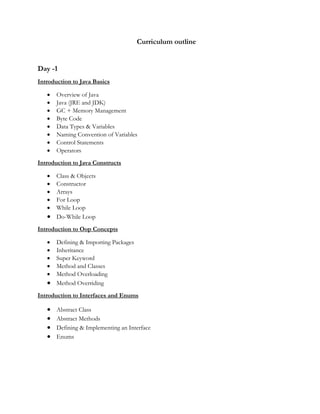
Introduction to Java Basics
 Overview of Java
 Java (JRE and JDK)
 GC + Memory Management
 Byte Code
 Data Types & Variables
 Naming Convention of Variables
 Control Statements
 Operators
Introduction to Java Constructs
 Class & Objects
 Constructor
 Arrays
 For Loop
 While Loop
 Do-While Loop
Introduction to Oop Concepts
 Defining & Importing Packages
 Inheritance
 Super Keyword
 Method and Classes
 Method Overloading
 Method Overriding
Introduction to Interfaces and Enums
 Abstract Class
 Abstract Methods
 Defining & Implementing an Interface
 Enums
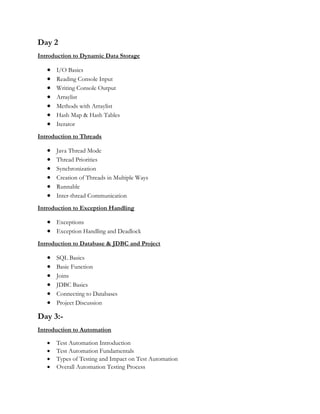
Day 2
Introduction to Dynamic Data Storage
 I/O Basics
 Reading Console Input
 Writing Console Output
 Arraylist
 Methods with Arraylist
 Hash Map & Hash Tables
 Iterator
Introduction to Threads
 Java Thread Mode
 Thread Priorities
 Synchronization
 Creation of Threads in Multiple Ways
 Runnable
 Inter-thread Communication
Introduction to Exception Handling
 Exceptions
 Exception Handling and Deadlock
Introduction to Database & JDBC and Project
 SQL Basics
 Basic Function
 Joins
 JDBC Basics
 Connecting to Databases
 Project Discussion
Day 3:-
Introduction to Automation
 Test Automation Introduction
 Test Automation Fundamentals
 Types of Testing and Impact on Test Automation
 Overall Automation Testing Process
 Test Data Setup Process
 Test Automation Design
 Test Automation Frameworks.
 Tools used for Testing.
 Categorization of Tools
 Key Consideration before Designing Test Automation
Introduction to Ruby
 Ruby Introduction
 Installing Ruby
 Installing Devkit
 Ruby Editor
 Ruby – IRB
 Programming basic concepts
 Ruby Data Types
 Ruby Variables
 Ruby Operators
Ruby Basics
 Control Structures
 Loop Structures While and For
 Strings
 Array
 Hashes
Ruby Advanced Topics
 Blocks
 Proc and Lambda
 Ranges
 Regular Expressions
 Files and IO
 Exception Handling
Day-4
Object Oriented Ruby
 Understanding OOPS
 Classes
 Modules
 Mixins
 Methods
 Best Practices in Programming
Introduction to BDD and Cucumber
 What is BDD
 Why Cucumber?
 Cucumber installation
 Cucumber framework flow
 Introduction to Cucumber Gherkin
 Gherkin Keywords
o scenario
o Feature
o given
o When
o Then
o Tagging
o Background
Day-5
BDD Creating and Executing Test
 Revisit Regular Expression
 Feature File for a sample scenario
 Creation of Step Definition File
 Execution
 Results and Reports
 Debugging
 Cucumber Framework in detail
 Tagging scenarios
 Reusing steps
 Running Tests in different browser.
Testing A Web Application using Java, Cucumber
 Introduction to Real Time Project
 Creation of feature file
 Creation of Step Definition File
 Execution
 Result and Report
 Best Practices
Integration of Cucumber with Selenium through Eclipse
 Introduction to Selenium
 Introduction to Eclipse IDE
 Integration of cucumber with selenium
 Designing framework
 Testing Web Based Application
 Handling Ajax
 Handling failures
 Live examples
 Best Practices
Day 6
Introduction of Capybara
 Introduction to Capybara
 Elements and Semantics in capbara
 Xpath in Capybara
 Finding Elements
 Actions
 Interacting with web elements on Page
 Integration of Capybara, Cucumber and Java
Cucumber to test web services (REST)/Backend system
 Introduction to web services
 How to test rest webservice with cucumber
 Configuration required to test web services
 JSON handling
 How to test backend system
 Points to be considered
 Live examples with framework designing
Continuous Integration with cucumber
 Introduction to Continuous Integration
 Integration with Jenkins
 Live Examples
 Best Practices
Error Handling, Seeking Help and Open Forum
 Different kinds of error which you can encounter
 Challenges that you will face
 How to solve them
 Good resources to read
 Open Forum
Note :- All the scenarios covered. Please let me know if further amendments
required.

Curriculum outline

  • 1.
    Curriculum outline Day -1 Introductionto Java Basics  Overview of Java  Java (JRE and JDK)  GC + Memory Management  Byte Code  Data Types & Variables  Naming Convention of Variables  Control Statements  Operators Introduction to Java Constructs  Class & Objects  Constructor  Arrays  For Loop  While Loop  Do-While Loop Introduction to Oop Concepts  Defining & Importing Packages  Inheritance  Super Keyword  Method and Classes  Method Overloading  Method Overriding Introduction to Interfaces and Enums  Abstract Class  Abstract Methods  Defining & Implementing an Interface  Enums
  • 2.
    Day 2 Introduction toDynamic Data Storage  I/O Basics  Reading Console Input  Writing Console Output  Arraylist  Methods with Arraylist  Hash Map & Hash Tables  Iterator Introduction to Threads  Java Thread Mode  Thread Priorities  Synchronization  Creation of Threads in Multiple Ways  Runnable  Inter-thread Communication Introduction to Exception Handling  Exceptions  Exception Handling and Deadlock Introduction to Database & JDBC and Project  SQL Basics  Basic Function  Joins  JDBC Basics  Connecting to Databases  Project Discussion Day 3:- Introduction to Automation  Test Automation Introduction  Test Automation Fundamentals  Types of Testing and Impact on Test Automation  Overall Automation Testing Process
  • 3.
     Test DataSetup Process  Test Automation Design  Test Automation Frameworks.  Tools used for Testing.  Categorization of Tools  Key Consideration before Designing Test Automation Introduction to Ruby  Ruby Introduction  Installing Ruby  Installing Devkit  Ruby Editor  Ruby – IRB  Programming basic concepts  Ruby Data Types  Ruby Variables  Ruby Operators Ruby Basics  Control Structures  Loop Structures While and For  Strings  Array  Hashes Ruby Advanced Topics  Blocks  Proc and Lambda  Ranges  Regular Expressions  Files and IO  Exception Handling Day-4 Object Oriented Ruby  Understanding OOPS  Classes  Modules  Mixins  Methods
  • 4.
     Best Practicesin Programming Introduction to BDD and Cucumber  What is BDD  Why Cucumber?  Cucumber installation  Cucumber framework flow  Introduction to Cucumber Gherkin  Gherkin Keywords o scenario o Feature o given o When o Then o Tagging o Background Day-5 BDD Creating and Executing Test  Revisit Regular Expression  Feature File for a sample scenario  Creation of Step Definition File  Execution  Results and Reports  Debugging  Cucumber Framework in detail  Tagging scenarios  Reusing steps  Running Tests in different browser. Testing A Web Application using Java, Cucumber  Introduction to Real Time Project  Creation of feature file  Creation of Step Definition File  Execution  Result and Report
  • 5.
     Best Practices Integrationof Cucumber with Selenium through Eclipse  Introduction to Selenium  Introduction to Eclipse IDE  Integration of cucumber with selenium  Designing framework  Testing Web Based Application  Handling Ajax  Handling failures  Live examples  Best Practices Day 6 Introduction of Capybara  Introduction to Capybara  Elements and Semantics in capbara  Xpath in Capybara  Finding Elements  Actions  Interacting with web elements on Page  Integration of Capybara, Cucumber and Java Cucumber to test web services (REST)/Backend system  Introduction to web services  How to test rest webservice with cucumber  Configuration required to test web services  JSON handling  How to test backend system  Points to be considered  Live examples with framework designing
  • 6.
    Continuous Integration withcucumber  Introduction to Continuous Integration  Integration with Jenkins  Live Examples  Best Practices Error Handling, Seeking Help and Open Forum  Different kinds of error which you can encounter  Challenges that you will face  How to solve them  Good resources to read  Open Forum Note :- All the scenarios covered. Please let me know if further amendments required.