Standards of Medical Care in Diabetes—2009
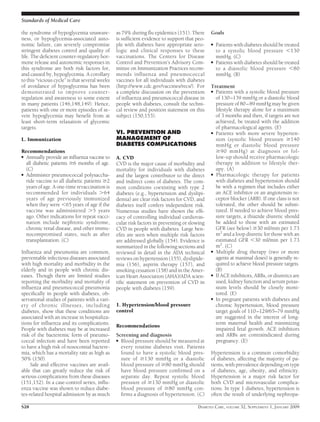
AMERICAN DIABETES ASSOCIATION
D
iabetes is a chronic illness that re-
quires continuing medical care
and patient self-management ed-
ucation to prevent acute complications
and to reduce the risk of long-term
complications. Diabetes care is complex
and requires that many issues, beyond
glycemic control, be addressed. A large
body of evidence exists that supports a
range of interventions to improve dia-
betes outcomes.
These standards of care are in-
tended to provide clinicians, patients,
researchers, payors, and other inter-
ested individuals with the components
of diabetes care, treatment goals, and
tools to evaluate the quality of care.
While individual preferences, comor-
bidities, and other patient factors may
require modification of goals, targets
that are desirable for most patients with
diabetes are provided. These standards
are not intended to preclude more ex-
tensive evaluation and management of
the patient by other specialists as
needed. For more detailed information,
refer to references 1–3.
The recommendations included are
screening, diagnostic, and therapeutic
actions that are known or believed to
favorably affect health outcomes of pa-
tients with diabetes. A grading system
(Table 1), developed by the American
Diabetes Association (ADA) and mod-
eled after existing methods, was utilized
to clarify and codify the evidence that
forms the basis for the recommenda-
tions. The level of evidence that sup-
ports each recommendation is listed
after each recommendation using the
letters A, B, C, or E.
I. CLASSIFICATION AND
DIAGNOSIS
A. Classification
In 1997, ADA issued new diagnostic and
classification criteria (4); in 2003, modi-
fications were made regarding the diagno-
sis of impaired fasting glucose (5). The
classification of diabetes includes four
clinical classes:
● type 1 diabetes (results from ␤-cell de-
struction, usually leading to absolute
insulin deficiency)
● type 2 diabetes (results from a progres-
sive insulin secretory defect on the
background of insulin resistance)
● other specific types of diabetes due to
other causes, e.g., genetic defects in
␤-cell function, genetic defects in insu-
lin action, diseases of the exocrine pan-
creas (such as cystic fibrosis), and drug-
or chemical-induced (such as in the
treatment of AIDS or after organ trans-
plantation)
● gestational diabetes mellitus (GDM)
(diabetes diagnosed during pregnancy)
Some patients cannot be clearly classified as
type 1 or type 2 diabetes. Clinical presenta-
tion and disease progression vary consider-
ably in both types of diabetes. Occasionally,
patientswhootherwisehavetype2diabetes
may present with ketoacidosis. Similarly,
patients with type 1 may have a late onset
and slow (but relentless) progression of dis-
ease despite having features of autoimmune
disease. Such difficulties in diagnosis may
occur in children, adolescents, and adults.
The true diagnosis may become more obvi-
ous over time.
B. Diagnosis of diabetes
Current criteria for the diagnosis of diabetes
innonpregnantadultsareshowninTable2.
Three ways to diagnose diabetes are recom-
mended at the time of this statement, and
each must be confirmed on a subsequent
day unless unequivocal symptoms of hy-
perglycemia are present. Although the 75-g
oral glucose tolerance test (OGTT) is more
sensitive and modestly more specific than
the fasting plasma glucose (FPG) to diag-
nose diabetes, it is poorly reproducible and
difficult to perform in practice. Because of
ease of use, acceptability to patients, and
lower cost, the FPG has been the preferred
diagnostic test. Though FPG is less sensitive
than the OGTT, the vast majority of people
who do not meet diagnostic criteria for dia-
betes by FPG but would by OGTT will have
an A1C value well under 7.0% (6).
Though the OGTT is not recom-
mended for routine clinical use, it may be
useful for further evaluation of patients in
whom diabetes is still strongly suspected
but who have normal FPG or IFG (see
Section I.C).
The use of the A1C for the diagnosis
of diabetes has previously not been rec-
ommended due to lack of global stan-
dardization and uncertainty about
diagnostic thresholds. However, with a
world-wide move toward a standardized
assay and with increasing observational
evidence about the prognostic signifi-
cance of A1C, an Expert Committee on
the Diagnosis of Diabetes was convened
in 2008. This joint committee of ADA, the
European Association for the Study of Di-
abetes, and the International Diabetes
Federation will likely recommend that the
A1C become the preferred diagnostic test
for diabetes. Diagnostic cut-points are be-
ing discussed at the time of publication of
this statement. Updated recommenda-
tions will be published in Diabetes Care
and will be available at diabetes.org.
C. Diagnosis of pre-diabetes
Hyperglycemia not sufficient to meet the
diagnostic criteria for diabetes is catego-
● ● ● ● ● ● ● ● ● ● ● ● ● ● ● ● ● ● ● ● ● ● ● ● ● ● ● ● ● ● ● ● ● ● ● ● ● ● ● ● ● ● ● ● ● ● ● ● ●
The recommendations in this article are based on the evidence reviewed in the following publication:
Standards of Care for Diabetes (Technical Review). Diabetes Care 17:1514–1522, 1994.
Originally approved 1988. Most recent review/revision October 2008.
DOI: 10.2337/dc09-S013
© 2009 by the American Diabetes Association. Readers may use this article as long as the work is properly
cited, the use is educational and not for profit, and the work is not altered. See http://creativecommons.
org/licenses/by-nc-nd/3.0/ for details.
P O S I T I O N S T A T E M E N T
DIABETES CARE, VOLUME 32, SUPPLEMENT 1, JANUARY 2009 S13
rized as either impaired fasting glucose
(IFG) or impaired glucose tolerance
(IGT), depending on whether it is identi-
fied through the FPG or the OGTT:
● IFG ϭ FPG 100 mg/dl (5.6 mmol/l) to
125 mg/dl (6.9 mmol/l)
● IGT ϭ 2-h plasma glucose 140 mg/dl
(7.8 mmol/l) to 199 mg/dl (11.0
mmol/l)
IFG and IGT have been officially termed
“pre-diabetes.” Both categories of pre-
diabetes are risk factors for future diabetes
and for cardiovascular disease (CVD) (7).
II. TESTING FOR PRE-
DIABETES AND DIABETES
IN ASYMPTOMATIC
PATIENTS
Recommendations
● Testing to detect pre-diabetes and type
2 diabetes in asymptomatic people
should be considered in adults of any
age who are overweight or obese (BMI
Ն25 kg/m2
) and who have one or more
additional risk factors for diabetes (Ta-
ble 3). In those without these risk fac-
tors, testing should begin at age 45
years. (B)
● If tests are normal, repeat testing should
be carried out at least at 3-year inter-
vals. (E)
● To test for pre-diabetes or diabetes, an
FPG test or 2-h OGTT (75-g glucose
load) or both are appropriate. (B)
● An OGTT may be considered in pa-
tients with IFG to better define the risk
of diabetes. (E)
● In those identified with pre-diabetes,
identify and, if appropriate, treat other
CVD risk factors. (B)
For many illnesses, there is a major dis-
tinction between screening and diagnos-
tic testing. However, for diabetes, the
same tests would be used for “screening”
as for diagnosis. Type 2 diabetes has a
long asymptomatic phase and significant
clinical risk markers. Diabetes may be
identified anywhere along a spectrum of
clinical scenarios ranging from a seem-
ingly low-risk individual who happens to
have glucose testing, to a higher-risk in-
dividual whom the provider tests because
of high suspicion of diabetes, to the symp-
tomatic patient. The discussion herein is
primarily framed as testing for diabetes in
those without symptoms. Testing for dia-
betes will also detect individuals with pre-
diabetes.
A. Testing for pre-diabetes and type
2 diabetes in adults
Type 2 diabetes is frequently not diag-
nosed until complications appear, and
approximately one-third of all people
with diabetes may be undiagnosed. Al-
though the effectiveness of early identifi-
cation of pre-diabetes and diabetes
through mass testing of asymptomatic in-
dividuals has not been definitively proven
(and rigorous trials to provide such proof
are unlikely to occur), pre-diabetes and
diabetes meet established criteria for con-
ditions in which early detection is appro-
priate. Both conditions are common,
increasing in prevalence, and impose sig-
nificant public health burdens. There is a
long presymptomatic phase before the di-
agnosis of type 2 diabetes is usually made.
Relatively simple tests are available to de-
tect preclinical disease (8). Additionally,
the duration of glycemic burden is a
strong predictor of adverse outcomes,
and effective interventions exist to pre-
vent progression of pre-diabetes to diabe-
tes (see Section IV) and to reduce risk of
complications of diabetes (see Section
VI).
Recommendations for testing for pre-
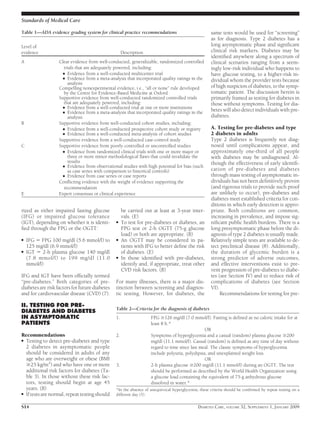
Table 1—ADA evidence grading system for clinical practice recommendations
Level of
evidence Description
A Clear evidence from well-conducted, generalizable, randomized controlled
trials that are adequately powered, including:
● Evidence from a well-conducted multicenter trial
● Evidence from a meta-analysis that incorporated quality ratings in the
analysis
Compelling nonexperimental evidence, i.e., “all or none” rule developed
by the Centre for Evidence-Based Medicine at Oxford
Supportive evidence from well-conducted randomized controlled trials
that are adequately powered, including:
● Evidence from a well-conducted trial at one or more institutions
● Evidence from a meta-analysis that incorporated quality ratings in the
analysis
B Supportive evidence from well-conducted cohort studies, including:
● Evidence from a well-conducted prospective cohort study or registry
● Evidence from a well-conducted meta-analysis of cohort studies
Supportive evidence from a well-conducted case-control study
C Supportive evidence from poorly controlled or uncontrolled studies
● Evidence from randomized clinical trials with one or more major or
three or more minor methodological flaws that could invalidate the
results
● Evidence from observational studies with high potential for bias (such
as case series with comparison to historical controls)
● Evidence from case series or case reports
Conflicting evidence with the weight of evidence supporting the
recommendation
E Expert consensus or clinical experience
Table 2—Criteria for the diagnosis of diabetes
1. FPG Ն126 mg/dl (7.0 mmol/l). Fasting is defined as no caloric intake for at
least 8 h.*
OR
2. Symptoms of hyperglycemia and a casual (random) plasma glucose Ն200
mg/dl (11.1 mmol/l). Casual (random) is defined as any time of day without
regard to time since last meal. The classic symptoms of hyperglycemia
include polyuria, polydipsia, and unexplained weight loss.
OR
3. 2-h plasma glucose Ն200 mg/dl (11.1 mmol/l) during an OGTT. The test
should be performed as described by the World Health Organization using
a glucose load containing the equivalent of 75-g anhydrous glucose
dissolved in water.*
*In the absence of unequivocal hyperglycemia, these criteria should be confirmed by repeat testing on a
different day (5).
Standards of Medical Care
S14 DIABETES CARE, VOLUME 32, SUPPLEMENT 1, JANUARY 2009
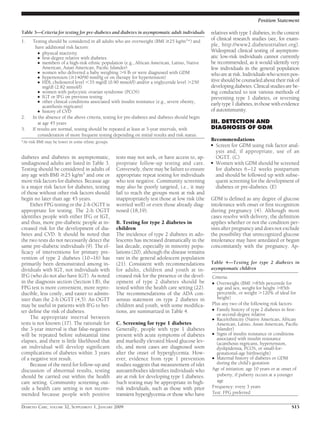
diabetes and diabetes in asymptomatic,
undiagnosed adults are listed in Table 3.
Testing should be considered in adults of
any age with BMI Ն25 kg/m2
and one or
more risk factors for diabetes. Because age
is a major risk factor for diabetes, testing
of those without other risk factors should
begin no later than age 45 years.
Either FPG testing or the 2-h OGTT is
appropriate for testing. The 2-h OGTT
identifies people with either IFG or IGT,
and thus, more pre-diabetic people at in-
creased risk for the development of dia-
betes and CVD. It should be noted that
the two tests do not necessarily detect the
same pre-diabetic individuals (9). The ef-
ficacy of interventions for primary pre-
vention of type 2 diabetes (10–16) has
primarily been demonstrated among in-
dividuals with IGT, not individuals with
IFG (who do not also have IGT). As noted
in the diagnosis section (Section I.B), the
FPG test is more convenient, more repro-
ducible, less costly, and easier to admin-
ister than the 2-h OGTT (4,5). An OGTT
may be useful in patients with IFG to bet-
ter define the risk of diabetes.
The appropriate interval between
tests is not known (17). The rationale for
the 3-year interval is that false-negatives
will be repeated before substantial time
elapses, and there is little likelihood that
an individual will develop significant
complications of diabetes within 3 years
of a negative test result.
Because of the need for follow-up and
discussion of abnormal results, testing
should be carried out within the health
care setting. Community screening out-
side a health care setting is not recom-
mended because people with positive
tests may not seek, or have access to, ap-
propriate follow-up testing and care.
Conversely, there may be failure to ensure
appropriate repeat testing for individuals
who test negative. Community screening
may also be poorly targeted, i.e., it may
fail to reach the groups most at risk and
inappropriately test those at low risk (the
worried well) or even those already diag-
nosed (18,19).
B. Testing for type 2 diabetes in
children
The incidence of type 2 diabetes in ado-
lescents has increased dramatically in the
last decade, especially in minority popu-
lations (20), although the disease remains
rare in the general adolescent population
(21). Consistent with recommendations
for adults, children and youth at in-
creased risk for the presence or the devel-
opment of type 2 diabetes should be
tested within the health care setting (22).
The recommendations of the ADA con-
sensus statement on type 2 diabetes in
children and youth, with some modifica-
tions, are summarized in Table 4.
C. Screening for type 1 diabetes
Generally, people with type 1 diabetes
present with acute symptoms of diabetes
and markedly elevated blood glucose lev-
els, and most cases are diagnosed soon
after the onset of hyperglycemia. How-
ever, evidence from type 1 prevention
studies suggests that measurement of islet
autoantibodies identifies individuals who
are at risk for developing type 1 diabetes.
Such testing may be appropriate in high-
risk individuals, such as those with prior
transient hyperglycemia or those who have
relatives with type 1 diabetes, in the context
of clinical research studies (see, for exam-
ple, http://www2.diabetestrialnet.org).
Widespread clinical testing of asymptom-
atic low-risk individuals cannot currently
be recommended, as it would identify very
few individuals in the general population
whoareatrisk.Individualswhoscreenpos-
itive should be counseled about their risk of
developing diabetes. Clinical studies are be-
ing conducted to test various methods of
preventing type 1 diabetes, or reversing
early type 1 diabetes, in those with evidence
of autoimmunity.
III. DETECTION AND
DIAGNOSIS OF GDM
Recommendations
● Screen for GDM using risk factor anal-
ysis and, if appropriate, use of an
OGTT. (C)
● Women with GDM should be screened
for diabetes 6–12 weeks postpartum
and should be followed up with subse-
quent screening for the development of
diabetes or pre-diabetes. (E)
GDM is defined as any degree of glucose
intolerance with onset or first recognition
during pregnancy (4). Although most
cases resolve with delivery, the definition
applies whether or not the condition per-
sists after pregnancy and does not exclude
the possibility that unrecognized glucose
intolerance may have antedated or begun
concomitantly with the pregnancy. Ap-
Table 3—Criteria for testing for pre-diabetes and diabetes in asymptomatic adult individuals
1. Testing should be considered in all adults who are overweight (BMI Ն25 kg/m2
*) and
have additional risk factors:
● physical inactivity
● first-degree relative with diabetes
● members of a high-risk ethnic population (e.g., African American, Latino, Native
American, Asian American, Pacific Islander)
● women who delivered a baby weighing Ͼ9 lb or were diagnosed with GDM
● hypertension (Ն140/90 mmHg or on therapy for hypertension)
● HDL cholesterol level Ͻ35 mg/dl (0.90 mmol/l) and/or a triglyceride level Ͼ250
mg/dl (2.82 mmol/l)
● women with polycystic ovarian syndrome (PCOS)
● IGT or IFG on previous testing
● other clinical conditions associated with insulin resistance (e.g., severe obesity,
acanthosis nigricans)
● history of CVD
2. In the absence of the above criteria, testing for pre-diabetes and diabetes should begin
at age 45 years
3. If results are normal, testing should be repeated at least at 3-year intervals, with
consideration of more frequent testing depending on initial results and risk status.
*At-risk BMI may be lower in some ethnic groups.
Table 4—Testing for type 2 diabetes in
asymptomatic children
Criteria:
● Overweight (BMI Ͼ85th percentile for
age and sex, weight for height Ͼ85th
percentile, or weight Ͼ120% of ideal for
height)
Plus any two of the following risk factors:
● Family history of type 2 diabetes in first-
or second-degree relative
● Race/ethnicity (Native American, African
American, Latino, Asian American, Pacific
Islander)
● Signs of insulin resistance or conditions
associated with insulin resistance
(acanthosis nigricans, hypertension,
dyslipidemia, PCOS, or small-for-
gestational-age birthweight)
● Maternal history of diabetes or GDM
during the child’s gestation
Age of initiation: age 10 years or at onset of
puberty, if puberty occurs at a younger
age
Frequency: every 3 years
Test: FPG preferred
Position Statement
DIABETES CARE, VOLUME 32, SUPPLEMENT 1, JANUARY 2009 S15
proximately 7% of all pregnancies (rang-
ing from 1 to 14% depending on the
population studied and the diagnostic
tests employed) are complicated by GDM,
resulting in more than 200,000 cases
annually.
Because of the risks of GDM to the
mother and neonate, screening and di-
agnosis are warranted. The screening
and diagnostic strategies, based on the
2004 ADA position statement on gesta-
tional diabetes mellitus (23), are outlined in
Table 5.
Results of the Hyperglycemia and Ad-
verse Pregnancy Outcomes study (24), a
large-scale (including ϳ25,000 pregnant
women) multinational epidemiologic
study, demonstrated that risk of adverse
maternal, fetal, and neonatal outcomes
continuously increased as a function of
maternal glycemia at 24–28 weeks, even
within ranges previously considered nor-
mal for pregnancy. For most complica-
tions, there was no threshold for risk.
These results have led to careful reconsid-
eration of the diagnostic criteria for GDM.
An international group representing mul-
tiple obstetrical and diabetes organiza-
tions, including ADA, is currently
working on consensus toward 1) a world-
wide standard for which diagnostic test to
use for GDM and 2) rational diagnostic
cut points.
Because women with a history of
GDM have a greatly increased subse-
quent risk for diabetes (25), they should
be screened for diabetes 6–12 weeks
postpartum, using nonpregnant OGTT
criteria, and should be followed up with
subsequent screening for the develop-
ment of diabetes or pre-diabetes, as out-
lined in Section II. For information on
the National Diabetes Education Pro-
gram (NDEP) campaign to prevent type
2 diabetes in women with GDM, go to
www.ndep.nih.gov/diabetes/pubs/
NeverTooEarly_Tipsheet.pdf.
IV. PREVENTION/DELAY
OF TYPE 2 DIABETES
Recommendations
● Patients with IGT (A) or IFG (E) should
be referred to an effective ongoing sup-
port program for weight loss of 5–10%
of body weight and for increasing phys-
ical activity to at least 150 min per week
of moderate activity such as walking.
● Follow-up counseling appears to be im-
portant for success. (B)
● Based on potential cost savings of dia-
betes prevention, such counseling
should be covered by third-party pay-
ors. (E)
● In addition to lifestyle counseling, met-
formin may be considered in those who
are at very high risk for developing di-
abetes (combined IFG and IGT plus
other risk factors such as A1C Ͼ6%,
hypertension, low HDL cholesterol, el-
evated triglycerides, or family history of
diabetes in a first-degree relative) and
who are obese and under 60 years of
age. (E)
● Monitoring for the development of di-
abetes in those with pre-diabetes
should be performed every year. (E)
Randomized controlled trials have shown
that individuals at high risk for develop-
ing diabetes (those with IFG, IGT, or
both) can be given interventions that sig-
nificantly decrease the rate of onset of di-
abetes (10 –16). These interventions
include intensive lifestyle modification
programs that have been shown to be very
effective (Ն58% reduction after 3 years)
and use of the pharmacologic agents met-
formin, acarbose, orlistat, and thiazo-
lidinediones (TZDs), each of which has
been shown to decrease incident diabetes
to various degrees. A summary of major
diabetes prevention trials is shown in Ta-
ble 6.
Two studies of lifestyle intervention
have shown persistent reduction in the
rate of conversion to type 2 diabetes with
3 (26) to 14 years (27) of postintervention
follow-up.
Based on the results of clinical trials
and the known risks of progression of
pre-diabetes to diabetes, an ADA Consen-
sus Development Panel (7) concluded
that persons with pre-diabetes (IGT
and/or IFG) should be counseled on life-
style changes with goals similar to those of
the Diabetes Prevention Program (DPP)
(5–10% weight loss and moderate physi-
cal activity of ϳ30 min per day). Regard-
ing the more difficult issue of drug
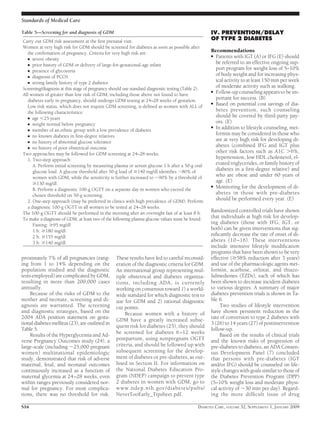
Table 5—Screening for and diagnosis of GDM
Carry out GDM risk assessment at the first prenatal visit.
Women at very high risk for GDM should be screened for diabetes as soon as possible after
the confirmation of pregnancy. Criteria for very high risk are:
● severe obesity
● prior history of GDM or delivery of large-for-gestational-age infant
● presence of glycosuria
● diagnosis of PCOS
● strong family history of type 2 diabetes
Screening/diagnosis at this stage of pregnancy should use standard diagnostic testing (Table 2).
All women of greater than low risk of GDM, including those above not found to have
diabetes early in pregnancy, should undergo GDM testing at 24–28 weeks of gestation.
Low risk status, which does not require GDM screening, is defined as women with ALL of
the following characteristics:
● age Ͻ25 years
● weight normal before pregnancy
● member of an ethnic group with a low prevalence of diabetes
● no known diabetes in first-degree relatives
● no history of abnormal glucose tolerance
● no history of poor obstetrical outcome
Two approaches may be followed for GDM screening at 24–28 weeks:
1. Two-step approach:
A. Perform initial screening by measuring plasma or serum glucose 1 h after a 50-g oral
glucose load. A glucose threshold after 50-g load of Ն140 mg/dl identifies ϳ80% of
women with GDM, while the sensitivity is further increased to ϳ90% by a threshold of
Ն130 mg/dl.
B. Perform a diagnostic 100-g OGTT on a separate day in women who exceed the
chosen threshold on 50-g screening.
2. One-step approach (may be preferred in clinics with high prevalence of GDM): Perform
a diagnostic 100-g OGTT in all women to be tested at 24–28 weeks.
The 100-g OGTT should be performed in the morning after an overnight fast of at least 8 h.
To make a diagnosis of GDM, at least two of the following plasma glucose values must be found:
Fasting: Ն95 mg/dl
1 h: Ն180 mg/dl
2 h: Ն155 mg/dl
3 h: Ն140 mg/dl
Standards of Medical Care
S16 DIABETES CARE, VOLUME 32, SUPPLEMENT 1, JANUARY 2009
therapy for diabetes prevention, the con-
sensus panel felt that metformin should
be the only drug considered for use in
diabetes prevention. For other drugs, the
issues of cost, side effects, and lack of per-
sistence of effect in some studies led the
panel to not recommend their use for di-
abetes prevention. Metformin use was
recommended only for very-high-risk in-
dividuals (those with combined IGT and
IFG who are obese and under 60 years of
age with at least one other risk factor for
diabetes). In addition, the panel high-
lighted the evidence that in the DPP, met-
formin was most effective compared to
lifestyle in those with BMI of at least 35
kg/m2
and those under age 60 years.
V. DIABETES CARE
A. Initial evaluation
A complete medical evaluation should be
performed to classify the diabetes, detect
the presence of diabetes complications,
review previous treatment and glycemic
control in patients with established diabe-
tes, assist in formulating a management
plan, and provide a basis for continuing
care. Laboratory tests appropriate to the
evaluation of each patient’s medical con-
dition should be performed. A focus on
the components of comprehensive care
(Table 7) will assist the health care team to
ensure optimal management of the pa-
tient with diabetes.
B. Management
People with diabetes should receive med-
ical care from a physician-coordinated
team. Such teams may include, but are
not limited to, physicians, nurse practitio-
ners, physician’s assistants, nurses, dieti-
tians, pharmacists, and mental health
professionals with expertise and a special
interest in diabetes. It is essential in this
collaborative and integrated team ap-
proach that individuals with diabetes as-
sume an active role in their care.
The management plan should be for-
mulated as an individualized therapeutic
alliance among the patient and family, the
physician, and other members of the
health care team. A variety of strategies
and techniques should be used to provide
adequate education and development of
problem-solving skills in the various as-
pects of diabetes management. Imple-
mentation of the management plan
requires that each aspect is understood
and agreed on by the patient and the care
providers and that the goals and treat-
ment plan are reasonable. Any plan
should recognize diabetes self-manage-
ment education (DSME) as an integral
component of care. In developing the
plan, consideration should be given to the
patient’s age, school or work schedule
and conditions, physical activity, eating
patterns, social situation and personality,
cultural factors, and presence of compli-
cations of diabetes or other medical con-
ditions.
C. Glycemic control
1. Assessment of glycemic control
Two primary techniques are available for
health providers and patients to assess the
effectiveness of the management plan on
glycemic control: patient self-monitoring
of blood glucose (SMBG) or of interstitial
glucose and measurement of A1C.
a. Glucose monitoring
Recommendations
● SMBG should be carried out three or
more times daily for patients using mul-
tiple insulin injections or insulin pump
therapy. (A)
● For patients using less frequent insulin
injections, noninsulin therapies, or
medical nutrition therapy (MNT) and
physical activity alone, SMBG may be
useful as a guide to the success of ther-
apy. (E)
● To achieve postprandial glucose tar-
gets, postprandial SMBG may be appro-
priate. (E)
Table 6—Therapies proven effective in diabetes prevention trials
Study (ref.) n Population
Mean
age
(years)
Duration
(years)
Intervention
(daily dose)
Conversion in
control subjects
(%/year) Relative risk
Lifestyle
Finnish DPS (11) 522 IGT, BMI Ն25 kg/m2
55 3.2 Individual
diet/exercise
6 0.42 (0.30–0.70)
DPP (10) 2,161* IGT, BMI Ն24 kg/m2
,
FPG Ͼ5.3 mmol/l
51 3 Individual
diet/exercise
10 0.42 (0.34–0.52)
Da Qing (12) 259* IGT (randomized
groups)
45 6 Group diet/exercise 16 0.62 (0.44–0.86)
Toranomon study (28) 458 IGT (men), BMI ϭ 24
kg/m2
55 4 Individual
diet/exercise
2 0.33 (0.10–1.0)†
Indian DPP (16) 269* IGT 46 2.5 Individual
diet/exercise
22 0.71 (0.63–0.79)
Medications
DPP (10) 2,155* IGT, BMI Ͼ24 kg/m2
,
FPG Ͼ5.3 mmol/l
51 2.8 Metformin (1,700 mg) 10 0.69 (0.57–0.83)
Indian DPP (16) 269* IGT 46 2.5 Metformin (500 mg) 22 0.74 (0.65–0.81)
STOP NIDDM (14) 1,419 IGT, FPG Ͼ5.6 mmol/l 54 3.2 Acarbose (300 mg) 13 0.75 (0.63–0.90)
XENDOS (29) 3,277 BMI Ͼ30 kg/m2
43 4 Orlistat (360 mg) 2 0.63 (0.46–0.86)
DREAM (15) 5,269 IGT or IFG 55 3.0 Rosiglitazone (8 mg) 9 0.40 (0.35–0.46)
*Number of participants in the indicated comparisons, not necessarily in the entire study. †Calculated from information in the article. DPP, Diabetes Prevention
Program; DREAM, Diabetes REduction Assessment with ramipril and rosiglitazone Medication; DPS, Diabetes Prevention Study; STOP NIDDM, Study to Prevent
Non-Insulin Dependent Diabetes; XENDOS, Xenical in the prevention of Diabetes in Obese Subjects. This table has been reprinted with permission (30) with some
modification.
Position Statement
DIABETES CARE, VOLUME 32, SUPPLEMENT 1, JANUARY 2009 S17
● When prescribing SMBG, ensure that
patients receive initial instruction in,
and routine follow-up evaluation of,
SMBG technique and their ability to use
data to adjust therapy. (E)
● Continuous glucose monitoring (CGM)
in conjunction with intensive insulin
regimens can be a useful tool to lower
A1C in selected adults (age Ն25 years)
with type 1 diabetes (A).
● Although the evidence for A1C lowering
is less strong in children, teens, and
younger adults, CGM may be helpful in
these groups. Success correlates with ad-
herence to ongoing use of the device. (C)
● CGM may be a supplemental tool to
SMBG in those with hypoglycemia un-
awareness and/or frequent hypoglyce-
mic episodes. (E)
The ADA’s consensus and position state-
ments on SMBG provide a comprehensive
review of the subject (31,32). Major clin-
ical trials of insulin-treated patients that
demonstrated the benefits of intensive
glycemic control on diabetes complica-
tions have included SMBG as part of mul-
tifactorial interventions, suggesting that
SMBG is a component of effective ther-
apy. SMBG allows patients to evaluate
their individual response to therapy and
assess whether glycemic targets are being
achieved. Results of SMBG can be useful
in preventing hypoglycemia and adjust-
ing medications (particularly prandial in-
sulin doses), MNT, and physical activity.
The frequency and timing of SMBG
should be dictated by the particular needs
and goals of the patients. SMBG is espe-
cially important for patients treated with
insulin to monitor for and prevent asymp-
tomatic hypoglycemia and hyperglyce-
mia. For most patients with type 1
diabetes and pregnant women taking in-
sulin, SMBG is recommended three or
more times daily. For this population, sig-
nificantly more frequent testing may be
required to reach A1C targets safely with-
out hypoglycemia. The optimal frequency
and timing of SMBG for patients with type
2 diabetes on noninsulin therapy is un-
clear. A meta-analysis of SMBG in non–
insulin-treated patients with type 2
diabetes concluded that some regimen of
SMBG was associated with a reduction in
A1C of Ն0.4%. However, many of the
studies in this analysis also included pa-
tient education with diet and exercise
counseling and, in some cases, pharma-
cologic intervention, making it difficult to
assess the contribution of SMBG alone to
improved control (33). Several recent tri-
als have called into question the clinical
utility and cost-effectiveness of routine
SMBG in non–insulin-treated patients
(34–36).
BecausetheaccuracyofSMBGisinstru-
ment and user dependent (37), it is impor-
tant to evaluate each patient’s monitoring
technique, both initially and at regular in-
tervals thereafter. In addition, optimal use
of SMBG requires proper interpretation of
the data. Patients should be taught how to
use the data to adjust food intake, exercise,
or pharmacological therapy to achieve spe-
cific glycemic goals, and these skills should
be reevaluated periodically.
CGM through the measurement of in-
terstitial glucose (which correlates well
with plasma glucose) is available. These
sensors require calibration with SMBG,
and the latter are still recommended for
making acute treatment decisions. CGM
devices also have alarms for hypo- and
hyperglycemic excursions. Small studies
in selected patients with type 1 diabetes
have suggested that CGM use reduces the
time spent in hypo- and hyperglycemic
ranges and may modestly improve glyce-
mic control. A larger 26-week random-
ized trial of 322 type 1 patients showed
that adults age 25 years and older using
Table 7—Components of the comprehensive diabetes evaluation
Medical history
● age and characteristics of onset of diabetes (e.g., DKA, asymptomatic laboratory finding)
● eating patterns, physical activity habits, nutritional status, and weight history; growth
and development in children and adolescents
● diabetes education history
● review of previous treatment regimens and response to therapy (A1C records)
● current treatment of diabetes, including medications, meal plan, physical activity
patterns, and results of glucose monitoring and patient’s use of data
● DKA frequency, severity, and cause
● hypoglycemic episodes
● hypoglycemia awareness
● any severe hypoglycemia: frequency and cause
● history of diabetes-related complications
● microvascular: retinopathy, nephropathy, neuropathy (sensory, including history of
foot lesions; autonomic, including sexual dysfunction and gastroparesis)
● macrovascular: CHD, cerebrovascular disease, PAD
● other: psychosocial problems,* dental disease*
Physical examination
● height, weight, BMI
● blood pressure determination, including orthostatic measurements when indicated
● fundoscopic examination*
● thyroid palpation
● skin examination (for acanthosis nigricans and insulin injection sites)
● comprehensive foot examination:
● inspection
● palpation of dorsalis pedis and posterior tibial pulses
● presence/absence of patellar and Achilles reflexes
● determination of proprioception, vibration, and monofilament sensation
Laboratory evaluation
● A1C, if results not available within past 2–3 months
If not performed/available within past year:
● fasting lipid profile, including total, LDL- and HDL-cholesterol and triglycerides
● liver function tests
● test for urine albumin excretion with spot urine albumin/creatinine ratio
● serum creatinine and calculated GFR
● thyroid-stimulating hormone in type 1 diabetes, dyslipidemia or women over age 50
Referrals
● annual dilated eye exam
● family planning for women of reproductive age
● registered dietitian for MNT
● diabetes self-management education
● dental examination
● mental Health professional, if needed
*See appropriate referrals for these categories.
Standards of Medical Care
S18 DIABETES CARE, VOLUME 32, SUPPLEMENT 1, JANUARY 2009
intensive insulin therapy and CGM expe-
rienced a 0.5% reduction in A1C (from
ϳ7.6 to 7.1%) compared with usual in-
tensive insulin therapy with SMBG (38).
Sensor use in children, teens, and adults
to age 24 years did not result in significant
A1C lowering, and there was no signifi-
cant difference in hypoglycemia in any
group. Importantly, the greatest predictor
of A1C lowering in this study for all age-
groups was frequency of sensor use,
which was lower in younger age-groups.
Although CGM is an evolving technology,
emerging data suggest that, in appropri-
ately selected patients who are motivated
to wear it most of the time, it may offer
benefit. CGM may be particularly useful
in those with hypoglycemia unawareness
and/or frequent episodes of hypoglyce-
mia, and studies in this area are ongoing.
b. A1C
Recommendations
● Perform the A1C test at least two times
a year in patients who are meeting treat-
ment goals (and who have stable glyce-
mic control). (E)
● Perform the A1C test quarterly in pa-
tients whose therapy has changed or
who are not meeting glycemic goals. (E)
● Use of point-of-care testing for A1C al-
lows for timely decisions on therapy
changes, when needed. (E)
Because A1C is thought to reflect average
glycemia over several months (37), and
has strong predictive value for diabetes
complications (10,39), A1C testing
should be performed routinely in all pa-
tients with diabetes at initial assessment
and then as part of continuing care. Mea-
surement approximately every 3 months
determines whether a patient’s glycemic
targets have been reached and main-
tained. For any individual patient, the fre-
quency of A1C testing should be
dependent on the clinical situation, the
treatment regimen used, and the judg-
ment of the clinician. Some patients with
stable glycemia well within target may do
well with testing only twice per year,
while unstable or highly intensively man-
aged patients (e.g., pregnant type 1
women) may be tested more frequently
than every 3 months. The availability of
the A1C result at the time that the patient
is seen (point-of-care testing) has been re-
ported to result in increased intensifica-
tion of therapy and improvement in
glycemic control (40,41).
The A1C test is subject to certain lim-
itations. Conditions that affect erythro-
cyte turnover (hemolysis, blood loss) and
hemoglobin variants must be considered,
particularly when the A1C result does not
correlate with the patient’s clinical situa-
tion (37). In addition, A1C does not pro-
vide a measure of glycemic variability or
hypoglycemia. For patients prone to gly-
cemic variability (especially type 1 pa-
tients, or type 2 patients with severe
insulin deficiency), glycemic control is
best judged by the combination of results
of SMBG testing and the A1C. The A1C
may also serve as a check on the accuracy
of the patient’s meter (or the patient’s re-
ported SMBG results) and the adequacy of
the SMBG testing schedule.
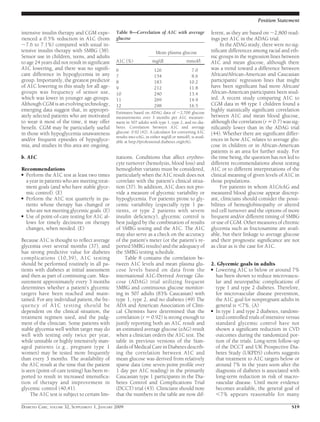
Table 8 contains the correlation be-
tween A1C levels and mean plasma glu-
cose levels based on data from the
international A1C-Derived Average Glu-
cose (ADAG) trial utilizing frequent
SMBG and continuous glucose monitor-
ing in 507 adults (83% Caucasian) with
type 1, type 2, and no diabetes (49) The
ADA and American Association of Clini-
cal Chemists have determined that the
correlation (r ϭ 0.92) is strong enough to
justify reporting both an A1C result and
an estimated average glucose (eAG) result
when a clinician orders the A1C test. The
table in previous versions of the Stan-
dards of Medical Care in Diabetes describ-
ing the correlation between A1C and
mean glucose was derived from relatively
sparse data (one seven-point profile over
1 day per A1C reading) in the primarily
Caucasian type 1 participants in the Dia-
betes Control and Complications Trial
(DCCT) trial (43). Clinicians should note
that the numbers in the table are now dif-
ferent, as they are based on ϳ2,800 read-
ings per A1C in the ADAG trial.
In the ADAG study, there were no sig-
nificant differences among racial and eth-
nic groups in the regression lines between
A1C and mean glucose, although there
was a trend toward a difference between
African/African-American and Caucasian
participants’ regression lines that might
have been significant had more African/
African-American participants been stud-
ied. A recent study comparing A1C to
CGM data in 48 type 1 children found a
highly statistically significant correlation
between A1C and mean blood glucose,
although the correlation (r ϭ 0.7) was sig-
nificantly lower than in the ADAG trial
(44). Whether there are significant differ-
ences in how A1C relates to average glu-
cose in children or in African-American
patients is an area for further study. For
the time being, the question has not led to
different recommendations about testing
A1C or to different interpretations of the
clinical meaning of given levels of A1C in
those populations.
For patients in whom A1C/eAG and
measured blood glucose appear discrep-
ant, clinicians should consider the possi-
bilities of hemoglobinopathy or altered
red cell turnover and the options of more
frequent and/or different timing of SMBG
or use of CGM. Other measures of chronic
glycemia such as fructosamine are avail-
able, but their linkage to average glucose
and their prognostic significance are not
as clear as is the case for A1C.
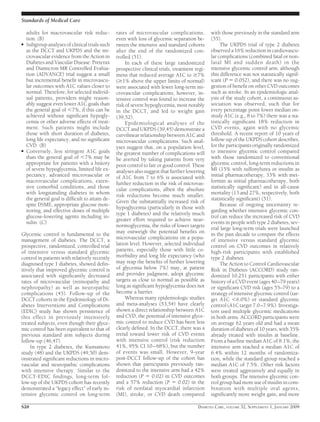
2. Glycemic goals in adults
● Lowering A1C to below or around 7%
has been shown to reduce microvascu-
lar and neuropathic complications of
type 1 and type 2 diabetes. Therefore,
for microvascular disease prevention,
the A1C goal for nonpregnant adults in
general is Ͻ7%. (A)
● In type 1 and type 2 diabetes, random-
ized controlled trials of intensive versus
standard glycemic control have not
shown a significant reduction in CVD
outcomes during the randomized por-
tion of the trials. Long-term follow-up
of the DCCT and UK Prospective Dia-
betes Study (UKPDS) cohorts suggests
that treatment to A1C targets below or
around 7% in the years soon after the
diagnosis of diabetes is associated with
long-term reduction in risk of macro-
vascular disease. Until more evidence
becomes available, the general goal of
Ͻ7% appears reasonable for many
Table 8—Correlation of A1C with average
glucose
A1C (%)
Mean plasma glucose
mg/dl mmol/l
6 126 7.0
7 154 8.6
8 183 10.2
9 212 11.8
10 240 13.4
11 269 14.9
12 298 16.5
Estimates based on ADAG data of ϳ2,700 glucose
measurements over 3 months per A1C measure-
ment in 507 adults with type 1, type 2, and no dia-
betes. Correlation between A1C and average
glucose: 0.92 (42). A calculator for converting A1C
results into eAG, in either mg/dl or mmol/l, is avail-
able at http://professional.diabetes.org/eAG.
Position Statement
DIABETES CARE, VOLUME 32, SUPPLEMENT 1, JANUARY 2009 S19
adults for macrovascular risk reduc-
tion. (B)
● Subgroup analyses of clinical trials such
as the DCCT and UKPDS and the mi-
crovascular evidence from the Action in
Diabetes and Vascular Disease: Preterax
and Diamicron MR Controlled Evalua-
tion (ADVANCE) trial suggest a small
but incremental benefit in microvascu-
lar outcomes with A1C values closer to
normal. Therefore, for selected individ-
ual patients, providers might reason-
ably suggest even lower A1C goals than
the general goal of Ͻ7%, if this can be
achieved without significant hypogly-
cemia or other adverse effects of treat-
ment. Such patients might include
those with short duration of diabetes,
long life expectancy, and no significant
CVD. (B)
● Conversely, less stringent A1C goals
than the general goal of Ͻ7% may be
appropriate for patients with a history
of severe hypoglycemia, limited life ex-
pectancy, advanced microvascular or
macrovascular complications, exten-
sive comorbid conditions, and those
with longstanding diabetes in whom
the general goal is difficult to attain de-
spite DSME, appropriate glucose mon-
itoring, and effective doses of multiple
glucose-lowering agents including in-
sulin. (C)
Glycemic control is fundamental to the
management of diabetes. The DCCT, a
prospective, randomized, controlled trial
of intensive versus standard glycemic
control in patients with relatively recently
diagnosed type 1 diabetes, showed defin-
itively that improved glycemic control is
associated with significantly decreased
rates of microvascular (retinopathy and
nephropathy) as well as neuropathic
complications (45). Follow-up of the
DCCT cohorts in the Epidemiology of Di-
abetes Interventions and Complications
(EDIC) study has shown persistence of
this effect in previously intensively
treated subjects, even though their glyce-
mic control has been equivalent to that of
previous standard arm subjects during
follow-up (46,47).
In type 2 diabetes, the Kumamoto
study (48) and the UKPDS (49,50) dem-
onstrated significant reductions in micro-
vascular and neuropathic complications
with intensive therapy. Similar to the
DCCT-EDIC findings, long-term fol-
low-up of the UKPDS cohort has recently
demonstrated a “legacy effect” of early in-
tensive glycemic control on long-term
rates of microvascular complications,
even with loss of glycemic separation be-
tween the intensive and standard cohorts
after the end of the randomized con-
trolled (51).
In each of these large randomized
prospective clinical trials, treatment regi-
mens that reduced average A1C to Ն7%
(Ն1% above the upper limits of normal)
were associated with fewer long-term mi-
crovascular complications; however, in-
tensive control was found to increase the
risk of severe hypoglycemia, most notably
in the DCCT, and led to weight gain
(39,52).
Epidemiological analyses of the
DCCT and UKPDS (39,45) demonstrate a
curvilinear relationship between A1C and
microvascular complications. Such anal-
yses suggest that, on a population level,
the greatest number of complications will
be averted by taking patients from very
poor control to fair or good control. These
analyses also suggest that further lowering
of A1C from 7 to 6% is associated with
further reduction in the risk of microvas-
cular complications, albeit the absolute
risk reductions become much smaller.
Given the substantially increased risk of
hypoglycemia (particularly in those with
type 1 diabetes) and the relatively much
greater effort required to achieve near-
normoglycemia, the risks of lower targets
may outweigh the potential benefits on
microvascular complications on a popu-
lation level. However, selected individual
patients, especially those with little co-
morbidity and long life expectancy (who
may reap the benefits of further lowering
of glycemia below 7%) may, at patient
and provider judgment, adopt glycemic
targets as close to normal as possible as
long as significant hypoglycemia does not
become a barrier.
Whereas many epidemiologic studies
and meta-analyses (53,54) have clearly
shown a direct relationship between A1C
and CVD, the potential of intensive glyce-
mic control to reduce CVD has been less
clearly defined. In the DCCT, there was a
trend toward lower risk of CVD events
with intensive control (risk reduction
41%, 95% CI 10–68%), but the number
of events was small. However, 9-year
post-DCCT follow-up of the cohort has
shown that participants previously ran-
domized to the intensive arm had a 42%
reduction (P ϭ 0.02) in CVD outcomes
and a 57% reduction (P ϭ 0.02) in the
risk of nonfatal myocardial infarction
(MI), stroke, or CVD death compared
with those previously in the standard arm
(55).
The UKPDS trial of type 2 diabetes
observed a 16% reduction in cardiovascu-
lar complications (combined fatal or non-
fatal MI and sudden death) in the
intensive glycemic control arm, although
this difference was not statistically signif-
icant (P ϭ 0.052), and there was no sug-
gestion of benefit on other CVD outcomes
such as stroke. In an epidemiologic anal-
ysis of the study cohort, a continuous as-
sociation was observed, such that for
every percentage point lower median on-
study A1C (e.g., 8 to 7%) there was a sta-
tistically significant 18% reduction in
CVD events, again with no glycemic
threshold. A recent report of 10 years of
follow-up of the UKPDS cohort describes,
for the participants originally randomized
to intensive glycemic control compared
with those randomized to conventional
glycemic control, long-term reductions in
MI (15% with sulfonylurea or insulin as
initial pharmacotherapy, 33% with met-
formin as initial pharmacotherapy, both
statistically significant) and in all-cause
mortality (13 and 27%, respectively, both
statistically significant) (51).
Because of ongoing uncertainty re-
garding whether intensive glycemic con-
trol can reduce the increased risk of CVD
events in people with type 2 diabetes, sev-
eral large long-term trials were launched
in the past decade to compare the effects
of intensive versus standard glycemic
control on CVD outcomes in relatively
high-risk participants with established
type 2 diabetes.
The Action to Control Cardiovascular
Risk in Diabetes (ACCORD) study ran-
domized 10,251 participants with either
history of a CVD event (ages 40–79 years)
or significant CVD risk (ages 55–79) to a
strategy of intensive glycemic control (tar-
get A1C Ͻ6.0%) or standard glycemic
control (A1C target 7.0–7.9%). Investiga-
tors used multiple glycemic medications
in both arms. ACCORD participants were
on average 62 years old and had a mean
duration of diabetes of 10 years, with 35%
already treated with insulin at baseline.
From a baseline median A1C of 8.1%, the
intensive arm reached a median A1C of
6.4% within 12 months of randomiza-
tion, while the standard group reached a
median A1C of 7.5%. Other risk factors
were treated aggressively and equally in
both groups. The intensive glycemic con-
trol group had more use of insulin in com-
bination with multiple oral agents,
significantly more weight gain, and more
Standards of Medical Care
S20 DIABETES CARE, VOLUME 32, SUPPLEMENT 1, JANUARY 2009
episodes of severe hypoglycemia than the
standard group.
In February 2008, the glycemic con-
trol study of ACCORD was halted on the
recommendation of the study’s data safety
monitoring board due to the finding of an
increased rate of mortality in the intensive
arm compared with the standard arm
(1.41%/year vs. 1.14%/year; HR 1.22
[95% CI 1.01–1.46]), with a similar in-
crease in cardiovascular deaths. The pri-
mary outcome of ACCORD (MI, stroke,
or cardiovascular death) was lower in the
intensive glycemic control group due to a
reduction in nonfatal MI, although this
finding was not statistically significant
when the study was terminated (HR 0.90
[95% CI 0.78–1.04]; P ϭ 0.16) (56).
Exploratory analyses of the mortality
findings of ACCORD (evaluating vari-
ables including weight gain, use of any
specific drug or drug combination, and
hypoglycemia) were reportedly unable to
identify an explanation for the excess
mortality in the intensive arm. Prespeci-
fied subset analyses showed that partici-
pants with no previous CVD event and
those who had a baseline A1C Ͻ8% had a
statistically significant reduction in the
primary CVD outcome.
The ADVANCE study randomized
11,140 participants to a strategy of inten-
sive glycemic control (with primary ther-
apy being the sulfonylurea gliclizide and
additional medications as needed to
achieve a target A1C of Յ6.5%) or to stan-
dard therapy (in which any medication
but gliclizide could be used and the gly-
cemic target was according to “local
guidelines”). ADVANCE participants
(who had to be at least 55 years of age
with either known vascular disease or at
least one other vascular risk factor) were
slightly older and of similar high CVD risk
as those in ACCORD. However, they had
an average duration of diabetes 2 years
shorter, lower baseline A1C (median
7.2%), and almost no use of insulin at
enrollment. The median A1C levels
achieved in the intensive and standard
arms were 6.3 and 7.0%, respectively,
and maximal separation between the
arms took several years to achieve. Use of
other drugs that favorably impact CVD
risk (aspirin, statins, ACE inhibitors) was
lower in ADVANCE than in the ACCORD
or Veterans Affairs Diabetes Trial (VADT).
The primary outcome of ADVANCE
was a combination of microvascular
events (nephropathy and retinopathy)
and major adverse cardiovascular events
(MI, stroke, and cardiovascular death).
Intensive glycemic control significantly
reduced the primary endpoint (HR 0.90
[95% CI 0.82–0.98]; P ϭ 0.01), although
this was due to a significant reduction in
the microvascular outcome (0.86 [0.77–
0.97], P ϭ 0.01), primarily development
of macroalbuminuria, with no significant
reduction in the macrovascular outcome
(0.94 [0.84–1.06]; P ϭ 0.32). There was
no difference in overall or cardiovascular
mortality between the intensive and the
standard glycemic control arms (57).
The VADT randomized 1,791 partic-
ipants with type 2 diabetes uncontrolled
on insulin or maximal dose oral agents
(median entry A1C 9.4%) to a strategy of
intensive glycemic control (goal A1C
Ͻ6.0%) or standard glycemic control,
with a planned A1C separation of at least
1.5%. Medication treatment algorithms
were used to achieve the specified glyce-
mic goals, with a goal of using similar
medications in both groups. Median A1C
levels of 6.9 and 8.4% were achieved in
the intensive and standard arms, respec-
tively, within the first year of the study.
Other CVD risk factors were treated ag-
gressively and equally in both groups.
The primary outcome of the VADT
was a composite of CVD events (MI,
stroke, cardiovascular death, revascular-
ization, hospitalization for heart failure,
and amputation for ischemia). During a
mean 6-year follow-up period, the cumu-
lative primary outcome was nonsignifi-
cantly lower in the intensive arm (HR
0.87 [95% CI 0.73–1.04]; P ϭ 0.12).
There were more CVD deaths in the in-
tensive arm than in the standard arm (40
vs. 33; sudden deaths 11 vs. 4), but the
difference was not statistically significant.
Post hoc subgroup analyses suggested
that duration of diabetes interacted with
randomization such that participants
with duration of diabetes less than about
12 years appeared to have a CVD benefit
of intensive glycemic control while those
with longer duration of disease before
study entry had a neutral or even adverse
effect of intensive glycemic control. Other
exploratory analyses suggested that se-
vere hypoglycemia within the past 90
days was a strong predictor of the primary
outcome and of CVD mortality (58).
The cause of the excess deaths in the
intensive glycemic control arm of AC-
CORD compared with the standard arm
has been difficult to pinpoint. By design of
the trial, randomization to the intensive
arm was associated with or led to many
downstream effects, such as higher rates
of severe hypoglycemia; more frequent
use of insulin, TZDs, other drugs, and
drug combinations; and greater weight
gain. Such factors may be associated sta-
tistically with the higher mortality rate in
the intensive arm but may not be caus-
ative. It is biologically plausible that se-
vere hypoglycemia could increase the risk
of cardiovascular death in participants
with high underlying CVD risk. Other
plausible mechanisms for the increase in
mortality in ACCORD include weight
gain, unmeasured drug effects or interac-
tions, or the overall “intensity” of the AC-
CORD intervention (use of multiple oral
glucose-lowering drugs along with multi-
ple doses of insulin, frequent therapy ad-
justments to push A1C and self-
monitored blood glucose to very low
targets, and an intense effort to aggres-
sively reduce A1C by ϳ2% in participants
entering the trial with advanced diabetes
and multiple comorbidities).
Since the ADVANCE trial did not
show any increase in mortality in the in-
tensive glycemic control arm, examining
the differences between ADVANCE and
ACCORD supports additional hypothe-
ses. ADVANCE participants on average
appeared to have earlier or less advanced
diabetes, with shorter duration by 2–3
years and lower A1C at entry despite very
little use of insulin at baseline. A1C was
also lowered less and more gradually in
the ADVANCE trial, and there was no sig-
nificant weight gain with intensive
glycemic therapy. Although severe hypo-
glycemia was defined somewhat differ-
ently in the three trials, it appears that this
occurred in fewer than 3% of intensively
treated ADVANCE participants for the
entire study duration (median 5 years)
compared with ϳ16% of intensively
treated subjects in ACCORD and 21% in
VADT.
It is likely that the increase in mortal-
ity in ACCORD was related to the overall
treatment strategies for intensifying glyce-
mic control in the study population, not
the achieved A1C per se. The ADVANCE
study achieved a median A1C in its inten-
sive arm similar to that in the ACCORD
study, with no increased mortality haz-
ard. Thus, the ACCORD mortality find-
ings do not imply that patients with type 2
diabetes who can easily achieve or main-
tain low A1C levels with lifestyle modifi-
cations with or without pharmacotherapy
are at risk and need to “raise” their A1C.
The three trials compared treatments
to A1C levels in the “flatter” part of the
observational glycemia-CVD risk curves
(median A1C of 6.4–6.9% in the inten-
Position Statement
DIABETES CARE, VOLUME 32, SUPPLEMENT 1, JANUARY 2009 S21
sive arms compared with 7.0–8.4% in
the standard arms). Importantly, their re-
sults should not be extrapolated to imply
that there would be no cardiovascular
benefit of glucose lowering from very
poor control (e.g., A1C Ͼ9%) to good
control (e.g., A1C Ͻ7%).
All three trials were carried out in par-
ticipants with established diabetes (mean
duration 8–11 years) and either known
CVD or multiple risk factors suggesting
the presence of established atherosclero-
sis. Subset analyses of the three trials sug-
gested a significant benefit of intensive
glycemic control on CVD in participants
with shorter duration of diabetes, lower
A1C at entry, and/or or absence of known
CVD. The DCCT-EDIC study and the
long-term follow-up of the UKPDS cohort
both suggest that intensive glycemic con-
trol initiated soon after diagnosis of dia-
betes in patients with a lower level of CVD
risk may impart long-term protection
from CVD events. As is the case with mi-
crovascular complications, it may be that
glycemic control plays a greater role be-
fore macrovascular disease is well devel-
oped and minimal or no role when it is
advanced.
The benefits of intensive glycemic
control on microvascular and neuro-
pathic complications are well established
for both type 1 and type 2 diabetes. The
ADVANCE trial has added to that evi-
dence base by demonstrating a significant
reduction in the risk of new or worsening
albuminuria when A1C was lowered to
6.3% compared with standard glycemic
control achieving an A1C of 7.0%. The
lack of significant reduction in CVD
events with intensive glycemic control in
ACCORD, ADVANCE, and VADT should
not lead clinicians to abandon the general
target of an A1C Ͻ7.0% and thereby dis-
count the benefit of good control on what
are serious and debilitating microvascular
complications.
The evidence for a cardiovascular
benefit of intensive glycemic control pri-
marily rests on long-term follow-up of
study cohorts treated early in the course
of type 1 and type 2 diabetes and subset
analyses of ACCORD, ADVANCE, and
VADT. Conversely, the mortality findings
in ACCORD suggest that the potential
risks of very intensive glycemic control
may outweigh its benefits in some pa-
tients, such as those with very long dura-
tion of diabetes, known history of severe
hypoglycemia, advanced atherosclerosis,
and advanced age/frailty. Certainly, pro-
viders should be vigilant in preventing se-
vere hypoglycemia in patients with
advanced disease and should not aggres-
sively attempt to achieve near-normal
A1C levels in patients in whom such a
target cannot be reasonably easily and
safely achieved.
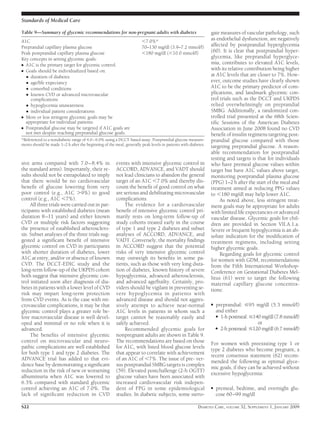
Recommended glycemic goals for
nonpregnant adults are shown in Table 9.
The recommendations are based on those
for A1C, with listed blood glucose levels
that appear to correlate with achievement
of an A1C of Ͻ7%. The issue of pre- ver-
sus postprandial SMBG targets is complex
(59). Elevated postchallenge (2-h OGTT)
glucose values have been associated with
increased cardiovascular risk indepen-
dent of FPG in some epidemiological
studies. In diabetic subjects, some surro-
gate measures of vascular pathology, such
as endothelial dysfunction, are negatively
affected by postprandial hyperglycemia
(60). It is clear that postprandial hyper-
glycemia, like preprandial hyperglyce-
mia, contributes to elevated A1C levels,
with its relative contribution being higher
at A1C levels that are closer to 7%. How-
ever, outcome studies have clearly shown
A1C to be the primary predictor of com-
plications, and landmark glycemic con-
trol trials such as the DCCT and UKPDS
relied overwhelmingly on preprandial
SMBG. Additionally, a randomized con-
trolled trial presented at the 68th Scien-
tific Sessions of the American Diabetes
Association in June 2008 found no CVD
benefit of insulin regimens targeting post-
prandial glucose compared with those
targeting preprandial glucose. A reason-
able recommendation for postprandial
testing and targets is that for individuals
who have premeal glucose values within
target but have A1C values above target,
monitoring postprandial plasma glucose
(PPG) 1–2 h after the start of the meal and
treatment aimed at reducing PPG values
to Ͻ180 mg/dl may help lower A1C.
As noted above, less stringent treat-
ment goals may be appropriate for adults
with limited life expectancies or advanced
vascular disease. Glycemic goals for chil-
dren are provided in Section VII.A.1.a.
Severe or frequent hypoglycemia is an ab-
solute indication for the modification of
treatment regimens, including setting
higher glycemic goals.
Regarding goals for glycemic control
for women with GDM, recommendations
from the Fifth International Workshop-
Conference on Gestational Diabetes Mel-
litus (61) were to target the following
maternal capillary glucose concentra-
tions:
● preprandial: Յ95 mg/dl (5.3 mmol/l)
and either
● 1-h postmeal: Յ140 mg/dl (7.8 mmol/l)
or
● 2-h postmeal: Յ120 mg/dl (6.7 mmol/l)
For women with preexisting type 1 or
type 2 diabetes who become pregnant, a
recent consensus statement (62) recom-
mended the following as optimal glyce-
mic goals, if they can be achieved without
excessive hypoglycemia:
● premeal, bedtime, and overnight glu-
cose 60–99 mg/dl
Table 9—Summary of glycemic recommendations for non-pregnant adults with diabetes
A1C Ͻ7.0%*
Preprandial capillary plasma glucose 70–130 mg/dl (3.9–7.2 mmol/l)
Peak postprandial capillary plasma glucose Ͻ180 mg/dl (Ͻ10.0 mmol/l)
Key concepts in setting glycemic goals:
● A1C is the primary target for glycemic control.
● Goals should be individualized based on:
● duration of diabetes
● age/life expectancy
● comorbid conditions
● known CVD or advanced microvascular
complications
● hypoglycemia unawareness
● individual patient considerations
● More or less stringent glycemic goals may be
appropriate for individual patients.
● Postprandial glucose may be targeted if A1C goals are
not met despite reaching preprandial glucose goals.
*Referenced to a nondiabetic range of 4.0–6.0% using a DCCT-based assay. Postprandial glucose measure-
ments should be made 1–2 h after the beginning of the meal, generally peak levels in patients with diabetes.
Standards of Medical Care
S22 DIABETES CARE, VOLUME 32, SUPPLEMENT 1, JANUARY 2009
● peak postprandial glucose 100–129
mg/dl
● A1C Ͻ6.0%
3. Approach to treatment
a. Therapy for type 1 diabetes. The
DCCT clearly showed that intensive insu-
lin therapy (three or more injections per
day of insulin or continuous subcutane-
ous insulin infusion (CSII, or insulin
pump therapy) was a key part of im-
proved glycemia and better outcomes
(45). At the time of the study, therapy was
carried out with short- and intermediate-
acting human insulins. Despite better mi-
crovascular outcomes, intensive insulin
therapy was associated with a marked in-
crease in severe hypoglycemia (62 epi-
sodes per 100 patient-years of therapy).
Since the time of the DCCT, a number of
rapid-acting and long-acting insulin ana-
logs have been developed. These analogs
were designed to be more “physiological”
in their pharmacokinetics and pharmaco-
dynamics and are associated with less hy-
poglycemia with equal A1C lowering in
type 1 diabetes (63,64).
Therefore, recommended therapy for
type 1 diabetes consists of the following
components: 1) use of multiple dose in-
sulin injections (3–4 injections per day of
basal and prandial insulin) or CSII ther-
apy; 2) matching of prandial insulin to
carbohydrate intake, premeal blood glu-
cose, and anticipated activity; and 3) for
many patients (especially if hypoglycemia
is a problem), use of insulin analogs.
There are excellent reviews available that
guide the initiation and management of
insulin therapy to achieve desired glyce-
mic goals (3,63,65).
b. Therapy for type 2 diabetes. The ADA
and the European Association for the
Study of Diabetes published a consensus
statement on the approach to manage-
ment of hyperglycemia in individuals
with type 2 diabetes (66) and recently
published an update (67). Highlights of
this approach are: intervention at the time
of diagnosis with metformin in combina-
tion with lifestyle changes (MNT and
exercise) and continuing timely augmen-
tation of therapy with additional agents
(including early initiation of insulin ther-
apy) as a means of achieving and main-
taining recommended levels of glycemic
control (i.e., A1C Ͻ7% for most patients).
The overall objective is to achieve and
maintain glycemic control and to change
interventions when therapeutic goals are
not being met.
The algorithm took into account the
evidence for A1C-lowering of the individ-
ual interventions, their additive effects,
and their expense. The precise drugs used
and their exact sequence may not be as
important as achieving and maintaining
glycemic targets safely. Medications not
included in the consensus algorithm, ow-
ing to less glucose-lowering effectiveness,
limited clinical data, and/or relative ex-
pense, still may be appropriate choices in
individual patients to achieve glycemic
goals. Initiation of insulin at time of diagno-
sis is recommended for individuals present-
ing with weight loss or other severe
hyperglycemic symptoms or signs. For a list
of currently approved diabetes medica-
tions, see http://ndep.nih.gov/diabetes/
pubs/Drug_tables_supplement.pdf.
D. MNT
General recommendations
● Individuals who have pre-diabetes or
diabetes should receive individualized
MNT as needed to achieve treatment
goals, preferably provided by a regis-
tered dietitian familiar with the compo-
nents of diabetes MNT. (B)
● MNT should be covered by insurance
and other payors. (E)
Energy balance, overweight, and
obesity
● In overweight and obese insulin-
resistant individuals, modest weight
loss has been shown to reduce insulin
resistance. Thus, weight loss is recom-
mended for all overweight or obese in-
dividuals who have or are at risk for
diabetes. (A)
● For weight loss, either low-carbohy-
drate or low-fat calorie restricted diets
may be effective in the short-term (up
to 1 year). (A)
● For patients on low-carbohydrate diets,
monitor lipid profiles, renal function,
and protein intake (in those with ne-
phropathy) and adjust hypoglycemic
therapy as needed. (E)
● Physical activity and behavior modifica-
tion are important components of weight
loss programs and are most helpful in
maintenance of weight loss. (B)
Primary prevention of diabetes
● Among individuals at high risk for de-
veloping type 2 diabetes, structured
programs that emphasize lifestyle
changes that include moderate weight
loss (7% body weight) and regular
physical activity (150 min/week), with
dietary strategies including reduced
calories and reduced intake of dietary
fat, can reduce the risk for developing
diabetes and are therefore recom-
mended. (A)
● Individualsathighriskfortype2diabetes
should be encouraged to achieve the U.S.
Department of Agriculture recommenda-
tion for dietary fiber (14 g fiber/1,000
kcal) and foods containing whole grains
(one-half of grain intake). (B)
Dietary fat intake in diabetes
management
● Saturated fat intake should be Ͻ7% of
total calories. (A)
● Intakeoftransfatshouldbeminimized.(B)
Carbohydrate intake in diabetes
management
● Monitoring carbohydrate, whether by
carbohydrate counting, exchanges, or
experience-based estimation, remains a
key strategy in achieving glycemic con-
trol. (A)
● For individuals with diabetes, the use of
the glycemic index and glycemic load
may provide a modest additional bene-
fit for glycemic control over that ob-
served when total carbohydrate is
considered alone. (B)
Other nutrition recommendations
● Sugar alcohols and nonnutritive sweet-
eners are safe when consumed within
the acceptable daily intake levels estab-
lished by the Food and Drug Adminis-
tration (FDA). (A)
● If adults with diabetes choose to use alco-
hol, daily intake should be limited to a
moderate amount (one drink per day or
less for adult women and two drinks per
day or less for adult men). (E)
● Routine supplementation with antioxi-
dants, such as vitamins E and C and
carotene, is not advised because of lack
of evidence of efficacy and concern re-
lated to long-term safety. (A)
● Benefit from chromium supplementa-
tion in people with diabetes or obesity
has not been conclusively demon-
strated and, therefore, cannot be rec-
ommended. (E)
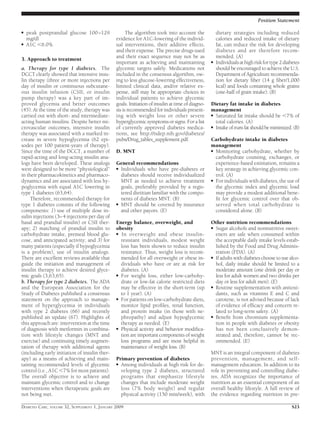
MNT is an integral component of diabetes
prevention, management, and self-
management education. In addition to its
role in preventing and controlling diabe-
tes, ADA recognizes the importance of
nutrition as an essential component of an
overall healthy lifestyle. A full review of
the evidence regarding nutrition in pre-
Position Statement
DIABETES CARE, VOLUME 32, SUPPLEMENT 1, JANUARY 2009 S23
venting and controlling diabetes and its
complications and additional nutrition-
related recommendations can be found in
the ADA position statement “Nutrition
Recommendations and Interventions for
Diabetes,” published in 2007 and up-
dated for 2008 (68). Achieving nutrition-
related goals requires a coordinated team
effort that includes the active involvement
of the person with pre-diabetes or diabe-
tes. Because of the complexity of nutrition
issues, it is recommended that a registered
dietitian who is knowledgeable and
skilled in implementing nutrition therapy
into diabetes management and education
be the team member who provides MNT.
Clinical trials/outcome studies of
MNT have reported decreases in A1C at
3–6 months ranging from 0.25 to 2.9%
with higher reductions seen in type 2
diabetes of shorter duration. Multiple
studies have demonstrated sustained im-
provements in A1C at 12 months and
longer when a registered dietician pro-
vided follow-up visits ranging from
monthly to three sessions per year (69–
76). Meta-analyses of studies in nondia-
betic, free-living subjects report that MNT
reduces LDL cholesterol by 15–25 mg/dl
(77) or can lower LDL cholesterol by up
to 16% (78), while clinical trials support a
role for lifestyle modification in treating
hypertension (78,79).
Because of the effects of obesity on
insulin resistance, weight loss is an im-
portant therapeutic objective for over-
weight or obese individuals with pre-
diabetes or diabetes (80). Short-term
studies have demonstrated that moderate
weight loss (5% of body weight) in sub-
jects with type 2 diabetes is associated
with decreased insulin resistance, im-
proved measures of glycemia and lipemia,
and reduced blood pressure (81); longer-
term studies (52 weeks) showed mixed
effects on A1C in adults with type 2 dia-
betes (82–85), and results were con-
founded by pharmacologic weight loss
therapy. A systematic review of 80 weight
loss studies of Ն1 year duration demon-
strated that moderate weight loss
achieved through diet alone, diet and ex-
ercise, and meal replacements can be
achieved and maintained over the long
term (4.8–8% weight loss at 12 months)
(86). The multifactorial intensive lifestyle
intervention employed in the DPP, which
included reduced intake of fat and calo-
ries, led to weight loss averaging 7% at 6
months and maintenance of 5% weight
loss at 3 years, associated with a 58% re-
duction in incidence of type 2 diabetes
(10). Look AHEAD (Action for Health in
Diabetes) is a large clinical trial designed
to determine whether long-term weight
loss will improve glycemia and prevent
cardiovascular events in subjects with
type 2 diabetes. One-year results of the
intensive lifestyle intervention in this trial
show an average of 8.6% weight loss, sig-
nificant reduction of A1C, and reduction
in several CVD risk factors (87). When
completed, the Look AHEAD trial should
provide insight into the effects of long-
term weight loss on important clinical
outcomes.
The optimal macronutrient distribu-
tion of weight loss diets has not been es-
tablished. Although low-fat diets have
traditionally been promoted for weight
loss, several randomized controlled trials
found that subjects on low-carbohydrate
diets (Ͻ130 g/day of carbohydrate) lost
more weight at 6 months than subjects on
low-fat diets (88,89); however, at 1 year,
the difference in weight loss between the
low-carbohydrate and low-fat diets was
not significant, and weight loss was mod-
est with both diets. Another study of over-
weight women randomized to one of four
diets showed significantly more weight
loss at 12 months with the Atkins low-
carbohydrate diet than with higher-
carbohydrate diets (90). Changes in
serum triglyceride and HDL cholesterol
were more favorable with the low-
carbohydrate diets. In one study, those
subjects with type 2 diabetes demon-
strated a greater decrease in A1C with a
low-carbohydrate diet than with a low-fat
diet (89). A recent meta-analysis showed
that at 6 months, low-carbohydrate diets
were associated with greater improve-
ments in triglyceride and HDL cholesterol
concentrations than low-fat diets; how-
ever, LDL cholesterol was significantly
higher on the low-carbohydrate diets
(91). In a 2-year dietary intervention
study, Mediterranean and low-carbohy-
drate diets were found to be effective and
safe alternatives to a low-fat diet for
weight reduction in moderately obese
participants (85).
The recommended dietary allowance
for digestible carbohydrate is 130 g/day
and is based on providing adequate glu-
cose as the required fuel for the central
nervous system without reliance on glu-
cose production from ingested protein or
fat. Although brain fuel needs can be met
on lower carbohydrate diets, long-term
metabolic effects of very-low-carbohy-
drate diets are unclear, and such diets
eliminate many foods that are important
sources of energy, fiber, vitamins, and
minerals that are important in dietary pal-
atability (92).
Although numerous studies have at-
tempted to identify the optimal mix of
macronutrients for meal plans of people
with diabetes, it is unlikely that one such
combination of macronutrients exists.
The best mix of carbohydrate, protein,
and fat appears to vary depending on
individual circumstances. For those indi-
viduals seeking guidance as to macronu-
trient distribution in healthy adults, the
Dietary Reference Intake (DRI) system
may be helpful (92). It must be clearly
recognized that regardless of the macro-
nutrient mix, total caloric intake must be
appropriate for the weight management
goal. Further, individualization of the ma-
cronutrient composition will depend on
the metabolic status of the patient (e.g.,
lipid profile, renal function) and/or food
preferences. Individuals who choose to
consume plant-based diets that are well
planned and nutritionally adequate (i.e.,
vegetarian) may continue, as this can be
done without being deleterious to meta-
bolic control (93,94).
The primary goal with respect to di-
etary fat in individuals with diabetes is to
limit saturated fatty acids, trans fatty ac-
ids, and cholesterol intake so as to reduce
risk for CVD. Saturated and trans fatty ac-
ids are the principal dietary determinants
of plasma LDL cholesterol. There is a lack
of evidence on the effects of specific fatty
acids on people with diabetes, so the rec-
ommended goals are consistent with
those for individuals with CVD (78,95).
The FDA has approved five nonnutri-
tive sweeteners for use in the U.S.: acesul-
fame potassium, aspartame, neotame,
saccharin, and sucralose. Before being al-
lowed on the market, all underwent rig-
orous scrutiny and were shown to be safe
when consumed by the public, including
people with diabetes and women during
pregnancy. Reduced calorie sweeteners
approved by the FDA include sugar alco-
hols (polyols) such as erythritol, isomalt,
lactitol, maltitol, mannitol, sorbitol, xyli-
tol, tagatose, and hydrogenated starch hy-
drolysates. The use of sugar alcohols
appears to be safe; however, they may
cause diarrhea, especially in children.
Reimbursement for MNT
MNT, when delivered by a registered di-
etitian according to nutrition practice
guidelines, is reimbursed as part of the
Medicare program as overseen by the
Centers for Medicare and Medicaid Ser-
Standards of Medical Care
S24 DIABETES CARE, VOLUME 32, SUPPLEMENT 1, JANUARY 2009
vices (CMS) (www.cms.hhs.gov/
medicalnutritiontherapy)
E. Bariatric surgery
Recommendations
● Bariatric surgery should be considered
for adults with BMI Ն35 kg/m2
and
type 2 diabetes, especially if the diabe-
tes is difficult to control with lifestyle
and pharmacologic therapy. (B)
● Patients with type 2 diabetes who have
undergone bariatric surgery need life-
long lifestyle support and medical
monitoring. (E)
● Although small trials have shown glyce-
micbenefitofbariatricsurgeryinpatients
with type 2 diabetes and BMI of 30–35
kg/m2
, there is currently insufficient evi-
dencetogenerallyrecommendsurgeryin
patientswithBMIϽ35kg/m2
outsideofa
research protocol. (E)
● The long-term benefits, cost-
effectiveness, and risks of bariatric sur-
gery in individuals with type 2 diabetes
should be studied in well-designed ran-
domized controlled trials with optimal
medical and lifestyle therapy as the
comparator. (E)
Gastric reduction surgery, either gastric
banding or procedures that involve by-
passing or transposing sections of the
small intestine, when part of a compre-
hensive team approach, can be an effec-
tive weight loss treatment for severe
obesity, and national guidelines support
its consideration for people with type 2
diabetes who have BMI at or exceeding 35
kg/m2
. Bariatric surgery has been shown
to lead to near or complete normalization
of glycemia in ϳ55–95% of patients with
type 2 diabetes, depending on the surgical
procedure. A meta-analysis of studies of
bariatric surgery reported that 78% of
individuals with type 2 diabetes had com-
plete “resolution” of diabetes (normaliza-
tion of blood glucose levels in the absence
of medications), and that the resolution
rates were sustained in studies that had
follow-up exceeding 2 years (96). Resolu-
tion rates are lowest with procedures that
only constrict the stomach and higher
with those that bypass portions of the
small intestine. Additionally, there is in-
creasing evidence that intestinal bypass
procedures may have glycemic effects that
are independent of, and additive to, their
effects on weight.
A recent randomized controlled trial
compared adjustable gastric banding to
“best available” medical and lifestyle
therapy in subjects with type 2 diabetes
diagnosed less than 2 years before ran-
domization and BMI 30–40 kg/m2
(97).
In this trial, 73% of surgically treated pa-
tients achieved “remission” of their diabe-
tes, compared with 13% of those treated
medically. The latter group lost only 1.7%
of body weight, suggesting that their ther-
apy was not optimal. Overall, the trial had
60 subjects, and only 13 had a BMI under
35 kg/m2
, making it difficult to generalize
these results widely to diabetic patients
who are less severely obese or with longer
duration of diabetes.
Bariatric surgery is costly in the short
term and has some risks. Rates of morbid-
ity and mortality directly related to the
surgery have been reduced considerably
in recent years, with 30-day mortality
rates now 0.28%, similar to those of lapa-
roscopic cholecystectomy (98). Longer-
term concerns include vitamin and
mineral deficiencies, osteoporosis, and
rare but often severe hypoglycemia from
insulin hypersecretion. Cohort studies at-
tempting to match subjects suggest that
the procedure may reduce longer-term
mortality rates (99), and it is reasonable to
postulate that there may be recouping of
costs over the long run. However, studies
of the mechanisms of glycemic improve-
ment, long-term benefits and risks, and
cost-effectiveness of bariatric surgery in
individuals with type 2 diabetes will re-
quire well-designed randomized clinical
trials, with optimal medical and lifestyle
therapy of diabetes and cardiovascular
risk factors as the comparitor.
F. DSME
Recommendations
● People with diabetes should receive
DSME according to national standards
when their diabetes is diagnosed and as
needed thereafter. (B)
● Self-management behavior change is
the key outcome of DSME and should
be measured and monitored as part of
care. (E)
● DSME should address psychosocial is-
sues, since emotional well-being is
strongly associated with positive diabe-
tes outcomes. (C)
● DSME should be reimbursed by third-
party payors. (E)
DSME is an essential element of diabetes
care (100–106), and National Standards
for DSME (107) are based on evidence for
its benefits. Education helps people with
diabetes initiate effective self-care when
they are first diagnosed. Ongoing DSME
also helps people with diabetes maintain
effective self-management as their diabe-
tes presents new challenges and treatment
advances become available. DSME helps
patients optimize metabolic control, pre-
vent and manage complications, and
maximize quality of life in a cost-effective
manner (108).
Since the 1990s, there has been a shift
from a didactic approach, with DSME fo-
cusing on providing information, to a
skill-based approach that focuses on
helping those with diabetes make in-
formed self-management choices. Care of
diabetes has shifted to an approach that is
more patient centered and that places the
person with diabetes, and joint decision-
making with heath care professionals, at
the center of the care model. Patient-
centered care is respectful of and respon-
sive to individual patient preferences,
needs, and values and ensures that patient
values guide all decision making (109).
Evidence for the benefits of DSME
Several studies have found that DSME is
associated with improved diabetes
knowledge and improved self-care behav-
ior (101), improved clinical outcomes
such as lower A1C (102,103,105,106,
110), lower self-reported weight (101),
and improved quality of life (104). Better
outcomes were reported for DSME inter-
ventions that were longer and included
follow-up support (101), that were tai-
lored to individual needs and preferences
(100), and that addressed psychosocial is-
sues (100,101,105). Both individual and
group approaches have been found effec-
tive ((111,112). There is increasing evi-
dence for the role of a community health
worker in delivering diabetes education
in addition to the core team (113).
National standards for DSME
ADA-recognized DSME programs have
staff that must be certified diabetes edu-
cators or have recent experience in diabe-
tes education and management. The
curriculum of ADA-recognized DSME
programs must cover all nine areas of di-
abetes management, with the assessed
needs of the individual determining
which areas are addressed. The ADA Ed-
ucation Recognition Program (ERP) is a
mechanism to ensure diabetes education
programs meet the national standards and
provide quality diabetes care.
Position Statement
DIABETES CARE, VOLUME 32, SUPPLEMENT 1, JANUARY 2009 S25
Reimbursement for DSME
DSME, when provided by a program that
meets ADA ERP standards, is reimbursed
as part of the Medicare program as over-
seen by the Centers for Medicare and
Medicaid Services (CMS) (www.cms.hhs.
gov/DiabetesSelfManagement).
G. Physical activity
Recommendations
● People with diabetes should be advised
to perform at least 150 min/week of
moderate-intensity aerobic physical ac-
tivity (50 –70% of maximum heart
rate). (A)
● In the absence of contraindications,
people with type 2 diabetes should be
encouraged to perform resistance train-
ing three times per week. (A)
ADA technical reviews on exercise in pa-
tients with diabetes have summarized the
value of exercise in the diabetes manage-
ment plan (114,115). Regular exercise
has been shown to improve blood glucose
control, reduce cardiovascular risk fac-
tors, contribute to weight loss, and im-
prove well being. Furthermore, regular
exercise may prevent type 2 diabetes in
high-risk individuals (10–12). Struc-
tured exercise interventions of at least 8
weeks’ duration have been shown to
lower A1C by an average of 0.66% in peo-
ple with type 2 diabetes, even with no
significant change in BMI (116). Higher
levels of exercise intensity are associated
with greater improvements in A1C and in
fitness (117).
Frequency and type of exercise
The U.S. Surgeon General’s report (118)
recommended that most adults accumu-
late at least 30 min of moderate-intensity
activity on most, ideally all, days of the
week. The studies included in the meta-
analysis of effects of exercise interventions
on glycemic control (116) had a mean
number of sessions per week of 3.4, with
a mean of 49 min per session. The DPP
lifestyle intervention, which included 150
min per week of moderate intensity exer-
cise, had a beneficial effect on glycemia in
those with pre-diabetes. Therefore, it
seems reasonable to recommend ϳ150
min of exercise per week for people with
diabetes.
Resistance exercise improves insulin
sensitivity to about the same extent as aer-
obic exercise (119). Clinical trials have
provided strong evidence for the A1C-
lowering value of resistance training in
older adults with type 2 diabetes
(120,121) and for an additive benefit of
combined aerobic and resistance exercise
in adults with type 2 diabetes (122).
Evaluation of the diabetic patient
before recommending an exercise
program
Prior guidelines suggested that before rec-
ommending a program of physical activ-
ity, the provider should assess patients
with multiple cardiovascular risk factors
for coronary artery disease (CAD). As dis-
cussed more fully in Section VI.A.5, the
area of screening asymptomatic diabetic
patients for CAD remains unclear, and a
recent ADA consensus statement on this
issue concluded that routine screening is
not recommended (123). Providers
should use clinical judgment in this area.
Certainly, high-risk patients should be
encouraged to start with short periods of
low-intensity exercise and increase the in-
tensity and duration slowly.
Providers should assess patients for
conditions that might contraindicate cer-
tain types of exercise or predispose to in-
jury, such as uncontrolled hypertension,
severe autonomic neuropathy, severe pe-
ripheral neuropathy or history of foot le-
sions, and advanced retinopathy. The
patient’s age and previous physical activ-
ity level should be considered.
Exercise in the presence of
nonoptimal glycemic control
Hyperglycemia. When people with type
1 diabetes are deprived of insulin for
12–48 h and are ketotic, exercise can
worsen hyperglycemia and ketosis (124);
therefore, vigorous activity should be
avoided in the presence of ketosis. How-
ever, it is not necessary to postpone exer-
cise based simply on hyperglycemia,
provided the patient feels well and urine
and/or blood ketones are negative.
Hypoglycemia. In individuals taking in-
sulin and/or insulin secretagogues, phys-
ical activity can cause hypoglycemia if
medication dose or carbohydrate con-
sumption is not altered. For individuals
on these therapies, added carbohydrate
should be ingested if pre-exercise glucose
levels are Ͻ100 mg/dl (5.6 mmol/l)
(125,126). Hypoglycemia is rare in dia-
betic individuals who are not treated with
insulin or insulin secretagogues, and no
preventive measures for hypoglycemia
are usually advised in these cases.
Exercise in the presence of specific
long-term complications of diabetes
Retinopathy. In the presence of prolifer-
ative diabetic retinopathy (PDR) or severe
nonproliferative diabetic retinopathy
(NPDR), vigorous aerobic or resistance
exercise may be contraindicated because
of the risk of triggering vitreous hemor-
rhage or retinal detachment (127).
Peripheral neuropathy. Decreased pain
sensation in the extremities results in in-
creased risk of skin breakdown and infec-
tion and of Charcot joint destruction.
Therefore, in the presence of severe pe-
ripheral neuropathy, it may be best to en-
courage non–weight-bearing activities
such as swimming, bicycling, or arm ex-
ercises (128,129).
Autonomic neuropathy. Autonomic
neuropathy can increase the risk of exer-
cise-induced injury or adverse events
through decreased cardiac responsiveness
to exercise, postural hypotension, impaired
thermoregulation, impaired night vision
due to impaired papillary reaction, and un-
predictable carbohydrate delivery from gas-
troparesis predisposing to hypoglycemia
(128). Autonomic neuropathy is also
strongly associated with CVD in people
with diabetes (130,131). People with dia-
betic autonomic neuropathy should un-
dergo cardiac investigation before
beginning physical activity more intense
than that to which they are accustomed.
Albuminuria and nephropathy. Physical
activity can acutely increase urinary pro-
tein excretion. However, there is no evi-
dence that vigorous exercise increases the
rate of progression of diabetic kidney dis-
ease and likely no need for any specific
exercise restrictions for people with dia-
betic kidney disease (132).
H. Psychosocial assessment and care
Recommendations
● Assessment of psychological and social
situation should be included as an on-
going part of the medical management
of diabetes. (E)
● Psychosocial screening and follow-up
should include, but is not limited to,
attitudes about the illness, expectations
for medical management and out-
comes, affect/mood, general and diabe-
tes-related quality of life, resources
(financial, social, and emotional), and
psychiatric history. (E)
● Screen for psychosocial problems such
as depression, anxiety, eating disor-
ders, and cognitive impairment when
Standards of Medical Care
S26 DIABETES CARE, VOLUME 32, SUPPLEMENT 1, JANUARY 2009
adherence to the medical regimen is
poor. (E)
Psychological and social problems can im-
pair the individual’s (133–138) or family’s
(139) ability to carry out diabetes care tasks
and therefore compromise health status.
There are opportunities for the clinician to
assess psychosocial status in a timely and
efficient manner so that referral for appro-
priate services can be accomplished.
Key opportunities for screening of
psychosocial status occur at diagnosis,
during regularly scheduled management
visits, during hospitalizations, at discov-
ery of complications, or when problems
with glucose control, quality of life, or ad-
herence are identified (140). Patients are
likely to exhibit psychological vulnerabil-
ity at diagnosis and when their medical
status changes, i.e., the end of the honey-
moon period, when the need for intensi-
fied treatment is evident, and when
complications are discovered (135,137).
Issues known to impact self-
management and health outcomes in-
clude but are not limited to attitudes
about the illness, expectations for medical
management and outcomes, affect/mood,
general and diabetes-related quality of
life, resources (financial, social, and emo-
tional) (136), and psychiatric history
(137,140,141). Screening tools are avail-
able for a number of these areas (142).
Indications for referral to a mental health
specialist familiar with diabetes manage-
ment may include gross noncompliance
with medical regimen (by self or others)
(141), depression with the possibility of
self-harm (134,143), debilitating anxiety
(alone or with depression), indications of
an eating disorder (144), or cognitive
functioning that significantly impairs
judgment (143). It is preferable to incor-
porate psychological assessment and
treatment into routine care rather than
waiting for identification of a specific
problem or deterioration in psychological
status (142). Although the clinician may
not feel qualified to treat psychological
problems, utilizing the patient-provider
relationship as a foundation for further
treatment can increase the likelihood that
the patient will accept referral for other
services. It is important to establish that
emotional well-being is part of diabetes
management (140).
I. When treatment goals are not met
For a variety of reasons, some people with
diabetes and their health care providers
do not achieve the desired goals of treat-
ment (Table 9). Re-thinking the treatment
regimen may require assessment of barri-
ers to adherence including income, edu-
cational attainment, and competing
demands, including those related to fam-
ily responsibilities and family dynamics.
Other strategies may include culturally
appropriate and enhanced DSME, co-
management with a diabetes team, refer-
ral to a medical social worker for
assistance with insurance coverage or
change in pharmacological therapy. Initi-
ation of or increase in SMBG, utilization
of continuous glucose monitoring, fre-
quent contact with the patient, or referral
to an endocrinologist may be useful.
J. Intercurrent illness
The stress of illness, trauma, and/or sur-
gery frequently aggravates glycemic con-
trol and may precipitate diabetic
ketoacidosis (DKA) or nonketotic hyper-
osmolar state, life-threatening conditions
that require immediate medical care to
prevent complications and death (145).
Any condition leading to deterioration in
glycemic control necessitates more fre-
quent monitoring of blood glucose and
(in ketosis-prone patients) urine or blood
ketones. Marked hyperglycemia requires
temporary adjustment of the treatment
program and, if accompanied by ketosis,
vomiting, or alteration in level of con-
sciousness, immediate interaction with
the diabetes care team. The patient treated
with noninsulin therapies or MNT alone
may temporarily require insulin. Ade-
quate fluid and caloric intake must be as-
sured. Infection or dehydration are more
likely to necessitate hospitalization of the
person with diabetes than the person
without diabetes.
The hospitalized patient should be
treated by a physician with expertise in the
management of diabetes. For further infor-
mation on management of patients with hy-
perglycemia in the hospital, see Section
VIII.A. For further information on manage-
ment of DKA or nonketotic hyperosmolar
state,refertotheADApositionstatementon
hyperglycemic crises (145).
K. Hypoglycemia
Recommendations
● Glucose (15–20 g) is the preferred
treatment for the conscious individual
with hypoglycemia, although any form
of carbohydrate that contains glucose
may be used. If SMBG 15 min after
treatment shows continued hypoglyce-
mia, the treatment should be repeated.
Once SMBG glucose returns to normal,
the individual should consume a meal
or snack to prevent recurrence of hypo-
glycemia. (E)
● Glucagon should be prescribed for all
individuals at significant risk of severe
hypoglycemia, and caregivers or family
members of these individuals should be
instructed in its administration. Gluca-
gon administration is not limited to
health care professionals. (E)
● Individuals with hypoglycemia un-
awareness or one or more episodes of
severe hypoglycemia should be advised
to raise their glycemic targets to strictly
avoid further hypoglycemia for at least
several weeks to partially reverse hypo-
glycemia unawareness and reduce risk
of future episodes. (B)
Hypoglycemia is the leading limiting fac-
tor in the glycemic management of type 1
and insulin-treated type 2 diabetes (146).
Treatment of hypoglycemia (plasma glu-
cose Ͻ70 mg/dl) requires ingestion of
glucose- or carbohydrate-containing
foods. The acute glycemic response cor-
relates better with the glucose content
than with the carbohydrate content of the
food. Although pure glucose is the pre-
ferred treatment, any form of carbohy-
drate that contains glucose will raise
blood glucose. Added fat may retard and
then prolong the acute glycemic response
(147). Ongoing activity of insulin or in-
sulin secretagogues may lead to recur-
rence of hypoglycemia unless further
food is ingested after recovery.
Severe hypoglycemia (where the indi-
vidual requires the assistance of another
person and cannot be treated with oral
carbohydrate due to confusion or uncon-
sciousness) should be treated using emer-
gency glucagon kits, which require a
prescription. Those in close contact with,
or having custodial care of, people with
hypoglycemia-prone diabetes (family
members, roommates, school personnel,
child care providers, correctional institu-
tion staff, or coworkers) should be in-
structed in use of such kits. An individual
does not need to be a health care profes-
sional to safely administer glucagon. Care
should be taken to ensure that unexpired
glucagon kits are available.
Prevention of hypoglycemia is a crit-
ical component of diabetes management.
Teaching people with diabetes to balance
insulin use, carbohydrate intake, and ex-
ercise is a necessary but not always suffi-
cient strategy. In type 1 diabetes and
severely insulin-deficient type 2 diabetes,
Position Statement
DIABETES CARE, VOLUME 32, SUPPLEMENT 1, JANUARY 2009 S27
the syndrome of hypoglycemia unaware-
ness, or hypoglycemia-associated auto-
nomic failure, can severely compromise
stringent diabetes control and quality of
life. The deficient counter-regulatory hor-
mone release and autonomic responses in
this syndrome are both risk factors for,
and caused by, hypoglycemia. A corollary
to this “vicious cycle” is that several weeks
of avoidance of hypoglycemia has been
demonstrated to improve counter-
regulation and awareness to some extent
in many patients (146,148,149). Hence,
patients with one or more episodes of se-
vere hypoglycemia may benefit from at
least short-term relaxation of glycemic
targets.
L. Immunization
Recommendations
● Annually provide an influenza vaccine to
all diabetic patients Ն6 months of age.
(C)
● Administer pneumococcal polysaccha-
ride vaccine to all diabetic patients Ն2
years of age. A one-time revaccination is
recommended for individuals Ͼ64
years of age previously immunized
when they were Ͻ65 years of age if the
vaccine was administered Ͼ5 years
ago. Other indications for repeat vacci-
nation include nephrotic syndrome,
chronic renal disease, and other immu-
nocompromised states, such as after
transplantation. (C)
Influenza and pneumonia are common,
preventable infectious diseases associated
with high mortality and morbidity in the
elderly and in people with chronic dis-
eases. Though there are limited studies
reporting the morbidity and mortality of
influenza and pneumococcal pneumonia
specifically in people with diabetes, ob-
servational studies of patients with a vari-
ety of chronic illnesses, including
diabetes, show that these conditions are
associated with an increase in hospitaliza-
tions for influenza and its complications.
People with diabetes may be at increased
risk of the bacteremic form of pneumo-
coccal infection and have been reported
to have a high risk of nosocomial bactere-
mia, which has a mortality rate as high as
50% (150).
Safe and effective vaccines are avail-
able that can greatly reduce the risk of
serious complications from these diseases
(151,152). In a case-control series, influ-
enza vaccine was shown to reduce diabe-
tes-related hospital admission by as much
as 79% during flu epidemics (151). There
is sufficient evidence to support that peo-
ple with diabetes have appropriate sero-
logic and clinical responses to these
vaccinations. The Centers for Disease
Control and Prevention’s Advisory Com-
mittee on Immunization Practices recom-
mends influenza and pneumococcal
vaccines for all individuals with diabetes
(http://www.cdc.gov/vaccines/recs/). For
a complete discussion on the prevention
of influenza and pneumococcal disease in
people with diabetes, consult the techni-
cal review and position statement on this
subject (150,153).
VI. PREVENTION AND
MANAGEMENT OF
DIABETES COMPLICATIONS
A. CVD
CVD is the major cause of morbidity and
mortality for individuals with diabetes
and the largest contributor to the direct
and indirect costs of diabetes. The com-
mon conditions coexisting with type 2
diabetes (e.g., hypertension and dyslipi-
demia) are clear risk factors for CVD, and
diabetes itself confers independent risk.
Numerous studies have shown the effi-
cacy of controlling individual cardiovas-
cular risk factors in preventing or slowing
CVD in people with diabetes. Large ben-
efits are seen when multiple risk factors
are addressed globally (154). Evidence is
summarized in the following sections and
reviewed in detail in the ADA technical
reviews on hypertension (155), dyslipide-
mia (156), aspirin therapy (157), and
smoking cessation (158) and in the Amer-
ican Heart Association (AHA)/ADA scien-
tific statement on prevention of CVD in
people with diabetes (159).
1. Hypertension/blood pressure
control
Recommendations
Screening and diagnosis
● Blood pressure should be measured at
every routine diabetes visit. Patients
found to have a systolic blood pres-
sure of Ն130 mmHg or a diastolic
blood pressure of Ն80 mmHg should
have blood pressure confirmed on a
separate day. Repeat systolic blood
pressure of Ն130 mmHg or diastolic
blood pressure of Ն80 mmHg con-
firms a diagnosis of hypertension. (C)
Goals
● Patients with diabetes should be treated
to a systolic blood pressure Ͻ130
mmHg. (C)
● Patients with diabetes should be treated
to a diastolic blood pressure Ͻ80
mmHg. (B)
Treatment
● Patients with a systolic blood pressure
of 130–139 mmHg or a diastolic blood
pressure of 80–89 mmHg may be given
lifestyle therapy alone for a maximum
of 3 months and then, if targets are not
achieved, be treated with the addition
of pharmacological agents. (E)
● Patients with more severe hyperten-
sion (systolic blood pressure Ն140
mmHg or diastolic blood pressure
Ն90 mmHg) at diagnosis or fol-
low-up should receive pharmacologic
therapy in addition to lifestyle ther-
apy. (A)
● Pharmacologic therapy for patients
with diabetes and hypertension should
be with a regimen that includes either
an ACE inhibitor or an angiotensin re-
ceptor blocker (ARB). If one class is not
tolerated, the other should be substi-
tuted. If needed to achieve blood pres-
sure targets, a thiazide diuretic should
be added to those with an estimated
GFR (see below) Ն30 ml/min per 1.73
m2
and a loop diuretic for those with an
estimated GFR Ͻ30 ml/min per 1.73
m2
. (C)
● Multiple drug therapy (two or more
agents at maximal doses) is generally re-
quired to achieve blood pressure targets.
(B)
● If ACE inhibitors, ARBs, or diuretics are
used, kidney function and serum potas-
sium levels should be closely moni-
tored. (E)
● In pregnant patients with diabetes and
chronic hypertension, blood pressure
target goals of 110–129/65–79 mmHg
are suggested in the interest of long-
term maternal health and minimizing
impaired fetal growth. ACE inhibitors
and ARBs are contraindicated during
pregnancy. (E)
Hypertension is a common comorbidity
of diabetes, affecting the majority of pa-
tients, with prevalence depending on type
of diabetes, age, obesity, and ethnicity.
Hypertension is a major risk factor for
both CVD and microvascular complica-
tions. In type 1 diabetes, hypertension is
often the result of underlying nephropa-
Standards of Medical Care
S28 DIABETES CARE, VOLUME 32, SUPPLEMENT 1, JANUARY 2009
thy, while in type 2 it usually coexists
with other cardiometabolic risk factors.
Screening and diagnosis
Measurement of blood pressure in the of-
fice should be done by a trained individ-
ual and follow the guidelines established
for nondiabetic individuals: measure-
ment in the seated position, with feet on
the floor and arm supported at heart level,
after 5 min of rest. Cuff size should be
appropriate for the upper arm circumfer-
ence. Elevated values should be con-
firmed on a separate day. Because of the
clear synergistic risks of hypertension and
diabetes, the diagnostic cutoff for a diag-
nosis of hypertension is lower in people
with diabetes (blood pressure Ն130/80)
than in those without diabetes (blood
pressure Ն140/90 mmHg) (160).
Home blood pressure self-monitoring
and 24-h ambulatory blood pressure
monitoring may provide additional evi-
dence of “white coat” and masked hyper-
tension and other discrepancies between
office and “true” blood pressure, and
studies in nondiabetic populations show
that home measurements may better
correlate with CVD risk than office mea-
surements (161,162). However, the pre-
ponderance of the clear evidence of
benefits of treatment of hypertension in
people with diabetes is based on office
measurements.
Treatment goals
Randomized clinical trials have demon-
strated the benefit (reduction of CHD
events, stroke, and nephropathy) of low-
ering blood pressure to Ͻ140 mmHg sys-
tolic and Ͻ80 mmHg diastolic in
individuals with diabetes (160,163–165).
Epidemiologic analyses show that blood
pressure Ͼ115/75 mmHg is associated
with increased cardiovascular event rates
and mortality in individuals with diabetes
(160,166,167). Therefore, a target blood
pressure goal of Ͻ130/80 mmHg is rea-
sonable if it can be safely achieved. The
ongoing ACCORD trial is designed to de-
termine whether blood pressure lowering
to systolic blood pressure Ͻ120 mmHg
provides greater cardiovascular protec-
tion than a systolic blood pressure level of
Ͻ140 mmHg in patients with type 2 dia-
betes (www.accord.org).
Treatment strategies
Although there are no well-controlled
studies of diet and exercise in the treat-
ment of hypertension in individuals with
diabetes, studies in nondiabetic individu-
als have shown anti-hypertensive effects
similar to pharmacologic monotherapy of
reducing sodium intake and excess body
weight; increasing consumption of fruits,
vegetables, and low-fat dairy products;
avoiding excessive alcohol consumption;
and increasing activity levels (160,168).
These nonpharmacological strategies may
also positively affect glycemia and lipid
control. Their effects on cardiovascular
events have not been established. An ini-
tial trial of nonpharmacologic therapy
may be reasonable in diabetic individuals
with mild hypertension (systolic blood
pressure 130–139 mmHg or diastolic
blood pressure 80–89 mmHg). If the
blood pressure is Ն140 mmHg systolic
and/or Ն90 mmHg diastolic at the time of
diagnosis, pharmacologic therapy should
be initiated along with nonpharmacologic
therapy (160).
Lowering of blood pressure with reg-
imens based on a variety of antihyperten-
sive drugs, including ACE inhibitors,
ARBs, ␤-blockers, diuretics, and calcium
channel blockers, has been shown to be
effective in reducing cardiovascular
events. Several studies have suggested
that ACE inhibitors may be superior to
dihydropyridine calcium channel block-
ers in reducing cardiovascular events
(169–171). However, a variety of other
studies have shown no specific advantage
to ACE inhibitors as initial treatment of
hypertension in the general hypertensive
population, but rather an advantage on
cardiovascular outcomes of initial therapy
with low-dose thiazide diuretics (160,
172,173).
In people with diabetes, inhibitors of
the renin-angiotensin system (RAS) may
have unique advantages for initial or early
therapy of hypertension. In a nonhyper-
tension trial of high-risk individuals, in-
cluding a large subset with diabetes, an
ACE inhibitor reduced CVD outcomes
(174). In patients with congestive heart
failure (CHF), including diabetic sub-
groups, ARBs have been shown to reduce
major CVD outcomes (175–178), and in
type 2 patients with significant nephrop-
athy, ARBs were superior to calcium
channel blockers for reducing heart fail-
ure (179–181). Though evidence for dis-
tinct advantages of RAS inhibitors on
CVD outcomes in diabetes remains con-
flicting (163,182), the high CVD risks as-
sociated with diabetes, and the high
prevalence of undiagnosed CVD, may still
favor recommendations for their use as
first-line hypertension therapy in people
with diabetes (160). Recently, the blood
pressure arm of the ADVANCE trial dem-
onstrated that routine administration of a
fixed combination of the ACE inhibitor
perindopril and the diuretic indapamide
significantly reduced combined micro-
vascular and macrovascular outcomes, as
well as CVD and total mortality. The im-
proved outcomes could also have been
due to lower achieved blood pressure in
the perindopril-indapamide arm (183).
The compelling benefits of RAS inhibitors
in diabetic patients with albuminuria or
renal insufficiency provide additional ra-
tionale for use of these agents (see section
VI.B below).
An important caveat is that most pa-
tients with hypertension require multi-
drug therapy to reach treatment goals,
especially diabetic patients whose targets
are lower. Many patients will require
three or more drugs to reach target goals
(160). If blood pressure is refractory to
multiple agents, clinicians should con-
sider an evaluation for secondary forms of
hypertension.
During pregnancy in diabetic women
with chronic hypertension, target blood
pressure goals of systolic blood pressure
110 –129 mmHg and diastolic blood
pressure 65–79 mmHg are reasonable, as
they contribute to long-term maternal
health. Lower blood pressure levels may
be associated with impaired fetal growth.
During pregnancy, treatment with ACE
inhibitors and ARBs is contraindicated,
since they are likely to cause fetal damage.
Antihypertensive drugs known to be ef-
fective and safe in pregnancy include
methyldopa, labetalol, diltiazem,
clonidine, and prazosin. Chronic diuretic
use during pregnancy has been associated
with restricted maternal plasma volume,
which might reduce uteroplacental perfu-
sion (184).
2. Dyslipidemia/lipid management
Recommendations
Screening
● In most adult patients, measure fasting
lipid profile at least annually. In adults
with low-risk lipid values (LDL choles-
terol Ͻ100 mg/dl, HDL cholesterol
Ͼ50 mg/dl, and triglycerides Ͻ150
mg/dl), lipid assessments may be re-
peated every 2 years. (E)
Treatment recommendations and goals
● Lifestyle modification focusing on the
reduction of saturated fat, trans fat, and
cholesterol intake; weight loss (if indi-
cated); and increased physical activity
Position Statement
DIABETES CARE, VOLUME 32, SUPPLEMENT 1, JANUARY 2009 S29
should be recommended to improve
the lipid profile in patients with diabe-
tes. (A)
● Statin therapy should be added to life-
style therapy, regardless of baseline
lipid levels, for diabetic patients:
● with overt CVD (A)
● without CVD who are over the age of
40 and have one or more other CVD
risk factors. (A)
● For lower-risk patients than the above
(e.g., without overt CVD and under the
age of 40), statin therapy should be
considered in addition to lifestyle ther-
apy if LDL cholesterol remains above
100 mg/dl or in those with multiple
CVD risk factors. (E)
● In individuals without overt CVD, the
primary goal is an LDL cholesterol
Ͻ100 mg/dl (2.6 mmol/l). (A)
● In individuals with overt CVD, a lower
LDL cholesterol goal of Ͻ70 mg/dl (1.8
mmol/l), using a high dose of a statin, is
an option. (B)
● If drug-treated patients do not reach the
above targets on maximal tolerated sta-
tin therapy, a reduction in LDL choles-
terol of ϳ30–40% from baseline is an
alternative therapeutic goal. (A)
● Triglycerides levels Ͻ150 mg/dl (1.7
mmol/l) and HDL cholesterol Ͼ40
mg/dl (1.0 mmol/l) in men and Ͼ50
mg/dl (1.3 mmol/l) in women are desir-
able. However, LDL cholesterol–
targeted statin therapy remains the
preferred strategy. (C)
● If targets are not reached on maximally
tolerated doses of statins, combination
therapy using statins and other lipid-
lowering agents may be considered to
achieve lipid targets but has not been
evaluated in outcome studies for either
CVD outcomes or safety. (E)
● Statin therapy is contraindicated in
pregnancy. (E)
Evidence for benefits of lipid-
lowering therapy
Patients with type 2 diabetes have an in-
creased prevalence of lipid abnormalities,
contributing to their high risk of CVD.
For the past decade or more, multiple
clinical trials demonstrated significant ef-
fects of pharmacologic (primarily statin)
therapy on CVD outcomes in subjects
with CHD and for primary CVD preven-
tion (185). Subanalyses of diabetic sub-
groups of larger trials (186–190) and
trials specifically in subjects with diabetes
(191,192) showed significant primary
and secondary prevention of CVD
events Ϯ CHD deaths in diabetic popula-
tions. As shown in Table 10, and similar
to findings in nondiabetic subjects, re-
duction in “hard” CVD outcomes (CHD
death and nonfatal MI) can be more
clearly seen in diabetic subjects with high
baseline CVD risk (known CVD and/or
very high LDL cholesterol levels), but
overall the benefits of statin therapy in
people with diabetes at moderate or high
risk for CVD are convincing.
Low levels of HDL cholesterol, often
associated with elevated triglyceride lev-
els, are the most prevalent pattern of dys-
lipidemia in persons with type 2 diabetes.
However, the evidence base for drugs that
target these lipid fractions is significantly
less robust than that for statin therapy
(193). Nicotinic acid has been shown to
reduce CVD outcomes (194), although
the study was done in a nondiabetic co-
hort. Gemfibrozil has been shown to de-
crease rates of CVD events in subjects
without diabetes (195,196) and in the di-
abetic subgroup in one of the larger trials
(195). However, in a large trial specific to
diabetic patients, fenofibrate failed to re-
duce overall cardiovascular outcomes
(197).
Dyslipidemia treatment and target
lipid levels
For most patients with diabetes, the first
priority of dyslipidemia therapy (unless
severe hypertriglyceridemia is the imme-
diate issue) is to lower LDL cholesterol to
a target goal of Ͻ100 mg/dl (2.60 mmol/l)
(198). Lifestyle intervention, including
MNT, increased physical activity, weight
loss, and smoking cessation, may allow
Table 11—Summary of recommendations for glycemic, blood pressure, and lipid control for
adults with diabetes
A1C Ͻ7.0%*
Blood pressure Ͻ130/80 mmHg
Lipids
LDL cholesterol Ͻ100 mg/dl (Ͻ2.6 mmol/l)†
*Referenced to a nondiabetic range of 4.0–6.0% using a DCCT-based assay. †In individuals with overt CVD,
a lower LDL cholesterol goal of Ͻ70 mg/dl (1.8 mmol/l), using a high dose of a statin, is an option.
Table 10—Reduction in 10-year risk of major CVD end points (CHD death/non-fatal MI) in major statin trials, or substudies of major trials,
in diabetic subjects (n ‫؍‬ 16,032)
Study (ref.)
CVD
prevention Statin dose and comparator
Risk reduction
(%)
Relative risk
reduction
(%)
Absolute risk
reduction
(%)
LDL cholesterol
reduction
4S-DM (186) 2° Simvastatin 20–40 mg vs. placebo 85.7 to 43.2 50 42.5 186 to 119 mg/dl (36%)
ASPEN 2° (191) 2° Atorvastatin 10 mg vs. placebo 39.5 to 24.5 34 12.7 112 to 79 mg/dl (29%)
HPS-DM (187) 2° Simvastatin 40 mg vs. placebo 43.8 to 36.3 17 7.5 123 to 84 mg/dl (31%)
CARE-DM (188) 2° Pravastatin 40 mg vs. placebo 40.8 to 35.4 13 5.4 136 to 99 mg/dl (27%)
TNT-DM (189) 2° Atorvastatin 80 mg vs. 10 mg 26.3 to 21.6 18 4.7 99 to 77 mg/dl (22%)
HPS-DM (187) 1° Simvastatin 40 mg vs. placebo 17.5 to 11.5 34 6.0 124 to 86 mg/dl (31%)
CARDS (209) 1° Atorvastatin 10 mg vs. placebo 11.5 to 7.5 35 4 118 to 71 mg/dl (40%)
ASPEN (191) 1° Atorvastatin 10 mg vs. placebo 9.8 to 7.9 19 1.9 114 to 80 mg/dl (30%)
ASCOT-DM (190) 1° Atorvastatin 10 mg vs. placebo 11.1 to 10.2 8 0.9 125 to 82 mg/dl (34%)
Studies were of differing lengths (3.3–5.4 years) and used somewhat different outcomes, but all reported rates of CVD death and non-fatal MI. In this tabulation,
results of the statin on 10-year risk of major CVD end points (CHD death/non-fatal MI) are listed for comparison between studies. Correlation between 10-year CVD
risk of the control group and the absolute risk reduction with statin therapy is highly significant (P ϭ 0.0007). Analyses provided by Craig Williams, Pharm.D.,
Oregon Health & Science University, 2007.
Standards of Medical Care
S30 DIABETES CARE, VOLUME 32, SUPPLEMENT 1, JANUARY 2009
some patients to reach lipid goals. Nutri-
tion intervention should be tailored ac-
cording to each patient’s age, type of
diabetes, pharmacological treatment,
lipid levels, and other medical conditions
and should focus on the reduction of sat-
urated fat, cholesterol, and trans unsatur-
ated fat intake. Glycemic control can also
beneficially modify plasma lipid levels,
particularly in patients with very high
triglycerides and poor glycemic control.
In those with clinical CVD or over age
40 with other CVD risk factors, pharma-
cological treatment should be added to
lifestyle therapy regardless of baseline
lipid levels. Statins are the drugs of choice
for LDL cholesterol lowering.
In patients other than those described
above, statin treatment should be consid-
ered if there is an inadequate LDL choles-
terol response to lifestyle modifications
and improved glucose control, or if the
patient has increased cardiovascular risk
(e.g., multiple cardiovascular risk factors
or long duration of diabetes). Very little
clinical trial evidence exists for type 2 pa-
tients under the age of 40, or for type 1
patients of any age. In the Heart Protec-
tion Study, the subgroup of 600 patients
with type 1 diabetes (lower age limit 40
years) had a proportionately similar
reduction in risk as patients with type 2
diabetes, although not statistically signif-
icant (187). Although the data are not de-
finitive, consideration should be given to
similar lipid-lowering goals in type 1 dia-
betic patients as those in type 2 diabetic
patients, particularly if they have other
cardiovascular risk factors.
Alternative LDL cholesterol goals
Virtually all trials of statins and CVD out-
comes have tested specific doses of statins
against placebo, other doses of statin, or
other statins, rather than aiming for spe-
cific LDL cholesterol goals (199). As can
be seen in Table 10, placebo-controlled
trials generally achieved LDL cholesterol
reductions of 30–40% from baseline.
Hence, LDL cholesterol lowering of this
magnitude is an acceptable outcome for
patients who cannot reach LDL choles-
terol goals due to severe baseline eleva-
tions in LDL cholesterol and/or
intolerance of maximal, or any, statin
doses. Additionally, for those with base-
line LDL cholesterol minimally above 100
mg/dl, prescribing statin therapy to lower
LDL cholesterol about 30–40% from
baseline is probably more effective than
prescribing just enough to get LDL cho-
lesterol slightly below 100 mg/dl.
Recent clinical trials in high-risk pa-
tients, such as those with acute coronary
syndromes or previous cardiovascular
events (200–202), have demonstrated
that more aggressive therapy with high
doses of statins to achieve an LDL choles-
terol of Ͻ70 mg/dl led to a significant re-
duction in further events. Therefore, a
reduction in LDL cholesterol to a goal of
Ͻ70 mg/dl is an option in very-high-risk
diabetic patients with overt CVD (203).
In individual patients, LDL choles-
terol lowering with statins is highly vari-
able, and this variable response is poorly
understood (204). Reduction of CVD
events with statins correlates very closely
with LDL cholesterol lowering (185).
When maximally tolerated doses of st-
atins fail to significantly lower LDL cho-
lesterol (Ͻ30% reduction from patients
baseline), the primary aim of combination
therapy should be to achieve additional
LDL cholesterol lowering. Niacin, fenofi-
brate, ezetimibe, and bile acid seques-
trants all offer additional LDL cholesterol
lowering. The evidence that combination
therapy provides a significant increment
in CVD risk reduction over statin therapy
alone is still elusive.
Treatment of other lipoprotein
fractions or targets
Severe hypertriglyceridemia may warrant
immediate therapy of this abnormality
with lifestyle and usually pharmacologic
therapy (fibric acid derivative or niacin)
to reduce the risk of acute pancreatitis. In
the absence of severe hypertriglyceride-
mia, therapy targeting HDL cholesterol or
triglycerides has intuitive appeal but lacks
the evidence base of statin therapy (162).
If the HDL cholesterol is Ͻ40 mg/dl and
the LDL cholesterol is between 100 and
129 mg/dl, gemfibrozil or niacin might be
used, especially if a patient is intolerant to
statins. Niacin is the most effective drug
for raising HDL cholesterol. It can signif-
icantly increase blood glucose at high
doses, but recent studies demonstrate that
at modest doses (750–2,000 mg/day),
significant improvements in LDL choles-
terol, HDL cholesterol, and triglyceride
levels are accompanied by only modest
changes in glucose that are generally ame-
nable to adjustment of diabetes therapy
(205,206).
Combination therapy, with a statin
and a fibrate or a statin and niacin, may be
efficacious for treatment for all three lipid
fractions, but this combination is associ-
ated with an increased risk for abnormal
transaminase levels, myositis, or rhabdo-
myolysis. The risk of rhabdomyolysis is
higher with higher doses of statins and
with renal insufficiency and seems to be
lower when statins are combined with fe-
nofibrate than gemfibrozil (207). Several
ongoing trials may provide much-needed
evidence for the effects of combination
therapy on cardiovascular outcomes.
In 2008, a consensus panel convened
by ADA and the American College of Car-
diology recommended a greater focus on
non-HDL cholesterol and apolipoprotein
B (apo B) in patients who are likely to have
small LDL particles, such as people with
diabetes (208). The consensus panel sug-
gested that for statin-treated patients in
whom the LDL cholesterol goal would be
Ͻ70 mg/dl (non-HDL cholesterol Ͻ100
mg/dl), apo B should be measured and
treated to Ͻ80 mg/dl. For patients on st-
atins with an LDL cholesterol goal of
Ͻ100 mg/dl (non-HDL cholesterol Ͻ130
mg/dl), apo B should be measured and
treated to below 90 mg/dl.
Table 11 summarizes the general rec-
ommendations for glycemic, blood pres-
sure, and lipid control for adults with
diabetes.
3. Antiplatelet agents
Recommendations
● Use aspirin therapy (75–162 mg/day)
as a primary prevention strategy in
those with type 1 or type 2 diabetes at
increased cardiovascular risk, includ-
ing those who are Ͼ40 years of age or
who have additional risk factors (family
history of CVD, hypertension, smok-
ing, dyslipidemia, or albuminuria). (C)
● Use aspirin therapy (75–162 mg/day)
as a secondary prevention strategy in
those with diabetes with a history of
CVD. (A)
● For patients with CVD and docu-
mented aspirin allergy, clopidogrel (75
mg/day) should be used. (B)
● Combination therapy with ASA (75–
162 mg/day) and clopidogrel (75 mg/
day) is reasonable for up to a year after
an acute coronary syndrome. (B)
● Aspirin therapy is not recommended in
people under 30 years of age due to lack
of evidence of benefit and is contrain-
dicated in patients under the age of 21
years because of the associated risk of
Reye’s syndrome. (E)
The use of aspirin in diabetes is reviewed
in detail in the ADA technical review
(157) and position statement (210) on
this topic. Aspirin has been recom-
Position Statement
DIABETES CARE, VOLUME 32, SUPPLEMENT 1, JANUARY 2009 S31
mended for primary (211,212) and
secondary (213,214) prevention of car-
diovascular events in high-risk diabetic
and nondiabetic individuals. One large
meta-analysis and several clinical trials
demonstrate the efficacy of using aspirin
as a preventive measure for cardiovascu-
lar events, including stroke and myocar-
dial infarction. Many trials have shown an
ϳ30% decrease in myocardial infarction
and a 20% decrease in stroke in a wide
range of patients, including young and
middle-aged patients, patients with and
without a history of CVD, men and
women, and patients with hypertension.
Dosages used in most clinical trials
ranged from 75 to 325 mg/day. There is
little evidence to support any specific dose,
but using the lowest possible dosage may
helpreducesideeffects(215).Conversely,a
randomized trial of 100 mg of aspirin daily
showed less of a primary prevention effect,
without statistical significance, in the large
diabetic subgroup in contrast to significant
benefit in those without diabetes (216),
raising the issue of aspirin resistance in
those with diabetes.
The systematic review of evidence for
the U.S. Preventive Services Task Force
(USPSTF) estimated that aspirin reduced
the risk for nonfatal and fatal MI (odds
ratio 0.72 [95% CI 0.60–0.87]). The re-
view acknowledged the low numbers of
diabetic subjects in most trials but con-
cluded that subset analyses and a single
trial in diabetic patients suggested that the
estimates extended to those with diabetes
(211). The USPSTF stated that the risk-
to-benefit ratio favors aspirin use when
5-year CHD risk equals or exceeds 3%
and suggested aspirin therapy be consid-
ered for men Ͼ40 years of age, postmeno-
pausal women, and younger persons with
CHD risk factors (including diabetes)
(212).
There is no evidence for a specific age
at which to start aspirin, but aspirin has
not been studied at ages Ͻ30 years.
Clopidogrel has been demonstrated
to reduce CVD events in diabetic individ-
uals (217). Adjunctive therapy in the first
year after acute coronary syndrome in
very-high-risk patients, or as alternative
therapy in aspirin-intolerant patients,
should be considered.
4. Smoking cessation
Recommendations
● Advise all patients not to smoke. (A)
● Include smoking cessation counseling
and other forms of treatment as a rou-
tine component of diabetes care. (B)
Issues of smoking in diabetes are reviewed
in detail in the ADA technical review (158)
and position statement (218) on this topic.
A large body of evidence from epidemiolog-
ical, case-control, and cohort studies pro-
vides convincing documentation of the
causal link between cigarette smoking and
health risks. Cigarette smoking contributes
to one of every five deaths in the U.S. and is
themostimportantmodifiablecauseofpre-
mature death. Much of the prior work doc-
umenting the impact of smoking on health
did not separately discuss results on subsets
of individuals with diabetes, suggesting that
the identified risks are at least equivalent to
those found in the general population.
Other studies of individuals with diabetes
consistently found a heightened risk of
CVD and premature death among smokers.
Smokingisalsorelatedtotheprematurede-
velopment of microvascular complications
of diabetes and may have a role in the de-
velopment of type 2 diabetes.
A number of large randomized clini-
cal trials have demonstrated the efficacy
and cost-effectiveness of smoking cessa-
tion counseling in changing smoking be-
havior and reducing tobacco use. The
routine and thorough assessment of to-
bacco use is important as a means of pre-
venting smoking or encouraging
cessation. Special considerations should
include assessment of level of nicotine de-
pendence, which is associated with diffi-
culty in quitting and relapse (219,220).
Free telephone quit lines are available in
each state (see www.naquitline.org).
5. CHD screening and treatment
Recommendations
Screening
● In asymptomatic patients, evaluate risk
factors to stratify patients by 10-year risk,
and treat risk factors accordingly. (B)
Treatment
● In patients with known CVD, ACE in-
hibitor (C), aspirin (A), and statin ther-
apy (A) (if not contraindicated) should
be used to reduce the risk of cardiovas-
cular events.
● In patients with a prior myocardial in-
farction, add ␤-blockers (if not contra-
indicated) to reduce mortality. (A)
● In patients Ͼ40 years of age with an-
other cardiovascular risk factor (hyper-
tension, family history, dyslipidemia,
microalbuminuria, cardiac autonomic
neuropathy, or smoking), aspirin and
statin therapy (if not contraindicated)
should be used to reduce the risk of
cardiovascular events. (B)
● In patients with CHF, TZD use is con-
traindicated. (C)
● Metformin may be used in patients with
stable CHF if renal function is normal.
It should be avoided in unstable or hos-
pitalized patients with CHF. (C)
Screening for CAD is reviewed in a re-
cently updated consensus statement
(123). To identify the presence of CAD in
diabetic patients without clear or sugges-
tive symptoms, a risk factor–based ap-
proach to the initial diagnostic evaluation
and subsequent follow-up has intuitive
appeal. However, recent studies con-
cluded that using this approach fails to
identify which patients will have silent
ischemia on screening tests (130,221).
Candidates for cardiac testing include
those with 1) typical or atypical cardiac
symptoms and 2) an abnormal resting elec-
trocardiogram (ECG). The screening of
asymptomatic patients remains controver-
sial, especially as intensive medical therapy
indicated in diabetic patients at high risk for
CVD has an increasing evidence base for
providingequaloutcomestoinvasiverevas-
cularization, including in diabetic patients
(222). There is also recent preliminary evi-
dence that silent myocardial ischemia may
reverse over time, adding to the controversy
concerning aggressive screening strategies
(223). Finally, a recent randomized obser-
vational trial presented at the ADA’s Scien-
tific Sessions in June 2008 demonstrated no
clinical benefit to routine screening of
asymptomatic patients with type 2 diabetes
and normal ECGs. Despite abnormal myo-
cardial perfusion imaging in more than one
in five patients, cardiac outcomes were es-
sentially equal (and very low) in screened
versus unscreened patients.
In all patients with diabetes, cardio-
vascular risk factors should be assessed at
least annually. These risk factors include
dyslipidemia, hypertension, smoking, a
positive family history of premature cor-
onary disease, and the presence of micro-
or macroalbuminuria. Abnormal risk fac-
tors should be treated as described else-
where in these guidelines. Patients at
increased CHD risk should receive aspirin
and a statin and ACE inhibitor or ARB
therapy if hypertensive, unless there are
contraindications to a particular drug
class. While clear benefit exists for ACE
inhibitor and ARB therapy in patients
Standards of Medical Care
S32 DIABETES CARE, VOLUME 32, SUPPLEMENT 1, JANUARY 2009
with nephropathy or hypertension, the
benefits in patients with CVD in the ab-
sence of these conditions is less clear, es-
pecially when LDL cholesterol is
concomitantly controlled (224,225)
B. Nephropathy screening and
treatment
Recommendations
General recommendations
● To reduce the risk or slow the progres-
sion of nephropathy, optimize glucose
control. (A)
● To reduce the risk or slow the progres-
sion of nephropathy, optimize blood
pressure control. (A)
Screening
● Perform an annual test to assess urine
albumin excretion in type 1 diabetic pa-
tients with diabetes duration of Ն5
years and in all type 2 diabetic patients,
starting at diagnosis. (E)
● Measure serum creatinine at least annu-
ally in all adults with diabetes regard-
less of the degree of urine albumin
excretion. The serum creatinine should
be used to estimate GFR and stage the
level of chronic kidney disease (CKD),
if present. (E)
Treatment
● In the treatment of the nonpregnant pa-
tient with micro- or macroalbuminuria,
either ACE inhibitors or ARBs should
be used. (A)
● While there are no adequate head-to-
head comparisons of ACE inhibitors
and ARBs, there is clinical trial support
for each of the following statements:
● In patients with type 1 diabetes, hy-
pertension, and any degree of albu-
minuria, ACE inhibitors have been
shown to delay the progression of ne-
phropathy. (A)
● In patients with type 2 diabetes, hy-
pertension, and microalbuminuria,
both ACE inhibitors and ARBs have
been shown to delay the progression
to macroalbuminuria. (A)
● In patients with type 2 diabetes, hy-
pertension, macroalbuminuria, and
renal insufficiency (serum creatinine
Ͼ1.5 mg/dl), ARBs have been shown
to delay the progression of nephrop-
athy. (A)
● If one class is not tolerated, the other
should be substituted. (E)
● Reduction of protein intake to 0.8–1.0
g ⅐ kg body wtϪ1
⅐ dayϪ1
in individuals
with diabetes and the earlier stages of
CKD and to 0.8 g ⅐ kg body wtϪ1
⅐
dayϪ1
in the later stages of CKD may
improve measures of renal function
(urine albumin excretion rate, GFR)
and is recommended. (B)
● When ACE inhibitors, ARBs, or diuret-
ics are used, monitor serum creatinine
and potassium levels for the develop-
ment of acute kidney disease and hy-
perkalemia. (E)
● Continued monitoring of urine albu-
min excretion to assess both response
to therapy and progression of disease is
recommended. (E)
● Consider referral to a physician experi-
enced in the care of kidney disease
when there is uncertainty about the eti-
ology of kidney disease (active urine
sediment, absence of retinopathy, rapid
decline in GFR), difficult management
issues, or advanced kidney disease. (B)
Diabetic nephropathy occurs in 20–40%
of patients with diabetes and is the single
leading cause of end-stage renal disease
(ESRD). Persistent albuminuria in the
range of 30–299 mg/24 h (microalbu-
minuria) has been shown to be the earliest
stage of diabetic nephropathy in type 1
diabetes and a marker for development of
nephropathy in type 2 diabetes. Mi-
croalbuminuria is also a well-established
marker of increased CVD risk (226,227).
Patients with microalbuminuria who
progress to macroalbuminuria (300
mg/24 h) are likely to progress to ESRD
(228,229). However, a number of inter-
ventions have been demonstrated to re-
duce the risk and slow the progression of
renal disease.
Intensive diabetes management with
the goal of achieving near normoglycemia
has been shown in large prospective ran-
domized studies to delay the onset of mi-
croalbuminuria and the progression of
micro- to macroalbuminuria in patients
with type 1 (230,231) and type 2 (49,50)
diabetes. The UKPDS provided strong ev-
idence that control of blood pressure can
reduce the development of nephropathy
(163). In addition, large prospective ran-
domized studies in patients with type 1
diabetes have demonstrated that achieve-
ment of lower levels of systolic blood
pressure (Ͻ140 mmHg) resulting from
treatment using ACE inhibitors provides a
selective benefit over other antihyperten-
sive drug classes in delaying the progres-
sion from micro- to macroalbuminuria
and can slow the decline in GFR in
patients with macroalbuminuria
(180,181,232). In type 2 diabetes with
hypertension and normoalbuminuria,
ACE inhibition has been demonstrated to
delay progression to microalbuminuria
(233).
In addition, ACE inhibitors have been
shown to reduce major CVD outcomes
(i.e., myocardial infarction, stroke, death)
in patients with diabetes (174), thus fur-
ther supporting the use of these agents in
patients with microalbuminuria, a CVD
risk factor. ARBs have also been shown to
reduce the rate of progression from mi-
cro- to macroalbuminuria as well as ESRD
in patients with type 2 diabetes (234–
236). Some evidence suggests that ARBs
have a smaller magnitude of rise in potas-
sium compared with ACE inhibitors in
people with nephropathy (237,238). It is
important to note that the benefits of both
ACE inhibitors and ARBs in those with
diabetic nephropathy are strongly associ-
ated with the reduction in albuminuria.
Combinations of drugs that block the ren-
nin-angiotensin-aldosterone system (e.g.,
an ACE inhibitor plus an ARB, a miner-
alocorticoid antagonist, or a direct renin
inhibitor) have been shown to provide ad-
ditional lowering of albuminuria (239–
242). However, the long-term effects of
such combinations on renal or cardiovas-
cular outcomes have not yet been evalu-
ated in clinical trials.
Other drugs, such as diuretics, cal-
cium channel blockers, and ␤-blockers,
should be used as additional therapy to
further lower blood pressure in patients
already treated with ACE inhibitors or
ARBs (179) or as alternate therapy in the
rare individual unable to tolerate ACE in-
hibitors or ARBs.
Studies in patients with varying stages
of nephropathy have shown that protein
restriction helps slow the progression of
albuminuria, GFR decline, and occur-
rence of ESRD (243–246). Protein restric-
tion should be considered particularly in
patients whose nephropathy seems to be
progressing despite optimal glucose and
blood pressure control and use of ACE
inhibitor and/or ARBs (246).
Assessment of albuminuria status
and renal function
Screening for microalbuminuria can be
performed by measurement of the albu-
min-to-creatinine ratio in a random spot
collection (preferred method); 24-h or
timed collections are more burdensome
and add little to prediction or accuracy
Position Statement
DIABETES CARE, VOLUME 32, SUPPLEMENT 1, JANUARY 2009 S33
(247,248). Measurement of a spot urine
for albumin only, whether by immunoas-
say or by using a dipstick test specific for
microalbumin, without simultaneously
measuring urine creatinine, is somewhat
less expensive but susceptible to false-
negative and -positive determinations as a
result of variation in urine concentration
due to hydration and other factors.
Abnormalities of albumin excretion
are defined in Table 12. Because of vari-
ability in urinary albumin excretion, two
of three specimens collected within a 3- to
6-month period should be abnormal be-
fore considering a patient to have crossed
one of these diagnostic thresholds. Exer-
cise within 24 h, infection, fever, CHF,
marked hyperglycemia, and marked hy-
pertension may elevate urinary albumin
excretion over baseline values.
Information on presence of abnormal
urine albumin excretion in addition to
level of GFR may be used to stage CKD.
The National Kidney Foundation classifi-
cation (Table 13) is primarily based on
GFR levels and therefore differs from
other systems, in which staging is based
primarily on urinary albumin excretion
(249). Studies have found decreased GFR
in the absence of increased urine albumin
excretion in a substantial percentage of
adults with diabetes (250,251). Epidemi-
ologic evidence suggests that a substantial
fraction of those with CKD in the setting
of diabetes have little or no detectable
albuminuria (250). Serum creatinine
should therefore be measured at least an-
nually in all adults with diabetes, regard-
less of the degree of urine albumin
excretion.
Serum creatinine should be used to
estimate GFR and to stage the level of
CKD, if present. GFR can be estimated
using formulae such as the Cockroft-
Gault equation or a prediction formula
using data from the Modification of Diet
and Renal Disease study (252). GFR
calculators are available at http://www.
nkdep.nih.gov. Many clinical laboratories
now report estimated GFR in addition to
serum creatinine.
The role of continued annual quanti-
tative assessment of albumin excretion af-
ter diagnosis of microalbuminuria and
institution of ACE inhibitor or ARB ther-
apy and blood pressure control is unclear.
Continued surveillance can assess both
response to therapy and progression of
disease. Some suggest that reducing ab-
normal albuminuria (Ͼ30 mg/g) to the
normal or near-normal range may im-
prove renal and cardiovascular prognosis,
but this approach has not been formally
evaluated in prospective trials.
Complications of kidney disease cor-
relate with level of kidney function. When
the estimated GFR is Ͻ60 ml/min per
1.73 m2
, screening for anemia, malnutri-
tion, and metabolic bone disease is indi-
cated. Early vaccination against hepatitis
B is indicated in patients likely to progress
to end-stage kidney disease.
Consider referral to a physician ex-
perienced in the care of kidney disease
when there is uncertainty about the eti-
ology of kidney disease (active urine
sediment, absence of retinopathy, rapid
decline in GFR), difficult management
issues, or advanced kidney disease. The
threshold for referral may vary depend-
ing on the frequency with which a pro-
vider encounters diabetic patients with
significant kidney disease. Consultation
with a nephrologist when stage 4 CKD
develops has been found to reduce cost,
improve quality of care, and keep peo-
ple off dialysis longer (253,254). How-
ever, nonrenal specialists should not
delay educating their patients about the
progressive nature of diabetic kidney
disease, the renal preservation benefits
of aggressive treatment of blood pres-
sure, blood glucose, and hyperlipid-
emia, and the potential need for renal
replacement therapy.
C. Retinopathy screening and
treatment
Recommendations
General recommendations
● To reduce the risk or slow the progres-
sion of retinopathy, optimize glycemic
control. (A)
● To reduce the risk or slow the progres-
sion of retinopathy, optimize blood
pressure control. (A)
Screening
● Adults and children aged 10 years or
older with type 1 diabetes should have
an initial dilated and comprehensive
eye examination by an ophthalmologist
or optometrist within 5 years after the
onset of diabetes. (B)
● Patients with type 2 diabetes should
have an initial dilated and comprehen-
sive eye examination by an ophthalmol-
ogist or optometrist shortly after the
diagnosis of diabetes. (B)
● Subsequent examinations for type 1
and type 2 diabetic patients should be
repeated annually by an ophthalmolo-
gist or optometrist. Less frequent exams
(every 2–3 years) may be considered
following one or more normal eye ex-
ams. Examinations will be required
more frequently if retinopathy is pro-
gressing. (B)
● Women with preexisting diabetes who
are planning pregnancy or who have
become pregnant should have a com-
prehensive eye examination and be
counseled on the risk of development
and/or progression of diabetic retinop-
athy. Eye examination should occur in
the first trimester with close follow-up
throughout pregnancy and 1 year post-
partum. (B)
Table 12—Definitions of abnormalities in albumin excretion
Category Spot collection (␮g/mg creatinine)
Normal Ͻ30
Microalbuminuria 30–299
Macro (clinical)-albuminuria Ն300
Table 13—Stages of CKD
Stage Description
GFR (ml/min per 1.73 m2
body surface area)
1 Kidney damage* with normal or increased GFR Ն90
2 Kidney damage* with mildly decreased GFR 60–89
3 Moderately decreased GFR 30–59
4 Severely decreased GFR 15–29
5 Kidney failure Ͻ15 or dialysis
*Kidney damage defined as abnormalities on pathologic, urine, blood, or imaging tests. Adapted and
reprinted with permission (248).
Standards of Medical Care
S34 DIABETES CARE, VOLUME 32, SUPPLEMENT 1, JANUARY 2009
Treatment
● Promptly refer patients with any level of
macular edema, severe NPDR, or any
PDR to an ophthalmologist who is
knowledgeable and experienced in the
management and treatment of diabetic
retinopathy. (A)
● Laser photocoagulation therapy is indi-
cated to reduce the risk of vision loss in
patients with high-risk PDR and clini-
cally significant macular edema and in
some cases of severe NPDR. (A)
● The presence of retinopathy is not a
contraindication to aspirin therapy for
cardioprotection, as this therapy does
not increase the risk of retinal hemor-
rhage. (A)
Diabetic retinopathy is a highly specific
vascular complication of both type 1 and
type 2 diabetes, with prevalence strongly
related to the duration of diabetes. Dia-
betic retinopathy is the most frequent
cause of new cases of blindness among
adults aged 20–74 years. Glaucoma, cat-
aracts, and other disorders of the eye oc-
cur earlier and more frequently in people
with diabetes.
In addition to duration of diabetes,
other factors that increase the risk of, or
are associated with, retinopathy include
chronic hyperglycemia (255), the pres-
ence of nephropathy (256), and hyper-
tension (257). Intensive diabetes
management with the goal of achieving
near normoglycemia has been shown in
large prospective randomized studies to
prevent and/or delay the onset and pro-
gression of diabetic retinopathy
(45,49,50). Lowering blood pressure has
been shown to decrease the progression
of retinopathy (163). Several case series
and a controlled prospective study sug-
gest that pregnancy in type 1 diabetic pa-
tients may aggravate retinopathy
(258,259); laser photocoagulation sur-
gery can minimize this risk (259).
One of the main motivations for
screening for diabetic retinopathy is the
established efficacy of laser photocoagu-
lation surgery in preventing vision loss.
Two large trials, the Diabetic Retinopathy
Study (DRS) and the Early Treatment Di-
abetic Retinopathy Study (ETDRS), pro-
vide the strongest support for the
therapeutic benefits of photocoagulation
surgery.
The DRS (260) showed that panreti-
nal photocoagulation surgery reduced the
risk of severe vision loss from PDR from
15.9% in untreated eyes to 6.4% in
treated eyes. The benefit was greatest
among patients whose baseline evalua-
tion revealed high-risk characteristics
(chiefly disc neovascularization or vitre-
ous hemorrhage). Given the risks of mod-
est loss of visual acuity and contraction of
the visual field from panretinal laser sur-
gery, such therapy is primarily recom-
mended for eyes with PDR approaching
or having high-risk characteristics.
The ETDRS (261) established the
benefit of focal laser photocoagulation
surgery in eyes with macular edema, par-
ticularly those with clinically significant
macular edema, with reduction of dou-
bling of the visual angle (e.g., 20/50 to
20/100) from 20% in untreated eyes to
8% in treated eyes. The ETDRS also veri-
fied the benefits of panretinal photocoag-
ulation for high-risk PDR, but not for
mild or moderate NPDR. In older-onset
patients with severe NPDR or less-than-
high-risk PDR, the risk of severe vision
loss or vitrectomy was reduced ϳ50% by
early laser photocoagulation surgery at
these stages.
Laser photocoagulation surgery in
both trials was beneficial in reducing the
risk of further vision loss, but generally
not beneficial in reversing already dimin-
ished acuity. This preventive effect and
the fact that patients with PDR or macular
edema may be asymptomatic provide
strong support for a screening program to
detect diabetic retinopathy.
As retinopathy is estimated to take at
least 5 years to develop after the onset of
hyperglycemia (262), patients with type 1
diabetes should have an initial dilated and
comprehensive eye examination within 5
years after the onset of diabetes. Patients
with type 2 diabetes, who generally have
had years of undiagnosed diabetes (263)
and who have a significant risk of preva-
lent diabetic retinopathy at time of diabe-
tes diagnosis, should have an initial
dilated and comprehensive eye examina-
tion soon after diagnosis. Examinations
should be performed by an ophthalmolo-
gist or optometrist who is knowledgeable
and experienced in diagnosing the pres-
ence of diabetic retinopathy and is aware
of its management. Subsequent examina-
tions for type 1 and type 2 diabetic pa-
tients are generally repeated annually.
Less frequent exams (every 2–3 years)
may be cost effective after one or more
normal eye exams (264–266), while ex-
aminations will be required more fre-
quently if retinopathy is progressing.
Examinations can also be done with
retinal photographs (with or without di-
lation of the pupil) read by experienced
experts. In-person exams are still neces-
sary when the photos are unacceptable
and for follow-up of abnormalities de-
tected. This technology has great poten-
tial in areas where qualified eye care
professionals are not available and may
enhance efficiency and reduce costs when
the expertise of ophthalmologists can be
utilized for more complex examinations
and for therapy (267).
Results of eye examinations should be
documented and transmitted to the refer-
ring health care professional. For a de-
tailed review of the evidence and further
discussion of diabetic retinopathy, see the
ADA’s technical review and position state-
ment on this subject (268,269).
D. Neuropathy screening and
treatment (270)
Recommendations
● All patients should be screened for dis-
tal symmetric polyneuropathy (DPN) at
diagnosis and at least annually thereaf-
ter using simple clinical tests. (B)
● Electrophysiological testing is rarely
needed, except in situations where the
clinical features are atypical. (E)
● Screening for signs and symptoms of
cardiovascular autonomic neuropathy
should be instituted at diagnosis of type
2 diabetes and 5 years after the diagno-
sis of type 1 diabetes. Special testing is
rarely needed and may not affect man-
agement or outcomes. (E)
● Medications for the relief of specific
symptoms related to DPN and auto-
nomic neuropathy are recommended,
as they improve the quality of life of the
patient. (E)
The diabetic neuropathies are heteroge-
neous with diverse clinical manifesta-
tions. They may be focal or diffuse. Most
common among the neuropathies are
chronic sensorimotor DPN and auto-
nomic neuropathy. Although DPN is a
diagnosis of exclusion, complex investi-
gations to exclude other conditions are
rarely needed.
The early recognition and appropri-
ate management of neuropathy in the pa-
tient with diabetes is important for a
number of reasons: 1) nondiabetic neu-
ropathies may be present in patients with
diabetes and may be treatable; 2) a num-
ber of treatment options exist for symp-
tomatic diabetic neuropathy; 3) up to
50% of DPN may be asymptomatic, and
patients are at risk of insensate injury to
their feet; 4) autonomic neuropathy may
Position Statement
DIABETES CARE, VOLUME 32, SUPPLEMENT 1, JANUARY 2009 S35
involve every system in the body; and 5)
cardiovascular autonomic neuropathy
causes substantial morbidity and mortal-
ity. Specific treatment for the underlying
nerve damage is currently not available,
other than improved glycemic control,
which may slow progression but not re-
verse neuronal loss. Effective symptom-
atic treatments are available for some
manifestations of DPN and autonomic
neuropathy.
Diagnosis of neuropathy
Distal symmetric polyneuropathy
Patients with diabetes should be screened
annually for DPN using tests such as pin-
prick sensation, vibration perception
(using a 128-Hz tuning fork), 10-g mono-
filament pressure sensation at the distal
plantar aspect of both great toes and
metatarsal joints, and assessment of ankle
reflexes. Combinations of more than one
test have Ͼ87% sensitivity in detecting
DPN. Loss of 10-g monofilament percep-
tion and reduced vibration perception
predict foot ulcers (270).
Diabetic autonomic neuropathy (271)
The symptoms and signs of autonomic
dysfunction should be elicited carefully
during the history and physical examina-
tion. Major clinical manifestations of dia-
betic autonomic neuropathy include
resting tachycardia, exercise intolerance,
orthostatic hypotension, constipation,
gastroparesis, erectile dysfunction, sudo-
motor dysfunction, impaired neurovas-
cular function, “brittle diabetes,” and
hypoglycemic autonomic failure.
Cardiovascular autonomic neuropa-
thy, a CVD risk factor (93), is the most
studied and clinically important form of
diabetic autonomic neuropathy. Cardio-
vascular autonomic neuropathy may be
indicated by resting tachycardia (Ͼ100
bpm), orthostasis (a fall in systolic blood
pressure Ͼ20 mmHg upon standing
without an appropriate heart rate re-
sponse), or other disturbances in auto-
nomic nervous system function involving
the skin, pupils, or gastrointestinal and
genitourinary systems.
Gastrointestinal neuropathies (e.g.,
esophageal enteropathy, gastroparesis,
constipation, diarrhea, fecal inconti-
nence) are common, and any section of
the gastrointestinal tract may be affected.
Gastroparesis should be suspected in in-
dividuals with erratic glucose control or
with upper gastrointestinal symptoms
without other identified cause. Evalua-
tion of solid-phase gastric emptying using
double-isotope scintigraphy may be done
if symptoms are suggestive, but test re-
sults often correlate poorly with symp-
toms. Constipation is the most common
lower-gastrointestinal symptom but can
alternate with episodes of diarrhea.
Diabetic autonomic neuropathy is
also associated with genitourinary tract
disturbances. In men, diabetic autonomic
neuropathy may cause erectile dysfunc-
tion and/or retrograde ejaculation. Evalu-
ation of bladder dysfunction should be
performed for individuals with diabetes
who have recurrent urinary tract infec-
tions, pyelonephritis, incontinence, or a
palpable bladder.
Symptomatic treatments
DPN
The first step in management of patients
with DPN should be to aim for stable and
optimal glycemic control. Although con-
trolled trial evidence is lacking, several
observational studies suggest that neuro-
pathic symptoms improve not only with
optimization of control, but also with the
avoidance of extreme blood glucose fluc-
tuations. Patients with painful DPN may
benefit from pharmacological treatment
of their symptoms: many agents have ef-
ficacy confirmed in published random-
ized controlled trials, with several FDA-
approved for the management of painful
DPN. See Table 14 for examples of agents
to treat DPN pain.
Treatment of autonomic neuropathy
Gastroparesis symptoms may improve
with dietary changes and prokinetic
agents such as metoclopramide or eryth-
romycin. Treatments for erectile dysfunc-
tion may include phosphodiesterase type
5 inhibitors, intracorporeal or intraure-
thral prostaglandins, vacuum devices, or
penile prostheses. Interventions for other
manifestations of autonomic neuropathy
are described in the ADA statement on
neuropathy (270). As with DPN treat-
ments, these interventions do not change
the underlying pathology and natural his-
tory of the disease process but may have a
positive impact on the quality of life of the
patient.
E. Foot care
Recommendations
● For all patients with diabetes, perform
an annual comprehensive foot exami-
nation to identify risk factors predictive
of ulcers and amputations. The foot ex-
amination should include inspection,
assessment of foot pulses, and testing
for loss of protective sensation (10-g
monofilament plus testing any one of
the following: vibration using 128-Hz
tuning fork, pinprick sensation, ankle
reflexes, or vibration perception
threshold). (B)
● Provide general foot self-care education
to all patients with diabetes. (B)
● A multidisciplinary approach is recom-
mended for individuals with foot ulcers
and high-risk feet, especially those with
a history of prior ulcer or amputation.
(B)
● Refer patients who smoke, have loss of
protective sensation and structural ab-
normalities, or have history of prior
lower-extremity complications to foot
care specialists for ongoing preventive
care and life-long surveillance. (C)
● Initial screening for peripheral arterial
disease (PAD) should include a history
for claudication and an assessment of
the pedal pulses. Consider obtaining an
Table 14—Table of drugs to treat symptomatic DPN
Class Examples Typical doses*
Tricyclic drugs Amitriptyline 10–75 mg at bedtime
Nortriptyline 25–75 mg at bedtime
Imipramine 25–75 mg at bedtime
Anticonvulsants Gabapentin 300–1,200 mg t.i.d.
Carbamazepine 200–400 mg t.i.d.
Pregabalin† 100 mg t.i.d.
5-hydroxytryptamine and
norepinephrine uptake
inhibitor
Duloxetine† 60–120 mg daily
Substance P inhibitor Capsaicin cream 0.025–0.075% applied t.i.d. or q.i.d.
*Dose response may vary; initial doses should be low and titrated up. †Has FDA indication for treatment of
painful diabetic neuropathy.
Standards of Medical Care
S36 DIABETES CARE, VOLUME 32, SUPPLEMENT 1, JANUARY 2009
ankle-brachial index (ABI), as many pa-
tients with PAD are asymptomatic. (C)
● Refer patients with significant claudica-
tion or a positive ABI for further vascu-
lar assessment and consider exercise,
medications, and surgical options. (C)
Amputation and foot ulceration, conse-
quences of diabetic neuropathy and/or
PAD, are common and major causes of
morbidity and disability in people with
diabetes. Early recognition and manage-
ment of risk factors can prevent or delay
adverse outcomes.
The risk of ulcers or amputations is
increased in people who have the follow-
ing risk factors:
● previous amputation
● past foot ulcer history
● peripheral neuropathy
● foot deformity
● peripheral vascular disease
● vision impairment
● diabetic nephropathy (especially pa-
tients on dialysis)
● poor glycemic control
● cigarette smoking
Many studies have been published pro-
posing a range of tests that might usefully
identify patients at risk of foot ulceration,
creating confusion among practitioners as
to which screening tests should be
adopted in clinical practice. An ADA task
force was therefore assembled in 2008 to
concisely summarize recent literature in
this area and then recommend what
should be included in the comprehensive
foot exam for adult patients with diabetes.
Their recommendations are summarized
below, but clinicians should refer to the
task force report (272) for further details
and practical descriptions of how to per-
form components of the comprehensive
foot examination.
At least annually, all adults with dia-
betes should undergo a comprehensive
foot examination to identify high-risk
conditions. Clinicians should ask about
history of previous foot ulceration or am-
putation, neuropathic or peripheral vas-
cular symptoms, impaired vision, tobacco
use, and foot care practices. A general in-
spection of skin integrity and musculo-
skeletal deformities should be done in a
well-lit room. Vascular assessment should
include inspection and assessment of
pedal pulses.
The neurologic exam recommended
is designed to identify loss of protective
sensation (LOPS) rather than early neu-
ropathy. The clinical examination to iden-
tify LOPS is simple and requires no
expensive equipment. Five simple clinical
tests (use of a 10-g monofilament, vibra-
tion testing using a 128-Hz tuning fork,
tests of pinprick sensation, ankle reflex
assessment, and testing vibration percep-
tion threshold with a biothesiometer),
each with evidence from well-conducted
prospective clinical cohort studies, are
considered useful in the diagnosis of
LOPS in the diabetic foot. The task force
agrees that any of the five tests listed could
be used by clinicians to identify LOPS,
although ideally two of these should be
regularly performed during the screening
exam—normally the 10-g monofilament
and one other test. One or more abnormal
tests would suggest LOPS, while at least
two normal tests (and no abnormal test)
would rule out LOPS. The last test listed,
vibration assessment using a biothesiom-
eter or similar instrument, is widely used
in the U.S.; however, identification of the
patient with LOPS can easily be carried
out without this or other expensive
equipment.
Initial screening for PAD should in-
clude a history for claudication and an
assessment of the pedal pulses. A diagnos-
tic ABI should be performed in any pa-
tient with symptoms of PAD. Due to the
high estimated prevalence of PAD in pa-
tients with diabetes and the fact that many
patients with PAD are asymptomatic, an
ADA consensus statement on PAD (273)
suggested that a screening ABI be per-
formed in patients over 50 years of age
and be considered in patients under 50
years of age who have other PAD risk fac-
tors (e.g., smoking, hypertension, hyper-
lipidemia, or duration of diabetes Ͼ10
years). Refer patients with significant
symptoms or a positive ABI for further
vascular assessment and consider exer-
cise, medications, and surgical options
(273).
Patients with diabetes and high-risk
foot conditions should be educated re-
garding their risk factors and appropriate
management. Patients at risk should un-
derstand the implications of the loss of
protective sensation, the importance of
foot monitoring on a daily basis, the
proper care of the foot, including nail and
skin care, and the selection of appropriate
footwear. Patients with loss of protective
sensation should be educated on ways to
substitute other sensory modalities (hand
palpation, visual inspection) for surveil-
lance of early foot problems. The patient’s
understanding of these issues and their
physical ability to conduct proper foot
surveillance and care should be assessed.
Patients with visual difficulties, physical
constraints preventing movement, or cog-
nitive problems that impair their ability to
assess the condition of the foot and to in-
stitute appropriate responses will need
other people, such as family members, to
assist in their care.
People with neuropathy or evidence
of increased plantar pressure (e.g., ery-
thema, warmth, callus, or measured
pressure) may be adequately managed
with well-fitted walking shoes or ath-
letic shoes that cushion the feet and re-
distribute pressure. Callus can be
debrided with a scalpel by a foot care
specialist or other health professional
with experience and training in foot
care. People with bony deformities
(e.g., hammertoes, prominent metatar-
sal heads, bunions) may need extra-
wide or -depth shoes. People with
extreme bony deformities (e.g., Charcot
foot) who cannot be accommodated
with commercial therapeutic footwear
may need custom-molded shoes.
Foot ulcers and wound care may re-
quire care by a podiatrist, orthopedic or
vascular surgeon, or rehabilitation spe-
cialist experienced in the management
of individuals with diabetes. For a com-
plete discussion, see the ADA’s consen-
sus statement on diabetic foot wound
care (274).
VII. DIABETES CARE IN
SPECIFIC POPULATIONS
A. Children and adolescents
1. Type 1 diabetes
Three-quarters of all cases of type 1 dia-
betes are diagnosed in individuals Ͻ18
years of age. Because children are not sim-
ply “small adults,” it is appropriate to con-
sider the unique aspects of care and
management of children and adolescents
with type 1 diabetes. Children with dia-
betes differ from adults in many respects,
including changes in insulin sensitivity
related to sexual maturity and physical
growth, ability to provide self-care, super-
vision in child care and school, and
unique neurologic vulnerability to hypo-
glycemia and DKA. Attention to such is-
sues as family dynamics, developmental
stages, and physiologic differences related
to sexual maturity are all essential in de-
veloping and implementing an optimal
diabetes regimen. Although recommen-
dations for children and adolescents are
Position Statement
DIABETES CARE, VOLUME 32, SUPPLEMENT 1, JANUARY 2009 S37
less likely to be based on clinical trial ev-
idence, because of current and historical
restraints placed on conducting research
in children, expert opinion and a review
of available and relevant experimental
data are summarized in the ADA state-
ment on care of children and adolescents
with type 1 diabetes (275).
Ideally, the care of a child or adoles-
cent with type 1 diabetes should be pro-
vided by a multidisciplinary team of
specialists trained in the care of children
with pediatric diabetes. At the very least,
education of the child and family should
be provided by health care providers
trained and experienced in childhood di-
abetes and sensitive to the challenges
posed by diabetes in this age-group. At
the time of initial diagnosis, it is essential
that diabetes education be provided in a
timely fashion, with the expectation that
the balance between adult supervision
and self-care should be defined by, and
will evolve according to, physical, psy-
chological, and emotional maturity. MNT
should be provided at diagnosis, and at
least annually thereafter, by an individual
experienced with the nutritional needs of
the growing child and the behavioral is-
sues that have an impact on adolescent
diets, including risk for disordered eating.
a. Glycemic control
Recommendations
● Consider age when setting glycemic
goals in children and adolescents with
type 1 diabetes, with less stringent goals
for younger children. (E)
While current standards for diabetes
management reflect the need to maintain
glucose control as near to normal as safely
possible, special consideration must be
given to the unique risks of hypoglycemia
in young children. Glycemic goals need to
be modified to take into account the fact
that most children Ͻ6 or 7 years of age
have a form of hypoglycemic unaware-
ness. Their counterregulatory mecha-
nisms are immature and they may lack the
cognitive capacity to recognize and re-
spond to hypoglycemic symptoms, plac-
ing them at greater risk for severe
hypoglycemia and its sequelae. In addi-
tion, and unlike the case in adults, young
children below the age of 5 years are at
risk for permanent cognitive impairment
after episodes of severe hypoglycemia
(276–278). Extensive evidence indicates
that near normalization of blood glucose
levels is seldom attainable in children and
adolescents after the honeymoon (remis-
sion) period. The A1C level achieved in
the “intensive” adolescent cohort of the
DCCT group was Ͼ1% higher than that
achieved by adult DCCT subjects and
above current ADA recommendations for
patients in general. However, the in-
creased frequency of use of basal bolus
regimens (including insulin pumps) in
youth from infancy through adolescence
has been associated with more children
reaching ADA blood glucose targets
(279,280) in those families in which both
parents and the child with diabetes are
motivated to perform the required diabe-
tes-related tasks.
In selecting glycemic goals, the bene-
fits on long-term health outcomes of
achieving a lower A1C must be weighed
against the unique risks of hypoglycemia
and the difficulties achieving near normo-
glycemia in children and youth. Age-
specific glycemic and A1C goals are
presented in Table 15.
b. Screening and management of
chronic complications in children and
adolescents with type 1 diabetes
i. Nephropathy
Recommendations
● Annual screening for microalbumin-
uria, with a random spot urine sample
for microalbumin-to-creatinine ratio,
should be initiated once the child is 10
years of age and has had diabetes for 5
years. (E)
● Confirmed, persistently elevated mi-
croalbumin levels on two additional
urine specimens should be treated with
an ACE inhibitor, titrated to normaliza-
tion of microalbumin excretion if pos-
sible. (E)
ii. Hypertension
Recommendations
● Treatment of high-normal blood pres-
sure (systolic or diastolic blood pres-
sure consistently between the 90–95th
percentile for age, sex, and height)
should include dietary intervention
and exercise aimed at weight control
and increased physical activity, if ap-
propriate. If target blood pressure is not
Table 15—Plasma blood glucose and A1C goals for type 1 diabetes by age-group
Values by age (years)
Plasma blood glucose goal range
(mg/dl)
A 1C RationaleBefore meals Bedtime/overnight
Toddlers and preschoolers (0–6) 100–180 110–200 Ͻ8.5% (but Ͼ7.5%) High risk and vulnerability to
hypoglycemia
School age (6–12) 90–180 100–180 Ͻ8% Risks of hypoglycemia and relatively
low risk of complications prior to
puberty
Adolescents and young adults (13–19) 90–130 90–150 Ͻ7.5% ● Risk of severe hypoglycemia
● Developmental and psychological
issues
● A lower goal (Ͻ7.0%) is
reasonable if it can be achieved
without excessive hypoglycemia
Key concepts in setting glycemic goals:
● Goals should be individualized and lower goals may be reasonable based on benefit-risk assessment.
● Blood glucose goals should be higher than those listed above in children with frequent hypoglycemia or hypoglycemia unawareness.
● Postprandial blood glucose values should be measured when there is a discrepancy between pre-prandial blood glucose values and A1C
levels and to help assess glycemia in those on basal/bolus regimens.
Standards of Medical Care
S38 DIABETES CARE, VOLUME 32, SUPPLEMENT 1, JANUARY 2009
reached with 6–12 months of lifestyle
intervention, pharmacologic treatment
should be initiated. (E)
● Pharmacologic treatment of high blood
pressure (systolic or diastolic blood
pressure consistently above the 95th
percentile for age, sex, and height or
consistently Ͼ130/80 mmHg for ado-
lescents) should be initiated along with
lifestyle intervention as soon as the di-
agnosis is confirmed. (E)
● ACE inhibitors should be considered
for the initial treatment of hyperten-
sion. (E)
● The goal of treatment is a blood pres-
sure consistently Ͻ130/80 or below the
90th percentile for age, sex, and height,
whichever is lower. (E)
Hypertension in childhood is defined as
an average systolic or diastolic blood pres-
sure 95th percentile for age, sex, and
height percentile measured on at least 3
separate days. “High-normal” blood pres-
sure is defined as an average systolic or
diastolic blood pressure 90th but Ͻ95th
percentile for age, sex, and height percen-
tile measured on at least 3 separate days.
Normal blood pressure levels for age, sex,
and height and appropriate methods for
determinations are available online at
www.nhlbi.nih.gov/health/prof/heart/
hbp/hbp_ped.pdf.
iii. Dyslipidemia
Recommendations
Screening
● If there is a family history of hypercho-
lesterolemia (total cholesterol Ͼ240
mg/dl) or a cardiovascular event before
age 55 years, or if family history is un-
known, then a fasting lipid profile
should be performed on children Ͼ2
years of age soon after diagnosis (after
glucose control has been established).
If family history is not of concern, then
the first lipid screening should be per-
formed at puberty (Ն10 years). All chil-
dren diagnosed with diabetes at or after
puberty should have a fasting lipid pro-
file performed soon after diagnosis
(after glucose control has been estab-
lished). (E)
● For both age-groups, if lipids are abnor-
mal, annual monitoring is recom-
mended. If LDL cholesterol values are
within the accepted risk levels (Ͻ100
mg/dl [2.6 mmol/l]), a lipid profile
should be repeated every 5 years. (E)
Treatment
● Initial therapy should consist of optimi-
zation of glucose control and MNT us-
ing a Step 2 AHA diet aimed at a
decrease in the amount of saturated fat
in the diet. (E)
● After the age of 10, the addition of a
statin is recommended in patients who,
after MNT and lifestyle changes, have
LDL Ͼ160 mg/dl (4.1 mmol/l) or LDL
cholesterol Ͼ130 mg/dl (3.4 mmol/l)
and one or more CVD risk factors. (E)
● The goal of therapy is an LDL choles-
terol value Ͻ100 mg/dl (2.6 mmol/l).
(E)
People diagnosed with type 1 diabetes in
childhood have a high risk of early sub-
clinical (281–283) and clinical (284)
CVD. Although intervention data are
lacking, the AHA categorizes type 1 chil-
dren in the highest tier for cardiovascular
risk and recommends both lifestyle and
pharmacologic treatment for those with
elevated LDL cholesterol levels
(285,286). Initial therapy should be with
a Step 2 AHA diet, which restricts satu-
rated fat to 7% of total calories and re-
stricts dietary cholesterol to 200 mg per
day. Data from randomized clinical trials
in children as young as 7 months of age
indicate that this diet is safe and does not
interfere with normal growth and devel-
opment (287,288).
For children over the age of 10 with
persistent elevation of LDL cholesterol
despite lifestyle therapy, statins should be
considered. Neither long-term safety nor
cardiovascular outcome efficacy has been
established for children. However, recent
studies have shown short-term safety
equivalent to that seen in adults and effi-
cacy in lowering LDL cholesterol levels,
improving endothelial function, and
causing regression of carotid intimal
thickening (289–291). No statin is ap-
proved for use under the age of 10, and
statin treatment should generally not be
used in type 1 children before this age.
iv. Retinopathy
Recommendations
● The first ophthalmologic examination
should be obtained once the child is
Ն10 years of age and has had diabetes
for 3–5 years. (E)
● After the initial examination, annual
routine follow-up is generally recom-
mended. Less frequent examinations
may be acceptable on the advice of an
eye care professional. (E)
Although retinopathy most commonly
occurs after the onset of puberty and after
5–10 years of diabetes duration, it has
been reported in prepubertal children
and with diabetes duration of only 1–2
years. Referrals should be made to eye
care professionals with expertise in dia-
betic retinopathy, an understanding of
the risk for retinopathy in the pediatric
population, and experience in counseling
the pediatric patient and family on the
importance of early prevention/
intervention.
v. Celiac disease
Recommendations
● Patients with type 1 diabetes should be
screened for celiac disease by measur-
ing tissue transglutaminase or anti-
endomysial antibodies, with
documentation of normal serum IgA
levels, soon after the diagnosis of diabe-
tes. (E)
● Testing should be repeated if growth
failure, failure to gain weight, weight
loss, or gastroenterologic symptoms oc-
cur. (E)
● Consideration should be given to peri-
odic re-screening of asymptomatic in-
dividuals. (E)
● Children with positive antibodies
should be referred to a gastroenterolo-
gist for evaluation. (E)
● Children with confirmed celiac disease
should have consultation with a dietitian
and placed on a gluten-free diet. (E)
Celiac disease is an immune-mediated
disorder that occurs with increased fre-
quency in patients with type 1 diabetes
(1–16% of individuals compared with
0.3–1% in the general population)
(292,293). Symptoms of celiac disease in-
clude diarrhea, weight loss or poor weight
gain, growth failure, abdominal pain,
chronic fatigue, malnutrition due to mal-
absorption, and other gastrointestinal
problems and unexplained hypoglycemia
or erratic blood glucose concentrations.
vi. Hypothyroidism
Recommendations
● Patients with type 1 diabetes should be
screened for thyroid peroxidase and
thyroglobulin antibodies at diagnosis.
(E)
● TSH concentrations should be mea-
sured after metabolic control has been
established. If normal, they should be
rechecked every 1–2 years, or if the pa-
Position Statement
DIABETES CARE, VOLUME 32, SUPPLEMENT 1, JANUARY 2009 S39
tient develops symptoms of thyroid
dysfunction, thyromegaly, or an abnor-
mal growth rate. Free T4 should be
measured if TSH is abnormal. (E)
Autoimmune thyroid disease is the most
common autoimmune disorder associ-
ated with diabetes, occurring in 17–30%
of patients with type 1 diabetes (294). The
presence of thyroid autoantibodies is pre-
dictive of thyroid dysfunction, generally
hypothyroidism but less commonly hy-
perthyroidism (295). Subclinical hypo-
thyroidism may be associated with
increased risk of symptomatic hypoglyce-
mia (296) and with reduced linear growth
(297). Hyperthyroidism alters glucose
metabolism, potentially resulting in dete-
rioration of metabolic control.
c. “Adherence.” No matter how sound
the medical regimen, it can only be as
good as the ability of the family and/or
individual to implement it. Family in-
volvement in diabetes remains an impor-
tant component of optimal diabetes
management throughout childhood and
into adolescence. Health care providers
who care for children and adolescents,
therefore, must be capable of evaluating
the behavioral, emotional, and psychoso-
cial factors that interfere with implemen-
tation and then must work with the
individual and family to resolve problems
that occur and/or to modify goals as ap-
propriate.
d. School and day care. Since a sizable
portion of a child’s day is spent in school,
close communication with school or day
care personnel is essential for optimal di-
abetes management, safety, and maximal
academic opportunities. See Section
V.III.B, Diabetes Care in the School and
Day Care Setting, for further discussion.
2. Type 2 diabetes
The incidence of type 2 diabetes in ado-
lescents is increasing, especially in ethnic
minority populations (20). Distinction
between type 1 and type 2 diabetes in
children can be difficult, since the preva-
lence of overweight in children continues
to rise and since autoantigens and ketosis
may be present in a substantial number of
patients with features of type 2 diabetes
(including obesity and acanthosis nigri-
cans). Such a distinction at the time of
diagnosis is critical because treatment
regimens, educational approaches, and
dietary counsel will differ markedly be-
tween the two diagnoses. Because type 2
diabetes has a significant incidence of
hypertension, dyslipidemia, and mi-
croalbuminuria at diagnosis (298), it is
recommended that screening for the co-
morbidities and complications of diabe-
tes, including fasting lipid profile,
microalbuminuria assessment, and di-
lated eye examinations, begin at the time
of diagnosis. The ADA consensus state-
ment on this subject (22) provides guid-
ance on the prevention, screening, and
treatment of type 2 diabetes and its co-
morbidities in young people.
B. Preconception care
Recommendations
● A1Clevelsshouldbeasclosetonormalas
possible (Ͻ7%) in an individual patient
before conception is attempted. (B)
● Starting at puberty, preconception
counseling should be incorporated in
the routine diabetes clinic visit for all
women of child-bearing potential. (C)
● Women with diabetes who are contem-
plating pregnancy should be evaluated
and, if indicated, treated for diabetic
retinopathy, nephropathy, neuropathy,
and CVD. (E)
● Medications used by such women
should be evaluated before conception,
since drugs commonly used to treat di-
abetes and its complications may be
contraindicated or not recommended
in pregnancy, including statins, ACE
inhibitors, ARBs, and most noninsulin
therapies. (E)
Major congenital malformations remain
the leading cause of mortality and serious
morbidity in infants of mothers with type
1 and type 2 diabetes. Observational stud-
ies indicate that the risk of malformations
increases continuously with increasing
maternal glycemia during the first 6–8
weeks of gestation, as defined by first-
trimester A1C concentrations. There is no
threshold for A1C values below which
risk disappears entirely. However, mal-
formation rates above the 1–2% back-
ground rate of nondiabetic pregnancies
appear to be limited to pregnancies in
which first-trimester A1C concentrations
are Ͼ1% above the normal range for a
nondiabetic pregnant woman.
Preconception care of diabetes ap-
pears to reduce the risk of congenital mal-
formations. Five nonrandomized studies
compared rates of major malformations in
infants between women who participated
in preconception diabetes care programs
and women who initiated intensive diabe-
tes management after they were already
pregnant. The preconception care pro-
grams were multidisciplinary and de-
signed to train patients in diabetes self-
management with diet, intensified insulin
therapy, and SMBG. Goals were set to
achieve normal blood glucose concentra-
tions, and Ͼ80% of subjects achieved
normal A1C concentrations before they
became pregnant (299–303). In all five
studies, the incidence of major congenital
malformations in women who partici-
pated in preconception care (range 1.0–
1.7% of infants) was much lower than the
incidence in women who did not partici-
pate (range 1.4–10.9% of infants). One
limitation of these studies is that partici-
pation in preconception care was self-
selected rather than randomized. Thus, it
is impossible to be certain that the lower
malformation rates resulted fully from
improved diabetes care. Nonetheless, the
evidence supports the concept that mal-
formations can be reduced or prevented
by careful management of diabetes before
pregnancy.
Planned pregnancies greatly facilitate
preconception diabetes care. Unfortu-
nately, nearly two-thirds of pregnancies
in women with diabetes are unplanned,
leading to a persistent excess of malfor-
mations in infants of diabetic mothers. To
minimize the occurrence of these devas-
tating malformations, standard care for all
women with diabetes who have child-
bearing potential, beginning at the onset
of puberty or at diagnosis, should include
1) education about the risk of malforma-
tions associated with unplanned pregnan-
cies and poor metabolic control and 2)
use of effective contraception at all times,
unless the patient has good metabolic
control and is actively trying to conceive.
Women contemplating pregnancy
need to be seen frequently by a multidis-
ciplinary team experienced in the man-
agement of diabetes before and during
pregnancy. The goals of preconception
care are to 1) involve and empower the
patient in the management of her diabe-
tes, 2) achieve the lowest A1C test results
possible without excessive hypoglycemia,
3) assure effective contraception until sta-
ble and acceptable glycemia is achieved,
and 4) identify, evaluate, and treat long-
term diabetic complications such as reti-
nopathy, nephropathy, neuropathy,
hypertension, and CHD.
Among the drugs commonly used in
the treatment of patients with diabetes, a
number may be relatively or absolutely
contraindicated during pregnancy. St-
atins are category X (contraindicated for
use in pregnancy) and should be discon-
Standards of Medical Care
S40 DIABETES CARE, VOLUME 32, SUPPLEMENT 1, JANUARY 2009
tinued before conception, as should ACE
inhibitors (304). ARBs are category C
(risk cannot be ruled out) in the first tri-
mester but category D (positive evidence
of risk) in later pregnancy and should
generally be discontinued before preg-
nancy. Among the oral antidiabetic
agents, metformin and acarbose are clas-
sified as category B (no evidence of risk in
humans) and all others as category C. Po-
tential risks and benefits of oral antidia-
betic agents in the preconception period
must be carefully weighed, recognizing
that data are insufficient to establish the
safety of these agents in pregnancy.
For further discussion of preconcep-
tion care, see the ADA’s technical review
(305) and position statement (306) on
this subject.
C. Older adults
Recommendations
● Older adults who are functional, cogni-
tively intact, and have significant life
expectancy should receive diabetes
treatment using goals developed for
younger adults. (E)
● Glycemic goals for older adults not meet-
ing the above criteria may be relaxed us-
ingindividualcriteria,buthyperglycemia
leading to symptoms or risk of acute hy-
perglycemic complications should be
avoided in all patients. (E)
● Other cardiovascular risk factors
should be treated in older adults with
consideration of the time frame of ben-
efit and the individual patient. Treat-
ment of hypertension is indicated in
virtually all older adults, and lipid and
aspirin therapy may benefit those with
life expectancy at least equal to the time
frame of primary or secondary preven-
tion trials. (E)
● Screening for diabetes complications
should be individualized in older
adults, but particular attention should
be paid to complications that would
lead to functional impairment. (E)
Diabetes is an important health condition
for the aging population; at least 20% of
patients over the age of 65 years have di-
abetes, and this number can be expected
to grow rapidly in the coming decades.
Older individuals with diabetes have
higher rates of premature death, func-
tional disability, and coexisting illnesses
such as hypertension, CHD, and stroke
than those without diabetes. Older adults
with diabetes are also at greater risk than
other older adults for several common ge-
riatric syndromes, such as polypharmacy,
depression, cognitive impairment, uri-
nary incontinence, injurious falls, and
persistent pain.
The American Geriatric Society’s
guidelines for improving the care of the
older person with diabetes (307) have in-
fluenced the following discussion and
recommendations. The care of older
adults with diabetes is complicated by
their clinical and functional heterogene-
ity. Some older individuals developed di-
abetes years earlier and may have
significant complications; others who are
newly diagnosed may have had years of
undiagnosed diabetes with resultant com-
plications or may have few complications
from the disease. Some older adults with
diabetes are frail and have other underly-
ing chronic conditions, substantial diabe-
tes-related comorbidity, or limited
physical or cognitive functioning. Other
older individuals with diabetes have little
comorbidity and are active. Life expectan-
cies are highly variable for this popula-
tion, but often longer than clinicians
realize. Providers caring for older adults
with diabetes must take this heterogeneity
into consideration when setting and pri-
oritizing treatment goals.
There are few long-term studies in
older adults demonstrating the benefits of
intensive glycemic, blood pressure, and
lipid control. Patients who can be ex-
pected to live long enough to reap the
benefits of long-term intensive diabetes
management and who are active, have
good cognitive function, and are willing
to undertake the responsibility of self-
management should be encouraged to do
so and be treated using the goals for
younger adults with diabetes.
For patients with advanced diabetes
complications, life-limiting comorbid ill-
ness, or substantial cognitive or func-
tional impairment, it is reasonable to set
less intensive glycemic target goals. These
patients are less likely to benefit from re-
ducing the risk of microvascular compli-
cations and more likely to suffer serious
adverse effects from hypoglycemia. How-
ever, patients with poorly controlled dia-
betes may be subject to acute
complications of diabetes, including de-
hydration, poor wound healing, and hy-
perglycemic hyperosmolar coma.
Glycemic goals at a minimum should
avoid these consequences.
Although control of hyperglycemia
may be important in older individuals with
diabetes, greater reductions in morbidity
and mortality may result from control of
other cardiovascular risk factors rather than
from tight glycemic control alone. There is
strong evidence from clinical trials of the
value of treating hypertension in the elderly
(308,309). There is less evidence for lipid-
lowering and aspirin therapy, although the
benefits of these interventions for primary
and secondary prevention are likely to ap-
ply to older adults whose life expectancies
equalorexceedthetimeframesseeninclin-
ical trials.
Special care is required in prescribing
and monitoring pharmacologic therapy in
older adults. Metformin is often contrain-
dicated because of renal insufficiency or
significant heart failure. TZDs can cause
fluid retention, which may exacerbate or
lead to heart failure. They are contraindi-
cated in patients with CHF (New York
Heart Association class III and IV) and if
used at all should be used very cautiously
in those with, or at risk for, milder degrees
of CHF. Sulfonylureas, other insulin
secretagogues, and insulin can cause hy-
poglycemia. Insulin use requires that pa-
tients or caregivers have good visual and
motor skills and cognitive ability. Drugs
should be started at the lowest dose and
titrated up gradually until targets are
reached or side effects develop.
Screening for diabetes complications in
older adults also should be individualized.
Particular attention should be paid to com-
plications that can develop over short peri-
ods of time and/or that would significantly
impair functional status, such as visual and
lower-extremity complications.
VIII. DIABETES CARE IN
SPECIFIC SETTINGS
A. Diabetes care in the hospital
Recommendations
● All patients with diabetes admitted to the
hospital should have their diabetes
clearly identified in the medical record.
(E)
● All patients with diabetes should have
an order for blood glucose monitoring,
with results available to all members of
the health care team. (E)
● Goals for blood glucose levels:
● Critically ill surgical patients’ blood
glucose levels should be kept as close
to 110 mg/dl (6.1 mmol/l) as possible
and generally Ͻ140 mg/dl (7.8
mmol/l). (A) These patients require
an intravenous insulin protocol that
has demonstrated efficacy and safety
in achieving the desired glucose
Position Statement
DIABETES CARE, VOLUME 32, SUPPLEMENT 1, JANUARY 2009 S41
range without increasing risk for se-
vere hypoglycemia. (E)
● Critically ill nonsurgical patients’ gly-
cemic targets are less well defined. In-
travenous insulin infusion protocols
targeting blood glucose levels
Ͻ110–140 mg/dl have been shown
to reduced morbidity and mortality
in some, but not all studies. Intrave-
nous insulin infusion protocols that
effectively and safely keep blood glu-
cose Ͻ140 mg/dl are recommended.
(C)
● For non–critically ill patients, there
is no clear evidence for specific blood
glucose goals. Since cohort data sug-
gest that outcomes are better in hos-
pitalized patients with fasting glucose
Ͻ126 mg/dl and all random glucoses
Ͻ180–200, these goals are reason-
able if they can be safely achieved.
Insulin is the preferred drug to treat
hyperglycemia in most cases. (E)
● Due to concerns regarding the risk of
hypoglycemia, some institutions may
consider these blood glucose levels to
be overly aggressive for initial targets.
Through quality improvement, glyce-
mic goals should systematically be re-
duced to the recommended levels. (E)
● Scheduled prandial insulin doses
should be appropriately timed in rela-
tion to meals and should be adjusted
according to point-of-care glucose lev-
els. The traditional sliding-scale insulin
regimens are ineffective as mono-
therapy and are generally not recom-
mended. (C)
● Using correction dose or “supplemen-
tal” insulin to correct premeal hyper-
glycemia in addition to scheduled
prandial and basal insulin is recom-
mended. (E)
● Glucose monitoring with orders for
correction insulin should be initiated in
any patient not known to be diabetic
who receives therapy associated with
high risk for hyperglycemia, including
high-dose glucocorticoids therapy, ini-
tiation of enteral or parenteral nutri-
tion, or other medications such as
octreotide or immunosuppressive
medications. (B) If hyperglycemia is
documented and persistent, initiation
of basal/bolus insulin therapy may be
necessary. Such patients should be
treated to the same glycemic goals as
patients with known diabetes. (E)
● A plan for treating hypoglycemia
should be established for each patient.
Episodes of hypoglycemia in the hospi-
tal should be tracked. (E)
● All patients with diabetes admitted to
the hospital should have an A1C ob-
tained if the result of testing in the pre-
vious 2–3 months is not available. (E)
● A diabetes education plan including
“survival skills education” and fol-
low-up should be developed for each
patient. (E)
● Patients with hyperglycemia in the hos-
pital who do not have a diagnosis of
diabetes should have appropriate plans
for follow-up testing and care docu-
mented at discharge. (E)
The management of diabetes in the hos-
pital is extensively reviewed in an ADA
technical review (310). This review, as
well as a consensus statement by the
American Association of Clinical Endocri-
nologists (AACE) with co-sponsorship by
ADA (311,312) and a report of a joint
ADA-AACE task force on the topic (313),
form the basis for the discussion and
guidelines in this section.
The literature on hospitalized pa-
tients with hyperglycemia typically de-
scribes three categories:
● Medical history of diabetes: diabetes
previously diagnosed and acknowl-
edged by the patient’s treating physi-
cian.
● Unrecognized diabetes: hyperglycemia
(fasting blood glucose 126 mg/dl or
random blood glucose 200 mg/dl) oc-
curring during hospitalization and con-
firmed as diabetes after hospitalization
by standard diagnostic criteria but un-
recognized as diabetes by the treating
physician during hospitalization.
● Hospital-related hyperglycemia: hyper-
glycemia (fasting blood glucose 126
mg/dl or random blood glucose Ն200
mg/dl) occurring during the hospital-
ization that reverts to normal after hos-
pital discharge.
The prevalence of diabetes in hospitalized
adult patients is not precisely known. In
the year 2000, 12.4% of hospital dis-
charges in the U.S. listed diabetes as a
diagnosis, but this is likely an underesti-
mate. The prevalence of diabetes in hos-
pitalized adults is conservatively
estimated at 12–25%, depending on the
thoroughness used in identifying pa-
tients. In the year 2003, there were 5.1
million hospitalizations with diabetes as a
listed diagnosis, a 2.3-fold increase over
1980 rates (314).
The management of hyperglycemia in
the hospital was traditionally considered
secondary in importance to the condition
that prompted admission (313).
A rapidly growing body of literature
supports targeted glucose control in the
hospital setting for potential improved
mortality, morbidity, and health eco-
nomic outcomes. Hyperglycemia in the
hospital may result from stress, decom-
pensation of type 1 or type 2 or other
forms of diabetes, and/or may be iatro-
genic due to withholding of antihypergly-
cemic medications or administration of
hyperglycemia-provoking agents such as
glucocorticoids or vasopressors.
1. In-hospital hyperglycemia and
outcomes
a. General medicine and surgery. Ob-
servational studies suggest an association
between hyperglycemia and increased
mortality. Surgical patients with at least
one blood glucose value Ͼ220 mg/dl
(12.2 mmol/l) on the first postoperative
day have significantly higher infection
rates (315).
When admissions on general medi-
cine and surgery units were studied, pa-
tients with new hyperglycemia had
significantly increased in-hospital mortal-
ity, as did patients with known diabetes.
In addition, length of stay was higher for
the new hyperglycemic group, and pa-
tients in either hyperglycemic group were
more likely to require intensive care unit
(ICU) care and transitional or nursing
home care. Better outcomes were demon-
strated in patients with fasting and admis-
sion blood glucose Ͻ126 mg/dl (7
mmol/l) and all random blood glucose
levels Ͻ200 mg/dl (11.1 mmol/l) (316).
b. CVD and critical care. A significant
relationship exists between blood glucose
levels and mortality in the setting of acute
myocardial infarction. A meta-analysis of
15 studies compared in-hospital mortal-
ity in both hyper- and normoglycemic pa-
tients with and without diabetes. In
subjects without known diabetes whose
admission blood glucose averaged 109.8
mg/dl (6.1 mmol/l), the relative risk for
in-hospital mortality was increased signif-
icantly. When diabetes was present and
admission glucose averaged 180 mg/dl
(10 mmol/l), risk of death was moderately
increased compared with patients who
had diabetes but less hyperglycemia on
admission (317). Another study (318)
demonstrated a strong independent rela-
tionship between admission blood glu-
cose values and both in-hospital and
1-year mortality; rates were significantly
lower in subjects with admission plasma
Standards of Medical Care
S42 DIABETES CARE, VOLUME 32, SUPPLEMENT 1, JANUARY 2009
glucose Ͻ100.8 mg/dl (5.6 mmol/l) than
in those with plasma glucose 199.8 mg/dl
(11 mmol/l).
These studies focused on admission
blood glucose as a predictor of outcomes,
rather than inpatient glycemic manage-
ment per se. Higher admission plasma
glucose levels in patients with a prior his-
tory of diabetes could reflect the degree of
glycemic control in the outpatient setting,
thus linking outpatient glycemic control
to outcomes in the inpatient population.
In patients without a prior history of dia-
betes, admission hyperglycemia could
represent case finding of patients with
previously undiagnosed diabetes, an un-
masking of risk in a population at high
risk for diabetes or more severe illness at
admission.
In the initial Diabetes and Insulin-
Glucose Infusion in Acute Myocardial In-
farction (DIGAMI) study (319,320),
insulin-glucose infusion followed by at
least 3 months of subcutaneous insulin
treatment in diabetic patients with acute
myocardial infarction improved long-
term survival. Mean blood glucose in the
intensive insulin intervention arm was
172.8 mg/dl (9.6 mmol/l), compared with
210.6 mg/dl (11.7 mmol/l) in the “con-
ventional” group. The broad range of
blood glucose levels within each arm lim-
its the ability to define specific blood glu-
cose target thresholds.
Three more recent studies (321–323)
using an insulin-glucose infusion did not
show a reduction in mortality in the inter-
vention groups. However, in each of these
studies, blood glucose levels were posi-
tively correlated with mortality. In the
Hyperglycemia: Intensive Insulin Infu-
sion In Infarction (HI-5) study, a decrease
in both CHF and reinfarction was ob-
served in the group receiving intensive in-
sulin therapy for at least 24 h.
c. Cardiac surgery. Attainment of tar-
geted glucose control in patients with di-
abetes undergoing cardiac surgery is
associated with reduced mortality and
risk of deep sternal wound infections
(324,325). Although these studies used
historical controls and were not random-
ized, they support the concept that peri-
operative hyperglycemia is an
independent predictor of infection in pa-
tients with diabetes (326), with the lowest
mortality in patients with blood glucose
Ͻ150 mg/dl (8.3 mmol/l) (327).
d. Critical care. A mixed group of patients
with and without diabetes admitted to a
surgical ICU were randomized to receive
intensive insulin therapy (target blood
glucose 80–110 mg/dl [4.4–6.1 mmol/l])
or conventional therapy. Intensive insulin
therapy achieved a mean blood glucose of
103 mg/dl (5.7 mmol/l) and was associ-
ated with reduced mortality during the
ICU stay and decreased overall in-
hospital mortality (328). Hospital and
ICU survival were linearly associated with
ICU glucose levels, with the highest sur-
vival rates occurring in patients achieving
an average blood glucose Ͻ110 mg/dl
(6.1 mmol/l) (329).
A subsequent study of a similar inter-
vention in patients in a medical ICU (330)
showed that the group receiving intensive
insulin therapy had reduced morbidity
but no difference in mortality overall.
Death rates were significantly lower in
those patients who were treated for longer
than 3 days; but these patients could not
be identified before therapy. In another
study using a similar intervention target-
ing a blood glucose range of 4.4–6.1
mmol in patients admitted with sepsis, no
difference in mortality from the conven-
tionally treated group was observed.
There were more episodes of hypoglyce-
mia, defined as a blood glucose Ͻ40
mg/dl (2.2 mmol/l), and more serious ad-
verse events in the group receiving inten-
sive insulin therapy (331).
While an earlier meta-analysis con-
cluded that insulin therapy in critically ill
patients had a beneficial effect on short-
term mortality in different clinical settings
(332), a more recent meta-analysis, in-
volving 29 studies and over 8,000 pa-
tients, failed to show any mortality benefit
from intensive glucose control. Tight glu-
cose control did reduce the relative risk of
septicemia by 26% (333). While this lat-
ter meta-analysis investigated strategies
with target blood glucose levels of 80–
110 mg/dl (4.4–6.1 mmol/l), studies
with less stringent glucose targets were
also included. Stratification by glucose
target did not demonstrate any heteroge-
neity. The authors of this analysis as well
as an accompanying editorial both recom-
mend that glycemic targets in critically ill
patients be revisited (328–331).
While results from ongoing clinical
trials are still pending, it is clear that un-
controlled hyperglycemia is associated
with adverse outcomes in critically ill pa-
tients and that achieving levels of glucose
control below 140 mg/dl are reasonable,
provided that protocols that minimize
risk for hypoglycemia are utilized and
that personnel are well educated in the
direct application of these protocols.
2. Glycemic targets in hospitalized
patients
There is relatively strong evidence from
randomized controlled trials for a glyce-
mic target of blood glucose Ͻ110 mg/dl
(6.1 mmol/l) in surgical patients in critical
care units (328–330). However, in sev-
eral studies of critically ill medical pa-
tients (330,331,333), the incidence of
severe hypoglycemia (blood glucose Ͻ40
mg/dl) was approximately threefold
greater in intensively treated patients. The
identification of hypoglycemia as an inde-
pendent risk factor for death in the med-
ical ICU population (334) may merit
caution in widely promoting the 80–110
mg/dl target range for all critically ill
populations.
For patients in general medical-
surgical units, the evidence for specific
glycemic goals is less definitive. Epidemi-
ologic and physiologic data suggest that
higher blood glucose levels are associated
with worse outcomes, but whether glu-
cose is simply a marker of the severity of
underlying illness or a mediator of ad-
verse outcomes is unclear. Glycemic tar-
gets similar to those of outpatients may be
difficult to achieve in the hospital due to
the effects of stress hyperglycemia, altered
nutritional intake, and multiple interrup-
tions to medical care. Blood glucose levels
shown to be associated with improved
outcomes in these patients (fasting glu-
cose Ͻ126 mg/dl and all blood glucose
readings Ͻ180–200 mg/dl) would ap-
pear reasonable, if they can be safely
achieved.
In both the critical care and noncriti-
cal care venue, glycemic goals must take
into account the individual patient’s situ-
ation as well as hospital system support
for achieving these goals. A continuous
quality improvement strategy may facili-
tate gradual improvement in mean glyce-
mia hospital wide.
3. Treatment options in hospitalized
patients
a. Noninsulin glucose-lowering agents.
No large studies have investigated the po-
tential roles of various noninsulin glu-
cose-lowering agents on outcomes of
hospitalized patients with diabetes. Use of
the various noninsulin classes in the inpa-
tient setting presents some specific issues.
The long action of sulfonylureas and
their predisposition to hypoglycemia in
patients not consuming their normal nu-
trition serve as relative contraindications
to routine use of these agents in the hos-
pital (335). While the meglitinides, repa-
Position Statement
DIABETES CARE, VOLUME 32, SUPPLEMENT 1, JANUARY 2009 S43
glinide and neteglinide, theoretically
would produce less hypoglycemia than
sulfonylureas, lack of clinical trial data for
these agents, and the fact that they are
primarily prandial in effect, would pre-
clude their use. The major limitation to
metformin use in the hospital is a number
of specific contraindications to its use, re-
lated to risk of lactic acidosis, many of
which occur in the hospital. The most
common risk factors for lactic acidosis in
metformin-treated patients are cardiac
disease, including decompensated CHF,
hypoperfusion, renal insufficiency, old
age, and chronic pulmonary disease
(336). Lactic acidosis is a rare complica-
tion in the outpatient setting (337), de-
spite the relative frequency of risk factors
(338). However, in the hospital the risks
of hypoxia, hypoperfusion, and renal in-
sufficiency are much higher, and it is pru-
dent to avoid the use of metformin in
most patients.
TZDs are not suitable for initiation in
the hospital because of their delayed onset
of effect. In addition, they increase intra-
vascular volume, a particular problem in
those predisposed to CHF and potentially
a problem for patients with hemody-
namic changes related to admission diag-
noses (e.g., acute coronary ischemia) or
interventions common in hospitalized pa-
tients. Pramlintide and exenatide work
mainly by reducing postprandial hyper-
glycemia and would therefore not be ap-
propriate for patients not eating (nil per
os, NPO) or with reduced caloric con-
sumption. Furthermore, initiation of
these drugs in the inpatient setting would
be problematic due to alterations in nor-
mal food intake and their propensity to
induce nausea initially. There is limited
experience, and no published data, on the
DPP-IV inhibitors in the hospital setting,
although there are no specific safety con-
cerns. They are mainly effective on post-
prandial glucose and therefore would
have limited effect in patients who are not
eating.
In summary, each of the major classes
of noninsulin glucose-lowering drugs has
significant limitations for inpatient use.
Additionally, they provide little flexibility
or opportunity for titration in a setting
where acute changes often demand these
characteristics. Therefore, insulin, when
used properly, is preferred for the major-
ity of hyperglycemic patients in the hos-
pital setting.
b. Insulin
i. Subcutaneous insulin therapy. Subcuta-
neous insulin therapy may be used to at-
tain glucose control in most hospitalized
patients with diabetes outside of the crit-
ical care arena. The components of the
daily insulin dose requirement can be met
by a variety of insulins, depending on the
particular hospital situation. Subcutane-
ous insulin therapy should cover both
basal and nutritional needs and is subdi-
vided into scheduled insulin and supple-
mental, or correction-dose, insulin.
Correction-dose insulin therapy is an im-
portant adjunct to scheduled insulin,
both as a dose-finding strategy and as a
supplement when rapid changes in insu-
lin requirements lead to hyperglycemia. If
correction doses are frequently required,
the appropriate scheduled insulin doses
should be increased to accommodate the
increased insulin needs. There are cur-
rently no published studies comparing
human regular insulin with rapid-acting
analogs for use as correction-dose insulin.
The traditional “sliding-scale” insulin
regimens, usually consisting of regular in-
sulin without any intermediate or long-
acting insulins, have been shown to be
ineffective when used as monotherapy in
patients with an established insulin re-
quirement (339–341). Problems with
sliding-scale insulin regimens include the
fact that the sliding-scale regimen pre-
scribed on admission is likely to be used
throughout the hospital stay without
modification, even when control remains
poor. Additionally, sliding-scale insulin
therapy treats hyperglycemia after it has
already occurred, instead of preventing
the occurrence of hyperglycemia. This
“reactive” approach can lead to rapid
changes in blood glucose levels, which
may exacerbate both hyper- and hypogly-
cemia.
A recent study demonstrated the
safety and efficacy of using basal-bolus in-
sulin therapy utilizing weight-based dos-
ing in insulin-naïve hospitalized patients
with type 2 diabetes (342). Glycemic con-
trol, defined as a mean blood glucose
Ͻ140 mg/dl, was achieved in 68% of pa-
tients receiving basal-bolus insulin versus
only 38% of those receiving sliding-scale
insulin alone. There were no differences
in hypoglycemia between the two groups.
It is important to note that the patients in
this study were obese, and the doses used
in this study (0.4 to 0.5 units ⅐ kg ⅐ dayϪ1
)
are higher than what may be required in
patients who are more sensitive to insulin,
such as those who are lean or who have
type 1 diabetes.
ii. Intravenous insulin infusion. The only
method of insulin delivery specifically de-
veloped for use in the hospital is contin-
uous intravenous infusion, using regular
crystalline insulin. There is no advantage
to using rapid acting analogs, whose
structural modifications increase the rate
of absorption from subcutaneous depots,
in an intravenous insulin infusion. The
medical literature supports the use of in-
travenous insulin infusion in preference
to the subcutaneous route of insulin ad-
ministration for several clinical indica-
tions among nonpregnant adults. These
include DKA and nonketotic hyperosmo-
lar state; general preoperative, intraoper-
ative, and postoperative care; the
postoperative period following heart sur-
gery; following organ transplantation;
with cardiogenic shock; exacerbated hy-
perglycemia during high-dose glucocorti-
coid therapy; type 1 patients who are
NPO; or in critical care illness in general.
It may be used as a dose-finding strategy
in anticipation of initiation or reinitiation
of subcutaneous insulin therapy in type 1
or type 2 diabetes.
Many institutions use insulin infusion
algorithms that can be implemented by
nursing staff. Although numerous algo-
rithms have been published, there have
been no head-to-head comparisons be-
tween insulin infusion strategies. Algo-
rithms should incorporate the concepts
that maintenance requirements differ be-
tween patients and change over the
course of treatment. Ideally, intravenous
insulin algorithms should consider both
current and previous glucose levels, the
rate of change of plasma glucose, and the
current intravenous insulin infusion rate.
For all algorithms, frequent (Q 1–2 h)
bedside glucose testing is required.
iii. Transition from intravenous to subcuta-
neous insulin therapy. For those who will
require subcutaneous insulin, the very
short half-life of intravenous insulin ne-
cessitates administering the first dose of
subcutaneous insulin before discontinua-
tion of the intravenous insulin infusion. If
short or rapid-acting insulin is used, it
should be injected 1–2 h before stopping
the infusion. If intermediate- or long-
acting insulin is used alone, it should be
injected 2–3 h before. A combination of
short/rapid- and intermediate/long-
acting insulin is usually preferred. Basal
insulin therapy can be initiated at any
time of the day and should not be with-
held to await a specific dosing time, such
as bedtime. A recent clinical trial demon-
strated that a regimen using 80% of the
intravenous insulin requirement over the
preceding 24 h, divided into basal and
Standards of Medical Care
S44 DIABETES CARE, VOLUME 32, SUPPLEMENT 1, JANUARY 2009
bolus insulin components, was effective
at achieving blood glucose levels between
80 and 150 mg/dl following discontinua-
tion of the intravenous insulin (343).
4. Self-management in the hospital
Self-management of diabetes in the hos-
pital may be appropriate for competent
adult patients who have a stable level of
consciousness, have reasonably stable
daily insulin requirements, successfully
conduct self-management of diabetes at
home, have physical skills needed to suc-
cessfully self-administer insulin and per-
form SMBG, have adequate oral intake,
and are proficient in carbohydrate count-
ing, use of multiple daily insulin injec-
tions or insulin pump therapy, and sick-
day management. The patient and
physician, in consultation with nursing
staff, must agree that patient self-
management is appropriate under the
conditions of hospitalization. For patients
conducting self-management in the hos-
pital, it is imperative that basal, prandial,
and correction doses of insulin and results
of bedside glucose monitoring be re-
corded as part of the patient’s hospital
medical record. While many institutions
allow patients on insulin pumps to con-
tinue these devices in the hospital, others
express concern regarding use of a device
unfamiliar to staff, particularly in patients
who are not able to manage their own
pump therapy. If a patient is too ill to
self-manage either multiple daily injec-
tions or CSII, then appropriate subcuta-
neous doses can be calculated on the basis
of their basal and bolus insulin needs dur-
ing hospitalization, with adjustments for
changes in nutritional or metabolic status.
5. Preventing hypoglycemia
Hypoglycemia, especially in insulin-
treated patients, is the leading limiting
factor in the glycemic management of
type 1 and type 2 diabetes (146). In the
hospital, multiple additional risk factors
for hypoglycemia are present, even
among patients who are neither “brittle”
nor tightly controlled. Patients with or
without diabetes may experience hypo-
glycemia in the hospital in association
with altered nutritional state, heart fail-
ure, renal or liver disease, malignancy, in-
fection, or sepsis (344,345). Additional
triggering events leading to iatrogenic hy-
poglycemia include sudden reduction of
corticosteroid dose, altered ability of the
patient to self-report symptoms, reduc-
tion of oral intake, emesis, new NPO sta-
tus, inappropriate timing of short- or
rapid-acting insulin in relation to meals,
reduction of rate of administration of in-
travenous dextrose, and unexpected
interruption of enteral feedings or paren-
teral nutrition.
Despite the preventable nature of
many inpatient episodes of hypoglyce-
mia, institutions are more likely to have
nursing protocols for the treatment of hy-
poglycemia than for its prevention.
Tracking such episodes and analyzing
their causes are important quality im-
provement activities.
6. Diabetes care providers in the
hospital
Inpatient diabetes management may be
effectively provided by primary care phy-
sicians, endocrinologists, or hospitalists,
but involvement of appropriately trained
specialists or specialty teams may reduce
length of stay, improve glycemic control,
and improve outcomes (346–349). In the
care of diabetes, implementation of stan-
dardized order sets for scheduled and cor-
rection-dose insulin may reduce reliance
on sliding-scale management. A team ap-
proach is needed to establish hospital
pathways. To achieve glycemic targets
associated with improved hospital out-
comes, hospitals will need multidisci-
plinary support for using insulin infusion
therapy outside of critical care units or
will need to develop protocols for subcu-
taneous insulin therapy that effectively
and safely achieve glycemic targets (350).
7. DSME in the hospital
Teaching diabetes self-management to
patients in hospitals is a challenging task.
Patients are ill, under increased stress re-
lated to their hospitalization and diagno-
sis, and in an environment not conducive
to learning. Ideally, people with diabetes
should be taught at a time and place con-
ducive to learning, as outpatients in a rec-
ognized program of diabetes education.
For the hospitalized patient, diabetes
“survival skills” education is generally a
feasible approach. Patients and/or family
members receive sufficient information
and training to enable safe care at home.
Those newly diagnosed with diabetes or
who are new to insulin and/or blood glu-
cose monitoring need to be instructed
before discharge. Those patients hospital-
ized because of a crisis related to diabetes
management or poor care at home need
education to prevent subsequent episodes
of hospitalization. An assessment of the
need for a home health referral or referral
to an outpatient diabetes education pro-
gram should be part of discharge plan-
ning for all patients.
8. MNT in the hospital
Hospital diets continue to be ordered by
calorie levels based on the “ADA diet.”
However, since 1994 the ADA has not en-
dorsed any single meal plan or specified
percentages of macronutrients, and the
term “ADA diet” should no longer be
used. Current nutrition recommenda-
tions advise individualization based on
treatment goals, physiologic parameters,
and medication usage. Because of the
complexity of nutrition issues in the hos-
pital, a registered dietitian, knowledge-
able and skilled in MNT, should serve as
an inpatient team member. The dietitian
is responsible for integrating information
about the patient’s clinical condition, eat-
ing, and lifestyle habits and for establish-
ing treatment goals in order to determine
a realistic plan for nutrition therapy
(351,352).
9. Bedside blood glucose monitoring
Implementing intensive diabetes therapy
in the hospital setting requires frequent
and accurate blood glucose data. This
measure is analogous to an additional “vi-
tal sign” for hospitalized patients with di-
abetes. Bedside glucose monitoring using
capillary blood has advantages over labo-
ratory venous glucose testing because the
results can be obtained rapidly at the
“point of care,” where therapeutic deci-
sions are made.
Bedside blood glucose testing is usu-
ally performed with portable meters that
are similar or identical to devices for
home SMBG. Staff training and ongoing
quality control activities are important
components of ensuring accuracy of the
results. Ability to track the occurrence of
hypo- and hyperglycemia is necessary.
Results of bedside glucose tests should be
readily available to all members of the
care team.
For patients who are eating, com-
monly recommended testing frequencies
are premeal and at bedtime. For patients
not eating, testing every 4–6 h is usually
sufficient for determining correction in-
sulin doses. Patients on continuous intra-
venous insulin typically require hourly
blood glucose testing until the blood glu-
cose levels are stable, then every 2 h.
10. Discharge planning
It is important to anticipate the postdis-
charge antihyperglycemic regimen in all
patients with diabetes or newly discov-
Position Statement
DIABETES CARE, VOLUME 32, SUPPLEMENT 1, JANUARY 2009 S45
ered hyperglycemia. The optimal pro-
gram will need to consider the type and
severity of diabetes, the effects of the pa-
tient’s illness on blood glucose levels, and
the capacities and desires of the patient.
Smooth transition to outpatient care
should be ensured, especially in those
new to insulin therapy or in whom the
diabetes regimen has been substantially
altered during the hospitalization. All pa-
tients in whom the diagnosis of diabetes is
new should have, at minimum, “survival
skills” training before discharge. More ex-
panded diabetes education can be ar-
ranged in the community. For those with
hyperglycemia who do not require treat-
ment upon discharge, follow-up testing
through their primary care physician
should be arranged, since many of these
individuals are found to have diabetes
when tested after discharge.
B. Diabetes care in the school and
day care setting (353)
Recommendations
● An individualized Diabetes Medical
Management Plan (DMMP) should be
developed by the parent/guardian and
the student’s personal diabetes health
care team with input from the parent/
guardian. (E)
● All school staff members who have re-
sponsibility for a student with diabetes
should receive training that provides a
basic understanding of diabetes and a
student’s needs. (E)
● While the school nurse is the coordina-
tor and primary provider of diabetes
care, a small number of school person-
nel should be trained in routine and
emergency diabetes procedures (in-
cluding monitoring of blood glucose
levels and administration of insulin and
glucagon) and in the appropriate re-
sponse to high and low blood glucose
levels and should perform these diabe-
tes care tasks when the school nurse is
not available to do so. These school per-
sonnel need not be health care profes-
sionals. (E)
● As specified in the DMMP and as devel-
opmentally appropriate, the student
with diabetes should have immediate
access to diabetes supplies at all times
and should be permitted to self-manage
his or her diabetes in the classroom or
anywhere the student may be in con-
junction with a school activity. Such
self-management should include blood
glucose monitoring and responding to
blood glucose levels with needed food
and medication. (E)
There are ϳ186,300 individuals Ͻ20
years of age with diabetes in the U.S.,
most of whom attend school and/or some
type of day care and need knowledgeable
staff to provide a safe environment. De-
spite legal protections, including cover-
age of children with diabetes under
Section 504 of the Rehabilitation Act of
1973, the Individuals with Disabilities
Education Act, and the Americans with
Disabilities Act, children in the school
and day care setting still face discrimina-
tion. The ADA position statement on Di-
abetes Care in the School and Day Care
Setting (353) provides the legal and med-
ical justifications for the recommenda-
tions provided herein.
Appropriate diabetes care in the
school and day care setting is necessary
for the child’s immediate safety, long-
term well-being, and optimal academic
performance. Parents and the health care
team should provide school systems and
day care providers with the information
necessary for children with diabetes to
participate fully and safely in the school/
day care experience by developing an in-
dividualized DMMP.
The school nurse should be the key
coordinator and provider of care and
should coordinate the training of an ade-
quate number of school personnel and
ensure that if the school nurse is not
present at least one adult is present who is
trained to perform the necessary diabetes
procedures (e.g., blood glucose monitor-
ing and insulin and glucagon administra-
tion) and provide the appropriate
response to high and low blood glucose
levels in a timely manner while the stu-
dent is at school, on field trips, participat-
ing in school-sponsored extracurricular
activities, and on transportation provided
by the school or day care facility. These
school personnel need not be health care
professionals.
The student with diabetes should have
immediate access to diabetes supplies at all
times, with supervision as needed. The stu-
dent should be able to obtain a blood glu-
cose level and respond to the results as
quickly and conveniently as possible in the
classroom or wherever the child is in con-
junction with a school-related activity, min-
imizing the need for missing instruction in
theclassroomandavoidingtheriskofwors-
ening hypoglycemia or hyperglycemia if the
child must go somewhere else for treat-
ment. The student’s desire for privacy dur-
ing blood glucose monitoring and insulin
administration should also be accommo-
dated.
The ADA and partner organizations
have developed tools for school personnel
to provide a safe and nondiscriminatory
educational environment for all students
with diabetes (354,355).
C. Diabetes care at diabetes camps
(356)
Recommendations
● Each camper should have a standard-
ized medical form completed by his/her
family and the physician managing the
diabetes. (E)
● Camp medical staff should be led by
with a physician with expertise in man-
aging type 1 and type 2 diabetes and
include nurses (including diabetes ed-
ucators and diabetes clinical nurse spe-
cialists) and registered dietitians with
expertise in diabetes. (E)
● All camp staff, including physicians,
nurses, dietitians, and volunteers,
should undergo background testing to
ensure appropriateness in working
with children. (E)
The concept of specialized residential and
day camps for children with diabetes has
become widespread throughout the U.S.
and many other parts of the world. The
mission of diabetes camps is to provide a
camping experience in a safe environ-
ment. An equally important goal is to en-
able children with diabetes to meet and
share their experiences with one another
while they learn to be more personally
responsible for their disease. For this to
occur, a skilled medical and camping staff
must be available to ensure optimal safety
and an integrated camping/educational
experience.
Each camper should have a standard-
ized medical form completed by his/her
family and the physician managing the di-
abetes that details the camper’s past med-
ical history, immunization record, and
diabetes regimen. The home insulin dos-
age should be recorded for each camper,
including type(s) of insulin used, number
and timing of injections, and the correc-
tion factor and carbohydrate ratios used
for determining bolus dosages for basal-
bolus regimens. Campers using CSII
should also have their basal rates speci-
fied. Because camp is often associated
with more physical activity than experi-
enced at home, the insulin dose may have
to be decreased during camp.
Standards of Medical Care
S46 DIABETES CARE, VOLUME 32, SUPPLEMENT 1, JANUARY 2009
The diabetes camping experience is
short term, with food and activity differ-
ent than the home environment. Thus,
goals of glycemic control at camp are to
avoid extremes in blood glucose levels
rather than attempting optimization of in-
tensive glycemic control.
During camp, a daily record of the
camper’s progress should be made, in-
cluding all blood glucose levels and insu-
lin dosages. To ensure safety and optimal
diabetes management, multiple blood
glucose determinations should be made
throughout each 24-h period: before
meals, at bedtime, after or during pro-
longed and strenuous activity, and in the
middle of the night when indicated for
prior hypoglycemia. If major alterations
of a camper’s regimen appear to be indi-
cated, it is important to discuss this with
the camper and the family in addition to
the child’s local physician. The record of
what transpired during camp should be
discussed with the family at the end of the
camp session and a copy sent to the
child’s physician.
Each camp should secure a formal re-
lationship with a nearby medical facility
so that camp medical staff can refer to this
facility for prompt treatment of medical
emergencies. ADA requires that the camp
medical director be a physician with ex-
pertise in managing type 1 and type 2 di-
abetes. Nursing staff should include
diabetes educators and diabetes clinical
nurse specialists. Registered dietitians
with expertise in diabetes should have in-
put into the design of the menu and the
education program. All camp staff, in-
cluding medical, nursing, nutrition, and
volunteer, should undergo background
testing to ensure appropriateness in
working with children.
D. Diabetes management in
correctional institutions (357)
Recommendations
● Correctional staff should be trained in
the recognition, treatment, and appro-
priate referral for hypo- and hypergly-
cemia, including serious metabolic
decompensation. (E)
● Patients with a diagnosis of diabetes
should have a complete medical history
and physical examination by a licensed
health care provider with prescriptive
authority in a timely manner upon en-
try. Insulin-treated patients should
have a capillary blood glucose (CBG)
determination within 1–2 h of arrival.
Staff should identify patients with type
1 diabetes who are at high risk for DKA
with omission of insulin. (E)
● Medications and MNT should be con-
tinued without interruption upon entry
into the correctional environment. (E)
● In the correctional setting, policies and
procedures should enable CBG moni-
toring to occur at the frequency neces-
sitated by the patient’s glycemic control
and diabetes regimen and should re-
quire staff to notify a physician of all
CBG results outside of a specified
range, as determined by the treating
physician. (E)
● For all inter-institutional transfers, a
medical transfer summary should be
transferred with the patient, and diabe-
tes supplies and medication should ac-
company the patient. (E)
● Correctional staff should begin dis-
charge planning with adequate lead
time to ensure continuity of care and
facilitate entry into community diabe-
tes care. (E)
At any given time, over 2 million people
are incarcerated in prisons and jails in the
U.S., and it is estimated that nearly
80,000 of these inmates have diabetes. In
addition, many more people with diabe-
tes pass through the corrections system in
a given year.
People with diabetes in correctional
facilities should receive care that meets
national standards. Correctional institu-
tions have unique circumstances that
need to be considered so that all standards
of care may be achieved. Correctional in-
stitutions should have written policies
and procedures for the management of
diabetes and for training of medical and
correctional staff in diabetes care
practices.
Reception screening should empha-
size patient safety. In particular, rapid
identification of all insulin-treated indi-
viduals with diabetes is essential in order
to identify those at highest risk for hypo-
and hyperglycemia and DKA. All insulin-
treated patients should have a CBG deter-
mination within 1–2 h of arrival. Patients
with a diagnosis of diabetes should have a
complete medical history and physical ex-
amination by a licensed health care pro-
vider with prescriptive authority in a
timely manner. It is essential that medica-
tion and MNT be continued without inter-
ruption upon entry into the correctional
system, as a hiatus in either medication or
appropriate nutrition may lead to either se-
vere hyper- or hypoglycemia.
Patients must have access to prompt
treatment of hypo- and hyperglycemia.
Correctional staff should be trained in the
recognition and treatment of these condi-
tions, and appropriate staff should be
trained to administer glucagon. Institu-
tions should implement a policy requir-
ing staff to notify a physician of all CBG
results outside of a specified range, as de-
termined by the treating physician.
Correctional institutions should have
systems in place to ensure that insulin ad-
ministration and meals are coordinated to
prevent hypo- and hyperglycemia, taking
into consideration the transport of resi-
dents off site and the possibility of emer-
gency schedule changes. The frequency of
CBG monitoring will vary by patients’ gly-
cemic control and diabetes regimens. Pol-
icies and procedures should ensure that
the health care staff has adequate knowl-
edge and skills to direct the management
and education of individuals with diabetes.
Patients in jails may be housed for a
short period of time before being trans-
ferred or released, and patients in prison
may be transferred within the system sev-
eral times during their incarceration.
Transferring a patient with diabetes from
one correctional facility to another re-
quires a coordinated effort, as does plan-
ning for discharge. The ADA position
statement on Diabetes Management in
Correctional Institutions (357) should be
consulted for more information on this
topic.
E. Emergency and disaster
preparedness (358)
Recommendations
● People with diabetes should maintain a
disaster kit that includes items impor-
tant to their diabetes self-management
and continuing medical care. (E)
● The kit should be reviewed and replen-
ished at least twice yearly. (E)
The difficulties encountered by people
with diabetes and their health care pro-
viders in the wake of Hurricane Katrina
(359) highlight the need for people with
diabetes to be prepared for emergencies,
whether natural or otherwise, affecting a
region or just their household. Such pre-
paredness will lessen the impact an emer-
gency may have on their condition. It is
recommended that people with diabetes
keep a waterproof and insulated disaster
kit ready with items critically important
to their self-management. These may in-
clude glucose testing strips, lancets, and a
glucose-testing meter; medications in-
Position Statement
DIABETES CARE, VOLUME 32, SUPPLEMENT 1, JANUARY 2009 S47
cluding insulin in a cool bag; syringes;
glucose tabs or gels; antibiotic ointments/
creams for external use; glucagon emer-
gency kits; and photocopies of relevant
medical information, particularly medi-
cation lists and recent lab tests/
procedures if available. If possible,
prescription numbers should be noted,
since many chain pharmacies throughout
the country will refill medications based
on the prescription number alone. In ad-
dition, it may be important to carry a list
of contacts for national organizations,
such as the American Red Cross and ADA.
This disaster kit should be reviewed and
replenished at least twice yearly.
IX. DIABETES AND
EMPLOYMENT (360)
Recommendations
● When questions arise about the medi-
cal fitness of a person with diabetes for
a particular job, a health care professional
with expertise in treating diabetes should
perform an individualized assessment;
input from the treating physician should
always be included. (E)
● Proper safety assessments for employ-
ment should include review of blood
glucose test results, history of severe
hypoglycemia, presence of hypoglyce-
mia unawareness, and presence of dia-
betes-related complications but should
not include urine glucose or A1C/eAG
tests or be based on a general assess-
ment of level of control. (E)
Any person with diabetes, whether insu-
lin treated or noninsulin treated, should
be eligible for any employment for which
he/she is otherwise qualified. Questions
are sometimes raised by employers about
the safety and effectiveness of individuals
with diabetes in a given job. When such
questions are legitimately raised, a person
with diabetes should be individually as-
sessed by a health care professional with
expertise in diabetes to determine
whether or not that person can safely and
effectively perform the particular duties of
the job in question.
Employment decisions should never
be based on generalizations or stereotypes
regarding the effects of diabetes. “Blanket
bans” that restrict individuals with diabe-
tes from certain jobs or classes of employ-
ment solely because of the diagnosis of
diabetes or the use of insulin are medi-
cally and legally inappropriate and ignore
the many advancements in diabetes man-
agement that range from the types of
medications used to the tools used to ad-
minister them and to monitor blood glu-
cose levels. For most types of
employment, there is no reason to believe
that the individual’s diabetes will put em-
ployees or the public at risk. In certain
safety-sensitive positions the safety con-
cern is whether the employee will become
suddenly disoriented or incapacitated.
Episodes of severe hypoglycemia should
be examined by a health care professional
with expertise in diabetes to determine
any impact on safe performance of the
job. Hyperglycemia is not typically a bar-
rier to employment unless long-term
complications are present that interfere
with the performance of the job.
Most accommodations that help an
individual with diabetes do his or her job
may be provided easily and with little or
no cost to the employer. Typical accom-
modations include breaks to test blood
glucose, administer insulin, or access
food and beverages. Some individuals
may need leave or a flexible work sched-
ule or accommodations for diabetes-
related complications.
The ADA position statement on Dia-
betes and Employment should be con-
sulted for more information on this topic.
X. THIRD-PARTY
REIMBURSEMENT FOR
DIABETES CARE, SELF-
MANAGEMENT
EDUCATION, AND
SUPPLIES (361)
Recommendations
● Patients and practitioners should have
access to all classes of antidiabetic med-
ications, equipment, and supplies with-
out undue controls. (E)
● MNT and DSME should be covered by
insurance and other payors. (E)
To achieve optimal glucose control, the
person with diabetes must be able to ac-
cess health care providers who have ex-
pertise in the field of diabetes. Treatments
and therapies that improve glycemic con-
trol and reduce the complications of dia-
betes will also significantly reduce health
care costs. Access to the integral compo-
nents of diabetes care, such as health care
visits, diabetes supplies and medications,
and self-management education, is essen-
tial. All medications and supplies, such as
syringes, strips, and meters, related to the
daily care of diabetes must also be reim-
bursed by third-party payors.
It is recognized that the use of formu-
laries, prior authorization, and provisions
such as competitive bidding can manage
provider practices as well as costs to the
potential benefit of payors and patients.
However, any controls should ensure that
all classes of anti-diabetic agents with
unique mechanisms of action and all
classes of equipment and supplies de-
signed for use with such equipment are
available to facilitate achieving glycemic
goals and to reduce the risk of complica-
tions. Without appropriate safeguards,
undue controls could constitute an ob-
struction of effective care.
Medicare and many other third-party
payors cover DSME (Centers for Medicare
and Medicaid Services [CMS] term is dia-
betes self-management training [DSMT])
that meets the national standards for
DSME (107) and MNT. The qualified
beneficiary, with referral from the pro-
vider managing his or her diabetes, can
receive an initial benefit of 10 h of DSMT
and 3 h of MNT, with a potential total of
13 h of initial. More information on Medi-
care policy, including follow-up benefits,
is available at www.diabetes.org/for-
health-professionals-and-scientists/
recognition.jsp or on the CMS Web sites:
DSME, www.cms.hhs.gov/DiabetesSelf-
Management; and diabetes MNT, www.
cms.hhs.gov/MedicalNutritionTherapy,
reimbursement.
XI. STRATEGIES FOR
IMPROVING DIABETES
CARE
The implementation of the standards of
care for diabetes has been suboptimal in
most clinical settings. A recent report
(362) indicated that only 37% of adults
with diagnosed diabetes achieved an A1C
of Ͻ7%, only 36% had a blood pressure
Ͻ130/80 mmHg, and just 48% had a total
cholesterol Ͻ200 mg/dl. Most distressing
was that only 7.3% of people with diabe-
tes achieved all three treatment goals.
While numerous interventions to im-
prove adherence to the recommended
standards have been implemented, the
challenge of providing uniformly effective
diabetes care has thus far defied a simple
solution. A major contributor to subopti-
mal care is a delivery system that too often
is fragmented, lacks clinical information
capabilities, often duplicates services, and
is poorly designed for the delivery of
chronic care. The Institute of Medicine
has called for changes so that delivery sys-
tems provide care that is evidence based,
patient centered, and systems oriented
and takes advantage of information tech-
Standards of Medical Care
S48 DIABETES CARE, VOLUME 32, SUPPLEMENT 1, JANUARY 2009
nologies that foster continuous quality
improvement. Collaborative, multidisci-
plinary teams should be best suited to
provide such care for people with chronic
conditions like diabetes and to empower
patients’ performance of appropriate self-
management. Alterations in reimburse-
ment that reward the provision of quality
care, as defined by the attainment of qual-
ity measures developed by such programs
as the ADA/National Committee for Qual-
ity Assurance Diabetes Provider Recogni-
tion Program will also be required to
achieve desired outcome goals.
The NDEP recently launched a new
online resource to help health care profes-
sionals better organize their diabetes care.
The www.betterdiabetescare.nih.gov
Web site should help users design and
implement more effective health care de-
livery systems for those with diabetes.
In recent years, numerous health care
organizations, ranging from large health
care systems such as the U.S. Veterans Ad-
ministration to small private practices,
have implemented strategies to improve
diabetes care. Successful programs have
published results showing improvement
in process measures such as measurement
of A1C, lipids, and blood pressure. Effects
on important intermediate outcomes,
such as mean A1C for populations, have
been more difficult to demonstrate (363–
365), although examples do exist (366–
370). Successful interventions have been
focused at the level of health care profes-
sionals, delivery systems, and patients.
Features of successful programs reported
in the literature include:
● Improving health care professional ed-
ucation regarding the standards of care
through formal and informal education
programs.
● Delivery of DSME, which has been
shown to increase adherence to stan-
dard of care.
● Adoption of practice guidelines, with
participation of health care profession-
als in the process. Guidelines should be
readily accessible at the point of service,
such as on patient charts, in examining
rooms, in “wallet or pocket cards,” on
PDAs, or on office computer systems.
Guidelines should begin with a sum-
mary of their major recommendations
instructing health care professionals
what to do and how to do it.
● Use of checklists that mirror guidelines
have been successful at improving ad-
herence to standards of care.
● Systems changes, such as provision of
automated reminders to health care
professionals and patients, reporting of
process and outcome data to providers,
and especially identification of patients
at risk because of failure to achieve tar-
get values or a lack of reported values.
● Quality improvement programs com-
bining continuous quality improve-
ment or other cycles of analysis and
intervention with provider perfor-
mance data.
● Practice changes, such as clustering of
dedicated diabetes visits into specific
times within a primary care practice
schedule and/or visits with multiple
health care professionals on a single day
and group visits.
● Tracking systems with either an elec-
tronic medical record or patient regis-
try have been helpful at increasing
adherence to standards of care by pro-
spectively identifying those requiring
assessments and/or treatment modifi-
cations. They likely could have greater
efficacy if they suggested specific ther-
apeutic interventions to be considered
for a particular patient at a particular
point in time (371).
● A variety of nonautomated systems,
such as mailing reminders to patients,
chart stickers, and flow sheets, have
been useful to prompt both providers
and patients.
● Availability of case or (preferably) care
management services, usually by a
nurse (372). Nurses, pharmacists, and
other nonphysician health care profes-
sionals using detailed algorithms work-
ing under the supervision of physicians
and/or nurse education calls have also
been helpful. Similarly, dietitians using
MNT guidelines have been demon-
strated to improve glycemic control.
● Availability and involvement of expert
consultants, such as endocrinologists
and diabetes educators.
Evidence suggests that these individual
initiatives work best when provided as
components of a multifactorial interven-
tion. Therefore, it is difficult to assess
the contribution of each component;
however, it is clear that optimal diabetes
management requires an organized,
systematic approach and involvement
of a coordinated team of health care
professionals.
References
1. American Diabetes Association: Medical
Management of Type 1 Diabetes. 5th ed.
Alexandria, VA, American Diabetes As-
sociation, 2008
2. American Diabetes Association: Medical
Management of Type 2 Diabetes. 6th ed.
Alexandria, VA, American Diabetes As-
sociation, 2008
3. American Diabetes Association: Intensive
Diabetes Management. Alexandria, VA,
American Diabetes Association, 2003
4. Expert Committee on the Diagnosis and
Classification of Diabetes Mellitus: Re-
port of the Expert Committee on the Di-
agnosis and Classification of Diabetes
Mellitus. Diabetes Care 20:1183–1197,
1997
5. Expert Committee on the Diagnosis and
Classification of Diabetes Mellitus: Fol-
low-up report on the diagnosis of diabe-
tes mellitus. Diabetes Care 26:3160–
3167, 2003
6. Davidson MB, Schriger DL, Peters AL,
Lorber B: Relationship between fasting
plasma glucose and glycosylated hemo-
globin: potential for false-positive diag-
noses of type 2 diabetes using new
diagnostic criteria. JAMA 281:1203–
1210, 1999
7. Nathan DM, Davidson MB, DeFronzo
RA, Heine RJ, Henry RR, Pratley R, Zin-
man B: Impaired fasting glucose and im-
paired glucose tolerance: implications
for care. Diabetes Care 30:753–759,
2007
8. Engelgau MM, Narayan KM, Herman
WH: Screening for type 2 diabetes. Dia-
betes Care 23:1563–1580, 2000
9. Gabir MM, Hanson RL, Dabelea D, Im-
peratore G, Roumain J, Bennett PH,
Knowler WC: The 1997 American Dia-
betes Association and 1999 World
Health Organization criteria for hyper-
glycemia in the diagnosis and prediction
of diabetes. Diabetes Care 23:1108–
1112, 2000
10. Knowler WC, Barrett-Connor E, Fowler
SE, Hamman RF, Lachin JM, Walker EA,
Nathan DM: Reduction in the incidence
of type 2 diabetes with lifestyle interven-
tion or metformin. N Engl J Med 346:
393–403, 2002
11. Tuomilehto J, Lindstrom J, Eriksson JG,
Valle TT, Hamalainen H, Ilanne-Parikka
P, Keinanen-Kiukaanniemi S, Laakso M,
Louheranta A, Rastas M, Salminen V,
Uusitupa M: Prevention of type 2 diabe-
tes mellitus by changes in lifestyle
among subjects with impaired glucose
tolerance. N Engl J Med 344:1343–1350,
2001
12. Pan XR, Li GW, Hu YH, Wang JX, Yang
WY, An ZX, Hu ZX, Lin J, Xiao JZ, Cao
HB, Liu PA, Jiang XG, Jiang YY, Wang JP,
Zheng H, Zhang H, Bennett PH, Howard
BV: Effects of diet and exercise in pre-
venting NIDDM in people with impaired
glucose tolerance: the Da Qing IGT and
Diabetes Study. Diabetes Care 20:537–
544, 1997
Position Statement
DIABETES CARE, VOLUME 32, SUPPLEMENT 1, JANUARY 2009 S49
13. Buchanan TA, Xiang AH, Peters RK, Kjos
SL, Marroquin A, Goico J, Ochoa C, Tan
S, Berkowitz K, Hodis HN, Azen SP:
Preservation of pancreatic ␤-cell func-
tion and prevention of type 2 diabetes by
pharmacological treatment of insulin re-
sistance in high-risk hispanic women.
Diabetes 51:2796–2803, 2002
14. Chiasson JL, Josse RG, Gomis R,
Hanefeld M, Karasik A, Laakso M: Acar-
bose for prevention of type 2 diabetes
mellitus: the STOP-NIDDM randomised
trial. Lancet 359:2072–2077, 2002
15. Gerstein HC, Yusuf S, Bosch J, Pogue J,
Sheridan P, Dinccag N, Hanefeld M,
Hoogwerf B, Laakso M, Mohan V, Shaw
J, Zinman B, Holman RR: Effect of ros-
iglitazone on the frequency of diabetes in
patients with impaired glucose tolerance
or impaired fasting glucose: a random-
ised controlled trial. Lancet 368:1096–
1105, 2006
16. Ramachandran A, Snehalatha C, Mary S,
Mukesh B, Bhaskar AD, Vijay V: The In-
dian Diabetes Prevention Programme
shows that lifestyle modification and
metformin prevent type 2 diabetes in
Asian Indian subjects with impaired glu-
cose tolerance (IDPP-1). Diabetologia 49:
289–297, 2006
17. Johnson SL, Tabaei BP, Herman WH:
The efficacy and cost of alternative strat-
egies for systematic screening for type 2
diabetes in the U.S. population 45–74
years of age. Diabetes Care 28:307–311,
2005
18. Harris R, Donahue K, Rathore SS, Frame
P, Woolf SH, Lohr KN: Screening adults
for type 2 diabetes: a review of the evi-
dence for the U.S. Preventive Services
Task Force. Ann Intern Med 138:215–
229, 2003
19. USPSTF: Screening for type 2 diabetes
mellitus in adults: recommendations
and rationale. Ann Intern Med 138:212–
214, 2003
20. Dabelea D, Bell RA, D’Agostino RB Jr,
Imperatore G, Johansen JM, Linder B,
Liu LL, Loots B, Marcovina S, Mayer-
Davis EJ, Pettitt DJ, Waitzfelder B: Inci-
dence of diabetes in youth in the United
States. JAMA 297:2716–2724, 2007
21. Liese AD, D’Agostino RB Jr, Hamman
RF, Kilgo PD, Lawrence JM, Liu LL,
Loots B, Linder B, Marcovina S, Rodri-
guez B, Standiford D, Williams DE: The
burden of diabetes mellitus among US
youth: prevalence estimates from the
SEARCH for Diabetes in Youth Study.
Pediatrics 118:1510–1518, 2006
22. American Diabetes Association: Type 2
diabetes in children and adolescents
(Consensus Statement). Diabetes Care
23:381–389, 2000
23. American Diabetes Association: Gesta-
tional diabetes mellitus (Position State-
ment). Diabetes Care 27 (Suppl. 1):S88–
S90, 2004
24. Metzger BE, Lowe LP, Dyer AR, Trimble
ER, Chaovarindr U, Coustan DR, Had-
den DR, McCance DR, Hod M, McIntyre
HD, Oats JJ, Persson B, Rogers MS, Sacks
DA: Hyperglycemia and adverse preg-
nancy outcomes. N Engl J Med 358:
1991–2002, 2008
25. Kim C, Newton KM, Knopp RH: Gesta-
tional diabetes and the incidence of type
2 diabetes: a systematic review. Diabetes
Care 25:1862–1868, 2002
26. Lindstrom J, Ilanne-Parikka P, Peltonen
M, Aunola S, Eriksson JG, Hemio K, Ha-
malainen H, Harkonen P, Keinanen-
Kiukaanniemi S, Laakso M, Louheranta
A, Mannelin M, Paturi M, Sundvall J,
Valle TT, Uusitupa M, Tuomilehto J:
Sustained reduction in the incidence of
type 2 diabetes by lifestyle intervention:
follow-up of the Finnish Diabetes Pre-
vention Study. Lancet 368:1673–1679,
2006
27. Li G, Zhang P, Wang J, Gregg EW, Yang
W, Gong Q, Li H, Li H, Jiang Y, An Y,
Shuai Y, Zhang B, Zhang J, Thompson
TJ, Gerzoff RB, Roglic G, Hu Y, Bennett
PH: The long-term effect of lifestyle in-
terventions to prevent diabetes in the
China Da Qing Diabetes Prevention
Study: a 20-year follow-up study. Lancet
371:1783–1789, 2008
28. Kosaka K, Noda M, Kuzuya T: Preven-
tion of type 2 diabetes by lifestyle inter-
vention: a Japanese trial in IGT males.
Diabetes Res Clin Pract 67:152–162,
2005
29. Torgerson JS, Hauptman J, Boldrin MN,
Sjostrom L: XENical in the prevention of
diabetes in obese subjects (XENDOS)
study: a randomized study of orlistat as
an adjunct to lifestyle changes for the
prevention of type 2 diabetes in obese
patients. Diabetes Care 27:155–161,
2004
30. Gerstein HC: Point: If it is important to
prevent type 2 diabetes, it is important to
consider all proven therapies within a
comprehensive approach. Diabetes Care
30:432–434, 2007
31. American Diabetes Association: Consen-
sus statement on self-monitoring of
blood glucose. Diabetes Care 10:95–99,
1987
32. American Diabetes Asociation: Self-
monitoring of blood glucose. Diabetes
Care 17:81–86, 1994
33. Welschen LM, Bloemendal E, Nijpels G,
Dekker JM, Heine RJ, Stalman WA,
Bouter LM: Self-monitoring of blood
glucose in patients with type 2 diabetes
who are not using insulin: a systematic
review. Diabetes Care 28:1510–1517,
2005
34. Farmer A, Wade A, Goyder E, Yudkin P,
French D, Craven A, Holman R, Kin-
month AL, Neil A: Impact of self moni-
toring of blood glucose in the
management of patients with non-insu-
lin treated diabetes: open parallel group
randomised trial. BMJ 335:132, 2007
35. O’Kane MJ, Bunting B, Copeland M,
Coates VE: Efficacy of self monitoring of
blood glucose in patients with newly di-
agnosed type 2 diabetes (ESMON
study): randomised controlled trial. BMJ
336:1174–1177, 2008
36. Simon J, Gray A, Clarke P, Wade A, Neil
A, Farmer A: Cost effectiveness of self
monitoring of blood glucose in patients
with non-insulin treated type 2 diabetes:
economic evaluation of data from the Di-
GEM trial. BMJ 336:1177–1180, 2008
37. Sacks DB, Bruns DE, Goldstein DE, Ma-
claren NK, McDonald JM, Parrott M:
Guidelines and recommendations for
laboratory analysis in the diagnosis and
management of diabetes mellitus. Clin
Chem 48:436–472, 2002
38. The Juvenile Diabetes Research Founda-
tion Continuous Glucose Monitoring
Study Group: Continuous glucose mon-
itoring and intensive treatment of type 1
diabetes. N Engl J Med 359:1464–1476,
2008
39. Stratton IM, Adler AI, Neil HA, Mat-
thews DR, Manley SE, Cull CA, Hadden
D, Turner RC, Holman RR: Association
of glycaemia with macrovascular and
microvascular complications of type 2
diabetes (UKPDS 35): prospective ob-
servational study. BMJ 321:405–412,
2000
40. Cagliero E, Levina EV, Nathan DM: Im-
mediate feedback of HbA1c levels im-
proves glycemic control in type 1 and
insulin-treated type 2 diabetic patients.
Diabetes Care 22:1785–1789, 1999
41. Miller CD, Barnes CS, Phillips LS, Zie-
mer DC, Gallina DL, Cook CB, Maryman
SD, El Kebbi IM: Rapid A1c availability
improves clinical decision-making in an
urban primary care clinic. Diabetes Care
26:1158–1163, 2003
42. Nathan DM, Kuenen J, Borg R, Zheng H,
Schoenfeld D, Heine RJ: Translating the
A1C assay into estimated average glu-
cose values. Diabetes Care 31:1473–
1478, 2008
43. Rohlfing CL, Wiedmeyer HM, Little RR,
England JD, Tennill A, Goldstein DE:
Defining the relationship between
plasma glucose and HbA(1c): analysis of
glucose profiles and HbA(1c) in the Di-
abetes Control and Complications Trial.
Diabetes Care 25:275–278, 2002
44. Wilson DM, Kollman: Relationship of
A1C to glucose concentrations in chil-
dren with type 1 diabetes: assessments
by high-frequency glucose determina-
tions by sensors. Diabetes Care 31:381–
385, 2008
45. The effect of intensive treatment of dia-
betes on the development and progres-
sion of long-term complications in
insulin-dependent diabetes mellitus.
The Diabetes Control and Complica-
Standards of Medical Care
S50 DIABETES CARE, VOLUME 32, SUPPLEMENT 1, JANUARY 2009
tions Trial Research Group. N Engl J Med
329:977–986, 1993
46. Retinopathy and nephropathy in pa-
tients with type 1 diabetes four years af-
ter a trial of intensive therapy: the
Diabetes Control and Complications
Trial/Epidemiology of Diabetes Inter-
ventions and Complications Research
Group. N Engl J Med 342:381–389, 2000
47. Martin CL, Albers J, Herman WH,
Cleary P, Waberski B, Greene DA,
Stevens MJ, Feldman EL: Neuropathy
among the diabetes control and compli-
cations trial cohort 8 years after trial
completion. Diabetes Care 29:340–344,
2006
48. Ohkubo Y, Kishikawa H, Araki E, Miyata
T, Isami S, Motoyoshi S, Kojima Y, Fu-
ruyoshi N, Shichiri M: Intensive insulin
therapy prevents the progression of dia-
betic microvascular complications in
Japanese patients with non-insulin-
dependent diabetes mellitus: a random-
ized prospective 6-year study. Diabetes
Res Clin Pract 28:103–117, 1995
49. Effect of intensive blood-glucose control
with metformin on complications in
overweight patients with type 2 diabetes
(UKPDS 34): UK Prospective Diabetes
Study (UKPDS) Group. Lancet 352:
854–865, 1998
50. Intensive blood-glucose control with
sulphonylureas or insulin compared
with conventional treatment and risk of
complications in patients with type 2 di-
abetes (UKPDS 33): UK Prospective Di-
abetes Study (UKPDS) Group. Lancet
352:837–853, 1998
51. Holman RR, Paul SK, Bethel MA, Mat-
thews DR, Neil HA: 10-Year follow-up of
intensive glucose control in type 2 dia-
betes. N Engl J Med 359:1577–1589,
2008
52. Lawson ML, Gerstein HC, Tsui E, Zin-
man B: Effect of intensive therapy on
early macrovascular disease in young in-
dividuals with type 1 diabetes: a system-
atic review and meta-analysis. Diabetes
Care 22 (Suppl. 2):B35–B39, 1999
53. Selvin E, Marinopoulos S, Berkenblit G,
Rami T, Brancati FL, Powe NR, Golden
SH: Meta-analysis: glycosylated hemo-
globin and cardiovascular disease in di-
abetes mellitus. Ann Intern Med 141:
421–431, 2004
54. Stettler C, Allemann S, Juni P, Cull CA,
Holman RR, Egger M, Krahenbuhl S,
Diem P: Glycemic control and macro-
vascular disease in types 1 and 2 diabetes
mellitus: meta-analysis of randomized
trials. Am Heart J 152:27–38, 2006
55. Nathan DM, Cleary PA, Backlund JY,
Genuth SM, Lachin JM, Orchard TJ,
Raskin P, Zinman B: Intensive diabetes
treatment and cardiovascular disease in
patients with type 1 diabetes. N Engl
J Med 353:2643–2653, 2005
56. Gerstein HC, Miller ME, Byington RP,
Goff DC Jr, Bigger JT, Buse JB, Cushman
WC, Genuth S, Ismail-Beigi F, Grimm
RH Jr, Probstfield JL, Simons-Morton
DG, Friedewald WT: Effects of intensive
glucose lowering in type 2 diabetes.
N Engl J Med 358:2545–2559, 2008
57. Patel A, MacMahon S, Chalmers J, Neal
B, Billot L, Woodward M, Marre M, Coo-
per M, Glasziou P, Grobbee D, Hamet P,
Harrap S, Heller S, Liu L, Mancia G, Mo-
gensen CE, Pan C, Poulter N, Rodgers A,
Williams B, Bompoint S, De Galan BE,
Joshi R, Travert F: Intensive blood glu-
cose control and vascular outcomes in
patients with type 2 diabetes. N Engl
J Med 358:2560–2572, 2008
58. Duckworth W: VADT results. Presented
at the 68th Annual Meeting of the Amer-
ican Diabetes Association, 6–10 June
2008, at the Moscone Convention Cen-
ter, San Francisco, CA
59. American Diabetes Association: Post-
prandial blood glucose (Consensus
Statement). Diabetes Care 24:775–778,
2001
60. Ceriello A, Taboga C, Tonutti L, Quagli-
aro L, Piconi L, Bais B, Da Ros R, Motz E:
Evidence for an independent and cumu-
lative effect of postprandial hypertri-
glyceridemia and hyperglycemia on
endothelial dysfunction and oxidative
stress generation: effects of short- and
long-term simvastatin treatment. Circu-
lation 106:1211–1218, 2002
61. Metzger BE, Buchanan TA, Coustan DR,
de Leiva A, Dunger DB, Hadden DR,
Hod M, Kitzmiller JL, Kjos SL, Oats JN,
Pettitt DJ, Sacks DA, Zoupas C: Sum-
mary and recommendations of the Fifth
International Workshop-Conference on
Gestational Diabetes Mellitus. Diabetes
Care 30 (Suppl. 2):S251–S260, 2007
62. Kitzmiller JL, Block JM, Brown FM,
Catalano PM, Conway DL, Coustan DR,
Gunderson EP, Herman WH, Hoffman
LD, Inturrisi M, Jovanovic LB, Kjos SI,
Knopp RH, Montoro MN, Ogata ES,
Paramsothy P, Reader DM, Rosenn BM,
Thomas AM, Kirkman MS: Managing
preexisting diabetes for pregnancy: sum-
mary of evidence and consensus recom-
mendations for care. Diabetes Care 31:
1060–1079, 2008
63. DeWitt DE, Hirsch IB: Outpatient insu-
lin therapy in type 1 and type 2 diabetes
mellitus: scientific review. JAMA 289:
2254–2264, 2003
64. Rosenstock J, Dailey G, Massi-Benedetti
M, Fritsche A, Lin Z, Salzman A: Re-
duced hypoglycemia risk with insulin
glargine: a meta-analysis comparing in-
sulin glargine with human NPH insulin
intype2diabetes.DiabetesCare28:950–
955, 2005
65. Mooradian AD, Bernbaum M, Albert SG:
Narrative review: a rational approach to
starting insulin therapy. Ann Intern Med
145:125–134, 2006
66. Nathan DM, Buse JB, Davidson MB,
Heine RJ, Holman RR, Sherwin R, Zin-
man B: Management of hyperglycemia in
type 2 diabetes: a consensus algorithm
for the initiation and adjustment of ther-
apy: a consensus statement from the
American Diabetes Association and the
European Association for the Study of
Diabetes. Diabetes Care 29:1963–1972,
2006
67. Nathan DM, Buse JB, Davidson MB, Fer-
rannini E, Holman RR, Sherwin R, and
Zinman B: Medical management of hy-
perglycemia in type 2 diabetes: a consen-
sus algorithm for the initiation and
adjustment of therapy: a consensus
statement of the American Diabetes As-
sociation and the European Association
for the Study of Diabetes. Diabetes Care
32:193–203, 2009
68. American Diabetes Association: Nutri-
tion recommendations and interven-
tions for diabetes—2006. Diabetes Care
29:2140–2157, 2006
69. DAFNE Study Group: Training in flexi-
ble, intensive insulin management to en-
able dietary freedom in people with type
1 diabetes: dose adjustment for normal
eating (DAFNE) randomised controlled
trial. BMJ 325:746, 2002
70. Franz MJ, Monk A, Barry B, McClain K,
Weaver T, Cooper N, Upham P, Bergen-
stal R, Mazze RS: Effectiveness of medi-
cal nutrition therapy provided by
dietitians in the management of non-in-
sulin-dependent diabetes mellitus: a
randomized, controlled clinical trial. J
Am Diet Assoc 95:1009–1017, 1995
71. Goldhaber-Fiebert JD, Goldhaber-Fiebert
SN, Tristan ML, Nathan DM: Randomized
controlled community-based nutrition
and exercise intervention improves glyce-
mia and cardiovascular risk factors in type
2 diabetic patients in rural Costa Rica. Di-
abetes Care 26:24–29, 2003
72. Lemon CC, Lacey K, Lohse B, Hubacher
DO, Klawitter B, Palta M: Outcomes
monitoring of health, behavior, and
quality of life after nutrition intervention
in adults with type 2 diabetes. J Am Diet
Assoc 104:1805–1815, 2004
73. Miller CK, Edwards L, Kissling G, San-
ville L: Nutrition education improves
metabolic outcomes among older adults
with diabetes mellitus: results from a
randomized controlled trial. Prev Med
34:252–259, 2002
74. Wilson C, Brown T, Acton K, Gilliland S:
Effects of clinical nutrition education
and educator discipline on glycemic
control outcomes in the Indian health
service. Diabetes Care 26:2500–2504,
2003
75. Graber AL, Elasy TA, Quinn D, Wolff K,
Brown A: Improving glycemic control in
adults with diabetes mellitus: shared re-
sponsibility in primary care practices.
South Med J 95:684–690, 2002
Position Statement
DIABETES CARE, VOLUME 32, SUPPLEMENT 1, JANUARY 2009 S51
76. Gaetke LM, Stuart MA, Truszczynska H:
A single nutrition counseling session
with a registered dietitian improves
short-term clinical outcomes for rural
Kentucky patients with chronic diseases.
J Am Diet Assoc 106:109–112, 2006
77. Yu-Poth S, Zhao G, Etherton T, Naglak
M, Jonnalagadda S, Kris-Etherton PM:
Effects of the National Cholesterol Edu-
cation Program’s Step I and Step II di-
etary intervention programs on
cardiovascular disease risk factors: a
meta-analysis. Am J Clin Nutr 69:632–
646, 1999
78. Van Horn L, McCoin M, Kris-Etherton
PM, Burke F, Carson JA, Champagne
CM, Karmally W, Sikand G: The evi-
dence for dietary prevention and treat-
ment of cardiovascular disease. J Am Diet
Assoc 108:287–331, 2008
79. Appel LJ, Moore TJ, Obarzanek E,
Vollmer WM, Svetkey LP, Sacks FM,
Bray GA, Vogt TM, Cutler JA, Wind-
hauser MM, Lin PH, Karanja N: A clini-
cal trial of the effects of dietary patterns
on blood pressure: DASH Collaborative
Research Group. N Engl J Med
336:1117–1124, 1997
80. Norris SL, Zhang X, Avenell A, Gregg E,
Bowman B, Schmid CH, Lau J: Long-
term effectiveness of weight-loss inter-
ventions in adults with pre-diabetes: a
review. Am J Prev Med 28:126–139,
2005
81. Klein S, Sheard NF, Pi-Sunyer X, Daly A,
Wylie-Rosett J, Kulkarni K, Clark NG:
Weight management through lifestyle
modification for the prevention and
management of type 2 diabetes: ratio-
nale and strategies: a statement of the
American Diabetes Association, the
North American Association for the
Study of Obesity, and the American So-
ciety for Clinical Nutrition. Diabetes
Care 27:2067–2073, 2004
82. Norris SL, Zhang X, Avenell A, Gregg E,
Schmid CH, Kim C, Lau J: Efficacy of
pharmacotherapy for weight loss in
adults with type 2 diabetes mellitus: a
meta-analysis. Arch Intern Med 164:
1395–1404, 2004
83. Wolf AM, Conaway MR, Crowther JQ,
Hazen KY, Nadler L, Oneida B, Bovbjerg
VE: Translating lifestyle intervention to
practice in obese patients with type 2
diabetes: Improving Control with Activ-
ity and Nutrition (ICAN) study. Diabetes
Care 27:1570–1576, 2004
84. Manning RM, Jung RT, Leese GP, New-
ton RW: The comparison of four weight
reduction strategies aimed at overweight
patients with diabetes mellitus: four-
year follow-up. Diabet Med 15:497–502,
1998
85. Shai I, Schwarzfuchs D, Henkin Y, Sha-
har DR, Witkow S, Greenberg I, Golan
R, Fraser D, Bolotin A, Vardi H, Tangi-
Rozental O, Zuk-Ramot R, Sarusi B,
Brickner D, Schwartz Z, Sheiner E,
Marko R, Katorza E, Thiery J, Fiedler
GM, Bluher M, Stumvoll M, Stampfer
MJ: Weight loss with a low-carbohy-
drate, Mediterranean, or low-fat diet.
N Engl J Med 359:229–241, 2008
86. Franz MJ, VanWormer JJ, Crain AL,
Boucher JL, Histon T, Caplan W, Bow-
man JD, Pronk NP: Weight-loss out-
comes: a systematic review and meta-
analysis of weight-loss clinical trials with
a minimum 1-year follow-up. J Am Diet
Assoc 107:1755–1767, 2007
87. Pi-Sunyer X, Blackburn G, Brancati FL,
Bray GA, Bright R, Clark JM, Curtis JM,
Espeland MA, Foreyt JP, Graves K,
Haffner SM, Harrison B, Hill JO, Horton
ES, Jakicic J, Jeffery RW, Johnson KC,
Kahn S, Kelley DE, Kitabchi AE,
Knowler WC, Lewis CE, Maschak-Carey
BJ, Montgomery B, Nathan DM, Patricio
J, Peters A, Redmon JB, Reeves RS, Ryan
DH, Safford M, Van Dorsten B, Wadden
TA, Wagenknecht L, Wesche-Thobaben
J, Wing RR, Yanovski SZ: Reduction in
weight and cardiovascular disease risk
factors in individuals with type 2 diabe-
tes: 1-year results of the Look AHEAD
trial. Diabetes Care 30:1374–1383,
2007
88. Foster GD, Wyatt HR, Hill JO,
McGuckin BG, Brill C, Mohammed BS,
Szapary PO, Rader DJ, Edman JS, Klein
S: A randomized trial of a low-carbohy-
drate diet for obesity. N Engl J Med 348:
2082–2090, 2003
89. Stern L, Iqbal N, Seshadri P, Chicano
KL, Daily DA, McGrory J, Williams M,
Gracely EJ, Samaha FF: The effects of
low-carbohydrate versus conventional
weight loss diets in severely obese
adults: one-year follow-up of a random-
ized trial. Ann Intern Med 140:778–785,
2004
90. Gardner C, Kiazand A, Alhassan S,
Soowon K, Stafford R, Balise R, Kraemer
H, King A: Comparison of the Atkins,
Zone, Ornish, and LEARN diets for
change in weight and related risk factors
among overweight premenopausal
women JAMA 297:969–977, 2007
91. Nordmann AJ, Nordmann A, Briel M,
Keller U, Yancy WS Jr, Brehm BJ, Bucher
HC: Effects of low-carbohydrate vs low-
fat diets on weight loss and cardiovascu-
lar risk factors: a meta-analysis of
randomized controlled trials. Arch Intern
Med 166:285–293, 2006
92. Institute of Medicine: Dietary Reference
Intakes: Energy, Carbohydrate, Fiber, Fat,
Fatty Acids, Cholesterol, Protein, and
Amino Acids. Washington, D.C., Na-
tional Academies Press, 2002
93. Barnard ND, Cohen J, Jenkins DJ, Turn-
er-McGrievy G, Gloede L, Jaster B, Seidl
K, Green AA, Talpers S: A low-fat vegan
diet improves glycemic control and car-
diovascular risk factors in a randomized
clinical trial in individuals with type 2
diabetes. Diabetes Care 29:1777–1783,
2006
94. Turner-McGrievy GM, Barnard ND, Co-
hen J, Jenkins DJ, Gloede L, Green AA:
Changes in nutrient intake and dietary
quality among participants with type 2
diabetes following a low-fat vegan diet or
a conventional diabetes diet for 22
weeks. J Am Diet Assoc 108:1636–1645,
2008
95. Franz MJ, Bantle JP, Beebe CA, Brunzell
JD, Chiasson JL, Garg A, Holzmeister
LA, Hoogwerf B, Mayer-Davis E, Moora-
dian AD, Purnell JQ, Wheeler M: Evi-
dence-based nutrition principles and
recommendations for the treatment and
prevention of diabetes and related com-
plications. Diabetes Care 25:148–198,
2002
96. Buchwald H, Estok R, Fahrbach K, Banel
D, Jensen MD, Pories WJ, Bantle JP,
Sledge I: Weight and type 2 diabetes af-
ter bariatric surgery: systematic review
and meta-analysis. Am J Med. In Press
97. Dixon JB, O’Brien PE, Playfair J, Chap-
man L, Schachter LM, Skinner S, Proi-
etto J, Bailey M, Anderson M: Adjustable
gastric banding and conventional ther-
apy for type 2 diabetes: a randomized
controlled trial. JAMA 299:316–323,
2008
98. Buchwald H, Estok R, Fahrbach K, Banel
D, Sledge I: Trends in mortality in bari-
atric surgery: a systematic review and
meta-analysis. Surgery 142:621–632,
2007
99. Sjostrom L, Narbro K, Sjostrom CD,
Karason K, Larsson B, Wedel H, Lystig T,
Sullivan M, Bouchard C, Carlsson B,
Bengtsson C, Dahlgren S, Gummesson
A, Jacobson P, Karlsson J, Lindroos AK,
Lonroth H, Naslund I, Olbers T, Stenlof
K, Torgerson J, Agren G, Carlsson LM:
Effects of bariatric surgery on mortality
in Swedish obese subjects. N Engl J Med
357:741–752, 2007
100. Piette JD, Glasgow RE: Sttategies for im-
proving behavioral and health outcomes
among people with diabetes: self man-
agemnt education. In Evidence-Based Di-
abetes Care. Gerstein HC, Hayes RB, Eds.
Ontario, Canada, BC Decker, 2000
101. Norris SL, Engelgau MM, Narayan KM:
Effectiveness of self-management train-
ing in type 2 diabetes: a systematic re-
view of randomized controlled trials.
Diabetes Care 24:561–587, 2001
102. Norris SL, Lau J, Smith SJ, Schmid CH,
Engelgau MM: Self-management educa-
tion for adults with type 2 diabetes: a
meta-analysis of the effect on glycemic
control. Diabetes Care 25:1159–1171,
2002
103. Gary TL, Genkinger JM, Guallar E, Pey-
rot M, Brancati FL: Meta-analysis of ran-
domized educational and behavioral
interventions in type 2 diabetes. Diabetes
Standards of Medical Care
S52 DIABETES CARE, VOLUME 32, SUPPLEMENT 1, JANUARY 2009
Educ 29:488–501, 2003
104. Steed L, Cooke D, Newman S: A system-
atic review of psychosocial outcomes
following education, self-management
and psychological interventions in dia-
betes mellitus. Patient Educ Couns 51:5–
15, 2003
105. Ellis SE, Speroff T, Dittus RS, Brown A,
Pichert JW, Elasy TA: Diabetes patient
education: a meta-analysis and meta-re-
gression. Patient Educ Couns 52:97–105,
2004
106. Warsi A, Wang PS, LaValley MP, Avorn
J, Solomon DH: Self-management edu-
cation programs in chronic disease: a
systematic review and methodological
critique of the literature. Arch Intern Med
164:1641–1649, 2004
107. Funnell MM, Brown TL, Childs BP, Haas
LB, Hosey GM, Jensen B, Maryniuk M,
Peyrot M, Piette JD, Reader D, Siminerio
LM, Weinger K, Weiss MA: National
standards for diabetes self-management
education. Diabetes Care 30:1630–
1637, 2007
108. Mulcahy K, Maryniuk M, Peeples M,
Peyrot M, Tomky D, Weaver T, Yarbor-
ough P: Diabetes self-management edu-
cation core outcomes measures. Diabetes
Educ 29: 768- 84:787, 2003
109. Glasgow RE, Peeples M, Skovlund SE:
Where is the patient in diabetes perfor-
mance measures? The case for including
patient-centered and self-management
measures. Diabetes Care 31:1046–1050,
2008
110. Barker JM, Goehrig SH, Barriga K, Hoff-
man M, Slover R, Eisenbarth GS, Norris
JM, Klingensmith GJ, Rewers M: Clinical
characteristics of children diagnosed
with type 1 diabetes through intensive
screening and follow-up. Diabetes Care
27:1399–1404, 2004
111. Rickheim PL, Weaver TW, Flader JL,
Kendall DM: Assessment of group versus
individual diabetes education: a ran-
domized study. Diabetes Care 25:269–
274, 2002
112. Trento M, Passera P, Borgo E, Tomalino
M, Bajardi M, Cavallo F, Porta M: A
5-year randomized controlled study of
learning, problem solving ability, and
quality of life modifications in people
with type 2 diabetes managed by group
care. Diabetes Care 27:670–675, 2004
113. Norris SL, Chowdhury FM, Van Le K,
Horsley T, Brownstein JN, Zhang X, Jack
L Jr, Satterfield DW: Effectiveness of
community health workers in the care of
persons with diabetes. Diabet Med 23:
544–556, 2006
114. Sigal RJ, Kenny GP, Wasserman DH,
Castaneda-Sceppa C: Physical activity/
exercise and type 2 diabetes. Diabetes
Care 27:2518–2539, 2004
115. Wasserman DH, Zinman B: Exercise in
individuals with IDDM. Diabetes Care
17:924–937, 1994
116. Boule´ NG, Haddad E, Kenny GP, Wells
GA, Sigal RJ: Effects of exercise on gly-
cemic control and body mass in type 2
diabetes mellitus: a meta-analysis of
controlled clinical trials. JAMA 286:
1218–1227, 2001
117. Boule´ NG, Kenny GP, Haddad E, Wells
GA, Sigal RJ: Meta-analysis of the effect
of structured exercise training on cardio-
respiratory fitness in type 2 diabetes
mellitus. Diabetologia 46:1071–1081,
2003
118. US Department of Health and Human
Services: Physical Activity and Health: A
Report of the Surgeon General. Atlanta,
GA, Centers for Disease Control and Pre-
vention, 1996
119. Ivy JL: Role of exercise training in the
prevention and treatment of insulin re-
sistance and non-insulin-dependent di-
abetes mellitus. Sports Med 24:321–336,
1997
120. Dunstan DW, Daly RM, Owen N, Jolley
D, de Court, Shaw J, Zimmet P: High-
intensity resistance training improves
glycemic control in older patients with
type 2 diabetes. Diabetes Care 25:1729–
1736, 2002
121. Castaneda C, Layne JE, Munoz-Orians
L, Gordon PL, Walsmith J, Foldvari M,
Roubenoff R, Tucker KL, Nelson ME: A
randomized controlled trial of resistance
exercise training to improve glycemic
control in older adults with type 2 dia-
betes. Diabetes Care 25:2335–2341,
2002
122. Sigal RJ, Kenny GP, Boule NG, Wells
GA, Prud’homme D, Fortier M, Reid RD,
Tulloch H, Coyle D, Phillips P, Jennings
A, Jaffey J: Effects of aerobic training, re-
sistance training, or both on glycemic
control in type 2 diabetes: a randomized
trial. Ann Intern Med 147:357–369, 2007
123. Bax JJ, Young LH, Frye RL, Bonow RO,
Steinberg HO, Barrett EJ: Screening for
coronary artery disease in patients with
diabetes. Diabetes Care 30:2729–2736,
2007
124. Berger M, Berchtold P, Cuppers HJ,
Drost H, Kley HK, Muller WA,
Wiegelmann W, Zimmerman-Telschow
H, Gries FA, Kruskemper HL, Zimmer-
mann H: Metabolic and hormonal ef-
fects of muscular exercise in juvenile
type diabetics. Diabetologia 13:355–365,
1977
125. American Diabetes Association: Physical
activity/exercise and diabetes (Position
Statement). Diabetes Care 27 (Suppl. 1):
S58–S62, 2004
126. Berger M: Adjustment of insulin and oral
agent therapy. In Handbook of Exercise in
Diabetes. 2nd ed. Ruderman N, Devlin
JTSSH, Krisska A, Eds. Alexandria, VA,
American Diabetes Association, 2002, p.
365–376
127. Aiello LP, Wong J, Cavallerano J, Bursell
SE, Aiello LM: Retinopathy. In Handbook
of Exercise in Diabetes. 2nd ed. Ruderman
N, Devlin JT, Kriska A, Eds. Alexandria,
VA, American Diabetes Association,
2002, p. 401–413
128. Vinik A, Erbas T: Neuropathy. In Hand-
book of Exercise in Diabetes. 2nd ed. Ru-
derman N, Devlin JT, Kriska A, Eds.
Alexnadria, VA, Anerican Diabetes Asso-
ciation, 2002, p. 463–496
129. Levin ME: The Diabetic Foot. In Hand-
book of Exercise in Diabetes. Ruderman N,
Devlin JT, Kriska A, Eds. Alexandria,
VA, American Diabetes Association,
2002, p. 385–399
130. Wackers FJ, Young LH, Inzucchi SE,
Chyun DA, Davey JA, Barrett EJ,
Taillefer R, Wittlin SD, Heller GV, Filip-
chuk N, Engel S, Ratner RE, Iskandrian
AE: Detection of silent myocardial isch-
emia in asymptomatic diabetic subjects:
the DIAD study. Diabetes Care 27:1954–
1961, 2004
131. Valensi P, Sachs RN, Harfouche B,
Lormeau B, Paries J, Cosson E, Paycha F,
Leutenegger M, Attali JR: Predictive
value of cardiac autonomic neuropathy
in diabetic patients with or without si-
lent myocardial ischemia. Diabetes Care
24:339–343, 2001
132. Mogensen CE: Nephropathy. In Hand-
book of Exercise in Diabetes. 2nd ed. Ru-
derman N, Devlin JT, Kriska A, Eds.
Alexandria, VA, American Diabetes As-
sociation, 2002, p. 433–449
133. Anderson RJ, Grigsby AB, Freedland KE,
de Groot M, McGill JB, Clouse RE, Lust-
man PJ: Anxiety and poor glycemic con-
trol: a meta-analytic review of the
literature. Int J Psychiatry Med 32:235–
247, 2002
134. Jacobson AM: Depression and diabetes.
Diabetes Care 16:1621–1623, 1993
135. Rubin RR, Peyrot M: Psychosocial prob-
lems and interventions in diabetes: a re-
view of the literature. Diabetes Care 15:
1640–1657, 1992
136. Surwit RS, Schneider MS, Feinglos MN:
Stress and diabetes mellitus. Diabetes
Care 15:1413–1422, 1992
137. Young-Hyman D: Psycosocial factors af-
fecting adherence, quality of life, and
well-being: Helping patients cope. In
Medical Management of Type 1 Diabetes.
4th ed. Bode B, Ed. Alexandria, VA,
American Diabetes Association, 2004, p.
162–182
138. Delahanty LM, Grant RW, Wittenberg E,
Bosch JL, Wexler DJ, Cagliero E, Meigs
JB: Association of diabetes-related emo-
tional distress with diabetes treatment in
primary care patients with type 2 diabe-
tes. Diabet Med 24:48–54, 2007
139. Anderson BJ, Auslander WF, Jung KC,
Miller JP, Santiago JV: Assessing family
sharing of diabetes responsibilities. J Pe-
diatr Psychol 15:477–492, 1990
140. McCulloch DK, Glasgow RE, Hampson
SE, Wagner E: A systematic approach to
Position Statement
DIABETES CARE, VOLUME 32, SUPPLEMENT 1, JANUARY 2009 S53
diabetes management in the post-DCCT
era. Diabetes Care 17:765–769, 1994
141. Rubin RR, Peyrot M: Psychological is-
sues and treatments for people with di-
abetes. J ClinPsychol 57:457–478, 2001
142. Peyrot M, Rubin RR: Behavioral and psy-
chosocial interventions in diabetes: a
conceptual review. Diabetes Care 30:
2433–2440, 2007
143. Lustman PJ, Griffith LS, Clouse RE,
Cryer PE: Psychiatric illness in diabetes
mellitus: relationship to symptoms and
glucose control. J Nerv Ment Dis
174:736–742, 1986
144. Marcus MD, Wing RR: Eating disorders
and diabetes. In Neuropsychological and
Behavioral Aspects of Diabetes. Holmes
CS, Ed. New York, Springer-Verlag,
1990, p. 102–121
145. American Diabetes Association: Hyper-
glycemic crises in diabetes. Diabetes Care
27 (Suppl. 1):S94–S102, 2004
146. Cryer PE: Hypoglycaemia: the limiting
factor in the glycaemic management of
type I and type II diabetes. Diabetologia
45:937–948, 2002
147. Gannon MC, Nuttall FQ: Protein and di-
abetes. In American Diabetes Association
Guide to Medical Nutrition Therapy for
Diabetes. Franz MJ, Bantle JP, Eds. Alex-
andria, VA, American Diabetes Associa-
tion, 1999, p. 107–125
148. Cryer PE: Diverse causes of hypoglyce-
mia-associated autonomic failure in dia-
betes. N Engl J Med 350:2272–2279,
2004
149. Cryer PE, Davis SN, Shamoon H: Hypo-
glycemia in diabetes. Diabetes Care 26:
1902–1912, 2003
150. Smith SA, Poland GA: Use of influenza
and pneumococcal vaccines in people
with diabetes. Diabetes Care 23:95–108,
2000
151. Colquhoun AJ, Nicholson KG, Botha JL,
Raymond NT: Effectiveness of influenza
vaccine in reducing hospital admissions
in people with diabetes. Epidemiol Infect
119:335–341, 1997
152. Bridges CB, Fukuda K, Uyeki TM, Cox
NJ, Singleton JA: Prevention and control
of influenza: recommendations of the
Advisory Committee on Immunization
Practices (ACIP). MMWR Recomm Rep
51:1–31, 2002
153. American Diabetes Association: Influ-
enza and pneumococcal immunization
in diabetes (Position Statement). Diabe-
tes Care 27 (Suppl. 1):S111–S113, 2004
154. Gaede P, Lund-Andersen H, Parving
HH, Pedersen O: Effect of a multifacto-
rial intervention on mortality in type 2
diabetes. N Engl J Med 358:580–591,
2008
155. Arauz-Pacheco C, Parrott MA, Raskin P:
The treatment of hypertension in adult
patients with diabetes. Diabetes Care 25:
134–147, 2002
156. Haffner SM: Management of dyslipide-
mia in adults with diabetes. Diabetes
Care 21:160–178, 1998
157. Colwell JA: Aspirin therapy in diabetes.
Diabetes Care 20:1767–1771, 1997
158. Haire-Joshu D, Glasgow RE, Tibbs TL:
Smoking and diabetes. Diabetes Care 22:
1887–1898, 1999
159. Buse JB, Ginsberg HN, Barkis GL, Clark
NG, Costa F, Eckel R, Fonseca V, Ger-
stein HC, Grundy S, Nesto RW, Pignone
MP, Plutzky J, Porte D, Redberg R, Stit-
zel KF, Stone NJ: Primary prevention of
cardiovascular diseases in people with
diabetes mellitus: a scientific statement
from the American Heart Association
and the American Diabetes Association.
Diabetes Care 30:162–172, 2007
160. Chobanian AV, Bakris GL, Black HR,
Cushman WC, Green LA, Izzo JL Jr,
Jones DW, Materson BJ, Oparil S,
Wright JT Jr, Roccella EJ: The Seventh
Report of the Joint National Committee
on Prevention, Detection, Evaluation,
and Treatment of High Blood Pressure:
the JNC 7 report. JAMA 289:2560–
2572, 2003
161. Bobrie G, Chatellier G, Genes N, Clerson
P, Vaur L, Vaisse B, Menard J, Mallion
JM: Cardiovascular prognosis of
“masked hypertension” detected by
blood pressure self-measurement in el-
derly treated hypertensive patients.
JAMA 291:1342–1349, 2004
162. Sega R, Facchetti R, Bombelli M, Cesana
G, Corrao G, Grassi G, Mancia G: Prog-
nostic value of ambulatory and home
blood pressures compared with office
blood pressure in the general popula-
tion: follow-up results from the Pres-
sioni Arteriose Monitorate e Loro
Associazioni (PAMELA) study. Circula-
tion 111:1777–1783, 2005
163. Tight blood pressure control and risk of
macrovascular and microvascular com-
plications in type 2 diabetes: UKPDS 38:
UK Prospective Diabetes Study Group.
BMJ 317:703–713, 1998
164. Hansson L, Zanchetti A, Carruthers SG,
Dahlof B, Elmfeldt D, Julius S, Menard J,
Rahn KH, Wedel H, Westerling S: Ef-
fects of intensive blood-pressure lower-
ing and low-dose aspirin in patients with
hypertension: principal results of the
Hypertension Optimal Treatment
(HOT) randomised trial: HOT Study
Group. Lancet 351:1755–1762, 1998
165. Adler AI, Stratton IM, Neil HA, Yudkin
JS, Matthews DR, Cull CA, Wright AD,
Turner RC, Holman RR: Association of
systolic blood pressure with macrovas-
cular and microvascular complications
of type 2 diabetes (UKPDS 36): prospec-
tive observational study. BMJ 321:412–
419, 2000
166. Lewington S, Clarke R, Qizilbash N,
Peto R, Collins R: Age-specific relevance
of usual blood pressure to vascular mor-
tality: a meta-analysis of individual data
for one million adults in 61 prospective
studies. Lancet 360:1903–1913, 2002
167. Stamler J, Vaccaro O, Neaton JD, Went-
worth D: Diabetes, other risk factors,
and 12-yr cardiovascular mortality for
men screened in the Multiple Risk Fac-
tor Intervention Trial. Diabetes Care 16:
434–444, 1993
168. Sacks FM, Svetkey LP, Vollmer WM, Ap-
pel LJ, Bray GA, Harsha D, Obarzanek E,
Conlin PR, Miller ER III, Simons-Morton
DG, Karanja N, Lin PH: Effects on blood
pressure of reduced dietary sodium and
the Dietary Approaches to Stop Hyper-
tension (DASH) diet: DASH-Sodium
Collaborative Research Group. N Engl
J Med 344:3–10, 2001
169. Tatti P, Pahor M, Byington RP, Di Mauro
P, Guarisco R, Strollo G, Strollo F: Out-
come results of the Fosinopril Versus
Amlodipine Cardiovascular Events Ran-
domized Trial (FACET) in patients with
hypertension and NIDDM. Diabetes
Care 21:597–603, 1998
170. Estacio RO, Jeffers BW, Hiatt WR, Big-
gerstaff SL, Gifford N, Schrier RW: The
effect of nisoldipine as compared with
enalapril on cardiovascular outcomes in
patients with non-insulin-dependent di-
abetes and hypertension. N Engl J Med
338:645–652, 1998
171. Schrier RW, Estacio RO, Mehler PS, Hi-
att WR: Appropriate blood pressure
control in hypertensive and normoten-
sive type 2 diabetes mellitus: a summary
of the ABCD trial. Nat Clin Pract Nephrol
3:428–438, 2007
172. Major outcomes in high-risk hyperten-
sive patients randomized to angiotensin-
converting enzyme inhibitor or calcium
channel blocker vs diuretic: the Antihy-
pertensive and Lipid-Lowering Treat-
ment to Prevent Heart Attack Trial
(ALLHAT). JAMA 288:2981–2997,
2002
173. Psaty BM, Lumley T, Furberg CD, Schel-
lenbaum G, Pahor M, Alderman MH,
Weiss NS: Health outcomes associated
with various antihypertensive therapies
used as first-line agents: a network meta-
analysis. JAMA 289:2534–2544, 2003
174. Effects of ramipril on cardiovascular and
microvascular outcomes in people with
diabetes mellitus: results of the HOPE
study and MICRO-HOPE substudy:
Heart Outcomes Prevention Evaluation
Study Investigators. Lancet 355:253–
259, 2000
175. Pfeffer MA, Swedberg K, Granger CB,
Held P, McMurray JJ, Michelson EL,
Olofsson B, Ostergren J, Yusuf S, Pocock
S: Effects of candesartan on mortality
and morbidity in patients with chronic
heart failure: the CHARM-Overall pro-
gramme. Lancet 362:759–766, 2003
176. Granger CB, McMurray JJ, Yusuf S, Held
P, Michelson EL, Olofsson B, Ostergren
J, Pfeffer MA, Swedberg K: Effects of can-
Standards of Medical Care
S54 DIABETES CARE, VOLUME 32, SUPPLEMENT 1, JANUARY 2009
desartan in patients with chronic heart
failure and reduced left-ventricular sys-
tolic function intolerant to angiotensin-
converting-enzyme inhibitors: the
CHARM- Alternative trial. Lancet 362:
772–776,2003
177. McMurray JJ, Ostergren J, Swedberg K,
Granger CB, Held P, Michelson EL,
Olofsson B, Yusuf S, Pfeffer MA: Effects
of candesartan in patients with chronic
heart failure and reduced left-ventricular
systolic function taking angiotensin-
converting-enzyme inhibitors: the
CHARM-Added trial. Lancet 362:767–
771, 2003
178. Lindholm LH, Ibsen H, Dahlof B, De-
vereux RB, Beevers G, de Faire U, Fyhr-
quist F, Julius S, Kjeldsen SE,
Kristiansson K, Lederballe-Pedersen O,
Nieminen MS, Omvik P, Oparil S,
Wedel H, Aurup P, Edelman J, Snapinn
S: Cardiovascular morbidity and mortal-
ity in patients with diabetes in the Losar-
tan Intervention For Endpoint reduction
in hypertension study (LIFE): a random-
ised trial against atenolol. Lancet 359:
1004–1010, 2002
179. Berl T, Hunsicker LG, Lewis JB, Pfeffer
MA, Porush JG, Rouleau JL, Drury PL,
Esmatjes E, Hricik D, Parikh CR, Raz I,
Vanhille P, Wiegmann TB, Wolfe BM,
Locatelli F, Goldhaber SZ, Lewis EJ: Car-
diovascular outcomes in the Irbesartan
Diabetic Nephropathy Trial of patients
with type 2 diabetes and overt nephrop-
athy. Ann Intern Med 138:542–549,
2003
180. Laffel LM, McGill JB, Gans DJ: The ben-
eficial effect of angiotensin-converting
enzyme inhibition with captopril on di-
abetic nephropathy in normotensive
IDDM patients with microalbuminuria:
North American Microalbuminuria
Study Group. Am J Med 99:497–504,
1995
181. Bakris GL, Williams M, Dworkin L, El-
liott WJ, Epstein M, Toto R, Tuttle K,
Douglas J, Hsueh W, Sowers J: Preserv-
ing renal function in adults with hyper-
tension and diabetes: a consensus
approach: National Kidney Foundation
Hypertension and Diabetes Executive
Committees Working Group. AmJ Kid-
ney Dis 36:646–661, 2000
182. PsatyBM,SmithNL,SiscovickDS,Koep-
sell TD, Weiss NS, Heckbert SR, Lemai-
tre RN, Wagner EH, Furberg CD: Health
outcomes associated with antihyperten-
sive therapies used as first-line agents: a
systematic review and meta-analysis.
JAMA 277:739–745, 1997
183. Patel A, MacMahon S, Chalmers J, Neal
B, Woodward M, Billot L, Harrap S,
Poulter N, Marre M, Cooper M, Glasziou
P, Grobbee DE, Hamet P, Heller S, Liu
LS, Mancia G, Mogensen CE, Pan CY,
Rodgers A, Williams B: Effects of a fixed
combination of perindopril and indap-
amide on macrovascular and microvas-
cular outcomes in patients with type 2
diabetes mellitus (the ADVANCE trial):
a randomised controlled trial. Lancet
370:829–840, 2007
184. Sibai BM: Treatment of hypertension in
pregnant women. N Engl J Med 335:257–
265, 1996
185. Baigent C, Keech A, Kearney PM, Black-
well L, Buck G, Pollicino C, Kirby A,
Sourjina T, Peto R, Collins R, Simes R:
Efficacy and safety of cholesterol-lower-
ing treatment: prospective meta-analysis
of data from 90,056 participants in 14
randomised trials of statins. Lancet 366:
1267–1278, 2005
186. Pyorala K, Pedersen TR, Kjekshus J,
Faergeman O, Olsson AG, Thorgeirsson
G: Cholesterol lowering with simvasta-
tin improves prognosis of diabetic pa-
tients with coronary heart disease: a
subgroup analysis of the Scandinavian
Simvastatin Survival Study (4S). Diabe-
tes Care 20:614–620, 1997
187. Heart Protection Study Collaborative
Group: MRC/BHF Heart Protection
Study of cholesterol-lowering with sim-
vastatin in 5963 people with diabetes: a
randomised placebo-controlled trial.
Lancet 361:2005–2016, 2003
188. Goldberg RB, Mellies MJ, Sacks FM,
Moye LA, Howard BV, Howard WJ,
Davis BR, Cole TG, Pfeffer MA, Braun-
wald E: Cardiovascular events and their
reduction with pravastatin in diabetic
and glucose-intolerant myocardial in-
farction survivors with average choles-
terol levels: subgroup analyses in the
cholesterol and recurrent events (CARE)
trial: the Care Investigators. Circulation
98:2513–2519, 1998
189. Shepherd J, Barter P, Carmena R, Deed-
wania P, Fruchart JC, Haffner S, Hsia J,
Breazna A, LaRosa J, Grundy S, Waters
D: Effect of lowering LDL cholesterol
substantially below currently recom-
mended levels in patients with coronary
heart disease and diabetes: the Treating
to New Targets (TNT) study. Diabetes
Care 29:1220–1226, 2006
190. Sever PS, Poulter NR, Dahlof B, Wedel
H, Collins R, Beevers G, Caulfield M,
Kjeldsen SE, Kristinsson A, McInnes GT,
Mehlsen J, Nieminen M, O’Brien E, Os-
tergren J: Reduction in cardiovascular
events with atorvastatin in 2,532 pa-
tients with type 2 diabetes: Anglo-Scan-
dinavian Cardiac Outcomes Trial–
Lipid-Lowering Arm (ASCOT-LLA).
Diabetes Care 28:1151–1157, 2005
191. Knopp RH, d’Emden M, Smilde JG, Po-
cock SJ: Efficacy and safety of atorvasta-
tin in the prevention of cardiovascular
end points in subjects with type 2 diabe-
tes: the Atorvastatin Study for Preven-
tion of Coronary Heart Disease
Endpoints in Non-insulin-dependent
diabetes mellitus (ASPEN). Diabetes
Care 29:1478–1485, 2006
192. Singh IM, Shishehbor MH, Ansell BJ:
High-density lipoprotein as a therapeu-
tic target: a systematic review. JAMA
298:786–798, 2007
193. Singh IM, Shishehbor MH, Ansell BJ:
High-density lipoprotein as a therapeu-
tic target: a systematic review. JAMA
298:786–798, 2007
194. Canner PL, Berge KG, Wenger NK,
Stamler J, Friedman L, Prineas RJ,
Friedewald W: Fifteen year mortality in
Coronary Drug Project patients: long-
term benefit with niacin. J Am Coll Car-
diol 8:1245–1255, 1986
195. Rubins HB, Robins SJ, Collins D, Fye CL,
Anderson JW, Elam MB, Faas FH, Lin-
ares E, Schaefer EJ, Schectman G, Wilt
TJ, Wittes J: Gemfibrozil for the second-
ary prevention of coronary heart disease
in men with low levels of high-density
lipoprotein cholesterol: Veterans Affairs
High-Density Lipoprotein Cholesterol
Intervention Trial Study Group. N Engl
J Med 341:410–418, 1999
196. Frick MH, Elo O, Haapa K, Heinonen
OP, Heinsalmi P, Helo P, Huttunen JK,
Kaitaniemi P, Koskinen P, Manninen V:
Helsinki Heart Study: primary-preven-
tion trial with gemfibrozil in middle-
aged men with dyslipidemia: safety of
treatment, changes in risk factors, and
incidence of coronary heart disease.
N Engl J Med 317:1237–1245, 1987
197. Keech A, Simes RJ, Barter P, Best J, Scott
R, Taskinen MR, Forder P, Pillai A, Davis
T, Glasziou P, Drury P, Kesaniemi YA,
Sullivan D, Hunt D, Colman P, d’Emden
M, Whiting M, Ehnholm C, Laakso M:
Effects of long-term fenofibrate therapy
on cardiovascular events in 9795 people
with type 2 diabetes mellitus (the FIELD
study): randomised controlled trial. Lan-
cet 366:1849–1861, 2005
198. Executive Summary of The Third Report
of The National Cholesterol Education
Program (NCEP) Expert Panel on Detec-
tion, Evaluation, And Treatment of High
Blood Cholesterol In Adults (Adult
Treatment Panel III). JAMA 285:2486–
2497, 2001
199. Hayward RA, Hofer TP, Vijan S: Narra-
tive review: lack of evidence for recom-
mended low-density lipoprotein
treatment targets: a solvable problem.
Ann Intern Med 145:520–530, 2006
200. Cannon CP, Braunwald E, McCabe CH,
Rader DJ, Rouleau JL, Belder R, Joyal SV,
Hill KA, Pfeffer MA, Skene AM: Inten-
sive versus moderate lipid lowering with
statins after acute coronary syndromes.
N Engl J Med 350:1495–1504, 2004
201. de Lemos JA, Blazing MA, Wiviott SD,
Lewis EF, Fox KA, White HD, Rouleau
JL, Pedersen TR, Gardner LH, Mukher-
jee R, Ramsey KE, Palmisano J, Bilhei-
mer DW, Pfeffer MA, Califf RM,
Braunwald E: Early intensive vs a de-
Position Statement
DIABETES CARE, VOLUME 32, SUPPLEMENT 1, JANUARY 2009 S55
layed conservative simvastatin strategy
in patients with acute coronary syn-
dromes: phase Z of the A to Z trial. JAMA
292:1307–1316, 2004
202. Nissen SE, Tuzcu EM, Schoenhagen P,
Brown BG, Ganz P, Vogel RA, Crowe T,
Howard G, Cooper CJ, Brodie B, Grines
CL, DeMaria AN: Effect of intensive
compared with moderate lipid-lowering
therapy on progression of coronary ath-
erosclerosis: a randomized controlled
trial. JAMA 291:1071–1080, 2004
203. Grundy SM, Cleeman JI, Merz CN,
Brewer HB Jr, Clark LT, Hunninghake
DB, Pasternak RC, Smith SC Jr, Stone
NJ: Implications of recent clinical trials
for the National Cholesterol Education
Program Adult Treatment Panel III
guidelines. Circulation 110:227–239,
2004
204. Chasman DI, Posada D, Subrahmanyan
L, Cook NR, Stanton VP Jr, Ridker PM:
Pharmacogenetic study of statin therapy
and cholesterol reduction. JAMA
291:2821–2827, 2004
205. Elam MB, Hunninghake DB, Davis KB,
Garg R, Johnson C, Egan D, Kostis JB,
Sheps DS, Brinton EA: Effect of niacin on
lipid and lipoprotein levels and glycemic
control in patients with diabetes and pe-
ripheral arterial disease: the ADMIT
study: a randomized trial: Arterial Dis-
ease Multiple Intervention Trial. JAMA
284:1263–1270, 2000
206. Grundy SM, Vega GL, McGovern ME,
Tulloch BR, Kendall DM, Fitz-Patrick D,
Ganda OP, Rosenson RS, Buse JB, Rob-
ertson DD, Sheehan JP: Efficacy, safety,
and tolerability of once-daily niacin for
the treatment of dyslipidemia associated
with type 2 diabetes: results of the as-
sessment of diabetes control and evalu-
ation of the efficacy of niaspan trial. Arch
Intern Med 162:1568–1576, 2002
207. Jones PH, and Davidson MH Reporting
rate of rhabdomyolysis with fenofibrate
ϩ statin versus gemfibrozil ϩ any statin.
Am J Cardiol 95:120–122, 2005
208. Brunzell JD, Davidson M, Furberg CD,
GoldbergRB,HowardBV,SteinJH,Witz-
tum JL: Lipoprotein management in pa-
tients with cardiometabolic risk:
consensus statement from the American
Diabetes Association and the American
College of Cardiology Foundation. Dia-
betes Care 31:811–822, 2008
209. Colhoun HM, Betteridge DJ, Durrington
PN, Hitman GA, Neil HA, Livingstone
SJ, Thomason MJ, Mackness MI, Charl-
ton-Menys V, Fuller JH: Primary preven-
tion of cardiovascular disease with
atorvastatin in type 2 diabetes in the Col-
laborative Atorvastatin Diabetes Study
(CARDS): multicentre randomised pla-
cebo-controlled trial. Lancet 364:685–
696, 2004
210. American Diabetes Association: Aspirin
therapy in diabetes (Position Statement).
Diabetes Care 27 (Suppl. 1):S72–S73,
2004
211. Hayden M, Pignone M, Phillips C, Mul-
row C: Aspirin for the primary preven-
tion of cardiovascular events: a summary
of the evidence for the U.S. Preventive
Services Task Force. Ann Intern Med 136:
161–172, 2002
212. US Preventive Services Task Force: As-
pirin for the primary prevention of car-
diovascular events: recommendation
and rationale. Ann Intern Med 136:157–
160, 2002
213. Antithrombotic Trialists Collaboration:
Collaborative meta-analysis of random-
ised trials of antiplatelet therapy for pre-
vention of death, myocardial infarction,
and stroke in high risk patients. BMJ
324:71–86, 2002
214. Smith SC Jr, Allen J, Blair SN, Bonow
RO, Brass LM, Fonarow GC, Grundy
SM, Hiratzka L, Jones D, Krumholz HM,
Mosca L, Pasternak RC, Pearson T, Pfef-
fer MA, Taubert KA: AHA/ACC guide-
lines for secondary prevention for
patients with coronary and other athero-
sclerotic vascular disease: 2006 update:
endorsed by the National Heart, Lung,
and Blood Institute. Circulation 113:
2363–2372, 2006
215. Campbell CL, Smyth S, Montalescot G,
Steinhubl SR: Aspirin dose for the pre-
vention of cardiovascular disease: a sys-
tematic review. JAMA 297:2018–2024,
2007
216. Sacco M, Pellegrini F, Roncaglioni MC,
Avanzini F, Tognoni G, Nicolucci A: Pri-
mary prevention of cardiovascular
events with low-dose aspirin and vita-
min E in type 2 diabetic patients: results
of the Primary Prevention Project (PPP)
trial. Diabetes Care 26:3264–3272,
2003
217. Bhatt DL, Marso SP, Hirsch AT, Ringleb
PA, Hacke W, Topol EJ: Amplified ben-
efit of clopidogrel versus aspirin in pa-
tients with diabetes mellitus. Am J
Cardiol 90:625–628, 2002
218. American Diabetes Asociation: Smoking
and diabetes (Position Statement). Dia-
betes Care 27 (Suppl. 1):S74–S75, 2004
219. US Preventive Services Task Force:
Counseling to prevent tobacco use and
tobacco-related diseases: recommenda-
tion statement. Rockville, MD, Agency
for Healthcare Research and Quality,
2003
220. Ranney L, Melvin C, Lux L, McClain E,
Lohr KN: Systematic review: smoking
cessation intervention strategies for
adults and adults in special populations.
Ann Intern Med 145:845–856, 2006
221. Scognamiglio R, Negut C, Ramondo A,
Tiengo A, Avogaro A: Detection of coro-
nary artery disease in asymptomatic pa-
tients with type 2 diabetes mellitus. J Am
Coll Cardiol 47:65–71, 2006
222. Boden WE, O’Rourke RA, Teo KK, Har-
tigan PM, Maron DJ, Kostuk WJ, Knudt-
son M, Dada M, Casperson P, Harris CL,
Chaitman BR, Shaw L, Gosselin G,
Nawaz S, Title LM, Gau G, Blaustein AS,
Booth DC, Bates ER, Spertus JA, Berman
DS, Mancini GB, Weintraub WS: Opti-
mal medical therapy with or without PCI
for stable coronary disease. N Engl J Med
356:1503–1516, 2007
223. Wackers FJ, Chyun DA, Young LH,
Heller GV, Iskandrian AE, Davey JA,
Barrett EJ, Taillefer R, Wittlin SD, Filip-
chuk N, Ratner RE, Inzucchi SE: Reso-
lution of asymptomatic myocardial
ischemia in patients with type 2 diabetes
in the Detection of Ischemia in Asymp-
tomatic Diabetics (DIAD) study. Diabe-
tes Care 30:2892–2898, 2007
224. Braunwald E, Domanski MJ, Fowler SE,
Geller NL, Gersh BJ, Hsia J, Pfeffer MA,
Rice MM, Rosenberg YD, Rouleau JL:
Angiotensin-converting-enzyme inhibi-
tion in stable coronary artery disease.
N Engl J Med 351:2058–2068, 2004
225. Effects of the angiotensin-receptor
blocker telmisartan on cardiovascular
events in high-risk patients intolerant to
angiotensin-converting enzyme inhibi-
tors: a randomised controlled trial. Lan-
cet 372:1174–1183, 2008
226. Garg JP, Bakris GL: Microalbuminuria:
marker of vascular dysfunction, risk fac-
tor for cardiovascular disease. Vasc Med
7:35–43, 2002
227. Klausen K, Borch-Johnsen K, Feldt-Ras-
mussen B, Jensen G, Clausen P,
Scharling H, Appleyard M, Jensen JS:
Very low levels of microalbuminuria are
associated with increased risk of coro-
nary heart disease and death indepen-
dently of renal function, hypertension,
and diabetes. Circulation 110:32–35,
2004
228. Gall MA, Hougaard P, Borch-Johnsen K,
Parving HH: Risk factors for develop-
ment of incipient and overt diabetic ne-
phropathy in patients with non-insulin
dependent diabetes mellitus: prospec-
tive, observational study. BMJ 314:783–
788, 1997
229. Ravid M, Lang R, Rachmani R, Lishner
M: Long-term renoprotective effect of
angiotensin-converting enzyme inhibi-
tion in non-insulin-dependent diabetes
mellitus: a 7-year follow-up study. Arch
Intern Med 156:286–289, 1996
230. Reichard P, Nilsson BY, Rosenqvist U:
The effect of long-term intensified insu-
lin treatment on the development of mi-
crovascular complications of diabetes
mellitus. N Engl J Med 329:304–309,
1993
231. Effect of intensive therapy on the devel-
opment and progression of diabetic
nephropathy in the Diabetes Control
and Complications Trial: the Diabetes
Control and Complications (DCCT)
Research Group. Kidney Int 47:1703–
Standards of Medical Care
S56 DIABETES CARE, VOLUME 32, SUPPLEMENT 1, JANUARY 2009
1720, 1995
232. Lewis EJ, Hunsicker LG, Bain RP, Rohde
RD: The effect of angiotensin-convert-
ing-enzyme inhibition on diabetic ne-
phropathy: the Collaborative Study
Group. N Engl J Med 329:1456–1462,
1993
233. Remuzzi G, Macia M, Ruggenenti P: Pre-
vention and treatment of diabetic renal
disease in type 2 diabetes: the BENE-
DICT study. J Am Soc Nephrol 17:S90–
S97, 2006
234. Lewis EJ, Hunsicker LG, Clarke WR,
Berl T, Pohl MA, Lewis JB, Ritz E, Atkins
RC, Rohde R, Raz I: Renoprotective ef-
fect of the angiotensin-receptor antago-
nist irbesartan in patients with
nephropathy due to type 2 diabetes.
N Engl J Med 345:851–860, 2001
235. Brenner BM, Cooper ME, de Zeeuw D,
Keane WF, Mitch WE, Parving HH, Re-
muzzi G, Snapinn SM, Zhang Z, Shahin-
far S: Effects of losartan on renal and
cardiovascular outcomes in patients
with type 2 diabetes and nephropathy.
N Engl J Med 345:861–869, 2001
236. Parving HH, Lehnert H, Brochner-
Mortensen J, Gomis R, Andersen S,
Arner P: The effect of irbesartan on the
development of diabetic nephropathy in
patients with type 2 diabetes. N Engl
J Med 345:870–878, 2001
237. Pepine CJ, Handberg EM, Cooper-De-
Hoff RM, Marks RG, Kowey P, Messerli
FH, Mancia G, Cangiano JL, Garcia-Bar-
reto D, Keltai M, Erdine S, Bristol HA,
Kolb HR, Bakris GL, Cohen JD, Parmley
WW: A calcium antagonist vs a non-cal-
cium antagonist hypertension treatment
strategy for patients with coronary artery
disease: the International Verapamil-
Trandolapril study (INVEST): a ran-
domized controlled trial. JAMA
290:2805–2816, 2003
238. Bakris GL, Siomos M, Richardson D,
Janssen I, Bolton WK, Hebert L, Agarwal
R, Catanzaro D: ACE inhibition or an-
giotensin receptor blockade: impact on
potassium in renal failure: VAL-K Study
Group. Kidney Int 58:2084–2092, 2000
239. Mogensen CE, Neldam S, Tikkanen I,
Oren S, Viskoper R, Watts RW, Cooper
ME: Randomised controlled trial of dual
blockade of renin-angiotensin system in
patients with hypertension, microalbu-
minuria, and non-insulin dependent di-
abetes: the candesartan and lisinopril
microalbuminuria (CALM) study. BMJ
321:1440–1444, 2000
240. Schjoedt KJ, Jacobsen P, Rossing K,
Boomsma F, Parving HH: Dual blockade
of the renin-angiotensin-aldosterone
system in diabetic nephropathy: the role
of aldosterone. Horm Metab Res 37
(Suppl. 1):4–8, 2005
241. Schjoedt KJ, Rossing K, Juhl TR,
Boomsma F, Rossing P, Tarnow L, Parv-
ing HH: Beneficial impact of spironolac-
tone in diabetic nephropathy. Kidney Int
68:2829–2836, 2005
242. Parving HH, Persson F, Lewis JB, Lewis
EJ, Hollenberg NK: Aliskiren combined
with losartan in type 2 diabetes and ne-
phropathy. N Engl J Med 358:2433–
2446, 2008
243. Pijls LT, de Vries H, Donker AJ, van Eijk
JT: The effect of protein restriction on
albuminuria in patients with type 2 dia-
betes mellitus: a randomized trial. Neph-
rol Dial Transplant 14:1445–1453, 1999
244. Pedrini MT, Levey AS, Lau J, Chalmers
TC, Wang PH: The effect of dietary pro-
tein restriction on the progression of di-
abetic and nondiabetic renal diseases: a
meta-analysis. Ann Intern Med 124:627–
632, 1996
245. Hansen HP, Tauber-Lassen E, Jensen
BR, Parving HH: Effect of dietary protein
restriction on prognosis in patients with
diabetic nephropathy. Kidney Int
62:220–228, 2002
246. Kasiske BL, Lakatua JD, Ma JZ, Louis TA:
A meta-analysis of the effects of dietary
protein restriction on the rate of decline
in renal function. Am J Kidney Dis 31:
954–961, 1998
247. Eknoyan G, Hostetter T, Bakris GL, He-
bert L, Levey AS, Parving HH, Steffes
MW, Toto R: Proteinuria and other
markers of chronic kidney disease: a po-
sition statement of the national kidney
foundation (NKF) and the national insti-
tute of diabetes and digestive and kidney
diseases (NIDDK). Am J Kidney Dis 42:
617–622, 2003
248. Levey AS, Coresh J, Balk E, Kausz AT,
Levin A, Steffes MW, Hogg RJ, Perrone
RD, Lau J, Eknoyan G: National Kidney
Foundation practice guidelines for
chronic kidney disease: evaluation, clas-
sification, and stratification. Ann Intern
Med 139:137–147, 2003
249. Kramer H, Molitch ME: Screening for
kidney disease in adults with diabetes.
Diabetes Care 28:1813–1816, 2005
250. Kramer HJ, Nguyen QD, Curhan G, Hsu
CY: Renal insufficiency in the absence of
albuminuria and retinopathy among
adults with type 2 diabetes mellitus.
JAMA 289:3273–3277, 2003
251. Tsalamandris C, Allen TJ, Gilbert RE,
Sinha A, Panagiotopoulos S, Cooper ME,
Jerums G: Progressive decline in renal
function in diabetic patients with and
without albuminuria. Diabetes 43:649–
655, 1994
252. Levey AS, Bosch JP, Lewis JB, Greene T,
Rogers N, Roth D: A more accurate
method to estimate glomerular filtration
rate from serum creatinine: a new pre-
diction equation: Modification of Diet in
Renal Disease Study Group. Ann Intern
Med 130:461–470, 1999
253. Levinsky NG: Specialist evaluation in
chronic kidney disease: too little, too
late. Ann Intern Med 137:542–543, 2002
254. American Diabetes Association: Ne-
phropathy in diabetes (Position State-
ment). Diabetes Care 27 (Suppl. 1):S79–
S83, 2004
255. Klein R: Hyperglycemia and microvas-
cular and macrovascular disease in dia-
betes. Diabetes Care 18:258–268, 1995
256. Estacio RO, McFarling E, Biggerstaff S,
Jeffers BW, Johnson D, Schrier RW:
Overt albuminuria predicts diabetic ret-
inopathy in Hispanics with NIDDM. Am
J Kidney Dis 31:947–953, 1998
257. Leske MC, Wu SY, Hennis A, Hyman L,
Nemesure B, Yang L, Schachat AP: Hy-
perglycemia, blood pressure, and the
9-year incidence of diabetic retinopathy:
the Barbados Eye Studies. Ophthalmology
112:799–805, 2005
258. Fong DS, Aiello LP, Ferris FL III, Klein R:
Diabetic retinopathy. Diabetes Care 27:
2540–2553, 2004
259. DCCT: Effect of pregnancy on microvas-
cular complications in the diabetes con-
trol and complications trial: The
Diabetes Control and Complications
Trial Research Group. Diabetes Care 23:
1084–1091, 2000
260. The Diabetic Retinopathy Study (DRS)
Research Group: Preliminary report on
the effects of photocoagulation therapy:
DRS Report #1. Am J Ophthalmol 81:
383–396, 1976
261. Photocoagulation for diabetic macular
edema: Early Treatment Diabetic Reti-
nopathy Study report number 1: Early
Treatment Diabetic Retinopathy Study
Research Group. Arch Ophthalmol 103:
1796–1806, 1985
262. Klein R, Klein BE, Moss SE, Davis MD,
DeMets DL: The Wisconsin epidemio-
logic study of diabetic retinopathy. II.
Prevalence and risk of diabetic retinop-
athy when age at diagnosis is less than 30
years. Arch Ophthalmol 102:520–526,
1984
263. Harris MI, Klein R, Welborn TA,
Knuiman MW: Onset of NIDDM occurs
at least 4–7 yr before clinical diagnosis.
Diabetes Care 15:815–819, 1992
264. Vijan S, Hofer TP, Hayward RA: Cost-
utility analysis of screening intervals for
diabetic retinopathy in patients with
type 2 diabetes mellitus. JAMA
283:889–896, 2000
265. Klein R: Screening interval for retinopa-
thy in type 2 diabetes. Lancet 361:190–
191, 2003
266. Younis N, Broadbent DM, Vora JP, Har-
ding SP: Incidence of sight-threatening
retinopathy in patients with type 2 dia-
betes in the Liverpool Diabetic Eye
Study: a cohort study. Lancet 361:195–
200, 2003
267. Ahmed J, Ward TP, Bursell SE, Aiello
LM, Cavallerano JD, Vigersky RA: The
sensitivity and specificity of nonmydri-
atic digital stereoscopic retinal imaging
in detecting diabetic retinopathy. Diabe-
Position Statement
DIABETES CARE, VOLUME 32, SUPPLEMENT 1, JANUARY 2009 S57
tes Care 29:2205–2209, 2006
268. American Diabetes Association: Reti-
nopathy in diabetes. Diabetes Care 27
(Suppl. 1):S84–S87, 2004
269. Ciulla TA, Amador AG, Zinman B: Dia-
betic retinopathy and diabetic macular
edema: pathophysiology, screening, and
novel therapies. Diabetes Care 26:2653–
2664, 2003
270. Boulton AJ, Vinik AI, Arezzo JC, Bril V,
Feldman EL, Freeman R, Malik RA, Ma-
ser RE, Sosenko JM, Ziegler D: Diabetic
neuropathies: a statement by the Amer-
ican Diabetes Association. Diabetes Care
28:956–962, 2005
271. Vinik AI, Maser RE, Mitchell BD, Free-
man R: Diabetic autonomic neuropathy.
Diabetes Care 26:1553–1579, 2003
272. Boulton AJ, Armstrong DG, Albert SF,
Frykberg RG, Hellman R, Kirkman MS,
Lavery LA, Lemaster JW, Mills JL Sr,
Mueller MJ, Sheehan P, Wukich DK:
Comprehensive foot examination and
risk assessment: a report of the task force
of the foot care interest group of the
American Diabetes Association, with en-
dorsement by the American Association
of Clinical Endocrinologists. Diabetes
Care 31:1679–1685, 2008
273. American Diabetes Association: Periph-
eral arterial disease in people with dia-
betes (Consensus Statement). Diabetes
Care 26:3333–3341, 2003
274. American Diabetes Association: Consen-
sus Development Conference on Dia-
betic Foot Wound Care: 7–8 April
1999, Boston, Massachusetts. Diabetes
Care 22:1354–1360, 1999
275. Silverstein J, Klingensmith G, Copeland
KC, Plotnick L, Kaufman F, Laffel L,
Deeb LC, Grey M, Anderson BJ, Hol-
zmeister LA, Clark NG: Care of children
and adolescents with type 1 diabetes
mellitus: a statement of the American
Diabetes Association. Diabetes Care 28:
186–212, 2005
276. Northam EA, Anderson PJ, Werther GA,
Warne GL, Adler RG, Andrewes D: Neu-
ropsychological complications of IDDM
in children 2 years after disease onset.
Diabetes Care 21:379–384, 1998
277. Rovet J, Alvarez M: Attentional function-
ing in children and adolescents with
IDDM. Diabetes Care 20:803–810, 1997
278. Bjorgaas M, Gimse R, Vik T, Sand T:
Cognitive function in type 1 diabetic
children with and without episodes of
severe hypoglycaemia. Acta Paediatr 86:
148–153, 1997
279. Doyle EA, Weinzimer SA, Steffen AT,
Ahern JA, Vincent M, Tamborlane WV:
A randomized, prospective trial compar-
ing the efficacy of continuous subcuta-
neous insulin infusion with multiple
daily injections using insulin glargine.
Diabetes Care 27:1554–1558, 2004
280. Nimri R, Weintrob N, Benzaquen H,
Ofan R, Fayman G, Phillip M: Insulin
pump therapy in youth with type 1 dia-
betes: a retrospective paired study. Pedi-
atrics 117:2126–2131, 2006
281. Krantz JS, Mack WJ, Hodis HN, Liu CR,
Liu CH, Kaufman FR: Early onset of sub-
clinical atherosclerosis in young persons
with type 1 diabetes. J Pediatr 145:452–
457, 2004
282. Jarvisalo MJ, Putto-Laurila A, Jartti L,
Lehtimaki T, Solakivi T, Ronnemaa T,
Raitakari OT: Carotid artery intima-me-
dia thickness in children with type 1 di-
abetes. Diabetes 51:493–498, 2002
283. Haller MJ, Samyn M, Nichols WW,
Brusko T, Wasserfall C, Schwartz RF, At-
kinson M, Shuster JJ, Pierce GL, Silver-
stein JH: Radial artery tonometry
demonstrates arterial stiffness in chil-
dren with type 1 diabetes. Diabetes Care
27:2911–2917, 2004
284. Orchard TJ, Forrest KY, Kuller LH,
Becker DJ: Lipid and blood pressure
treatment goals for type 1 diabetes: 10-
year incidence data from the Pittsburgh
Epidemiology of Diabetes Complica-
tions Study. Diabetes Care 24:1053–
1059, 2001
285. Kavey RE, Allada V, Daniels SR, Hayman
LL, McCrindle BW, Newburger JW,
Parekh RS, Steinberger J: Cardiovascular
risk reduction in high-risk pediatric pa-
tients: a scientific statement from the
American Heart Association Expert
Panel on Population and Prevention Sci-
ence; the Councils on Cardiovascular
Disease in the Young, Epidemiology and
Prevention, Nutrition, Physical Activity
and Metabolism, High Blood Pressure
Research, Cardiovascular Nursing, and
the Kidney in Heart Disease; and the In-
terdisciplinary Working Group on
Quality of Care and Outcomes Research:
endorsed by the American Academy of
Pediatrics. Circulation 114:2710–2738,
2006
286. McCrindle BW, Urbina EM, Dennison
BA, Jacobson MS, Steinberger J, Roc-
chini AP, Hayman LL, Daniels SR: Drug
therapy of high-risk lipid abnormalities
in children and adolescents: a scientific
statement from the American Heart As-
sociation Atherosclerosis, Hypertension,
and Obesity in Youth Committee, Coun-
cil of Cardiovascular Disease in the
Young, with the Council on Cardiovas-
cular Nursing. Circulation 115:1948–
1967, 2007
287. Salo P, Viikari J, Hamalainen M, Lapin-
leimu H, Routi T, Ronnemaa T, Sep-
panen R, Jokinen E, Valimaki I, Simell
O: Serum cholesterol ester fatty acids in
7- and 13-month-old children in a pro-
spective randomized trial of a low-satu-
rated fat, low-cholesterol diet: the STRIP
baby project: Special Turku coronary
Risk factor Intervention Project for chil-
dren. Acta Paediatr 88:505–512, 1999
288. Efficacy and safety of lowering dietary
intake of fat and cholesterol in children
with elevated low-density lipoprotein
cholesterol: the Dietary Intervention
Study in Children (DISC): the Writing
Group for the DISC Collaborative Re-
search Group. JAMA 273:1429–1435,
1995
289. McCrindle BW, Ose L, Marais AD: Effi-
cacy and safety of atorvastatin in chil-
dren and adolescents with familial
hypercholesterolemia or severe hyper-
lipidemia: a multicenter, randomized,
placebo-controlled trial. J Pediatr
143:74–80, 2003
290. de Jongh S, Lilien MR, op’t RJ, Stroes ES,
Bakker HD, Kastelein JJ: Early statin
therapy restores endothelial function in
children with familial hypercholesterol-
emia. J Am Coll Cardiol 40:2117–2121,
2002
291. Wiegman A, Hutten BA, de Groot E,
Rodenburg J, Bakker HD, Buller HR,
Sijbrands EJ, Kastelein JJ: Efficacy and
safety of statin therapy in children with
familial hypercholesterolemia: a
randomized controlled trial. JAMA 292:
331–337, 2004
292. Holmes GK: Screening for coeliac dis-
ease in type 1 diabetes. Arch Dis Child
87:495–498, 2002
293. Rewers M, Liu E, Simmons J, Redondo
MJ, Hoffenberg EJ: Celiac disease asso-
ciated with type 1 diabetes mellitus.
Endocrinol Metab Clin North Am 33:197–
214, 2004
294. Roldan MB, Alonso M, Barrio R: Thyroid
autoimmunity in children and adoles-
cents with type 1 diabetes mellitus. Dia-
betes Nutr Metab 12:27–31, 1999
295. Kordonouri O, Deiss D, Danne T,
Dorow A, Bassir C, Gruters-Kieslich A:
Predictivity of thyroid autoantibodies
for the development of thyroid disorders
in children and adolescents with type 1
diabetes. Diabet Med 19:518–521, 2002
296. Mohn A, Di Michele S, Di Luzio R,
Tumini S, Chiarelli F: The effect of sub-
clinical hypothyroidism on metabolic
control in children and adolescents with
type 1 diabetes mellitus. Diabet Med 19:
70–73, 2002
297. Chase HP, Garg SK, Cockerham RS,
Wilcox WD, Walravens PA: Thyroid
hormone replacement and growth of
children with subclinical hypothyroid-
ism and diabetes. Diabet Med
7:299–303, 1990
298. Eppens MC, Craig ME, Cusumano J,
Hing S, Chan AK, Howard NJ, Silink M,
Donaghue KC: Prevalence of diabetes
complications in adolescents with type 2
compared with type 1 diabetes. Diabetes
Care 29:1300–1306, 2006
299. Kitzmiller JL, Gavin LA, Gin GD, Jo-
vanovic-Peterson L, Main EK, Zigrang
WD: Preconception care of diabetes: gly-
cemic control prevents congenital
anomalies. JAMA 265:731–736, 1991
Standards of Medical Care
S58 DIABETES CARE, VOLUME 32, SUPPLEMENT 1, JANUARY 2009
300. Goldman JA, Dicker D, Feldberg D, Ye-
shaya A, Samuel N, Karp M: Pregnancy
outcome in patients with insulin-depen-
dent diabetes mellitus with preconcep-
tional diabetic control: a comparative
study. AmJ Obstet Gynecol 155:293–297,
1986
301. Rosenn B, Miodovnik M, Combs CA,
Khoury J, Siddiqi TA: Pre-conception
management of insulin-dependent dia-
betes: improvement of pregnancy out-
come. Obstet Gynecol 77:846–849,
1991
302. Tchobroutsky C, Vray MM, Altman JJ:
Risk/benefit ratio of changing late ob-
stetrical strategies in the management of
insulin-dependent diabetic pregnancies:
a comparison between 1971–1977 and
1978–1985 periods in 389 pregnancies.
Diabete Metab 17:287–294, 1991
303. Willhoite MB, Bennert HW Jr, Palomaki
GE, Zaremba MM, Herman WH, Wil-
liams JR, Spear NH: The impact of pre-
conception counseling on pregnancy
outcomes: the experience of the Maine
Diabetes in Pregnancy Program. Diabetes
Care 16:450–455, 1993
304. Cooper WO, Hernandez-Diaz S, Arbo-
gast PG, Dudley JA, Dyer S, Gideon PS,
Hall K, Ray WA: Major congenital mal-
formations after first-trimester exposure
to ACE inhibitors. N Engl J Med
354:2443–2451, 2006
305. Kitzmiller JL, Buchanan TA, Kjos S,
Combs CA, Ratner RE: Pre-conception
care of diabetes, congenital malforma-
tions, and spontaneous abortions. Dia-
betes Care 19:514–541, 1996
306. American Diabetes Association: Precon-
ception care of women with diabetes
(Position Statement). Diabetes Care 27
(Suppl. 1):S76–S78, 2004
307. Brown AF, Mangione CM, Saliba D,
Sarkisian CA: Guidelines for improving
the care of the older person with diabe-
tes mellitus. J Am Geriatr Soc 51:S265–
S280, 2003
308. Curb JD, Pressel SL, Cutler JA, Savage
PJ, Applegate WB, Black H, Camel G,
Davis BR, Frost PH, Gonzalez N, Guthrie
G, Oberman A, Rutan GH, Stamler J: Ef-
fect of diuretic-based antihypertensive
treatment on cardiovascular disease risk
in older diabetic patients with isolated
systolic hypertension: Systolic Hyper-
tension in the Elderly Program Cooper-
ative Research Group. JAMA 276:1886–
1892, 1996
309. Beckett NS, Peters R, Fletcher AE, Staes-
sen JA, Liu L, Dumitrascu D, Stoy-
anovsky V, Antikainen RL, Nikitin Y,
Anderson C, Belhani A, Forette F, Raj-
kumar C, Thijs L, Banya W, Bulpitt CJ:
Treatment of hypertension in patients
80 years of age or older. N Engl J Med
358:1887–1898, 2008
310. Clement S, Braithwaite SS, Magee MF,
Ahmann A, Smith EP, Schafer RG, Hirsh
IB: Management of diabetes and hyper-
glycemia in hospitals. Diabetes Care 27:
553–591, 2004
311. American Association of Clinical Endo-
crinologists: Inpatient diabetes and met-
abolic control: conference proceedings.
Endocr Pract 10 (Suppl. 2):1–108, 2004
312. Garber AJ, Moghissi ES, Bransome ED Jr,
Clark NG, Clement S, Cobin RH, Fur-
nary AP, Hirsch IB, Levy P, Roberts R,
van den BG, Zamudio V: American Col-
lege of Endocrinology position state-
ment on inpatient diabetes and
metabolic control. EndocrPract 10
(Suppl. 2):4–9, 2004
313. ACE/ADA Task Force on Inpatient Dia-
betes: American College of Endocrinol-
ogy and American Diabetes Association
Consensus statement on inpatient dia-
betes and glycemic control: a call to ac-
tion. Diabetes Care 29:1955–1962, 2006
314. Centers for Disease Control and Preven-
tion: Hospitalizations for Diabetes as
Any-Listed Diagnosis. National Diabetes
Surveillance System. Atlanta, Georgia,
Centers for Disease Control and Preven-
tion, 2003
315. Pomposelli JJ, Baxter JK III, Babineau TJ,
Pomfret EA, Driscoll DF, Forse RA,
Bistrian BR: Early postoperative glucose
control predicts nosocomial infection
rate in diabetic patients. J Parenter En-
teral Nutr 22:77–81, 1998
316. Umpierrez GE, Isaacs SD, Bazargan N,
You X, Thaler LM, Kitabchi AE: Hyper-
glycemia: an independent marker of in-
hospital mortality in patients with
undiagnosed diabetes. J Clin Endocrinol
Metab 87:978–982, 2002
317. Capes SE, Hunt D, Malmberg K, Ger-
stein HC: Stress hyperglycaemia and in-
creased risk of death after myocardial
infarction in patients with and without
diabetes: a systematic overview. Lancet
355:773–778, 2000
318. Bolk J, van der PT, Cornel JH, Arnold
AE, Sepers J, Umans VA: Impaired glu-
cose metabolism predicts mortality after
a myocardial infarction. Int J Cardiol 79:
207–214, 2001
319. Malmberg K: Prospective randomised
study of intensive insulin treatment on
long term survival after acute myocardial
infarction in patients with diabetes mel-
litus: DIGAMI (Diabetes Mellitus, Insu-
lin Glucose Infusion in Acute
Myocardial Infarction) Study Group.
BMJ 314:1512–1515, 1997
320. Malmberg K, Ryden L, Efendic S, Herlitz
J, Nicol P, Waldenstrom A, Wedel H,
Welin L: Randomized trial of insulin-
glucose infusion followed by subcutane-
ous insulin treatment in diabetic
patients with acute myocardial infarc-
tion (DIGAMI study): effects on mortal-
ity at 1 year. J Am Coll Cardiol 26:57–65,
1995
321. Malmberg K, Ryden L, Wedel H, Birke-
land K, Bootsma A, Dickstein K, Efendic
S, Fisher M, Hamsten A, Herlitz J, Hilde-
brandt P, MacLeod K, Laakso M, Torp-
Pedersen C, Waldenstrom A: Intense
metabolic control by means of insulin in
patients with diabetes mellitus and acute
myocardial infarction (DIGAMI 2): ef-
fects on mortality and morbidity. Eur
Heart J 26:650–661, 2005
322. Mehta SR, Yusuf S, Diaz R, Zhu J, Pais P,
Xavier D, Paolasso E, Ahmed R, Xie C,
Kazmi K, Tai J, Orlandini A, Pogue J, Liu
L: Effect of glucose-insulin-potassium
infusion on mortality in patients with
acute ST-segment elevation myocardial
infarction: the CREATE-ECLA random-
ized controlled trial. JAMA 293:
437–446, 2005
323. Cheung NW, Wong VW, McLean M:
The hyperglycemia: intensive insulin in-
fusion in infarction (HI-5) study: a ran-
domized controlled trial of insulin
infusion therapy for myocardial infarc-
tion. Diabetes Care 29:765–770, 2006
324. Furnary AP, Gao G, Grunkemeier GL,
Wu Y, Zerr KJ, Bookin SO, Floten HS,
Starr A: Continuous insulin infusion re-
duces mortality in patients with diabetes
undergoing coronary artery bypass
grafting. J Thorac Cardiovasc Surg 125:
1007–1021, 2003
325. Furnary AP, Zerr KJ, Grunkemeier GL,
Starr A: Continuous intravenous insulin
infusion reduces the incidence of deep
sternal wound infection in diabetic pa-
tients after cardiac surgical procedures.
Ann Thorac Surg 67:352–360, 1999
326. Golden SH, Peart-Vigilance C, Kao WH,
Brancati FL: Perioperative glycemic con-
trol and the risk of infectious complica-
tions in a cohort of adults with diabetes.
Diabetes Care 22:1408–1414, 1999
327. Zerr KJ, Furnary AP, Grunkemeier GL,
Bookin S, Kanhere V, Starr A: Glucose
control lowers the risk of wound infec-
tion in diabetics after open heart opera-
tions. Ann Thorac Surg 63:356–361,
1997
328. van den BG, Wouters P, Weekers F, Ver-
waest C, Bruyninckx F, Schetz M, Vlas-
selaers D, Ferdinande P, Lauwers P,
Bouillon R: Intensive insulin therapy in
the critically ill patients. N Engl J Med
345:1359–1367, 2001
329. van den BG, Wouters PJ, Bouillon R,
Weekers F, Verwaest C, Schetz M, Vlas-
selaers D, Ferdinande P, Lauwers P:
Outcome benefit of intensive insulin
therapy in the critically ill: insulin dose
versus glycemic control. Crit Care Med
31:359–366, 2003
330. van den BG, Wilmer A, Hermans G,
Meersseman W, Wouters PJ, Milants I,
Van Wijngaerden E, Bobbaers H, Bouil-
lon R: Intensive insulin therapy in the
medical ICU. N Engl J Med 354:449–
461, 2006
331. Brunkhorst FM, Engel C, Bloos F, Meier-
Position Statement
DIABETES CARE, VOLUME 32, SUPPLEMENT 1, JANUARY 2009 S59
Hellmann A, Ragaller M, Weiler N,
Moerer O, Gruendling M, Oppert M,
Grond S, Olthoff D, Jaschinski U, John
S, Rossaint R, Welte T, Schaefer M, Kern
P, Kuhnt E, Kiehntopf M, Hartog C, Na-
tanson C, Loeffler M, Reinhart K: Inten-
sive insulin therapy and pentastarch
resuscitation in severe sepsis. N Engl
J Med 358:125–139, 2008
332. Pittas AG, Siegel RD, Lau J: Insulin ther-
apy for critically ill hospitalized patients:
a meta-analysis of randomized con-
trolled trials. Arch Intern Med 164:2005–
2011, 2004
333. Wiener RS, Wiener DC, Larson RJ: Ben-
efits and risks of tight glucose control in
critically ill adults: a meta-analysis.
JAMA 300:933–944, 2008
334. Krinsley J: Glycemic control in critically
ill patients: Leuven and beyond. Chest
132:1–2, 2007
335. Miller CD, Phillips LS, Ziemer DC,
Gallina DL, Cook CB, El Kebbi IM: Hy-
poglycemia in patients with type 2 dia-
betes mellitus. Arch Intern Med 161:
1653–1659, 2001
336. Misbin RI, Green L, Stadel BV, Guerigu-
ian JL, Gubbi A, Fleming GA: Lactic ac-
idosis in patients with diabetes treated
with metformin. N Engl J Med 338:265–
266, 1998
337. Misbin RI: The phantom of lactic acido-
sis due to metformin in patients with di-
abetes. Diabetes Care 27:1791–1793,
2004
338. Salpeter SR, Greyber E, Pasternak GA,
Salpeter EE: Risk of fatal and nonfatal
lactic acidosis with metformin use in
type 2 diabetes mellitus: systematic re-
view and meta-analysis. Arch Intern Med
163:2594–2602, 2003
339. Queale WS, Seidler AJ, Brancati FL: Gly-
cemic control and sliding scale insulin
use in medical inpatients with diabetes
mellitus. Arch Intern Med 157:545–552,
1997
340. Gearhart JG, Duncan JL, III, Replogle
WH, Forbes RC, Walley EJ: Efficacy of
sliding-scale insulin therapy: a compar-
ison with prospective regimens. Fam
Pract Res J 14:313–322, 1994
341. Walts LF, Miller J, Davidson MB, Brown
J: Perioperative management of diabetes
mellitus. Anesthesiology 55:104–109,
1981
342. Umpierrez GE, Smiley D, Zisman A, Pri-
eto LM, Palacio A, Ceron M, Puig A, Me-
jia R: Randomized study of basal-bolus
insulin therapy in the inpatient manage-
ment of patients with type 2 diabetes
(RABBIT 2 trial). Diabetes Care 30:
2181–2186, 2007
343. Schmeltz LR, DeSantis AJ, Schmidt K,
O’Shea-Mahler E, Rhee C, Brandt S,
Peterson S, Molitch ME: Conversion of
intravenous insulin infusions to subcu-
taneously administered insulin glargine
in patients with hyperglycemia. Endocr
Pract 12:641–650, 2006
344. Shilo S, Berezovsky S, Friedlander Y,
Sonnenblick M: Hypoglycemia in hospi-
talized nondiabetic older patients. J Am
Geriatr Soc 46:978–982, 1998
345. Fischer KF, Lees JA, Newman JH: Hypo-
glycemia in hospitalized patients: causes
and outcomes. N Engl J Med 315:1245–
1250, 1986
346. Markovitz LJ, Wiechmann RJ, Harris N,
Hayden V, Cooper J, Johnson G, Harel-
stad R, Calkins L, Braithwaite SS: De-
scription and evaluation of a glycemic
management protocol for patients with
diabetes undergoing heart surgery. En-
docrPract 8:10–18, 2002
347. Levetan CS, Salas JR, Wilets IF, Zumoff
B: Impact of endocrine and diabetes
team consultation on hospital length of
stay for patients with diabetes. Am J Med
99:22–28, 1995
348. Levetan CS, Passaro MD, Jablonski KA,
Ratner RE: Effect of physician specialty
on outcomes in diabetic ketoacidosis.
Diabetes Care 22:1790–1795, 1999
349. Koproski J, Pretto Z, Poretsky L: Effects
of an intervention by a diabetes team in
hospitalized patients with diabetes. Dia-
betes Care 20:1553–1555, 1997
350. Furnary AP, Braithwaite SS: Effects of
outcome on in-hospital transition from
intravenous insulin infusion to subcuta-
neous therapy. Am J Cardiol 98:557–
564, 2006
351. American Diabetes Association: Diabe-
tes nutrition recommendations for
health care institutions (Position State-
ment). Diabetes Care 27 (Suppl. 1):S55–
S57, 2004
352. Boucher JL, Swift CS, Franz MJ,
Kulkarni K, Schafer RG, Pritchett E,
Clark NG: Inpatient management of di-
abetes and hyperglycemia: implications
for nutrition practice and the food and
nutrition professional. J Am Diet Assoc
107:105–111, 2007
353. American Diabetes Association: Diabe-
tes care in the school and day care set-
ting. Diabetes Care 29 (Suppl. 1):S49–
S55, 2006
354. National Diabetes Education Program:
Helping the student with diabetes suc-
ceed: a guide for school personnel (arti-
cle online), 2006. Available from http://
www.ndep.nih.gov/resources/school.htm
355. American Diabetes Association: Diabe-
tes care tasks at school: what key person-
nel need to know (article online), 2005.
Available from http://diabetes.org
356. American Diabetes Association: Diabe-
tes care at diabetes camps. Diabetes Care
29 (Suppl. 1):S56–S58, 2006
357. American Diabetes Association: Diabe-
tes management in correctional institu-
tions. Diabetes Care 29 (Suppl. 1):S59–
S66, 2006
358. American Diabetes Association State-
ment on Emergency and Disaster Pre-
paredness: a report of the Disaster
Response Task Force. Diabetes Care 30:
2395–2398, 2007
359. Cefalu WT, Smith SR, Blonde L, Fonseca
V: The Hurricane Katrina aftermath and
its impact on diabetes care: observations
from “ground zero”: lessons in disaster
preparedness of people with diabetes.
Diabetes Care 29:158–160, 2006
360. American Diabetes Association: Hypo-
glycemia and employment/licensure.
Diabetes Care 29 (Suppl. 1):S67, 2006
361. American Diabetes Association: Third-
party reimbursement for diabetes care,
self-management education, and sup-
plies. Diabetes Care 29 (Suppl. 1):S68–
S69, 2006
362. Saydah SH, Fradkin J, Cowie CC: Poor
control of risk factors for vascular dis-
ease among adults with previously diag-
nosed diabetes. JAMA 291:335–342,
2004
363. Clark CM Jr, Snyder JW, Meek RL, Stutz
LM, Parkin CG: A systematic approach
to risk stratification and intervention
within a managed care environment im-
proves diabetes outcomes and patient
satisfaction. Diabetes Care 24:1079–
1086, 2001
364. Meigs JB, Cagliero E, Dubey A, Murphy-
Sheehy P, Gildesgame C, Chueh H,
Barry MJ, Singer DE, Nathan DM: A con-
trolled trial of web-based diabetes dis-
ease management: the MGH diabetes
primary care improvement project. Dia-
betes Care 26:750–757, 2003
365. O’Connor PJ, Desai J, Solberg LI, Reger
LA, Crain AL, Asche SE, Pearson TL,
Clark CK, Rush WA, Cherney LM,
Sperl-Hillen JM, Bishop DB: Random-
ized trial of quality improvement inter-
vention to improve diabetes care in
primary care settings. Diabetes Care 28:
1890–1897, 2005
366. Sperl-Hillen JM, O’Connor PJ: Factors
driving diabetes care improvement in a
large medical group: ten years of
progress. Am J Manag Care 11:S177–
S185, 2005
367. Siminerio LM: Implementing diabetes
self-management training programs:
breaking through the barriers in primary
care. Endocr Pract 12 (Suppl. 1):124–
130, 2006
368. Mahoney JJ: Reducing patient drug ac-
quisition costs can lower diabetes health
claims. Am J Manag Care 11:S170–S176,
2005
369. Maney M, Tseng CL, Safford MM, Miller
DR, Pogach LM: Impact of self-reported
patient characteristics upon assessment
of glycemic control in the Veterans
Health Administration. Diabetes Care
30:245–251, 2007
Standards of Medical Care
S60 DIABETES CARE, VOLUME 32, SUPPLEMENT 1, JANUARY 2009
370. Bergenstal RM: Treatment models from
the International Diabetes Center: ad-
vancing from oral agents to insulin ther-
apy in type 2 diabetes. Endocr Pract 12
(Suppl. 1):98–104, 2006
371. O’Connor PJ: Electronic medical records
and diabetes care improvement: are we
waiting for Godot? Diabetes Care
26:942–943, 2003
372. Shojania KG, Ranji SR, McDonald KM,
Grimshaw JM, Sundaram V, Rushakoff
RJ, Owens DK: Effects of quality im-
provement strategies for type 2 diabetes
on glycemic control: a meta-regression
analysis. JAMA 296:427–440, 2006
Position Statement
DIABETES CARE, VOLUME 32, SUPPLEMENT 1, JANUARY 2009 S61

Cuidadomdicoendiabetes 2009-091110224108-phpapp01

  • 1.
    Standards of MedicalCare in Diabetes—2009 AMERICAN DIABETES ASSOCIATION D iabetes is a chronic illness that re- quires continuing medical care and patient self-management ed- ucation to prevent acute complications and to reduce the risk of long-term complications. Diabetes care is complex and requires that many issues, beyond glycemic control, be addressed. A large body of evidence exists that supports a range of interventions to improve dia- betes outcomes. These standards of care are in- tended to provide clinicians, patients, researchers, payors, and other inter- ested individuals with the components of diabetes care, treatment goals, and tools to evaluate the quality of care. While individual preferences, comor- bidities, and other patient factors may require modification of goals, targets that are desirable for most patients with diabetes are provided. These standards are not intended to preclude more ex- tensive evaluation and management of the patient by other specialists as needed. For more detailed information, refer to references 1–3. The recommendations included are screening, diagnostic, and therapeutic actions that are known or believed to favorably affect health outcomes of pa- tients with diabetes. A grading system (Table 1), developed by the American Diabetes Association (ADA) and mod- eled after existing methods, was utilized to clarify and codify the evidence that forms the basis for the recommenda- tions. The level of evidence that sup- ports each recommendation is listed after each recommendation using the letters A, B, C, or E. I. CLASSIFICATION AND DIAGNOSIS A. Classification In 1997, ADA issued new diagnostic and classification criteria (4); in 2003, modi- fications were made regarding the diagno- sis of impaired fasting glucose (5). The classification of diabetes includes four clinical classes: ● type 1 diabetes (results from ␤-cell de- struction, usually leading to absolute insulin deficiency) ● type 2 diabetes (results from a progres- sive insulin secretory defect on the background of insulin resistance) ● other specific types of diabetes due to other causes, e.g., genetic defects in ␤-cell function, genetic defects in insu- lin action, diseases of the exocrine pan- creas (such as cystic fibrosis), and drug- or chemical-induced (such as in the treatment of AIDS or after organ trans- plantation) ● gestational diabetes mellitus (GDM) (diabetes diagnosed during pregnancy) Some patients cannot be clearly classified as type 1 or type 2 diabetes. Clinical presenta- tion and disease progression vary consider- ably in both types of diabetes. Occasionally, patientswhootherwisehavetype2diabetes may present with ketoacidosis. Similarly, patients with type 1 may have a late onset and slow (but relentless) progression of dis- ease despite having features of autoimmune disease. Such difficulties in diagnosis may occur in children, adolescents, and adults. The true diagnosis may become more obvi- ous over time. B. Diagnosis of diabetes Current criteria for the diagnosis of diabetes innonpregnantadultsareshowninTable2. Three ways to diagnose diabetes are recom- mended at the time of this statement, and each must be confirmed on a subsequent day unless unequivocal symptoms of hy- perglycemia are present. Although the 75-g oral glucose tolerance test (OGTT) is more sensitive and modestly more specific than the fasting plasma glucose (FPG) to diag- nose diabetes, it is poorly reproducible and difficult to perform in practice. Because of ease of use, acceptability to patients, and lower cost, the FPG has been the preferred diagnostic test. Though FPG is less sensitive than the OGTT, the vast majority of people who do not meet diagnostic criteria for dia- betes by FPG but would by OGTT will have an A1C value well under 7.0% (6). Though the OGTT is not recom- mended for routine clinical use, it may be useful for further evaluation of patients in whom diabetes is still strongly suspected but who have normal FPG or IFG (see Section I.C). The use of the A1C for the diagnosis of diabetes has previously not been rec- ommended due to lack of global stan- dardization and uncertainty about diagnostic thresholds. However, with a world-wide move toward a standardized assay and with increasing observational evidence about the prognostic signifi- cance of A1C, an Expert Committee on the Diagnosis of Diabetes was convened in 2008. This joint committee of ADA, the European Association for the Study of Di- abetes, and the International Diabetes Federation will likely recommend that the A1C become the preferred diagnostic test for diabetes. Diagnostic cut-points are be- ing discussed at the time of publication of this statement. Updated recommenda- tions will be published in Diabetes Care and will be available at diabetes.org. C. Diagnosis of pre-diabetes Hyperglycemia not sufficient to meet the diagnostic criteria for diabetes is catego- ● ● ● ● ● ● ● ● ● ● ● ● ● ● ● ● ● ● ● ● ● ● ● ● ● ● ● ● ● ● ● ● ● ● ● ● ● ● ● ● ● ● ● ● ● ● ● ● ● The recommendations in this article are based on the evidence reviewed in the following publication: Standards of Care for Diabetes (Technical Review). Diabetes Care 17:1514–1522, 1994. Originally approved 1988. Most recent review/revision October 2008. DOI: 10.2337/dc09-S013 © 2009 by the American Diabetes Association. Readers may use this article as long as the work is properly cited, the use is educational and not for profit, and the work is not altered. See http://creativecommons. org/licenses/by-nc-nd/3.0/ for details. P O S I T I O N S T A T E M E N T DIABETES CARE, VOLUME 32, SUPPLEMENT 1, JANUARY 2009 S13
  • 2.
    rized as eitherimpaired fasting glucose (IFG) or impaired glucose tolerance (IGT), depending on whether it is identi- fied through the FPG or the OGTT: ● IFG ϭ FPG 100 mg/dl (5.6 mmol/l) to 125 mg/dl (6.9 mmol/l) ● IGT ϭ 2-h plasma glucose 140 mg/dl (7.8 mmol/l) to 199 mg/dl (11.0 mmol/l) IFG and IGT have been officially termed “pre-diabetes.” Both categories of pre- diabetes are risk factors for future diabetes and for cardiovascular disease (CVD) (7). II. TESTING FOR PRE- DIABETES AND DIABETES IN ASYMPTOMATIC PATIENTS Recommendations ● Testing to detect pre-diabetes and type 2 diabetes in asymptomatic people should be considered in adults of any age who are overweight or obese (BMI Ն25 kg/m2 ) and who have one or more additional risk factors for diabetes (Ta- ble 3). In those without these risk fac- tors, testing should begin at age 45 years. (B) ● If tests are normal, repeat testing should be carried out at least at 3-year inter- vals. (E) ● To test for pre-diabetes or diabetes, an FPG test or 2-h OGTT (75-g glucose load) or both are appropriate. (B) ● An OGTT may be considered in pa- tients with IFG to better define the risk of diabetes. (E) ● In those identified with pre-diabetes, identify and, if appropriate, treat other CVD risk factors. (B) For many illnesses, there is a major dis- tinction between screening and diagnos- tic testing. However, for diabetes, the same tests would be used for “screening” as for diagnosis. Type 2 diabetes has a long asymptomatic phase and significant clinical risk markers. Diabetes may be identified anywhere along a spectrum of clinical scenarios ranging from a seem- ingly low-risk individual who happens to have glucose testing, to a higher-risk in- dividual whom the provider tests because of high suspicion of diabetes, to the symp- tomatic patient. The discussion herein is primarily framed as testing for diabetes in those without symptoms. Testing for dia- betes will also detect individuals with pre- diabetes. A. Testing for pre-diabetes and type 2 diabetes in adults Type 2 diabetes is frequently not diag- nosed until complications appear, and approximately one-third of all people with diabetes may be undiagnosed. Al- though the effectiveness of early identifi- cation of pre-diabetes and diabetes through mass testing of asymptomatic in- dividuals has not been definitively proven (and rigorous trials to provide such proof are unlikely to occur), pre-diabetes and diabetes meet established criteria for con- ditions in which early detection is appro- priate. Both conditions are common, increasing in prevalence, and impose sig- nificant public health burdens. There is a long presymptomatic phase before the di- agnosis of type 2 diabetes is usually made. Relatively simple tests are available to de- tect preclinical disease (8). Additionally, the duration of glycemic burden is a strong predictor of adverse outcomes, and effective interventions exist to pre- vent progression of pre-diabetes to diabe- tes (see Section IV) and to reduce risk of complications of diabetes (see Section VI). Recommendations for testing for pre- Table 1—ADA evidence grading system for clinical practice recommendations Level of evidence Description A Clear evidence from well-conducted, generalizable, randomized controlled trials that are adequately powered, including: ● Evidence from a well-conducted multicenter trial ● Evidence from a meta-analysis that incorporated quality ratings in the analysis Compelling nonexperimental evidence, i.e., “all or none” rule developed by the Centre for Evidence-Based Medicine at Oxford Supportive evidence from well-conducted randomized controlled trials that are adequately powered, including: ● Evidence from a well-conducted trial at one or more institutions ● Evidence from a meta-analysis that incorporated quality ratings in the analysis B Supportive evidence from well-conducted cohort studies, including: ● Evidence from a well-conducted prospective cohort study or registry ● Evidence from a well-conducted meta-analysis of cohort studies Supportive evidence from a well-conducted case-control study C Supportive evidence from poorly controlled or uncontrolled studies ● Evidence from randomized clinical trials with one or more major or three or more minor methodological flaws that could invalidate the results ● Evidence from observational studies with high potential for bias (such as case series with comparison to historical controls) ● Evidence from case series or case reports Conflicting evidence with the weight of evidence supporting the recommendation E Expert consensus or clinical experience Table 2—Criteria for the diagnosis of diabetes 1. FPG Ն126 mg/dl (7.0 mmol/l). Fasting is defined as no caloric intake for at least 8 h.* OR 2. Symptoms of hyperglycemia and a casual (random) plasma glucose Ն200 mg/dl (11.1 mmol/l). Casual (random) is defined as any time of day without regard to time since last meal. The classic symptoms of hyperglycemia include polyuria, polydipsia, and unexplained weight loss. OR 3. 2-h plasma glucose Ն200 mg/dl (11.1 mmol/l) during an OGTT. The test should be performed as described by the World Health Organization using a glucose load containing the equivalent of 75-g anhydrous glucose dissolved in water.* *In the absence of unequivocal hyperglycemia, these criteria should be confirmed by repeat testing on a different day (5). Standards of Medical Care S14 DIABETES CARE, VOLUME 32, SUPPLEMENT 1, JANUARY 2009
  • 3.
    diabetes and diabetesin asymptomatic, undiagnosed adults are listed in Table 3. Testing should be considered in adults of any age with BMI Ն25 kg/m2 and one or more risk factors for diabetes. Because age is a major risk factor for diabetes, testing of those without other risk factors should begin no later than age 45 years. Either FPG testing or the 2-h OGTT is appropriate for testing. The 2-h OGTT identifies people with either IFG or IGT, and thus, more pre-diabetic people at in- creased risk for the development of dia- betes and CVD. It should be noted that the two tests do not necessarily detect the same pre-diabetic individuals (9). The ef- ficacy of interventions for primary pre- vention of type 2 diabetes (10–16) has primarily been demonstrated among in- dividuals with IGT, not individuals with IFG (who do not also have IGT). As noted in the diagnosis section (Section I.B), the FPG test is more convenient, more repro- ducible, less costly, and easier to admin- ister than the 2-h OGTT (4,5). An OGTT may be useful in patients with IFG to bet- ter define the risk of diabetes. The appropriate interval between tests is not known (17). The rationale for the 3-year interval is that false-negatives will be repeated before substantial time elapses, and there is little likelihood that an individual will develop significant complications of diabetes within 3 years of a negative test result. Because of the need for follow-up and discussion of abnormal results, testing should be carried out within the health care setting. Community screening out- side a health care setting is not recom- mended because people with positive tests may not seek, or have access to, ap- propriate follow-up testing and care. Conversely, there may be failure to ensure appropriate repeat testing for individuals who test negative. Community screening may also be poorly targeted, i.e., it may fail to reach the groups most at risk and inappropriately test those at low risk (the worried well) or even those already diag- nosed (18,19). B. Testing for type 2 diabetes in children The incidence of type 2 diabetes in ado- lescents has increased dramatically in the last decade, especially in minority popu- lations (20), although the disease remains rare in the general adolescent population (21). Consistent with recommendations for adults, children and youth at in- creased risk for the presence or the devel- opment of type 2 diabetes should be tested within the health care setting (22). The recommendations of the ADA con- sensus statement on type 2 diabetes in children and youth, with some modifica- tions, are summarized in Table 4. C. Screening for type 1 diabetes Generally, people with type 1 diabetes present with acute symptoms of diabetes and markedly elevated blood glucose lev- els, and most cases are diagnosed soon after the onset of hyperglycemia. How- ever, evidence from type 1 prevention studies suggests that measurement of islet autoantibodies identifies individuals who are at risk for developing type 1 diabetes. Such testing may be appropriate in high- risk individuals, such as those with prior transient hyperglycemia or those who have relatives with type 1 diabetes, in the context of clinical research studies (see, for exam- ple, http://www2.diabetestrialnet.org). Widespread clinical testing of asymptom- atic low-risk individuals cannot currently be recommended, as it would identify very few individuals in the general population whoareatrisk.Individualswhoscreenpos- itive should be counseled about their risk of developing diabetes. Clinical studies are be- ing conducted to test various methods of preventing type 1 diabetes, or reversing early type 1 diabetes, in those with evidence of autoimmunity. III. DETECTION AND DIAGNOSIS OF GDM Recommendations ● Screen for GDM using risk factor anal- ysis and, if appropriate, use of an OGTT. (C) ● Women with GDM should be screened for diabetes 6–12 weeks postpartum and should be followed up with subse- quent screening for the development of diabetes or pre-diabetes. (E) GDM is defined as any degree of glucose intolerance with onset or first recognition during pregnancy (4). Although most cases resolve with delivery, the definition applies whether or not the condition per- sists after pregnancy and does not exclude the possibility that unrecognized glucose intolerance may have antedated or begun concomitantly with the pregnancy. Ap- Table 3—Criteria for testing for pre-diabetes and diabetes in asymptomatic adult individuals 1. Testing should be considered in all adults who are overweight (BMI Ն25 kg/m2 *) and have additional risk factors: ● physical inactivity ● first-degree relative with diabetes ● members of a high-risk ethnic population (e.g., African American, Latino, Native American, Asian American, Pacific Islander) ● women who delivered a baby weighing Ͼ9 lb or were diagnosed with GDM ● hypertension (Ն140/90 mmHg or on therapy for hypertension) ● HDL cholesterol level Ͻ35 mg/dl (0.90 mmol/l) and/or a triglyceride level Ͼ250 mg/dl (2.82 mmol/l) ● women with polycystic ovarian syndrome (PCOS) ● IGT or IFG on previous testing ● other clinical conditions associated with insulin resistance (e.g., severe obesity, acanthosis nigricans) ● history of CVD 2. In the absence of the above criteria, testing for pre-diabetes and diabetes should begin at age 45 years 3. If results are normal, testing should be repeated at least at 3-year intervals, with consideration of more frequent testing depending on initial results and risk status. *At-risk BMI may be lower in some ethnic groups. Table 4—Testing for type 2 diabetes in asymptomatic children Criteria: ● Overweight (BMI Ͼ85th percentile for age and sex, weight for height Ͼ85th percentile, or weight Ͼ120% of ideal for height) Plus any two of the following risk factors: ● Family history of type 2 diabetes in first- or second-degree relative ● Race/ethnicity (Native American, African American, Latino, Asian American, Pacific Islander) ● Signs of insulin resistance or conditions associated with insulin resistance (acanthosis nigricans, hypertension, dyslipidemia, PCOS, or small-for- gestational-age birthweight) ● Maternal history of diabetes or GDM during the child’s gestation Age of initiation: age 10 years or at onset of puberty, if puberty occurs at a younger age Frequency: every 3 years Test: FPG preferred Position Statement DIABETES CARE, VOLUME 32, SUPPLEMENT 1, JANUARY 2009 S15
  • 4.
    proximately 7% ofall pregnancies (rang- ing from 1 to 14% depending on the population studied and the diagnostic tests employed) are complicated by GDM, resulting in more than 200,000 cases annually. Because of the risks of GDM to the mother and neonate, screening and di- agnosis are warranted. The screening and diagnostic strategies, based on the 2004 ADA position statement on gesta- tional diabetes mellitus (23), are outlined in Table 5. Results of the Hyperglycemia and Ad- verse Pregnancy Outcomes study (24), a large-scale (including ϳ25,000 pregnant women) multinational epidemiologic study, demonstrated that risk of adverse maternal, fetal, and neonatal outcomes continuously increased as a function of maternal glycemia at 24–28 weeks, even within ranges previously considered nor- mal for pregnancy. For most complica- tions, there was no threshold for risk. These results have led to careful reconsid- eration of the diagnostic criteria for GDM. An international group representing mul- tiple obstetrical and diabetes organiza- tions, including ADA, is currently working on consensus toward 1) a world- wide standard for which diagnostic test to use for GDM and 2) rational diagnostic cut points. Because women with a history of GDM have a greatly increased subse- quent risk for diabetes (25), they should be screened for diabetes 6–12 weeks postpartum, using nonpregnant OGTT criteria, and should be followed up with subsequent screening for the develop- ment of diabetes or pre-diabetes, as out- lined in Section II. For information on the National Diabetes Education Pro- gram (NDEP) campaign to prevent type 2 diabetes in women with GDM, go to www.ndep.nih.gov/diabetes/pubs/ NeverTooEarly_Tipsheet.pdf. IV. PREVENTION/DELAY OF TYPE 2 DIABETES Recommendations ● Patients with IGT (A) or IFG (E) should be referred to an effective ongoing sup- port program for weight loss of 5–10% of body weight and for increasing phys- ical activity to at least 150 min per week of moderate activity such as walking. ● Follow-up counseling appears to be im- portant for success. (B) ● Based on potential cost savings of dia- betes prevention, such counseling should be covered by third-party pay- ors. (E) ● In addition to lifestyle counseling, met- formin may be considered in those who are at very high risk for developing di- abetes (combined IFG and IGT plus other risk factors such as A1C Ͼ6%, hypertension, low HDL cholesterol, el- evated triglycerides, or family history of diabetes in a first-degree relative) and who are obese and under 60 years of age. (E) ● Monitoring for the development of di- abetes in those with pre-diabetes should be performed every year. (E) Randomized controlled trials have shown that individuals at high risk for develop- ing diabetes (those with IFG, IGT, or both) can be given interventions that sig- nificantly decrease the rate of onset of di- abetes (10 –16). These interventions include intensive lifestyle modification programs that have been shown to be very effective (Ն58% reduction after 3 years) and use of the pharmacologic agents met- formin, acarbose, orlistat, and thiazo- lidinediones (TZDs), each of which has been shown to decrease incident diabetes to various degrees. A summary of major diabetes prevention trials is shown in Ta- ble 6. Two studies of lifestyle intervention have shown persistent reduction in the rate of conversion to type 2 diabetes with 3 (26) to 14 years (27) of postintervention follow-up. Based on the results of clinical trials and the known risks of progression of pre-diabetes to diabetes, an ADA Consen- sus Development Panel (7) concluded that persons with pre-diabetes (IGT and/or IFG) should be counseled on life- style changes with goals similar to those of the Diabetes Prevention Program (DPP) (5–10% weight loss and moderate physi- cal activity of ϳ30 min per day). Regard- ing the more difficult issue of drug Table 5—Screening for and diagnosis of GDM Carry out GDM risk assessment at the first prenatal visit. Women at very high risk for GDM should be screened for diabetes as soon as possible after the confirmation of pregnancy. Criteria for very high risk are: ● severe obesity ● prior history of GDM or delivery of large-for-gestational-age infant ● presence of glycosuria ● diagnosis of PCOS ● strong family history of type 2 diabetes Screening/diagnosis at this stage of pregnancy should use standard diagnostic testing (Table 2). All women of greater than low risk of GDM, including those above not found to have diabetes early in pregnancy, should undergo GDM testing at 24–28 weeks of gestation. Low risk status, which does not require GDM screening, is defined as women with ALL of the following characteristics: ● age Ͻ25 years ● weight normal before pregnancy ● member of an ethnic group with a low prevalence of diabetes ● no known diabetes in first-degree relatives ● no history of abnormal glucose tolerance ● no history of poor obstetrical outcome Two approaches may be followed for GDM screening at 24–28 weeks: 1. Two-step approach: A. Perform initial screening by measuring plasma or serum glucose 1 h after a 50-g oral glucose load. A glucose threshold after 50-g load of Ն140 mg/dl identifies ϳ80% of women with GDM, while the sensitivity is further increased to ϳ90% by a threshold of Ն130 mg/dl. B. Perform a diagnostic 100-g OGTT on a separate day in women who exceed the chosen threshold on 50-g screening. 2. One-step approach (may be preferred in clinics with high prevalence of GDM): Perform a diagnostic 100-g OGTT in all women to be tested at 24–28 weeks. The 100-g OGTT should be performed in the morning after an overnight fast of at least 8 h. To make a diagnosis of GDM, at least two of the following plasma glucose values must be found: Fasting: Ն95 mg/dl 1 h: Ն180 mg/dl 2 h: Ն155 mg/dl 3 h: Ն140 mg/dl Standards of Medical Care S16 DIABETES CARE, VOLUME 32, SUPPLEMENT 1, JANUARY 2009
  • 5.
    therapy for diabetesprevention, the con- sensus panel felt that metformin should be the only drug considered for use in diabetes prevention. For other drugs, the issues of cost, side effects, and lack of per- sistence of effect in some studies led the panel to not recommend their use for di- abetes prevention. Metformin use was recommended only for very-high-risk in- dividuals (those with combined IGT and IFG who are obese and under 60 years of age with at least one other risk factor for diabetes). In addition, the panel high- lighted the evidence that in the DPP, met- formin was most effective compared to lifestyle in those with BMI of at least 35 kg/m2 and those under age 60 years. V. DIABETES CARE A. Initial evaluation A complete medical evaluation should be performed to classify the diabetes, detect the presence of diabetes complications, review previous treatment and glycemic control in patients with established diabe- tes, assist in formulating a management plan, and provide a basis for continuing care. Laboratory tests appropriate to the evaluation of each patient’s medical con- dition should be performed. A focus on the components of comprehensive care (Table 7) will assist the health care team to ensure optimal management of the pa- tient with diabetes. B. Management People with diabetes should receive med- ical care from a physician-coordinated team. Such teams may include, but are not limited to, physicians, nurse practitio- ners, physician’s assistants, nurses, dieti- tians, pharmacists, and mental health professionals with expertise and a special interest in diabetes. It is essential in this collaborative and integrated team ap- proach that individuals with diabetes as- sume an active role in their care. The management plan should be for- mulated as an individualized therapeutic alliance among the patient and family, the physician, and other members of the health care team. A variety of strategies and techniques should be used to provide adequate education and development of problem-solving skills in the various as- pects of diabetes management. Imple- mentation of the management plan requires that each aspect is understood and agreed on by the patient and the care providers and that the goals and treat- ment plan are reasonable. Any plan should recognize diabetes self-manage- ment education (DSME) as an integral component of care. In developing the plan, consideration should be given to the patient’s age, school or work schedule and conditions, physical activity, eating patterns, social situation and personality, cultural factors, and presence of compli- cations of diabetes or other medical con- ditions. C. Glycemic control 1. Assessment of glycemic control Two primary techniques are available for health providers and patients to assess the effectiveness of the management plan on glycemic control: patient self-monitoring of blood glucose (SMBG) or of interstitial glucose and measurement of A1C. a. Glucose monitoring Recommendations ● SMBG should be carried out three or more times daily for patients using mul- tiple insulin injections or insulin pump therapy. (A) ● For patients using less frequent insulin injections, noninsulin therapies, or medical nutrition therapy (MNT) and physical activity alone, SMBG may be useful as a guide to the success of ther- apy. (E) ● To achieve postprandial glucose tar- gets, postprandial SMBG may be appro- priate. (E) Table 6—Therapies proven effective in diabetes prevention trials Study (ref.) n Population Mean age (years) Duration (years) Intervention (daily dose) Conversion in control subjects (%/year) Relative risk Lifestyle Finnish DPS (11) 522 IGT, BMI Ն25 kg/m2 55 3.2 Individual diet/exercise 6 0.42 (0.30–0.70) DPP (10) 2,161* IGT, BMI Ն24 kg/m2 , FPG Ͼ5.3 mmol/l 51 3 Individual diet/exercise 10 0.42 (0.34–0.52) Da Qing (12) 259* IGT (randomized groups) 45 6 Group diet/exercise 16 0.62 (0.44–0.86) Toranomon study (28) 458 IGT (men), BMI ϭ 24 kg/m2 55 4 Individual diet/exercise 2 0.33 (0.10–1.0)† Indian DPP (16) 269* IGT 46 2.5 Individual diet/exercise 22 0.71 (0.63–0.79) Medications DPP (10) 2,155* IGT, BMI Ͼ24 kg/m2 , FPG Ͼ5.3 mmol/l 51 2.8 Metformin (1,700 mg) 10 0.69 (0.57–0.83) Indian DPP (16) 269* IGT 46 2.5 Metformin (500 mg) 22 0.74 (0.65–0.81) STOP NIDDM (14) 1,419 IGT, FPG Ͼ5.6 mmol/l 54 3.2 Acarbose (300 mg) 13 0.75 (0.63–0.90) XENDOS (29) 3,277 BMI Ͼ30 kg/m2 43 4 Orlistat (360 mg) 2 0.63 (0.46–0.86) DREAM (15) 5,269 IGT or IFG 55 3.0 Rosiglitazone (8 mg) 9 0.40 (0.35–0.46) *Number of participants in the indicated comparisons, not necessarily in the entire study. †Calculated from information in the article. DPP, Diabetes Prevention Program; DREAM, Diabetes REduction Assessment with ramipril and rosiglitazone Medication; DPS, Diabetes Prevention Study; STOP NIDDM, Study to Prevent Non-Insulin Dependent Diabetes; XENDOS, Xenical in the prevention of Diabetes in Obese Subjects. This table has been reprinted with permission (30) with some modification. Position Statement DIABETES CARE, VOLUME 32, SUPPLEMENT 1, JANUARY 2009 S17
  • 6.
    ● When prescribingSMBG, ensure that patients receive initial instruction in, and routine follow-up evaluation of, SMBG technique and their ability to use data to adjust therapy. (E) ● Continuous glucose monitoring (CGM) in conjunction with intensive insulin regimens can be a useful tool to lower A1C in selected adults (age Ն25 years) with type 1 diabetes (A). ● Although the evidence for A1C lowering is less strong in children, teens, and younger adults, CGM may be helpful in these groups. Success correlates with ad- herence to ongoing use of the device. (C) ● CGM may be a supplemental tool to SMBG in those with hypoglycemia un- awareness and/or frequent hypoglyce- mic episodes. (E) The ADA’s consensus and position state- ments on SMBG provide a comprehensive review of the subject (31,32). Major clin- ical trials of insulin-treated patients that demonstrated the benefits of intensive glycemic control on diabetes complica- tions have included SMBG as part of mul- tifactorial interventions, suggesting that SMBG is a component of effective ther- apy. SMBG allows patients to evaluate their individual response to therapy and assess whether glycemic targets are being achieved. Results of SMBG can be useful in preventing hypoglycemia and adjust- ing medications (particularly prandial in- sulin doses), MNT, and physical activity. The frequency and timing of SMBG should be dictated by the particular needs and goals of the patients. SMBG is espe- cially important for patients treated with insulin to monitor for and prevent asymp- tomatic hypoglycemia and hyperglyce- mia. For most patients with type 1 diabetes and pregnant women taking in- sulin, SMBG is recommended three or more times daily. For this population, sig- nificantly more frequent testing may be required to reach A1C targets safely with- out hypoglycemia. The optimal frequency and timing of SMBG for patients with type 2 diabetes on noninsulin therapy is un- clear. A meta-analysis of SMBG in non– insulin-treated patients with type 2 diabetes concluded that some regimen of SMBG was associated with a reduction in A1C of Ն0.4%. However, many of the studies in this analysis also included pa- tient education with diet and exercise counseling and, in some cases, pharma- cologic intervention, making it difficult to assess the contribution of SMBG alone to improved control (33). Several recent tri- als have called into question the clinical utility and cost-effectiveness of routine SMBG in non–insulin-treated patients (34–36). BecausetheaccuracyofSMBGisinstru- ment and user dependent (37), it is impor- tant to evaluate each patient’s monitoring technique, both initially and at regular in- tervals thereafter. In addition, optimal use of SMBG requires proper interpretation of the data. Patients should be taught how to use the data to adjust food intake, exercise, or pharmacological therapy to achieve spe- cific glycemic goals, and these skills should be reevaluated periodically. CGM through the measurement of in- terstitial glucose (which correlates well with plasma glucose) is available. These sensors require calibration with SMBG, and the latter are still recommended for making acute treatment decisions. CGM devices also have alarms for hypo- and hyperglycemic excursions. Small studies in selected patients with type 1 diabetes have suggested that CGM use reduces the time spent in hypo- and hyperglycemic ranges and may modestly improve glyce- mic control. A larger 26-week random- ized trial of 322 type 1 patients showed that adults age 25 years and older using Table 7—Components of the comprehensive diabetes evaluation Medical history ● age and characteristics of onset of diabetes (e.g., DKA, asymptomatic laboratory finding) ● eating patterns, physical activity habits, nutritional status, and weight history; growth and development in children and adolescents ● diabetes education history ● review of previous treatment regimens and response to therapy (A1C records) ● current treatment of diabetes, including medications, meal plan, physical activity patterns, and results of glucose monitoring and patient’s use of data ● DKA frequency, severity, and cause ● hypoglycemic episodes ● hypoglycemia awareness ● any severe hypoglycemia: frequency and cause ● history of diabetes-related complications ● microvascular: retinopathy, nephropathy, neuropathy (sensory, including history of foot lesions; autonomic, including sexual dysfunction and gastroparesis) ● macrovascular: CHD, cerebrovascular disease, PAD ● other: psychosocial problems,* dental disease* Physical examination ● height, weight, BMI ● blood pressure determination, including orthostatic measurements when indicated ● fundoscopic examination* ● thyroid palpation ● skin examination (for acanthosis nigricans and insulin injection sites) ● comprehensive foot examination: ● inspection ● palpation of dorsalis pedis and posterior tibial pulses ● presence/absence of patellar and Achilles reflexes ● determination of proprioception, vibration, and monofilament sensation Laboratory evaluation ● A1C, if results not available within past 2–3 months If not performed/available within past year: ● fasting lipid profile, including total, LDL- and HDL-cholesterol and triglycerides ● liver function tests ● test for urine albumin excretion with spot urine albumin/creatinine ratio ● serum creatinine and calculated GFR ● thyroid-stimulating hormone in type 1 diabetes, dyslipidemia or women over age 50 Referrals ● annual dilated eye exam ● family planning for women of reproductive age ● registered dietitian for MNT ● diabetes self-management education ● dental examination ● mental Health professional, if needed *See appropriate referrals for these categories. Standards of Medical Care S18 DIABETES CARE, VOLUME 32, SUPPLEMENT 1, JANUARY 2009
  • 7.
    intensive insulin therapyand CGM expe- rienced a 0.5% reduction in A1C (from ϳ7.6 to 7.1%) compared with usual in- tensive insulin therapy with SMBG (38). Sensor use in children, teens, and adults to age 24 years did not result in significant A1C lowering, and there was no signifi- cant difference in hypoglycemia in any group. Importantly, the greatest predictor of A1C lowering in this study for all age- groups was frequency of sensor use, which was lower in younger age-groups. Although CGM is an evolving technology, emerging data suggest that, in appropri- ately selected patients who are motivated to wear it most of the time, it may offer benefit. CGM may be particularly useful in those with hypoglycemia unawareness and/or frequent episodes of hypoglyce- mia, and studies in this area are ongoing. b. A1C Recommendations ● Perform the A1C test at least two times a year in patients who are meeting treat- ment goals (and who have stable glyce- mic control). (E) ● Perform the A1C test quarterly in pa- tients whose therapy has changed or who are not meeting glycemic goals. (E) ● Use of point-of-care testing for A1C al- lows for timely decisions on therapy changes, when needed. (E) Because A1C is thought to reflect average glycemia over several months (37), and has strong predictive value for diabetes complications (10,39), A1C testing should be performed routinely in all pa- tients with diabetes at initial assessment and then as part of continuing care. Mea- surement approximately every 3 months determines whether a patient’s glycemic targets have been reached and main- tained. For any individual patient, the fre- quency of A1C testing should be dependent on the clinical situation, the treatment regimen used, and the judg- ment of the clinician. Some patients with stable glycemia well within target may do well with testing only twice per year, while unstable or highly intensively man- aged patients (e.g., pregnant type 1 women) may be tested more frequently than every 3 months. The availability of the A1C result at the time that the patient is seen (point-of-care testing) has been re- ported to result in increased intensifica- tion of therapy and improvement in glycemic control (40,41). The A1C test is subject to certain lim- itations. Conditions that affect erythro- cyte turnover (hemolysis, blood loss) and hemoglobin variants must be considered, particularly when the A1C result does not correlate with the patient’s clinical situa- tion (37). In addition, A1C does not pro- vide a measure of glycemic variability or hypoglycemia. For patients prone to gly- cemic variability (especially type 1 pa- tients, or type 2 patients with severe insulin deficiency), glycemic control is best judged by the combination of results of SMBG testing and the A1C. The A1C may also serve as a check on the accuracy of the patient’s meter (or the patient’s re- ported SMBG results) and the adequacy of the SMBG testing schedule. Table 8 contains the correlation be- tween A1C levels and mean plasma glu- cose levels based on data from the international A1C-Derived Average Glu- cose (ADAG) trial utilizing frequent SMBG and continuous glucose monitor- ing in 507 adults (83% Caucasian) with type 1, type 2, and no diabetes (49) The ADA and American Association of Clini- cal Chemists have determined that the correlation (r ϭ 0.92) is strong enough to justify reporting both an A1C result and an estimated average glucose (eAG) result when a clinician orders the A1C test. The table in previous versions of the Stan- dards of Medical Care in Diabetes describ- ing the correlation between A1C and mean glucose was derived from relatively sparse data (one seven-point profile over 1 day per A1C reading) in the primarily Caucasian type 1 participants in the Dia- betes Control and Complications Trial (DCCT) trial (43). Clinicians should note that the numbers in the table are now dif- ferent, as they are based on ϳ2,800 read- ings per A1C in the ADAG trial. In the ADAG study, there were no sig- nificant differences among racial and eth- nic groups in the regression lines between A1C and mean glucose, although there was a trend toward a difference between African/African-American and Caucasian participants’ regression lines that might have been significant had more African/ African-American participants been stud- ied. A recent study comparing A1C to CGM data in 48 type 1 children found a highly statistically significant correlation between A1C and mean blood glucose, although the correlation (r ϭ 0.7) was sig- nificantly lower than in the ADAG trial (44). Whether there are significant differ- ences in how A1C relates to average glu- cose in children or in African-American patients is an area for further study. For the time being, the question has not led to different recommendations about testing A1C or to different interpretations of the clinical meaning of given levels of A1C in those populations. For patients in whom A1C/eAG and measured blood glucose appear discrep- ant, clinicians should consider the possi- bilities of hemoglobinopathy or altered red cell turnover and the options of more frequent and/or different timing of SMBG or use of CGM. Other measures of chronic glycemia such as fructosamine are avail- able, but their linkage to average glucose and their prognostic significance are not as clear as is the case for A1C. 2. Glycemic goals in adults ● Lowering A1C to below or around 7% has been shown to reduce microvascu- lar and neuropathic complications of type 1 and type 2 diabetes. Therefore, for microvascular disease prevention, the A1C goal for nonpregnant adults in general is Ͻ7%. (A) ● In type 1 and type 2 diabetes, random- ized controlled trials of intensive versus standard glycemic control have not shown a significant reduction in CVD outcomes during the randomized por- tion of the trials. Long-term follow-up of the DCCT and UK Prospective Dia- betes Study (UKPDS) cohorts suggests that treatment to A1C targets below or around 7% in the years soon after the diagnosis of diabetes is associated with long-term reduction in risk of macro- vascular disease. Until more evidence becomes available, the general goal of Ͻ7% appears reasonable for many Table 8—Correlation of A1C with average glucose A1C (%) Mean plasma glucose mg/dl mmol/l 6 126 7.0 7 154 8.6 8 183 10.2 9 212 11.8 10 240 13.4 11 269 14.9 12 298 16.5 Estimates based on ADAG data of ϳ2,700 glucose measurements over 3 months per A1C measure- ment in 507 adults with type 1, type 2, and no dia- betes. Correlation between A1C and average glucose: 0.92 (42). A calculator for converting A1C results into eAG, in either mg/dl or mmol/l, is avail- able at http://professional.diabetes.org/eAG. Position Statement DIABETES CARE, VOLUME 32, SUPPLEMENT 1, JANUARY 2009 S19
  • 8.
    adults for macrovascularrisk reduc- tion. (B) ● Subgroup analyses of clinical trials such as the DCCT and UKPDS and the mi- crovascular evidence from the Action in Diabetes and Vascular Disease: Preterax and Diamicron MR Controlled Evalua- tion (ADVANCE) trial suggest a small but incremental benefit in microvascu- lar outcomes with A1C values closer to normal. Therefore, for selected individ- ual patients, providers might reason- ably suggest even lower A1C goals than the general goal of Ͻ7%, if this can be achieved without significant hypogly- cemia or other adverse effects of treat- ment. Such patients might include those with short duration of diabetes, long life expectancy, and no significant CVD. (B) ● Conversely, less stringent A1C goals than the general goal of Ͻ7% may be appropriate for patients with a history of severe hypoglycemia, limited life ex- pectancy, advanced microvascular or macrovascular complications, exten- sive comorbid conditions, and those with longstanding diabetes in whom the general goal is difficult to attain de- spite DSME, appropriate glucose mon- itoring, and effective doses of multiple glucose-lowering agents including in- sulin. (C) Glycemic control is fundamental to the management of diabetes. The DCCT, a prospective, randomized, controlled trial of intensive versus standard glycemic control in patients with relatively recently diagnosed type 1 diabetes, showed defin- itively that improved glycemic control is associated with significantly decreased rates of microvascular (retinopathy and nephropathy) as well as neuropathic complications (45). Follow-up of the DCCT cohorts in the Epidemiology of Di- abetes Interventions and Complications (EDIC) study has shown persistence of this effect in previously intensively treated subjects, even though their glyce- mic control has been equivalent to that of previous standard arm subjects during follow-up (46,47). In type 2 diabetes, the Kumamoto study (48) and the UKPDS (49,50) dem- onstrated significant reductions in micro- vascular and neuropathic complications with intensive therapy. Similar to the DCCT-EDIC findings, long-term fol- low-up of the UKPDS cohort has recently demonstrated a “legacy effect” of early in- tensive glycemic control on long-term rates of microvascular complications, even with loss of glycemic separation be- tween the intensive and standard cohorts after the end of the randomized con- trolled (51). In each of these large randomized prospective clinical trials, treatment regi- mens that reduced average A1C to Ն7% (Ն1% above the upper limits of normal) were associated with fewer long-term mi- crovascular complications; however, in- tensive control was found to increase the risk of severe hypoglycemia, most notably in the DCCT, and led to weight gain (39,52). Epidemiological analyses of the DCCT and UKPDS (39,45) demonstrate a curvilinear relationship between A1C and microvascular complications. Such anal- yses suggest that, on a population level, the greatest number of complications will be averted by taking patients from very poor control to fair or good control. These analyses also suggest that further lowering of A1C from 7 to 6% is associated with further reduction in the risk of microvas- cular complications, albeit the absolute risk reductions become much smaller. Given the substantially increased risk of hypoglycemia (particularly in those with type 1 diabetes) and the relatively much greater effort required to achieve near- normoglycemia, the risks of lower targets may outweigh the potential benefits on microvascular complications on a popu- lation level. However, selected individual patients, especially those with little co- morbidity and long life expectancy (who may reap the benefits of further lowering of glycemia below 7%) may, at patient and provider judgment, adopt glycemic targets as close to normal as possible as long as significant hypoglycemia does not become a barrier. Whereas many epidemiologic studies and meta-analyses (53,54) have clearly shown a direct relationship between A1C and CVD, the potential of intensive glyce- mic control to reduce CVD has been less clearly defined. In the DCCT, there was a trend toward lower risk of CVD events with intensive control (risk reduction 41%, 95% CI 10–68%), but the number of events was small. However, 9-year post-DCCT follow-up of the cohort has shown that participants previously ran- domized to the intensive arm had a 42% reduction (P ϭ 0.02) in CVD outcomes and a 57% reduction (P ϭ 0.02) in the risk of nonfatal myocardial infarction (MI), stroke, or CVD death compared with those previously in the standard arm (55). The UKPDS trial of type 2 diabetes observed a 16% reduction in cardiovascu- lar complications (combined fatal or non- fatal MI and sudden death) in the intensive glycemic control arm, although this difference was not statistically signif- icant (P ϭ 0.052), and there was no sug- gestion of benefit on other CVD outcomes such as stroke. In an epidemiologic anal- ysis of the study cohort, a continuous as- sociation was observed, such that for every percentage point lower median on- study A1C (e.g., 8 to 7%) there was a sta- tistically significant 18% reduction in CVD events, again with no glycemic threshold. A recent report of 10 years of follow-up of the UKPDS cohort describes, for the participants originally randomized to intensive glycemic control compared with those randomized to conventional glycemic control, long-term reductions in MI (15% with sulfonylurea or insulin as initial pharmacotherapy, 33% with met- formin as initial pharmacotherapy, both statistically significant) and in all-cause mortality (13 and 27%, respectively, both statistically significant) (51). Because of ongoing uncertainty re- garding whether intensive glycemic con- trol can reduce the increased risk of CVD events in people with type 2 diabetes, sev- eral large long-term trials were launched in the past decade to compare the effects of intensive versus standard glycemic control on CVD outcomes in relatively high-risk participants with established type 2 diabetes. The Action to Control Cardiovascular Risk in Diabetes (ACCORD) study ran- domized 10,251 participants with either history of a CVD event (ages 40–79 years) or significant CVD risk (ages 55–79) to a strategy of intensive glycemic control (tar- get A1C Ͻ6.0%) or standard glycemic control (A1C target 7.0–7.9%). Investiga- tors used multiple glycemic medications in both arms. ACCORD participants were on average 62 years old and had a mean duration of diabetes of 10 years, with 35% already treated with insulin at baseline. From a baseline median A1C of 8.1%, the intensive arm reached a median A1C of 6.4% within 12 months of randomiza- tion, while the standard group reached a median A1C of 7.5%. Other risk factors were treated aggressively and equally in both groups. The intensive glycemic con- trol group had more use of insulin in com- bination with multiple oral agents, significantly more weight gain, and more Standards of Medical Care S20 DIABETES CARE, VOLUME 32, SUPPLEMENT 1, JANUARY 2009
  • 9.
    episodes of severehypoglycemia than the standard group. In February 2008, the glycemic con- trol study of ACCORD was halted on the recommendation of the study’s data safety monitoring board due to the finding of an increased rate of mortality in the intensive arm compared with the standard arm (1.41%/year vs. 1.14%/year; HR 1.22 [95% CI 1.01–1.46]), with a similar in- crease in cardiovascular deaths. The pri- mary outcome of ACCORD (MI, stroke, or cardiovascular death) was lower in the intensive glycemic control group due to a reduction in nonfatal MI, although this finding was not statistically significant when the study was terminated (HR 0.90 [95% CI 0.78–1.04]; P ϭ 0.16) (56). Exploratory analyses of the mortality findings of ACCORD (evaluating vari- ables including weight gain, use of any specific drug or drug combination, and hypoglycemia) were reportedly unable to identify an explanation for the excess mortality in the intensive arm. Prespeci- fied subset analyses showed that partici- pants with no previous CVD event and those who had a baseline A1C Ͻ8% had a statistically significant reduction in the primary CVD outcome. The ADVANCE study randomized 11,140 participants to a strategy of inten- sive glycemic control (with primary ther- apy being the sulfonylurea gliclizide and additional medications as needed to achieve a target A1C of Յ6.5%) or to stan- dard therapy (in which any medication but gliclizide could be used and the gly- cemic target was according to “local guidelines”). ADVANCE participants (who had to be at least 55 years of age with either known vascular disease or at least one other vascular risk factor) were slightly older and of similar high CVD risk as those in ACCORD. However, they had an average duration of diabetes 2 years shorter, lower baseline A1C (median 7.2%), and almost no use of insulin at enrollment. The median A1C levels achieved in the intensive and standard arms were 6.3 and 7.0%, respectively, and maximal separation between the arms took several years to achieve. Use of other drugs that favorably impact CVD risk (aspirin, statins, ACE inhibitors) was lower in ADVANCE than in the ACCORD or Veterans Affairs Diabetes Trial (VADT). The primary outcome of ADVANCE was a combination of microvascular events (nephropathy and retinopathy) and major adverse cardiovascular events (MI, stroke, and cardiovascular death). Intensive glycemic control significantly reduced the primary endpoint (HR 0.90 [95% CI 0.82–0.98]; P ϭ 0.01), although this was due to a significant reduction in the microvascular outcome (0.86 [0.77– 0.97], P ϭ 0.01), primarily development of macroalbuminuria, with no significant reduction in the macrovascular outcome (0.94 [0.84–1.06]; P ϭ 0.32). There was no difference in overall or cardiovascular mortality between the intensive and the standard glycemic control arms (57). The VADT randomized 1,791 partic- ipants with type 2 diabetes uncontrolled on insulin or maximal dose oral agents (median entry A1C 9.4%) to a strategy of intensive glycemic control (goal A1C Ͻ6.0%) or standard glycemic control, with a planned A1C separation of at least 1.5%. Medication treatment algorithms were used to achieve the specified glyce- mic goals, with a goal of using similar medications in both groups. Median A1C levels of 6.9 and 8.4% were achieved in the intensive and standard arms, respec- tively, within the first year of the study. Other CVD risk factors were treated ag- gressively and equally in both groups. The primary outcome of the VADT was a composite of CVD events (MI, stroke, cardiovascular death, revascular- ization, hospitalization for heart failure, and amputation for ischemia). During a mean 6-year follow-up period, the cumu- lative primary outcome was nonsignifi- cantly lower in the intensive arm (HR 0.87 [95% CI 0.73–1.04]; P ϭ 0.12). There were more CVD deaths in the in- tensive arm than in the standard arm (40 vs. 33; sudden deaths 11 vs. 4), but the difference was not statistically significant. Post hoc subgroup analyses suggested that duration of diabetes interacted with randomization such that participants with duration of diabetes less than about 12 years appeared to have a CVD benefit of intensive glycemic control while those with longer duration of disease before study entry had a neutral or even adverse effect of intensive glycemic control. Other exploratory analyses suggested that se- vere hypoglycemia within the past 90 days was a strong predictor of the primary outcome and of CVD mortality (58). The cause of the excess deaths in the intensive glycemic control arm of AC- CORD compared with the standard arm has been difficult to pinpoint. By design of the trial, randomization to the intensive arm was associated with or led to many downstream effects, such as higher rates of severe hypoglycemia; more frequent use of insulin, TZDs, other drugs, and drug combinations; and greater weight gain. Such factors may be associated sta- tistically with the higher mortality rate in the intensive arm but may not be caus- ative. It is biologically plausible that se- vere hypoglycemia could increase the risk of cardiovascular death in participants with high underlying CVD risk. Other plausible mechanisms for the increase in mortality in ACCORD include weight gain, unmeasured drug effects or interac- tions, or the overall “intensity” of the AC- CORD intervention (use of multiple oral glucose-lowering drugs along with multi- ple doses of insulin, frequent therapy ad- justments to push A1C and self- monitored blood glucose to very low targets, and an intense effort to aggres- sively reduce A1C by ϳ2% in participants entering the trial with advanced diabetes and multiple comorbidities). Since the ADVANCE trial did not show any increase in mortality in the in- tensive glycemic control arm, examining the differences between ADVANCE and ACCORD supports additional hypothe- ses. ADVANCE participants on average appeared to have earlier or less advanced diabetes, with shorter duration by 2–3 years and lower A1C at entry despite very little use of insulin at baseline. A1C was also lowered less and more gradually in the ADVANCE trial, and there was no sig- nificant weight gain with intensive glycemic therapy. Although severe hypo- glycemia was defined somewhat differ- ently in the three trials, it appears that this occurred in fewer than 3% of intensively treated ADVANCE participants for the entire study duration (median 5 years) compared with ϳ16% of intensively treated subjects in ACCORD and 21% in VADT. It is likely that the increase in mortal- ity in ACCORD was related to the overall treatment strategies for intensifying glyce- mic control in the study population, not the achieved A1C per se. The ADVANCE study achieved a median A1C in its inten- sive arm similar to that in the ACCORD study, with no increased mortality haz- ard. Thus, the ACCORD mortality find- ings do not imply that patients with type 2 diabetes who can easily achieve or main- tain low A1C levels with lifestyle modifi- cations with or without pharmacotherapy are at risk and need to “raise” their A1C. The three trials compared treatments to A1C levels in the “flatter” part of the observational glycemia-CVD risk curves (median A1C of 6.4–6.9% in the inten- Position Statement DIABETES CARE, VOLUME 32, SUPPLEMENT 1, JANUARY 2009 S21
  • 10.
    sive arms comparedwith 7.0–8.4% in the standard arms). Importantly, their re- sults should not be extrapolated to imply that there would be no cardiovascular benefit of glucose lowering from very poor control (e.g., A1C Ͼ9%) to good control (e.g., A1C Ͻ7%). All three trials were carried out in par- ticipants with established diabetes (mean duration 8–11 years) and either known CVD or multiple risk factors suggesting the presence of established atherosclero- sis. Subset analyses of the three trials sug- gested a significant benefit of intensive glycemic control on CVD in participants with shorter duration of diabetes, lower A1C at entry, and/or or absence of known CVD. The DCCT-EDIC study and the long-term follow-up of the UKPDS cohort both suggest that intensive glycemic con- trol initiated soon after diagnosis of dia- betes in patients with a lower level of CVD risk may impart long-term protection from CVD events. As is the case with mi- crovascular complications, it may be that glycemic control plays a greater role be- fore macrovascular disease is well devel- oped and minimal or no role when it is advanced. The benefits of intensive glycemic control on microvascular and neuro- pathic complications are well established for both type 1 and type 2 diabetes. The ADVANCE trial has added to that evi- dence base by demonstrating a significant reduction in the risk of new or worsening albuminuria when A1C was lowered to 6.3% compared with standard glycemic control achieving an A1C of 7.0%. The lack of significant reduction in CVD events with intensive glycemic control in ACCORD, ADVANCE, and VADT should not lead clinicians to abandon the general target of an A1C Ͻ7.0% and thereby dis- count the benefit of good control on what are serious and debilitating microvascular complications. The evidence for a cardiovascular benefit of intensive glycemic control pri- marily rests on long-term follow-up of study cohorts treated early in the course of type 1 and type 2 diabetes and subset analyses of ACCORD, ADVANCE, and VADT. Conversely, the mortality findings in ACCORD suggest that the potential risks of very intensive glycemic control may outweigh its benefits in some pa- tients, such as those with very long dura- tion of diabetes, known history of severe hypoglycemia, advanced atherosclerosis, and advanced age/frailty. Certainly, pro- viders should be vigilant in preventing se- vere hypoglycemia in patients with advanced disease and should not aggres- sively attempt to achieve near-normal A1C levels in patients in whom such a target cannot be reasonably easily and safely achieved. Recommended glycemic goals for nonpregnant adults are shown in Table 9. The recommendations are based on those for A1C, with listed blood glucose levels that appear to correlate with achievement of an A1C of Ͻ7%. The issue of pre- ver- sus postprandial SMBG targets is complex (59). Elevated postchallenge (2-h OGTT) glucose values have been associated with increased cardiovascular risk indepen- dent of FPG in some epidemiological studies. In diabetic subjects, some surro- gate measures of vascular pathology, such as endothelial dysfunction, are negatively affected by postprandial hyperglycemia (60). It is clear that postprandial hyper- glycemia, like preprandial hyperglyce- mia, contributes to elevated A1C levels, with its relative contribution being higher at A1C levels that are closer to 7%. How- ever, outcome studies have clearly shown A1C to be the primary predictor of com- plications, and landmark glycemic con- trol trials such as the DCCT and UKPDS relied overwhelmingly on preprandial SMBG. Additionally, a randomized con- trolled trial presented at the 68th Scien- tific Sessions of the American Diabetes Association in June 2008 found no CVD benefit of insulin regimens targeting post- prandial glucose compared with those targeting preprandial glucose. A reason- able recommendation for postprandial testing and targets is that for individuals who have premeal glucose values within target but have A1C values above target, monitoring postprandial plasma glucose (PPG) 1–2 h after the start of the meal and treatment aimed at reducing PPG values to Ͻ180 mg/dl may help lower A1C. As noted above, less stringent treat- ment goals may be appropriate for adults with limited life expectancies or advanced vascular disease. Glycemic goals for chil- dren are provided in Section VII.A.1.a. Severe or frequent hypoglycemia is an ab- solute indication for the modification of treatment regimens, including setting higher glycemic goals. Regarding goals for glycemic control for women with GDM, recommendations from the Fifth International Workshop- Conference on Gestational Diabetes Mel- litus (61) were to target the following maternal capillary glucose concentra- tions: ● preprandial: Յ95 mg/dl (5.3 mmol/l) and either ● 1-h postmeal: Յ140 mg/dl (7.8 mmol/l) or ● 2-h postmeal: Յ120 mg/dl (6.7 mmol/l) For women with preexisting type 1 or type 2 diabetes who become pregnant, a recent consensus statement (62) recom- mended the following as optimal glyce- mic goals, if they can be achieved without excessive hypoglycemia: ● premeal, bedtime, and overnight glu- cose 60–99 mg/dl Table 9—Summary of glycemic recommendations for non-pregnant adults with diabetes A1C Ͻ7.0%* Preprandial capillary plasma glucose 70–130 mg/dl (3.9–7.2 mmol/l) Peak postprandial capillary plasma glucose Ͻ180 mg/dl (Ͻ10.0 mmol/l) Key concepts in setting glycemic goals: ● A1C is the primary target for glycemic control. ● Goals should be individualized based on: ● duration of diabetes ● age/life expectancy ● comorbid conditions ● known CVD or advanced microvascular complications ● hypoglycemia unawareness ● individual patient considerations ● More or less stringent glycemic goals may be appropriate for individual patients. ● Postprandial glucose may be targeted if A1C goals are not met despite reaching preprandial glucose goals. *Referenced to a nondiabetic range of 4.0–6.0% using a DCCT-based assay. Postprandial glucose measure- ments should be made 1–2 h after the beginning of the meal, generally peak levels in patients with diabetes. Standards of Medical Care S22 DIABETES CARE, VOLUME 32, SUPPLEMENT 1, JANUARY 2009
  • 11.
    ● peak postprandialglucose 100–129 mg/dl ● A1C Ͻ6.0% 3. Approach to treatment a. Therapy for type 1 diabetes. The DCCT clearly showed that intensive insu- lin therapy (three or more injections per day of insulin or continuous subcutane- ous insulin infusion (CSII, or insulin pump therapy) was a key part of im- proved glycemia and better outcomes (45). At the time of the study, therapy was carried out with short- and intermediate- acting human insulins. Despite better mi- crovascular outcomes, intensive insulin therapy was associated with a marked in- crease in severe hypoglycemia (62 epi- sodes per 100 patient-years of therapy). Since the time of the DCCT, a number of rapid-acting and long-acting insulin ana- logs have been developed. These analogs were designed to be more “physiological” in their pharmacokinetics and pharmaco- dynamics and are associated with less hy- poglycemia with equal A1C lowering in type 1 diabetes (63,64). Therefore, recommended therapy for type 1 diabetes consists of the following components: 1) use of multiple dose in- sulin injections (3–4 injections per day of basal and prandial insulin) or CSII ther- apy; 2) matching of prandial insulin to carbohydrate intake, premeal blood glu- cose, and anticipated activity; and 3) for many patients (especially if hypoglycemia is a problem), use of insulin analogs. There are excellent reviews available that guide the initiation and management of insulin therapy to achieve desired glyce- mic goals (3,63,65). b. Therapy for type 2 diabetes. The ADA and the European Association for the Study of Diabetes published a consensus statement on the approach to manage- ment of hyperglycemia in individuals with type 2 diabetes (66) and recently published an update (67). Highlights of this approach are: intervention at the time of diagnosis with metformin in combina- tion with lifestyle changes (MNT and exercise) and continuing timely augmen- tation of therapy with additional agents (including early initiation of insulin ther- apy) as a means of achieving and main- taining recommended levels of glycemic control (i.e., A1C Ͻ7% for most patients). The overall objective is to achieve and maintain glycemic control and to change interventions when therapeutic goals are not being met. The algorithm took into account the evidence for A1C-lowering of the individ- ual interventions, their additive effects, and their expense. The precise drugs used and their exact sequence may not be as important as achieving and maintaining glycemic targets safely. Medications not included in the consensus algorithm, ow- ing to less glucose-lowering effectiveness, limited clinical data, and/or relative ex- pense, still may be appropriate choices in individual patients to achieve glycemic goals. Initiation of insulin at time of diagno- sis is recommended for individuals present- ing with weight loss or other severe hyperglycemic symptoms or signs. For a list of currently approved diabetes medica- tions, see http://ndep.nih.gov/diabetes/ pubs/Drug_tables_supplement.pdf. D. MNT General recommendations ● Individuals who have pre-diabetes or diabetes should receive individualized MNT as needed to achieve treatment goals, preferably provided by a regis- tered dietitian familiar with the compo- nents of diabetes MNT. (B) ● MNT should be covered by insurance and other payors. (E) Energy balance, overweight, and obesity ● In overweight and obese insulin- resistant individuals, modest weight loss has been shown to reduce insulin resistance. Thus, weight loss is recom- mended for all overweight or obese in- dividuals who have or are at risk for diabetes. (A) ● For weight loss, either low-carbohy- drate or low-fat calorie restricted diets may be effective in the short-term (up to 1 year). (A) ● For patients on low-carbohydrate diets, monitor lipid profiles, renal function, and protein intake (in those with ne- phropathy) and adjust hypoglycemic therapy as needed. (E) ● Physical activity and behavior modifica- tion are important components of weight loss programs and are most helpful in maintenance of weight loss. (B) Primary prevention of diabetes ● Among individuals at high risk for de- veloping type 2 diabetes, structured programs that emphasize lifestyle changes that include moderate weight loss (7% body weight) and regular physical activity (150 min/week), with dietary strategies including reduced calories and reduced intake of dietary fat, can reduce the risk for developing diabetes and are therefore recom- mended. (A) ● Individualsathighriskfortype2diabetes should be encouraged to achieve the U.S. Department of Agriculture recommenda- tion for dietary fiber (14 g fiber/1,000 kcal) and foods containing whole grains (one-half of grain intake). (B) Dietary fat intake in diabetes management ● Saturated fat intake should be Ͻ7% of total calories. (A) ● Intakeoftransfatshouldbeminimized.(B) Carbohydrate intake in diabetes management ● Monitoring carbohydrate, whether by carbohydrate counting, exchanges, or experience-based estimation, remains a key strategy in achieving glycemic con- trol. (A) ● For individuals with diabetes, the use of the glycemic index and glycemic load may provide a modest additional bene- fit for glycemic control over that ob- served when total carbohydrate is considered alone. (B) Other nutrition recommendations ● Sugar alcohols and nonnutritive sweet- eners are safe when consumed within the acceptable daily intake levels estab- lished by the Food and Drug Adminis- tration (FDA). (A) ● If adults with diabetes choose to use alco- hol, daily intake should be limited to a moderate amount (one drink per day or less for adult women and two drinks per day or less for adult men). (E) ● Routine supplementation with antioxi- dants, such as vitamins E and C and carotene, is not advised because of lack of evidence of efficacy and concern re- lated to long-term safety. (A) ● Benefit from chromium supplementa- tion in people with diabetes or obesity has not been conclusively demon- strated and, therefore, cannot be rec- ommended. (E) MNT is an integral component of diabetes prevention, management, and self- management education. In addition to its role in preventing and controlling diabe- tes, ADA recognizes the importance of nutrition as an essential component of an overall healthy lifestyle. A full review of the evidence regarding nutrition in pre- Position Statement DIABETES CARE, VOLUME 32, SUPPLEMENT 1, JANUARY 2009 S23
  • 12.
    venting and controllingdiabetes and its complications and additional nutrition- related recommendations can be found in the ADA position statement “Nutrition Recommendations and Interventions for Diabetes,” published in 2007 and up- dated for 2008 (68). Achieving nutrition- related goals requires a coordinated team effort that includes the active involvement of the person with pre-diabetes or diabe- tes. Because of the complexity of nutrition issues, it is recommended that a registered dietitian who is knowledgeable and skilled in implementing nutrition therapy into diabetes management and education be the team member who provides MNT. Clinical trials/outcome studies of MNT have reported decreases in A1C at 3–6 months ranging from 0.25 to 2.9% with higher reductions seen in type 2 diabetes of shorter duration. Multiple studies have demonstrated sustained im- provements in A1C at 12 months and longer when a registered dietician pro- vided follow-up visits ranging from monthly to three sessions per year (69– 76). Meta-analyses of studies in nondia- betic, free-living subjects report that MNT reduces LDL cholesterol by 15–25 mg/dl (77) or can lower LDL cholesterol by up to 16% (78), while clinical trials support a role for lifestyle modification in treating hypertension (78,79). Because of the effects of obesity on insulin resistance, weight loss is an im- portant therapeutic objective for over- weight or obese individuals with pre- diabetes or diabetes (80). Short-term studies have demonstrated that moderate weight loss (5% of body weight) in sub- jects with type 2 diabetes is associated with decreased insulin resistance, im- proved measures of glycemia and lipemia, and reduced blood pressure (81); longer- term studies (52 weeks) showed mixed effects on A1C in adults with type 2 dia- betes (82–85), and results were con- founded by pharmacologic weight loss therapy. A systematic review of 80 weight loss studies of Ն1 year duration demon- strated that moderate weight loss achieved through diet alone, diet and ex- ercise, and meal replacements can be achieved and maintained over the long term (4.8–8% weight loss at 12 months) (86). The multifactorial intensive lifestyle intervention employed in the DPP, which included reduced intake of fat and calo- ries, led to weight loss averaging 7% at 6 months and maintenance of 5% weight loss at 3 years, associated with a 58% re- duction in incidence of type 2 diabetes (10). Look AHEAD (Action for Health in Diabetes) is a large clinical trial designed to determine whether long-term weight loss will improve glycemia and prevent cardiovascular events in subjects with type 2 diabetes. One-year results of the intensive lifestyle intervention in this trial show an average of 8.6% weight loss, sig- nificant reduction of A1C, and reduction in several CVD risk factors (87). When completed, the Look AHEAD trial should provide insight into the effects of long- term weight loss on important clinical outcomes. The optimal macronutrient distribu- tion of weight loss diets has not been es- tablished. Although low-fat diets have traditionally been promoted for weight loss, several randomized controlled trials found that subjects on low-carbohydrate diets (Ͻ130 g/day of carbohydrate) lost more weight at 6 months than subjects on low-fat diets (88,89); however, at 1 year, the difference in weight loss between the low-carbohydrate and low-fat diets was not significant, and weight loss was mod- est with both diets. Another study of over- weight women randomized to one of four diets showed significantly more weight loss at 12 months with the Atkins low- carbohydrate diet than with higher- carbohydrate diets (90). Changes in serum triglyceride and HDL cholesterol were more favorable with the low- carbohydrate diets. In one study, those subjects with type 2 diabetes demon- strated a greater decrease in A1C with a low-carbohydrate diet than with a low-fat diet (89). A recent meta-analysis showed that at 6 months, low-carbohydrate diets were associated with greater improve- ments in triglyceride and HDL cholesterol concentrations than low-fat diets; how- ever, LDL cholesterol was significantly higher on the low-carbohydrate diets (91). In a 2-year dietary intervention study, Mediterranean and low-carbohy- drate diets were found to be effective and safe alternatives to a low-fat diet for weight reduction in moderately obese participants (85). The recommended dietary allowance for digestible carbohydrate is 130 g/day and is based on providing adequate glu- cose as the required fuel for the central nervous system without reliance on glu- cose production from ingested protein or fat. Although brain fuel needs can be met on lower carbohydrate diets, long-term metabolic effects of very-low-carbohy- drate diets are unclear, and such diets eliminate many foods that are important sources of energy, fiber, vitamins, and minerals that are important in dietary pal- atability (92). Although numerous studies have at- tempted to identify the optimal mix of macronutrients for meal plans of people with diabetes, it is unlikely that one such combination of macronutrients exists. The best mix of carbohydrate, protein, and fat appears to vary depending on individual circumstances. For those indi- viduals seeking guidance as to macronu- trient distribution in healthy adults, the Dietary Reference Intake (DRI) system may be helpful (92). It must be clearly recognized that regardless of the macro- nutrient mix, total caloric intake must be appropriate for the weight management goal. Further, individualization of the ma- cronutrient composition will depend on the metabolic status of the patient (e.g., lipid profile, renal function) and/or food preferences. Individuals who choose to consume plant-based diets that are well planned and nutritionally adequate (i.e., vegetarian) may continue, as this can be done without being deleterious to meta- bolic control (93,94). The primary goal with respect to di- etary fat in individuals with diabetes is to limit saturated fatty acids, trans fatty ac- ids, and cholesterol intake so as to reduce risk for CVD. Saturated and trans fatty ac- ids are the principal dietary determinants of plasma LDL cholesterol. There is a lack of evidence on the effects of specific fatty acids on people with diabetes, so the rec- ommended goals are consistent with those for individuals with CVD (78,95). The FDA has approved five nonnutri- tive sweeteners for use in the U.S.: acesul- fame potassium, aspartame, neotame, saccharin, and sucralose. Before being al- lowed on the market, all underwent rig- orous scrutiny and were shown to be safe when consumed by the public, including people with diabetes and women during pregnancy. Reduced calorie sweeteners approved by the FDA include sugar alco- hols (polyols) such as erythritol, isomalt, lactitol, maltitol, mannitol, sorbitol, xyli- tol, tagatose, and hydrogenated starch hy- drolysates. The use of sugar alcohols appears to be safe; however, they may cause diarrhea, especially in children. Reimbursement for MNT MNT, when delivered by a registered di- etitian according to nutrition practice guidelines, is reimbursed as part of the Medicare program as overseen by the Centers for Medicare and Medicaid Ser- Standards of Medical Care S24 DIABETES CARE, VOLUME 32, SUPPLEMENT 1, JANUARY 2009
  • 13.
    vices (CMS) (www.cms.hhs.gov/ medicalnutritiontherapy) E.Bariatric surgery Recommendations ● Bariatric surgery should be considered for adults with BMI Ն35 kg/m2 and type 2 diabetes, especially if the diabe- tes is difficult to control with lifestyle and pharmacologic therapy. (B) ● Patients with type 2 diabetes who have undergone bariatric surgery need life- long lifestyle support and medical monitoring. (E) ● Although small trials have shown glyce- micbenefitofbariatricsurgeryinpatients with type 2 diabetes and BMI of 30–35 kg/m2 , there is currently insufficient evi- dencetogenerallyrecommendsurgeryin patientswithBMIϽ35kg/m2 outsideofa research protocol. (E) ● The long-term benefits, cost- effectiveness, and risks of bariatric sur- gery in individuals with type 2 diabetes should be studied in well-designed ran- domized controlled trials with optimal medical and lifestyle therapy as the comparator. (E) Gastric reduction surgery, either gastric banding or procedures that involve by- passing or transposing sections of the small intestine, when part of a compre- hensive team approach, can be an effec- tive weight loss treatment for severe obesity, and national guidelines support its consideration for people with type 2 diabetes who have BMI at or exceeding 35 kg/m2 . Bariatric surgery has been shown to lead to near or complete normalization of glycemia in ϳ55–95% of patients with type 2 diabetes, depending on the surgical procedure. A meta-analysis of studies of bariatric surgery reported that 78% of individuals with type 2 diabetes had com- plete “resolution” of diabetes (normaliza- tion of blood glucose levels in the absence of medications), and that the resolution rates were sustained in studies that had follow-up exceeding 2 years (96). Resolu- tion rates are lowest with procedures that only constrict the stomach and higher with those that bypass portions of the small intestine. Additionally, there is in- creasing evidence that intestinal bypass procedures may have glycemic effects that are independent of, and additive to, their effects on weight. A recent randomized controlled trial compared adjustable gastric banding to “best available” medical and lifestyle therapy in subjects with type 2 diabetes diagnosed less than 2 years before ran- domization and BMI 30–40 kg/m2 (97). In this trial, 73% of surgically treated pa- tients achieved “remission” of their diabe- tes, compared with 13% of those treated medically. The latter group lost only 1.7% of body weight, suggesting that their ther- apy was not optimal. Overall, the trial had 60 subjects, and only 13 had a BMI under 35 kg/m2 , making it difficult to generalize these results widely to diabetic patients who are less severely obese or with longer duration of diabetes. Bariatric surgery is costly in the short term and has some risks. Rates of morbid- ity and mortality directly related to the surgery have been reduced considerably in recent years, with 30-day mortality rates now 0.28%, similar to those of lapa- roscopic cholecystectomy (98). Longer- term concerns include vitamin and mineral deficiencies, osteoporosis, and rare but often severe hypoglycemia from insulin hypersecretion. Cohort studies at- tempting to match subjects suggest that the procedure may reduce longer-term mortality rates (99), and it is reasonable to postulate that there may be recouping of costs over the long run. However, studies of the mechanisms of glycemic improve- ment, long-term benefits and risks, and cost-effectiveness of bariatric surgery in individuals with type 2 diabetes will re- quire well-designed randomized clinical trials, with optimal medical and lifestyle therapy of diabetes and cardiovascular risk factors as the comparitor. F. DSME Recommendations ● People with diabetes should receive DSME according to national standards when their diabetes is diagnosed and as needed thereafter. (B) ● Self-management behavior change is the key outcome of DSME and should be measured and monitored as part of care. (E) ● DSME should address psychosocial is- sues, since emotional well-being is strongly associated with positive diabe- tes outcomes. (C) ● DSME should be reimbursed by third- party payors. (E) DSME is an essential element of diabetes care (100–106), and National Standards for DSME (107) are based on evidence for its benefits. Education helps people with diabetes initiate effective self-care when they are first diagnosed. Ongoing DSME also helps people with diabetes maintain effective self-management as their diabe- tes presents new challenges and treatment advances become available. DSME helps patients optimize metabolic control, pre- vent and manage complications, and maximize quality of life in a cost-effective manner (108). Since the 1990s, there has been a shift from a didactic approach, with DSME fo- cusing on providing information, to a skill-based approach that focuses on helping those with diabetes make in- formed self-management choices. Care of diabetes has shifted to an approach that is more patient centered and that places the person with diabetes, and joint decision- making with heath care professionals, at the center of the care model. Patient- centered care is respectful of and respon- sive to individual patient preferences, needs, and values and ensures that patient values guide all decision making (109). Evidence for the benefits of DSME Several studies have found that DSME is associated with improved diabetes knowledge and improved self-care behav- ior (101), improved clinical outcomes such as lower A1C (102,103,105,106, 110), lower self-reported weight (101), and improved quality of life (104). Better outcomes were reported for DSME inter- ventions that were longer and included follow-up support (101), that were tai- lored to individual needs and preferences (100), and that addressed psychosocial is- sues (100,101,105). Both individual and group approaches have been found effec- tive ((111,112). There is increasing evi- dence for the role of a community health worker in delivering diabetes education in addition to the core team (113). National standards for DSME ADA-recognized DSME programs have staff that must be certified diabetes edu- cators or have recent experience in diabe- tes education and management. The curriculum of ADA-recognized DSME programs must cover all nine areas of di- abetes management, with the assessed needs of the individual determining which areas are addressed. The ADA Ed- ucation Recognition Program (ERP) is a mechanism to ensure diabetes education programs meet the national standards and provide quality diabetes care. Position Statement DIABETES CARE, VOLUME 32, SUPPLEMENT 1, JANUARY 2009 S25
  • 14.
    Reimbursement for DSME DSME,when provided by a program that meets ADA ERP standards, is reimbursed as part of the Medicare program as over- seen by the Centers for Medicare and Medicaid Services (CMS) (www.cms.hhs. gov/DiabetesSelfManagement). G. Physical activity Recommendations ● People with diabetes should be advised to perform at least 150 min/week of moderate-intensity aerobic physical ac- tivity (50 –70% of maximum heart rate). (A) ● In the absence of contraindications, people with type 2 diabetes should be encouraged to perform resistance train- ing three times per week. (A) ADA technical reviews on exercise in pa- tients with diabetes have summarized the value of exercise in the diabetes manage- ment plan (114,115). Regular exercise has been shown to improve blood glucose control, reduce cardiovascular risk fac- tors, contribute to weight loss, and im- prove well being. Furthermore, regular exercise may prevent type 2 diabetes in high-risk individuals (10–12). Struc- tured exercise interventions of at least 8 weeks’ duration have been shown to lower A1C by an average of 0.66% in peo- ple with type 2 diabetes, even with no significant change in BMI (116). Higher levels of exercise intensity are associated with greater improvements in A1C and in fitness (117). Frequency and type of exercise The U.S. Surgeon General’s report (118) recommended that most adults accumu- late at least 30 min of moderate-intensity activity on most, ideally all, days of the week. The studies included in the meta- analysis of effects of exercise interventions on glycemic control (116) had a mean number of sessions per week of 3.4, with a mean of 49 min per session. The DPP lifestyle intervention, which included 150 min per week of moderate intensity exer- cise, had a beneficial effect on glycemia in those with pre-diabetes. Therefore, it seems reasonable to recommend ϳ150 min of exercise per week for people with diabetes. Resistance exercise improves insulin sensitivity to about the same extent as aer- obic exercise (119). Clinical trials have provided strong evidence for the A1C- lowering value of resistance training in older adults with type 2 diabetes (120,121) and for an additive benefit of combined aerobic and resistance exercise in adults with type 2 diabetes (122). Evaluation of the diabetic patient before recommending an exercise program Prior guidelines suggested that before rec- ommending a program of physical activ- ity, the provider should assess patients with multiple cardiovascular risk factors for coronary artery disease (CAD). As dis- cussed more fully in Section VI.A.5, the area of screening asymptomatic diabetic patients for CAD remains unclear, and a recent ADA consensus statement on this issue concluded that routine screening is not recommended (123). Providers should use clinical judgment in this area. Certainly, high-risk patients should be encouraged to start with short periods of low-intensity exercise and increase the in- tensity and duration slowly. Providers should assess patients for conditions that might contraindicate cer- tain types of exercise or predispose to in- jury, such as uncontrolled hypertension, severe autonomic neuropathy, severe pe- ripheral neuropathy or history of foot le- sions, and advanced retinopathy. The patient’s age and previous physical activ- ity level should be considered. Exercise in the presence of nonoptimal glycemic control Hyperglycemia. When people with type 1 diabetes are deprived of insulin for 12–48 h and are ketotic, exercise can worsen hyperglycemia and ketosis (124); therefore, vigorous activity should be avoided in the presence of ketosis. How- ever, it is not necessary to postpone exer- cise based simply on hyperglycemia, provided the patient feels well and urine and/or blood ketones are negative. Hypoglycemia. In individuals taking in- sulin and/or insulin secretagogues, phys- ical activity can cause hypoglycemia if medication dose or carbohydrate con- sumption is not altered. For individuals on these therapies, added carbohydrate should be ingested if pre-exercise glucose levels are Ͻ100 mg/dl (5.6 mmol/l) (125,126). Hypoglycemia is rare in dia- betic individuals who are not treated with insulin or insulin secretagogues, and no preventive measures for hypoglycemia are usually advised in these cases. Exercise in the presence of specific long-term complications of diabetes Retinopathy. In the presence of prolifer- ative diabetic retinopathy (PDR) or severe nonproliferative diabetic retinopathy (NPDR), vigorous aerobic or resistance exercise may be contraindicated because of the risk of triggering vitreous hemor- rhage or retinal detachment (127). Peripheral neuropathy. Decreased pain sensation in the extremities results in in- creased risk of skin breakdown and infec- tion and of Charcot joint destruction. Therefore, in the presence of severe pe- ripheral neuropathy, it may be best to en- courage non–weight-bearing activities such as swimming, bicycling, or arm ex- ercises (128,129). Autonomic neuropathy. Autonomic neuropathy can increase the risk of exer- cise-induced injury or adverse events through decreased cardiac responsiveness to exercise, postural hypotension, impaired thermoregulation, impaired night vision due to impaired papillary reaction, and un- predictable carbohydrate delivery from gas- troparesis predisposing to hypoglycemia (128). Autonomic neuropathy is also strongly associated with CVD in people with diabetes (130,131). People with dia- betic autonomic neuropathy should un- dergo cardiac investigation before beginning physical activity more intense than that to which they are accustomed. Albuminuria and nephropathy. Physical activity can acutely increase urinary pro- tein excretion. However, there is no evi- dence that vigorous exercise increases the rate of progression of diabetic kidney dis- ease and likely no need for any specific exercise restrictions for people with dia- betic kidney disease (132). H. Psychosocial assessment and care Recommendations ● Assessment of psychological and social situation should be included as an on- going part of the medical management of diabetes. (E) ● Psychosocial screening and follow-up should include, but is not limited to, attitudes about the illness, expectations for medical management and out- comes, affect/mood, general and diabe- tes-related quality of life, resources (financial, social, and emotional), and psychiatric history. (E) ● Screen for psychosocial problems such as depression, anxiety, eating disor- ders, and cognitive impairment when Standards of Medical Care S26 DIABETES CARE, VOLUME 32, SUPPLEMENT 1, JANUARY 2009
  • 15.
    adherence to themedical regimen is poor. (E) Psychological and social problems can im- pair the individual’s (133–138) or family’s (139) ability to carry out diabetes care tasks and therefore compromise health status. There are opportunities for the clinician to assess psychosocial status in a timely and efficient manner so that referral for appro- priate services can be accomplished. Key opportunities for screening of psychosocial status occur at diagnosis, during regularly scheduled management visits, during hospitalizations, at discov- ery of complications, or when problems with glucose control, quality of life, or ad- herence are identified (140). Patients are likely to exhibit psychological vulnerabil- ity at diagnosis and when their medical status changes, i.e., the end of the honey- moon period, when the need for intensi- fied treatment is evident, and when complications are discovered (135,137). Issues known to impact self- management and health outcomes in- clude but are not limited to attitudes about the illness, expectations for medical management and outcomes, affect/mood, general and diabetes-related quality of life, resources (financial, social, and emo- tional) (136), and psychiatric history (137,140,141). Screening tools are avail- able for a number of these areas (142). Indications for referral to a mental health specialist familiar with diabetes manage- ment may include gross noncompliance with medical regimen (by self or others) (141), depression with the possibility of self-harm (134,143), debilitating anxiety (alone or with depression), indications of an eating disorder (144), or cognitive functioning that significantly impairs judgment (143). It is preferable to incor- porate psychological assessment and treatment into routine care rather than waiting for identification of a specific problem or deterioration in psychological status (142). Although the clinician may not feel qualified to treat psychological problems, utilizing the patient-provider relationship as a foundation for further treatment can increase the likelihood that the patient will accept referral for other services. It is important to establish that emotional well-being is part of diabetes management (140). I. When treatment goals are not met For a variety of reasons, some people with diabetes and their health care providers do not achieve the desired goals of treat- ment (Table 9). Re-thinking the treatment regimen may require assessment of barri- ers to adherence including income, edu- cational attainment, and competing demands, including those related to fam- ily responsibilities and family dynamics. Other strategies may include culturally appropriate and enhanced DSME, co- management with a diabetes team, refer- ral to a medical social worker for assistance with insurance coverage or change in pharmacological therapy. Initi- ation of or increase in SMBG, utilization of continuous glucose monitoring, fre- quent contact with the patient, or referral to an endocrinologist may be useful. J. Intercurrent illness The stress of illness, trauma, and/or sur- gery frequently aggravates glycemic con- trol and may precipitate diabetic ketoacidosis (DKA) or nonketotic hyper- osmolar state, life-threatening conditions that require immediate medical care to prevent complications and death (145). Any condition leading to deterioration in glycemic control necessitates more fre- quent monitoring of blood glucose and (in ketosis-prone patients) urine or blood ketones. Marked hyperglycemia requires temporary adjustment of the treatment program and, if accompanied by ketosis, vomiting, or alteration in level of con- sciousness, immediate interaction with the diabetes care team. The patient treated with noninsulin therapies or MNT alone may temporarily require insulin. Ade- quate fluid and caloric intake must be as- sured. Infection or dehydration are more likely to necessitate hospitalization of the person with diabetes than the person without diabetes. The hospitalized patient should be treated by a physician with expertise in the management of diabetes. For further infor- mation on management of patients with hy- perglycemia in the hospital, see Section VIII.A. For further information on manage- ment of DKA or nonketotic hyperosmolar state,refertotheADApositionstatementon hyperglycemic crises (145). K. Hypoglycemia Recommendations ● Glucose (15–20 g) is the preferred treatment for the conscious individual with hypoglycemia, although any form of carbohydrate that contains glucose may be used. If SMBG 15 min after treatment shows continued hypoglyce- mia, the treatment should be repeated. Once SMBG glucose returns to normal, the individual should consume a meal or snack to prevent recurrence of hypo- glycemia. (E) ● Glucagon should be prescribed for all individuals at significant risk of severe hypoglycemia, and caregivers or family members of these individuals should be instructed in its administration. Gluca- gon administration is not limited to health care professionals. (E) ● Individuals with hypoglycemia un- awareness or one or more episodes of severe hypoglycemia should be advised to raise their glycemic targets to strictly avoid further hypoglycemia for at least several weeks to partially reverse hypo- glycemia unawareness and reduce risk of future episodes. (B) Hypoglycemia is the leading limiting fac- tor in the glycemic management of type 1 and insulin-treated type 2 diabetes (146). Treatment of hypoglycemia (plasma glu- cose Ͻ70 mg/dl) requires ingestion of glucose- or carbohydrate-containing foods. The acute glycemic response cor- relates better with the glucose content than with the carbohydrate content of the food. Although pure glucose is the pre- ferred treatment, any form of carbohy- drate that contains glucose will raise blood glucose. Added fat may retard and then prolong the acute glycemic response (147). Ongoing activity of insulin or in- sulin secretagogues may lead to recur- rence of hypoglycemia unless further food is ingested after recovery. Severe hypoglycemia (where the indi- vidual requires the assistance of another person and cannot be treated with oral carbohydrate due to confusion or uncon- sciousness) should be treated using emer- gency glucagon kits, which require a prescription. Those in close contact with, or having custodial care of, people with hypoglycemia-prone diabetes (family members, roommates, school personnel, child care providers, correctional institu- tion staff, or coworkers) should be in- structed in use of such kits. An individual does not need to be a health care profes- sional to safely administer glucagon. Care should be taken to ensure that unexpired glucagon kits are available. Prevention of hypoglycemia is a crit- ical component of diabetes management. Teaching people with diabetes to balance insulin use, carbohydrate intake, and ex- ercise is a necessary but not always suffi- cient strategy. In type 1 diabetes and severely insulin-deficient type 2 diabetes, Position Statement DIABETES CARE, VOLUME 32, SUPPLEMENT 1, JANUARY 2009 S27
  • 16.
    the syndrome ofhypoglycemia unaware- ness, or hypoglycemia-associated auto- nomic failure, can severely compromise stringent diabetes control and quality of life. The deficient counter-regulatory hor- mone release and autonomic responses in this syndrome are both risk factors for, and caused by, hypoglycemia. A corollary to this “vicious cycle” is that several weeks of avoidance of hypoglycemia has been demonstrated to improve counter- regulation and awareness to some extent in many patients (146,148,149). Hence, patients with one or more episodes of se- vere hypoglycemia may benefit from at least short-term relaxation of glycemic targets. L. Immunization Recommendations ● Annually provide an influenza vaccine to all diabetic patients Ն6 months of age. (C) ● Administer pneumococcal polysaccha- ride vaccine to all diabetic patients Ն2 years of age. A one-time revaccination is recommended for individuals Ͼ64 years of age previously immunized when they were Ͻ65 years of age if the vaccine was administered Ͼ5 years ago. Other indications for repeat vacci- nation include nephrotic syndrome, chronic renal disease, and other immu- nocompromised states, such as after transplantation. (C) Influenza and pneumonia are common, preventable infectious diseases associated with high mortality and morbidity in the elderly and in people with chronic dis- eases. Though there are limited studies reporting the morbidity and mortality of influenza and pneumococcal pneumonia specifically in people with diabetes, ob- servational studies of patients with a vari- ety of chronic illnesses, including diabetes, show that these conditions are associated with an increase in hospitaliza- tions for influenza and its complications. People with diabetes may be at increased risk of the bacteremic form of pneumo- coccal infection and have been reported to have a high risk of nosocomial bactere- mia, which has a mortality rate as high as 50% (150). Safe and effective vaccines are avail- able that can greatly reduce the risk of serious complications from these diseases (151,152). In a case-control series, influ- enza vaccine was shown to reduce diabe- tes-related hospital admission by as much as 79% during flu epidemics (151). There is sufficient evidence to support that peo- ple with diabetes have appropriate sero- logic and clinical responses to these vaccinations. The Centers for Disease Control and Prevention’s Advisory Com- mittee on Immunization Practices recom- mends influenza and pneumococcal vaccines for all individuals with diabetes (http://www.cdc.gov/vaccines/recs/). For a complete discussion on the prevention of influenza and pneumococcal disease in people with diabetes, consult the techni- cal review and position statement on this subject (150,153). VI. PREVENTION AND MANAGEMENT OF DIABETES COMPLICATIONS A. CVD CVD is the major cause of morbidity and mortality for individuals with diabetes and the largest contributor to the direct and indirect costs of diabetes. The com- mon conditions coexisting with type 2 diabetes (e.g., hypertension and dyslipi- demia) are clear risk factors for CVD, and diabetes itself confers independent risk. Numerous studies have shown the effi- cacy of controlling individual cardiovas- cular risk factors in preventing or slowing CVD in people with diabetes. Large ben- efits are seen when multiple risk factors are addressed globally (154). Evidence is summarized in the following sections and reviewed in detail in the ADA technical reviews on hypertension (155), dyslipide- mia (156), aspirin therapy (157), and smoking cessation (158) and in the Amer- ican Heart Association (AHA)/ADA scien- tific statement on prevention of CVD in people with diabetes (159). 1. Hypertension/blood pressure control Recommendations Screening and diagnosis ● Blood pressure should be measured at every routine diabetes visit. Patients found to have a systolic blood pres- sure of Ն130 mmHg or a diastolic blood pressure of Ն80 mmHg should have blood pressure confirmed on a separate day. Repeat systolic blood pressure of Ն130 mmHg or diastolic blood pressure of Ն80 mmHg con- firms a diagnosis of hypertension. (C) Goals ● Patients with diabetes should be treated to a systolic blood pressure Ͻ130 mmHg. (C) ● Patients with diabetes should be treated to a diastolic blood pressure Ͻ80 mmHg. (B) Treatment ● Patients with a systolic blood pressure of 130–139 mmHg or a diastolic blood pressure of 80–89 mmHg may be given lifestyle therapy alone for a maximum of 3 months and then, if targets are not achieved, be treated with the addition of pharmacological agents. (E) ● Patients with more severe hyperten- sion (systolic blood pressure Ն140 mmHg or diastolic blood pressure Ն90 mmHg) at diagnosis or fol- low-up should receive pharmacologic therapy in addition to lifestyle ther- apy. (A) ● Pharmacologic therapy for patients with diabetes and hypertension should be with a regimen that includes either an ACE inhibitor or an angiotensin re- ceptor blocker (ARB). If one class is not tolerated, the other should be substi- tuted. If needed to achieve blood pres- sure targets, a thiazide diuretic should be added to those with an estimated GFR (see below) Ն30 ml/min per 1.73 m2 and a loop diuretic for those with an estimated GFR Ͻ30 ml/min per 1.73 m2 . (C) ● Multiple drug therapy (two or more agents at maximal doses) is generally re- quired to achieve blood pressure targets. (B) ● If ACE inhibitors, ARBs, or diuretics are used, kidney function and serum potas- sium levels should be closely moni- tored. (E) ● In pregnant patients with diabetes and chronic hypertension, blood pressure target goals of 110–129/65–79 mmHg are suggested in the interest of long- term maternal health and minimizing impaired fetal growth. ACE inhibitors and ARBs are contraindicated during pregnancy. (E) Hypertension is a common comorbidity of diabetes, affecting the majority of pa- tients, with prevalence depending on type of diabetes, age, obesity, and ethnicity. Hypertension is a major risk factor for both CVD and microvascular complica- tions. In type 1 diabetes, hypertension is often the result of underlying nephropa- Standards of Medical Care S28 DIABETES CARE, VOLUME 32, SUPPLEMENT 1, JANUARY 2009
  • 17.
    thy, while intype 2 it usually coexists with other cardiometabolic risk factors. Screening and diagnosis Measurement of blood pressure in the of- fice should be done by a trained individ- ual and follow the guidelines established for nondiabetic individuals: measure- ment in the seated position, with feet on the floor and arm supported at heart level, after 5 min of rest. Cuff size should be appropriate for the upper arm circumfer- ence. Elevated values should be con- firmed on a separate day. Because of the clear synergistic risks of hypertension and diabetes, the diagnostic cutoff for a diag- nosis of hypertension is lower in people with diabetes (blood pressure Ն130/80) than in those without diabetes (blood pressure Ն140/90 mmHg) (160). Home blood pressure self-monitoring and 24-h ambulatory blood pressure monitoring may provide additional evi- dence of “white coat” and masked hyper- tension and other discrepancies between office and “true” blood pressure, and studies in nondiabetic populations show that home measurements may better correlate with CVD risk than office mea- surements (161,162). However, the pre- ponderance of the clear evidence of benefits of treatment of hypertension in people with diabetes is based on office measurements. Treatment goals Randomized clinical trials have demon- strated the benefit (reduction of CHD events, stroke, and nephropathy) of low- ering blood pressure to Ͻ140 mmHg sys- tolic and Ͻ80 mmHg diastolic in individuals with diabetes (160,163–165). Epidemiologic analyses show that blood pressure Ͼ115/75 mmHg is associated with increased cardiovascular event rates and mortality in individuals with diabetes (160,166,167). Therefore, a target blood pressure goal of Ͻ130/80 mmHg is rea- sonable if it can be safely achieved. The ongoing ACCORD trial is designed to de- termine whether blood pressure lowering to systolic blood pressure Ͻ120 mmHg provides greater cardiovascular protec- tion than a systolic blood pressure level of Ͻ140 mmHg in patients with type 2 dia- betes (www.accord.org). Treatment strategies Although there are no well-controlled studies of diet and exercise in the treat- ment of hypertension in individuals with diabetes, studies in nondiabetic individu- als have shown anti-hypertensive effects similar to pharmacologic monotherapy of reducing sodium intake and excess body weight; increasing consumption of fruits, vegetables, and low-fat dairy products; avoiding excessive alcohol consumption; and increasing activity levels (160,168). These nonpharmacological strategies may also positively affect glycemia and lipid control. Their effects on cardiovascular events have not been established. An ini- tial trial of nonpharmacologic therapy may be reasonable in diabetic individuals with mild hypertension (systolic blood pressure 130–139 mmHg or diastolic blood pressure 80–89 mmHg). If the blood pressure is Ն140 mmHg systolic and/or Ն90 mmHg diastolic at the time of diagnosis, pharmacologic therapy should be initiated along with nonpharmacologic therapy (160). Lowering of blood pressure with reg- imens based on a variety of antihyperten- sive drugs, including ACE inhibitors, ARBs, ␤-blockers, diuretics, and calcium channel blockers, has been shown to be effective in reducing cardiovascular events. Several studies have suggested that ACE inhibitors may be superior to dihydropyridine calcium channel block- ers in reducing cardiovascular events (169–171). However, a variety of other studies have shown no specific advantage to ACE inhibitors as initial treatment of hypertension in the general hypertensive population, but rather an advantage on cardiovascular outcomes of initial therapy with low-dose thiazide diuretics (160, 172,173). In people with diabetes, inhibitors of the renin-angiotensin system (RAS) may have unique advantages for initial or early therapy of hypertension. In a nonhyper- tension trial of high-risk individuals, in- cluding a large subset with diabetes, an ACE inhibitor reduced CVD outcomes (174). In patients with congestive heart failure (CHF), including diabetic sub- groups, ARBs have been shown to reduce major CVD outcomes (175–178), and in type 2 patients with significant nephrop- athy, ARBs were superior to calcium channel blockers for reducing heart fail- ure (179–181). Though evidence for dis- tinct advantages of RAS inhibitors on CVD outcomes in diabetes remains con- flicting (163,182), the high CVD risks as- sociated with diabetes, and the high prevalence of undiagnosed CVD, may still favor recommendations for their use as first-line hypertension therapy in people with diabetes (160). Recently, the blood pressure arm of the ADVANCE trial dem- onstrated that routine administration of a fixed combination of the ACE inhibitor perindopril and the diuretic indapamide significantly reduced combined micro- vascular and macrovascular outcomes, as well as CVD and total mortality. The im- proved outcomes could also have been due to lower achieved blood pressure in the perindopril-indapamide arm (183). The compelling benefits of RAS inhibitors in diabetic patients with albuminuria or renal insufficiency provide additional ra- tionale for use of these agents (see section VI.B below). An important caveat is that most pa- tients with hypertension require multi- drug therapy to reach treatment goals, especially diabetic patients whose targets are lower. Many patients will require three or more drugs to reach target goals (160). If blood pressure is refractory to multiple agents, clinicians should con- sider an evaluation for secondary forms of hypertension. During pregnancy in diabetic women with chronic hypertension, target blood pressure goals of systolic blood pressure 110 –129 mmHg and diastolic blood pressure 65–79 mmHg are reasonable, as they contribute to long-term maternal health. Lower blood pressure levels may be associated with impaired fetal growth. During pregnancy, treatment with ACE inhibitors and ARBs is contraindicated, since they are likely to cause fetal damage. Antihypertensive drugs known to be ef- fective and safe in pregnancy include methyldopa, labetalol, diltiazem, clonidine, and prazosin. Chronic diuretic use during pregnancy has been associated with restricted maternal plasma volume, which might reduce uteroplacental perfu- sion (184). 2. Dyslipidemia/lipid management Recommendations Screening ● In most adult patients, measure fasting lipid profile at least annually. In adults with low-risk lipid values (LDL choles- terol Ͻ100 mg/dl, HDL cholesterol Ͼ50 mg/dl, and triglycerides Ͻ150 mg/dl), lipid assessments may be re- peated every 2 years. (E) Treatment recommendations and goals ● Lifestyle modification focusing on the reduction of saturated fat, trans fat, and cholesterol intake; weight loss (if indi- cated); and increased physical activity Position Statement DIABETES CARE, VOLUME 32, SUPPLEMENT 1, JANUARY 2009 S29
  • 18.
    should be recommendedto improve the lipid profile in patients with diabe- tes. (A) ● Statin therapy should be added to life- style therapy, regardless of baseline lipid levels, for diabetic patients: ● with overt CVD (A) ● without CVD who are over the age of 40 and have one or more other CVD risk factors. (A) ● For lower-risk patients than the above (e.g., without overt CVD and under the age of 40), statin therapy should be considered in addition to lifestyle ther- apy if LDL cholesterol remains above 100 mg/dl or in those with multiple CVD risk factors. (E) ● In individuals without overt CVD, the primary goal is an LDL cholesterol Ͻ100 mg/dl (2.6 mmol/l). (A) ● In individuals with overt CVD, a lower LDL cholesterol goal of Ͻ70 mg/dl (1.8 mmol/l), using a high dose of a statin, is an option. (B) ● If drug-treated patients do not reach the above targets on maximal tolerated sta- tin therapy, a reduction in LDL choles- terol of ϳ30–40% from baseline is an alternative therapeutic goal. (A) ● Triglycerides levels Ͻ150 mg/dl (1.7 mmol/l) and HDL cholesterol Ͼ40 mg/dl (1.0 mmol/l) in men and Ͼ50 mg/dl (1.3 mmol/l) in women are desir- able. However, LDL cholesterol– targeted statin therapy remains the preferred strategy. (C) ● If targets are not reached on maximally tolerated doses of statins, combination therapy using statins and other lipid- lowering agents may be considered to achieve lipid targets but has not been evaluated in outcome studies for either CVD outcomes or safety. (E) ● Statin therapy is contraindicated in pregnancy. (E) Evidence for benefits of lipid- lowering therapy Patients with type 2 diabetes have an in- creased prevalence of lipid abnormalities, contributing to their high risk of CVD. For the past decade or more, multiple clinical trials demonstrated significant ef- fects of pharmacologic (primarily statin) therapy on CVD outcomes in subjects with CHD and for primary CVD preven- tion (185). Subanalyses of diabetic sub- groups of larger trials (186–190) and trials specifically in subjects with diabetes (191,192) showed significant primary and secondary prevention of CVD events Ϯ CHD deaths in diabetic popula- tions. As shown in Table 10, and similar to findings in nondiabetic subjects, re- duction in “hard” CVD outcomes (CHD death and nonfatal MI) can be more clearly seen in diabetic subjects with high baseline CVD risk (known CVD and/or very high LDL cholesterol levels), but overall the benefits of statin therapy in people with diabetes at moderate or high risk for CVD are convincing. Low levels of HDL cholesterol, often associated with elevated triglyceride lev- els, are the most prevalent pattern of dys- lipidemia in persons with type 2 diabetes. However, the evidence base for drugs that target these lipid fractions is significantly less robust than that for statin therapy (193). Nicotinic acid has been shown to reduce CVD outcomes (194), although the study was done in a nondiabetic co- hort. Gemfibrozil has been shown to de- crease rates of CVD events in subjects without diabetes (195,196) and in the di- abetic subgroup in one of the larger trials (195). However, in a large trial specific to diabetic patients, fenofibrate failed to re- duce overall cardiovascular outcomes (197). Dyslipidemia treatment and target lipid levels For most patients with diabetes, the first priority of dyslipidemia therapy (unless severe hypertriglyceridemia is the imme- diate issue) is to lower LDL cholesterol to a target goal of Ͻ100 mg/dl (2.60 mmol/l) (198). Lifestyle intervention, including MNT, increased physical activity, weight loss, and smoking cessation, may allow Table 11—Summary of recommendations for glycemic, blood pressure, and lipid control for adults with diabetes A1C Ͻ7.0%* Blood pressure Ͻ130/80 mmHg Lipids LDL cholesterol Ͻ100 mg/dl (Ͻ2.6 mmol/l)† *Referenced to a nondiabetic range of 4.0–6.0% using a DCCT-based assay. †In individuals with overt CVD, a lower LDL cholesterol goal of Ͻ70 mg/dl (1.8 mmol/l), using a high dose of a statin, is an option. Table 10—Reduction in 10-year risk of major CVD end points (CHD death/non-fatal MI) in major statin trials, or substudies of major trials, in diabetic subjects (n ‫؍‬ 16,032) Study (ref.) CVD prevention Statin dose and comparator Risk reduction (%) Relative risk reduction (%) Absolute risk reduction (%) LDL cholesterol reduction 4S-DM (186) 2° Simvastatin 20–40 mg vs. placebo 85.7 to 43.2 50 42.5 186 to 119 mg/dl (36%) ASPEN 2° (191) 2° Atorvastatin 10 mg vs. placebo 39.5 to 24.5 34 12.7 112 to 79 mg/dl (29%) HPS-DM (187) 2° Simvastatin 40 mg vs. placebo 43.8 to 36.3 17 7.5 123 to 84 mg/dl (31%) CARE-DM (188) 2° Pravastatin 40 mg vs. placebo 40.8 to 35.4 13 5.4 136 to 99 mg/dl (27%) TNT-DM (189) 2° Atorvastatin 80 mg vs. 10 mg 26.3 to 21.6 18 4.7 99 to 77 mg/dl (22%) HPS-DM (187) 1° Simvastatin 40 mg vs. placebo 17.5 to 11.5 34 6.0 124 to 86 mg/dl (31%) CARDS (209) 1° Atorvastatin 10 mg vs. placebo 11.5 to 7.5 35 4 118 to 71 mg/dl (40%) ASPEN (191) 1° Atorvastatin 10 mg vs. placebo 9.8 to 7.9 19 1.9 114 to 80 mg/dl (30%) ASCOT-DM (190) 1° Atorvastatin 10 mg vs. placebo 11.1 to 10.2 8 0.9 125 to 82 mg/dl (34%) Studies were of differing lengths (3.3–5.4 years) and used somewhat different outcomes, but all reported rates of CVD death and non-fatal MI. In this tabulation, results of the statin on 10-year risk of major CVD end points (CHD death/non-fatal MI) are listed for comparison between studies. Correlation between 10-year CVD risk of the control group and the absolute risk reduction with statin therapy is highly significant (P ϭ 0.0007). Analyses provided by Craig Williams, Pharm.D., Oregon Health & Science University, 2007. Standards of Medical Care S30 DIABETES CARE, VOLUME 32, SUPPLEMENT 1, JANUARY 2009
  • 19.
    some patients toreach lipid goals. Nutri- tion intervention should be tailored ac- cording to each patient’s age, type of diabetes, pharmacological treatment, lipid levels, and other medical conditions and should focus on the reduction of sat- urated fat, cholesterol, and trans unsatur- ated fat intake. Glycemic control can also beneficially modify plasma lipid levels, particularly in patients with very high triglycerides and poor glycemic control. In those with clinical CVD or over age 40 with other CVD risk factors, pharma- cological treatment should be added to lifestyle therapy regardless of baseline lipid levels. Statins are the drugs of choice for LDL cholesterol lowering. In patients other than those described above, statin treatment should be consid- ered if there is an inadequate LDL choles- terol response to lifestyle modifications and improved glucose control, or if the patient has increased cardiovascular risk (e.g., multiple cardiovascular risk factors or long duration of diabetes). Very little clinical trial evidence exists for type 2 pa- tients under the age of 40, or for type 1 patients of any age. In the Heart Protec- tion Study, the subgroup of 600 patients with type 1 diabetes (lower age limit 40 years) had a proportionately similar reduction in risk as patients with type 2 diabetes, although not statistically signif- icant (187). Although the data are not de- finitive, consideration should be given to similar lipid-lowering goals in type 1 dia- betic patients as those in type 2 diabetic patients, particularly if they have other cardiovascular risk factors. Alternative LDL cholesterol goals Virtually all trials of statins and CVD out- comes have tested specific doses of statins against placebo, other doses of statin, or other statins, rather than aiming for spe- cific LDL cholesterol goals (199). As can be seen in Table 10, placebo-controlled trials generally achieved LDL cholesterol reductions of 30–40% from baseline. Hence, LDL cholesterol lowering of this magnitude is an acceptable outcome for patients who cannot reach LDL choles- terol goals due to severe baseline eleva- tions in LDL cholesterol and/or intolerance of maximal, or any, statin doses. Additionally, for those with base- line LDL cholesterol minimally above 100 mg/dl, prescribing statin therapy to lower LDL cholesterol about 30–40% from baseline is probably more effective than prescribing just enough to get LDL cho- lesterol slightly below 100 mg/dl. Recent clinical trials in high-risk pa- tients, such as those with acute coronary syndromes or previous cardiovascular events (200–202), have demonstrated that more aggressive therapy with high doses of statins to achieve an LDL choles- terol of Ͻ70 mg/dl led to a significant re- duction in further events. Therefore, a reduction in LDL cholesterol to a goal of Ͻ70 mg/dl is an option in very-high-risk diabetic patients with overt CVD (203). In individual patients, LDL choles- terol lowering with statins is highly vari- able, and this variable response is poorly understood (204). Reduction of CVD events with statins correlates very closely with LDL cholesterol lowering (185). When maximally tolerated doses of st- atins fail to significantly lower LDL cho- lesterol (Ͻ30% reduction from patients baseline), the primary aim of combination therapy should be to achieve additional LDL cholesterol lowering. Niacin, fenofi- brate, ezetimibe, and bile acid seques- trants all offer additional LDL cholesterol lowering. The evidence that combination therapy provides a significant increment in CVD risk reduction over statin therapy alone is still elusive. Treatment of other lipoprotein fractions or targets Severe hypertriglyceridemia may warrant immediate therapy of this abnormality with lifestyle and usually pharmacologic therapy (fibric acid derivative or niacin) to reduce the risk of acute pancreatitis. In the absence of severe hypertriglyceride- mia, therapy targeting HDL cholesterol or triglycerides has intuitive appeal but lacks the evidence base of statin therapy (162). If the HDL cholesterol is Ͻ40 mg/dl and the LDL cholesterol is between 100 and 129 mg/dl, gemfibrozil or niacin might be used, especially if a patient is intolerant to statins. Niacin is the most effective drug for raising HDL cholesterol. It can signif- icantly increase blood glucose at high doses, but recent studies demonstrate that at modest doses (750–2,000 mg/day), significant improvements in LDL choles- terol, HDL cholesterol, and triglyceride levels are accompanied by only modest changes in glucose that are generally ame- nable to adjustment of diabetes therapy (205,206). Combination therapy, with a statin and a fibrate or a statin and niacin, may be efficacious for treatment for all three lipid fractions, but this combination is associ- ated with an increased risk for abnormal transaminase levels, myositis, or rhabdo- myolysis. The risk of rhabdomyolysis is higher with higher doses of statins and with renal insufficiency and seems to be lower when statins are combined with fe- nofibrate than gemfibrozil (207). Several ongoing trials may provide much-needed evidence for the effects of combination therapy on cardiovascular outcomes. In 2008, a consensus panel convened by ADA and the American College of Car- diology recommended a greater focus on non-HDL cholesterol and apolipoprotein B (apo B) in patients who are likely to have small LDL particles, such as people with diabetes (208). The consensus panel sug- gested that for statin-treated patients in whom the LDL cholesterol goal would be Ͻ70 mg/dl (non-HDL cholesterol Ͻ100 mg/dl), apo B should be measured and treated to Ͻ80 mg/dl. For patients on st- atins with an LDL cholesterol goal of Ͻ100 mg/dl (non-HDL cholesterol Ͻ130 mg/dl), apo B should be measured and treated to below 90 mg/dl. Table 11 summarizes the general rec- ommendations for glycemic, blood pres- sure, and lipid control for adults with diabetes. 3. Antiplatelet agents Recommendations ● Use aspirin therapy (75–162 mg/day) as a primary prevention strategy in those with type 1 or type 2 diabetes at increased cardiovascular risk, includ- ing those who are Ͼ40 years of age or who have additional risk factors (family history of CVD, hypertension, smok- ing, dyslipidemia, or albuminuria). (C) ● Use aspirin therapy (75–162 mg/day) as a secondary prevention strategy in those with diabetes with a history of CVD. (A) ● For patients with CVD and docu- mented aspirin allergy, clopidogrel (75 mg/day) should be used. (B) ● Combination therapy with ASA (75– 162 mg/day) and clopidogrel (75 mg/ day) is reasonable for up to a year after an acute coronary syndrome. (B) ● Aspirin therapy is not recommended in people under 30 years of age due to lack of evidence of benefit and is contrain- dicated in patients under the age of 21 years because of the associated risk of Reye’s syndrome. (E) The use of aspirin in diabetes is reviewed in detail in the ADA technical review (157) and position statement (210) on this topic. Aspirin has been recom- Position Statement DIABETES CARE, VOLUME 32, SUPPLEMENT 1, JANUARY 2009 S31
  • 20.
    mended for primary(211,212) and secondary (213,214) prevention of car- diovascular events in high-risk diabetic and nondiabetic individuals. One large meta-analysis and several clinical trials demonstrate the efficacy of using aspirin as a preventive measure for cardiovascu- lar events, including stroke and myocar- dial infarction. Many trials have shown an ϳ30% decrease in myocardial infarction and a 20% decrease in stroke in a wide range of patients, including young and middle-aged patients, patients with and without a history of CVD, men and women, and patients with hypertension. Dosages used in most clinical trials ranged from 75 to 325 mg/day. There is little evidence to support any specific dose, but using the lowest possible dosage may helpreducesideeffects(215).Conversely,a randomized trial of 100 mg of aspirin daily showed less of a primary prevention effect, without statistical significance, in the large diabetic subgroup in contrast to significant benefit in those without diabetes (216), raising the issue of aspirin resistance in those with diabetes. The systematic review of evidence for the U.S. Preventive Services Task Force (USPSTF) estimated that aspirin reduced the risk for nonfatal and fatal MI (odds ratio 0.72 [95% CI 0.60–0.87]). The re- view acknowledged the low numbers of diabetic subjects in most trials but con- cluded that subset analyses and a single trial in diabetic patients suggested that the estimates extended to those with diabetes (211). The USPSTF stated that the risk- to-benefit ratio favors aspirin use when 5-year CHD risk equals or exceeds 3% and suggested aspirin therapy be consid- ered for men Ͼ40 years of age, postmeno- pausal women, and younger persons with CHD risk factors (including diabetes) (212). There is no evidence for a specific age at which to start aspirin, but aspirin has not been studied at ages Ͻ30 years. Clopidogrel has been demonstrated to reduce CVD events in diabetic individ- uals (217). Adjunctive therapy in the first year after acute coronary syndrome in very-high-risk patients, or as alternative therapy in aspirin-intolerant patients, should be considered. 4. Smoking cessation Recommendations ● Advise all patients not to smoke. (A) ● Include smoking cessation counseling and other forms of treatment as a rou- tine component of diabetes care. (B) Issues of smoking in diabetes are reviewed in detail in the ADA technical review (158) and position statement (218) on this topic. A large body of evidence from epidemiolog- ical, case-control, and cohort studies pro- vides convincing documentation of the causal link between cigarette smoking and health risks. Cigarette smoking contributes to one of every five deaths in the U.S. and is themostimportantmodifiablecauseofpre- mature death. Much of the prior work doc- umenting the impact of smoking on health did not separately discuss results on subsets of individuals with diabetes, suggesting that the identified risks are at least equivalent to those found in the general population. Other studies of individuals with diabetes consistently found a heightened risk of CVD and premature death among smokers. Smokingisalsorelatedtotheprematurede- velopment of microvascular complications of diabetes and may have a role in the de- velopment of type 2 diabetes. A number of large randomized clini- cal trials have demonstrated the efficacy and cost-effectiveness of smoking cessa- tion counseling in changing smoking be- havior and reducing tobacco use. The routine and thorough assessment of to- bacco use is important as a means of pre- venting smoking or encouraging cessation. Special considerations should include assessment of level of nicotine de- pendence, which is associated with diffi- culty in quitting and relapse (219,220). Free telephone quit lines are available in each state (see www.naquitline.org). 5. CHD screening and treatment Recommendations Screening ● In asymptomatic patients, evaluate risk factors to stratify patients by 10-year risk, and treat risk factors accordingly. (B) Treatment ● In patients with known CVD, ACE in- hibitor (C), aspirin (A), and statin ther- apy (A) (if not contraindicated) should be used to reduce the risk of cardiovas- cular events. ● In patients with a prior myocardial in- farction, add ␤-blockers (if not contra- indicated) to reduce mortality. (A) ● In patients Ͼ40 years of age with an- other cardiovascular risk factor (hyper- tension, family history, dyslipidemia, microalbuminuria, cardiac autonomic neuropathy, or smoking), aspirin and statin therapy (if not contraindicated) should be used to reduce the risk of cardiovascular events. (B) ● In patients with CHF, TZD use is con- traindicated. (C) ● Metformin may be used in patients with stable CHF if renal function is normal. It should be avoided in unstable or hos- pitalized patients with CHF. (C) Screening for CAD is reviewed in a re- cently updated consensus statement (123). To identify the presence of CAD in diabetic patients without clear or sugges- tive symptoms, a risk factor–based ap- proach to the initial diagnostic evaluation and subsequent follow-up has intuitive appeal. However, recent studies con- cluded that using this approach fails to identify which patients will have silent ischemia on screening tests (130,221). Candidates for cardiac testing include those with 1) typical or atypical cardiac symptoms and 2) an abnormal resting elec- trocardiogram (ECG). The screening of asymptomatic patients remains controver- sial, especially as intensive medical therapy indicated in diabetic patients at high risk for CVD has an increasing evidence base for providingequaloutcomestoinvasiverevas- cularization, including in diabetic patients (222). There is also recent preliminary evi- dence that silent myocardial ischemia may reverse over time, adding to the controversy concerning aggressive screening strategies (223). Finally, a recent randomized obser- vational trial presented at the ADA’s Scien- tific Sessions in June 2008 demonstrated no clinical benefit to routine screening of asymptomatic patients with type 2 diabetes and normal ECGs. Despite abnormal myo- cardial perfusion imaging in more than one in five patients, cardiac outcomes were es- sentially equal (and very low) in screened versus unscreened patients. In all patients with diabetes, cardio- vascular risk factors should be assessed at least annually. These risk factors include dyslipidemia, hypertension, smoking, a positive family history of premature cor- onary disease, and the presence of micro- or macroalbuminuria. Abnormal risk fac- tors should be treated as described else- where in these guidelines. Patients at increased CHD risk should receive aspirin and a statin and ACE inhibitor or ARB therapy if hypertensive, unless there are contraindications to a particular drug class. While clear benefit exists for ACE inhibitor and ARB therapy in patients Standards of Medical Care S32 DIABETES CARE, VOLUME 32, SUPPLEMENT 1, JANUARY 2009
  • 21.
    with nephropathy orhypertension, the benefits in patients with CVD in the ab- sence of these conditions is less clear, es- pecially when LDL cholesterol is concomitantly controlled (224,225) B. Nephropathy screening and treatment Recommendations General recommendations ● To reduce the risk or slow the progres- sion of nephropathy, optimize glucose control. (A) ● To reduce the risk or slow the progres- sion of nephropathy, optimize blood pressure control. (A) Screening ● Perform an annual test to assess urine albumin excretion in type 1 diabetic pa- tients with diabetes duration of Ն5 years and in all type 2 diabetic patients, starting at diagnosis. (E) ● Measure serum creatinine at least annu- ally in all adults with diabetes regard- less of the degree of urine albumin excretion. The serum creatinine should be used to estimate GFR and stage the level of chronic kidney disease (CKD), if present. (E) Treatment ● In the treatment of the nonpregnant pa- tient with micro- or macroalbuminuria, either ACE inhibitors or ARBs should be used. (A) ● While there are no adequate head-to- head comparisons of ACE inhibitors and ARBs, there is clinical trial support for each of the following statements: ● In patients with type 1 diabetes, hy- pertension, and any degree of albu- minuria, ACE inhibitors have been shown to delay the progression of ne- phropathy. (A) ● In patients with type 2 diabetes, hy- pertension, and microalbuminuria, both ACE inhibitors and ARBs have been shown to delay the progression to macroalbuminuria. (A) ● In patients with type 2 diabetes, hy- pertension, macroalbuminuria, and renal insufficiency (serum creatinine Ͼ1.5 mg/dl), ARBs have been shown to delay the progression of nephrop- athy. (A) ● If one class is not tolerated, the other should be substituted. (E) ● Reduction of protein intake to 0.8–1.0 g ⅐ kg body wtϪ1 ⅐ dayϪ1 in individuals with diabetes and the earlier stages of CKD and to 0.8 g ⅐ kg body wtϪ1 ⅐ dayϪ1 in the later stages of CKD may improve measures of renal function (urine albumin excretion rate, GFR) and is recommended. (B) ● When ACE inhibitors, ARBs, or diuret- ics are used, monitor serum creatinine and potassium levels for the develop- ment of acute kidney disease and hy- perkalemia. (E) ● Continued monitoring of urine albu- min excretion to assess both response to therapy and progression of disease is recommended. (E) ● Consider referral to a physician experi- enced in the care of kidney disease when there is uncertainty about the eti- ology of kidney disease (active urine sediment, absence of retinopathy, rapid decline in GFR), difficult management issues, or advanced kidney disease. (B) Diabetic nephropathy occurs in 20–40% of patients with diabetes and is the single leading cause of end-stage renal disease (ESRD). Persistent albuminuria in the range of 30–299 mg/24 h (microalbu- minuria) has been shown to be the earliest stage of diabetic nephropathy in type 1 diabetes and a marker for development of nephropathy in type 2 diabetes. Mi- croalbuminuria is also a well-established marker of increased CVD risk (226,227). Patients with microalbuminuria who progress to macroalbuminuria (300 mg/24 h) are likely to progress to ESRD (228,229). However, a number of inter- ventions have been demonstrated to re- duce the risk and slow the progression of renal disease. Intensive diabetes management with the goal of achieving near normoglycemia has been shown in large prospective ran- domized studies to delay the onset of mi- croalbuminuria and the progression of micro- to macroalbuminuria in patients with type 1 (230,231) and type 2 (49,50) diabetes. The UKPDS provided strong ev- idence that control of blood pressure can reduce the development of nephropathy (163). In addition, large prospective ran- domized studies in patients with type 1 diabetes have demonstrated that achieve- ment of lower levels of systolic blood pressure (Ͻ140 mmHg) resulting from treatment using ACE inhibitors provides a selective benefit over other antihyperten- sive drug classes in delaying the progres- sion from micro- to macroalbuminuria and can slow the decline in GFR in patients with macroalbuminuria (180,181,232). In type 2 diabetes with hypertension and normoalbuminuria, ACE inhibition has been demonstrated to delay progression to microalbuminuria (233). In addition, ACE inhibitors have been shown to reduce major CVD outcomes (i.e., myocardial infarction, stroke, death) in patients with diabetes (174), thus fur- ther supporting the use of these agents in patients with microalbuminuria, a CVD risk factor. ARBs have also been shown to reduce the rate of progression from mi- cro- to macroalbuminuria as well as ESRD in patients with type 2 diabetes (234– 236). Some evidence suggests that ARBs have a smaller magnitude of rise in potas- sium compared with ACE inhibitors in people with nephropathy (237,238). It is important to note that the benefits of both ACE inhibitors and ARBs in those with diabetic nephropathy are strongly associ- ated with the reduction in albuminuria. Combinations of drugs that block the ren- nin-angiotensin-aldosterone system (e.g., an ACE inhibitor plus an ARB, a miner- alocorticoid antagonist, or a direct renin inhibitor) have been shown to provide ad- ditional lowering of albuminuria (239– 242). However, the long-term effects of such combinations on renal or cardiovas- cular outcomes have not yet been evalu- ated in clinical trials. Other drugs, such as diuretics, cal- cium channel blockers, and ␤-blockers, should be used as additional therapy to further lower blood pressure in patients already treated with ACE inhibitors or ARBs (179) or as alternate therapy in the rare individual unable to tolerate ACE in- hibitors or ARBs. Studies in patients with varying stages of nephropathy have shown that protein restriction helps slow the progression of albuminuria, GFR decline, and occur- rence of ESRD (243–246). Protein restric- tion should be considered particularly in patients whose nephropathy seems to be progressing despite optimal glucose and blood pressure control and use of ACE inhibitor and/or ARBs (246). Assessment of albuminuria status and renal function Screening for microalbuminuria can be performed by measurement of the albu- min-to-creatinine ratio in a random spot collection (preferred method); 24-h or timed collections are more burdensome and add little to prediction or accuracy Position Statement DIABETES CARE, VOLUME 32, SUPPLEMENT 1, JANUARY 2009 S33
  • 22.
    (247,248). Measurement ofa spot urine for albumin only, whether by immunoas- say or by using a dipstick test specific for microalbumin, without simultaneously measuring urine creatinine, is somewhat less expensive but susceptible to false- negative and -positive determinations as a result of variation in urine concentration due to hydration and other factors. Abnormalities of albumin excretion are defined in Table 12. Because of vari- ability in urinary albumin excretion, two of three specimens collected within a 3- to 6-month period should be abnormal be- fore considering a patient to have crossed one of these diagnostic thresholds. Exer- cise within 24 h, infection, fever, CHF, marked hyperglycemia, and marked hy- pertension may elevate urinary albumin excretion over baseline values. Information on presence of abnormal urine albumin excretion in addition to level of GFR may be used to stage CKD. The National Kidney Foundation classifi- cation (Table 13) is primarily based on GFR levels and therefore differs from other systems, in which staging is based primarily on urinary albumin excretion (249). Studies have found decreased GFR in the absence of increased urine albumin excretion in a substantial percentage of adults with diabetes (250,251). Epidemi- ologic evidence suggests that a substantial fraction of those with CKD in the setting of diabetes have little or no detectable albuminuria (250). Serum creatinine should therefore be measured at least an- nually in all adults with diabetes, regard- less of the degree of urine albumin excretion. Serum creatinine should be used to estimate GFR and to stage the level of CKD, if present. GFR can be estimated using formulae such as the Cockroft- Gault equation or a prediction formula using data from the Modification of Diet and Renal Disease study (252). GFR calculators are available at http://www. nkdep.nih.gov. Many clinical laboratories now report estimated GFR in addition to serum creatinine. The role of continued annual quanti- tative assessment of albumin excretion af- ter diagnosis of microalbuminuria and institution of ACE inhibitor or ARB ther- apy and blood pressure control is unclear. Continued surveillance can assess both response to therapy and progression of disease. Some suggest that reducing ab- normal albuminuria (Ͼ30 mg/g) to the normal or near-normal range may im- prove renal and cardiovascular prognosis, but this approach has not been formally evaluated in prospective trials. Complications of kidney disease cor- relate with level of kidney function. When the estimated GFR is Ͻ60 ml/min per 1.73 m2 , screening for anemia, malnutri- tion, and metabolic bone disease is indi- cated. Early vaccination against hepatitis B is indicated in patients likely to progress to end-stage kidney disease. Consider referral to a physician ex- perienced in the care of kidney disease when there is uncertainty about the eti- ology of kidney disease (active urine sediment, absence of retinopathy, rapid decline in GFR), difficult management issues, or advanced kidney disease. The threshold for referral may vary depend- ing on the frequency with which a pro- vider encounters diabetic patients with significant kidney disease. Consultation with a nephrologist when stage 4 CKD develops has been found to reduce cost, improve quality of care, and keep peo- ple off dialysis longer (253,254). How- ever, nonrenal specialists should not delay educating their patients about the progressive nature of diabetic kidney disease, the renal preservation benefits of aggressive treatment of blood pres- sure, blood glucose, and hyperlipid- emia, and the potential need for renal replacement therapy. C. Retinopathy screening and treatment Recommendations General recommendations ● To reduce the risk or slow the progres- sion of retinopathy, optimize glycemic control. (A) ● To reduce the risk or slow the progres- sion of retinopathy, optimize blood pressure control. (A) Screening ● Adults and children aged 10 years or older with type 1 diabetes should have an initial dilated and comprehensive eye examination by an ophthalmologist or optometrist within 5 years after the onset of diabetes. (B) ● Patients with type 2 diabetes should have an initial dilated and comprehen- sive eye examination by an ophthalmol- ogist or optometrist shortly after the diagnosis of diabetes. (B) ● Subsequent examinations for type 1 and type 2 diabetic patients should be repeated annually by an ophthalmolo- gist or optometrist. Less frequent exams (every 2–3 years) may be considered following one or more normal eye ex- ams. Examinations will be required more frequently if retinopathy is pro- gressing. (B) ● Women with preexisting diabetes who are planning pregnancy or who have become pregnant should have a com- prehensive eye examination and be counseled on the risk of development and/or progression of diabetic retinop- athy. Eye examination should occur in the first trimester with close follow-up throughout pregnancy and 1 year post- partum. (B) Table 12—Definitions of abnormalities in albumin excretion Category Spot collection (␮g/mg creatinine) Normal Ͻ30 Microalbuminuria 30–299 Macro (clinical)-albuminuria Ն300 Table 13—Stages of CKD Stage Description GFR (ml/min per 1.73 m2 body surface area) 1 Kidney damage* with normal or increased GFR Ն90 2 Kidney damage* with mildly decreased GFR 60–89 3 Moderately decreased GFR 30–59 4 Severely decreased GFR 15–29 5 Kidney failure Ͻ15 or dialysis *Kidney damage defined as abnormalities on pathologic, urine, blood, or imaging tests. Adapted and reprinted with permission (248). Standards of Medical Care S34 DIABETES CARE, VOLUME 32, SUPPLEMENT 1, JANUARY 2009
  • 23.
    Treatment ● Promptly referpatients with any level of macular edema, severe NPDR, or any PDR to an ophthalmologist who is knowledgeable and experienced in the management and treatment of diabetic retinopathy. (A) ● Laser photocoagulation therapy is indi- cated to reduce the risk of vision loss in patients with high-risk PDR and clini- cally significant macular edema and in some cases of severe NPDR. (A) ● The presence of retinopathy is not a contraindication to aspirin therapy for cardioprotection, as this therapy does not increase the risk of retinal hemor- rhage. (A) Diabetic retinopathy is a highly specific vascular complication of both type 1 and type 2 diabetes, with prevalence strongly related to the duration of diabetes. Dia- betic retinopathy is the most frequent cause of new cases of blindness among adults aged 20–74 years. Glaucoma, cat- aracts, and other disorders of the eye oc- cur earlier and more frequently in people with diabetes. In addition to duration of diabetes, other factors that increase the risk of, or are associated with, retinopathy include chronic hyperglycemia (255), the pres- ence of nephropathy (256), and hyper- tension (257). Intensive diabetes management with the goal of achieving near normoglycemia has been shown in large prospective randomized studies to prevent and/or delay the onset and pro- gression of diabetic retinopathy (45,49,50). Lowering blood pressure has been shown to decrease the progression of retinopathy (163). Several case series and a controlled prospective study sug- gest that pregnancy in type 1 diabetic pa- tients may aggravate retinopathy (258,259); laser photocoagulation sur- gery can minimize this risk (259). One of the main motivations for screening for diabetic retinopathy is the established efficacy of laser photocoagu- lation surgery in preventing vision loss. Two large trials, the Diabetic Retinopathy Study (DRS) and the Early Treatment Di- abetic Retinopathy Study (ETDRS), pro- vide the strongest support for the therapeutic benefits of photocoagulation surgery. The DRS (260) showed that panreti- nal photocoagulation surgery reduced the risk of severe vision loss from PDR from 15.9% in untreated eyes to 6.4% in treated eyes. The benefit was greatest among patients whose baseline evalua- tion revealed high-risk characteristics (chiefly disc neovascularization or vitre- ous hemorrhage). Given the risks of mod- est loss of visual acuity and contraction of the visual field from panretinal laser sur- gery, such therapy is primarily recom- mended for eyes with PDR approaching or having high-risk characteristics. The ETDRS (261) established the benefit of focal laser photocoagulation surgery in eyes with macular edema, par- ticularly those with clinically significant macular edema, with reduction of dou- bling of the visual angle (e.g., 20/50 to 20/100) from 20% in untreated eyes to 8% in treated eyes. The ETDRS also veri- fied the benefits of panretinal photocoag- ulation for high-risk PDR, but not for mild or moderate NPDR. In older-onset patients with severe NPDR or less-than- high-risk PDR, the risk of severe vision loss or vitrectomy was reduced ϳ50% by early laser photocoagulation surgery at these stages. Laser photocoagulation surgery in both trials was beneficial in reducing the risk of further vision loss, but generally not beneficial in reversing already dimin- ished acuity. This preventive effect and the fact that patients with PDR or macular edema may be asymptomatic provide strong support for a screening program to detect diabetic retinopathy. As retinopathy is estimated to take at least 5 years to develop after the onset of hyperglycemia (262), patients with type 1 diabetes should have an initial dilated and comprehensive eye examination within 5 years after the onset of diabetes. Patients with type 2 diabetes, who generally have had years of undiagnosed diabetes (263) and who have a significant risk of preva- lent diabetic retinopathy at time of diabe- tes diagnosis, should have an initial dilated and comprehensive eye examina- tion soon after diagnosis. Examinations should be performed by an ophthalmolo- gist or optometrist who is knowledgeable and experienced in diagnosing the pres- ence of diabetic retinopathy and is aware of its management. Subsequent examina- tions for type 1 and type 2 diabetic pa- tients are generally repeated annually. Less frequent exams (every 2–3 years) may be cost effective after one or more normal eye exams (264–266), while ex- aminations will be required more fre- quently if retinopathy is progressing. Examinations can also be done with retinal photographs (with or without di- lation of the pupil) read by experienced experts. In-person exams are still neces- sary when the photos are unacceptable and for follow-up of abnormalities de- tected. This technology has great poten- tial in areas where qualified eye care professionals are not available and may enhance efficiency and reduce costs when the expertise of ophthalmologists can be utilized for more complex examinations and for therapy (267). Results of eye examinations should be documented and transmitted to the refer- ring health care professional. For a de- tailed review of the evidence and further discussion of diabetic retinopathy, see the ADA’s technical review and position state- ment on this subject (268,269). D. Neuropathy screening and treatment (270) Recommendations ● All patients should be screened for dis- tal symmetric polyneuropathy (DPN) at diagnosis and at least annually thereaf- ter using simple clinical tests. (B) ● Electrophysiological testing is rarely needed, except in situations where the clinical features are atypical. (E) ● Screening for signs and symptoms of cardiovascular autonomic neuropathy should be instituted at diagnosis of type 2 diabetes and 5 years after the diagno- sis of type 1 diabetes. Special testing is rarely needed and may not affect man- agement or outcomes. (E) ● Medications for the relief of specific symptoms related to DPN and auto- nomic neuropathy are recommended, as they improve the quality of life of the patient. (E) The diabetic neuropathies are heteroge- neous with diverse clinical manifesta- tions. They may be focal or diffuse. Most common among the neuropathies are chronic sensorimotor DPN and auto- nomic neuropathy. Although DPN is a diagnosis of exclusion, complex investi- gations to exclude other conditions are rarely needed. The early recognition and appropri- ate management of neuropathy in the pa- tient with diabetes is important for a number of reasons: 1) nondiabetic neu- ropathies may be present in patients with diabetes and may be treatable; 2) a num- ber of treatment options exist for symp- tomatic diabetic neuropathy; 3) up to 50% of DPN may be asymptomatic, and patients are at risk of insensate injury to their feet; 4) autonomic neuropathy may Position Statement DIABETES CARE, VOLUME 32, SUPPLEMENT 1, JANUARY 2009 S35
  • 24.
    involve every systemin the body; and 5) cardiovascular autonomic neuropathy causes substantial morbidity and mortal- ity. Specific treatment for the underlying nerve damage is currently not available, other than improved glycemic control, which may slow progression but not re- verse neuronal loss. Effective symptom- atic treatments are available for some manifestations of DPN and autonomic neuropathy. Diagnosis of neuropathy Distal symmetric polyneuropathy Patients with diabetes should be screened annually for DPN using tests such as pin- prick sensation, vibration perception (using a 128-Hz tuning fork), 10-g mono- filament pressure sensation at the distal plantar aspect of both great toes and metatarsal joints, and assessment of ankle reflexes. Combinations of more than one test have Ͼ87% sensitivity in detecting DPN. Loss of 10-g monofilament percep- tion and reduced vibration perception predict foot ulcers (270). Diabetic autonomic neuropathy (271) The symptoms and signs of autonomic dysfunction should be elicited carefully during the history and physical examina- tion. Major clinical manifestations of dia- betic autonomic neuropathy include resting tachycardia, exercise intolerance, orthostatic hypotension, constipation, gastroparesis, erectile dysfunction, sudo- motor dysfunction, impaired neurovas- cular function, “brittle diabetes,” and hypoglycemic autonomic failure. Cardiovascular autonomic neuropa- thy, a CVD risk factor (93), is the most studied and clinically important form of diabetic autonomic neuropathy. Cardio- vascular autonomic neuropathy may be indicated by resting tachycardia (Ͼ100 bpm), orthostasis (a fall in systolic blood pressure Ͼ20 mmHg upon standing without an appropriate heart rate re- sponse), or other disturbances in auto- nomic nervous system function involving the skin, pupils, or gastrointestinal and genitourinary systems. Gastrointestinal neuropathies (e.g., esophageal enteropathy, gastroparesis, constipation, diarrhea, fecal inconti- nence) are common, and any section of the gastrointestinal tract may be affected. Gastroparesis should be suspected in in- dividuals with erratic glucose control or with upper gastrointestinal symptoms without other identified cause. Evalua- tion of solid-phase gastric emptying using double-isotope scintigraphy may be done if symptoms are suggestive, but test re- sults often correlate poorly with symp- toms. Constipation is the most common lower-gastrointestinal symptom but can alternate with episodes of diarrhea. Diabetic autonomic neuropathy is also associated with genitourinary tract disturbances. In men, diabetic autonomic neuropathy may cause erectile dysfunc- tion and/or retrograde ejaculation. Evalu- ation of bladder dysfunction should be performed for individuals with diabetes who have recurrent urinary tract infec- tions, pyelonephritis, incontinence, or a palpable bladder. Symptomatic treatments DPN The first step in management of patients with DPN should be to aim for stable and optimal glycemic control. Although con- trolled trial evidence is lacking, several observational studies suggest that neuro- pathic symptoms improve not only with optimization of control, but also with the avoidance of extreme blood glucose fluc- tuations. Patients with painful DPN may benefit from pharmacological treatment of their symptoms: many agents have ef- ficacy confirmed in published random- ized controlled trials, with several FDA- approved for the management of painful DPN. See Table 14 for examples of agents to treat DPN pain. Treatment of autonomic neuropathy Gastroparesis symptoms may improve with dietary changes and prokinetic agents such as metoclopramide or eryth- romycin. Treatments for erectile dysfunc- tion may include phosphodiesterase type 5 inhibitors, intracorporeal or intraure- thral prostaglandins, vacuum devices, or penile prostheses. Interventions for other manifestations of autonomic neuropathy are described in the ADA statement on neuropathy (270). As with DPN treat- ments, these interventions do not change the underlying pathology and natural his- tory of the disease process but may have a positive impact on the quality of life of the patient. E. Foot care Recommendations ● For all patients with diabetes, perform an annual comprehensive foot exami- nation to identify risk factors predictive of ulcers and amputations. The foot ex- amination should include inspection, assessment of foot pulses, and testing for loss of protective sensation (10-g monofilament plus testing any one of the following: vibration using 128-Hz tuning fork, pinprick sensation, ankle reflexes, or vibration perception threshold). (B) ● Provide general foot self-care education to all patients with diabetes. (B) ● A multidisciplinary approach is recom- mended for individuals with foot ulcers and high-risk feet, especially those with a history of prior ulcer or amputation. (B) ● Refer patients who smoke, have loss of protective sensation and structural ab- normalities, or have history of prior lower-extremity complications to foot care specialists for ongoing preventive care and life-long surveillance. (C) ● Initial screening for peripheral arterial disease (PAD) should include a history for claudication and an assessment of the pedal pulses. Consider obtaining an Table 14—Table of drugs to treat symptomatic DPN Class Examples Typical doses* Tricyclic drugs Amitriptyline 10–75 mg at bedtime Nortriptyline 25–75 mg at bedtime Imipramine 25–75 mg at bedtime Anticonvulsants Gabapentin 300–1,200 mg t.i.d. Carbamazepine 200–400 mg t.i.d. Pregabalin† 100 mg t.i.d. 5-hydroxytryptamine and norepinephrine uptake inhibitor Duloxetine† 60–120 mg daily Substance P inhibitor Capsaicin cream 0.025–0.075% applied t.i.d. or q.i.d. *Dose response may vary; initial doses should be low and titrated up. †Has FDA indication for treatment of painful diabetic neuropathy. Standards of Medical Care S36 DIABETES CARE, VOLUME 32, SUPPLEMENT 1, JANUARY 2009
  • 25.
    ankle-brachial index (ABI),as many pa- tients with PAD are asymptomatic. (C) ● Refer patients with significant claudica- tion or a positive ABI for further vascu- lar assessment and consider exercise, medications, and surgical options. (C) Amputation and foot ulceration, conse- quences of diabetic neuropathy and/or PAD, are common and major causes of morbidity and disability in people with diabetes. Early recognition and manage- ment of risk factors can prevent or delay adverse outcomes. The risk of ulcers or amputations is increased in people who have the follow- ing risk factors: ● previous amputation ● past foot ulcer history ● peripheral neuropathy ● foot deformity ● peripheral vascular disease ● vision impairment ● diabetic nephropathy (especially pa- tients on dialysis) ● poor glycemic control ● cigarette smoking Many studies have been published pro- posing a range of tests that might usefully identify patients at risk of foot ulceration, creating confusion among practitioners as to which screening tests should be adopted in clinical practice. An ADA task force was therefore assembled in 2008 to concisely summarize recent literature in this area and then recommend what should be included in the comprehensive foot exam for adult patients with diabetes. Their recommendations are summarized below, but clinicians should refer to the task force report (272) for further details and practical descriptions of how to per- form components of the comprehensive foot examination. At least annually, all adults with dia- betes should undergo a comprehensive foot examination to identify high-risk conditions. Clinicians should ask about history of previous foot ulceration or am- putation, neuropathic or peripheral vas- cular symptoms, impaired vision, tobacco use, and foot care practices. A general in- spection of skin integrity and musculo- skeletal deformities should be done in a well-lit room. Vascular assessment should include inspection and assessment of pedal pulses. The neurologic exam recommended is designed to identify loss of protective sensation (LOPS) rather than early neu- ropathy. The clinical examination to iden- tify LOPS is simple and requires no expensive equipment. Five simple clinical tests (use of a 10-g monofilament, vibra- tion testing using a 128-Hz tuning fork, tests of pinprick sensation, ankle reflex assessment, and testing vibration percep- tion threshold with a biothesiometer), each with evidence from well-conducted prospective clinical cohort studies, are considered useful in the diagnosis of LOPS in the diabetic foot. The task force agrees that any of the five tests listed could be used by clinicians to identify LOPS, although ideally two of these should be regularly performed during the screening exam—normally the 10-g monofilament and one other test. One or more abnormal tests would suggest LOPS, while at least two normal tests (and no abnormal test) would rule out LOPS. The last test listed, vibration assessment using a biothesiom- eter or similar instrument, is widely used in the U.S.; however, identification of the patient with LOPS can easily be carried out without this or other expensive equipment. Initial screening for PAD should in- clude a history for claudication and an assessment of the pedal pulses. A diagnos- tic ABI should be performed in any pa- tient with symptoms of PAD. Due to the high estimated prevalence of PAD in pa- tients with diabetes and the fact that many patients with PAD are asymptomatic, an ADA consensus statement on PAD (273) suggested that a screening ABI be per- formed in patients over 50 years of age and be considered in patients under 50 years of age who have other PAD risk fac- tors (e.g., smoking, hypertension, hyper- lipidemia, or duration of diabetes Ͼ10 years). Refer patients with significant symptoms or a positive ABI for further vascular assessment and consider exer- cise, medications, and surgical options (273). Patients with diabetes and high-risk foot conditions should be educated re- garding their risk factors and appropriate management. Patients at risk should un- derstand the implications of the loss of protective sensation, the importance of foot monitoring on a daily basis, the proper care of the foot, including nail and skin care, and the selection of appropriate footwear. Patients with loss of protective sensation should be educated on ways to substitute other sensory modalities (hand palpation, visual inspection) for surveil- lance of early foot problems. The patient’s understanding of these issues and their physical ability to conduct proper foot surveillance and care should be assessed. Patients with visual difficulties, physical constraints preventing movement, or cog- nitive problems that impair their ability to assess the condition of the foot and to in- stitute appropriate responses will need other people, such as family members, to assist in their care. People with neuropathy or evidence of increased plantar pressure (e.g., ery- thema, warmth, callus, or measured pressure) may be adequately managed with well-fitted walking shoes or ath- letic shoes that cushion the feet and re- distribute pressure. Callus can be debrided with a scalpel by a foot care specialist or other health professional with experience and training in foot care. People with bony deformities (e.g., hammertoes, prominent metatar- sal heads, bunions) may need extra- wide or -depth shoes. People with extreme bony deformities (e.g., Charcot foot) who cannot be accommodated with commercial therapeutic footwear may need custom-molded shoes. Foot ulcers and wound care may re- quire care by a podiatrist, orthopedic or vascular surgeon, or rehabilitation spe- cialist experienced in the management of individuals with diabetes. For a com- plete discussion, see the ADA’s consen- sus statement on diabetic foot wound care (274). VII. DIABETES CARE IN SPECIFIC POPULATIONS A. Children and adolescents 1. Type 1 diabetes Three-quarters of all cases of type 1 dia- betes are diagnosed in individuals Ͻ18 years of age. Because children are not sim- ply “small adults,” it is appropriate to con- sider the unique aspects of care and management of children and adolescents with type 1 diabetes. Children with dia- betes differ from adults in many respects, including changes in insulin sensitivity related to sexual maturity and physical growth, ability to provide self-care, super- vision in child care and school, and unique neurologic vulnerability to hypo- glycemia and DKA. Attention to such is- sues as family dynamics, developmental stages, and physiologic differences related to sexual maturity are all essential in de- veloping and implementing an optimal diabetes regimen. Although recommen- dations for children and adolescents are Position Statement DIABETES CARE, VOLUME 32, SUPPLEMENT 1, JANUARY 2009 S37
  • 26.
    less likely tobe based on clinical trial ev- idence, because of current and historical restraints placed on conducting research in children, expert opinion and a review of available and relevant experimental data are summarized in the ADA state- ment on care of children and adolescents with type 1 diabetes (275). Ideally, the care of a child or adoles- cent with type 1 diabetes should be pro- vided by a multidisciplinary team of specialists trained in the care of children with pediatric diabetes. At the very least, education of the child and family should be provided by health care providers trained and experienced in childhood di- abetes and sensitive to the challenges posed by diabetes in this age-group. At the time of initial diagnosis, it is essential that diabetes education be provided in a timely fashion, with the expectation that the balance between adult supervision and self-care should be defined by, and will evolve according to, physical, psy- chological, and emotional maturity. MNT should be provided at diagnosis, and at least annually thereafter, by an individual experienced with the nutritional needs of the growing child and the behavioral is- sues that have an impact on adolescent diets, including risk for disordered eating. a. Glycemic control Recommendations ● Consider age when setting glycemic goals in children and adolescents with type 1 diabetes, with less stringent goals for younger children. (E) While current standards for diabetes management reflect the need to maintain glucose control as near to normal as safely possible, special consideration must be given to the unique risks of hypoglycemia in young children. Glycemic goals need to be modified to take into account the fact that most children Ͻ6 or 7 years of age have a form of hypoglycemic unaware- ness. Their counterregulatory mecha- nisms are immature and they may lack the cognitive capacity to recognize and re- spond to hypoglycemic symptoms, plac- ing them at greater risk for severe hypoglycemia and its sequelae. In addi- tion, and unlike the case in adults, young children below the age of 5 years are at risk for permanent cognitive impairment after episodes of severe hypoglycemia (276–278). Extensive evidence indicates that near normalization of blood glucose levels is seldom attainable in children and adolescents after the honeymoon (remis- sion) period. The A1C level achieved in the “intensive” adolescent cohort of the DCCT group was Ͼ1% higher than that achieved by adult DCCT subjects and above current ADA recommendations for patients in general. However, the in- creased frequency of use of basal bolus regimens (including insulin pumps) in youth from infancy through adolescence has been associated with more children reaching ADA blood glucose targets (279,280) in those families in which both parents and the child with diabetes are motivated to perform the required diabe- tes-related tasks. In selecting glycemic goals, the bene- fits on long-term health outcomes of achieving a lower A1C must be weighed against the unique risks of hypoglycemia and the difficulties achieving near normo- glycemia in children and youth. Age- specific glycemic and A1C goals are presented in Table 15. b. Screening and management of chronic complications in children and adolescents with type 1 diabetes i. Nephropathy Recommendations ● Annual screening for microalbumin- uria, with a random spot urine sample for microalbumin-to-creatinine ratio, should be initiated once the child is 10 years of age and has had diabetes for 5 years. (E) ● Confirmed, persistently elevated mi- croalbumin levels on two additional urine specimens should be treated with an ACE inhibitor, titrated to normaliza- tion of microalbumin excretion if pos- sible. (E) ii. Hypertension Recommendations ● Treatment of high-normal blood pres- sure (systolic or diastolic blood pres- sure consistently between the 90–95th percentile for age, sex, and height) should include dietary intervention and exercise aimed at weight control and increased physical activity, if ap- propriate. If target blood pressure is not Table 15—Plasma blood glucose and A1C goals for type 1 diabetes by age-group Values by age (years) Plasma blood glucose goal range (mg/dl) A 1C RationaleBefore meals Bedtime/overnight Toddlers and preschoolers (0–6) 100–180 110–200 Ͻ8.5% (but Ͼ7.5%) High risk and vulnerability to hypoglycemia School age (6–12) 90–180 100–180 Ͻ8% Risks of hypoglycemia and relatively low risk of complications prior to puberty Adolescents and young adults (13–19) 90–130 90–150 Ͻ7.5% ● Risk of severe hypoglycemia ● Developmental and psychological issues ● A lower goal (Ͻ7.0%) is reasonable if it can be achieved without excessive hypoglycemia Key concepts in setting glycemic goals: ● Goals should be individualized and lower goals may be reasonable based on benefit-risk assessment. ● Blood glucose goals should be higher than those listed above in children with frequent hypoglycemia or hypoglycemia unawareness. ● Postprandial blood glucose values should be measured when there is a discrepancy between pre-prandial blood glucose values and A1C levels and to help assess glycemia in those on basal/bolus regimens. Standards of Medical Care S38 DIABETES CARE, VOLUME 32, SUPPLEMENT 1, JANUARY 2009
  • 27.
    reached with 6–12months of lifestyle intervention, pharmacologic treatment should be initiated. (E) ● Pharmacologic treatment of high blood pressure (systolic or diastolic blood pressure consistently above the 95th percentile for age, sex, and height or consistently Ͼ130/80 mmHg for ado- lescents) should be initiated along with lifestyle intervention as soon as the di- agnosis is confirmed. (E) ● ACE inhibitors should be considered for the initial treatment of hyperten- sion. (E) ● The goal of treatment is a blood pres- sure consistently Ͻ130/80 or below the 90th percentile for age, sex, and height, whichever is lower. (E) Hypertension in childhood is defined as an average systolic or diastolic blood pres- sure 95th percentile for age, sex, and height percentile measured on at least 3 separate days. “High-normal” blood pres- sure is defined as an average systolic or diastolic blood pressure 90th but Ͻ95th percentile for age, sex, and height percen- tile measured on at least 3 separate days. Normal blood pressure levels for age, sex, and height and appropriate methods for determinations are available online at www.nhlbi.nih.gov/health/prof/heart/ hbp/hbp_ped.pdf. iii. Dyslipidemia Recommendations Screening ● If there is a family history of hypercho- lesterolemia (total cholesterol Ͼ240 mg/dl) or a cardiovascular event before age 55 years, or if family history is un- known, then a fasting lipid profile should be performed on children Ͼ2 years of age soon after diagnosis (after glucose control has been established). If family history is not of concern, then the first lipid screening should be per- formed at puberty (Ն10 years). All chil- dren diagnosed with diabetes at or after puberty should have a fasting lipid pro- file performed soon after diagnosis (after glucose control has been estab- lished). (E) ● For both age-groups, if lipids are abnor- mal, annual monitoring is recom- mended. If LDL cholesterol values are within the accepted risk levels (Ͻ100 mg/dl [2.6 mmol/l]), a lipid profile should be repeated every 5 years. (E) Treatment ● Initial therapy should consist of optimi- zation of glucose control and MNT us- ing a Step 2 AHA diet aimed at a decrease in the amount of saturated fat in the diet. (E) ● After the age of 10, the addition of a statin is recommended in patients who, after MNT and lifestyle changes, have LDL Ͼ160 mg/dl (4.1 mmol/l) or LDL cholesterol Ͼ130 mg/dl (3.4 mmol/l) and one or more CVD risk factors. (E) ● The goal of therapy is an LDL choles- terol value Ͻ100 mg/dl (2.6 mmol/l). (E) People diagnosed with type 1 diabetes in childhood have a high risk of early sub- clinical (281–283) and clinical (284) CVD. Although intervention data are lacking, the AHA categorizes type 1 chil- dren in the highest tier for cardiovascular risk and recommends both lifestyle and pharmacologic treatment for those with elevated LDL cholesterol levels (285,286). Initial therapy should be with a Step 2 AHA diet, which restricts satu- rated fat to 7% of total calories and re- stricts dietary cholesterol to 200 mg per day. Data from randomized clinical trials in children as young as 7 months of age indicate that this diet is safe and does not interfere with normal growth and devel- opment (287,288). For children over the age of 10 with persistent elevation of LDL cholesterol despite lifestyle therapy, statins should be considered. Neither long-term safety nor cardiovascular outcome efficacy has been established for children. However, recent studies have shown short-term safety equivalent to that seen in adults and effi- cacy in lowering LDL cholesterol levels, improving endothelial function, and causing regression of carotid intimal thickening (289–291). No statin is ap- proved for use under the age of 10, and statin treatment should generally not be used in type 1 children before this age. iv. Retinopathy Recommendations ● The first ophthalmologic examination should be obtained once the child is Ն10 years of age and has had diabetes for 3–5 years. (E) ● After the initial examination, annual routine follow-up is generally recom- mended. Less frequent examinations may be acceptable on the advice of an eye care professional. (E) Although retinopathy most commonly occurs after the onset of puberty and after 5–10 years of diabetes duration, it has been reported in prepubertal children and with diabetes duration of only 1–2 years. Referrals should be made to eye care professionals with expertise in dia- betic retinopathy, an understanding of the risk for retinopathy in the pediatric population, and experience in counseling the pediatric patient and family on the importance of early prevention/ intervention. v. Celiac disease Recommendations ● Patients with type 1 diabetes should be screened for celiac disease by measur- ing tissue transglutaminase or anti- endomysial antibodies, with documentation of normal serum IgA levels, soon after the diagnosis of diabe- tes. (E) ● Testing should be repeated if growth failure, failure to gain weight, weight loss, or gastroenterologic symptoms oc- cur. (E) ● Consideration should be given to peri- odic re-screening of asymptomatic in- dividuals. (E) ● Children with positive antibodies should be referred to a gastroenterolo- gist for evaluation. (E) ● Children with confirmed celiac disease should have consultation with a dietitian and placed on a gluten-free diet. (E) Celiac disease is an immune-mediated disorder that occurs with increased fre- quency in patients with type 1 diabetes (1–16% of individuals compared with 0.3–1% in the general population) (292,293). Symptoms of celiac disease in- clude diarrhea, weight loss or poor weight gain, growth failure, abdominal pain, chronic fatigue, malnutrition due to mal- absorption, and other gastrointestinal problems and unexplained hypoglycemia or erratic blood glucose concentrations. vi. Hypothyroidism Recommendations ● Patients with type 1 diabetes should be screened for thyroid peroxidase and thyroglobulin antibodies at diagnosis. (E) ● TSH concentrations should be mea- sured after metabolic control has been established. If normal, they should be rechecked every 1–2 years, or if the pa- Position Statement DIABETES CARE, VOLUME 32, SUPPLEMENT 1, JANUARY 2009 S39
  • 28.
    tient develops symptomsof thyroid dysfunction, thyromegaly, or an abnor- mal growth rate. Free T4 should be measured if TSH is abnormal. (E) Autoimmune thyroid disease is the most common autoimmune disorder associ- ated with diabetes, occurring in 17–30% of patients with type 1 diabetes (294). The presence of thyroid autoantibodies is pre- dictive of thyroid dysfunction, generally hypothyroidism but less commonly hy- perthyroidism (295). Subclinical hypo- thyroidism may be associated with increased risk of symptomatic hypoglyce- mia (296) and with reduced linear growth (297). Hyperthyroidism alters glucose metabolism, potentially resulting in dete- rioration of metabolic control. c. “Adherence.” No matter how sound the medical regimen, it can only be as good as the ability of the family and/or individual to implement it. Family in- volvement in diabetes remains an impor- tant component of optimal diabetes management throughout childhood and into adolescence. Health care providers who care for children and adolescents, therefore, must be capable of evaluating the behavioral, emotional, and psychoso- cial factors that interfere with implemen- tation and then must work with the individual and family to resolve problems that occur and/or to modify goals as ap- propriate. d. School and day care. Since a sizable portion of a child’s day is spent in school, close communication with school or day care personnel is essential for optimal di- abetes management, safety, and maximal academic opportunities. See Section V.III.B, Diabetes Care in the School and Day Care Setting, for further discussion. 2. Type 2 diabetes The incidence of type 2 diabetes in ado- lescents is increasing, especially in ethnic minority populations (20). Distinction between type 1 and type 2 diabetes in children can be difficult, since the preva- lence of overweight in children continues to rise and since autoantigens and ketosis may be present in a substantial number of patients with features of type 2 diabetes (including obesity and acanthosis nigri- cans). Such a distinction at the time of diagnosis is critical because treatment regimens, educational approaches, and dietary counsel will differ markedly be- tween the two diagnoses. Because type 2 diabetes has a significant incidence of hypertension, dyslipidemia, and mi- croalbuminuria at diagnosis (298), it is recommended that screening for the co- morbidities and complications of diabe- tes, including fasting lipid profile, microalbuminuria assessment, and di- lated eye examinations, begin at the time of diagnosis. The ADA consensus state- ment on this subject (22) provides guid- ance on the prevention, screening, and treatment of type 2 diabetes and its co- morbidities in young people. B. Preconception care Recommendations ● A1Clevelsshouldbeasclosetonormalas possible (Ͻ7%) in an individual patient before conception is attempted. (B) ● Starting at puberty, preconception counseling should be incorporated in the routine diabetes clinic visit for all women of child-bearing potential. (C) ● Women with diabetes who are contem- plating pregnancy should be evaluated and, if indicated, treated for diabetic retinopathy, nephropathy, neuropathy, and CVD. (E) ● Medications used by such women should be evaluated before conception, since drugs commonly used to treat di- abetes and its complications may be contraindicated or not recommended in pregnancy, including statins, ACE inhibitors, ARBs, and most noninsulin therapies. (E) Major congenital malformations remain the leading cause of mortality and serious morbidity in infants of mothers with type 1 and type 2 diabetes. Observational stud- ies indicate that the risk of malformations increases continuously with increasing maternal glycemia during the first 6–8 weeks of gestation, as defined by first- trimester A1C concentrations. There is no threshold for A1C values below which risk disappears entirely. However, mal- formation rates above the 1–2% back- ground rate of nondiabetic pregnancies appear to be limited to pregnancies in which first-trimester A1C concentrations are Ͼ1% above the normal range for a nondiabetic pregnant woman. Preconception care of diabetes ap- pears to reduce the risk of congenital mal- formations. Five nonrandomized studies compared rates of major malformations in infants between women who participated in preconception diabetes care programs and women who initiated intensive diabe- tes management after they were already pregnant. The preconception care pro- grams were multidisciplinary and de- signed to train patients in diabetes self- management with diet, intensified insulin therapy, and SMBG. Goals were set to achieve normal blood glucose concentra- tions, and Ͼ80% of subjects achieved normal A1C concentrations before they became pregnant (299–303). In all five studies, the incidence of major congenital malformations in women who partici- pated in preconception care (range 1.0– 1.7% of infants) was much lower than the incidence in women who did not partici- pate (range 1.4–10.9% of infants). One limitation of these studies is that partici- pation in preconception care was self- selected rather than randomized. Thus, it is impossible to be certain that the lower malformation rates resulted fully from improved diabetes care. Nonetheless, the evidence supports the concept that mal- formations can be reduced or prevented by careful management of diabetes before pregnancy. Planned pregnancies greatly facilitate preconception diabetes care. Unfortu- nately, nearly two-thirds of pregnancies in women with diabetes are unplanned, leading to a persistent excess of malfor- mations in infants of diabetic mothers. To minimize the occurrence of these devas- tating malformations, standard care for all women with diabetes who have child- bearing potential, beginning at the onset of puberty or at diagnosis, should include 1) education about the risk of malforma- tions associated with unplanned pregnan- cies and poor metabolic control and 2) use of effective contraception at all times, unless the patient has good metabolic control and is actively trying to conceive. Women contemplating pregnancy need to be seen frequently by a multidis- ciplinary team experienced in the man- agement of diabetes before and during pregnancy. The goals of preconception care are to 1) involve and empower the patient in the management of her diabe- tes, 2) achieve the lowest A1C test results possible without excessive hypoglycemia, 3) assure effective contraception until sta- ble and acceptable glycemia is achieved, and 4) identify, evaluate, and treat long- term diabetic complications such as reti- nopathy, nephropathy, neuropathy, hypertension, and CHD. Among the drugs commonly used in the treatment of patients with diabetes, a number may be relatively or absolutely contraindicated during pregnancy. St- atins are category X (contraindicated for use in pregnancy) and should be discon- Standards of Medical Care S40 DIABETES CARE, VOLUME 32, SUPPLEMENT 1, JANUARY 2009
  • 29.
    tinued before conception,as should ACE inhibitors (304). ARBs are category C (risk cannot be ruled out) in the first tri- mester but category D (positive evidence of risk) in later pregnancy and should generally be discontinued before preg- nancy. Among the oral antidiabetic agents, metformin and acarbose are clas- sified as category B (no evidence of risk in humans) and all others as category C. Po- tential risks and benefits of oral antidia- betic agents in the preconception period must be carefully weighed, recognizing that data are insufficient to establish the safety of these agents in pregnancy. For further discussion of preconcep- tion care, see the ADA’s technical review (305) and position statement (306) on this subject. C. Older adults Recommendations ● Older adults who are functional, cogni- tively intact, and have significant life expectancy should receive diabetes treatment using goals developed for younger adults. (E) ● Glycemic goals for older adults not meet- ing the above criteria may be relaxed us- ingindividualcriteria,buthyperglycemia leading to symptoms or risk of acute hy- perglycemic complications should be avoided in all patients. (E) ● Other cardiovascular risk factors should be treated in older adults with consideration of the time frame of ben- efit and the individual patient. Treat- ment of hypertension is indicated in virtually all older adults, and lipid and aspirin therapy may benefit those with life expectancy at least equal to the time frame of primary or secondary preven- tion trials. (E) ● Screening for diabetes complications should be individualized in older adults, but particular attention should be paid to complications that would lead to functional impairment. (E) Diabetes is an important health condition for the aging population; at least 20% of patients over the age of 65 years have di- abetes, and this number can be expected to grow rapidly in the coming decades. Older individuals with diabetes have higher rates of premature death, func- tional disability, and coexisting illnesses such as hypertension, CHD, and stroke than those without diabetes. Older adults with diabetes are also at greater risk than other older adults for several common ge- riatric syndromes, such as polypharmacy, depression, cognitive impairment, uri- nary incontinence, injurious falls, and persistent pain. The American Geriatric Society’s guidelines for improving the care of the older person with diabetes (307) have in- fluenced the following discussion and recommendations. The care of older adults with diabetes is complicated by their clinical and functional heterogene- ity. Some older individuals developed di- abetes years earlier and may have significant complications; others who are newly diagnosed may have had years of undiagnosed diabetes with resultant com- plications or may have few complications from the disease. Some older adults with diabetes are frail and have other underly- ing chronic conditions, substantial diabe- tes-related comorbidity, or limited physical or cognitive functioning. Other older individuals with diabetes have little comorbidity and are active. Life expectan- cies are highly variable for this popula- tion, but often longer than clinicians realize. Providers caring for older adults with diabetes must take this heterogeneity into consideration when setting and pri- oritizing treatment goals. There are few long-term studies in older adults demonstrating the benefits of intensive glycemic, blood pressure, and lipid control. Patients who can be ex- pected to live long enough to reap the benefits of long-term intensive diabetes management and who are active, have good cognitive function, and are willing to undertake the responsibility of self- management should be encouraged to do so and be treated using the goals for younger adults with diabetes. For patients with advanced diabetes complications, life-limiting comorbid ill- ness, or substantial cognitive or func- tional impairment, it is reasonable to set less intensive glycemic target goals. These patients are less likely to benefit from re- ducing the risk of microvascular compli- cations and more likely to suffer serious adverse effects from hypoglycemia. How- ever, patients with poorly controlled dia- betes may be subject to acute complications of diabetes, including de- hydration, poor wound healing, and hy- perglycemic hyperosmolar coma. Glycemic goals at a minimum should avoid these consequences. Although control of hyperglycemia may be important in older individuals with diabetes, greater reductions in morbidity and mortality may result from control of other cardiovascular risk factors rather than from tight glycemic control alone. There is strong evidence from clinical trials of the value of treating hypertension in the elderly (308,309). There is less evidence for lipid- lowering and aspirin therapy, although the benefits of these interventions for primary and secondary prevention are likely to ap- ply to older adults whose life expectancies equalorexceedthetimeframesseeninclin- ical trials. Special care is required in prescribing and monitoring pharmacologic therapy in older adults. Metformin is often contrain- dicated because of renal insufficiency or significant heart failure. TZDs can cause fluid retention, which may exacerbate or lead to heart failure. They are contraindi- cated in patients with CHF (New York Heart Association class III and IV) and if used at all should be used very cautiously in those with, or at risk for, milder degrees of CHF. Sulfonylureas, other insulin secretagogues, and insulin can cause hy- poglycemia. Insulin use requires that pa- tients or caregivers have good visual and motor skills and cognitive ability. Drugs should be started at the lowest dose and titrated up gradually until targets are reached or side effects develop. Screening for diabetes complications in older adults also should be individualized. Particular attention should be paid to com- plications that can develop over short peri- ods of time and/or that would significantly impair functional status, such as visual and lower-extremity complications. VIII. DIABETES CARE IN SPECIFIC SETTINGS A. Diabetes care in the hospital Recommendations ● All patients with diabetes admitted to the hospital should have their diabetes clearly identified in the medical record. (E) ● All patients with diabetes should have an order for blood glucose monitoring, with results available to all members of the health care team. (E) ● Goals for blood glucose levels: ● Critically ill surgical patients’ blood glucose levels should be kept as close to 110 mg/dl (6.1 mmol/l) as possible and generally Ͻ140 mg/dl (7.8 mmol/l). (A) These patients require an intravenous insulin protocol that has demonstrated efficacy and safety in achieving the desired glucose Position Statement DIABETES CARE, VOLUME 32, SUPPLEMENT 1, JANUARY 2009 S41
  • 30.
    range without increasingrisk for se- vere hypoglycemia. (E) ● Critically ill nonsurgical patients’ gly- cemic targets are less well defined. In- travenous insulin infusion protocols targeting blood glucose levels Ͻ110–140 mg/dl have been shown to reduced morbidity and mortality in some, but not all studies. Intrave- nous insulin infusion protocols that effectively and safely keep blood glu- cose Ͻ140 mg/dl are recommended. (C) ● For non–critically ill patients, there is no clear evidence for specific blood glucose goals. Since cohort data sug- gest that outcomes are better in hos- pitalized patients with fasting glucose Ͻ126 mg/dl and all random glucoses Ͻ180–200, these goals are reason- able if they can be safely achieved. Insulin is the preferred drug to treat hyperglycemia in most cases. (E) ● Due to concerns regarding the risk of hypoglycemia, some institutions may consider these blood glucose levels to be overly aggressive for initial targets. Through quality improvement, glyce- mic goals should systematically be re- duced to the recommended levels. (E) ● Scheduled prandial insulin doses should be appropriately timed in rela- tion to meals and should be adjusted according to point-of-care glucose lev- els. The traditional sliding-scale insulin regimens are ineffective as mono- therapy and are generally not recom- mended. (C) ● Using correction dose or “supplemen- tal” insulin to correct premeal hyper- glycemia in addition to scheduled prandial and basal insulin is recom- mended. (E) ● Glucose monitoring with orders for correction insulin should be initiated in any patient not known to be diabetic who receives therapy associated with high risk for hyperglycemia, including high-dose glucocorticoids therapy, ini- tiation of enteral or parenteral nutri- tion, or other medications such as octreotide or immunosuppressive medications. (B) If hyperglycemia is documented and persistent, initiation of basal/bolus insulin therapy may be necessary. Such patients should be treated to the same glycemic goals as patients with known diabetes. (E) ● A plan for treating hypoglycemia should be established for each patient. Episodes of hypoglycemia in the hospi- tal should be tracked. (E) ● All patients with diabetes admitted to the hospital should have an A1C ob- tained if the result of testing in the pre- vious 2–3 months is not available. (E) ● A diabetes education plan including “survival skills education” and fol- low-up should be developed for each patient. (E) ● Patients with hyperglycemia in the hos- pital who do not have a diagnosis of diabetes should have appropriate plans for follow-up testing and care docu- mented at discharge. (E) The management of diabetes in the hos- pital is extensively reviewed in an ADA technical review (310). This review, as well as a consensus statement by the American Association of Clinical Endocri- nologists (AACE) with co-sponsorship by ADA (311,312) and a report of a joint ADA-AACE task force on the topic (313), form the basis for the discussion and guidelines in this section. The literature on hospitalized pa- tients with hyperglycemia typically de- scribes three categories: ● Medical history of diabetes: diabetes previously diagnosed and acknowl- edged by the patient’s treating physi- cian. ● Unrecognized diabetes: hyperglycemia (fasting blood glucose 126 mg/dl or random blood glucose 200 mg/dl) oc- curring during hospitalization and con- firmed as diabetes after hospitalization by standard diagnostic criteria but un- recognized as diabetes by the treating physician during hospitalization. ● Hospital-related hyperglycemia: hyper- glycemia (fasting blood glucose 126 mg/dl or random blood glucose Ն200 mg/dl) occurring during the hospital- ization that reverts to normal after hos- pital discharge. The prevalence of diabetes in hospitalized adult patients is not precisely known. In the year 2000, 12.4% of hospital dis- charges in the U.S. listed diabetes as a diagnosis, but this is likely an underesti- mate. The prevalence of diabetes in hos- pitalized adults is conservatively estimated at 12–25%, depending on the thoroughness used in identifying pa- tients. In the year 2003, there were 5.1 million hospitalizations with diabetes as a listed diagnosis, a 2.3-fold increase over 1980 rates (314). The management of hyperglycemia in the hospital was traditionally considered secondary in importance to the condition that prompted admission (313). A rapidly growing body of literature supports targeted glucose control in the hospital setting for potential improved mortality, morbidity, and health eco- nomic outcomes. Hyperglycemia in the hospital may result from stress, decom- pensation of type 1 or type 2 or other forms of diabetes, and/or may be iatro- genic due to withholding of antihypergly- cemic medications or administration of hyperglycemia-provoking agents such as glucocorticoids or vasopressors. 1. In-hospital hyperglycemia and outcomes a. General medicine and surgery. Ob- servational studies suggest an association between hyperglycemia and increased mortality. Surgical patients with at least one blood glucose value Ͼ220 mg/dl (12.2 mmol/l) on the first postoperative day have significantly higher infection rates (315). When admissions on general medi- cine and surgery units were studied, pa- tients with new hyperglycemia had significantly increased in-hospital mortal- ity, as did patients with known diabetes. In addition, length of stay was higher for the new hyperglycemic group, and pa- tients in either hyperglycemic group were more likely to require intensive care unit (ICU) care and transitional or nursing home care. Better outcomes were demon- strated in patients with fasting and admis- sion blood glucose Ͻ126 mg/dl (7 mmol/l) and all random blood glucose levels Ͻ200 mg/dl (11.1 mmol/l) (316). b. CVD and critical care. A significant relationship exists between blood glucose levels and mortality in the setting of acute myocardial infarction. A meta-analysis of 15 studies compared in-hospital mortal- ity in both hyper- and normoglycemic pa- tients with and without diabetes. In subjects without known diabetes whose admission blood glucose averaged 109.8 mg/dl (6.1 mmol/l), the relative risk for in-hospital mortality was increased signif- icantly. When diabetes was present and admission glucose averaged 180 mg/dl (10 mmol/l), risk of death was moderately increased compared with patients who had diabetes but less hyperglycemia on admission (317). Another study (318) demonstrated a strong independent rela- tionship between admission blood glu- cose values and both in-hospital and 1-year mortality; rates were significantly lower in subjects with admission plasma Standards of Medical Care S42 DIABETES CARE, VOLUME 32, SUPPLEMENT 1, JANUARY 2009
  • 31.
    glucose Ͻ100.8 mg/dl(5.6 mmol/l) than in those with plasma glucose 199.8 mg/dl (11 mmol/l). These studies focused on admission blood glucose as a predictor of outcomes, rather than inpatient glycemic manage- ment per se. Higher admission plasma glucose levels in patients with a prior his- tory of diabetes could reflect the degree of glycemic control in the outpatient setting, thus linking outpatient glycemic control to outcomes in the inpatient population. In patients without a prior history of dia- betes, admission hyperglycemia could represent case finding of patients with previously undiagnosed diabetes, an un- masking of risk in a population at high risk for diabetes or more severe illness at admission. In the initial Diabetes and Insulin- Glucose Infusion in Acute Myocardial In- farction (DIGAMI) study (319,320), insulin-glucose infusion followed by at least 3 months of subcutaneous insulin treatment in diabetic patients with acute myocardial infarction improved long- term survival. Mean blood glucose in the intensive insulin intervention arm was 172.8 mg/dl (9.6 mmol/l), compared with 210.6 mg/dl (11.7 mmol/l) in the “con- ventional” group. The broad range of blood glucose levels within each arm lim- its the ability to define specific blood glu- cose target thresholds. Three more recent studies (321–323) using an insulin-glucose infusion did not show a reduction in mortality in the inter- vention groups. However, in each of these studies, blood glucose levels were posi- tively correlated with mortality. In the Hyperglycemia: Intensive Insulin Infu- sion In Infarction (HI-5) study, a decrease in both CHF and reinfarction was ob- served in the group receiving intensive in- sulin therapy for at least 24 h. c. Cardiac surgery. Attainment of tar- geted glucose control in patients with di- abetes undergoing cardiac surgery is associated with reduced mortality and risk of deep sternal wound infections (324,325). Although these studies used historical controls and were not random- ized, they support the concept that peri- operative hyperglycemia is an independent predictor of infection in pa- tients with diabetes (326), with the lowest mortality in patients with blood glucose Ͻ150 mg/dl (8.3 mmol/l) (327). d. Critical care. A mixed group of patients with and without diabetes admitted to a surgical ICU were randomized to receive intensive insulin therapy (target blood glucose 80–110 mg/dl [4.4–6.1 mmol/l]) or conventional therapy. Intensive insulin therapy achieved a mean blood glucose of 103 mg/dl (5.7 mmol/l) and was associ- ated with reduced mortality during the ICU stay and decreased overall in- hospital mortality (328). Hospital and ICU survival were linearly associated with ICU glucose levels, with the highest sur- vival rates occurring in patients achieving an average blood glucose Ͻ110 mg/dl (6.1 mmol/l) (329). A subsequent study of a similar inter- vention in patients in a medical ICU (330) showed that the group receiving intensive insulin therapy had reduced morbidity but no difference in mortality overall. Death rates were significantly lower in those patients who were treated for longer than 3 days; but these patients could not be identified before therapy. In another study using a similar intervention target- ing a blood glucose range of 4.4–6.1 mmol in patients admitted with sepsis, no difference in mortality from the conven- tionally treated group was observed. There were more episodes of hypoglyce- mia, defined as a blood glucose Ͻ40 mg/dl (2.2 mmol/l), and more serious ad- verse events in the group receiving inten- sive insulin therapy (331). While an earlier meta-analysis con- cluded that insulin therapy in critically ill patients had a beneficial effect on short- term mortality in different clinical settings (332), a more recent meta-analysis, in- volving 29 studies and over 8,000 pa- tients, failed to show any mortality benefit from intensive glucose control. Tight glu- cose control did reduce the relative risk of septicemia by 26% (333). While this lat- ter meta-analysis investigated strategies with target blood glucose levels of 80– 110 mg/dl (4.4–6.1 mmol/l), studies with less stringent glucose targets were also included. Stratification by glucose target did not demonstrate any heteroge- neity. The authors of this analysis as well as an accompanying editorial both recom- mend that glycemic targets in critically ill patients be revisited (328–331). While results from ongoing clinical trials are still pending, it is clear that un- controlled hyperglycemia is associated with adverse outcomes in critically ill pa- tients and that achieving levels of glucose control below 140 mg/dl are reasonable, provided that protocols that minimize risk for hypoglycemia are utilized and that personnel are well educated in the direct application of these protocols. 2. Glycemic targets in hospitalized patients There is relatively strong evidence from randomized controlled trials for a glyce- mic target of blood glucose Ͻ110 mg/dl (6.1 mmol/l) in surgical patients in critical care units (328–330). However, in sev- eral studies of critically ill medical pa- tients (330,331,333), the incidence of severe hypoglycemia (blood glucose Ͻ40 mg/dl) was approximately threefold greater in intensively treated patients. The identification of hypoglycemia as an inde- pendent risk factor for death in the med- ical ICU population (334) may merit caution in widely promoting the 80–110 mg/dl target range for all critically ill populations. For patients in general medical- surgical units, the evidence for specific glycemic goals is less definitive. Epidemi- ologic and physiologic data suggest that higher blood glucose levels are associated with worse outcomes, but whether glu- cose is simply a marker of the severity of underlying illness or a mediator of ad- verse outcomes is unclear. Glycemic tar- gets similar to those of outpatients may be difficult to achieve in the hospital due to the effects of stress hyperglycemia, altered nutritional intake, and multiple interrup- tions to medical care. Blood glucose levels shown to be associated with improved outcomes in these patients (fasting glu- cose Ͻ126 mg/dl and all blood glucose readings Ͻ180–200 mg/dl) would ap- pear reasonable, if they can be safely achieved. In both the critical care and noncriti- cal care venue, glycemic goals must take into account the individual patient’s situ- ation as well as hospital system support for achieving these goals. A continuous quality improvement strategy may facili- tate gradual improvement in mean glyce- mia hospital wide. 3. Treatment options in hospitalized patients a. Noninsulin glucose-lowering agents. No large studies have investigated the po- tential roles of various noninsulin glu- cose-lowering agents on outcomes of hospitalized patients with diabetes. Use of the various noninsulin classes in the inpa- tient setting presents some specific issues. The long action of sulfonylureas and their predisposition to hypoglycemia in patients not consuming their normal nu- trition serve as relative contraindications to routine use of these agents in the hos- pital (335). While the meglitinides, repa- Position Statement DIABETES CARE, VOLUME 32, SUPPLEMENT 1, JANUARY 2009 S43
  • 32.
    glinide and neteglinide,theoretically would produce less hypoglycemia than sulfonylureas, lack of clinical trial data for these agents, and the fact that they are primarily prandial in effect, would pre- clude their use. The major limitation to metformin use in the hospital is a number of specific contraindications to its use, re- lated to risk of lactic acidosis, many of which occur in the hospital. The most common risk factors for lactic acidosis in metformin-treated patients are cardiac disease, including decompensated CHF, hypoperfusion, renal insufficiency, old age, and chronic pulmonary disease (336). Lactic acidosis is a rare complica- tion in the outpatient setting (337), de- spite the relative frequency of risk factors (338). However, in the hospital the risks of hypoxia, hypoperfusion, and renal in- sufficiency are much higher, and it is pru- dent to avoid the use of metformin in most patients. TZDs are not suitable for initiation in the hospital because of their delayed onset of effect. In addition, they increase intra- vascular volume, a particular problem in those predisposed to CHF and potentially a problem for patients with hemody- namic changes related to admission diag- noses (e.g., acute coronary ischemia) or interventions common in hospitalized pa- tients. Pramlintide and exenatide work mainly by reducing postprandial hyper- glycemia and would therefore not be ap- propriate for patients not eating (nil per os, NPO) or with reduced caloric con- sumption. Furthermore, initiation of these drugs in the inpatient setting would be problematic due to alterations in nor- mal food intake and their propensity to induce nausea initially. There is limited experience, and no published data, on the DPP-IV inhibitors in the hospital setting, although there are no specific safety con- cerns. They are mainly effective on post- prandial glucose and therefore would have limited effect in patients who are not eating. In summary, each of the major classes of noninsulin glucose-lowering drugs has significant limitations for inpatient use. Additionally, they provide little flexibility or opportunity for titration in a setting where acute changes often demand these characteristics. Therefore, insulin, when used properly, is preferred for the major- ity of hyperglycemic patients in the hos- pital setting. b. Insulin i. Subcutaneous insulin therapy. Subcuta- neous insulin therapy may be used to at- tain glucose control in most hospitalized patients with diabetes outside of the crit- ical care arena. The components of the daily insulin dose requirement can be met by a variety of insulins, depending on the particular hospital situation. Subcutane- ous insulin therapy should cover both basal and nutritional needs and is subdi- vided into scheduled insulin and supple- mental, or correction-dose, insulin. Correction-dose insulin therapy is an im- portant adjunct to scheduled insulin, both as a dose-finding strategy and as a supplement when rapid changes in insu- lin requirements lead to hyperglycemia. If correction doses are frequently required, the appropriate scheduled insulin doses should be increased to accommodate the increased insulin needs. There are cur- rently no published studies comparing human regular insulin with rapid-acting analogs for use as correction-dose insulin. The traditional “sliding-scale” insulin regimens, usually consisting of regular in- sulin without any intermediate or long- acting insulins, have been shown to be ineffective when used as monotherapy in patients with an established insulin re- quirement (339–341). Problems with sliding-scale insulin regimens include the fact that the sliding-scale regimen pre- scribed on admission is likely to be used throughout the hospital stay without modification, even when control remains poor. Additionally, sliding-scale insulin therapy treats hyperglycemia after it has already occurred, instead of preventing the occurrence of hyperglycemia. This “reactive” approach can lead to rapid changes in blood glucose levels, which may exacerbate both hyper- and hypogly- cemia. A recent study demonstrated the safety and efficacy of using basal-bolus in- sulin therapy utilizing weight-based dos- ing in insulin-naïve hospitalized patients with type 2 diabetes (342). Glycemic con- trol, defined as a mean blood glucose Ͻ140 mg/dl, was achieved in 68% of pa- tients receiving basal-bolus insulin versus only 38% of those receiving sliding-scale insulin alone. There were no differences in hypoglycemia between the two groups. It is important to note that the patients in this study were obese, and the doses used in this study (0.4 to 0.5 units ⅐ kg ⅐ dayϪ1 ) are higher than what may be required in patients who are more sensitive to insulin, such as those who are lean or who have type 1 diabetes. ii. Intravenous insulin infusion. The only method of insulin delivery specifically de- veloped for use in the hospital is contin- uous intravenous infusion, using regular crystalline insulin. There is no advantage to using rapid acting analogs, whose structural modifications increase the rate of absorption from subcutaneous depots, in an intravenous insulin infusion. The medical literature supports the use of in- travenous insulin infusion in preference to the subcutaneous route of insulin ad- ministration for several clinical indica- tions among nonpregnant adults. These include DKA and nonketotic hyperosmo- lar state; general preoperative, intraoper- ative, and postoperative care; the postoperative period following heart sur- gery; following organ transplantation; with cardiogenic shock; exacerbated hy- perglycemia during high-dose glucocorti- coid therapy; type 1 patients who are NPO; or in critical care illness in general. It may be used as a dose-finding strategy in anticipation of initiation or reinitiation of subcutaneous insulin therapy in type 1 or type 2 diabetes. Many institutions use insulin infusion algorithms that can be implemented by nursing staff. Although numerous algo- rithms have been published, there have been no head-to-head comparisons be- tween insulin infusion strategies. Algo- rithms should incorporate the concepts that maintenance requirements differ be- tween patients and change over the course of treatment. Ideally, intravenous insulin algorithms should consider both current and previous glucose levels, the rate of change of plasma glucose, and the current intravenous insulin infusion rate. For all algorithms, frequent (Q 1–2 h) bedside glucose testing is required. iii. Transition from intravenous to subcuta- neous insulin therapy. For those who will require subcutaneous insulin, the very short half-life of intravenous insulin ne- cessitates administering the first dose of subcutaneous insulin before discontinua- tion of the intravenous insulin infusion. If short or rapid-acting insulin is used, it should be injected 1–2 h before stopping the infusion. If intermediate- or long- acting insulin is used alone, it should be injected 2–3 h before. A combination of short/rapid- and intermediate/long- acting insulin is usually preferred. Basal insulin therapy can be initiated at any time of the day and should not be with- held to await a specific dosing time, such as bedtime. A recent clinical trial demon- strated that a regimen using 80% of the intravenous insulin requirement over the preceding 24 h, divided into basal and Standards of Medical Care S44 DIABETES CARE, VOLUME 32, SUPPLEMENT 1, JANUARY 2009
  • 33.
    bolus insulin components,was effective at achieving blood glucose levels between 80 and 150 mg/dl following discontinua- tion of the intravenous insulin (343). 4. Self-management in the hospital Self-management of diabetes in the hos- pital may be appropriate for competent adult patients who have a stable level of consciousness, have reasonably stable daily insulin requirements, successfully conduct self-management of diabetes at home, have physical skills needed to suc- cessfully self-administer insulin and per- form SMBG, have adequate oral intake, and are proficient in carbohydrate count- ing, use of multiple daily insulin injec- tions or insulin pump therapy, and sick- day management. The patient and physician, in consultation with nursing staff, must agree that patient self- management is appropriate under the conditions of hospitalization. For patients conducting self-management in the hos- pital, it is imperative that basal, prandial, and correction doses of insulin and results of bedside glucose monitoring be re- corded as part of the patient’s hospital medical record. While many institutions allow patients on insulin pumps to con- tinue these devices in the hospital, others express concern regarding use of a device unfamiliar to staff, particularly in patients who are not able to manage their own pump therapy. If a patient is too ill to self-manage either multiple daily injec- tions or CSII, then appropriate subcuta- neous doses can be calculated on the basis of their basal and bolus insulin needs dur- ing hospitalization, with adjustments for changes in nutritional or metabolic status. 5. Preventing hypoglycemia Hypoglycemia, especially in insulin- treated patients, is the leading limiting factor in the glycemic management of type 1 and type 2 diabetes (146). In the hospital, multiple additional risk factors for hypoglycemia are present, even among patients who are neither “brittle” nor tightly controlled. Patients with or without diabetes may experience hypo- glycemia in the hospital in association with altered nutritional state, heart fail- ure, renal or liver disease, malignancy, in- fection, or sepsis (344,345). Additional triggering events leading to iatrogenic hy- poglycemia include sudden reduction of corticosteroid dose, altered ability of the patient to self-report symptoms, reduc- tion of oral intake, emesis, new NPO sta- tus, inappropriate timing of short- or rapid-acting insulin in relation to meals, reduction of rate of administration of in- travenous dextrose, and unexpected interruption of enteral feedings or paren- teral nutrition. Despite the preventable nature of many inpatient episodes of hypoglyce- mia, institutions are more likely to have nursing protocols for the treatment of hy- poglycemia than for its prevention. Tracking such episodes and analyzing their causes are important quality im- provement activities. 6. Diabetes care providers in the hospital Inpatient diabetes management may be effectively provided by primary care phy- sicians, endocrinologists, or hospitalists, but involvement of appropriately trained specialists or specialty teams may reduce length of stay, improve glycemic control, and improve outcomes (346–349). In the care of diabetes, implementation of stan- dardized order sets for scheduled and cor- rection-dose insulin may reduce reliance on sliding-scale management. A team ap- proach is needed to establish hospital pathways. To achieve glycemic targets associated with improved hospital out- comes, hospitals will need multidisci- plinary support for using insulin infusion therapy outside of critical care units or will need to develop protocols for subcu- taneous insulin therapy that effectively and safely achieve glycemic targets (350). 7. DSME in the hospital Teaching diabetes self-management to patients in hospitals is a challenging task. Patients are ill, under increased stress re- lated to their hospitalization and diagno- sis, and in an environment not conducive to learning. Ideally, people with diabetes should be taught at a time and place con- ducive to learning, as outpatients in a rec- ognized program of diabetes education. For the hospitalized patient, diabetes “survival skills” education is generally a feasible approach. Patients and/or family members receive sufficient information and training to enable safe care at home. Those newly diagnosed with diabetes or who are new to insulin and/or blood glu- cose monitoring need to be instructed before discharge. Those patients hospital- ized because of a crisis related to diabetes management or poor care at home need education to prevent subsequent episodes of hospitalization. An assessment of the need for a home health referral or referral to an outpatient diabetes education pro- gram should be part of discharge plan- ning for all patients. 8. MNT in the hospital Hospital diets continue to be ordered by calorie levels based on the “ADA diet.” However, since 1994 the ADA has not en- dorsed any single meal plan or specified percentages of macronutrients, and the term “ADA diet” should no longer be used. Current nutrition recommenda- tions advise individualization based on treatment goals, physiologic parameters, and medication usage. Because of the complexity of nutrition issues in the hos- pital, a registered dietitian, knowledge- able and skilled in MNT, should serve as an inpatient team member. The dietitian is responsible for integrating information about the patient’s clinical condition, eat- ing, and lifestyle habits and for establish- ing treatment goals in order to determine a realistic plan for nutrition therapy (351,352). 9. Bedside blood glucose monitoring Implementing intensive diabetes therapy in the hospital setting requires frequent and accurate blood glucose data. This measure is analogous to an additional “vi- tal sign” for hospitalized patients with di- abetes. Bedside glucose monitoring using capillary blood has advantages over labo- ratory venous glucose testing because the results can be obtained rapidly at the “point of care,” where therapeutic deci- sions are made. Bedside blood glucose testing is usu- ally performed with portable meters that are similar or identical to devices for home SMBG. Staff training and ongoing quality control activities are important components of ensuring accuracy of the results. Ability to track the occurrence of hypo- and hyperglycemia is necessary. Results of bedside glucose tests should be readily available to all members of the care team. For patients who are eating, com- monly recommended testing frequencies are premeal and at bedtime. For patients not eating, testing every 4–6 h is usually sufficient for determining correction in- sulin doses. Patients on continuous intra- venous insulin typically require hourly blood glucose testing until the blood glu- cose levels are stable, then every 2 h. 10. Discharge planning It is important to anticipate the postdis- charge antihyperglycemic regimen in all patients with diabetes or newly discov- Position Statement DIABETES CARE, VOLUME 32, SUPPLEMENT 1, JANUARY 2009 S45
  • 34.
    ered hyperglycemia. Theoptimal pro- gram will need to consider the type and severity of diabetes, the effects of the pa- tient’s illness on blood glucose levels, and the capacities and desires of the patient. Smooth transition to outpatient care should be ensured, especially in those new to insulin therapy or in whom the diabetes regimen has been substantially altered during the hospitalization. All pa- tients in whom the diagnosis of diabetes is new should have, at minimum, “survival skills” training before discharge. More ex- panded diabetes education can be ar- ranged in the community. For those with hyperglycemia who do not require treat- ment upon discharge, follow-up testing through their primary care physician should be arranged, since many of these individuals are found to have diabetes when tested after discharge. B. Diabetes care in the school and day care setting (353) Recommendations ● An individualized Diabetes Medical Management Plan (DMMP) should be developed by the parent/guardian and the student’s personal diabetes health care team with input from the parent/ guardian. (E) ● All school staff members who have re- sponsibility for a student with diabetes should receive training that provides a basic understanding of diabetes and a student’s needs. (E) ● While the school nurse is the coordina- tor and primary provider of diabetes care, a small number of school person- nel should be trained in routine and emergency diabetes procedures (in- cluding monitoring of blood glucose levels and administration of insulin and glucagon) and in the appropriate re- sponse to high and low blood glucose levels and should perform these diabe- tes care tasks when the school nurse is not available to do so. These school per- sonnel need not be health care profes- sionals. (E) ● As specified in the DMMP and as devel- opmentally appropriate, the student with diabetes should have immediate access to diabetes supplies at all times and should be permitted to self-manage his or her diabetes in the classroom or anywhere the student may be in con- junction with a school activity. Such self-management should include blood glucose monitoring and responding to blood glucose levels with needed food and medication. (E) There are ϳ186,300 individuals Ͻ20 years of age with diabetes in the U.S., most of whom attend school and/or some type of day care and need knowledgeable staff to provide a safe environment. De- spite legal protections, including cover- age of children with diabetes under Section 504 of the Rehabilitation Act of 1973, the Individuals with Disabilities Education Act, and the Americans with Disabilities Act, children in the school and day care setting still face discrimina- tion. The ADA position statement on Di- abetes Care in the School and Day Care Setting (353) provides the legal and med- ical justifications for the recommenda- tions provided herein. Appropriate diabetes care in the school and day care setting is necessary for the child’s immediate safety, long- term well-being, and optimal academic performance. Parents and the health care team should provide school systems and day care providers with the information necessary for children with diabetes to participate fully and safely in the school/ day care experience by developing an in- dividualized DMMP. The school nurse should be the key coordinator and provider of care and should coordinate the training of an ade- quate number of school personnel and ensure that if the school nurse is not present at least one adult is present who is trained to perform the necessary diabetes procedures (e.g., blood glucose monitor- ing and insulin and glucagon administra- tion) and provide the appropriate response to high and low blood glucose levels in a timely manner while the stu- dent is at school, on field trips, participat- ing in school-sponsored extracurricular activities, and on transportation provided by the school or day care facility. These school personnel need not be health care professionals. The student with diabetes should have immediate access to diabetes supplies at all times, with supervision as needed. The stu- dent should be able to obtain a blood glu- cose level and respond to the results as quickly and conveniently as possible in the classroom or wherever the child is in con- junction with a school-related activity, min- imizing the need for missing instruction in theclassroomandavoidingtheriskofwors- ening hypoglycemia or hyperglycemia if the child must go somewhere else for treat- ment. The student’s desire for privacy dur- ing blood glucose monitoring and insulin administration should also be accommo- dated. The ADA and partner organizations have developed tools for school personnel to provide a safe and nondiscriminatory educational environment for all students with diabetes (354,355). C. Diabetes care at diabetes camps (356) Recommendations ● Each camper should have a standard- ized medical form completed by his/her family and the physician managing the diabetes. (E) ● Camp medical staff should be led by with a physician with expertise in man- aging type 1 and type 2 diabetes and include nurses (including diabetes ed- ucators and diabetes clinical nurse spe- cialists) and registered dietitians with expertise in diabetes. (E) ● All camp staff, including physicians, nurses, dietitians, and volunteers, should undergo background testing to ensure appropriateness in working with children. (E) The concept of specialized residential and day camps for children with diabetes has become widespread throughout the U.S. and many other parts of the world. The mission of diabetes camps is to provide a camping experience in a safe environ- ment. An equally important goal is to en- able children with diabetes to meet and share their experiences with one another while they learn to be more personally responsible for their disease. For this to occur, a skilled medical and camping staff must be available to ensure optimal safety and an integrated camping/educational experience. Each camper should have a standard- ized medical form completed by his/her family and the physician managing the di- abetes that details the camper’s past med- ical history, immunization record, and diabetes regimen. The home insulin dos- age should be recorded for each camper, including type(s) of insulin used, number and timing of injections, and the correc- tion factor and carbohydrate ratios used for determining bolus dosages for basal- bolus regimens. Campers using CSII should also have their basal rates speci- fied. Because camp is often associated with more physical activity than experi- enced at home, the insulin dose may have to be decreased during camp. Standards of Medical Care S46 DIABETES CARE, VOLUME 32, SUPPLEMENT 1, JANUARY 2009
  • 35.
    The diabetes campingexperience is short term, with food and activity differ- ent than the home environment. Thus, goals of glycemic control at camp are to avoid extremes in blood glucose levels rather than attempting optimization of in- tensive glycemic control. During camp, a daily record of the camper’s progress should be made, in- cluding all blood glucose levels and insu- lin dosages. To ensure safety and optimal diabetes management, multiple blood glucose determinations should be made throughout each 24-h period: before meals, at bedtime, after or during pro- longed and strenuous activity, and in the middle of the night when indicated for prior hypoglycemia. If major alterations of a camper’s regimen appear to be indi- cated, it is important to discuss this with the camper and the family in addition to the child’s local physician. The record of what transpired during camp should be discussed with the family at the end of the camp session and a copy sent to the child’s physician. Each camp should secure a formal re- lationship with a nearby medical facility so that camp medical staff can refer to this facility for prompt treatment of medical emergencies. ADA requires that the camp medical director be a physician with ex- pertise in managing type 1 and type 2 di- abetes. Nursing staff should include diabetes educators and diabetes clinical nurse specialists. Registered dietitians with expertise in diabetes should have in- put into the design of the menu and the education program. All camp staff, in- cluding medical, nursing, nutrition, and volunteer, should undergo background testing to ensure appropriateness in working with children. D. Diabetes management in correctional institutions (357) Recommendations ● Correctional staff should be trained in the recognition, treatment, and appro- priate referral for hypo- and hypergly- cemia, including serious metabolic decompensation. (E) ● Patients with a diagnosis of diabetes should have a complete medical history and physical examination by a licensed health care provider with prescriptive authority in a timely manner upon en- try. Insulin-treated patients should have a capillary blood glucose (CBG) determination within 1–2 h of arrival. Staff should identify patients with type 1 diabetes who are at high risk for DKA with omission of insulin. (E) ● Medications and MNT should be con- tinued without interruption upon entry into the correctional environment. (E) ● In the correctional setting, policies and procedures should enable CBG moni- toring to occur at the frequency neces- sitated by the patient’s glycemic control and diabetes regimen and should re- quire staff to notify a physician of all CBG results outside of a specified range, as determined by the treating physician. (E) ● For all inter-institutional transfers, a medical transfer summary should be transferred with the patient, and diabe- tes supplies and medication should ac- company the patient. (E) ● Correctional staff should begin dis- charge planning with adequate lead time to ensure continuity of care and facilitate entry into community diabe- tes care. (E) At any given time, over 2 million people are incarcerated in prisons and jails in the U.S., and it is estimated that nearly 80,000 of these inmates have diabetes. In addition, many more people with diabe- tes pass through the corrections system in a given year. People with diabetes in correctional facilities should receive care that meets national standards. Correctional institu- tions have unique circumstances that need to be considered so that all standards of care may be achieved. Correctional in- stitutions should have written policies and procedures for the management of diabetes and for training of medical and correctional staff in diabetes care practices. Reception screening should empha- size patient safety. In particular, rapid identification of all insulin-treated indi- viduals with diabetes is essential in order to identify those at highest risk for hypo- and hyperglycemia and DKA. All insulin- treated patients should have a CBG deter- mination within 1–2 h of arrival. Patients with a diagnosis of diabetes should have a complete medical history and physical ex- amination by a licensed health care pro- vider with prescriptive authority in a timely manner. It is essential that medica- tion and MNT be continued without inter- ruption upon entry into the correctional system, as a hiatus in either medication or appropriate nutrition may lead to either se- vere hyper- or hypoglycemia. Patients must have access to prompt treatment of hypo- and hyperglycemia. Correctional staff should be trained in the recognition and treatment of these condi- tions, and appropriate staff should be trained to administer glucagon. Institu- tions should implement a policy requir- ing staff to notify a physician of all CBG results outside of a specified range, as de- termined by the treating physician. Correctional institutions should have systems in place to ensure that insulin ad- ministration and meals are coordinated to prevent hypo- and hyperglycemia, taking into consideration the transport of resi- dents off site and the possibility of emer- gency schedule changes. The frequency of CBG monitoring will vary by patients’ gly- cemic control and diabetes regimens. Pol- icies and procedures should ensure that the health care staff has adequate knowl- edge and skills to direct the management and education of individuals with diabetes. Patients in jails may be housed for a short period of time before being trans- ferred or released, and patients in prison may be transferred within the system sev- eral times during their incarceration. Transferring a patient with diabetes from one correctional facility to another re- quires a coordinated effort, as does plan- ning for discharge. The ADA position statement on Diabetes Management in Correctional Institutions (357) should be consulted for more information on this topic. E. Emergency and disaster preparedness (358) Recommendations ● People with diabetes should maintain a disaster kit that includes items impor- tant to their diabetes self-management and continuing medical care. (E) ● The kit should be reviewed and replen- ished at least twice yearly. (E) The difficulties encountered by people with diabetes and their health care pro- viders in the wake of Hurricane Katrina (359) highlight the need for people with diabetes to be prepared for emergencies, whether natural or otherwise, affecting a region or just their household. Such pre- paredness will lessen the impact an emer- gency may have on their condition. It is recommended that people with diabetes keep a waterproof and insulated disaster kit ready with items critically important to their self-management. These may in- clude glucose testing strips, lancets, and a glucose-testing meter; medications in- Position Statement DIABETES CARE, VOLUME 32, SUPPLEMENT 1, JANUARY 2009 S47
  • 36.
    cluding insulin ina cool bag; syringes; glucose tabs or gels; antibiotic ointments/ creams for external use; glucagon emer- gency kits; and photocopies of relevant medical information, particularly medi- cation lists and recent lab tests/ procedures if available. If possible, prescription numbers should be noted, since many chain pharmacies throughout the country will refill medications based on the prescription number alone. In ad- dition, it may be important to carry a list of contacts for national organizations, such as the American Red Cross and ADA. This disaster kit should be reviewed and replenished at least twice yearly. IX. DIABETES AND EMPLOYMENT (360) Recommendations ● When questions arise about the medi- cal fitness of a person with diabetes for a particular job, a health care professional with expertise in treating diabetes should perform an individualized assessment; input from the treating physician should always be included. (E) ● Proper safety assessments for employ- ment should include review of blood glucose test results, history of severe hypoglycemia, presence of hypoglyce- mia unawareness, and presence of dia- betes-related complications but should not include urine glucose or A1C/eAG tests or be based on a general assess- ment of level of control. (E) Any person with diabetes, whether insu- lin treated or noninsulin treated, should be eligible for any employment for which he/she is otherwise qualified. Questions are sometimes raised by employers about the safety and effectiveness of individuals with diabetes in a given job. When such questions are legitimately raised, a person with diabetes should be individually as- sessed by a health care professional with expertise in diabetes to determine whether or not that person can safely and effectively perform the particular duties of the job in question. Employment decisions should never be based on generalizations or stereotypes regarding the effects of diabetes. “Blanket bans” that restrict individuals with diabe- tes from certain jobs or classes of employ- ment solely because of the diagnosis of diabetes or the use of insulin are medi- cally and legally inappropriate and ignore the many advancements in diabetes man- agement that range from the types of medications used to the tools used to ad- minister them and to monitor blood glu- cose levels. For most types of employment, there is no reason to believe that the individual’s diabetes will put em- ployees or the public at risk. In certain safety-sensitive positions the safety con- cern is whether the employee will become suddenly disoriented or incapacitated. Episodes of severe hypoglycemia should be examined by a health care professional with expertise in diabetes to determine any impact on safe performance of the job. Hyperglycemia is not typically a bar- rier to employment unless long-term complications are present that interfere with the performance of the job. Most accommodations that help an individual with diabetes do his or her job may be provided easily and with little or no cost to the employer. Typical accom- modations include breaks to test blood glucose, administer insulin, or access food and beverages. Some individuals may need leave or a flexible work sched- ule or accommodations for diabetes- related complications. The ADA position statement on Dia- betes and Employment should be con- sulted for more information on this topic. X. THIRD-PARTY REIMBURSEMENT FOR DIABETES CARE, SELF- MANAGEMENT EDUCATION, AND SUPPLIES (361) Recommendations ● Patients and practitioners should have access to all classes of antidiabetic med- ications, equipment, and supplies with- out undue controls. (E) ● MNT and DSME should be covered by insurance and other payors. (E) To achieve optimal glucose control, the person with diabetes must be able to ac- cess health care providers who have ex- pertise in the field of diabetes. Treatments and therapies that improve glycemic con- trol and reduce the complications of dia- betes will also significantly reduce health care costs. Access to the integral compo- nents of diabetes care, such as health care visits, diabetes supplies and medications, and self-management education, is essen- tial. All medications and supplies, such as syringes, strips, and meters, related to the daily care of diabetes must also be reim- bursed by third-party payors. It is recognized that the use of formu- laries, prior authorization, and provisions such as competitive bidding can manage provider practices as well as costs to the potential benefit of payors and patients. However, any controls should ensure that all classes of anti-diabetic agents with unique mechanisms of action and all classes of equipment and supplies de- signed for use with such equipment are available to facilitate achieving glycemic goals and to reduce the risk of complica- tions. Without appropriate safeguards, undue controls could constitute an ob- struction of effective care. Medicare and many other third-party payors cover DSME (Centers for Medicare and Medicaid Services [CMS] term is dia- betes self-management training [DSMT]) that meets the national standards for DSME (107) and MNT. The qualified beneficiary, with referral from the pro- vider managing his or her diabetes, can receive an initial benefit of 10 h of DSMT and 3 h of MNT, with a potential total of 13 h of initial. More information on Medi- care policy, including follow-up benefits, is available at www.diabetes.org/for- health-professionals-and-scientists/ recognition.jsp or on the CMS Web sites: DSME, www.cms.hhs.gov/DiabetesSelf- Management; and diabetes MNT, www. cms.hhs.gov/MedicalNutritionTherapy, reimbursement. XI. STRATEGIES FOR IMPROVING DIABETES CARE The implementation of the standards of care for diabetes has been suboptimal in most clinical settings. A recent report (362) indicated that only 37% of adults with diagnosed diabetes achieved an A1C of Ͻ7%, only 36% had a blood pressure Ͻ130/80 mmHg, and just 48% had a total cholesterol Ͻ200 mg/dl. Most distressing was that only 7.3% of people with diabe- tes achieved all three treatment goals. While numerous interventions to im- prove adherence to the recommended standards have been implemented, the challenge of providing uniformly effective diabetes care has thus far defied a simple solution. A major contributor to subopti- mal care is a delivery system that too often is fragmented, lacks clinical information capabilities, often duplicates services, and is poorly designed for the delivery of chronic care. The Institute of Medicine has called for changes so that delivery sys- tems provide care that is evidence based, patient centered, and systems oriented and takes advantage of information tech- Standards of Medical Care S48 DIABETES CARE, VOLUME 32, SUPPLEMENT 1, JANUARY 2009
  • 37.
    nologies that fostercontinuous quality improvement. Collaborative, multidisci- plinary teams should be best suited to provide such care for people with chronic conditions like diabetes and to empower patients’ performance of appropriate self- management. Alterations in reimburse- ment that reward the provision of quality care, as defined by the attainment of qual- ity measures developed by such programs as the ADA/National Committee for Qual- ity Assurance Diabetes Provider Recogni- tion Program will also be required to achieve desired outcome goals. The NDEP recently launched a new online resource to help health care profes- sionals better organize their diabetes care. The www.betterdiabetescare.nih.gov Web site should help users design and implement more effective health care de- livery systems for those with diabetes. In recent years, numerous health care organizations, ranging from large health care systems such as the U.S. Veterans Ad- ministration to small private practices, have implemented strategies to improve diabetes care. Successful programs have published results showing improvement in process measures such as measurement of A1C, lipids, and blood pressure. Effects on important intermediate outcomes, such as mean A1C for populations, have been more difficult to demonstrate (363– 365), although examples do exist (366– 370). Successful interventions have been focused at the level of health care profes- sionals, delivery systems, and patients. Features of successful programs reported in the literature include: ● Improving health care professional ed- ucation regarding the standards of care through formal and informal education programs. ● Delivery of DSME, which has been shown to increase adherence to stan- dard of care. ● Adoption of practice guidelines, with participation of health care profession- als in the process. Guidelines should be readily accessible at the point of service, such as on patient charts, in examining rooms, in “wallet or pocket cards,” on PDAs, or on office computer systems. Guidelines should begin with a sum- mary of their major recommendations instructing health care professionals what to do and how to do it. ● Use of checklists that mirror guidelines have been successful at improving ad- herence to standards of care. ● Systems changes, such as provision of automated reminders to health care professionals and patients, reporting of process and outcome data to providers, and especially identification of patients at risk because of failure to achieve tar- get values or a lack of reported values. ● Quality improvement programs com- bining continuous quality improve- ment or other cycles of analysis and intervention with provider perfor- mance data. ● Practice changes, such as clustering of dedicated diabetes visits into specific times within a primary care practice schedule and/or visits with multiple health care professionals on a single day and group visits. ● Tracking systems with either an elec- tronic medical record or patient regis- try have been helpful at increasing adherence to standards of care by pro- spectively identifying those requiring assessments and/or treatment modifi- cations. They likely could have greater efficacy if they suggested specific ther- apeutic interventions to be considered for a particular patient at a particular point in time (371). ● A variety of nonautomated systems, such as mailing reminders to patients, chart stickers, and flow sheets, have been useful to prompt both providers and patients. ● Availability of case or (preferably) care management services, usually by a nurse (372). Nurses, pharmacists, and other nonphysician health care profes- sionals using detailed algorithms work- ing under the supervision of physicians and/or nurse education calls have also been helpful. Similarly, dietitians using MNT guidelines have been demon- strated to improve glycemic control. ● Availability and involvement of expert consultants, such as endocrinologists and diabetes educators. Evidence suggests that these individual initiatives work best when provided as components of a multifactorial interven- tion. Therefore, it is difficult to assess the contribution of each component; however, it is clear that optimal diabetes management requires an organized, systematic approach and involvement of a coordinated team of health care professionals. References 1. American Diabetes Association: Medical Management of Type 1 Diabetes. 5th ed. Alexandria, VA, American Diabetes As- sociation, 2008 2. American Diabetes Association: Medical Management of Type 2 Diabetes. 6th ed. Alexandria, VA, American Diabetes As- sociation, 2008 3. American Diabetes Association: Intensive Diabetes Management. Alexandria, VA, American Diabetes Association, 2003 4. Expert Committee on the Diagnosis and Classification of Diabetes Mellitus: Re- port of the Expert Committee on the Di- agnosis and Classification of Diabetes Mellitus. Diabetes Care 20:1183–1197, 1997 5. Expert Committee on the Diagnosis and Classification of Diabetes Mellitus: Fol- low-up report on the diagnosis of diabe- tes mellitus. Diabetes Care 26:3160– 3167, 2003 6. Davidson MB, Schriger DL, Peters AL, Lorber B: Relationship between fasting plasma glucose and glycosylated hemo- globin: potential for false-positive diag- noses of type 2 diabetes using new diagnostic criteria. JAMA 281:1203– 1210, 1999 7. Nathan DM, Davidson MB, DeFronzo RA, Heine RJ, Henry RR, Pratley R, Zin- man B: Impaired fasting glucose and im- paired glucose tolerance: implications for care. Diabetes Care 30:753–759, 2007 8. Engelgau MM, Narayan KM, Herman WH: Screening for type 2 diabetes. Dia- betes Care 23:1563–1580, 2000 9. Gabir MM, Hanson RL, Dabelea D, Im- peratore G, Roumain J, Bennett PH, Knowler WC: The 1997 American Dia- betes Association and 1999 World Health Organization criteria for hyper- glycemia in the diagnosis and prediction of diabetes. Diabetes Care 23:1108– 1112, 2000 10. Knowler WC, Barrett-Connor E, Fowler SE, Hamman RF, Lachin JM, Walker EA, Nathan DM: Reduction in the incidence of type 2 diabetes with lifestyle interven- tion or metformin. N Engl J Med 346: 393–403, 2002 11. Tuomilehto J, Lindstrom J, Eriksson JG, Valle TT, Hamalainen H, Ilanne-Parikka P, Keinanen-Kiukaanniemi S, Laakso M, Louheranta A, Rastas M, Salminen V, Uusitupa M: Prevention of type 2 diabe- tes mellitus by changes in lifestyle among subjects with impaired glucose tolerance. N Engl J Med 344:1343–1350, 2001 12. Pan XR, Li GW, Hu YH, Wang JX, Yang WY, An ZX, Hu ZX, Lin J, Xiao JZ, Cao HB, Liu PA, Jiang XG, Jiang YY, Wang JP, Zheng H, Zhang H, Bennett PH, Howard BV: Effects of diet and exercise in pre- venting NIDDM in people with impaired glucose tolerance: the Da Qing IGT and Diabetes Study. Diabetes Care 20:537– 544, 1997 Position Statement DIABETES CARE, VOLUME 32, SUPPLEMENT 1, JANUARY 2009 S49
  • 38.
    13. Buchanan TA,Xiang AH, Peters RK, Kjos SL, Marroquin A, Goico J, Ochoa C, Tan S, Berkowitz K, Hodis HN, Azen SP: Preservation of pancreatic ␤-cell func- tion and prevention of type 2 diabetes by pharmacological treatment of insulin re- sistance in high-risk hispanic women. Diabetes 51:2796–2803, 2002 14. Chiasson JL, Josse RG, Gomis R, Hanefeld M, Karasik A, Laakso M: Acar- bose for prevention of type 2 diabetes mellitus: the STOP-NIDDM randomised trial. Lancet 359:2072–2077, 2002 15. Gerstein HC, Yusuf S, Bosch J, Pogue J, Sheridan P, Dinccag N, Hanefeld M, Hoogwerf B, Laakso M, Mohan V, Shaw J, Zinman B, Holman RR: Effect of ros- iglitazone on the frequency of diabetes in patients with impaired glucose tolerance or impaired fasting glucose: a random- ised controlled trial. Lancet 368:1096– 1105, 2006 16. Ramachandran A, Snehalatha C, Mary S, Mukesh B, Bhaskar AD, Vijay V: The In- dian Diabetes Prevention Programme shows that lifestyle modification and metformin prevent type 2 diabetes in Asian Indian subjects with impaired glu- cose tolerance (IDPP-1). Diabetologia 49: 289–297, 2006 17. Johnson SL, Tabaei BP, Herman WH: The efficacy and cost of alternative strat- egies for systematic screening for type 2 diabetes in the U.S. population 45–74 years of age. Diabetes Care 28:307–311, 2005 18. Harris R, Donahue K, Rathore SS, Frame P, Woolf SH, Lohr KN: Screening adults for type 2 diabetes: a review of the evi- dence for the U.S. Preventive Services Task Force. Ann Intern Med 138:215– 229, 2003 19. USPSTF: Screening for type 2 diabetes mellitus in adults: recommendations and rationale. Ann Intern Med 138:212– 214, 2003 20. Dabelea D, Bell RA, D’Agostino RB Jr, Imperatore G, Johansen JM, Linder B, Liu LL, Loots B, Marcovina S, Mayer- Davis EJ, Pettitt DJ, Waitzfelder B: Inci- dence of diabetes in youth in the United States. JAMA 297:2716–2724, 2007 21. Liese AD, D’Agostino RB Jr, Hamman RF, Kilgo PD, Lawrence JM, Liu LL, Loots B, Linder B, Marcovina S, Rodri- guez B, Standiford D, Williams DE: The burden of diabetes mellitus among US youth: prevalence estimates from the SEARCH for Diabetes in Youth Study. Pediatrics 118:1510–1518, 2006 22. American Diabetes Association: Type 2 diabetes in children and adolescents (Consensus Statement). Diabetes Care 23:381–389, 2000 23. American Diabetes Association: Gesta- tional diabetes mellitus (Position State- ment). Diabetes Care 27 (Suppl. 1):S88– S90, 2004 24. Metzger BE, Lowe LP, Dyer AR, Trimble ER, Chaovarindr U, Coustan DR, Had- den DR, McCance DR, Hod M, McIntyre HD, Oats JJ, Persson B, Rogers MS, Sacks DA: Hyperglycemia and adverse preg- nancy outcomes. N Engl J Med 358: 1991–2002, 2008 25. Kim C, Newton KM, Knopp RH: Gesta- tional diabetes and the incidence of type 2 diabetes: a systematic review. Diabetes Care 25:1862–1868, 2002 26. Lindstrom J, Ilanne-Parikka P, Peltonen M, Aunola S, Eriksson JG, Hemio K, Ha- malainen H, Harkonen P, Keinanen- Kiukaanniemi S, Laakso M, Louheranta A, Mannelin M, Paturi M, Sundvall J, Valle TT, Uusitupa M, Tuomilehto J: Sustained reduction in the incidence of type 2 diabetes by lifestyle intervention: follow-up of the Finnish Diabetes Pre- vention Study. Lancet 368:1673–1679, 2006 27. Li G, Zhang P, Wang J, Gregg EW, Yang W, Gong Q, Li H, Li H, Jiang Y, An Y, Shuai Y, Zhang B, Zhang J, Thompson TJ, Gerzoff RB, Roglic G, Hu Y, Bennett PH: The long-term effect of lifestyle in- terventions to prevent diabetes in the China Da Qing Diabetes Prevention Study: a 20-year follow-up study. Lancet 371:1783–1789, 2008 28. Kosaka K, Noda M, Kuzuya T: Preven- tion of type 2 diabetes by lifestyle inter- vention: a Japanese trial in IGT males. Diabetes Res Clin Pract 67:152–162, 2005 29. Torgerson JS, Hauptman J, Boldrin MN, Sjostrom L: XENical in the prevention of diabetes in obese subjects (XENDOS) study: a randomized study of orlistat as an adjunct to lifestyle changes for the prevention of type 2 diabetes in obese patients. Diabetes Care 27:155–161, 2004 30. Gerstein HC: Point: If it is important to prevent type 2 diabetes, it is important to consider all proven therapies within a comprehensive approach. Diabetes Care 30:432–434, 2007 31. American Diabetes Association: Consen- sus statement on self-monitoring of blood glucose. Diabetes Care 10:95–99, 1987 32. American Diabetes Asociation: Self- monitoring of blood glucose. Diabetes Care 17:81–86, 1994 33. Welschen LM, Bloemendal E, Nijpels G, Dekker JM, Heine RJ, Stalman WA, Bouter LM: Self-monitoring of blood glucose in patients with type 2 diabetes who are not using insulin: a systematic review. Diabetes Care 28:1510–1517, 2005 34. Farmer A, Wade A, Goyder E, Yudkin P, French D, Craven A, Holman R, Kin- month AL, Neil A: Impact of self moni- toring of blood glucose in the management of patients with non-insu- lin treated diabetes: open parallel group randomised trial. BMJ 335:132, 2007 35. O’Kane MJ, Bunting B, Copeland M, Coates VE: Efficacy of self monitoring of blood glucose in patients with newly di- agnosed type 2 diabetes (ESMON study): randomised controlled trial. BMJ 336:1174–1177, 2008 36. Simon J, Gray A, Clarke P, Wade A, Neil A, Farmer A: Cost effectiveness of self monitoring of blood glucose in patients with non-insulin treated type 2 diabetes: economic evaluation of data from the Di- GEM trial. BMJ 336:1177–1180, 2008 37. Sacks DB, Bruns DE, Goldstein DE, Ma- claren NK, McDonald JM, Parrott M: Guidelines and recommendations for laboratory analysis in the diagnosis and management of diabetes mellitus. Clin Chem 48:436–472, 2002 38. The Juvenile Diabetes Research Founda- tion Continuous Glucose Monitoring Study Group: Continuous glucose mon- itoring and intensive treatment of type 1 diabetes. N Engl J Med 359:1464–1476, 2008 39. Stratton IM, Adler AI, Neil HA, Mat- thews DR, Manley SE, Cull CA, Hadden D, Turner RC, Holman RR: Association of glycaemia with macrovascular and microvascular complications of type 2 diabetes (UKPDS 35): prospective ob- servational study. BMJ 321:405–412, 2000 40. Cagliero E, Levina EV, Nathan DM: Im- mediate feedback of HbA1c levels im- proves glycemic control in type 1 and insulin-treated type 2 diabetic patients. Diabetes Care 22:1785–1789, 1999 41. Miller CD, Barnes CS, Phillips LS, Zie- mer DC, Gallina DL, Cook CB, Maryman SD, El Kebbi IM: Rapid A1c availability improves clinical decision-making in an urban primary care clinic. Diabetes Care 26:1158–1163, 2003 42. Nathan DM, Kuenen J, Borg R, Zheng H, Schoenfeld D, Heine RJ: Translating the A1C assay into estimated average glu- cose values. Diabetes Care 31:1473– 1478, 2008 43. Rohlfing CL, Wiedmeyer HM, Little RR, England JD, Tennill A, Goldstein DE: Defining the relationship between plasma glucose and HbA(1c): analysis of glucose profiles and HbA(1c) in the Di- abetes Control and Complications Trial. Diabetes Care 25:275–278, 2002 44. Wilson DM, Kollman: Relationship of A1C to glucose concentrations in chil- dren with type 1 diabetes: assessments by high-frequency glucose determina- tions by sensors. Diabetes Care 31:381– 385, 2008 45. The effect of intensive treatment of dia- betes on the development and progres- sion of long-term complications in insulin-dependent diabetes mellitus. The Diabetes Control and Complica- Standards of Medical Care S50 DIABETES CARE, VOLUME 32, SUPPLEMENT 1, JANUARY 2009
  • 39.
    tions Trial ResearchGroup. N Engl J Med 329:977–986, 1993 46. Retinopathy and nephropathy in pa- tients with type 1 diabetes four years af- ter a trial of intensive therapy: the Diabetes Control and Complications Trial/Epidemiology of Diabetes Inter- ventions and Complications Research Group. N Engl J Med 342:381–389, 2000 47. Martin CL, Albers J, Herman WH, Cleary P, Waberski B, Greene DA, Stevens MJ, Feldman EL: Neuropathy among the diabetes control and compli- cations trial cohort 8 years after trial completion. Diabetes Care 29:340–344, 2006 48. Ohkubo Y, Kishikawa H, Araki E, Miyata T, Isami S, Motoyoshi S, Kojima Y, Fu- ruyoshi N, Shichiri M: Intensive insulin therapy prevents the progression of dia- betic microvascular complications in Japanese patients with non-insulin- dependent diabetes mellitus: a random- ized prospective 6-year study. Diabetes Res Clin Pract 28:103–117, 1995 49. Effect of intensive blood-glucose control with metformin on complications in overweight patients with type 2 diabetes (UKPDS 34): UK Prospective Diabetes Study (UKPDS) Group. Lancet 352: 854–865, 1998 50. Intensive blood-glucose control with sulphonylureas or insulin compared with conventional treatment and risk of complications in patients with type 2 di- abetes (UKPDS 33): UK Prospective Di- abetes Study (UKPDS) Group. Lancet 352:837–853, 1998 51. Holman RR, Paul SK, Bethel MA, Mat- thews DR, Neil HA: 10-Year follow-up of intensive glucose control in type 2 dia- betes. N Engl J Med 359:1577–1589, 2008 52. Lawson ML, Gerstein HC, Tsui E, Zin- man B: Effect of intensive therapy on early macrovascular disease in young in- dividuals with type 1 diabetes: a system- atic review and meta-analysis. Diabetes Care 22 (Suppl. 2):B35–B39, 1999 53. Selvin E, Marinopoulos S, Berkenblit G, Rami T, Brancati FL, Powe NR, Golden SH: Meta-analysis: glycosylated hemo- globin and cardiovascular disease in di- abetes mellitus. Ann Intern Med 141: 421–431, 2004 54. Stettler C, Allemann S, Juni P, Cull CA, Holman RR, Egger M, Krahenbuhl S, Diem P: Glycemic control and macro- vascular disease in types 1 and 2 diabetes mellitus: meta-analysis of randomized trials. Am Heart J 152:27–38, 2006 55. Nathan DM, Cleary PA, Backlund JY, Genuth SM, Lachin JM, Orchard TJ, Raskin P, Zinman B: Intensive diabetes treatment and cardiovascular disease in patients with type 1 diabetes. N Engl J Med 353:2643–2653, 2005 56. Gerstein HC, Miller ME, Byington RP, Goff DC Jr, Bigger JT, Buse JB, Cushman WC, Genuth S, Ismail-Beigi F, Grimm RH Jr, Probstfield JL, Simons-Morton DG, Friedewald WT: Effects of intensive glucose lowering in type 2 diabetes. N Engl J Med 358:2545–2559, 2008 57. Patel A, MacMahon S, Chalmers J, Neal B, Billot L, Woodward M, Marre M, Coo- per M, Glasziou P, Grobbee D, Hamet P, Harrap S, Heller S, Liu L, Mancia G, Mo- gensen CE, Pan C, Poulter N, Rodgers A, Williams B, Bompoint S, De Galan BE, Joshi R, Travert F: Intensive blood glu- cose control and vascular outcomes in patients with type 2 diabetes. N Engl J Med 358:2560–2572, 2008 58. Duckworth W: VADT results. Presented at the 68th Annual Meeting of the Amer- ican Diabetes Association, 6–10 June 2008, at the Moscone Convention Cen- ter, San Francisco, CA 59. American Diabetes Association: Post- prandial blood glucose (Consensus Statement). Diabetes Care 24:775–778, 2001 60. Ceriello A, Taboga C, Tonutti L, Quagli- aro L, Piconi L, Bais B, Da Ros R, Motz E: Evidence for an independent and cumu- lative effect of postprandial hypertri- glyceridemia and hyperglycemia on endothelial dysfunction and oxidative stress generation: effects of short- and long-term simvastatin treatment. Circu- lation 106:1211–1218, 2002 61. Metzger BE, Buchanan TA, Coustan DR, de Leiva A, Dunger DB, Hadden DR, Hod M, Kitzmiller JL, Kjos SL, Oats JN, Pettitt DJ, Sacks DA, Zoupas C: Sum- mary and recommendations of the Fifth International Workshop-Conference on Gestational Diabetes Mellitus. Diabetes Care 30 (Suppl. 2):S251–S260, 2007 62. Kitzmiller JL, Block JM, Brown FM, Catalano PM, Conway DL, Coustan DR, Gunderson EP, Herman WH, Hoffman LD, Inturrisi M, Jovanovic LB, Kjos SI, Knopp RH, Montoro MN, Ogata ES, Paramsothy P, Reader DM, Rosenn BM, Thomas AM, Kirkman MS: Managing preexisting diabetes for pregnancy: sum- mary of evidence and consensus recom- mendations for care. Diabetes Care 31: 1060–1079, 2008 63. DeWitt DE, Hirsch IB: Outpatient insu- lin therapy in type 1 and type 2 diabetes mellitus: scientific review. JAMA 289: 2254–2264, 2003 64. Rosenstock J, Dailey G, Massi-Benedetti M, Fritsche A, Lin Z, Salzman A: Re- duced hypoglycemia risk with insulin glargine: a meta-analysis comparing in- sulin glargine with human NPH insulin intype2diabetes.DiabetesCare28:950– 955, 2005 65. Mooradian AD, Bernbaum M, Albert SG: Narrative review: a rational approach to starting insulin therapy. Ann Intern Med 145:125–134, 2006 66. Nathan DM, Buse JB, Davidson MB, Heine RJ, Holman RR, Sherwin R, Zin- man B: Management of hyperglycemia in type 2 diabetes: a consensus algorithm for the initiation and adjustment of ther- apy: a consensus statement from the American Diabetes Association and the European Association for the Study of Diabetes. Diabetes Care 29:1963–1972, 2006 67. Nathan DM, Buse JB, Davidson MB, Fer- rannini E, Holman RR, Sherwin R, and Zinman B: Medical management of hy- perglycemia in type 2 diabetes: a consen- sus algorithm for the initiation and adjustment of therapy: a consensus statement of the American Diabetes As- sociation and the European Association for the Study of Diabetes. Diabetes Care 32:193–203, 2009 68. American Diabetes Association: Nutri- tion recommendations and interven- tions for diabetes—2006. Diabetes Care 29:2140–2157, 2006 69. DAFNE Study Group: Training in flexi- ble, intensive insulin management to en- able dietary freedom in people with type 1 diabetes: dose adjustment for normal eating (DAFNE) randomised controlled trial. BMJ 325:746, 2002 70. Franz MJ, Monk A, Barry B, McClain K, Weaver T, Cooper N, Upham P, Bergen- stal R, Mazze RS: Effectiveness of medi- cal nutrition therapy provided by dietitians in the management of non-in- sulin-dependent diabetes mellitus: a randomized, controlled clinical trial. J Am Diet Assoc 95:1009–1017, 1995 71. Goldhaber-Fiebert JD, Goldhaber-Fiebert SN, Tristan ML, Nathan DM: Randomized controlled community-based nutrition and exercise intervention improves glyce- mia and cardiovascular risk factors in type 2 diabetic patients in rural Costa Rica. Di- abetes Care 26:24–29, 2003 72. Lemon CC, Lacey K, Lohse B, Hubacher DO, Klawitter B, Palta M: Outcomes monitoring of health, behavior, and quality of life after nutrition intervention in adults with type 2 diabetes. J Am Diet Assoc 104:1805–1815, 2004 73. Miller CK, Edwards L, Kissling G, San- ville L: Nutrition education improves metabolic outcomes among older adults with diabetes mellitus: results from a randomized controlled trial. Prev Med 34:252–259, 2002 74. Wilson C, Brown T, Acton K, Gilliland S: Effects of clinical nutrition education and educator discipline on glycemic control outcomes in the Indian health service. Diabetes Care 26:2500–2504, 2003 75. Graber AL, Elasy TA, Quinn D, Wolff K, Brown A: Improving glycemic control in adults with diabetes mellitus: shared re- sponsibility in primary care practices. South Med J 95:684–690, 2002 Position Statement DIABETES CARE, VOLUME 32, SUPPLEMENT 1, JANUARY 2009 S51
  • 40.
    76. Gaetke LM,Stuart MA, Truszczynska H: A single nutrition counseling session with a registered dietitian improves short-term clinical outcomes for rural Kentucky patients with chronic diseases. J Am Diet Assoc 106:109–112, 2006 77. Yu-Poth S, Zhao G, Etherton T, Naglak M, Jonnalagadda S, Kris-Etherton PM: Effects of the National Cholesterol Edu- cation Program’s Step I and Step II di- etary intervention programs on cardiovascular disease risk factors: a meta-analysis. Am J Clin Nutr 69:632– 646, 1999 78. Van Horn L, McCoin M, Kris-Etherton PM, Burke F, Carson JA, Champagne CM, Karmally W, Sikand G: The evi- dence for dietary prevention and treat- ment of cardiovascular disease. J Am Diet Assoc 108:287–331, 2008 79. Appel LJ, Moore TJ, Obarzanek E, Vollmer WM, Svetkey LP, Sacks FM, Bray GA, Vogt TM, Cutler JA, Wind- hauser MM, Lin PH, Karanja N: A clini- cal trial of the effects of dietary patterns on blood pressure: DASH Collaborative Research Group. N Engl J Med 336:1117–1124, 1997 80. Norris SL, Zhang X, Avenell A, Gregg E, Bowman B, Schmid CH, Lau J: Long- term effectiveness of weight-loss inter- ventions in adults with pre-diabetes: a review. Am J Prev Med 28:126–139, 2005 81. Klein S, Sheard NF, Pi-Sunyer X, Daly A, Wylie-Rosett J, Kulkarni K, Clark NG: Weight management through lifestyle modification for the prevention and management of type 2 diabetes: ratio- nale and strategies: a statement of the American Diabetes Association, the North American Association for the Study of Obesity, and the American So- ciety for Clinical Nutrition. Diabetes Care 27:2067–2073, 2004 82. Norris SL, Zhang X, Avenell A, Gregg E, Schmid CH, Kim C, Lau J: Efficacy of pharmacotherapy for weight loss in adults with type 2 diabetes mellitus: a meta-analysis. Arch Intern Med 164: 1395–1404, 2004 83. Wolf AM, Conaway MR, Crowther JQ, Hazen KY, Nadler L, Oneida B, Bovbjerg VE: Translating lifestyle intervention to practice in obese patients with type 2 diabetes: Improving Control with Activ- ity and Nutrition (ICAN) study. Diabetes Care 27:1570–1576, 2004 84. Manning RM, Jung RT, Leese GP, New- ton RW: The comparison of four weight reduction strategies aimed at overweight patients with diabetes mellitus: four- year follow-up. Diabet Med 15:497–502, 1998 85. Shai I, Schwarzfuchs D, Henkin Y, Sha- har DR, Witkow S, Greenberg I, Golan R, Fraser D, Bolotin A, Vardi H, Tangi- Rozental O, Zuk-Ramot R, Sarusi B, Brickner D, Schwartz Z, Sheiner E, Marko R, Katorza E, Thiery J, Fiedler GM, Bluher M, Stumvoll M, Stampfer MJ: Weight loss with a low-carbohy- drate, Mediterranean, or low-fat diet. N Engl J Med 359:229–241, 2008 86. Franz MJ, VanWormer JJ, Crain AL, Boucher JL, Histon T, Caplan W, Bow- man JD, Pronk NP: Weight-loss out- comes: a systematic review and meta- analysis of weight-loss clinical trials with a minimum 1-year follow-up. J Am Diet Assoc 107:1755–1767, 2007 87. Pi-Sunyer X, Blackburn G, Brancati FL, Bray GA, Bright R, Clark JM, Curtis JM, Espeland MA, Foreyt JP, Graves K, Haffner SM, Harrison B, Hill JO, Horton ES, Jakicic J, Jeffery RW, Johnson KC, Kahn S, Kelley DE, Kitabchi AE, Knowler WC, Lewis CE, Maschak-Carey BJ, Montgomery B, Nathan DM, Patricio J, Peters A, Redmon JB, Reeves RS, Ryan DH, Safford M, Van Dorsten B, Wadden TA, Wagenknecht L, Wesche-Thobaben J, Wing RR, Yanovski SZ: Reduction in weight and cardiovascular disease risk factors in individuals with type 2 diabe- tes: 1-year results of the Look AHEAD trial. Diabetes Care 30:1374–1383, 2007 88. Foster GD, Wyatt HR, Hill JO, McGuckin BG, Brill C, Mohammed BS, Szapary PO, Rader DJ, Edman JS, Klein S: A randomized trial of a low-carbohy- drate diet for obesity. N Engl J Med 348: 2082–2090, 2003 89. Stern L, Iqbal N, Seshadri P, Chicano KL, Daily DA, McGrory J, Williams M, Gracely EJ, Samaha FF: The effects of low-carbohydrate versus conventional weight loss diets in severely obese adults: one-year follow-up of a random- ized trial. Ann Intern Med 140:778–785, 2004 90. Gardner C, Kiazand A, Alhassan S, Soowon K, Stafford R, Balise R, Kraemer H, King A: Comparison of the Atkins, Zone, Ornish, and LEARN diets for change in weight and related risk factors among overweight premenopausal women JAMA 297:969–977, 2007 91. Nordmann AJ, Nordmann A, Briel M, Keller U, Yancy WS Jr, Brehm BJ, Bucher HC: Effects of low-carbohydrate vs low- fat diets on weight loss and cardiovascu- lar risk factors: a meta-analysis of randomized controlled trials. Arch Intern Med 166:285–293, 2006 92. Institute of Medicine: Dietary Reference Intakes: Energy, Carbohydrate, Fiber, Fat, Fatty Acids, Cholesterol, Protein, and Amino Acids. Washington, D.C., Na- tional Academies Press, 2002 93. Barnard ND, Cohen J, Jenkins DJ, Turn- er-McGrievy G, Gloede L, Jaster B, Seidl K, Green AA, Talpers S: A low-fat vegan diet improves glycemic control and car- diovascular risk factors in a randomized clinical trial in individuals with type 2 diabetes. Diabetes Care 29:1777–1783, 2006 94. Turner-McGrievy GM, Barnard ND, Co- hen J, Jenkins DJ, Gloede L, Green AA: Changes in nutrient intake and dietary quality among participants with type 2 diabetes following a low-fat vegan diet or a conventional diabetes diet for 22 weeks. J Am Diet Assoc 108:1636–1645, 2008 95. Franz MJ, Bantle JP, Beebe CA, Brunzell JD, Chiasson JL, Garg A, Holzmeister LA, Hoogwerf B, Mayer-Davis E, Moora- dian AD, Purnell JQ, Wheeler M: Evi- dence-based nutrition principles and recommendations for the treatment and prevention of diabetes and related com- plications. Diabetes Care 25:148–198, 2002 96. Buchwald H, Estok R, Fahrbach K, Banel D, Jensen MD, Pories WJ, Bantle JP, Sledge I: Weight and type 2 diabetes af- ter bariatric surgery: systematic review and meta-analysis. Am J Med. In Press 97. Dixon JB, O’Brien PE, Playfair J, Chap- man L, Schachter LM, Skinner S, Proi- etto J, Bailey M, Anderson M: Adjustable gastric banding and conventional ther- apy for type 2 diabetes: a randomized controlled trial. JAMA 299:316–323, 2008 98. Buchwald H, Estok R, Fahrbach K, Banel D, Sledge I: Trends in mortality in bari- atric surgery: a systematic review and meta-analysis. Surgery 142:621–632, 2007 99. Sjostrom L, Narbro K, Sjostrom CD, Karason K, Larsson B, Wedel H, Lystig T, Sullivan M, Bouchard C, Carlsson B, Bengtsson C, Dahlgren S, Gummesson A, Jacobson P, Karlsson J, Lindroos AK, Lonroth H, Naslund I, Olbers T, Stenlof K, Torgerson J, Agren G, Carlsson LM: Effects of bariatric surgery on mortality in Swedish obese subjects. N Engl J Med 357:741–752, 2007 100. Piette JD, Glasgow RE: Sttategies for im- proving behavioral and health outcomes among people with diabetes: self man- agemnt education. In Evidence-Based Di- abetes Care. Gerstein HC, Hayes RB, Eds. Ontario, Canada, BC Decker, 2000 101. Norris SL, Engelgau MM, Narayan KM: Effectiveness of self-management train- ing in type 2 diabetes: a systematic re- view of randomized controlled trials. Diabetes Care 24:561–587, 2001 102. Norris SL, Lau J, Smith SJ, Schmid CH, Engelgau MM: Self-management educa- tion for adults with type 2 diabetes: a meta-analysis of the effect on glycemic control. Diabetes Care 25:1159–1171, 2002 103. Gary TL, Genkinger JM, Guallar E, Pey- rot M, Brancati FL: Meta-analysis of ran- domized educational and behavioral interventions in type 2 diabetes. Diabetes Standards of Medical Care S52 DIABETES CARE, VOLUME 32, SUPPLEMENT 1, JANUARY 2009
  • 41.
    Educ 29:488–501, 2003 104.Steed L, Cooke D, Newman S: A system- atic review of psychosocial outcomes following education, self-management and psychological interventions in dia- betes mellitus. Patient Educ Couns 51:5– 15, 2003 105. Ellis SE, Speroff T, Dittus RS, Brown A, Pichert JW, Elasy TA: Diabetes patient education: a meta-analysis and meta-re- gression. Patient Educ Couns 52:97–105, 2004 106. Warsi A, Wang PS, LaValley MP, Avorn J, Solomon DH: Self-management edu- cation programs in chronic disease: a systematic review and methodological critique of the literature. Arch Intern Med 164:1641–1649, 2004 107. Funnell MM, Brown TL, Childs BP, Haas LB, Hosey GM, Jensen B, Maryniuk M, Peyrot M, Piette JD, Reader D, Siminerio LM, Weinger K, Weiss MA: National standards for diabetes self-management education. Diabetes Care 30:1630– 1637, 2007 108. Mulcahy K, Maryniuk M, Peeples M, Peyrot M, Tomky D, Weaver T, Yarbor- ough P: Diabetes self-management edu- cation core outcomes measures. Diabetes Educ 29: 768- 84:787, 2003 109. Glasgow RE, Peeples M, Skovlund SE: Where is the patient in diabetes perfor- mance measures? The case for including patient-centered and self-management measures. Diabetes Care 31:1046–1050, 2008 110. Barker JM, Goehrig SH, Barriga K, Hoff- man M, Slover R, Eisenbarth GS, Norris JM, Klingensmith GJ, Rewers M: Clinical characteristics of children diagnosed with type 1 diabetes through intensive screening and follow-up. Diabetes Care 27:1399–1404, 2004 111. Rickheim PL, Weaver TW, Flader JL, Kendall DM: Assessment of group versus individual diabetes education: a ran- domized study. Diabetes Care 25:269– 274, 2002 112. Trento M, Passera P, Borgo E, Tomalino M, Bajardi M, Cavallo F, Porta M: A 5-year randomized controlled study of learning, problem solving ability, and quality of life modifications in people with type 2 diabetes managed by group care. Diabetes Care 27:670–675, 2004 113. Norris SL, Chowdhury FM, Van Le K, Horsley T, Brownstein JN, Zhang X, Jack L Jr, Satterfield DW: Effectiveness of community health workers in the care of persons with diabetes. Diabet Med 23: 544–556, 2006 114. Sigal RJ, Kenny GP, Wasserman DH, Castaneda-Sceppa C: Physical activity/ exercise and type 2 diabetes. Diabetes Care 27:2518–2539, 2004 115. Wasserman DH, Zinman B: Exercise in individuals with IDDM. Diabetes Care 17:924–937, 1994 116. Boule´ NG, Haddad E, Kenny GP, Wells GA, Sigal RJ: Effects of exercise on gly- cemic control and body mass in type 2 diabetes mellitus: a meta-analysis of controlled clinical trials. JAMA 286: 1218–1227, 2001 117. Boule´ NG, Kenny GP, Haddad E, Wells GA, Sigal RJ: Meta-analysis of the effect of structured exercise training on cardio- respiratory fitness in type 2 diabetes mellitus. Diabetologia 46:1071–1081, 2003 118. US Department of Health and Human Services: Physical Activity and Health: A Report of the Surgeon General. Atlanta, GA, Centers for Disease Control and Pre- vention, 1996 119. Ivy JL: Role of exercise training in the prevention and treatment of insulin re- sistance and non-insulin-dependent di- abetes mellitus. Sports Med 24:321–336, 1997 120. Dunstan DW, Daly RM, Owen N, Jolley D, de Court, Shaw J, Zimmet P: High- intensity resistance training improves glycemic control in older patients with type 2 diabetes. Diabetes Care 25:1729– 1736, 2002 121. Castaneda C, Layne JE, Munoz-Orians L, Gordon PL, Walsmith J, Foldvari M, Roubenoff R, Tucker KL, Nelson ME: A randomized controlled trial of resistance exercise training to improve glycemic control in older adults with type 2 dia- betes. Diabetes Care 25:2335–2341, 2002 122. Sigal RJ, Kenny GP, Boule NG, Wells GA, Prud’homme D, Fortier M, Reid RD, Tulloch H, Coyle D, Phillips P, Jennings A, Jaffey J: Effects of aerobic training, re- sistance training, or both on glycemic control in type 2 diabetes: a randomized trial. Ann Intern Med 147:357–369, 2007 123. Bax JJ, Young LH, Frye RL, Bonow RO, Steinberg HO, Barrett EJ: Screening for coronary artery disease in patients with diabetes. Diabetes Care 30:2729–2736, 2007 124. Berger M, Berchtold P, Cuppers HJ, Drost H, Kley HK, Muller WA, Wiegelmann W, Zimmerman-Telschow H, Gries FA, Kruskemper HL, Zimmer- mann H: Metabolic and hormonal ef- fects of muscular exercise in juvenile type diabetics. Diabetologia 13:355–365, 1977 125. American Diabetes Association: Physical activity/exercise and diabetes (Position Statement). Diabetes Care 27 (Suppl. 1): S58–S62, 2004 126. Berger M: Adjustment of insulin and oral agent therapy. In Handbook of Exercise in Diabetes. 2nd ed. Ruderman N, Devlin JTSSH, Krisska A, Eds. Alexandria, VA, American Diabetes Association, 2002, p. 365–376 127. Aiello LP, Wong J, Cavallerano J, Bursell SE, Aiello LM: Retinopathy. In Handbook of Exercise in Diabetes. 2nd ed. Ruderman N, Devlin JT, Kriska A, Eds. Alexandria, VA, American Diabetes Association, 2002, p. 401–413 128. Vinik A, Erbas T: Neuropathy. In Hand- book of Exercise in Diabetes. 2nd ed. Ru- derman N, Devlin JT, Kriska A, Eds. Alexnadria, VA, Anerican Diabetes Asso- ciation, 2002, p. 463–496 129. Levin ME: The Diabetic Foot. In Hand- book of Exercise in Diabetes. Ruderman N, Devlin JT, Kriska A, Eds. Alexandria, VA, American Diabetes Association, 2002, p. 385–399 130. Wackers FJ, Young LH, Inzucchi SE, Chyun DA, Davey JA, Barrett EJ, Taillefer R, Wittlin SD, Heller GV, Filip- chuk N, Engel S, Ratner RE, Iskandrian AE: Detection of silent myocardial isch- emia in asymptomatic diabetic subjects: the DIAD study. Diabetes Care 27:1954– 1961, 2004 131. Valensi P, Sachs RN, Harfouche B, Lormeau B, Paries J, Cosson E, Paycha F, Leutenegger M, Attali JR: Predictive value of cardiac autonomic neuropathy in diabetic patients with or without si- lent myocardial ischemia. Diabetes Care 24:339–343, 2001 132. Mogensen CE: Nephropathy. In Hand- book of Exercise in Diabetes. 2nd ed. Ru- derman N, Devlin JT, Kriska A, Eds. Alexandria, VA, American Diabetes As- sociation, 2002, p. 433–449 133. Anderson RJ, Grigsby AB, Freedland KE, de Groot M, McGill JB, Clouse RE, Lust- man PJ: Anxiety and poor glycemic con- trol: a meta-analytic review of the literature. Int J Psychiatry Med 32:235– 247, 2002 134. Jacobson AM: Depression and diabetes. Diabetes Care 16:1621–1623, 1993 135. Rubin RR, Peyrot M: Psychosocial prob- lems and interventions in diabetes: a re- view of the literature. Diabetes Care 15: 1640–1657, 1992 136. Surwit RS, Schneider MS, Feinglos MN: Stress and diabetes mellitus. Diabetes Care 15:1413–1422, 1992 137. Young-Hyman D: Psycosocial factors af- fecting adherence, quality of life, and well-being: Helping patients cope. In Medical Management of Type 1 Diabetes. 4th ed. Bode B, Ed. Alexandria, VA, American Diabetes Association, 2004, p. 162–182 138. Delahanty LM, Grant RW, Wittenberg E, Bosch JL, Wexler DJ, Cagliero E, Meigs JB: Association of diabetes-related emo- tional distress with diabetes treatment in primary care patients with type 2 diabe- tes. Diabet Med 24:48–54, 2007 139. Anderson BJ, Auslander WF, Jung KC, Miller JP, Santiago JV: Assessing family sharing of diabetes responsibilities. J Pe- diatr Psychol 15:477–492, 1990 140. McCulloch DK, Glasgow RE, Hampson SE, Wagner E: A systematic approach to Position Statement DIABETES CARE, VOLUME 32, SUPPLEMENT 1, JANUARY 2009 S53
  • 42.
    diabetes management inthe post-DCCT era. Diabetes Care 17:765–769, 1994 141. Rubin RR, Peyrot M: Psychological is- sues and treatments for people with di- abetes. J ClinPsychol 57:457–478, 2001 142. Peyrot M, Rubin RR: Behavioral and psy- chosocial interventions in diabetes: a conceptual review. Diabetes Care 30: 2433–2440, 2007 143. Lustman PJ, Griffith LS, Clouse RE, Cryer PE: Psychiatric illness in diabetes mellitus: relationship to symptoms and glucose control. J Nerv Ment Dis 174:736–742, 1986 144. Marcus MD, Wing RR: Eating disorders and diabetes. In Neuropsychological and Behavioral Aspects of Diabetes. Holmes CS, Ed. New York, Springer-Verlag, 1990, p. 102–121 145. American Diabetes Association: Hyper- glycemic crises in diabetes. Diabetes Care 27 (Suppl. 1):S94–S102, 2004 146. Cryer PE: Hypoglycaemia: the limiting factor in the glycaemic management of type I and type II diabetes. Diabetologia 45:937–948, 2002 147. Gannon MC, Nuttall FQ: Protein and di- abetes. In American Diabetes Association Guide to Medical Nutrition Therapy for Diabetes. Franz MJ, Bantle JP, Eds. Alex- andria, VA, American Diabetes Associa- tion, 1999, p. 107–125 148. Cryer PE: Diverse causes of hypoglyce- mia-associated autonomic failure in dia- betes. N Engl J Med 350:2272–2279, 2004 149. Cryer PE, Davis SN, Shamoon H: Hypo- glycemia in diabetes. Diabetes Care 26: 1902–1912, 2003 150. Smith SA, Poland GA: Use of influenza and pneumococcal vaccines in people with diabetes. Diabetes Care 23:95–108, 2000 151. Colquhoun AJ, Nicholson KG, Botha JL, Raymond NT: Effectiveness of influenza vaccine in reducing hospital admissions in people with diabetes. Epidemiol Infect 119:335–341, 1997 152. Bridges CB, Fukuda K, Uyeki TM, Cox NJ, Singleton JA: Prevention and control of influenza: recommendations of the Advisory Committee on Immunization Practices (ACIP). MMWR Recomm Rep 51:1–31, 2002 153. American Diabetes Association: Influ- enza and pneumococcal immunization in diabetes (Position Statement). Diabe- tes Care 27 (Suppl. 1):S111–S113, 2004 154. Gaede P, Lund-Andersen H, Parving HH, Pedersen O: Effect of a multifacto- rial intervention on mortality in type 2 diabetes. N Engl J Med 358:580–591, 2008 155. Arauz-Pacheco C, Parrott MA, Raskin P: The treatment of hypertension in adult patients with diabetes. Diabetes Care 25: 134–147, 2002 156. Haffner SM: Management of dyslipide- mia in adults with diabetes. Diabetes Care 21:160–178, 1998 157. Colwell JA: Aspirin therapy in diabetes. Diabetes Care 20:1767–1771, 1997 158. Haire-Joshu D, Glasgow RE, Tibbs TL: Smoking and diabetes. Diabetes Care 22: 1887–1898, 1999 159. Buse JB, Ginsberg HN, Barkis GL, Clark NG, Costa F, Eckel R, Fonseca V, Ger- stein HC, Grundy S, Nesto RW, Pignone MP, Plutzky J, Porte D, Redberg R, Stit- zel KF, Stone NJ: Primary prevention of cardiovascular diseases in people with diabetes mellitus: a scientific statement from the American Heart Association and the American Diabetes Association. Diabetes Care 30:162–172, 2007 160. Chobanian AV, Bakris GL, Black HR, Cushman WC, Green LA, Izzo JL Jr, Jones DW, Materson BJ, Oparil S, Wright JT Jr, Roccella EJ: The Seventh Report of the Joint National Committee on Prevention, Detection, Evaluation, and Treatment of High Blood Pressure: the JNC 7 report. JAMA 289:2560– 2572, 2003 161. Bobrie G, Chatellier G, Genes N, Clerson P, Vaur L, Vaisse B, Menard J, Mallion JM: Cardiovascular prognosis of “masked hypertension” detected by blood pressure self-measurement in el- derly treated hypertensive patients. JAMA 291:1342–1349, 2004 162. Sega R, Facchetti R, Bombelli M, Cesana G, Corrao G, Grassi G, Mancia G: Prog- nostic value of ambulatory and home blood pressures compared with office blood pressure in the general popula- tion: follow-up results from the Pres- sioni Arteriose Monitorate e Loro Associazioni (PAMELA) study. Circula- tion 111:1777–1783, 2005 163. Tight blood pressure control and risk of macrovascular and microvascular com- plications in type 2 diabetes: UKPDS 38: UK Prospective Diabetes Study Group. BMJ 317:703–713, 1998 164. Hansson L, Zanchetti A, Carruthers SG, Dahlof B, Elmfeldt D, Julius S, Menard J, Rahn KH, Wedel H, Westerling S: Ef- fects of intensive blood-pressure lower- ing and low-dose aspirin in patients with hypertension: principal results of the Hypertension Optimal Treatment (HOT) randomised trial: HOT Study Group. Lancet 351:1755–1762, 1998 165. Adler AI, Stratton IM, Neil HA, Yudkin JS, Matthews DR, Cull CA, Wright AD, Turner RC, Holman RR: Association of systolic blood pressure with macrovas- cular and microvascular complications of type 2 diabetes (UKPDS 36): prospec- tive observational study. BMJ 321:412– 419, 2000 166. Lewington S, Clarke R, Qizilbash N, Peto R, Collins R: Age-specific relevance of usual blood pressure to vascular mor- tality: a meta-analysis of individual data for one million adults in 61 prospective studies. Lancet 360:1903–1913, 2002 167. Stamler J, Vaccaro O, Neaton JD, Went- worth D: Diabetes, other risk factors, and 12-yr cardiovascular mortality for men screened in the Multiple Risk Fac- tor Intervention Trial. Diabetes Care 16: 434–444, 1993 168. Sacks FM, Svetkey LP, Vollmer WM, Ap- pel LJ, Bray GA, Harsha D, Obarzanek E, Conlin PR, Miller ER III, Simons-Morton DG, Karanja N, Lin PH: Effects on blood pressure of reduced dietary sodium and the Dietary Approaches to Stop Hyper- tension (DASH) diet: DASH-Sodium Collaborative Research Group. N Engl J Med 344:3–10, 2001 169. Tatti P, Pahor M, Byington RP, Di Mauro P, Guarisco R, Strollo G, Strollo F: Out- come results of the Fosinopril Versus Amlodipine Cardiovascular Events Ran- domized Trial (FACET) in patients with hypertension and NIDDM. Diabetes Care 21:597–603, 1998 170. Estacio RO, Jeffers BW, Hiatt WR, Big- gerstaff SL, Gifford N, Schrier RW: The effect of nisoldipine as compared with enalapril on cardiovascular outcomes in patients with non-insulin-dependent di- abetes and hypertension. N Engl J Med 338:645–652, 1998 171. Schrier RW, Estacio RO, Mehler PS, Hi- att WR: Appropriate blood pressure control in hypertensive and normoten- sive type 2 diabetes mellitus: a summary of the ABCD trial. Nat Clin Pract Nephrol 3:428–438, 2007 172. Major outcomes in high-risk hyperten- sive patients randomized to angiotensin- converting enzyme inhibitor or calcium channel blocker vs diuretic: the Antihy- pertensive and Lipid-Lowering Treat- ment to Prevent Heart Attack Trial (ALLHAT). JAMA 288:2981–2997, 2002 173. Psaty BM, Lumley T, Furberg CD, Schel- lenbaum G, Pahor M, Alderman MH, Weiss NS: Health outcomes associated with various antihypertensive therapies used as first-line agents: a network meta- analysis. JAMA 289:2534–2544, 2003 174. Effects of ramipril on cardiovascular and microvascular outcomes in people with diabetes mellitus: results of the HOPE study and MICRO-HOPE substudy: Heart Outcomes Prevention Evaluation Study Investigators. Lancet 355:253– 259, 2000 175. Pfeffer MA, Swedberg K, Granger CB, Held P, McMurray JJ, Michelson EL, Olofsson B, Ostergren J, Yusuf S, Pocock S: Effects of candesartan on mortality and morbidity in patients with chronic heart failure: the CHARM-Overall pro- gramme. Lancet 362:759–766, 2003 176. Granger CB, McMurray JJ, Yusuf S, Held P, Michelson EL, Olofsson B, Ostergren J, Pfeffer MA, Swedberg K: Effects of can- Standards of Medical Care S54 DIABETES CARE, VOLUME 32, SUPPLEMENT 1, JANUARY 2009
  • 43.
    desartan in patientswith chronic heart failure and reduced left-ventricular sys- tolic function intolerant to angiotensin- converting-enzyme inhibitors: the CHARM- Alternative trial. Lancet 362: 772–776,2003 177. McMurray JJ, Ostergren J, Swedberg K, Granger CB, Held P, Michelson EL, Olofsson B, Yusuf S, Pfeffer MA: Effects of candesartan in patients with chronic heart failure and reduced left-ventricular systolic function taking angiotensin- converting-enzyme inhibitors: the CHARM-Added trial. Lancet 362:767– 771, 2003 178. Lindholm LH, Ibsen H, Dahlof B, De- vereux RB, Beevers G, de Faire U, Fyhr- quist F, Julius S, Kjeldsen SE, Kristiansson K, Lederballe-Pedersen O, Nieminen MS, Omvik P, Oparil S, Wedel H, Aurup P, Edelman J, Snapinn S: Cardiovascular morbidity and mortal- ity in patients with diabetes in the Losar- tan Intervention For Endpoint reduction in hypertension study (LIFE): a random- ised trial against atenolol. Lancet 359: 1004–1010, 2002 179. Berl T, Hunsicker LG, Lewis JB, Pfeffer MA, Porush JG, Rouleau JL, Drury PL, Esmatjes E, Hricik D, Parikh CR, Raz I, Vanhille P, Wiegmann TB, Wolfe BM, Locatelli F, Goldhaber SZ, Lewis EJ: Car- diovascular outcomes in the Irbesartan Diabetic Nephropathy Trial of patients with type 2 diabetes and overt nephrop- athy. Ann Intern Med 138:542–549, 2003 180. Laffel LM, McGill JB, Gans DJ: The ben- eficial effect of angiotensin-converting enzyme inhibition with captopril on di- abetic nephropathy in normotensive IDDM patients with microalbuminuria: North American Microalbuminuria Study Group. Am J Med 99:497–504, 1995 181. Bakris GL, Williams M, Dworkin L, El- liott WJ, Epstein M, Toto R, Tuttle K, Douglas J, Hsueh W, Sowers J: Preserv- ing renal function in adults with hyper- tension and diabetes: a consensus approach: National Kidney Foundation Hypertension and Diabetes Executive Committees Working Group. AmJ Kid- ney Dis 36:646–661, 2000 182. PsatyBM,SmithNL,SiscovickDS,Koep- sell TD, Weiss NS, Heckbert SR, Lemai- tre RN, Wagner EH, Furberg CD: Health outcomes associated with antihyperten- sive therapies used as first-line agents: a systematic review and meta-analysis. JAMA 277:739–745, 1997 183. Patel A, MacMahon S, Chalmers J, Neal B, Woodward M, Billot L, Harrap S, Poulter N, Marre M, Cooper M, Glasziou P, Grobbee DE, Hamet P, Heller S, Liu LS, Mancia G, Mogensen CE, Pan CY, Rodgers A, Williams B: Effects of a fixed combination of perindopril and indap- amide on macrovascular and microvas- cular outcomes in patients with type 2 diabetes mellitus (the ADVANCE trial): a randomised controlled trial. Lancet 370:829–840, 2007 184. Sibai BM: Treatment of hypertension in pregnant women. N Engl J Med 335:257– 265, 1996 185. Baigent C, Keech A, Kearney PM, Black- well L, Buck G, Pollicino C, Kirby A, Sourjina T, Peto R, Collins R, Simes R: Efficacy and safety of cholesterol-lower- ing treatment: prospective meta-analysis of data from 90,056 participants in 14 randomised trials of statins. Lancet 366: 1267–1278, 2005 186. Pyorala K, Pedersen TR, Kjekshus J, Faergeman O, Olsson AG, Thorgeirsson G: Cholesterol lowering with simvasta- tin improves prognosis of diabetic pa- tients with coronary heart disease: a subgroup analysis of the Scandinavian Simvastatin Survival Study (4S). Diabe- tes Care 20:614–620, 1997 187. Heart Protection Study Collaborative Group: MRC/BHF Heart Protection Study of cholesterol-lowering with sim- vastatin in 5963 people with diabetes: a randomised placebo-controlled trial. Lancet 361:2005–2016, 2003 188. Goldberg RB, Mellies MJ, Sacks FM, Moye LA, Howard BV, Howard WJ, Davis BR, Cole TG, Pfeffer MA, Braun- wald E: Cardiovascular events and their reduction with pravastatin in diabetic and glucose-intolerant myocardial in- farction survivors with average choles- terol levels: subgroup analyses in the cholesterol and recurrent events (CARE) trial: the Care Investigators. Circulation 98:2513–2519, 1998 189. Shepherd J, Barter P, Carmena R, Deed- wania P, Fruchart JC, Haffner S, Hsia J, Breazna A, LaRosa J, Grundy S, Waters D: Effect of lowering LDL cholesterol substantially below currently recom- mended levels in patients with coronary heart disease and diabetes: the Treating to New Targets (TNT) study. Diabetes Care 29:1220–1226, 2006 190. Sever PS, Poulter NR, Dahlof B, Wedel H, Collins R, Beevers G, Caulfield M, Kjeldsen SE, Kristinsson A, McInnes GT, Mehlsen J, Nieminen M, O’Brien E, Os- tergren J: Reduction in cardiovascular events with atorvastatin in 2,532 pa- tients with type 2 diabetes: Anglo-Scan- dinavian Cardiac Outcomes Trial– Lipid-Lowering Arm (ASCOT-LLA). Diabetes Care 28:1151–1157, 2005 191. Knopp RH, d’Emden M, Smilde JG, Po- cock SJ: Efficacy and safety of atorvasta- tin in the prevention of cardiovascular end points in subjects with type 2 diabe- tes: the Atorvastatin Study for Preven- tion of Coronary Heart Disease Endpoints in Non-insulin-dependent diabetes mellitus (ASPEN). Diabetes Care 29:1478–1485, 2006 192. Singh IM, Shishehbor MH, Ansell BJ: High-density lipoprotein as a therapeu- tic target: a systematic review. JAMA 298:786–798, 2007 193. Singh IM, Shishehbor MH, Ansell BJ: High-density lipoprotein as a therapeu- tic target: a systematic review. JAMA 298:786–798, 2007 194. Canner PL, Berge KG, Wenger NK, Stamler J, Friedman L, Prineas RJ, Friedewald W: Fifteen year mortality in Coronary Drug Project patients: long- term benefit with niacin. J Am Coll Car- diol 8:1245–1255, 1986 195. Rubins HB, Robins SJ, Collins D, Fye CL, Anderson JW, Elam MB, Faas FH, Lin- ares E, Schaefer EJ, Schectman G, Wilt TJ, Wittes J: Gemfibrozil for the second- ary prevention of coronary heart disease in men with low levels of high-density lipoprotein cholesterol: Veterans Affairs High-Density Lipoprotein Cholesterol Intervention Trial Study Group. N Engl J Med 341:410–418, 1999 196. Frick MH, Elo O, Haapa K, Heinonen OP, Heinsalmi P, Helo P, Huttunen JK, Kaitaniemi P, Koskinen P, Manninen V: Helsinki Heart Study: primary-preven- tion trial with gemfibrozil in middle- aged men with dyslipidemia: safety of treatment, changes in risk factors, and incidence of coronary heart disease. N Engl J Med 317:1237–1245, 1987 197. Keech A, Simes RJ, Barter P, Best J, Scott R, Taskinen MR, Forder P, Pillai A, Davis T, Glasziou P, Drury P, Kesaniemi YA, Sullivan D, Hunt D, Colman P, d’Emden M, Whiting M, Ehnholm C, Laakso M: Effects of long-term fenofibrate therapy on cardiovascular events in 9795 people with type 2 diabetes mellitus (the FIELD study): randomised controlled trial. Lan- cet 366:1849–1861, 2005 198. Executive Summary of The Third Report of The National Cholesterol Education Program (NCEP) Expert Panel on Detec- tion, Evaluation, And Treatment of High Blood Cholesterol In Adults (Adult Treatment Panel III). JAMA 285:2486– 2497, 2001 199. Hayward RA, Hofer TP, Vijan S: Narra- tive review: lack of evidence for recom- mended low-density lipoprotein treatment targets: a solvable problem. Ann Intern Med 145:520–530, 2006 200. Cannon CP, Braunwald E, McCabe CH, Rader DJ, Rouleau JL, Belder R, Joyal SV, Hill KA, Pfeffer MA, Skene AM: Inten- sive versus moderate lipid lowering with statins after acute coronary syndromes. N Engl J Med 350:1495–1504, 2004 201. de Lemos JA, Blazing MA, Wiviott SD, Lewis EF, Fox KA, White HD, Rouleau JL, Pedersen TR, Gardner LH, Mukher- jee R, Ramsey KE, Palmisano J, Bilhei- mer DW, Pfeffer MA, Califf RM, Braunwald E: Early intensive vs a de- Position Statement DIABETES CARE, VOLUME 32, SUPPLEMENT 1, JANUARY 2009 S55
  • 44.
    layed conservative simvastatinstrategy in patients with acute coronary syn- dromes: phase Z of the A to Z trial. JAMA 292:1307–1316, 2004 202. Nissen SE, Tuzcu EM, Schoenhagen P, Brown BG, Ganz P, Vogel RA, Crowe T, Howard G, Cooper CJ, Brodie B, Grines CL, DeMaria AN: Effect of intensive compared with moderate lipid-lowering therapy on progression of coronary ath- erosclerosis: a randomized controlled trial. JAMA 291:1071–1080, 2004 203. Grundy SM, Cleeman JI, Merz CN, Brewer HB Jr, Clark LT, Hunninghake DB, Pasternak RC, Smith SC Jr, Stone NJ: Implications of recent clinical trials for the National Cholesterol Education Program Adult Treatment Panel III guidelines. Circulation 110:227–239, 2004 204. Chasman DI, Posada D, Subrahmanyan L, Cook NR, Stanton VP Jr, Ridker PM: Pharmacogenetic study of statin therapy and cholesterol reduction. JAMA 291:2821–2827, 2004 205. Elam MB, Hunninghake DB, Davis KB, Garg R, Johnson C, Egan D, Kostis JB, Sheps DS, Brinton EA: Effect of niacin on lipid and lipoprotein levels and glycemic control in patients with diabetes and pe- ripheral arterial disease: the ADMIT study: a randomized trial: Arterial Dis- ease Multiple Intervention Trial. JAMA 284:1263–1270, 2000 206. Grundy SM, Vega GL, McGovern ME, Tulloch BR, Kendall DM, Fitz-Patrick D, Ganda OP, Rosenson RS, Buse JB, Rob- ertson DD, Sheehan JP: Efficacy, safety, and tolerability of once-daily niacin for the treatment of dyslipidemia associated with type 2 diabetes: results of the as- sessment of diabetes control and evalu- ation of the efficacy of niaspan trial. Arch Intern Med 162:1568–1576, 2002 207. Jones PH, and Davidson MH Reporting rate of rhabdomyolysis with fenofibrate ϩ statin versus gemfibrozil ϩ any statin. Am J Cardiol 95:120–122, 2005 208. Brunzell JD, Davidson M, Furberg CD, GoldbergRB,HowardBV,SteinJH,Witz- tum JL: Lipoprotein management in pa- tients with cardiometabolic risk: consensus statement from the American Diabetes Association and the American College of Cardiology Foundation. Dia- betes Care 31:811–822, 2008 209. Colhoun HM, Betteridge DJ, Durrington PN, Hitman GA, Neil HA, Livingstone SJ, Thomason MJ, Mackness MI, Charl- ton-Menys V, Fuller JH: Primary preven- tion of cardiovascular disease with atorvastatin in type 2 diabetes in the Col- laborative Atorvastatin Diabetes Study (CARDS): multicentre randomised pla- cebo-controlled trial. Lancet 364:685– 696, 2004 210. American Diabetes Association: Aspirin therapy in diabetes (Position Statement). Diabetes Care 27 (Suppl. 1):S72–S73, 2004 211. Hayden M, Pignone M, Phillips C, Mul- row C: Aspirin for the primary preven- tion of cardiovascular events: a summary of the evidence for the U.S. Preventive Services Task Force. Ann Intern Med 136: 161–172, 2002 212. US Preventive Services Task Force: As- pirin for the primary prevention of car- diovascular events: recommendation and rationale. Ann Intern Med 136:157– 160, 2002 213. Antithrombotic Trialists Collaboration: Collaborative meta-analysis of random- ised trials of antiplatelet therapy for pre- vention of death, myocardial infarction, and stroke in high risk patients. BMJ 324:71–86, 2002 214. Smith SC Jr, Allen J, Blair SN, Bonow RO, Brass LM, Fonarow GC, Grundy SM, Hiratzka L, Jones D, Krumholz HM, Mosca L, Pasternak RC, Pearson T, Pfef- fer MA, Taubert KA: AHA/ACC guide- lines for secondary prevention for patients with coronary and other athero- sclerotic vascular disease: 2006 update: endorsed by the National Heart, Lung, and Blood Institute. Circulation 113: 2363–2372, 2006 215. Campbell CL, Smyth S, Montalescot G, Steinhubl SR: Aspirin dose for the pre- vention of cardiovascular disease: a sys- tematic review. JAMA 297:2018–2024, 2007 216. Sacco M, Pellegrini F, Roncaglioni MC, Avanzini F, Tognoni G, Nicolucci A: Pri- mary prevention of cardiovascular events with low-dose aspirin and vita- min E in type 2 diabetic patients: results of the Primary Prevention Project (PPP) trial. Diabetes Care 26:3264–3272, 2003 217. Bhatt DL, Marso SP, Hirsch AT, Ringleb PA, Hacke W, Topol EJ: Amplified ben- efit of clopidogrel versus aspirin in pa- tients with diabetes mellitus. Am J Cardiol 90:625–628, 2002 218. American Diabetes Asociation: Smoking and diabetes (Position Statement). Dia- betes Care 27 (Suppl. 1):S74–S75, 2004 219. US Preventive Services Task Force: Counseling to prevent tobacco use and tobacco-related diseases: recommenda- tion statement. Rockville, MD, Agency for Healthcare Research and Quality, 2003 220. Ranney L, Melvin C, Lux L, McClain E, Lohr KN: Systematic review: smoking cessation intervention strategies for adults and adults in special populations. Ann Intern Med 145:845–856, 2006 221. Scognamiglio R, Negut C, Ramondo A, Tiengo A, Avogaro A: Detection of coro- nary artery disease in asymptomatic pa- tients with type 2 diabetes mellitus. J Am Coll Cardiol 47:65–71, 2006 222. Boden WE, O’Rourke RA, Teo KK, Har- tigan PM, Maron DJ, Kostuk WJ, Knudt- son M, Dada M, Casperson P, Harris CL, Chaitman BR, Shaw L, Gosselin G, Nawaz S, Title LM, Gau G, Blaustein AS, Booth DC, Bates ER, Spertus JA, Berman DS, Mancini GB, Weintraub WS: Opti- mal medical therapy with or without PCI for stable coronary disease. N Engl J Med 356:1503–1516, 2007 223. Wackers FJ, Chyun DA, Young LH, Heller GV, Iskandrian AE, Davey JA, Barrett EJ, Taillefer R, Wittlin SD, Filip- chuk N, Ratner RE, Inzucchi SE: Reso- lution of asymptomatic myocardial ischemia in patients with type 2 diabetes in the Detection of Ischemia in Asymp- tomatic Diabetics (DIAD) study. Diabe- tes Care 30:2892–2898, 2007 224. Braunwald E, Domanski MJ, Fowler SE, Geller NL, Gersh BJ, Hsia J, Pfeffer MA, Rice MM, Rosenberg YD, Rouleau JL: Angiotensin-converting-enzyme inhibi- tion in stable coronary artery disease. N Engl J Med 351:2058–2068, 2004 225. Effects of the angiotensin-receptor blocker telmisartan on cardiovascular events in high-risk patients intolerant to angiotensin-converting enzyme inhibi- tors: a randomised controlled trial. Lan- cet 372:1174–1183, 2008 226. Garg JP, Bakris GL: Microalbuminuria: marker of vascular dysfunction, risk fac- tor for cardiovascular disease. Vasc Med 7:35–43, 2002 227. Klausen K, Borch-Johnsen K, Feldt-Ras- mussen B, Jensen G, Clausen P, Scharling H, Appleyard M, Jensen JS: Very low levels of microalbuminuria are associated with increased risk of coro- nary heart disease and death indepen- dently of renal function, hypertension, and diabetes. Circulation 110:32–35, 2004 228. Gall MA, Hougaard P, Borch-Johnsen K, Parving HH: Risk factors for develop- ment of incipient and overt diabetic ne- phropathy in patients with non-insulin dependent diabetes mellitus: prospec- tive, observational study. BMJ 314:783– 788, 1997 229. Ravid M, Lang R, Rachmani R, Lishner M: Long-term renoprotective effect of angiotensin-converting enzyme inhibi- tion in non-insulin-dependent diabetes mellitus: a 7-year follow-up study. Arch Intern Med 156:286–289, 1996 230. Reichard P, Nilsson BY, Rosenqvist U: The effect of long-term intensified insu- lin treatment on the development of mi- crovascular complications of diabetes mellitus. N Engl J Med 329:304–309, 1993 231. Effect of intensive therapy on the devel- opment and progression of diabetic nephropathy in the Diabetes Control and Complications Trial: the Diabetes Control and Complications (DCCT) Research Group. Kidney Int 47:1703– Standards of Medical Care S56 DIABETES CARE, VOLUME 32, SUPPLEMENT 1, JANUARY 2009
  • 45.
    1720, 1995 232. LewisEJ, Hunsicker LG, Bain RP, Rohde RD: The effect of angiotensin-convert- ing-enzyme inhibition on diabetic ne- phropathy: the Collaborative Study Group. N Engl J Med 329:1456–1462, 1993 233. Remuzzi G, Macia M, Ruggenenti P: Pre- vention and treatment of diabetic renal disease in type 2 diabetes: the BENE- DICT study. J Am Soc Nephrol 17:S90– S97, 2006 234. Lewis EJ, Hunsicker LG, Clarke WR, Berl T, Pohl MA, Lewis JB, Ritz E, Atkins RC, Rohde R, Raz I: Renoprotective ef- fect of the angiotensin-receptor antago- nist irbesartan in patients with nephropathy due to type 2 diabetes. N Engl J Med 345:851–860, 2001 235. Brenner BM, Cooper ME, de Zeeuw D, Keane WF, Mitch WE, Parving HH, Re- muzzi G, Snapinn SM, Zhang Z, Shahin- far S: Effects of losartan on renal and cardiovascular outcomes in patients with type 2 diabetes and nephropathy. N Engl J Med 345:861–869, 2001 236. Parving HH, Lehnert H, Brochner- Mortensen J, Gomis R, Andersen S, Arner P: The effect of irbesartan on the development of diabetic nephropathy in patients with type 2 diabetes. N Engl J Med 345:870–878, 2001 237. Pepine CJ, Handberg EM, Cooper-De- Hoff RM, Marks RG, Kowey P, Messerli FH, Mancia G, Cangiano JL, Garcia-Bar- reto D, Keltai M, Erdine S, Bristol HA, Kolb HR, Bakris GL, Cohen JD, Parmley WW: A calcium antagonist vs a non-cal- cium antagonist hypertension treatment strategy for patients with coronary artery disease: the International Verapamil- Trandolapril study (INVEST): a ran- domized controlled trial. JAMA 290:2805–2816, 2003 238. Bakris GL, Siomos M, Richardson D, Janssen I, Bolton WK, Hebert L, Agarwal R, Catanzaro D: ACE inhibition or an- giotensin receptor blockade: impact on potassium in renal failure: VAL-K Study Group. Kidney Int 58:2084–2092, 2000 239. Mogensen CE, Neldam S, Tikkanen I, Oren S, Viskoper R, Watts RW, Cooper ME: Randomised controlled trial of dual blockade of renin-angiotensin system in patients with hypertension, microalbu- minuria, and non-insulin dependent di- abetes: the candesartan and lisinopril microalbuminuria (CALM) study. BMJ 321:1440–1444, 2000 240. Schjoedt KJ, Jacobsen P, Rossing K, Boomsma F, Parving HH: Dual blockade of the renin-angiotensin-aldosterone system in diabetic nephropathy: the role of aldosterone. Horm Metab Res 37 (Suppl. 1):4–8, 2005 241. Schjoedt KJ, Rossing K, Juhl TR, Boomsma F, Rossing P, Tarnow L, Parv- ing HH: Beneficial impact of spironolac- tone in diabetic nephropathy. Kidney Int 68:2829–2836, 2005 242. Parving HH, Persson F, Lewis JB, Lewis EJ, Hollenberg NK: Aliskiren combined with losartan in type 2 diabetes and ne- phropathy. N Engl J Med 358:2433– 2446, 2008 243. Pijls LT, de Vries H, Donker AJ, van Eijk JT: The effect of protein restriction on albuminuria in patients with type 2 dia- betes mellitus: a randomized trial. Neph- rol Dial Transplant 14:1445–1453, 1999 244. Pedrini MT, Levey AS, Lau J, Chalmers TC, Wang PH: The effect of dietary pro- tein restriction on the progression of di- abetic and nondiabetic renal diseases: a meta-analysis. Ann Intern Med 124:627– 632, 1996 245. Hansen HP, Tauber-Lassen E, Jensen BR, Parving HH: Effect of dietary protein restriction on prognosis in patients with diabetic nephropathy. Kidney Int 62:220–228, 2002 246. Kasiske BL, Lakatua JD, Ma JZ, Louis TA: A meta-analysis of the effects of dietary protein restriction on the rate of decline in renal function. Am J Kidney Dis 31: 954–961, 1998 247. Eknoyan G, Hostetter T, Bakris GL, He- bert L, Levey AS, Parving HH, Steffes MW, Toto R: Proteinuria and other markers of chronic kidney disease: a po- sition statement of the national kidney foundation (NKF) and the national insti- tute of diabetes and digestive and kidney diseases (NIDDK). Am J Kidney Dis 42: 617–622, 2003 248. Levey AS, Coresh J, Balk E, Kausz AT, Levin A, Steffes MW, Hogg RJ, Perrone RD, Lau J, Eknoyan G: National Kidney Foundation practice guidelines for chronic kidney disease: evaluation, clas- sification, and stratification. Ann Intern Med 139:137–147, 2003 249. Kramer H, Molitch ME: Screening for kidney disease in adults with diabetes. Diabetes Care 28:1813–1816, 2005 250. Kramer HJ, Nguyen QD, Curhan G, Hsu CY: Renal insufficiency in the absence of albuminuria and retinopathy among adults with type 2 diabetes mellitus. JAMA 289:3273–3277, 2003 251. Tsalamandris C, Allen TJ, Gilbert RE, Sinha A, Panagiotopoulos S, Cooper ME, Jerums G: Progressive decline in renal function in diabetic patients with and without albuminuria. Diabetes 43:649– 655, 1994 252. Levey AS, Bosch JP, Lewis JB, Greene T, Rogers N, Roth D: A more accurate method to estimate glomerular filtration rate from serum creatinine: a new pre- diction equation: Modification of Diet in Renal Disease Study Group. Ann Intern Med 130:461–470, 1999 253. Levinsky NG: Specialist evaluation in chronic kidney disease: too little, too late. Ann Intern Med 137:542–543, 2002 254. American Diabetes Association: Ne- phropathy in diabetes (Position State- ment). Diabetes Care 27 (Suppl. 1):S79– S83, 2004 255. Klein R: Hyperglycemia and microvas- cular and macrovascular disease in dia- betes. Diabetes Care 18:258–268, 1995 256. Estacio RO, McFarling E, Biggerstaff S, Jeffers BW, Johnson D, Schrier RW: Overt albuminuria predicts diabetic ret- inopathy in Hispanics with NIDDM. Am J Kidney Dis 31:947–953, 1998 257. Leske MC, Wu SY, Hennis A, Hyman L, Nemesure B, Yang L, Schachat AP: Hy- perglycemia, blood pressure, and the 9-year incidence of diabetic retinopathy: the Barbados Eye Studies. Ophthalmology 112:799–805, 2005 258. Fong DS, Aiello LP, Ferris FL III, Klein R: Diabetic retinopathy. Diabetes Care 27: 2540–2553, 2004 259. DCCT: Effect of pregnancy on microvas- cular complications in the diabetes con- trol and complications trial: The Diabetes Control and Complications Trial Research Group. Diabetes Care 23: 1084–1091, 2000 260. The Diabetic Retinopathy Study (DRS) Research Group: Preliminary report on the effects of photocoagulation therapy: DRS Report #1. Am J Ophthalmol 81: 383–396, 1976 261. Photocoagulation for diabetic macular edema: Early Treatment Diabetic Reti- nopathy Study report number 1: Early Treatment Diabetic Retinopathy Study Research Group. Arch Ophthalmol 103: 1796–1806, 1985 262. Klein R, Klein BE, Moss SE, Davis MD, DeMets DL: The Wisconsin epidemio- logic study of diabetic retinopathy. II. Prevalence and risk of diabetic retinop- athy when age at diagnosis is less than 30 years. Arch Ophthalmol 102:520–526, 1984 263. Harris MI, Klein R, Welborn TA, Knuiman MW: Onset of NIDDM occurs at least 4–7 yr before clinical diagnosis. Diabetes Care 15:815–819, 1992 264. Vijan S, Hofer TP, Hayward RA: Cost- utility analysis of screening intervals for diabetic retinopathy in patients with type 2 diabetes mellitus. JAMA 283:889–896, 2000 265. Klein R: Screening interval for retinopa- thy in type 2 diabetes. Lancet 361:190– 191, 2003 266. Younis N, Broadbent DM, Vora JP, Har- ding SP: Incidence of sight-threatening retinopathy in patients with type 2 dia- betes in the Liverpool Diabetic Eye Study: a cohort study. Lancet 361:195– 200, 2003 267. Ahmed J, Ward TP, Bursell SE, Aiello LM, Cavallerano JD, Vigersky RA: The sensitivity and specificity of nonmydri- atic digital stereoscopic retinal imaging in detecting diabetic retinopathy. Diabe- Position Statement DIABETES CARE, VOLUME 32, SUPPLEMENT 1, JANUARY 2009 S57
  • 46.
    tes Care 29:2205–2209,2006 268. American Diabetes Association: Reti- nopathy in diabetes. Diabetes Care 27 (Suppl. 1):S84–S87, 2004 269. Ciulla TA, Amador AG, Zinman B: Dia- betic retinopathy and diabetic macular edema: pathophysiology, screening, and novel therapies. Diabetes Care 26:2653– 2664, 2003 270. Boulton AJ, Vinik AI, Arezzo JC, Bril V, Feldman EL, Freeman R, Malik RA, Ma- ser RE, Sosenko JM, Ziegler D: Diabetic neuropathies: a statement by the Amer- ican Diabetes Association. Diabetes Care 28:956–962, 2005 271. Vinik AI, Maser RE, Mitchell BD, Free- man R: Diabetic autonomic neuropathy. Diabetes Care 26:1553–1579, 2003 272. Boulton AJ, Armstrong DG, Albert SF, Frykberg RG, Hellman R, Kirkman MS, Lavery LA, Lemaster JW, Mills JL Sr, Mueller MJ, Sheehan P, Wukich DK: Comprehensive foot examination and risk assessment: a report of the task force of the foot care interest group of the American Diabetes Association, with en- dorsement by the American Association of Clinical Endocrinologists. Diabetes Care 31:1679–1685, 2008 273. American Diabetes Association: Periph- eral arterial disease in people with dia- betes (Consensus Statement). Diabetes Care 26:3333–3341, 2003 274. American Diabetes Association: Consen- sus Development Conference on Dia- betic Foot Wound Care: 7–8 April 1999, Boston, Massachusetts. Diabetes Care 22:1354–1360, 1999 275. Silverstein J, Klingensmith G, Copeland KC, Plotnick L, Kaufman F, Laffel L, Deeb LC, Grey M, Anderson BJ, Hol- zmeister LA, Clark NG: Care of children and adolescents with type 1 diabetes mellitus: a statement of the American Diabetes Association. Diabetes Care 28: 186–212, 2005 276. Northam EA, Anderson PJ, Werther GA, Warne GL, Adler RG, Andrewes D: Neu- ropsychological complications of IDDM in children 2 years after disease onset. Diabetes Care 21:379–384, 1998 277. Rovet J, Alvarez M: Attentional function- ing in children and adolescents with IDDM. Diabetes Care 20:803–810, 1997 278. Bjorgaas M, Gimse R, Vik T, Sand T: Cognitive function in type 1 diabetic children with and without episodes of severe hypoglycaemia. Acta Paediatr 86: 148–153, 1997 279. Doyle EA, Weinzimer SA, Steffen AT, Ahern JA, Vincent M, Tamborlane WV: A randomized, prospective trial compar- ing the efficacy of continuous subcuta- neous insulin infusion with multiple daily injections using insulin glargine. Diabetes Care 27:1554–1558, 2004 280. Nimri R, Weintrob N, Benzaquen H, Ofan R, Fayman G, Phillip M: Insulin pump therapy in youth with type 1 dia- betes: a retrospective paired study. Pedi- atrics 117:2126–2131, 2006 281. Krantz JS, Mack WJ, Hodis HN, Liu CR, Liu CH, Kaufman FR: Early onset of sub- clinical atherosclerosis in young persons with type 1 diabetes. J Pediatr 145:452– 457, 2004 282. Jarvisalo MJ, Putto-Laurila A, Jartti L, Lehtimaki T, Solakivi T, Ronnemaa T, Raitakari OT: Carotid artery intima-me- dia thickness in children with type 1 di- abetes. Diabetes 51:493–498, 2002 283. Haller MJ, Samyn M, Nichols WW, Brusko T, Wasserfall C, Schwartz RF, At- kinson M, Shuster JJ, Pierce GL, Silver- stein JH: Radial artery tonometry demonstrates arterial stiffness in chil- dren with type 1 diabetes. Diabetes Care 27:2911–2917, 2004 284. Orchard TJ, Forrest KY, Kuller LH, Becker DJ: Lipid and blood pressure treatment goals for type 1 diabetes: 10- year incidence data from the Pittsburgh Epidemiology of Diabetes Complica- tions Study. Diabetes Care 24:1053– 1059, 2001 285. Kavey RE, Allada V, Daniels SR, Hayman LL, McCrindle BW, Newburger JW, Parekh RS, Steinberger J: Cardiovascular risk reduction in high-risk pediatric pa- tients: a scientific statement from the American Heart Association Expert Panel on Population and Prevention Sci- ence; the Councils on Cardiovascular Disease in the Young, Epidemiology and Prevention, Nutrition, Physical Activity and Metabolism, High Blood Pressure Research, Cardiovascular Nursing, and the Kidney in Heart Disease; and the In- terdisciplinary Working Group on Quality of Care and Outcomes Research: endorsed by the American Academy of Pediatrics. Circulation 114:2710–2738, 2006 286. McCrindle BW, Urbina EM, Dennison BA, Jacobson MS, Steinberger J, Roc- chini AP, Hayman LL, Daniels SR: Drug therapy of high-risk lipid abnormalities in children and adolescents: a scientific statement from the American Heart As- sociation Atherosclerosis, Hypertension, and Obesity in Youth Committee, Coun- cil of Cardiovascular Disease in the Young, with the Council on Cardiovas- cular Nursing. Circulation 115:1948– 1967, 2007 287. Salo P, Viikari J, Hamalainen M, Lapin- leimu H, Routi T, Ronnemaa T, Sep- panen R, Jokinen E, Valimaki I, Simell O: Serum cholesterol ester fatty acids in 7- and 13-month-old children in a pro- spective randomized trial of a low-satu- rated fat, low-cholesterol diet: the STRIP baby project: Special Turku coronary Risk factor Intervention Project for chil- dren. Acta Paediatr 88:505–512, 1999 288. Efficacy and safety of lowering dietary intake of fat and cholesterol in children with elevated low-density lipoprotein cholesterol: the Dietary Intervention Study in Children (DISC): the Writing Group for the DISC Collaborative Re- search Group. JAMA 273:1429–1435, 1995 289. McCrindle BW, Ose L, Marais AD: Effi- cacy and safety of atorvastatin in chil- dren and adolescents with familial hypercholesterolemia or severe hyper- lipidemia: a multicenter, randomized, placebo-controlled trial. J Pediatr 143:74–80, 2003 290. de Jongh S, Lilien MR, op’t RJ, Stroes ES, Bakker HD, Kastelein JJ: Early statin therapy restores endothelial function in children with familial hypercholesterol- emia. J Am Coll Cardiol 40:2117–2121, 2002 291. Wiegman A, Hutten BA, de Groot E, Rodenburg J, Bakker HD, Buller HR, Sijbrands EJ, Kastelein JJ: Efficacy and safety of statin therapy in children with familial hypercholesterolemia: a randomized controlled trial. JAMA 292: 331–337, 2004 292. Holmes GK: Screening for coeliac dis- ease in type 1 diabetes. Arch Dis Child 87:495–498, 2002 293. Rewers M, Liu E, Simmons J, Redondo MJ, Hoffenberg EJ: Celiac disease asso- ciated with type 1 diabetes mellitus. Endocrinol Metab Clin North Am 33:197– 214, 2004 294. Roldan MB, Alonso M, Barrio R: Thyroid autoimmunity in children and adoles- cents with type 1 diabetes mellitus. Dia- betes Nutr Metab 12:27–31, 1999 295. Kordonouri O, Deiss D, Danne T, Dorow A, Bassir C, Gruters-Kieslich A: Predictivity of thyroid autoantibodies for the development of thyroid disorders in children and adolescents with type 1 diabetes. Diabet Med 19:518–521, 2002 296. Mohn A, Di Michele S, Di Luzio R, Tumini S, Chiarelli F: The effect of sub- clinical hypothyroidism on metabolic control in children and adolescents with type 1 diabetes mellitus. Diabet Med 19: 70–73, 2002 297. Chase HP, Garg SK, Cockerham RS, Wilcox WD, Walravens PA: Thyroid hormone replacement and growth of children with subclinical hypothyroid- ism and diabetes. Diabet Med 7:299–303, 1990 298. Eppens MC, Craig ME, Cusumano J, Hing S, Chan AK, Howard NJ, Silink M, Donaghue KC: Prevalence of diabetes complications in adolescents with type 2 compared with type 1 diabetes. Diabetes Care 29:1300–1306, 2006 299. Kitzmiller JL, Gavin LA, Gin GD, Jo- vanovic-Peterson L, Main EK, Zigrang WD: Preconception care of diabetes: gly- cemic control prevents congenital anomalies. JAMA 265:731–736, 1991 Standards of Medical Care S58 DIABETES CARE, VOLUME 32, SUPPLEMENT 1, JANUARY 2009
  • 47.
    300. Goldman JA,Dicker D, Feldberg D, Ye- shaya A, Samuel N, Karp M: Pregnancy outcome in patients with insulin-depen- dent diabetes mellitus with preconcep- tional diabetic control: a comparative study. AmJ Obstet Gynecol 155:293–297, 1986 301. Rosenn B, Miodovnik M, Combs CA, Khoury J, Siddiqi TA: Pre-conception management of insulin-dependent dia- betes: improvement of pregnancy out- come. Obstet Gynecol 77:846–849, 1991 302. Tchobroutsky C, Vray MM, Altman JJ: Risk/benefit ratio of changing late ob- stetrical strategies in the management of insulin-dependent diabetic pregnancies: a comparison between 1971–1977 and 1978–1985 periods in 389 pregnancies. Diabete Metab 17:287–294, 1991 303. Willhoite MB, Bennert HW Jr, Palomaki GE, Zaremba MM, Herman WH, Wil- liams JR, Spear NH: The impact of pre- conception counseling on pregnancy outcomes: the experience of the Maine Diabetes in Pregnancy Program. Diabetes Care 16:450–455, 1993 304. Cooper WO, Hernandez-Diaz S, Arbo- gast PG, Dudley JA, Dyer S, Gideon PS, Hall K, Ray WA: Major congenital mal- formations after first-trimester exposure to ACE inhibitors. N Engl J Med 354:2443–2451, 2006 305. Kitzmiller JL, Buchanan TA, Kjos S, Combs CA, Ratner RE: Pre-conception care of diabetes, congenital malforma- tions, and spontaneous abortions. Dia- betes Care 19:514–541, 1996 306. American Diabetes Association: Precon- ception care of women with diabetes (Position Statement). Diabetes Care 27 (Suppl. 1):S76–S78, 2004 307. Brown AF, Mangione CM, Saliba D, Sarkisian CA: Guidelines for improving the care of the older person with diabe- tes mellitus. J Am Geriatr Soc 51:S265– S280, 2003 308. Curb JD, Pressel SL, Cutler JA, Savage PJ, Applegate WB, Black H, Camel G, Davis BR, Frost PH, Gonzalez N, Guthrie G, Oberman A, Rutan GH, Stamler J: Ef- fect of diuretic-based antihypertensive treatment on cardiovascular disease risk in older diabetic patients with isolated systolic hypertension: Systolic Hyper- tension in the Elderly Program Cooper- ative Research Group. JAMA 276:1886– 1892, 1996 309. Beckett NS, Peters R, Fletcher AE, Staes- sen JA, Liu L, Dumitrascu D, Stoy- anovsky V, Antikainen RL, Nikitin Y, Anderson C, Belhani A, Forette F, Raj- kumar C, Thijs L, Banya W, Bulpitt CJ: Treatment of hypertension in patients 80 years of age or older. N Engl J Med 358:1887–1898, 2008 310. Clement S, Braithwaite SS, Magee MF, Ahmann A, Smith EP, Schafer RG, Hirsh IB: Management of diabetes and hyper- glycemia in hospitals. Diabetes Care 27: 553–591, 2004 311. American Association of Clinical Endo- crinologists: Inpatient diabetes and met- abolic control: conference proceedings. Endocr Pract 10 (Suppl. 2):1–108, 2004 312. Garber AJ, Moghissi ES, Bransome ED Jr, Clark NG, Clement S, Cobin RH, Fur- nary AP, Hirsch IB, Levy P, Roberts R, van den BG, Zamudio V: American Col- lege of Endocrinology position state- ment on inpatient diabetes and metabolic control. EndocrPract 10 (Suppl. 2):4–9, 2004 313. ACE/ADA Task Force on Inpatient Dia- betes: American College of Endocrinol- ogy and American Diabetes Association Consensus statement on inpatient dia- betes and glycemic control: a call to ac- tion. Diabetes Care 29:1955–1962, 2006 314. Centers for Disease Control and Preven- tion: Hospitalizations for Diabetes as Any-Listed Diagnosis. National Diabetes Surveillance System. Atlanta, Georgia, Centers for Disease Control and Preven- tion, 2003 315. Pomposelli JJ, Baxter JK III, Babineau TJ, Pomfret EA, Driscoll DF, Forse RA, Bistrian BR: Early postoperative glucose control predicts nosocomial infection rate in diabetic patients. J Parenter En- teral Nutr 22:77–81, 1998 316. Umpierrez GE, Isaacs SD, Bazargan N, You X, Thaler LM, Kitabchi AE: Hyper- glycemia: an independent marker of in- hospital mortality in patients with undiagnosed diabetes. J Clin Endocrinol Metab 87:978–982, 2002 317. Capes SE, Hunt D, Malmberg K, Ger- stein HC: Stress hyperglycaemia and in- creased risk of death after myocardial infarction in patients with and without diabetes: a systematic overview. Lancet 355:773–778, 2000 318. Bolk J, van der PT, Cornel JH, Arnold AE, Sepers J, Umans VA: Impaired glu- cose metabolism predicts mortality after a myocardial infarction. Int J Cardiol 79: 207–214, 2001 319. Malmberg K: Prospective randomised study of intensive insulin treatment on long term survival after acute myocardial infarction in patients with diabetes mel- litus: DIGAMI (Diabetes Mellitus, Insu- lin Glucose Infusion in Acute Myocardial Infarction) Study Group. BMJ 314:1512–1515, 1997 320. Malmberg K, Ryden L, Efendic S, Herlitz J, Nicol P, Waldenstrom A, Wedel H, Welin L: Randomized trial of insulin- glucose infusion followed by subcutane- ous insulin treatment in diabetic patients with acute myocardial infarc- tion (DIGAMI study): effects on mortal- ity at 1 year. J Am Coll Cardiol 26:57–65, 1995 321. Malmberg K, Ryden L, Wedel H, Birke- land K, Bootsma A, Dickstein K, Efendic S, Fisher M, Hamsten A, Herlitz J, Hilde- brandt P, MacLeod K, Laakso M, Torp- Pedersen C, Waldenstrom A: Intense metabolic control by means of insulin in patients with diabetes mellitus and acute myocardial infarction (DIGAMI 2): ef- fects on mortality and morbidity. Eur Heart J 26:650–661, 2005 322. Mehta SR, Yusuf S, Diaz R, Zhu J, Pais P, Xavier D, Paolasso E, Ahmed R, Xie C, Kazmi K, Tai J, Orlandini A, Pogue J, Liu L: Effect of glucose-insulin-potassium infusion on mortality in patients with acute ST-segment elevation myocardial infarction: the CREATE-ECLA random- ized controlled trial. JAMA 293: 437–446, 2005 323. Cheung NW, Wong VW, McLean M: The hyperglycemia: intensive insulin in- fusion in infarction (HI-5) study: a ran- domized controlled trial of insulin infusion therapy for myocardial infarc- tion. Diabetes Care 29:765–770, 2006 324. Furnary AP, Gao G, Grunkemeier GL, Wu Y, Zerr KJ, Bookin SO, Floten HS, Starr A: Continuous insulin infusion re- duces mortality in patients with diabetes undergoing coronary artery bypass grafting. J Thorac Cardiovasc Surg 125: 1007–1021, 2003 325. Furnary AP, Zerr KJ, Grunkemeier GL, Starr A: Continuous intravenous insulin infusion reduces the incidence of deep sternal wound infection in diabetic pa- tients after cardiac surgical procedures. Ann Thorac Surg 67:352–360, 1999 326. Golden SH, Peart-Vigilance C, Kao WH, Brancati FL: Perioperative glycemic con- trol and the risk of infectious complica- tions in a cohort of adults with diabetes. Diabetes Care 22:1408–1414, 1999 327. Zerr KJ, Furnary AP, Grunkemeier GL, Bookin S, Kanhere V, Starr A: Glucose control lowers the risk of wound infec- tion in diabetics after open heart opera- tions. Ann Thorac Surg 63:356–361, 1997 328. van den BG, Wouters P, Weekers F, Ver- waest C, Bruyninckx F, Schetz M, Vlas- selaers D, Ferdinande P, Lauwers P, Bouillon R: Intensive insulin therapy in the critically ill patients. N Engl J Med 345:1359–1367, 2001 329. van den BG, Wouters PJ, Bouillon R, Weekers F, Verwaest C, Schetz M, Vlas- selaers D, Ferdinande P, Lauwers P: Outcome benefit of intensive insulin therapy in the critically ill: insulin dose versus glycemic control. Crit Care Med 31:359–366, 2003 330. van den BG, Wilmer A, Hermans G, Meersseman W, Wouters PJ, Milants I, Van Wijngaerden E, Bobbaers H, Bouil- lon R: Intensive insulin therapy in the medical ICU. N Engl J Med 354:449– 461, 2006 331. Brunkhorst FM, Engel C, Bloos F, Meier- Position Statement DIABETES CARE, VOLUME 32, SUPPLEMENT 1, JANUARY 2009 S59
  • 48.
    Hellmann A, RagallerM, Weiler N, Moerer O, Gruendling M, Oppert M, Grond S, Olthoff D, Jaschinski U, John S, Rossaint R, Welte T, Schaefer M, Kern P, Kuhnt E, Kiehntopf M, Hartog C, Na- tanson C, Loeffler M, Reinhart K: Inten- sive insulin therapy and pentastarch resuscitation in severe sepsis. N Engl J Med 358:125–139, 2008 332. Pittas AG, Siegel RD, Lau J: Insulin ther- apy for critically ill hospitalized patients: a meta-analysis of randomized con- trolled trials. Arch Intern Med 164:2005– 2011, 2004 333. Wiener RS, Wiener DC, Larson RJ: Ben- efits and risks of tight glucose control in critically ill adults: a meta-analysis. JAMA 300:933–944, 2008 334. Krinsley J: Glycemic control in critically ill patients: Leuven and beyond. Chest 132:1–2, 2007 335. Miller CD, Phillips LS, Ziemer DC, Gallina DL, Cook CB, El Kebbi IM: Hy- poglycemia in patients with type 2 dia- betes mellitus. Arch Intern Med 161: 1653–1659, 2001 336. Misbin RI, Green L, Stadel BV, Guerigu- ian JL, Gubbi A, Fleming GA: Lactic ac- idosis in patients with diabetes treated with metformin. N Engl J Med 338:265– 266, 1998 337. Misbin RI: The phantom of lactic acido- sis due to metformin in patients with di- abetes. Diabetes Care 27:1791–1793, 2004 338. Salpeter SR, Greyber E, Pasternak GA, Salpeter EE: Risk of fatal and nonfatal lactic acidosis with metformin use in type 2 diabetes mellitus: systematic re- view and meta-analysis. Arch Intern Med 163:2594–2602, 2003 339. Queale WS, Seidler AJ, Brancati FL: Gly- cemic control and sliding scale insulin use in medical inpatients with diabetes mellitus. Arch Intern Med 157:545–552, 1997 340. Gearhart JG, Duncan JL, III, Replogle WH, Forbes RC, Walley EJ: Efficacy of sliding-scale insulin therapy: a compar- ison with prospective regimens. Fam Pract Res J 14:313–322, 1994 341. Walts LF, Miller J, Davidson MB, Brown J: Perioperative management of diabetes mellitus. Anesthesiology 55:104–109, 1981 342. Umpierrez GE, Smiley D, Zisman A, Pri- eto LM, Palacio A, Ceron M, Puig A, Me- jia R: Randomized study of basal-bolus insulin therapy in the inpatient manage- ment of patients with type 2 diabetes (RABBIT 2 trial). Diabetes Care 30: 2181–2186, 2007 343. Schmeltz LR, DeSantis AJ, Schmidt K, O’Shea-Mahler E, Rhee C, Brandt S, Peterson S, Molitch ME: Conversion of intravenous insulin infusions to subcu- taneously administered insulin glargine in patients with hyperglycemia. Endocr Pract 12:641–650, 2006 344. Shilo S, Berezovsky S, Friedlander Y, Sonnenblick M: Hypoglycemia in hospi- talized nondiabetic older patients. J Am Geriatr Soc 46:978–982, 1998 345. Fischer KF, Lees JA, Newman JH: Hypo- glycemia in hospitalized patients: causes and outcomes. N Engl J Med 315:1245– 1250, 1986 346. Markovitz LJ, Wiechmann RJ, Harris N, Hayden V, Cooper J, Johnson G, Harel- stad R, Calkins L, Braithwaite SS: De- scription and evaluation of a glycemic management protocol for patients with diabetes undergoing heart surgery. En- docrPract 8:10–18, 2002 347. Levetan CS, Salas JR, Wilets IF, Zumoff B: Impact of endocrine and diabetes team consultation on hospital length of stay for patients with diabetes. Am J Med 99:22–28, 1995 348. Levetan CS, Passaro MD, Jablonski KA, Ratner RE: Effect of physician specialty on outcomes in diabetic ketoacidosis. Diabetes Care 22:1790–1795, 1999 349. Koproski J, Pretto Z, Poretsky L: Effects of an intervention by a diabetes team in hospitalized patients with diabetes. Dia- betes Care 20:1553–1555, 1997 350. Furnary AP, Braithwaite SS: Effects of outcome on in-hospital transition from intravenous insulin infusion to subcuta- neous therapy. Am J Cardiol 98:557– 564, 2006 351. American Diabetes Association: Diabe- tes nutrition recommendations for health care institutions (Position State- ment). Diabetes Care 27 (Suppl. 1):S55– S57, 2004 352. Boucher JL, Swift CS, Franz MJ, Kulkarni K, Schafer RG, Pritchett E, Clark NG: Inpatient management of di- abetes and hyperglycemia: implications for nutrition practice and the food and nutrition professional. J Am Diet Assoc 107:105–111, 2007 353. American Diabetes Association: Diabe- tes care in the school and day care set- ting. Diabetes Care 29 (Suppl. 1):S49– S55, 2006 354. National Diabetes Education Program: Helping the student with diabetes suc- ceed: a guide for school personnel (arti- cle online), 2006. Available from http:// www.ndep.nih.gov/resources/school.htm 355. American Diabetes Association: Diabe- tes care tasks at school: what key person- nel need to know (article online), 2005. Available from http://diabetes.org 356. American Diabetes Association: Diabe- tes care at diabetes camps. Diabetes Care 29 (Suppl. 1):S56–S58, 2006 357. American Diabetes Association: Diabe- tes management in correctional institu- tions. Diabetes Care 29 (Suppl. 1):S59– S66, 2006 358. American Diabetes Association State- ment on Emergency and Disaster Pre- paredness: a report of the Disaster Response Task Force. Diabetes Care 30: 2395–2398, 2007 359. Cefalu WT, Smith SR, Blonde L, Fonseca V: The Hurricane Katrina aftermath and its impact on diabetes care: observations from “ground zero”: lessons in disaster preparedness of people with diabetes. Diabetes Care 29:158–160, 2006 360. American Diabetes Association: Hypo- glycemia and employment/licensure. Diabetes Care 29 (Suppl. 1):S67, 2006 361. American Diabetes Association: Third- party reimbursement for diabetes care, self-management education, and sup- plies. Diabetes Care 29 (Suppl. 1):S68– S69, 2006 362. Saydah SH, Fradkin J, Cowie CC: Poor control of risk factors for vascular dis- ease among adults with previously diag- nosed diabetes. JAMA 291:335–342, 2004 363. Clark CM Jr, Snyder JW, Meek RL, Stutz LM, Parkin CG: A systematic approach to risk stratification and intervention within a managed care environment im- proves diabetes outcomes and patient satisfaction. Diabetes Care 24:1079– 1086, 2001 364. Meigs JB, Cagliero E, Dubey A, Murphy- Sheehy P, Gildesgame C, Chueh H, Barry MJ, Singer DE, Nathan DM: A con- trolled trial of web-based diabetes dis- ease management: the MGH diabetes primary care improvement project. Dia- betes Care 26:750–757, 2003 365. O’Connor PJ, Desai J, Solberg LI, Reger LA, Crain AL, Asche SE, Pearson TL, Clark CK, Rush WA, Cherney LM, Sperl-Hillen JM, Bishop DB: Random- ized trial of quality improvement inter- vention to improve diabetes care in primary care settings. Diabetes Care 28: 1890–1897, 2005 366. Sperl-Hillen JM, O’Connor PJ: Factors driving diabetes care improvement in a large medical group: ten years of progress. Am J Manag Care 11:S177– S185, 2005 367. Siminerio LM: Implementing diabetes self-management training programs: breaking through the barriers in primary care. Endocr Pract 12 (Suppl. 1):124– 130, 2006 368. Mahoney JJ: Reducing patient drug ac- quisition costs can lower diabetes health claims. Am J Manag Care 11:S170–S176, 2005 369. Maney M, Tseng CL, Safford MM, Miller DR, Pogach LM: Impact of self-reported patient characteristics upon assessment of glycemic control in the Veterans Health Administration. Diabetes Care 30:245–251, 2007 Standards of Medical Care S60 DIABETES CARE, VOLUME 32, SUPPLEMENT 1, JANUARY 2009
  • 49.
    370. Bergenstal RM:Treatment models from the International Diabetes Center: ad- vancing from oral agents to insulin ther- apy in type 2 diabetes. Endocr Pract 12 (Suppl. 1):98–104, 2006 371. O’Connor PJ: Electronic medical records and diabetes care improvement: are we waiting for Godot? Diabetes Care 26:942–943, 2003 372. Shojania KG, Ranji SR, McDonald KM, Grimshaw JM, Sundaram V, Rushakoff RJ, Owens DK: Effects of quality im- provement strategies for type 2 diabetes on glycemic control: a meta-regression analysis. JAMA 296:427–440, 2006 Position Statement DIABETES CARE, VOLUME 32, SUPPLEMENT 1, JANUARY 2009 S61