Are you ready to build your own online job portal? This presentation
will guide you through the essential steps, from understanding
market trends to implementing advanced features in Job Portal
Development. The job portal market size in India is expected to grow
at a significant pace in the coming years.
This growth is driven by the increasing number of job seekers using
online platforms to search for jobs, as well as the growing number of
companies using digital technologies in their recruitment process.
Additionally, the rising youth population and increasing urbanization
in India are also driving the growth of the job portal market in the
country. With an increasing number of people moving to cities for
job opportunities, the demand for job portals is expected to increase.
Creating a Job Portal Website
Why Build a Job Portal?
Addressing a Growing Need
The global job market is increasingly competitive and
constantly evolving. Job seekers need platforms to
connect with potential employers, and employers need
access to skilled talent.
Capitalizing on Market Trends
The rise of remote work, gig economy, and online
recruitment creates opportunities for specialized job
portals targeting specific industries or demographics.
Key Features and Functionality
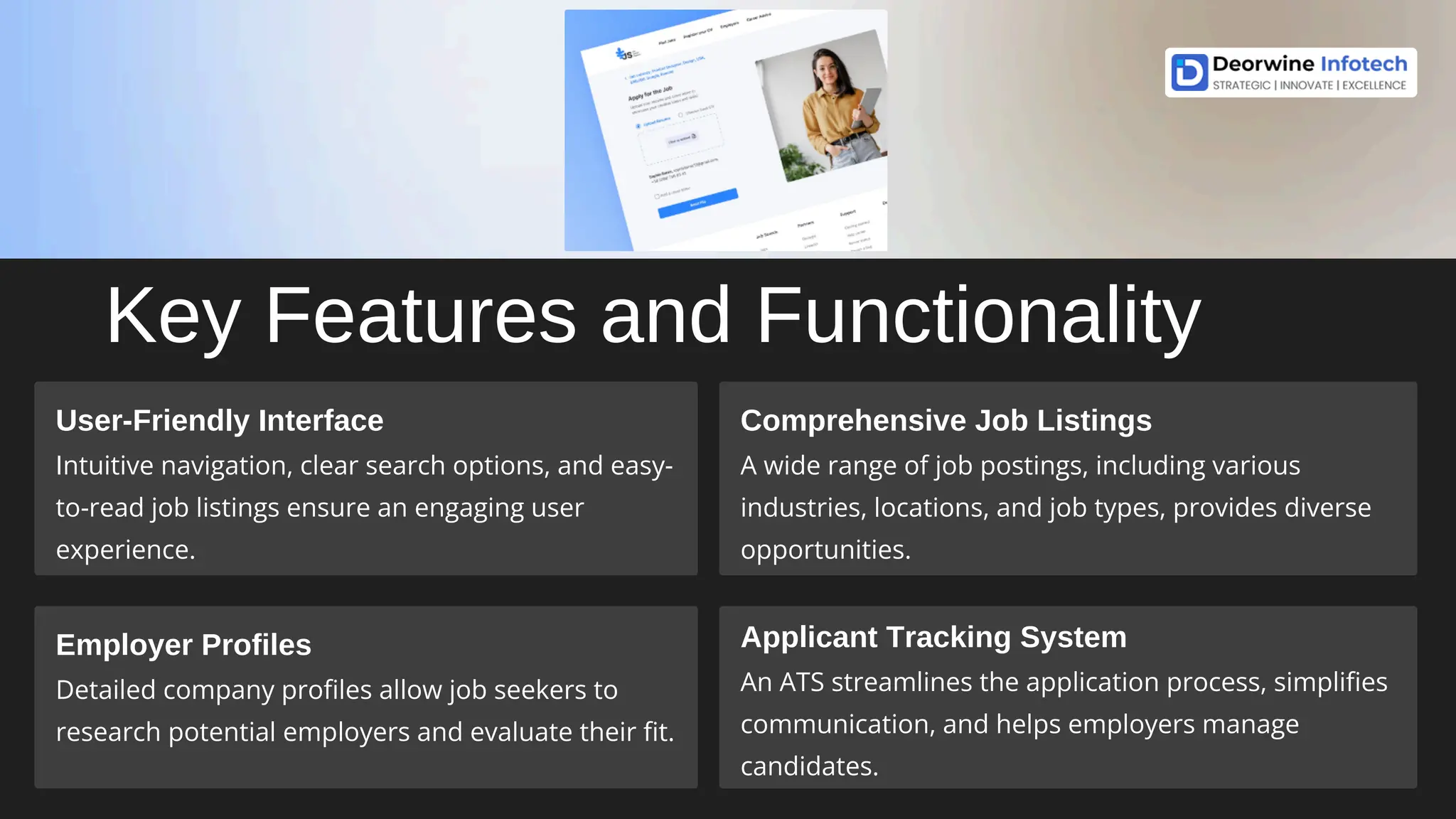
User-Friendly Interface
Intuitive navigation, clear search options, and easy-
to-read job listings ensure an engaging user
experience.
Comprehensive Job Listings
A wide range of job postings, including various
industries, locations, and job types, provides diverse
opportunities.
Employer Profiles
Detailed company profiles allow job seekers to
research potential employers and evaluate their fit.
Applicant Tracking System
An ATS streamlines the application process, simplifies
communication, and helps employers manage
candidates.
Designing an Intuitive User
Experience
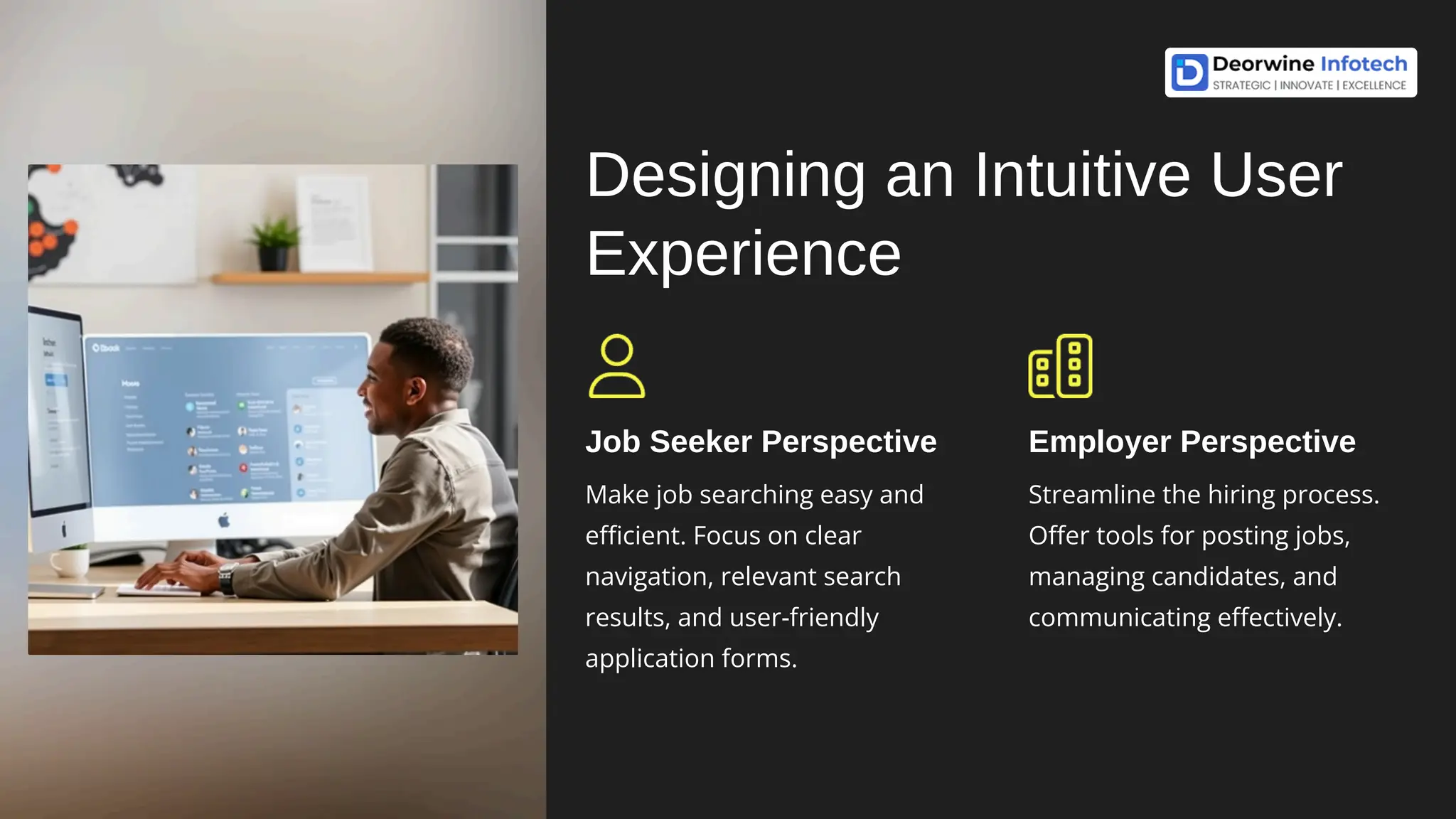
Job Seeker Perspective
Make job searching easy and
efficient. Focus on clear
navigation, relevant search
results, and user-friendly
application forms.
Employer Perspective
Streamline the hiring process.
Offer tools for posting jobs,
managing candidates, and
communicating effectively.
Integrating Powerful Search
and Matching
1 Keyword Matching
Basic keyword matching
helps identify relevant job
postings based on job titles,
skills, and experience.
2 Skill-Based Matching
Advanced algorithms
analyze job descriptions
and candidate profiles to
match skills and
experience, ensuring a
better fit.
3 Location-Based Filtering
Allow job seekers to refine their searches based on location
preferences, including remote work opportunities.
Building a Robust Backend Infrastructure
Database Management
Efficient storage and retrieval of
job data, user profiles, and
company information are crucial.
Security Measures
Implement robust security
measures to protect sensitive
data, user accounts, and the
overall platform.
Scalability
Design the infrastructure to
handle growing traffic and data
volumes as the job portal
expands.
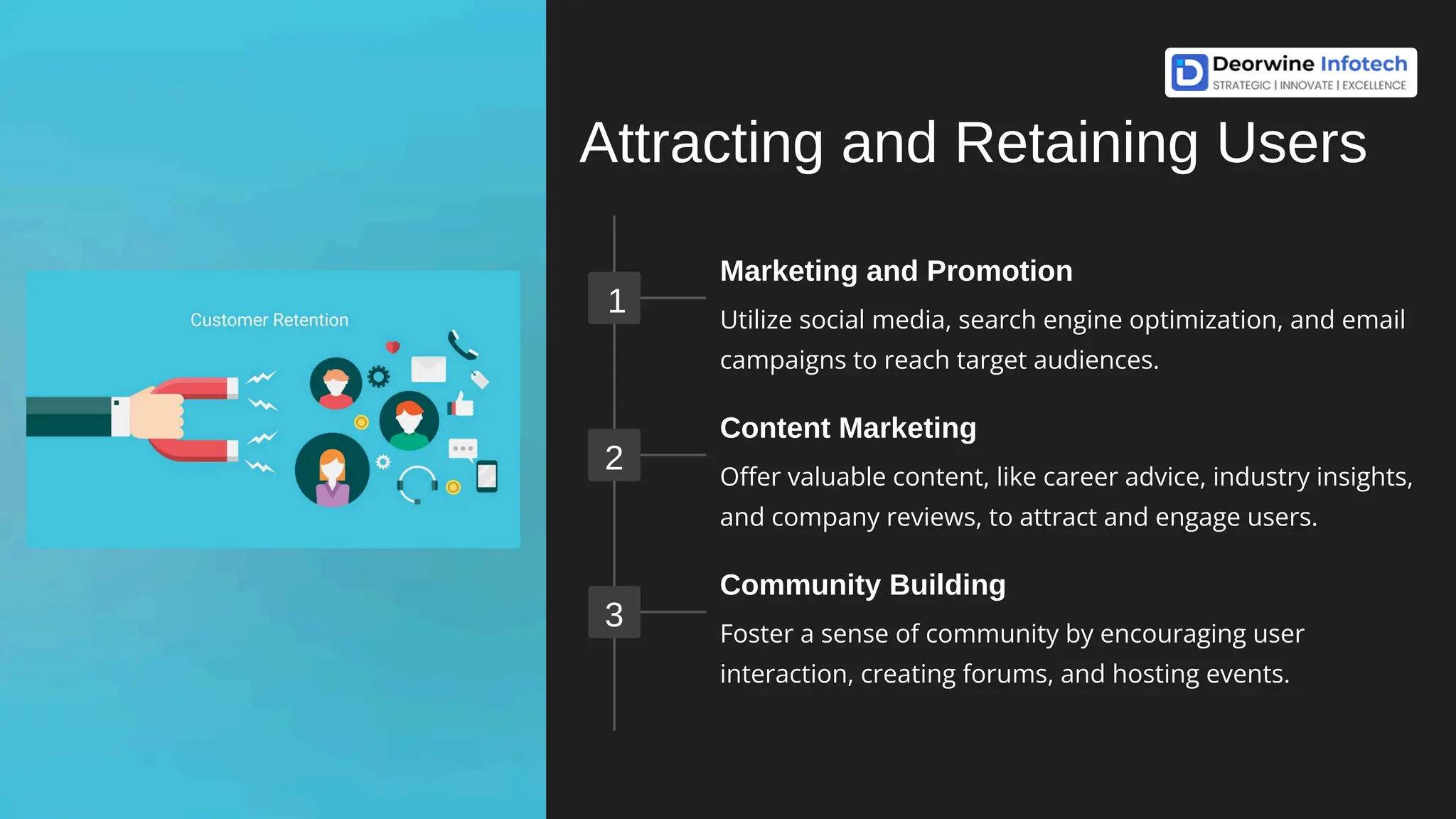
Attracting and Retaining Users
1
Marketing and Promotion
Utilize social media, search engine optimization, and email
campaigns to reach target audiences.
2
Content Marketing
Offer valuable content, like career advice, industry insights,
and company reviews, to attract and engage users.
3
Community Building
Foster a sense of community by encouraging user
interaction, creating forums, and hosting events.
Monetization Models and Revenue Streams
Subscription Fees
Charge employers for access to premium features,
like extended job postings or advanced candidate
search filters.
Featured Listings
Allow employers to pay for featured job listings,
ensuring their postings stand out.
Job Application Fees
Charge a fee for each job application, providing an
additional revenue stream.
Recruitment Services
Offer additional services, like candidate sourcing,
screening, or interview scheduling, for a fee.
Scaling and Evolving Your Job
Portal
Continuous Improvement
Regularly analyze user
feedback and data to identify
areas for improvement and
enhancements.
New Features and
Functionality
Expand the platform's
capabilities by introducing new
features, like virtual career fairs,
skills assessments, or AI-
powered matching.
Strategic Partnerships
Collaborate with educational
institutions, industry
organizations, or other
recruitment platforms to expand
reach and offer more value.
Global Expansion
Consider expanding to new
markets and languages to
reach a wider audience and
diversify revenue streams.

Creating a Job Portal Website Everything You Need to Know

  • 1.
    Are you readyto build your own online job portal? This presentation will guide you through the essential steps, from understanding market trends to implementing advanced features in Job Portal Development. The job portal market size in India is expected to grow at a significant pace in the coming years. This growth is driven by the increasing number of job seekers using online platforms to search for jobs, as well as the growing number of companies using digital technologies in their recruitment process. Additionally, the rising youth population and increasing urbanization in India are also driving the growth of the job portal market in the country. With an increasing number of people moving to cities for job opportunities, the demand for job portals is expected to increase. Creating a Job Portal Website
  • 2.
    Why Build aJob Portal? Addressing a Growing Need The global job market is increasingly competitive and constantly evolving. Job seekers need platforms to connect with potential employers, and employers need access to skilled talent. Capitalizing on Market Trends The rise of remote work, gig economy, and online recruitment creates opportunities for specialized job portals targeting specific industries or demographics.
  • 3.
    Key Features andFunctionality User-Friendly Interface Intuitive navigation, clear search options, and easy- to-read job listings ensure an engaging user experience. Comprehensive Job Listings A wide range of job postings, including various industries, locations, and job types, provides diverse opportunities. Employer Profiles Detailed company profiles allow job seekers to research potential employers and evaluate their fit. Applicant Tracking System An ATS streamlines the application process, simplifies communication, and helps employers manage candidates.
  • 4.
    Designing an IntuitiveUser Experience Job Seeker Perspective Make job searching easy and efficient. Focus on clear navigation, relevant search results, and user-friendly application forms. Employer Perspective Streamline the hiring process. Offer tools for posting jobs, managing candidates, and communicating effectively.
  • 5.
    Integrating Powerful Search andMatching 1 Keyword Matching Basic keyword matching helps identify relevant job postings based on job titles, skills, and experience. 2 Skill-Based Matching Advanced algorithms analyze job descriptions and candidate profiles to match skills and experience, ensuring a better fit. 3 Location-Based Filtering Allow job seekers to refine their searches based on location preferences, including remote work opportunities.
  • 6.
    Building a RobustBackend Infrastructure Database Management Efficient storage and retrieval of job data, user profiles, and company information are crucial. Security Measures Implement robust security measures to protect sensitive data, user accounts, and the overall platform. Scalability Design the infrastructure to handle growing traffic and data volumes as the job portal expands.
  • 7.
    Attracting and RetainingUsers 1 Marketing and Promotion Utilize social media, search engine optimization, and email campaigns to reach target audiences. 2 Content Marketing Offer valuable content, like career advice, industry insights, and company reviews, to attract and engage users. 3 Community Building Foster a sense of community by encouraging user interaction, creating forums, and hosting events.
  • 8.
    Monetization Models andRevenue Streams Subscription Fees Charge employers for access to premium features, like extended job postings or advanced candidate search filters. Featured Listings Allow employers to pay for featured job listings, ensuring their postings stand out. Job Application Fees Charge a fee for each job application, providing an additional revenue stream. Recruitment Services Offer additional services, like candidate sourcing, screening, or interview scheduling, for a fee.
  • 9.
    Scaling and EvolvingYour Job Portal Continuous Improvement Regularly analyze user feedback and data to identify areas for improvement and enhancements. New Features and Functionality Expand the platform's capabilities by introducing new features, like virtual career fairs, skills assessments, or AI- powered matching. Strategic Partnerships Collaborate with educational institutions, industry organizations, or other recruitment platforms to expand reach and offer more value. Global Expansion Consider expanding to new markets and languages to reach a wider audience and diversify revenue streams.