How to Create Your Own
Software
A step-by-step guide to building proprietary software in the growing
$411B market. With 65% of businesses using custom solutions, these
practical tips will help both beginners and experienced developers create
impactful software.
Identify Your Problem &
Requirements
Define Your Problem
Clearly articulate what specific
issue your software will
address. Be precise about the
scope.
Core Features
List only 3-5 essential
functionalities. Avoid feature
bloat that complicates
development.
Research Competition
Analyze 5-10 similar solutions. Identify gaps and opportunities to
differentiate your product.
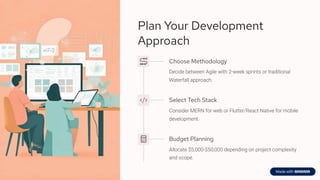
Plan Your Development
Approach
Choose Methodology
Decide between Agile with 2-week sprints or traditional
Waterfall approach.
Select Tech Stack
Consider MERN for web or Flutter/React Native for mobile
development.
Budget Planning
Allocate $5,000-$50,000 depending on project complexity
and scope.
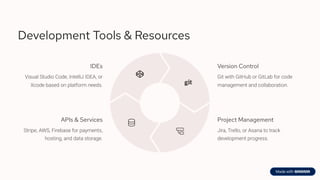
Development Tools & Resources
IDEs
Visual Studio Code, IntelliJ IDEA, or
Xcode based on platform needs.
Version Control
Git with GitHub or GitLab for code
management and collaboration.
Project Management
Jira, Trello, or Asana to track
development progress.
APIs & Services
Stripe, AWS, Firebase for payments,
hosting, and data storage.
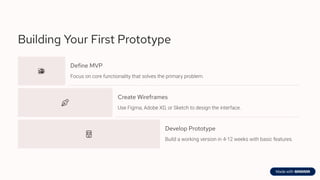
Building Your First Prototype
Define MVP
Focus on core functionality that solves the primary problem.
Create Wireframes
Use Figma, Adobe XD, or Sketch to design the interface.
Develop Prototype
Build a working version in 4-12 weeks with basic features.
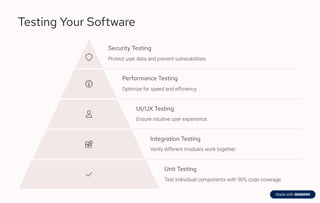
Testing Your Software
Security Testing
Protect user data and prevent vulnerabilities.
Performance Testing
Optimize for speed and efficiency.
UI/UX Testing
Ensure intuitive user experience.
Integration Testing
Verify different modules work together.
Unit Testing
Test individual components with 90% code coverage.
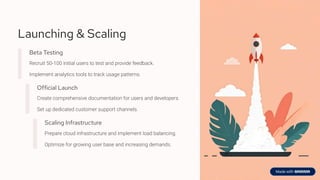
Launching & Scaling
Beta Testing
Recruit 50-100 initial users to test and provide feedback.
Implement analytics tools to track usage patterns.
Official Launch
Create comprehensive documentation for users and developers.
Set up dedicated customer support channels.
Scaling Infrastructure
Prepare cloud infrastructure and implement load balancing.
Optimize for growing user base and increasing demands.
Key Factors for Success
Solve Real Problems
Address genuine pain points that people care about solving.
Focus on User Experience
Create intuitive interfaces that delight users and simplify tasks.
Iterate Continuously
Regularly update based on user feedback and changing needs.
Build Community
Foster an engaged user base that champions your software.

Create Your Own Software | Build 100% Unique Product Packages

  • 1.
    How to CreateYour Own Software A step-by-step guide to building proprietary software in the growing $411B market. With 65% of businesses using custom solutions, these practical tips will help both beginners and experienced developers create impactful software.
  • 2.
    Identify Your Problem& Requirements Define Your Problem Clearly articulate what specific issue your software will address. Be precise about the scope. Core Features List only 3-5 essential functionalities. Avoid feature bloat that complicates development. Research Competition Analyze 5-10 similar solutions. Identify gaps and opportunities to differentiate your product.
  • 3.
    Plan Your Development Approach ChooseMethodology Decide between Agile with 2-week sprints or traditional Waterfall approach. Select Tech Stack Consider MERN for web or Flutter/React Native for mobile development. Budget Planning Allocate $5,000-$50,000 depending on project complexity and scope.
  • 4.
    Development Tools &Resources IDEs Visual Studio Code, IntelliJ IDEA, or Xcode based on platform needs. Version Control Git with GitHub or GitLab for code management and collaboration. Project Management Jira, Trello, or Asana to track development progress. APIs & Services Stripe, AWS, Firebase for payments, hosting, and data storage.
  • 5.
    Building Your FirstPrototype Define MVP Focus on core functionality that solves the primary problem. Create Wireframes Use Figma, Adobe XD, or Sketch to design the interface. Develop Prototype Build a working version in 4-12 weeks with basic features.
  • 6.
    Testing Your Software SecurityTesting Protect user data and prevent vulnerabilities. Performance Testing Optimize for speed and efficiency. UI/UX Testing Ensure intuitive user experience. Integration Testing Verify different modules work together. Unit Testing Test individual components with 90% code coverage.
  • 7.
    Launching & Scaling BetaTesting Recruit 50-100 initial users to test and provide feedback. Implement analytics tools to track usage patterns. Official Launch Create comprehensive documentation for users and developers. Set up dedicated customer support channels. Scaling Infrastructure Prepare cloud infrastructure and implement load balancing. Optimize for growing user base and increasing demands.
  • 8.
    Key Factors forSuccess Solve Real Problems Address genuine pain points that people care about solving. Focus on User Experience Create intuitive interfaces that delight users and simplify tasks. Iterate Continuously Regularly update based on user feedback and changing needs. Build Community Foster an engaged user base that champions your software.