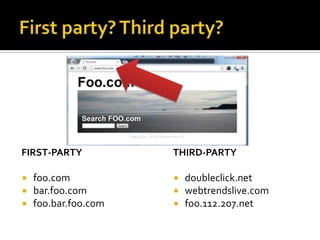
FIRST-PARTY           THIRD-PARTY

   foo.com              doubleclick.net
   bar.foo.com          webtrendslive.com
   foo.bar.foo.com      foo.112.2o7.net
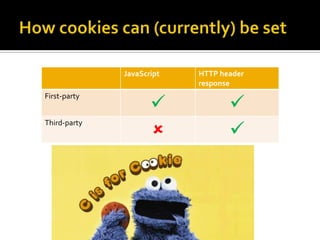
JavaScript   HTTP header
                           response

                                 
First-party


                                 
Third-party
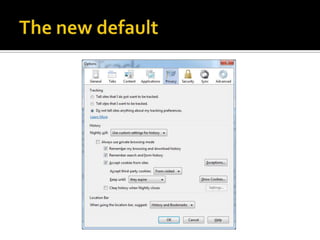
   New Firefox default is to block third-party
    cookies
   Safari has done this for a while
   Detail:
     Blocks setting cookies from third-party domains
      that have no existing cookies set as first-party
     i.e., Facebook will still be able to track you
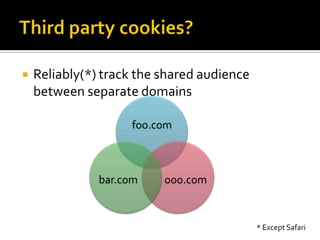
   Reliably(*) track the shared audience
    between separate domains

                    foo.com


               bar.com    ooo.com


                                            * Except Safari
   Google Analytics uses first-party cookies
    exclusively
   Passes cookie ID between domains only
    when users click from one to the other
   Can’t reliably measure audience overlap
   Web analytics vendors need to find a solution
   Data brokers are screwed
   Small publishers will lose data-enhanced ad
    revenue
   Moving to HTML5 localStorage late this week
   Interesting side effect:
     localStorage is isolated by scheme + hostname +
      port (HTML5 Origin)
     Not really a problem though
   See: http://htmlui.com/blog/2011-08-23-5-
    obscure-facts-about-html5-localstorage.html
If the domain already has cookies, it
can set them third-party
   Facebook will be fine
   Google will be fine
   Fairfax, News will problably be fine
   Web analytics can probably find a workable
    solution
   Iframe hack: Google got caught using this
   Browser fingerprinting
   Bounce users through your domains? iJento
    do this
   HTML5 localStorage
   From iPhone or Firefox Nightly:
     http://arseh.at/cookie
   Vendors:
     David Jordine @Adobe
     Mark Allison @WebTrends
     Sauli Happonen @Nielsen
   Chaoming Li
   NarbehYousefian

Cookiepocalypse. Simon Rumble

  • 2.
    FIRST-PARTY THIRD-PARTY  foo.com  doubleclick.net  bar.foo.com  webtrendslive.com  foo.bar.foo.com  foo.112.2o7.net
  • 3.
    JavaScript HTTP header response   First-party   Third-party
  • 4.
    New Firefox default is to block third-party cookies  Safari has done this for a while  Detail:  Blocks setting cookies from third-party domains that have no existing cookies set as first-party  i.e., Facebook will still be able to track you
  • 7.
    Reliably(*) track the shared audience between separate domains foo.com bar.com ooo.com * Except Safari
  • 8.
    Google Analytics uses first-party cookies exclusively  Passes cookie ID between domains only when users click from one to the other  Can’t reliably measure audience overlap
  • 9.
    Web analytics vendors need to find a solution  Data brokers are screwed  Small publishers will lose data-enhanced ad revenue
  • 10.
    Moving to HTML5 localStorage late this week  Interesting side effect:  localStorage is isolated by scheme + hostname + port (HTML5 Origin)  Not really a problem though  See: http://htmlui.com/blog/2011-08-23-5- obscure-facts-about-html5-localstorage.html
  • 11.
    If the domainalready has cookies, it can set them third-party  Facebook will be fine  Google will be fine  Fairfax, News will problably be fine  Web analytics can probably find a workable solution
  • 16.
    Iframe hack: Google got caught using this  Browser fingerprinting  Bounce users through your domains? iJento do this  HTML5 localStorage
  • 17.
    From iPhone or Firefox Nightly:  http://arseh.at/cookie
  • 18.
    Vendors:  David Jordine @Adobe  Mark Allison @WebTrends  Sauli Happonen @Nielsen  Chaoming Li  NarbehYousefian